The format of financial report for annual review typically includes a balance sheet, income statement, and cash flow statement, providing a comprehensive overview of an organization's financial health. These reports are organized to highlight key financial metrics, trends, and variances from previous periods, aiding stakeholders in informed decision-making. Clear headings, standardized layouts, and concise notes ensure the report is both accessible and compliant with regulatory requirements.
Executive Summary: Annual Financial Report Format
An
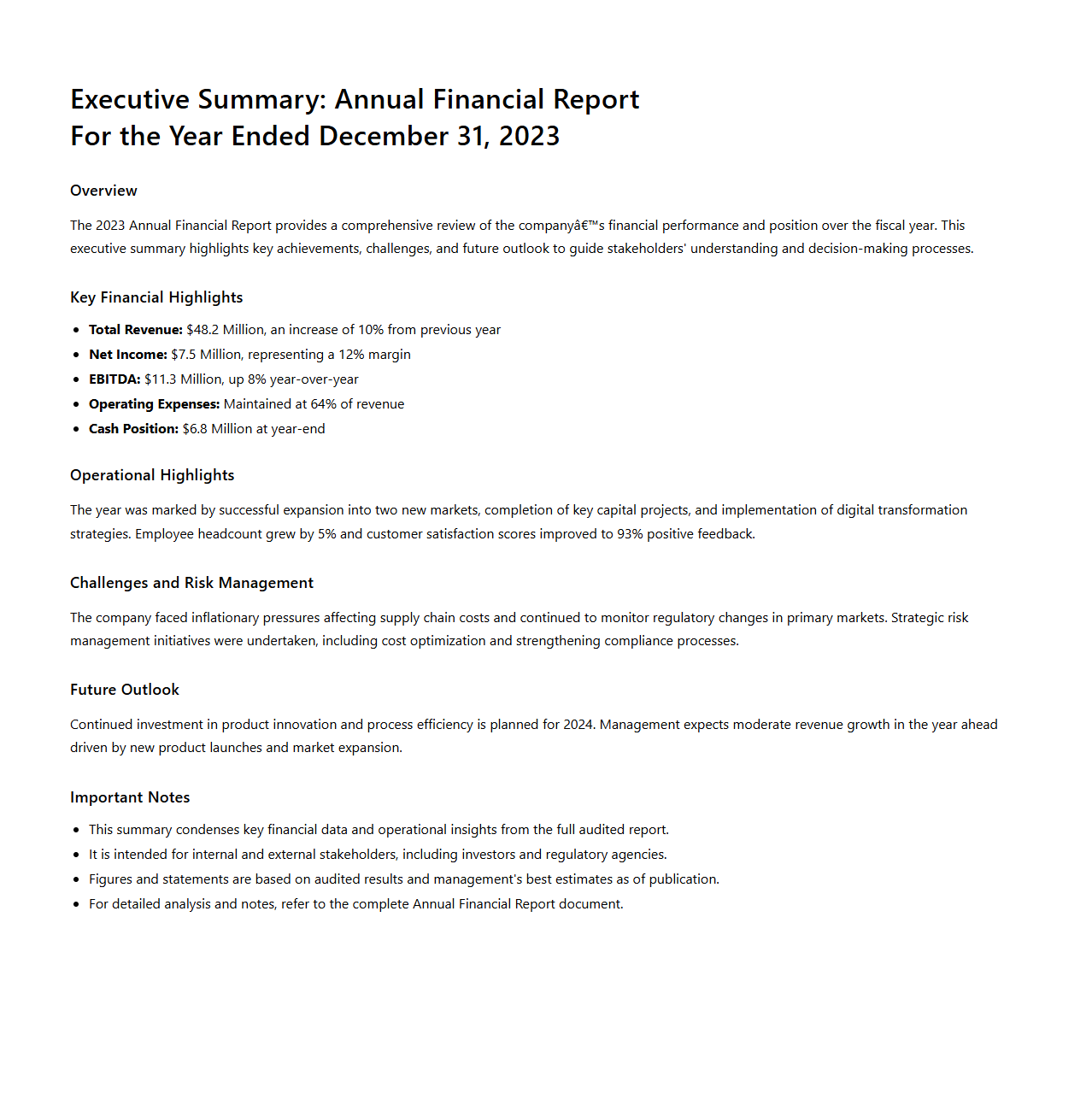
Executive Summary in an Annual Financial Report Format document provides a concise overview of the company's financial performance, key metrics, and strategic highlights for the fiscal year. It summarizes critical data such as revenue, profit margins, expenses, and significant financial trends to inform stakeholders quickly. This section serves as a snapshot of the organization's overall financial health and business achievements.
Statement of Financial Position: Annual Review Document Format
The
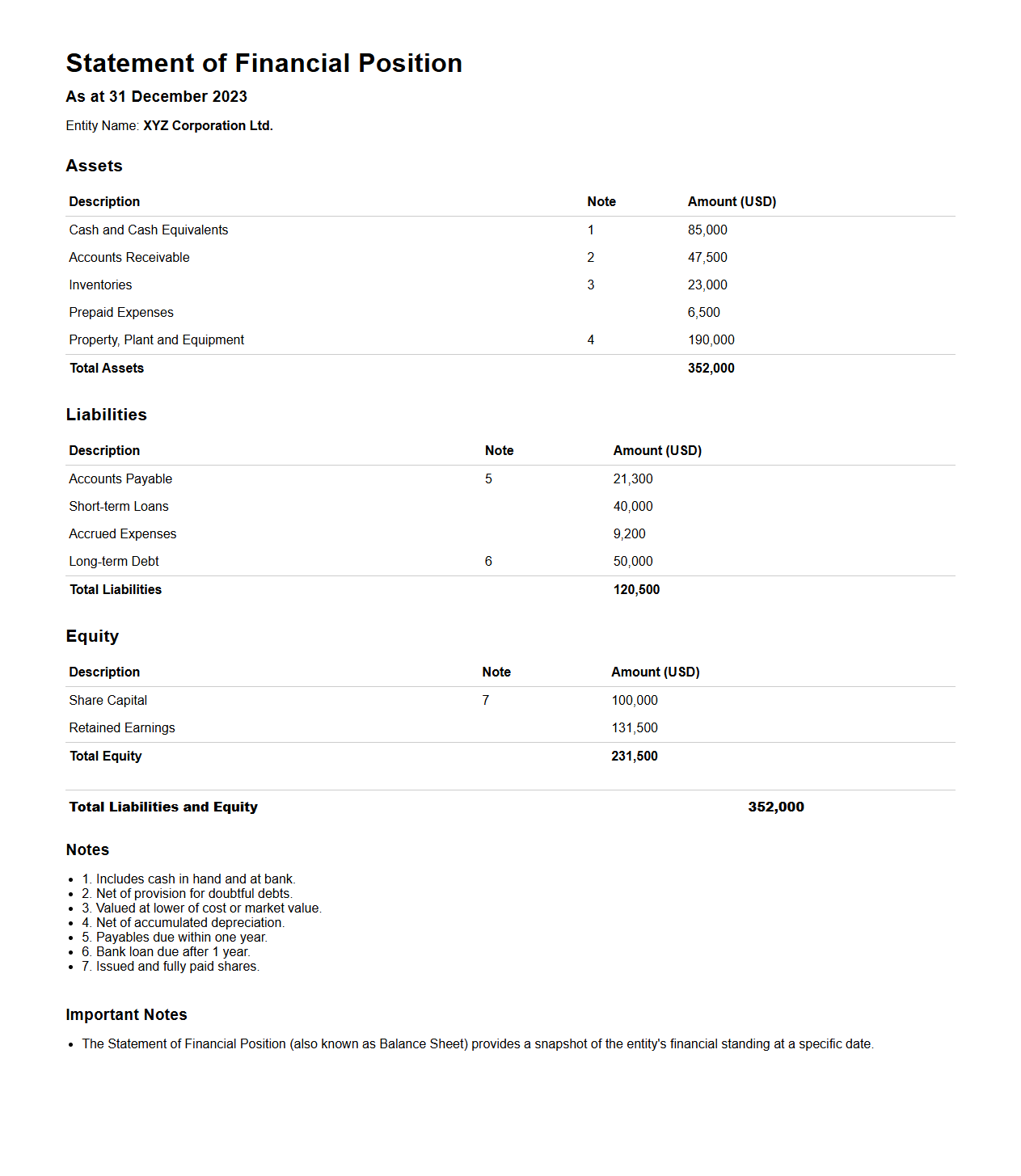
Statement of Financial Position: Annual Review Document Format is a structured financial report that provides a snapshot of an organization's assets, liabilities, and equity at a specific point in time, typically at the end of a fiscal year. This document format is essential for evaluating the company's financial health, liquidity, and capital structure, facilitating informed decision-making by stakeholders. Its standardized layout ensures consistency and clarity, allowing for effective comparison across reporting periods and compliance with accounting regulations.
Statement of Comprehensive Income: Annual Financial Report Format
The
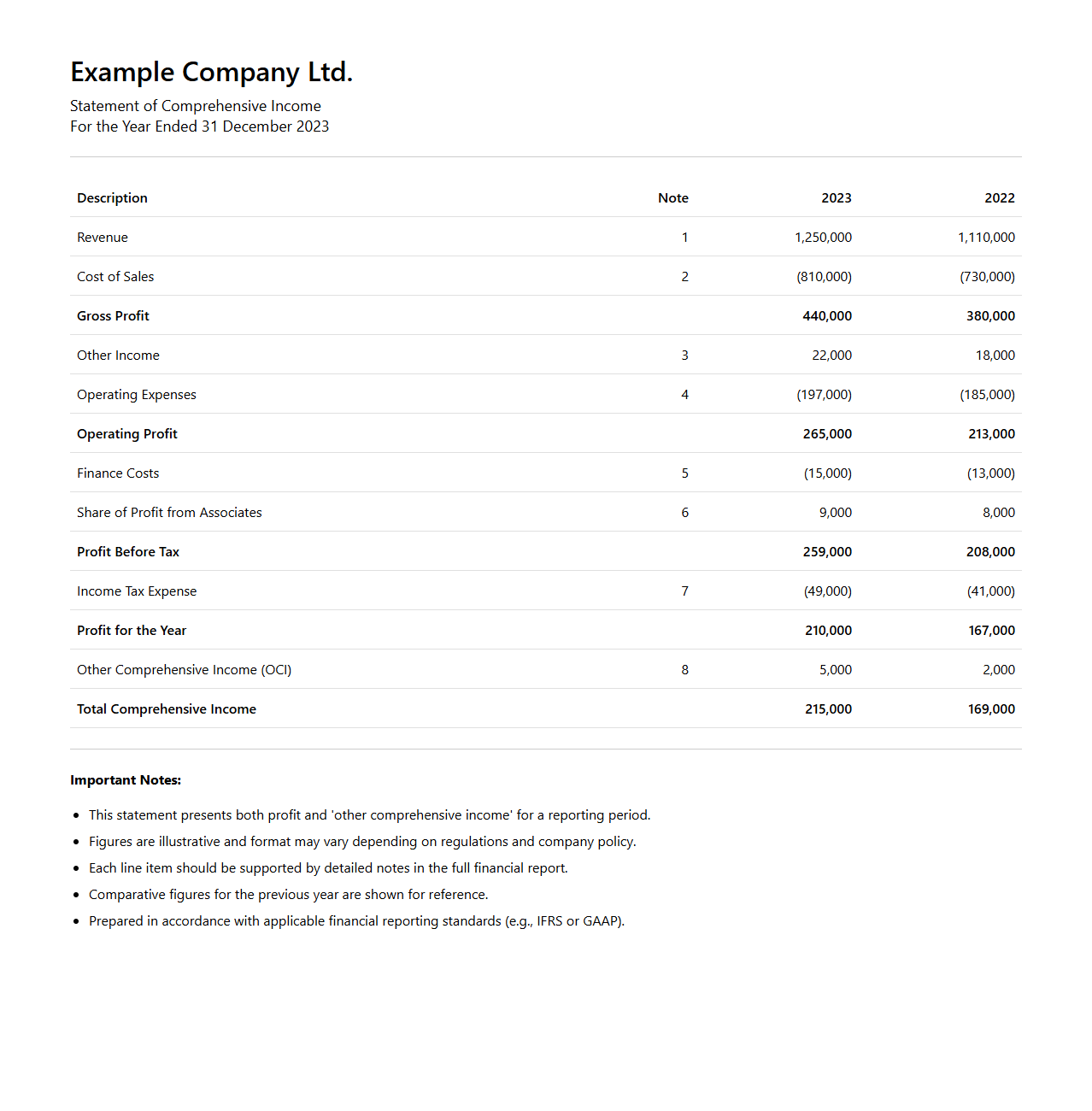
Statement of Comprehensive Income in an Annual Financial Report Format document presents a detailed summary of a company's financial performance over a specific period, capturing all revenues, expenses, gains, and losses, including those not realized in profit or loss. This document includes components such as net income, other comprehensive income items like foreign currency translation adjustments, and unrealized gains or losses on investments. It provides stakeholders with a comprehensive view of a company's profitability and overall financial health beyond traditional income statements.
Statement of Cash Flows: Annual Review Financial Document
The
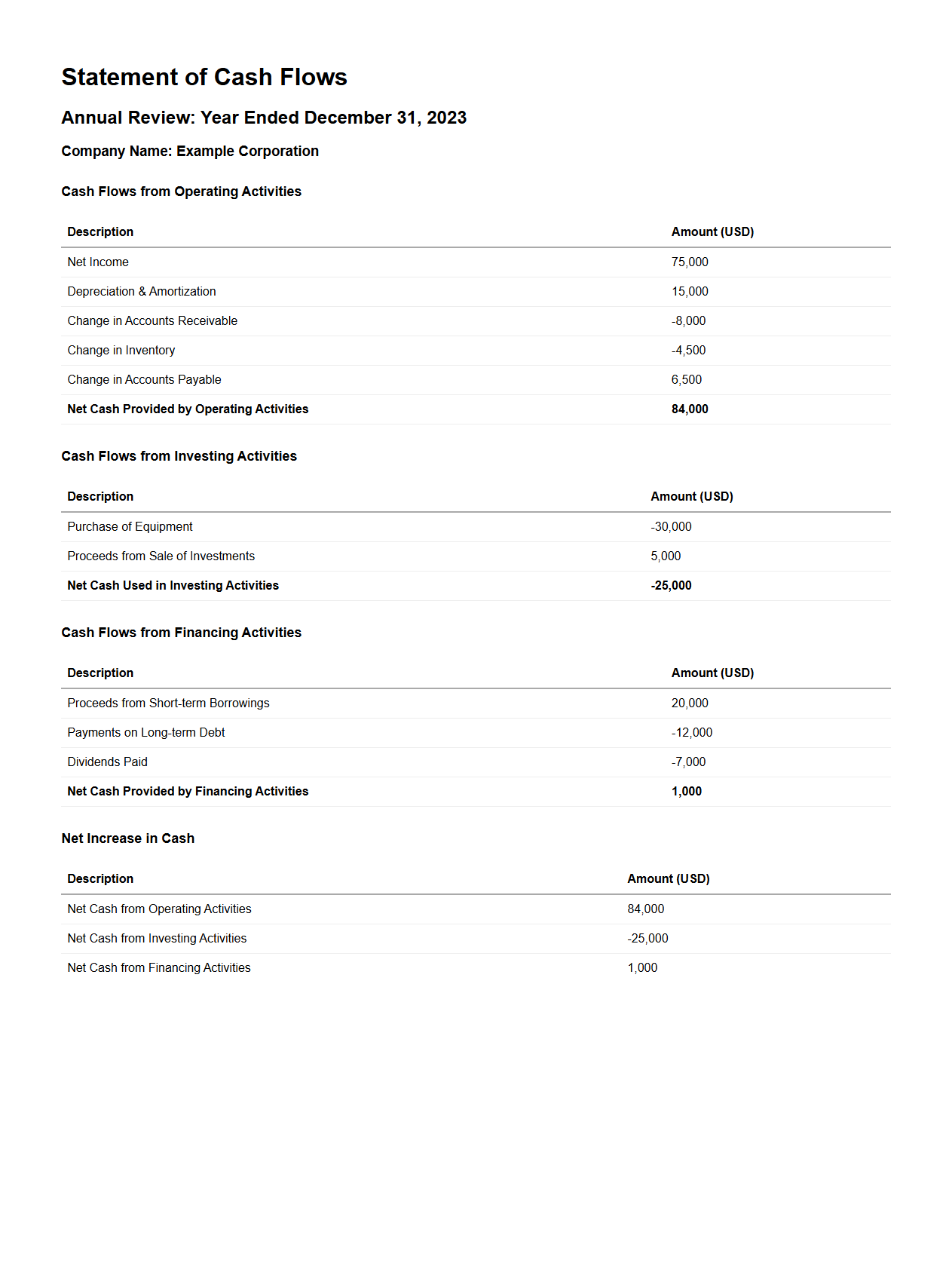
Statement of Cash Flows is an annual financial document that provides a detailed summary of a company's cash inflows and outflows over a fiscal year. It categorizes cash transactions into operating, investing, and financing activities, offering insights into the organization's liquidity and financial health. This document is essential for stakeholders to assess the firm's ability to generate cash and meet financial obligations.
Statement of Changes in Equity: Annual Report Format
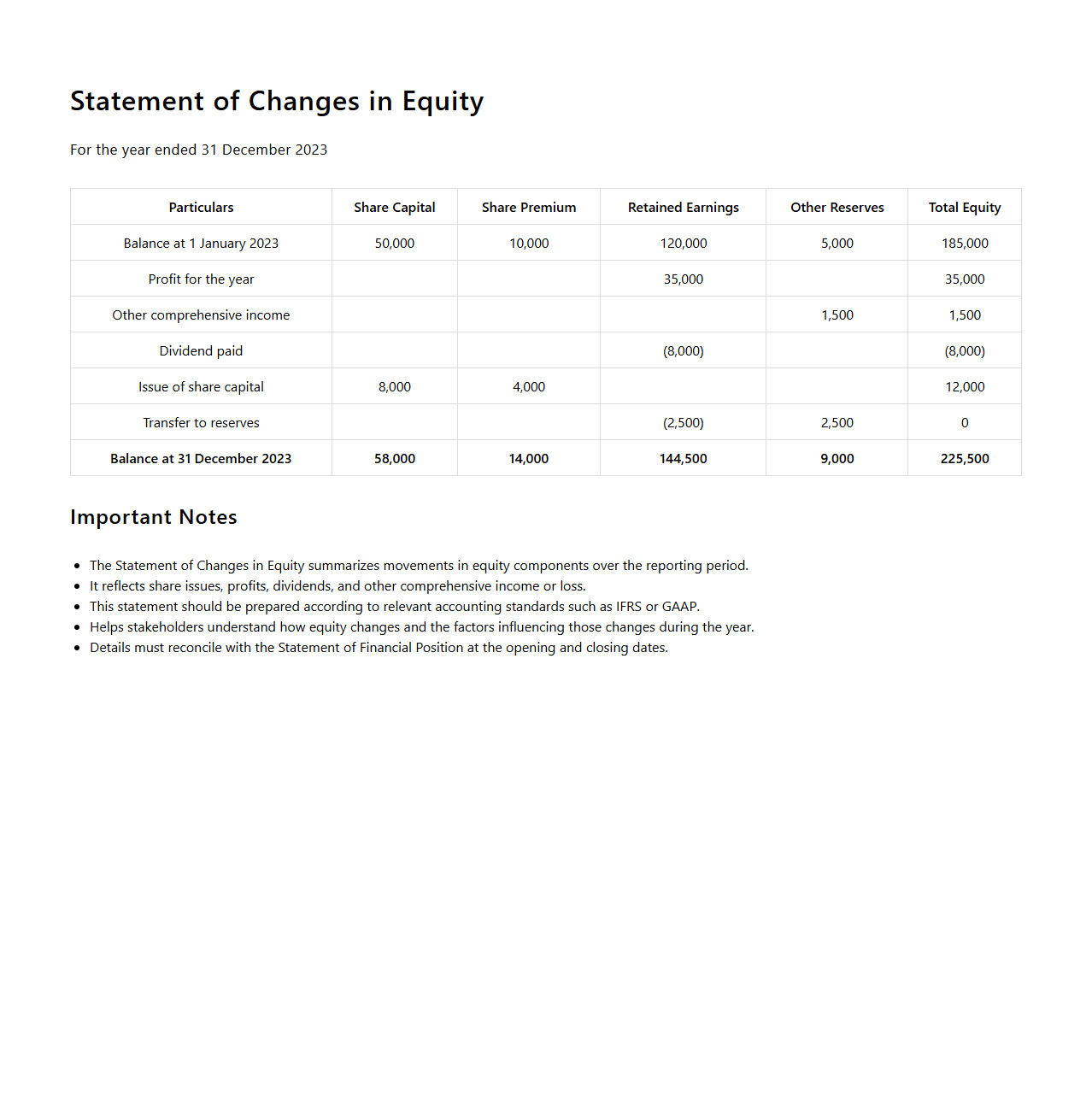
The
Statement of Changes in Equity in an annual report format is a financial document that details the movement in equity components over a specific period. It highlights changes such as retained earnings, share capital, and other reserves, providing stakeholders with a comprehensive view of how equity has evolved. This statement is essential for understanding the distribution of profits, issuance or repurchase of shares, and other transactions affecting ownership interests.
Notes to Financial Statements: Financial Report Annual Review
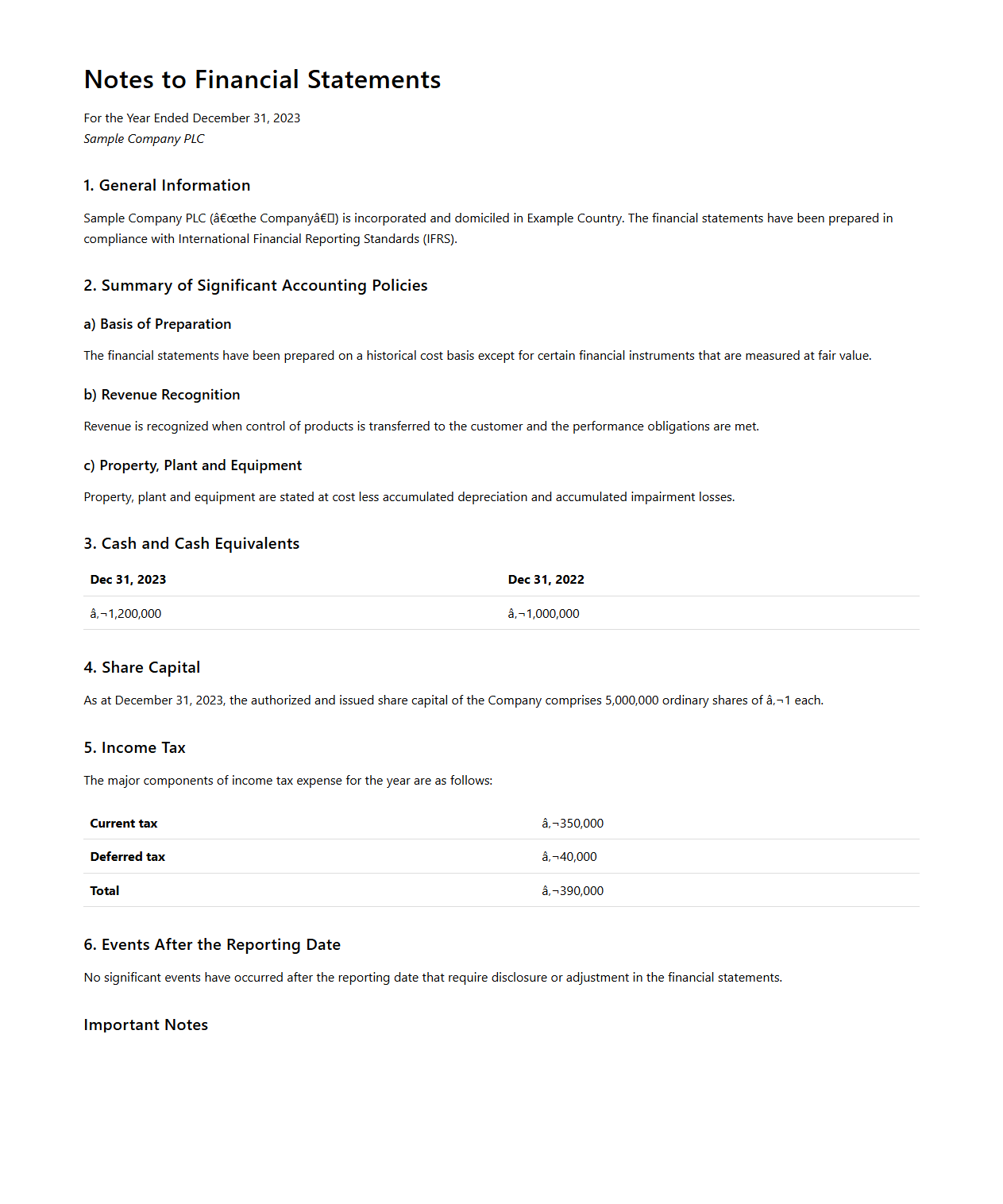
Notes to Financial Statements provide detailed explanations and additional context to the figures presented in the main financial statements of an Annual Review document. These notes clarify accounting policies, disclose significant financial commitments, contingencies, and provide breakdowns of specific line items for better transparency. They are essential for investors and analysts to gain a comprehensive understanding of a company's financial health and operational risks.
Auditor’s Report Format: Annual Financial Document
An
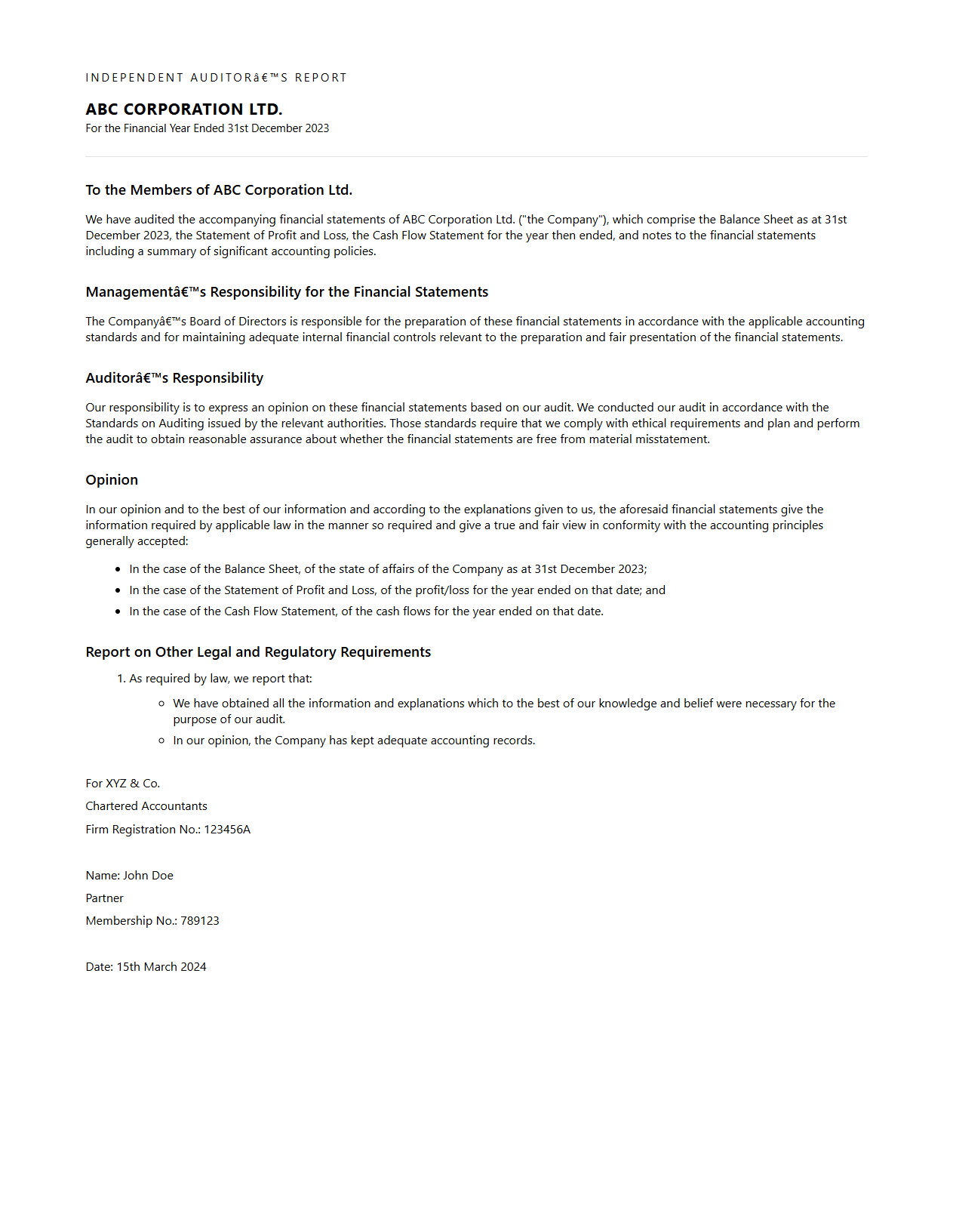
Auditor's Report Format is a standardized template used for presenting the findings of an auditor's examination of an entity's annual financial statements. This document ensures transparency by detailing the auditor's opinion on whether the financial statements are free from material misstatement and comply with applicable accounting standards. It typically includes sections such as the auditor's opinion, basis for opinion, key audit matters, and responsibilities of management and the auditor.
Management Discussion & Analysis: Annual Review Format
The
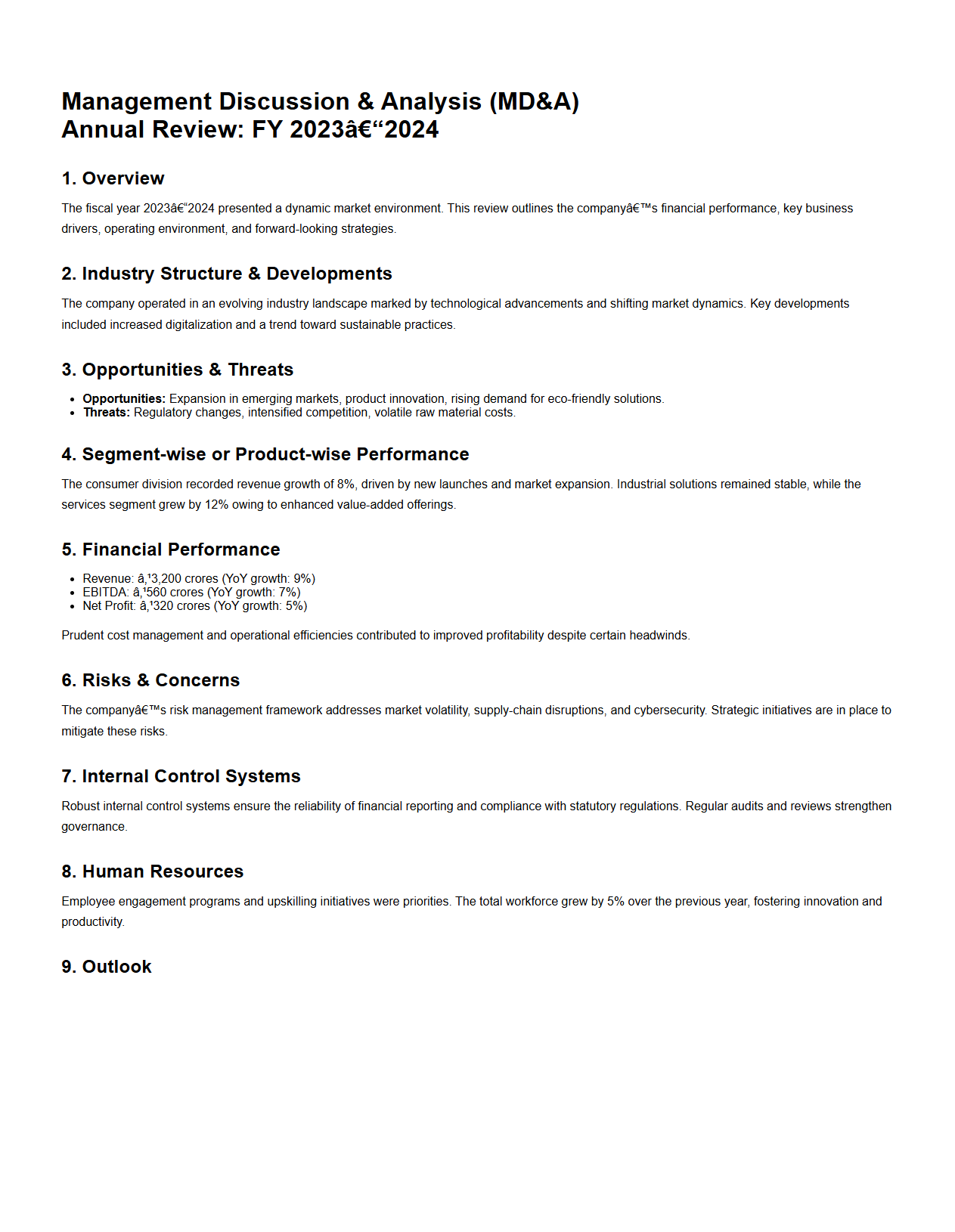
Management Discussion & Analysis (MD&A): Annual Review Format document provides a structured framework for companies to present a comprehensive analysis of their financial performance, operational results, and strategic initiatives over the fiscal year. This format ensures transparent communication between management and stakeholders by highlighting key risks, opportunities, and future outlooks. Properly crafted MD&A sections enhance investor confidence and regulatory compliance by synthesizing quantitative data with qualitative insights.
Financial Highlights Summary: Annual Report Document
The
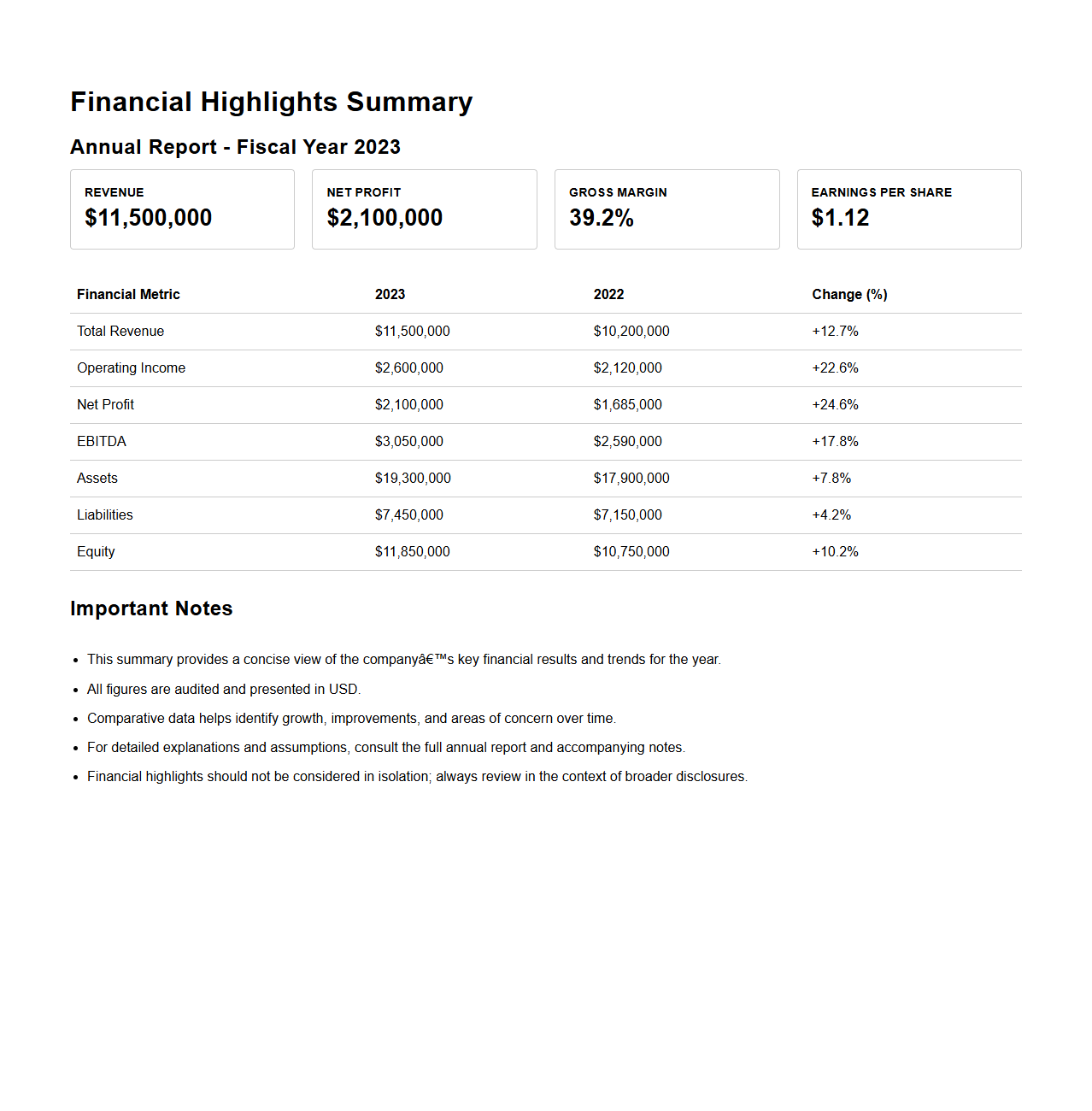
Financial Highlights Summary in an Annual Report Document presents a concise overview of a company's key financial metrics such as revenue, net income, earnings per share, and cash flow for the fiscal year. This section enables investors and stakeholders to quickly gauge the organization's financial performance and growth trends. It often includes comparative data from previous years to illustrate progress and financial stability.
Comparative Financial Statements: Annual Review Format
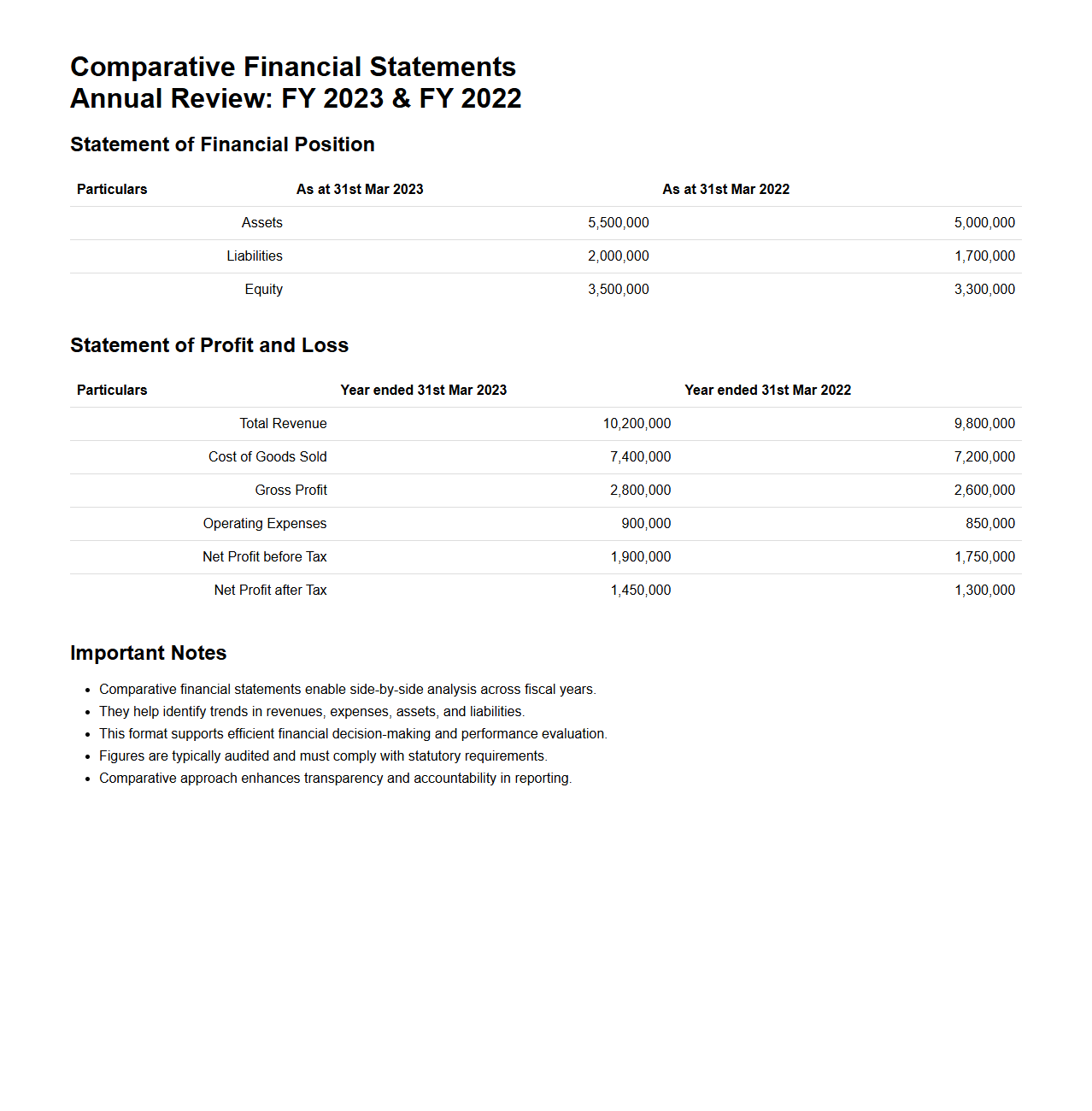
Comparative Financial Statements: Annual Review Format document presents financial data for multiple years side-by-side, enabling easy analysis of trends and performance over time. It highlights key metrics such as revenue, expenses, and net income, facilitating comprehensive evaluation by stakeholders and management. This format enhances decision-making by providing clarity through consistent data presentation and
year-over-year financial comparison.
Essential Components in a Financial Report Format for Annual Review Documents
A comprehensive financial report format must include sections such as balance sheets, income statements, and cash flow statements to provide a complete overview. It is crucial to incorporate an executive summary highlighting the main financial outcomes. Additionally, clear labeling and consistent formatting ensure readability and ease of analysis.
Presentation of Comparative Financial Data in Annual Review Letters
Comparative financial data should be displayed using tables or charts that contrast current and previous periods side by side for clarity. Highlighting percentage changes and trends with bold or colored fonts draws attention to significant variances. Using standardized metrics and currency units enhances the report's professional appearance and readability.
Recommended Structure for Summarizing Key Financial Highlights in a Document Letter
Start with a concise opening statement outlining overall financial performance during the period. Follow with bullet points or numbered lists summarizing revenue growth, profit margins, and key expense categories. Conclude with a forward-looking statement on anticipated financial trends or strategies to reinforce the report's purpose.
Formatting Footnotes and Disclosures in Annual Financial Report Letters
Footnotes and disclosures should be clearly numbered and referenced within the main text for easy cross-verification. Use smaller font size and italics to differentiate these notes while maintaining legibility. Position disclosures at the bottom of the respective page or at the end of relevant sections to maintain document flow and transparency.
Best Practices for Including Management Commentary in the Financial Report Section of an Annual Review Letter
Management commentary should provide context to the financial data by explaining causes behind key results and performance variations. Use a balanced tone that highlights achievements and addresses challenges objectively. Including forward-looking insights and strategic priorities helps stakeholders understand management's vision and plans.