The Format of Project Closure Report for Completion typically includes a summary of project objectives, outcomes, and deliverables against initial goals. It details lessons learned, final budget status, and stakeholder approvals to ensure all criteria have been met. This structured report provides a clear record for future reference and organizational learning.
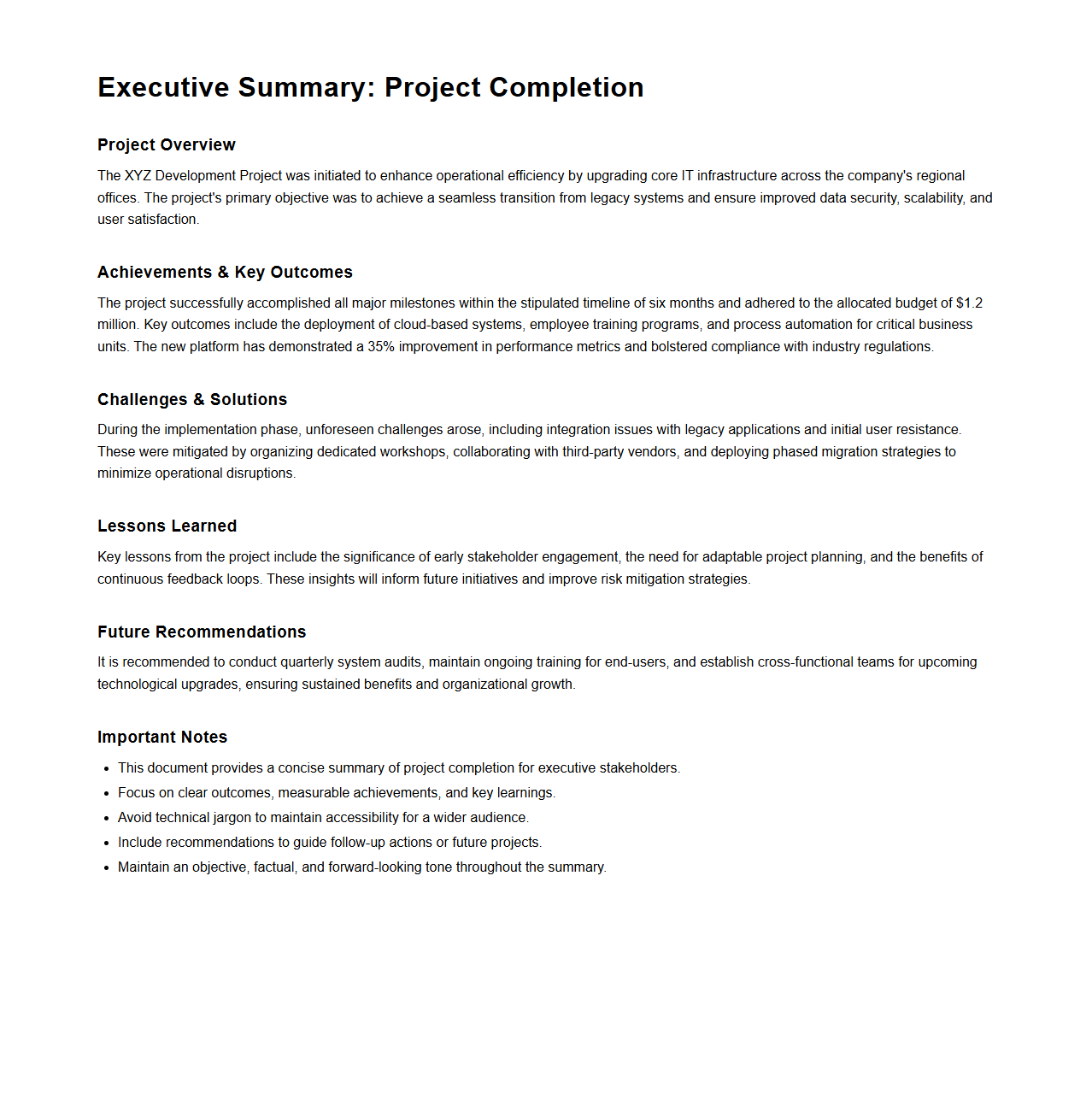
Executive Summary of Project Completion
An
Executive Summary of Project Completion document provides a concise overview of the project's final status, including key achievements, deliverables, and overall outcomes. It highlights critical metrics such as budget adherence, timeline performance, and stakeholder satisfaction to demonstrate project success. This summary serves as a vital reference for decision-makers and stakeholders to quickly assess the effectiveness and impact of the completed project.
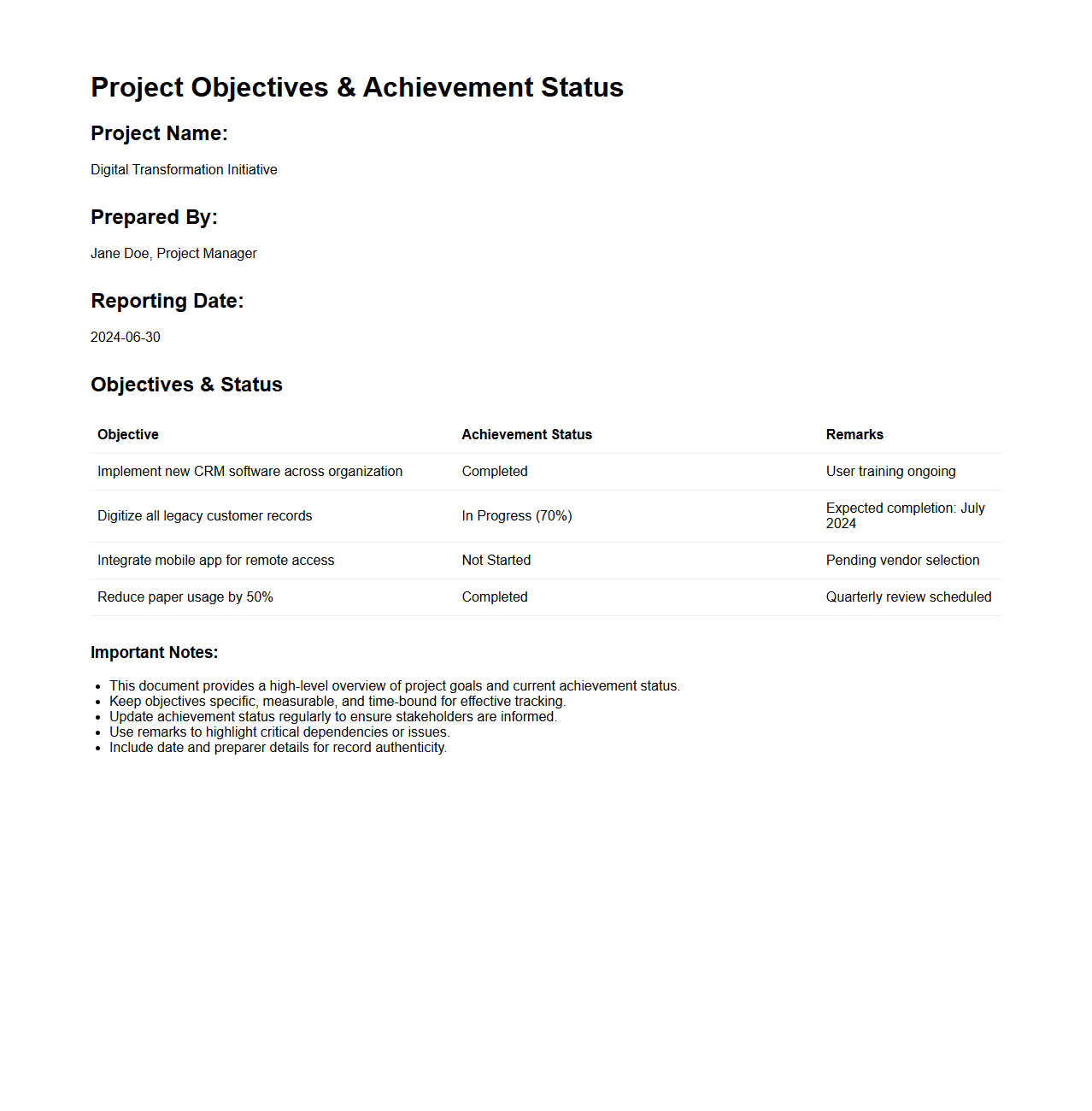
Project Objectives and Achievement Status
The
Project Objectives and Achievement Status document outlines the specific goals set at the beginning of a project and tracks progress against these targets. It provides a clear benchmark for evaluating milestones, deliverables, and overall project performance. This document is essential for stakeholders to monitor success and identify any deviations from planned objectives.
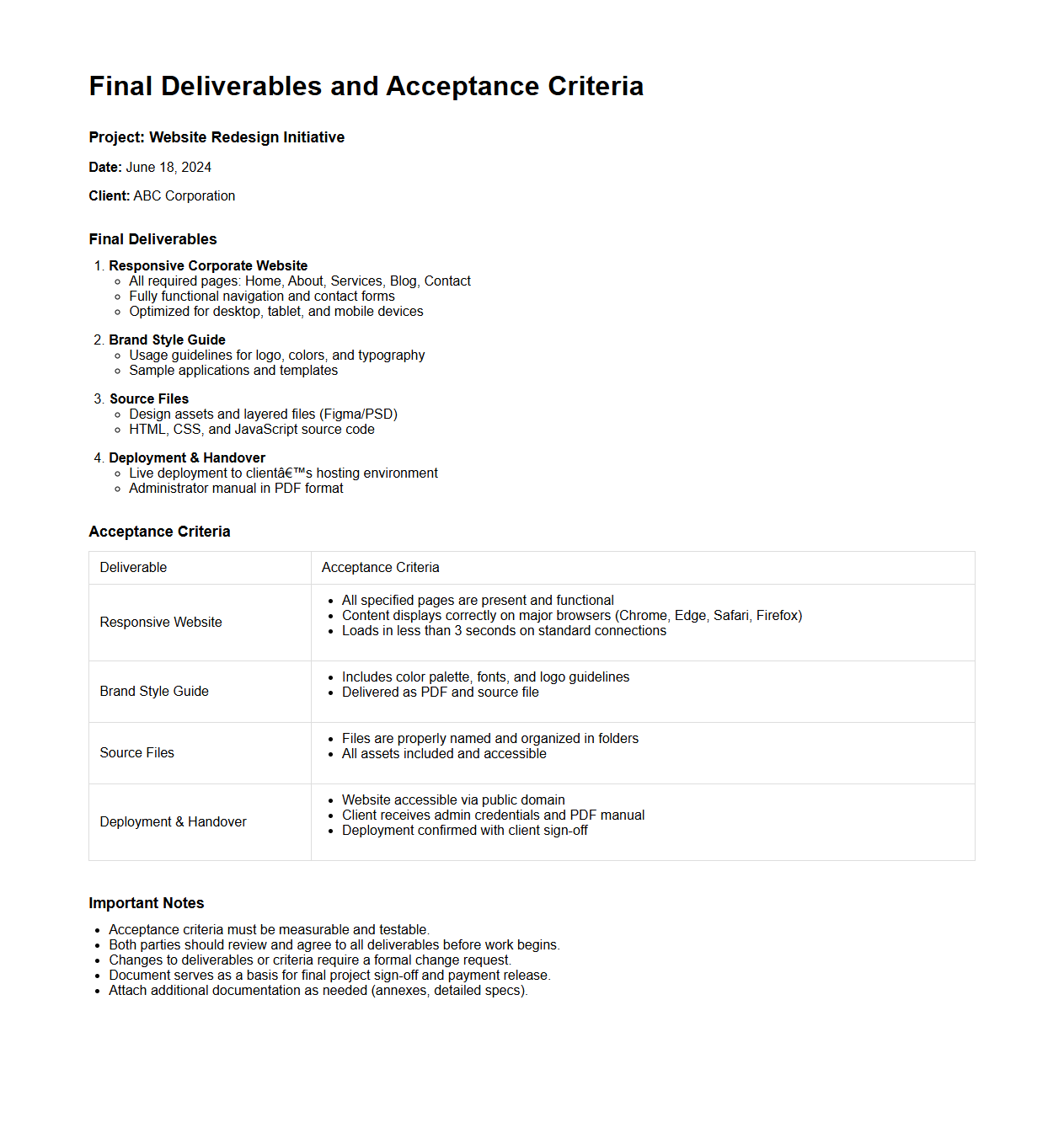
Final Deliverables and Acceptance Criteria
The
Final Deliverables and Acceptance Criteria document outlines the specific outputs that a project must produce and the standards by which these outputs will be evaluated for approval. It defines measurable benchmarks, quality requirements, and completion conditions to ensure all stakeholders have a clear understanding of project expectations. This document serves as a critical reference for verifying that all contractual obligations have been met before formal project closure.
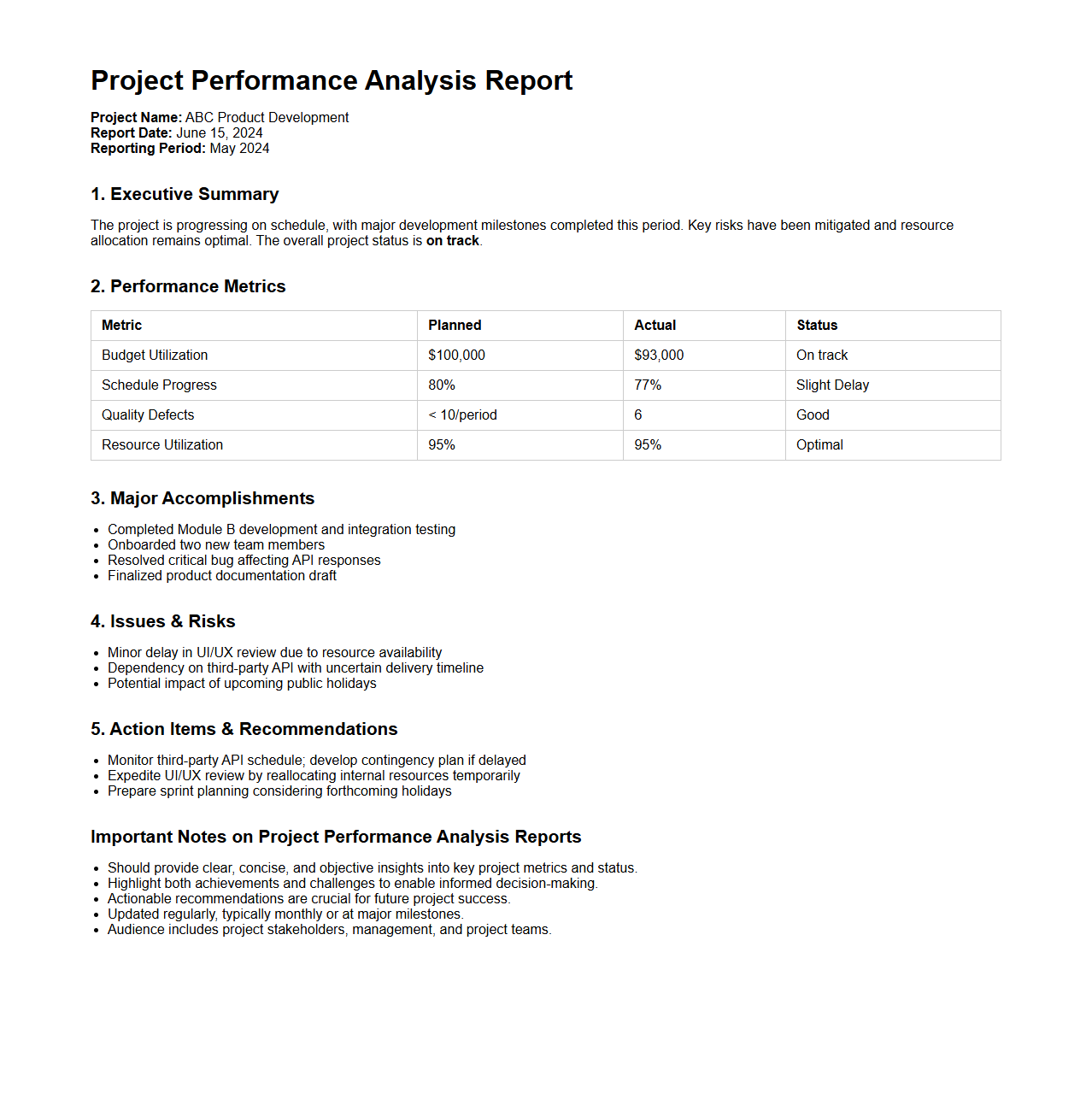
Project Performance Analysis Report
A
Project Performance Analysis Report document evaluates key metrics such as scope, budget, schedule, and resource utilization to measure the progress and effectiveness of a project. It provides data-driven insights that help stakeholders identify areas of improvement and ensure alignment with project objectives. This report supports decision-making by highlighting variances from the baseline and forecasting potential risks impacting overall project success.
Issues and Risk Management Summary
The
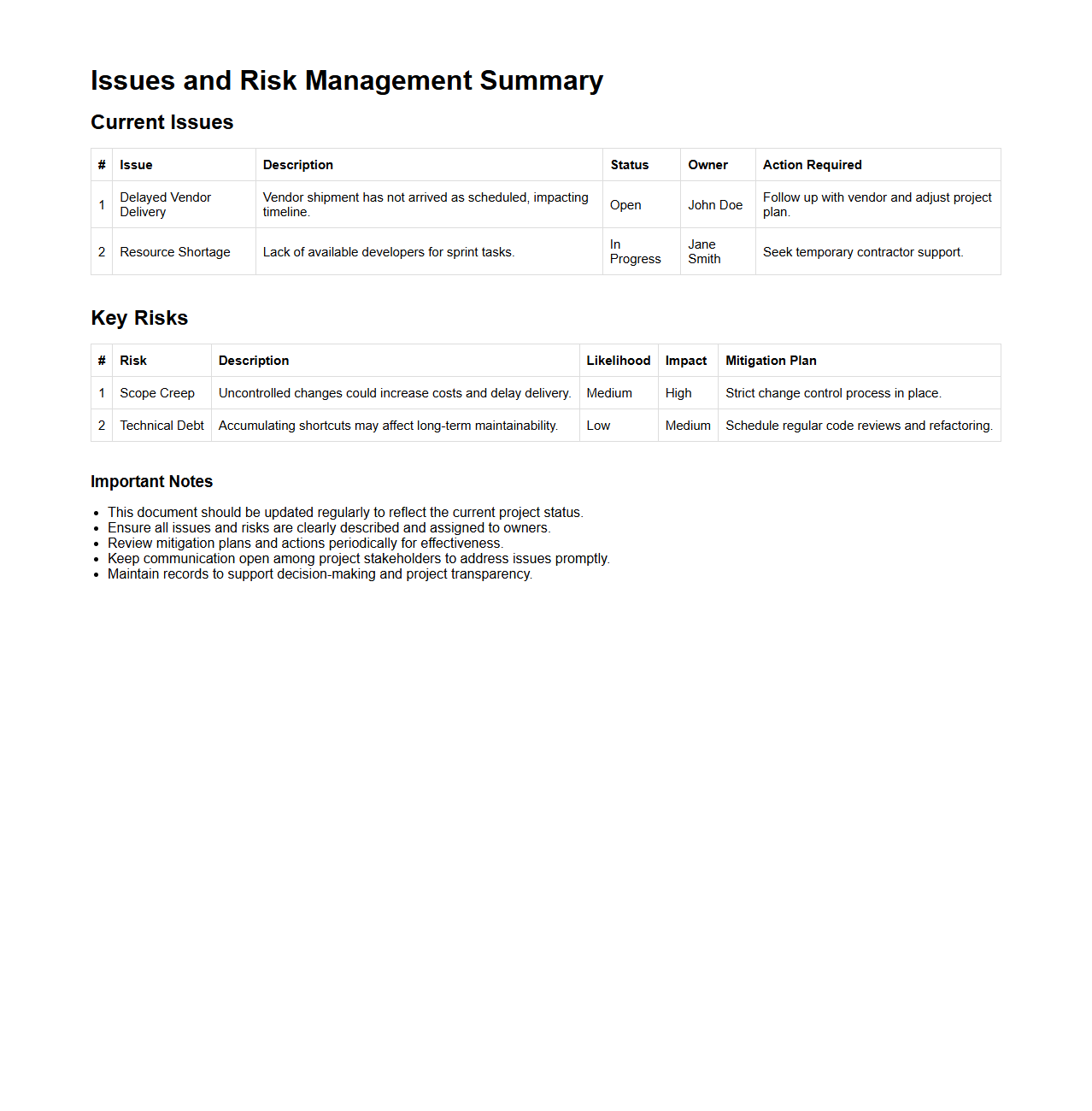
Issues and Risk Management Summary document provides a comprehensive overview of identified risks and issues within a project or organization, detailing their status, impact, and mitigation strategies. It serves as a centralized reference to track potential threats and current problems, enabling proactive decision-making and resource allocation. This summary enhances transparency and ensures effective communication among stakeholders to minimize project disruptions.
Lessons Learned and Best Practices
A
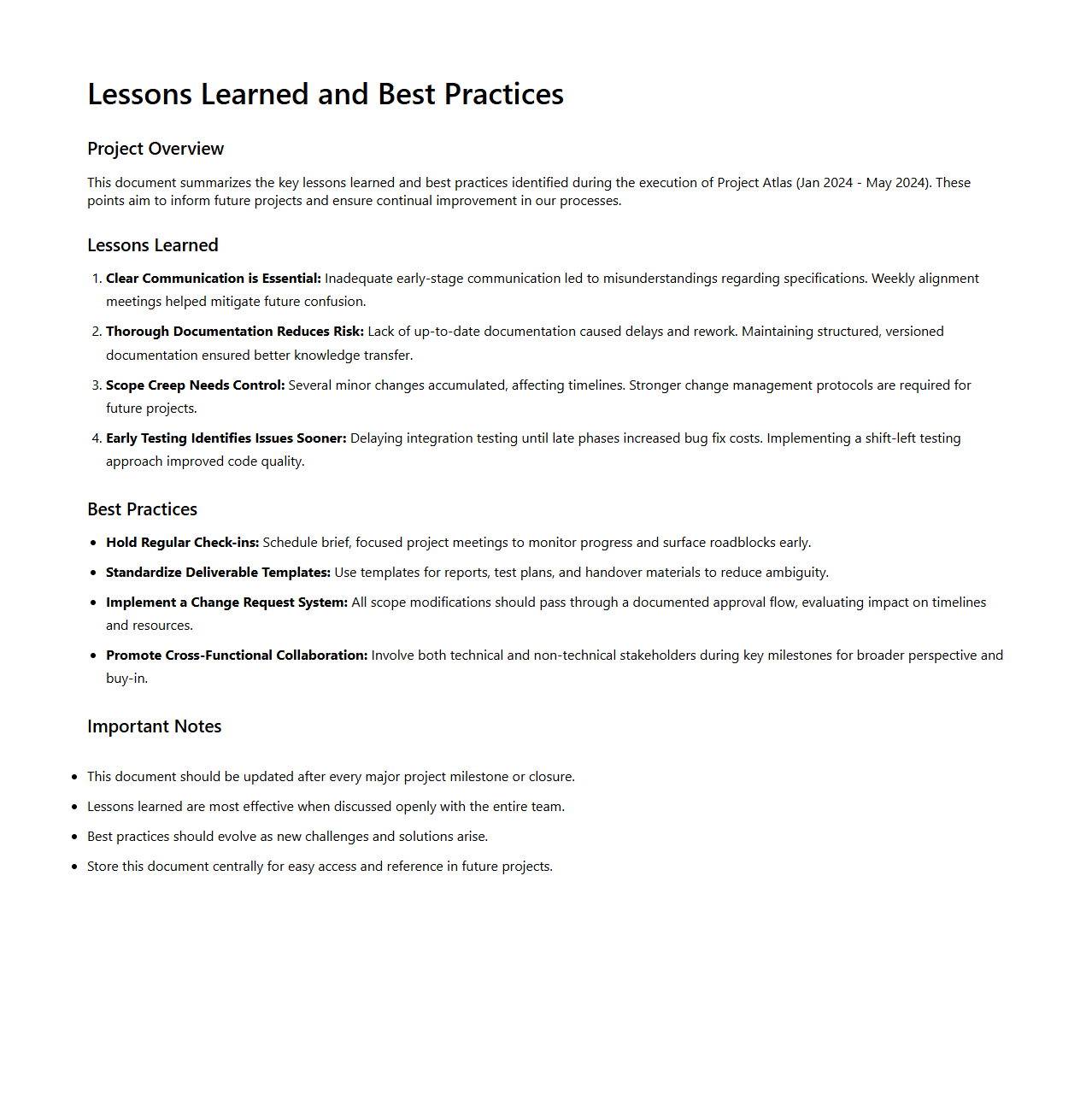
Lessons Learned and Best Practices document captures valuable insights and effective strategies derived from project experiences to improve future performance. It systematically records challenges faced, solutions implemented, and successful approaches, fostering continuous improvement and knowledge sharing within organizations. This document serves as a critical reference for enhancing project management, reducing risks, and increasing efficiency in subsequent initiatives.
Stakeholder Feedback and Approval Documentation
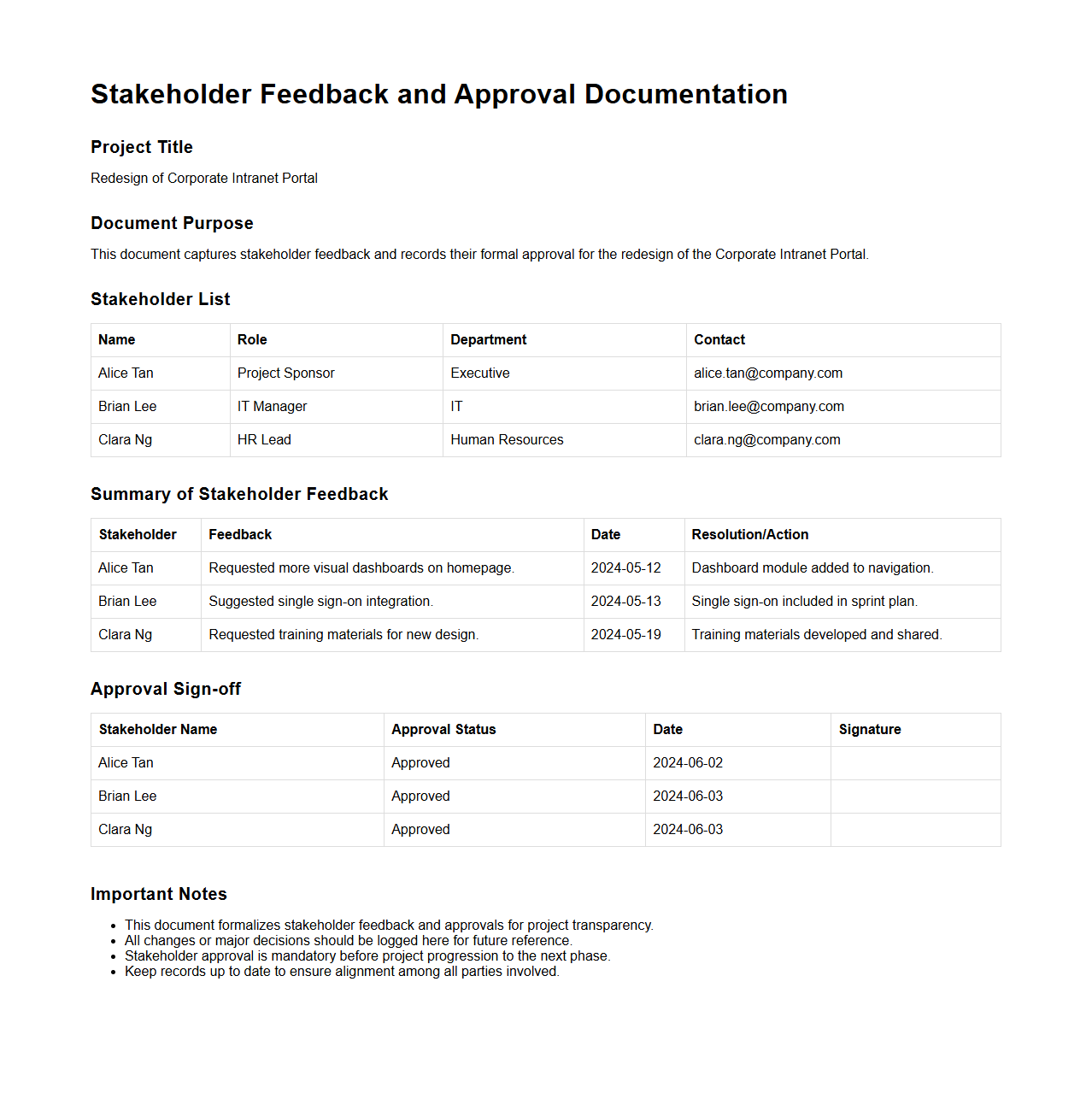
Stakeholder Feedback and Approval Documentation is a critical record that captures input, comments, and formal consent from key project participants, ensuring alignment and agreement on project deliverables and decisions. This document serves as evidence of
stakeholder engagement and helps mitigate risks by verifying that expectations are clearly understood and approved before proceeding. It is essential for maintaining transparency, accountability, and facilitating effective communication throughout the project lifecycle.
Financial Closure and Budget Reconciliation
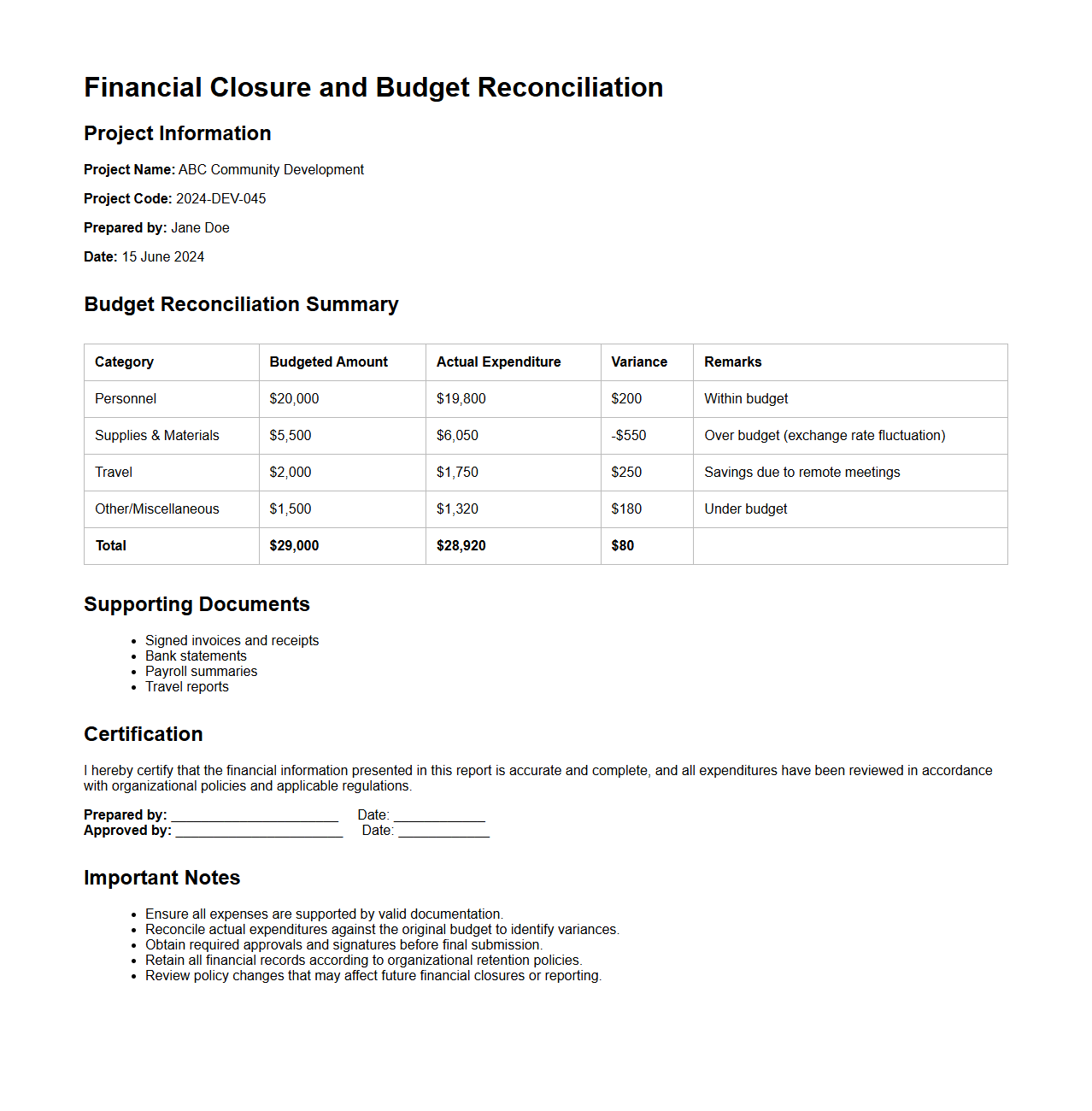
Financial Closure marks the completion of all financial transactions related to a project, ensuring all expenses and payments are accounted for and verified. The
Budget Reconciliation document is a detailed report that compares allocated funds against actual expenditures to identify discrepancies and ensure financial accuracy. This document plays a critical role in closing the financial cycle and providing transparency for stakeholders.
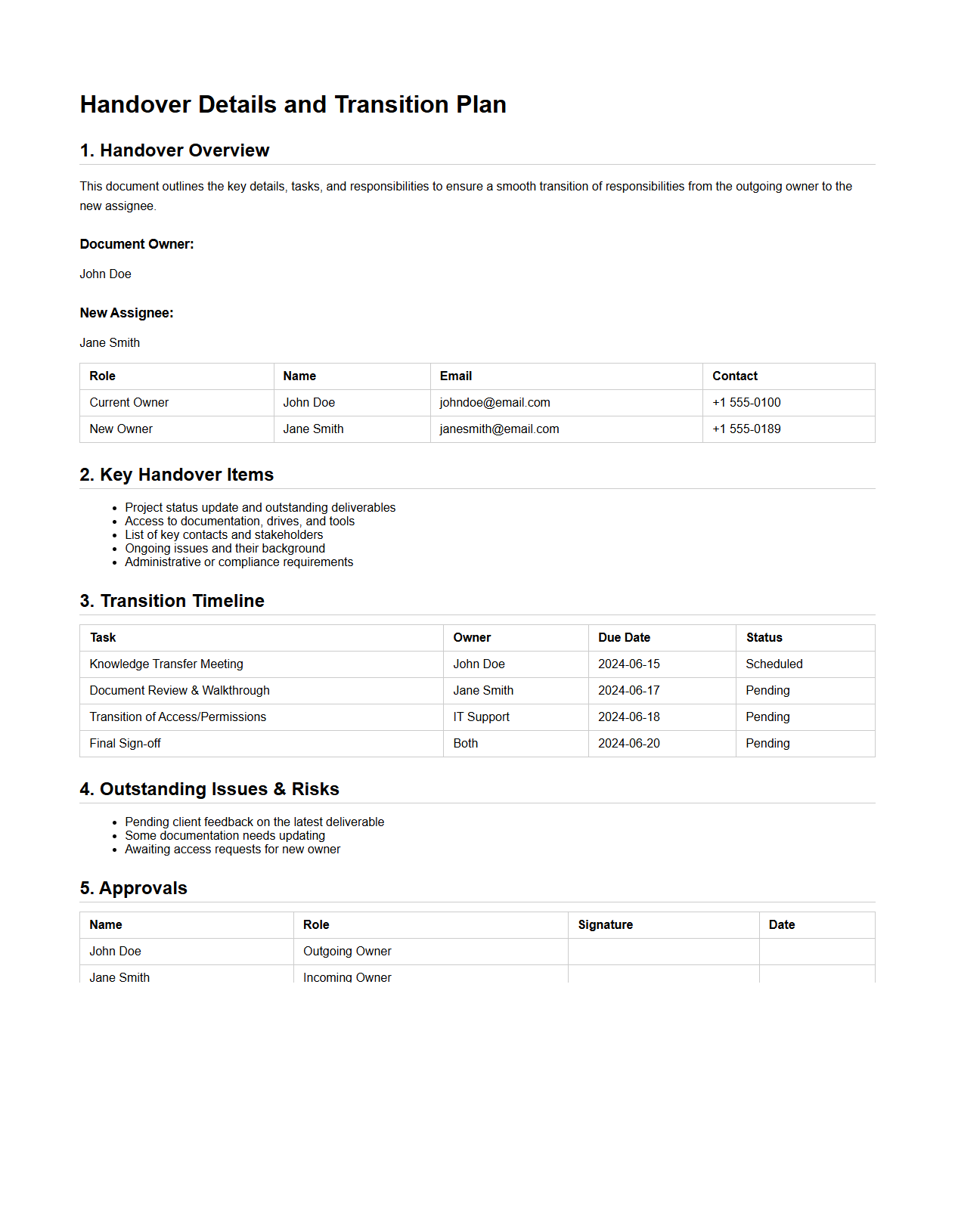
Handover Details and Transition Plan
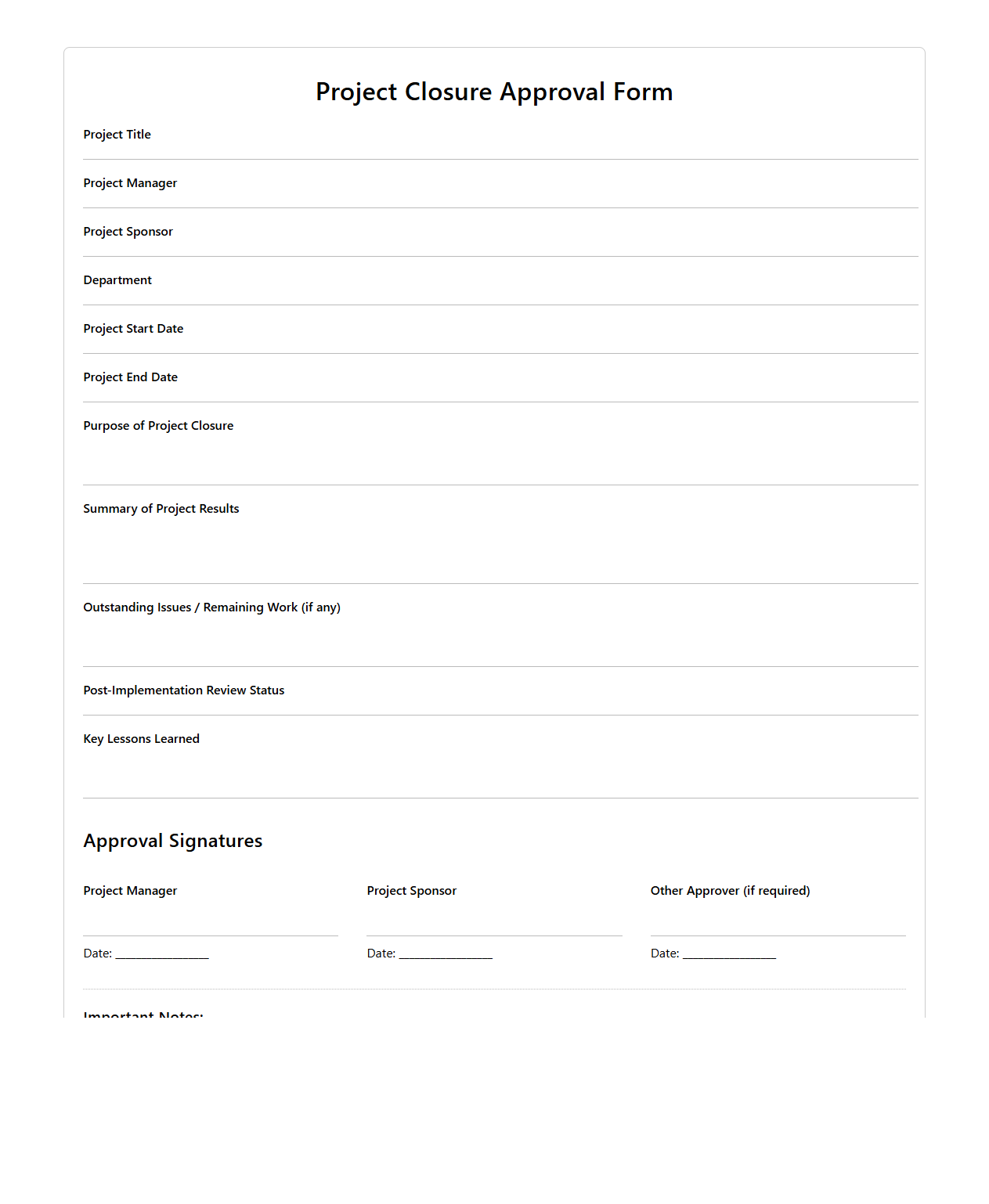
document outlines the critical information and processes required to ensure a smooth transfer of responsibilities and knowledge between teams or individuals during a project or role change. It includes key tasks, timelines, contact information, and resources necessary for continuity and minimizing disruption. Clear documentation in this plan supports effective communication, accountability, and a seamless transition in organizational workflows.Formal Project Closure Approval Form
The
Formal Project Closure Approval Form is a critical document used to signify the official completion and acceptance of a project by stakeholders. It consolidates final project deliverables, confirms that all objectives have been met, and ensures any outstanding issues are resolved. This form serves as an authoritative record for organizational archives and facilitates the release of project resources.
What are the essential sections required in a Project Closure Report format?
The essential sections of a project closure report include the project overview, objectives achieved, and final deliverables. It should also feature the project timeline, budget performance, and any outstanding issues or risks. Additionally, including a summary of lessons learned and recommendations for future projects is crucial for comprehensive closure.
Which key performance indicators should be included in the completion summary?
The completion summary must highlight key performance indicators such as project scope adherence, budget variance, and schedule performance. Customer satisfaction and quality metrics are also important to demonstrate project success. Tracking the resolution of project risks and issues provides insight into overall project health during closure.
What documentation or evidence is necessary to validate project deliverables in the final report?
Validation of project deliverables requires formal acceptance documents, test results, and completion certificates. Including stakeholder sign-offs and audited financial reports helps ensure transparency and accountability. Supporting evidence like progress reports and quality assurance records further strengthens the credibility of the final report.
How should lessons learned and best practices be structured within the closure report?
Lessons learned should be organized into categories such as project management, technical challenges, and stakeholder engagement for clarity. Each lesson must include the issue encountered, the solution applied, and recommendations for future projects. Highlighting best practices with examples allows teams to leverage successes in subsequent initiatives.
What is the recommended format for stakeholder acknowledgment and project sign-off?
The recommended format involves a formal sign-off section listing all key stakeholders with signature lines and dates. This section should confirm acceptance of deliverables and project completion status. Including a space for additional comments ensures stakeholders can provide final feedback or conditions.