A Format of Research Report for Academic Submission typically includes a structured layout with sections such as the title page, abstract, introduction, methodology, results, discussion, conclusion, and references. Proper adherence to this format ensures clarity, coherence, and credibility in presenting research findings. Following specific formatting guidelines, such as font style, citation style, and heading hierarchy, is essential for meeting academic standards.
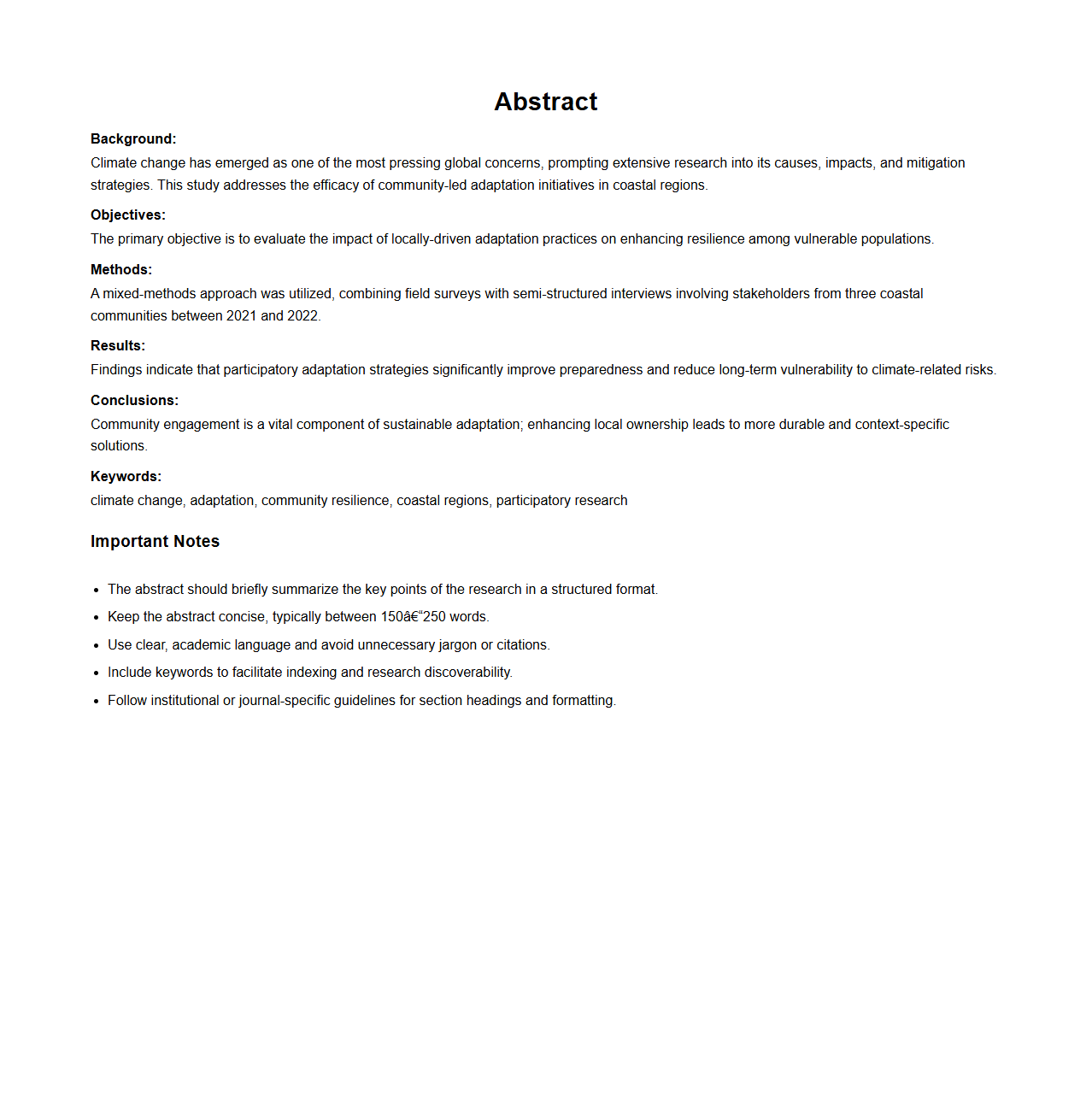
Abstract Section Formatting in Academic Research Reports
The
Abstract Section Formatting in academic research reports involves structuring a concise summary that highlights the study's objectives, methods, key findings, and conclusions within a specified word limit. Proper formatting ensures clarity, consistency, and adherence to publication or institution guidelines, typically requiring specific font styles, sizes, and spacing. This section serves as a critical overview that facilitates quick understanding and indexing in academic databases.
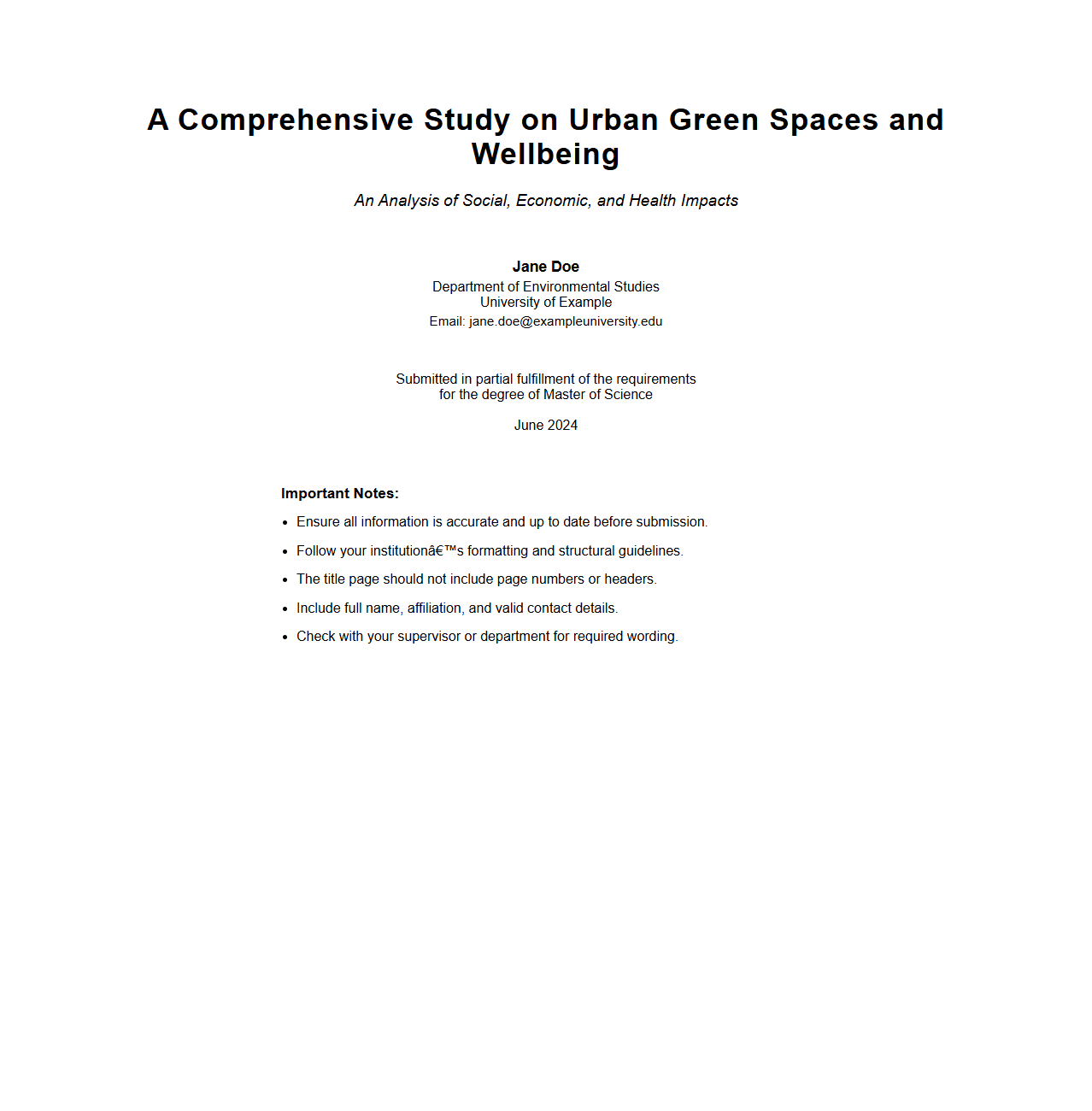
Title Page Structure for Academic Research Submissions
The
Title Page Structure for Academic Research Submissions document outlines the essential components and formatting requirements necessary for submitting scholarly work. It typically specifies the inclusion of the research title, author names, affiliations, corresponding author contact information, and sometimes funding acknowledgments or disclaimers. This standardized structure ensures clarity, professionalism, and consistency across academic publications and facilitates proper indexing and citation.
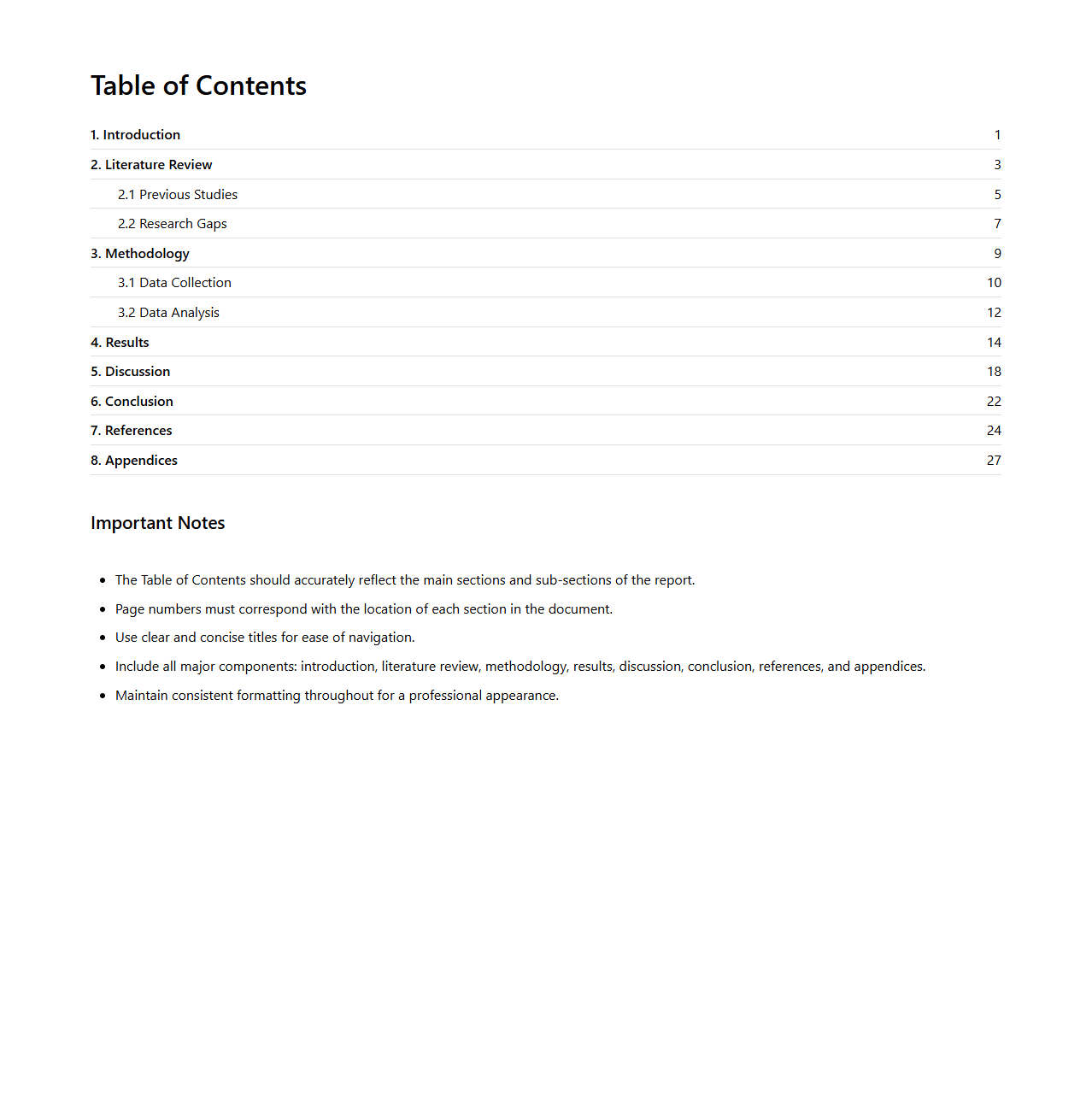
Table of Contents Layout in Research Reports
The
Table of Contents Layout in research reports serves as an organized outline, guiding readers through the structure and key sections of the document. It typically includes chapter titles, headings, and subheadings with corresponding page numbers to facilitate easy navigation. Properly formatted tables of contents enhance readability and help locate specific information efficiently.
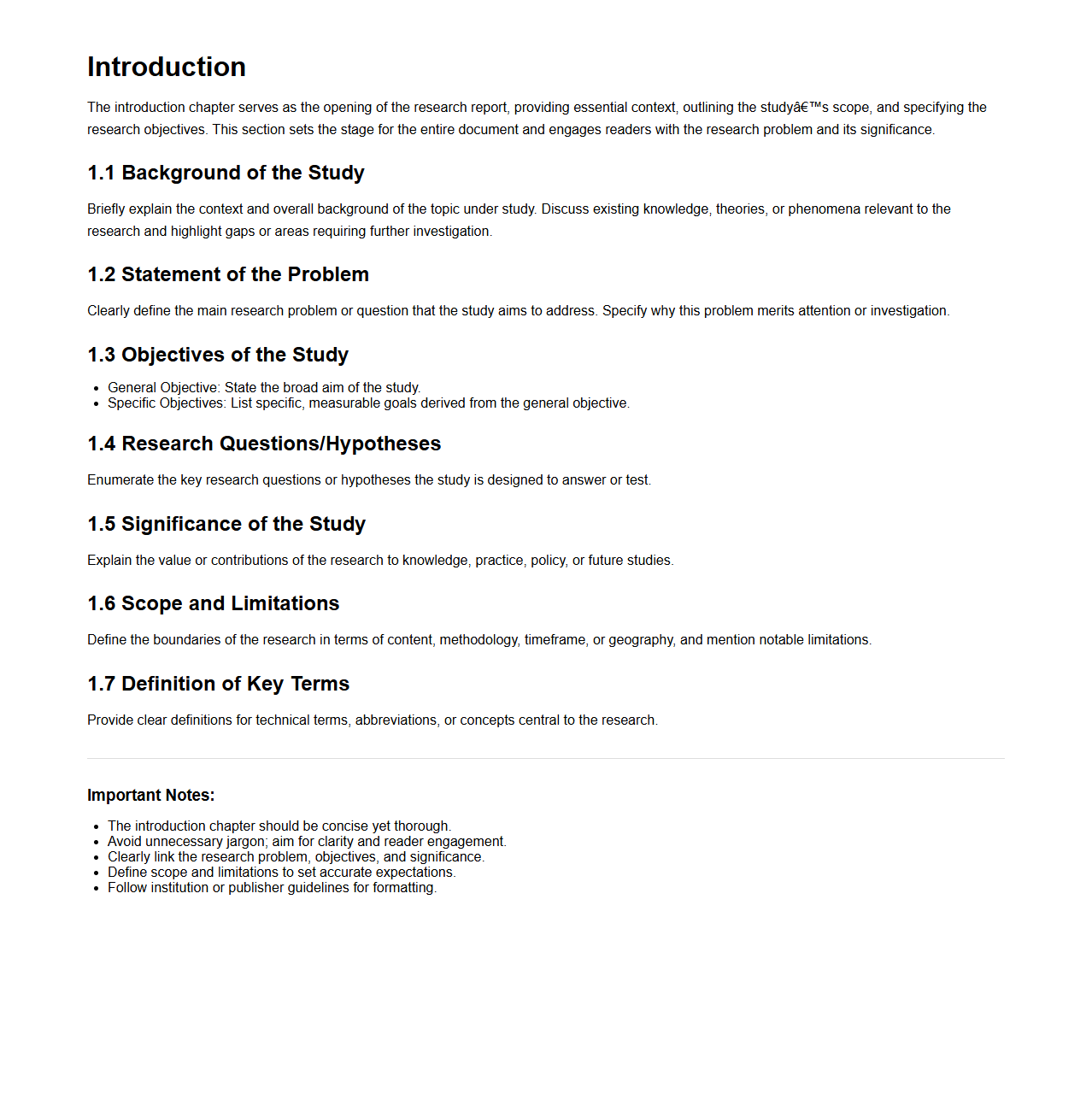
Introduction Chapter Document Format for Research Reports
The
Introduction Chapter Document Format for research reports outlines the structured approach to presenting the background, objectives, and significance of the study. This format ensures clarity by specifying sections such as problem statement, research questions, hypotheses, and scope, facilitating a coherent foundation for the entire report. Proper adherence to this format enhances readability and sets a precise context for the subsequent chapters.
Literature Review Organizational Structure in Academic Submissions
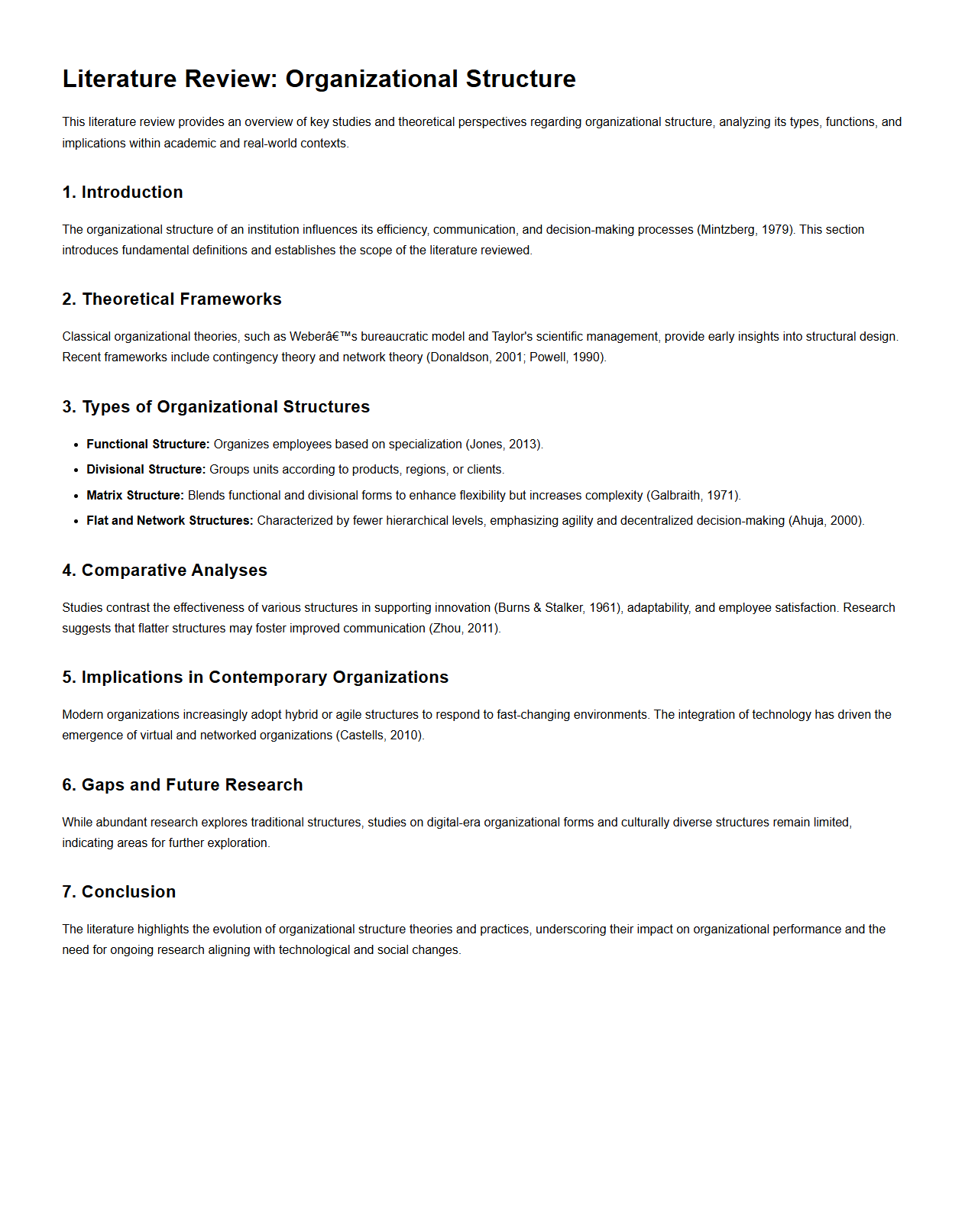
A
Literature Review Organizational Structure in academic submissions outlines the systematic arrangement of sources and themes to critically evaluate existing research. It helps to identify gaps, trends, and relationships between studies, ensuring clarity and coherence in presenting background knowledge. This structure enhances the reader's understanding by logically grouping related works according to methodology, chronology, or thematic focus.
Methodology Section Formatting in Research Papers
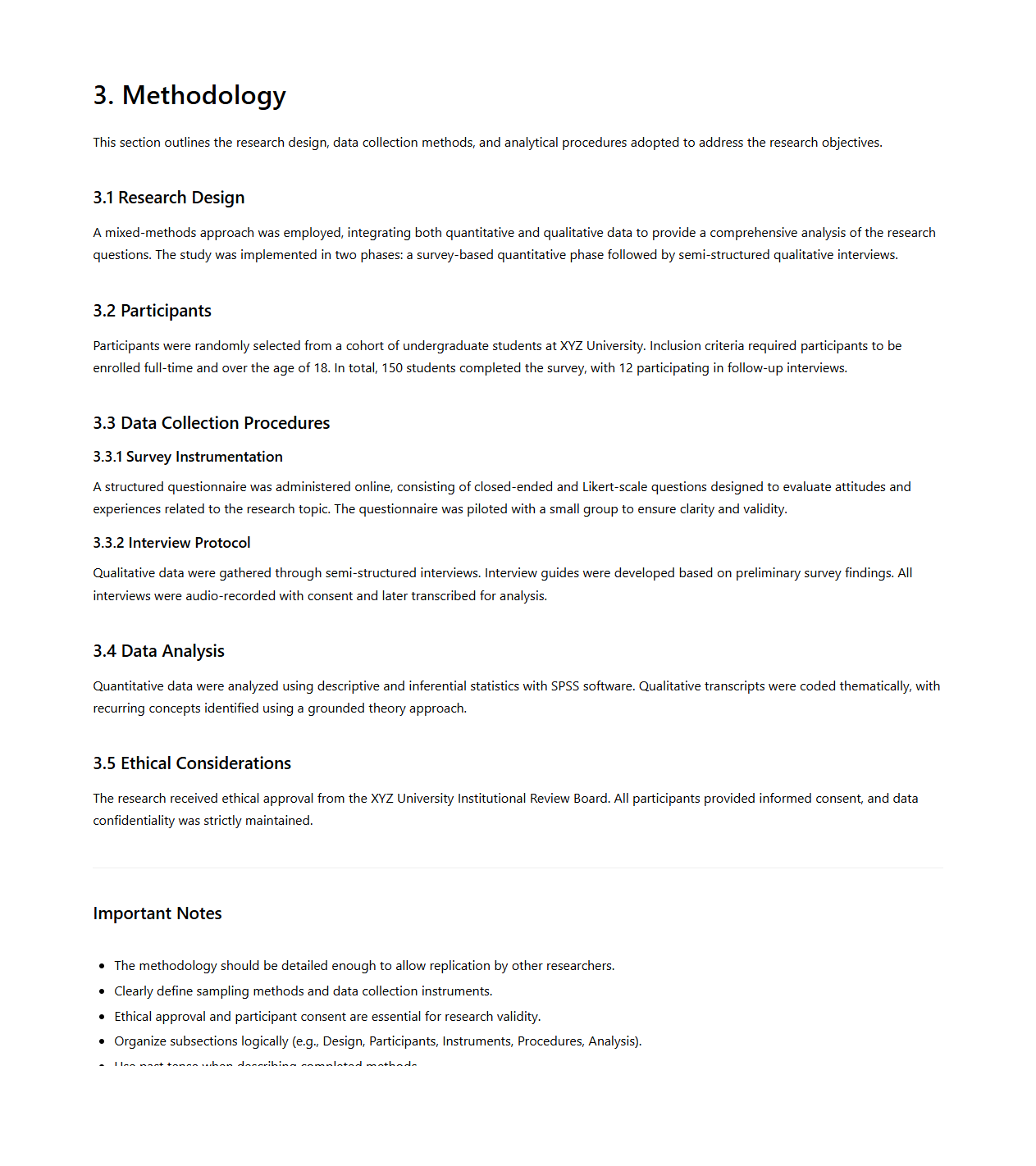
The
Methodology Section Formatting in research papers is the structured presentation of the research design, data collection, and analysis procedures, ensuring clarity and reproducibility. It includes standardized headings, consistent citation styles, and detailed descriptions of materials and techniques used to validate the study's approach. Proper formatting enhances the credibility of the research and facilitates peer review and replication.
Results and Findings Presentation Format in Research Reports
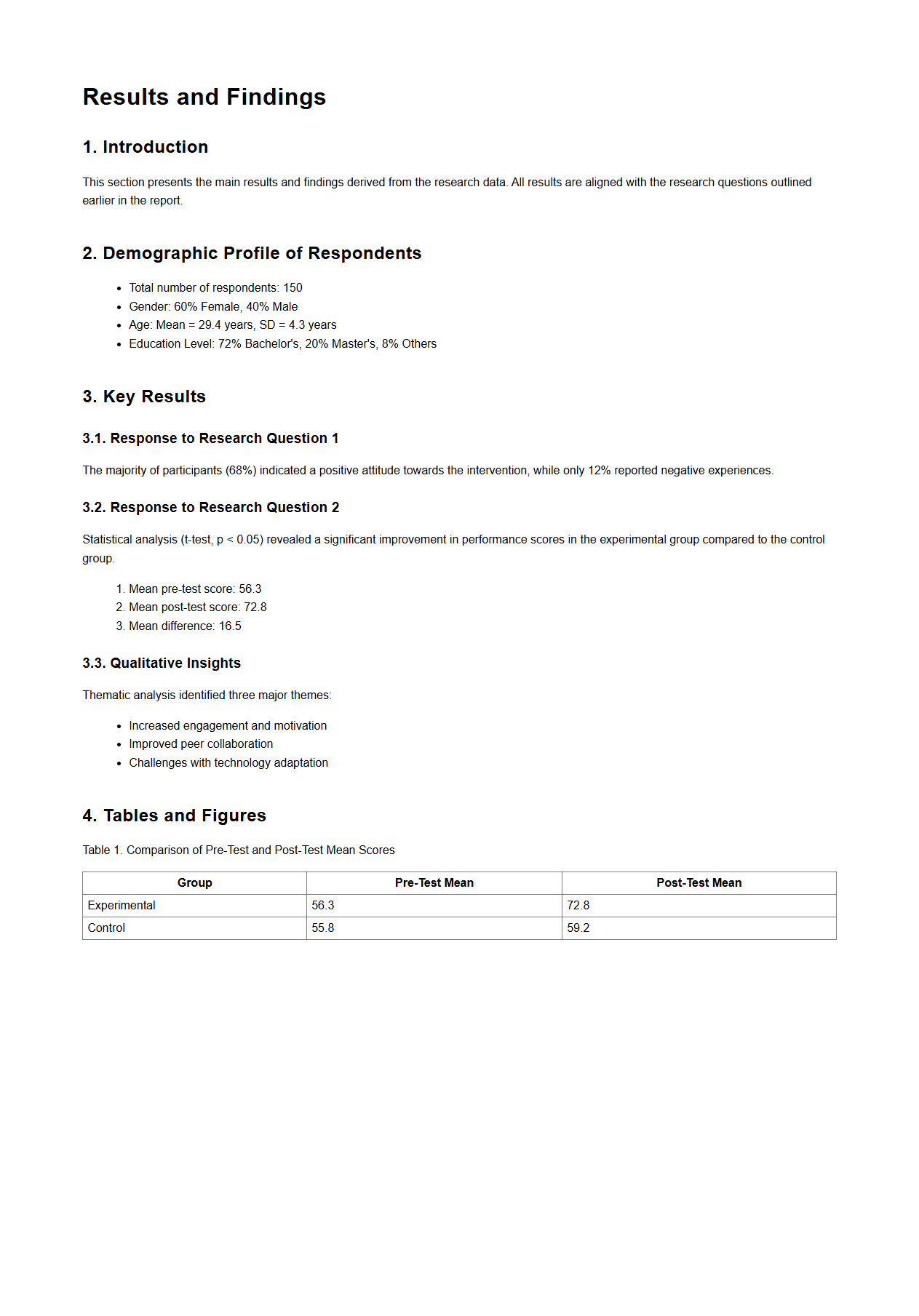
The
Results and Findings Presentation Format in research reports is a structured approach to clearly display data and outcomes obtained from a study. This format includes the use of tables, figures, charts, and descriptive statistics to effectively communicate key results without interpretation or bias. Organizing findings systematically ensures that readers can easily comprehend the significance of the research and validate the presented data.
Discussion Section Document Structure for Research Submissions
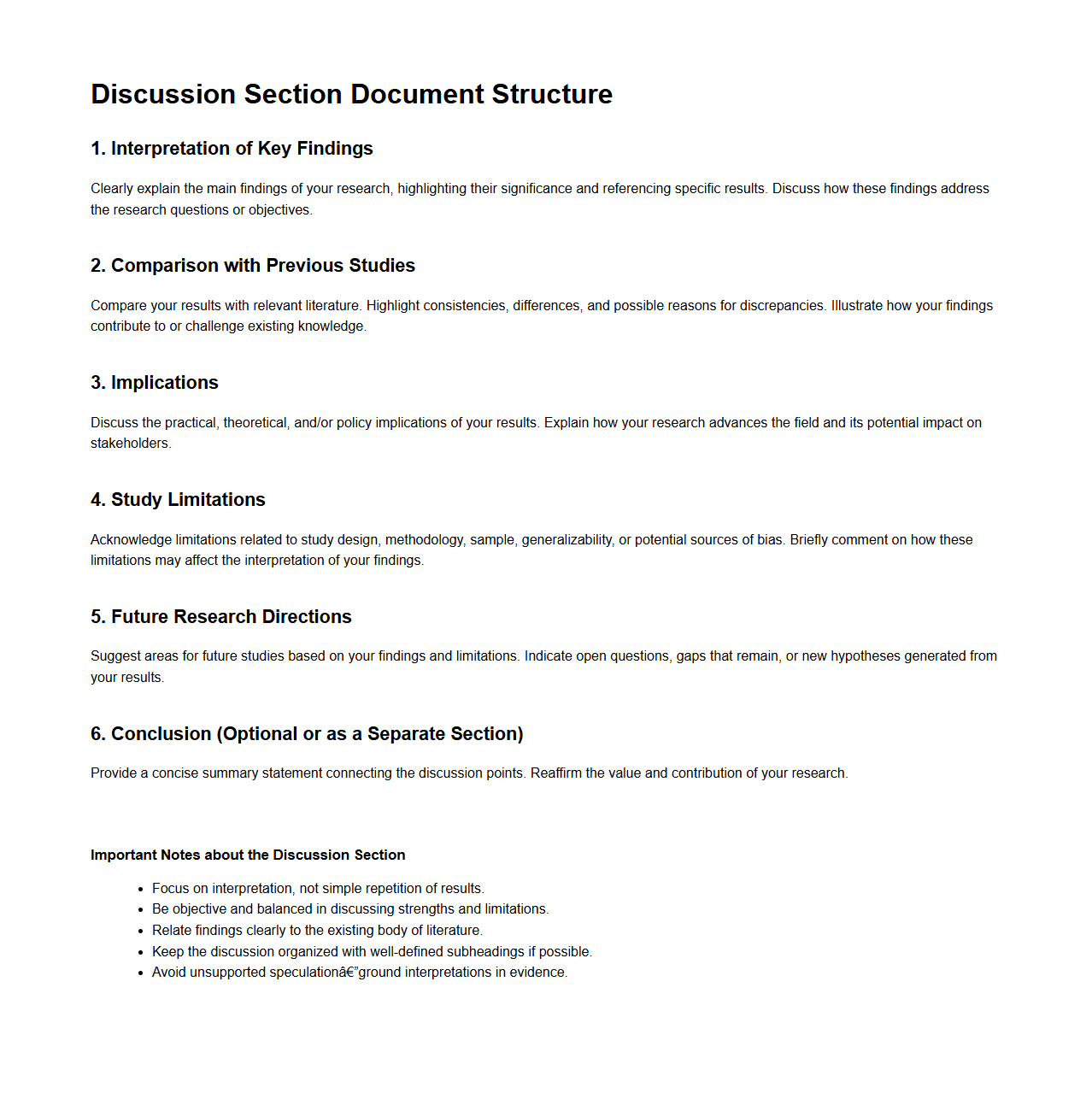
The
Discussion Section Document Structure for research submissions outlines the essential components and organization of the discussion part in academic papers, ensuring clarity and coherence. It guides researchers on how to interpret results, relate findings to existing literature, and highlight implications or limitations effectively. Following this structure improves the quality and impact of research communication for peer review and publication.
References and Citation Formatting for Academic Research Reports
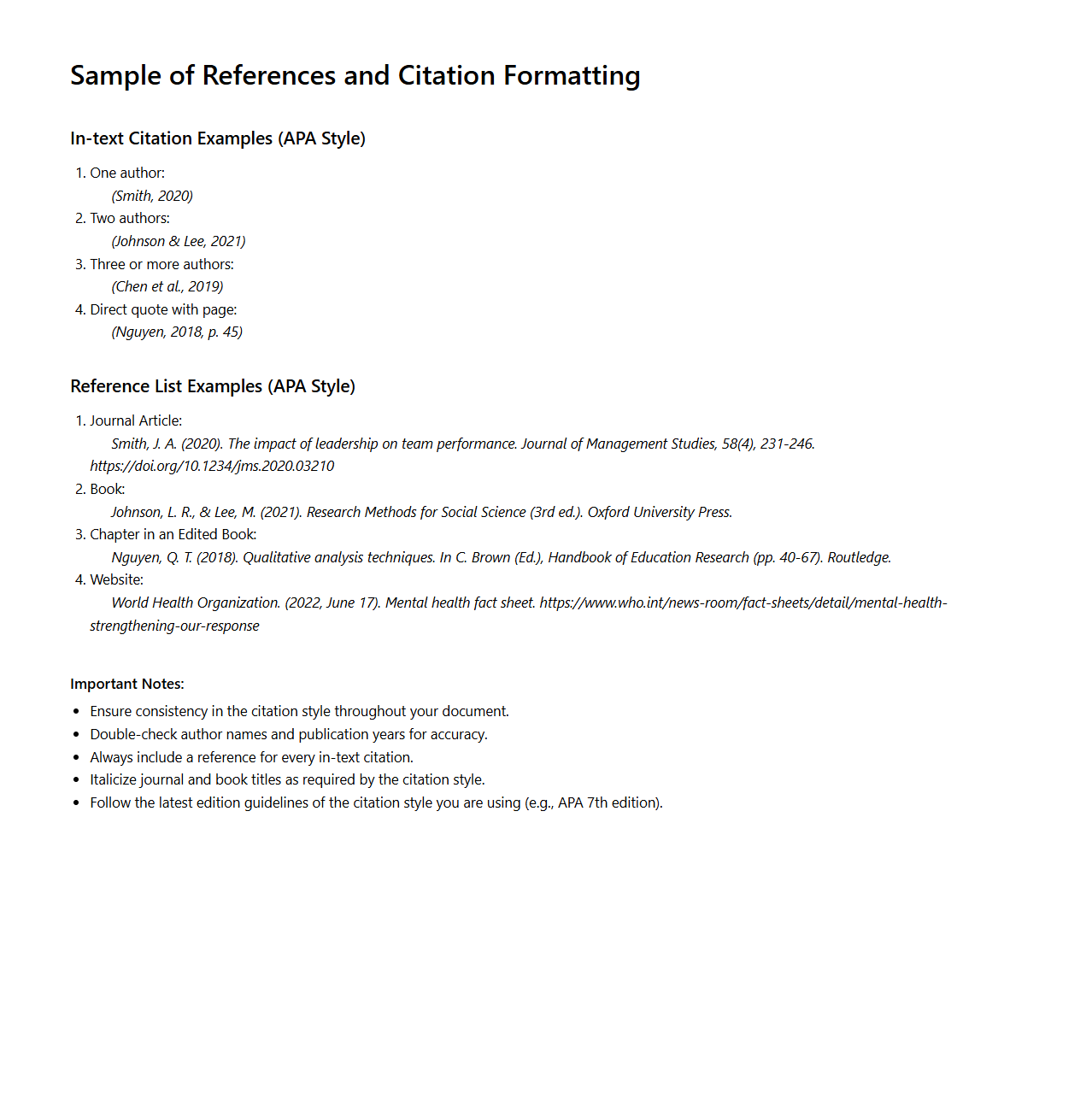
References and Citation Formatting for Academic Research Reports document provides detailed guidelines on structuring and presenting sources used in scholarly work. It ensures consistent acknowledgement of authors, publication dates, titles, and publication details, adhering to specific style guides like APA, MLA, or Chicago. Proper
citation formatting enhances the credibility of research by allowing readers to verify sources and avoid plagiarism.
Appendix Inclusion Format in Research Report Submissions
The
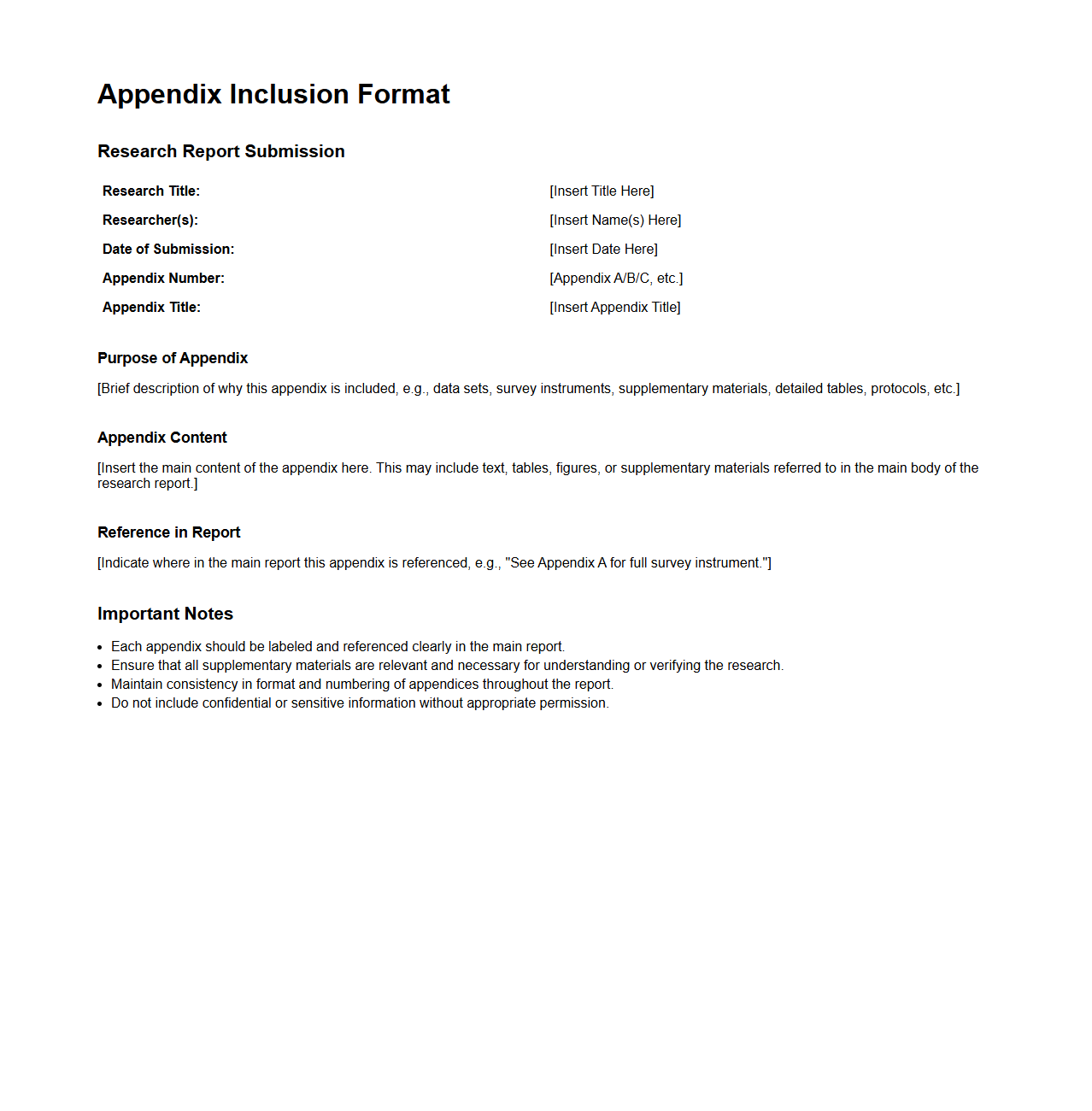
Appendix Inclusion Format in research report submissions refers to the standardized method for organizing supplementary materials such as raw data, detailed calculations, questionnaires, or extended tables that support the main findings but are too extensive for the main body. This format ensures clarity, proper labeling, and easy reference within the report, enhancing the transparency and reproducibility of the research. Following specific guidelines for font size, spacing, and order of appendices helps maintain a professional and consistent presentation in academic and scientific reporting.
What are the essential sections in the format of an academic research report letter?
The essential sections of an academic research report letter typically include the title, abstract, introduction, methodology, results, discussion, and conclusion. Each section serves a distinct purpose to present the research clearly and logically. Including these sections ensures the report is comprehensive and easy for readers to navigate.
How should citations and references be formatted in a research report letter?
Citations and references in a research report letter should follow a consistent academic style such as APA, MLA, or Chicago. Inline citations must match the reference list entries to maintain accuracy and credibility. Proper formatting helps avoid plagiarism and enhances the professionalism of the letter.
What font style and size are recommended for academic research letters?
The recommended font style for academic research letters is typically Times New Roman or Arial for readability and professionalism. A font size of 12 points is standard to ensure clarity and ease of reading. Consistent use of font style and size contributes to the overall neat presentation of the letter.
How should tables and figures be incorporated into a research report letter?
Tables and figures should be numbered consecutively and placed close to the relevant text in the report letter. Each table or figure must have a descriptive title and a clear legend if necessary to explain its contents. Proper labeling enhances comprehension and supports the findings discussed in the letter.
What is the ideal word count for the introduction section in a research report letter?
The ideal word count for the introduction section in a research report letter is generally between 250 and 500 words. This length provides enough space to present background information, state the research problem, and outline the objectives. Keeping the introduction concise yet informative engages readers from the beginning.