The Format of Monitoring Report for Project typically includes sections such as project overview, key performance indicators, progress updates, and challenges encountered. It provides a structured approach for tracking project milestones and evaluating outcomes against objectives. Clear visuals like charts and tables are often incorporated to enhance data interpretation and decision-making.
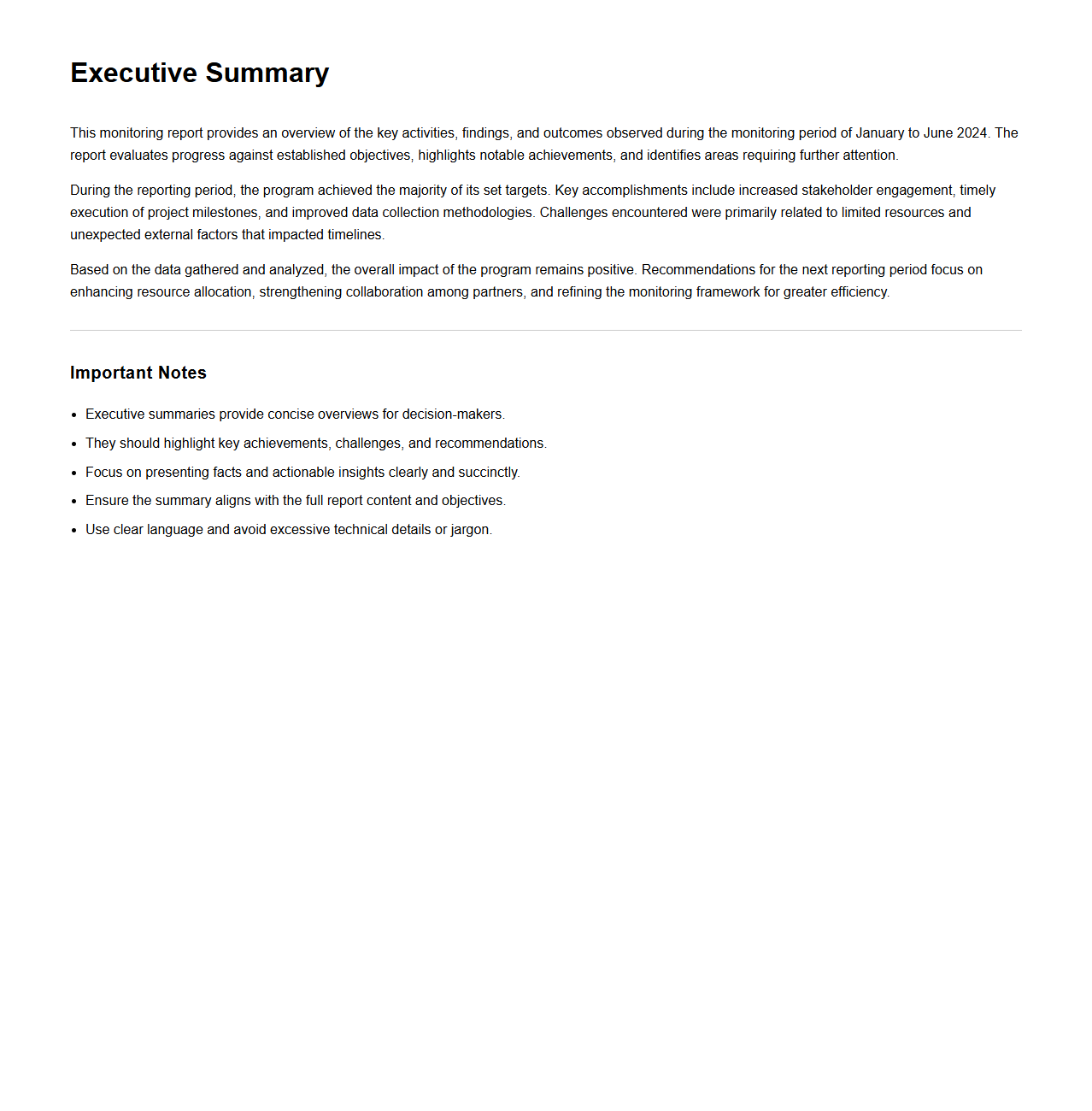
Executive Summary Section for Monitoring Report
The
Executive Summary Section in a Monitoring Report document provides a concise overview of the key findings, progress, and critical issues identified during the monitoring period. It highlights major performance indicators, project status, and any deviations from planned objectives to facilitate quick decision-making by stakeholders. This section ensures that senior management and other readers can grasp essential information without reviewing the entire report.
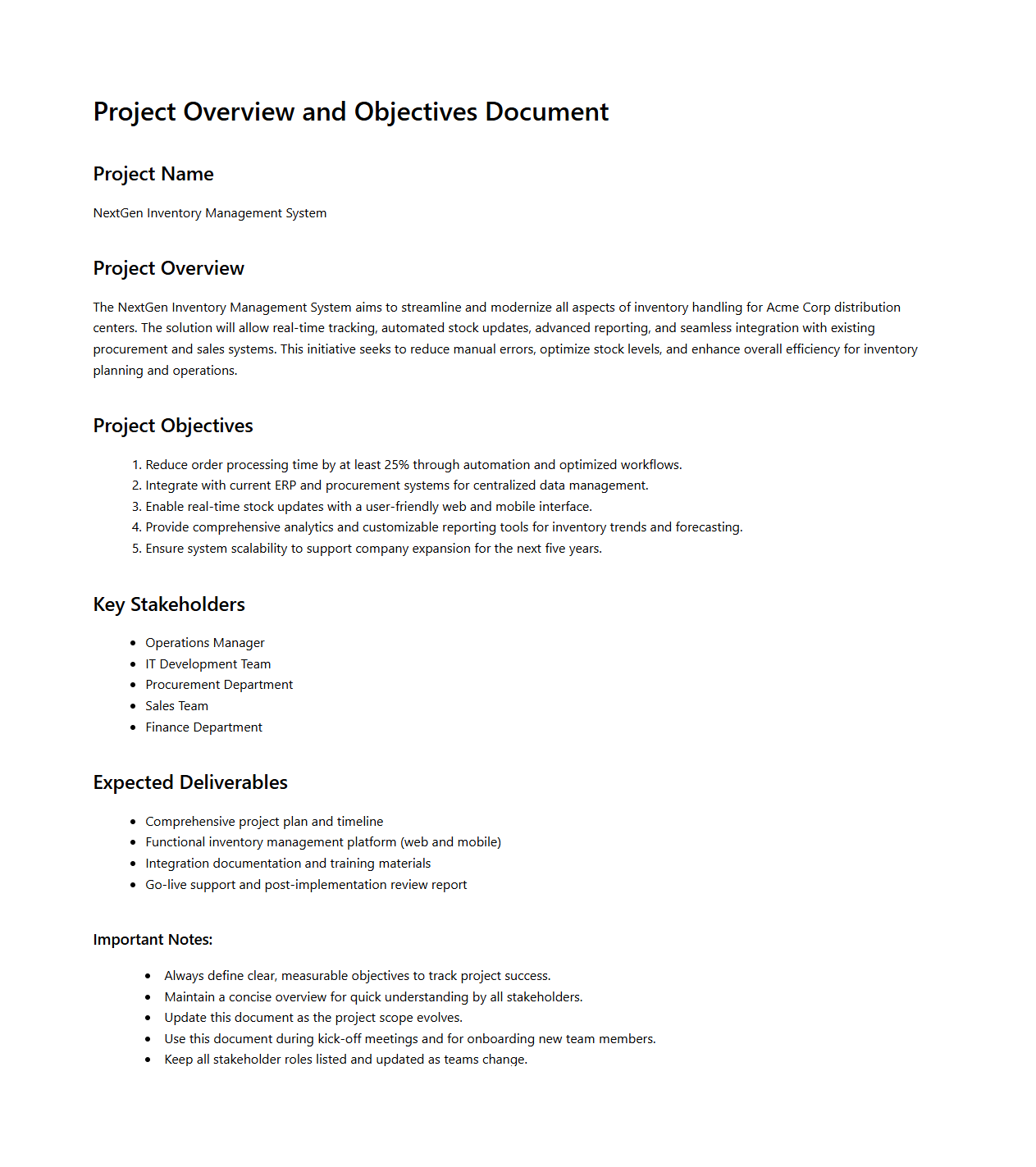
Project Overview and Objectives Document
The
Project Overview and Objectives Document outlines the primary goals, scope, and deliverables of a project, providing a clear roadmap for stakeholders and team members. It defines the project's purpose, key milestones, and success criteria to ensure alignment and effective communication throughout the project lifecycle. This document serves as a foundational reference that guides decision-making and tracks progress against established objectives.
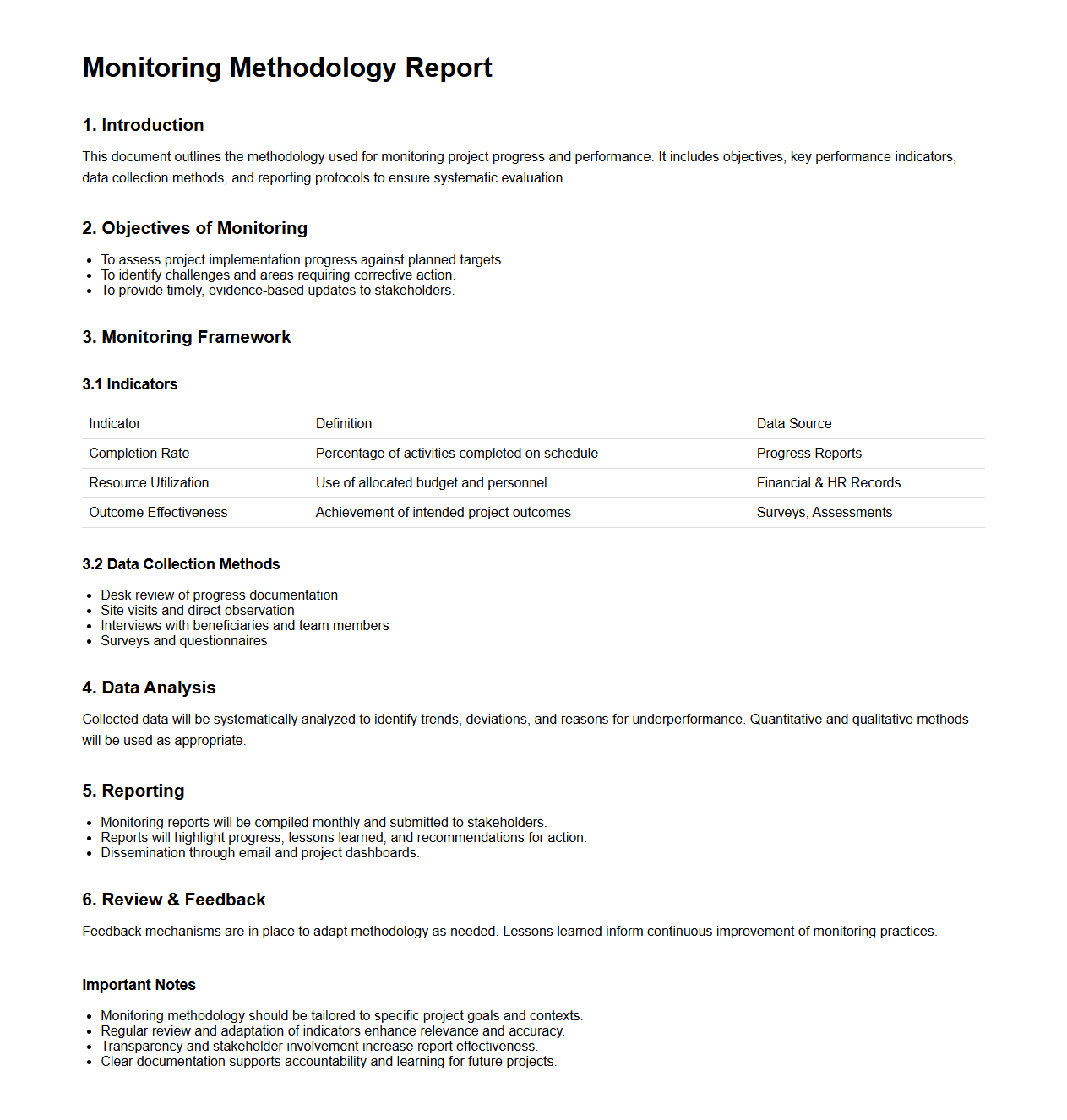
Monitoring Methodology Report Format
A
Monitoring Methodology Report Format document outlines the systematic approach and structured format used to track, assess, and analyze the performance or progress of a project, process, or system. It defines key metrics, data collection methods, frequency of monitoring, and reporting templates to ensure consistency and accuracy in evaluation. The document serves as a guideline for stakeholders to interpret results, identify issues, and implement improvements effectively.
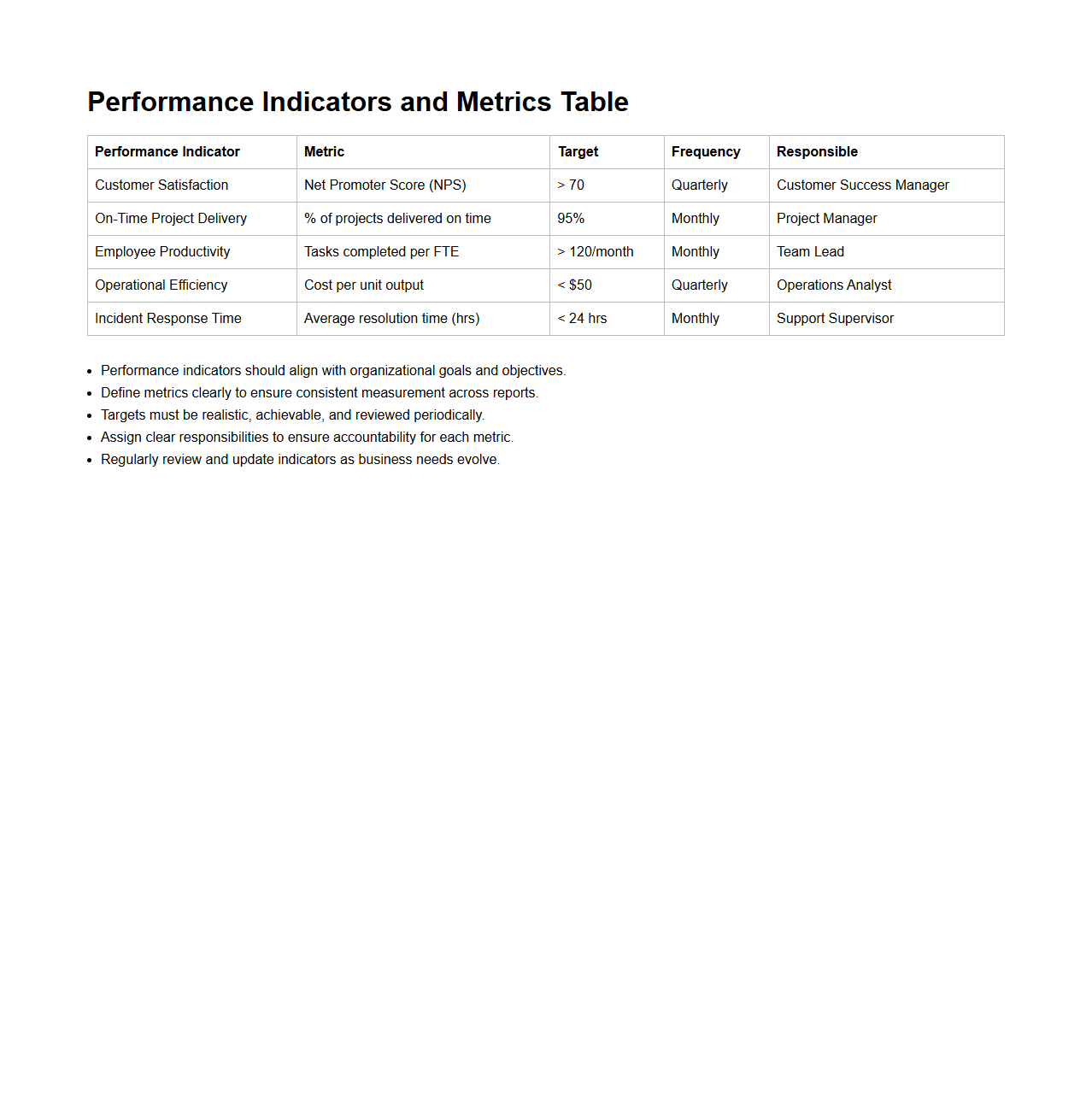
Performance Indicators and Metrics Table Format
A
Performance Indicators and Metrics Table Format document systematically organizes key performance indicators (KPIs) and associated metrics to monitor, evaluate, and improve organizational processes. It includes columns such as indicator names, definitions, measurement units, data sources, targets, and frequency of data collection, providing clear visibility into performance status. This format supports data-driven decision-making by enabling consistent tracking and comparison of performance across departments or projects.
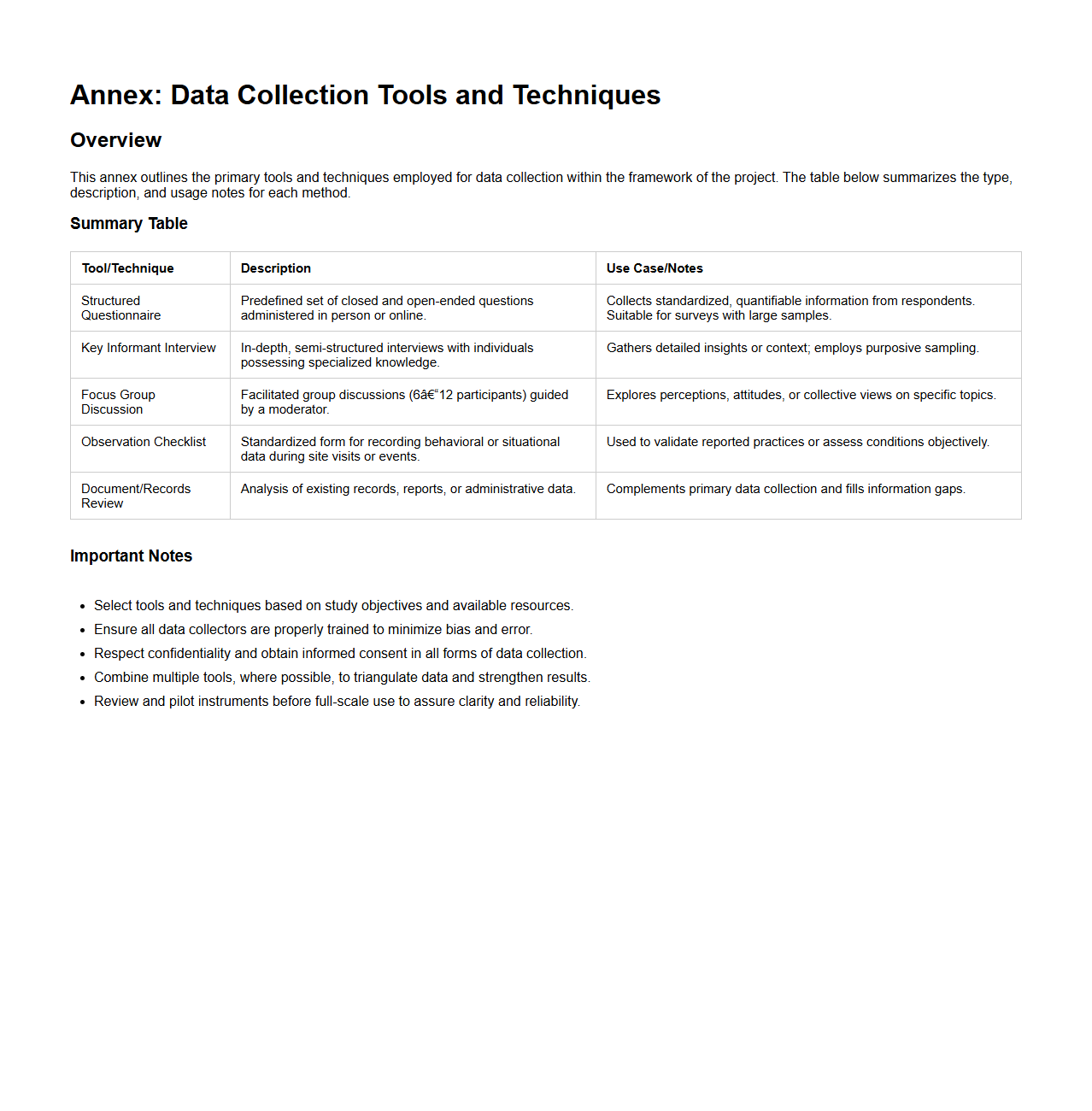
Data Collection Tools and Techniques Annex
The
Data Collection Tools and Techniques Annex document provides detailed descriptions and guidelines for various methodologies used to gather accurate and relevant data in research or project settings. It outlines specific instruments such as surveys, interviews, observation checklists, and digital data collection platforms, ensuring standardized data acquisition processes. This annex serves as a critical reference for maintaining data quality, consistency, and reliability throughout the data collection phase.
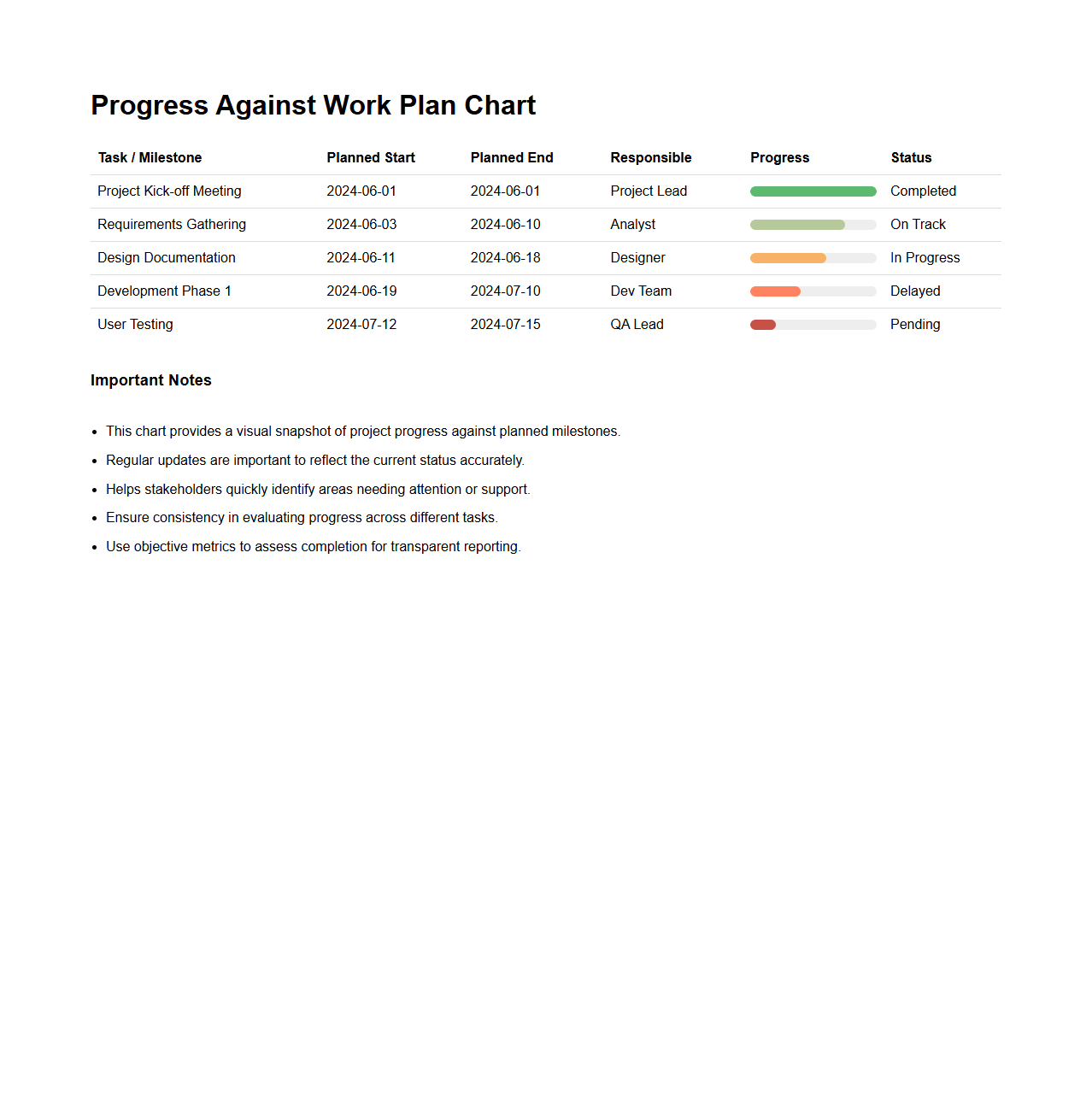
Progress Against Work Plan Chart
A
Progress Against Work Plan Chart document visually tracks the completion status of tasks and milestones in a project timeline, offering clear insights into schedule adherence and productivity. It enables project managers to identify delays, allocate resources efficiently, and ensure alignment with project goals. This chart is essential for maintaining transparency and facilitating informed decision-making throughout the project lifecycle.
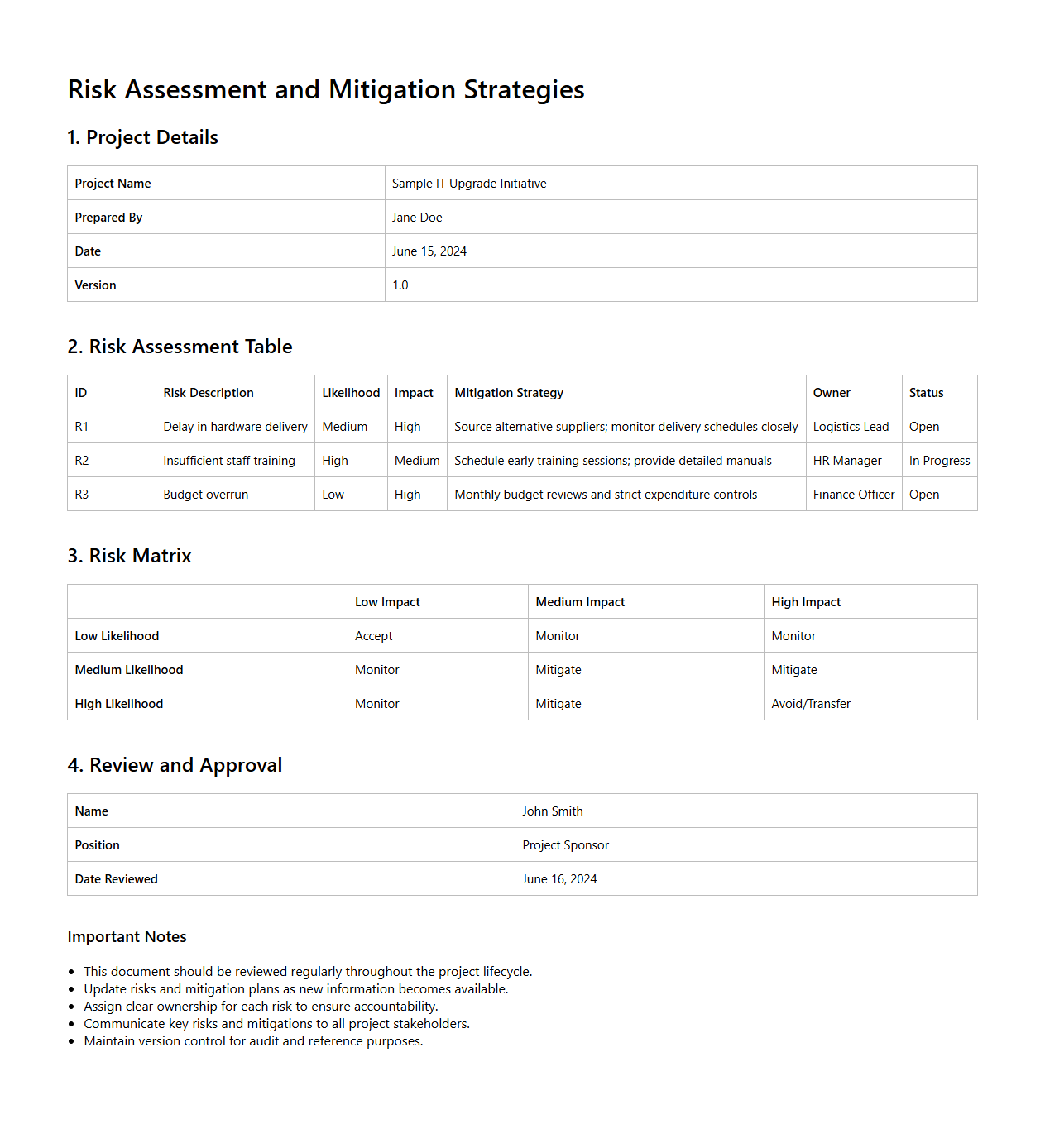
Risk Assessment and Mitigation Strategies Format
A
Risk Assessment and Mitigation Strategies Format document systematically identifies potential risks associated with a project, process, or organization, and outlines specific strategies to reduce or manage those risks effectively. It typically includes sections for risk description, impact evaluation, probability assessment, mitigation measures, responsible parties, and monitoring plans. This format ensures clear communication and proactive management of risks to minimize negative outcomes and support informed decision-making.
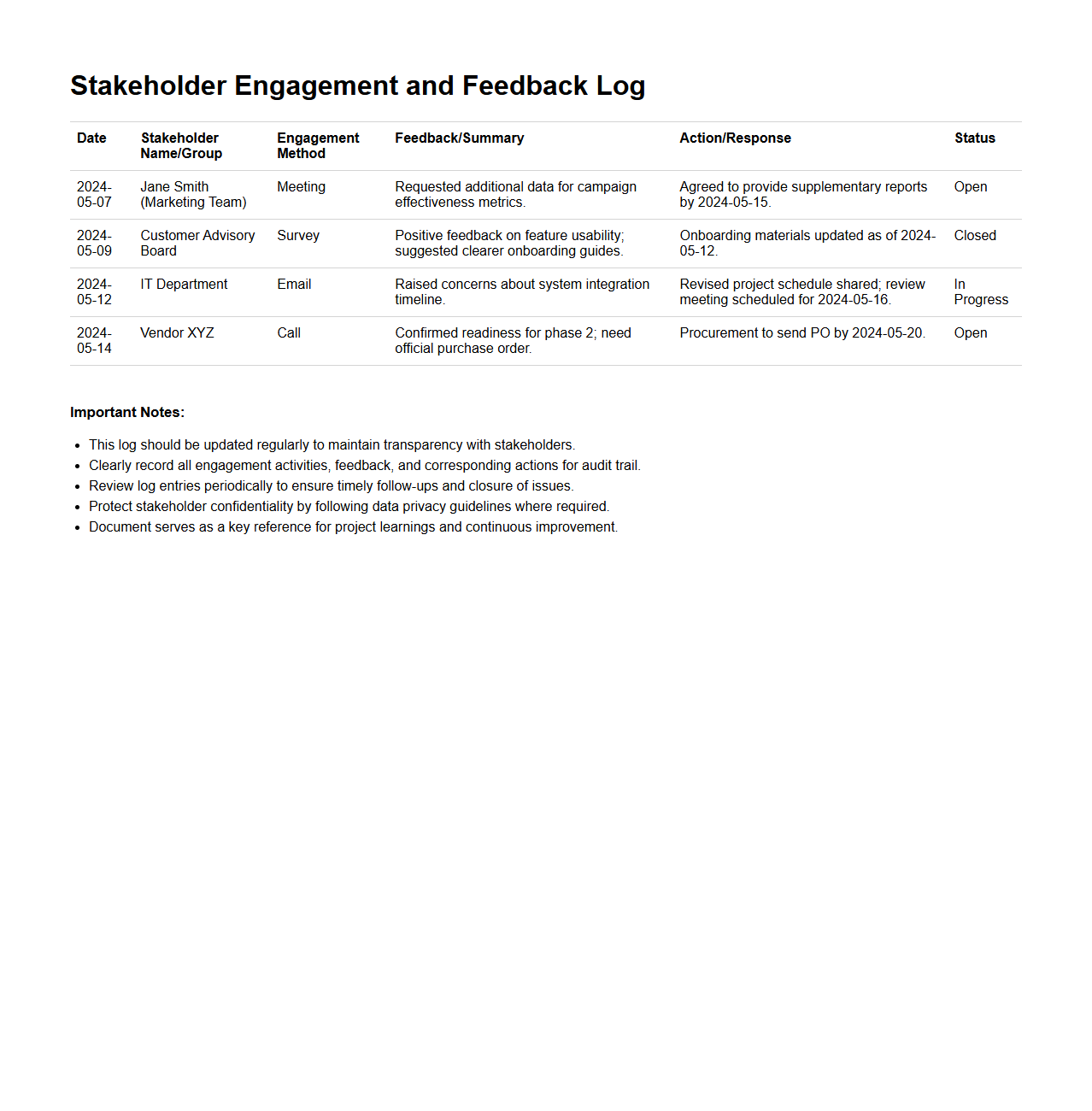
Stakeholder Engagement and Feedback Log
A
Stakeholder Engagement and Feedback Log document systematically records interactions, inputs, and concerns from project stakeholders to ensure transparency and accountability. It helps project managers track stakeholder expectations, monitor feedback trends, and address issues promptly to optimize project outcomes. Maintaining this log improves communication and supports effective decision-making throughout the project lifecycle.
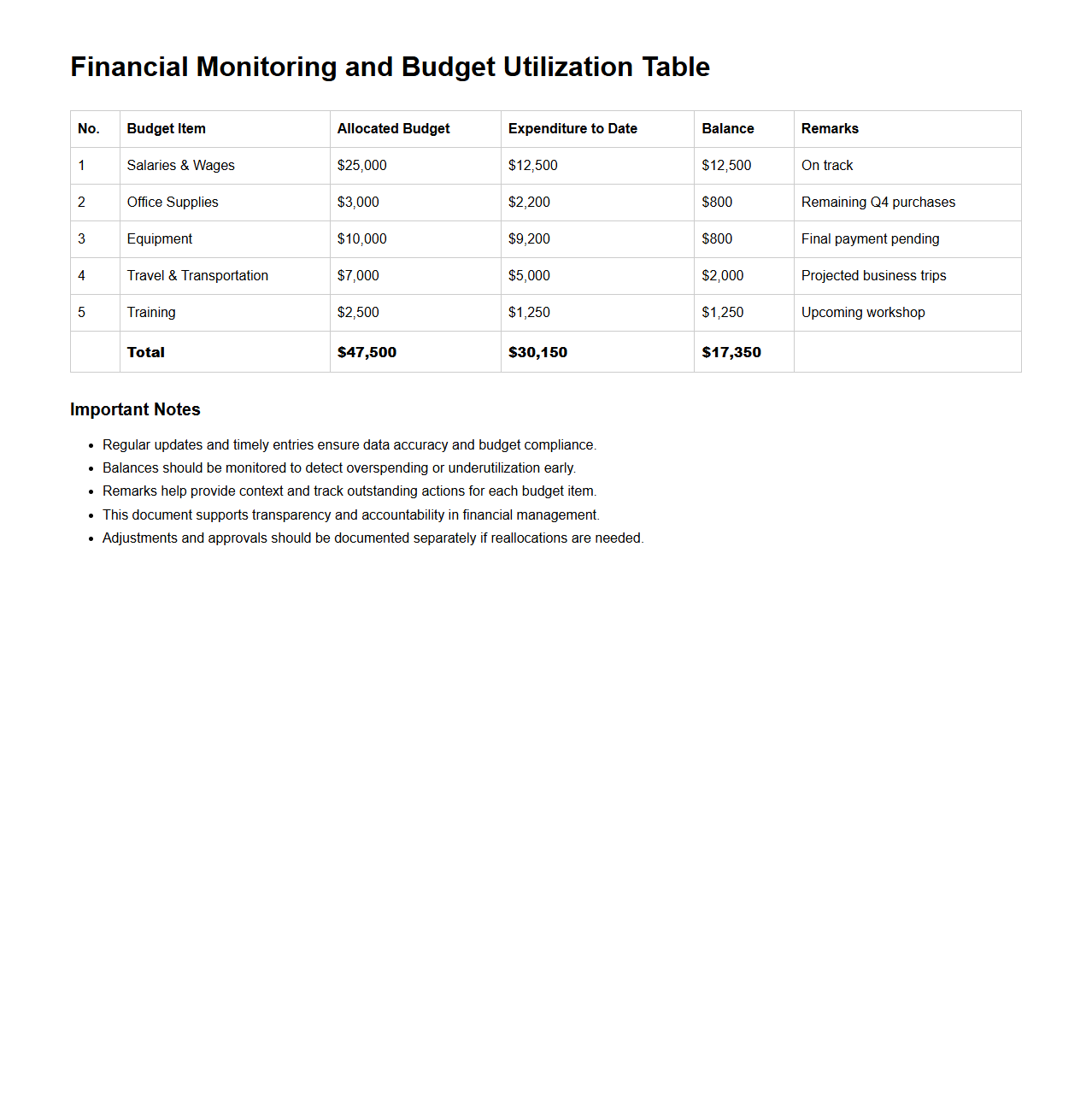
Financial Monitoring and Budget Utilization Table
The
Financial Monitoring and Budget Utilization Table document is a critical tool used to track and analyze the allocation and expenditure of funds within a project or organization. It provides detailed insights into budget performance, highlighting variances between planned and actual spending to ensure financial accountability and effective resource management. This document supports decision-making by offering transparent data on fund utilization, facilitating compliance with financial regulations and optimizing budgetary controls.
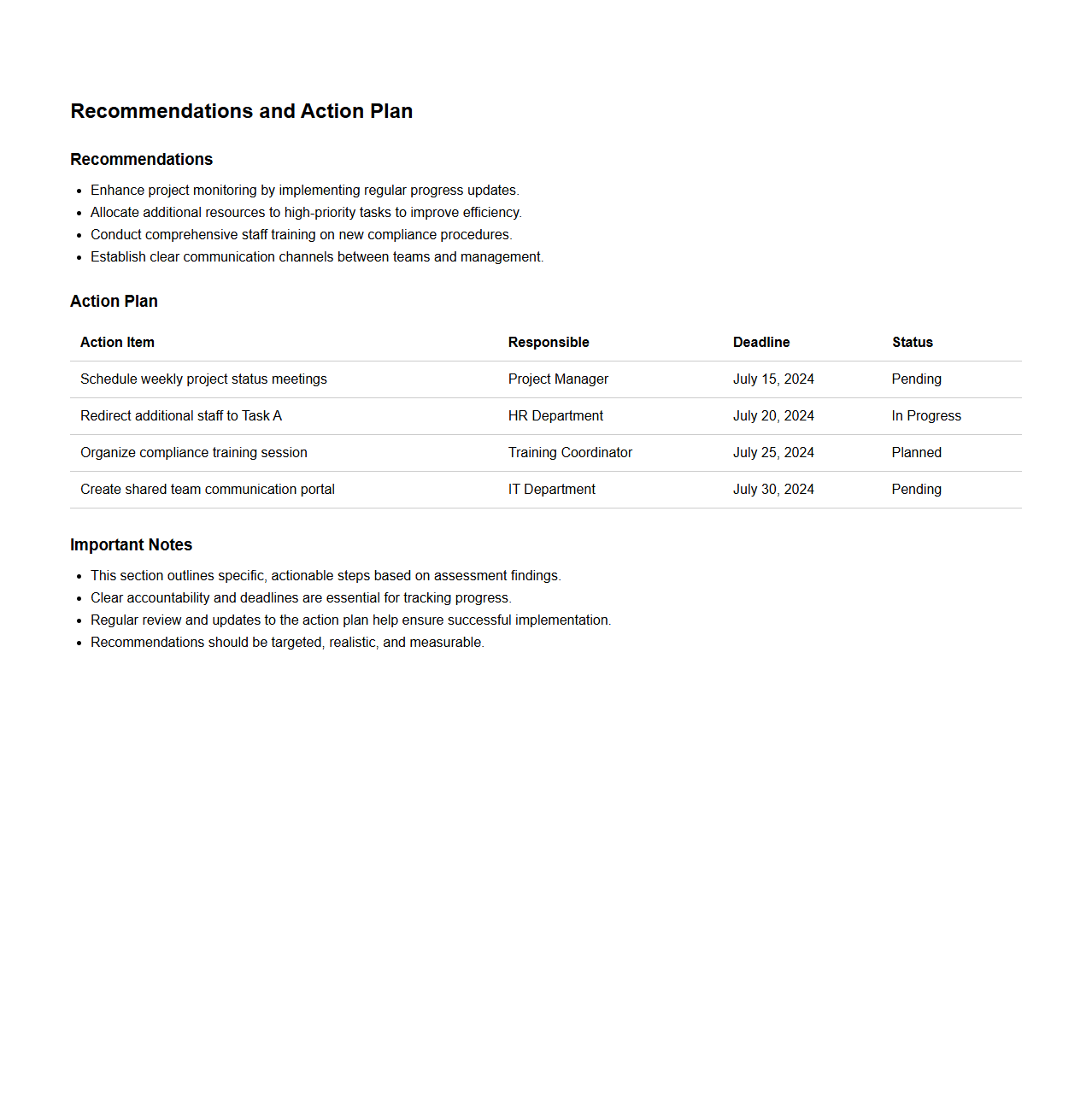
Recommendations and Action Plan Section
The
Recommendations and Action Plan Section document outlines specific strategies and steps to address identified issues or improve performance based on analysis findings. It provides prioritized, actionable guidance designed to achieve measurable goals, ensuring clear accountability and timelines for implementation. This section serves as a roadmap to facilitate decision-making and track progress toward desired outcomes.
Essential Sections Required in the Format of a Monitoring Report for a Project
A Monitoring Report must include key sections such as an executive summary, project objectives, and status updates. It should also contain sections for resource allocation, schedule adherence, and financial performance. These sections ensure comprehensive coverage of all critical aspects of the project's progress.
Presentation and Tracking of Key Performance Indicators (KPIs)
Key Performance Indicators (KPIs) should be clearly defined and presented using visual aids like charts and tables for easy interpretation. Regular tracking intervals must be documented to show trends and performance against targets. This facilitates quick assessment and informed decision-making within the report.
Methods to Summarize Project Progress and Highlight Completed Milestones
Project progress should be summarized using concise narrative descriptions and milestone achievement tables. Visual tools such as Gantt charts or progress bars help highlight completed and pending milestones effectively. This approach provides a clear snapshot of accomplishments and timelines.
Addressing Identification and Documentation of Risks and Mitigation Measures
The format should include a dedicated section for risk identification detailing potential issues and their impact. Mitigation strategies must be documented alongside each identified risk, outlining actionable plans and responsible persons. This ensures transparency and preparedness throughout the project lifecycle.
Integration of Stakeholder Feedback and Recommendations
Stakeholder feedback should be systematically collected and incorporated into a designated section of the report. Recommendations should be clearly outlined, evaluated, and linked to project actions or improvements. This integration fosters accountability and continuous project refinement.