A format of research report for study typically includes key sections such as the introduction, literature review, methodology, results, discussion, and conclusion. Clear organization and consistent formatting enhance readability and ensure the report effectively communicates the research findings. Proper citation and adherence to specific style guidelines also play a crucial role in presenting a professional and credible study report.
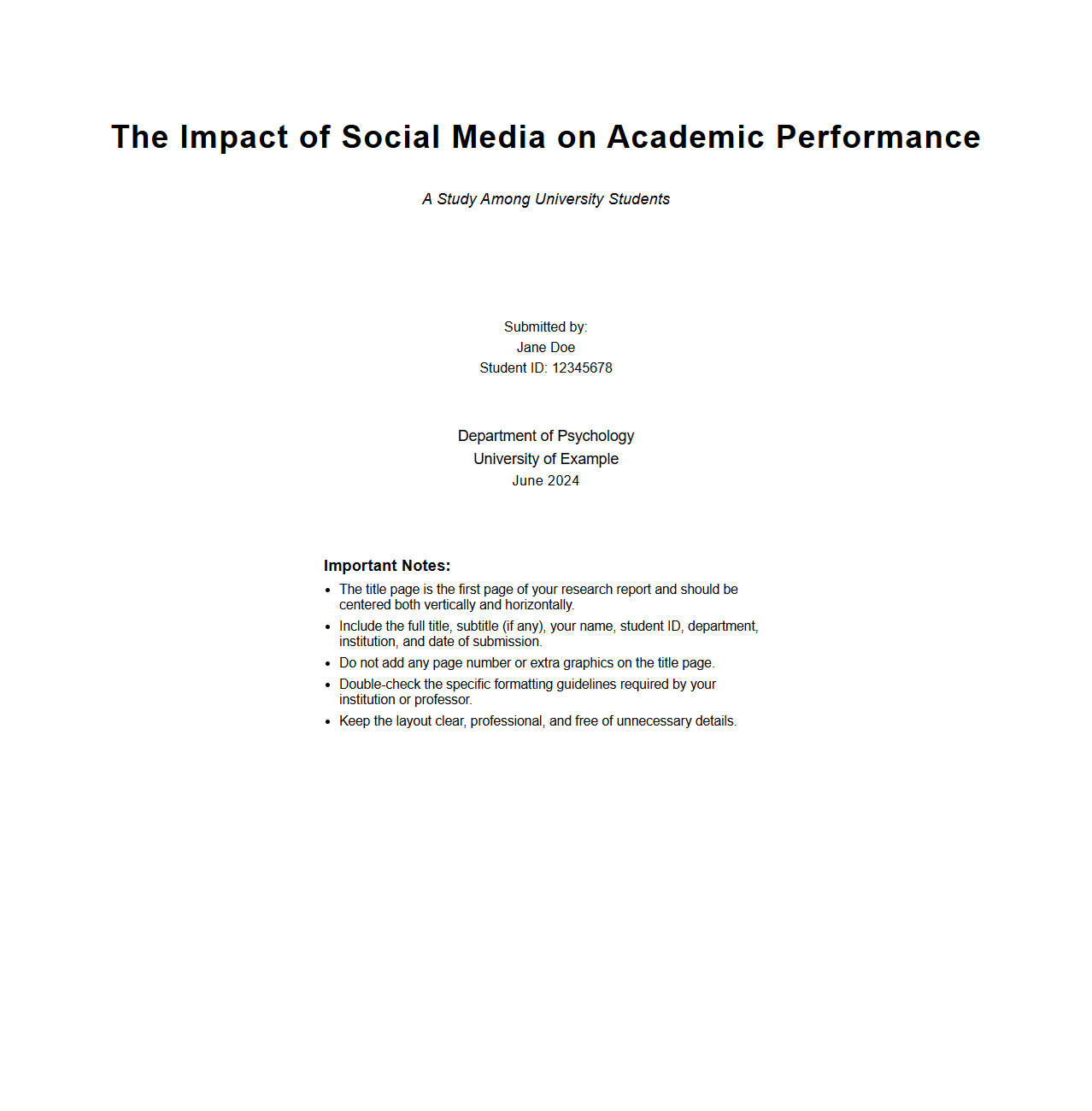
Title Page Format for Research Report
The
Title Page Format for Research Report is a standardized template that includes essential elements such as the report title, author's name, institutional affiliation, course details, and date of submission. Proper formatting ensures clarity and professionalism, often following guidelines from style manuals like APA, MLA, or Chicago. This format aids in organizing information, providing a clear first impression, and facilitating accurate citation and recognition of the research work.
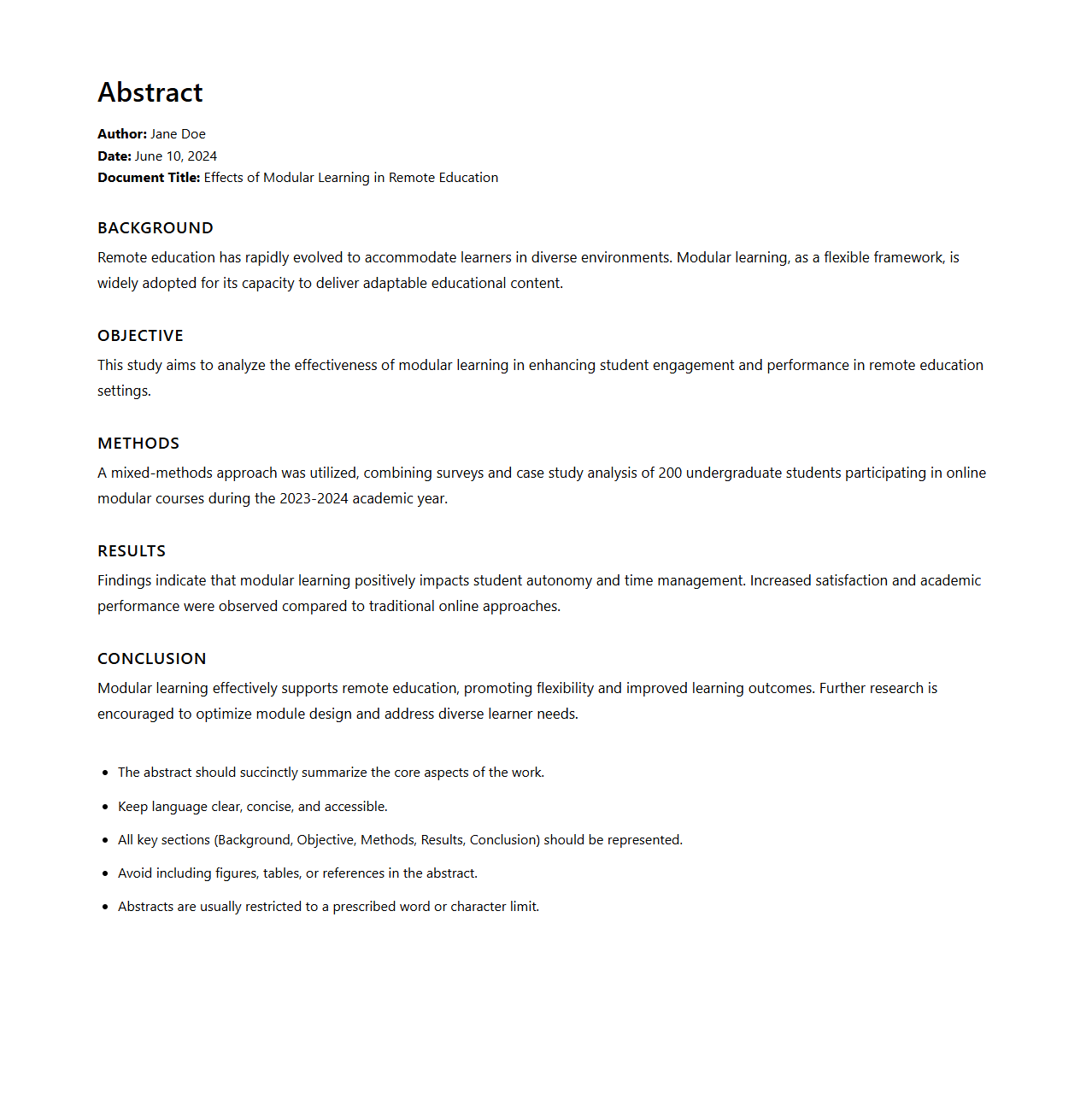
Abstract Section Document Format
The
Abstract Section Document Format is a structured layout used to summarize the essential points of a research paper or report, providing a concise overview of the objectives, methods, results, and conclusions. This format enhances readability by enabling quick comprehension of the document's core content, often structured in a paragraph of 150-250 words. It is vital for academic papers, conference submissions, and technical reports to facilitate efficient information dissemination and indexing in databases.
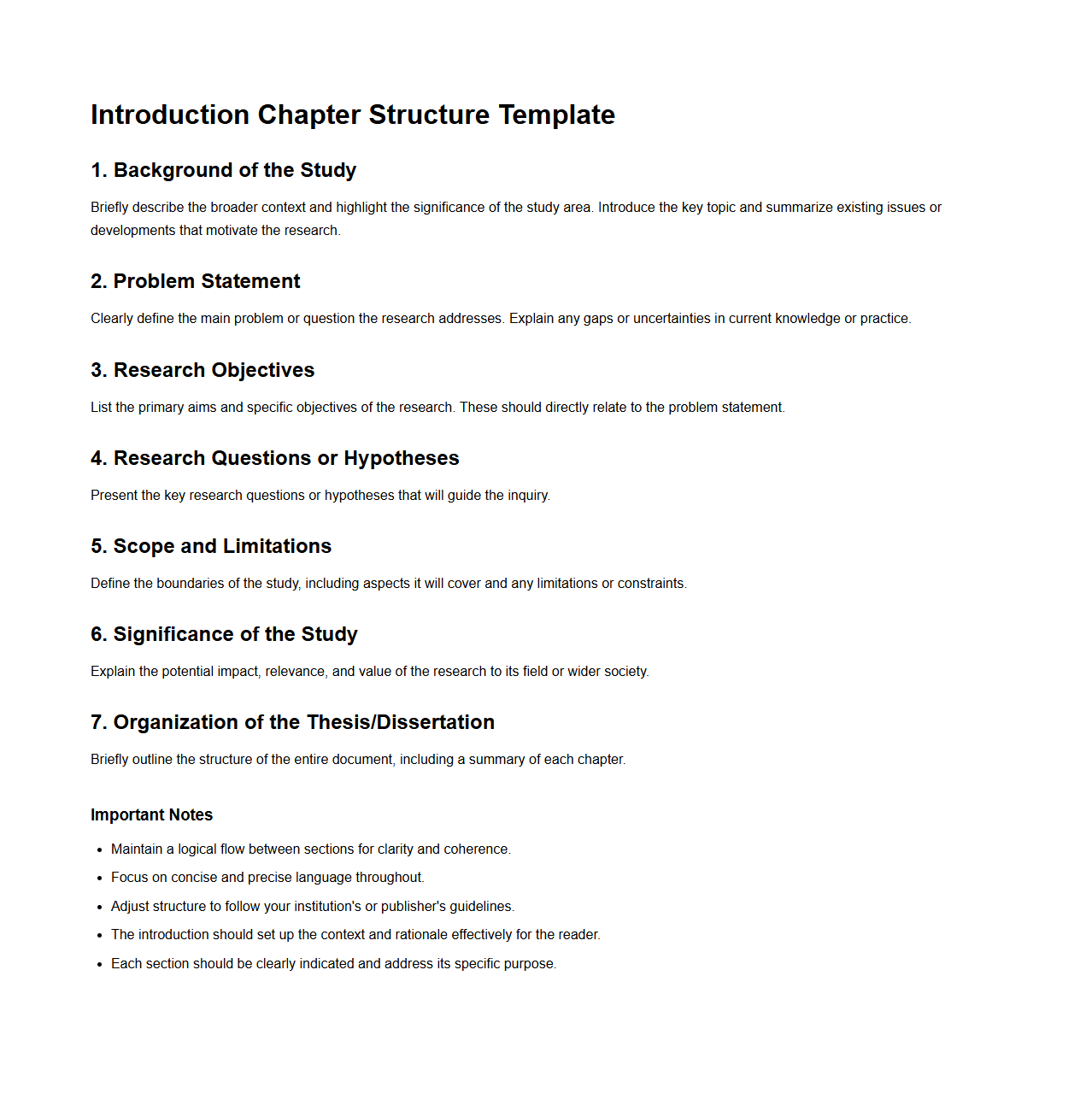
Introduction Chapter Structure Template
The
Introduction Chapter Structure Template document serves as a comprehensive guide for systematically organizing the initial chapter of academic theses, dissertations, or research projects. It outlines essential components such as background, research problem, objectives, significance, and scope, ensuring clarity and coherence in presenting the study's foundation. This template helps writers maintain focus, streamline content development, and meet institutional formatting requirements effectively.
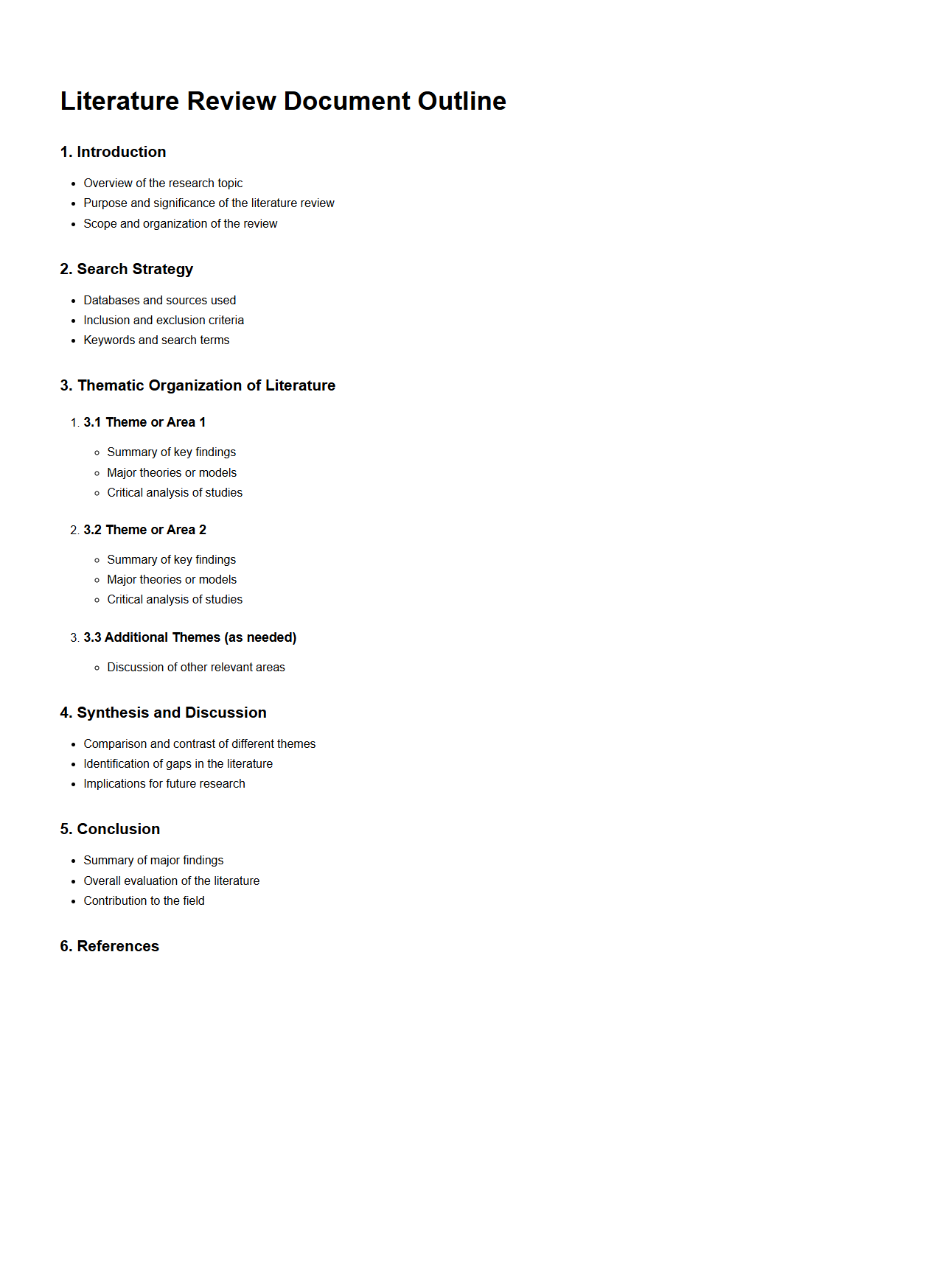
Literature Review Document Outline
A
Literature Review Document Outline is an organized framework that structures the key themes, theories, and research findings relevant to a specific study or topic. It helps researchers systematically categorize existing knowledge, identify gaps, and build a coherent narrative to support their research question. This outline typically includes sections such as introduction, thematic categories, methodological approaches, and summary of critical insights.
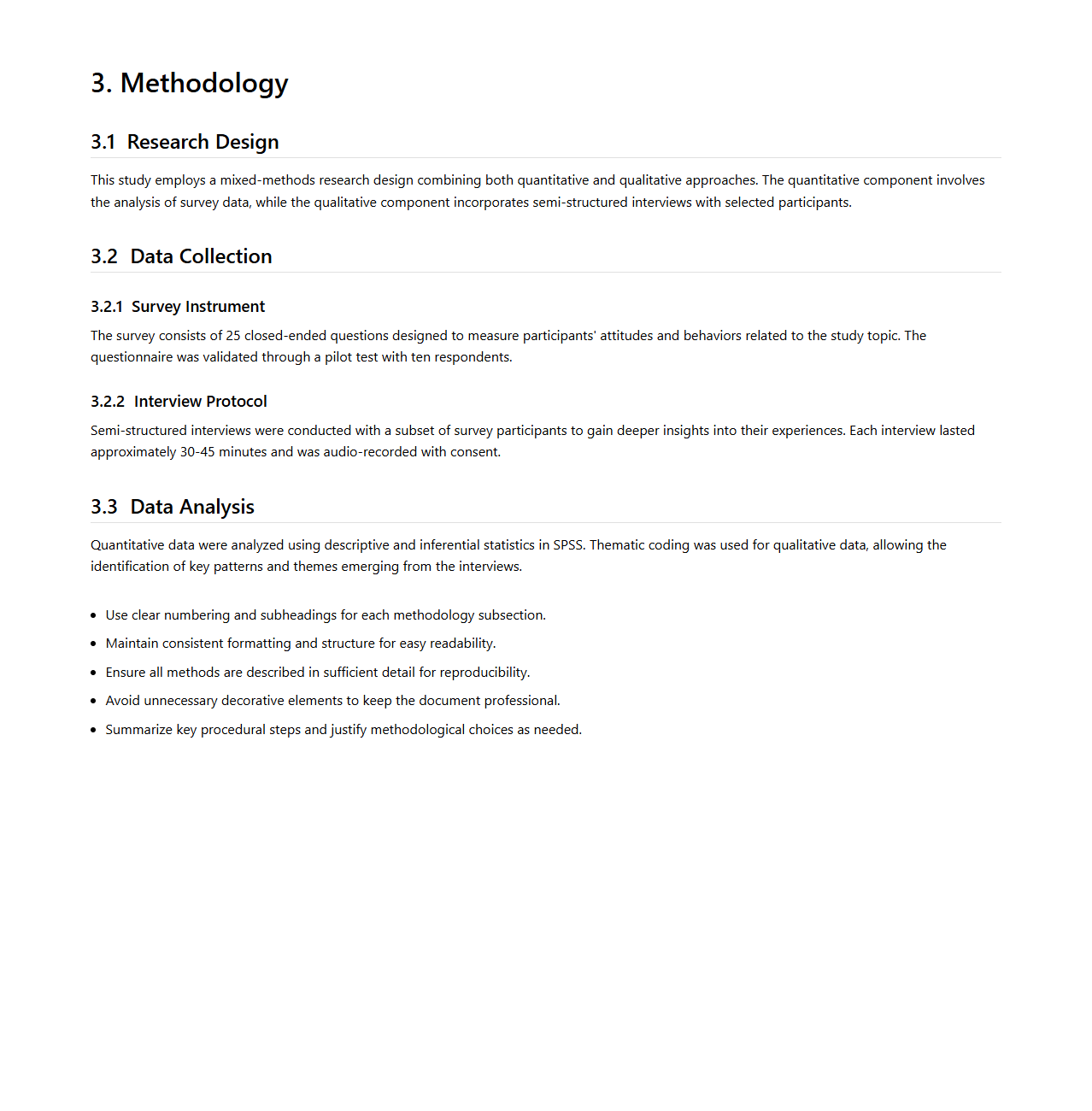
Methodology Subsection Formatting
The
Methodology Subsection Formatting document provides detailed guidelines on structuring and presenting the methodology section of academic or research papers. It outlines specific formatting rules for headings, fonts, spacing, and citation styles to ensure clarity and consistency. Adhering to these standards enhances the readability and professionalism of the methodology subsection, facilitating better comprehension of research procedures.
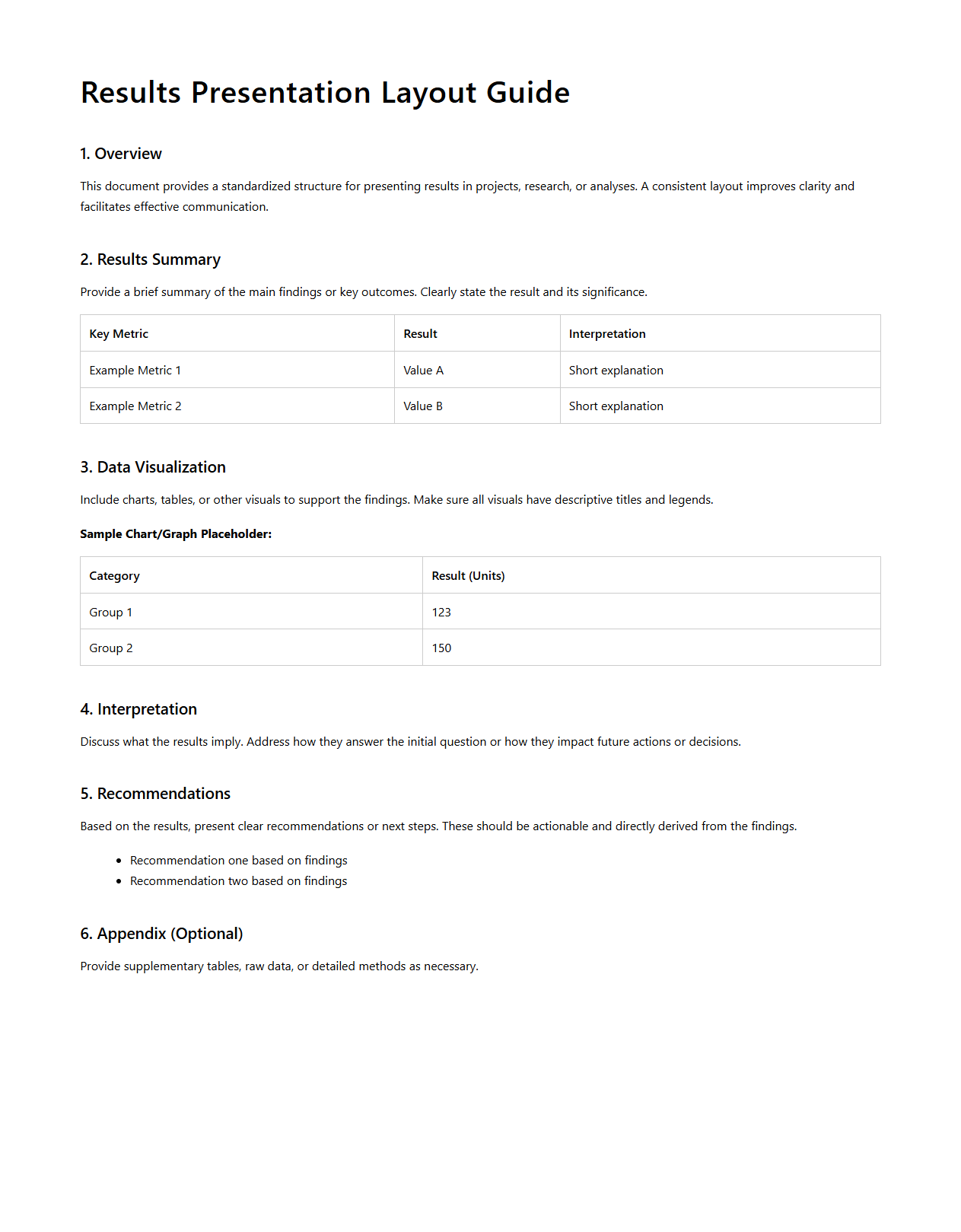
Results Presentation Layout Guide
The
Results Presentation Layout Guide document provides structured guidelines for organizing and displaying research or project outcomes clearly and effectively. It outlines formatting standards, visual hierarchy, and content placement to enhance readability and impact in reports or presentations. This guide ensures consistency and professional appearance across all results-related communications.
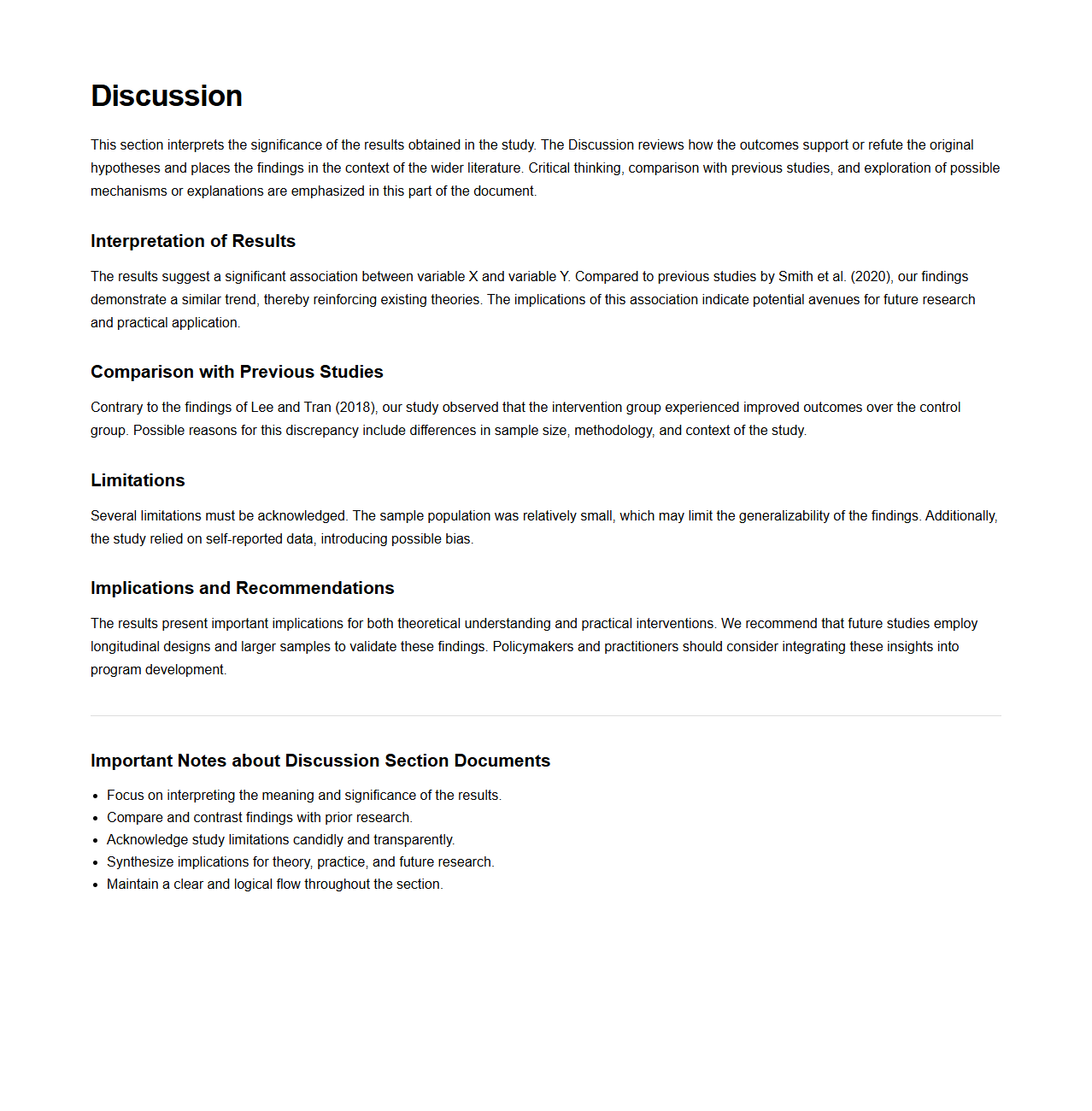
Discussion Section Document Format
The
Discussion Section Document Format is a structured template designed to organize and present the analysis and interpretation of research findings effectively. It typically includes key elements such as interpretation of results, comparison with previous studies, implications, limitations, and suggestions for future research. This format helps ensure clarity and coherence, facilitating better understanding and scholarly communication within academic and professional settings.
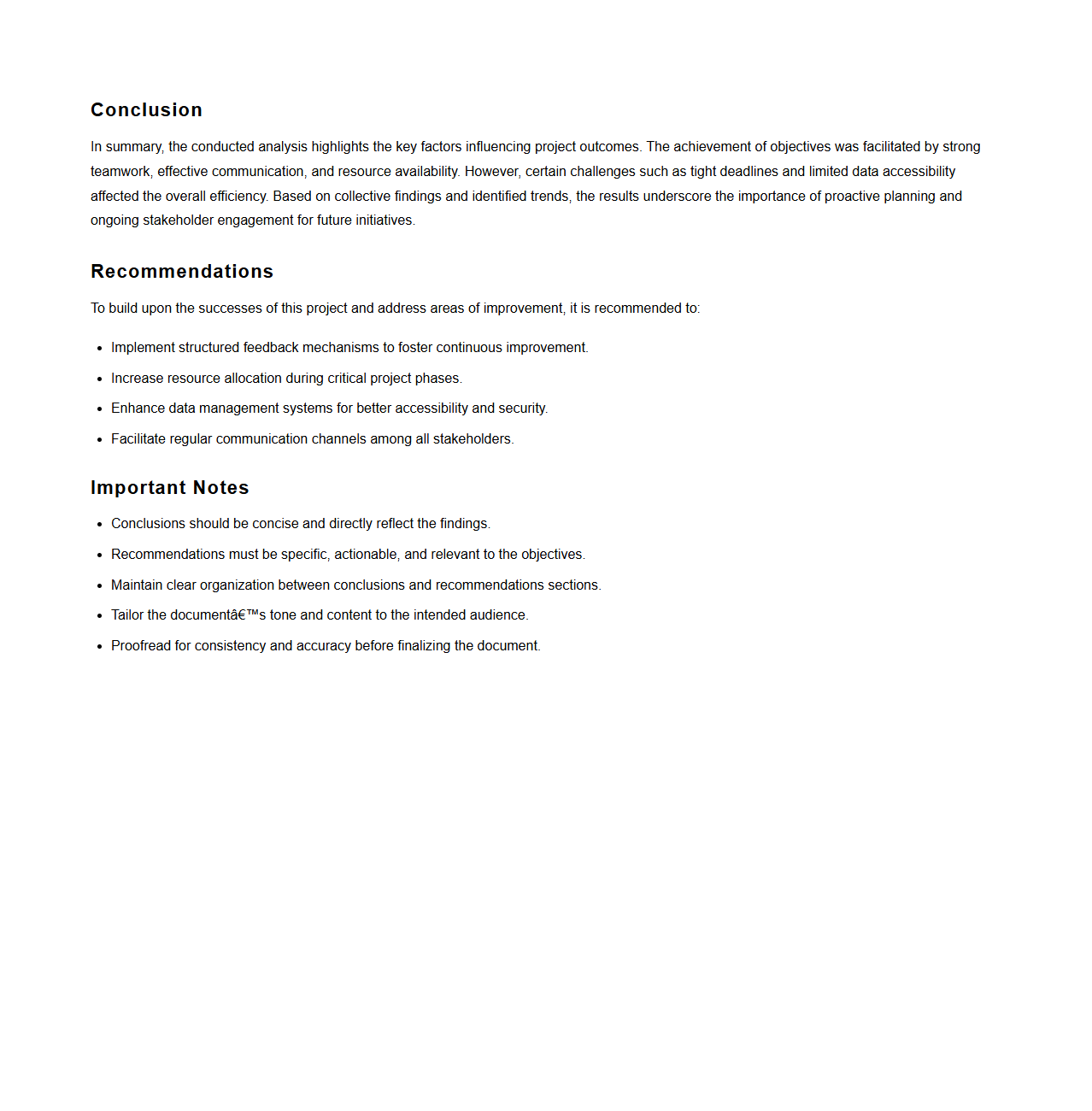
Conclusion and Recommendations Layout
A Conclusion and Recommendations Layout document summarizes key findings from a report or study, highlighting critical insights and final judgments derived from the analysis. It presents actionable
recommendations based on the conclusions to guide decision-making or future actions effectively. This layout ensures clarity and focus by organizing conclusions logically and aligning recommendations with the identified issues or objectives.
References/Bibliography Formatting Template
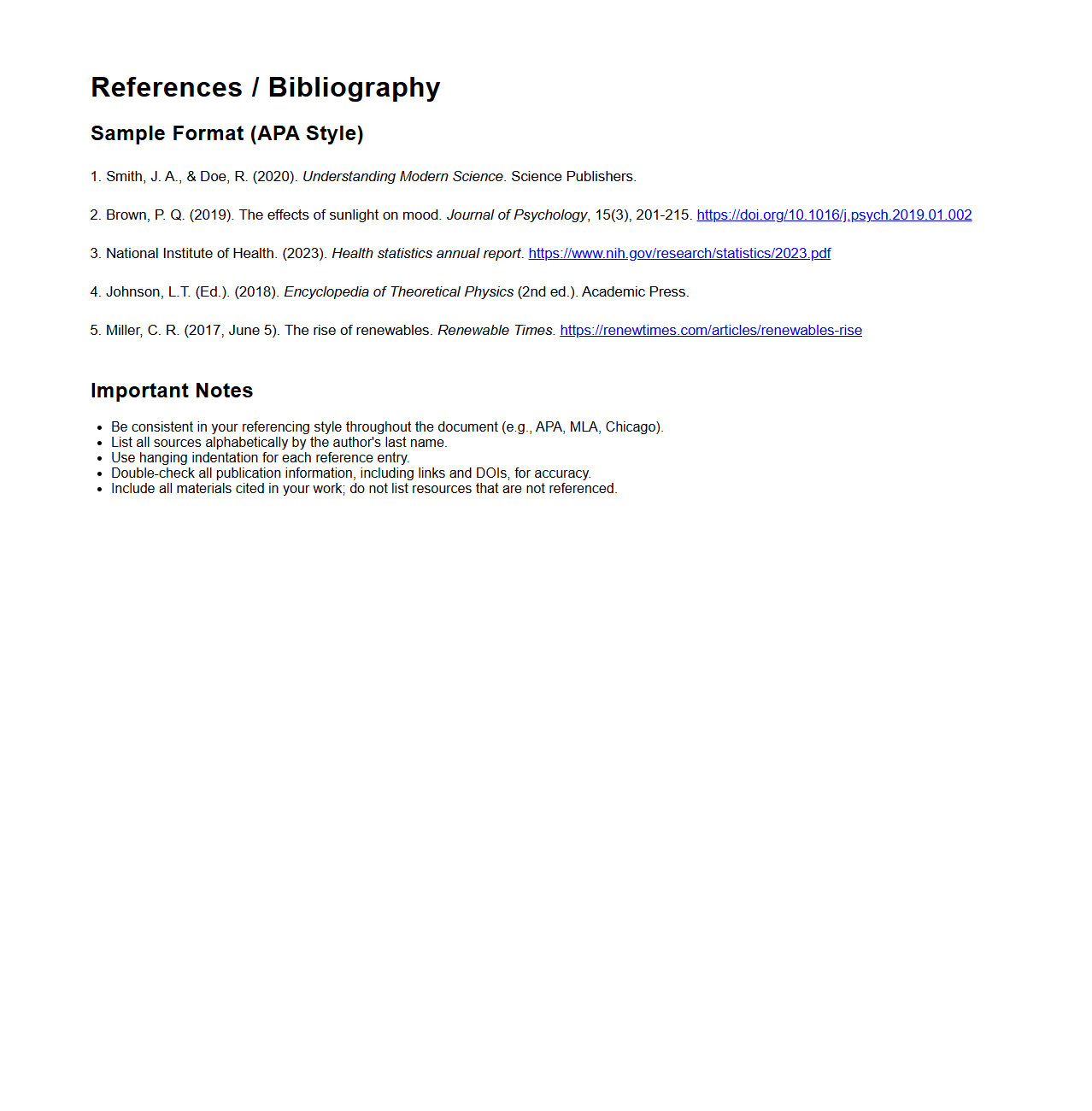
A
References/Bibliography Formatting Template document provides a structured guide to correctly format citations and bibliographic entries according to specific style guidelines such as APA, MLA, or Chicago. It ensures consistency, accuracy, and proper attribution in academic or professional writing, helping users avoid plagiarism and improve the credibility of their work. This template typically includes examples for books, journal articles, websites, and other common sources.
Appendix Document Structure Format
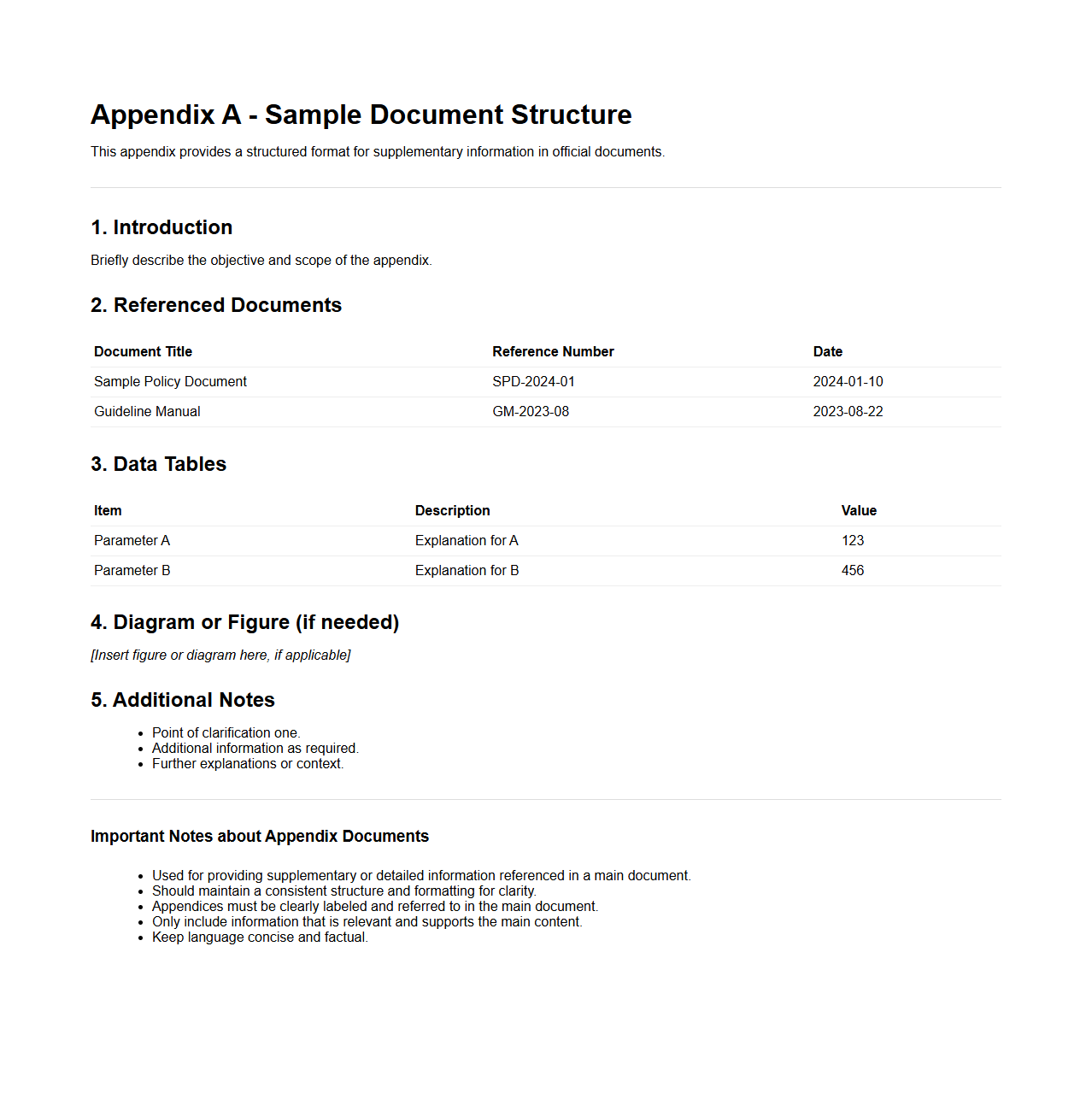
The
Appendix Document Structure Format is a standardized framework used to organize supplementary materials in technical reports, research papers, and formal documents. It ensures that appendices are clearly labeled, consistently formatted, and easy to navigate, enhancing the overall clarity and usability of the document. This format typically includes sections for tables, figures, raw data, or extended explanations that support the main content without interrupting the flow of the primary text.
What are the essential components included in the standard format of a research report?
The standard format of a research report includes several key components such as the title page, abstract, introduction, methodology, results, discussion, and references. Each section serves a unique purpose in presenting the research comprehensively. Proper organization ensures clarity and facilitates understanding for readers.
How should the methodology section be organized within a research report?
The methodology section should be organized to clearly describe the research design, participants, procedures, and data analysis techniques. It must offer enough detail to allow replication of the study by other researchers. Clear and concise presentation enhances the study's validity and reliability.
What is the recommended structure for presenting results in a research report document?
Results should be presented in a logical order, often following the sequence of the research questions or hypotheses. Use tables, figures, and descriptive text to effectively communicate the findings. This ensures the data is accessible and interpretable for the intended audience.
How are references and citations formatted in a formal research report?
References and citations in a formal research report are formatted according to specific style guides such as APA, MLA, or Chicago. Proper citation acknowledges original sources and avoids plagiarism. Consistent formatting enhances the credibility and professionalism of the report.
What is the significance of including an abstract in the research report format?
The abstract provides a concise summary of the research objectives, methods, results, and conclusions. It allows readers to quickly assess the relevance of the report to their interests. An effective abstract increases the visibility and impact of the research study.