Executive Summary Format
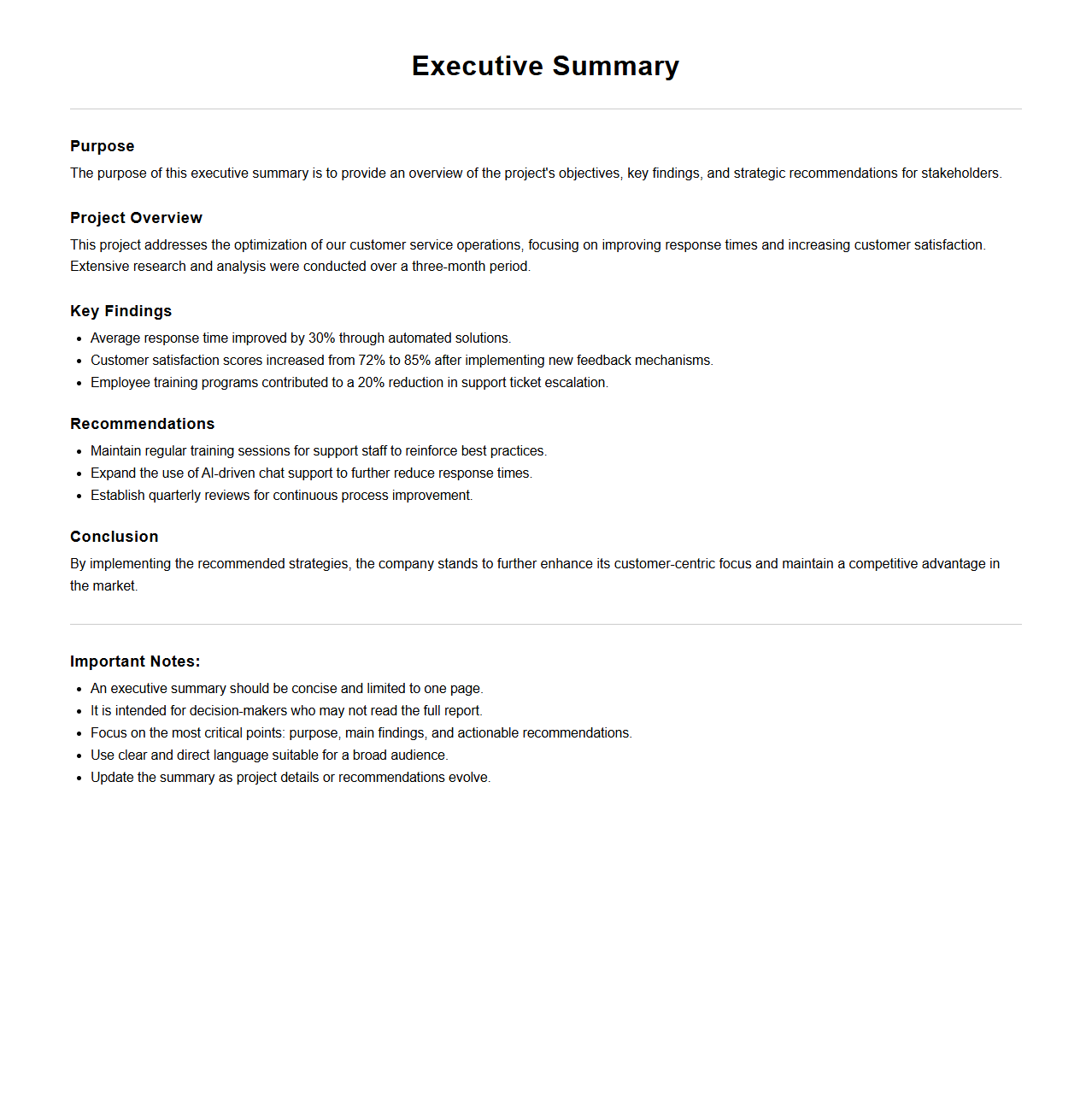
An
Executive Summary Format document provides a structured overview of a larger report or proposal, highlighting key points such as objectives, findings, conclusions, and recommendations. It is designed to quickly inform decision-makers by presenting concise, relevant information without requiring them to read the full document. Effective executive summaries emphasize clarity, brevity, and a logical flow to ensure critical data is easily accessible.
Introduction Section Format
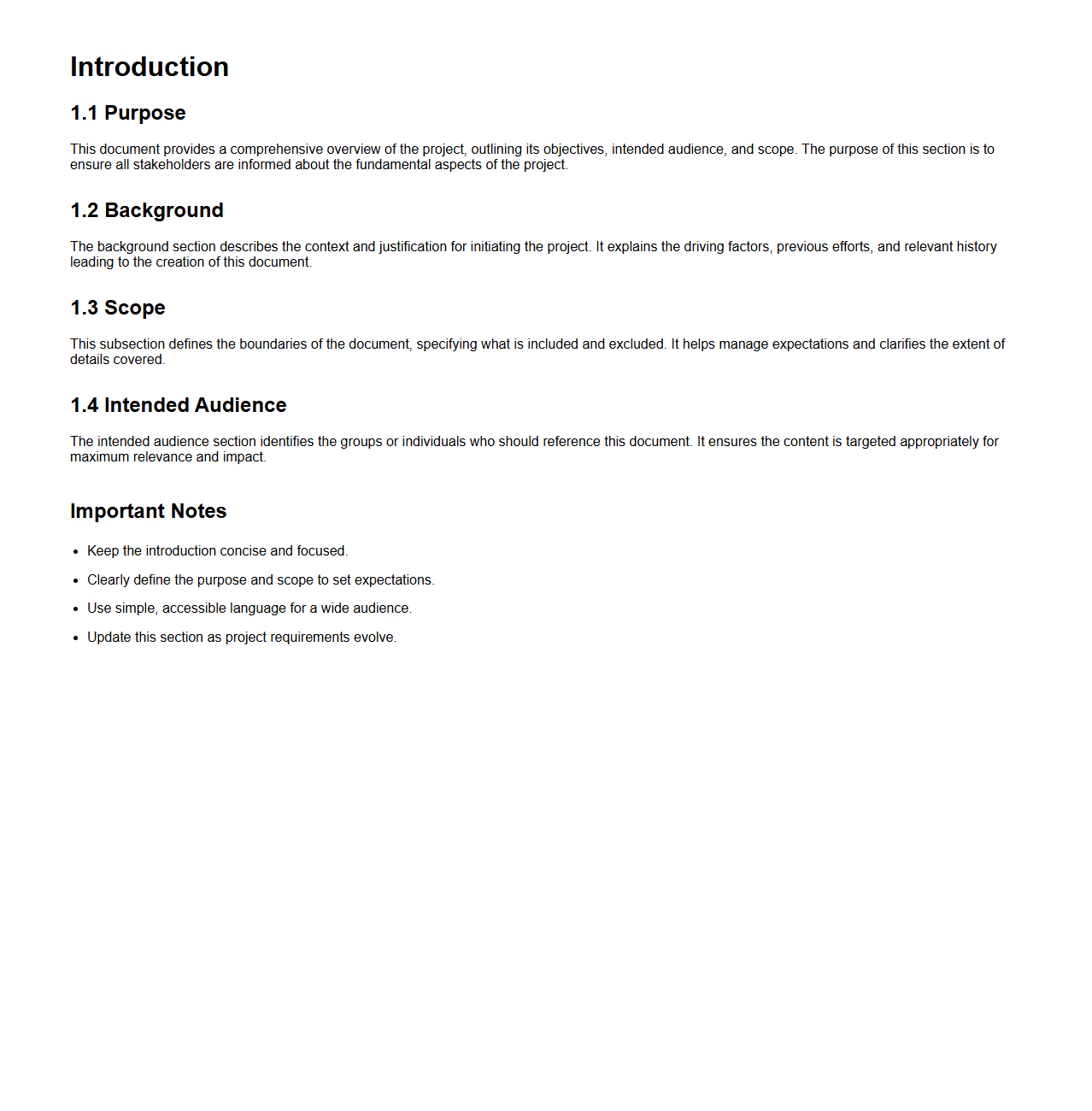
The
Introduction Section Format document outlines the structured approach for presenting the opening part of a report, research paper, or academic assignment. It defines the essential components such as background information, purpose, scope, and objectives, ensuring clarity and coherence. Following this format helps writers establish context and engage readers effectively.
Situation Analysis Format
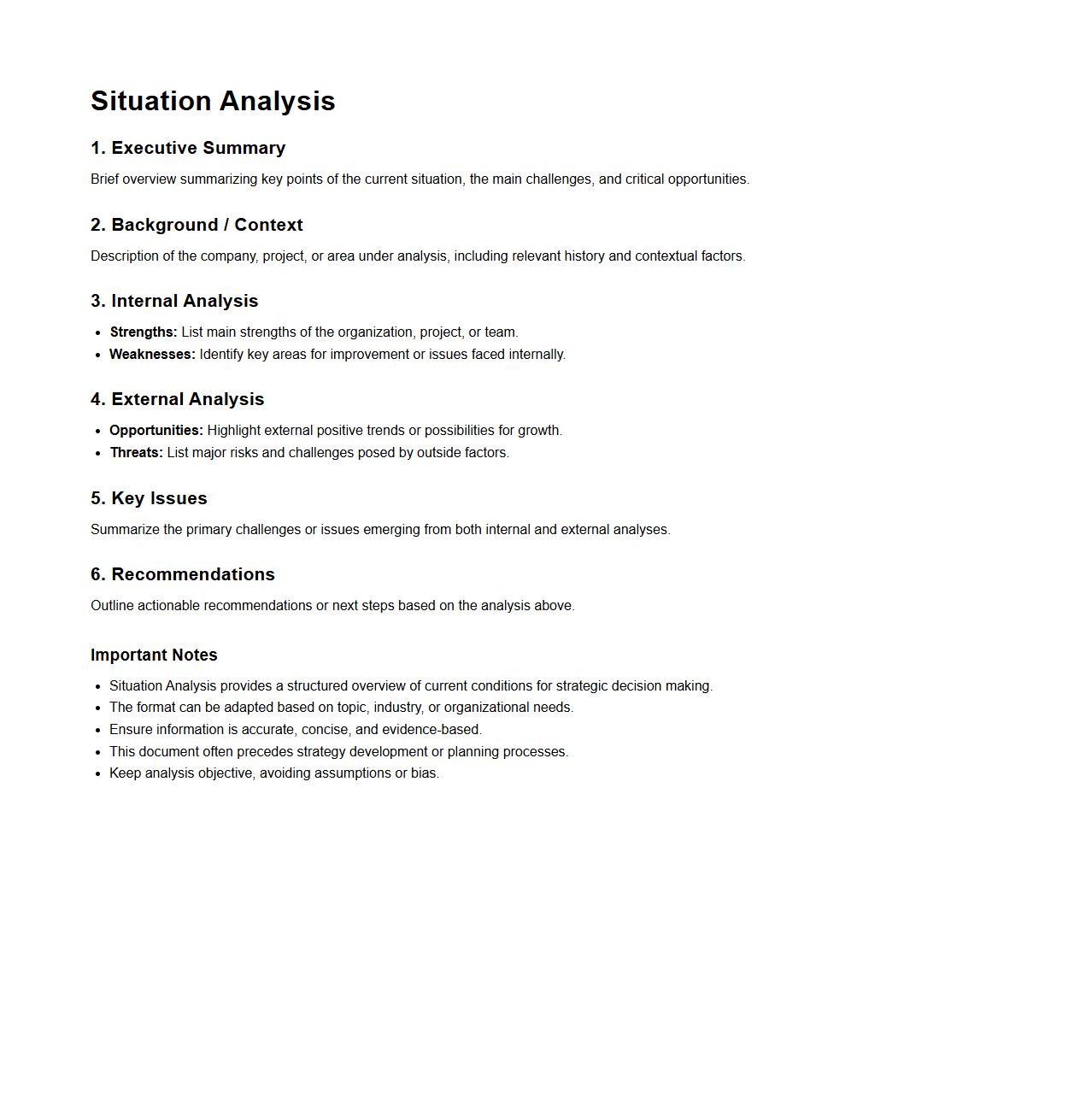
A
Situation Analysis Format document systematically evaluates the internal and external factors affecting an organization's current position. It includes components such as SWOT analysis, market trends, competitor insights, and customer behavior to inform strategic planning. This format helps businesses identify opportunities, threats, strengths, and weaknesses to make data-driven decisions.
Findings and Evidence Format
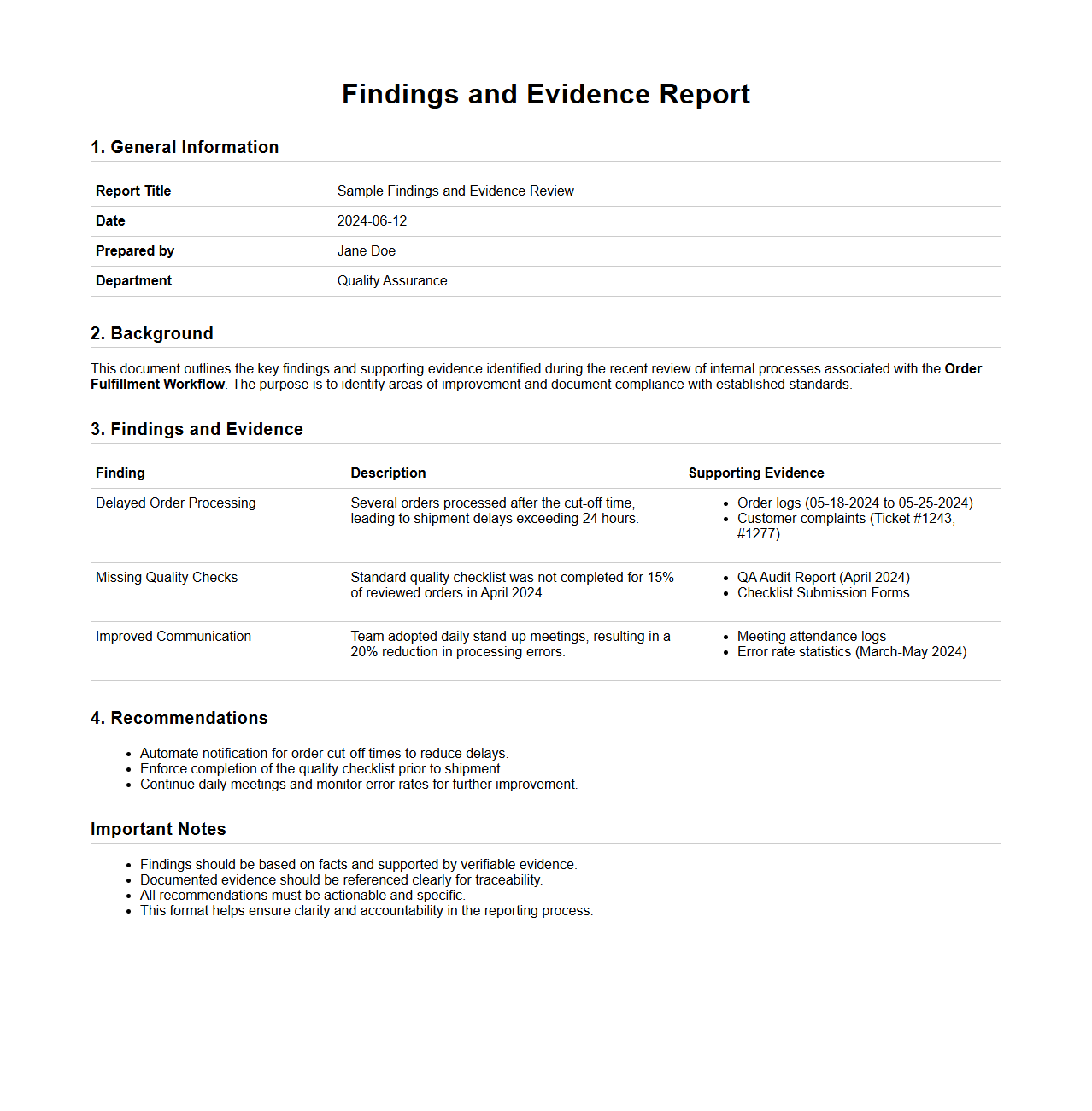
The
Findings and Evidence Format document is a structured report used to present collected data, observations, and conclusions in a clear and organized manner. It ensures that all findings are supported by verifiable evidence, facilitating transparency and accountability in evaluations or investigations. This format is essential for effective communication between stakeholders, enabling accurate decision-making and problem-solving based on documented proof.
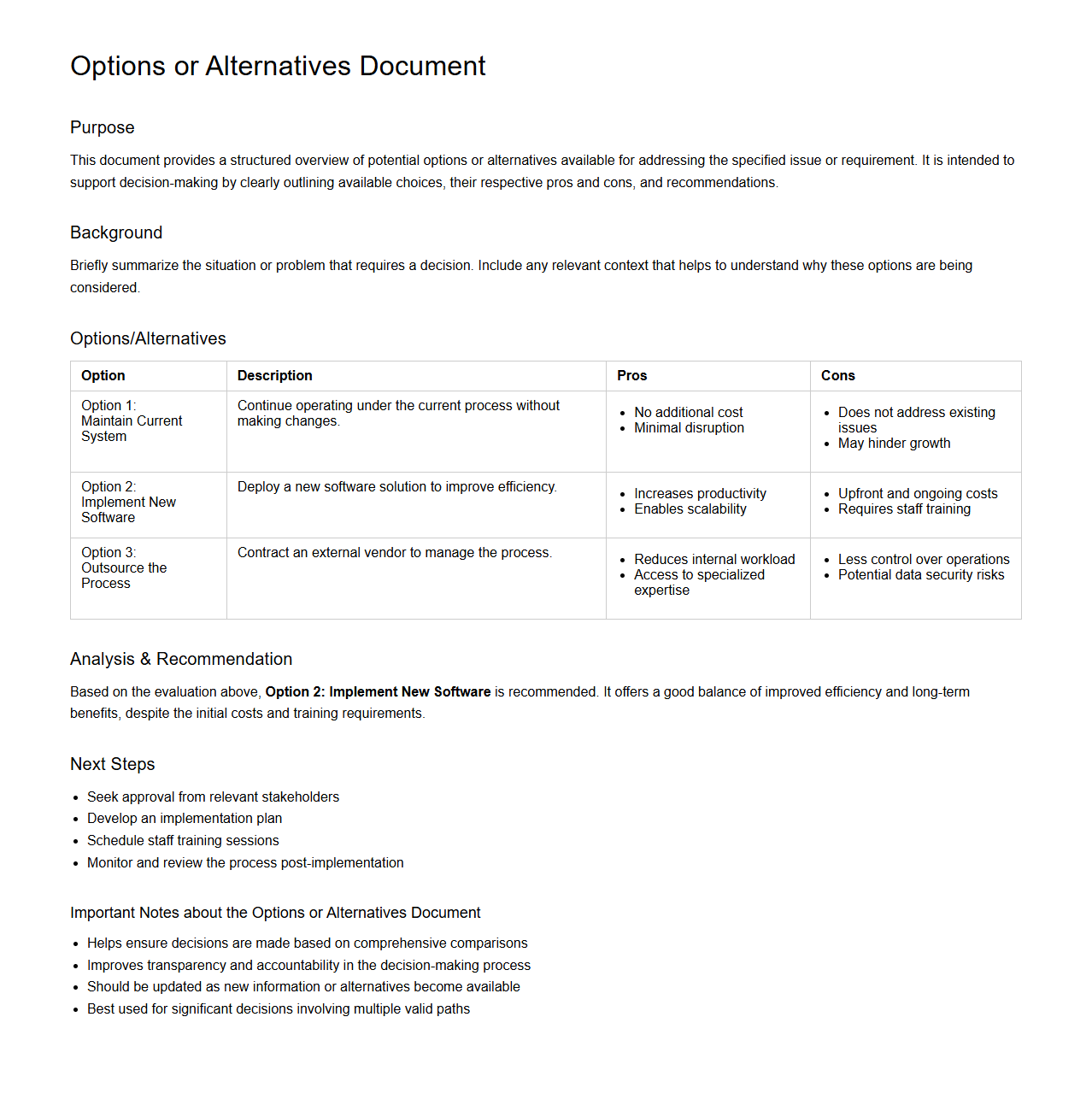
Options or Alternatives Format
Options or Alternatives Format document outlines multiple potential solutions or courses of action for a specific problem or decision, presenting their benefits, drawbacks, and implications. This format ensures clear comparison and informed decision-making by detailing each option's feasibility, cost, impact, and alignment with strategic goals. Using a
structured evaluation of alternatives helps stakeholders choose the best path forward efficiently and transparently.
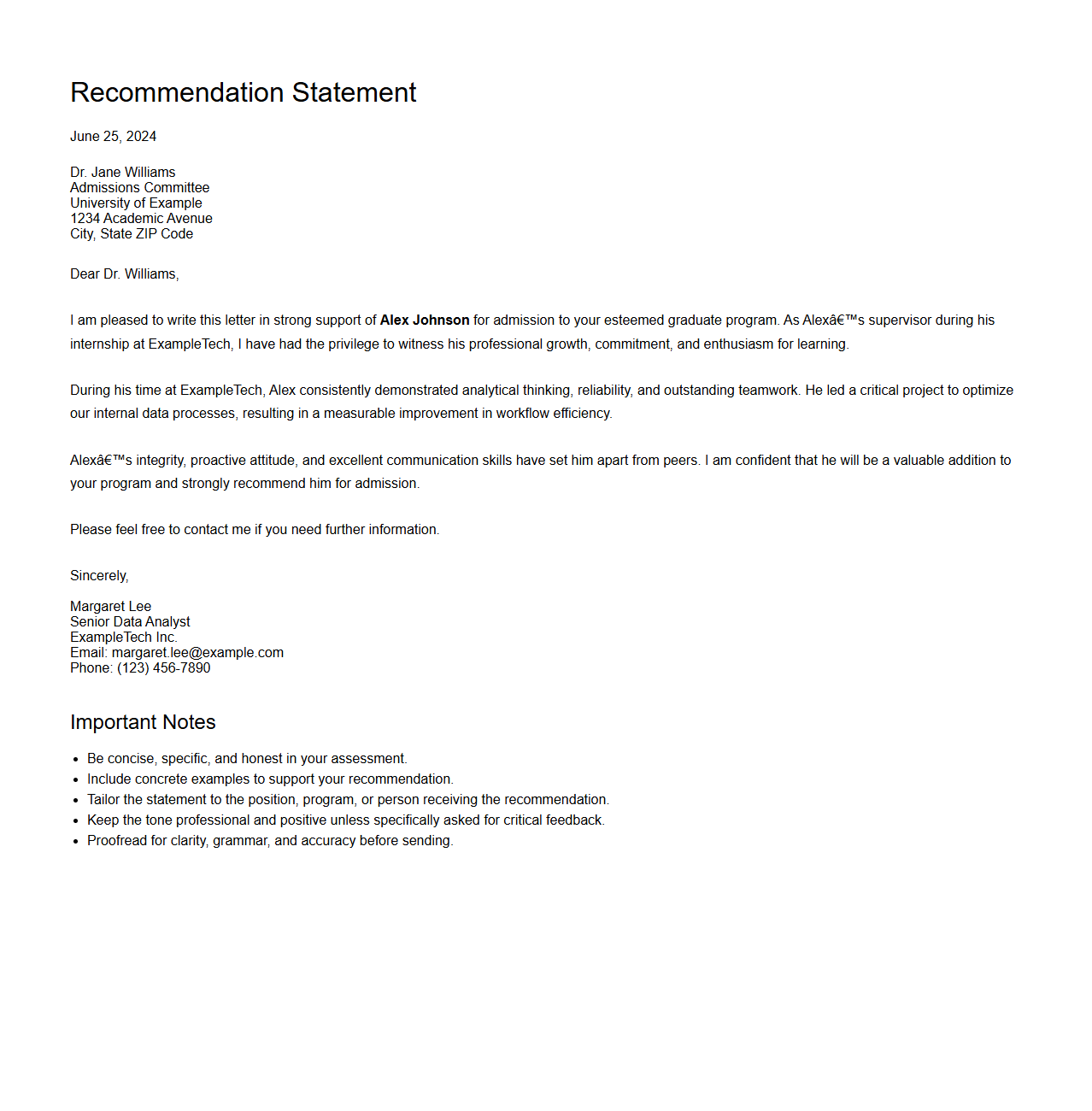
Recommendation Statement Format
A
Recommendation Statement Format document is a structured template designed to clearly present suggestions or proposals for decision-making purposes. It includes essential sections such as background information, analysis of options, justification for the recommendation, and an action plan. This format ensures consistency, clarity, and persuasiveness in communicating evaluations to stakeholders.
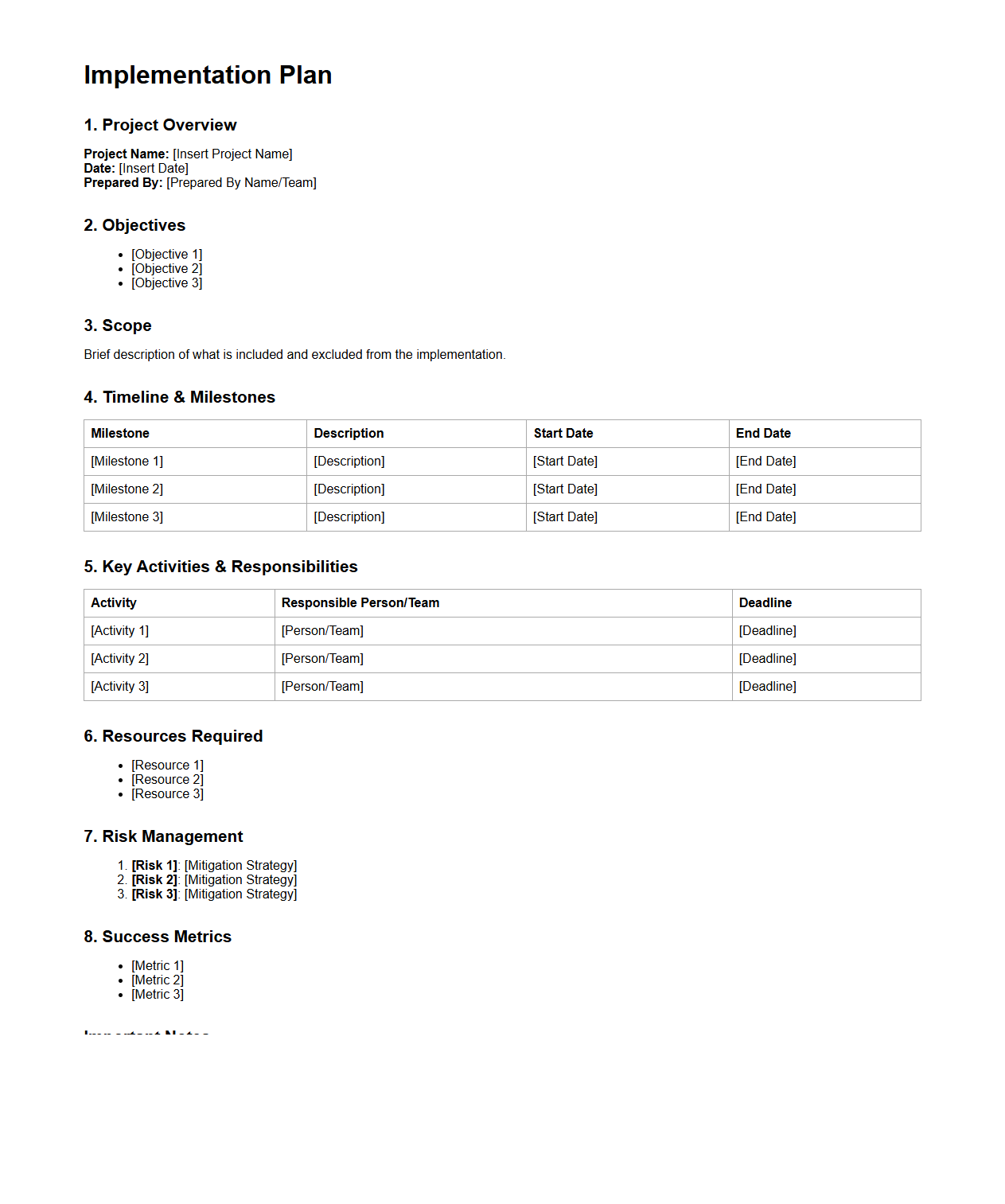
Implementation Plan Format
An
Implementation Plan Format document outlines a structured approach to executing a project or strategy, detailing specific tasks, timelines, resources, and responsible parties. It serves as a roadmap to ensure all stakeholders understand their roles and deadlines, facilitating efficient project management and successful goal achievement. This document is essential for tracking progress and adapting plans to changing conditions while maintaining alignment with overall objectives.
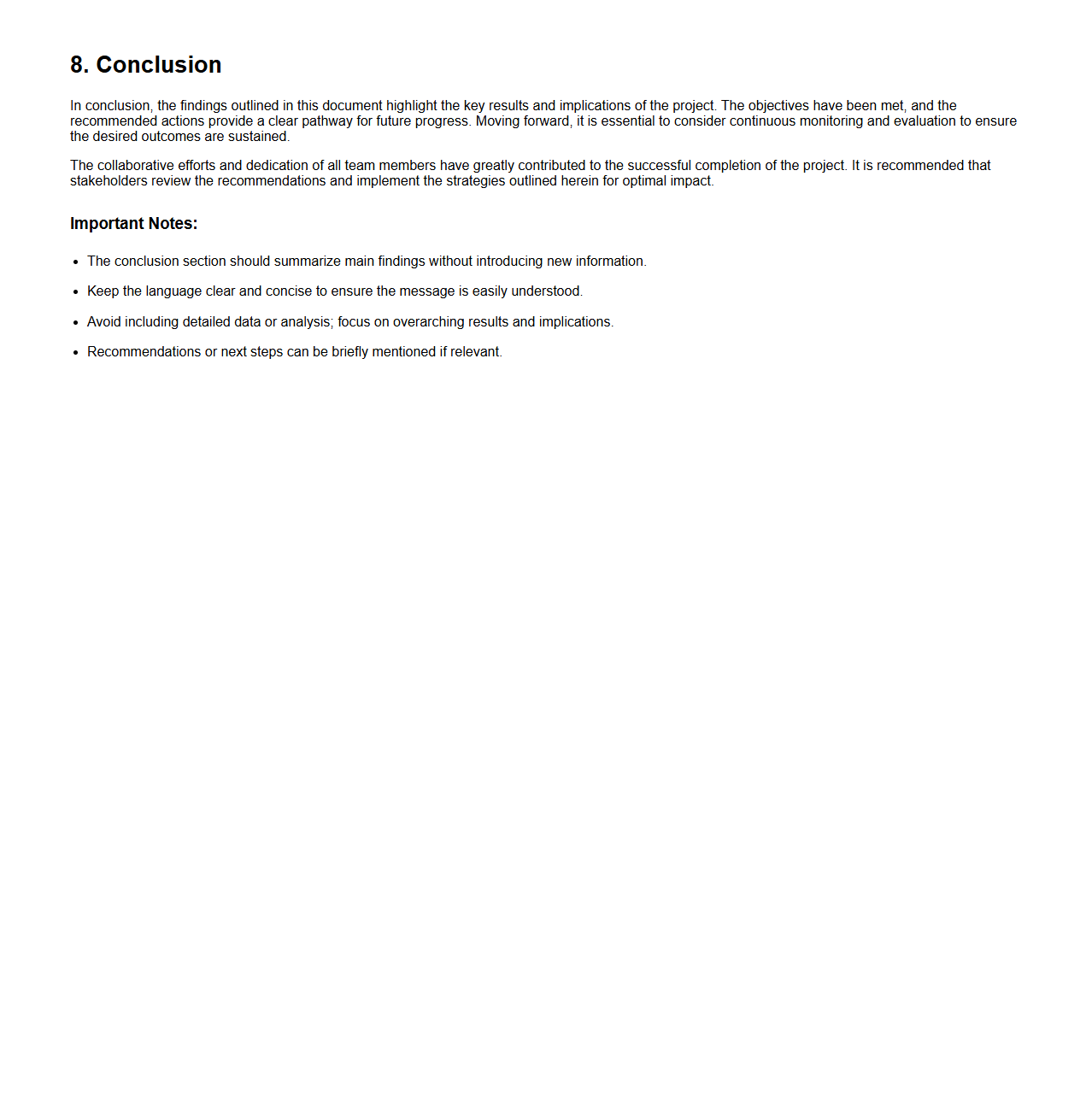
Conclusion Section Format
The
Conclusion Section Format document outlines the structured approach for summarizing key findings and final insights in a research or academic paper. It provides guidelines on effectively reiterating the main points, addressing the research objective, and suggesting implications or future research directions. This format ensures clarity, coherence, and a strong closing impact on the reader.
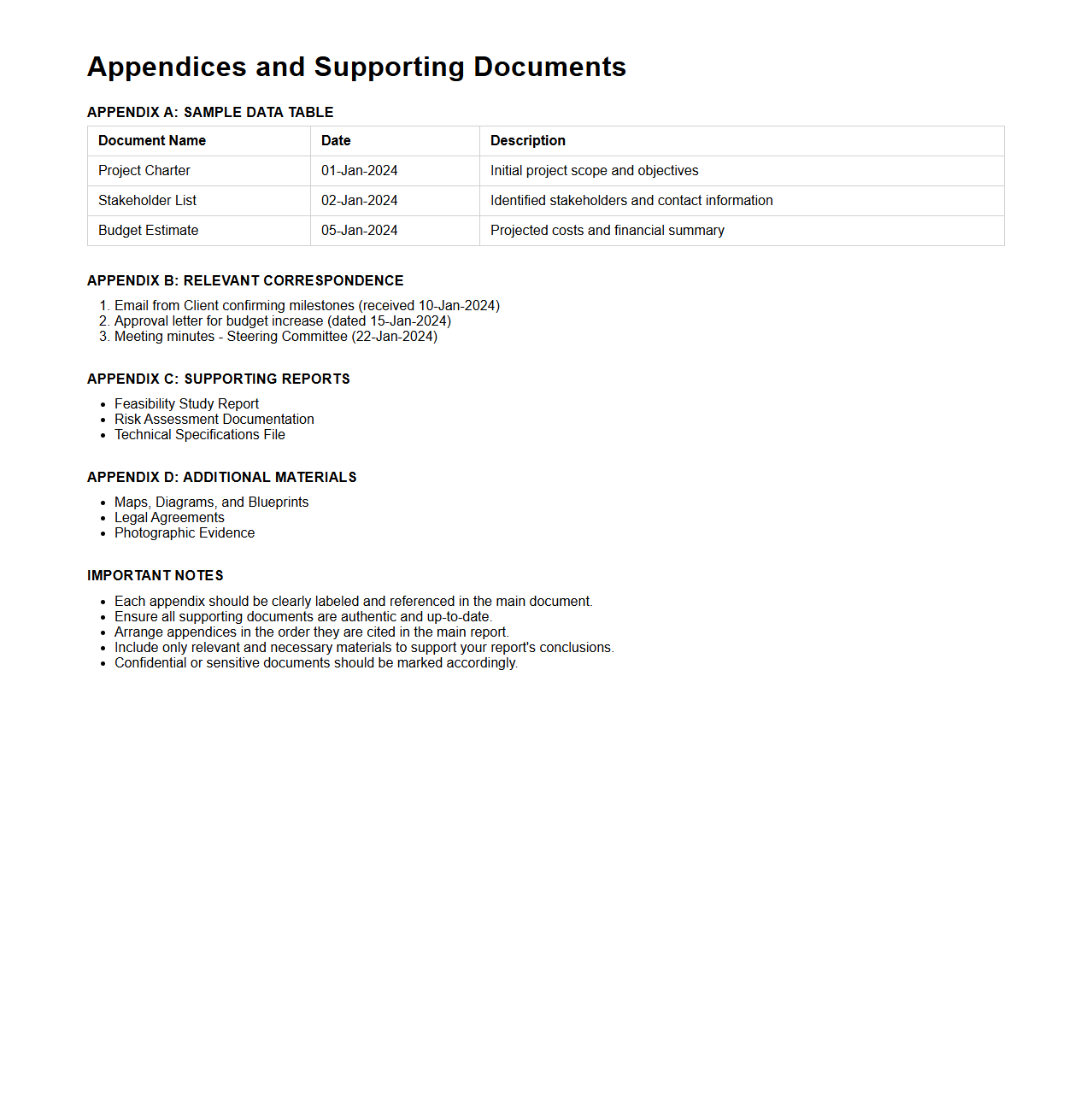
Appendices and Supporting Documents Format
The
Appendices and Supporting Documents Format document provides a standardized structure for including supplementary materials that enhance the main content of a report or paper. It ensures consistency in presenting additional data, charts, questionnaires, or references that support the core analysis without interrupting the flow of the primary text. Proper formatting of appendices aids in easy navigation and clarity for readers seeking detailed information beyond the main sections.
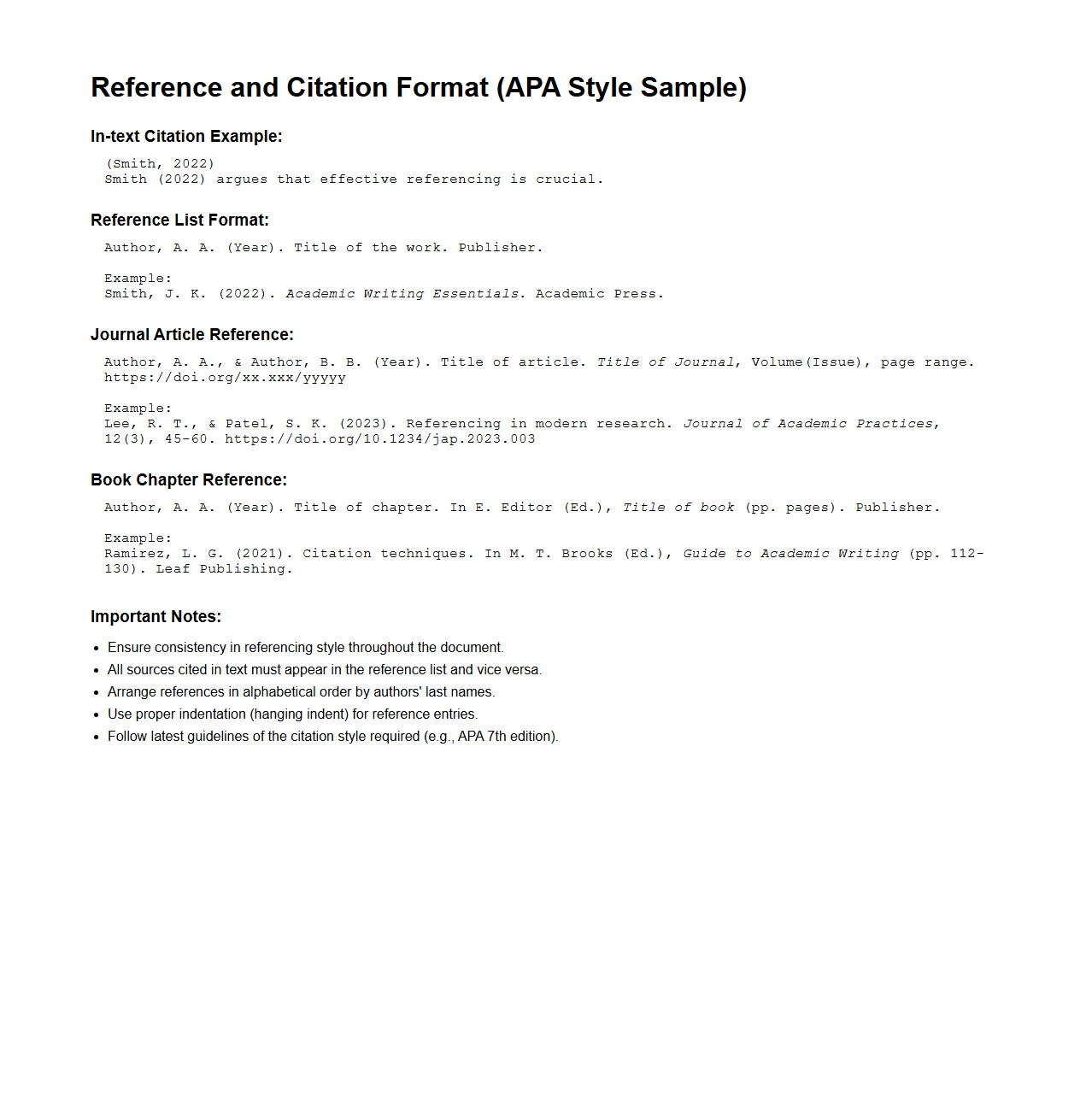
Reference and Citation Format
A
Reference and Citation Format document outlines the standardized method for crediting sources in academic or professional writing, ensuring consistency and avoiding plagiarism. It specifies how to present bibliographic information such as authors' names, publication dates, titles, and pages in various styles like APA, MLA, or Chicago. This document is essential for maintaining credibility and allowing readers to trace the origin of information efficiently.
What key elements should be included in the format of recommendations for reports?
The format of recommendations should include a clear and concise statement of the suggested action. Supporting evidence or rationale must follow to justify the recommendation. Additionally, any potential benefits or expected outcomes should be highlighted.
How should recommendations be organized for maximum clarity and impact in a report?
Recommendations should be organized logically, often grouped by priority or category. Using numbered or bulleted lists can enhance readability and focus. Clarity is improved by keeping each recommendation brief and specific.
What tone and language are most appropriate when writing recommendations in professional reports?
Recommendations should be presented in a professional and objective tone. Language should be clear, direct, and free from ambiguity or jargon. It is important to remain respectful and constructive to foster acceptance and implementation.
How can recommendations be made actionable and specific for the report's audience?
To make recommendations actionable, use specific, measurable steps that the audience can follow easily. Avoid vague statements by providing concrete details such as timelines or responsible parties. This ensures the recommendations are practical and achievable.
In what section of a report should the recommendations typically appear?
Recommendations typically appear in a dedicated section near the end of the report. Placing them after the analysis and findings allows the audience to understand the basis for each suggestion. This placement ensures the recommendations stand out and are easy to locate.