Executive Summary Introduction Format
An
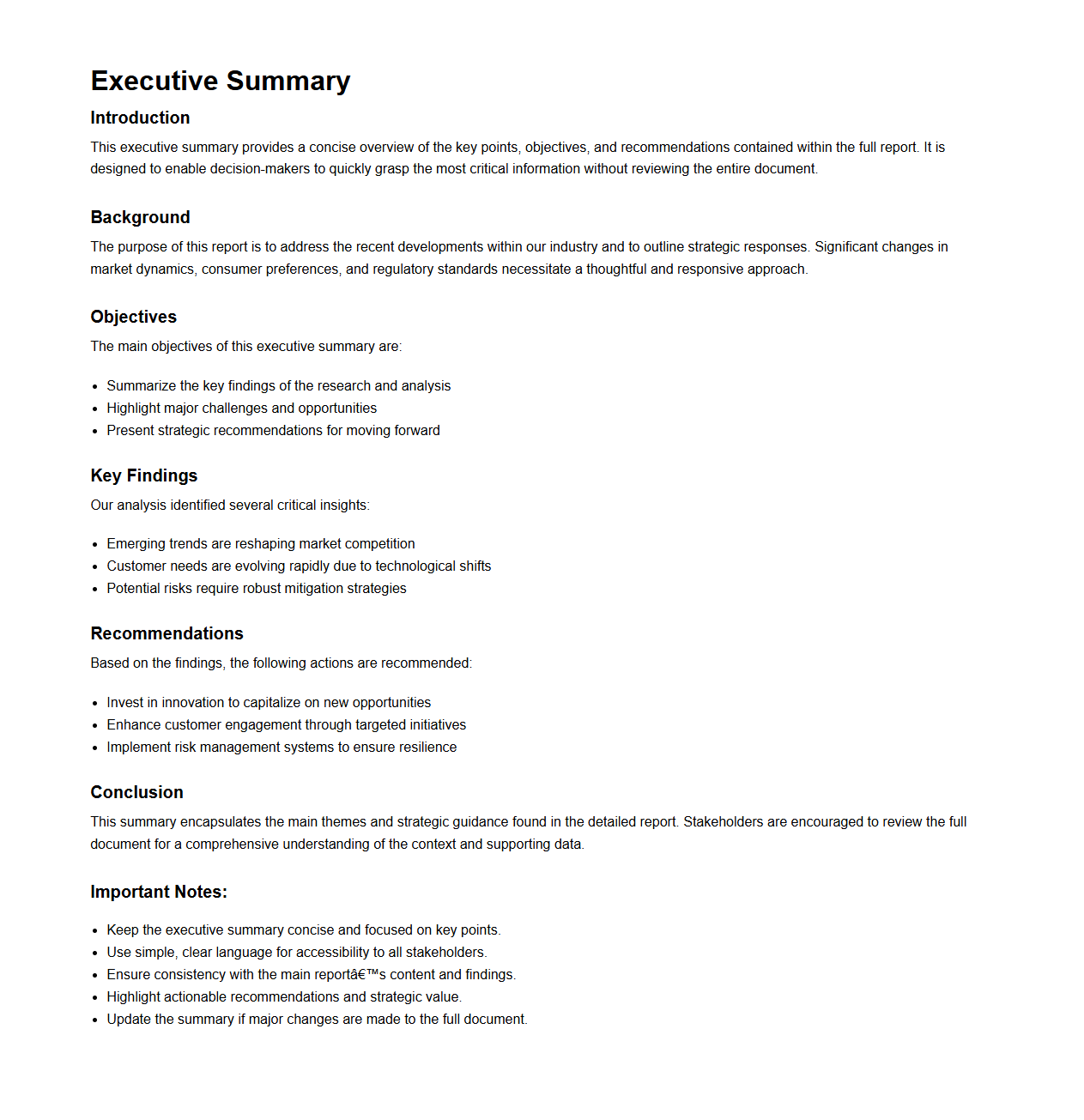
Executive Summary Introduction Format document provides a structured overview that highlights the key points of a larger report or proposal, enabling readers to quickly understand the main objectives and outcomes. This format typically includes concise sections summarizing purpose, scope, methodology, and key findings, designed for clarity and impact. Using this standardized approach ensures effective communication with stakeholders, decision-makers, and investors.
Background Context Introduction Format
Background Context Introduction Format document provides a structured framework to present the essential information and setting necessary for understanding a topic or project. It organizes relevant historical data, situational details, and key concepts to ensure clarity and coherence for the reader. Using this format enhances communication effectiveness by offering a clear
contextual foundation critical for informed analysis or decision-making.
Problem Statement Introduction Format
A
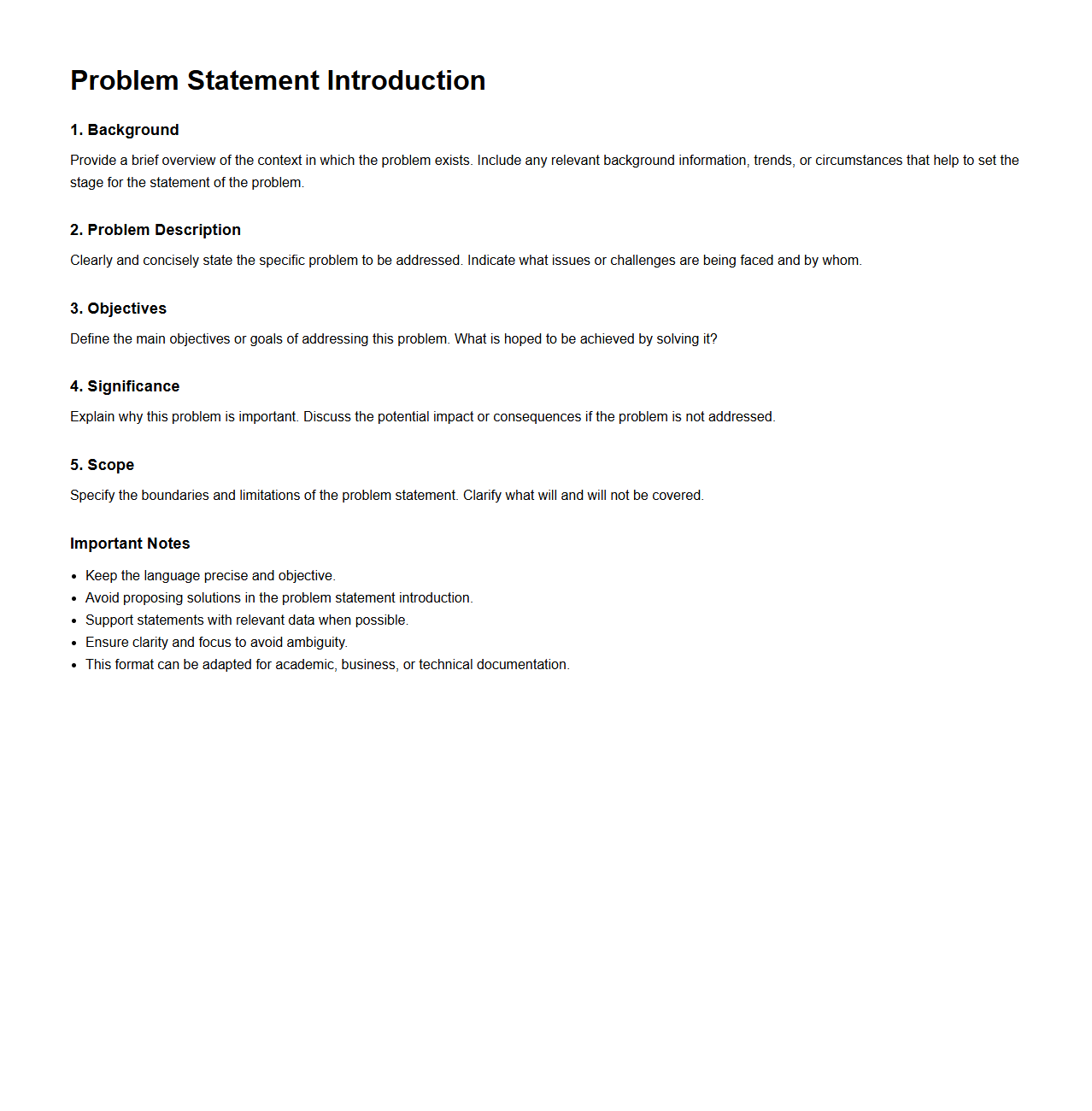
Problem Statement Introduction Format document outlines the structure and key elements necessary to clearly define and present a problem within a project or research context. It typically includes a concise description of the issue, its background, and the impact on stakeholders or systems. This format ensures clarity, focus, and relevance, guiding the development of effective solutions or hypotheses.
Purpose and Objectives Introduction Format
The
Purpose and Objectives Introduction Format document outlines the specific goals and intended outcomes of a project, report, or proposal, providing clear direction and focus for all stakeholders. It serves as a foundational guide to ensure that all activities align with the desired results and helps in measuring the success of the endeavor. This format typically includes concise statements that define the purpose, followed by detailed objectives that are specific, measurable, achievable, relevant, and time-bound (SMART).
Scope and Limitations Introduction Format
A
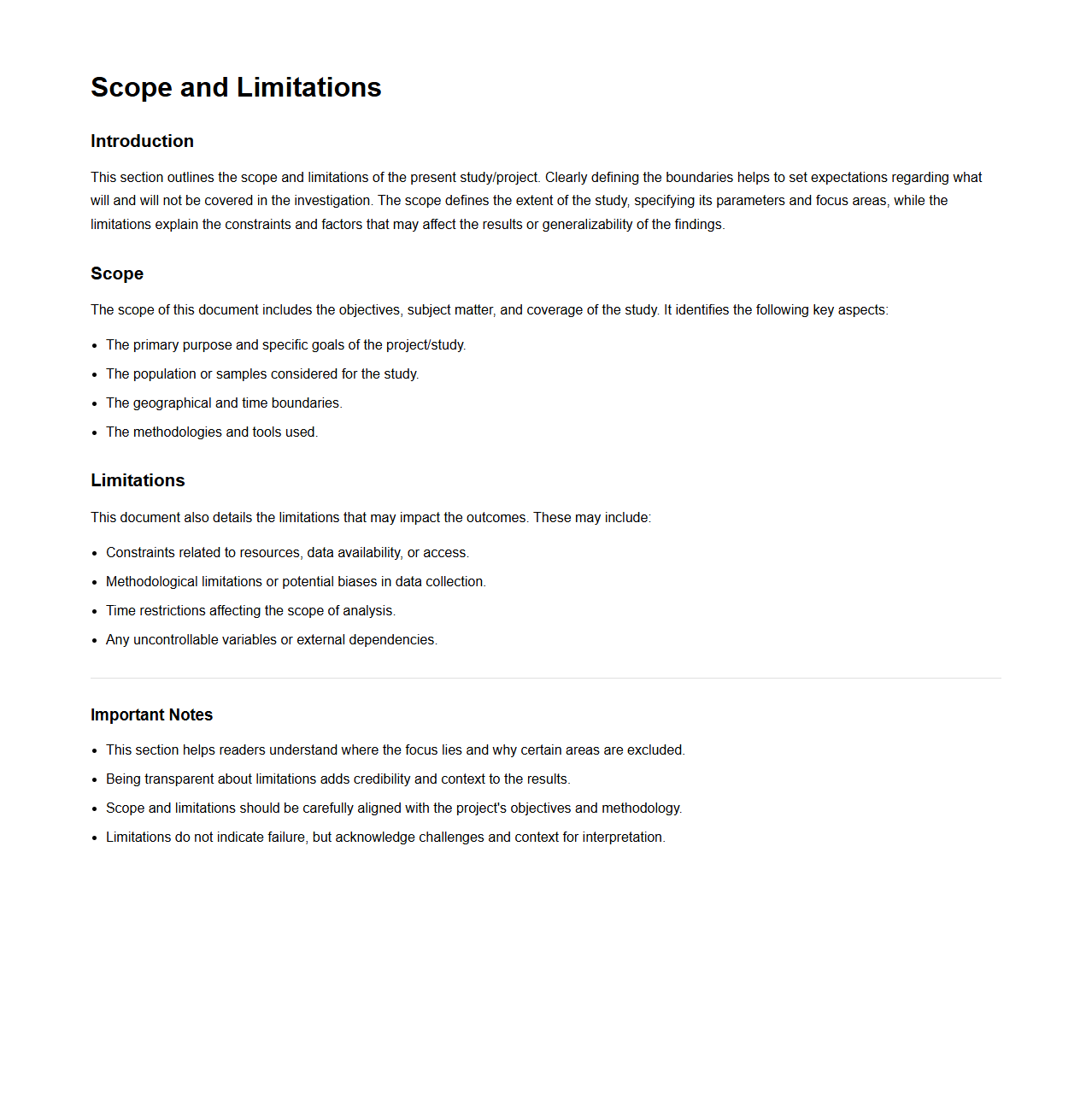
Scope and Limitations Introduction Format document outlines the boundaries and constraints of a research study or project, defining what will be covered and what will not. It specifies the extent of the study's reach, including the variables, population, and time frame, while clarifying any potential weaknesses or restrictions that may impact the results. This format ensures transparency and helps readers understand the context and applicability of the findings.
Methodology Overview Introduction Format
A
Methodology Overview Introduction Format document outlines the structured approach for presenting research methods, ensuring clarity and consistency in explanation. It typically includes sections such as research design, data collection techniques, and analysis procedures, providing readers with a comprehensive understanding of how the study is conducted. This format enhances transparency and replicability, making it essential in academic and professional research reports.
Key Findings Preview Introduction Format
The
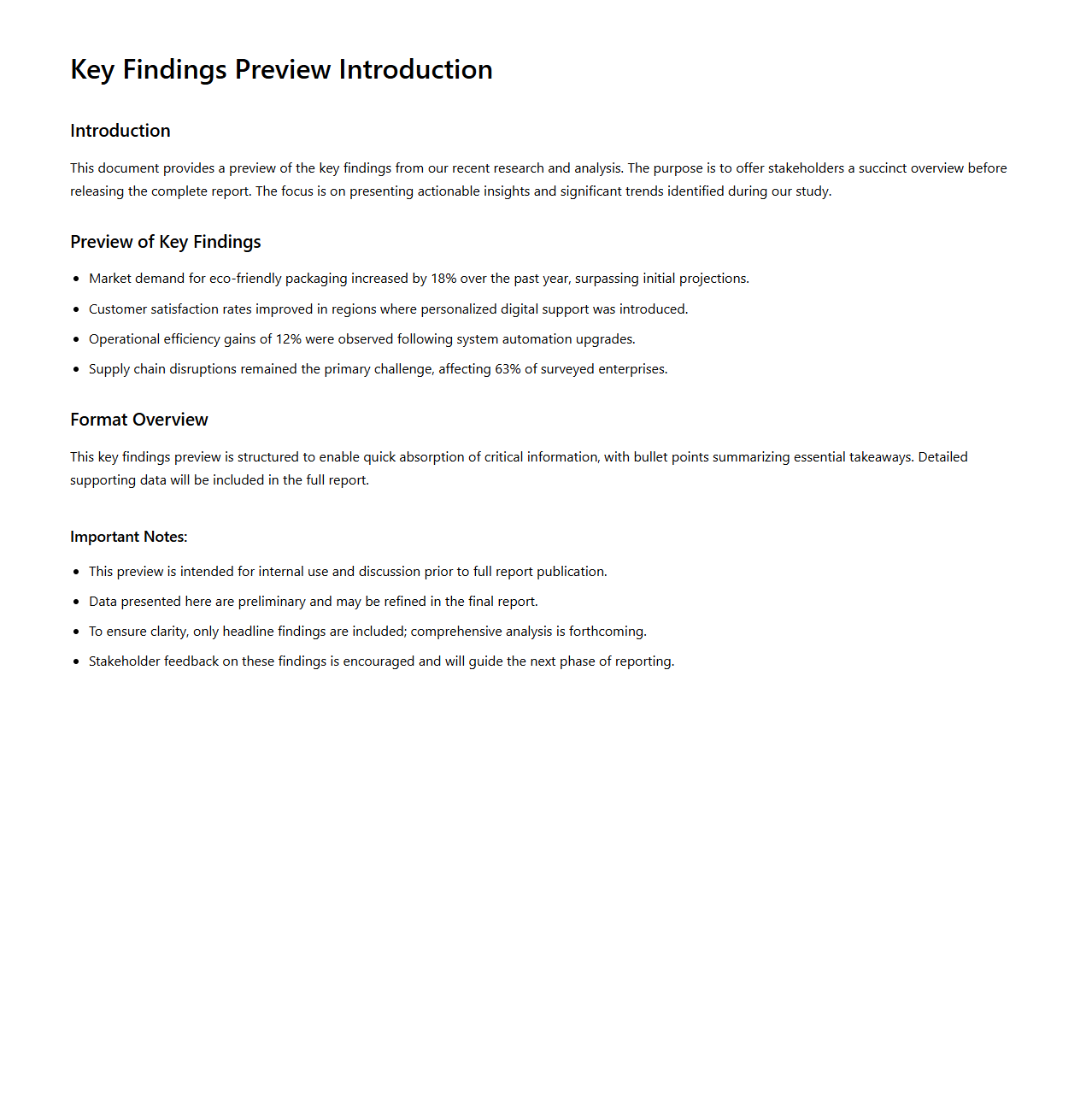
Key Findings Preview Introduction Format document serves as a structured template designed to summarize the most critical insights of a report or study succinctly. It outlines essential sections including a brief overview of the context, the main discoveries, and their implications to ensure clarity and impact. This format enhances the communication of significant results to stakeholders, facilitating quick understanding and informed decision-making.
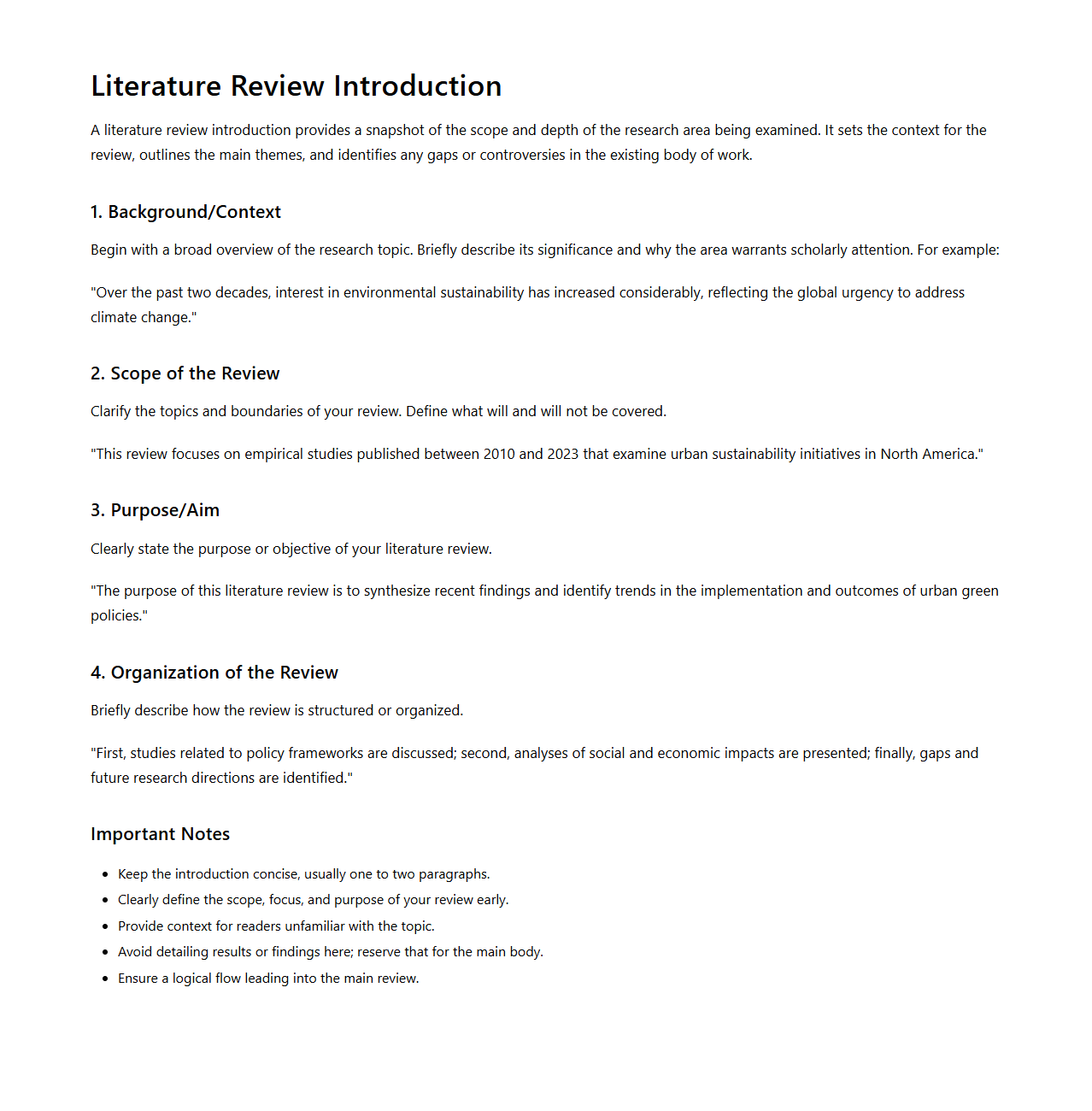
Literature Review Introduction Format
A
Literature Review Introduction Format document provides a structured outline for presenting the background and context of research studies, highlighting key themes, gaps, and theoretical frameworks in existing literature. It guides writers to clearly articulate the scope, significance, and objectives of the review, setting the foundation for a cohesive and meaningful analysis. This format ensures consistency, clarity, and academic rigor in scholarly writing across various disciplines.
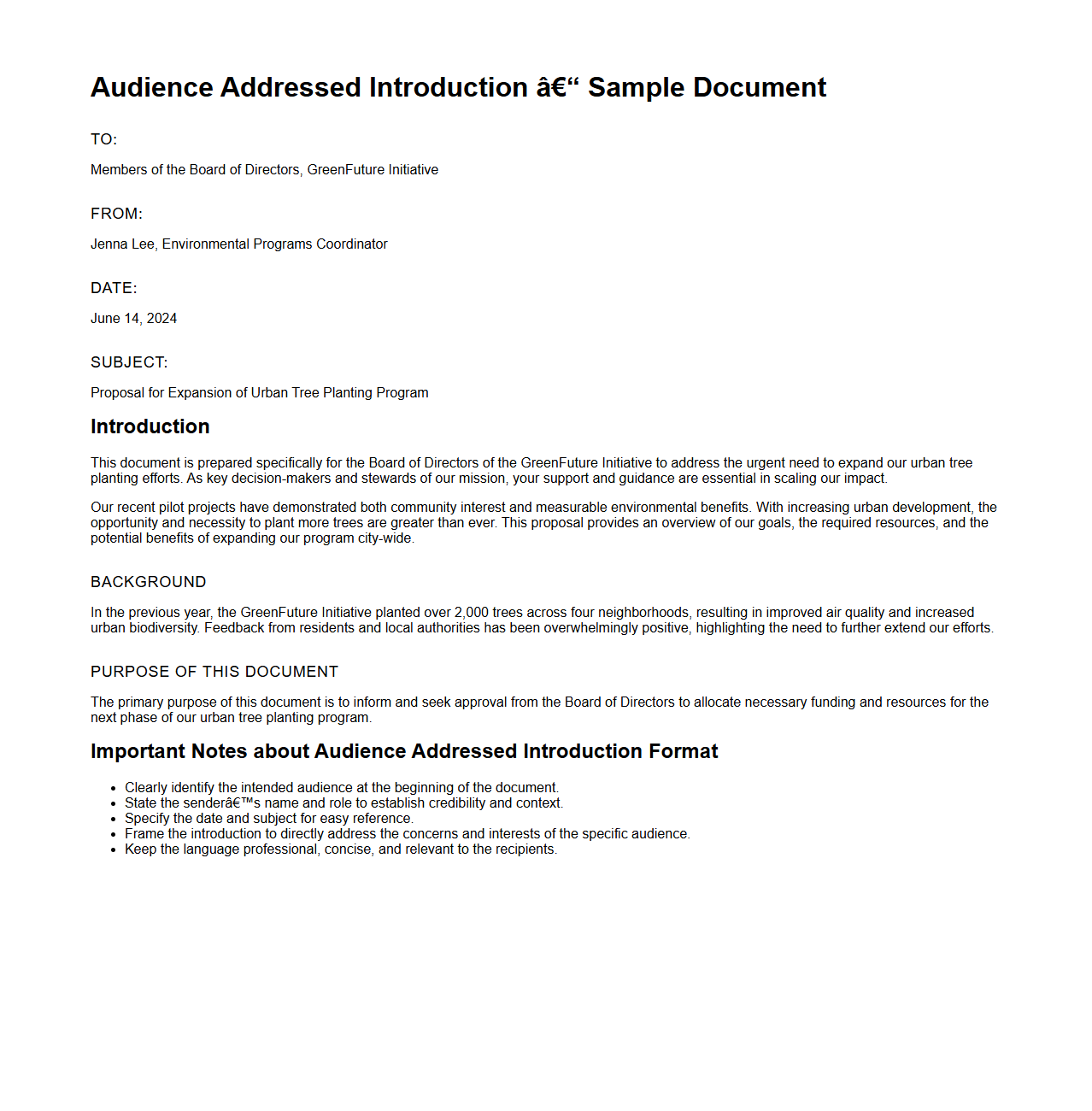
Audience Addressed Introduction Format
The
Audience Addressed Introduction Format document is designed to guide writers in tailoring introductions specifically to target readers, ensuring clarity and engagement. It outlines structured approaches for identifying audience needs, preferences, and expectations, which helps create relevant and impactful opening statements. This format enhances communication effectiveness by aligning content with the interests of the intended audience, fostering better understanding and connection.
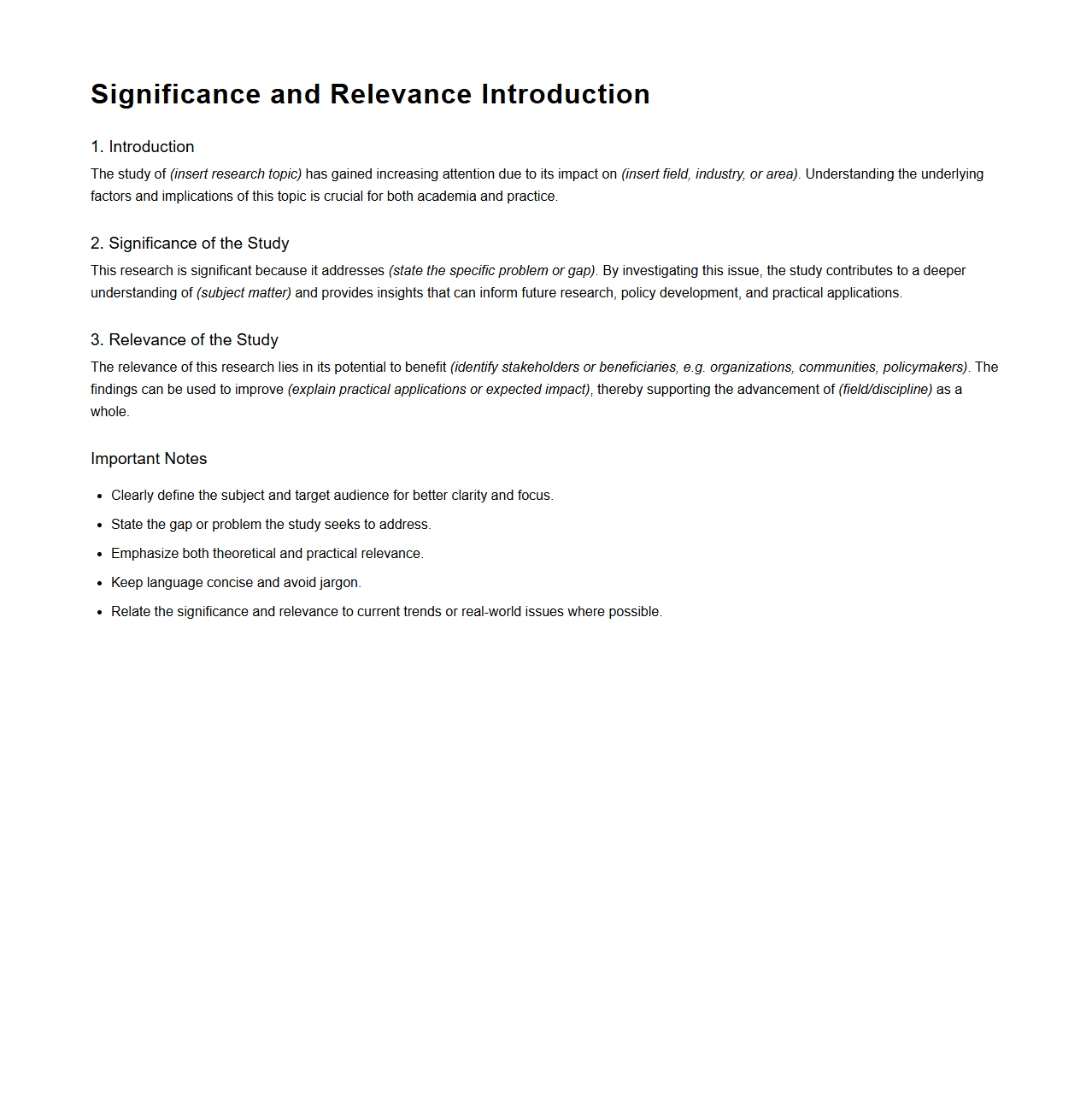
Significance and Relevance Introduction Format
The
Significance and Relevance Introduction Format document outlines a structured approach for presenting the importance and applicability of a research topic or project. This format emphasizes clearly defining the impact, practical benefits, and connection to existing knowledge or societal needs. It ensures that the introduction effectively communicates why the subject matter is critical and meaningful to stakeholders.
What is the primary purpose of including an introduction in a report?
The primary purpose of the introduction is to provide a clear overview of the report's topic. It sets the stage for the reader by highlighting the importance and relevance of the subject matter. Additionally, the introduction helps to engage the reader by outlining what to expect in the report.
Which key components should be present in the introduction section of a report?
The introduction should include a background of the topic to offer context. It must also state the report's objectives or purpose clearly. Finally, the introduction often outlines the scope and limits of the report to guide the reader's expectations.
How does the introduction establish the context for the rest of the document?
The introduction provides essential context by explaining the background and significance of the topic. It connects the reader to the broader issues or problems addressed by the report. This foundation helps readers understand why the report matters and prepares them for the detailed analysis.
In what ways should the introduction clarify the scope and objectives of the report?
The introduction must clearly define the scope to specify what the report will and will not cover. It outlines the aims and intended outcomes, setting clear objectives for the study. This clarity ensures the reader understands the report's boundaries and focus from the beginning.
What is the significance of outlining the organization or structure of the report in the introduction?
Outlining the structure of the report in the introduction helps readers navigate the document easily. It provides a roadmap that details how the information is organized into sections or chapters. This overview enhances readability and ensures the audience can follow the logical flow of content.