The Format of Site Visit Report for Field Studies typically includes sections such as an introduction, objectives, observations, and conclusions. Clear headings and detailed descriptions ensure accurate documentation of field conditions and findings. Visual aids like photos and maps are often incorporated to support the textual content and enhance clarity.
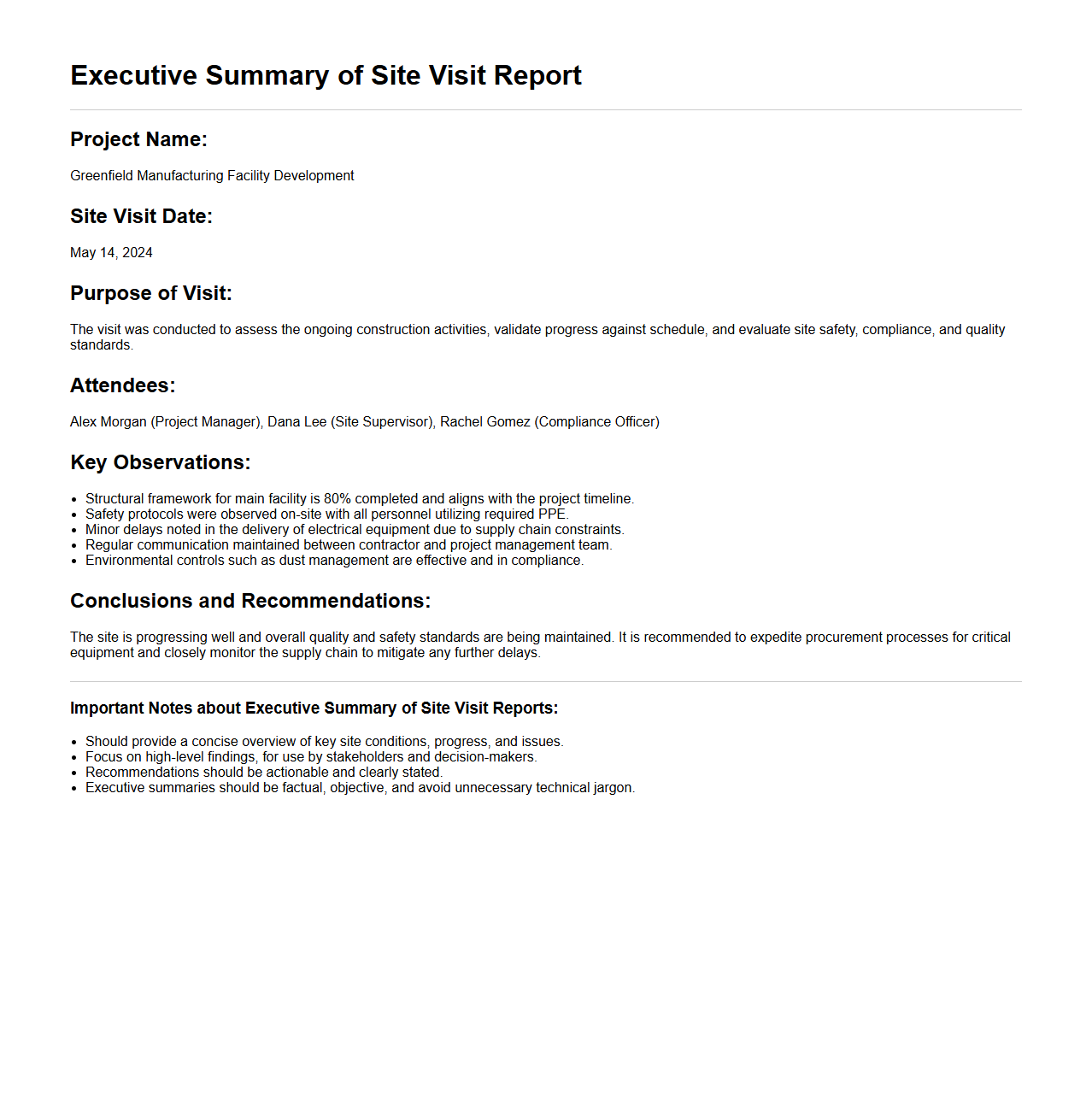
Executive Summary of Site Visit Report
The
Executive Summary of a Site Visit Report provides a concise overview of key observations, findings, and recommendations derived from the visit. It highlights critical issues and major outcomes to facilitate quick understanding for stakeholders and decision-makers. This section ensures that essential information is accessible without reviewing the detailed report.
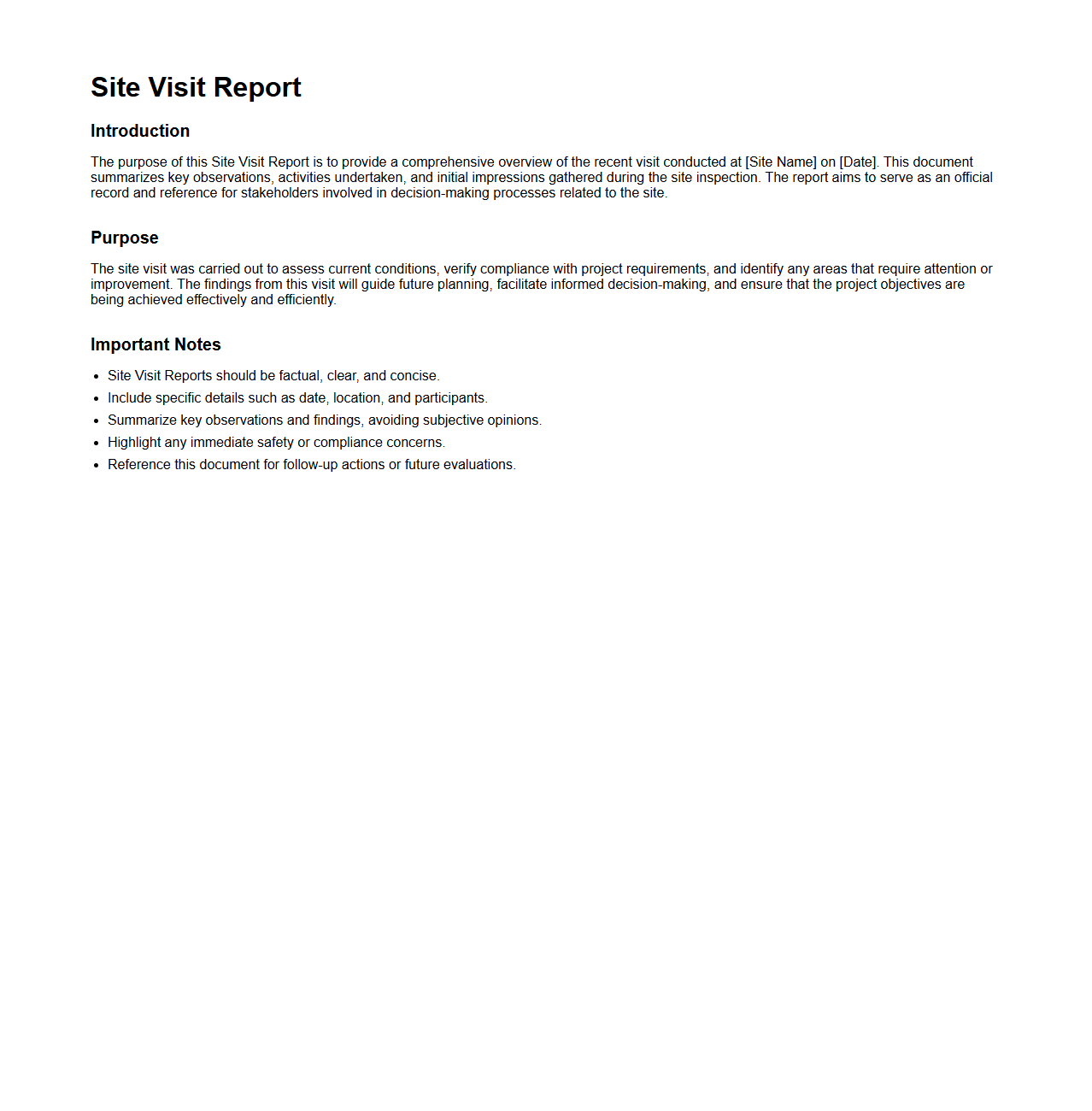
Introduction and Purpose of Site Visit Report
The
Site Visit Report document provides a detailed account of observations, assessments, and findings made during an on-site inspection or evaluation. It serves to communicate key information regarding the condition, progress, or compliance of a site to stakeholders, facilitating informed decision-making. The report also outlines the objectives of the visit, ensuring clarity on the purpose and scope of the inspection.
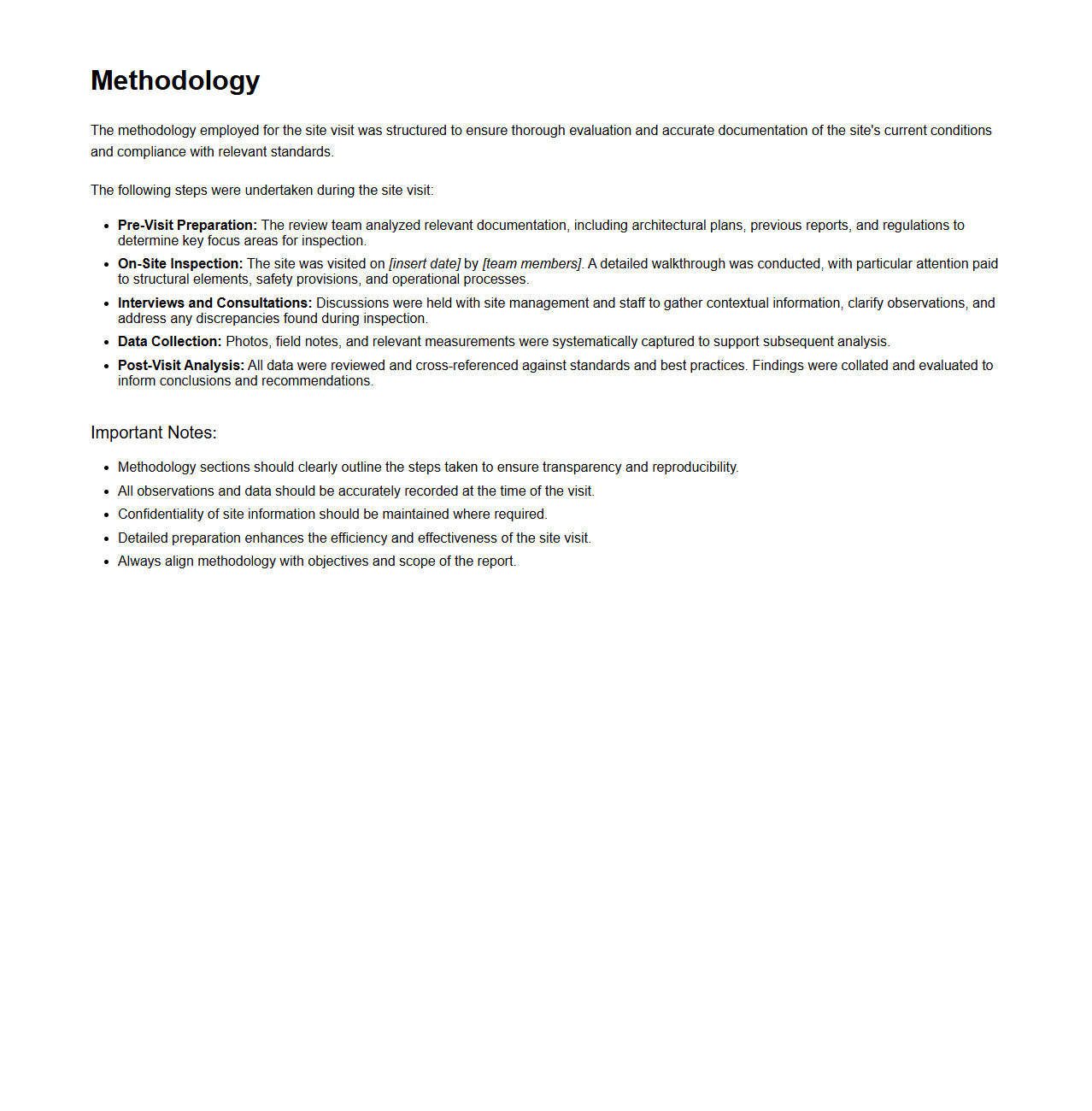
Methodology Section of Site Visit Report
The
Methodology Section of a Site Visit Report outlines the specific procedures and techniques used to gather data during the visit. It details the tools, observation strategies, and interaction protocols employed to ensure accurate and reliable information collection. This section provides transparency and allows readers to assess the validity of the findings and conclusions presented in the report.
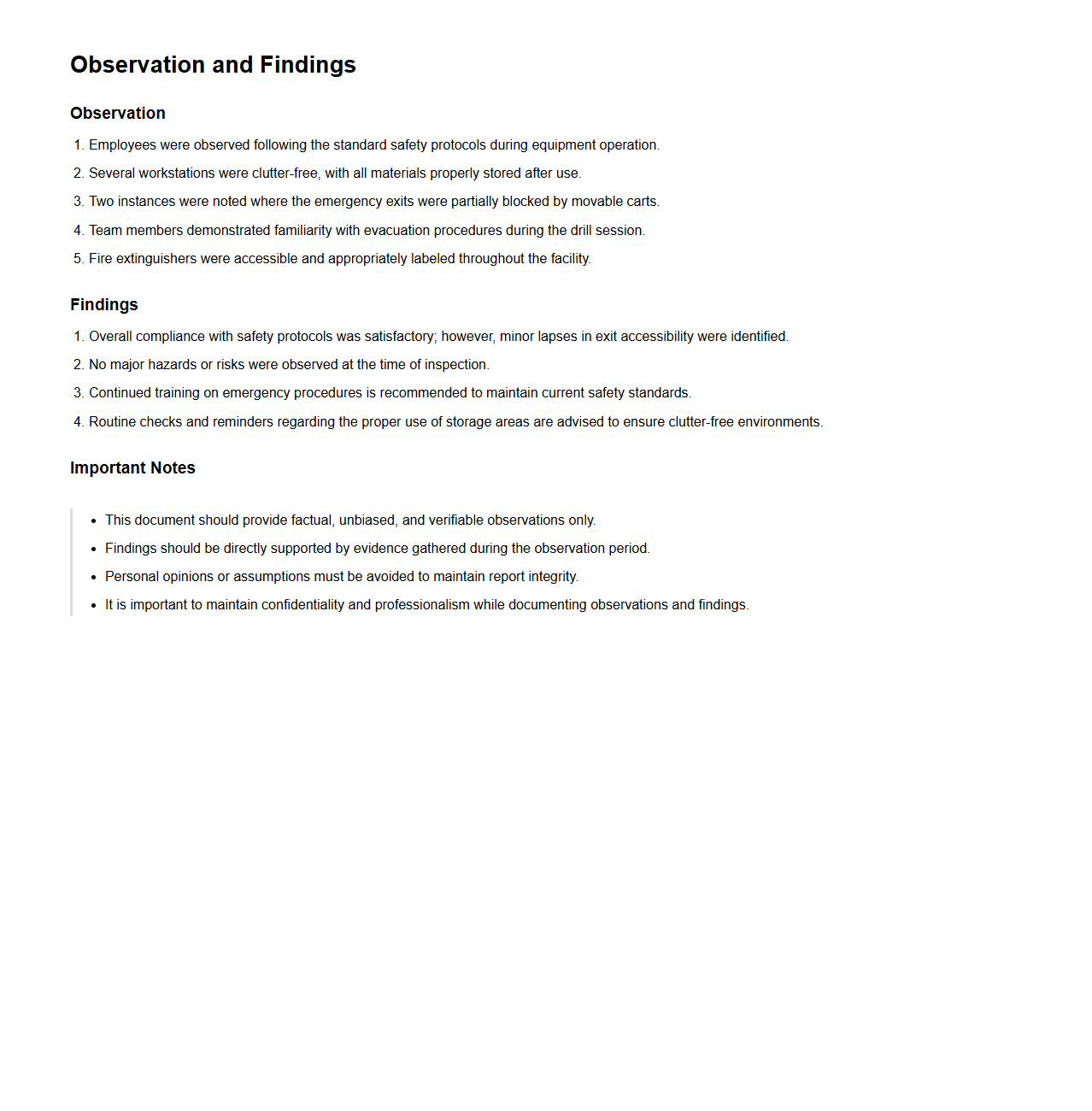
Observation and Findings Section
The
Observation and Findings Section in a document outlines the collected data and insights derived from systematic examination or research. It presents factual information, highlighting significant patterns, anomalies, or issues identified during the observation phase. This section serves as a critical foundation for analysis, decision-making, and subsequent recommendations.
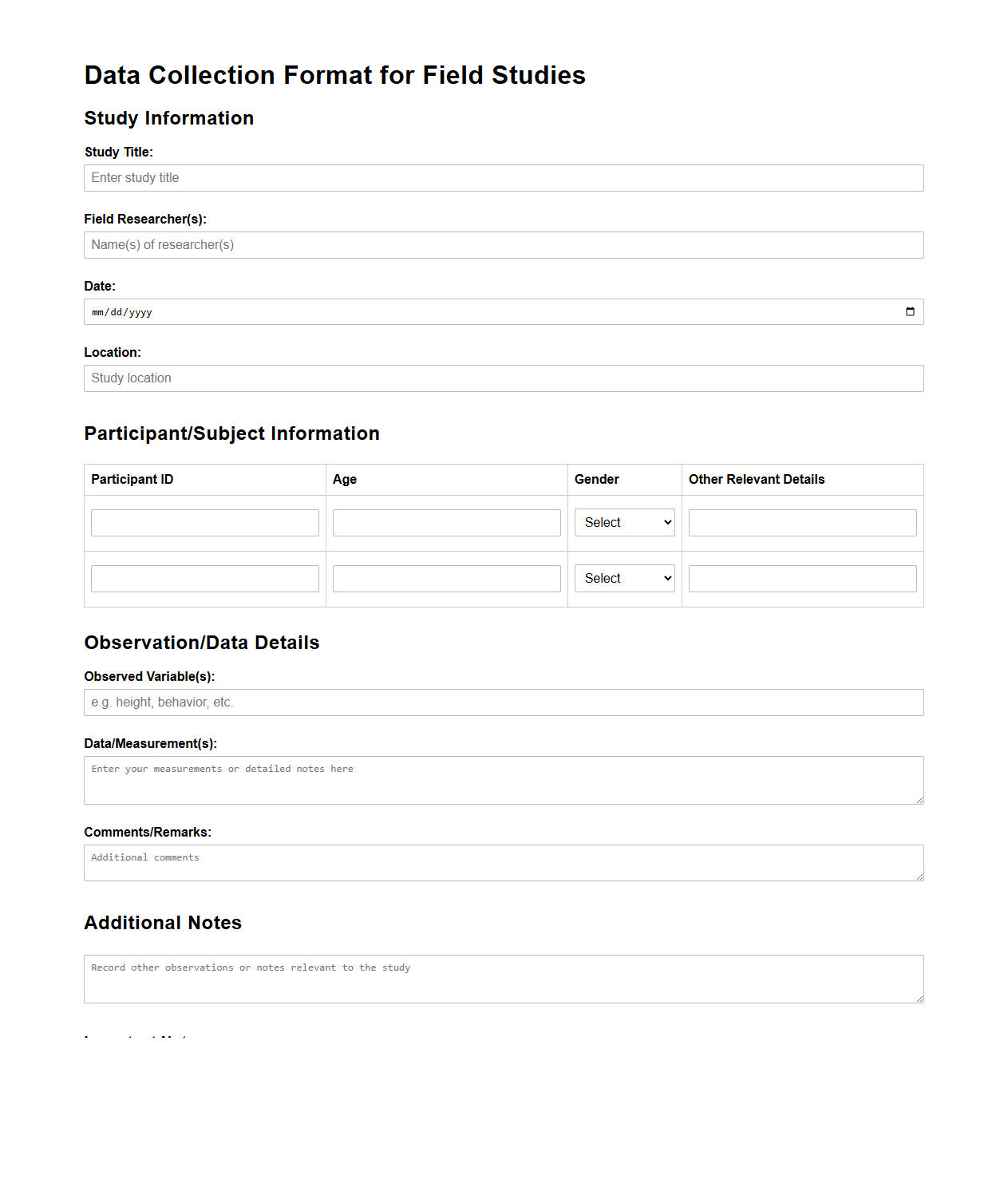
Data Collection Format for Field Studies
A
Data Collection Format for Field Studies document outlines the structured template used to systematically record observations, measurements, and responses during field research. It ensures consistency, accuracy, and reliability in data gathering across various study sites or participants. This format typically includes predefined fields for demographic information, environmental variables, and specific study metrics.
Analysis and Interpretation Section
The
Analysis and Interpretation Section document presents a detailed examination of collected data, transforming raw information into meaningful insights by applying statistical and qualitative methods. This section aids in understanding patterns, trends, and relationships within the dataset, providing a foundation for informed decision-making. Clear representation of findings in this document ensures stakeholders can accurately evaluate results and draw relevant conclusions.
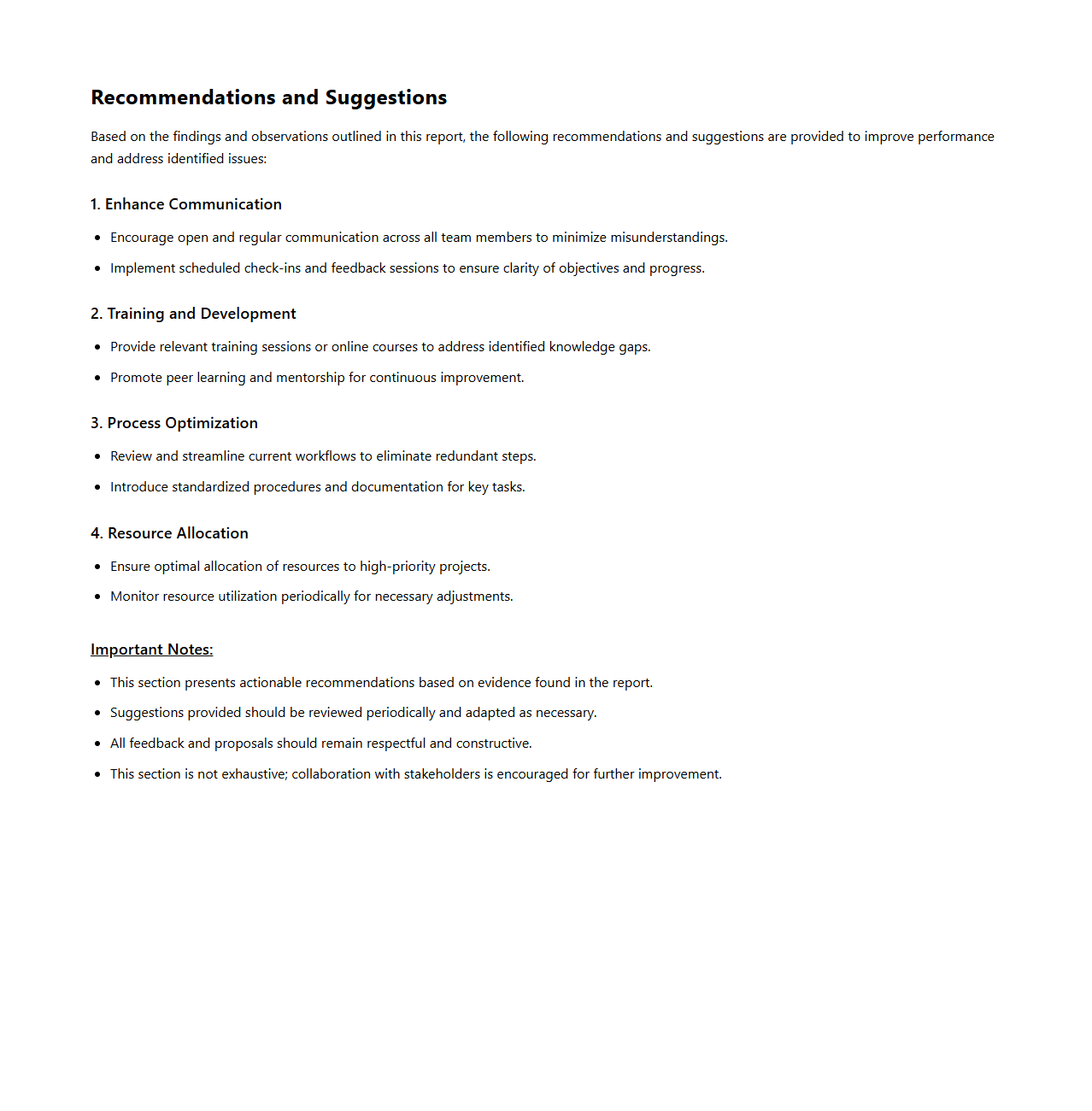
Recommendations and Suggestions Section
The
Recommendations and Suggestions Section document outlines actionable advice based on analysis or findings, aimed at improving processes, strategies, or outcomes. It provides clear, practical steps tailored to the specific context, helping decision-makers implement effective solutions. This section serves as a critical tool for guiding future actions and ensuring continuous improvement within projects or organizations.
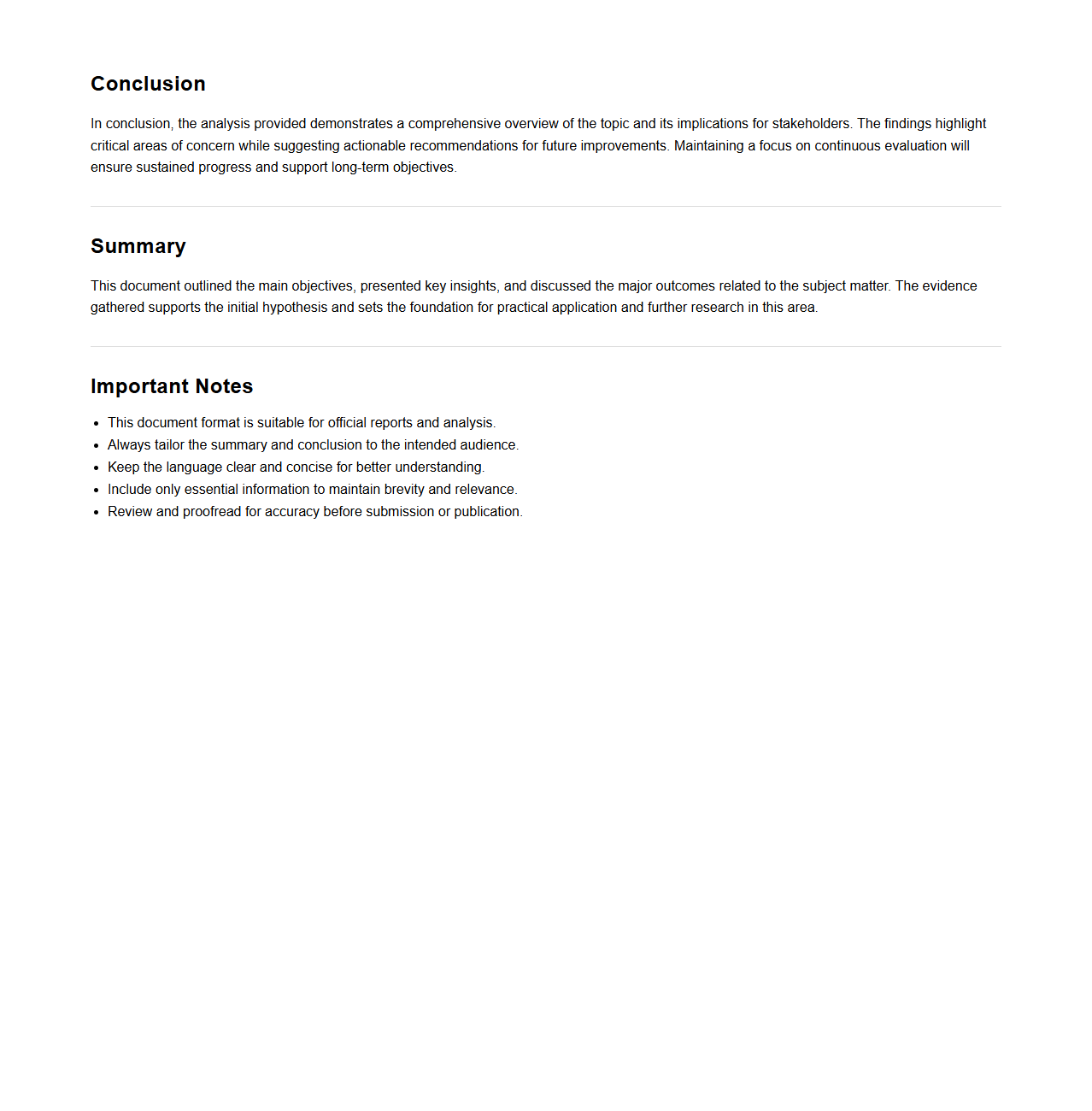
Conclusion and Summary Section
The
Conclusion and Summary Section in a document provides a concise recap of the main points discussed, reinforcing the key findings or arguments presented. It synthesizes essential information to leave a clear and memorable impression on the reader. This section often highlights the overall significance and potential implications of the content without introducing new data.
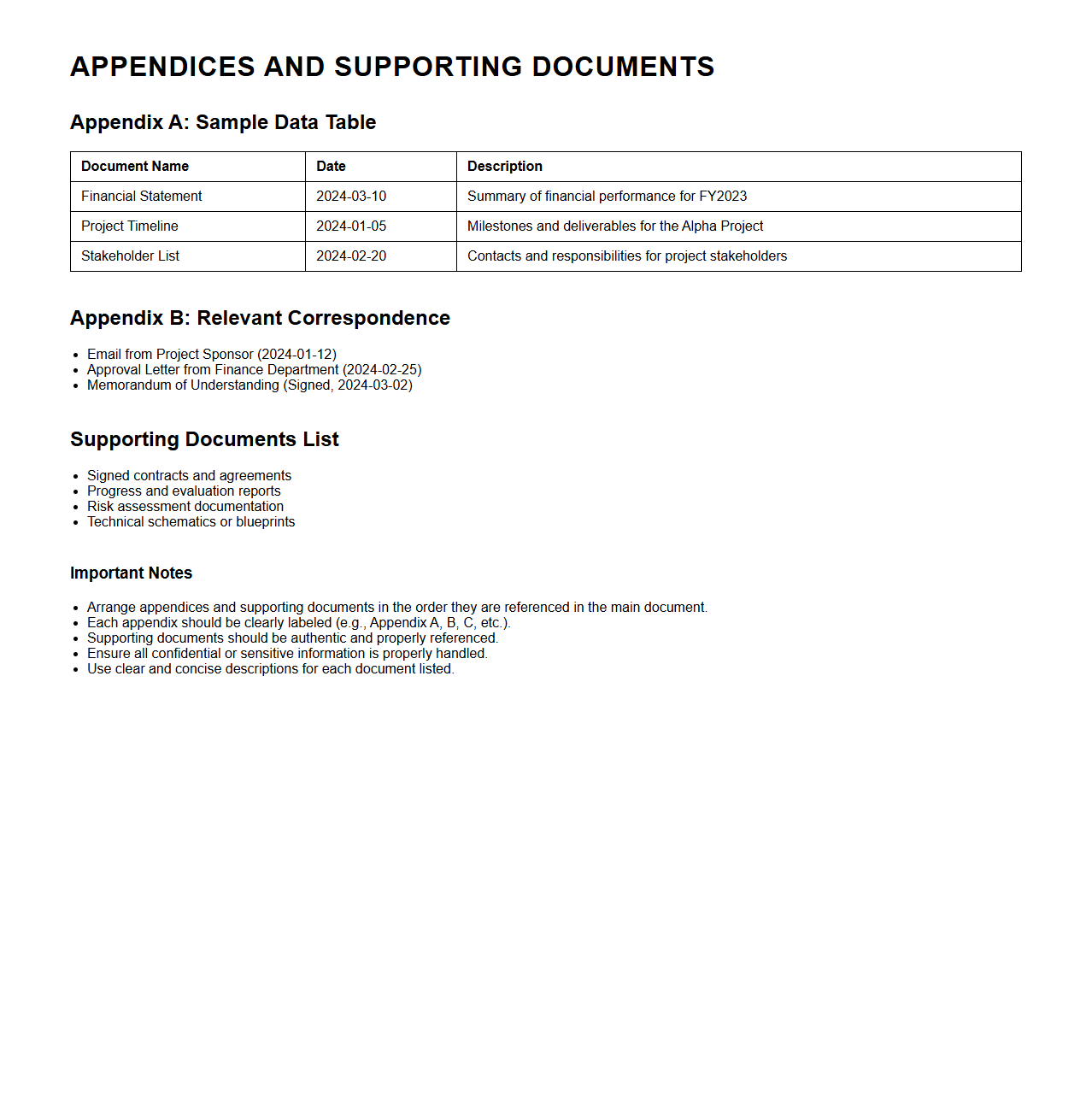
Appendices and Supporting Documents Format
The
Appendices and Supporting Documents Format document provides a structured framework for organizing supplementary materials that enhance the main content of a report or study. It ensures consistency in presenting additional data, charts, tables, or references that support key findings without disrupting the flow of the primary narrative. Proper formatting in this document aids readers in locating and understanding supplemental information efficiently.
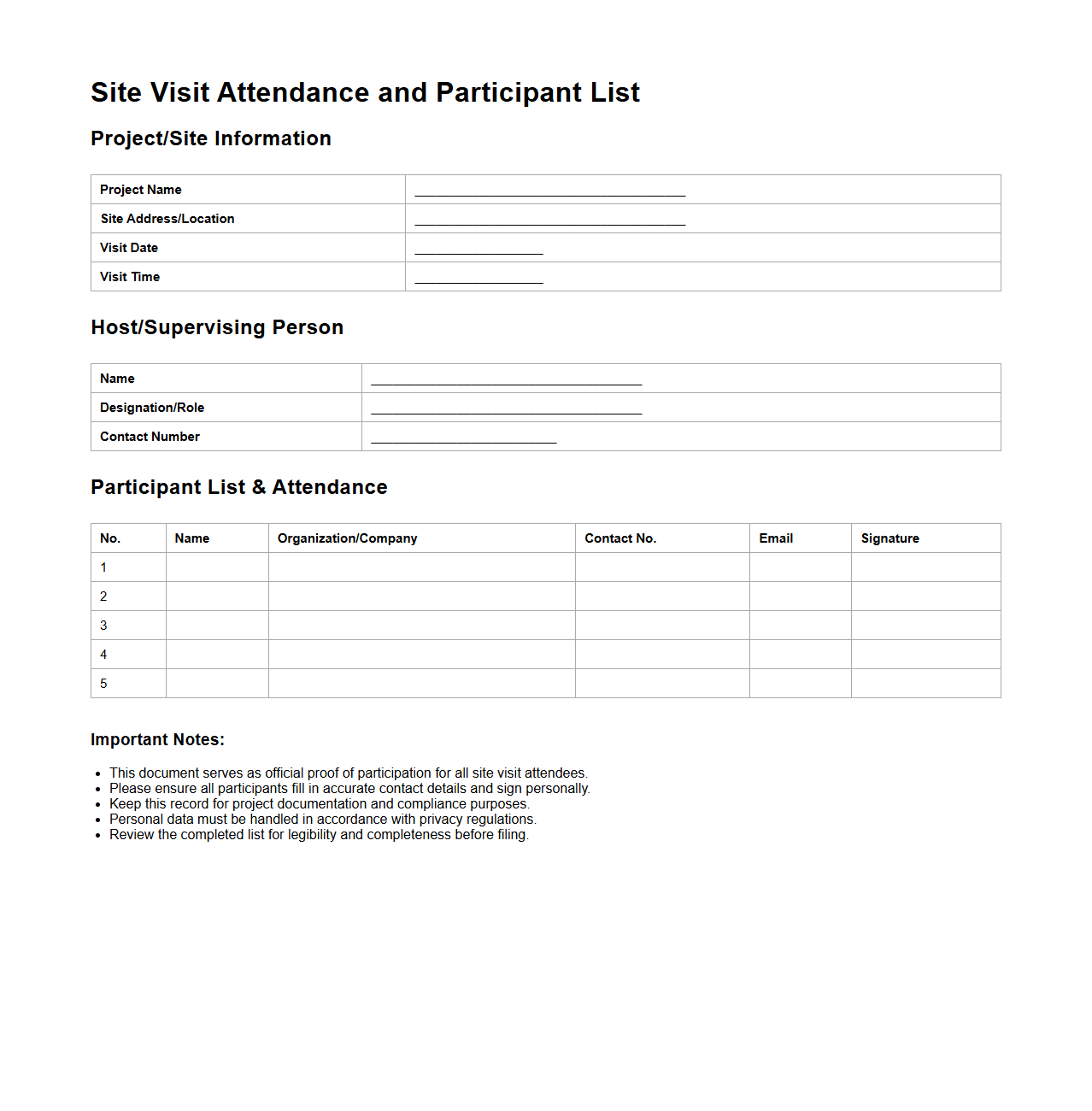
Site Visit Attendance and Participant List Template
The
Site Visit Attendance and Participant List Template document is a structured form used to record the names, affiliations, and contact details of individuals attending a site visit or inspection. It ensures accurate tracking of all participants for accountability, communication, and compliance purposes during project evaluations or audits. Maintaining a detailed attendance list supports efficient coordination and enhances transparency in site visit management.
Key Sections in a Site Visit Report for Field Studies
The key sections in a Site Visit Report typically include the introduction, methodology, observations, findings, recommendations, and conclusion. Each section serves a specific purpose to present the study comprehensively and clearly. Including these ensures a structured and professional report format.
Structuring Observations and Findings in the Site Visit Report
Observations and findings should be organized logically, often by themes or locations to enhance readability. Clear subheadings and bullet points help in presenting data succinctly and highlight key results. This structure facilitates easy comprehension and comparison across different site aspects.
Details for Documenting Background and Objectives
The report must include a detailed background that sets the context of the field study, explaining why the visit was necessary. Objectives should clearly state the goals and what the study aims to accomplish. Providing this context helps readers understand the purpose and relevance of the findings.
Describing Methods and Tools for Data Collection
The Site Visit Report should thoroughly describe all methods and tools used to gather data, such as interviews, surveys, observations, or technological instruments. This section validates the credibility and accuracy of the data collected. A clear methodology also allows for replication or further studies.
Presenting Recommendations and Conclusions
Recommendations should be stated clearly and be directly linked to the observed findings, emphasizing practical and actionable advice. Conclusions summarize the overall insights gained from the field study, reinforcing the objectives' achievement. Presenting these elements cohesively provides a strong closing to the report.