Title Page Format for Appendices in Reports
The
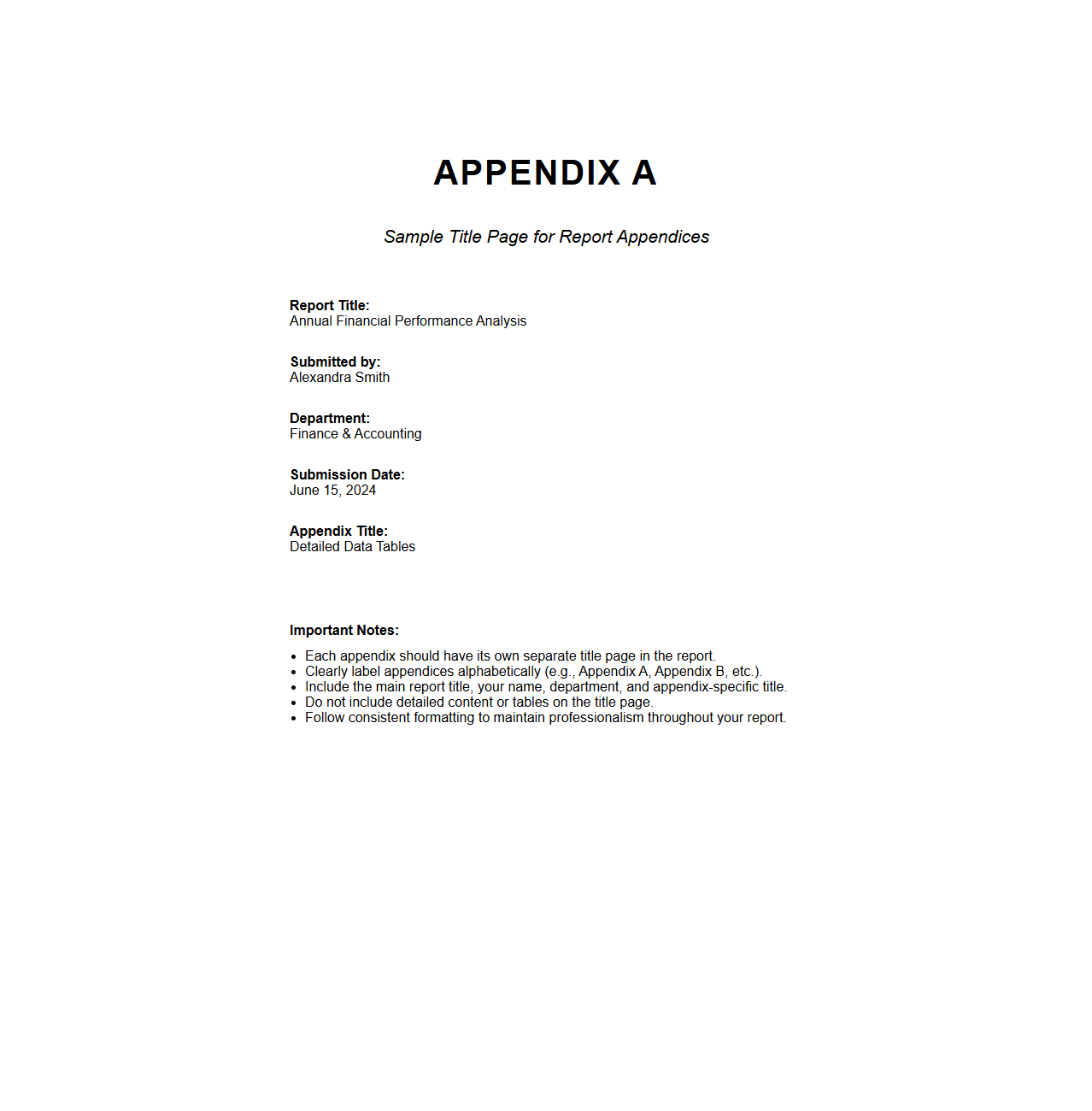
Title Page Format for Appendices in reports ensures clear identification and organization of supplementary material, typically featuring the word "Appendix" followed by a corresponding letter or number, the appendix title, and the report's main title or section reference. It maintains consistency with the main report's formatting style, including font type, size, and alignment, to ensure professional presentation and ease of navigation. Properly formatted appendix title pages enhance readability by clearly separating additional data, charts, or documents from the core report content.
Numbering Conventions for Report Appendices
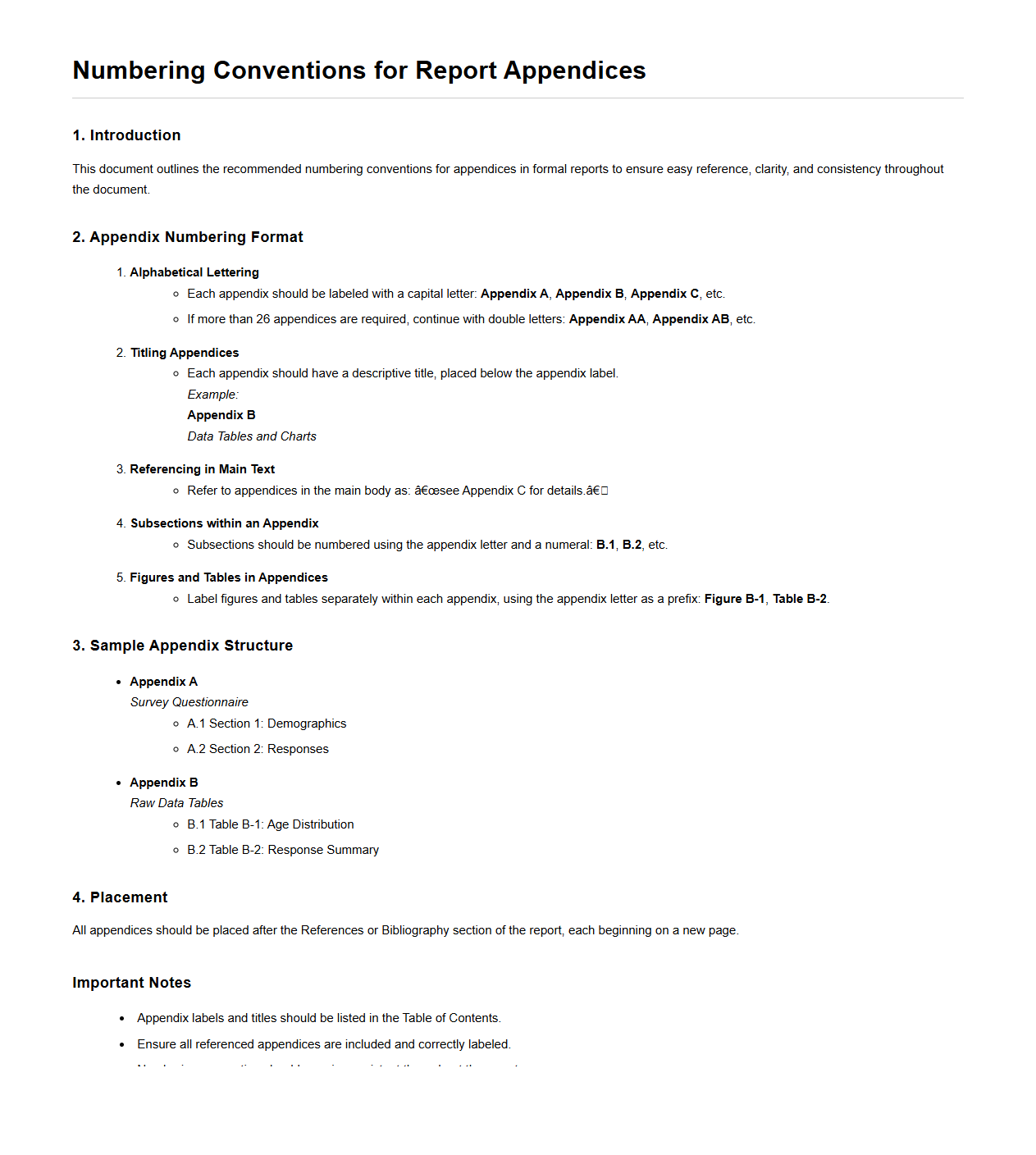
Numbering conventions for report appendices ensure a clear and consistent method to label supplementary sections, facilitating easy reference and organization. This system typically uses a combination of letters and numbers, such as Appendix A, Appendix B1, to distinguish between main appendices and sub-sections. Applying
standardized appendix numbering enhances document navigation and improves reader comprehension across formal reports.
Table of Contents Format for Appendices
A
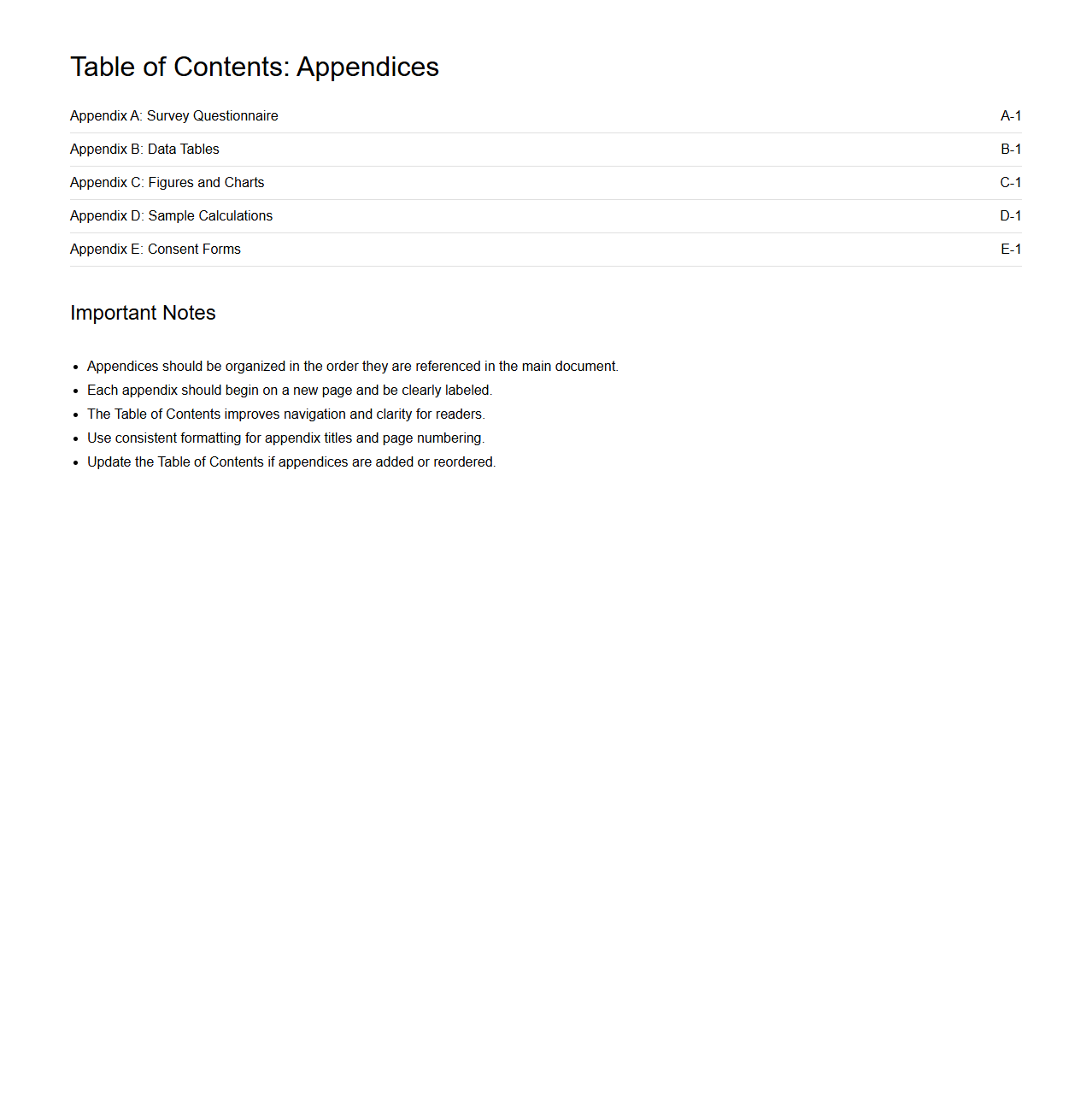
Table of Contents Format for Appendices is a structured list that outlines the titles and page numbers of all appendices included in a document, aiding readers in locating supplementary materials quickly. It typically follows the main Table of Contents and uses a clear, consistent style with alphanumeric labels like Appendix A, Appendix B, etc. Proper formatting ensures easy navigation and enhances the overall organization of complex reports or academic papers.
Labeling Figures and Tables in Appendix Documents
Labeling figures and tables in appendix documents involves assigning clear, consistent identifiers and descriptive captions to each visual element to enhance organization and readability. Proper labeling allows readers to easily reference supplemental materials that support the main content, ensuring that all data is accessible and understandable. Maintaining standardized
figure and table labeling in appendices is essential for effective communication and professional documentation.
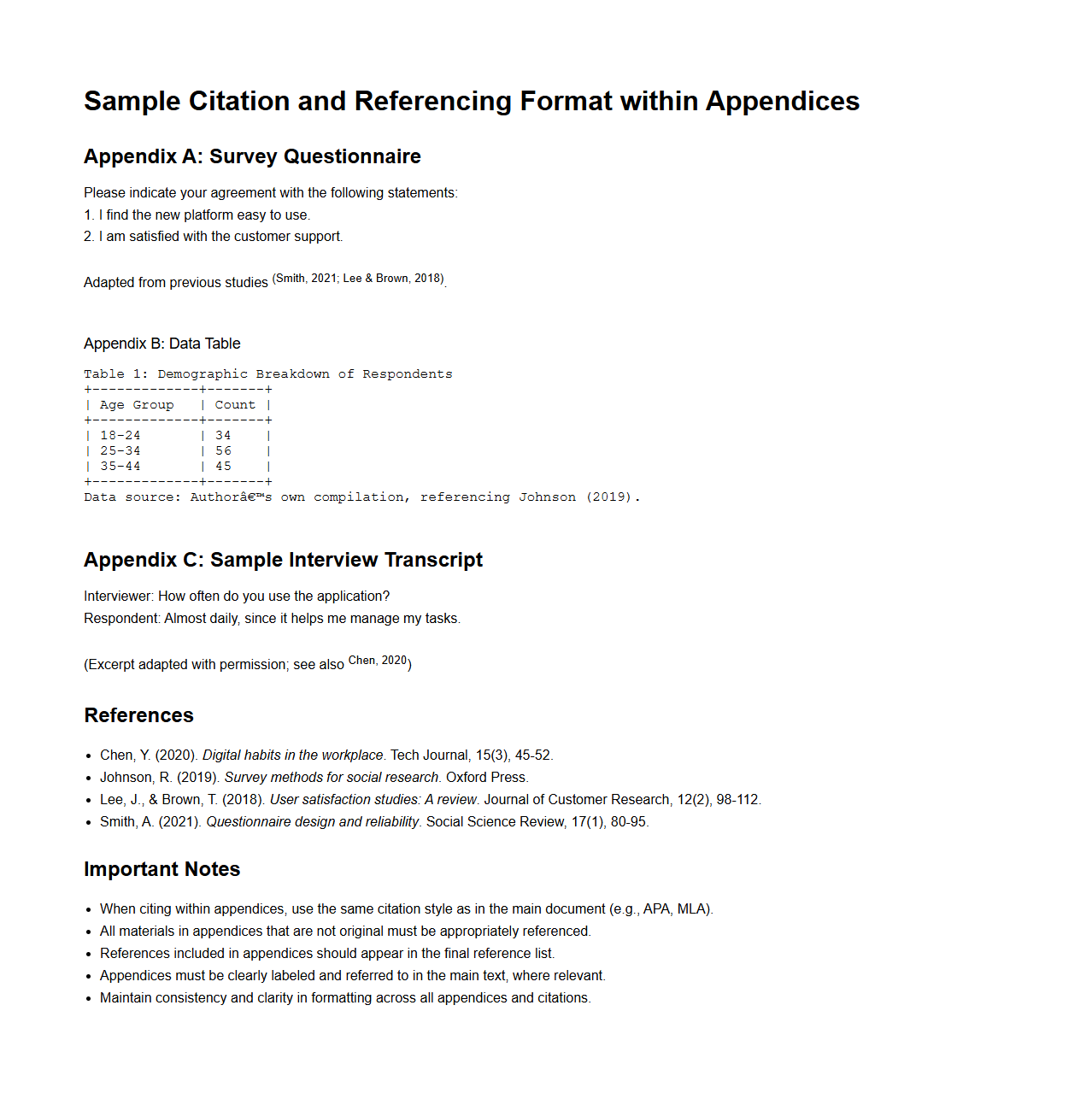
Citation and Referencing Format within Appendices
Citation and referencing format within an appendices document ensures that all supplemental information, data, or sources are properly credited following the same style as the main text, maintaining academic integrity and clarity. This format typically includes detailed source citations, allowing readers to trace the origin of appendices content, such as charts, tables, or extended explanations. Proper use of a
citation and referencing format in appendices helps avoid plagiarism and supports the credibility of the research.
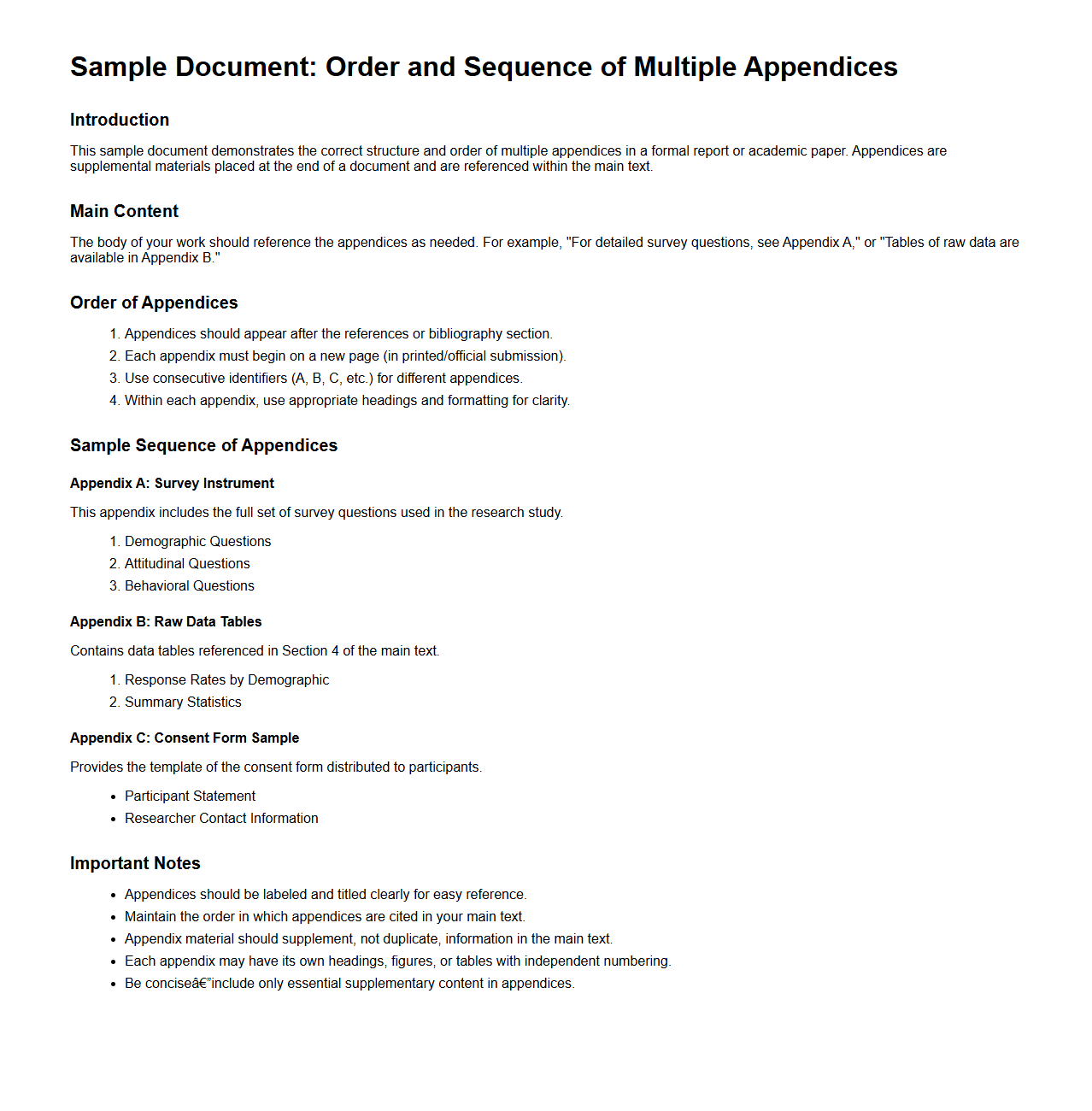
Order and Sequence of Multiple Appendices
An
Order and Sequence of Multiple Appendices document organizes supplementary materials in a clear, logical progression to support the main text. It ensures each appendix is referenced consistently, facilitating easy navigation and coherence for readers. Proper sequencing enhances understanding by grouping related data, charts, or reports in a structured format.
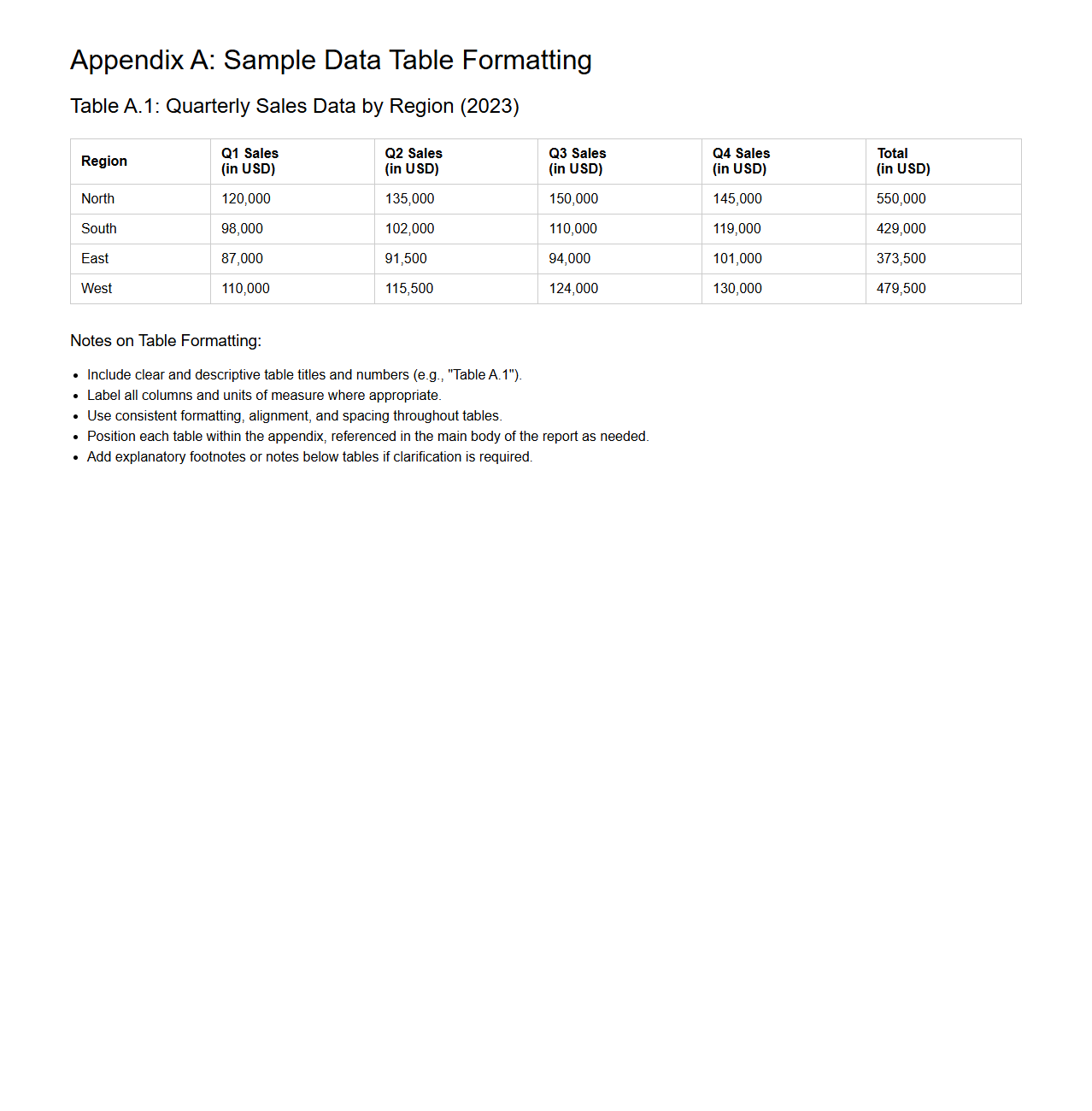
Formatting Data Tables in Report Appendices
Formatting data tables in report appendices involves organizing and presenting tabular information clearly and consistently to enhance readability and comprehension. This process includes aligning columns, applying appropriate heading styles, and using borders or shading to differentiate sections, ensuring that critical data is easily accessible to readers. Proper
data table formatting also ensures compatibility with the overall report design and supports efficient information retrieval during analysis.
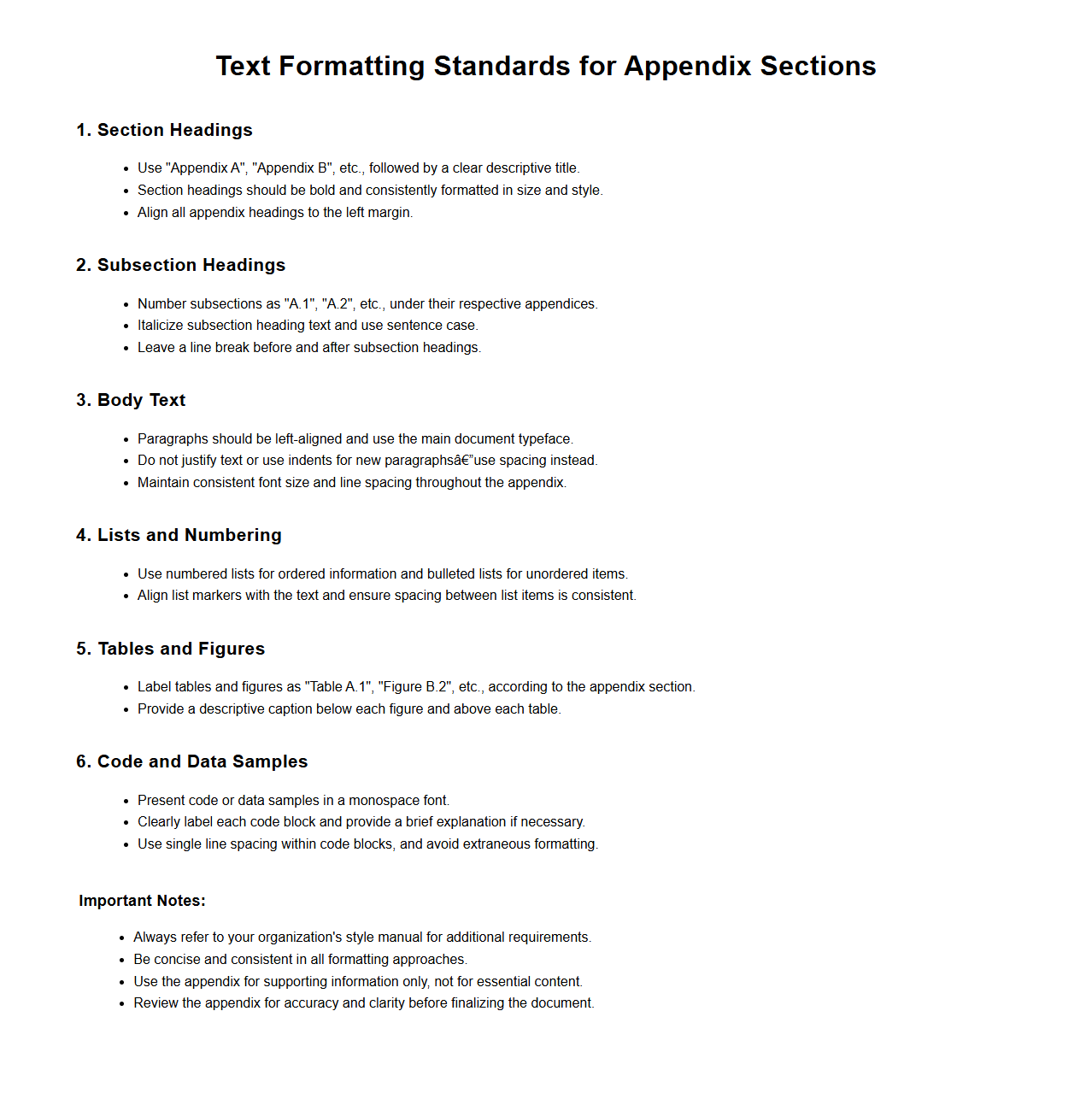
Text Formatting Standards for Appendix Sections
The
Text Formatting Standards for Appendix Sections document provides detailed guidelines to ensure consistency, readability, and professional presentation of appendices in reports or publications. It specifies font styles, sizes, heading hierarchy, margin settings, and citation formats tailored for supplemental material. Following these standards facilitates easier navigation and enhances the overall clarity of appendices, supporting efficient information retrieval for readers.
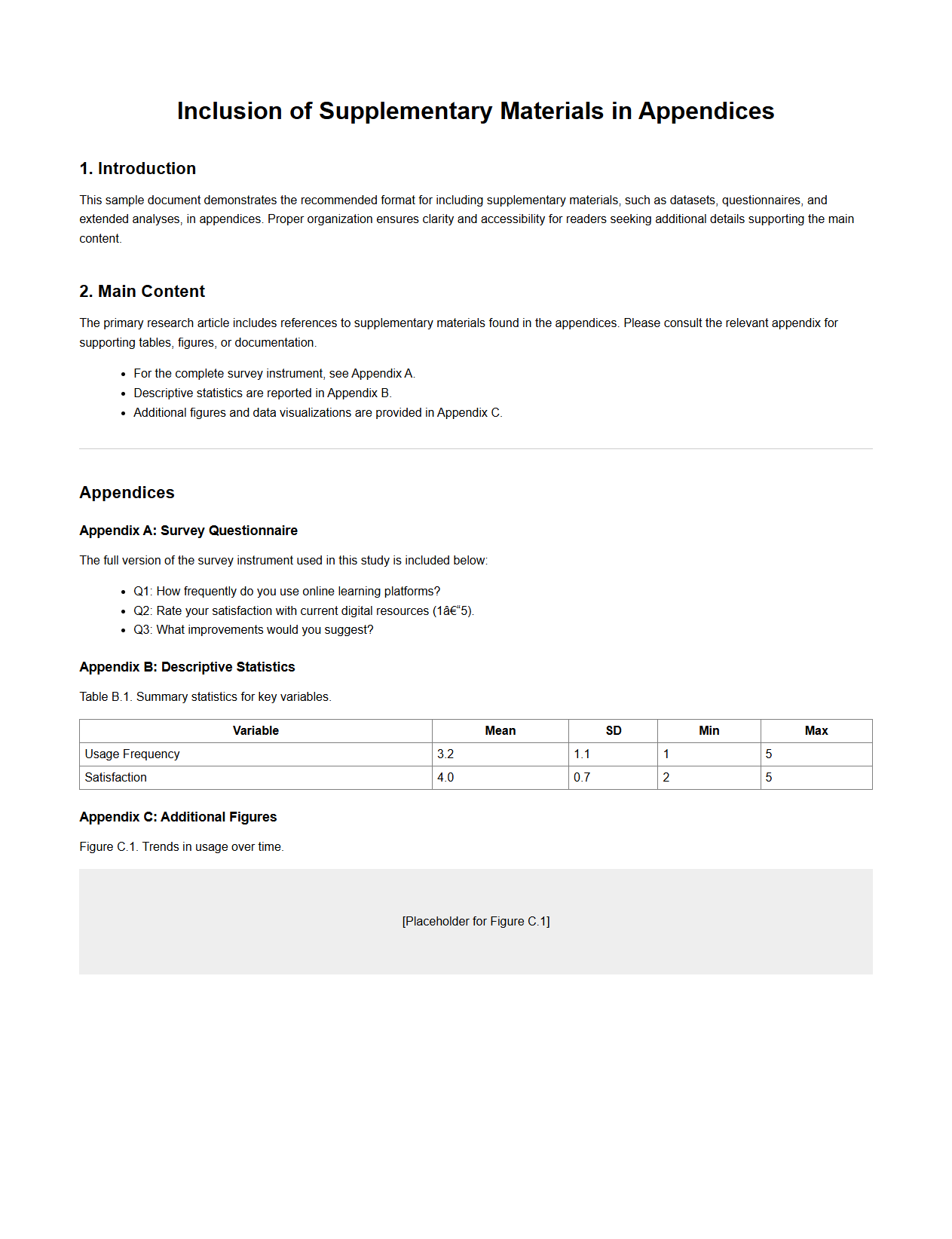
Inclusion of Supplementary Materials in Appendices
The
Inclusion of Supplementary Materials in Appendices document serves to organize additional content that supports the main text without disrupting its flow, such as detailed data sets, extensive tables, or technical notes. This approach enhances the clarity and credibility of academic or professional papers by providing readers access to comprehensive resources while maintaining concise primary narratives. Appendices are typically referenced within the main body to guide readers towards these essential, yet non-central, materials.
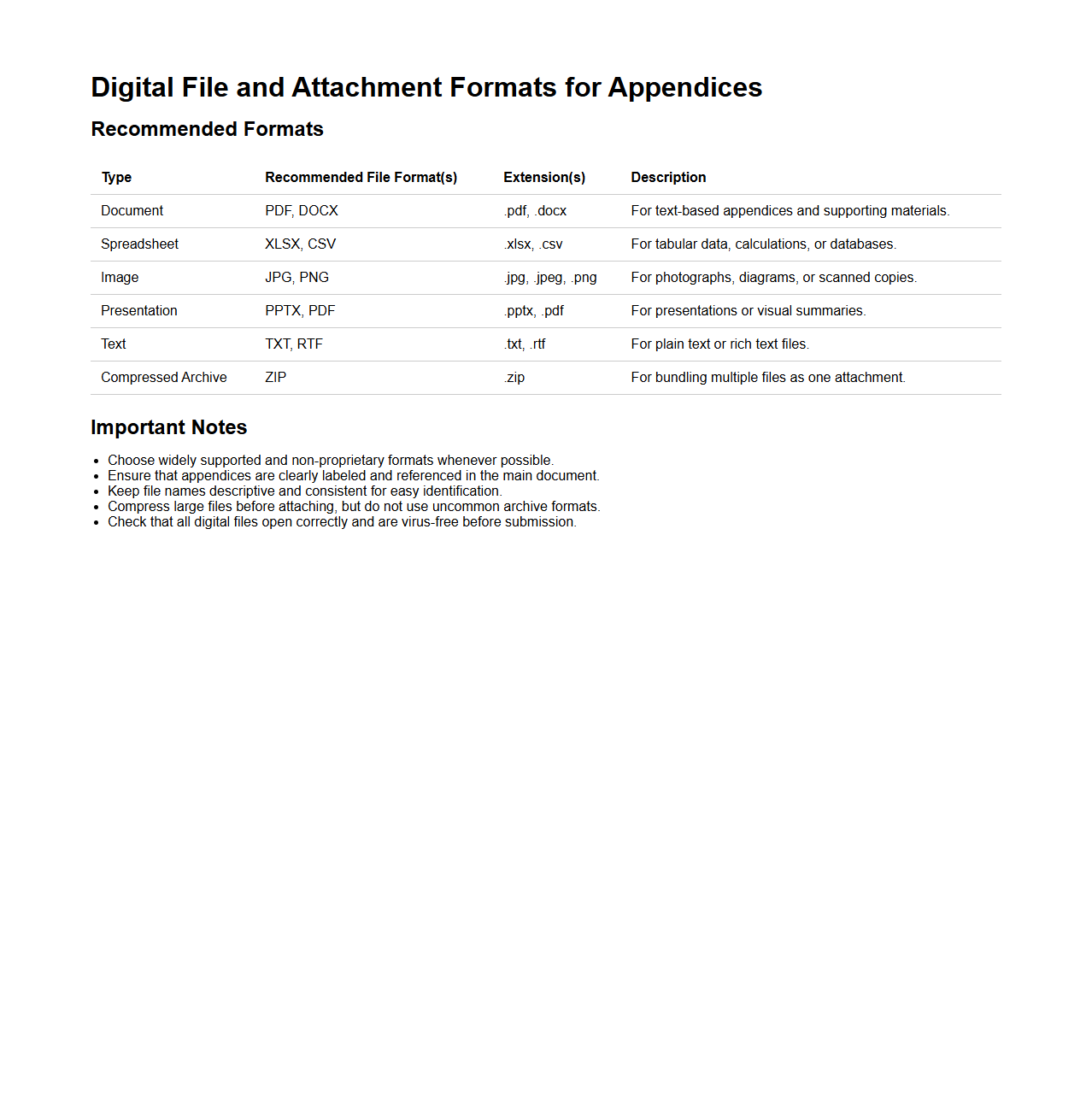
Digital File and Attachment Formats for Appendices
Digital file and attachment formats for appendices documents encompass various
file types designed to support supplementary materials in reports, research papers, and official documents. Common formats include PDF, DOCX, XLSX, JPEG, and PNG, each facilitating the inclusion of text, data tables, images, and charts to enhance the primary content. Proper selection of these formats ensures compatibility, accessibility, and preservation of data integrity across different platforms and readers.
What is the standard order of sections in an appendix for reports?
The standard order of sections in an appendix typically follows the sequence of their citation in the main report. Each appendix section should be presented sequentially to maintain clarity and ease of reference. This structured order helps readers navigate supplemental material efficiently.
How should each appendix item be labeled and referenced within the main report?
Each appendix item must be labeled with a clear identifier, such as Appendix A, Appendix B, and so forth. Refer to these labels explicitly in the main report to guide readers to the relevant supplementary information. Consistent and precise referencing improves the report's overall coherence.
What formatting style (font, spacing, margins) is recommended for appendices in formal reports?
Formal report appendices should use the same font and size as the main text, commonly 12-point Times New Roman or Arial. Maintain consistent line spacing, typically 1.5 or double-spaced, and adhere to standard margin settings (usually 1 inch on all sides). Uniform formatting ensures professional presentation and readability.
Which types of materials are appropriate to include in an appendix?
Appropriate appendix materials include detailed data tables, raw data, questionnaires, technical notes, charts, and supplementary explanations that support the report's findings. Avoid placing essential information in the appendix; it should serve as additional reference content. This distinction keeps the main report concise and focused.
How should multiple appendices be organized and titled for clarity?
Multiple appendices should be organized sequentially and each titled descriptively to indicate its content, for example, Appendix A: Survey Questionnaire. Titles should be concise yet informative to help readers identify the purpose of each appendix quickly. Clear organization enhances the professional quality and usability of the report.