The format of technical report for engineering typically includes a clear title page, abstract, table of contents, introduction, methodology, results, discussion, conclusion, and references. Each section is organized to present information logically and concisely, ensuring complex data and analyses are accessible. Visual aids such as charts, graphs, and diagrams are frequently incorporated to enhance comprehension and emphasize key findings.
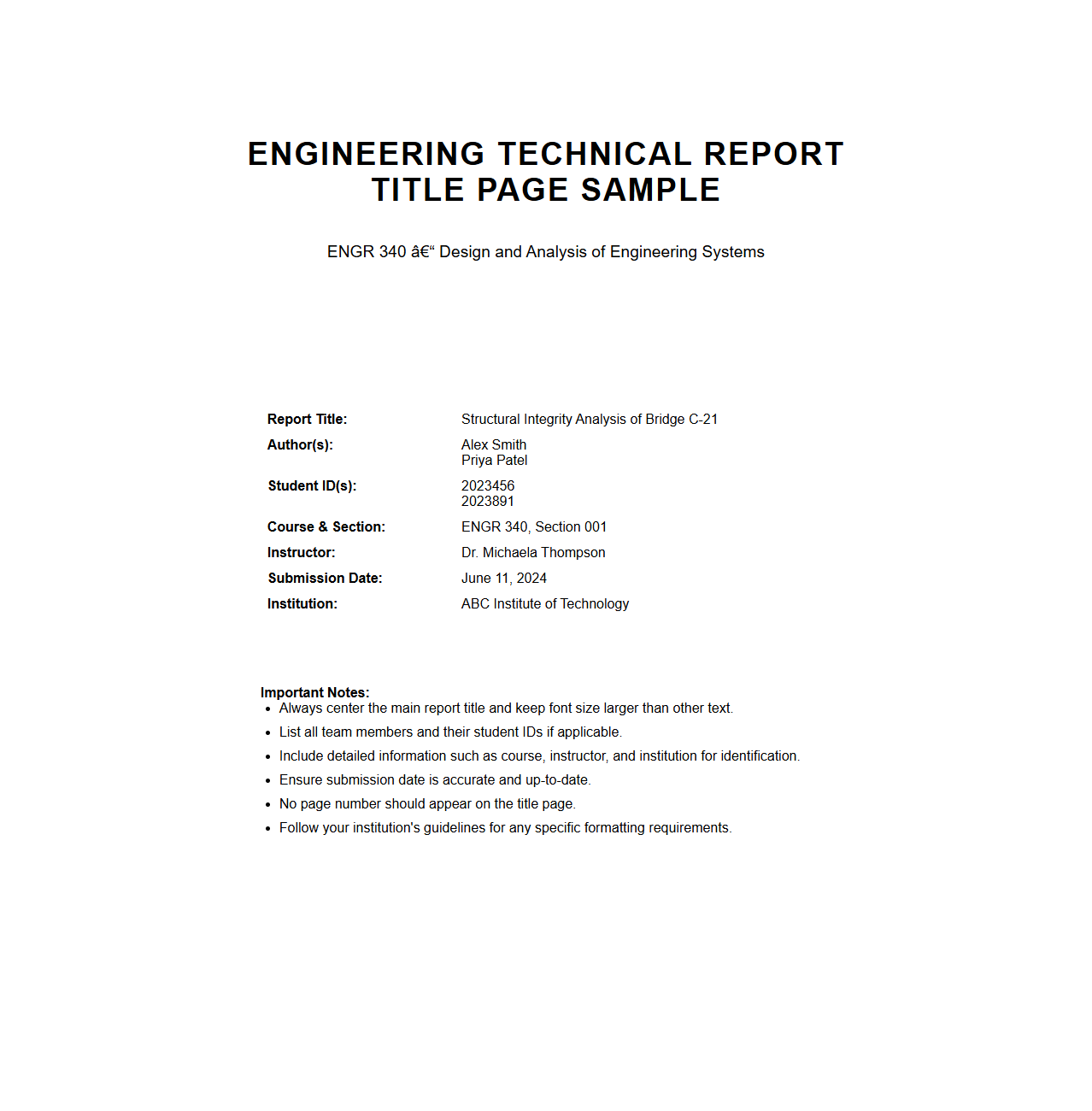
Title Page Format for Engineering Technical Report
The
Title Page Format for an Engineering Technical Report is a structured layout that includes the report title, author's name, affiliation, date of publication, and sometimes a project or report number. It is designed to provide clear identification and easy reference for the document, ensuring consistency and professionalism. Proper formatting often follows specific institutional or organizational guidelines to maintain uniformity across technical reports.
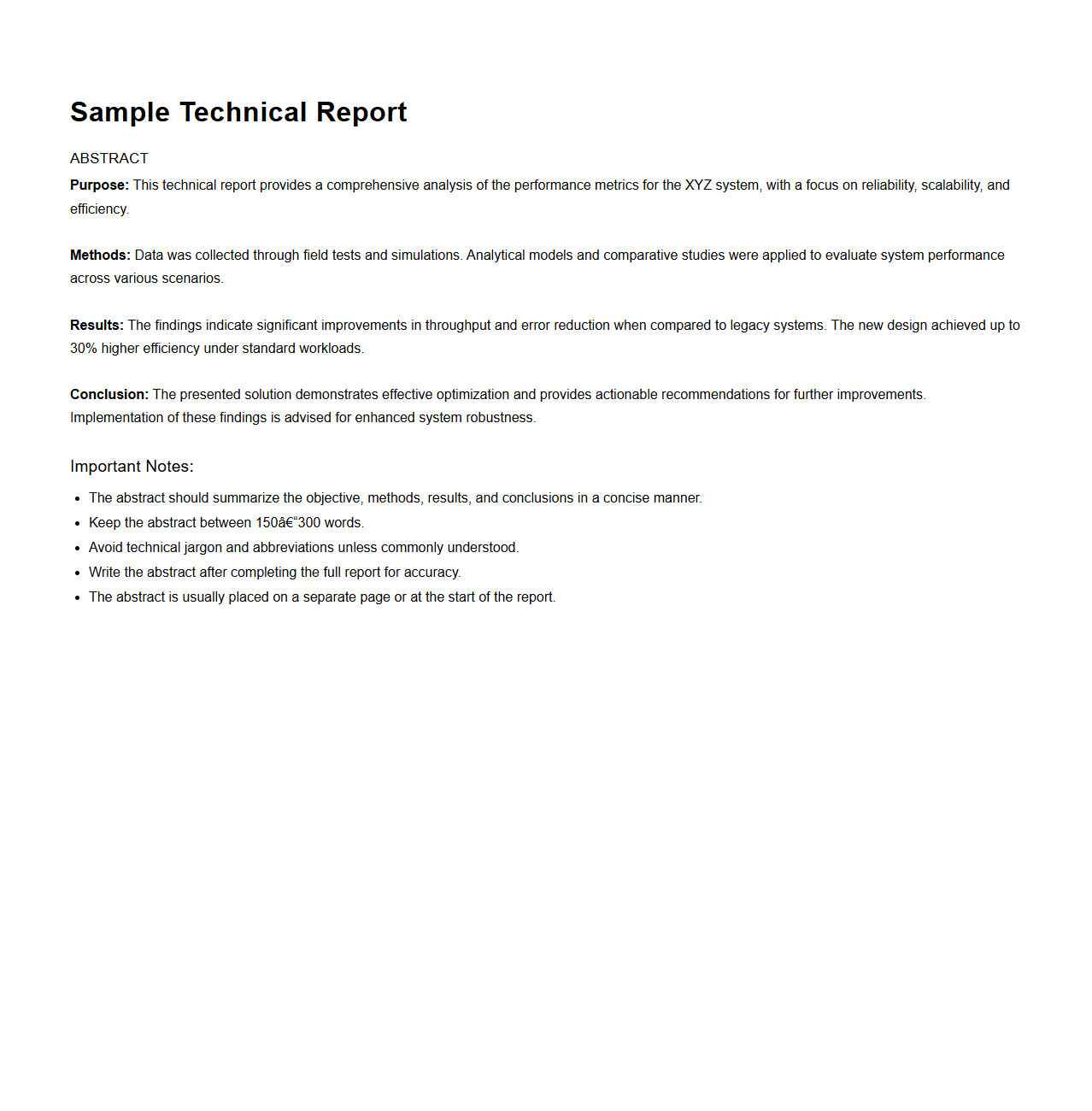
Abstract Section Format for Technical Reports
The
Abstract Section Format for Technical Reports is a structured guideline that summarizes the report's key objectives, methodology, results, and conclusions in a concise paragraph. It ensures clarity and consistency, enabling readers to quickly grasp the report's essential findings without reviewing the entire document. Proper formatting includes limiting the abstract to 150-250 words, avoiding jargon, and focusing on the report's most critical data and outcomes.
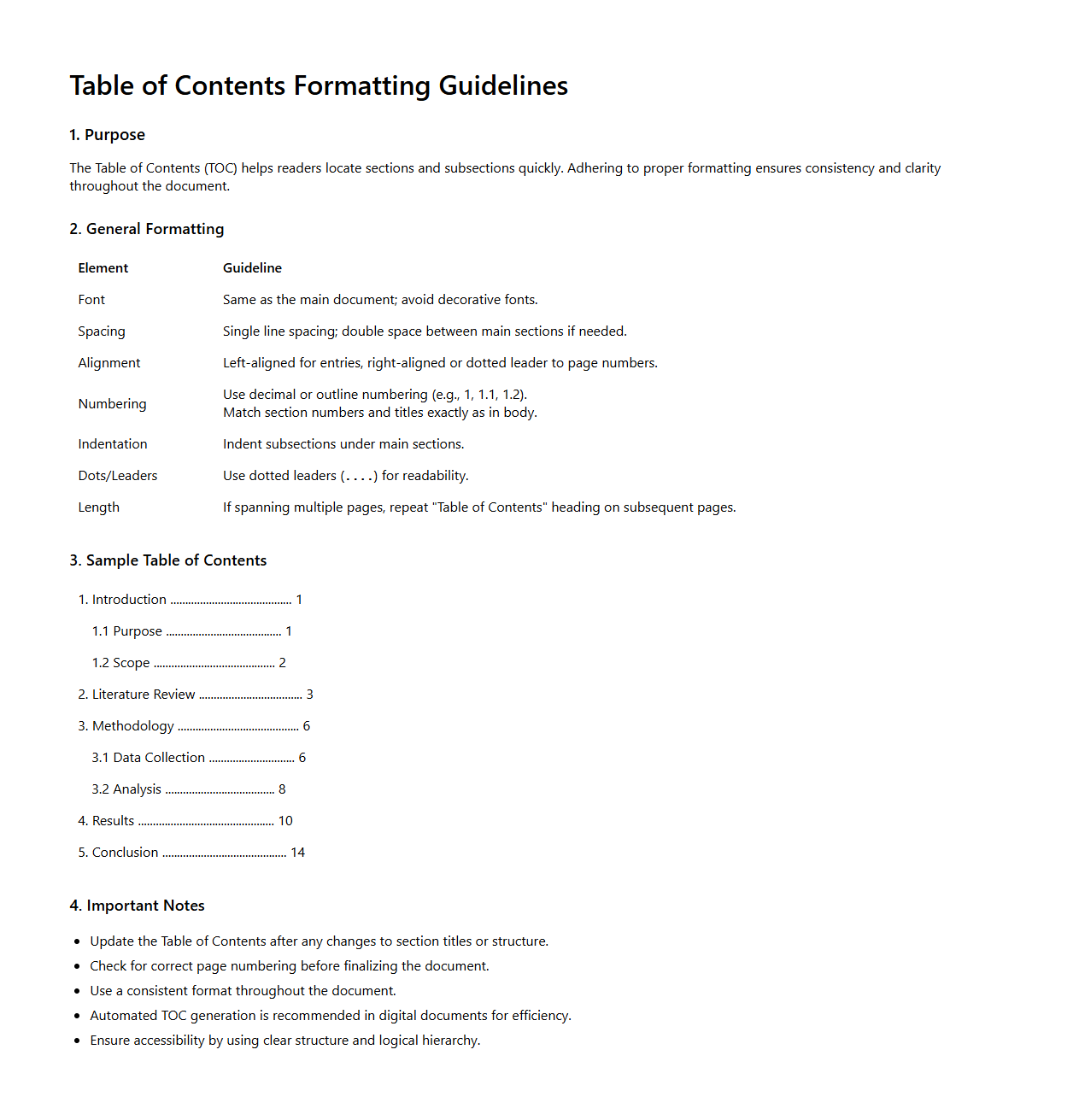
Table of Contents Formatting Guidelines
The
Table of Contents Formatting Guidelines document provides clear instructions on structuring and styling the table of contents to ensure consistency and readability across publications. It details formatting rules such as font styles, indentation levels, numbering conventions, and alignment to enhance navigation and professional presentation. Following these guidelines helps maintain uniformity and improves the user experience in accessing document sections efficiently.
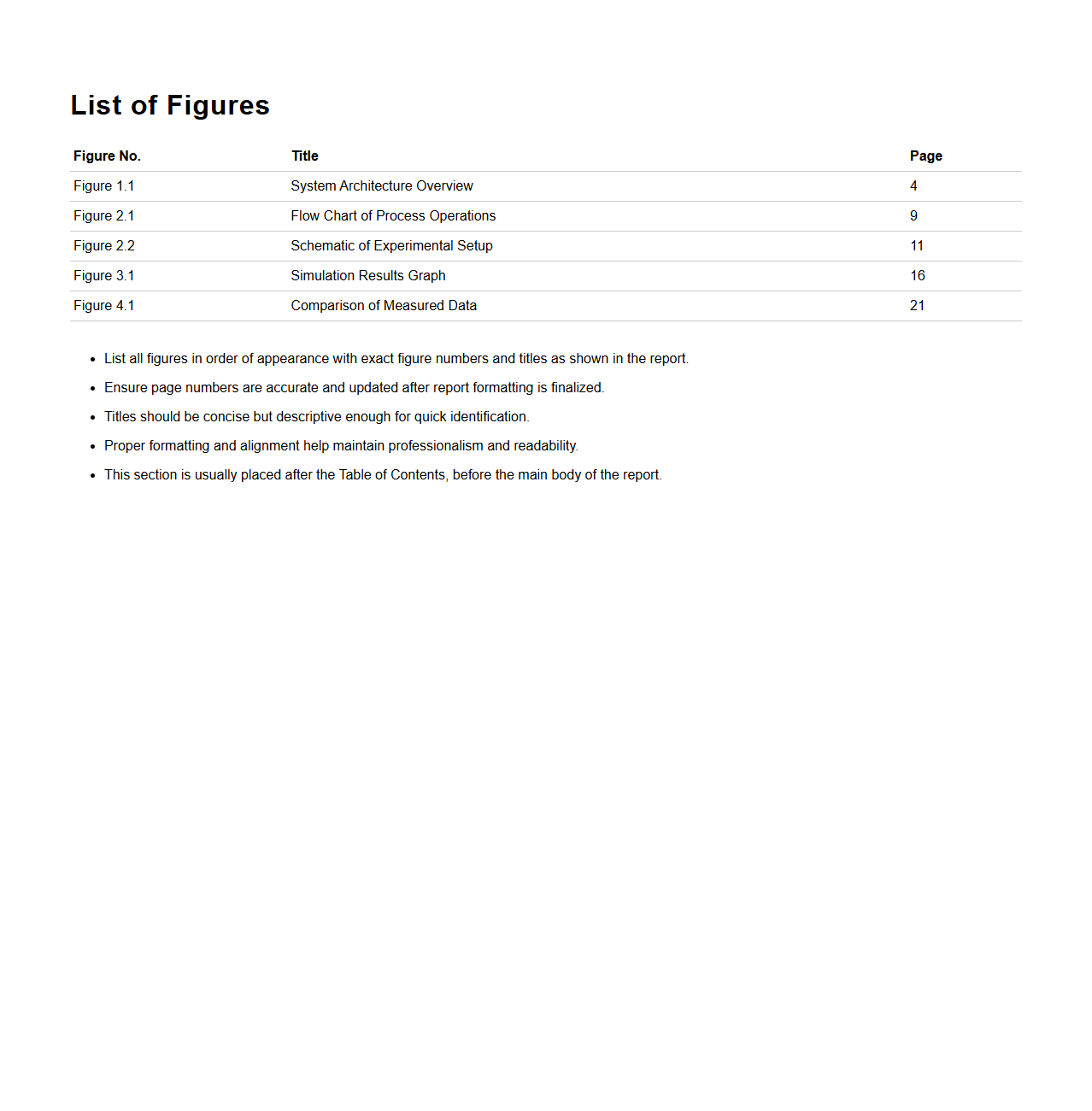
List of Figures Format in Engineering Reports
The
List of Figures Format in engineering reports is a structured section that catalogs all graphical elements such as charts, diagrams, and images used throughout the document. It includes figure numbers, titles, and corresponding page numbers for easy reference, ensuring clarity and professional presentation. This format enhances the report's navigability and supports effective communication of technical information.
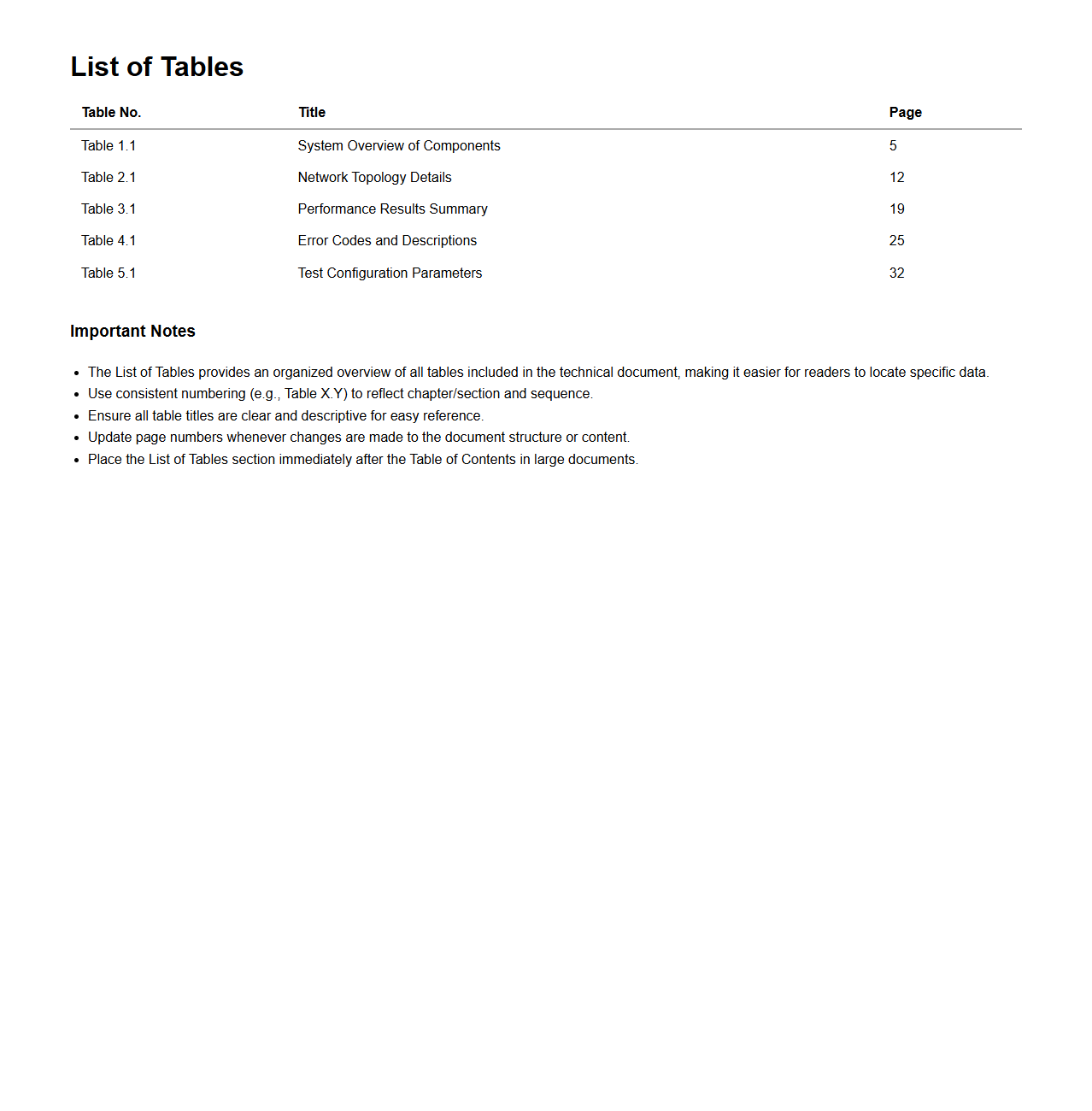
List of Tables Format for Technical Documentation
List of Tables Format for Technical Documentation document provides a structured outline displaying all tables included in a technical report or manual. It serves as an essential reference tool, enhancing navigation and ensuring readers can quickly locate specific data sets or illustrations. A well-organized
List of Tables improves document usability and supports clear communication within technical writing.
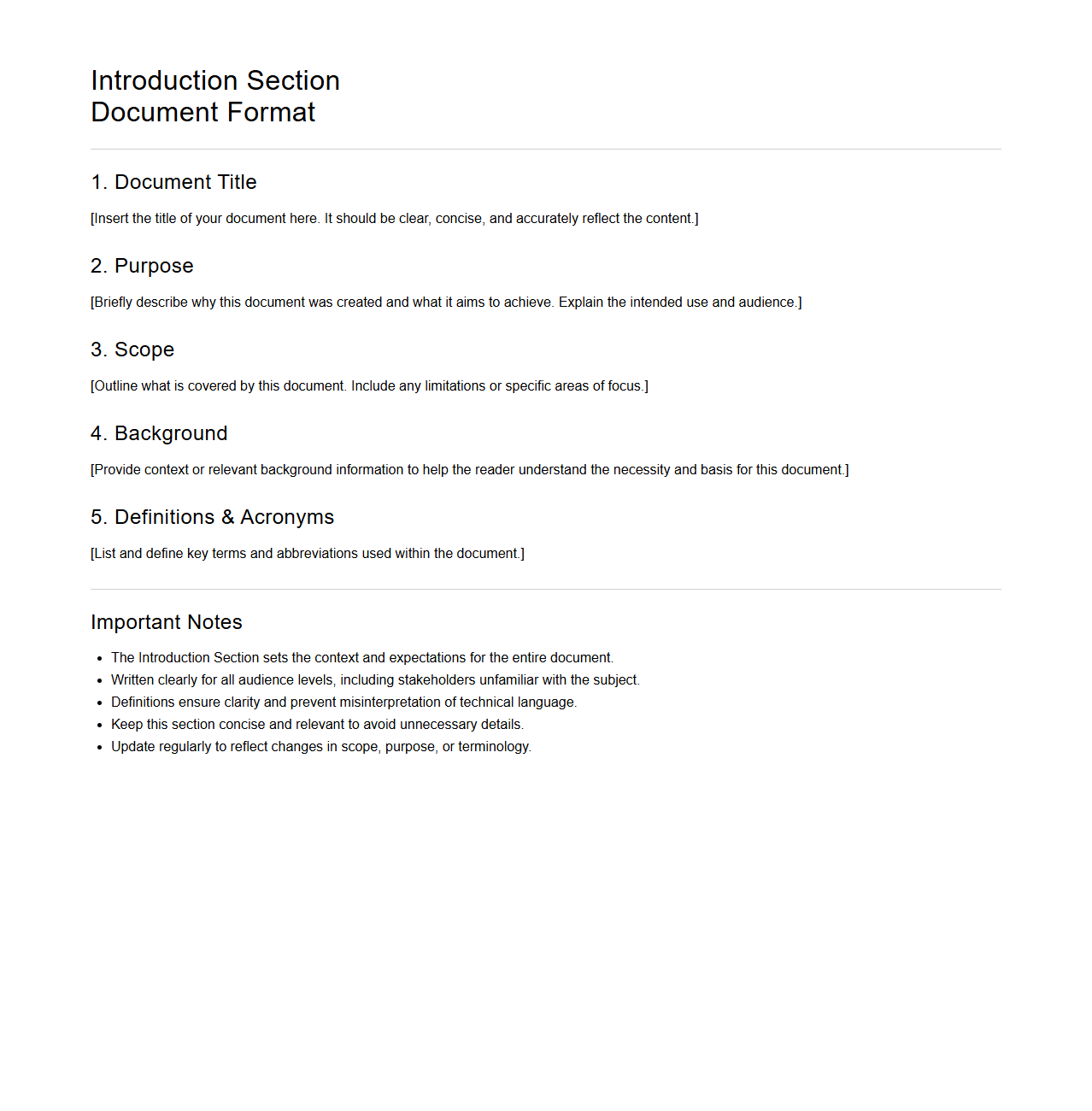
Introduction Section Document Format
The
Introduction Section Document Format outlines the structured approach to presenting the opening part of a document, setting the context, purpose, and scope. It typically includes background information, objectives, and the significance of the document, ensuring clarity and engagement for readers. Proper formatting in this section enhances readability and establishes a professional tone for the entire document.
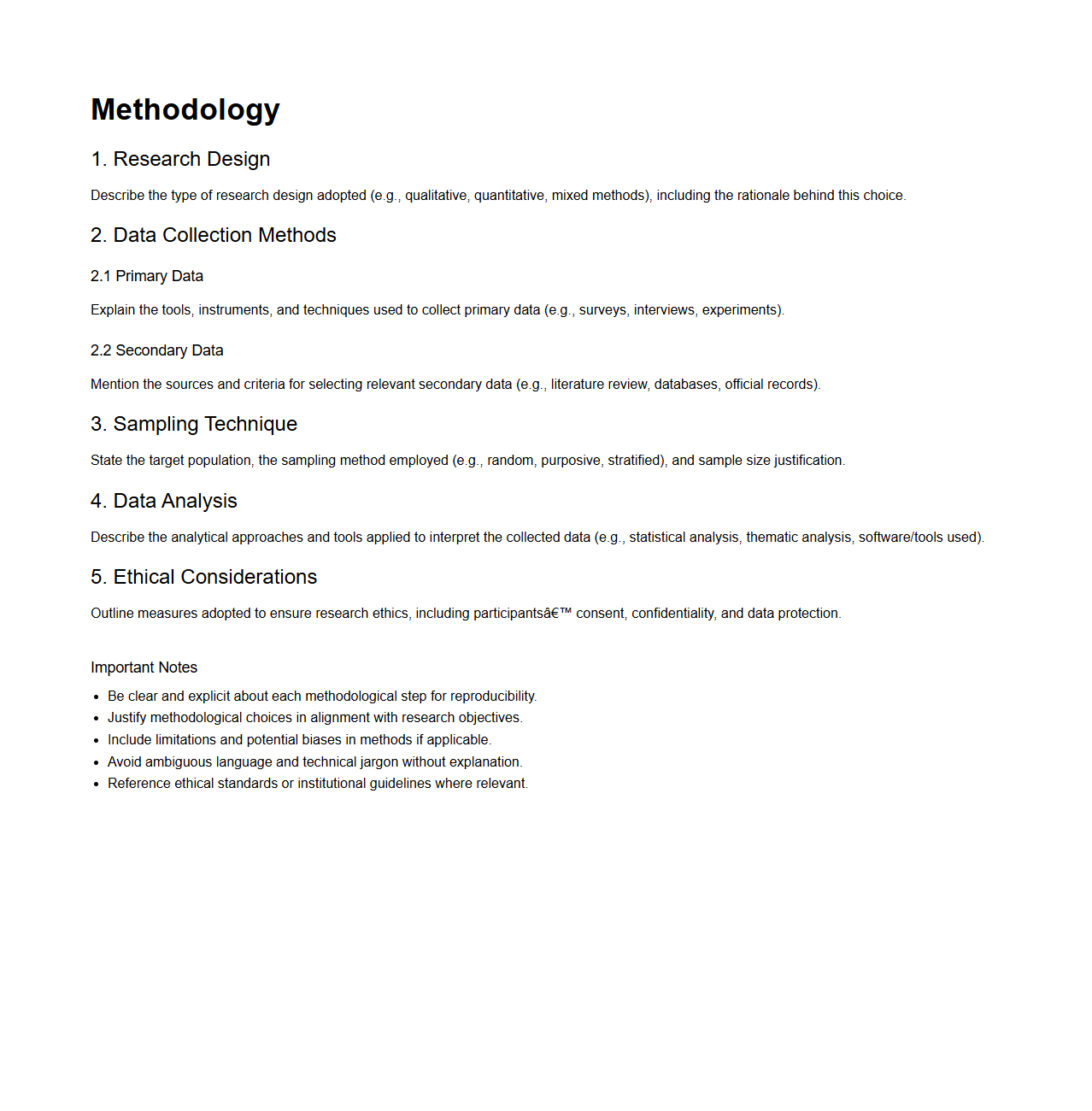
Methodology Section Report Structure
The
Methodology Section Report Structure document outlines the systematic approach used to conduct research, detailing procedures, tools, and techniques employed for data collection and analysis. It ensures transparency and reproducibility by specifying the design framework, sampling methods, and data processing strategies. This document serves as a critical component for validating the reliability and validity of the research findings.
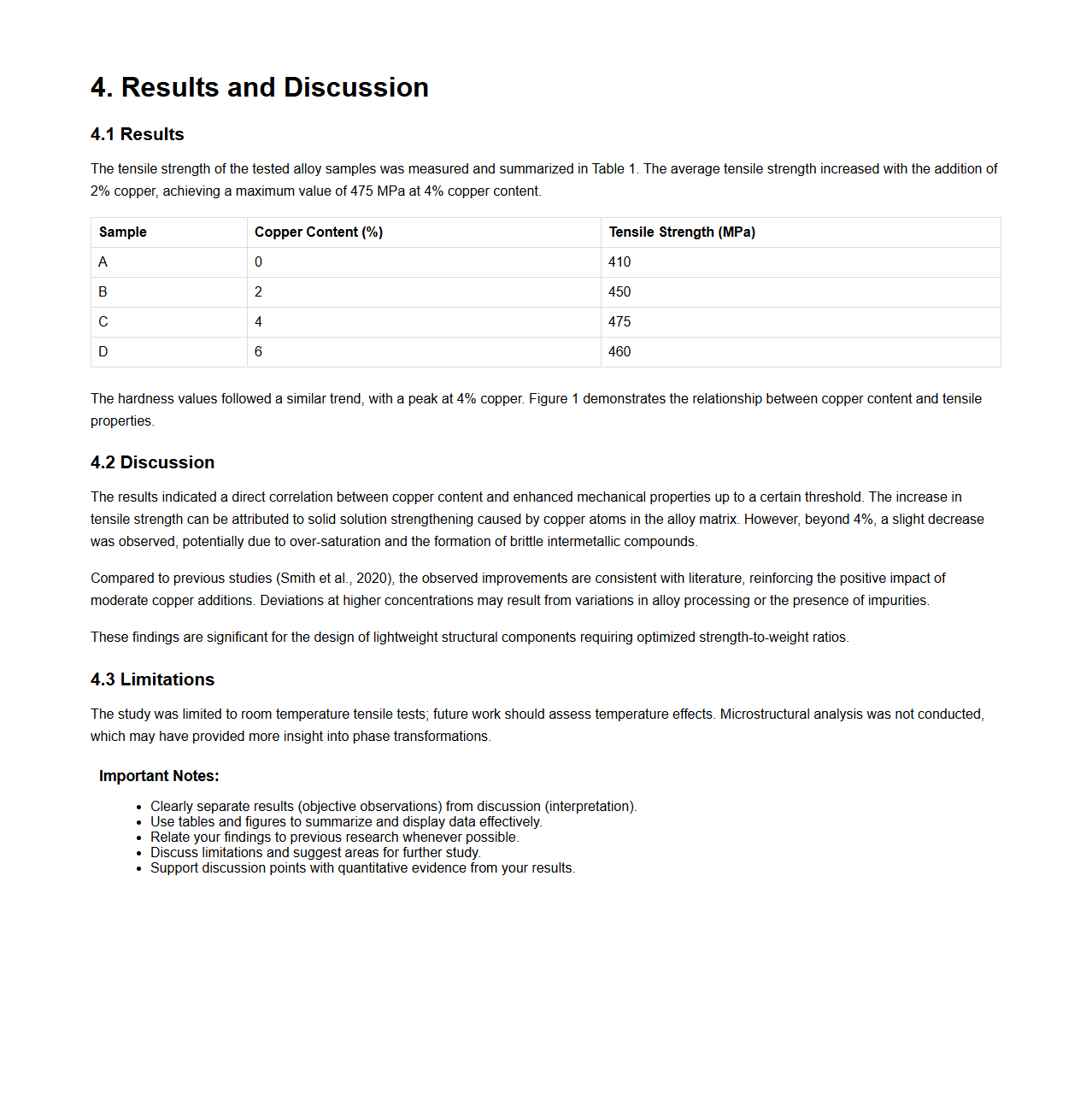
Results and Discussion Format in Engineering Reports
The
Results and Discussion Format in engineering reports presents data findings clearly, often using tables, graphs, and charts to illustrate key outcomes. This section interprets the results, comparing them with expected benchmarks or previous studies to highlight their significance and implications. Clear, concise explanation of anomalies, trends, and the relevance of results ensures that the technical audience understands the impact and validity of the engineering analysis.
Conclusions and Recommendations Report Format
A
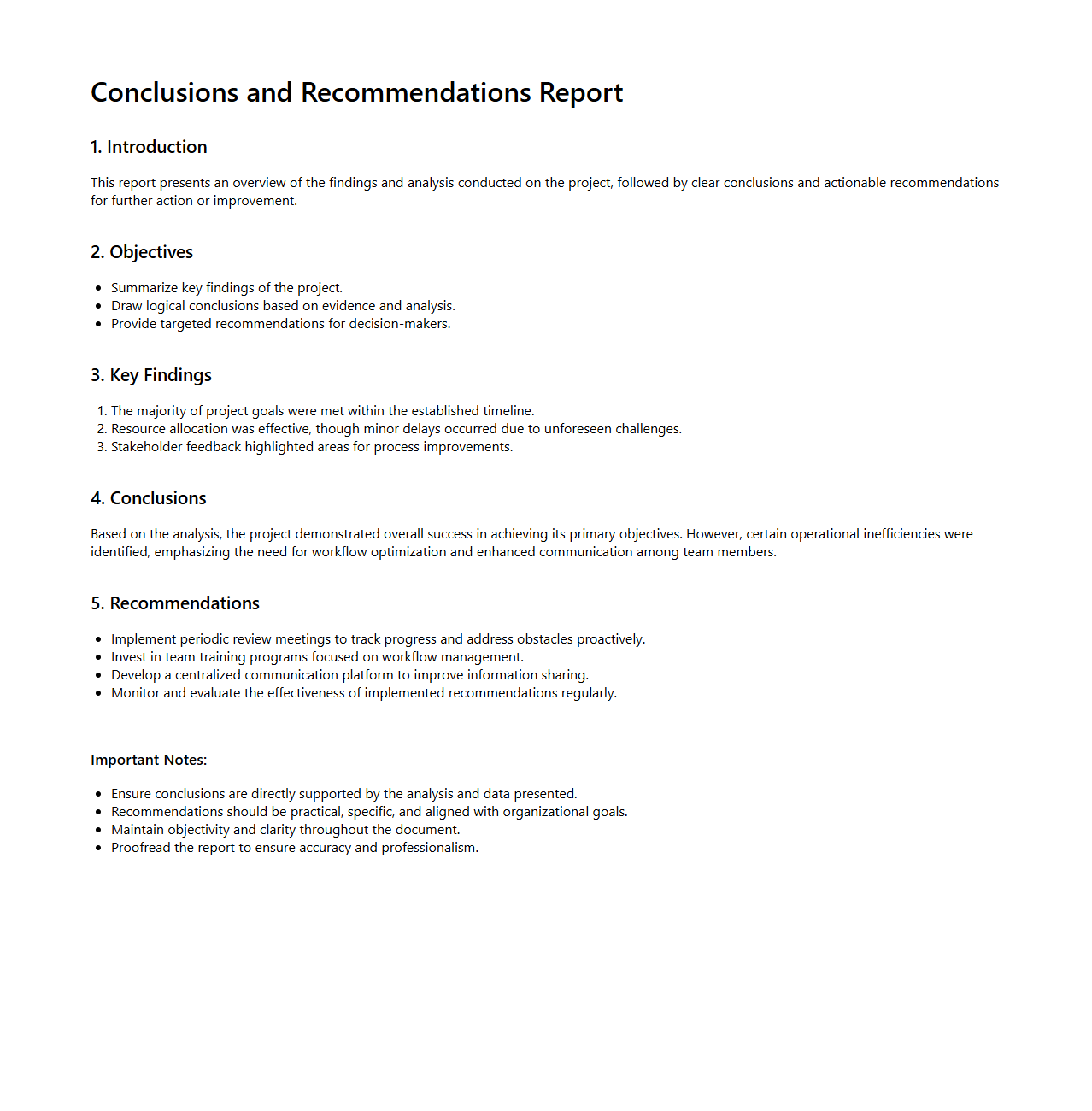
Conclusions and Recommendations Report Format document is a structured template designed to present the final analysis and actionable suggestions derived from research, investigations, or project assessments. It systematically summarizes key findings, interprets their significance, and offers clear, practical recommendations aimed at decision-makers or stakeholders. This format ensures clarity, coherence, and effective communication of critical insights to facilitate informed decision-making and strategy development.
References and Citations Formatting Standards
The
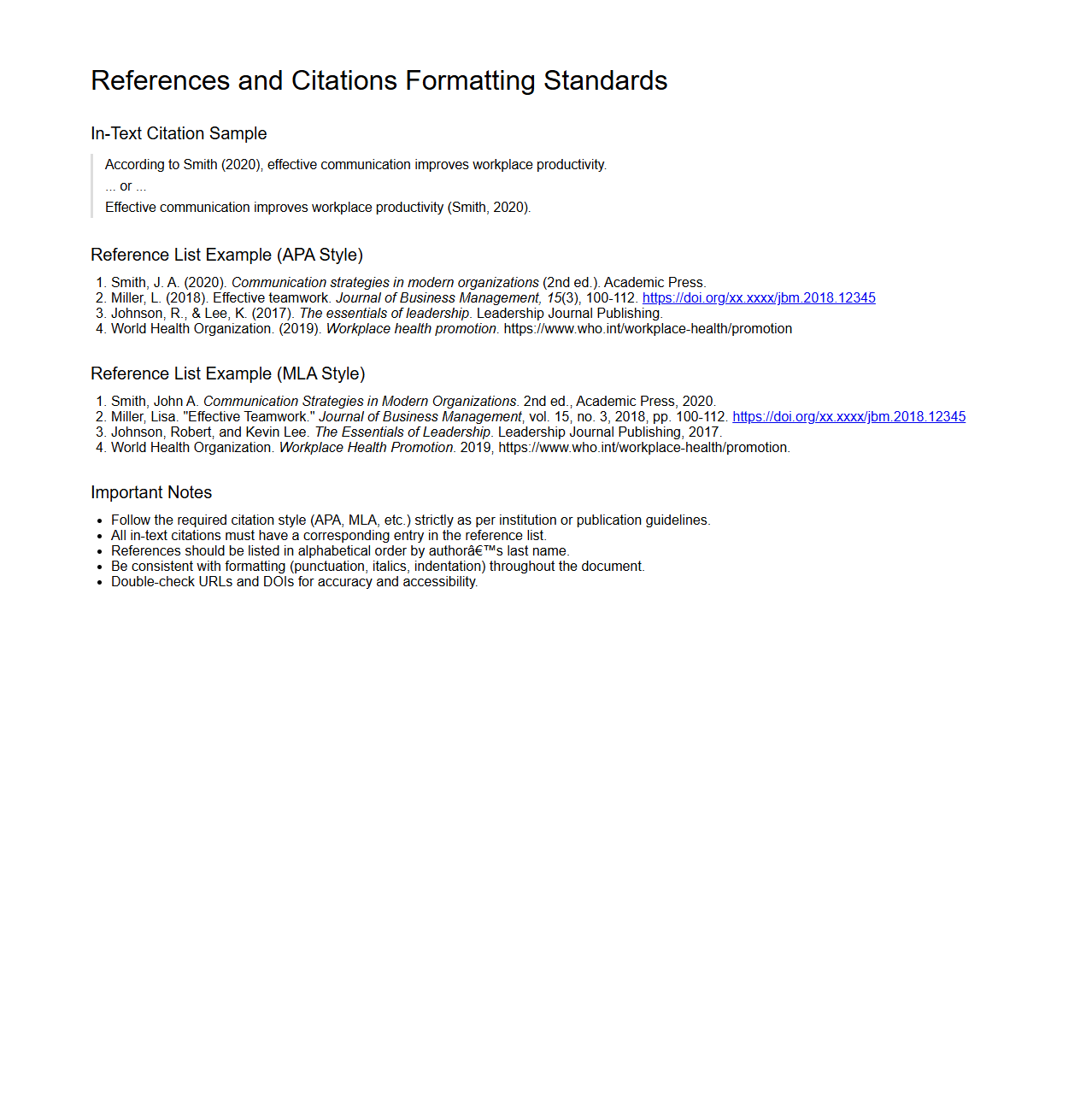
References and Citations Formatting Standards document outlines the specific guidelines for properly citing sources and formatting bibliographic entries in academic and professional writing. It ensures consistency, accuracy, and credibility by detailing the accepted style for in-text citations, footnotes, endnotes, and reference lists according to established systems such as APA, MLA, or Chicago. Adhering to these standards helps prevent plagiarism and supports clear attribution of ideas and data.
Essential Sections Required in a Standard Technical Report for Engineering
A standard technical report for engineering typically includes sections such as the abstract, introduction, methodology, results, discussion, conclusion, and references. Each section serves a distinct purpose, ensuring that the report is comprehensive and logically organized. Including clear sections helps readers navigate complex information efficiently and understand the engineering analysis and outcomes.
Formatting and Referencing Figures, Tables, and Appendices within the Report
Figures and tables should be numbered consecutively and include descriptive captions placed either above (tables) or below (figures) the item. Within the text, reference each figure or table by its number to guide the reader appropriately. Appendices should contain supplementary material, be labeled clearly, and be mentioned within the main report where relevant to maintain clarity.
Guidance for Writing Coherent and Concise Executive Summaries in Engineering Reports
An effective executive summary should provide a brief yet comprehensive overview of the report's objectives, methods, key findings, and recommendations. The summary must be concise, typically one to two paragraphs, to convey essential information quickly. Avoid technical jargon and focus on clarity to make the summary accessible to a broad audience including non-specialists.
Most Appropriate Citation and Reference Style for Engineering Technical Reports
The IEEE citation style is widely accepted in engineering technical reports due to its clarity and consistency for citing technical literature. This numeric style streamlines references by using bracketed numbers within the text, corresponding to a detailed reference list. Using a standardized citation method like IEEE ensures professional presentation and proper attribution of sources.
Recommended Formatting Standards (Font, Margins, Headings) for Engineering Technical Documentation
Engineering technical documents generally adhere to formatting standards such as a readable font like Times New Roman or Arial, sized 11 or 12 points for body text. Margins are typically set at 1 inch (2.54 cm) on all sides to provide clean white space and improve readability. Headings should be clearly distinct, often bolded or sized larger, to establish a logical hierarchy and guide readers through the report's structure effectively.