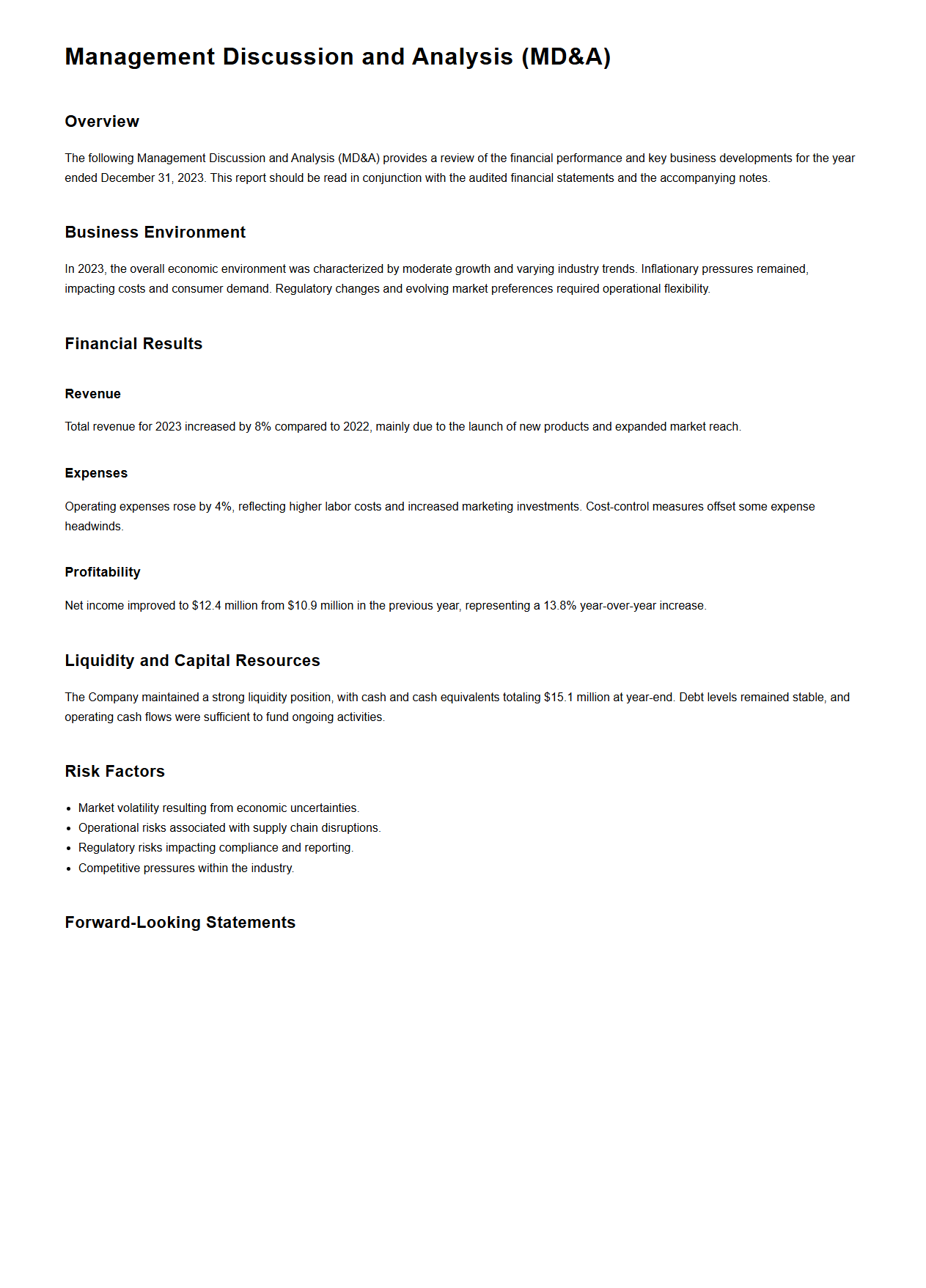
Format of Financial Report for Business typically includes key sections such as the balance sheet, income statement, and cash flow statement to provide a comprehensive overview of the company's financial position. Each section uses standardized layouts and accounting principles to ensure clarity and consistency for stakeholders. Proper formatting enhances the report's readability, enabling informed decision-making.
Income Statement Format in Financial Reporting
The
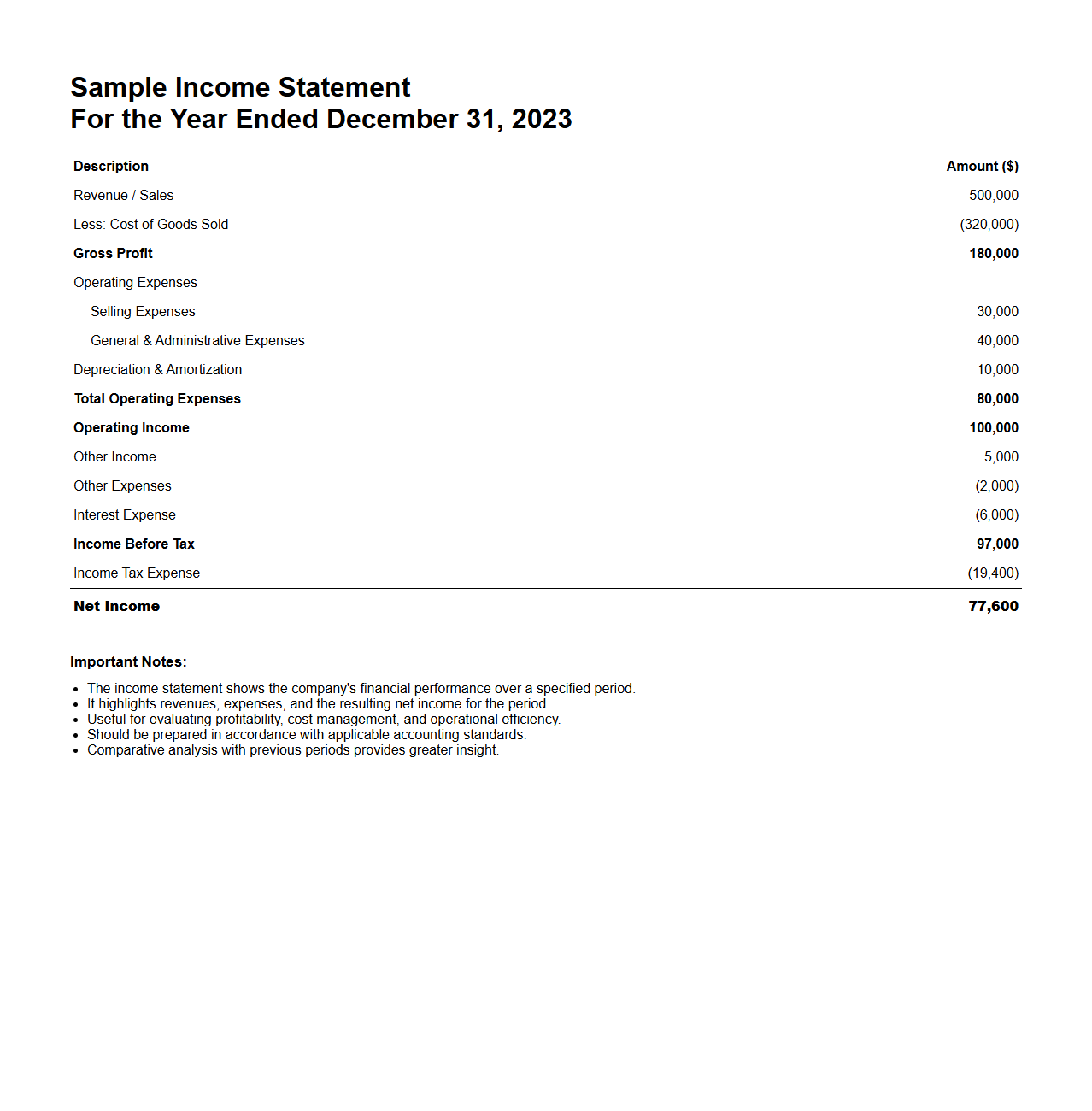
Income Statement Format in financial reporting is a structured layout that presents a company's revenues, expenses, and profits or losses over a specific period. It typically includes key components such as gross profit, operating income, and net income, offering detailed insights into operational performance and profitability. This format ensures standardized reporting, enabling stakeholders to analyze financial health and make informed decisions.
Balance Sheet Document Structure
The
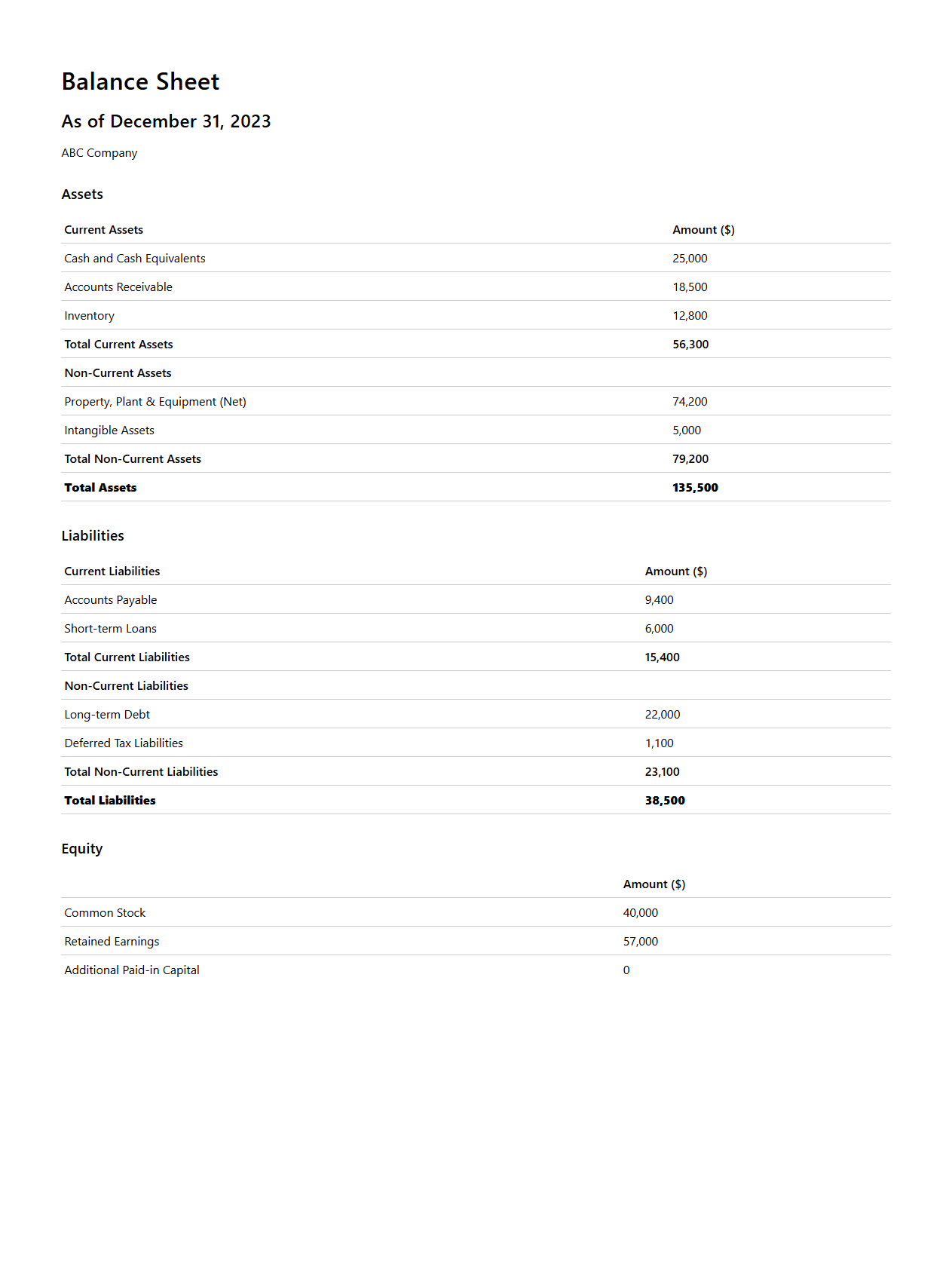
Balance Sheet Document Structure outlines the organized format for presenting a company's financial position, detailing assets, liabilities, and equity. This structure ensures clarity by categorizing current and non-current items, enabling stakeholders to accurately assess liquidity and financial stability. Properly formatted balance sheets facilitate regulatory compliance and enhance comparability across accounting periods.
Cash Flow Statement Reporting Template
A
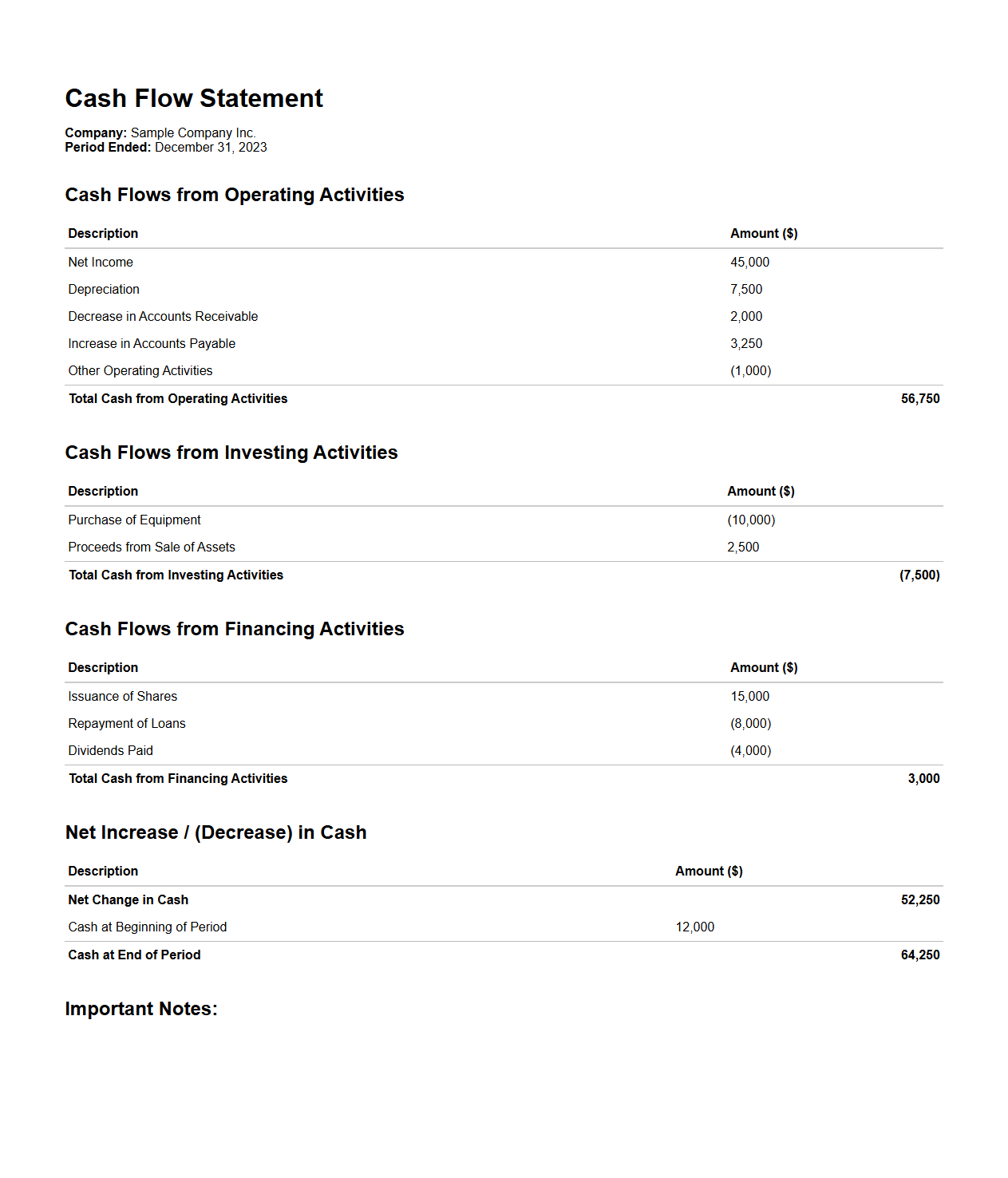
Cash Flow Statement Reporting Template document is a structured financial tool designed to systematically track and present a company's cash inflows and outflows over a specific period. It categorizes cash activities into operating, investing, and financing sections, providing clear insights into liquidity and financial health. This template facilitates accurate financial analysis, budgeting, and decision-making by standardizing data collection and reporting processes.
Statement of Changes in Equity Format
The
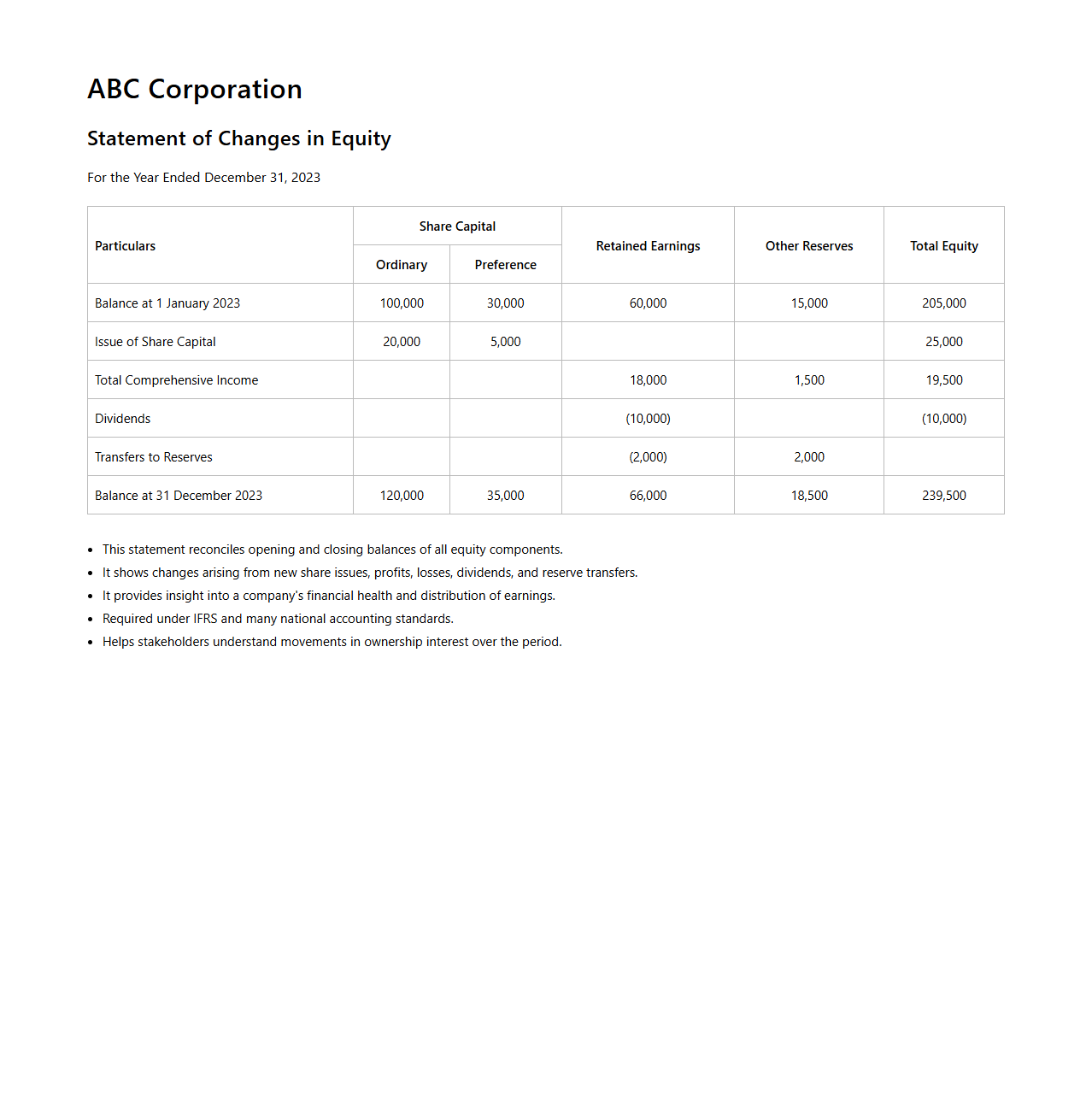
Statement of Changes in Equity Format document details the movement in equity components such as share capital, retained earnings, and reserves over a specific accounting period. It provides a clear breakdown of transactions affecting equity, including profits or losses, dividend payments, and issuance or repurchase of shares. This document is crucial for stakeholders to assess changes in ownership interests and the overall financial health of a company.
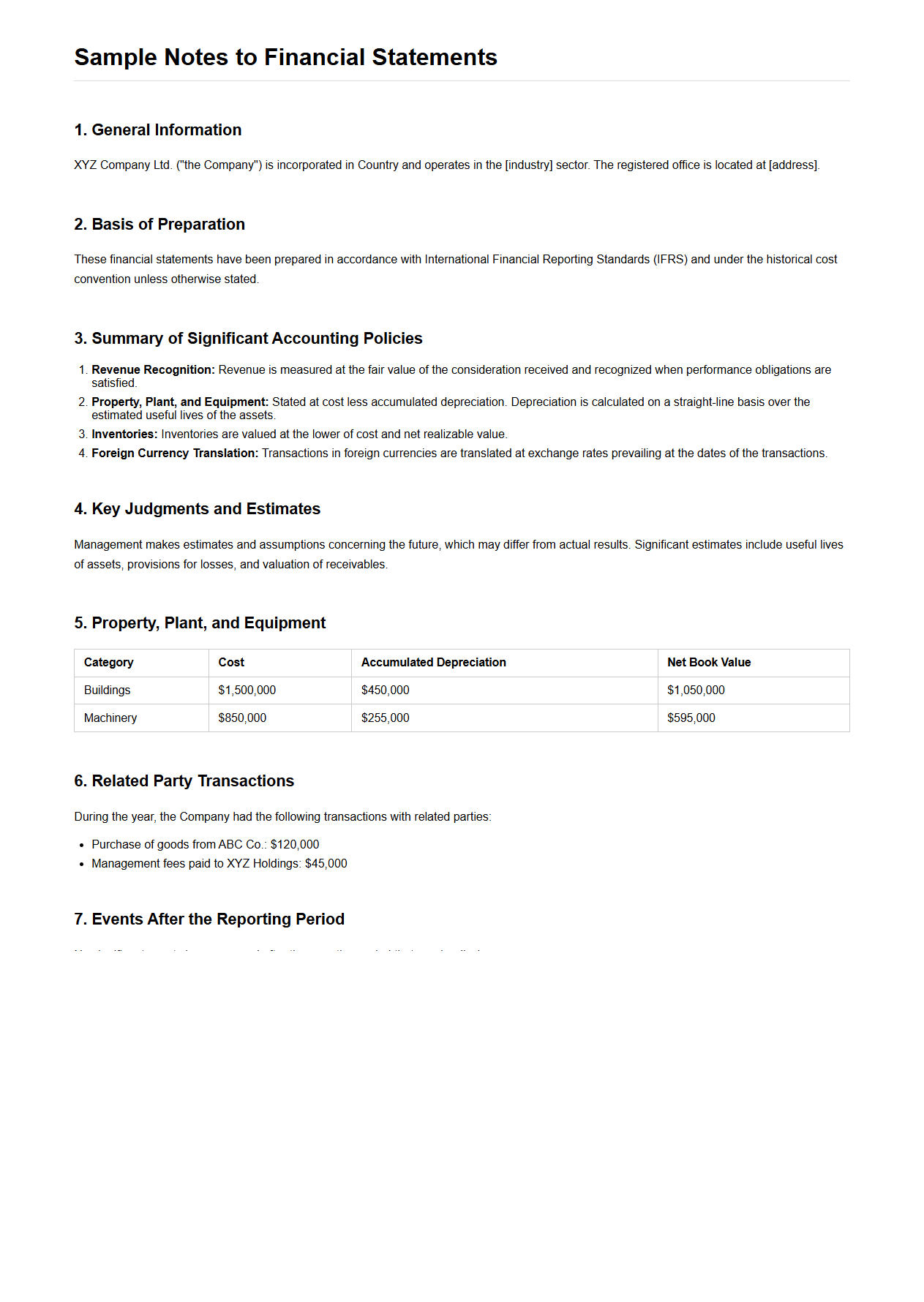
Notes to Financial Statements Layout
Notes to Financial Statements Layout document provides a structured framework for presenting detailed explanations and additional information related to the figures in financial statements. It includes sections such as accounting policies, contingent liabilities, segment information, and significant judgments, enhancing transparency and understanding for stakeholders. This document ensures consistency and clarity across financial reports by standardizing the format and content of the notes.
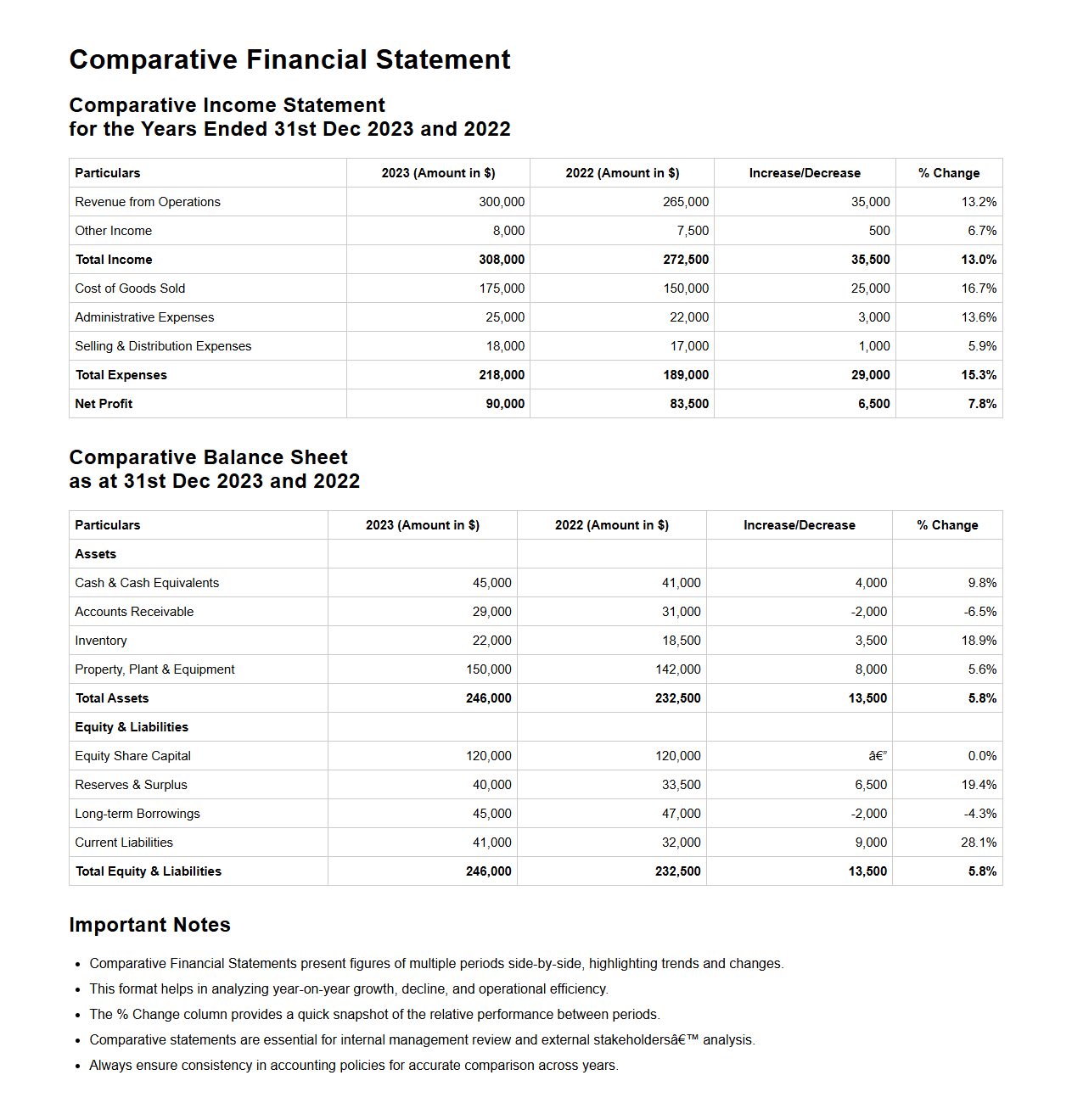
Comparative Financial Statement Format
A
Comparative Financial Statement Format document presents financial data from multiple periods side-by-side to facilitate trend analysis and performance evaluation. It typically includes balance sheets, income statements, and cash flow statements for two or more consecutive accounting periods. This format enables stakeholders to quickly identify changes in financial position, operational results, and cash flows over time.
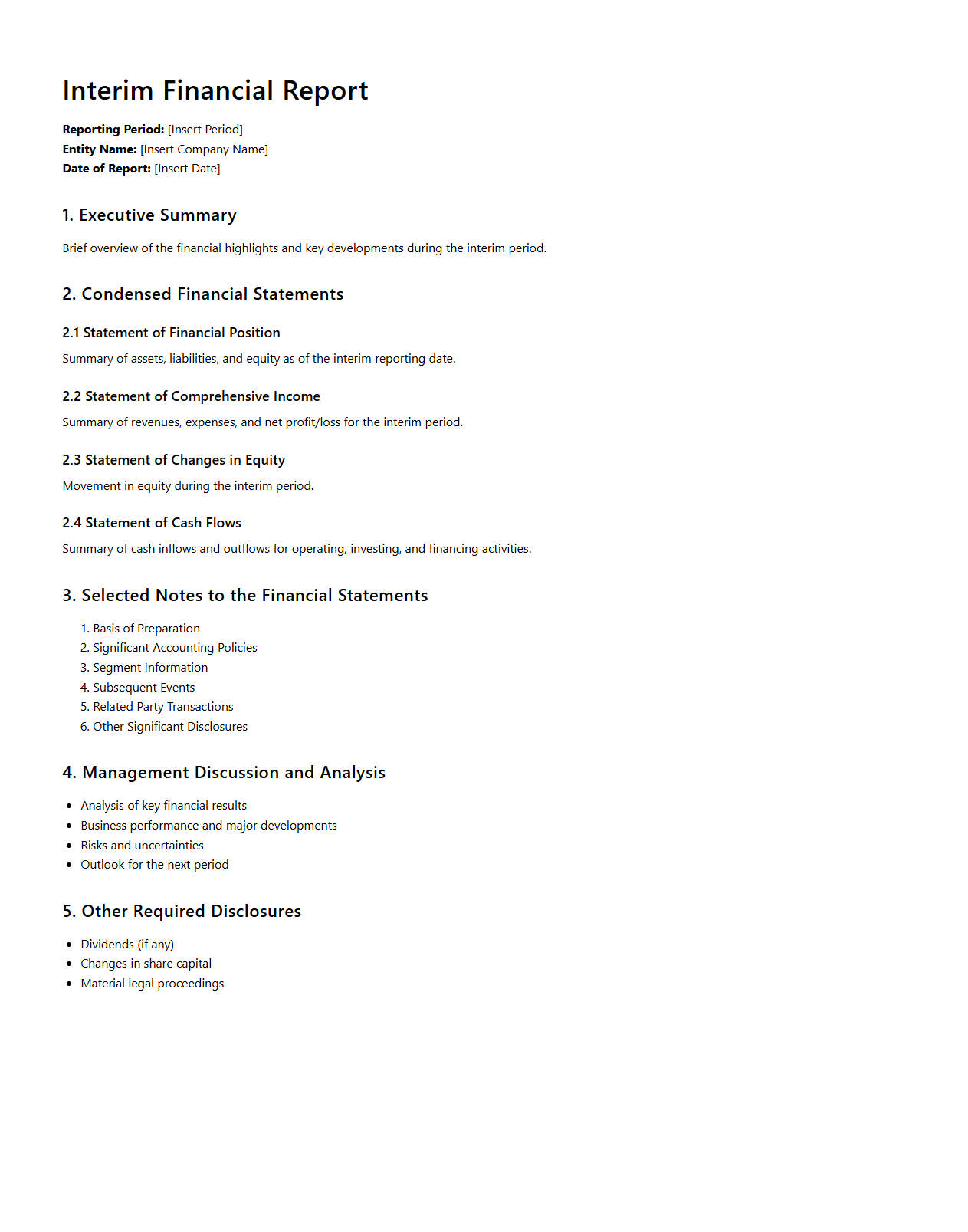
Interim Financial Report Document Outline
An
Interim Financial Report Document Outline serves as a structured framework for presenting key financial information during a reporting period shorter than a fiscal year, such as a quarter or half-year. It typically includes sections on income statements, balance sheets, cash flow statements, and management discussions to ensure clarity and consistency. This outline helps organizations comply with regulatory requirements and provides stakeholders with timely insights into financial performance and position.
Consolidated Financial Statements Structure
The
Consolidated Financial Statements Structure document outlines the framework and presentation requirements for combining financial data from a parent company and its subsidiaries into a single set of statements. It ensures consistency and transparency by standardizing the accounting policies, eliminating intra-group transactions, and reflecting the overall financial position and performance of the entire group. This document serves as a critical reference for auditors, regulators, and stakeholders assessing the financial health of corporate groups.
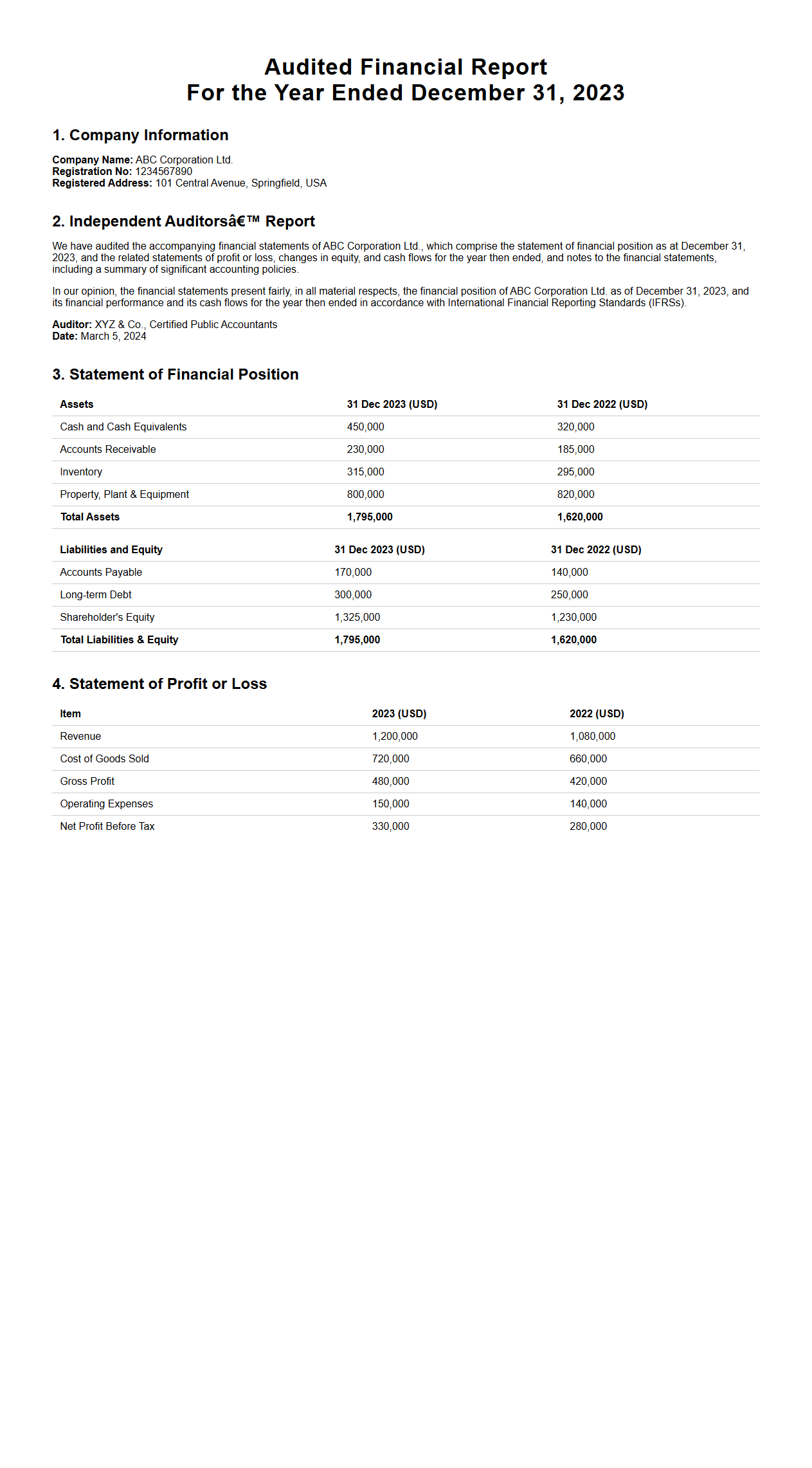
Audited Financial Report Format
An
Audited Financial Report Format document is a structured template used to present the financial statements of an organization after an independent audit has been conducted. It includes key components such as the auditor's opinion, balance sheet, income statement, cash flow statement, and notes to the financial statements, ensuring compliance with accounting standards like IFRS or GAAP. This format provides transparency and reliability, enabling stakeholders to make informed decisions based on verified financial information.
Management Discussion and Analysis (MD&A) Format
The
Management Discussion and Analysis (MD&A) Format document provides a structured framework for company executives to present a comprehensive analysis of financial conditions, operational results, and future outlook. This section enhances transparency by explaining key financial metrics, risks, and strategic initiatives, enabling investors and stakeholders to make informed decisions. It is a crucial component in annual reports and regulatory filings, ensuring compliance with regulatory standards and fostering trust through detailed narrative disclosure.
What are the essential components included in a standard business financial report format?
A standard business financial report typically includes the balance sheet, income statement, cash flow statement, and accompanying notes. These components provide a comprehensive overview of a company's financial health and performance. Together, they enable stakeholders to assess profitability, liquidity, and operational efficiency.
How does the structure of a balance sheet differ from an income statement in financial reporting?
The balance sheet presents a snapshot of a company's assets, liabilities, and equity at a specific point in time. In contrast, the income statement summarizes revenues and expenses over a defined period, highlighting net profit or loss. This structural difference is crucial for understanding the company's financial position versus its operational results.
Which key financial metrics must be presented in a business's annual financial report format?
Key financial metrics include net income, earnings per share, gross profit margin, and return on equity. These metrics provide insights into profitability, efficiency, and shareholder value. Presenting these figures clearly helps investors and analysts evaluate company performance effectively.
What reporting standards influence the format of financial statements for businesses?
Financial statements are primarily influenced by standards such as GAAP (Generally Accepted Accounting Principles) and IFRS (International Financial Reporting Standards). These frameworks ensure consistency, transparency, and comparability across business reports. Compliance with these standards enhances credibility and regulatory acceptance.
How does the format of a cash flow statement support decision-making for stakeholders?
The cash flow statement categorizes cash inflows and outflows into operating, investing, and financing activities. This format provides stakeholders with a clear understanding of liquidity and cash management. Consequently, it supports informed decisions regarding investments, credit, and operational strategies.