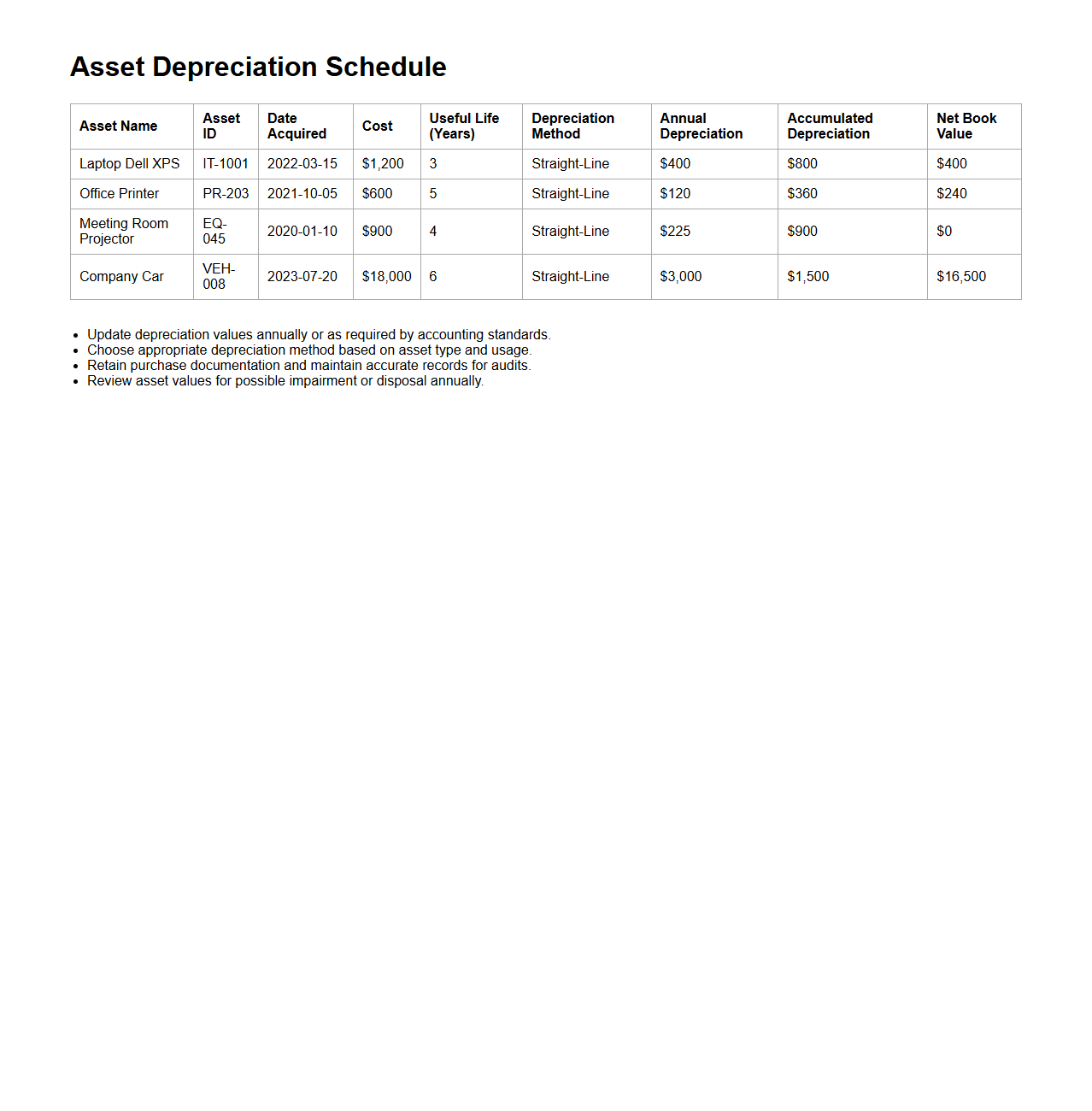
A Format of Depreciation Schedule for Asset typically includes columns for the asset's description, acquisition date, cost, depreciation method, useful life, and annual depreciation expense. It outlines the beginning book value, depreciation charged each period, accumulated depreciation, and the ending book value. This structured format helps track asset value reduction systematically over time for accurate financial reporting.
Asset Depreciation Schedule Template (Excel/Spreadsheet Format)
An
Asset Depreciation Schedule Template in Excel or spreadsheet format is a structured document designed to track and calculate the depreciation of fixed assets over time. It automates the computation of annual depreciation expenses using various methods such as straight-line, declining balance, or units of production, ensuring accurate financial reporting and tax compliance. This template enhances asset management by providing clear visibility into asset values, accumulated depreciation, and book values throughout the asset's useful life.
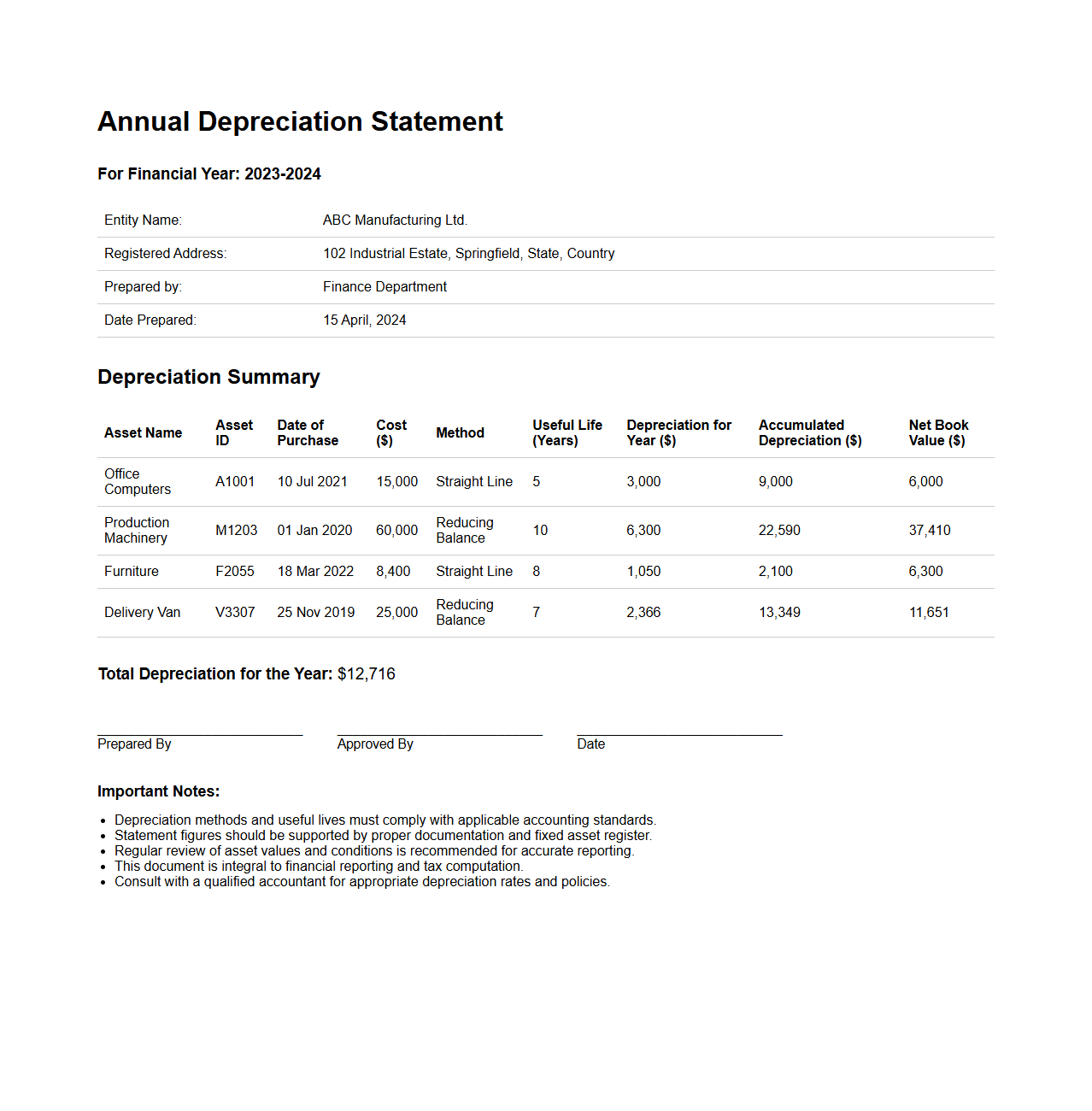
Annual Depreciation Statement Document
The
Annual Depreciation Statement Document is a financial record that details the yearly depreciation expense of tangible assets owned by a business. This document helps in tracking the reduction in asset value over time, which is crucial for accurate accounting and tax reporting. It provides transparency and supports decision-making related to asset management and financial planning.
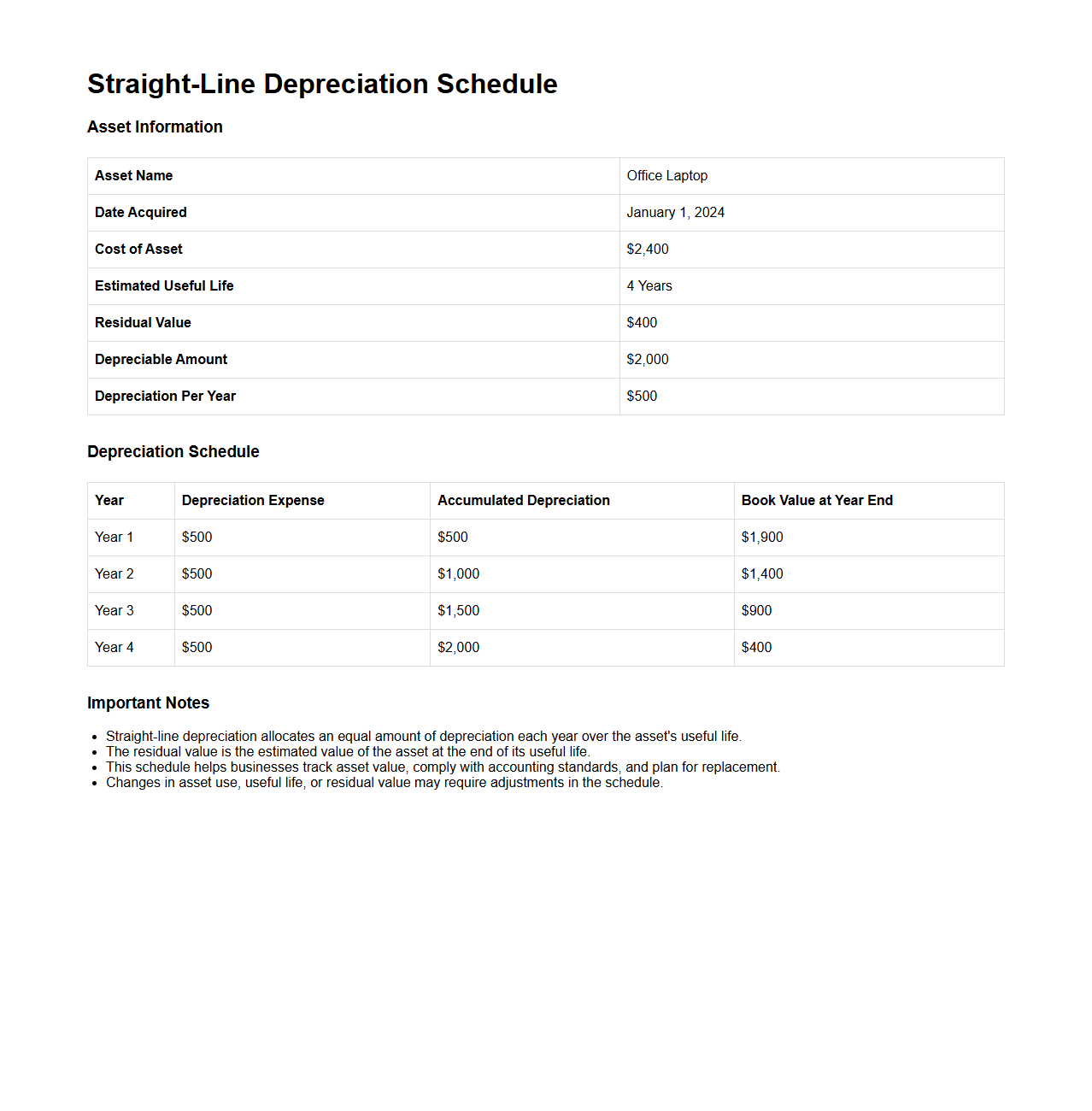
Straight-Line Depreciation Schedule Format
A
Straight-Line Depreciation Schedule Format document outlines the systematic allocation of an asset's cost evenly over its useful life. This format helps track annual depreciation expenses by providing a clear tabular representation of the asset's original cost, accumulated depreciation, and book value for each accounting period. It is essential for accurate financial reporting and asset management in accounting practices.
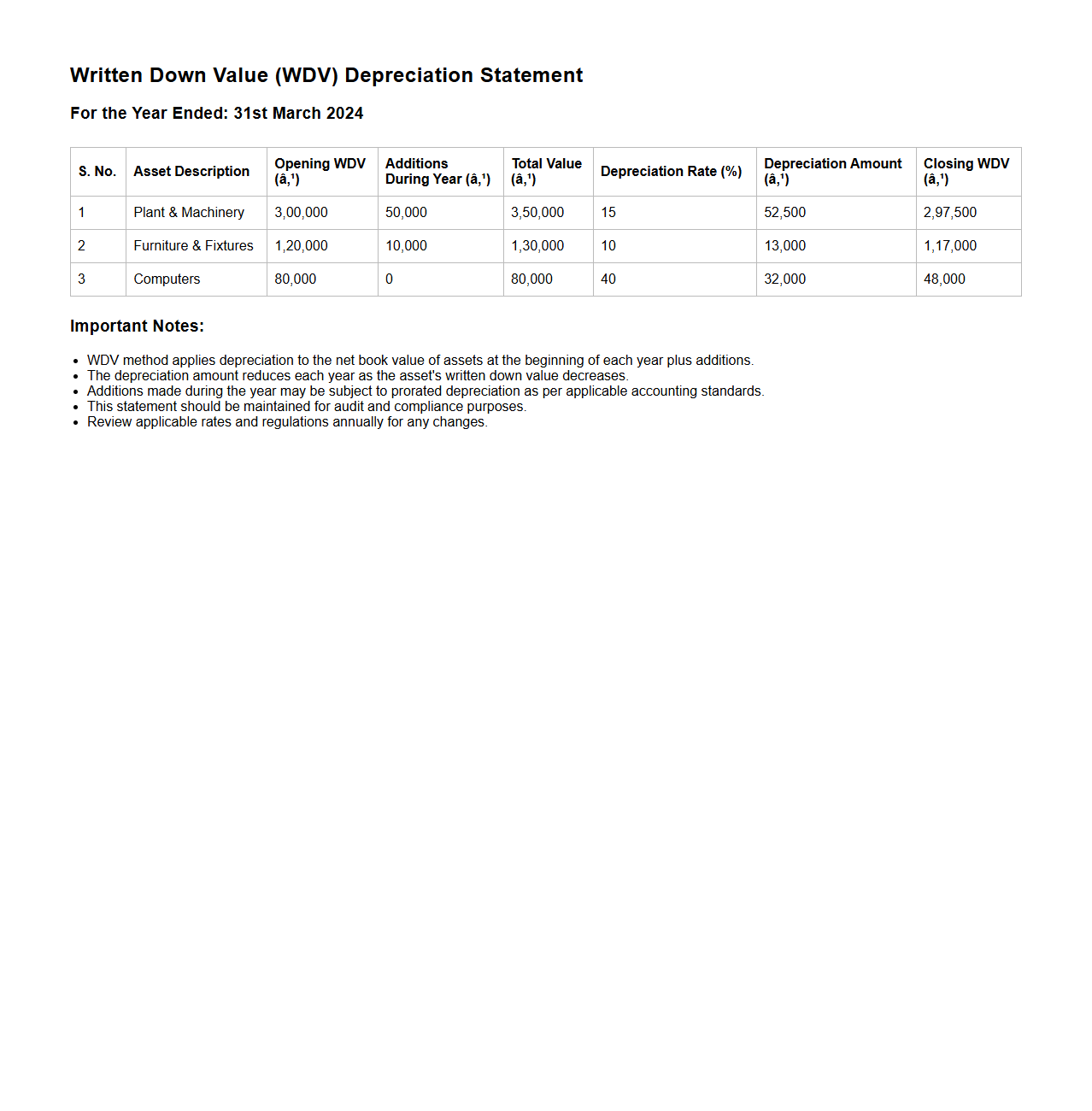
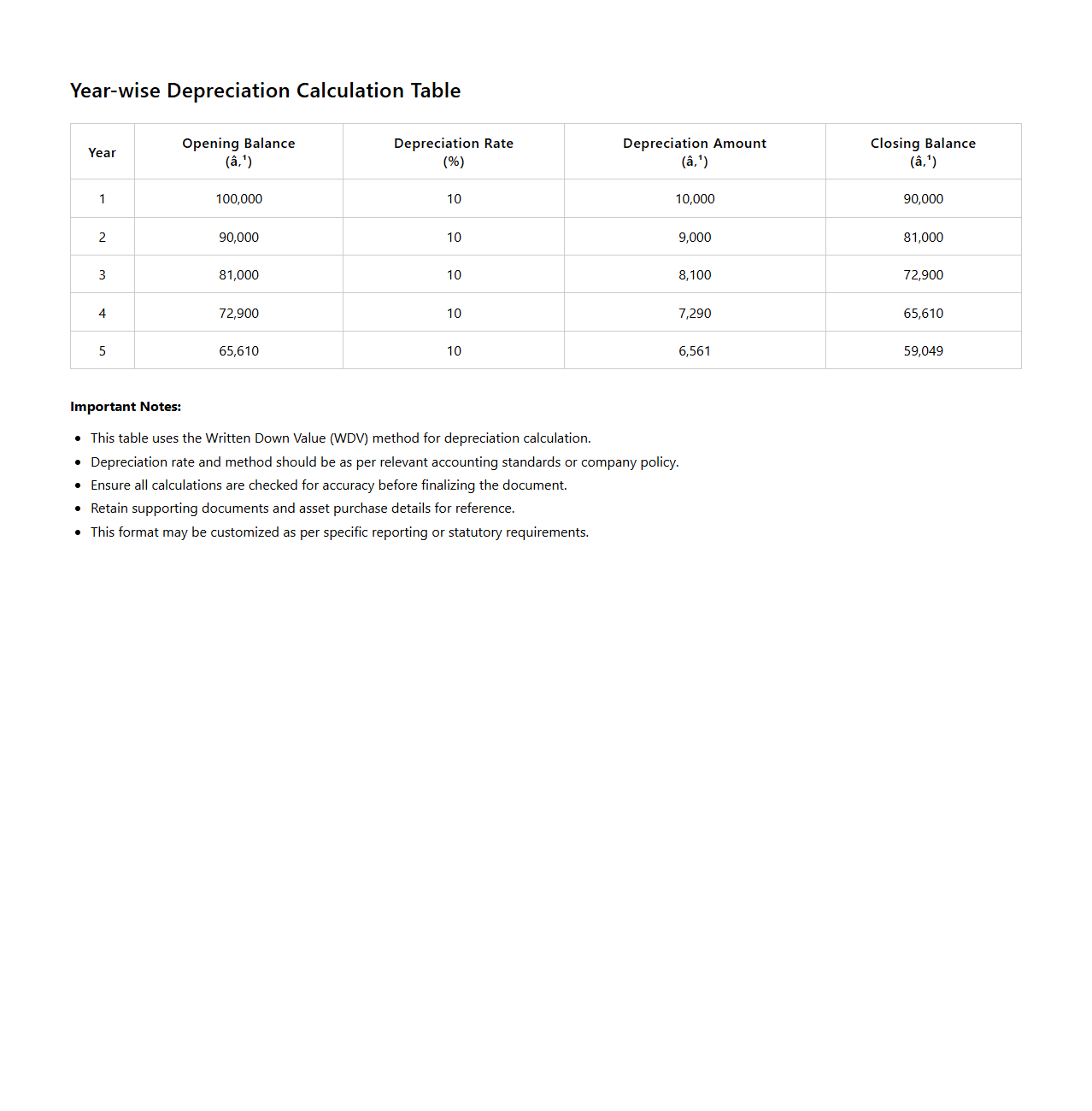
Written Down Value (WDV) Depreciation Format
Written Down Value (WDV) Depreciation Format document outlines a method where the asset's value is depreciated on a reducing balance basis, reflecting the diminishing book value over time. This format calculates depreciation by applying a fixed percentage rate on the net book value at the beginning of each accounting period, resulting in higher depreciation expenses initially that gradually decrease. It is widely used for fixed asset accounting to ensure accurate representation of an asset's residual value and tax benefits.
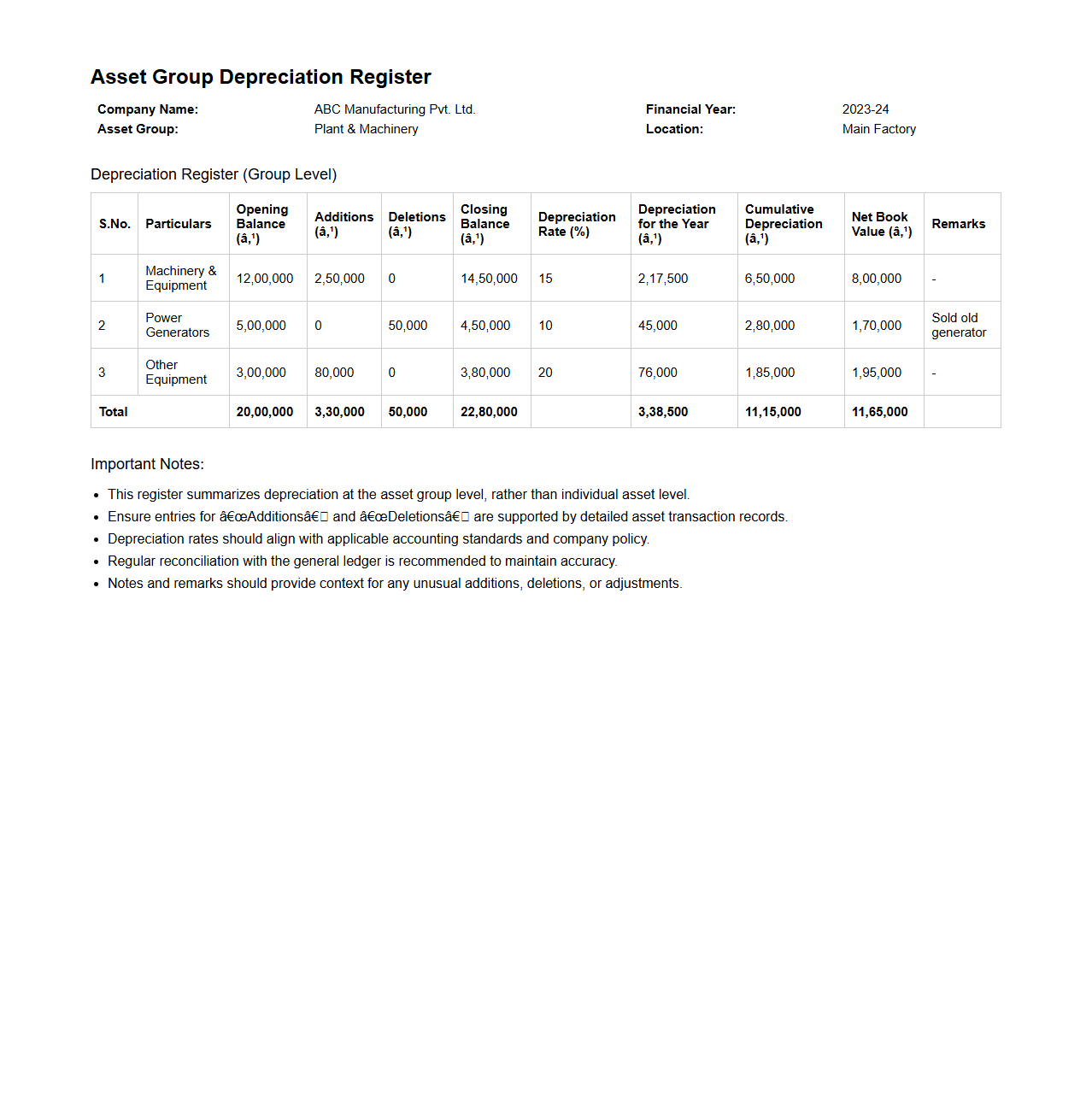
Asset Group Depreciation Register Format
The
Asset Group Depreciation Register Format document is a structured record used to track the depreciation of grouped assets over time, ensuring accurate calculation and reporting in financial statements. This format typically includes fields for asset category, acquisition date, cost, useful life, accumulated depreciation, and net book value, facilitating compliance with accounting standards. Maintaining this register helps organizations monitor asset values, plan for replacements, and manage tax deductions effectively.
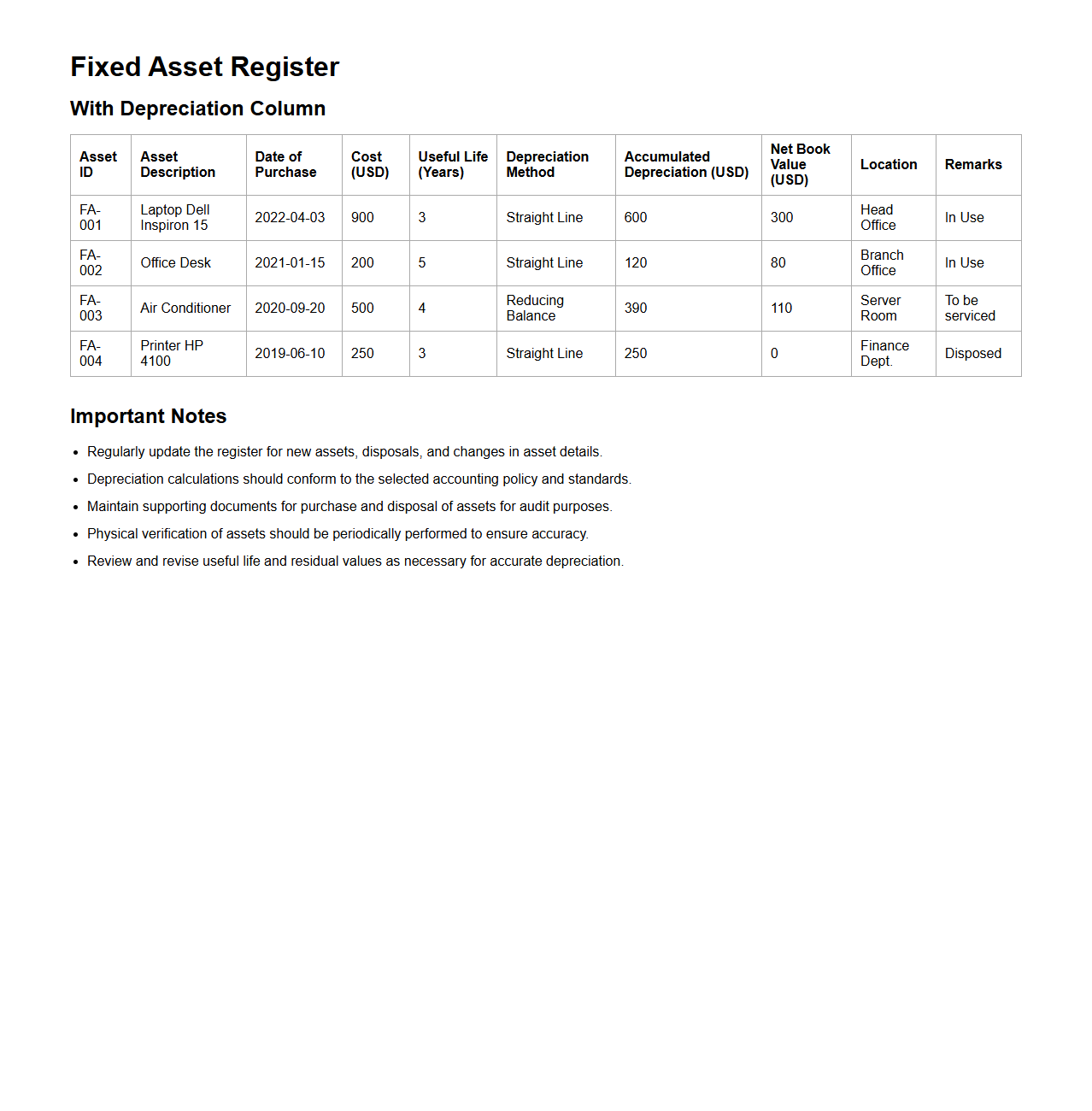
Fixed Asset Register with Depreciation Column Format
A
Fixed Asset Register with Depreciation Column Format document is a detailed record used to track all fixed assets owned by a company, including their purchase details, asset codes, and current values. It features specific columns dedicated to calculating and displaying depreciation, allowing for accurate assessment of asset value reduction over time according to accounting standards. This format ensures organized asset management, supports financial reporting, and facilitates compliance with tax and auditing requirements.
Year-wise Depreciation Calculation Table Format
A
Year-wise Depreciation Calculation Table Format document systematically records asset depreciation values annually, enabling accurate financial tracking and reporting. This format typically includes columns for the year, opening balance, depreciation expense, accumulated depreciation, and closing balance, ensuring clarity in asset value reduction over time. It is essential for businesses to comply with accounting standards and optimize tax deductions through precise depreciation management.
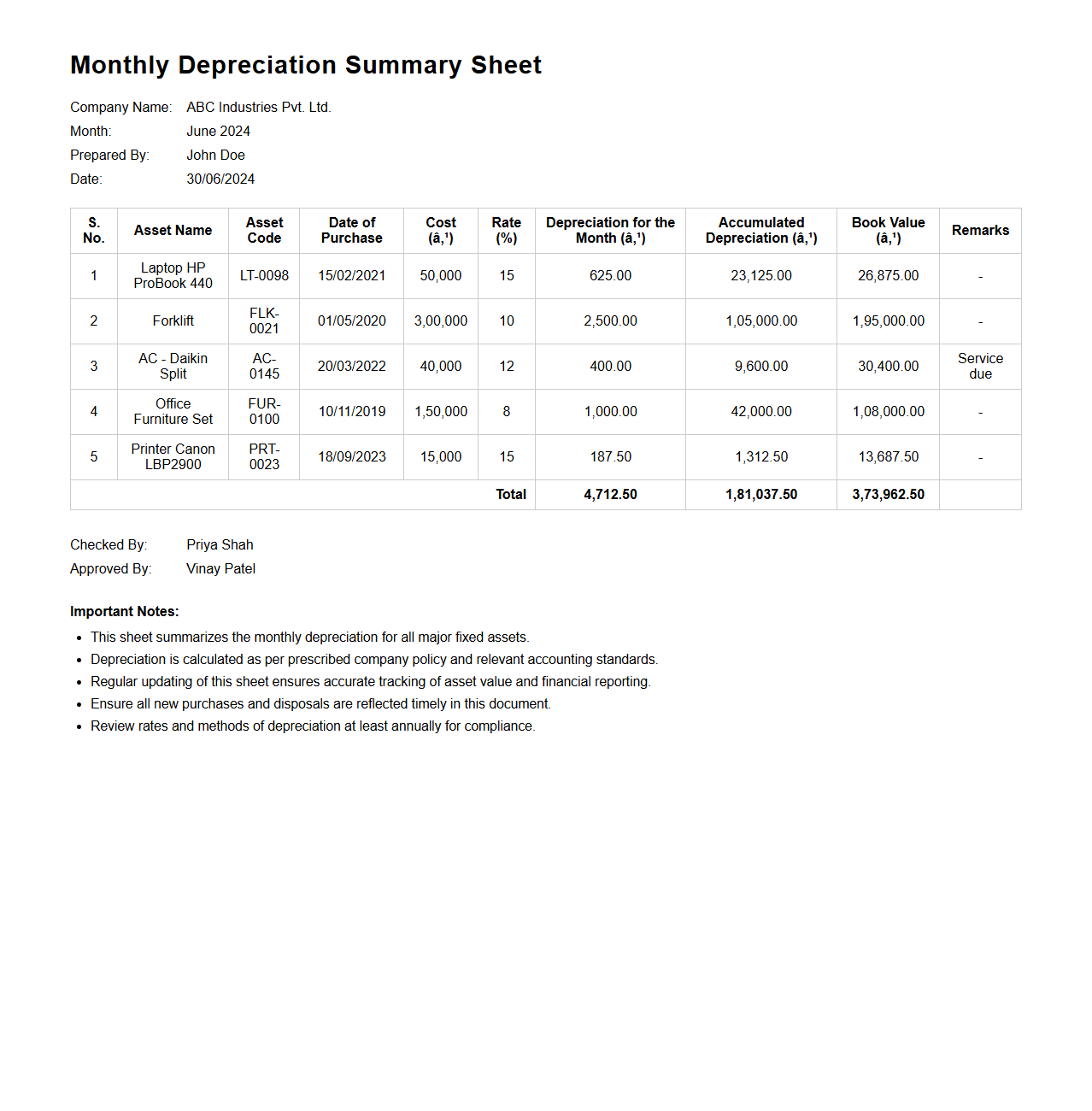
Monthly Depreciation Summary Sheet Format
The
Monthly Depreciation Summary Sheet Format document is a structured template used to record and summarize the depreciation of assets on a monthly basis. It includes essential columns such as asset description, acquisition date, cost, accumulated depreciation, monthly depreciation expense, and net book value, facilitating accurate financial tracking and reporting. This format ensures compliance with accounting standards and aids businesses in maintaining detailed records for asset management and tax purposes.
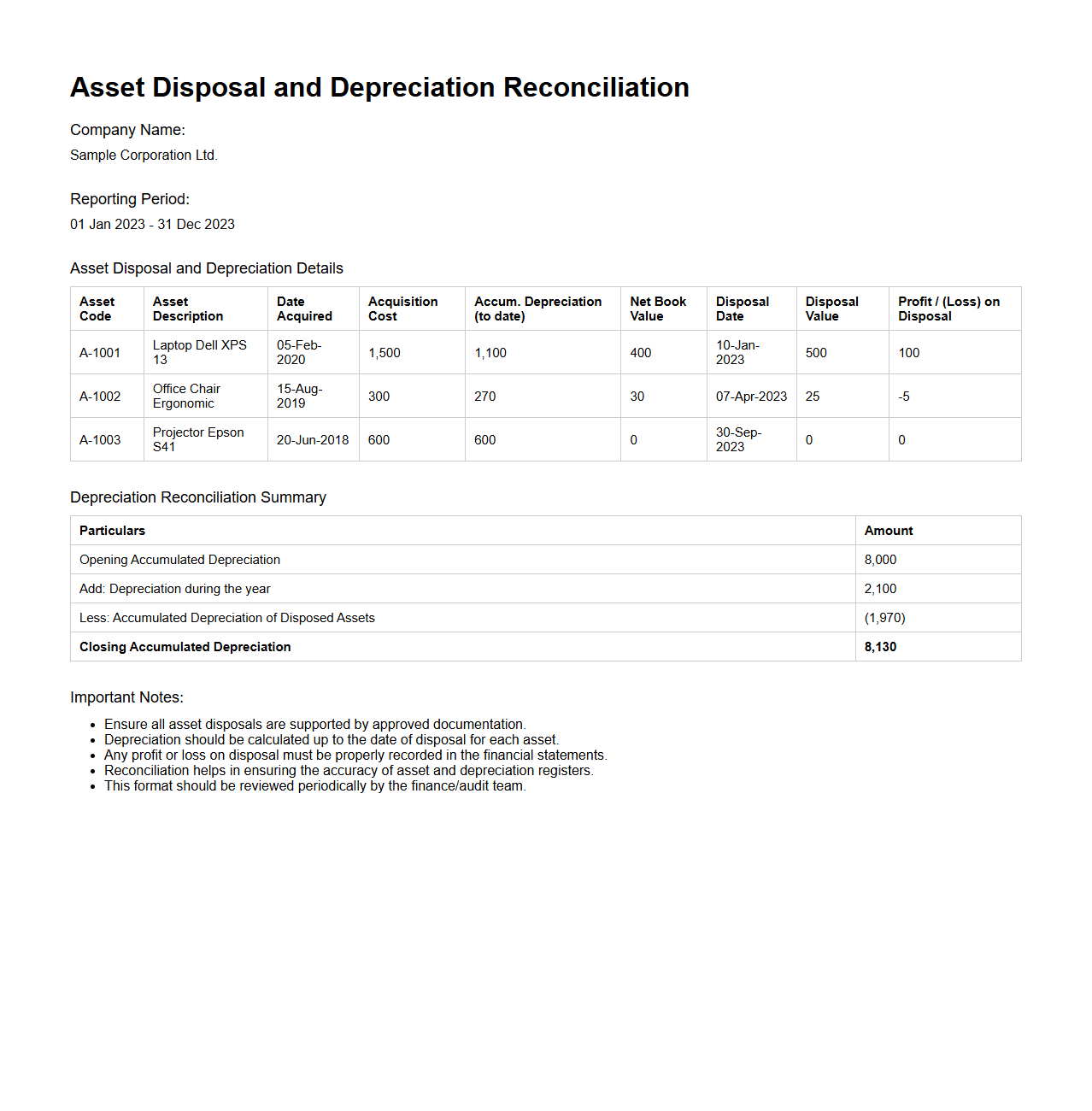
Asset Disposal and Depreciation Reconciliation Format
The
Asset Disposal and Depreciation Reconciliation Format document is a financial tool used to systematically record and reconcile the disposal of fixed assets alongside their accumulated depreciation. This format ensures accurate tracking of asset write-offs, gains or losses on disposal, and updates asset registers to reflect current values. It is essential for maintaining compliance with accounting standards and simplifying audit processes.
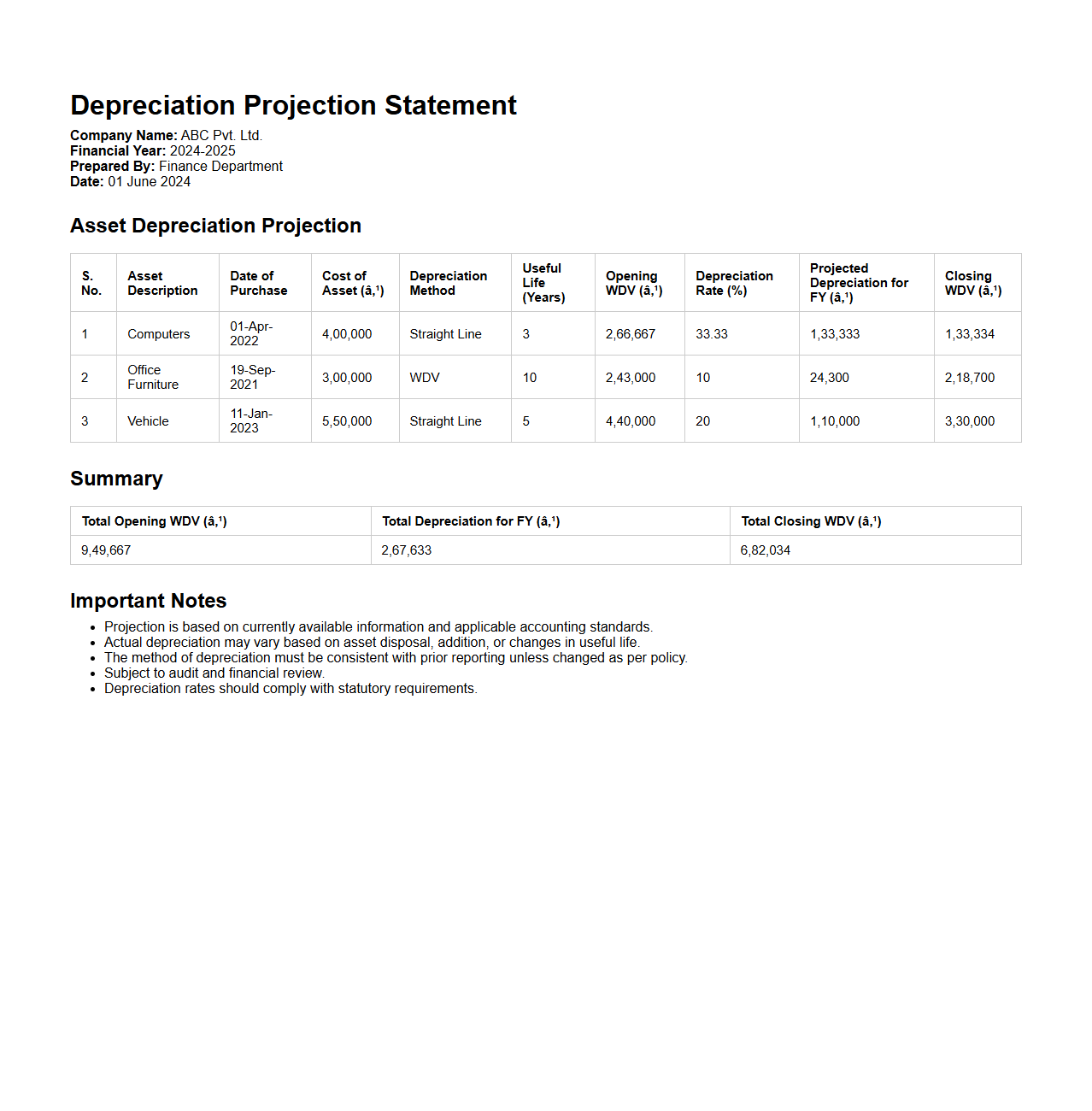
Depreciation Projection Statement Format
A
Depreciation Projection Statement Format document outlines the methodical recording of an asset's value reduction over time, helping businesses forecast future asset worth accurately. It includes key components such as asset cost, useful life, residual value, and depreciation method, typically straight-line or declining balance. This format enables financial analysts to project depreciation expenses and make informed decisions for budgeting and tax planning.
What key information should be included in a depreciation schedule for an asset?
A comprehensive depreciation schedule must include the asset name, purchase date, and cost. It should also record the asset's useful life and any salvage value to calculate depreciation accurately. Additionally, the schedule must detail the depreciation charges for each accounting period.
Which depreciation methods can be reflected in a standard depreciation schedule format?
The most commonly reflected methods in a depreciation schedule are straight-line, reducing balance, and units of production. Each method affects how the depreciation expense is allocated over the asset's useful life. The schedule should indicate the chosen method to ensure clarity and consistency in financial reporting.
How is the opening and closing written down value (WDV) represented in the schedule?
The opening WDV represents the asset's value at the start of the period, while the closing WDV reflects its value after deducting annual depreciation. Both values are essential for tracking the asset's decreasing book value. The schedule must clearly display these figures for each accounting period.
What columns are necessary to track annual depreciation expense and accumulated depreciation?
A standard depreciation schedule requires separate columns for annual depreciation expense and accumulated depreciation. The annual expense shows the depreciation charged each year, while accumulated depreciation sums all prior years' expenses. This separation helps in understanding both current period and total depreciation impact.
How is the asset's useful life and salvage value documented in the schedule format?
The asset's useful life is documented as the expected period over which it will be depreciated. The salvage value is recorded as the estimated residual worth at the end of this period. Including both is crucial for calculating accurate depreciation expenses throughout the asset's lifecycle.