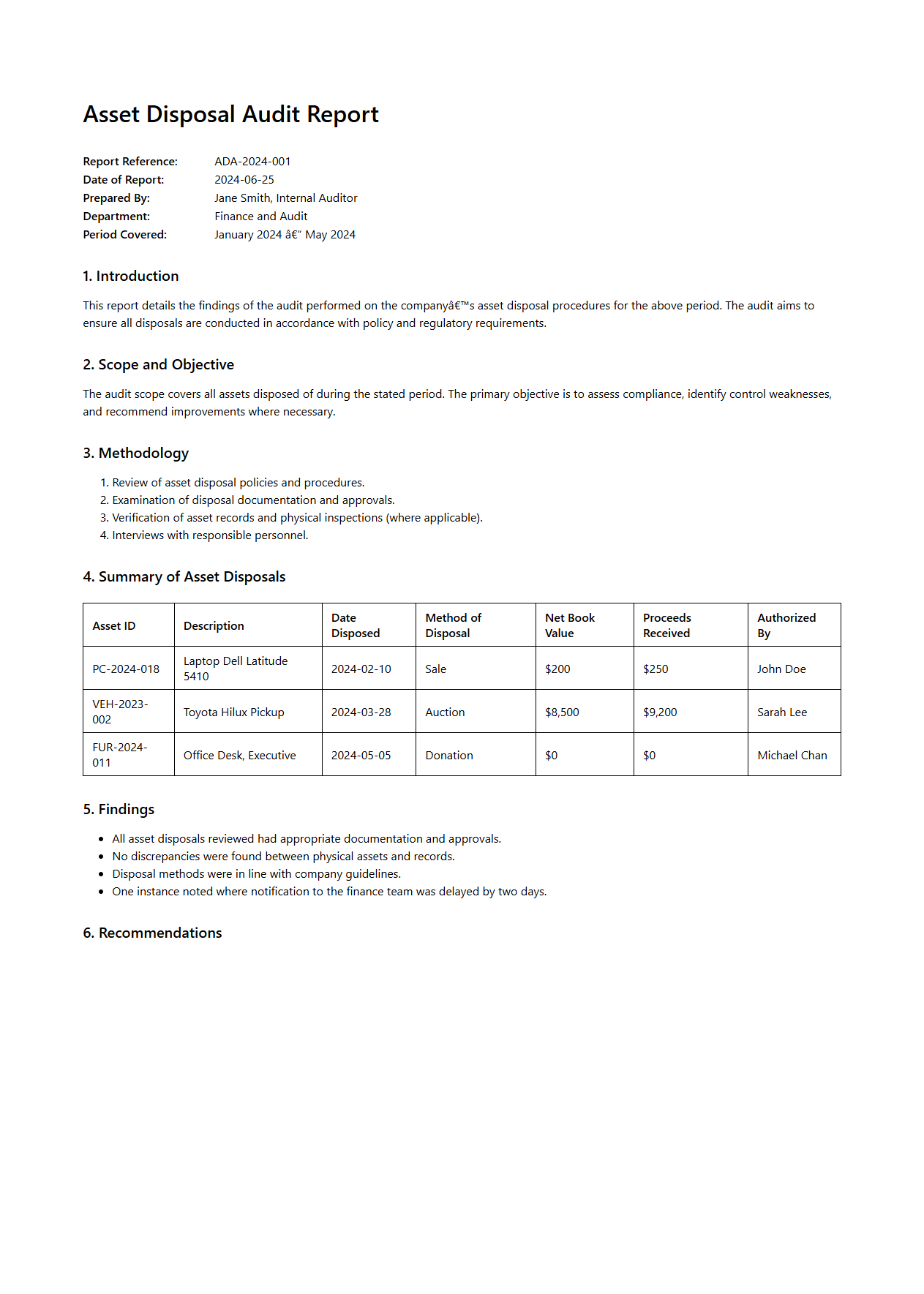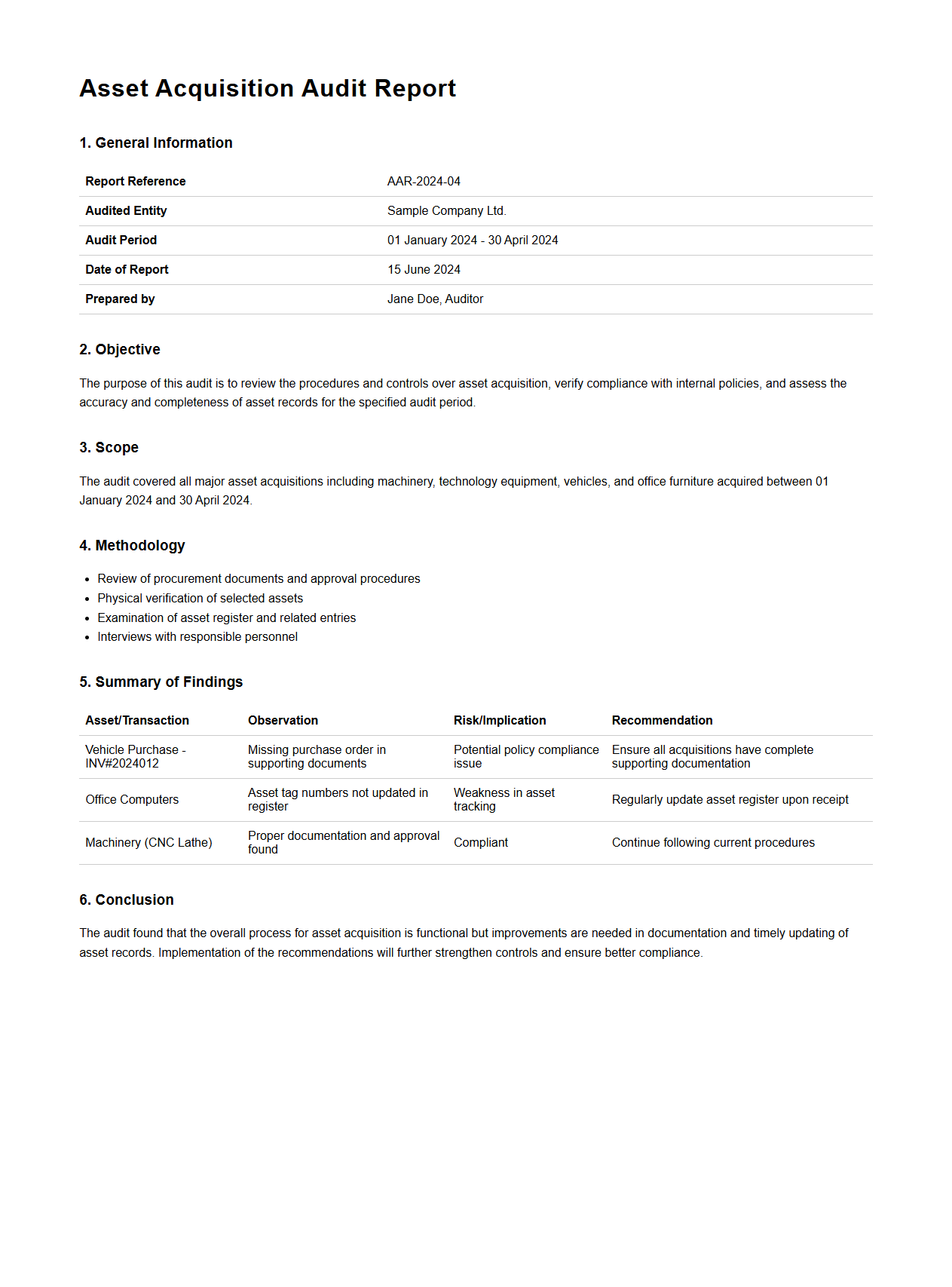
The format of audit report for asset typically includes an introduction, scope of the audit, and detailed findings related to the asset's valuation and condition. It outlines any discrepancies, compliance with accounting standards, and recommendations for asset management improvement. The report concludes with the auditor's opinion on the accuracy and reliability of the asset records.
Standard Unqualified Audit Report Format for Asset
The
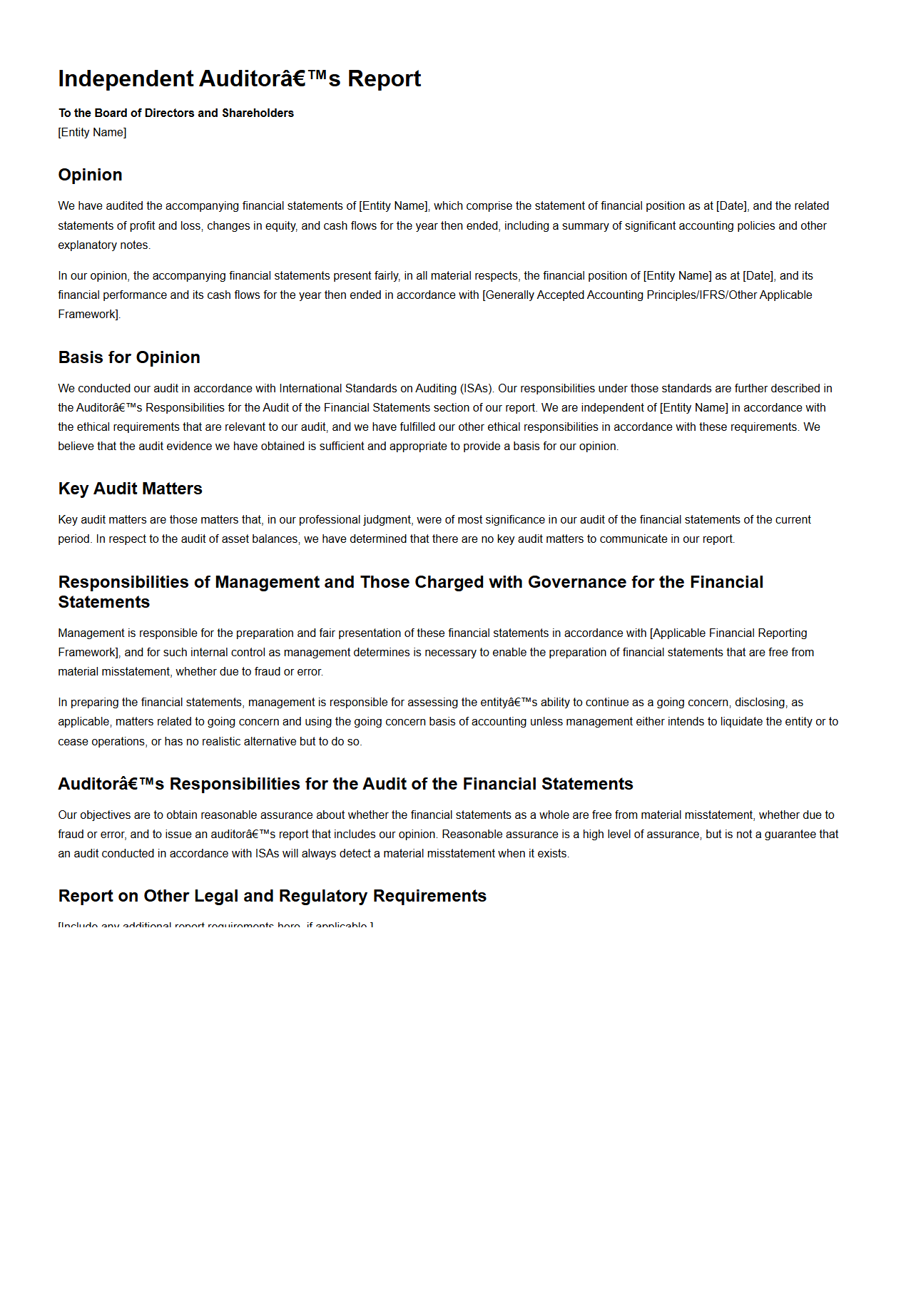
Standard Unqualified Audit Report Format for an asset document confirms that the financial statements present a true and fair view of the asset's value without any reservations or modifications. This audit report includes the auditor's opinion, scope of the audit, management's responsibility, and auditor's responsibility, ensuring compliance with relevant accounting standards such as IFRS or GAAP. The format is critical for stakeholders to trust the accuracy and reliability of asset documentation in financial reporting.
Qualified Audit Report Format for Asset
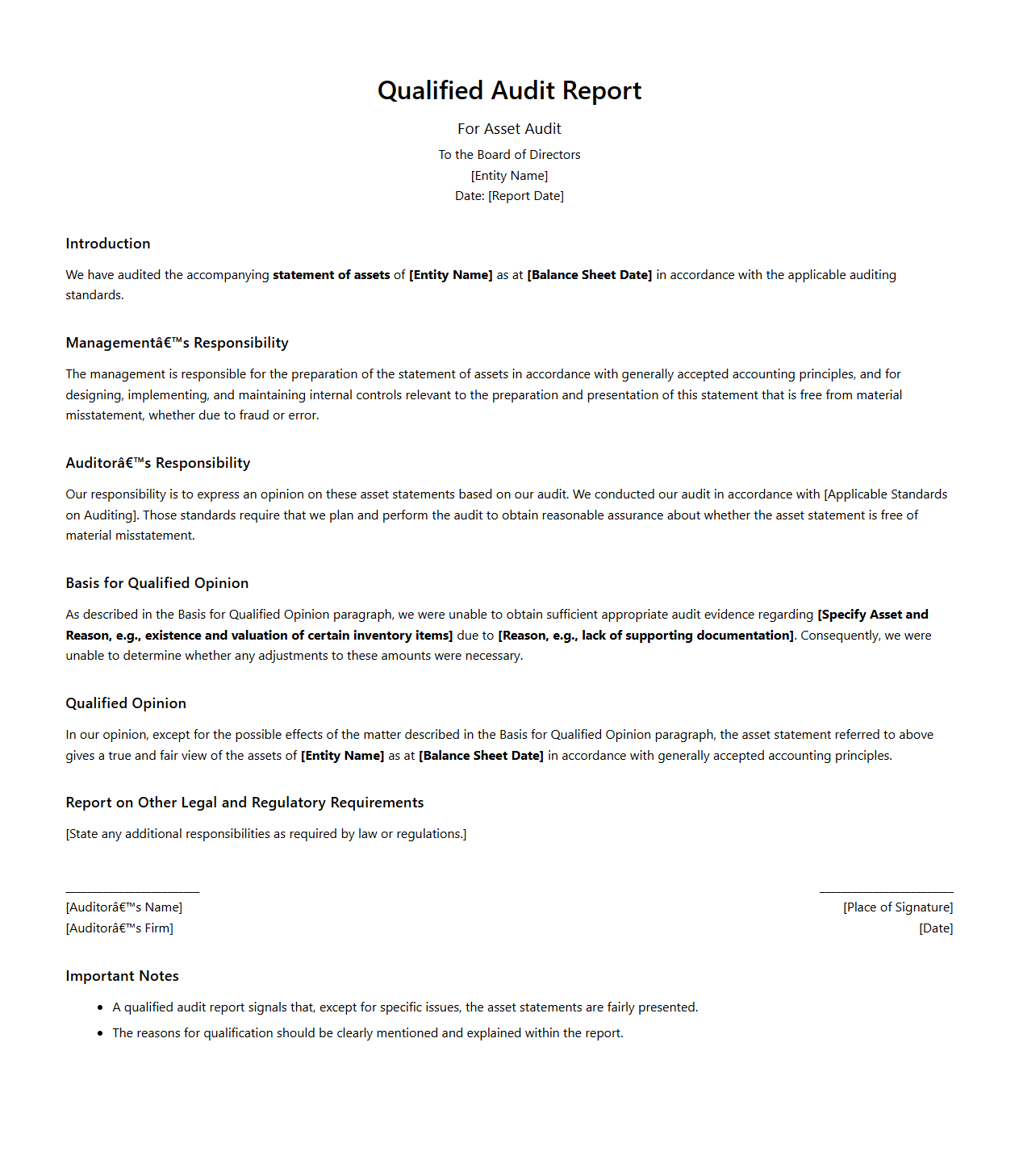
A
Qualified Audit Report Format for an asset document specifies the structure and content auditors use to express reservations about the accuracy or completeness of asset valuations. This report highlights discrepancies in asset records or valuation methods, ensuring stakeholders are informed of potential misstatements. It typically includes the auditor's opinion, basis for qualification, and the specific asset-related issues causing the qualification.
Adverse Audit Report Format for Asset
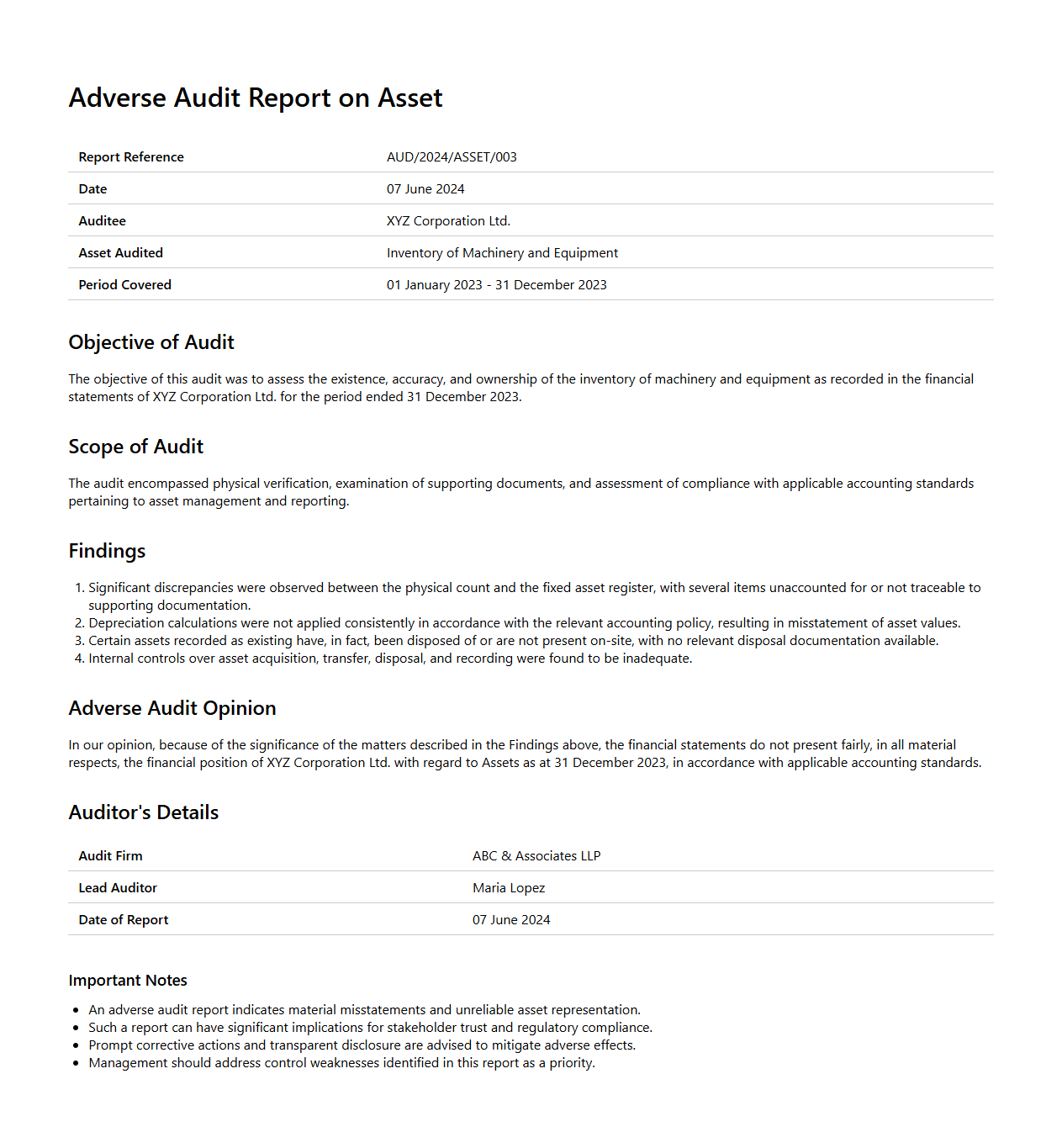
Adverse Audit Report Format for Asset document highlights significant discrepancies or misstatements in asset records that fail to comply with accounting standards. This report details the nature of these issues, such as undervaluation, overvaluation, or missing asset documentation, impacting the financial accuracy. The
adverse audit report serves as a critical warning for stakeholders about the reliability of asset information in financial statements.
Disclaimer Audit Report Format for Asset
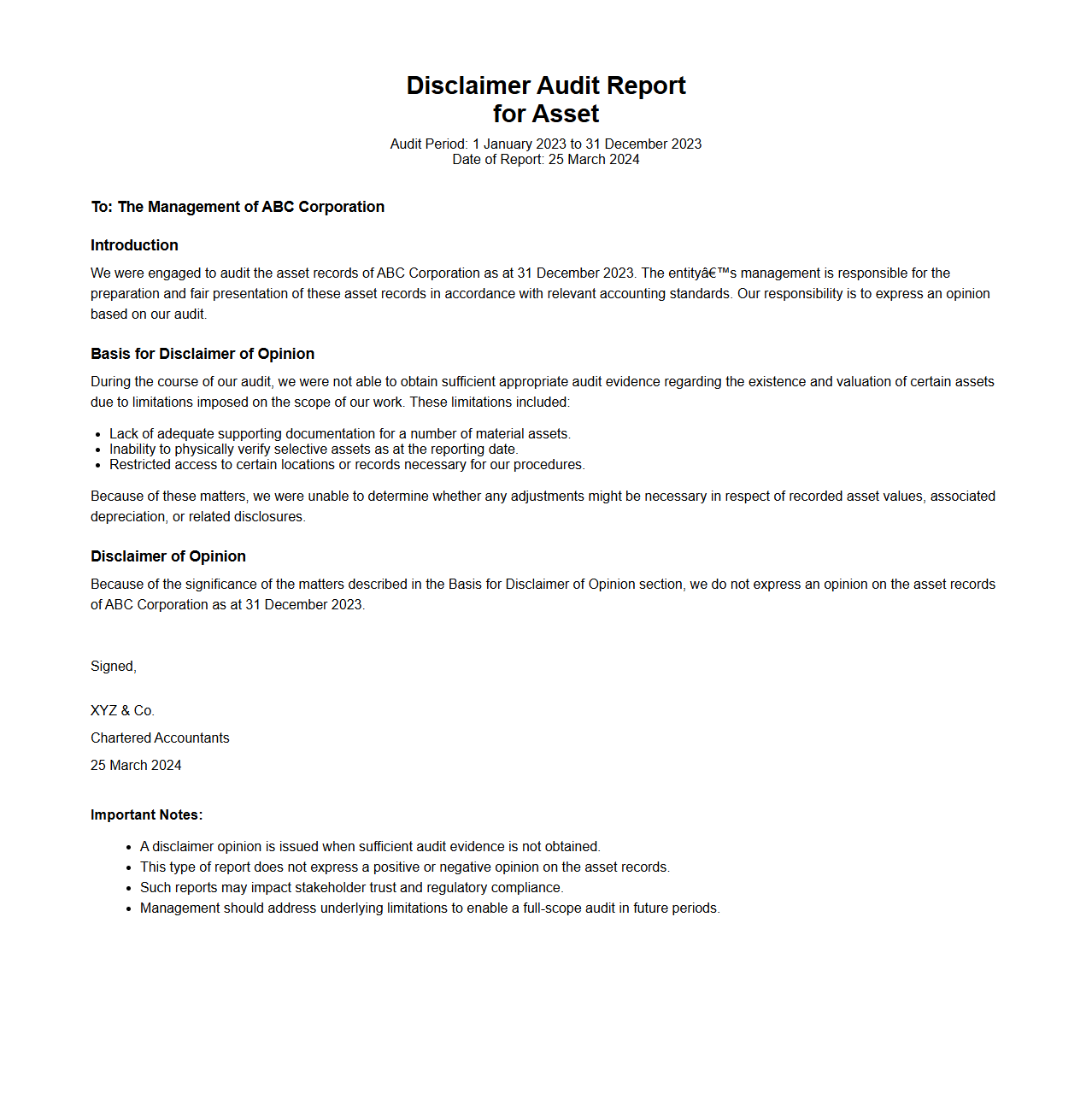
A
Disclaimer Audit Report Format for asset documents is a standardized template used by auditors when they are unable to obtain sufficient appropriate evidence to form an opinion on the asset's existence or valuation. This report explicitly states that the auditor does not express any assurance due to limitations in the audit scope or missing information. It ensures transparency by clearly communicating the reasons for the disclaimer and the impact on the financial statements or asset records.
Internal Asset Audit Report Format
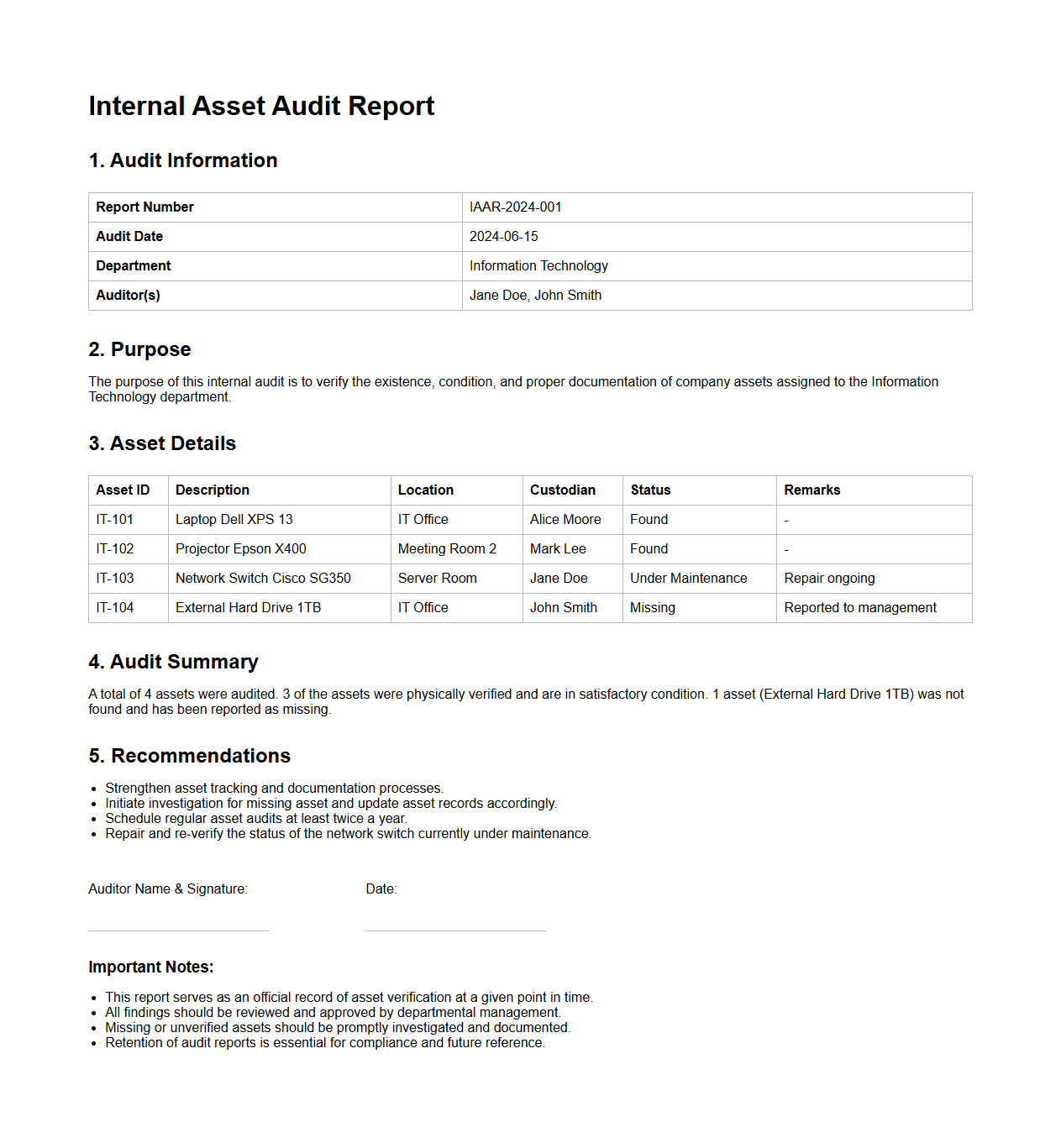
The
Internal Asset Audit Report Format document serves as a structured template designed to systematically record and evaluate the status, condition, and compliance of company assets during an internal audit. It includes sections for asset identification, verification results, discrepancies found, and recommendations for asset management improvements. This format ensures consistency, accuracy, and comprehensive documentation crucial for asset accountability and financial reporting.
Asset Valuation Audit Report Format
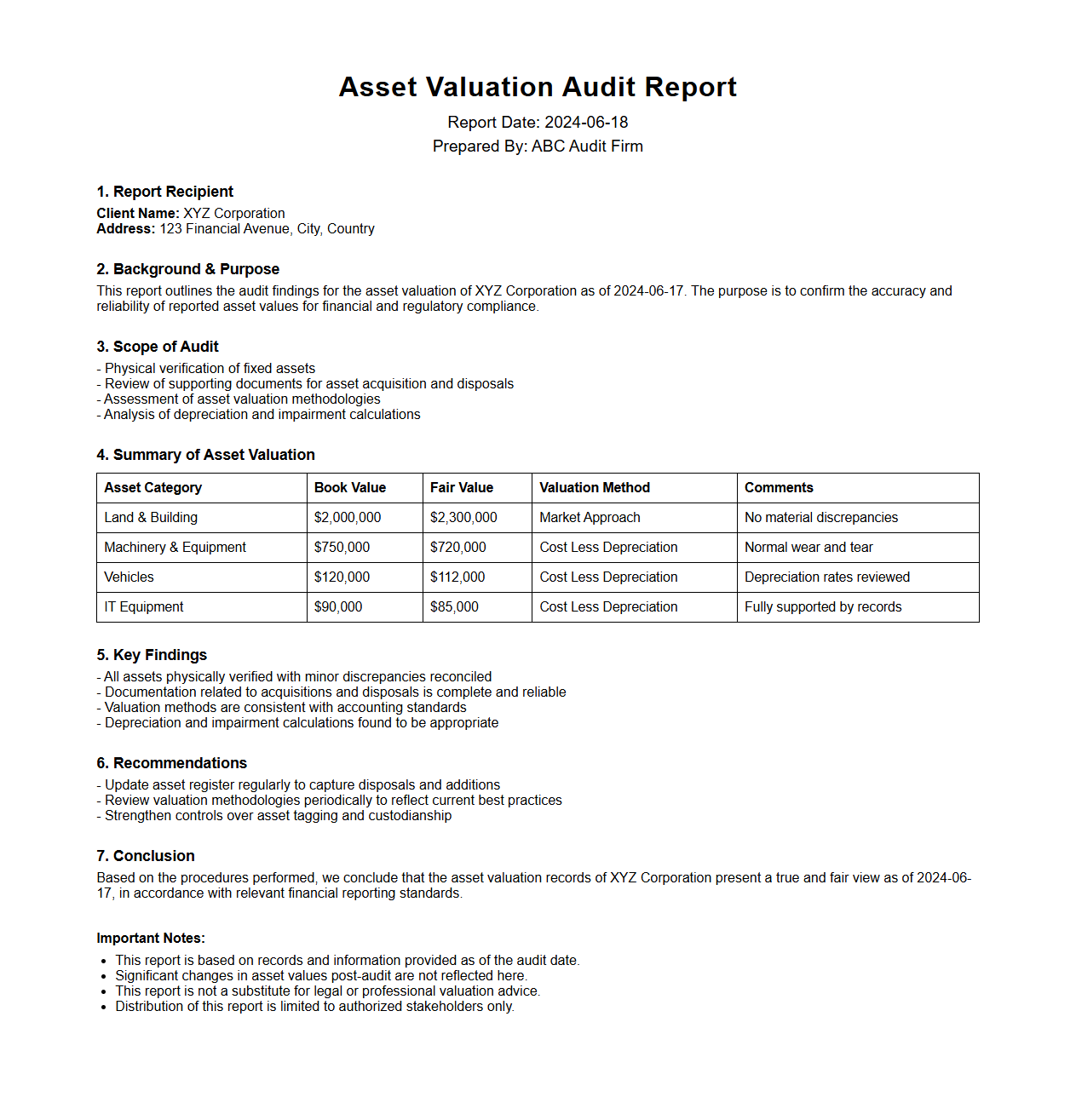
An
Asset Valuation Audit Report Format document outlines the standardized structure for presenting the assessment and valuation of an entity's assets. It includes detailed sections on asset identification, valuation methodologies, audit findings, and compliance with accounting standards such as IFRS or GAAP. This format ensures consistency, transparency, and accuracy in reporting asset values for stakeholders and regulatory bodies.
Asset Physical Verification Audit Report Format
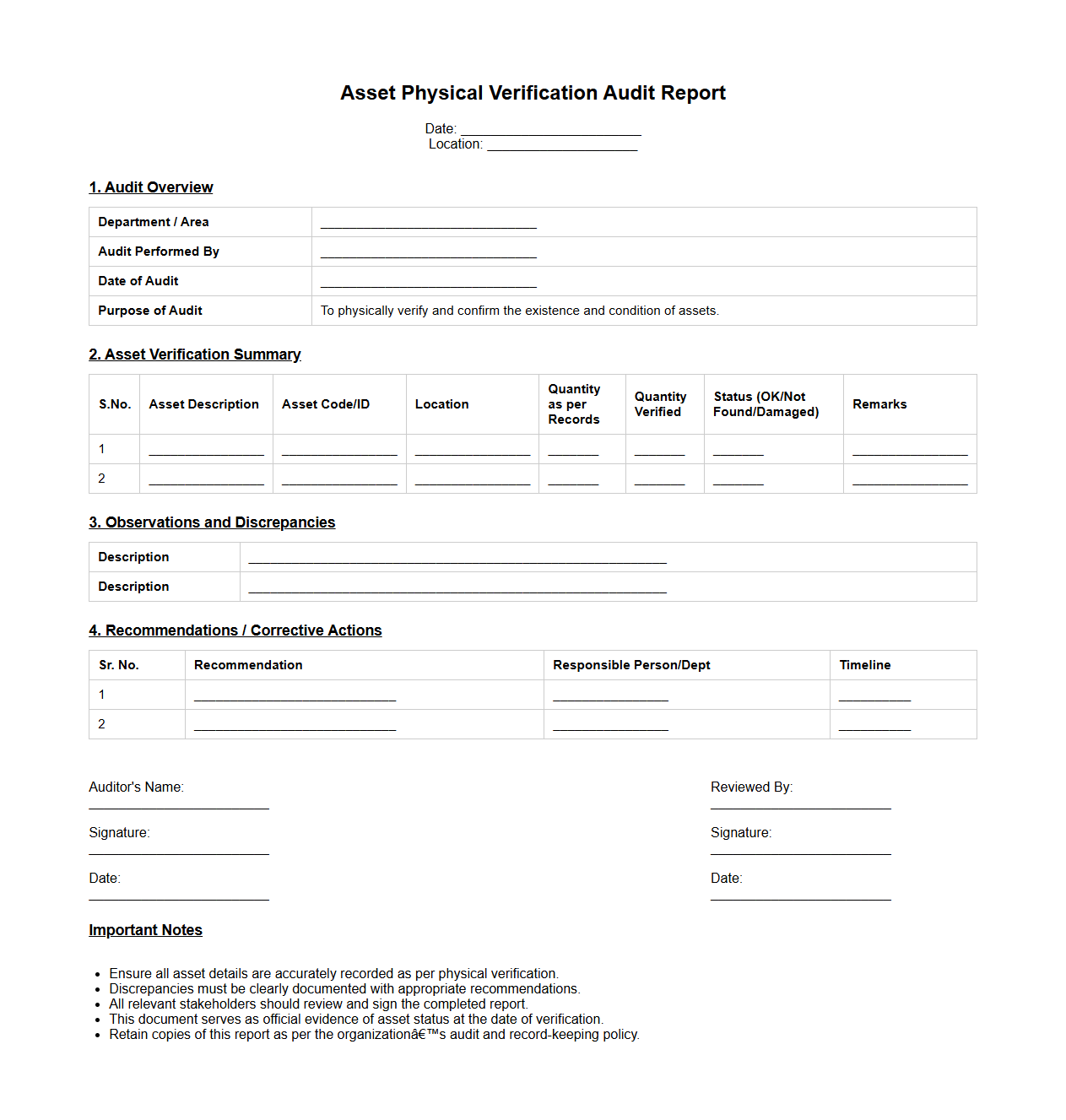
An
Asset Physical Verification Audit Report Format document outlines the standardized procedure and structure for recording the physical inspection of tangible assets within an organization. It includes details such as asset identification, location, condition, discrepancies, and verification status to ensure accurate asset tracking and compliance. This format facilitates systematic auditing, enhances transparency, and supports effective asset management and internal controls.
Asset Impairment Audit Report Format
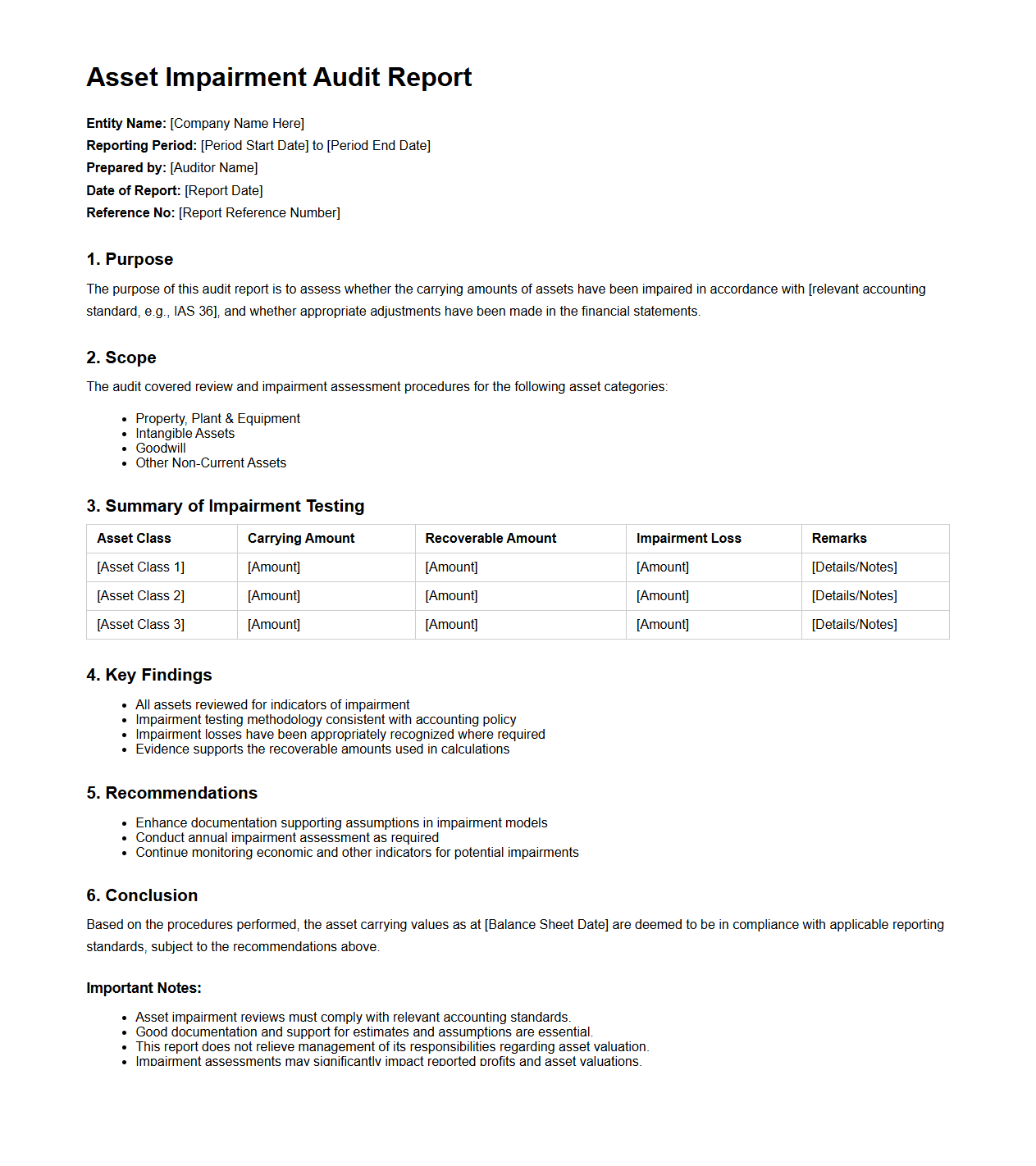
An
Asset Impairment Audit Report Format document outlines the structured approach for evaluating and reporting the decline in value of company assets. It typically includes sections for asset identification, impairment indicators, valuation methods, and auditor conclusions to ensure compliance with accounting standards like IFRS and GAAP. This format helps auditors systematically document evidence and judgments, supporting transparent financial reporting and informed decision-making.
Asset Disposal Audit Report Format
An
Asset Disposal Audit Report Format document outlines the structured approach for recording the audit process related to the disposal of company assets. It typically includes sections for detailing asset identification, disposal methods, compliance checks, and verification of asset removal from records. This format ensures transparency, accountability, and regulatory compliance in asset disposal audits.
Asset Acquisition Audit Report Format
An
Asset Acquisition Audit Report Format document outlines the structured approach for evaluating the purchase and integration of assets within an organization. It typically includes audit objectives, detailed asset details, compliance checks, valuation assessments, and recommendations to ensure transparency and accuracy in asset acquisition processes. This format serves as a standardized template that facilitates consistent reporting and aids in identifying discrepancies or areas for improvement during audits.
Key Sections in Standard Audit Report Format for Assets
The standard audit report for assets typically includes Introduction, where the scope and objectives are stated clearly. Next, the Audit Findings section presents detailed observations about asset conditions and compliance. Finally, the Conclusion and Recommendations summarize the audit results and suggest corrective actions.
Information to Disclose Regarding Asset Valuation
The audit report must disclose the methods and principles used for asset valuation, ensuring transparency in the approach. It should include details about the fair value assessments or historical cost basis applied. Additionally, any adjustments and impairments recognized during valuation should be clearly reported.
Documentation of Exceptions or Discrepancies in Asset Records
All exceptions and discrepancies found during the asset audit must be documented comprehensively in the report. The report should describe the nature, cause, and extent of the inconsistencies observed. It is also important to outline the impact on financial statements and recommend corrective measures.
References to Applicable Accounting Standards in Asset Audit Report
The report must cite relevant accounting standards and frameworks that guide asset recognition and measurement, such as IFRS or GAAP. This ensures the audit aligns with accepted principles and provides legitimacy. Referencing standards like IAS 16 or ASC 360 helps clarify compliance in asset reporting.
Presentation of Auditor's Opinion on Asset Existence and Ownership
The auditor's opinion should be stated clearly, indicating whether assets exist and are owned by the entity as asserted. This is typically presented in a dedicated Opinion Paragraph within the report. The language used must be precise and unambiguous to reflect the auditor's professional judgment.