The Format of Valuation Report for Asset typically includes a clear description of the asset, the valuation methodology used, and the basis of assumptions. It outlines the asset's condition, market analysis, and any relevant financial data supporting the valuation. The report concludes with the final assessed value and the valuer's certification.
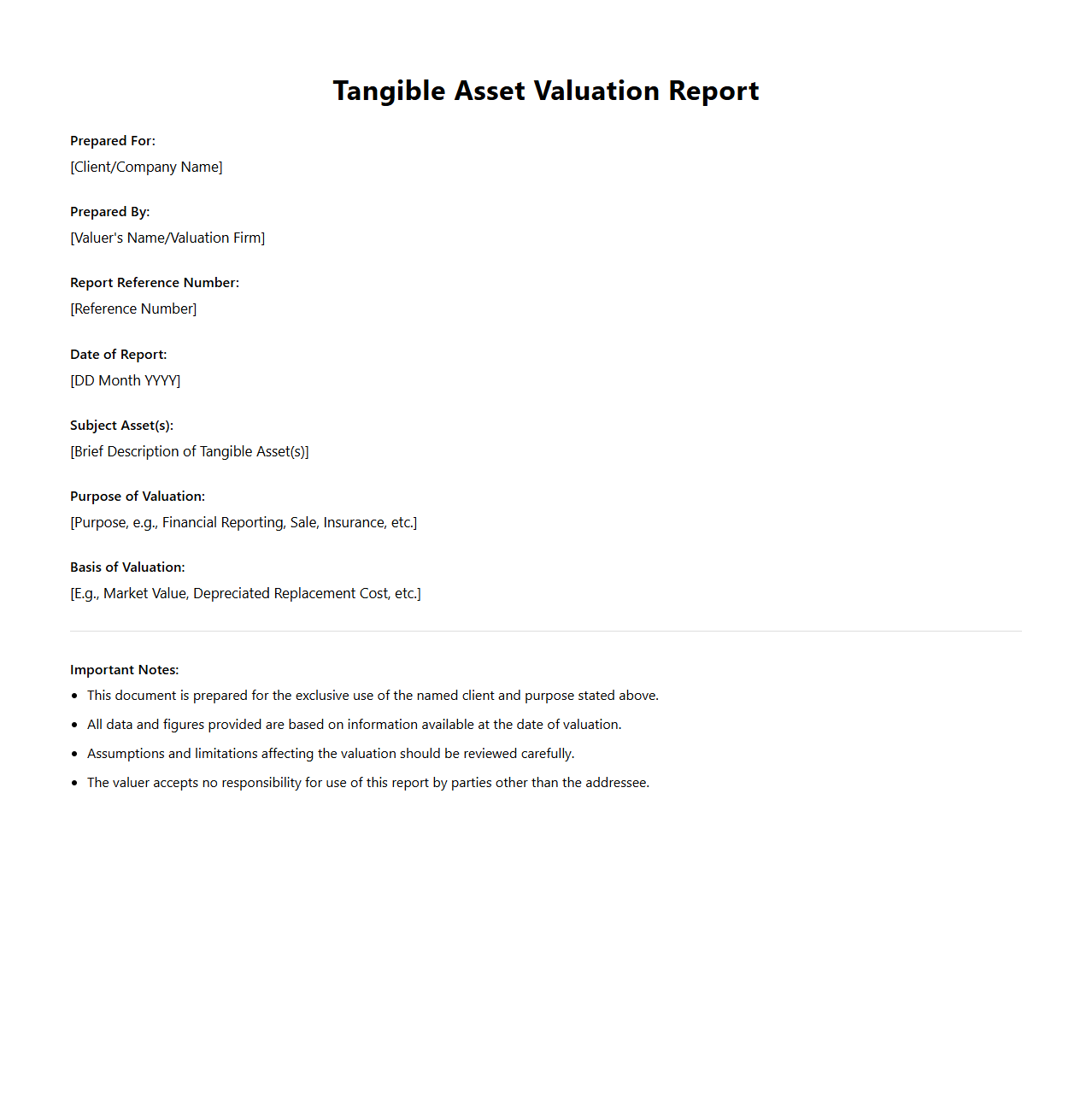
Title Format for Tangible Asset Valuation Report
The
Title Format for Tangible Asset Valuation Report ensures clear identification by including essential details such as the report name, asset type, valuation date, and client information. This standardized format improves document organization and facilitates efficient retrieval and reference in financial assessments or audits. Consistency in the title format supports compliance with regulatory standards and enhances professional presentation.
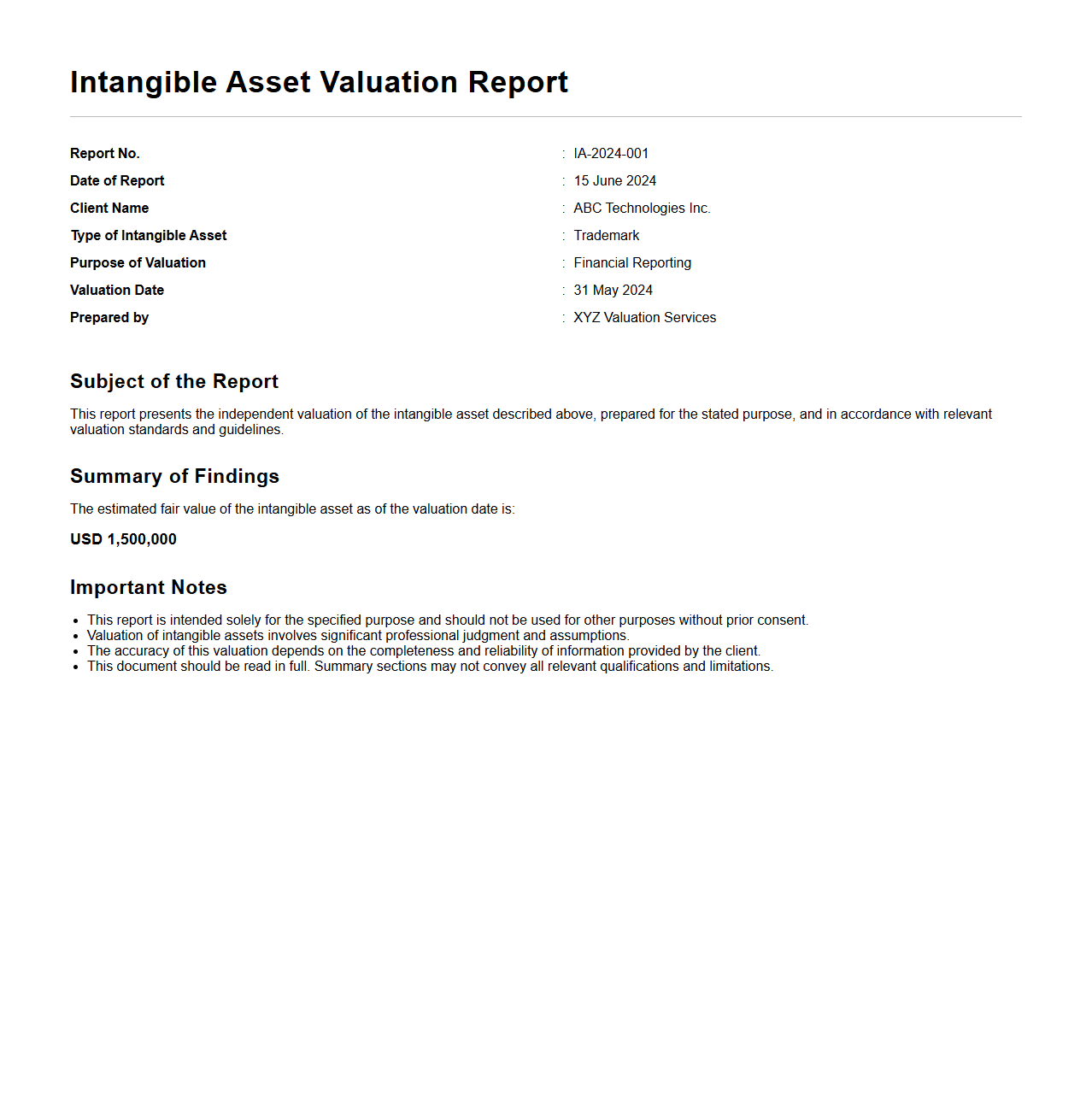
Title Format for Intangible Asset Valuation Report
The
Title Format for an Intangible Asset Valuation Report document establishes a clear and consistent presentation of the report's header, typically including the document name, the specific intangible asset being valued, the valuation date, and the name of the valuation firm or author. This format ensures that stakeholders quickly identify the purpose, scope, and credibility of the report while facilitating easy reference in professional and legal contexts. Properly formatted titles enhance the report's professionalism and compliance with industry standards such as USPAP or IVSC guidelines.
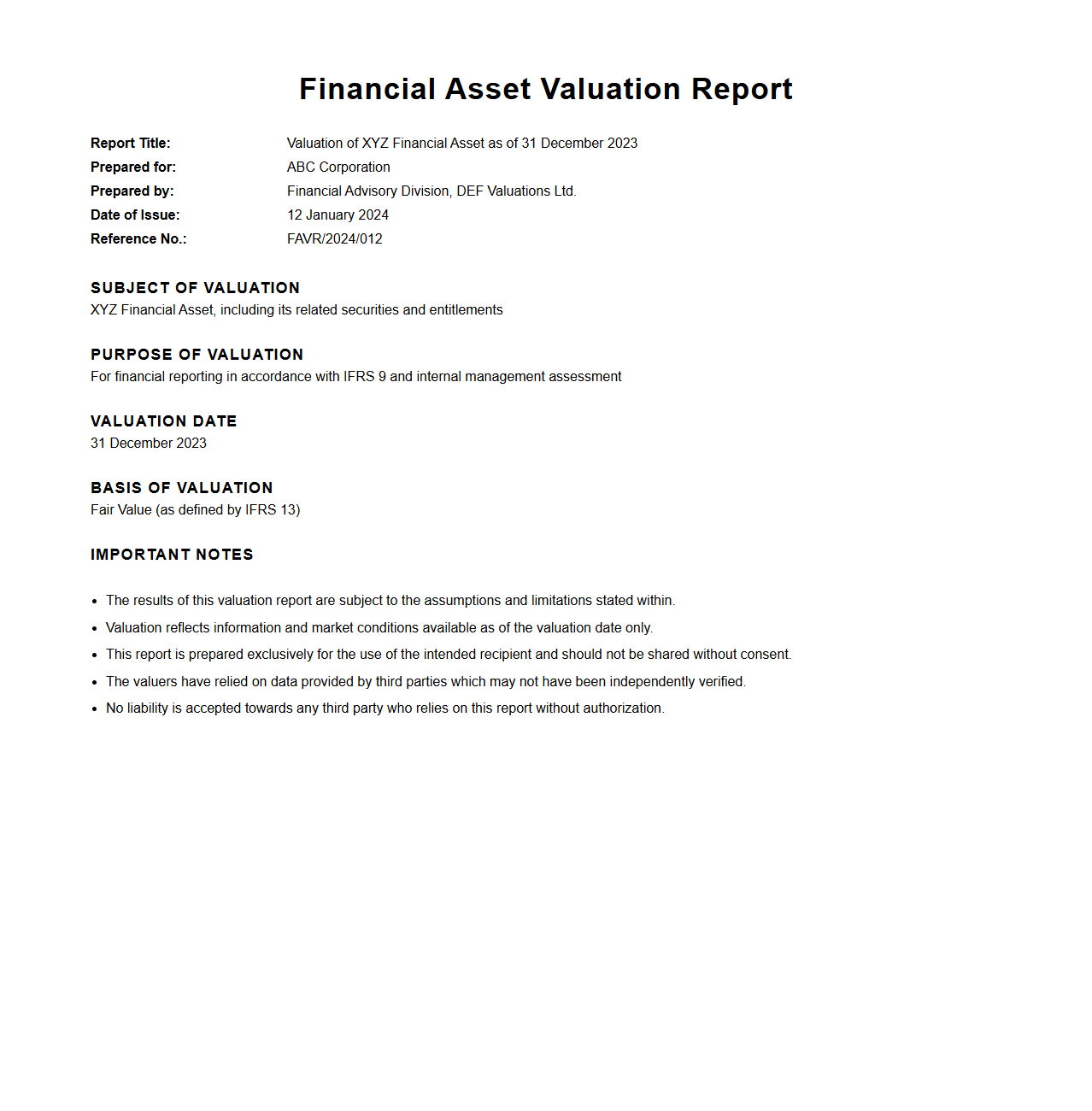
Title Format for Financial Asset Valuation Report
The
Title Format for a Financial Asset Valuation Report document typically includes the asset's name, valuation date, and the report type clearly stated to ensure precise identification. This format enhances clarity and professionalism, helping stakeholders quickly understand the report's content and context. Proper titling supports compliance with regulatory standards and internal documentation requirements.
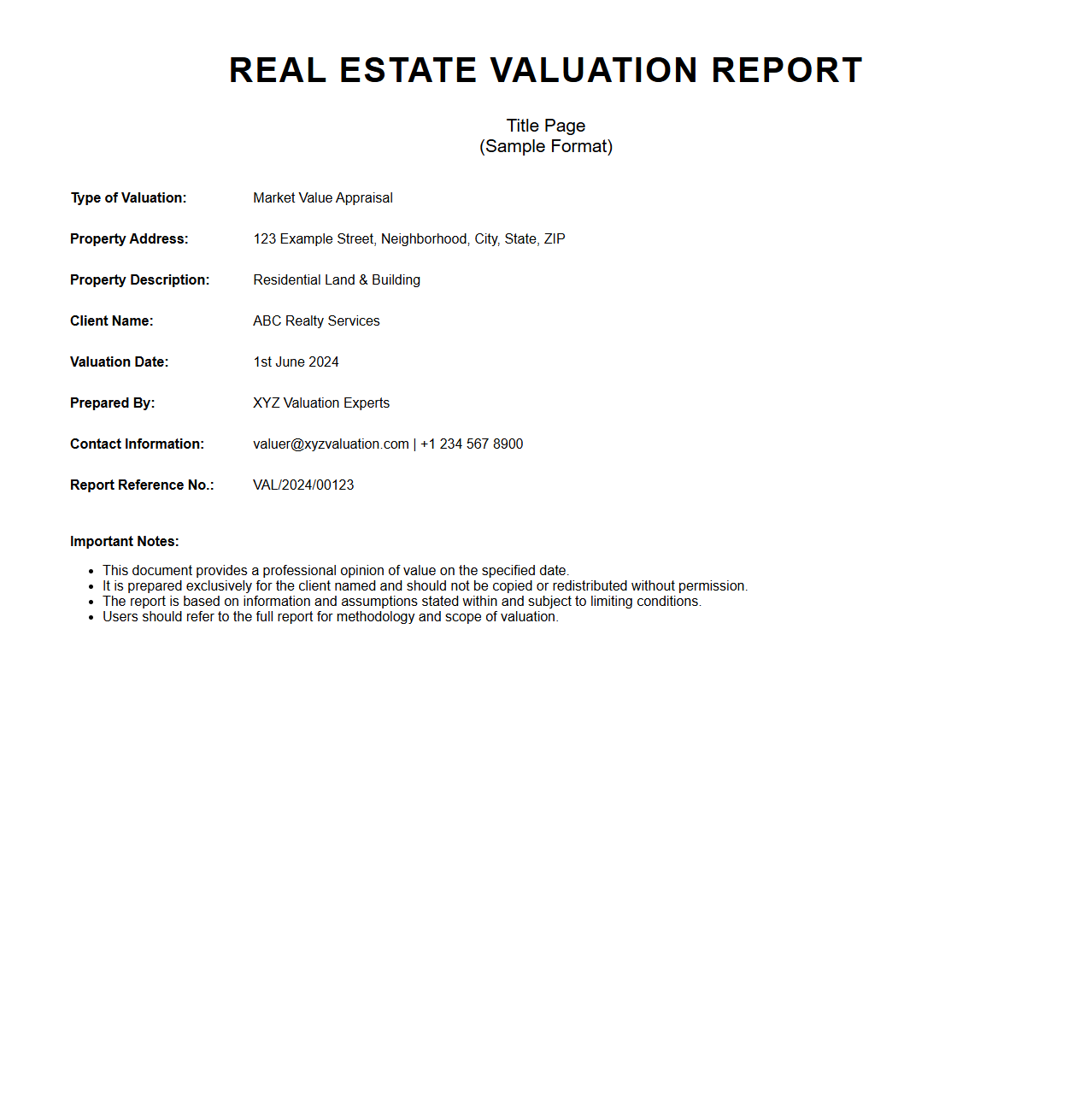
Title Format for Real Estate Valuation Report
The
Title Format for Real Estate Valuation Report is a structured template that ensures all essential details about the property and valuation are clearly presented. It typically includes the property address, report date, client information, and appraisal purpose, enhancing document clarity and professionalism. This format aids in standardizing reports for legal, financial, and transactional use in the real estate industry.
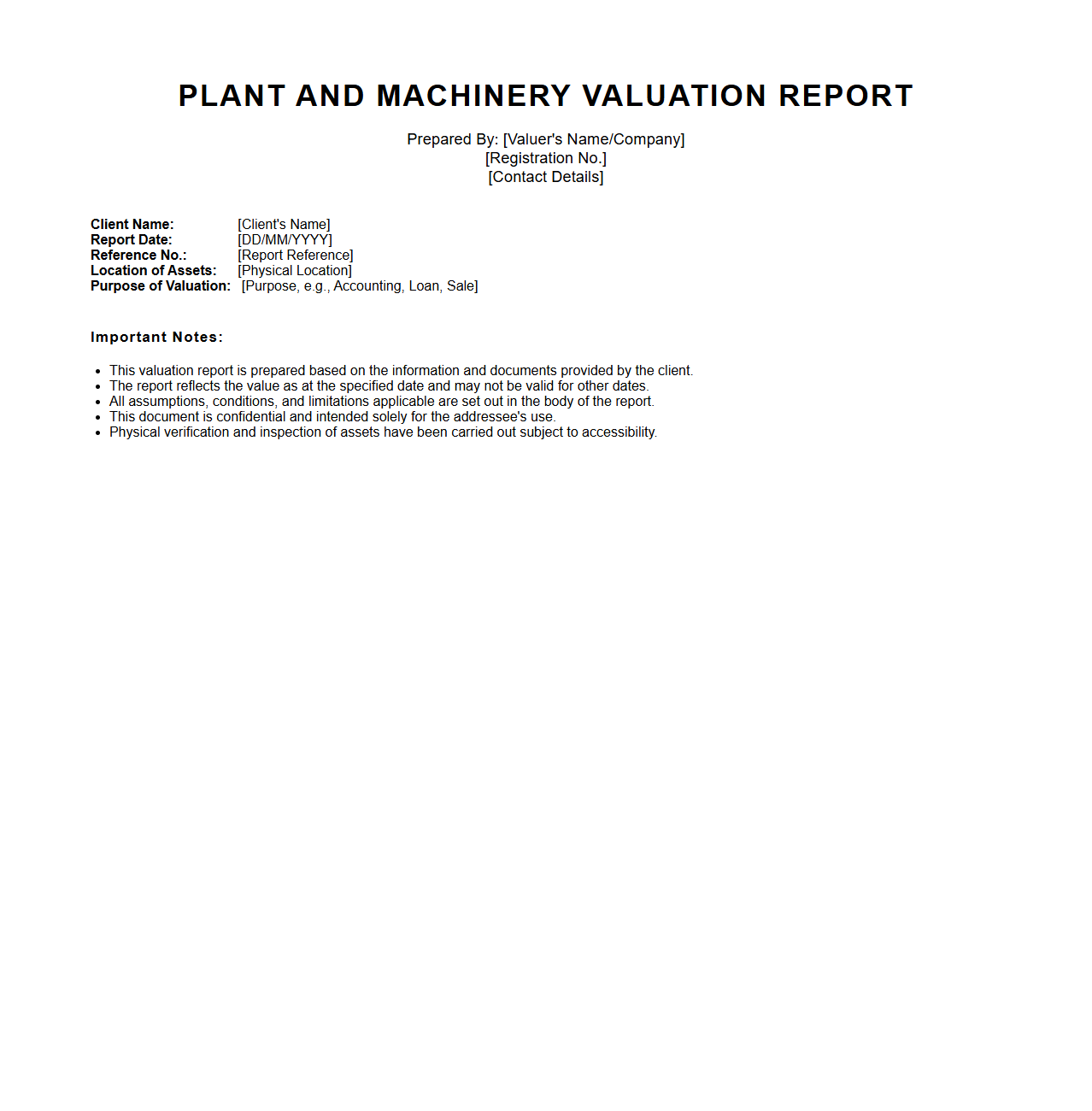
Title Format for Plant and Machinery Valuation Report
The
Title Format for a Plant and Machinery Valuation Report document clearly identifies the report's purpose, including the specific assets evaluated, the valuation date, and the owner's or company's name. It typically consists of a concise header such as "Plant and Machinery Valuation Report for [Company Name] as of [Date]," ensuring clarity and easy reference for stakeholders. This format establishes the report's authenticity and provides critical context for accurate asset assessment and financial analysis.
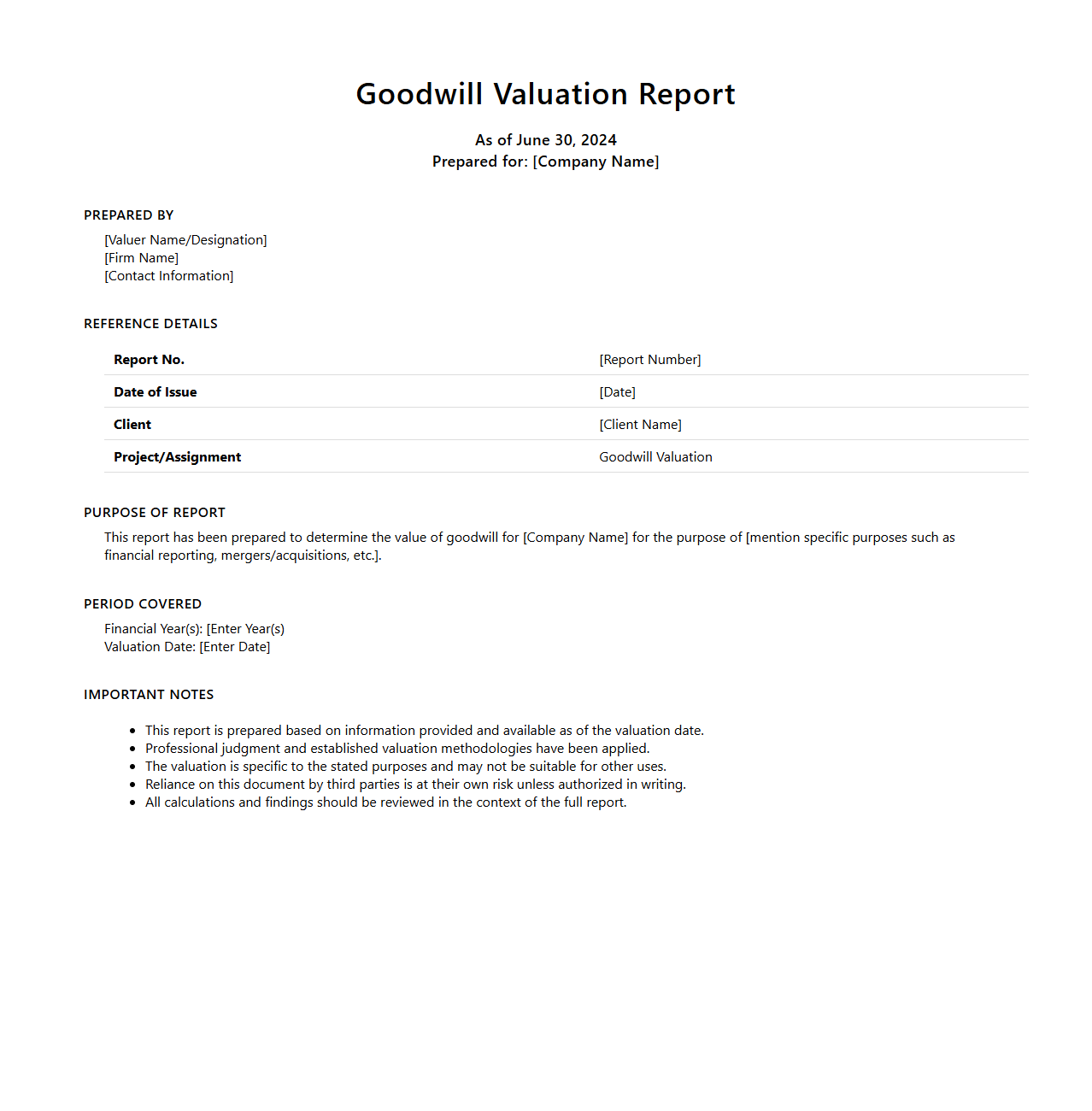
Title Format for Goodwill Valuation Report
The
Title Format for Goodwill Valuation Report typically includes the company name, the phrase "Goodwill Valuation Report," the valuation date, and the report preparation date. It must clearly identify the document's purpose and the specific period the valuation covers to ensure clarity and professionalism. Standardizing the title format aids in quick recognition and proper filing within financial and legal documentation systems.
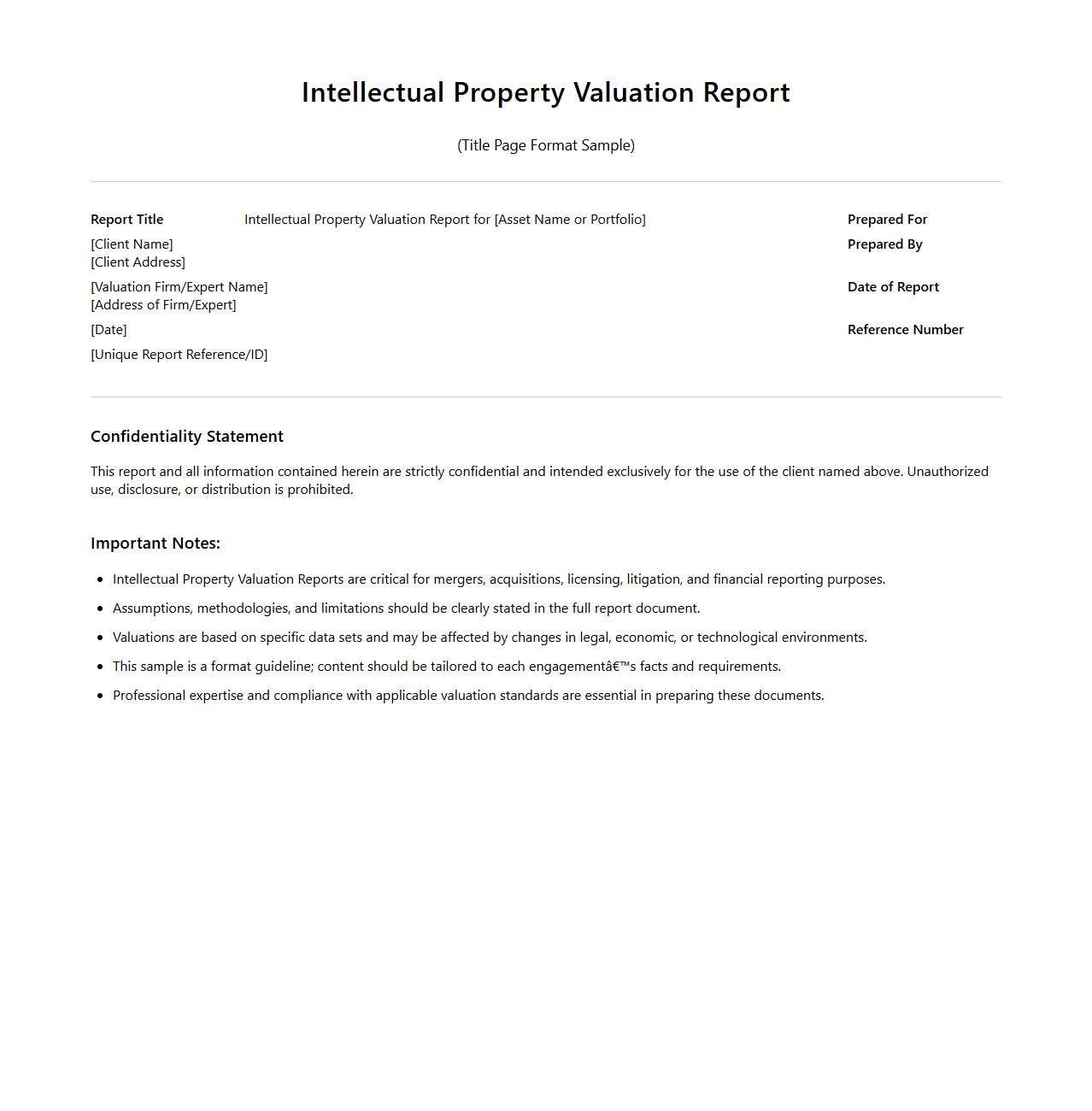
Title Format for Intellectual Property Valuation Report
The
Title Format for an Intellectual Property Valuation Report document serves as the primary identifier that clearly states the purpose and scope of the report. It typically includes the type of intellectual property being valued, the name of the entity owning the IP, and the valuation date, ensuring precise and professional presentation. A consistent title format enhances document organization, facilitates quick reference, and supports legal and financial accuracy in IP valuation processes.
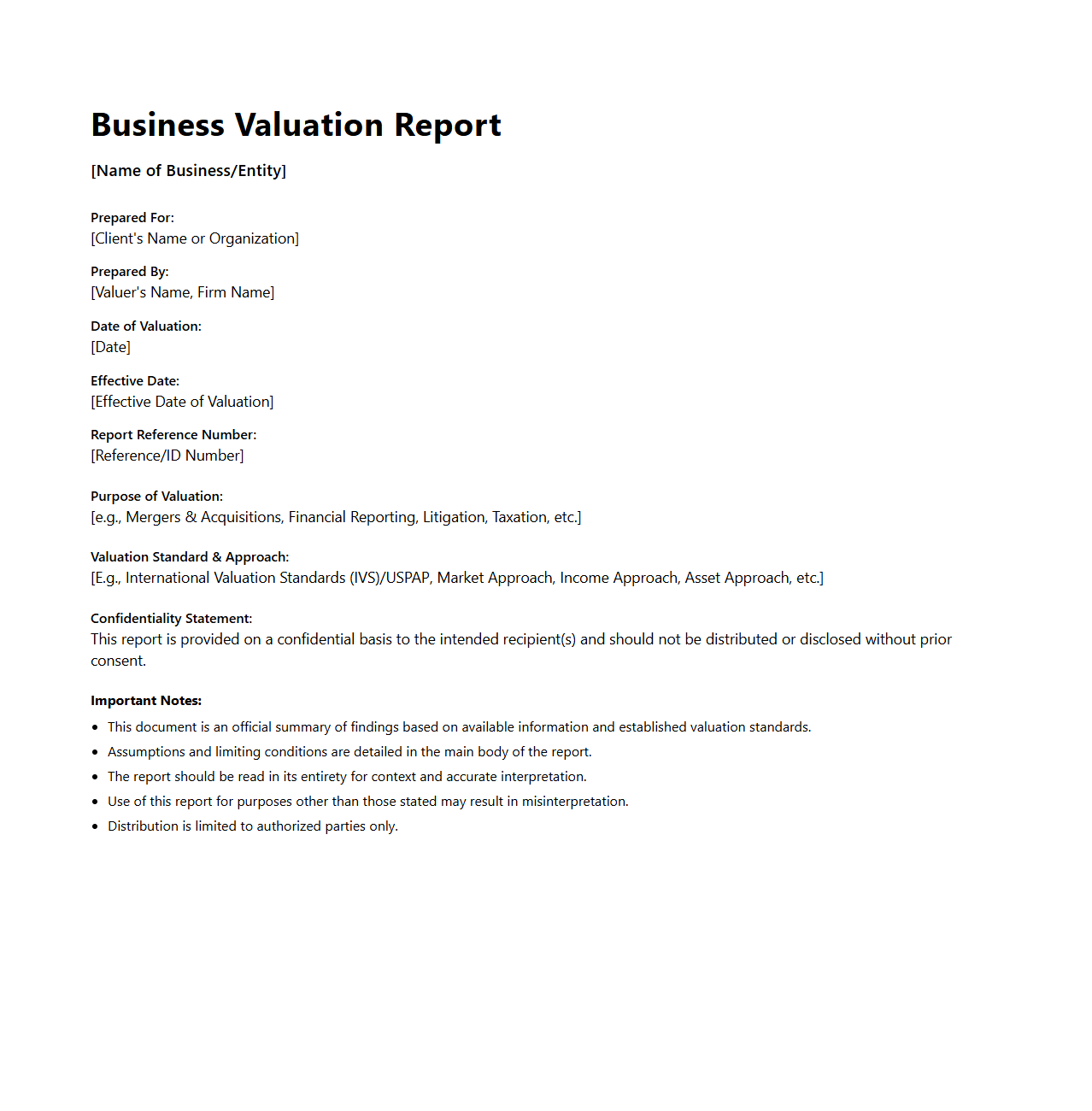
Title Format for Business Valuation Report
The
Title Format for Business Valuation Report defines the standardized layout and essential elements displayed on the cover page to ensure clarity and professionalism. It typically includes the business name, type of valuation, date of the report, and the valuation analyst's credentials. Proper formatting enhances the report's credibility and facilitates quick identification in official and client records.
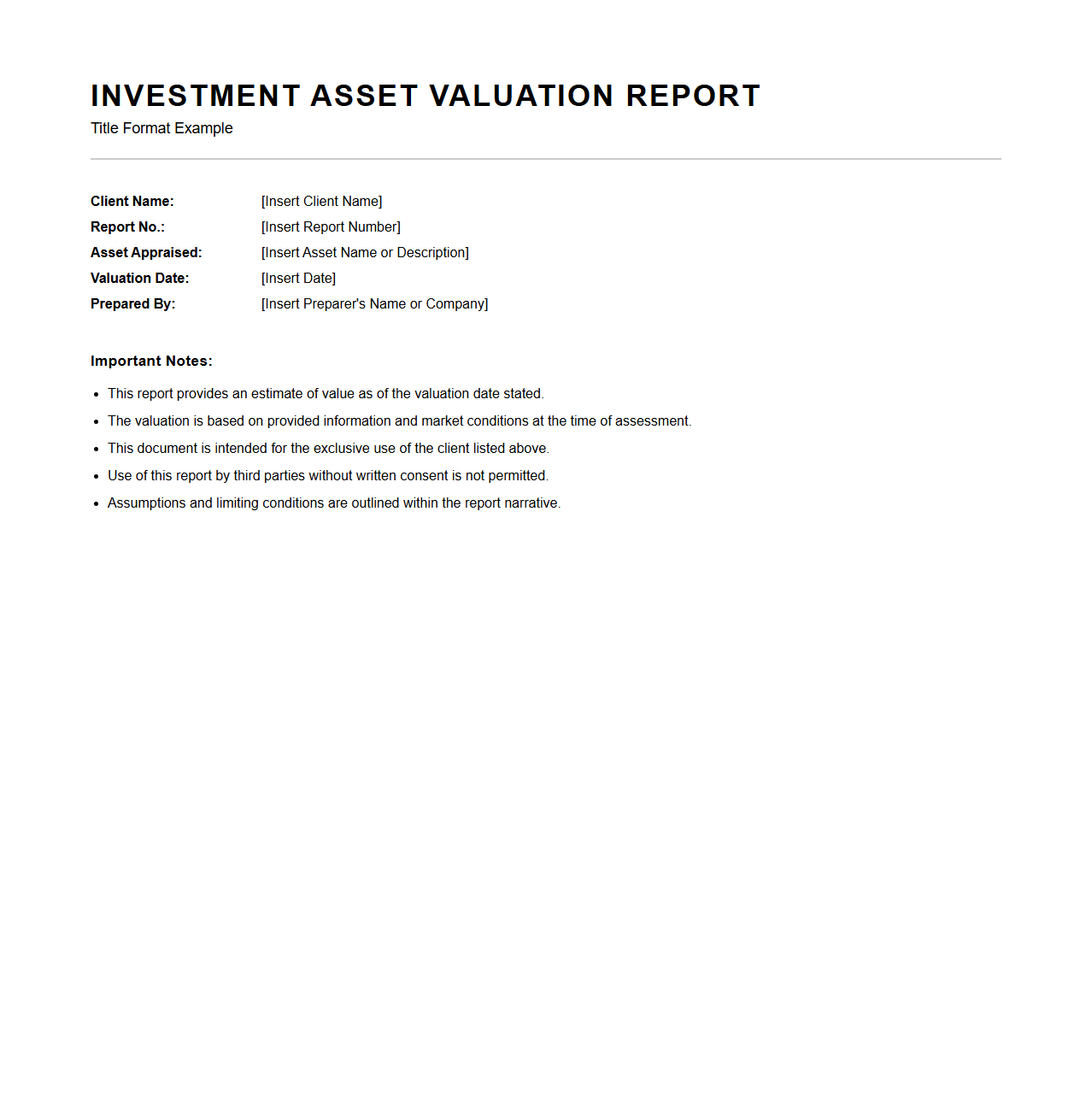
Title Format for Investment Asset Valuation Report
The
Title Format for an Investment Asset Valuation Report is a standardized heading that clearly identifies the document's purpose, the asset being evaluated, and the relevant valuation date. It ensures consistency and professionalism, typically including the report title, asset name, valuation date, and the issuing organization's name. Proper formatting enhances clarity and aids in the report's validation and reference by stakeholders.
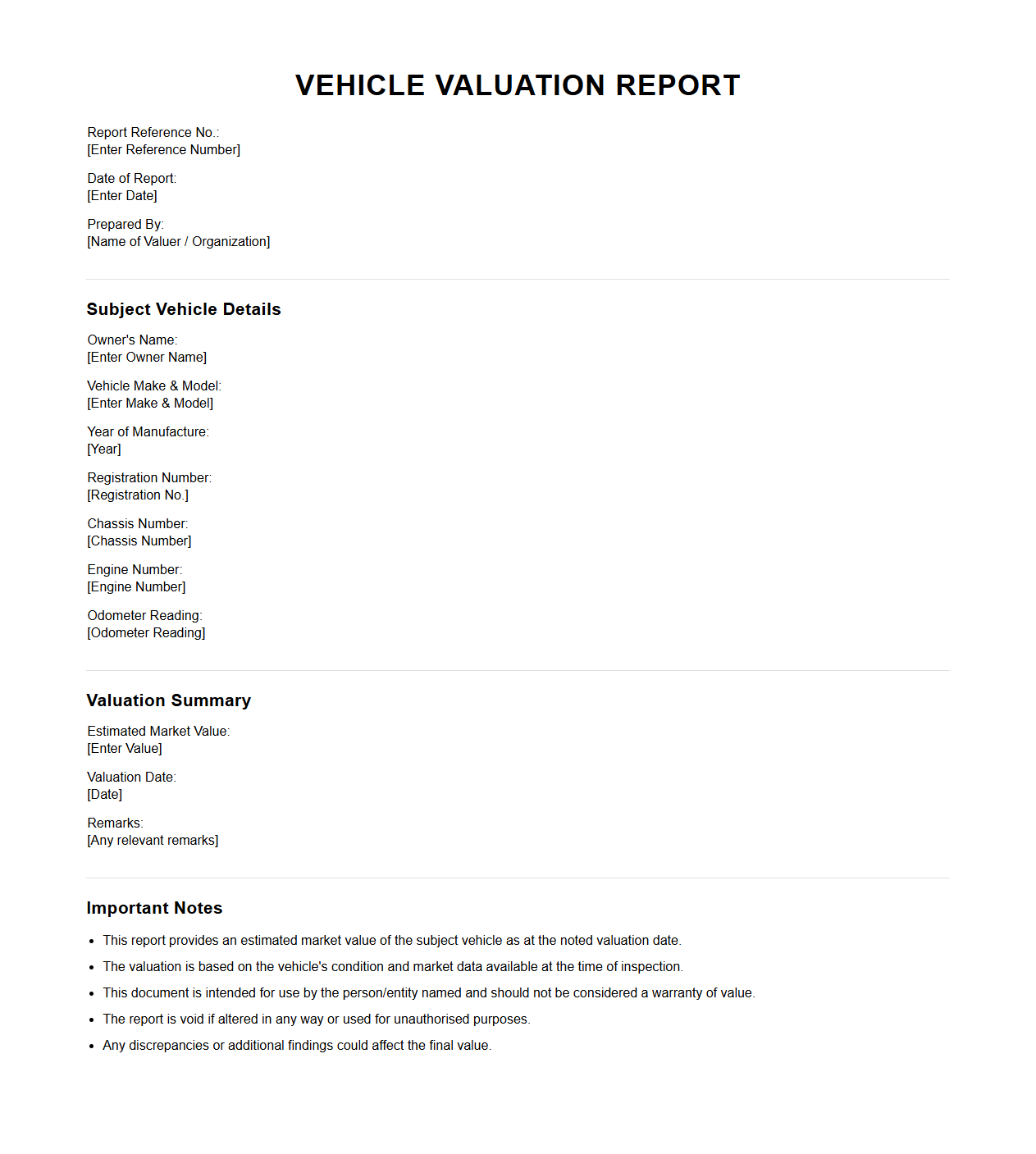
Title Format for Vehicle Valuation Report
The
Title Format for a Vehicle Valuation Report document specifies the standardized structure and essential elements required to present the report clearly and professionally. It typically includes the vehicle's identification details, date of assessment, valuation purpose, and the issuing authority's information. Proper title formatting ensures the report's authenticity, ease of reference, and compliance with legal or industry standards.
Essential Elements in the Format of a Valuation Report for an Asset
The valuation report must include the identification of the asset, its description, and its condition. It should detail the date of valuation and the purpose for which the valuation is conducted. Additionally, the report must contain the valuation conclusion clearly stated with the value estimate.
Presentation of Assumptions and Limiting Conditions in the Asset Valuation Report
Assumptions used during the valuation should be explicitly stated to provide context and clarity. The report must outline any limiting conditions that could affect the validity or applicability of the valuation results. These should be placed prominently to ensure the reader understands the scope and potential restrictions of the valuation.
Documentation of Asset Valuation Methods in the Report Format
The report must clearly document all valuation methods employed, such as cost, market, or income approaches. Each method's rationale and application should be comprehensively explained to justify the chosen valuation technique. Clear documentation ensures transparency and enhances the credibility of the valuation findings.
Outlining the Basis and Purpose of the Asset Valuation in the Report
The report should begin by defining the basis of valuation, explaining the framework and standards followed. It must also articulate the purpose of the valuation, highlighting how the results will be used. This foundation guides the interpretation and relevance of the valuation outcomes.
Required Supporting Documents and Evidence in the Valuation Report Format
Inclusion of supporting documents like ownership records, market data, and financial statements is critical. The valuation report should also provide evidence of inspection and analysis carried out to support the valuation. These documents enhance the report's reliability and validate the valuation conclusions.