The Format of Tax Audit Report for Companies includes essential sections such as the auditor's details, company information, scope of audit, and observations on tax compliance. It follows a structured layout prescribed by tax authorities to ensure consistency and clarity. Key elements also cover the auditor's opinion and remarks on any non-compliance or discrepancies found during the audit process.
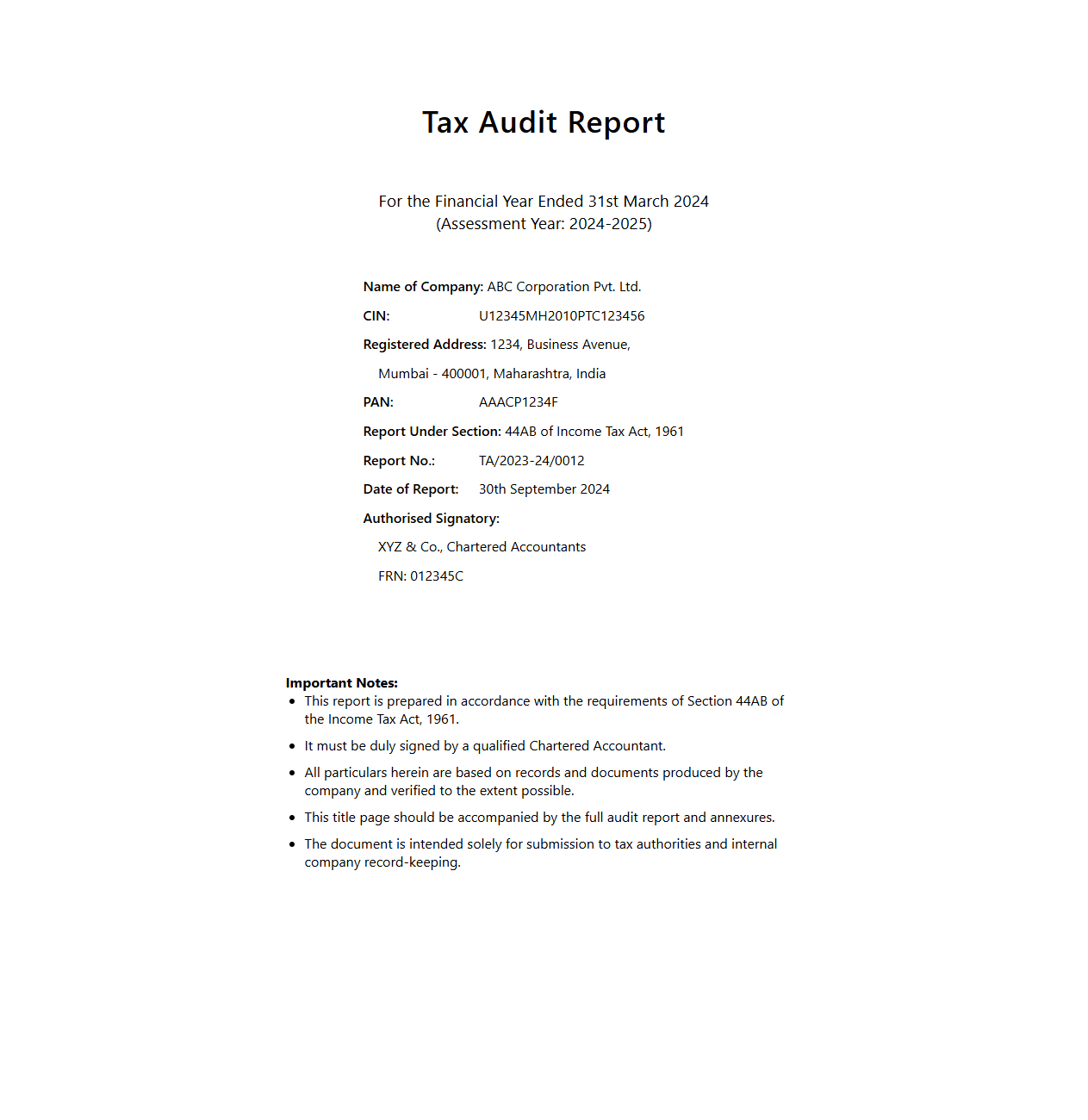
Title Page of Tax Audit Report for Companies
The
Title Page of Tax Audit Report for Companies serves as the official cover of the audit document, clearly stating the company's name, the financial year under review, and the auditor's details. It includes essential information such as the report's date, the audit firm's registration number, and the auditor's signature to authenticate the report. This page ensures proper identification and formal presentation of the tax audit findings as required by regulatory authorities.
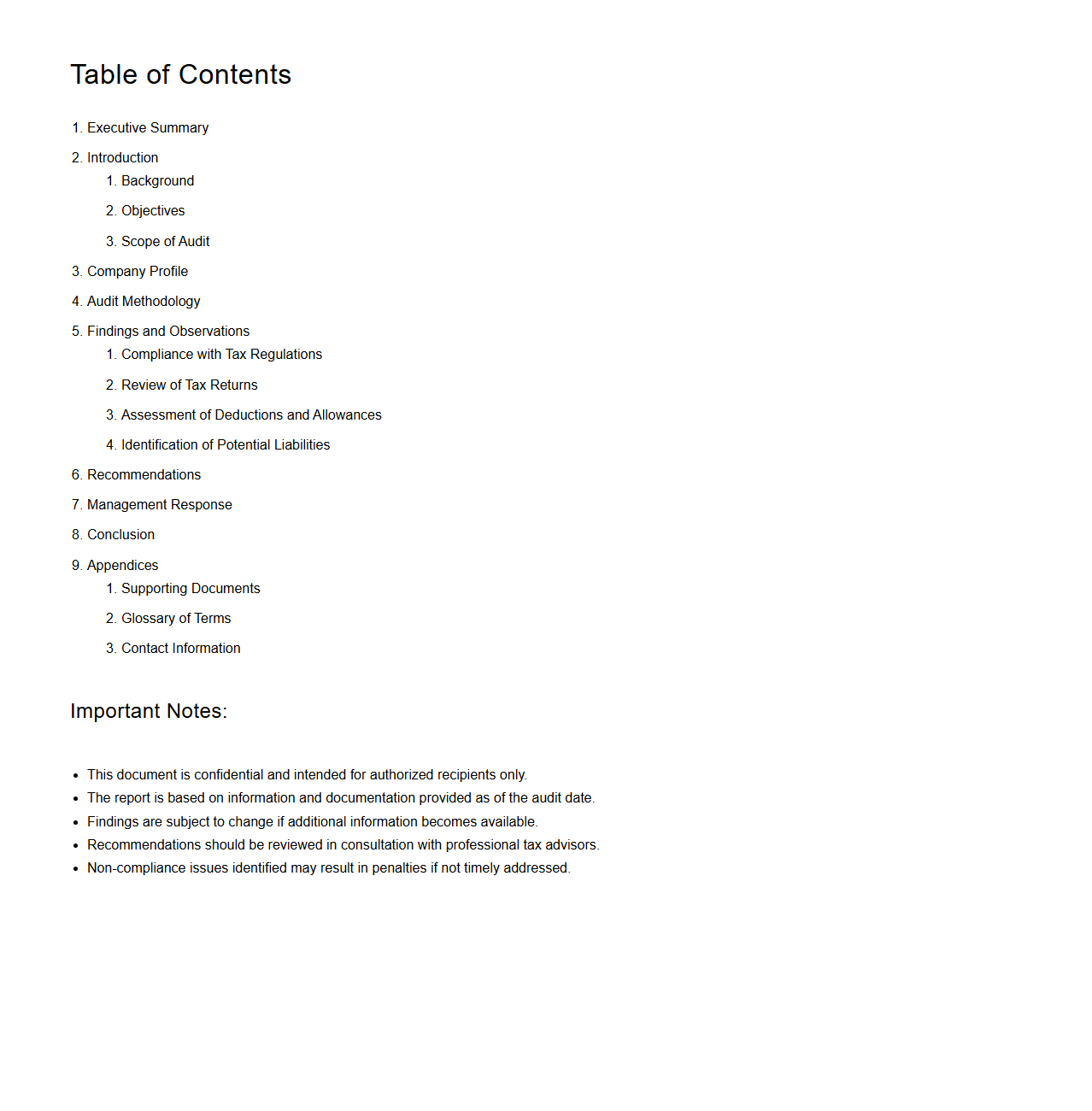
Table of Contents in Company Tax Audit Report
The
Table of Contents in a Company Tax Audit Report document serves as a structured outline, listing all sections and subsections with corresponding page numbers. It enables efficient navigation through detailed financial statements, audit findings, compliance checks, and statutory disclosures. This organized framework ensures auditors, company stakeholders, and regulatory authorities can quickly locate specific information within the comprehensive tax audit report.
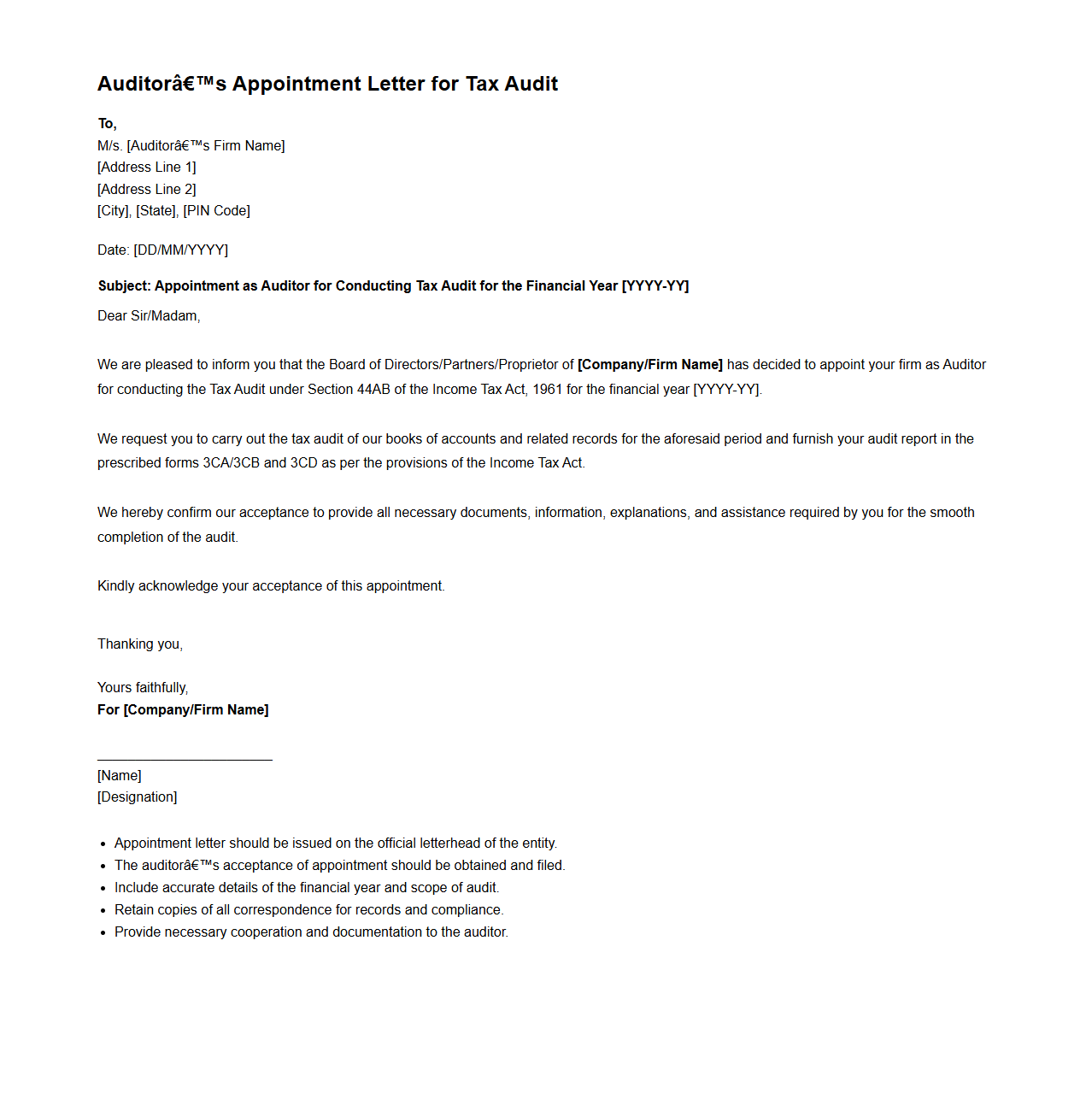
Auditor’s Appointment Letter Format for Tax Audit
An
Auditor's Appointment Letter Format for Tax Audit is a formal document that outlines the engagement terms between a taxpayer and the appointed auditor for conducting a tax audit as per statutory requirements. This letter specifies the scope of the audit, the period covered, auditor's responsibilities, fees, and compliance with relevant tax laws under Section 44AB of the Income Tax Act. Clear articulation in the letter helps ensure transparency, accountability, and mutual understanding of duties during the tax audit process.
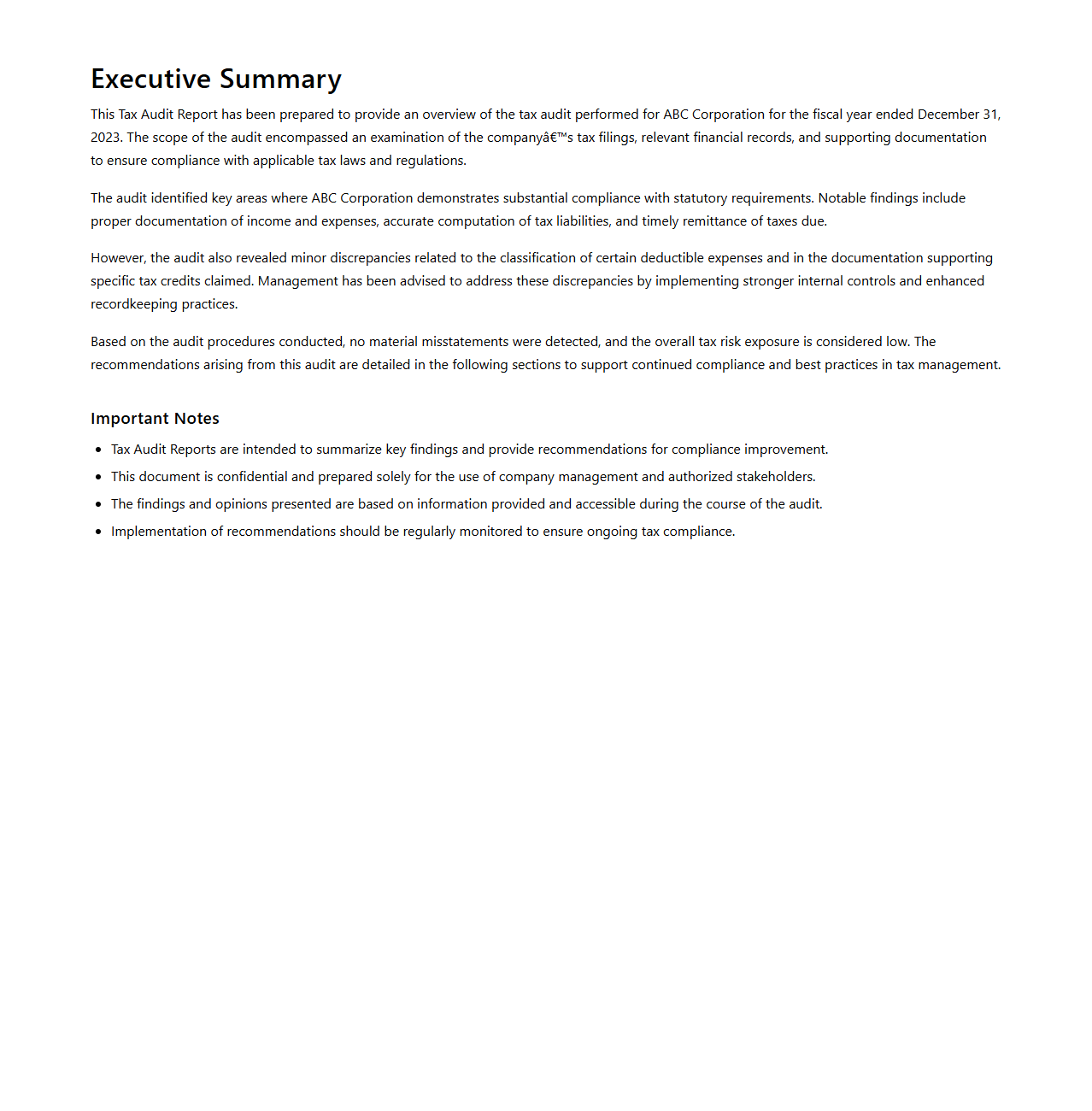
Executive Summary Section in Tax Audit Report
The
Executive Summary Section in a Tax Audit Report provides a concise overview of the key findings and conclusions from the tax audit process. It highlights critical compliance issues, identified risks, and recommendations for corrective actions, ensuring that stakeholders quickly understand the audit's impact on the organization's tax obligations. This section serves as a strategic communication tool for management, regulators, and tax authorities to assess overall tax compliance and areas requiring attention.
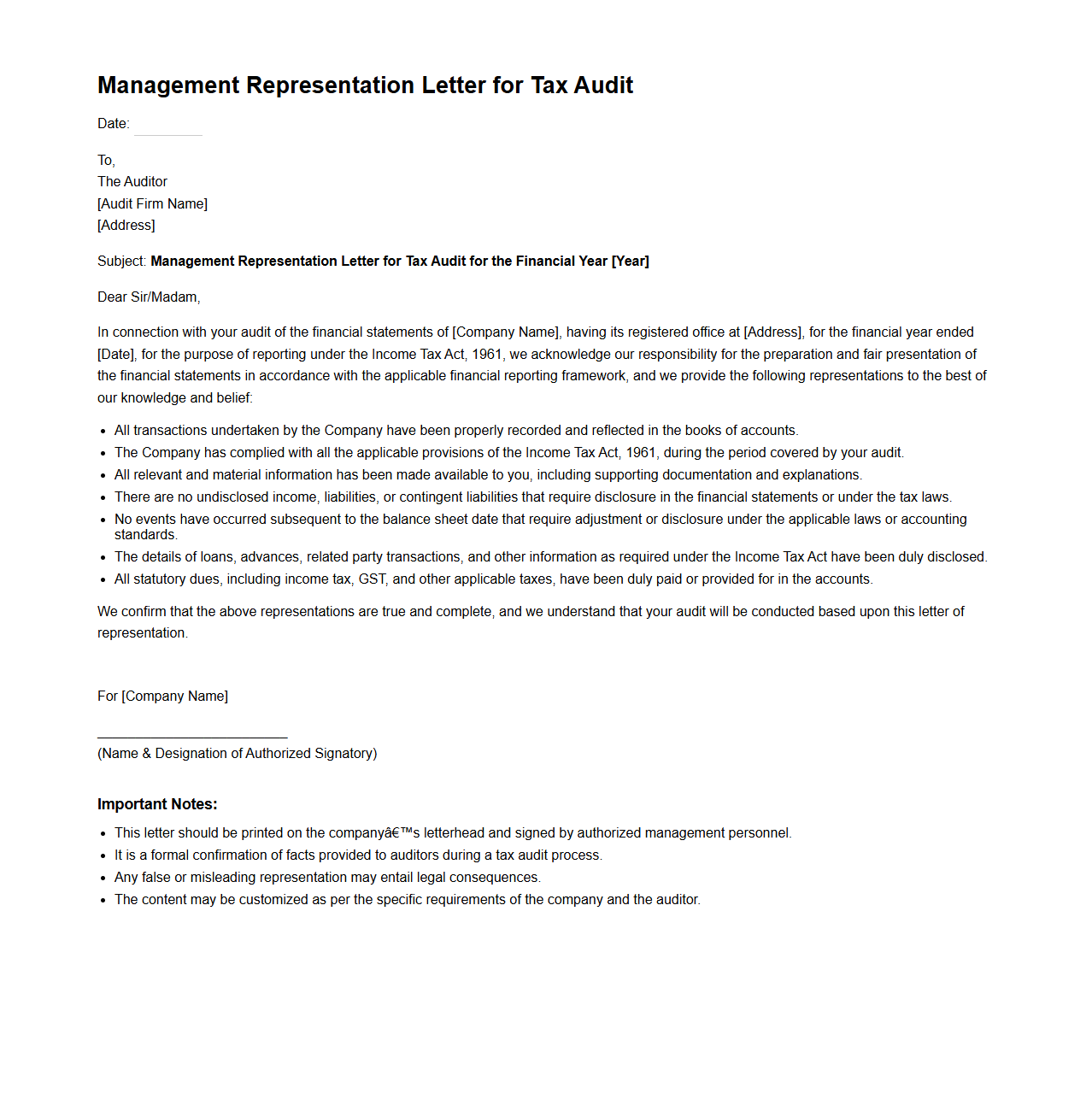
Management Representation Letter Format for Tax Audit
The
Management Representation Letter Format for Tax Audit is a formal document prepared by the management of an organization to confirm the accuracy and completeness of financial information provided during a tax audit. It typically includes declarations regarding the correctness of tax filings, disclosure of all relevant tax liabilities, compliance with tax laws, and acknowledgment of any contingencies or transactions affecting tax calculations. This letter serves as crucial evidence for auditors to rely on management's assertions in forming their audit opinion.
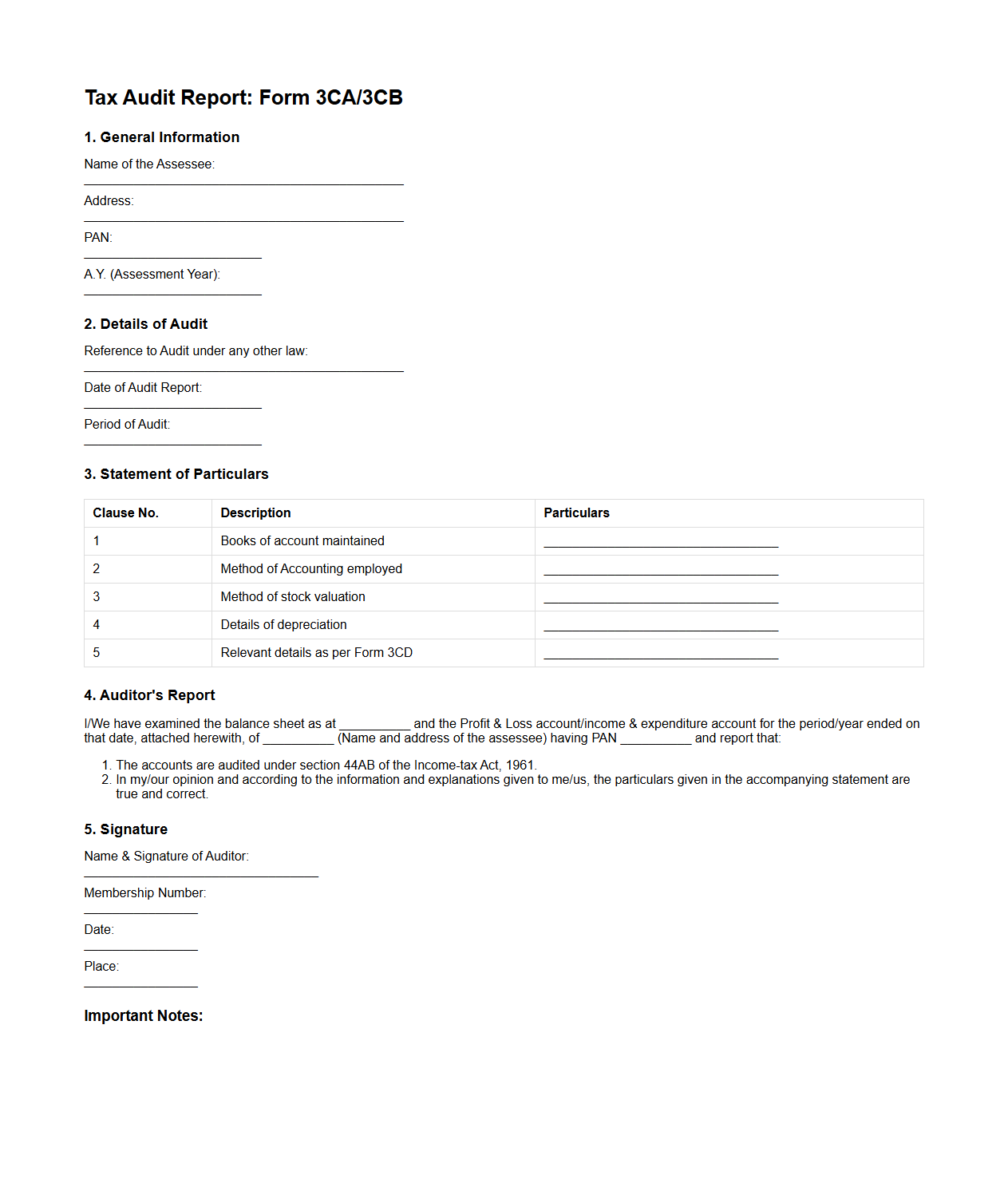
Tax Audit Report Form 3CA/3CB Format
The
Tax Audit Report Form 3CA/3CB is a standardized document used under the Income Tax Act to report the results of a tax audit conducted by a qualified Chartered Accountant. Form 3CA is applicable when the audit is already conducted under any other law, whereas Form 3CB applies when there is no audit under any other legislation. This report ensures compliance with statutory auditing requirements and provides the Income Tax Department with verified financial information for assessing the taxpayer's liabilities.
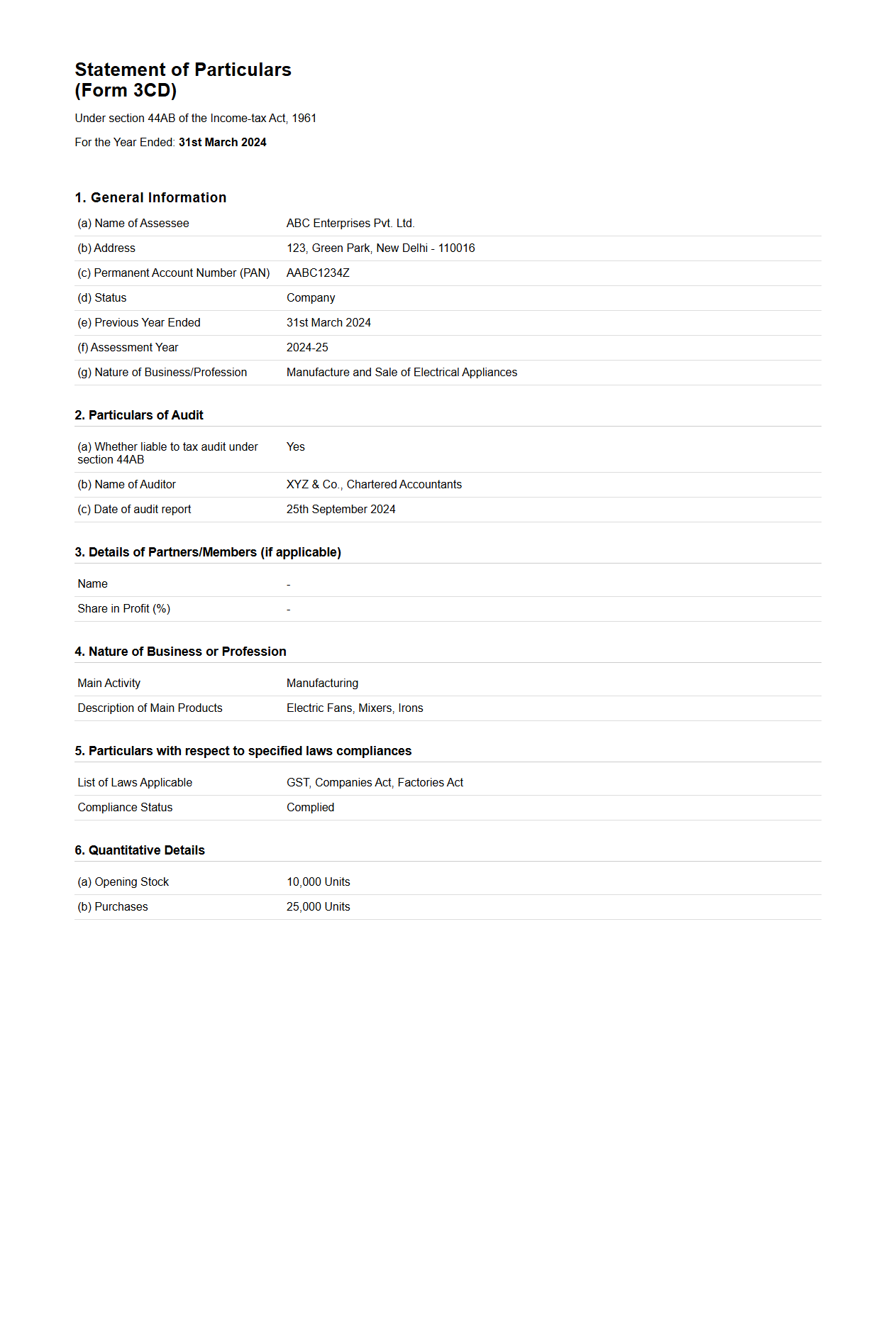
Statement of Particulars (Form 3CD) Format
The
Statement of Particulars (Form 3CD) is a detailed annexure to the income tax audit report prescribed under Section 44AB of the Income Tax Act, 1961. This document captures comprehensive financial and operational information of the business, including tax deductions, compliances, and other statutory details, ensuring transparency during the tax audit process. The format of Form 3CD consists of 41 clauses where auditors must provide accurate disclosures related to the assessee's accounts and transactions for the relevant financial year.
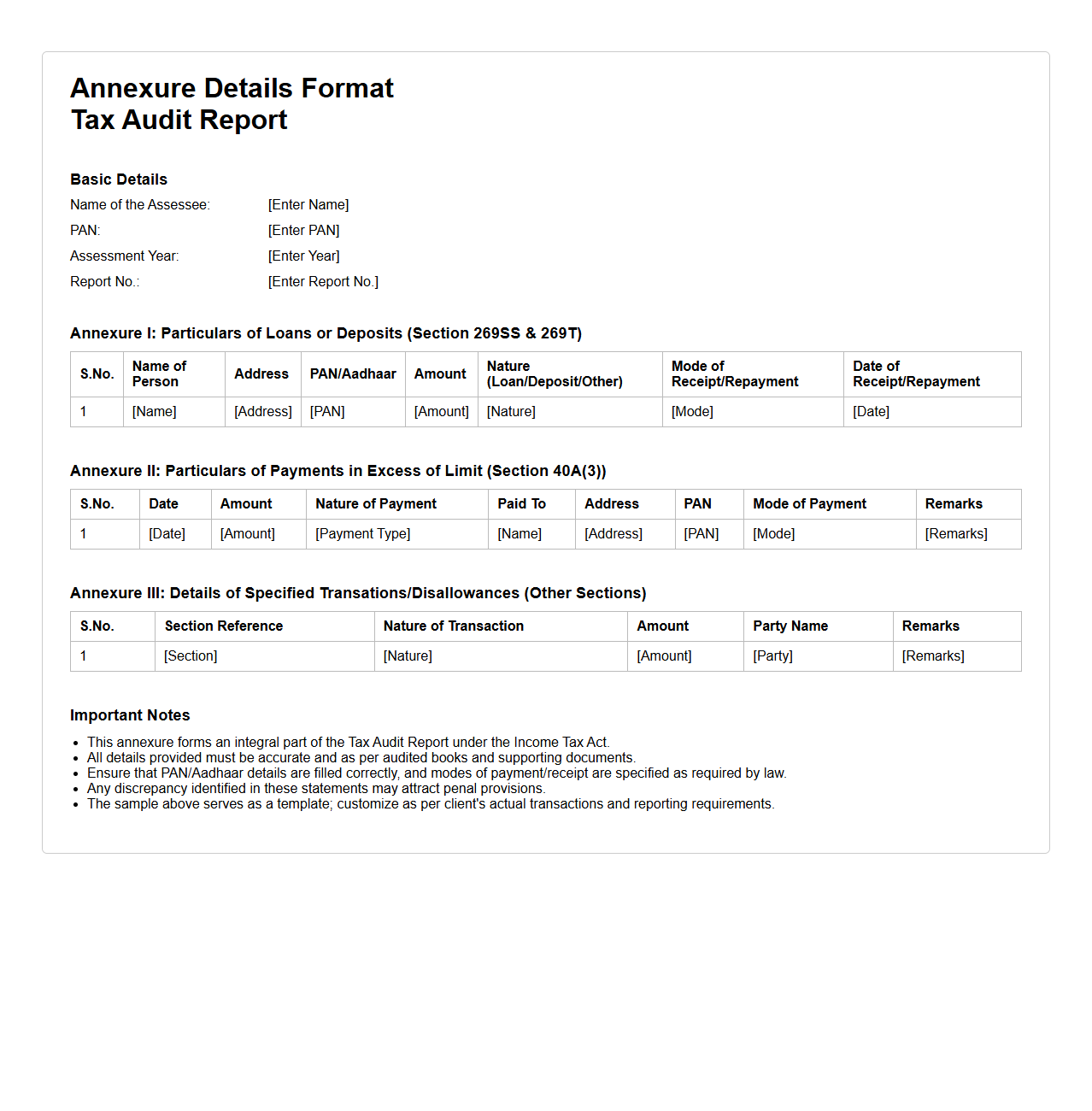
Annexure Details Format in Tax Audit Report
The
Annexure Details Format in a Tax Audit Report document systematically presents specific financial and compliance information required by tax authorities. This format includes detailed schedules and statements that support the main audit findings, ensuring transparency and accuracy in tax assessment. Proper adherence to this format helps in fulfilling statutory obligations and facilitates smooth verification during tax scrutiny.
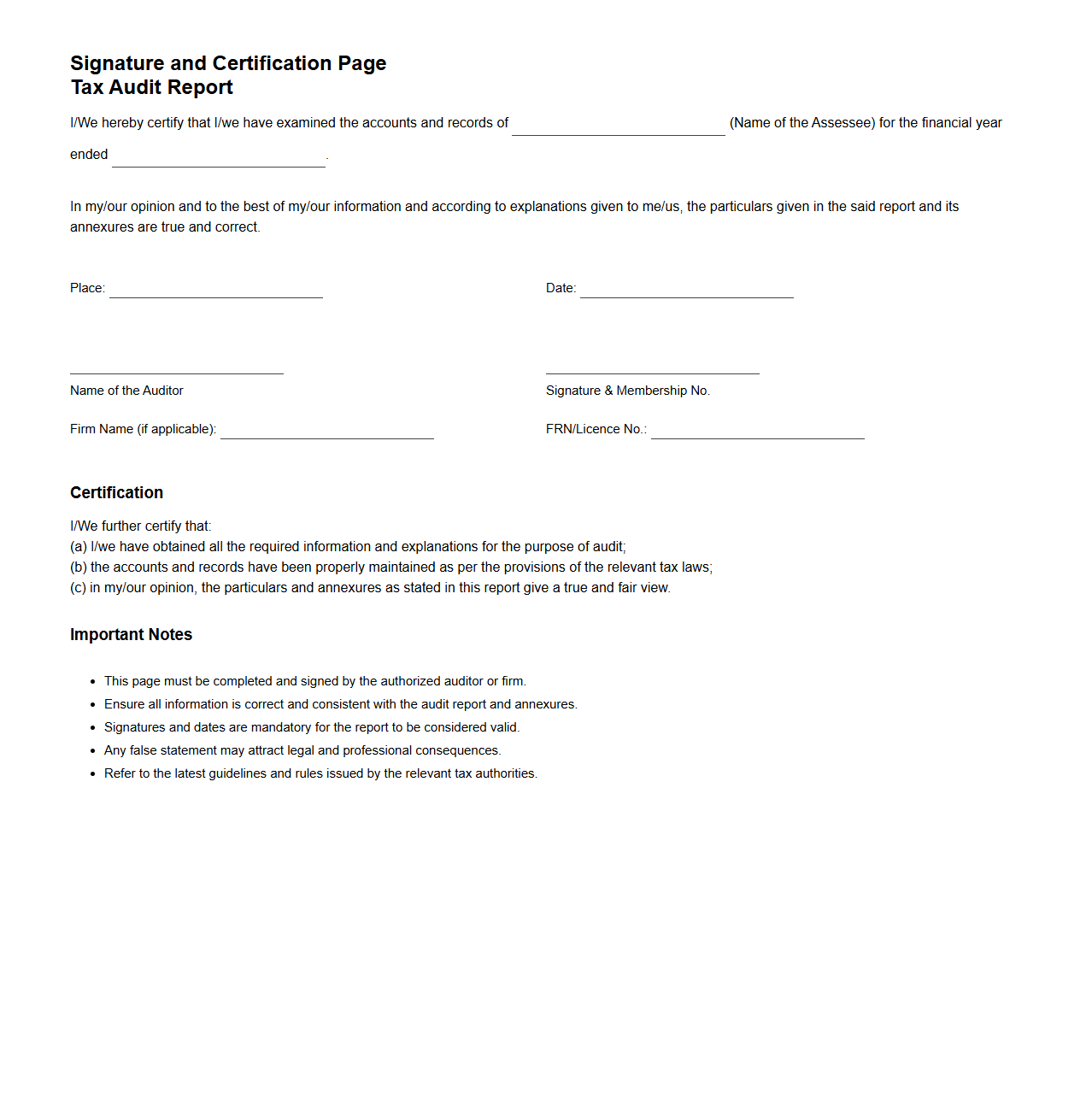
Signature and Certification Page of Tax Audit Report
The
Signature and Certification Page of a Tax Audit Report document serves as the official endorsement by the auditor, confirming the accuracy and completeness of the audit findings. This page includes the auditor's signature, date, and professional credentials, providing legal validation and accountability. It ensures that the report complies with regulatory standards set by tax authorities such as the Income Tax Department.
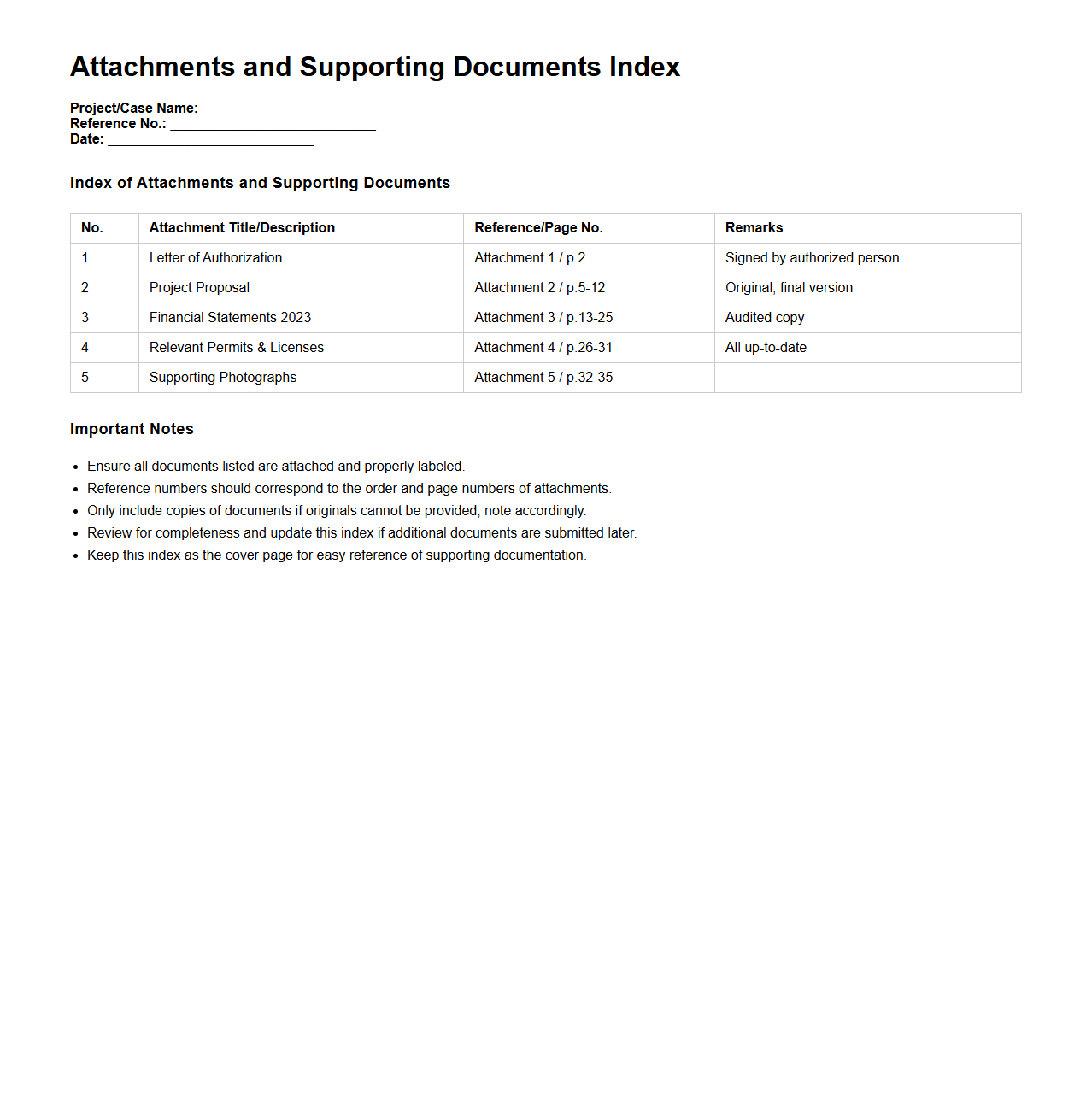
Attachments and Supporting Documents Index Format
The
Attachments and Supporting Documents Index Format document organizes and lists all supplementary files related to a primary report or application, ensuring easy reference and verification. It includes detailed descriptions, file names, document types, and page numbers to maintain clarity and accessibility. This format enhances document management by providing a structured overview of all evidentiary materials necessary for compliance and review processes.
Mandatory Annexures in Tax Audit Report for Companies
The latest guidelines mandate the inclusion of specific annexures in the tax audit report for companies. These annexures provide detailed insights into various aspects of the company's financial status and compliance. Notably, annexures related to accounting policies, schedules, and audit findings are essential.
Financial Disclosures Requiring Detailed Notes
Companies must provide detailed notes on significant financial disclosures in the tax audit format. These notes typically cover areas such as contingent liabilities, related party transactions, and depreciation methods. Detailed disclosures ensure transparency and compliance with regulatory requirements.
Reporting Related Party Transactions in Tax Audit Reports
Related party transactions should be reported with explicit details in the tax audit report format. Companies need to disclose the nature, amount, and terms of such transactions clearly. This practice is crucial for maintaining accounting transparency and adherence to tax laws.
Prescribed Formats for Depreciation Reporting
The tax audit report must follow prescribed formats for reporting depreciation, as per the company's accounting standards. Depreciation schedules should include asset-wise details, rates, and written down values. Proper formatting ensures accurate computation of taxable income.
Presentation of Disallowable Expenses in Tax Audit Reports
Disallowable expenses need to be distinctly presented in the tax audit report according to company regulations. The report must itemize expenses that do not qualify for tax deductions. This clear presentation aids in correct tax assessment and compliance.