The Format of Tax Assessment Order for Taxpayers typically includes the taxpayer's details, assessment year, and a detailed calculation of taxable income along with the tax liability. It outlines the basis of assessment, adjustments made, and any penalties or interest imposed. This structured format ensures clarity and transparency in communicating the tax authority's decision to the taxpayer.
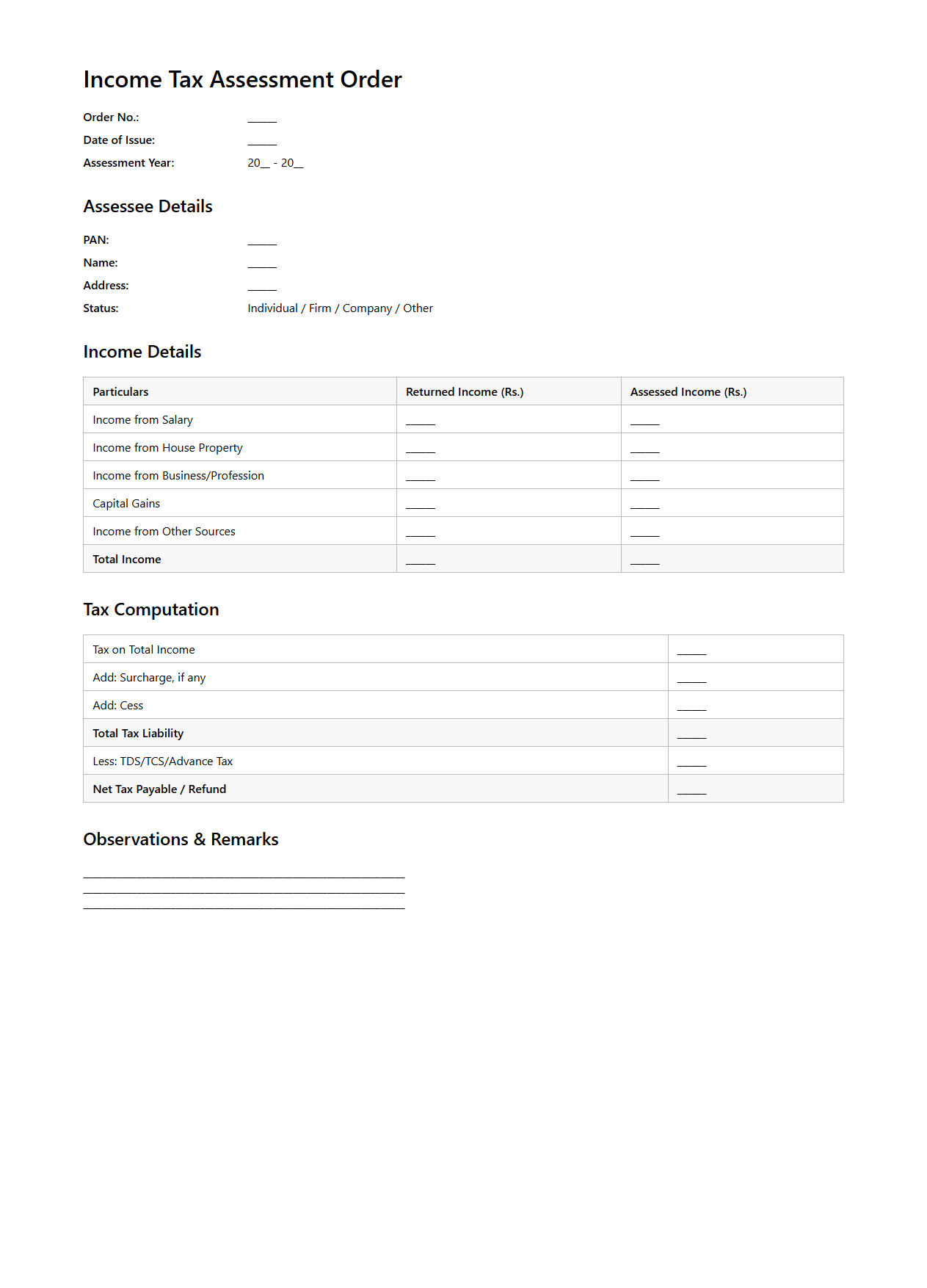
Income Tax Assessment Order Format
The
Income Tax Assessment Order Format document outlines the structured presentation of a formal assessment order issued by tax authorities after evaluating a taxpayer's returns. It includes critical details such as assessment year, taxpayer information, income declared, tax computations, adjustments, and final tax liability or refund. This format ensures clarity, compliance with legal standards, and facilitates easy reference for both taxpayers and tax officials.
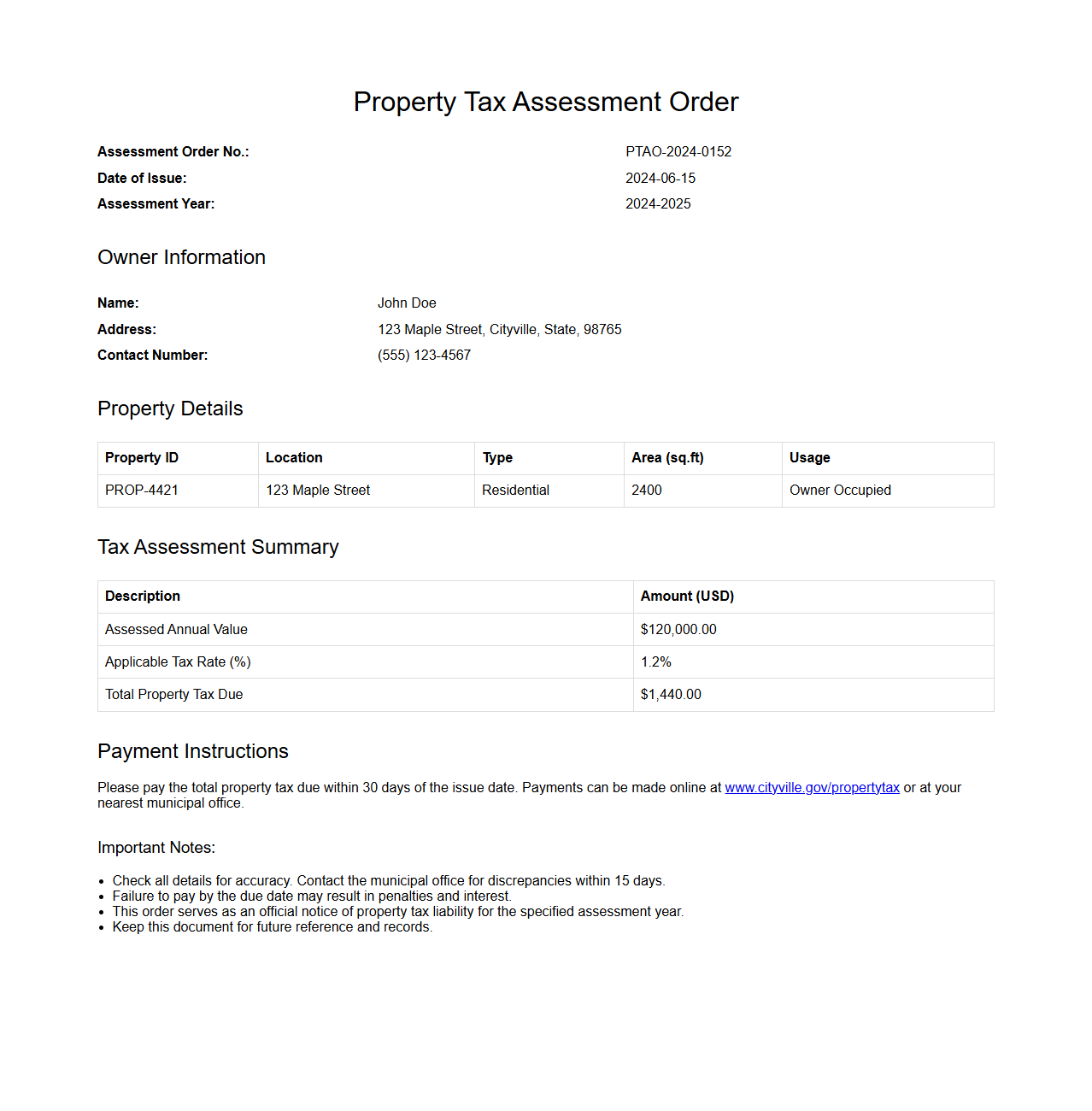
Property Tax Assessment Order Template
A
Property Tax Assessment Order Template document is a standardized form used by local government authorities to record the assessed value of a property for taxation purposes. It outlines critical details such as property location, assessed value, tax rate, and the assessment period, ensuring transparency and consistency in property tax calculations. This template serves as an official record that property owners can reference or dispute if they believe their property has been incorrectly assessed.
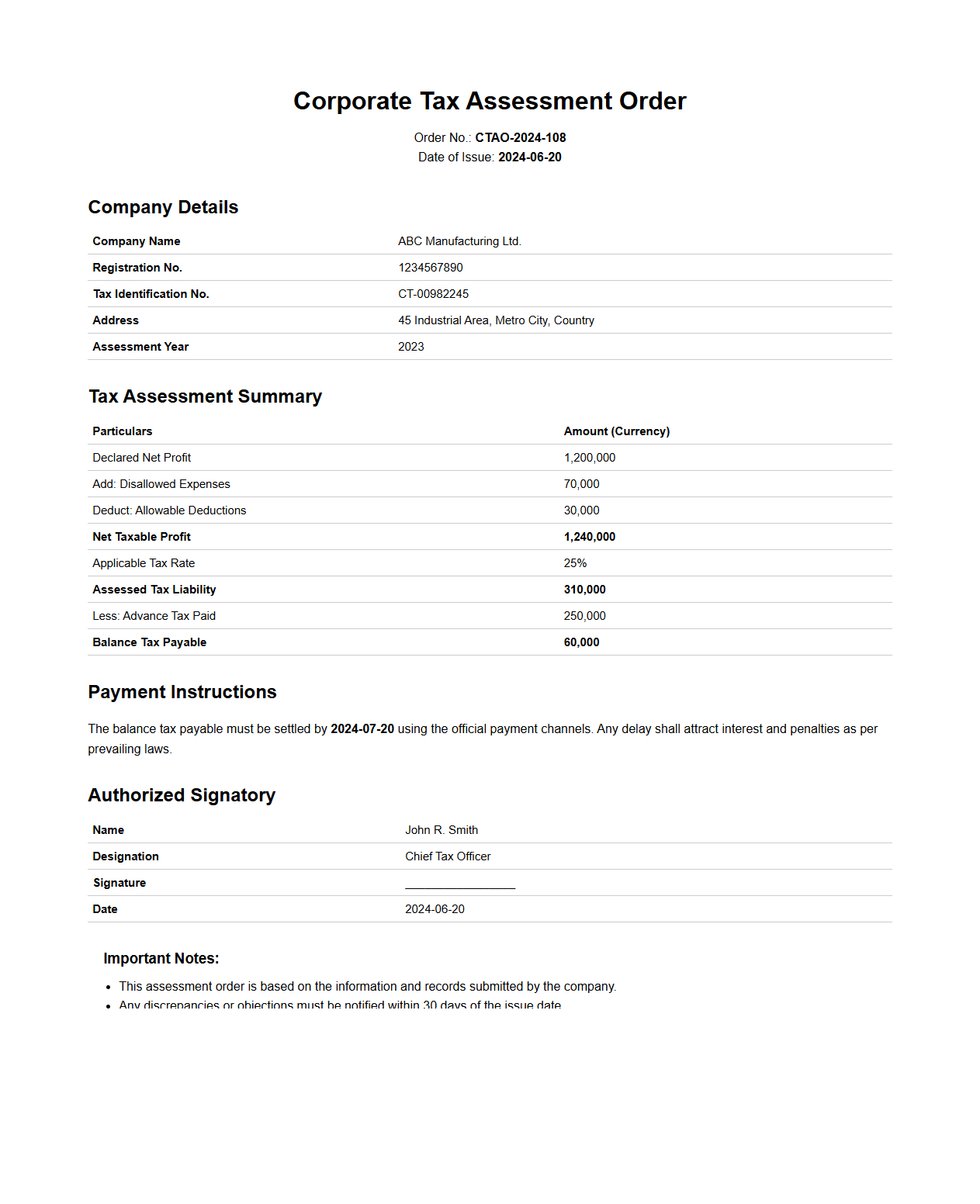
Corporate Tax Assessment Order Layout
The
Corporate Tax Assessment Order Layout document outlines the structured format used by tax authorities to communicate the details of a corporate tax assessment. It includes key sections such as taxpayer information, assessment period, computed tax liabilities, adjustments, and reasons for reassessment, ensuring clarity and compliance with tax regulations. This document serves as an official record for corporations to review their assessed tax obligations and initiate any required responses or appeals.
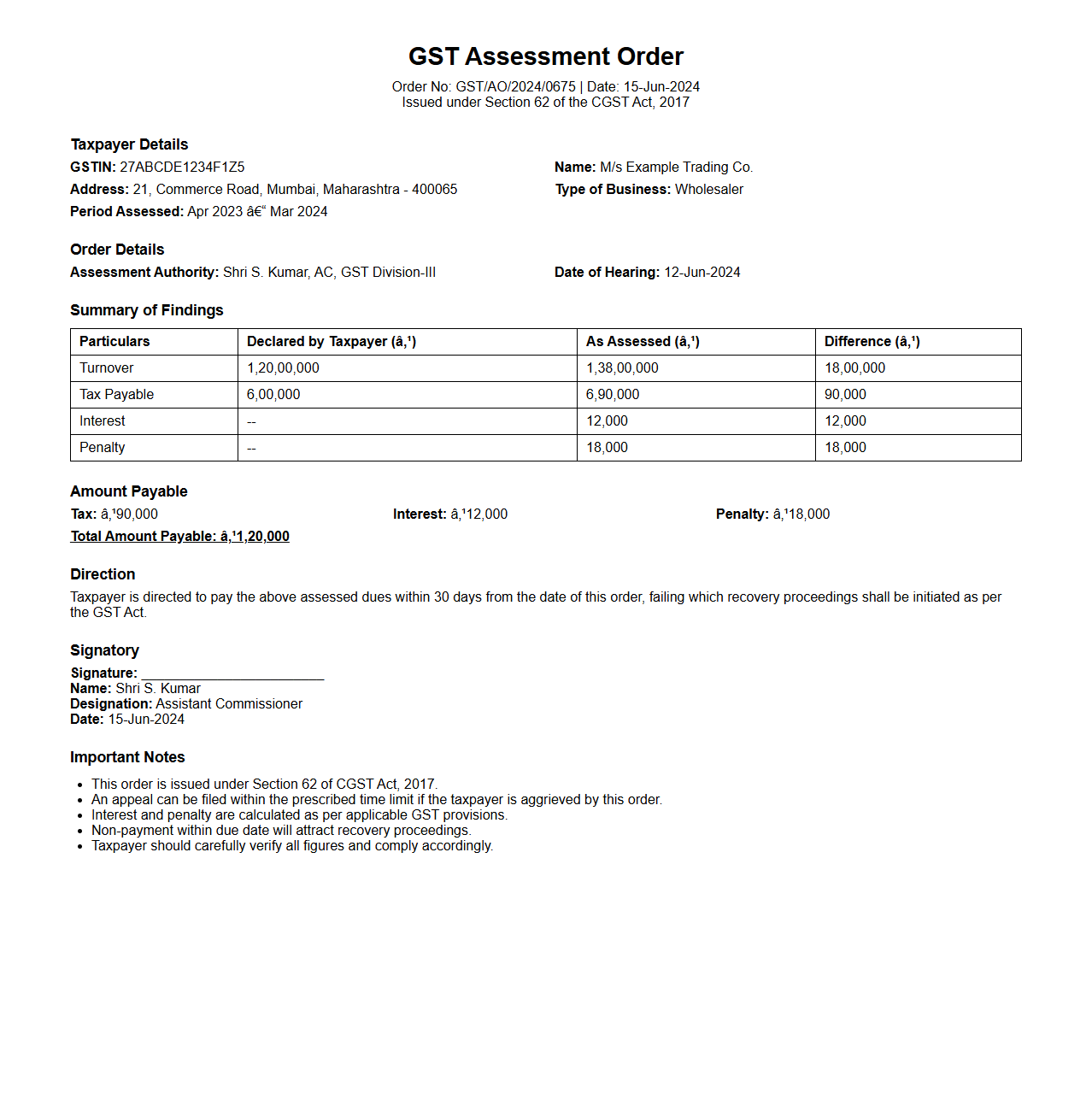
GST Assessment Order Format
The
GST Assessment Order Format document outlines the official structure used by tax authorities to communicate the evaluation results of a taxpayer's Goods and Services Tax filings. It details the assessment procedures, findings, amounts of tax due or refunds, and legal references in a standardized format for clarity and compliance. This format ensures uniformity across different jurisdictions and facilitates transparency in the GST assessment process.
Wealth Tax Assessment Order Template
A
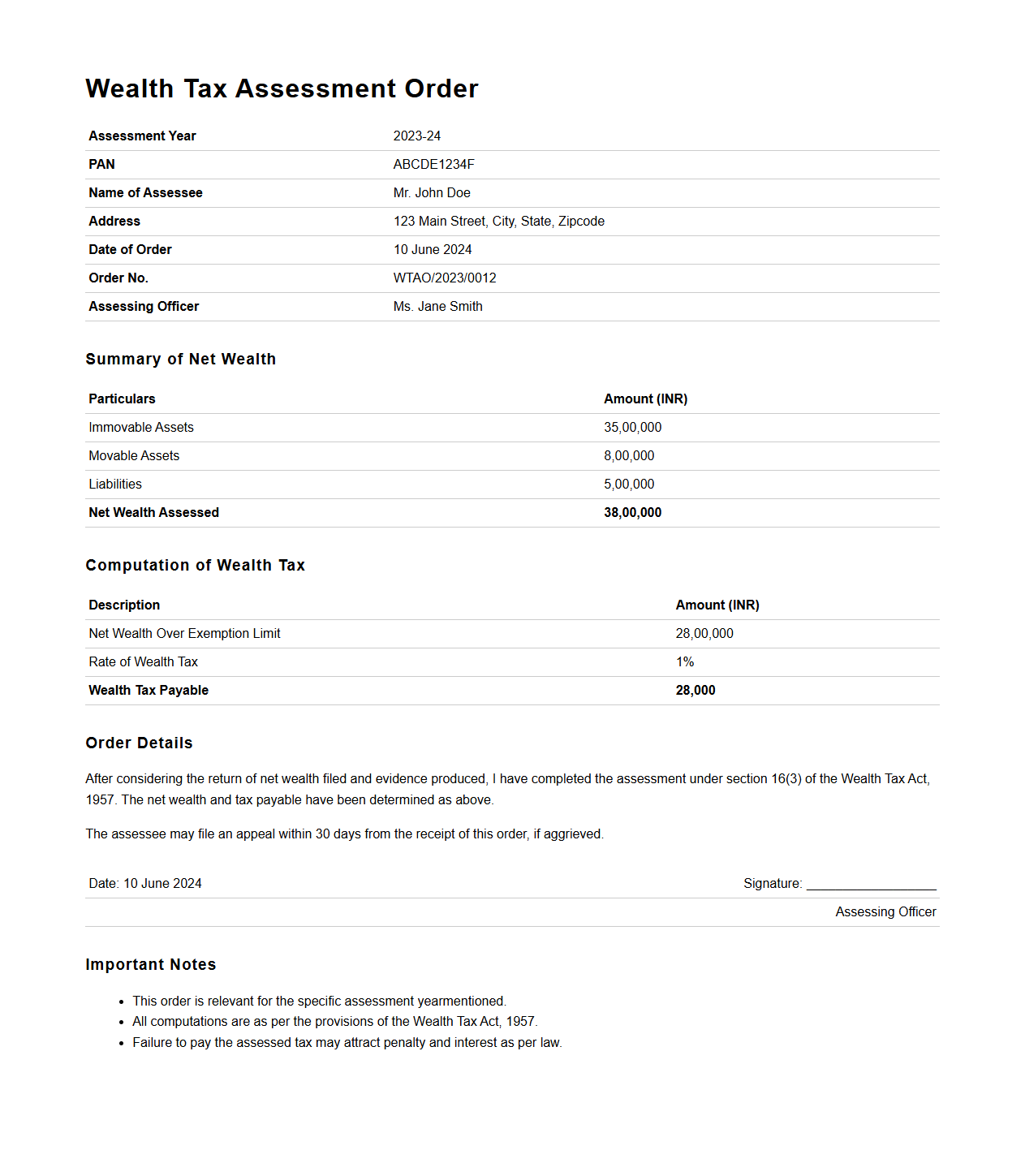
Wealth Tax Assessment Order Template document is a standardized legal form used by tax authorities to officially communicate the calculation and determination of an individual's or entity's wealth tax liability. It outlines key details such as the assessed value of assets, tax rate applied, and the total amount payable within a specified timeframe. This template ensures consistency, accuracy, and compliance with statutory requirements when issuing wealth tax assessment orders.
Self-Assessment Tax Order Sample
A
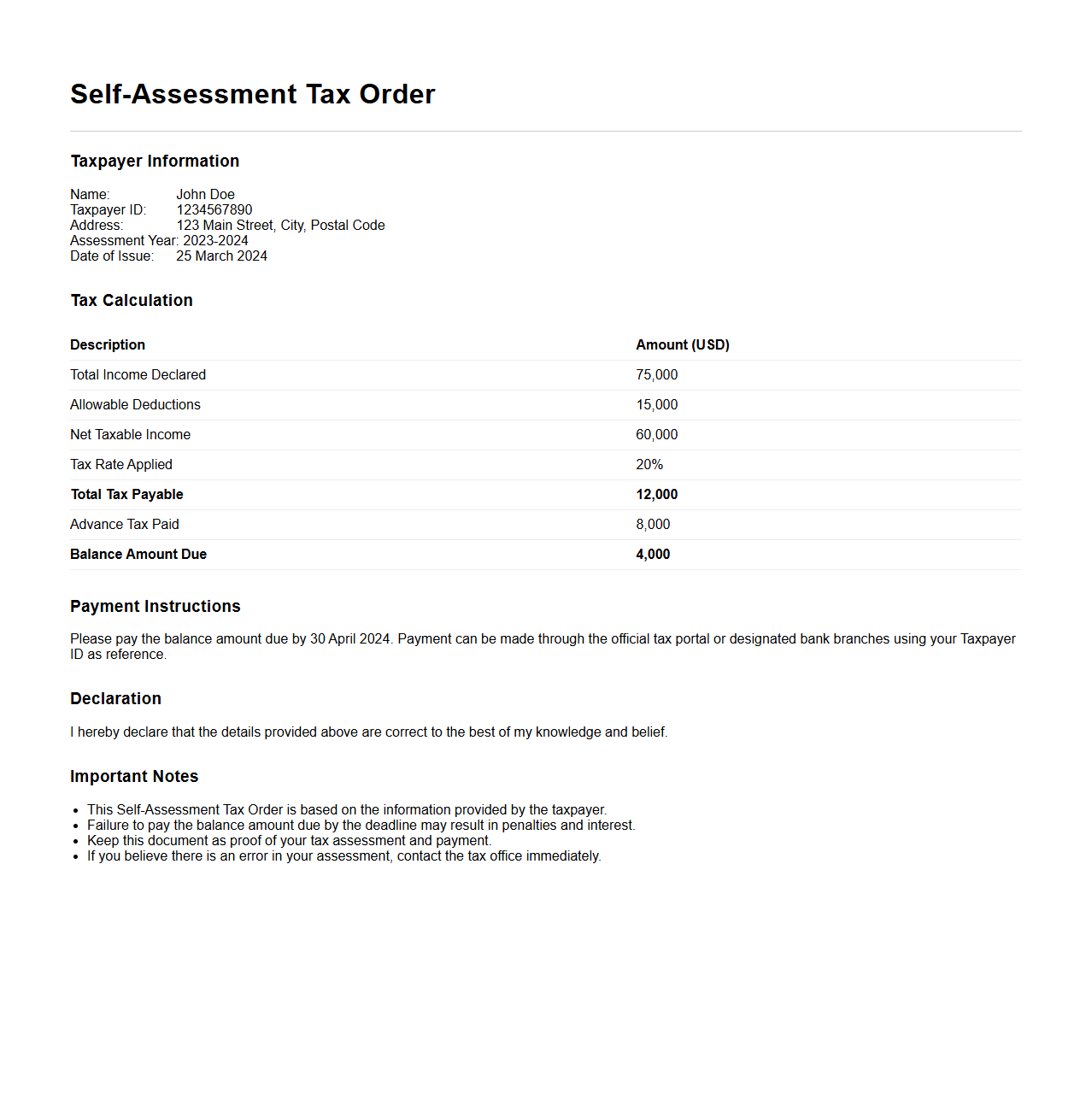
Self-Assessment Tax Order Sample document serves as a formal template illustrating how taxpayers can accurately report their income and calculate their tax liabilities under self-assessment systems. It guides users through declaring earnings, deductions, and any applicable tax credits, ensuring compliance with tax authorities. This document is essential for preparing and submitting timely, error-free tax returns to avoid penalties.
Revised Tax Assessment Order Format
The
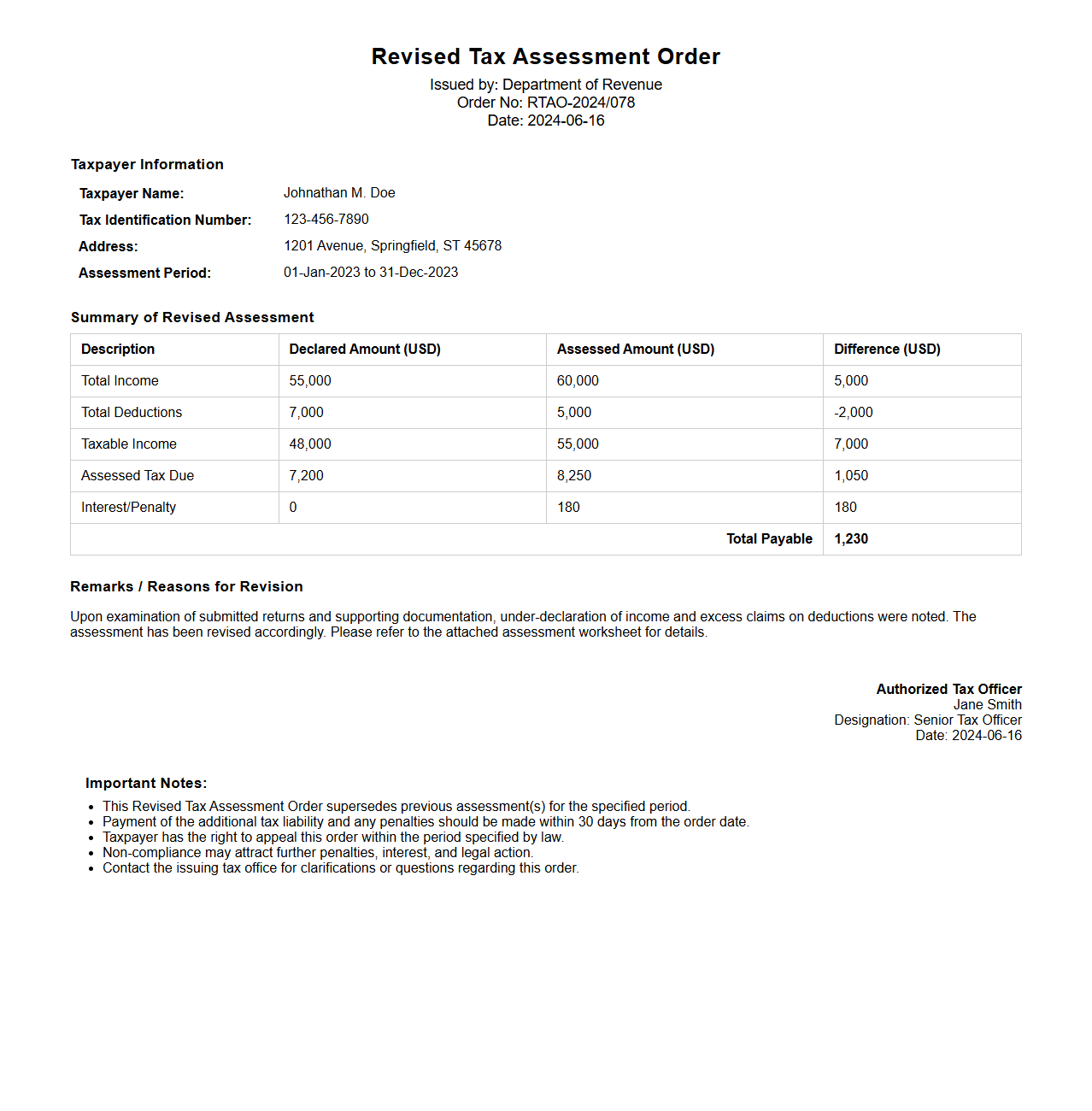
Revised Tax Assessment Order Format document outlines the structured layout and essential components required when issuing a corrected or updated tax assessment order. It ensures clarity and compliance with regulatory standards by detailing taxpayer information, assessment calculations, and reasons for revision. This format facilitates transparent communication between tax authorities and taxpayers, reducing disputes and enhancing accuracy in tax administration.
Provisional Tax Assessment Order Template
A
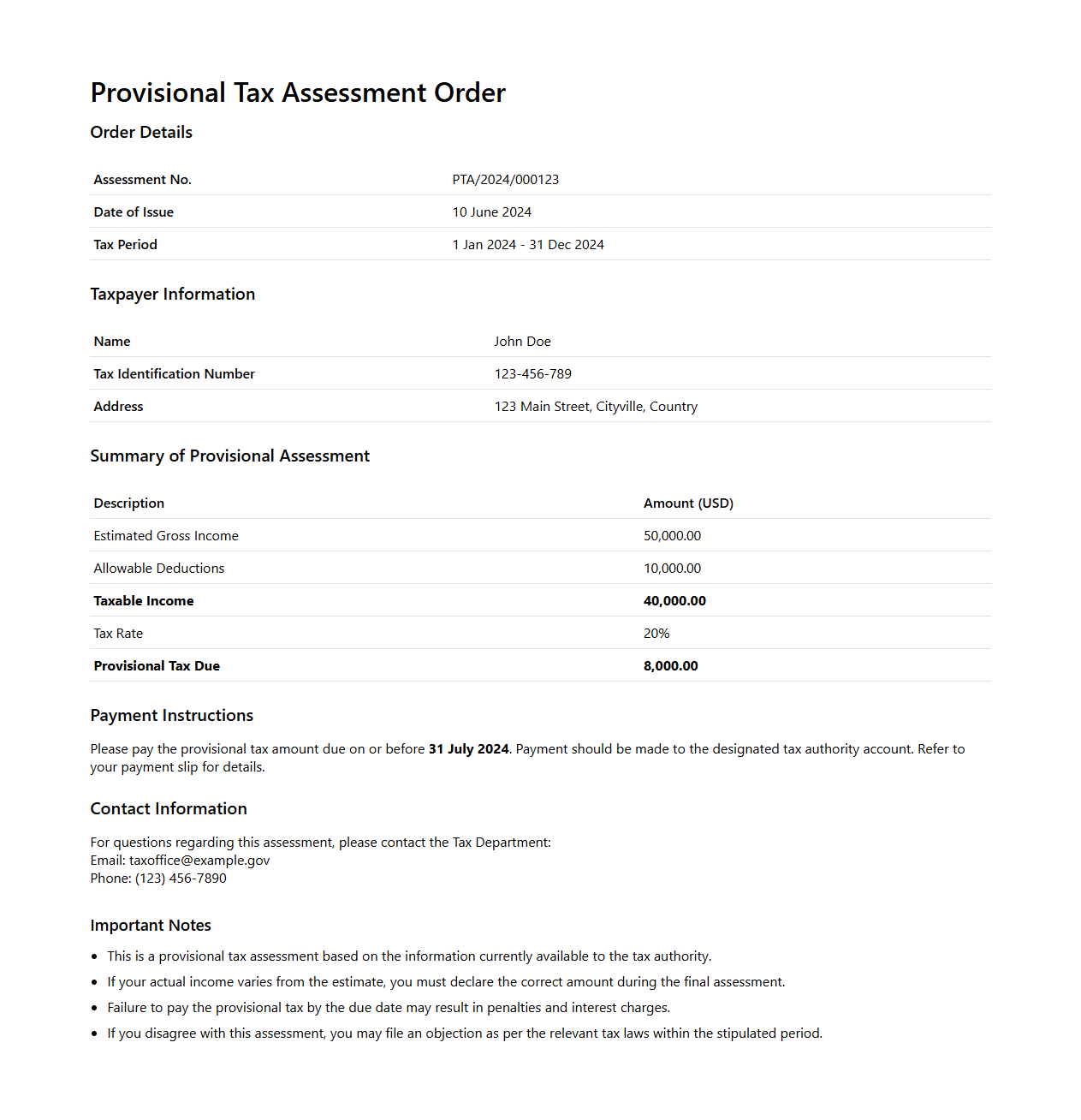
Provisional Tax Assessment Order Template document serves as a standardized format used by tax authorities to issue preliminary tax liability notices to taxpayers. It outlines estimated tax dues based on available financial data before the final tax return is filed, facilitating timely payment and compliance. This template typically includes key details such as taxpayer identification, assessment period, calculated provisional tax amount, and payment deadlines.
Rectification Tax Assessment Order Layout
The
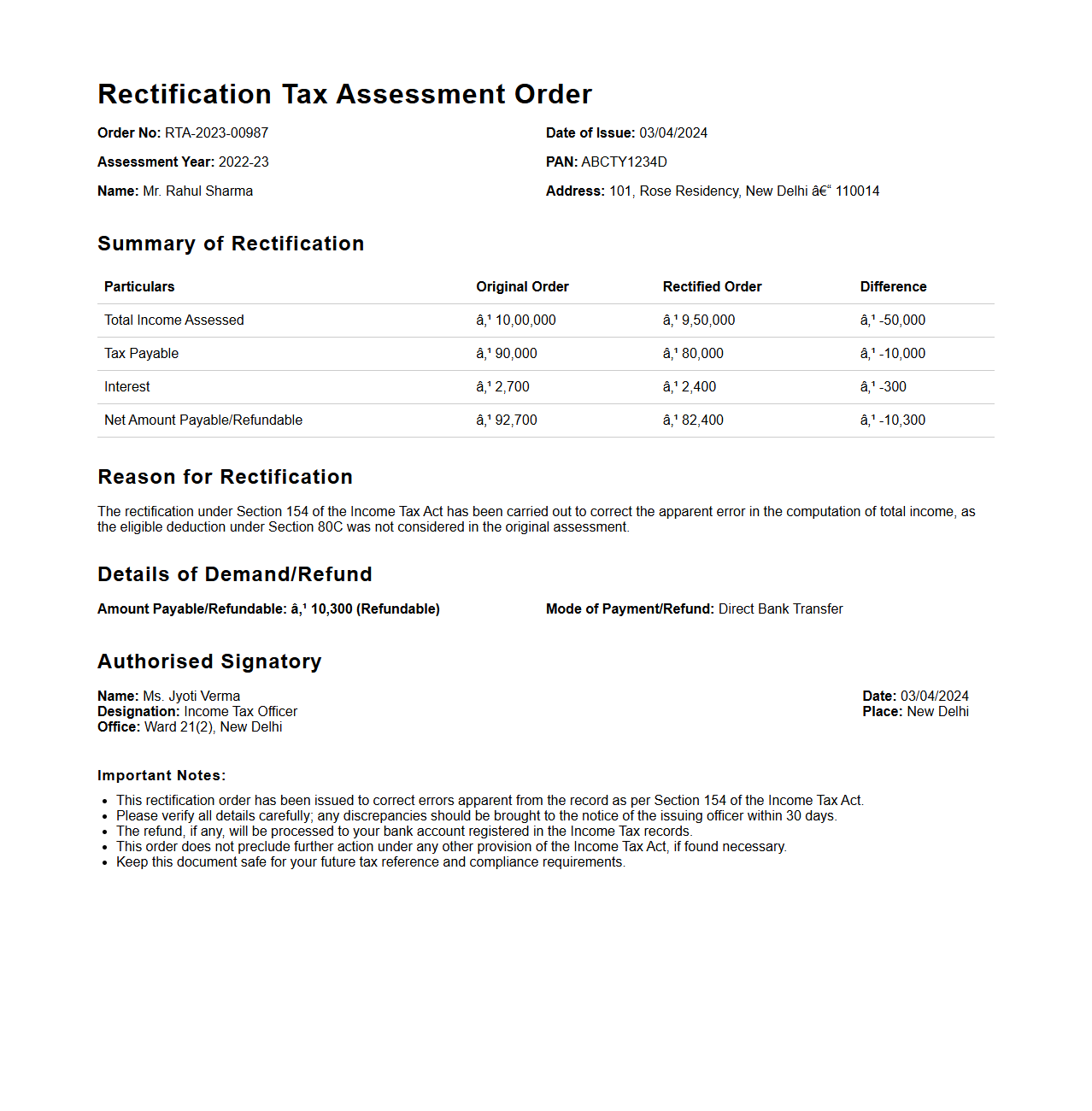
Rectification Tax Assessment Order Layout document is a structured format used by tax authorities to correct errors or discrepancies identified in an original tax assessment order. It provides a detailed framework outlining the taxpayer's information, the nature of the rectification, the revised tax calculations, and the legal basis for the correction. This document ensures transparency and clarity in the rectification process, facilitating smooth communication between the tax department and the taxpayer.
Final Assessment Order Format for Taxpayers
The
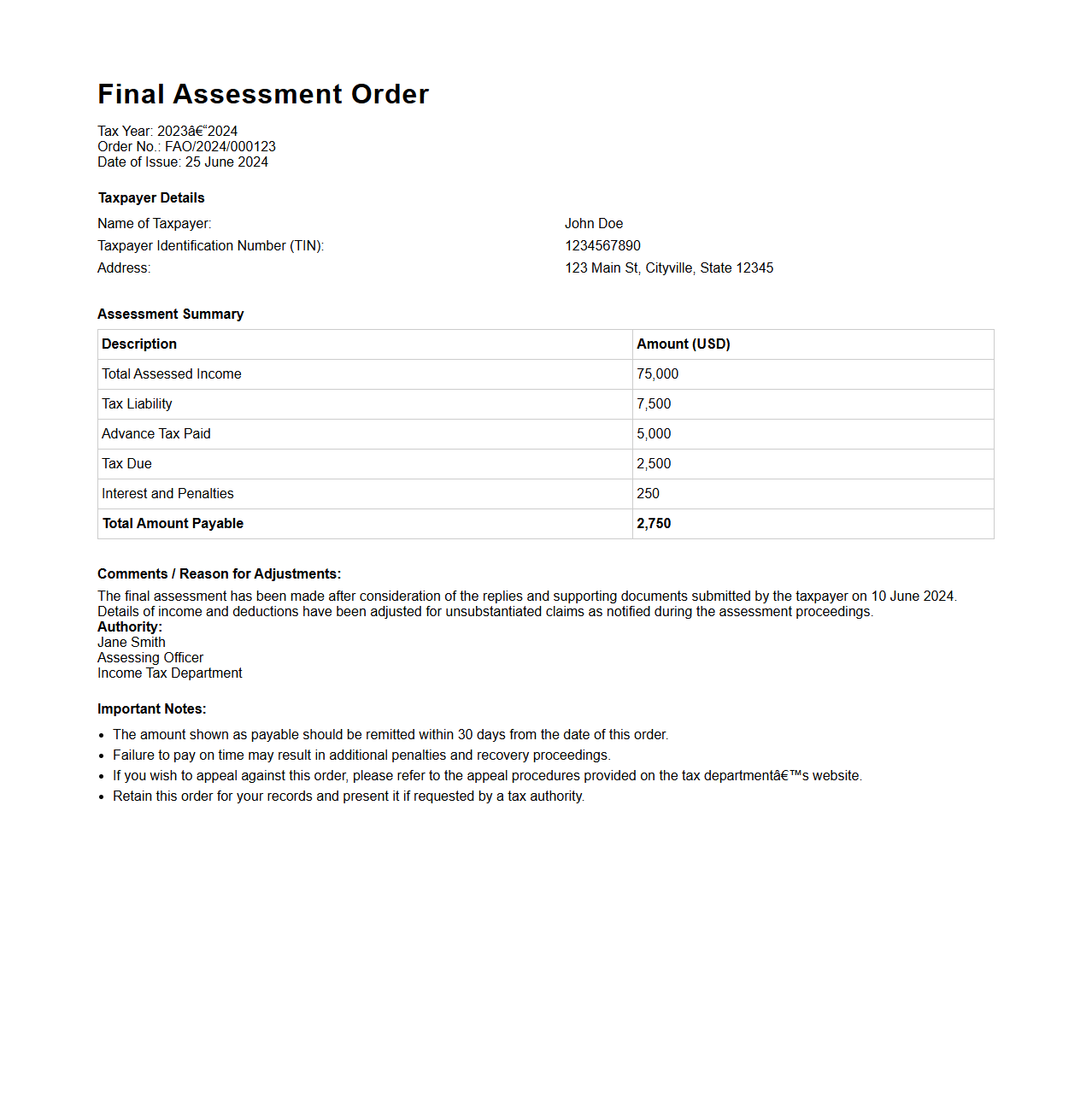
Final Assessment Order Format for taxpayers is a structured official document issued by tax authorities after the completion of a tax assessment process, detailing the finalized tax liabilities, penalties, and dues. It serves as a formal communication outlining the computation of taxable income, adjustments made, and the basis for the assessed amount. This format ensures transparency, compliance, and provides taxpayers with critical information for record-keeping and potential dispute resolution.
Essential Elements in the Header of a Tax Assessment Order Document
The header of a Tax Assessment Order must include the official document title, date, and unique assessment number. Additionally, the header should clearly state the taxpayer's identification details, such as name and tax identification number. This ensures immediate recognition and traceability of the document.
Formatting Penalty Calculations Within the Order
Penalty calculations should be presented in a clear, itemized format for easy verification. Each penalty component must include the basis of calculation, applicable rate, and resulting amount. This transparency helps taxpayers understand the charges and ensures compliance with legal standards.
Citing Legal Provisions in a Tax Assessment Order Letter
The proper way to cite legal provisions is to reference the specific statutes, sections, and subsections relevant to the assessment. Citations should be precise and formatted according to official guidelines to maintain legal validity. This approach strengthens the order's authority and clarity.
Mandatory Sections for Taxpayer Response Instructions
Taxpayer response instructions must include a clear deadline for response, contact information for queries, and a description of acceptable response formats. Providing these sections ensures taxpayers understand their obligations and how to comply. This facilitates smoother communication and resolution processes.
Referencing Prior Correspondence in the Tax Assessment Order Format
Previous communications should be referenced by date, reference number, and subject matter in the order's introductory or relevant sections. This contextual linking provides continuity and legal substantiation for the current assessment. Proper referencing improves document integrity and audit trails.