The Format of Income Tax Return for Individuals typically includes sections for personal information, income details, deductions, and tax computations. It requires accurate disclosure of salary, house property income, capital gains, and other sources to ensure proper tax calculation. The form also mandates verification through digital signatures or Aadhaar-based authentication for submission.
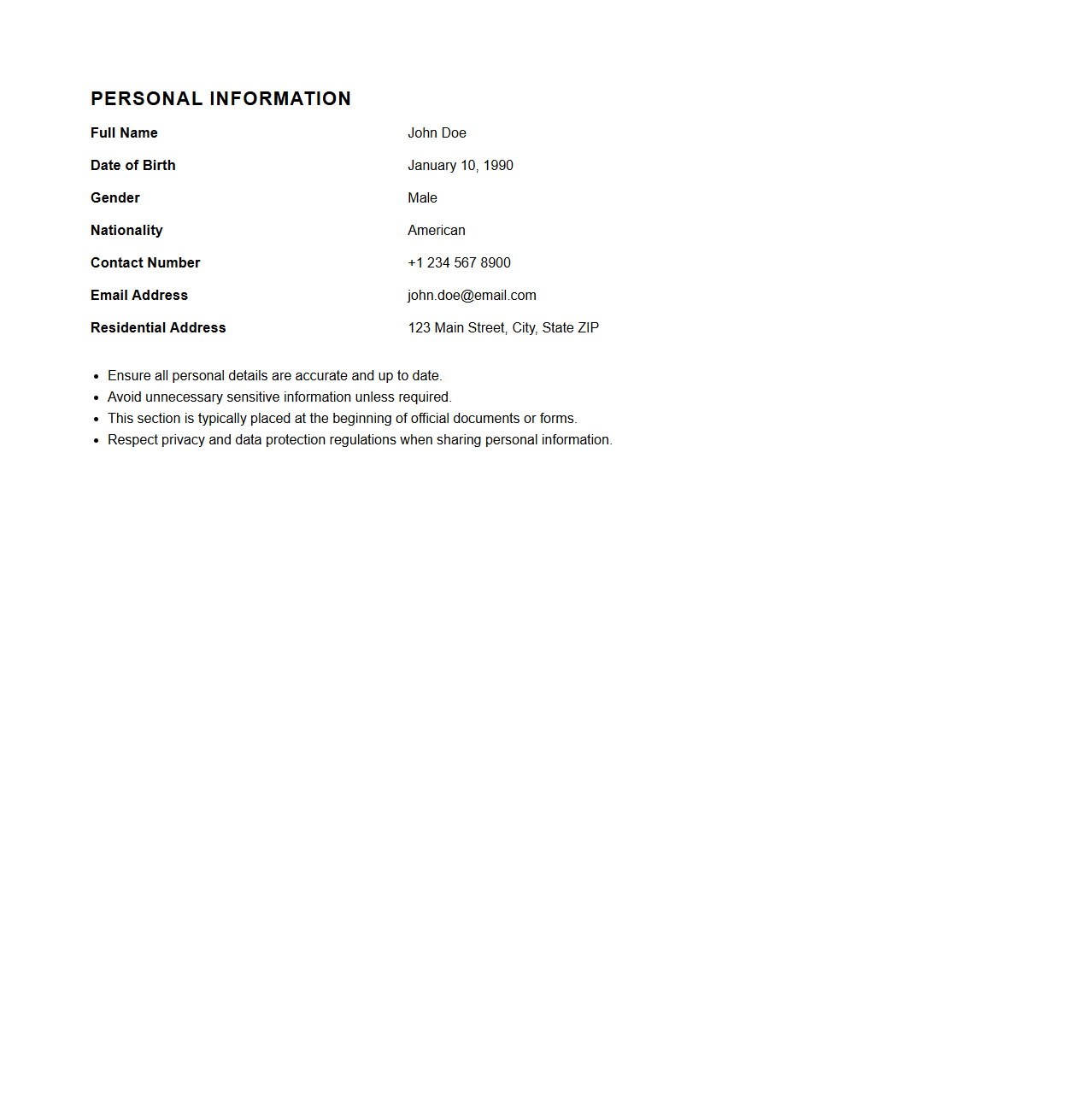
Personal Information Section Format
The
Personal Information Section Format document is a structured template designed to systematically collect and organize an individual's key personal data, such as name, contact details, date of birth, and identification numbers. It ensures consistency and accuracy in data entry, facilitating efficient record-keeping and easy retrieval across various administrative or organizational systems. This format is commonly used in HR departments, healthcare facilities, and government agencies to maintain comprehensive and standardized personal profiles.
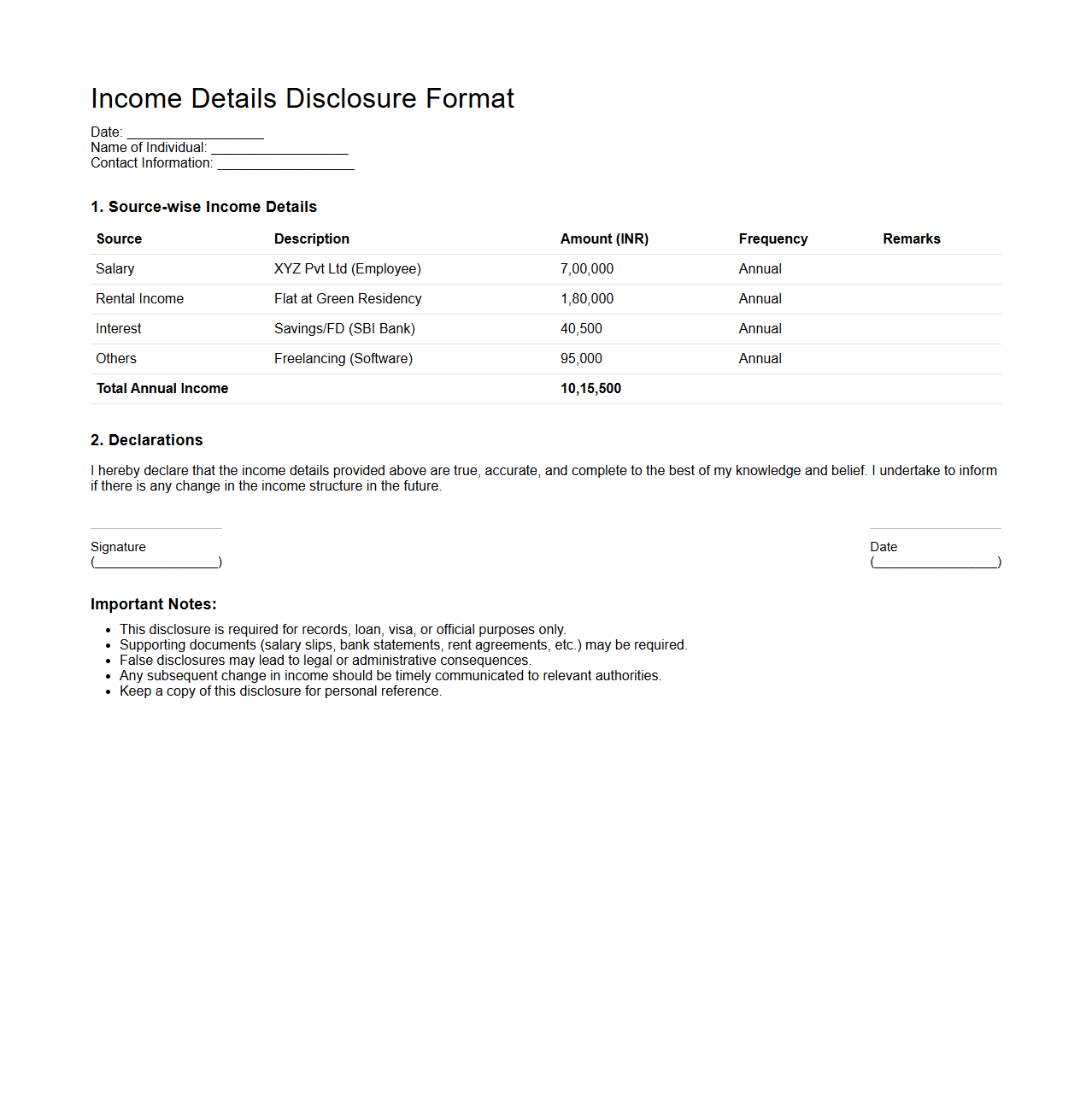
Income Details Disclosure Format
The
Income Details Disclosure Format document is a standardized form used to report and verify an individual's or entity's income sources and amounts for various financial and legal purposes. It typically includes sections detailing salary, business income, rental income, investments, and other revenue streams to ensure transparency and accuracy in financial assessments. This document is essential for loan applications, taxation, and compliance with regulatory requirements.
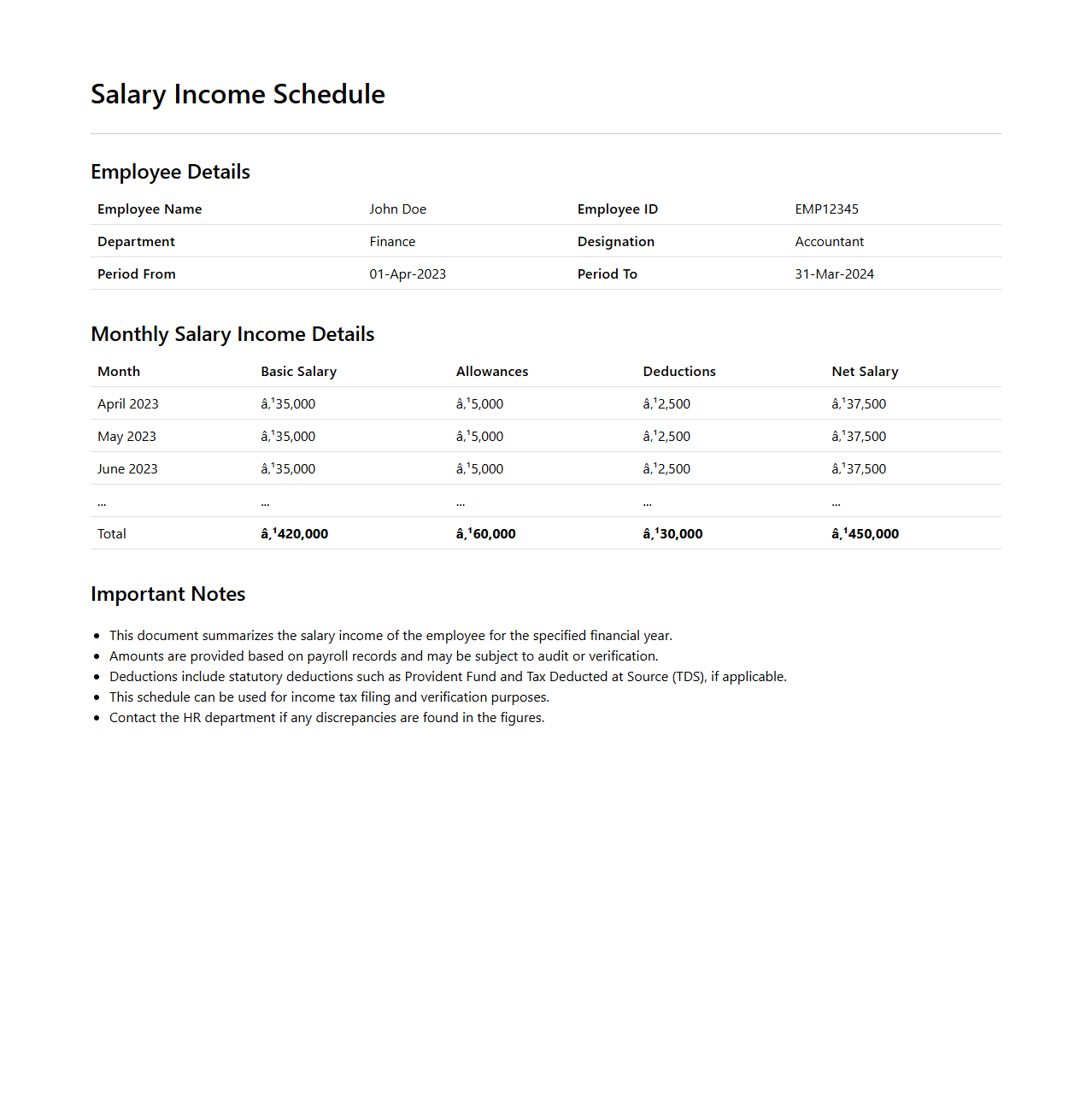
Salary Income Schedule Format
The
Salary Income Schedule Format document organizes detailed records of employee earnings, including basic salary, allowances, bonuses, and deductions, facilitating accurate payroll management and compliance with tax regulations. This formatted schedule supports financial reporting, budgeting, and auditing processes by providing a clear, structured overview of monthly or annual salary disbursements. Employers use this document to ensure transparency and consistency in salary payment tracking and statutory submissions.
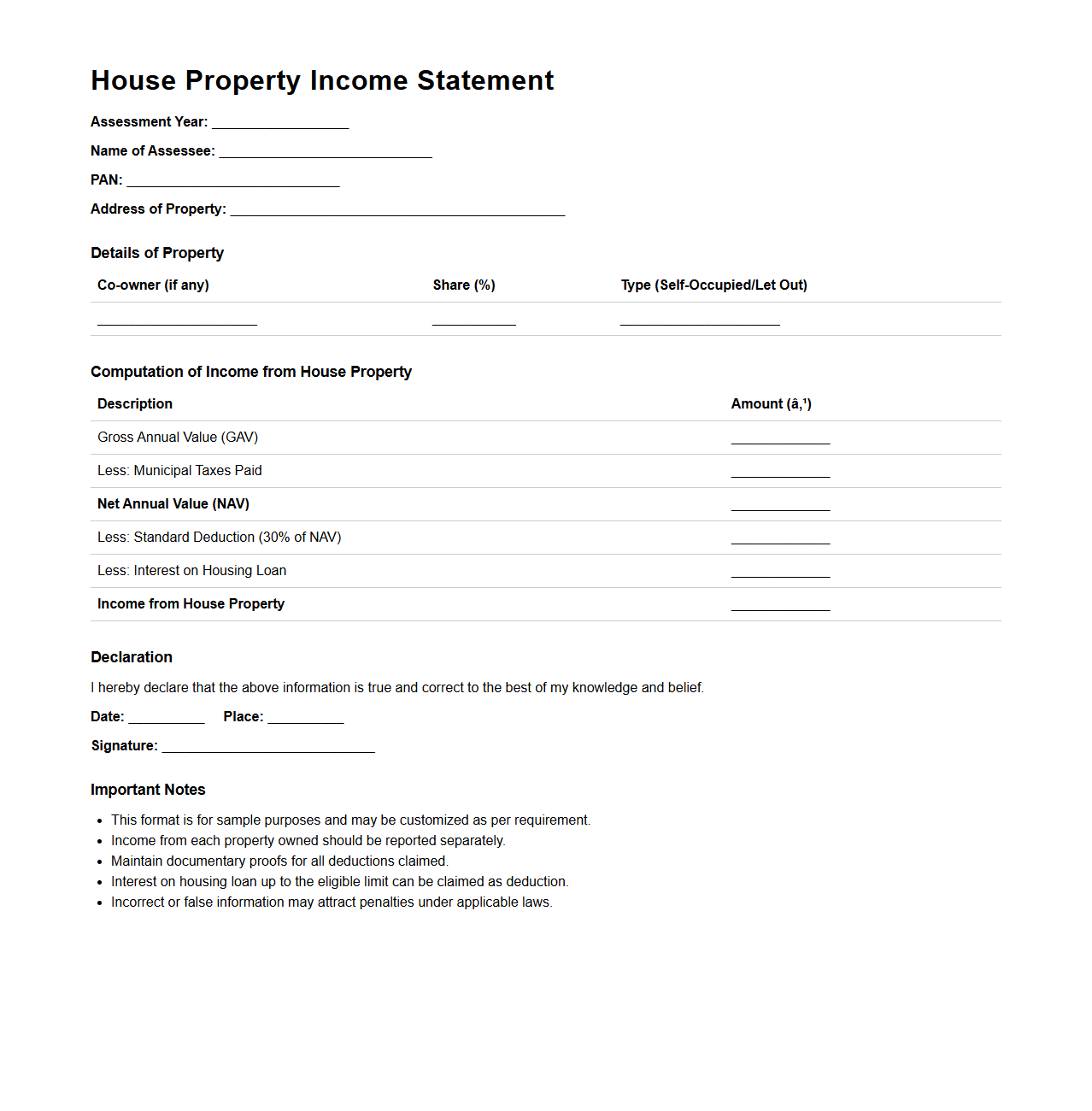
House Property Income Format
House Property Income Format document is a formal record used to report rental income and related expenses from a residential or commercial property. It typically includes details such as the gross rent received, municipal taxes paid, and deductions under various sections of the Income Tax Act. This document is essential for accurately calculating taxable
house property income and filing income tax returns.
Other Sources Income Statement Format
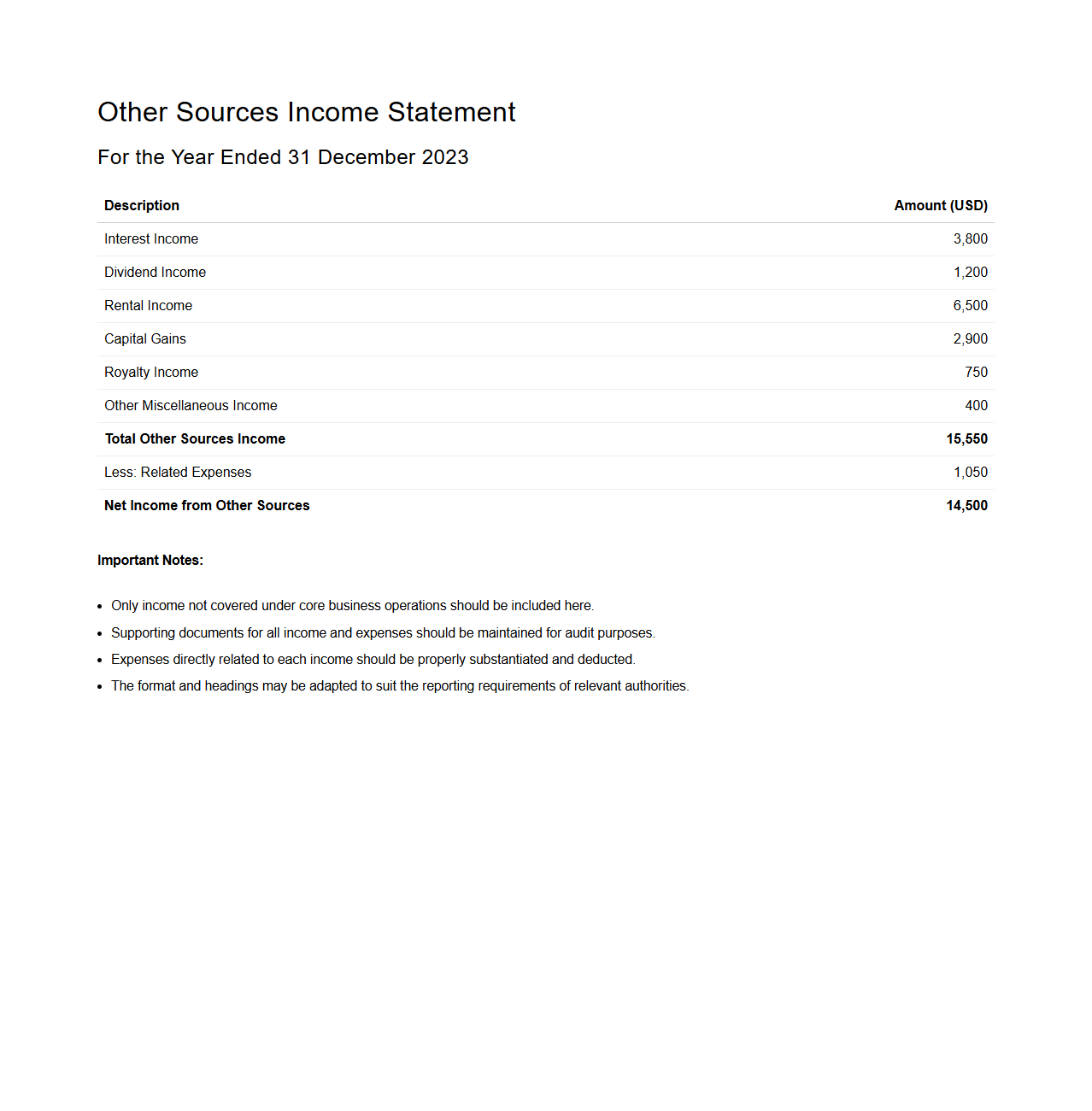
The
Other Sources Income Statement Format document outlines the presentation of income generated from non-primary business activities, such as interest, dividends, rental income, and gains from asset sales. This format separates these revenues from core operating income to provide a clearer view of overall financial performance. It is essential for accurate financial reporting, analysis, and decision-making by stakeholders.
Deductions and Exemptions Worksheet Format
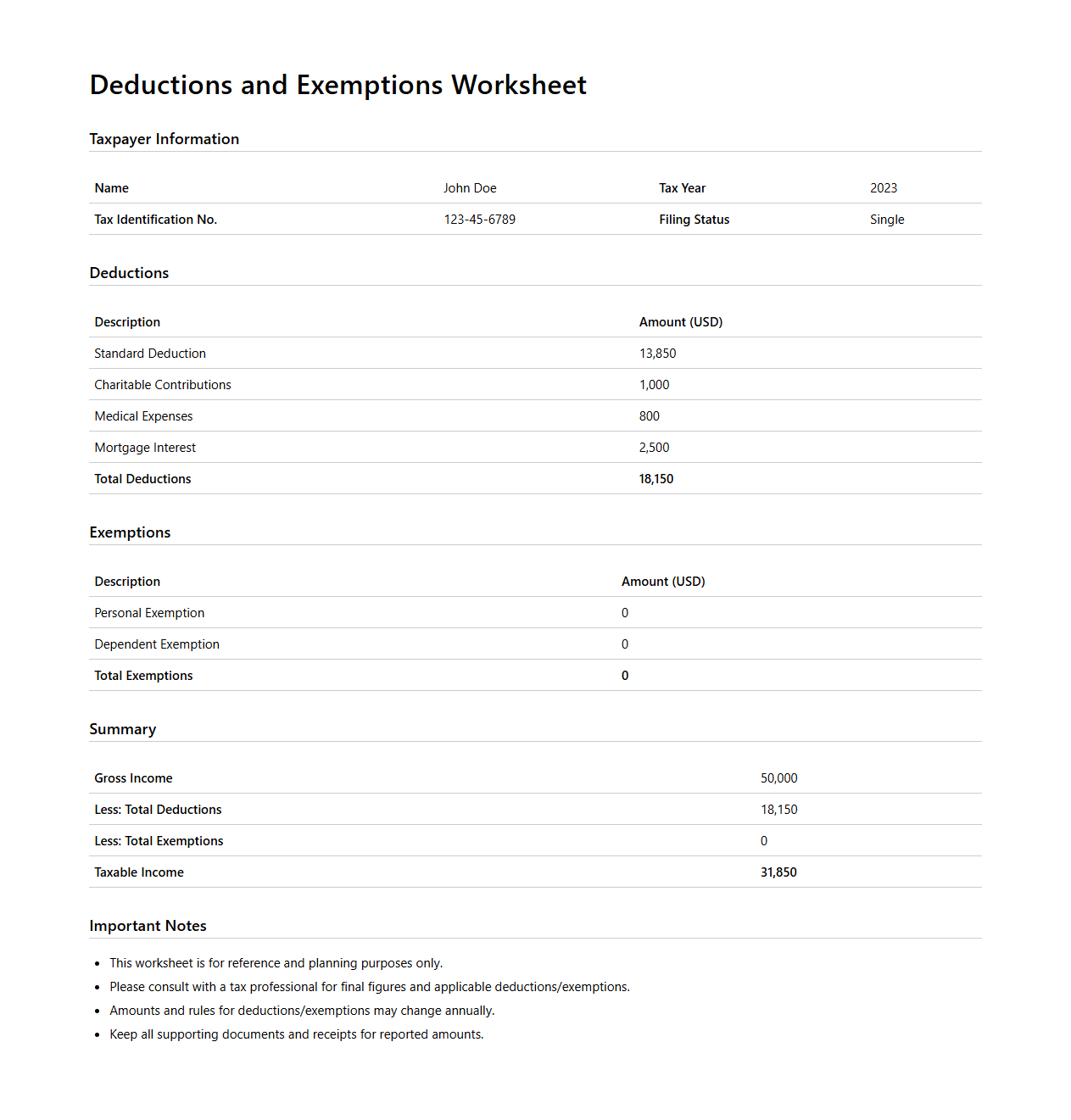
The
Deductions and Exemptions Worksheet Format document is a structured template used to systematically record and calculate eligible tax deductions and exemptions for individuals or businesses. It organizes various deductible expenses, exemptions, and allowances to ensure accurate tax filing and compliance with tax regulations. This worksheet aids in optimizing tax liability by clearly presenting deductible items and exemptions in a detailed, easy-to-follow format.
Tax Computation and Liability Format
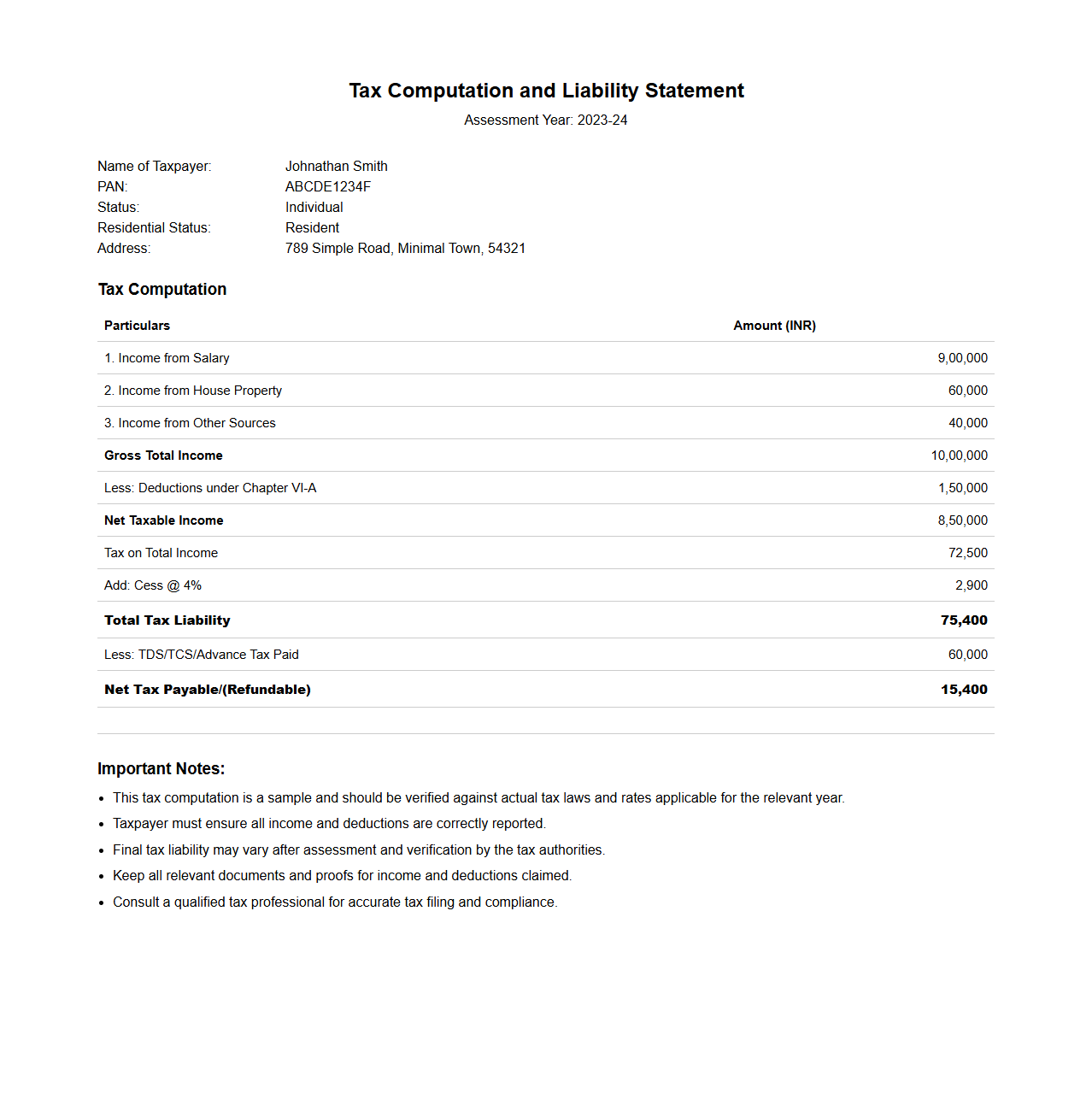
The
Tax Computation and Liability Format document outlines the systematic calculation of taxable income, allowable deductions, and applicable tax rates to determine a taxpayer's overall tax liability. It serves as a standardized template to ensure compliance with tax regulations, accuracy in reporting, and clarity for both taxpayers and tax authorities. Proper use of this format facilitates timely filing and effective tax planning strategies.
Advance Tax and TDS Details Format
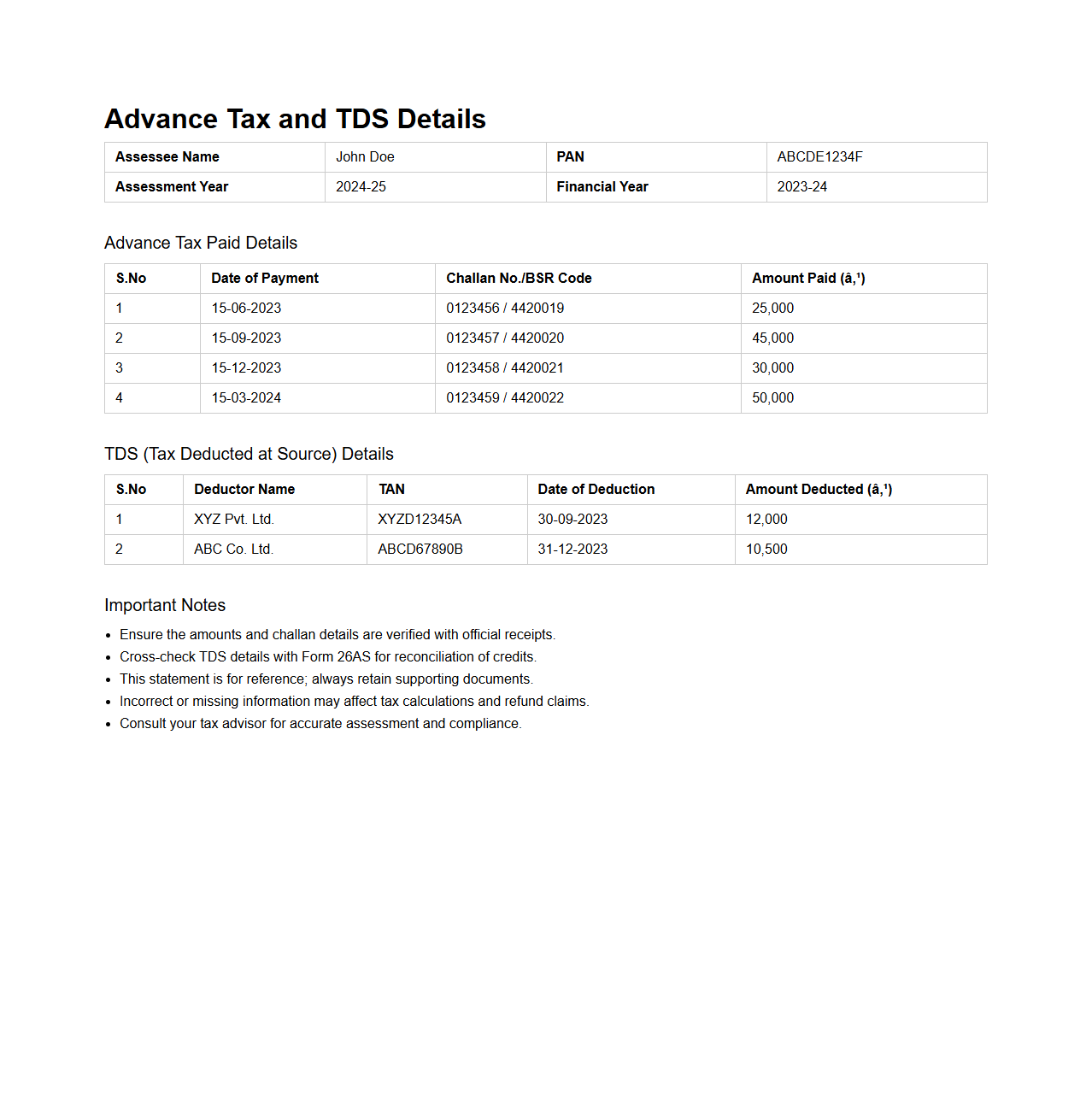
The
Advance Tax and TDS Details Format document is a structured template used by taxpayers to accurately report their advance tax payments and Tax Deducted at Source (TDS) details to tax authorities. It includes fields for taxpayer identification, assessment year, payment dates, amounts paid, and TDS certificate numbers to ensure proper reconciliation and compliance. This format helps in maintaining transparency and facilitates easy verification during income tax assessments.
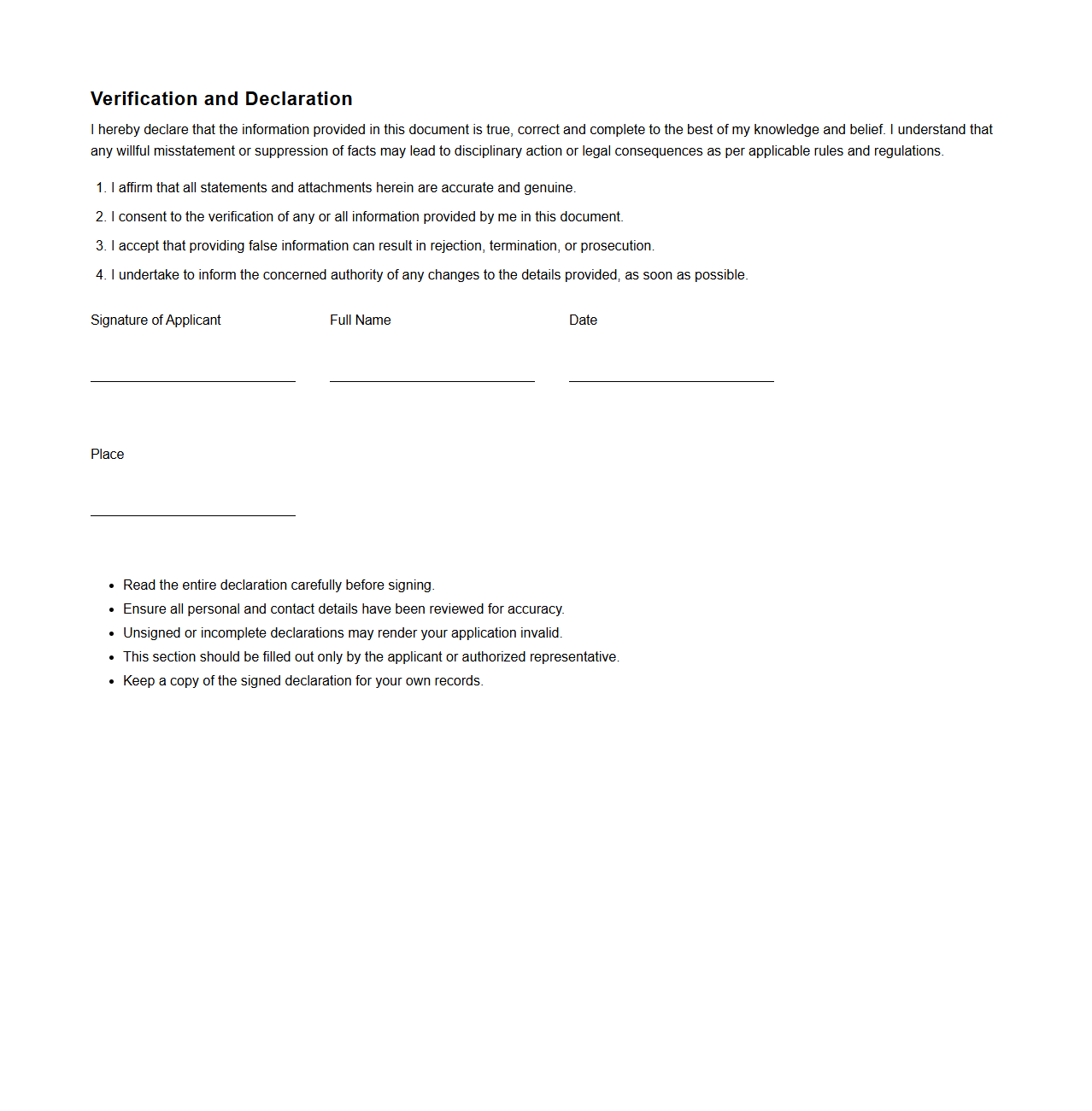
Verification and Declaration Section Format
The
Verification and Declaration Section Format document serves as an official attestation tool within legal and official paperwork, ensuring the authenticity and accuracy of the submitted information. It typically includes clauses where the declarant affirms the truthfulness of the contents and may specify the date, place, and signature to validate the document. This format is crucial in maintaining the integrity and accountability of declarations in contracts, affidavits, and various formal submissions.
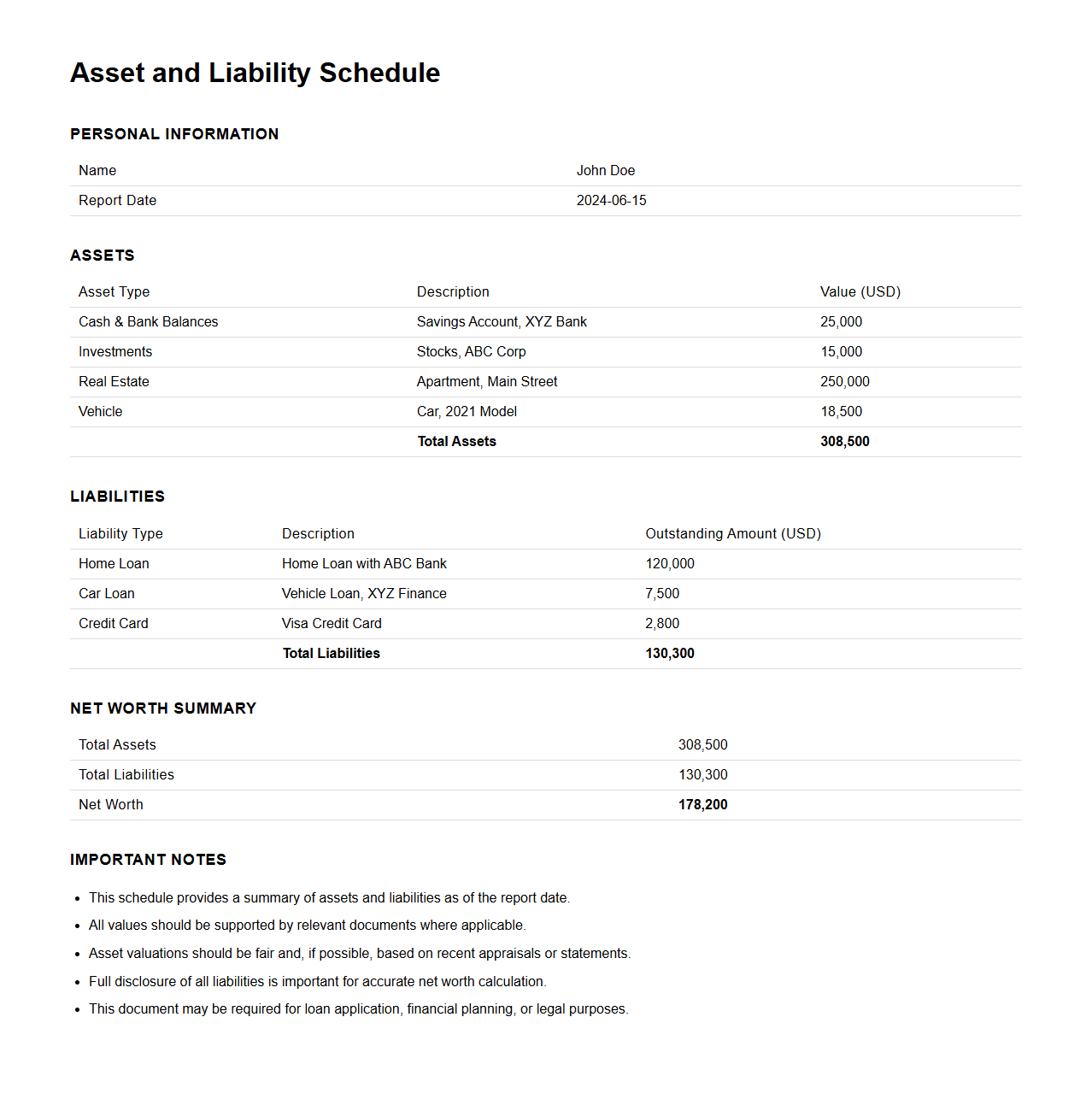
Asset and Liability Schedule Format
An
Asset and Liability Schedule Format document organizes and details a company's financial assets and liabilities, providing a clear snapshot of its financial position at a specific point in time. It typically includes categories such as current assets, fixed assets, current liabilities, and long-term liabilities, helping stakeholders assess liquidity and solvency. This format serves as a critical tool for financial analysis, budgeting, and strategic planning in business and accounting.
What specific fields are mandatory in the document letter format for individual income tax returns?
The mandatory fields in the document letter format include the taxpayer's full name, PAN (Permanent Account Number), and assessment year. Additionally, the letter must clearly state the purpose of submission, such as filing the income tax return. Contact information including address and phone number should also be included for correspondence.
How should attachments be referenced in the cover letter for an individual's tax return submission?
Attachments must be explicitly referenced in the cover letter to ensure clarity and completeness. Use a numbered list or bullet points to mention all enclosed documents like Form 16, investment proofs, and declarations. This helps the Income Tax Department quickly verify the completeness of the submission.
What salutation and closing should be used in the document letter for formal communication with the Income Tax Department?
The salutation typically begins with "Respected Sir/Madam" to maintain formal tone. The closing should include a polite phrase like "Thank you for your consideration" followed by "Yours faithfully" or "Sincerely." Including the taxpayer's signature and date at the end adds authenticity to the letter.
Is there a prescribed subject line format for letters accompanying individual tax returns?
The subject line should be clear and concise, indicating the purpose of the letter, such as "Submission of Income Tax Return for AY 2023-24." Including the PAN and assessment year in the subject line enhances identification and processing. This standardized format ensures prompt attention from the tax officials.
How should discrepancies or corrections be addressed within the income tax return cover letter?
Any discrepancies or corrections should be detailed explicitly in the cover letter to avoid confusion. Provide a clear explanation with reference to the relevant form sections or data points being corrected. This proactive communication facilitates smooth processing and reduces the need for follow-up queries from the tax department.