The Format of Goods and Services Tax Invoice for Businesses includes essential details such as the supplier's name, GSTIN, invoice number, date, and billing information. It must clearly state the description of goods or services, quantity, value, taxable value, applicable GST rates, and the total tax amount charged. Properly formatted GST invoices ensure compliance with tax regulations and facilitate seamless input tax credit claims.
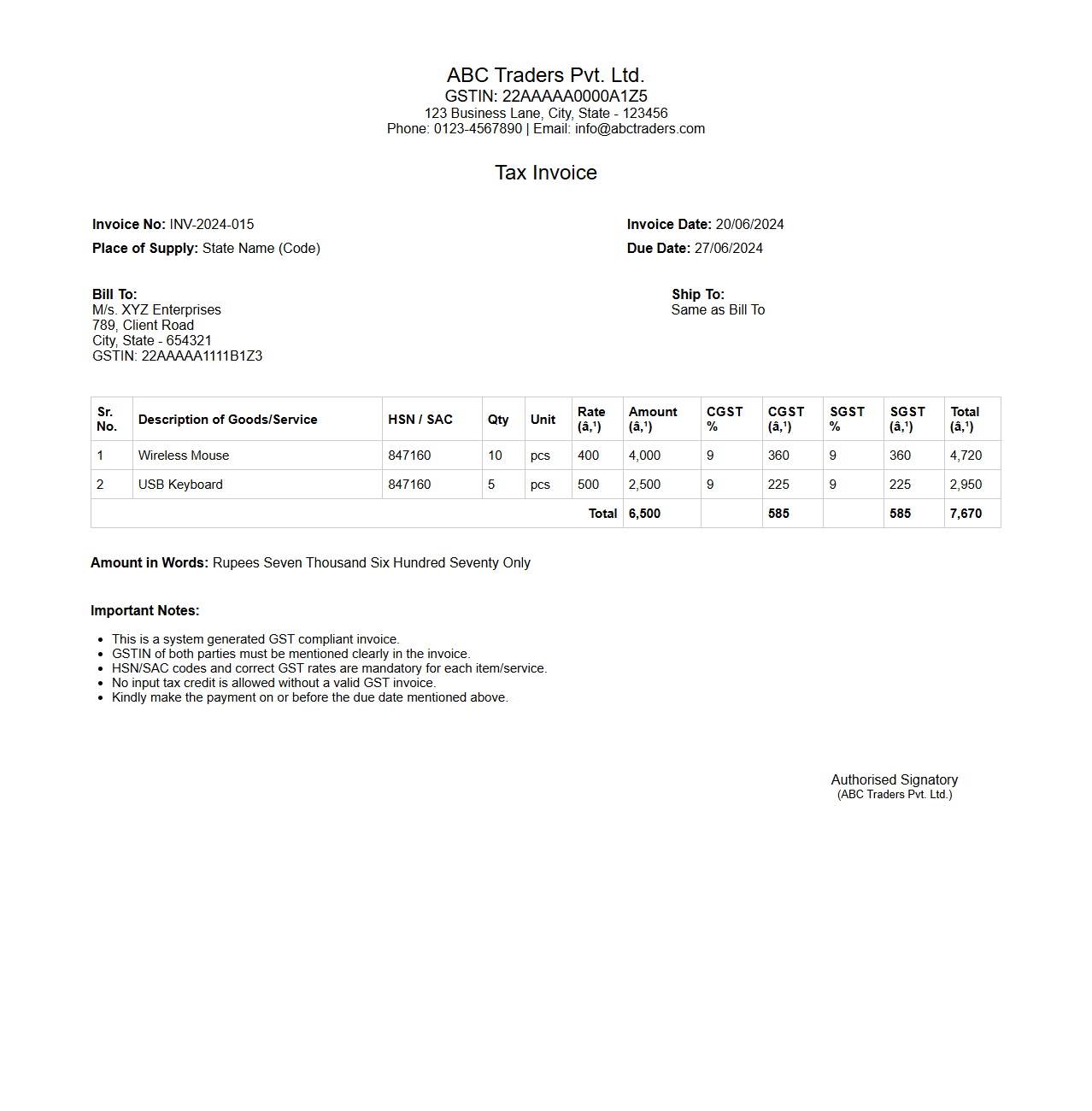
Standard GST Tax Invoice Format
A
Standard GST Tax Invoice Format document is a legally mandated record containing detailed information about the supply of goods or services under the Goods and Services Tax (GST) regime. It includes essential elements such as the supplier's and recipient's details, GSTIN numbers, invoice number, date, description of goods or services, taxable value, GST rates applied, and the total tax amount. This format ensures transparency, compliance with tax regulations, and facilitates seamless input tax credit claims for businesses.
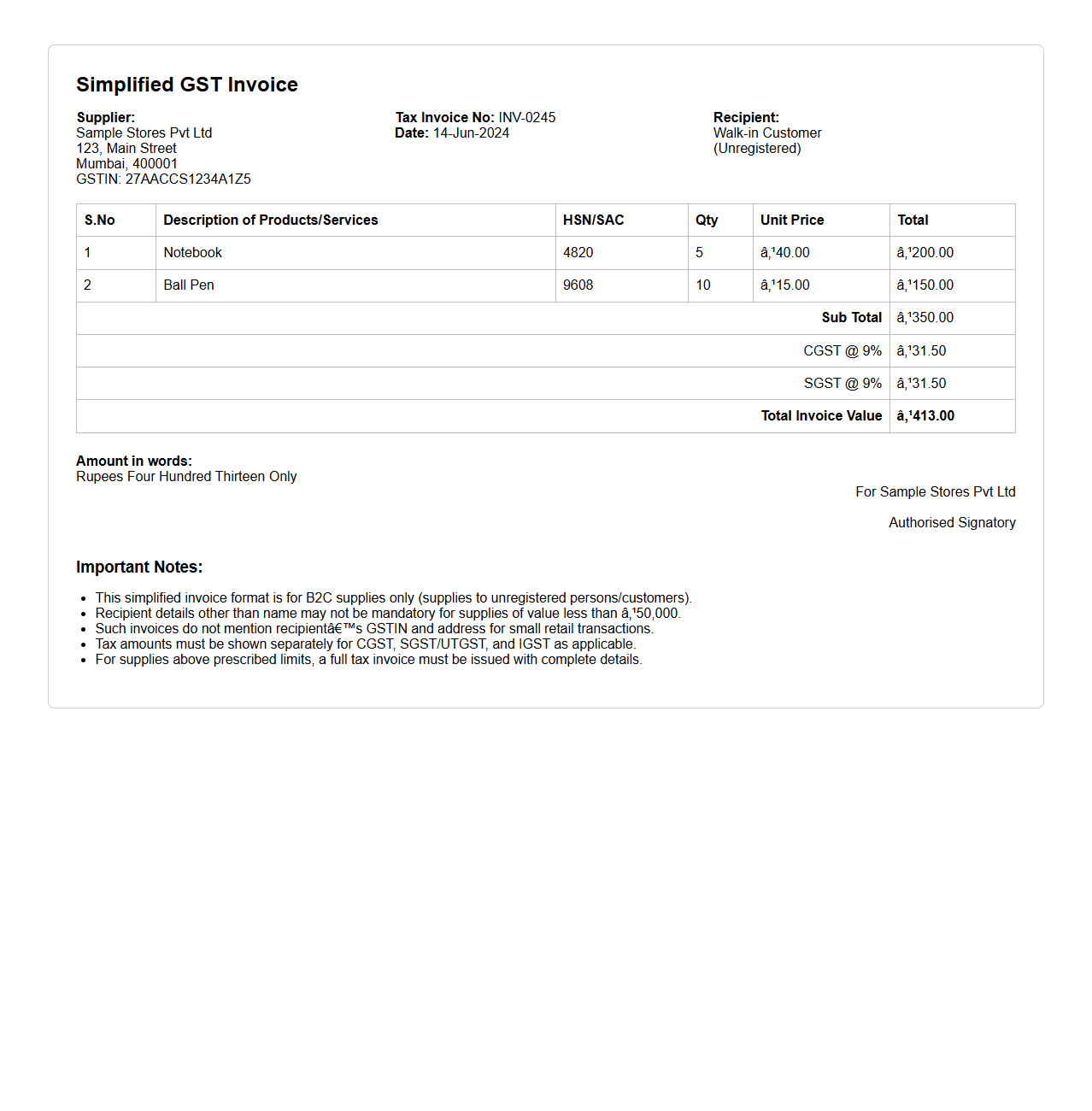
Simplified GST Invoice Format
A
Simplified GST Invoice Format document is a streamlined version of the standard Goods and Services Tax invoice designed to reduce complexity and improve ease of use for small businesses and taxpayers. It typically includes essential details such as the supplier's and recipient's GSTIN, invoice number, date, description of goods or services, taxable value, and GST rate applicable, while omitting non-critical information. This format ensures compliance with GST regulations while facilitating faster invoicing and record-keeping.
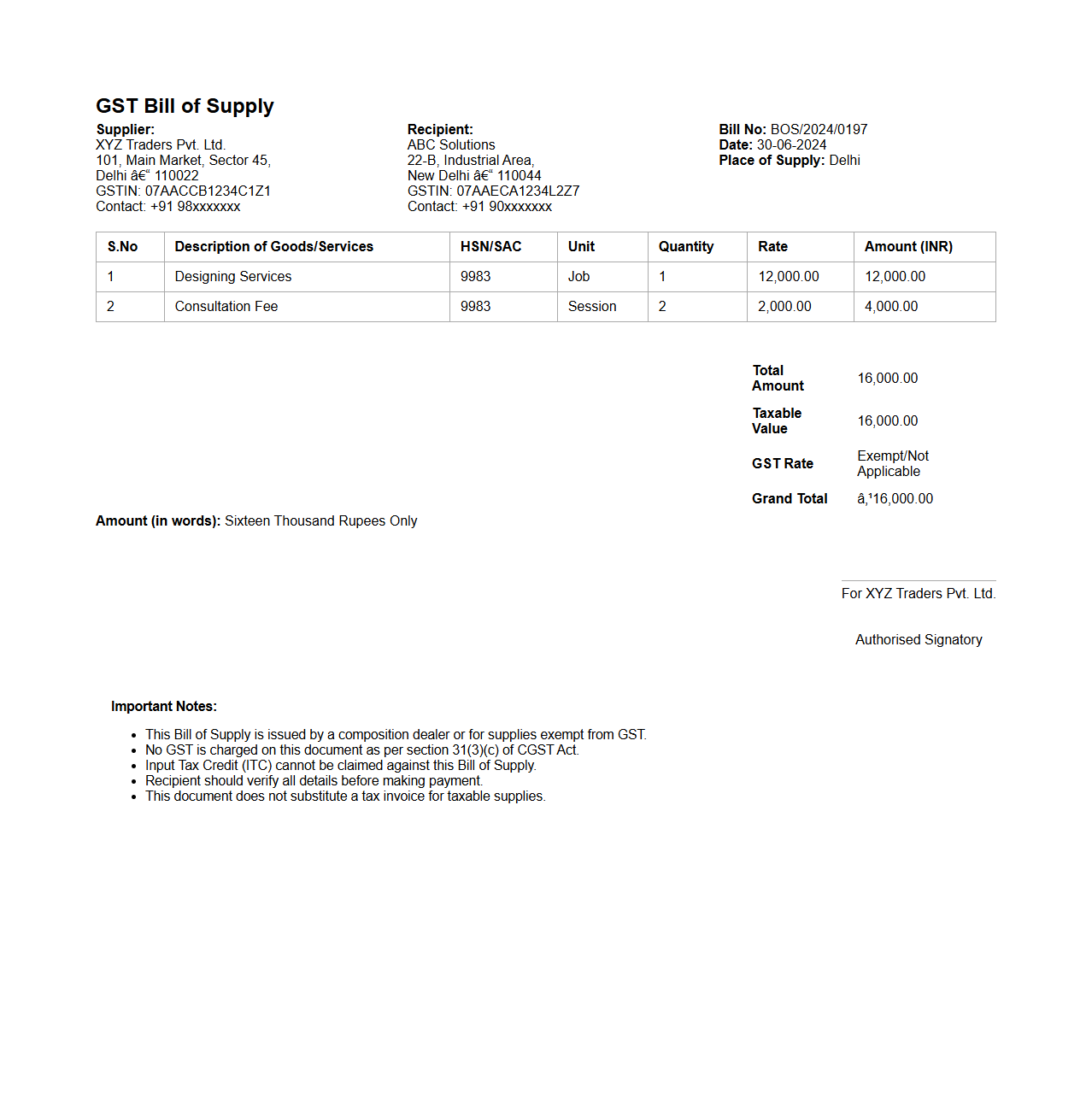
GST Bill of Supply Format
The
GST Bill of Supply Format document is a standardized template used by registered suppliers under the GST regime who are exempted from charging GST or supply exempted goods or services. It outlines key details such as the supplier's name, address, GSTIN, invoice number, date, description of goods or services, and the value without tax. This format ensures compliance with GST laws while providing a clear record for both the supplier and recipient.
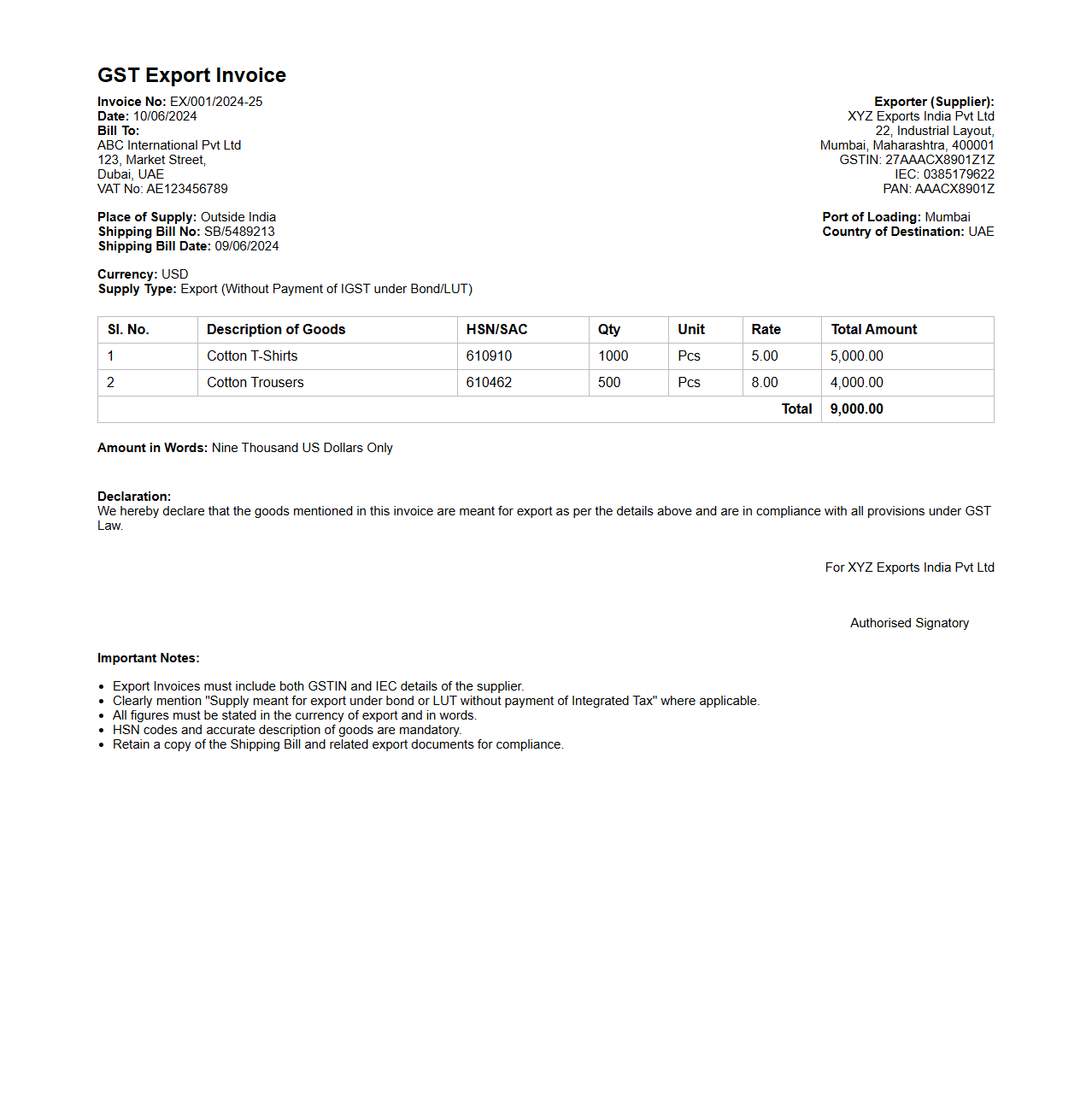
GST Export Invoice Format
A
GST Export Invoice Format document is a standardized template used by businesses to record export transactions under the Goods and Services Tax (GST) regime. It includes essential details such as the supplier's and recipient's information, invoice number, date, description of goods or services, quantity, value, export type, and applicable GST rates or exemptions. This format ensures compliance with GST regulations, facilitates seamless customs clearance, and supports accurate tax reporting for export supplies.
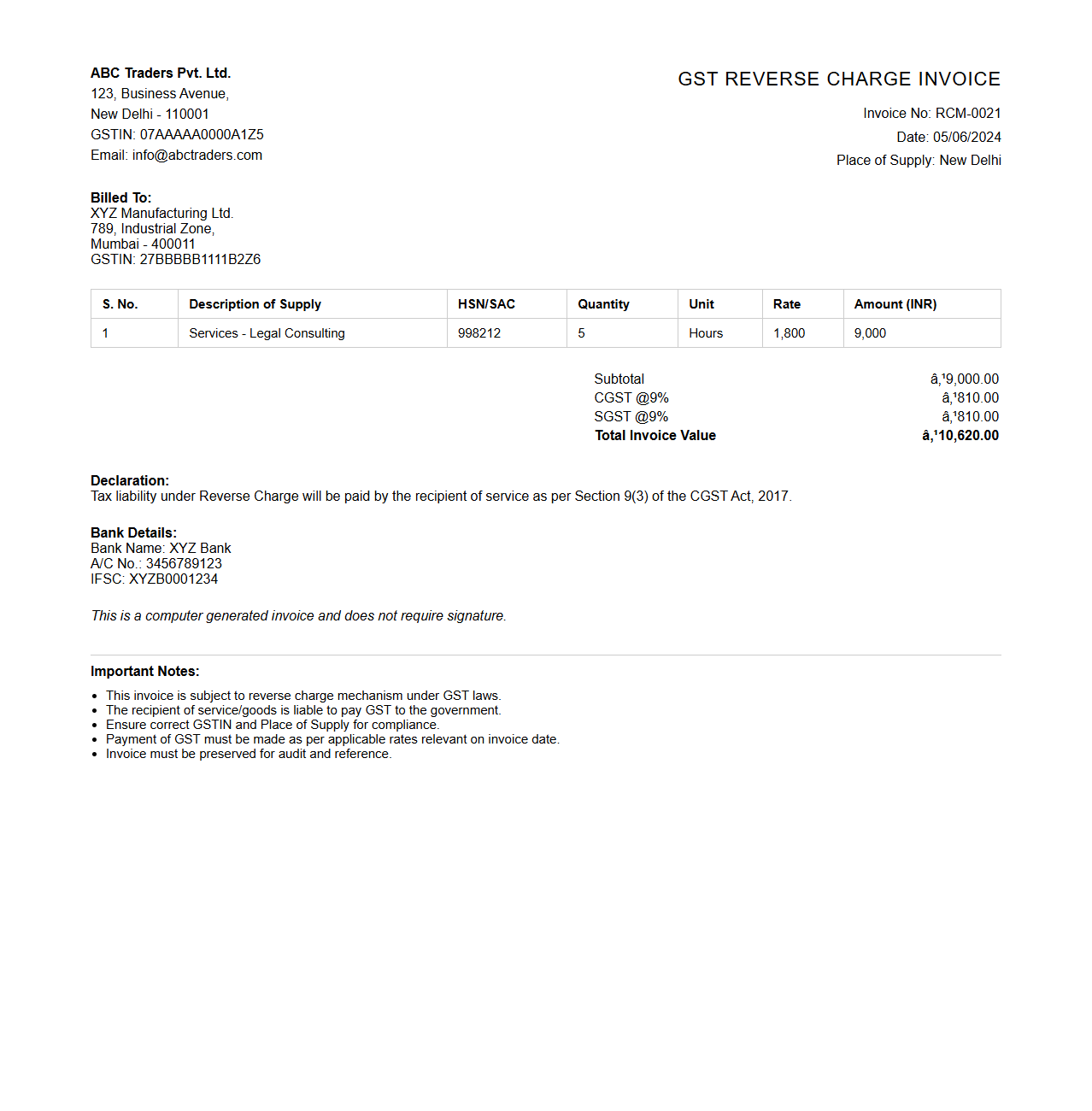
GST Reverse Charge Invoice Format
A
GST Reverse Charge Invoice Format document is a structured template used by businesses to record sales where the buyer is liable to pay the Goods and Services Tax (GST) instead of the supplier. This format includes essential details such as supplier and recipient information, description of goods or services, applicable tax rates, and the value on which reverse charge is applicable. It ensures compliance with tax regulations by clearly indicating the reverse charge mechanism for accurate tax reporting and payment.
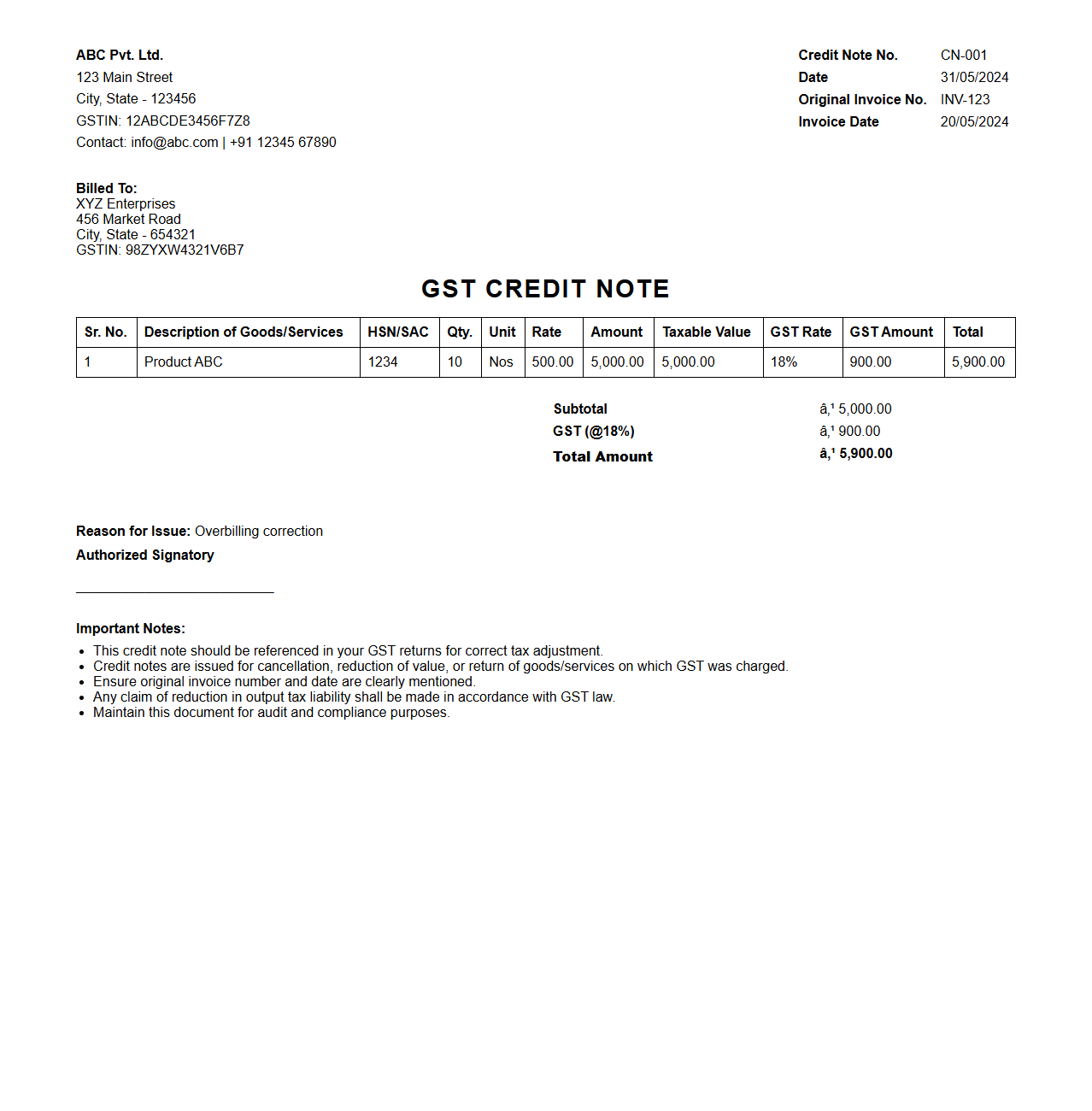
GST Credit Note Format
A
GST Credit Note Format document is an official record issued by a supplier to a buyer, indicating a reduction in the amount payable under the Goods and Services Tax system. It includes essential details such as the original invoice number, date, GSTIN of both parties, reason for the credit, and the taxable value along with the revised GST amounts. This format ensures compliance with tax regulations and facilitates accurate adjustments in GST returns.
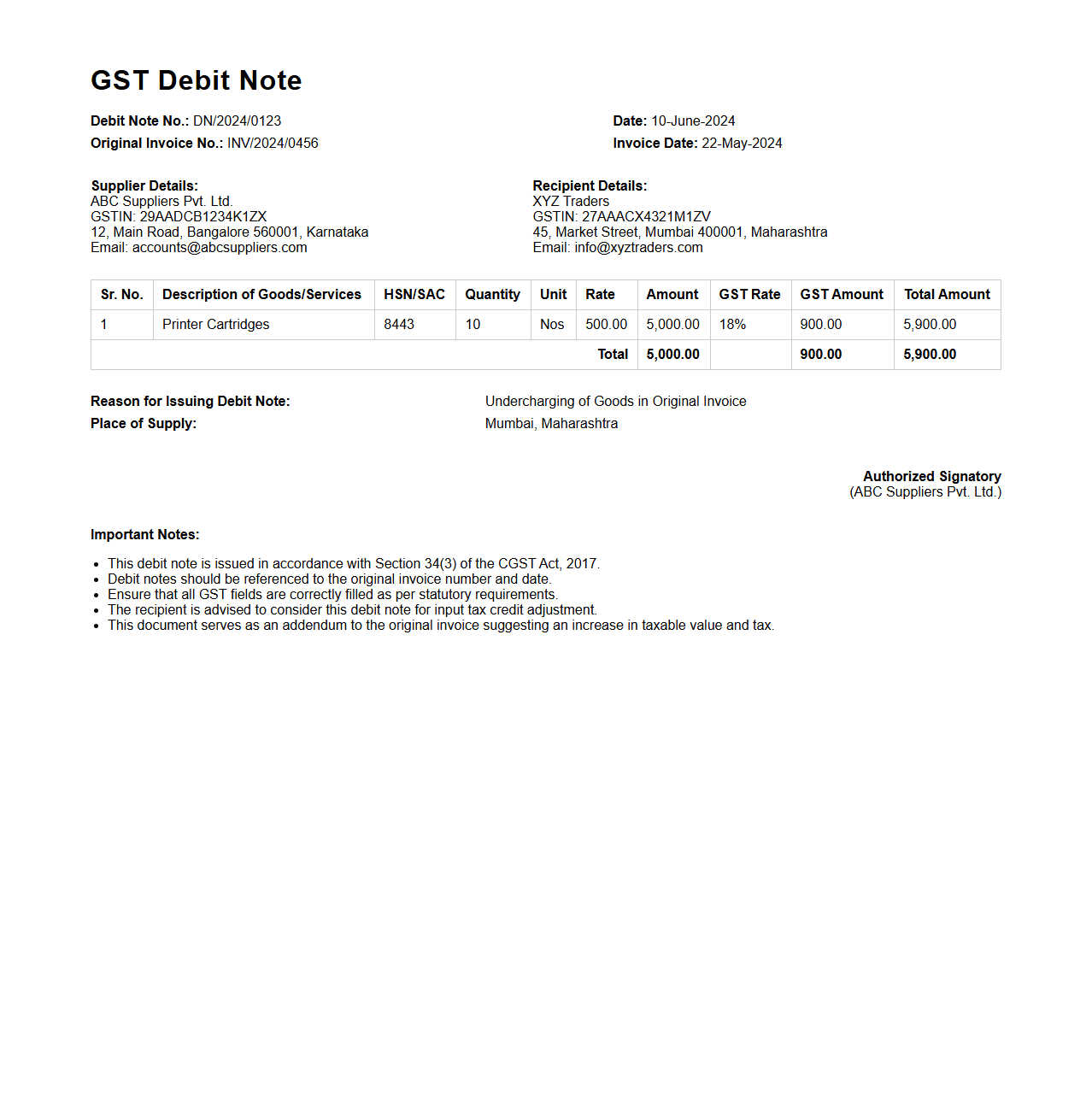
GST Debit Note Format
The
GST Debit Note Format document is a standardized template used by businesses to notify buyers about an increase in the invoice value due to errors, price revisions, or additional charges under the Goods and Services Tax (GST) regime. It includes essential details such as the supplier's and recipient's GSTIN, original invoice number, debit note number, date, description of goods or services, tax rates, and the revised taxable value. This format ensures compliance with GST regulations and facilitates accurate tax reporting and reconciliation.
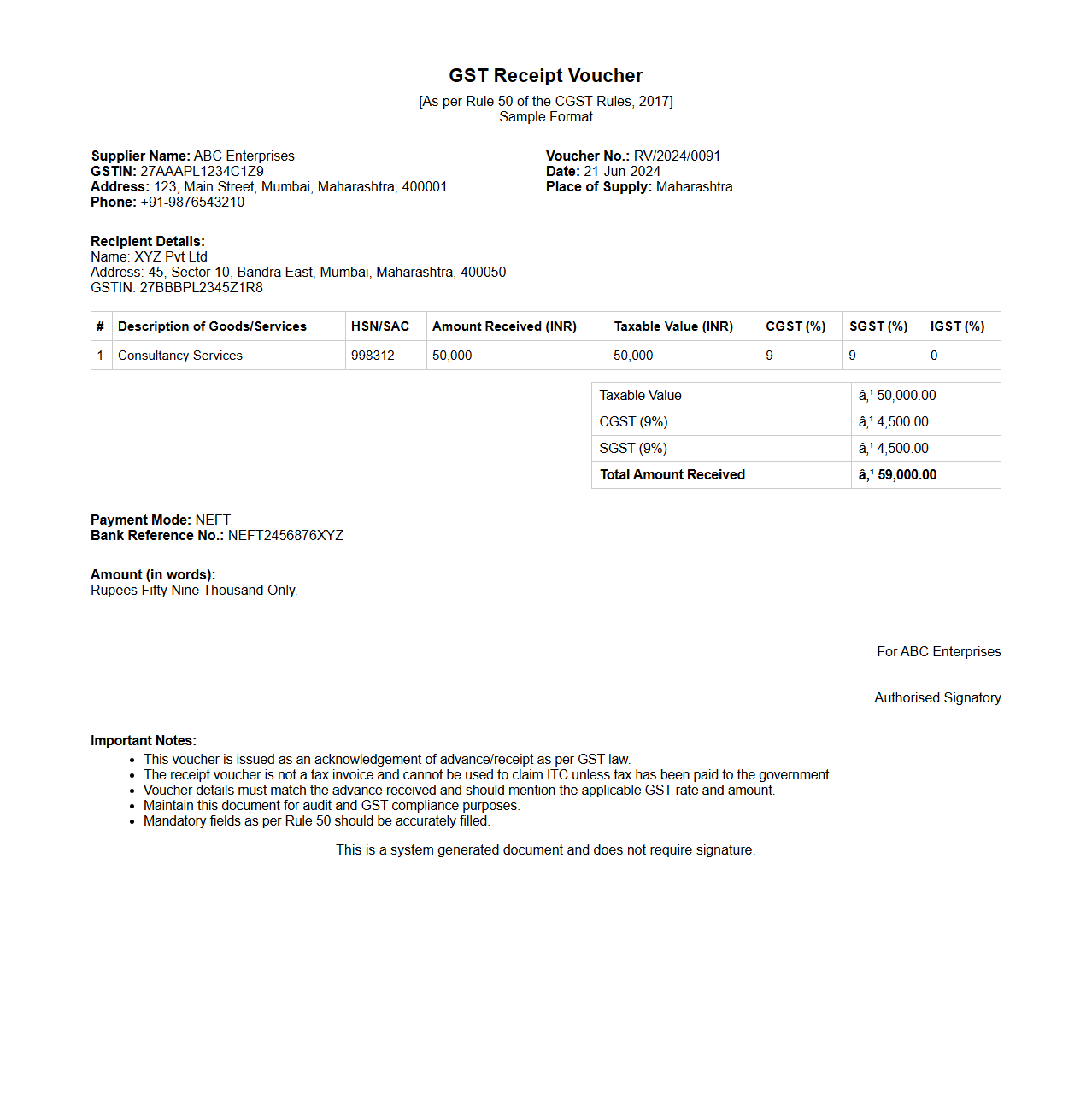
GST Receipt Voucher Format
The
GST Receipt Voucher Format document is a standardized template used by businesses to record the receipt of money from customers under the Goods and Services Tax regime. It includes essential details such as the date, receipt number, party name, GSTIN, description of goods or services, amount received, and tax components like CGST, SGST, or IGST. This format ensures proper compliance with GST rules and facilitates accurate bookkeeping and audit trails.
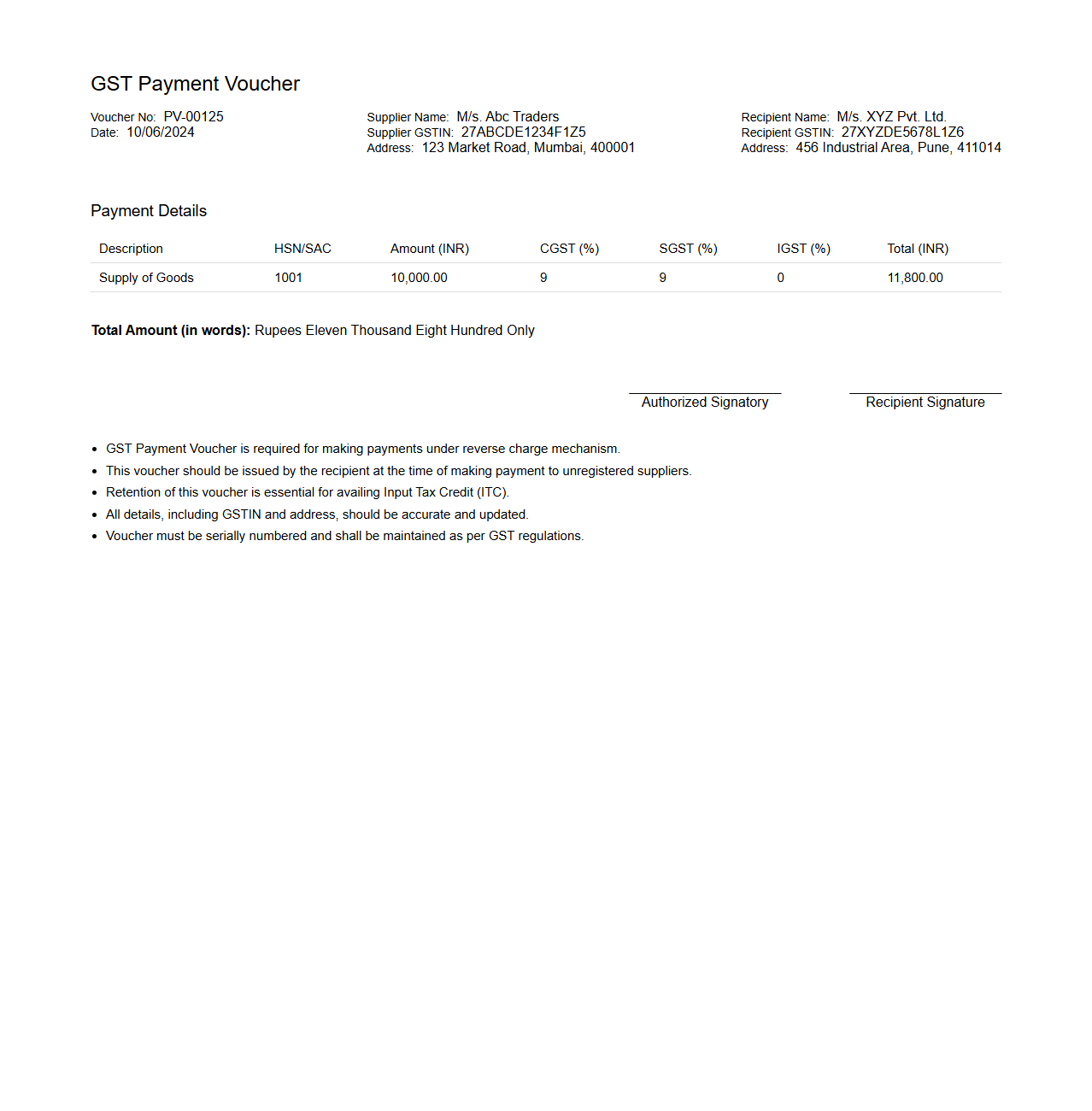
GST Payment Voucher Format
A
GST Payment Voucher Format document is a structured template used to record payment transactions under the Goods and Services Tax (GST) system. It includes essential details such as the payer and payee information, date of payment, invoice number, GSTIN, taxable amount, GST rates, and total amount paid. This voucher ensures compliance with tax regulations and facilitates accurate bookkeeping and audit processes.
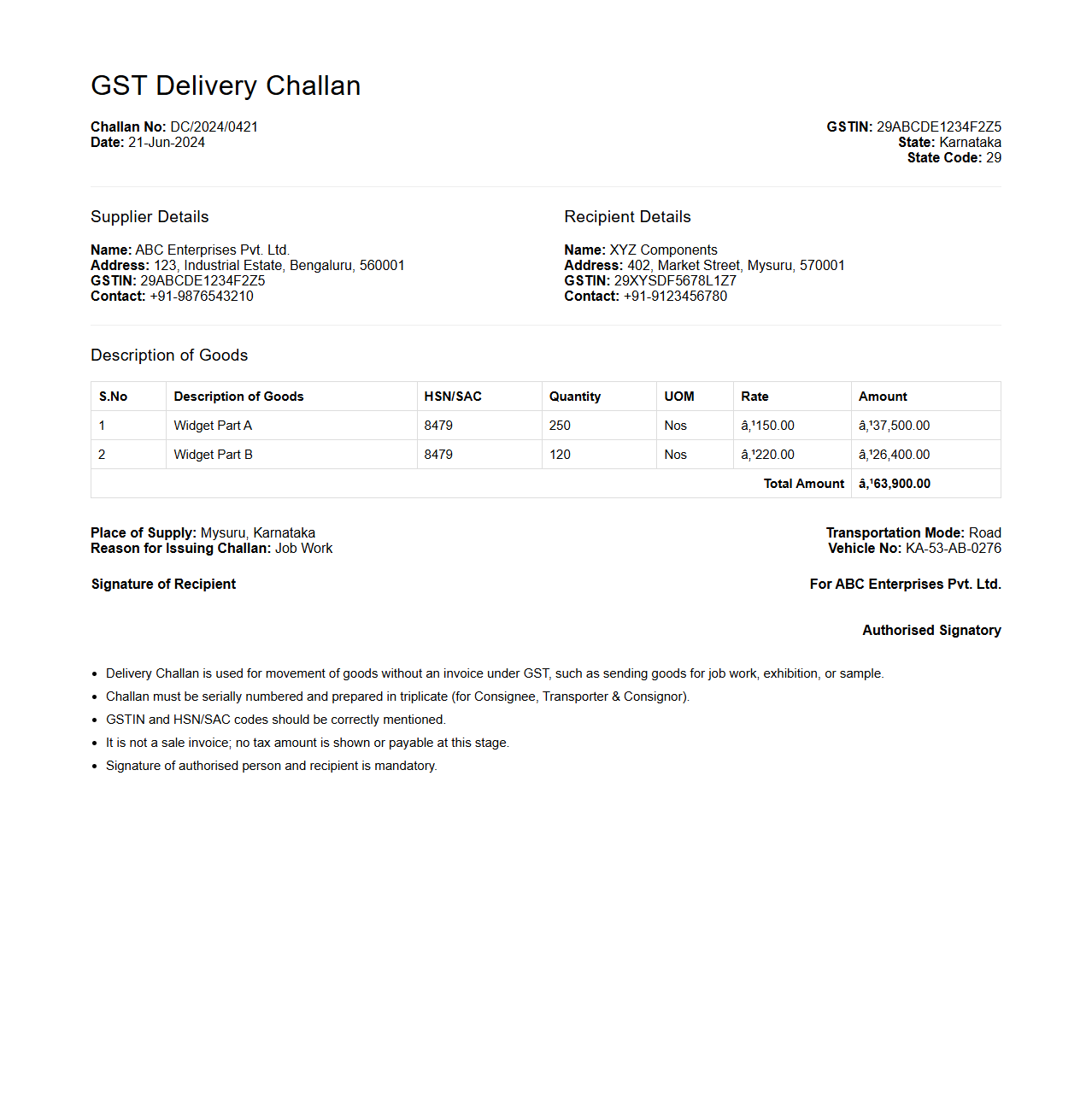
GST Delivery Challan Format
The
GST Delivery Challan Format document is a crucial record used in the Goods and Services Tax (GST) system to track the movement of goods without immediate payment or invoice generation. It includes essential details such as the consignor and consignee information, description of goods, quantity, and transport details, enabling seamless compliance and verification during transit. This format ensures transparency and accuracy in supply chain documentation, reducing discrepancies in tax reporting under GST laws.
What are the mandatory fields in a GST tax invoice for B2B transactions?
A GST tax invoice for B2B transactions must include the supplier's and recipient's details such as name, address, and GSTIN. It should clearly state the invoice number, date, description of goods or services, and the HSN or SAC code. Additionally, it must display the taxable value, applicable tax rates (CGST, SGST/UTGST, IGST), and the total invoice value.
How should HSN codes be displayed in a GST invoice for small businesses?
For small businesses with an aggregate turnover up to Rs5 crore, it is mandatory to display the HSN codes at least up to 2 digits. The HSN code should be mentioned alongside the description of goods or services in the invoice. This ensures clarity and compliance with GST norms while simplifying the filing process for small taxpayers.
Is digital signature valid for GST invoice format compliance?
A digital signature on a GST invoice is valid and acceptable as per government guidelines. It ensures authenticity and integrity of the invoice data, especially for e-invoices. Using digital signatures aligns with modernization goals and enhances trust during electronic audits and assessments.
What are the invoice format variations for composite vs. regular GST taxpayers?
Composite taxpayers issue simplified invoices without detailed tax breakup, as they pay tax at a fixed rate without input credit claims. Regular taxpayers must display comprehensive details including tax rates and breakup of CGST, SGST, or IGST on the invoice. These variations cater to different compliance requirements and facilitate smooth tax administration.
How do you format a GST invoice when supplying both goods and services together?
When supplying both goods and services together, the GST invoice should clearly segregate the value of goods and services along with their respective HSN and SAC codes. Tax rates applicable to goods and services should be shown separately to ensure accurate tax calculation. This detailed invoice format enhances transparency and compliance under GST law.