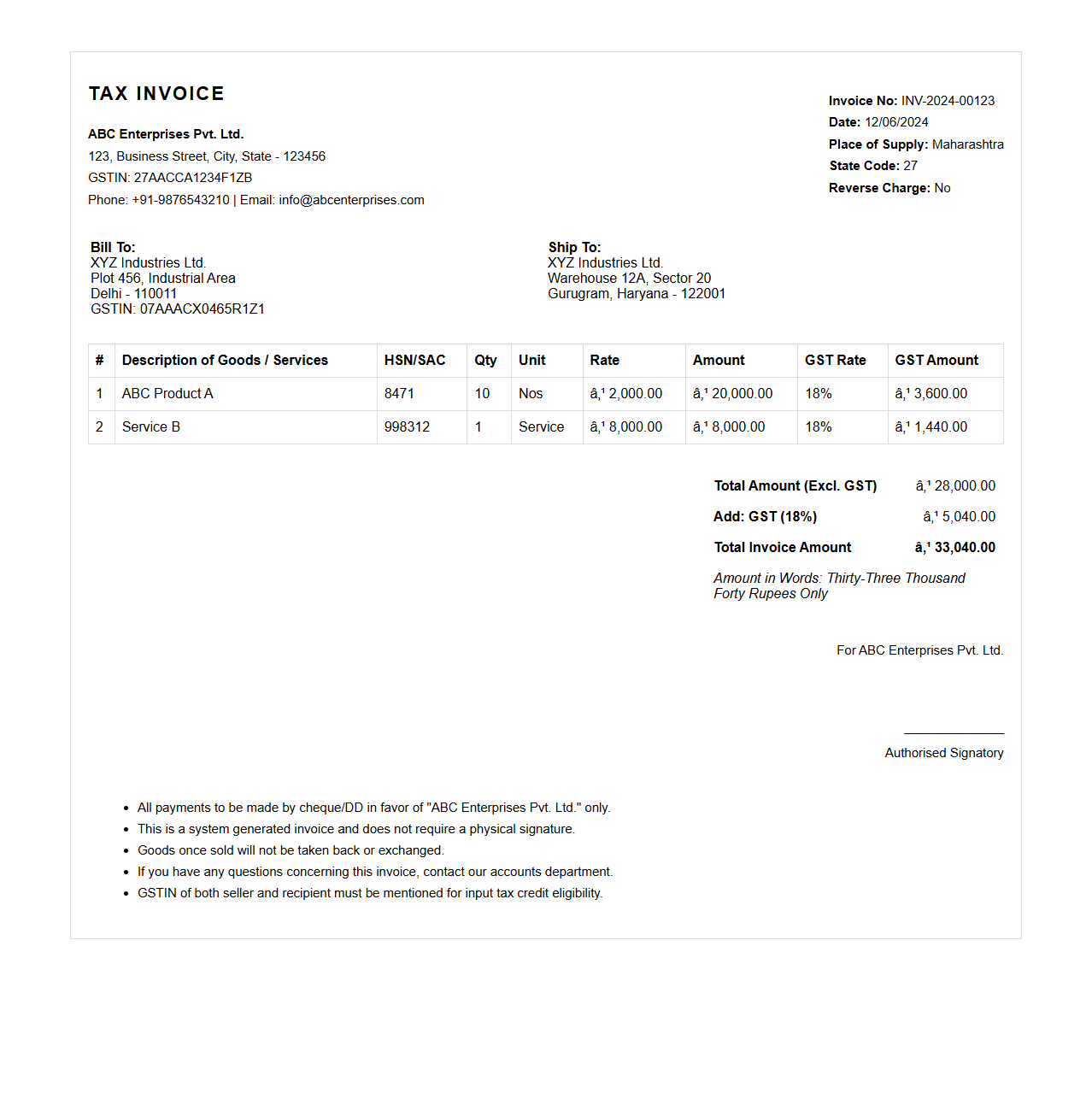
A Format of GST Invoice for Businesses typically includes essential details such as the supplier's name, GSTIN, invoice number, date, and recipient's details. It must clearly state the description of goods or services, quantity, value, taxable value, applicable GST rates, and tax amounts. Compliance with this format ensures accurate tax reporting and legal validity under GST regulations.
GST Invoice Standard Template
A
GST Invoice Standard Template document is a predefined format used by businesses to generate invoices compliant with the Goods and Services Tax (GST) regulations in India. It includes essential details such as the supplier's GSTIN, invoice number, date, recipient details, HSN/SAC codes, taxable value, tax rates, and amounts for CGST, SGST, and IGST. This template ensures consistent, accurate, and legally valid invoicing for seamless tax reporting and compliance.
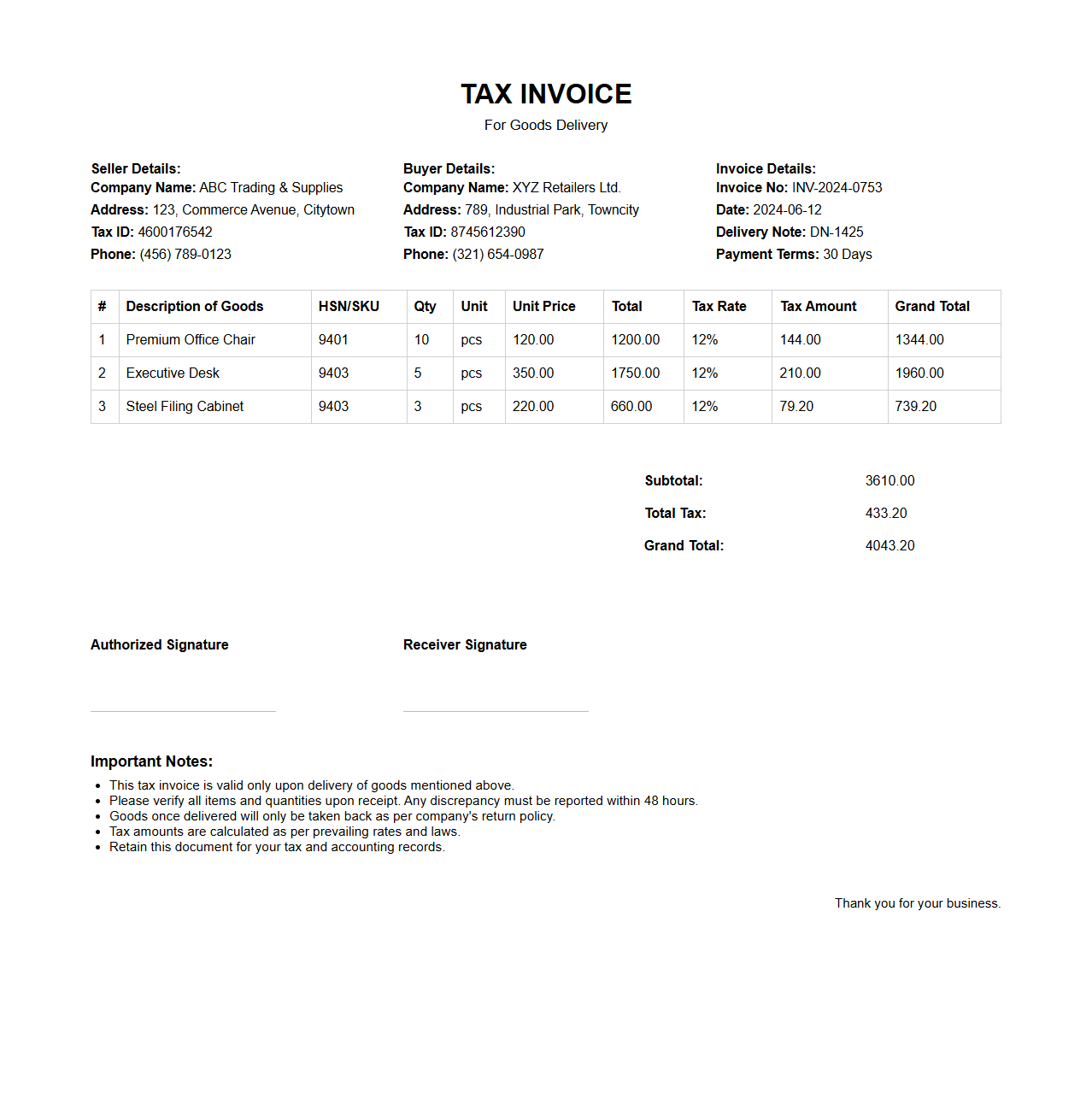
Tax Invoice for Goods Delivery
A
Tax Invoice for Goods Delivery is an official document issued by a seller to a buyer, detailing the sale and shipment of goods along with applicable taxes. It serves as proof of the transaction, providing essential information such as the description of goods, quantity, price, tax rates, and total amount payable. This document is crucial for maintaining accurate financial records, ensuring tax compliance, and facilitating the claim of input tax credits.
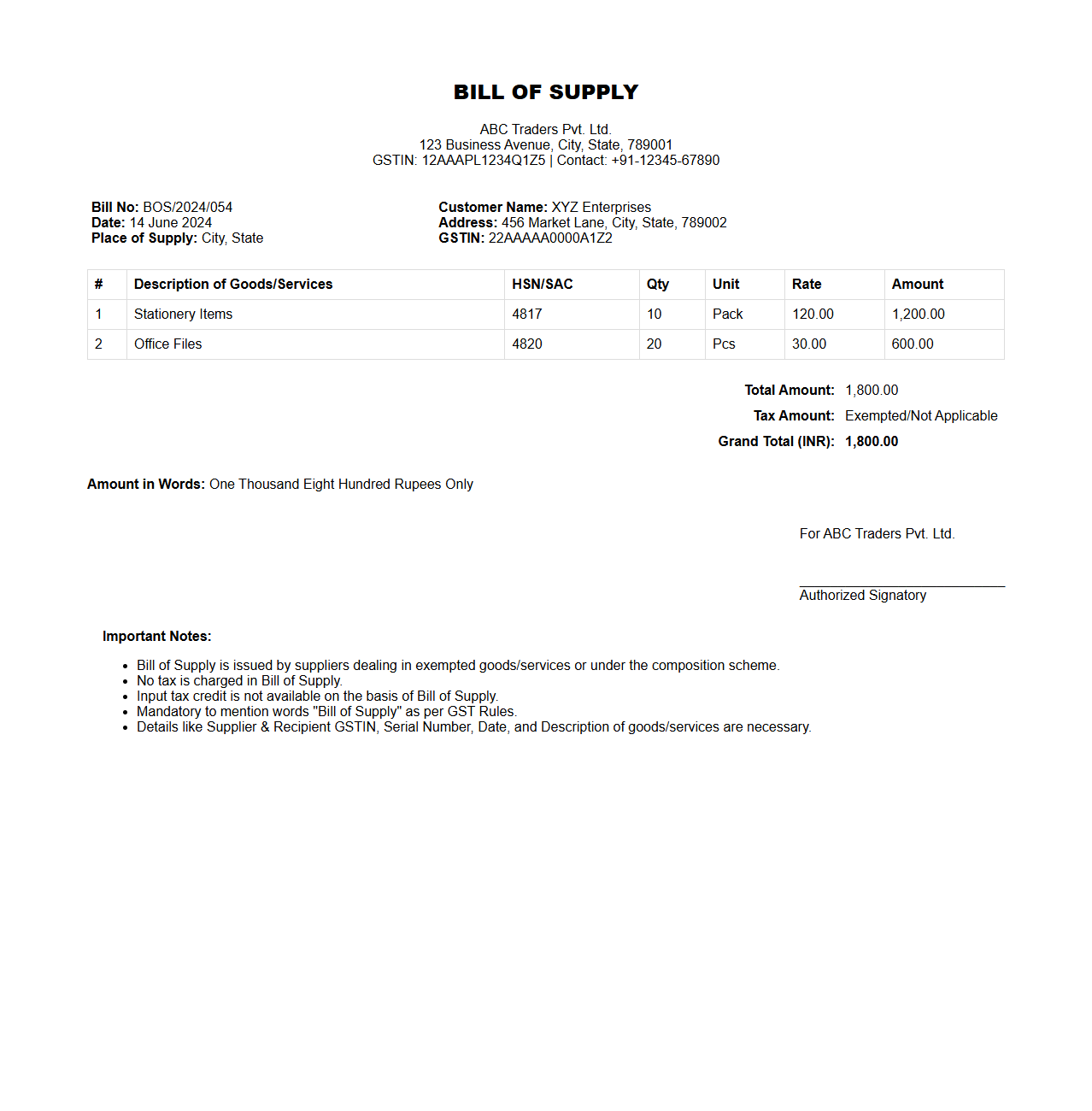
Bill of Supply Format
A
Bill of Supply Format is a standardized document issued by registered suppliers under the Goods and Services Tax (GST) regime when supplying exempted goods or services. This document includes essential details such as the supplier's name, GSTIN, invoice number, date, description of goods or services, quantity, and value without charging GST. It serves as proof of supply for transactions that do not attract tax, ensuring compliance and accurate record-keeping for both suppliers and recipients.
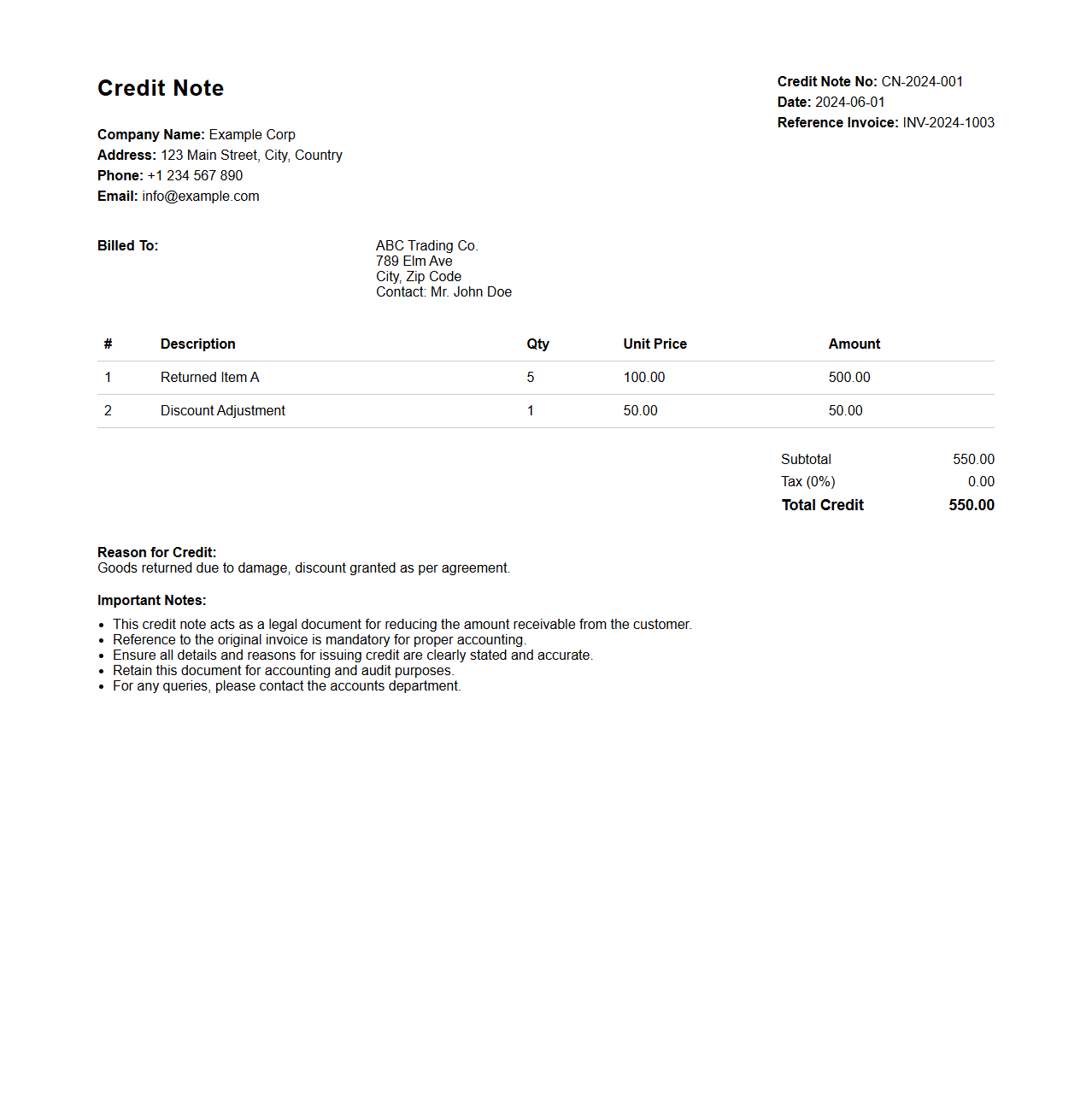
Credit Note Document Format
A
Credit Note Document Format is a standardized template used by businesses to issue credit notes, which serve as official records for returned goods, overpayments, or billing adjustments. This document typically includes essential details such as the credit note number, date of issue, customer information, original invoice reference, description of returned items or services, and the credited amount. Proper use of a credit note format ensures clear communication between sellers and buyers, facilitates accurate accounting, and supports compliance with tax regulations.
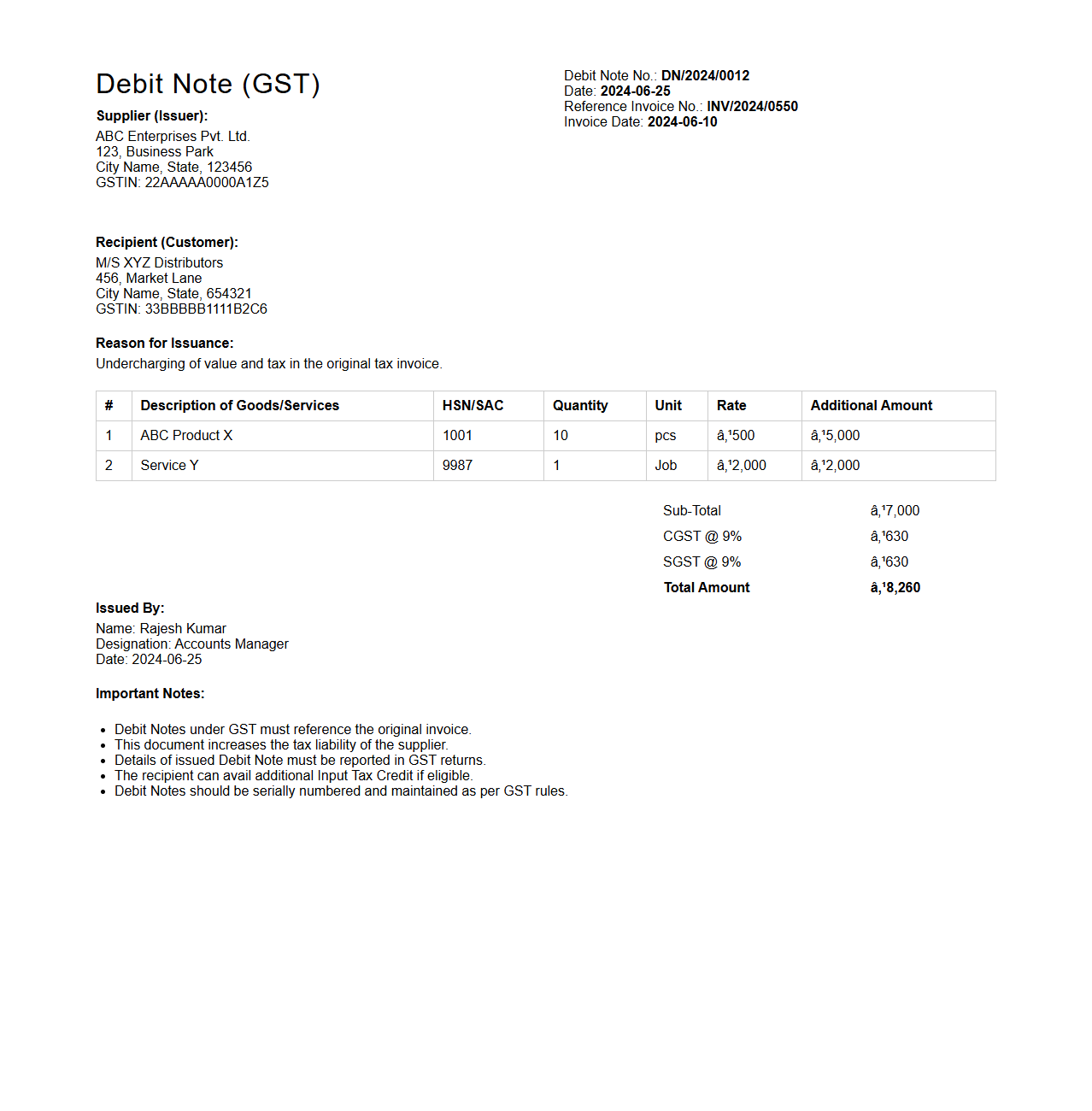
Debit Note Template for GST
A
Debit Note Template for GST is a preformatted document used by businesses to notify customers of an increase in the amount payable due to reasons like price revisions, additional charges, or corrections in previously issued invoices under the Goods and Services Tax (GST) framework. It serves as an official record facilitating accurate tax compliance by detailing the original invoice reference, the nature of the transaction, and the revised amount subject to GST. Using a standardized debit note template ensures consistency in financial documentation and simplifies the process of filing GST returns.
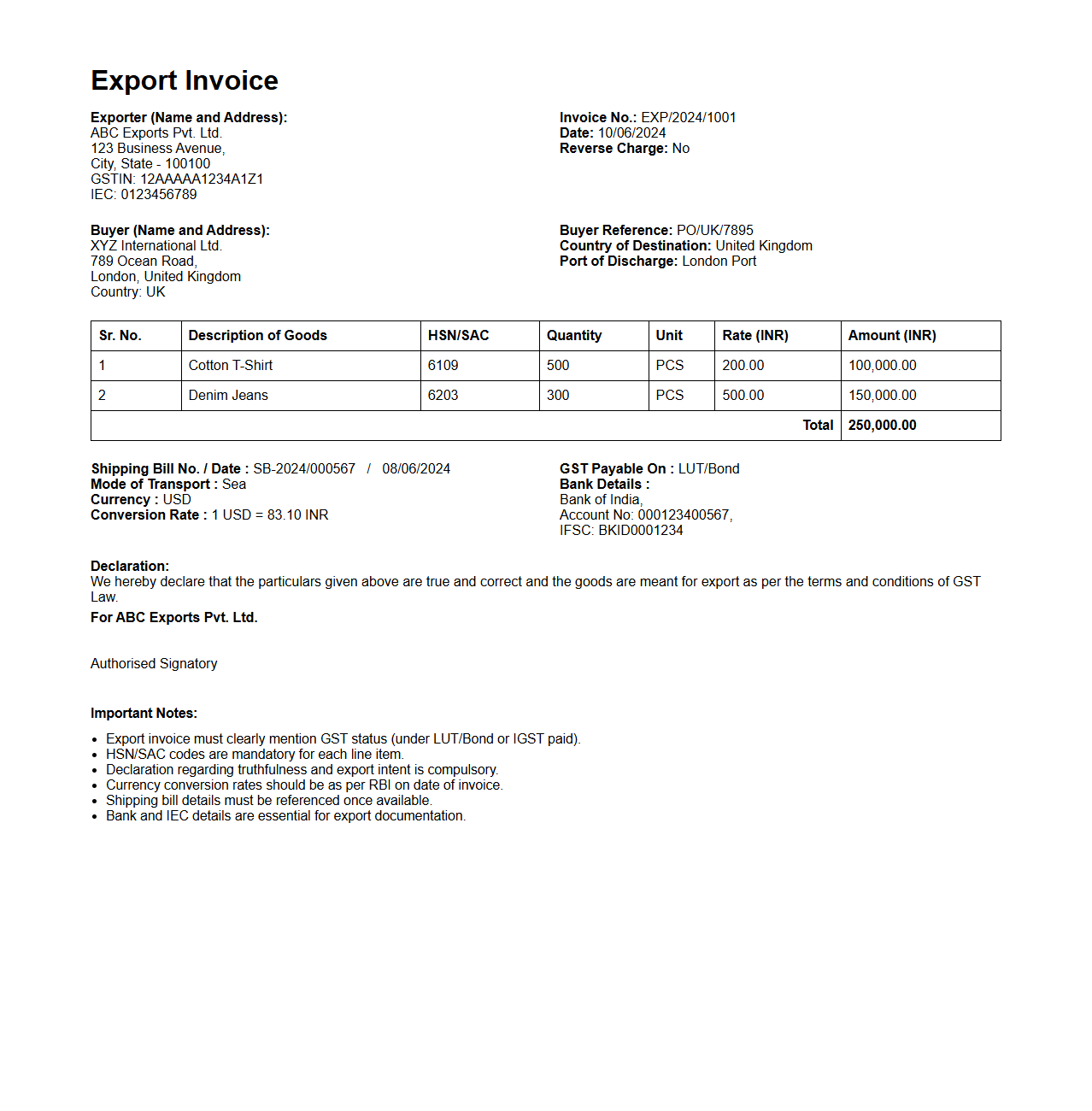
Export Invoice Format for GST
An
Export Invoice Format for GST is a standardized document that details the sale of goods or services being exported from one country to another, containing essential information such as the supplier's GSTIN, invoice number, date, shipping details, HSN codes, and tax values. It complies with GST regulations to ensure proper tax treatment and eligibility for GST refunds or zero-rated supplies during international trade. Properly formatted export invoices facilitate smooth customs clearance, accurate tax reporting, and compliance with government requirements.
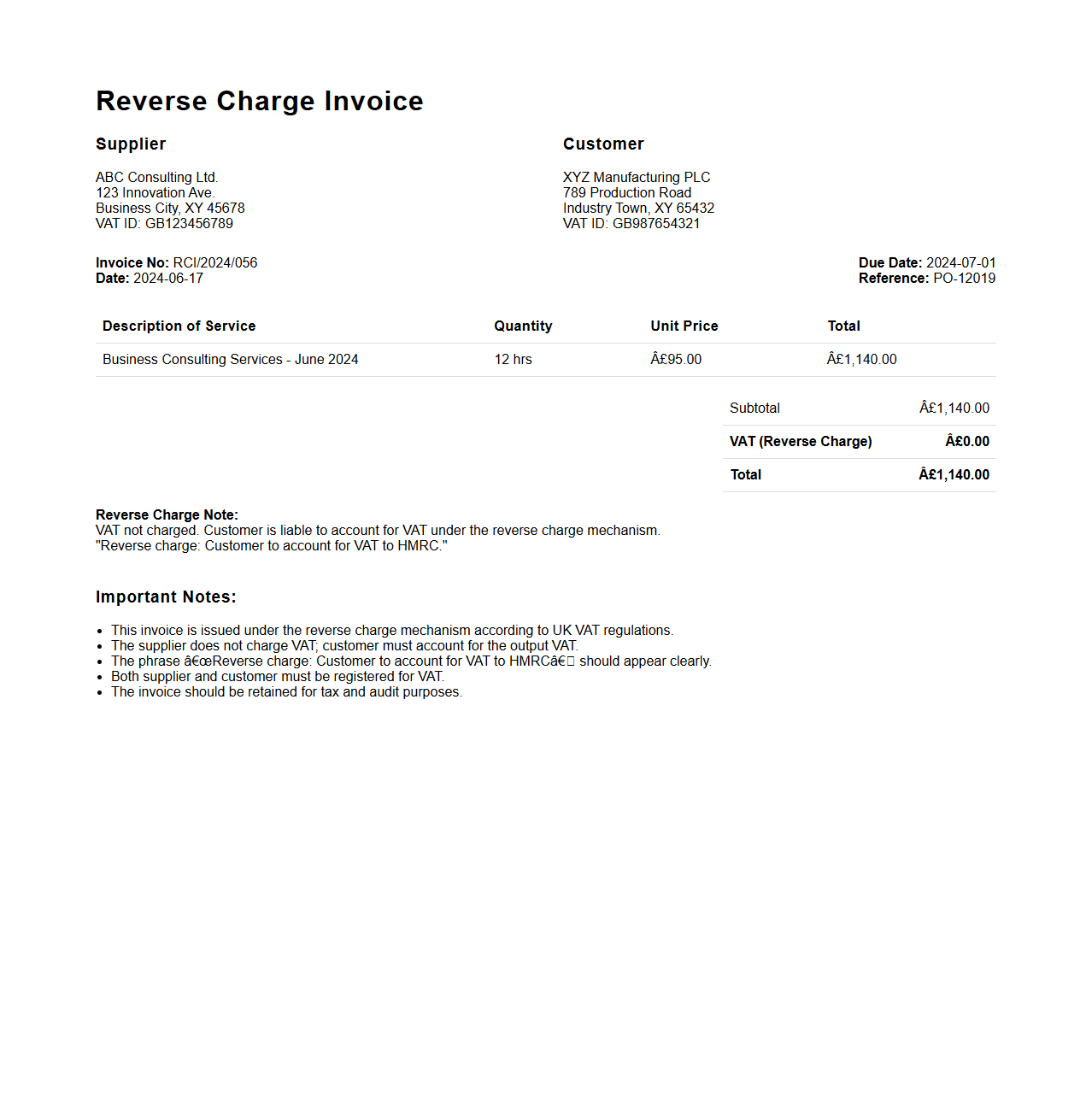
Reverse Charge Invoice Template
A
Reverse Charge Invoice Template is a document used in transactions where the responsibility to pay VAT shifts from the supplier to the buyer. This template ensures compliance with tax regulations by clearly indicating that the buyer must account for the VAT instead of the seller. It streamlines the invoicing process for businesses dealing with cross-border sales or specific tax scenarios, reducing errors and facilitating accurate tax reporting.
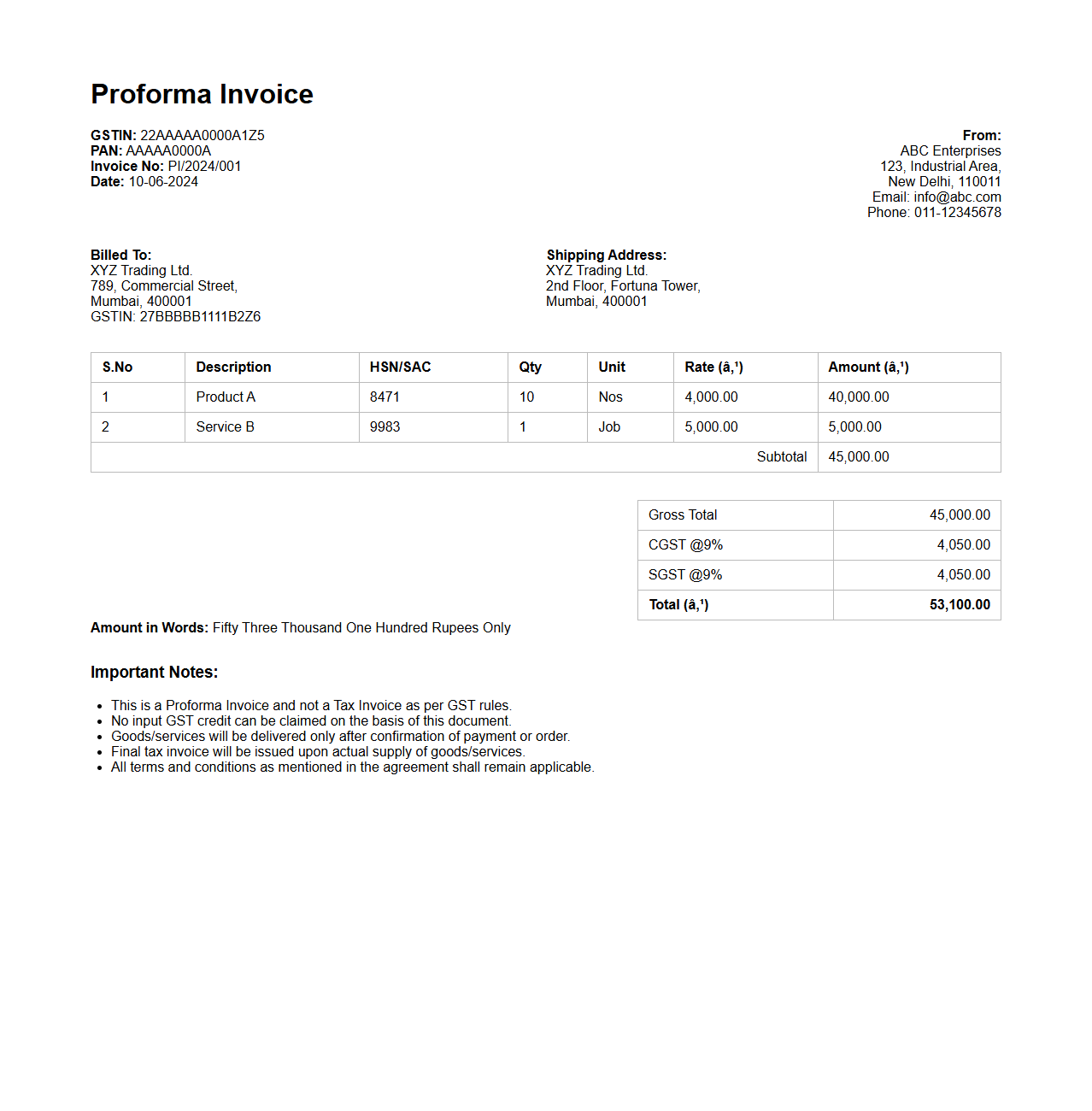
Proforma Invoice under GST
A
Proforma Invoice under GST is a preliminary bill of sale sent to buyers before the actual supply of goods or services, serving as an estimate of the value and details of the proposed transaction. It is not a tax invoice and does not have any legal validity for claiming Input Tax Credit (ITC) under GST. This document helps in facilitating customs clearance, advance payments, and order confirmation without creating any tax liability.
Composite Dealer Invoice Format
The
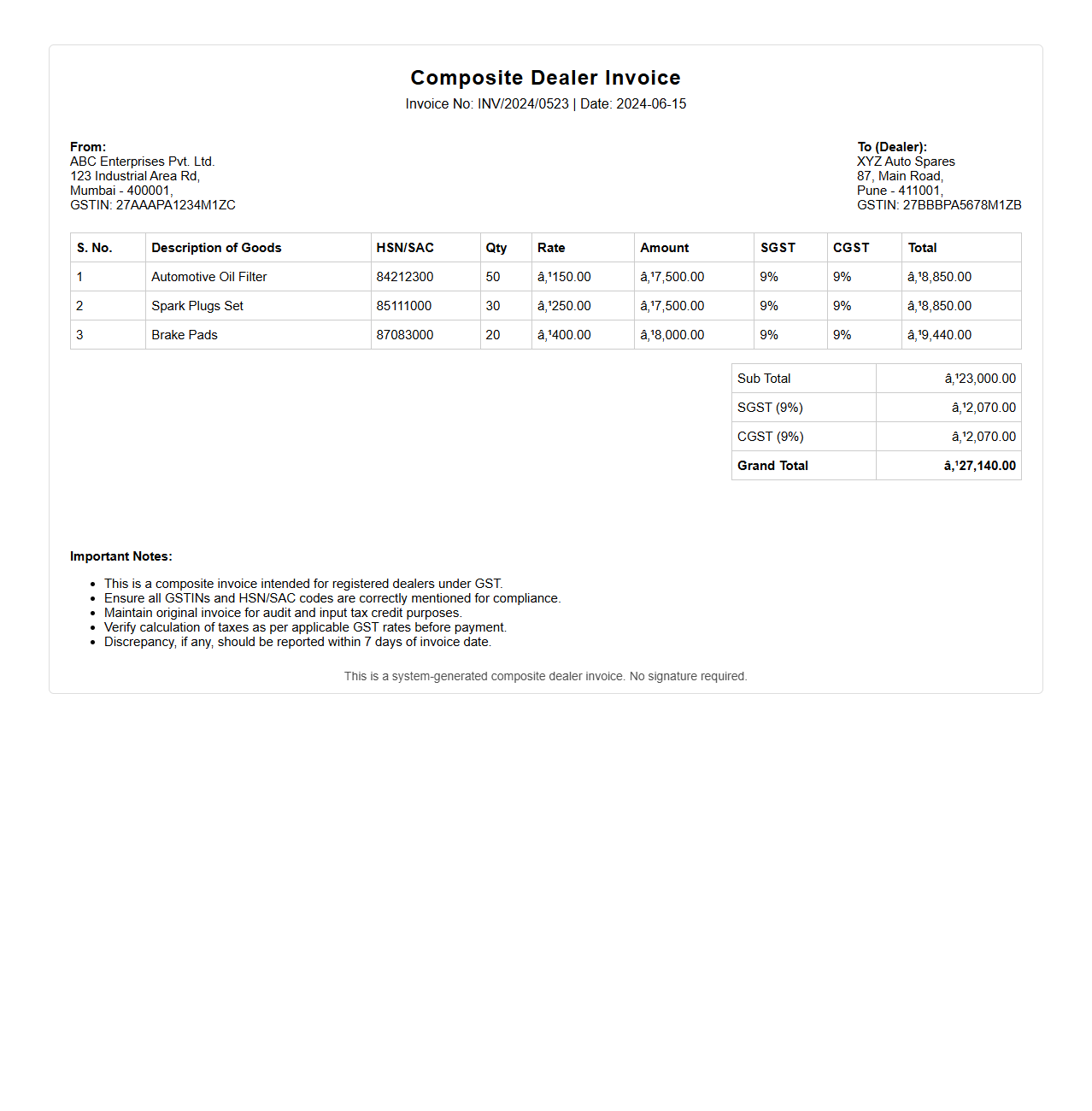
Composite Dealer Invoice Format document consolidates multiple dealer transactions into a single comprehensive invoice, streamlining accounting and reconciliation processes. It typically includes detailed information such as dealer identification, transaction dates, item descriptions, quantities, prices, and applicable taxes. This format enhances transparency, reduces paperwork, and improves financial tracking efficiency for both dealers and manufacturers.
E-Invoice Format under GST
The
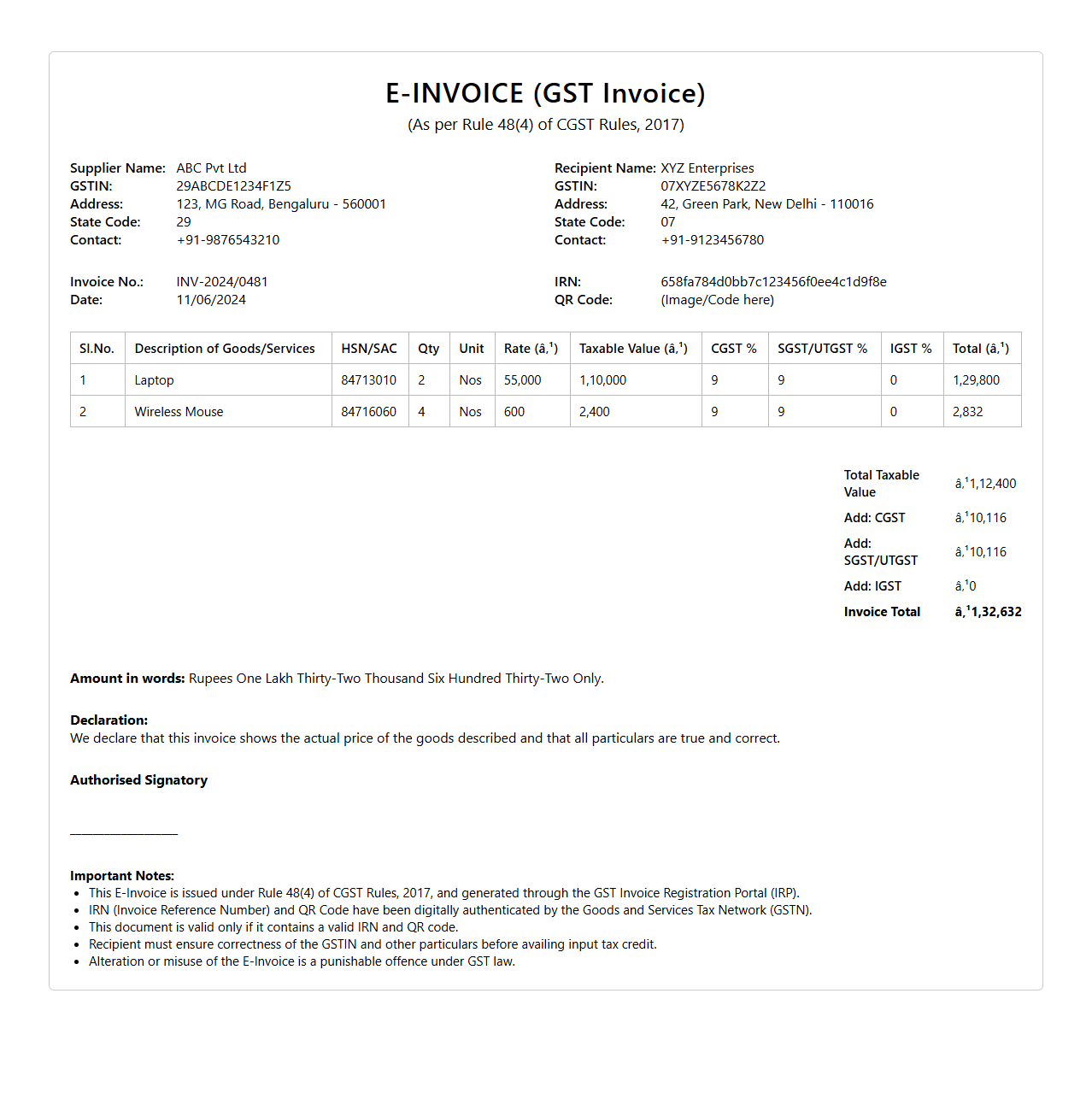
E-Invoice Format under GST is a standardized template prescribed by the government for generating electronic invoices, ensuring uniformity and authenticity across all transactions. This format includes critical details such as supplier and recipient GSTIN, invoice number, invoice date, item description, HSN codes, taxable values, and GST rates, enabling seamless integration with the GST portal. By mandating e-invoicing, businesses can automate tax reporting, reduce errors, and improve compliance with GST regulations.
Mandatory Fields in GST Invoice for B2B Transactions
A GST invoice for B2B transactions must include the supplier's name, address, and GSTIN. It should clearly mention the invoice number, date, and recipient's details with their GSTIN. Additionally, the description of goods or services, quantity, value, and tax amount are essential fields.
Presentation of HSN or SAC Codes on GST Invoice
The HSN or SAC codes must be prominently displayed alongside the description of goods or services. These codes help in classifying the items for correct tax application and compliance. It is mandatory to mention the appropriate HSN for goods and SAC for services to avoid discrepancies.
Required Signatures or Digital Authentication on GST Invoice
A GST invoice requires the signature or digital signature of the supplier or an authorized representative. This authentication confirms the authenticity and legality of the document. Digital signatures are increasingly preferred as per the latest GST regulations to streamline compliance.
Prescribed Format for Reverse Charge Mechanism Details
Invoices under the Reverse Charge Mechanism (RCM) must clearly state that the tax is payable by the recipient. A distinct mention of "Tax payable under reverse charge" should be included near the tax amount field. This ensures clarity in tax liability and proper accounting as per GST rules.
Display of Multiple GST Rates for Different Items
When multiple items have different GST rates, each item's tax rate and amount should be clearly displayed separately in the invoice. The invoice must include individual taxable values, applicable GST rates, and corresponding tax amounts for each item. This enables transparency and accurate tax calculations for all items.