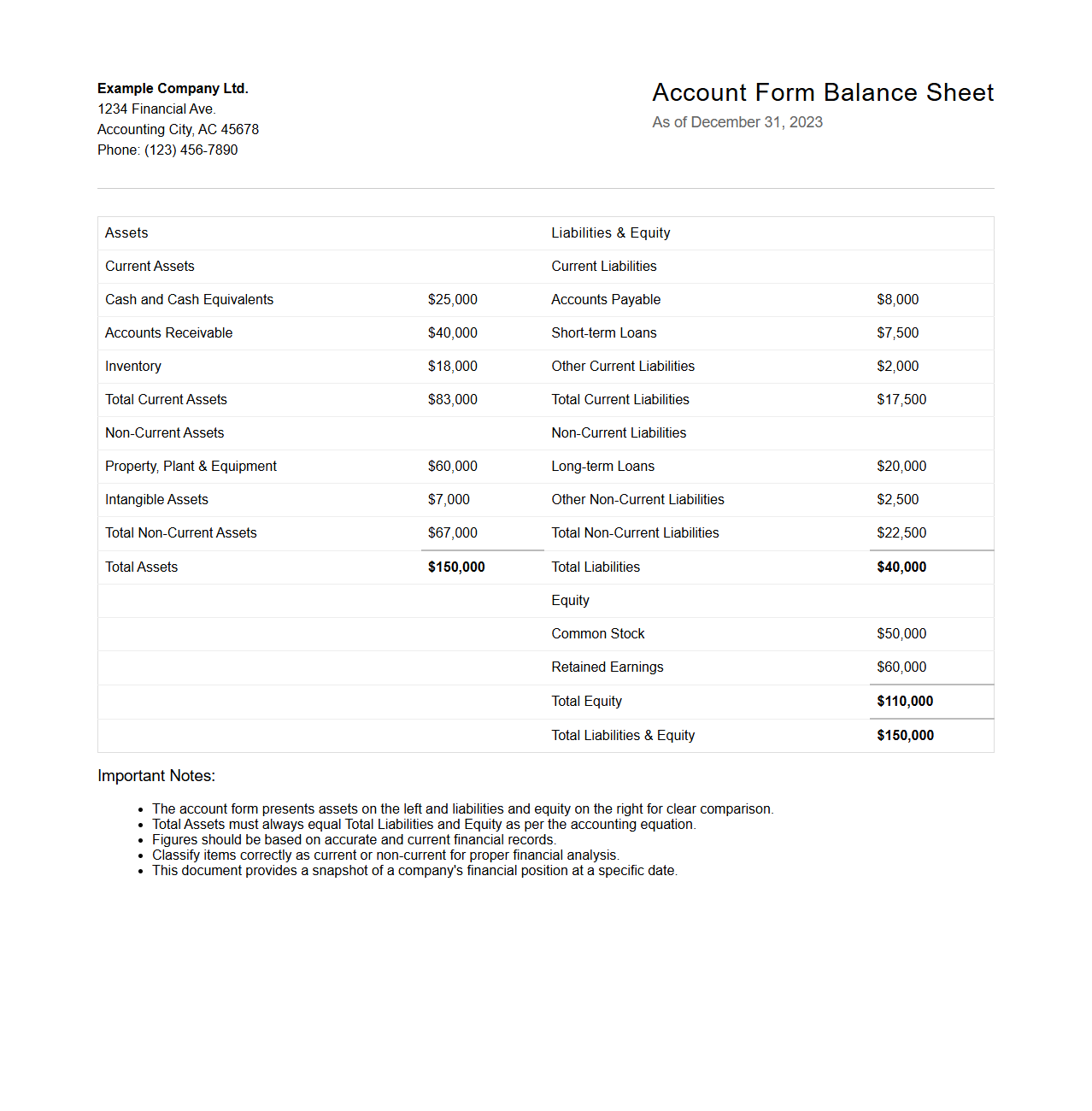
The Format of Statement for Financial Position presents a snapshot of a company's assets, liabilities, and equity at a specific point in time. It follows a structured layout, typically listing assets first, followed by liabilities, and then shareholders' equity to ensure clarity and balance. This format helps stakeholders assess the financial health and stability of the business efficiently.
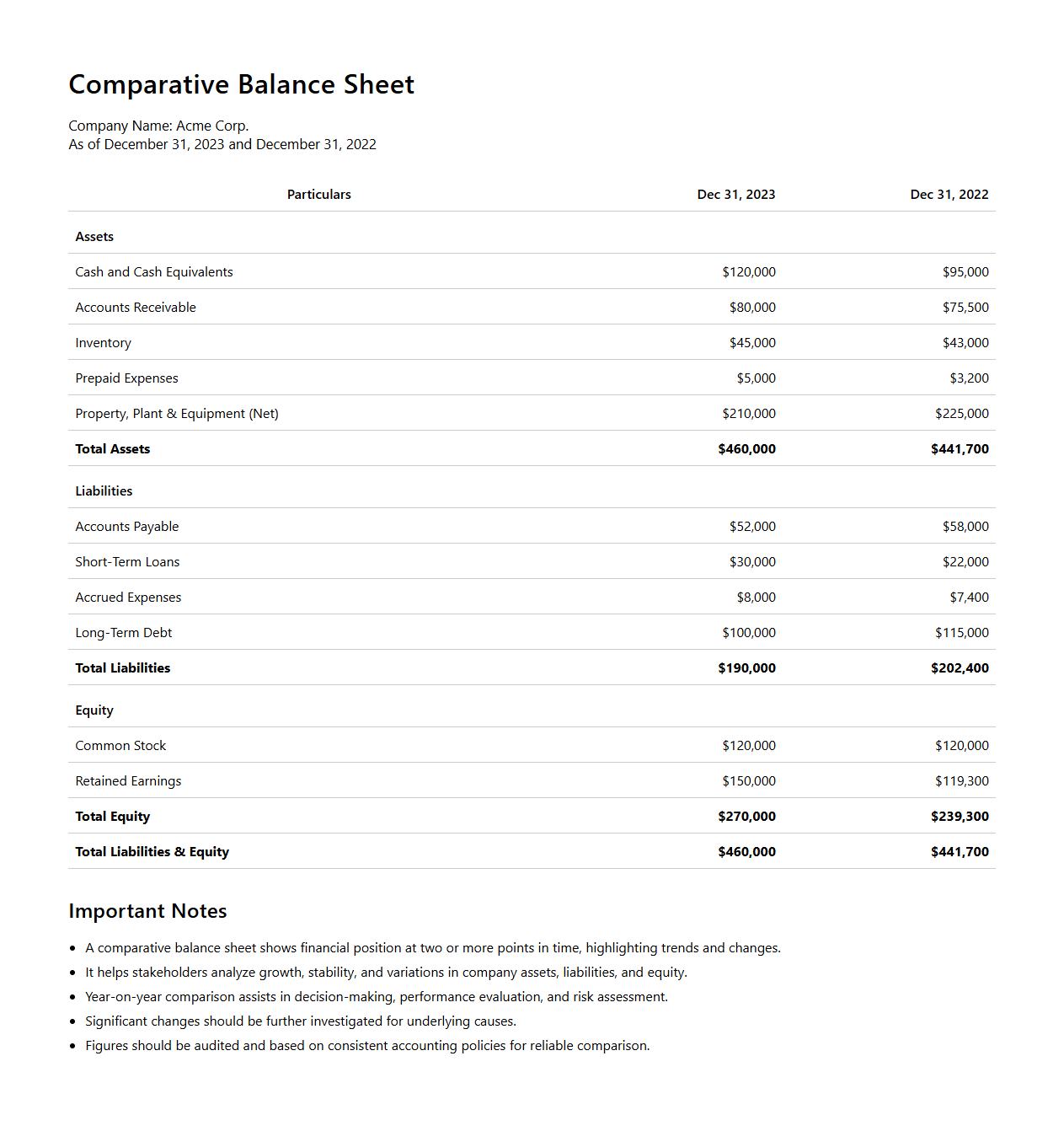
Comparative Balance Sheet Document
A
Comparative Balance Sheet Document presents the financial position of a company by displaying assets, liabilities, and equity side-by-side for multiple periods, enabling clear trend analysis. This document helps stakeholders identify changes in financial health over time, facilitating informed decision-making. It is essential for assessing liquidity, solvency, and operational efficiency through direct period-to-period comparison.
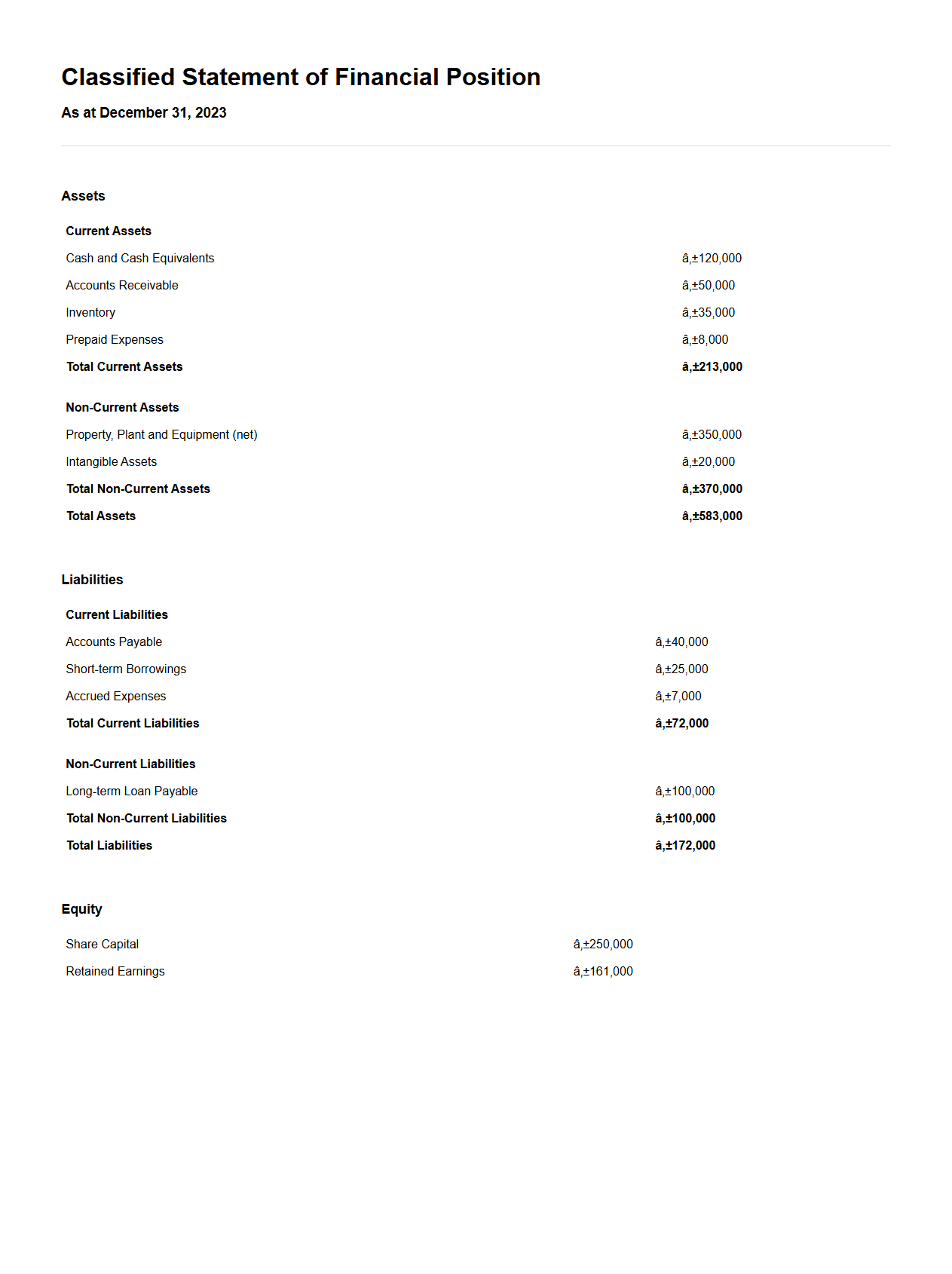
Classified Statement of Financial Position
The
Classified Statement of Financial Position is a financial report that organizes assets, liabilities, and equity into specific categories such as current and non-current sections, providing a clear structure for assessing a company's financial health. This format enhances the ability of stakeholders to evaluate liquidity, solvency, and overall financial stability by distinguishing easily convertible assets and short-term obligations from long-term investments and debts. It is an essential tool for investors, management, and creditors in making informed economic decisions.
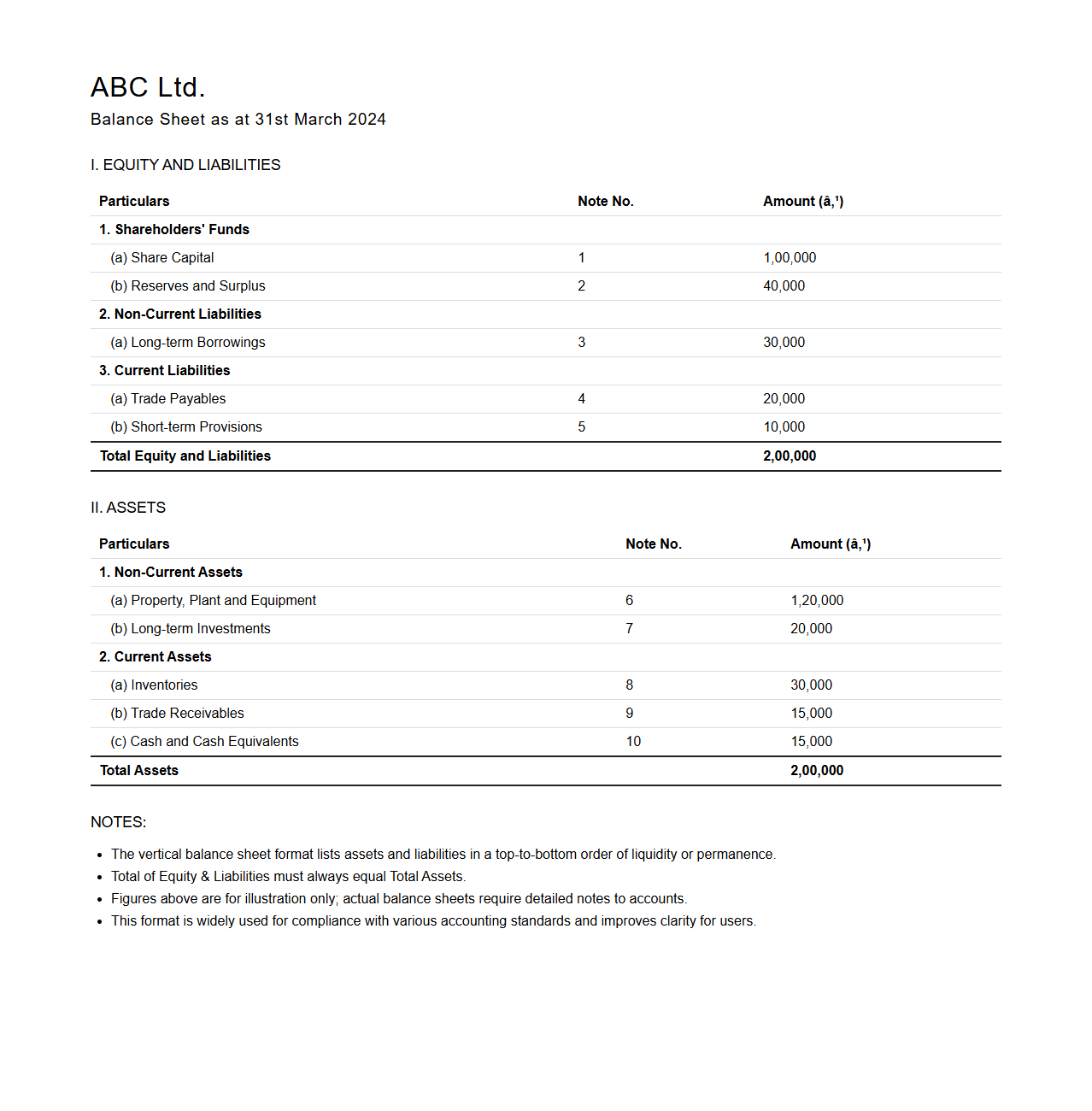
Vertical Balance Sheet Format
The
Vertical Balance Sheet Format is a financial statement layout that presents assets, liabilities, and equity in a single column, allowing for straightforward comparison and analysis. This format lists assets from most liquid to least liquid, followed by liabilities and shareholders' equity, making it easier to assess a company's financial position at a glance. It is widely used for financial reporting, internal audits, and investment evaluations due to its clear and organized structure.
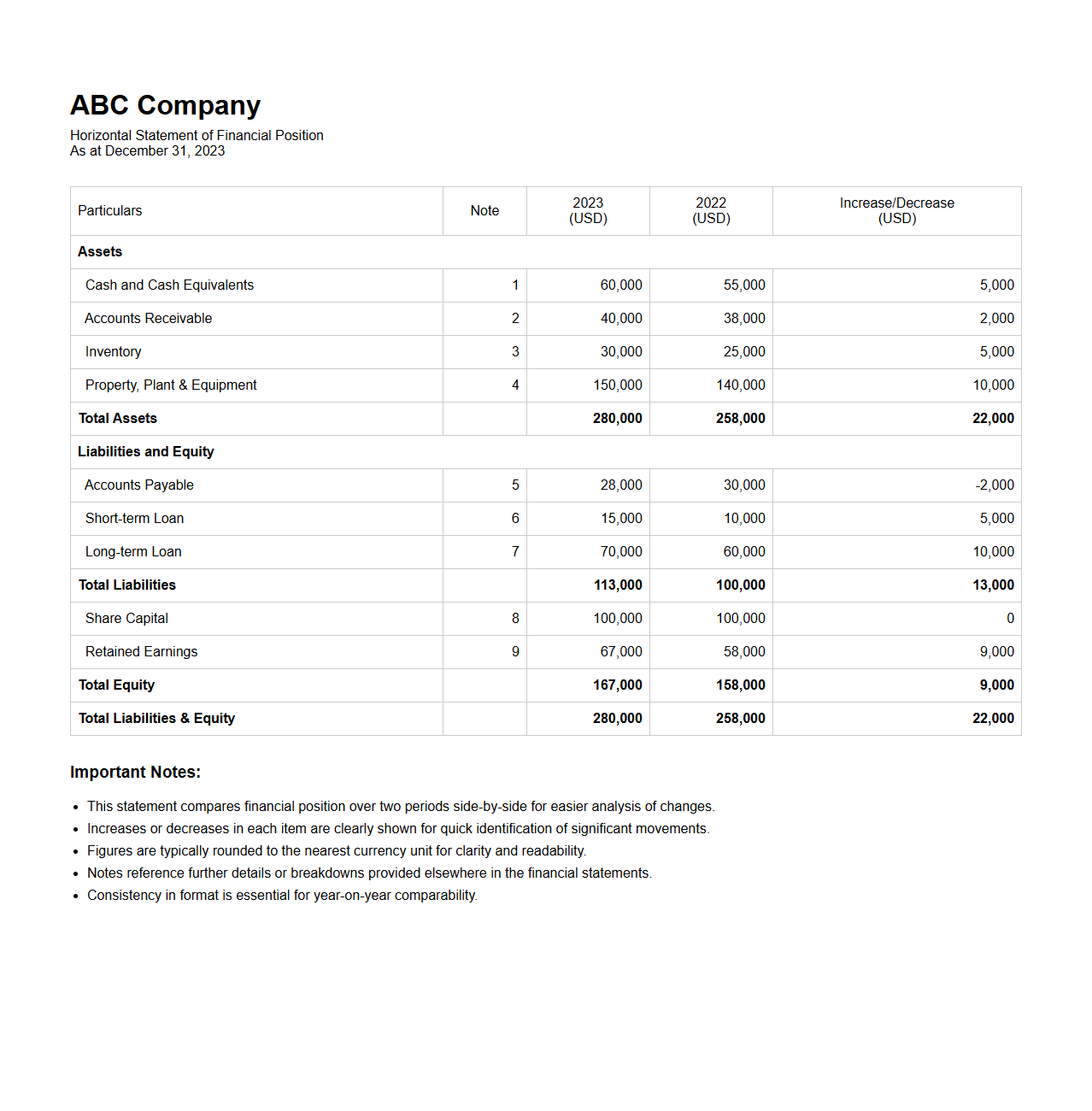
Horizontal Statement of Financial Position
The
Horizontal Statement of Financial Position is a financial document that presents a company's assets, liabilities, and equity side by side in a horizontal format, enabling easier comparison and analysis of financial elements. It provides a clear overview of the financial health of an organization by aligning related accounts across the balance sheet, facilitating trend analysis and decision-making. This format is particularly useful for stakeholders seeking to understand the relationship between different financial components at a glance.
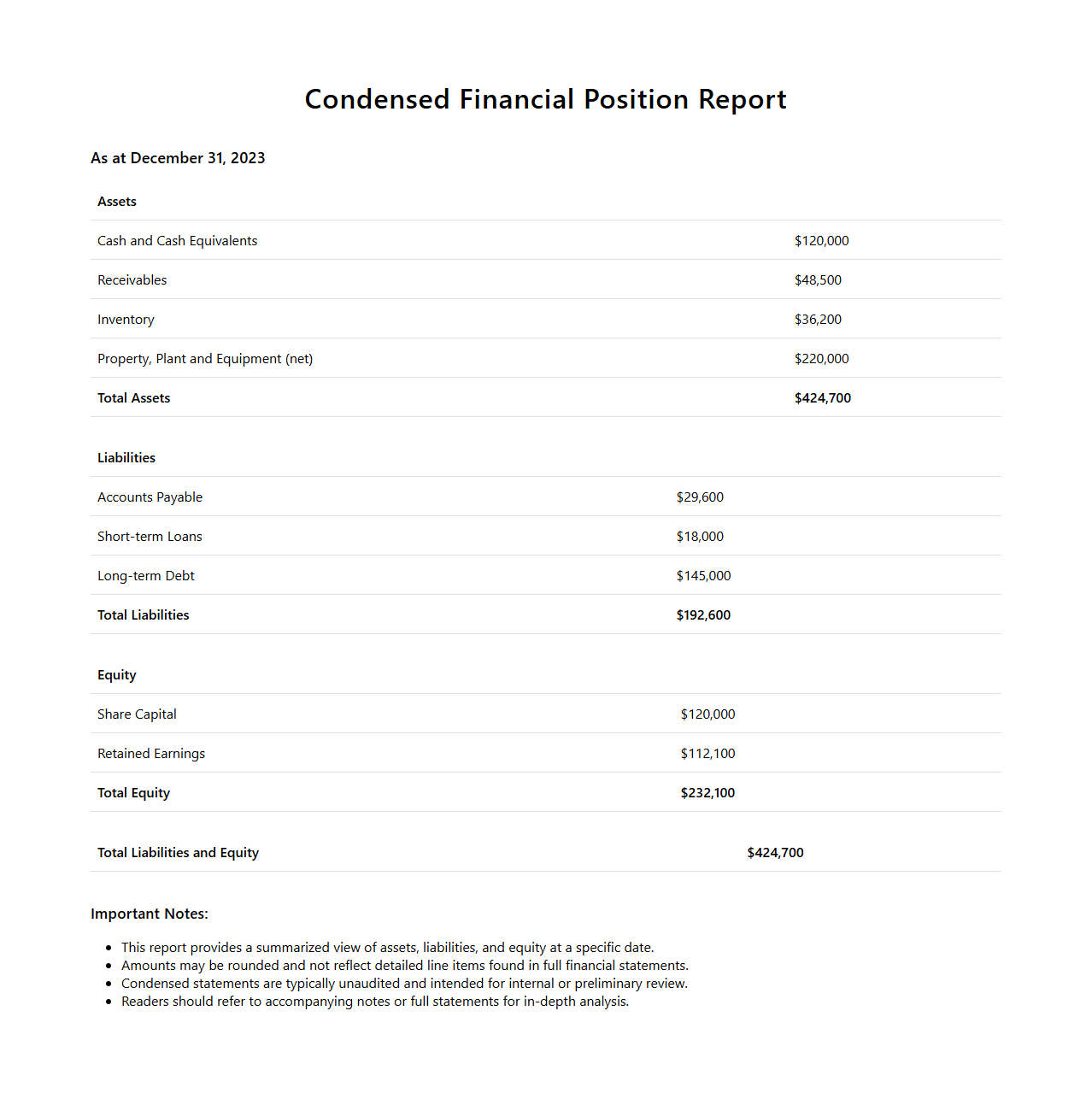
Condensed Financial Position Report
A
Condensed Financial Position Report summarizes a company's key financial metrics, including assets, liabilities, and equity, providing stakeholders with a clear snapshot of the organization's financial health. This report distills complex accounting data into an accessible format, facilitating quick analysis and informed decision-making. It is essential for investors, management, and regulatory bodies to assess liquidity, solvency, and overall fiscal stability efficiently.
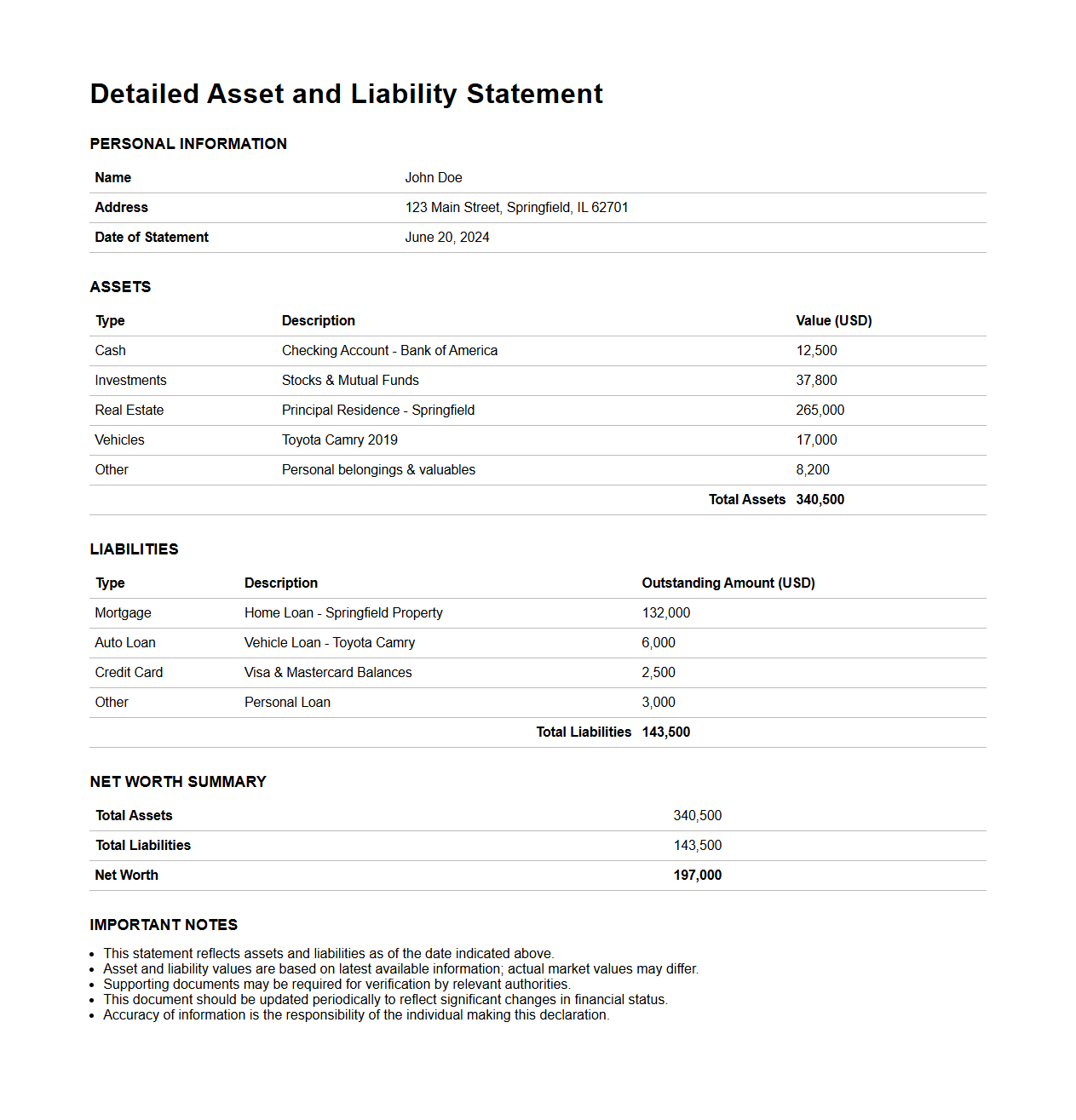
Detailed Asset and Liability Statement
A
Detailed Asset and Liability Statement is a comprehensive financial document that outlines an individual's or organization's complete financial position by listing all assets and liabilities. It provides a clear snapshot of wealth and financial obligations, categorizing assets such as cash, investments, real estate, and liabilities like loans and mortgages. This statement is essential for accurate financial planning, loan applications, and assessing creditworthiness.
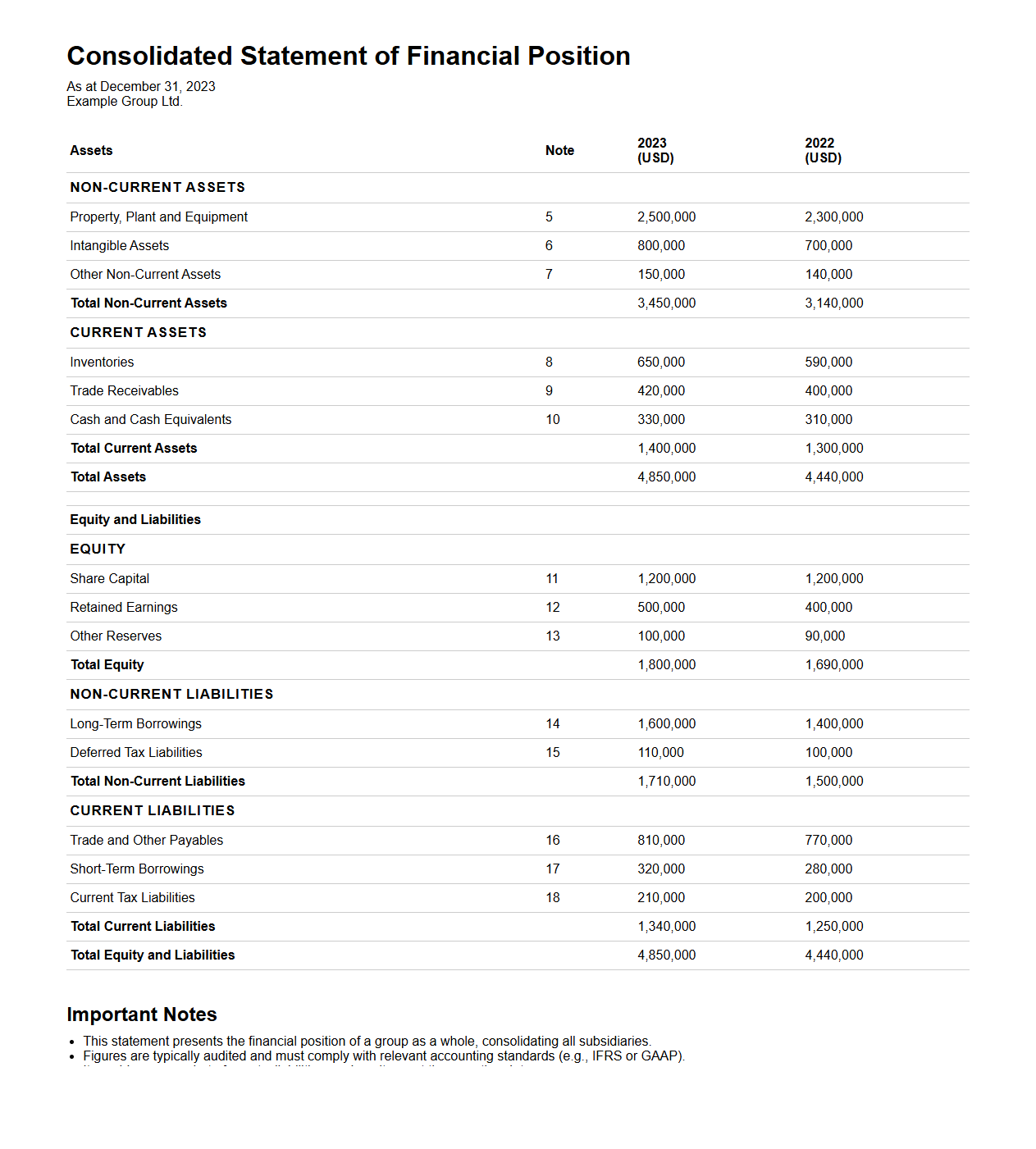
Consolidated Financial Position Statement
The
Consolidated Financial Position Statement is a comprehensive financial report that combines the assets, liabilities, and equity of a parent company and its subsidiaries into a single document. It provides a clear overview of the overall financial health and standing of the entire corporate group at a specific point in time. This statement is essential for investors and stakeholders to assess the collective financial stability and performance of the business entity as a whole.
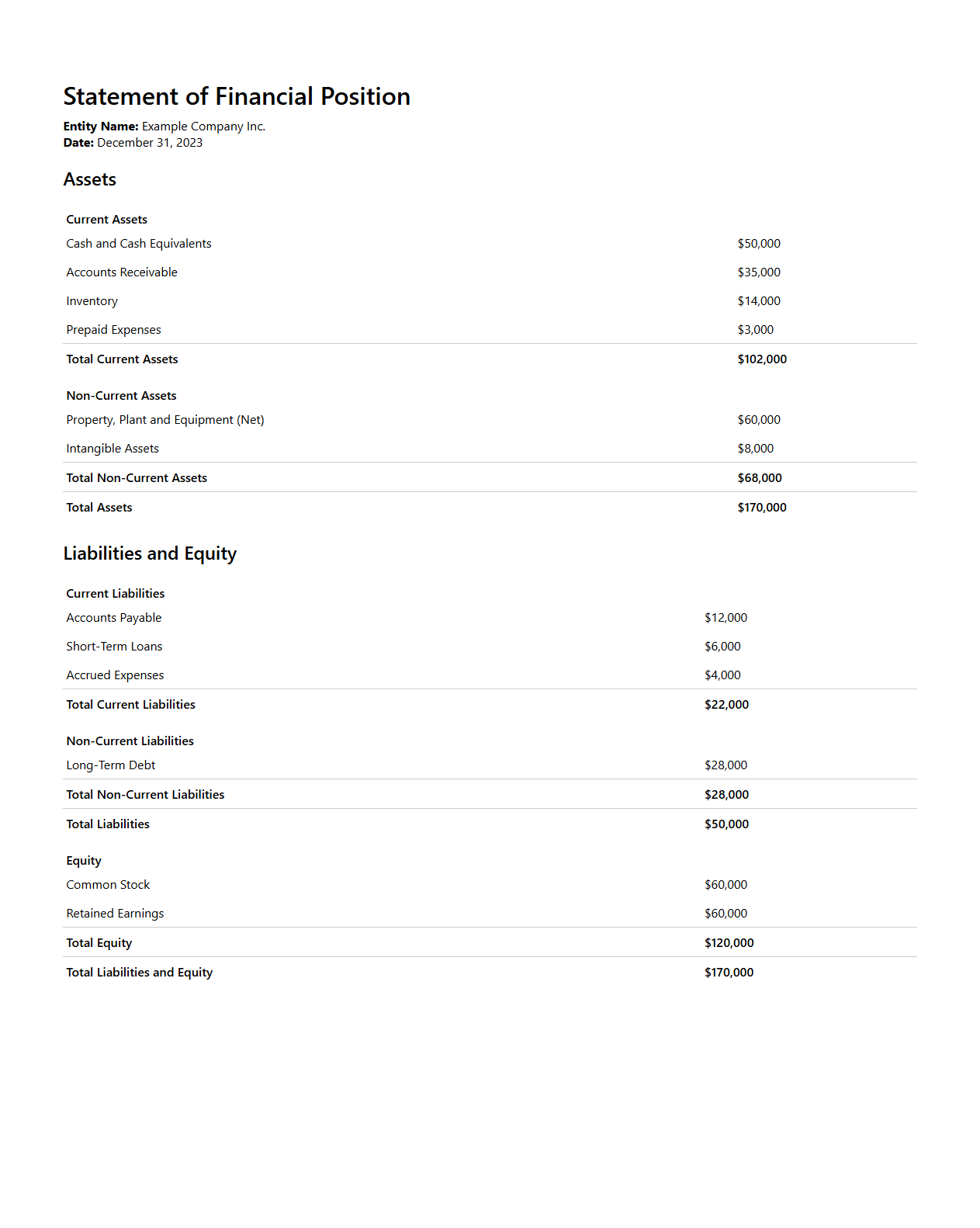
Single-Year Statement of Financial Position
A
Single-Year Statement of Financial Position is a financial document that summarizes a company's assets, liabilities, and equity at a specific point in time, typically the end of a fiscal year. It provides a snapshot of the organization's financial health, highlighting resources owned and obligations owed. This statement is crucial for stakeholders to assess liquidity, solvency, and overall financial stability.
Account Form Balance Sheet Document
The
Account Form Balance Sheet Document is a financial statement format that organizes assets, liabilities, and equity in a vertical layout to provide a clear snapshot of a company's financial position. This document helps stakeholders assess the company's liquidity, solvency, and capital structure at a specific point in time. It is essential for internal management decisions, external audits, and regulatory compliance.
Narrative Statement of Financial Position
The
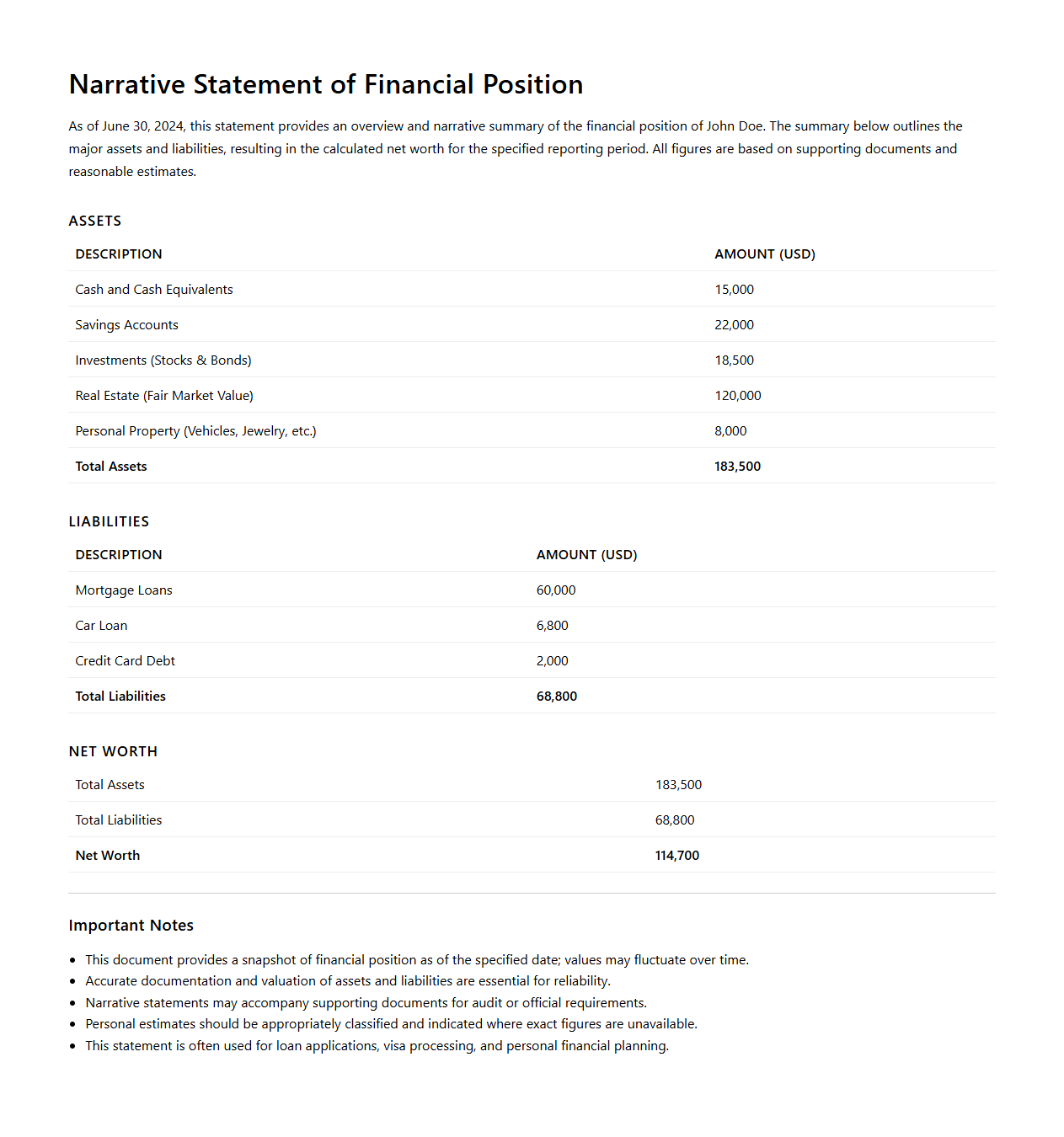
Narrative Statement of Financial Position document provides a detailed explanation of a company's financial condition by complementing the traditional balance sheet figures with contextual insights. It highlights key assets, liabilities, and equity components, offering stakeholders a clearer understanding of financial health and risks. This narrative helps in interpreting complex financial data, making it essential for investors and management decisions.
What are the key components presented in a Statement of Financial Position?
The Statement of Financial Position primarily displays three key components: assets, liabilities, and equity. These elements provide a snapshot of a company's financial health at a specific point in time. Together, they reflect the organization's resources, obligations, and residual interest.
How are assets classified and organized in the Statement of Financial Position?
Assets are classified as either current or non-current based on their liquidity and intended use. Current assets include cash and items expected to be converted into cash within one year. Non-current assets represent long-term investments, property, and equipment held beyond a year.
What is the distinction between current and non-current liabilities in the format?
Liabilities are divided into current and non-current categories based on their due dates. Current liabilities are obligations payable within one year, such as accounts payable and short-term loans. Non-current liabilities extend beyond one year, including long-term debt and deferred tax liabilities.
Where is equity positioned and detailed within the Statement of Financial Position?
Equity is positioned below liabilities and represents the owner's residual interest after debts are settled. It includes share capital, retained earnings, and other reserves. This section outlines the company's net worth and indicates its financial strength.
What information must be disclosed about comparatives and reporting dates in the format?
The Statement of Financial Position must disclose the comparative financial information for prior periods to ensure transparency. It also includes the specific reporting date to define the snapshot of the company's financial status. These disclosures aid stakeholders in analyzing trends and changes over time.