The format of a technical report for engineering analysis typically includes a title page, abstract, introduction, methodology, results, discussion, and conclusion. Clear headings, precise figures, and detailed tables are essential to effectively communicate data and findings. Proper referencing and appendices ensure the report's credibility and facilitate further review.
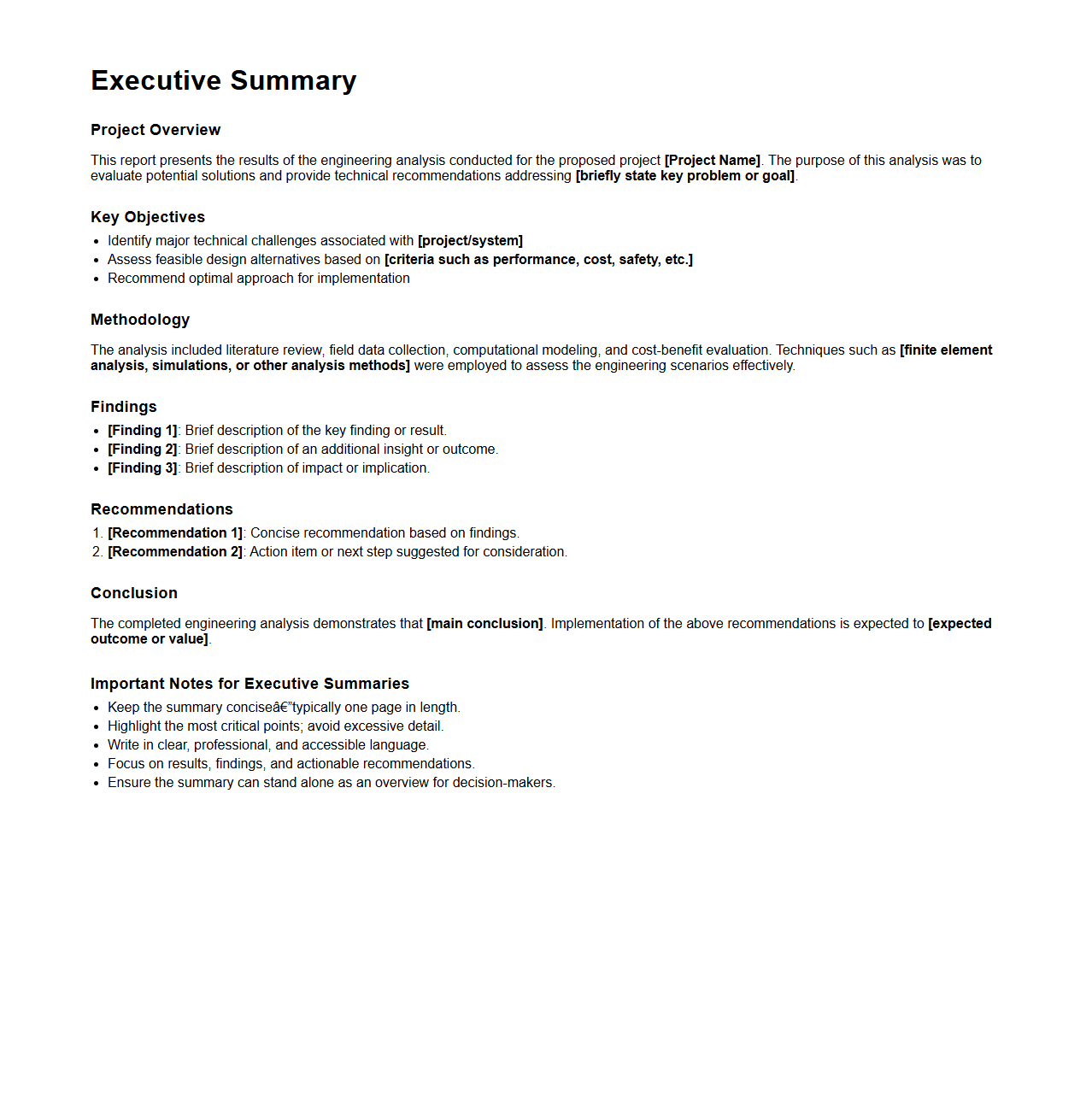
Executive Summary Format for Engineering Analysis Technical Report
The
Executive Summary Format for an Engineering Analysis Technical Report provides a concise overview of the key findings, methodology, and conclusions of the engineering study. It highlights essential data, critical calculations, and recommended actions without delving into detailed technical jargon. This format ensures stakeholders quickly understand the report's purpose, results, and implications for decision-making.
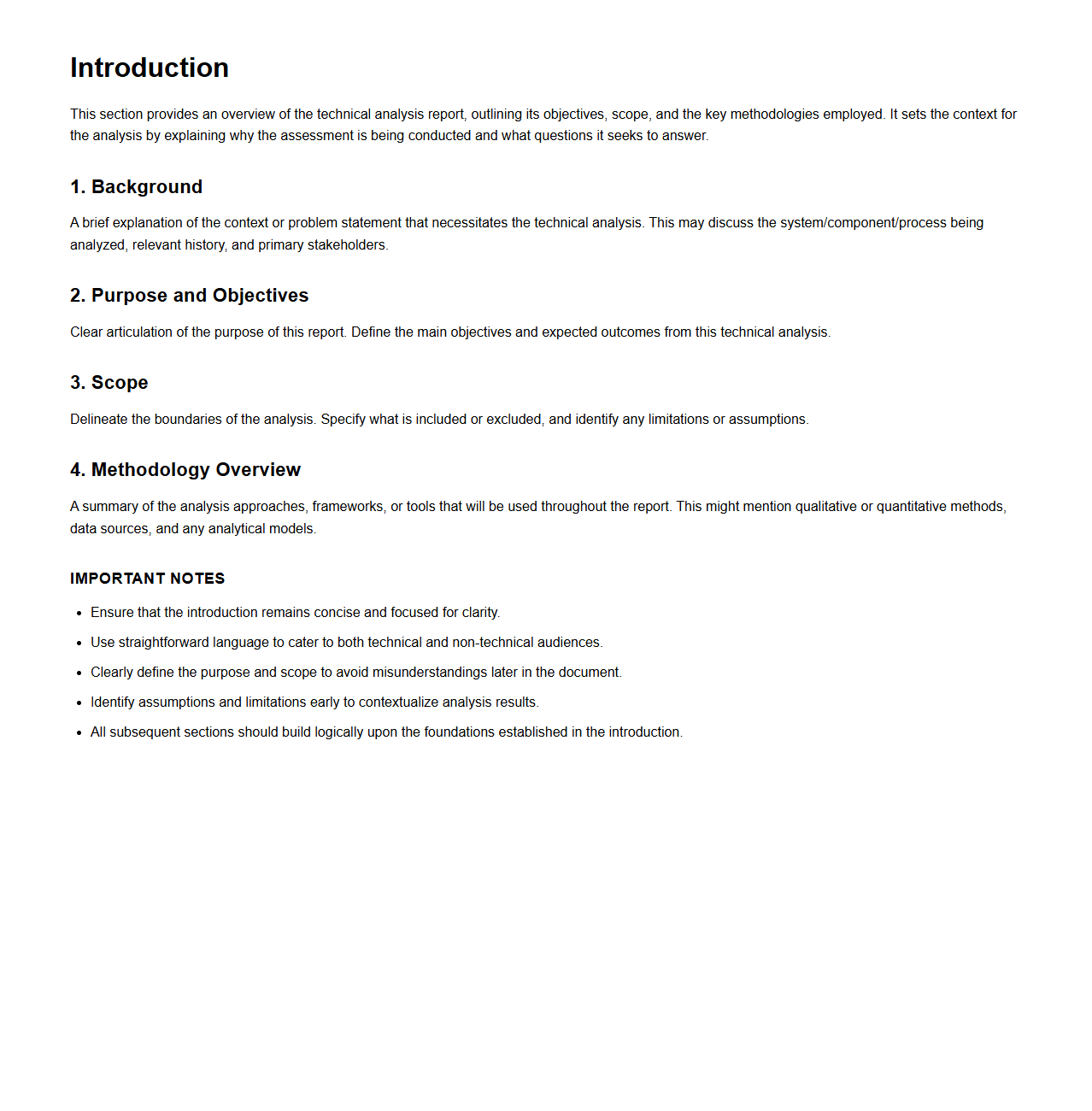
Introduction Section Structure in Technical Analysis Reports
The
Introduction Section Structure in Technical Analysis Reports outlines the framework for presenting the purpose, scope, and background of the analysis. It typically includes objectives, key definitions, and the context necessary to understand the report's findings. Clear organization in this section ensures that readers grasp the report's intent and relevance from the outset.
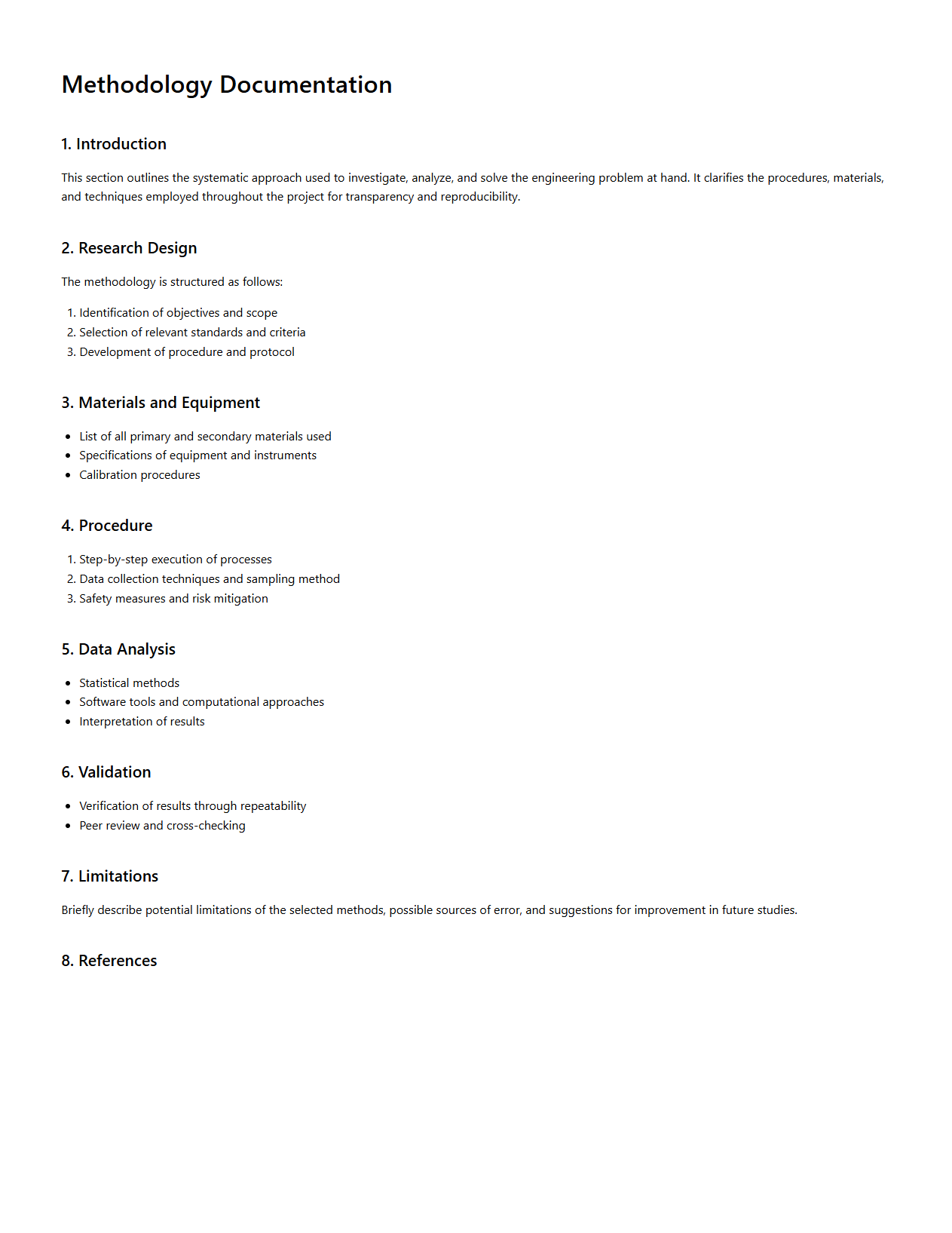
Methodology Documentation Style for Engineering Reports
Methodology Documentation Style for Engineering Reports is a structured approach that details the systematic procedures and techniques used during engineering projects. It ensures clarity and reproducibility by clearly outlining experimental setups, data collection methods, and analysis processes. Emphasizing transparency, the
Methodology Documentation Style facilitates effective communication and validation of engineering findings.
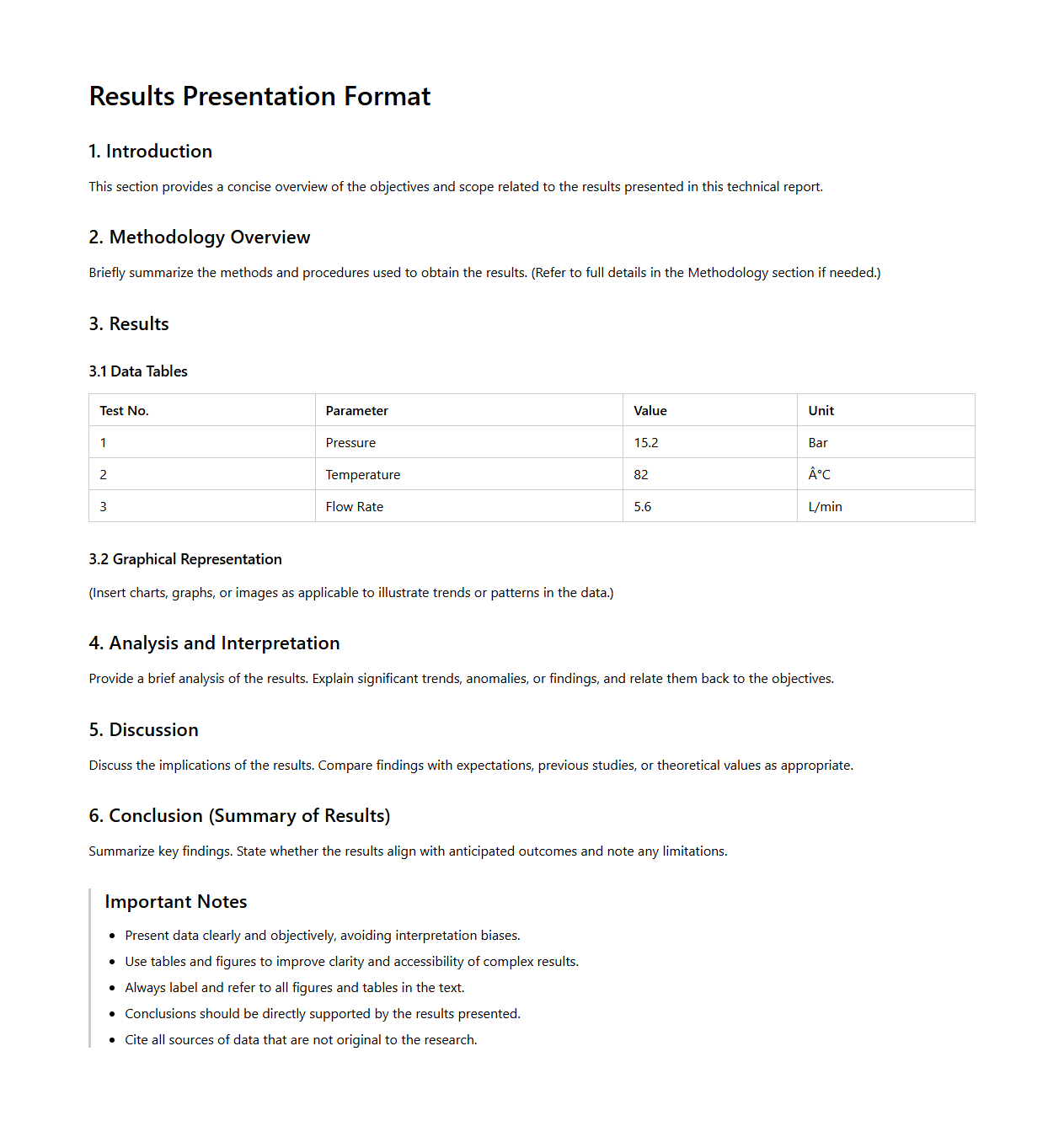
Results Presentation Format in Technical Report
The
Results Presentation Format in a technical report document refers to the structured way of displaying research findings using tables, graphs, charts, and descriptive text to ensure clarity and precision. This format prioritizes accuracy and ease of interpretation by organizing data logically and highlighting key metrics, trends, and comparisons relevant to the study's objectives. Effective presentation of results enhances the report's usability for informed decision-making and technical analysis.
Discussion and Interpretation Subsection Formatting
The
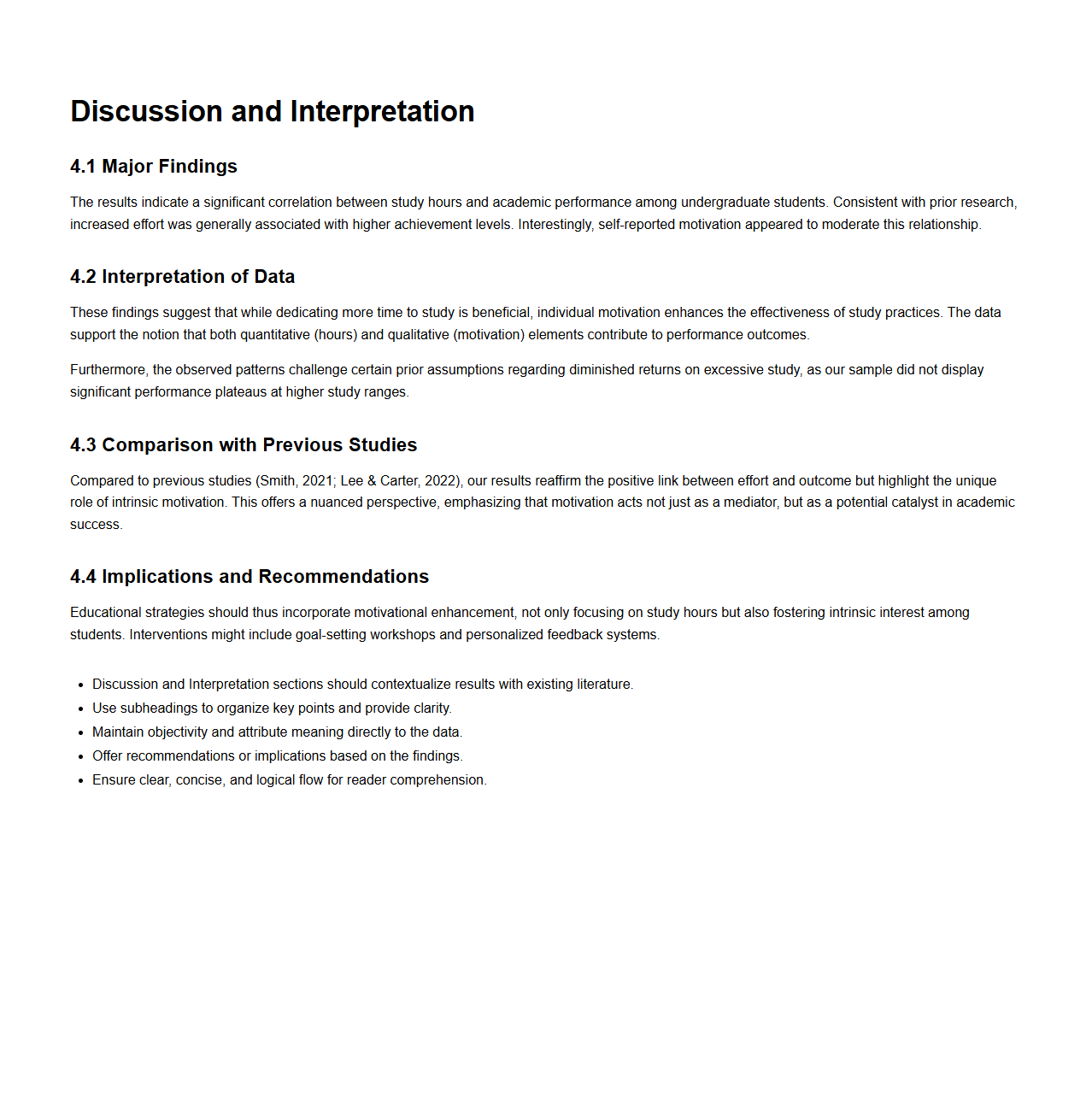
Discussion and Interpretation Subsection Formatting document provides clear guidelines on structuring the section where research findings are analyzed and explained in detail. It ensures consistency in presenting data interpretations, linking results to existing literature, and highlighting the significance of findings. Proper formatting assists in maintaining clarity, improving readability, and reinforcing the scientific rigor of the manuscript.
Conclusions and Recommendations Format in Engineering Analysis
The
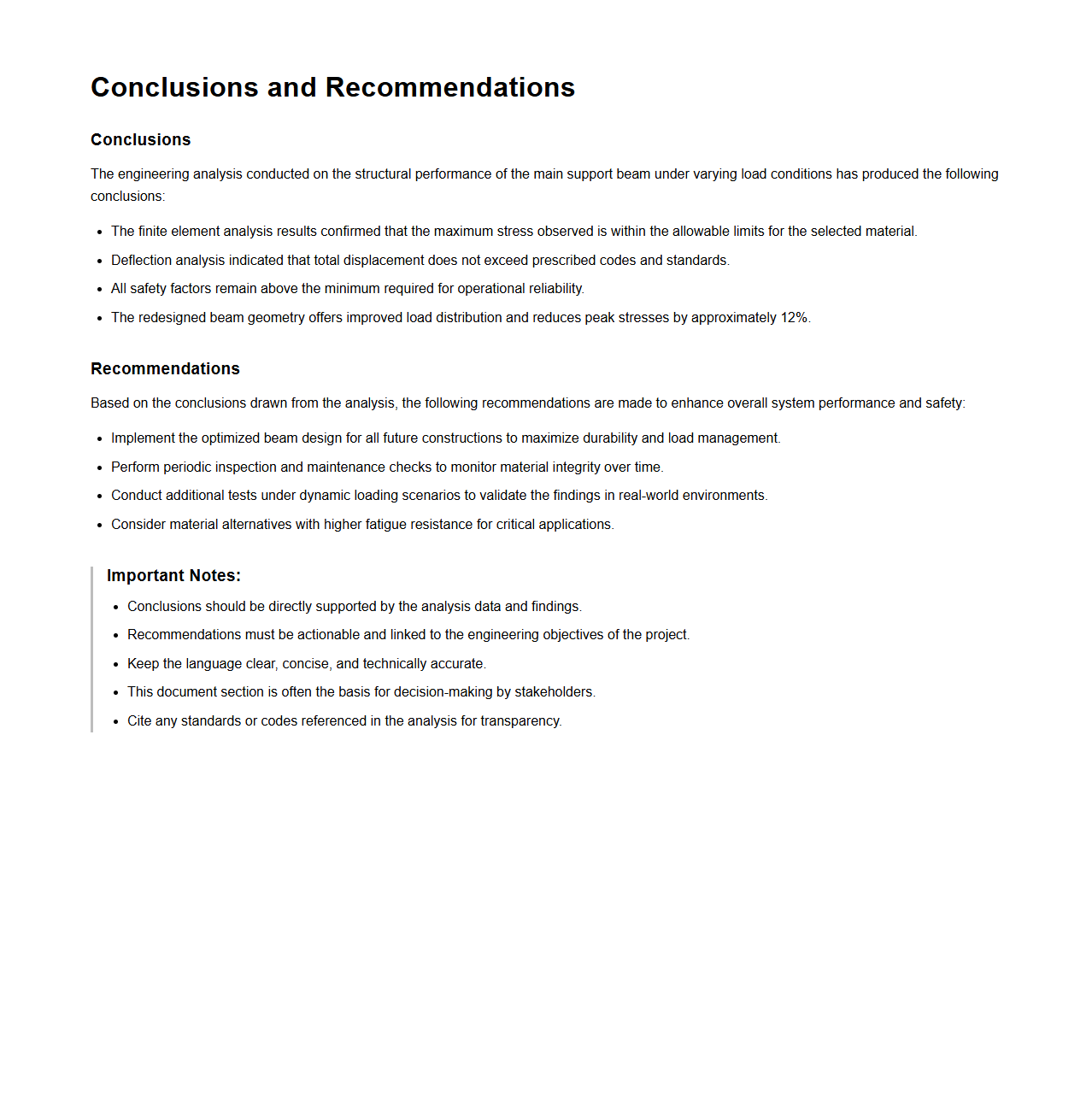
Conclusions and Recommendations Format in an Engineering Analysis document succinctly summarizes the key findings derived from the analysis and presents actionable suggestions for future work or decision-making. This section highlights critical data interpretations, validates engineering assumptions, and proposes specific design improvements, project directions, or necessary investigations. Clear and precise conclusions help stakeholders understand the impact of the analysis while recommendations guide practical implementation and risk mitigation strategies.
References and Citation Structure in Technical Reports
The
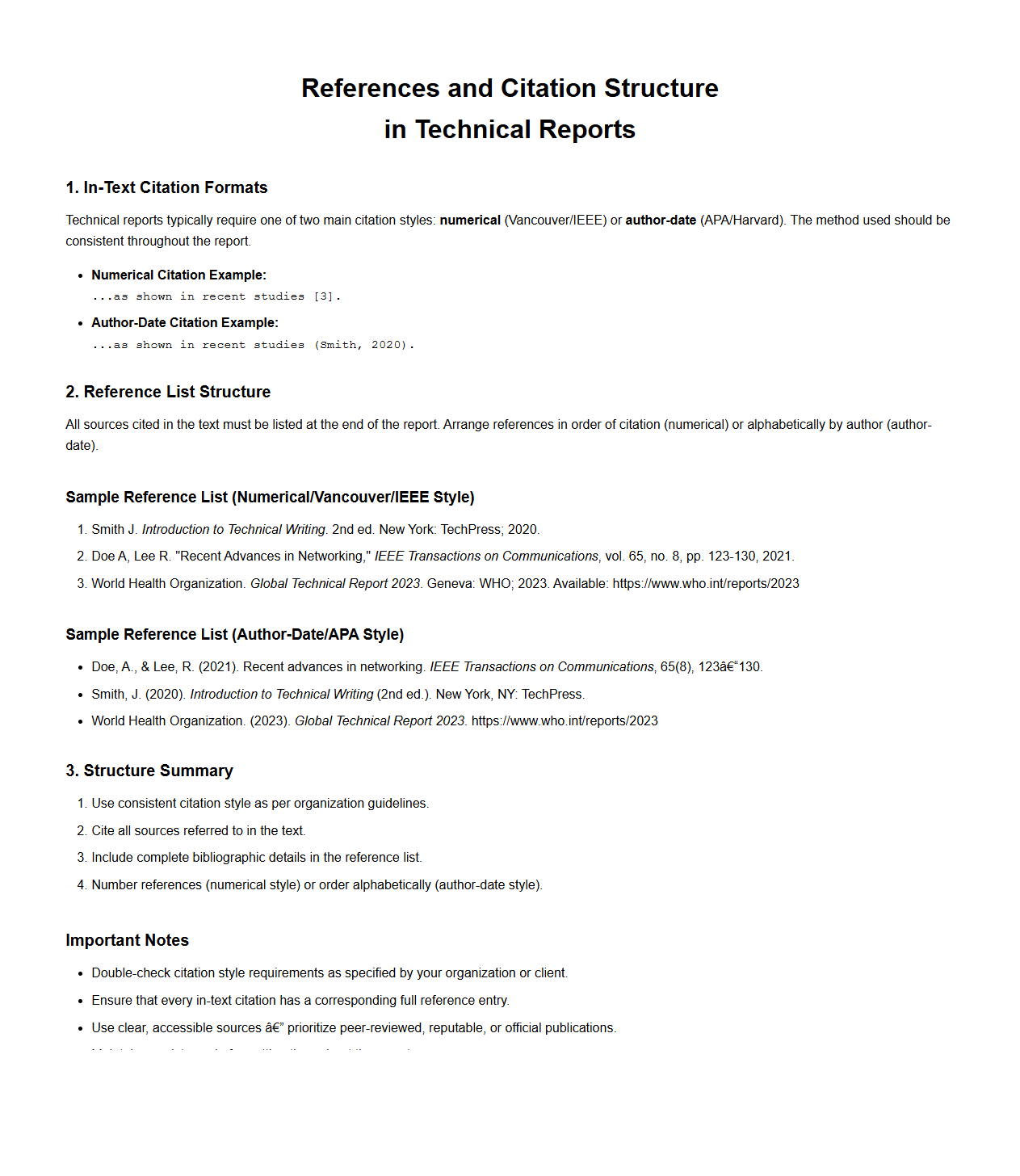
References and Citation Structure in technical reports is a standardized method for acknowledging sources of information, ensuring credit is given to original authors, and maintaining the report's credibility. It typically includes in-text citations linked to a detailed reference list, formatted according to specific style guides such as IEEE, APA, or MLA. Proper citation structure helps avoid plagiarism, supports the validation of data, and allows readers to locate the original research or resources referenced in the document.
Appendices Organization within Engineering Analysis Documents
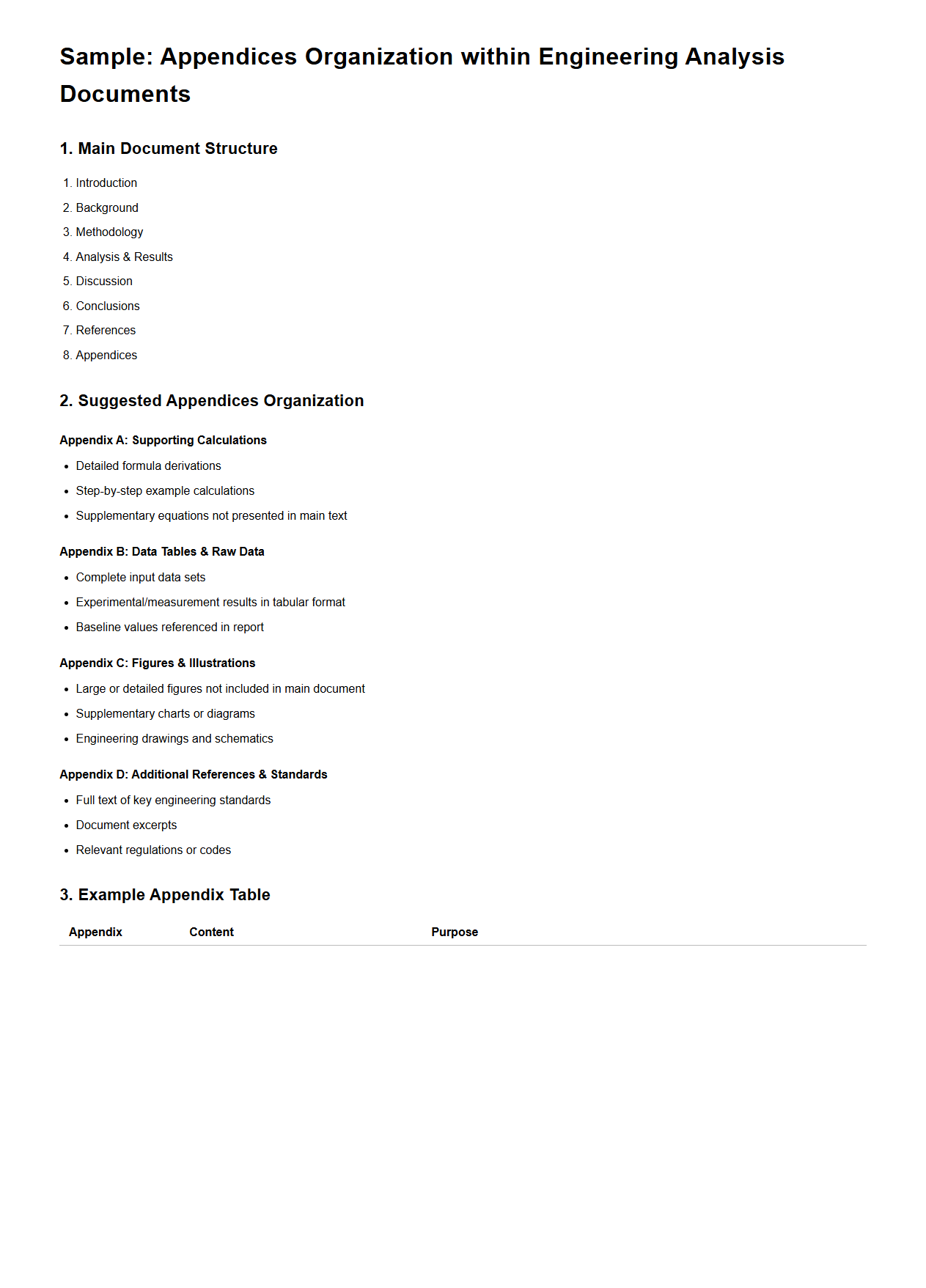
Appendices Organization within Engineering Analysis Documents ensures structured placement of supplementary materials such as calculations, tables, diagrams, and detailed data that support the main analysis. It enhances clarity and accessibility, allowing readers to easily reference complex information without disrupting the document's primary flow. Properly organized
appendices improve the overall readability and credibility of technical reports.
Figures and Tables Formatting Guidelines for Technical Reports
The
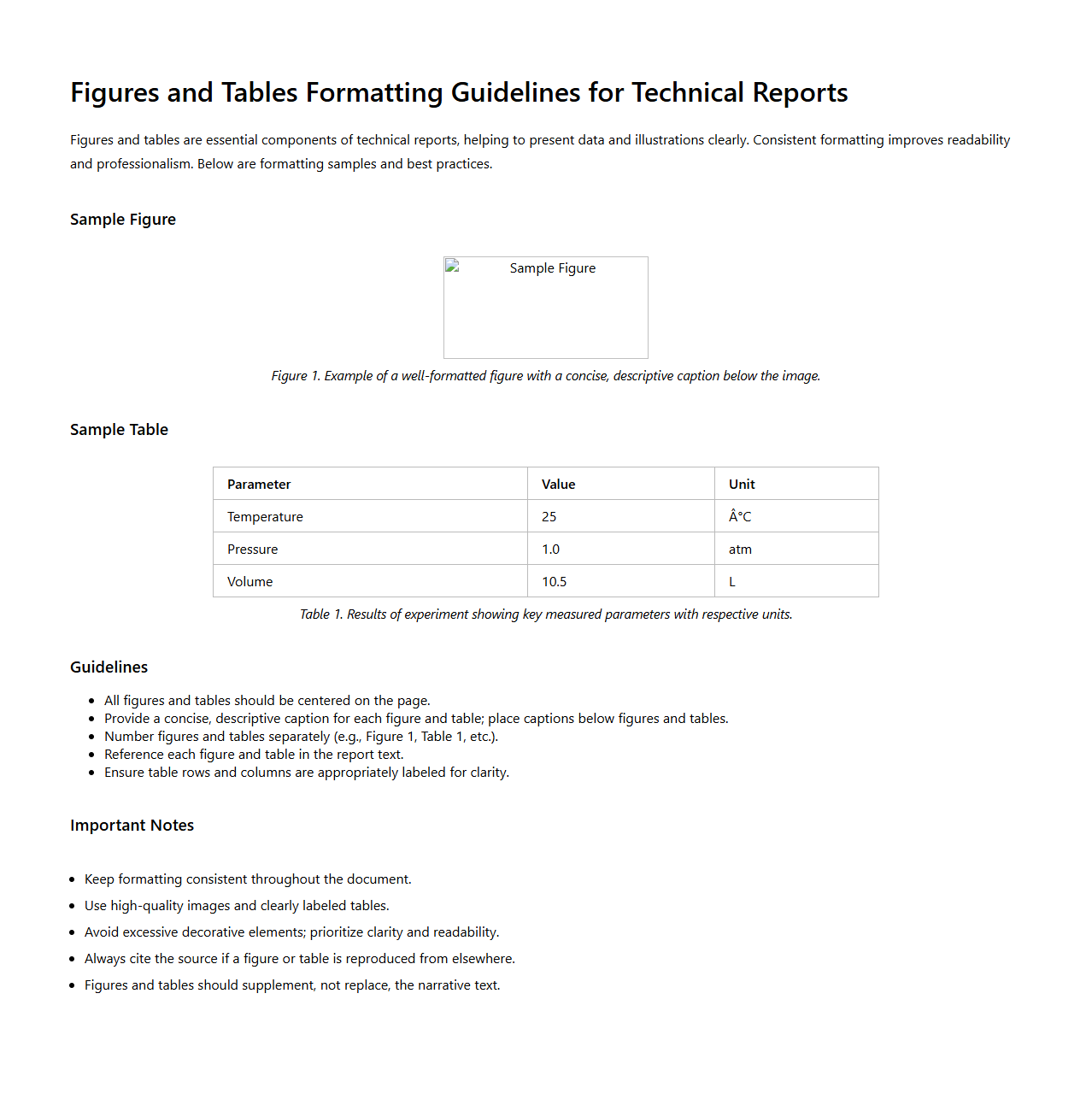
Figures and Tables Formatting Guidelines for Technical Reports document provides detailed instructions on how to correctly present visual data and tabular information within technical reports. It ensures consistent formatting standards for titles, captions, numbering, and placement to enhance clarity and professional appearance. Following these guidelines helps readers quickly interpret and compare complex data effectively.
Standards and Codes Inclusion Format in Engineering Reports
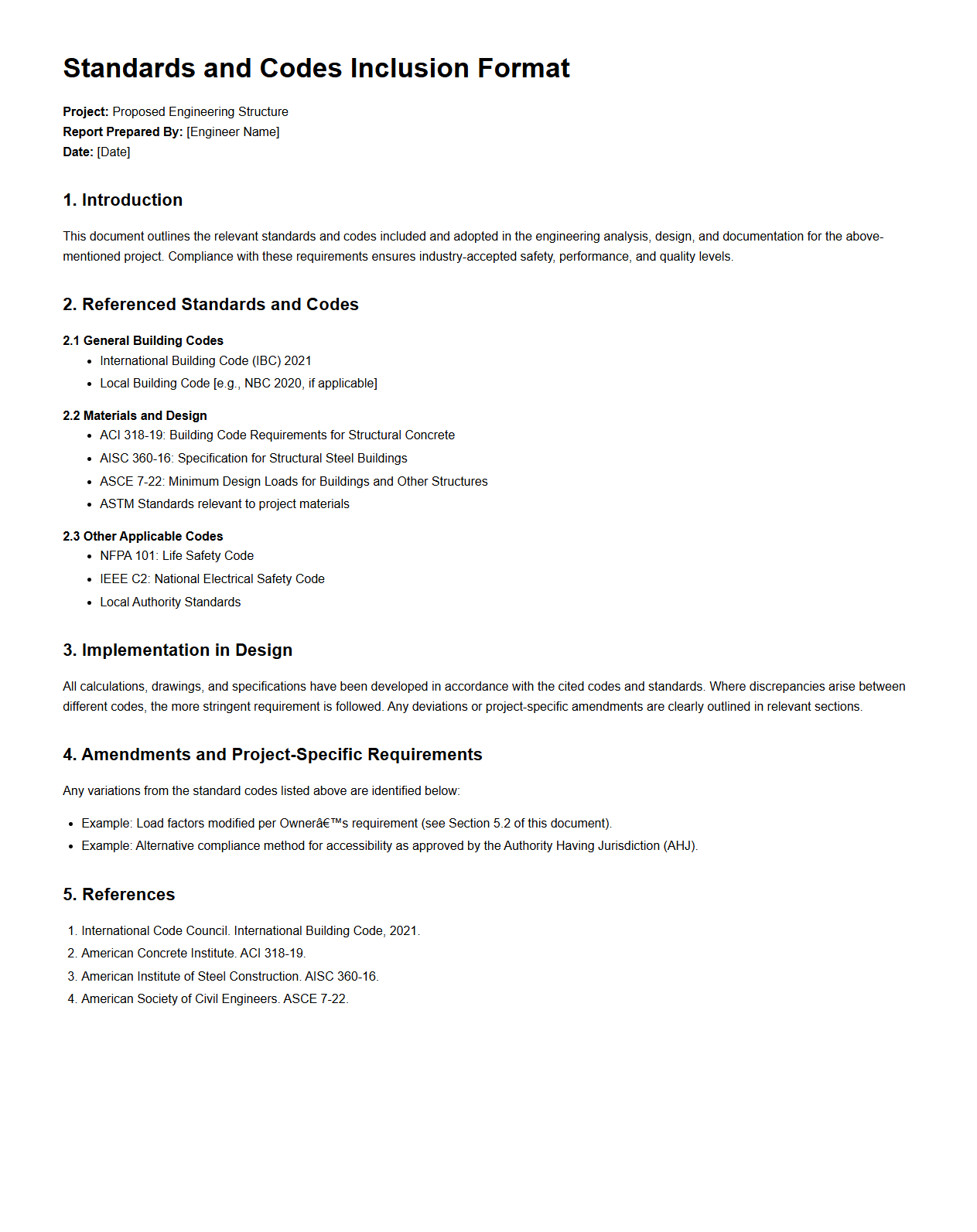
Standards and Codes Inclusion Format in engineering reports ensures that all referenced regulations, guidelines, and technical specifications are presented consistently and clearly. This format typically includes the standard's title, edition or version, issuing organization, and applicable clause or section numbers, enabling precise compliance verification. Using a
standardized citation format enhances the report's credibility and facilitates effective communication among engineers, reviewers, and regulatory bodies.
What are the essential sections included in the standard format of a technical report for engineering analysis?
The standard format of a technical report typically includes an Introduction, Methods, Results, Discussion, and Conclusion sections. Each section serves a unique purpose in presenting the engineering analysis clearly and logically. These sections ensure comprehensive coverage of the work undertaken and the findings obtained.
How should data and analysis results be organized and presented in the body of the technical report?
Data and analysis results must be organized in a clear, logical flow within the Results section, supported by tables, graphs, and charts for clarity. It is crucial to interpret the data within the Discussion section to highlight key findings and their implications. Proper labeling and referencing of all data visuals enhance readability and understanding.
What formatting guidelines must be followed for figures, tables, and appendices in an engineering technical report?
Figures and tables should be numbered sequentially and include descriptive captions directly beneath them. Appendices must be clearly labeled and positioned at the end of the report, containing supplementary material that supports the main text. Consistent styling, font size, and alignment contribute to a professional and accessible presentation.
Which information should be included in the executive summary of a technical engineering report?
The executive summary should concisely outline the report's purpose, methodology, key findings, and recommendations. It provides busy readers with a quick understanding of the report's essential content without needing to read the full document. Clarity and brevity are paramount to convey critical insights effectively.
What structure should be used for citations and references in technical engineering reports?
Citations and references must follow a consistent and recognized citation style, such as IEEE or APA, depending on the disciplinary norm. All in-text citations should correspond to full references listed alphabetically at the end of the report. Maintaining precise and complete citation details ensures proper credit and enhances the report's credibility.