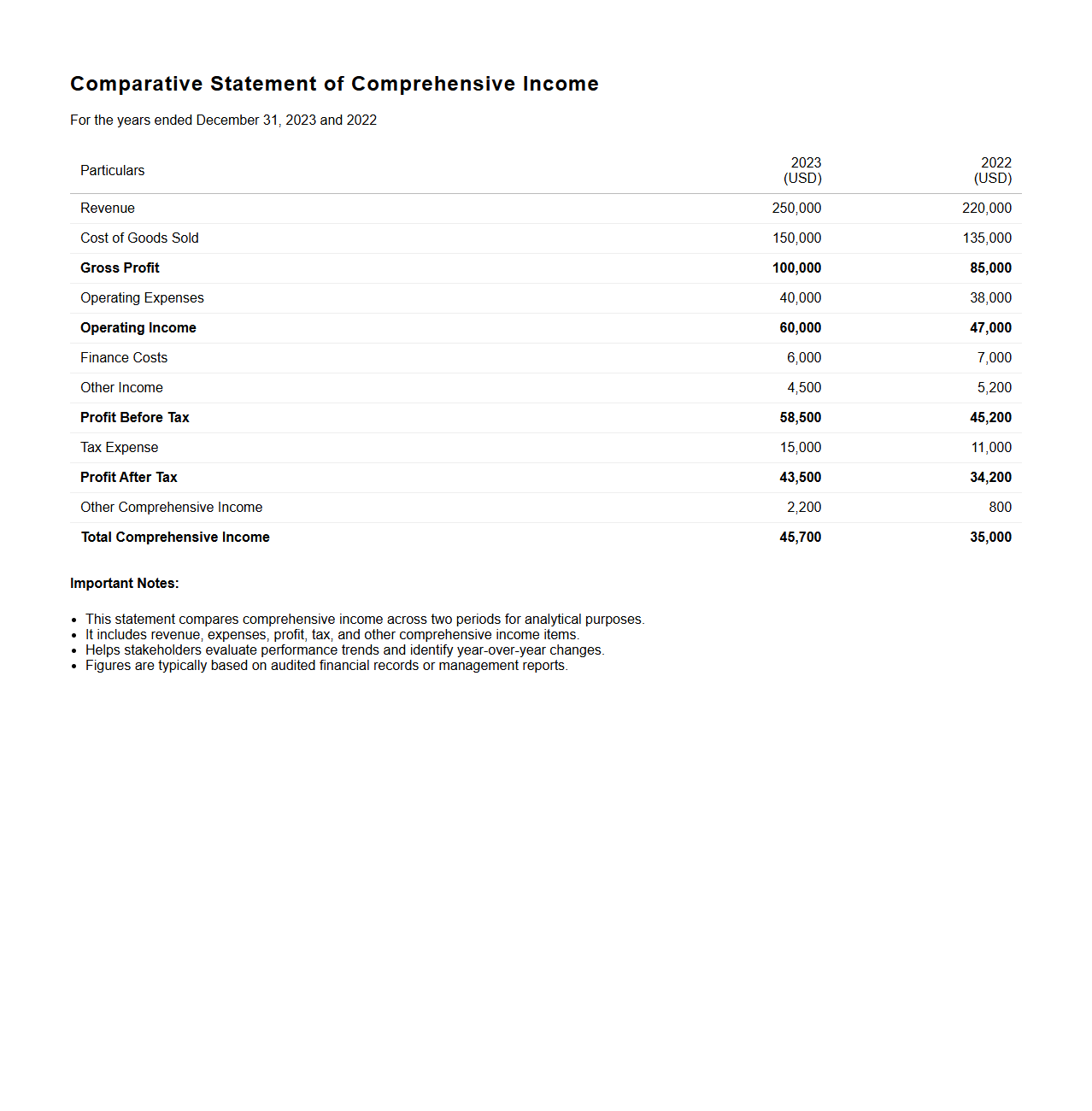
The Format of Statement of Comprehensive Income for Profit typically includes key components such as revenue, expenses, and resulting net profit or loss. It presents both operating and non-operating items that contribute to the overall financial performance. This format ensures clear presentation of comprehensive income, reflecting all changes in equity from non-owner sources.
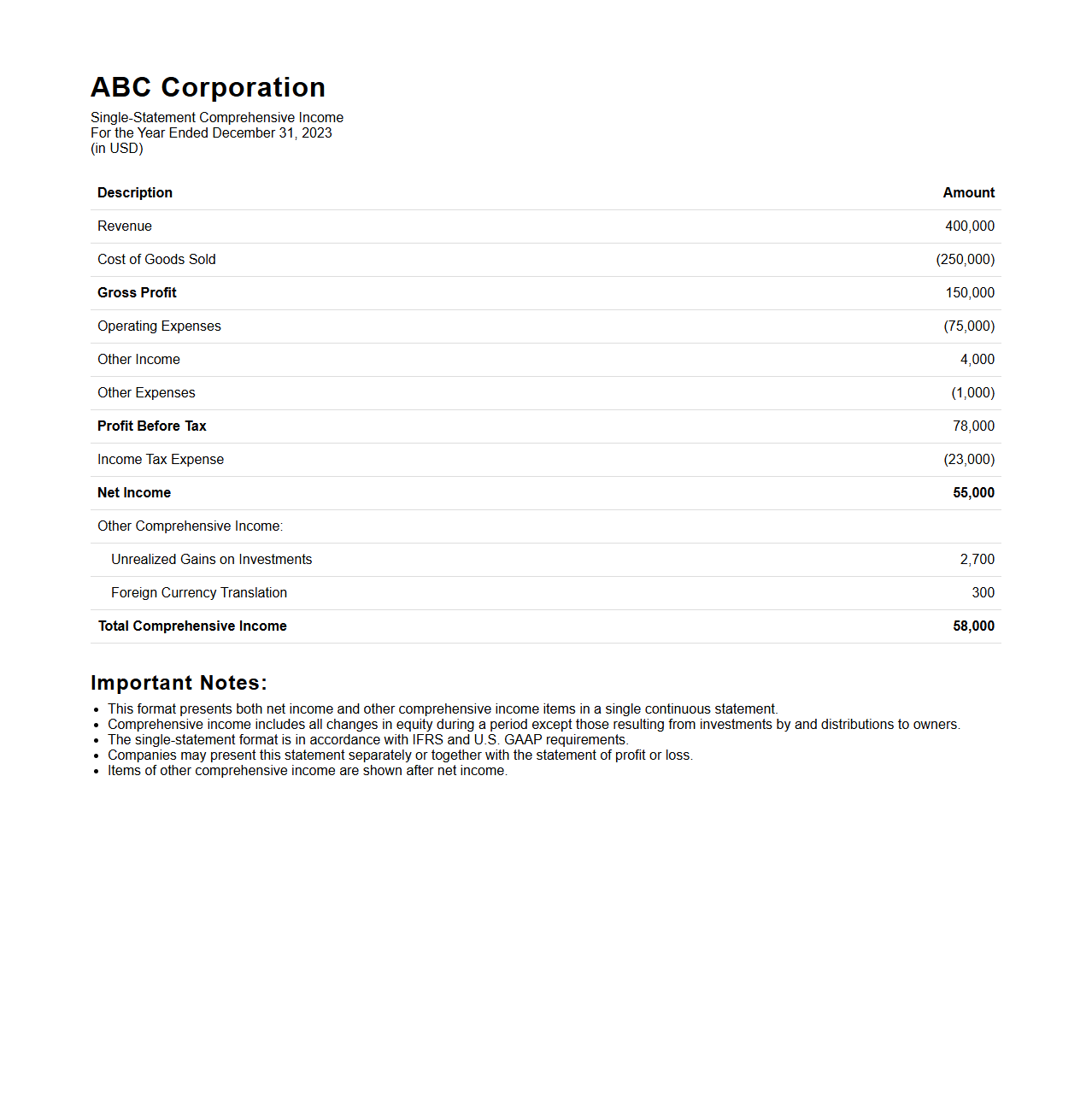
Single-Statement Comprehensive Income Format
The
Single-Statement Comprehensive Income Format document presents all components of comprehensive income within one continuous financial statement, combining net income and other comprehensive income (OCI) items. This format enhances clarity by providing a complete overview of a company's financial performance during a reporting period, including unrealized gains and losses. It supports compliance with accounting standards such as IFRS and US GAAP, facilitating transparent investor analysis.
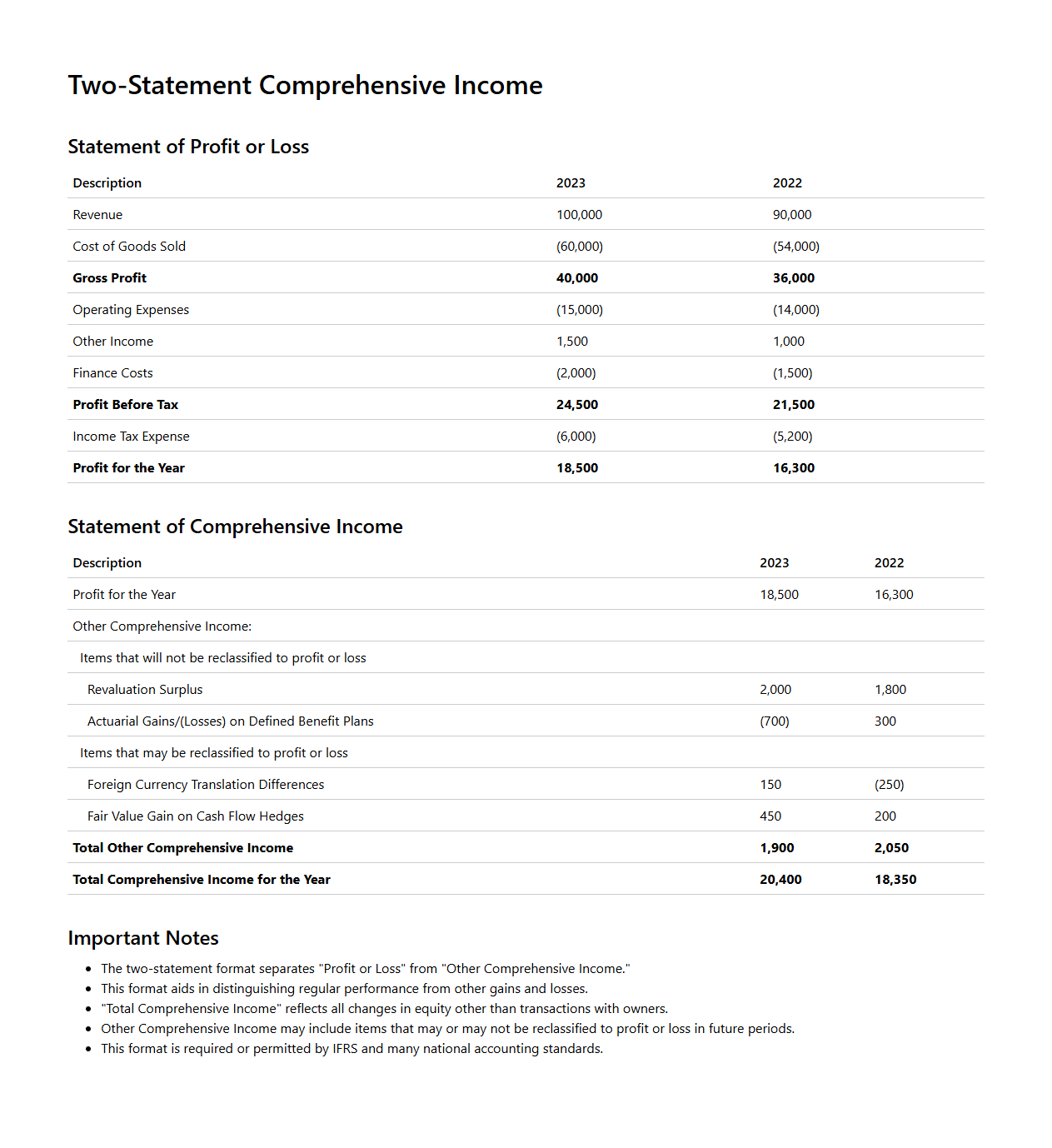
Two-Statement Comprehensive Income Format
The
Two-Statement Comprehensive Income Format is a financial reporting method that separates net income and other comprehensive income into two distinct statements. The first statement presents the traditional income statement, detailing revenues, expenses, and net income, while the second statement begins with net income and adds other comprehensive income items, such as unrealized gains or losses on investments and foreign currency translation adjustments. This format enhances clarity by distinguishing regular operational results from other comprehensive income components that impact equity but bypass the income statement.
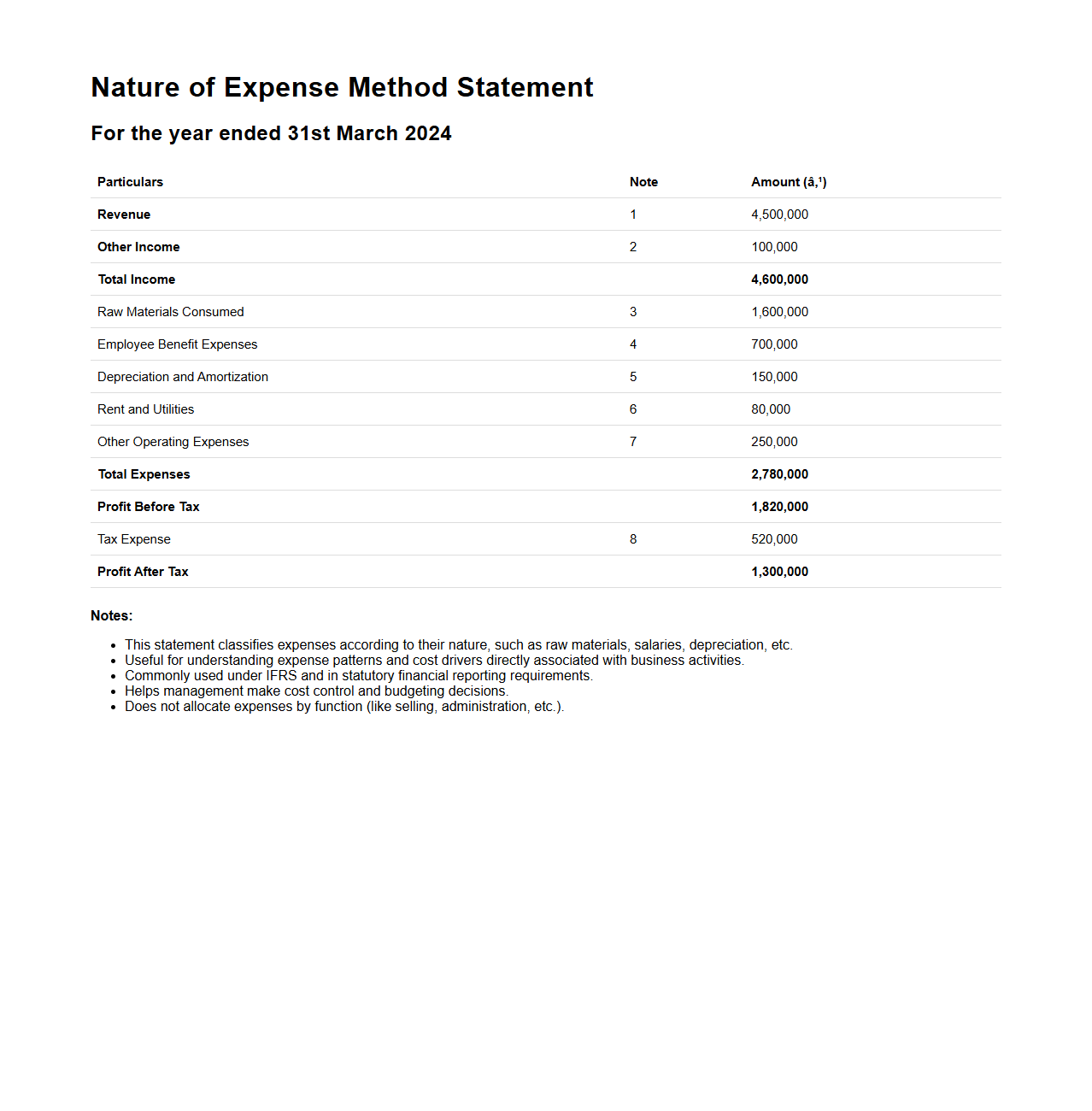
Nature of Expense Method Format
The
Nature of Expense Method Format document categorizes expenses based on their inherent characteristics, such as salaries, rent, utilities, and depreciation, providing a clear overview of cost distribution within an organization. This format helps in analyzing financial statements by accurately reflecting operational costs and facilitating budget control. It is essential for preparing detailed income statements and enhancing the understanding of expense behavior over accounting periods.
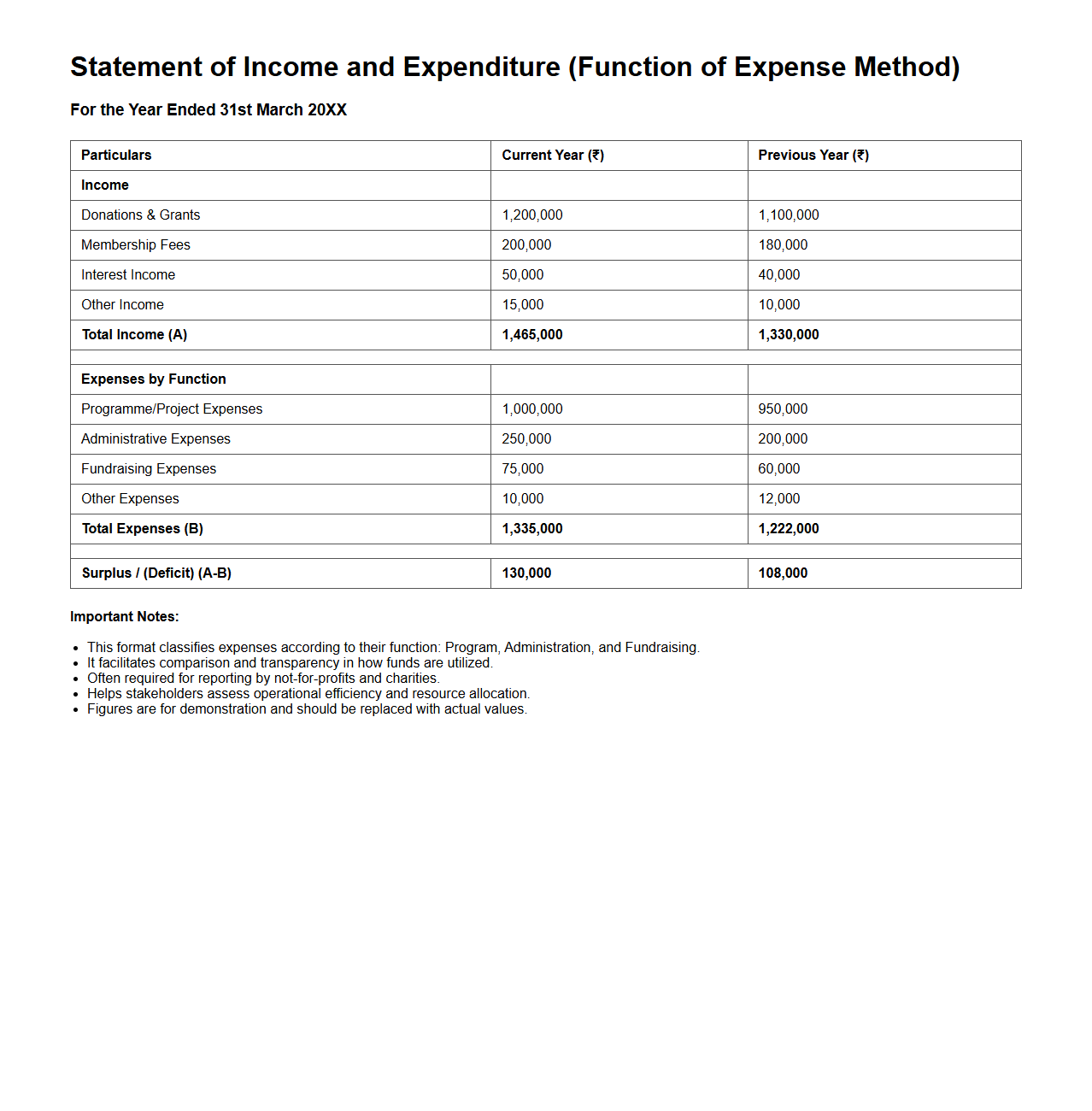
Function of Expense Method Format
The
Function of Expense Method Format document provides a structured framework for categorizing and analyzing expenses based on their functional purposes within an organization, such as production, administration, or sales. This format enhances financial reporting by enabling clearer allocation of costs, improving budgeting accuracy, and facilitating compliance with accounting standards. Organizations use this document to ensure transparent expense tracking and support strategic decision-making processes.
Multi-Step Income Statement Format
The
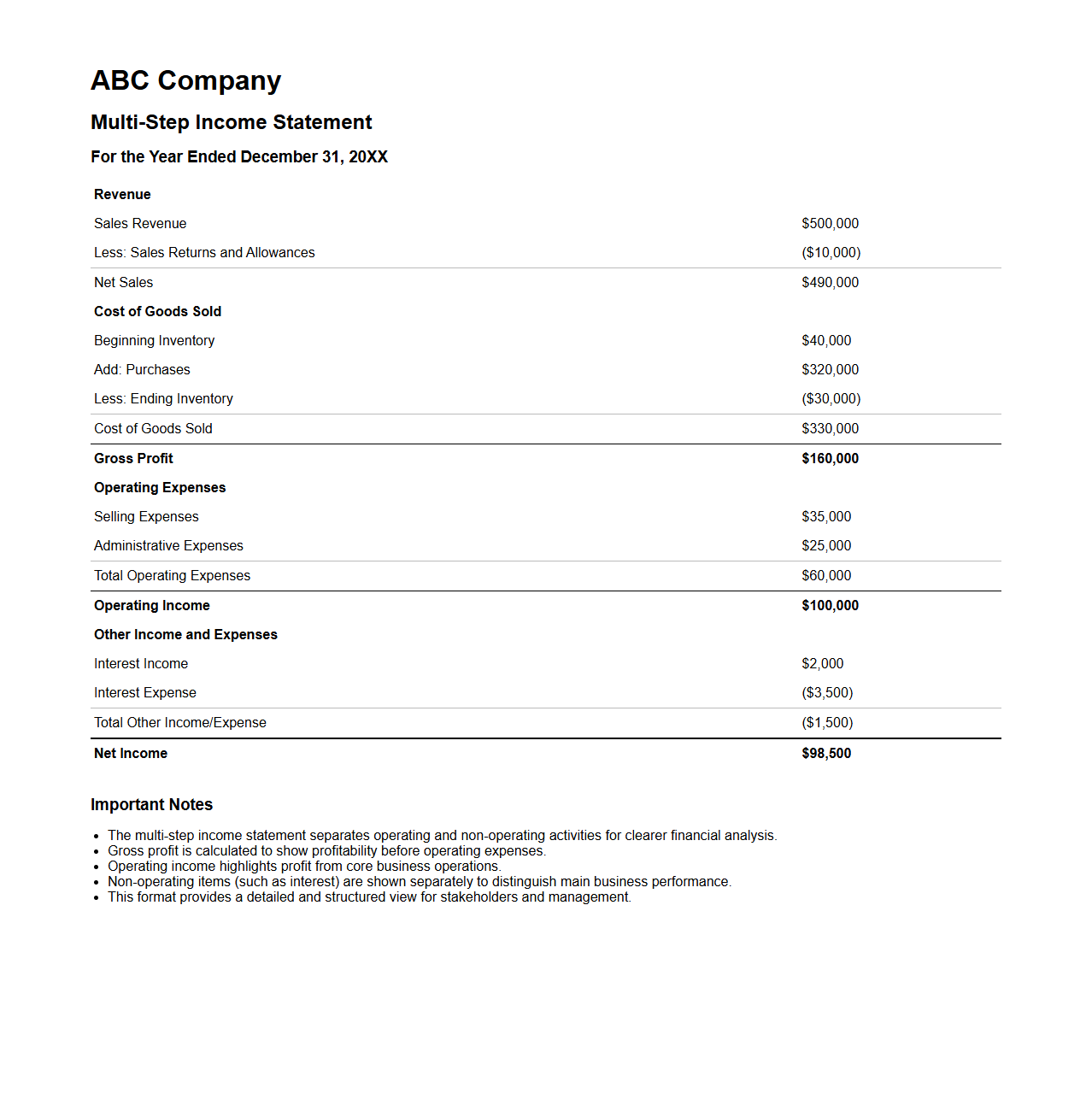
Multi-Step Income Statement Format document organizes financial information by separating operating revenue and expenses from non-operating activities, providing a clear view of a company's core profitability. It typically includes sections for gross profit, operating income, and net income, allowing stakeholders to analyze detailed financial performance efficiently. This format is widely used for its ability to highlight operational efficiency and financial health in business reporting.
Condensed Statement of Comprehensive Income Format
A
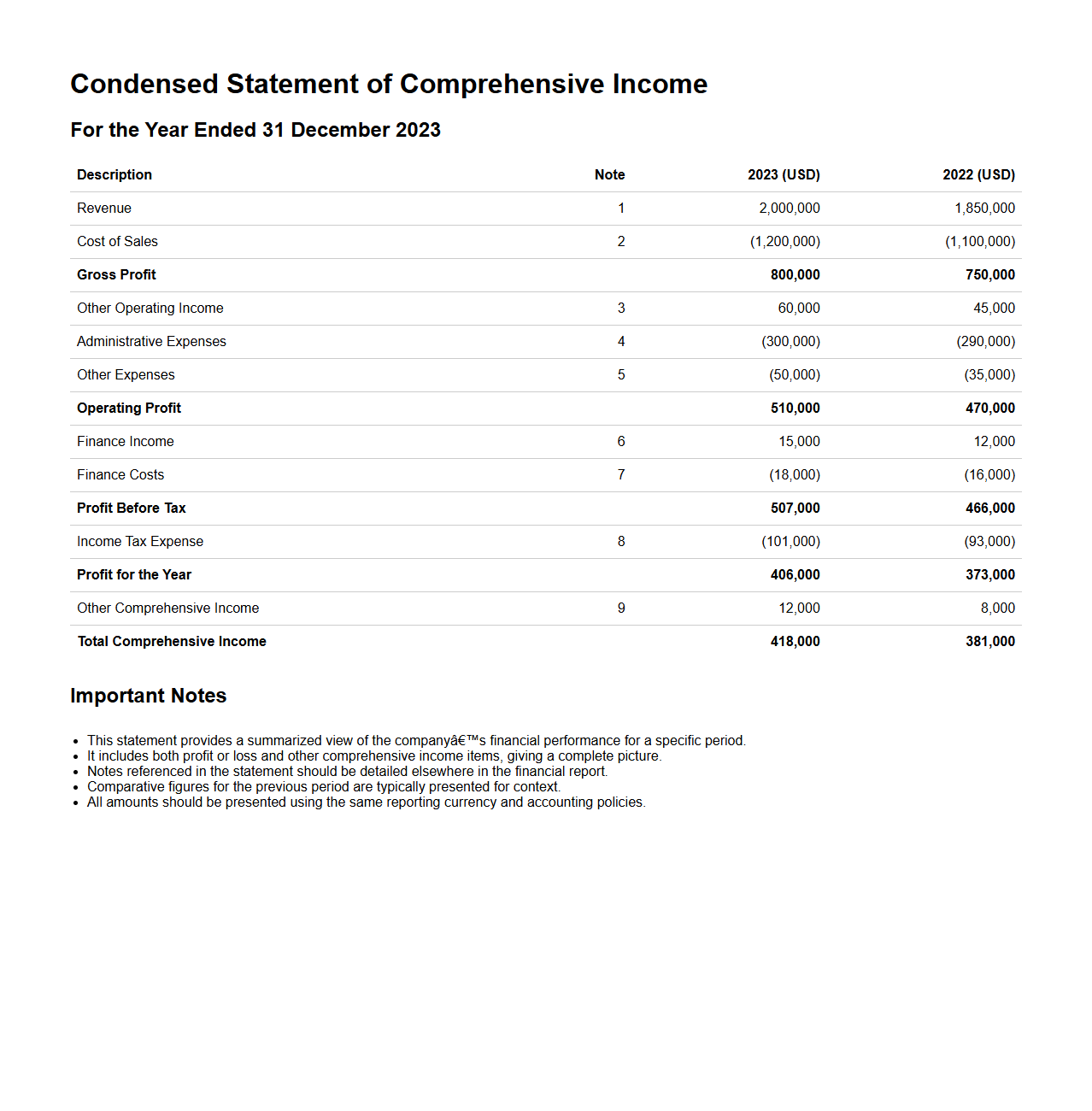
Condensed Statement of Comprehensive Income Format document provides a summarized presentation of a company's financial performance over a specific period, focusing on key income and expense items. It highlights the net profit or loss alongside other comprehensive income components such as unrealized gains or losses on investments and foreign currency translation adjustments. This format is useful for stakeholders who require a clear and concise overview of overall profitability and comprehensive income without detailed line-by-line disclosures.
Detailed Statement of Comprehensive Income Format
The
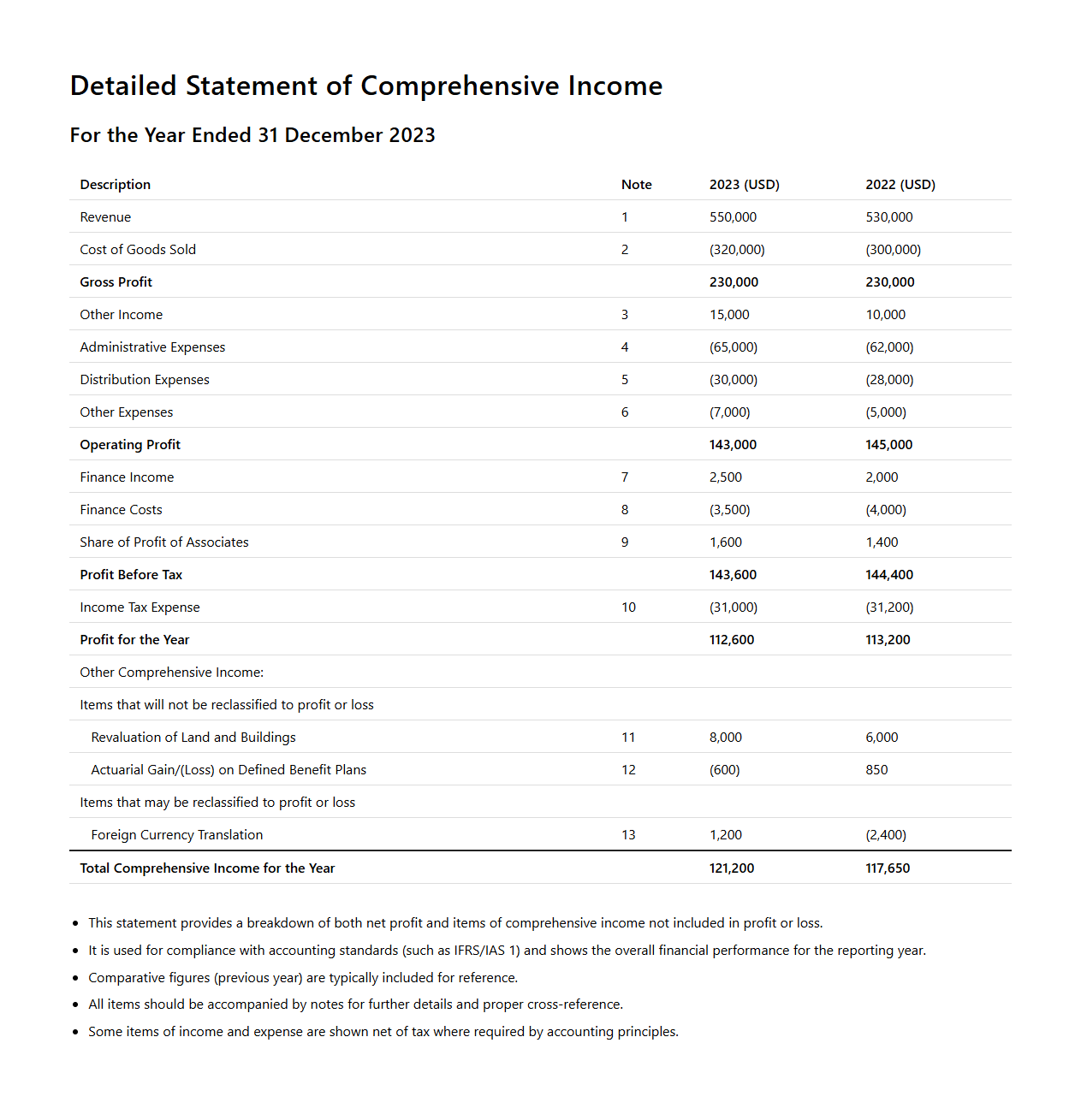
Detailed Statement of Comprehensive Income Format document provides a structured layout for reporting a company's financial performance over a specific period, including revenue, expenses, gains, losses, and other comprehensive income items. It ensures transparency by clearly distinguishing net income from items that affect equity but are not part of net profit, such as foreign currency translation adjustments and unrealized gains or losses on investments. This format is essential for stakeholders to assess the total economic impact of a business's operations and financial activities comprehensively.
Classified Statement of Comprehensive Income Format
The
Classified Statement of Comprehensive Income Format document organizes revenues, expenses, gains, and losses into distinct categories to provide clear insights into operating and non-operating activities. It separates core business results from ancillary items, such as other comprehensive income including foreign currency translation adjustments and unrealized gains or losses on investments. This format enhances financial analysis by allowing stakeholders to better assess a company's operational performance and overall financial health.
Vertical Statement of Comprehensive Income Format
The
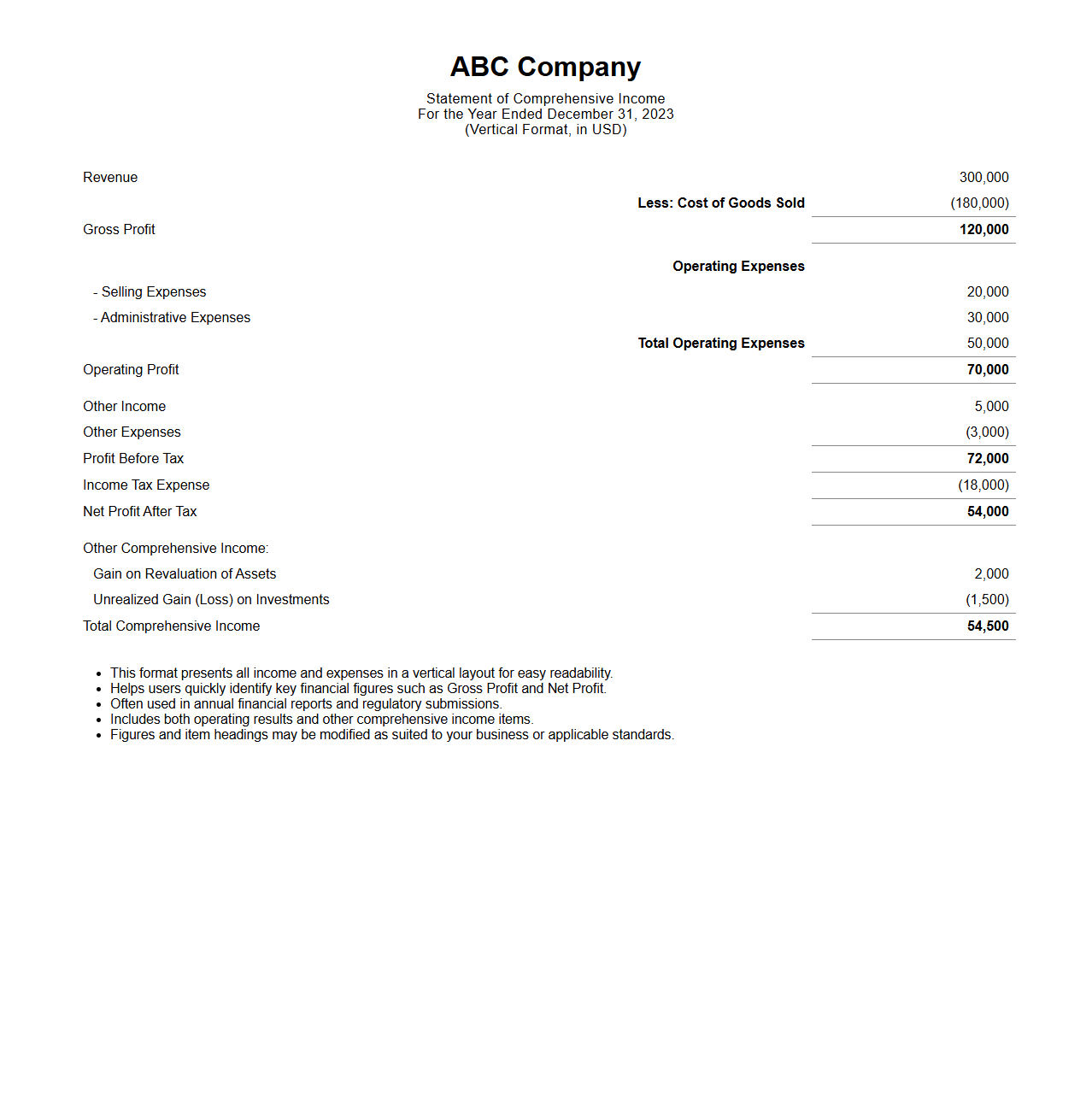
Vertical Statement of Comprehensive Income Format document organizes an entity's revenues, expenses, gains, and losses in a single column, presenting financial performance in a clear, sequential manner from top to bottom. This format enhances readability by grouping operating and non-operating items distinctly, making it easier to analyze profitability and other comprehensive income elements. It serves as a critical tool for financial reporting, ensuring compliance with accounting standards and improving transparency for stakeholders.
Comparative Statement of Comprehensive Income Format
The
Comparative Statement of Comprehensive Income Format document presents financial performance data for multiple periods side-by-side, allowing stakeholders to analyze trends and changes in revenue, expenses, and comprehensive income. This format typically includes sections for net income, other comprehensive income, and total comprehensive income for each period under review. It is essential for assessing a company's financial health, making informed investment decisions, and ensuring transparent financial reporting.
Main Components Included in the Format of Statement of Comprehensive Income for Profit-Oriented Entities
The Format of Statement of Comprehensive Income for profit-oriented entities primarily includes revenues, expenses, and profits. It starts with the total revenue earned from primary business activities followed by expenses that are directly related to earning that revenue. The statement culminates in the calculation of profit or loss for the period and subsequently shows other comprehensive income items.
Distinction Between Revenue and Other Income in the Statement of Comprehensive Income
Revenue is identified as income arising from the entity's primary operating activities, such as sales of goods or services. In contrast, other income includes gains that are not part of main business activities, like interest income or gains from asset sales. This differentiation ensures clear reporting of core business performance separate from ancillary activities.
Order of Presentation of Expenses in the Statement of Comprehensive Income
Expenses are typically presented using a functional or natural classification, where cost of goods sold appears first followed by selling, administrative, and other operating expenses. This sequence provides clear insight into the direct and indirect costs involved in business operations. Such an arrangement enhances understanding of income generation and cost management.
Separate Presentation of Profit Before Tax and Profit After Tax
The Profit Before Tax is presented after deducting all operating and financing expenses but before income tax expenses. The statement then shows the Income Tax Expense separately to arrive at the profit after tax figure. This systematic display offers transparency into tax effects on profitability.
Items Reported Under 'Other Comprehensive Income' in the Standard Format
Other Comprehensive Income includes items that are not included in profit or loss, such as revaluation of property, foreign currency translation adjustments, and actuarial gains or losses on defined benefit plans. These items provide a broader perspective on comprehensive income beyond operational results. Reporting these separately aligns with accounting standards for full disclosure.