The Format of Capital Work-in-Progress Report for Projects typically includes sections such as project details, allocated budget, incurred expenses, and progress status. It provides a clear overview of ongoing capital expenditures and helps track the financial performance against planned timelines. Accurate reporting in this format ensures effective monitoring and management of project investments.
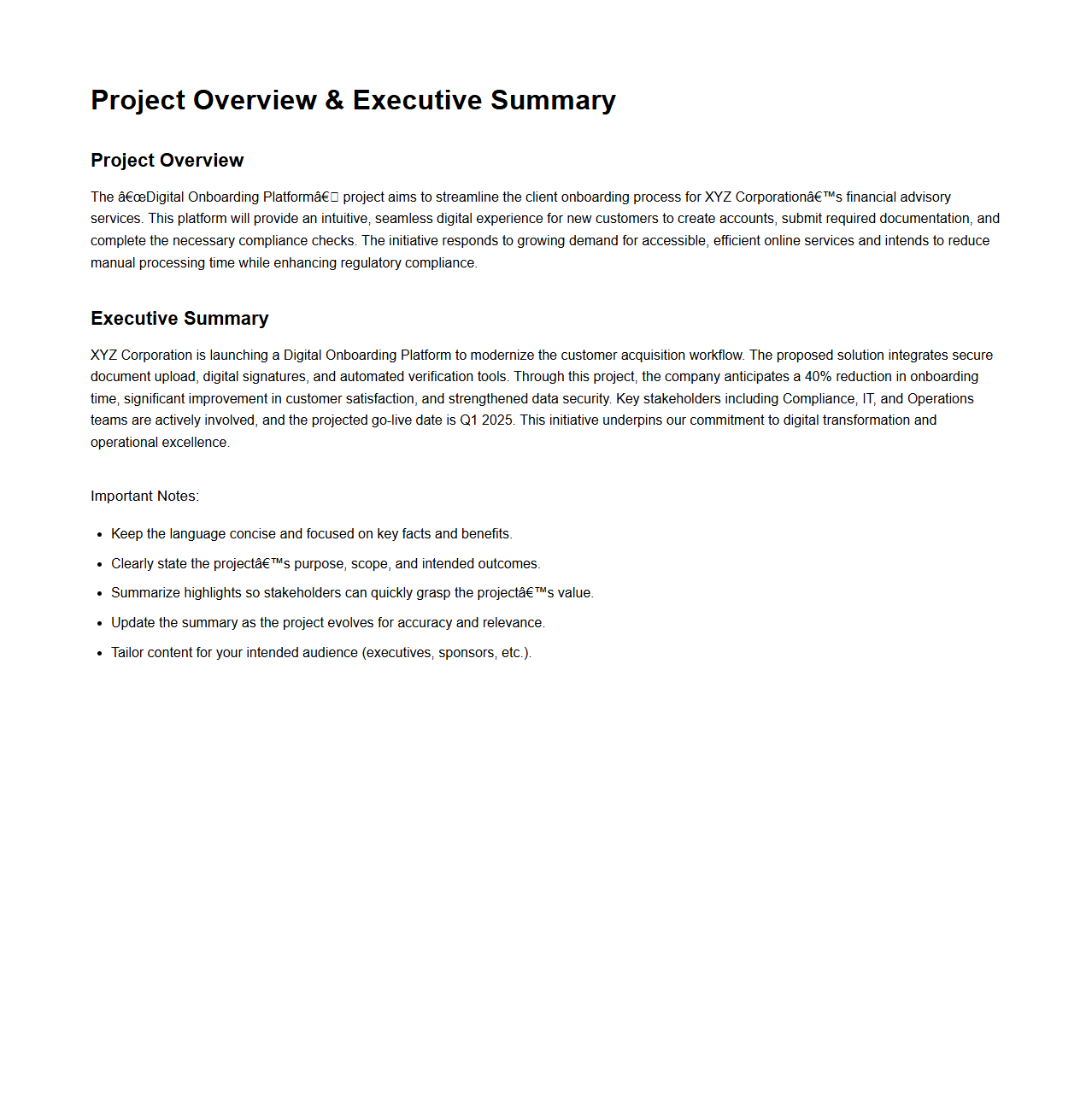
Project Overview and Executive Summary
A
Project Overview and Executive Summary document provides a concise yet comprehensive snapshot of a project's objectives, scope, timeline, and key deliverables. It serves as a strategic tool for stakeholders to quickly grasp the project's purpose, anticipated outcomes, and resource requirements. This document highlights critical milestones and potential risks, enabling informed decision-making and effective project management.
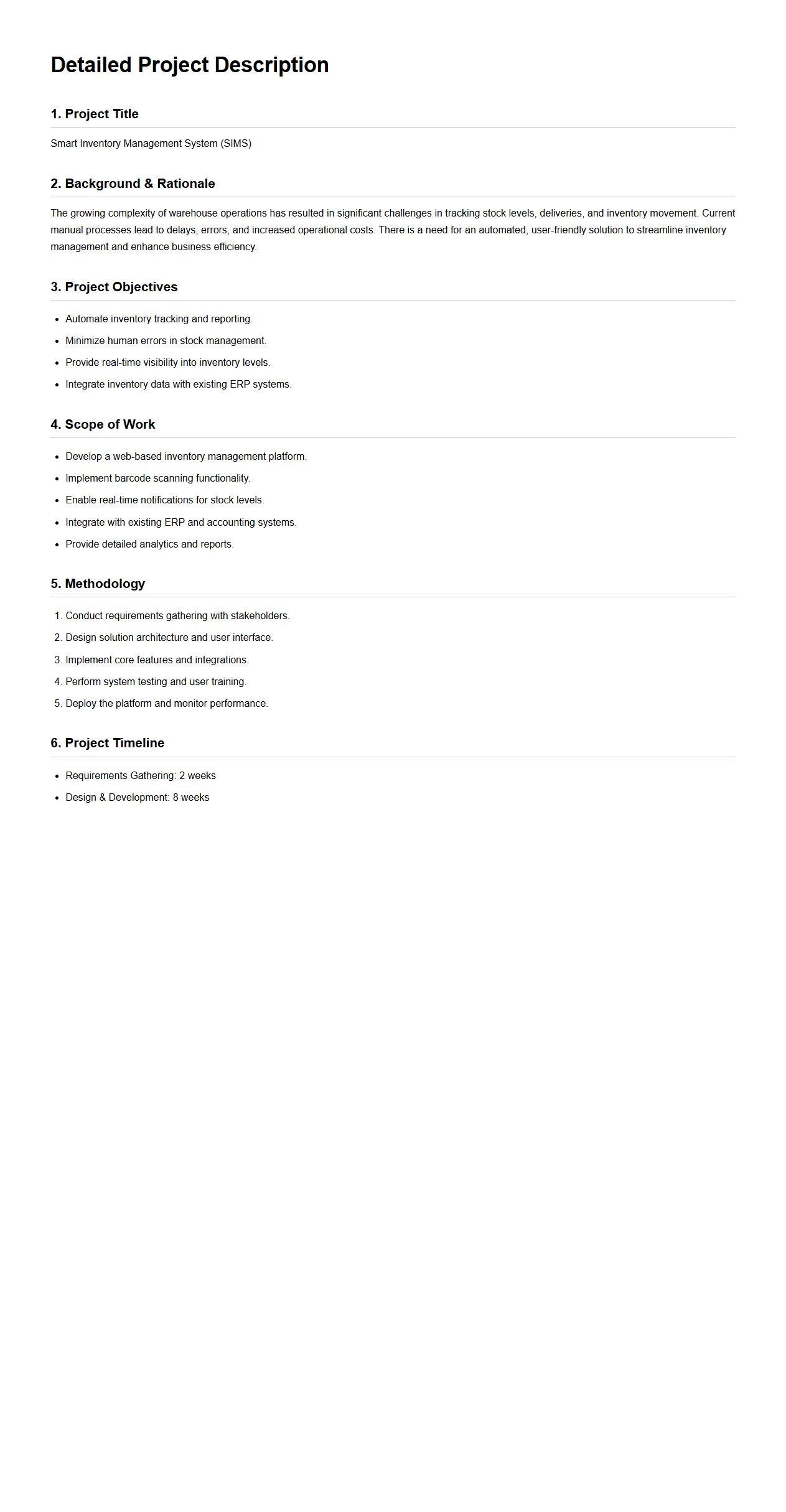
Detailed Project Description
A
Detailed Project Description document provides a comprehensive overview of a project's objectives, scope, deliverables, timelines, and resources. It serves as a critical reference for stakeholders to understand the project's goals, technical requirements, and execution strategy. This document ensures clear communication and alignment among teams, minimizing risks and misunderstandings during project implementation.
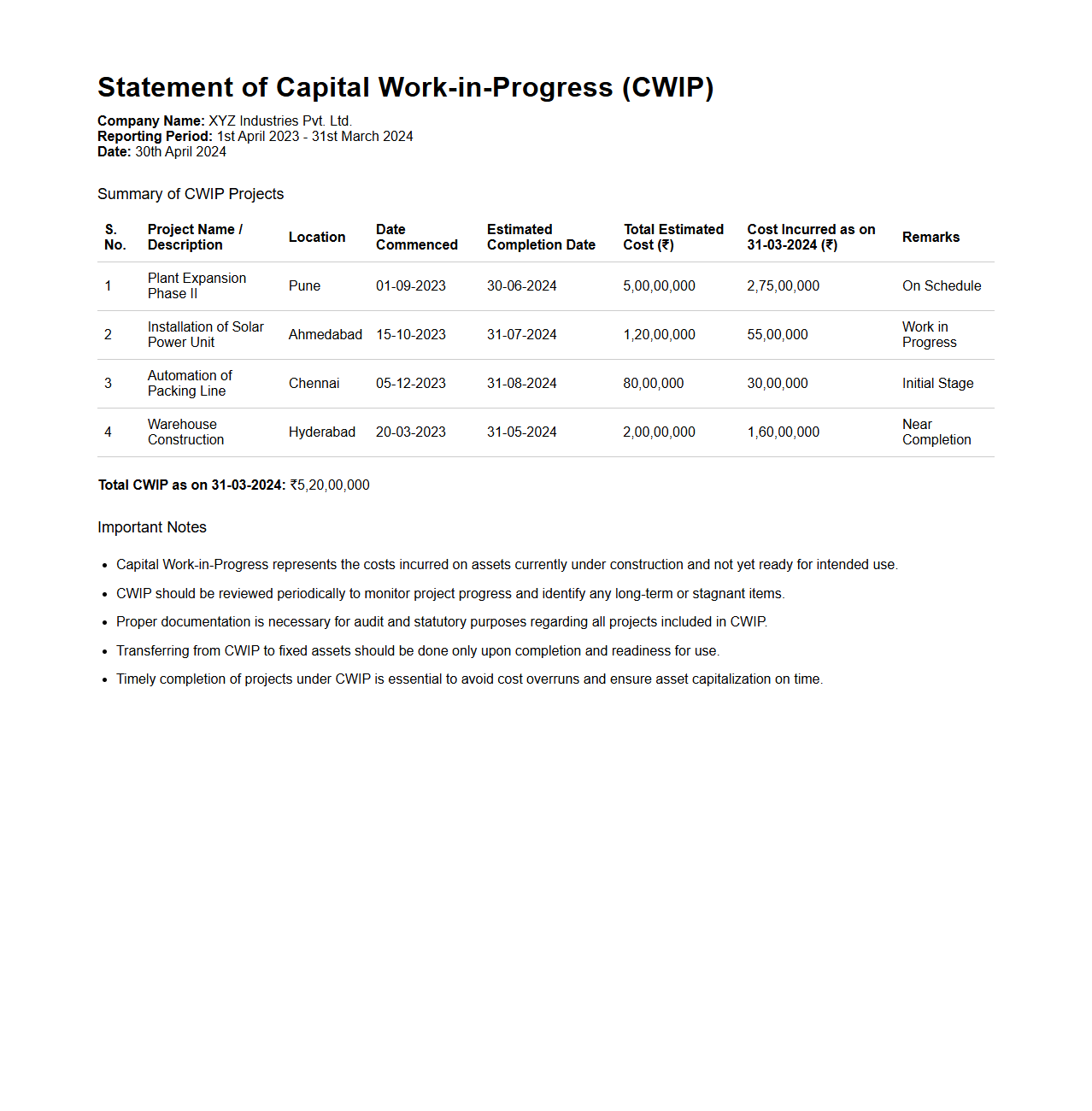
Statement of Capital Work-in-Progress (CWIP)
The
Statement of Capital Work-in-Progress (CWIP) document details the ongoing expenditures on incomplete fixed assets during a specific accounting period. It tracks the costs incurred on projects that are still under construction or development, providing transparency on capital investments not yet capitalized. This statement is essential for accurate financial reporting and asset management in industries with significant long-term projects.
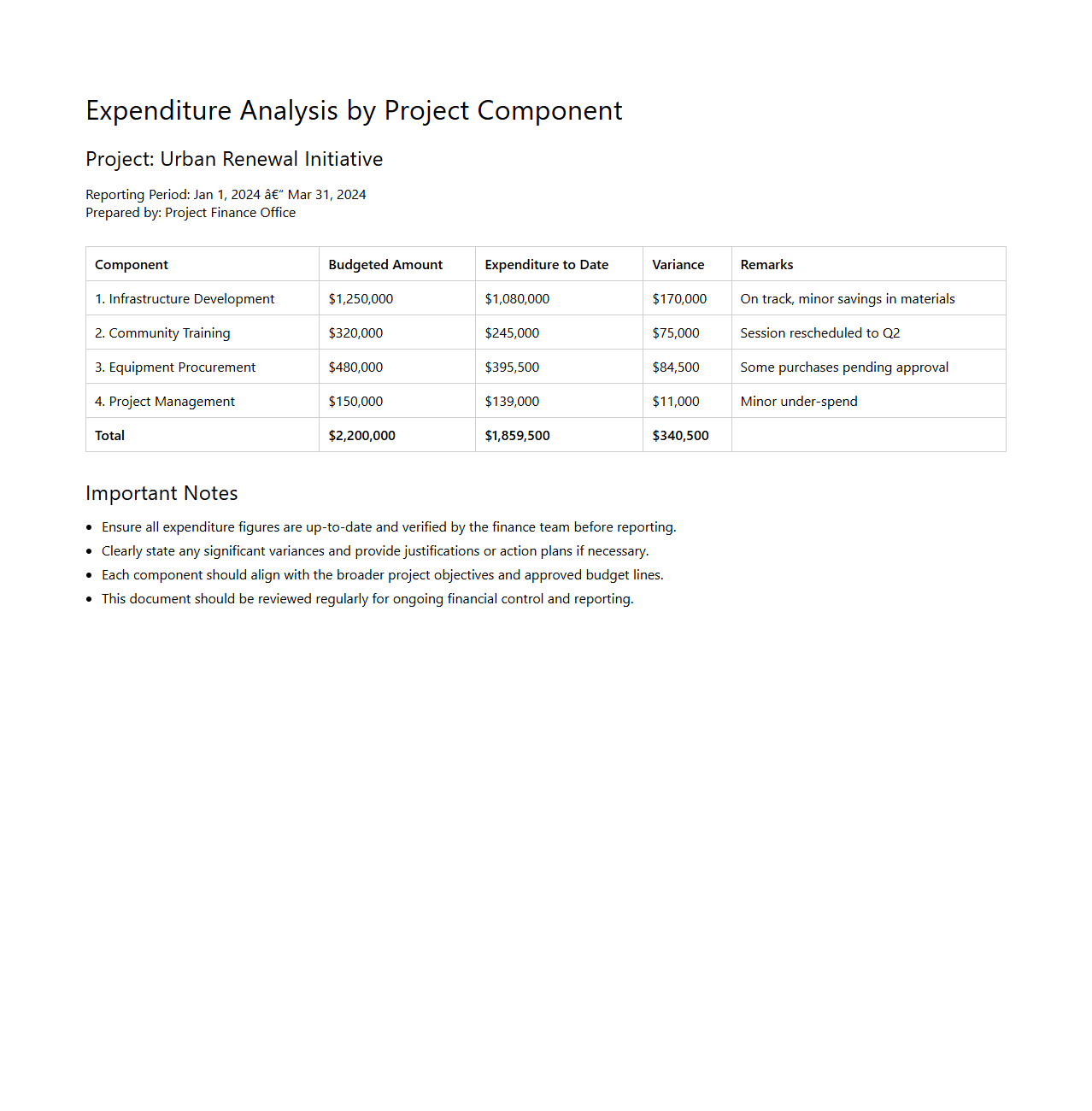
Expenditure Analysis by Project Component
Expenditure Analysis by Project Component document provides a detailed breakdown of financial outlays associated with each specific segment of a project, enabling precise tracking and management of costs. This report highlights variations between budgeted and actual expenses, facilitating informed decision-making and resource allocation. It is essential for maintaining budgetary control and enhancing
financial transparency throughout the project lifecycle.
Physical Progress versus Financial Progress
The
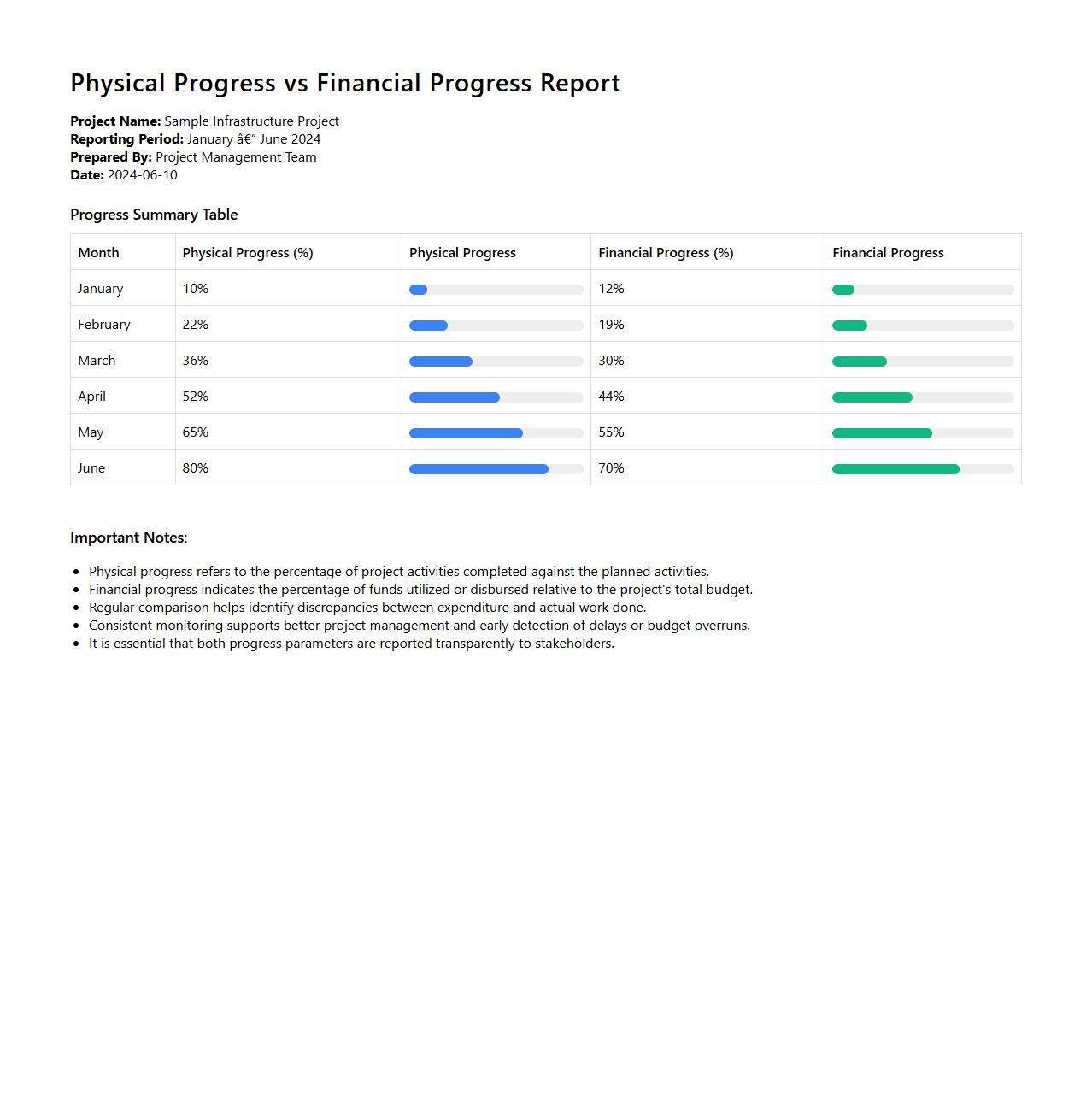
Physical Progress versus Financial Progress document tracks the actual completion of project activities against the budgeted expenditures, providing a clear comparison of work performed and funds utilized. It helps stakeholders monitor project efficiency, identify delays or cost overruns, and make informed decisions for resource allocation. This document typically includes detailed metrics such as percentage of work completed, financial disbursements, and variance analysis to evaluate overall project health.
Fund Utilization Statement
A
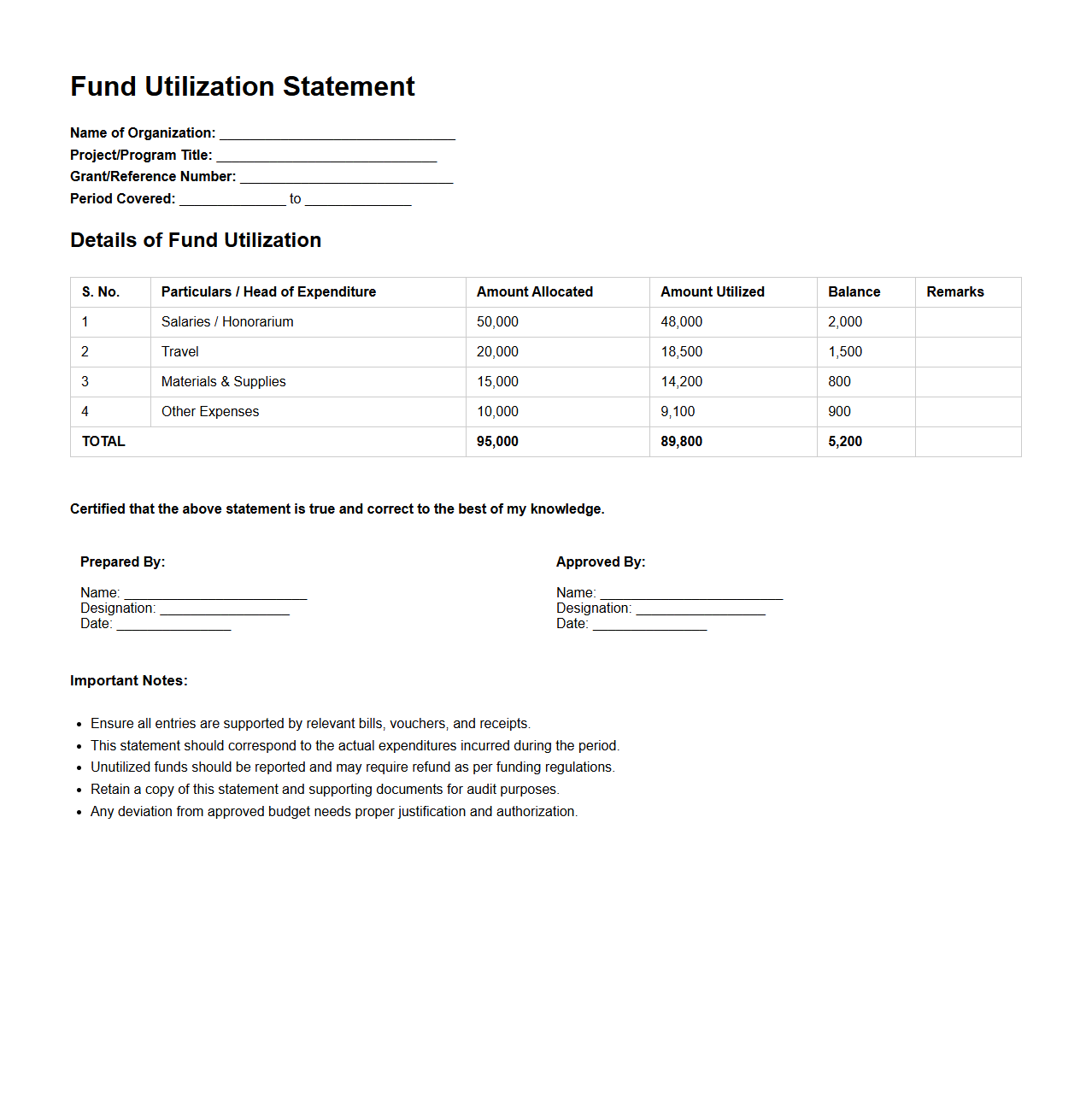
Fund Utilization Statement is a financial document that tracks how allocated funds are spent over a specific period. It provides detailed records of expenditures against the budget, ensuring transparency and accountability in fund management. Organizations use this statement to monitor financial performance and support audit requirements.
Comparison with Approved Project Estimates
The
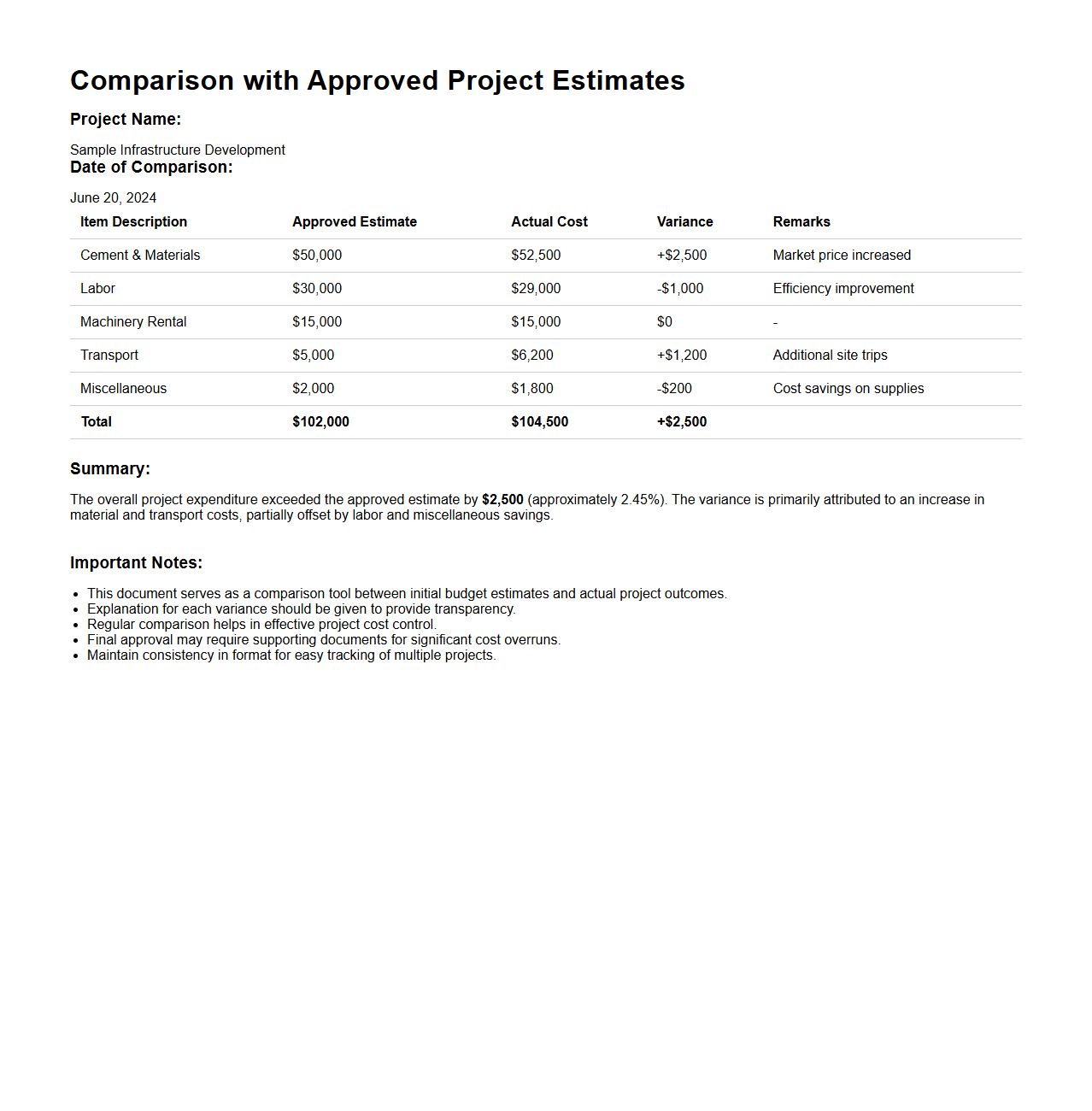
Comparison with Approved Project Estimates document serves as a critical tool for assessing the accuracy of project budgets by juxtaposing actual costs against initially approved estimates. This analysis enables project managers to identify variances, enhance financial accountability, and make informed decisions to control future expenditures. It plays a vital role in maintaining budget discipline and supporting effective project governance throughout the project lifecycle.
Project Implementation Timeline
A
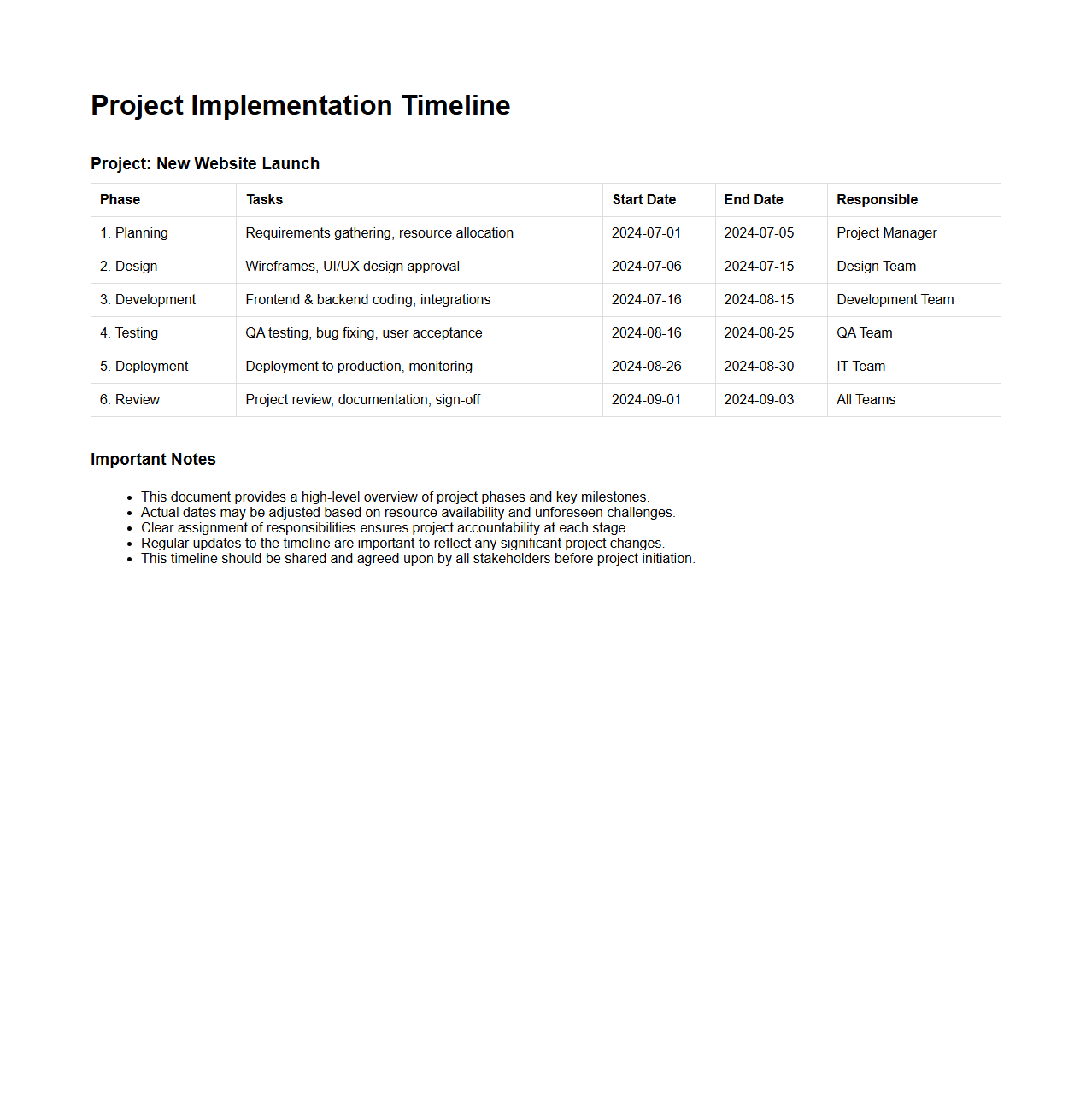
Project Implementation Timeline document outlines the scheduled sequence of tasks and milestones required to complete a project within a specified timeframe. It serves as a critical planning tool to coordinate resources, track progress, and ensure timely delivery of project objectives. This document typically includes start and end dates, dependencies, and assigned responsibilities to maintain clear accountability throughout the project lifecycle.
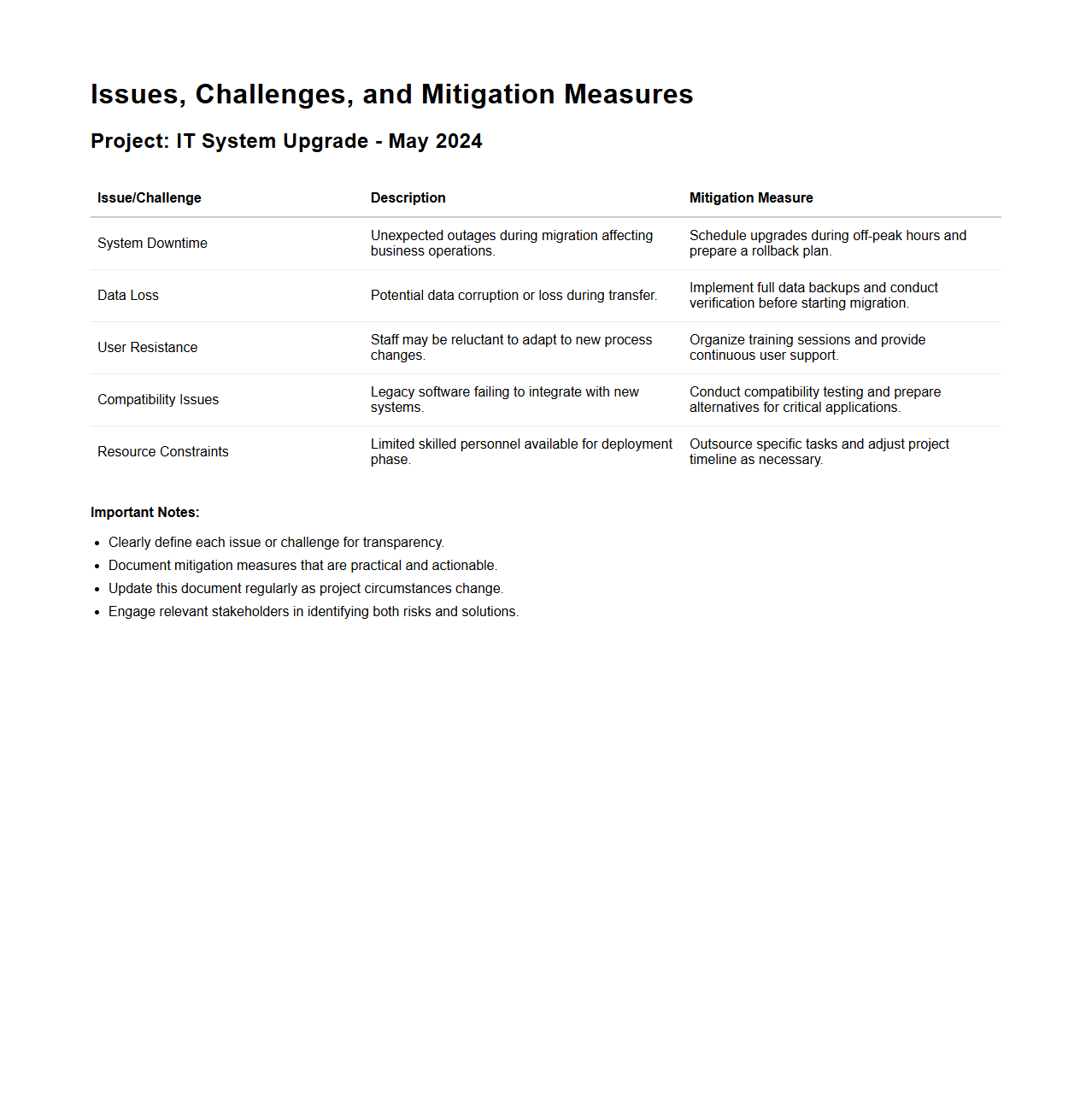
Issues, Challenges, and Mitigation Measures
An
Issues, Challenges, and Mitigation Measures document systematically identifies potential problems and obstacles within a project or process, offering clear strategies to address them effectively. It serves as a proactive tool for risk management by detailing the nature of challenges and corresponding mitigation plans to minimize impact. This document is essential for ensuring project success, enhancing communication among stakeholders, and facilitating timely resolution of issues.
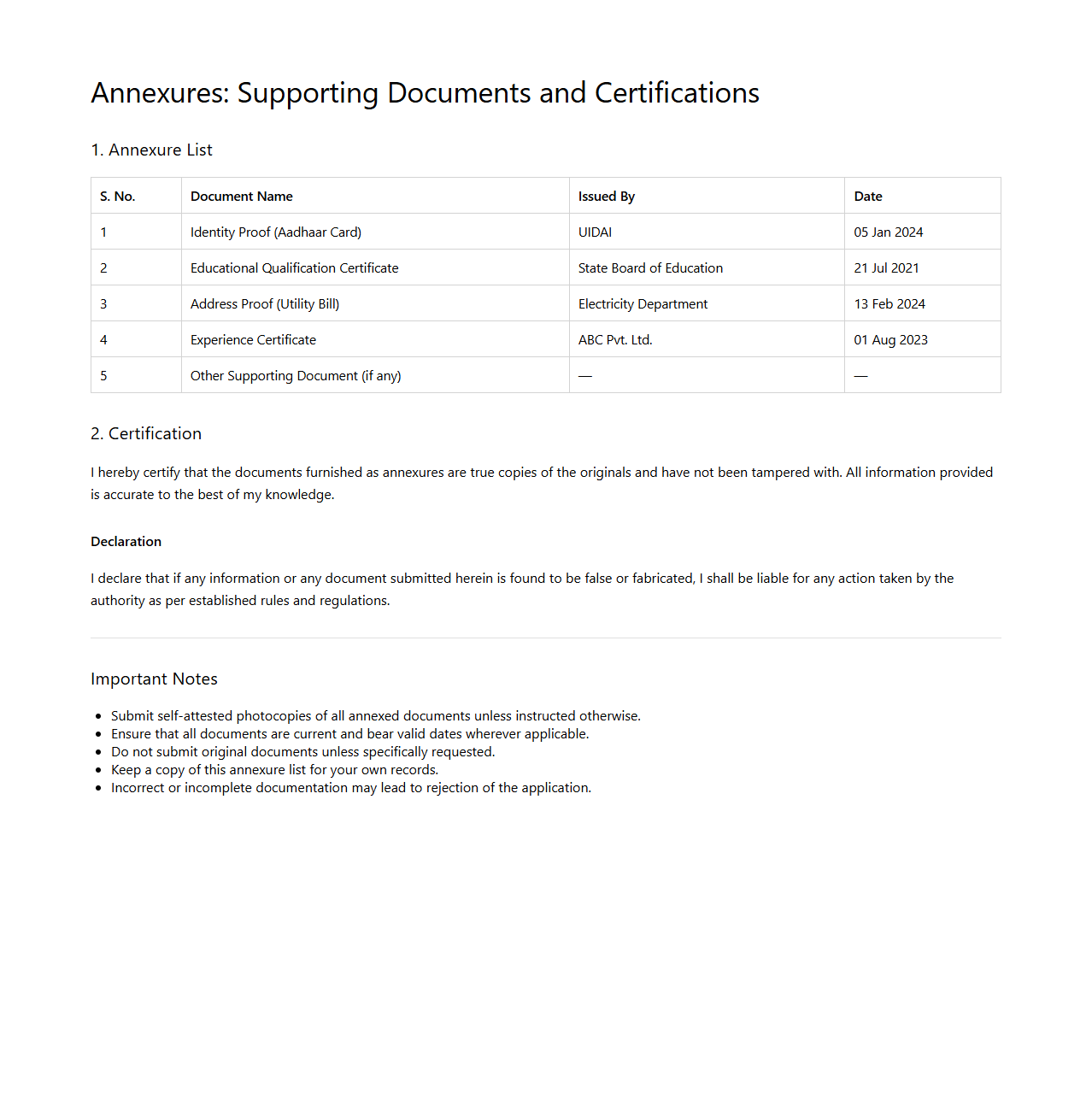
Annexures: Supporting Documents and Certifications
Annexures: Supporting Documents and Certifications document serves as a crucial collection of supplementary materials that validate and enhance the primary content of a report or proposal. This document typically includes certificates, licenses, legal approvals, and relevant evidence that substantiate claims and ensure compliance with regulatory standards. Incorporating
comprehensive supporting documents in annexures strengthens the credibility and transparency of the main document.
Key Sections in a Capital Work-in-Progress (CWIP) Report Format
The essential sections of a CWIP report include Project Identification, Cost Summary, and Progress Details. Each project must have a unique identifier and description to ensure clear tracking. Additionally, sections for Budget Allocation and Fund Sources are critical for comprehensive reporting.
Mandatory Financial Details for Documenting Ongoing Project Expenditures
The CWIP report must include cumulative costs to date, budgeted costs, and forecasted expenditures for accurate tracking. It is essential to document the date of each expense and categorize costs by type, such as materials, labor, and overhead. This financial transparency ensures stakeholders can monitor spending against allocated budgets effectively.
Presentation of Project Milestones and Completion Percentages
Project milestones should be listed in a milestone schedule with clearly defined completion percentages for each phase. This visual breakdown highlights progress and helps identify any delays or risks. Using graphical progress bars alongside numerical percentages enhances readability in the CWIP report.
Supporting Documentation for Each Entry in a Project's CWIP Report
Every financial entry must be supported by invoices, purchase orders, progress certificates, or other validation documents. These attachments provide proof of expenditure and ensure audit compliance. Including references to these documents within the report promotes transparency and accountability.
Essential Column Headings for Tracking Approval Status and Fund Utilization
Key columns should include Approval Status, Date of Approval, Fund Utilized, and Remaining Budget. These headings enable quick assessment of the approval process and the current financial position of each project. Incorporating these columns improves project control and funding efficiency.