Format of Working Papers for Internal Audit typically includes a clear heading, purpose, and scope, followed by detailed evidence supporting audit findings. Each working paper should be systematically organized with references to relevant documents, auditor's notes, and conclusions drawn. Properly formatted working papers ensure transparency, ease of review, and compliance with audit standards.
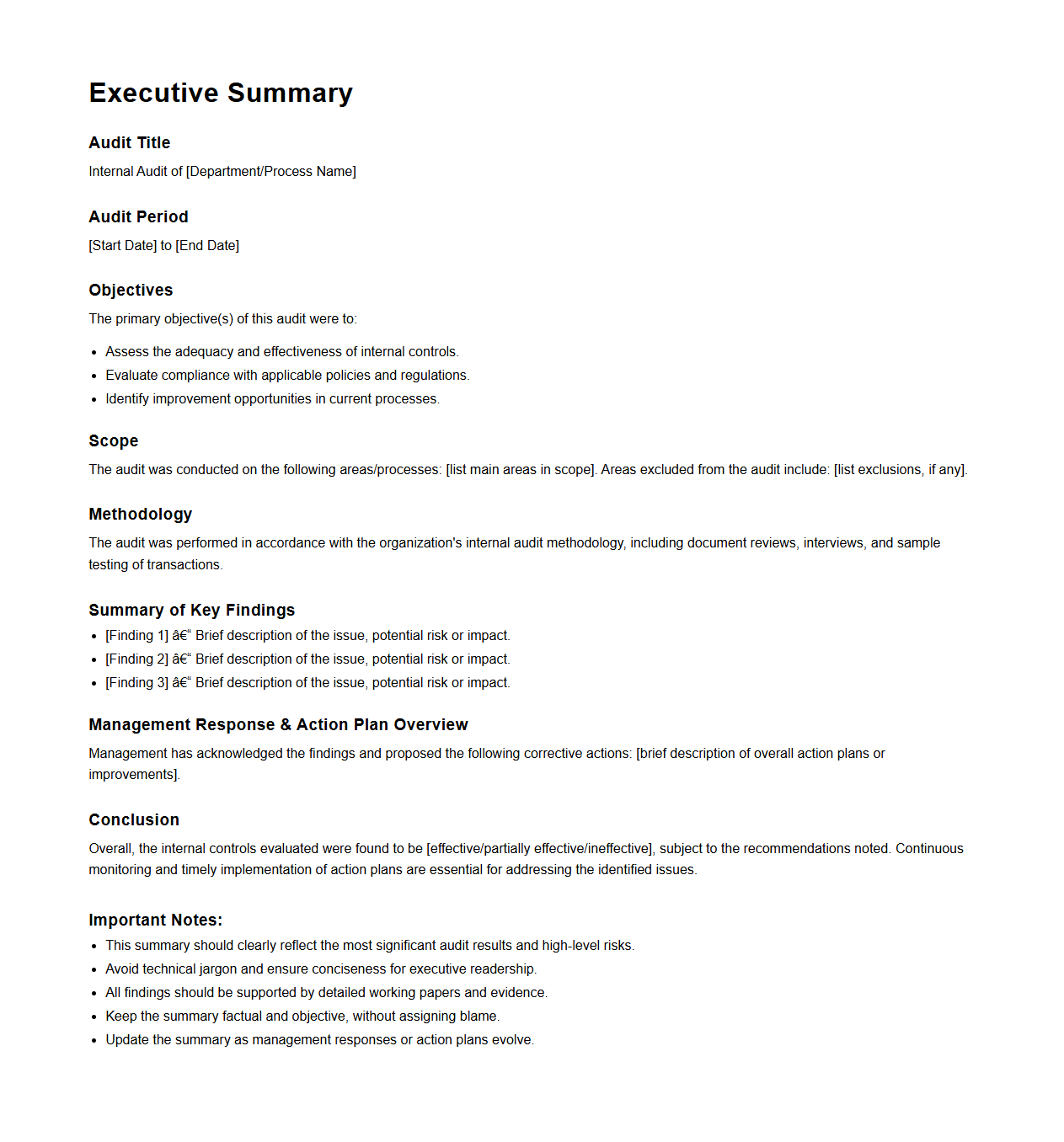
Executive Summary Format for Internal Audit Working Papers
The
Executive Summary Format for Internal Audit Working Papers is a structured document that provides a concise overview of the key findings, scope, and conclusions of an internal audit engagement. It highlights critical issues identified during the audit, significant risks assessed, and recommendations for management action, enabling efficient communication with stakeholders. This format ensures consistency and clarity across audit reports, facilitating effective decision-making and follow-up on audit results.
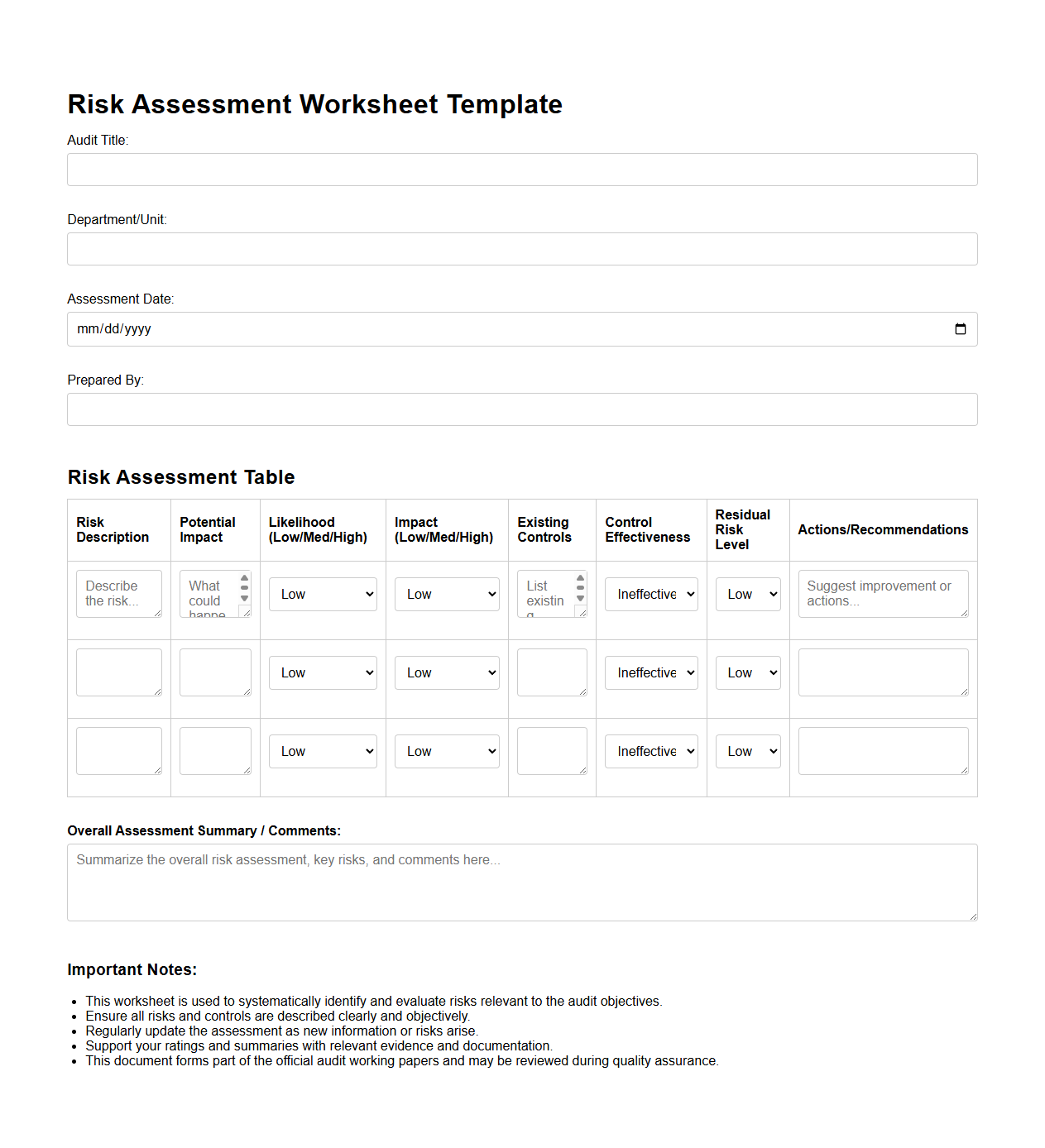
Risk Assessment Worksheet Template for Audit Documentation
A
Risk Assessment Worksheet Template for Audit Documentation is a structured tool used to identify, evaluate, and document potential risks during the audit process. It helps auditors systematically record risk factors, impact levels, and control measures to ensure comprehensive risk analysis and adherence to regulatory standards. This template enhances audit quality by providing clear, organized evidence for decision-making and compliance verification.
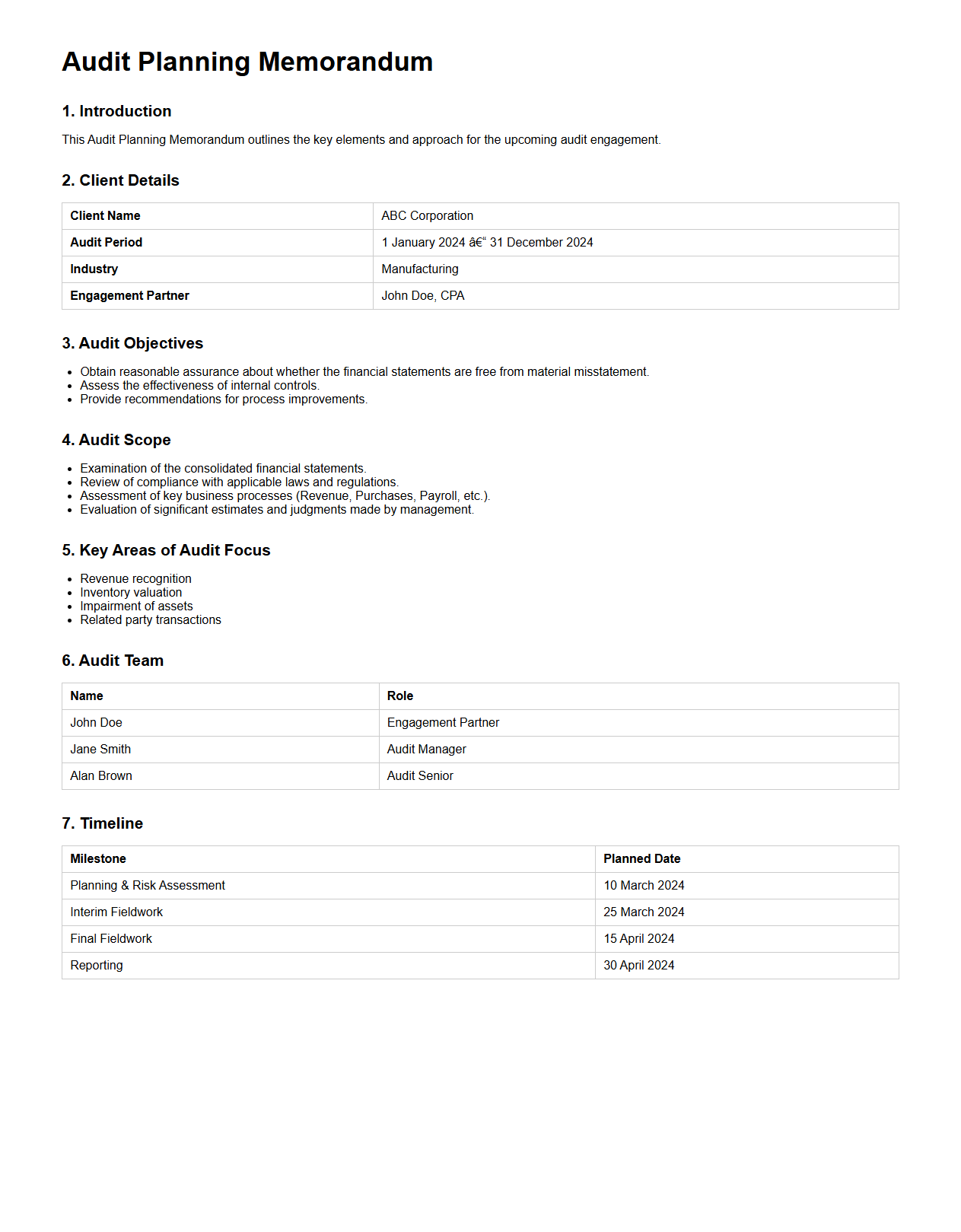
Audit Planning Memorandum Document Structure
The
Audit Planning Memorandum Document Structure outlines the framework used by auditors to organize and document key elements of the audit planning process, including risk assessments, materiality thresholds, and audit scope. It serves as a roadmap for the audit team, ensuring all critical areas such as internal controls, regulatory requirements, and client-specific concerns are systematically addressed. This structured document enhances the effectiveness and efficiency of the audit by providing clear guidance and reference throughout the engagement.
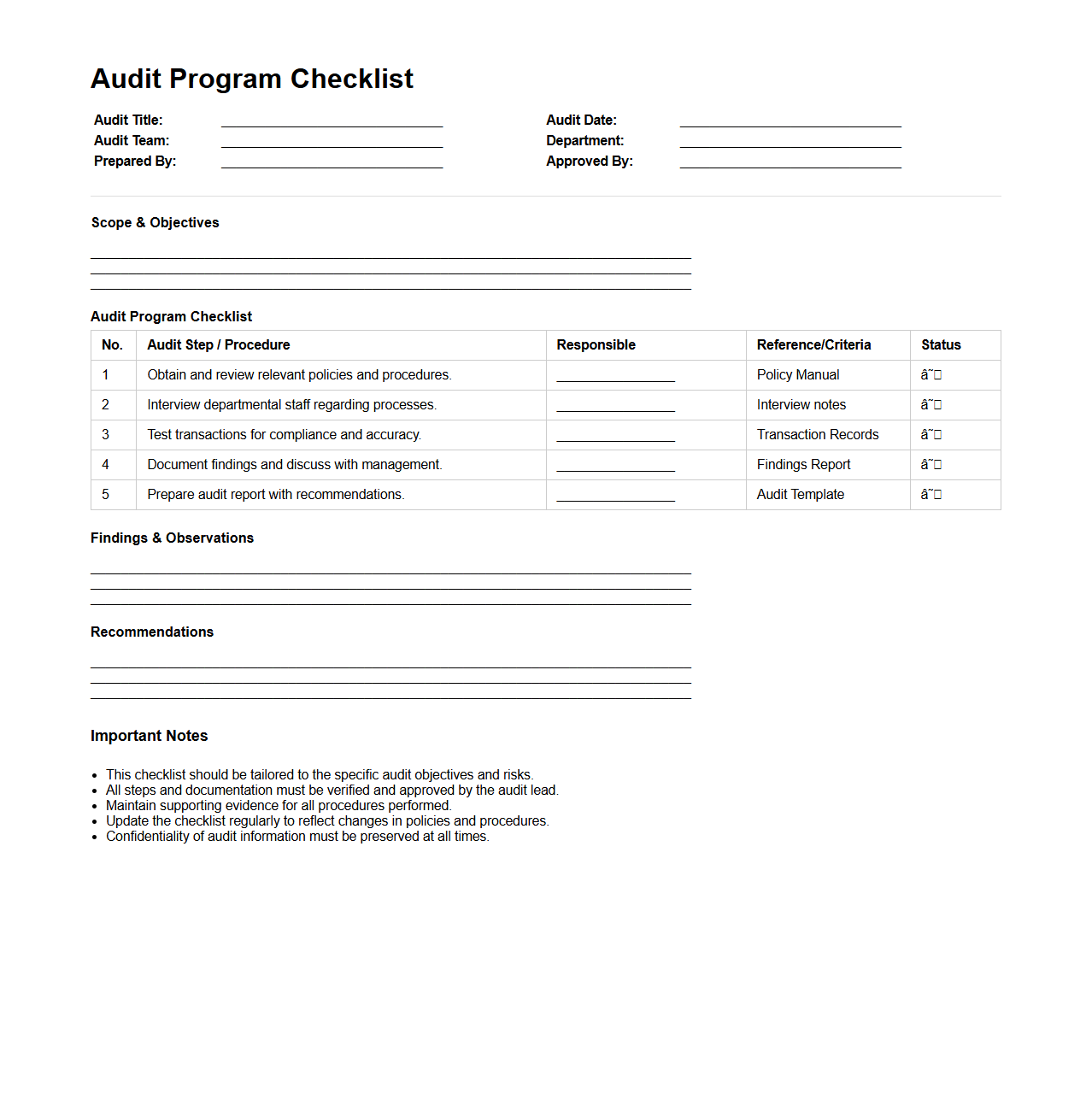
Audit Program Checklist Format
An
Audit Program Checklist Format document serves as a structured framework guiding auditors through the systematic evaluation of processes, controls, and compliance requirements within an organization. This document organizes audit tasks into clear sections, ensuring comprehensive coverage and consistency across audits. It enhances efficiency by providing predefined criteria, enabling auditors to identify discrepancies and document findings effectively.
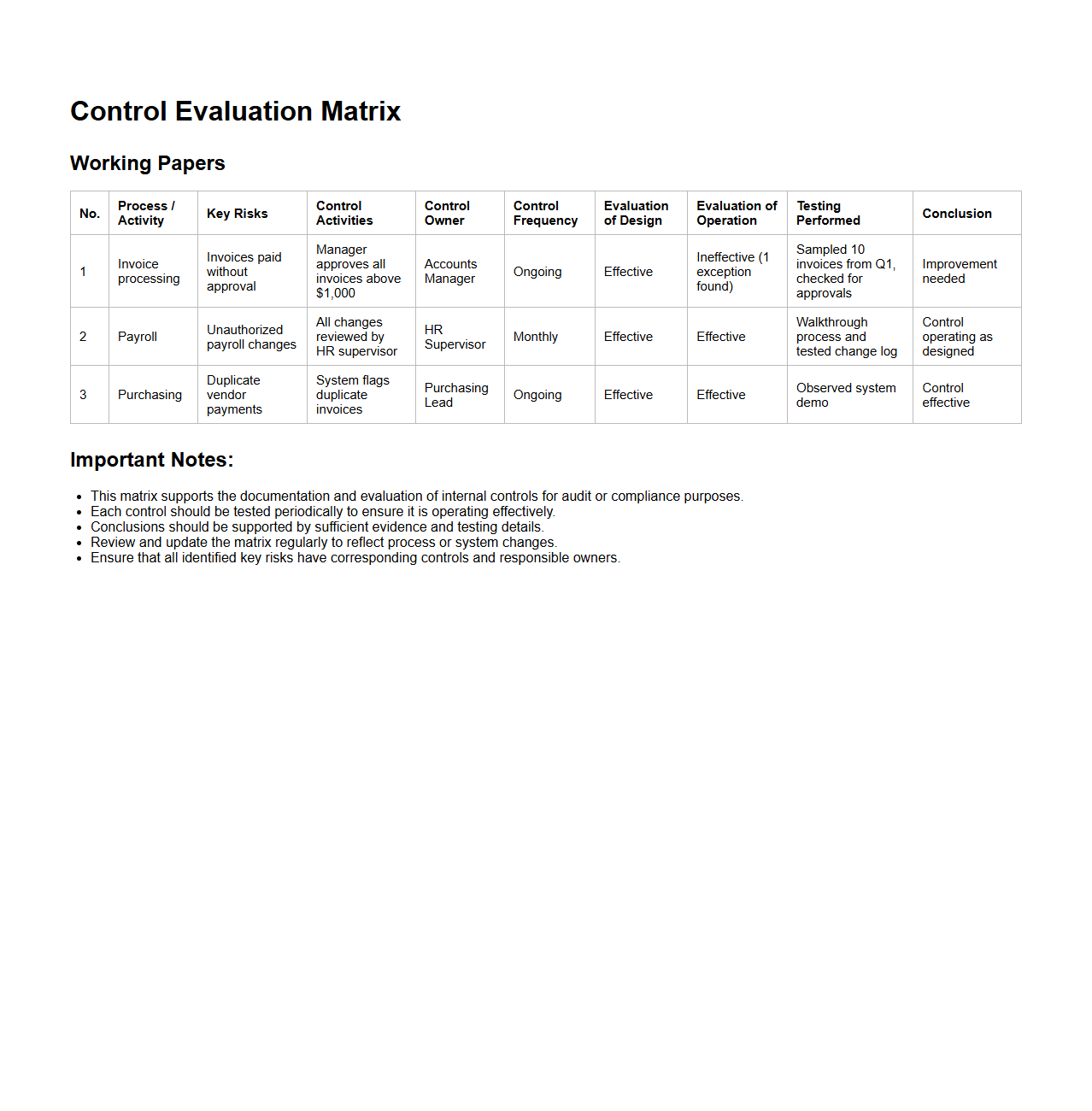
Control Evaluation Matrix Format for Working Papers
The
Control Evaluation Matrix Format for Working Papers document is a structured tool used by auditors to systematically assess and document the effectiveness of internal controls within an organization. It facilitates the identification of control objectives, risks, and the corresponding control activities, allowing for a clear evaluation of control design and operational effectiveness. This format enhances audit efficiency by providing a comprehensive, standardized framework that supports the validation of control testing results and audit conclusions.
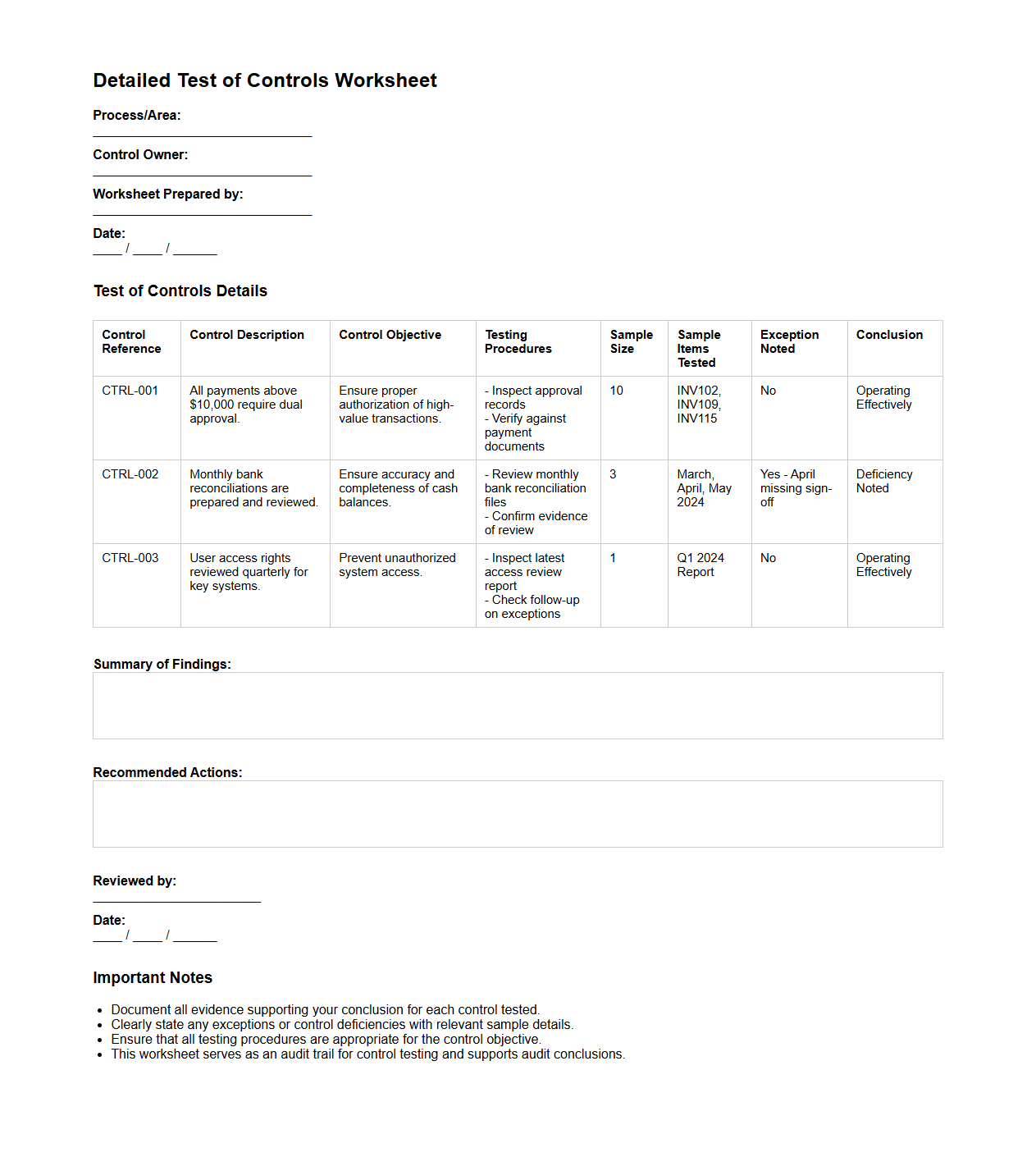
Detailed Test of Controls Worksheet Format
A
Detailed Test of Controls Worksheet Format document is a structured tool used in auditing to systematically record and evaluate the effectiveness of internal controls within an organization. It captures the specific controls tested, the nature and extent of testing performed, results obtained, and any exceptions noted, ensuring thorough documentation for compliance and review purposes. This format helps auditors maintain consistency, improve accuracy in control assessments, and support conclusions on control reliability.
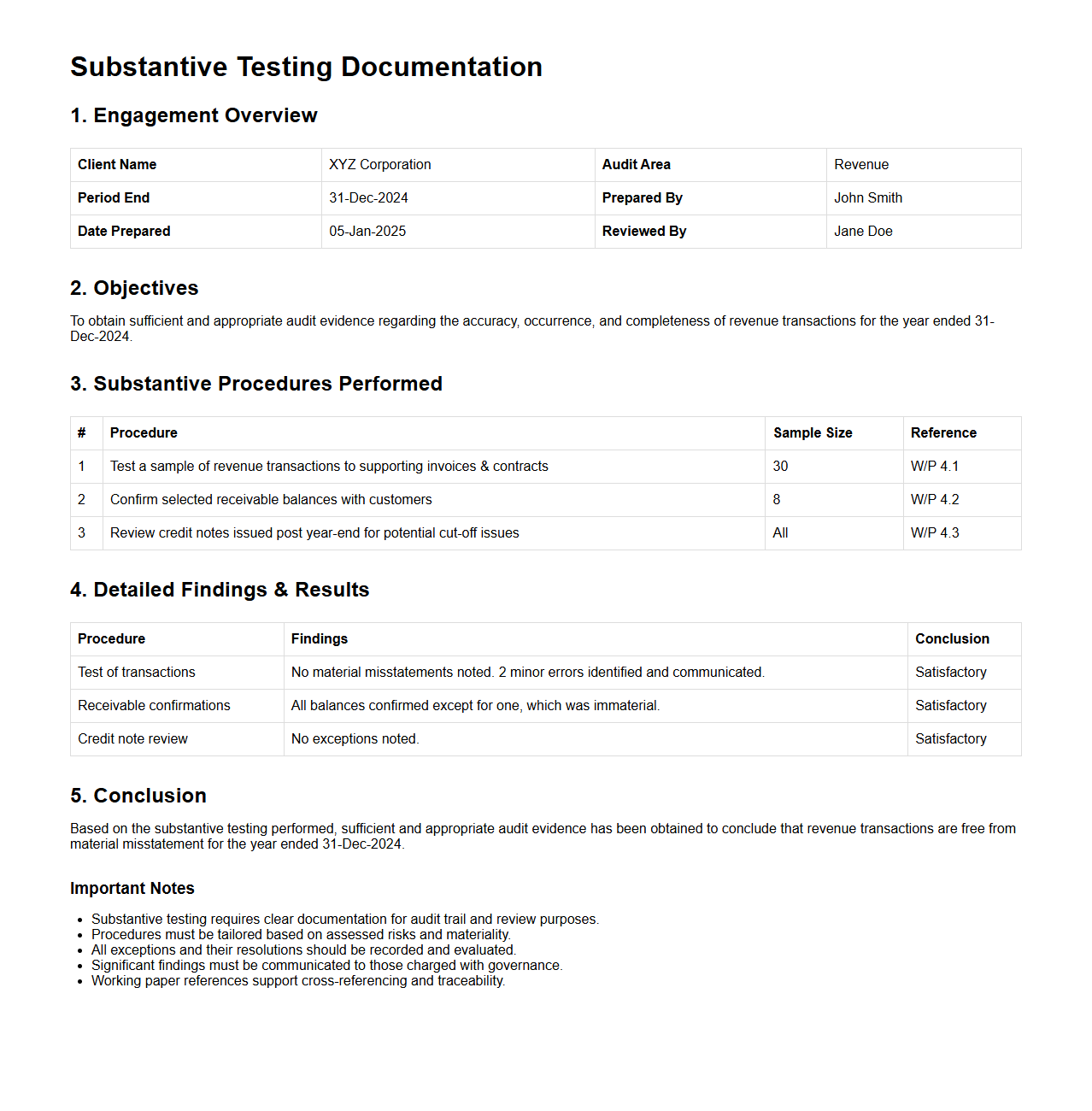
Substantive Testing Documentation Format
Substantive Testing Documentation Format is a structured framework used by auditors to record detailed evidence obtained during substantive testing procedures, ensuring accuracy and completeness of financial statements. This document includes test objectives, sample selections, test results, and conclusions, facilitating transparent audit trails and compliance with auditing standards. Maintaining a
standardized documentation format enhances review efficiency and supports professional judgment in identifying material misstatements.
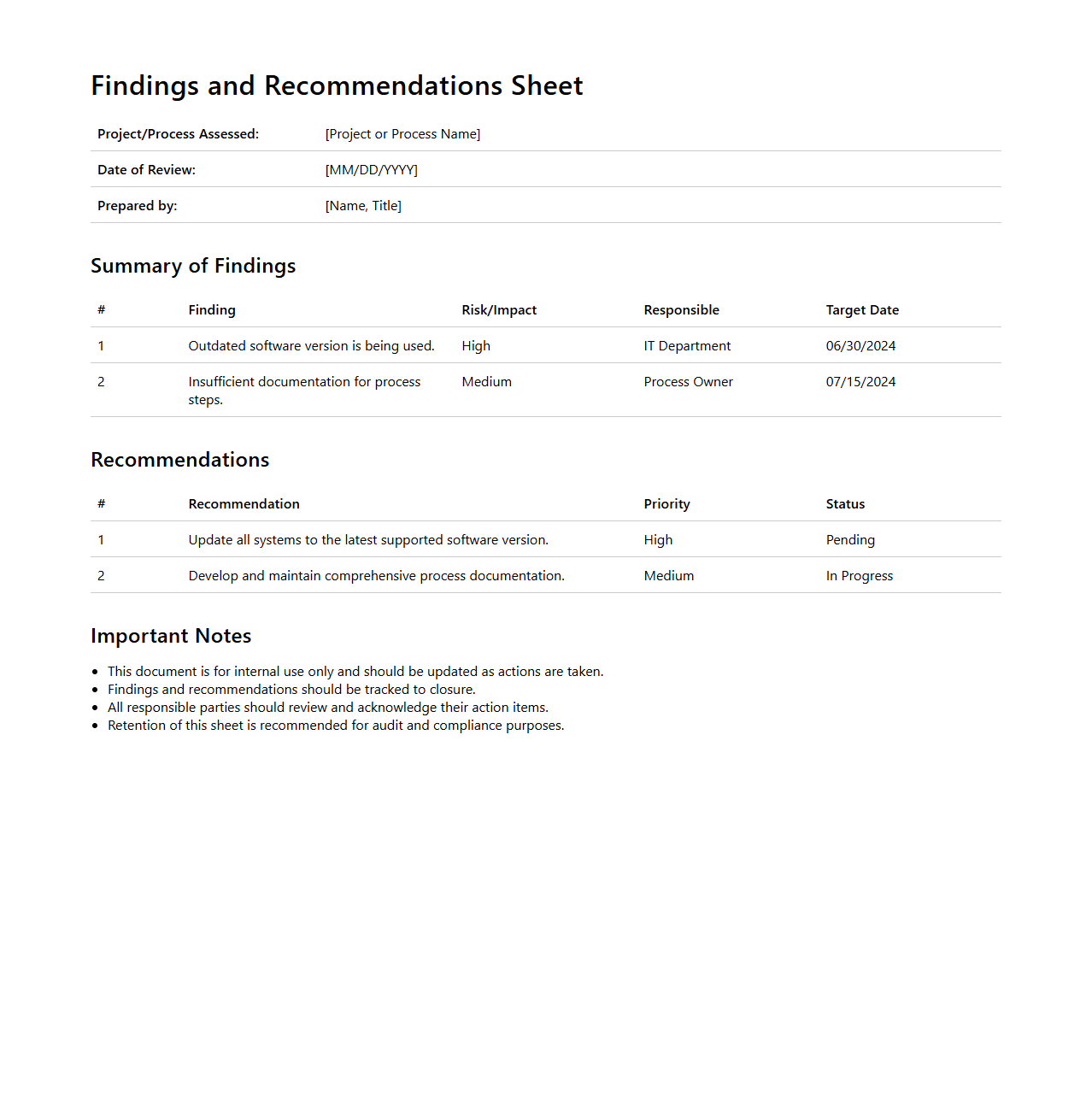
Findings and Recommendations Sheet Template
The
Findings and Recommendations Sheet Template is a structured document designed to clearly present the results of an analysis or investigation alongside actionable suggestions for improvement. It organizes data into key sections such as observed findings, implications, and prioritized recommendations to facilitate decision-making and follow-up actions. This template enhances clarity and efficiency in reporting by standardizing how critical information is communicated to stakeholders.
Audit Evidence Index Sheet Format
The
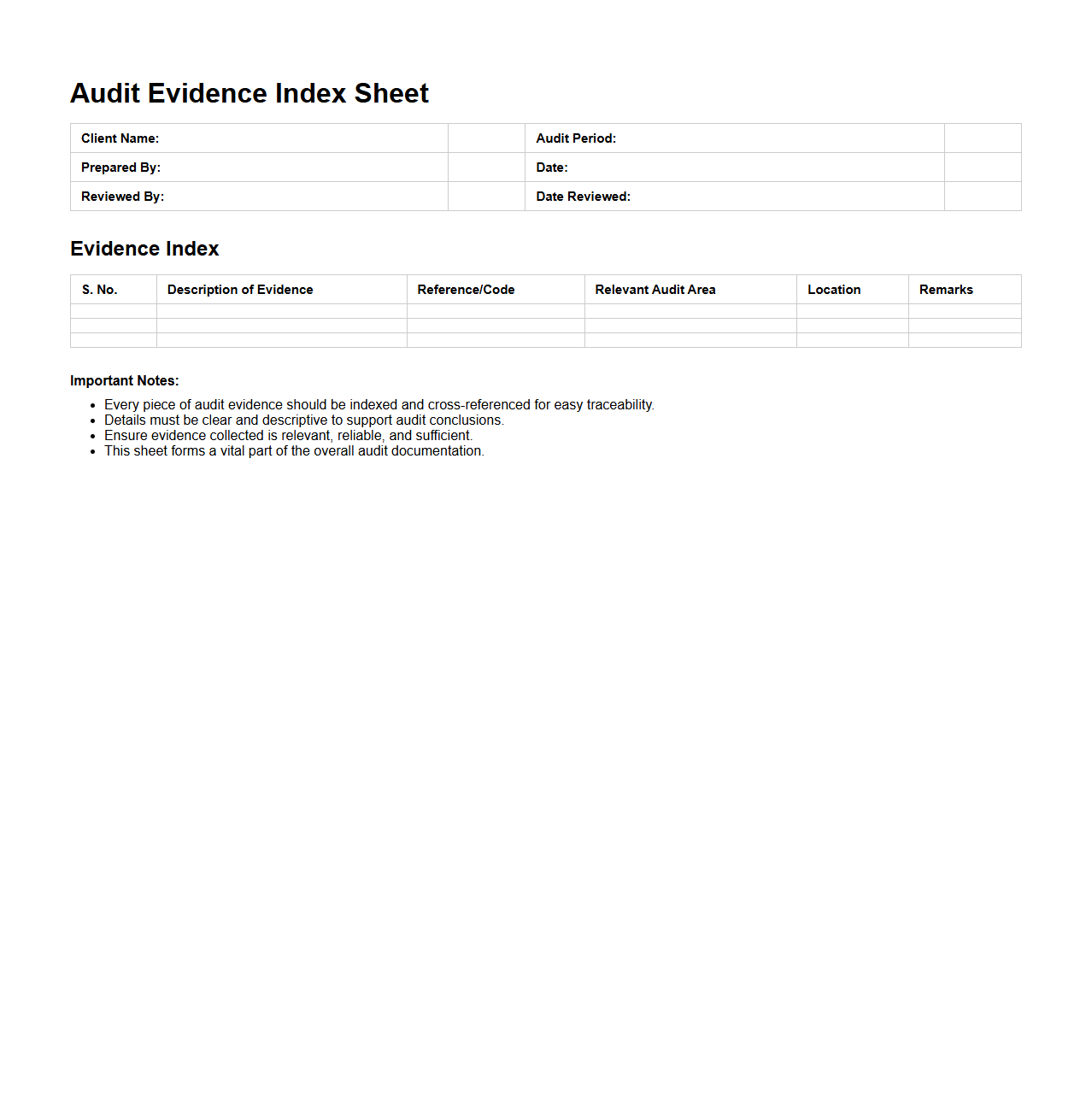
Audit Evidence Index Sheet Format document serves as a structured template for organizing and referencing all audit evidence collected during an audit process. It facilitates efficient tracking, cross-referencing, and verification of audit findings, ensuring completeness and accuracy in audit documentation. This format enhances transparency and supports compliance with auditing standards by systematically categorizing evidence against specific audit objectives.
Audit Conclusion and Clearance Sheet Structure
An
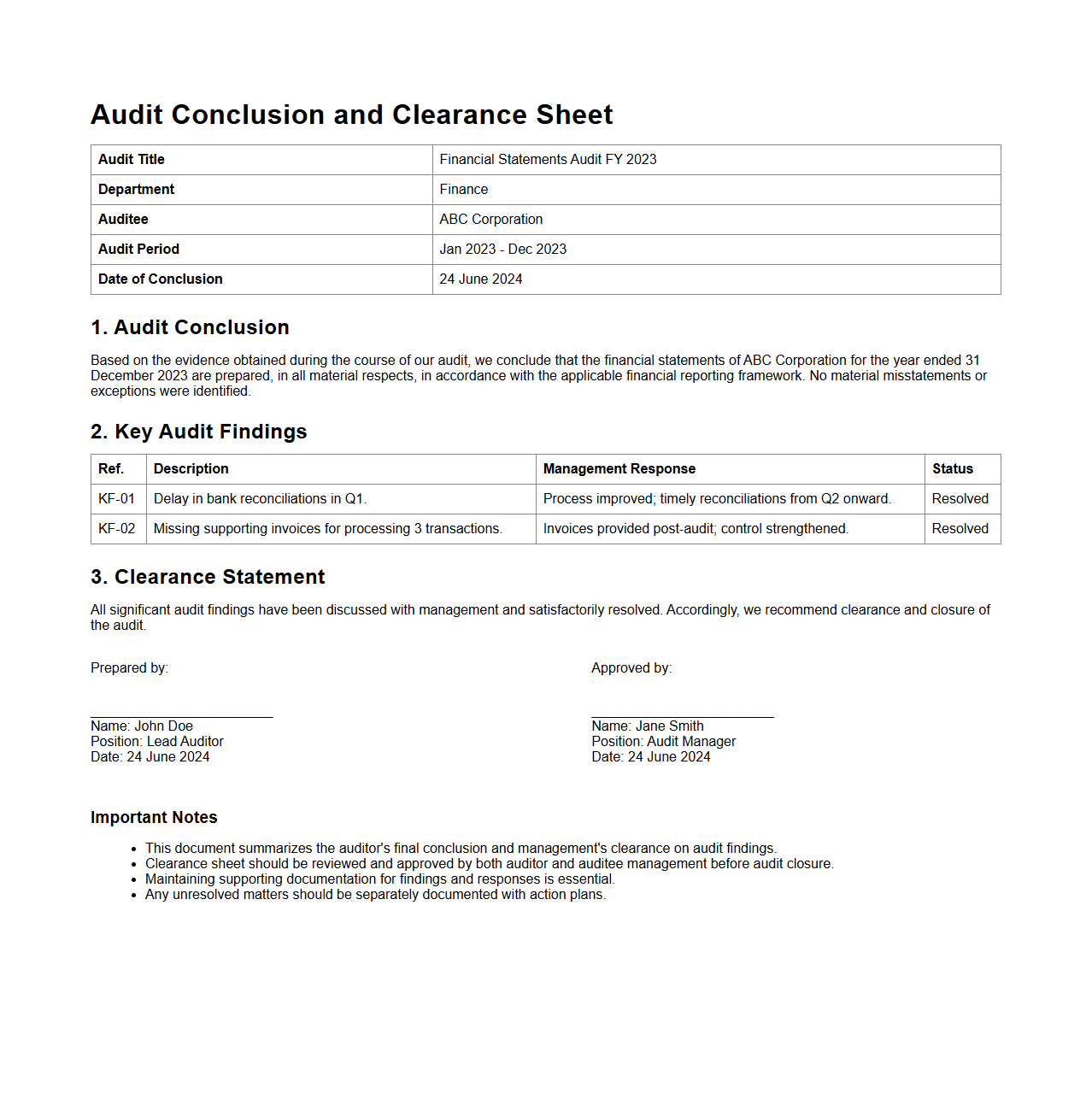
Audit Conclusion and Clearance Sheet Structure document outlines the final assessment and resolution of issues identified during an audit process. It systematically summarizes audit findings, management responses, corrective actions, and clearance status to ensure compliance and accountability. This document serves as a definitive record confirming that all audit concerns have been addressed and closed appropriately.
What are the essential components of a standardized internal audit working paper format?
A standardized internal audit working paper format includes a header with audit details such as the audit title, date, and auditor's name. It must contain a clear description of the audit objective and scope to provide context. Additionally, findings, conclusions, and recommendations should be systematically documented to ensure completeness.
How should evidence and audit findings be documented for clarity and traceability?
Evidence and audit findings should be documented with concise, factual descriptions that are easy to understand. Each item must be linked to supporting documents to enhance traceability and validation. Using standardized templates and clear labeling further improves clarity and helps prevent misinterpretation.
What referencing system is recommended for organizing internal audit working papers?
An alphanumeric cross-referencing system is recommended to organize internal audit working papers efficiently. This system assigns unique identifiers to each document, enabling quick retrieval and correlation across related materials. Proper referencing also supports audit quality reviews and facilitates follow-up actions.
Which digital tools best support version control in electronic working papers?
Leading digital tools such as Microsoft SharePoint, Google Drive, and AuditBoard offer robust version control features. These platforms track changes, maintain historical versions, and enable collaborative editing. Utilizing such tools enhances accuracy and accountability in audit documentation workflows.
How should confidentiality and access controls be reflected in working paper documentation?
Confidentiality must be emphasized by marking working papers with appropriate security labels and classifications. Access controls should be documented by specifying authorized users and permission levels clearly. Implementing encryption and password protections further safeguards sensitive audit information.