The Format of Audit Findings for Management Review typically includes a clear description of each finding, its impact on processes, and recommendations for corrective actions. This structured format ensures management can quickly understand issues, assess risks, and prioritize improvements. Concise presentation with evidence and supporting data enhances decision-making during the review process.
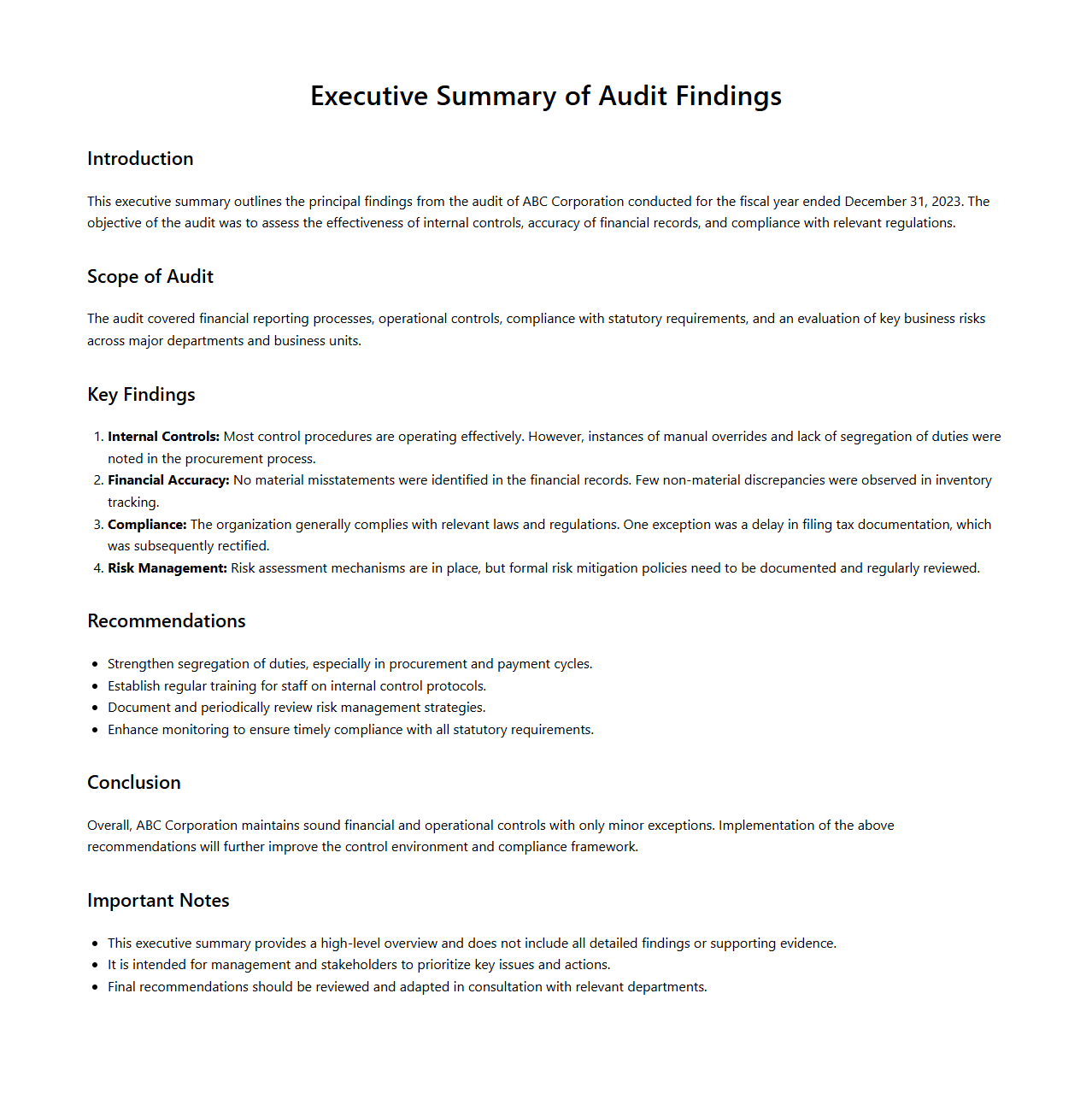
Executive Summary of Audit Findings
An
Executive Summary of Audit Findings document concisely presents key results and observations from an audit, highlighting critical risks and areas for improvement. It distills complex audit data into clear, actionable insights tailored for stakeholders and decision-makers. This summary facilitates informed decision-making by prioritizing audit recommendations and compliance status.
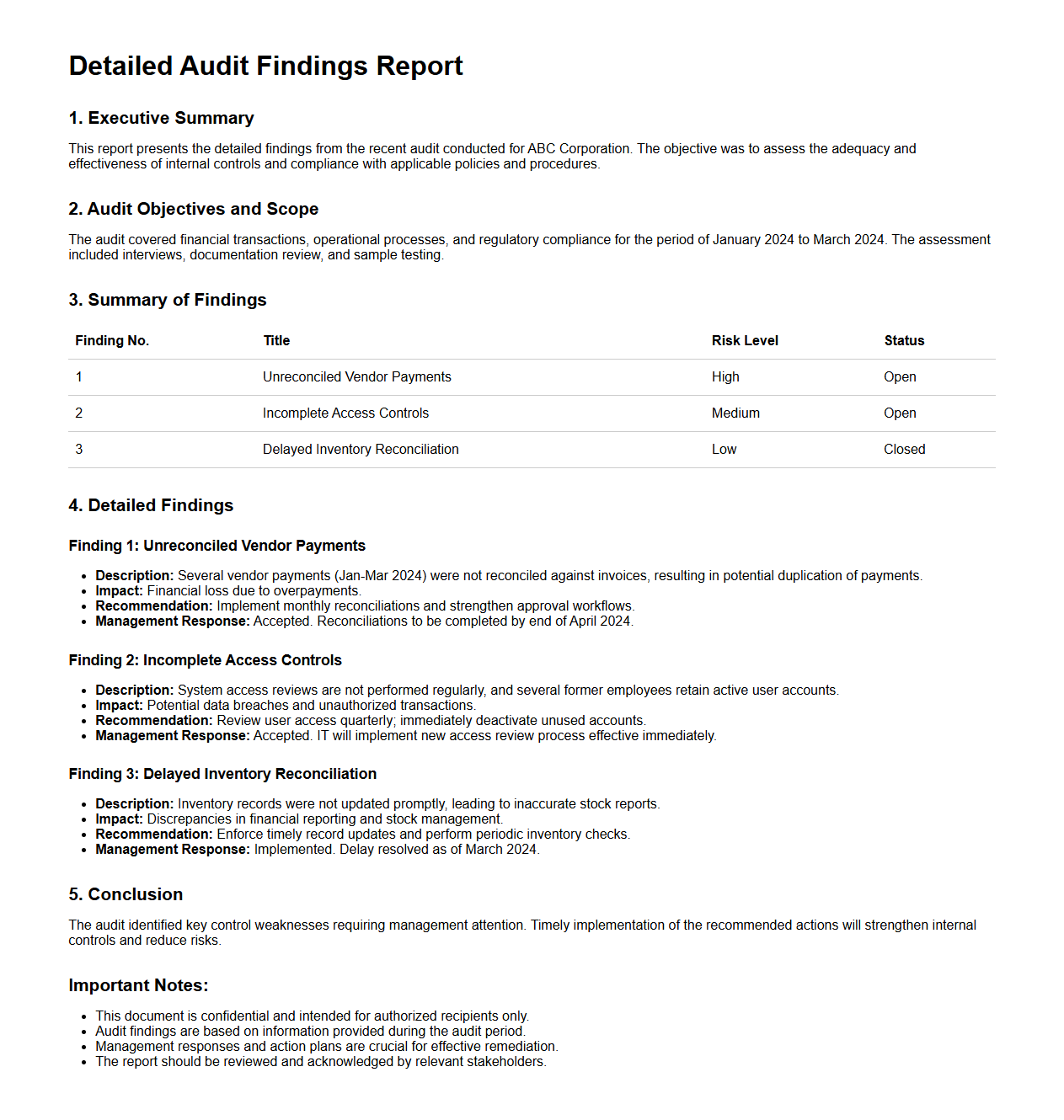
Detailed Audit Findings Report
A
Detailed Audit Findings Report documents the results of an audit, highlighting identified issues, discrepancies, and compliance gaps within a specific process or system. It provides a comprehensive analysis of the audit scope, methodology, evidence collected, and recommendations for corrective actions. This report serves as a crucial tool for organizations to improve internal controls, ensure regulatory compliance, and mitigate operational risks.
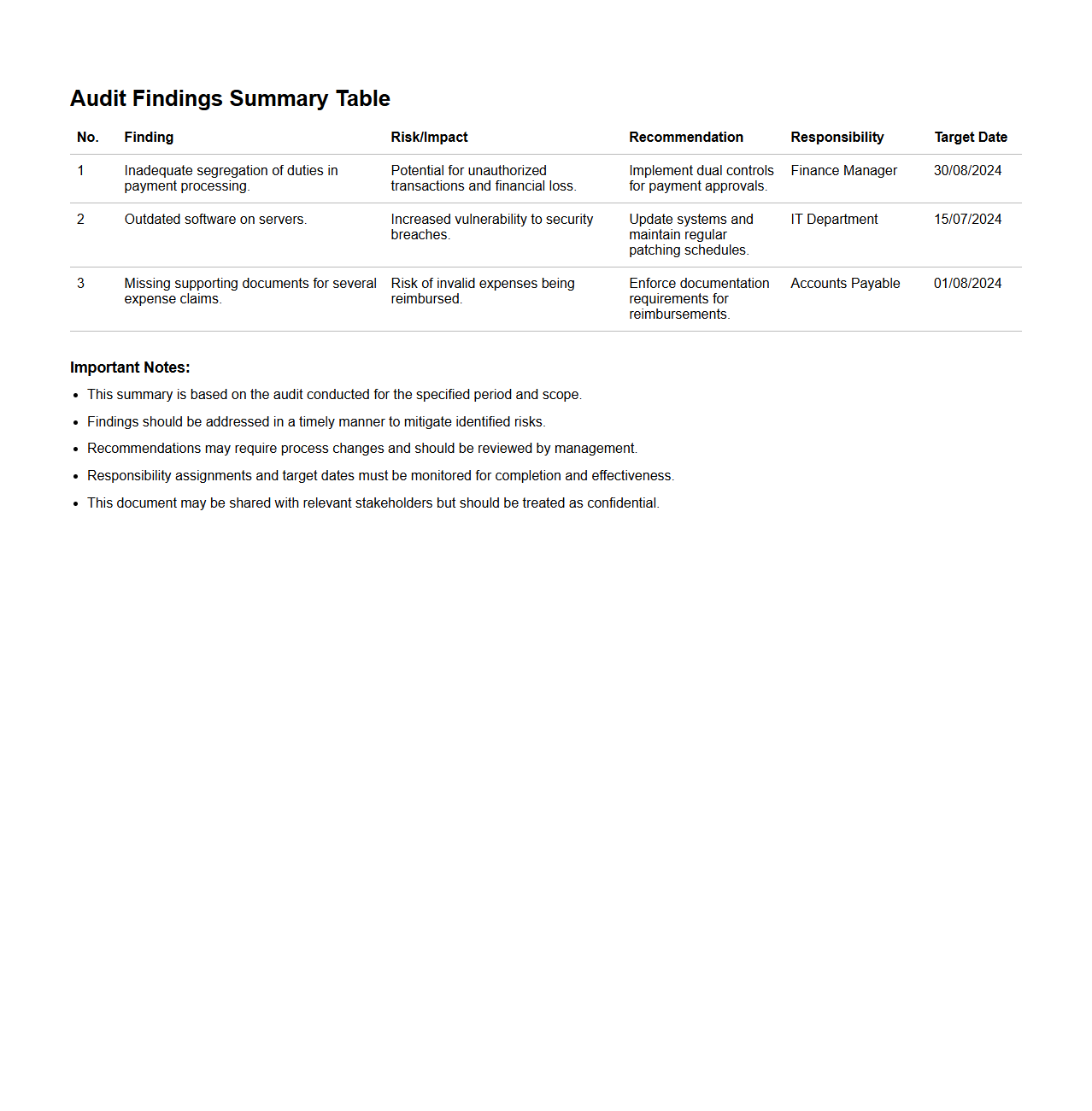
Audit Findings Summary Table
The
Audit Findings Summary Table document consolidates key results and observations from an audit into a clear, organized format to facilitate quick reference and decision-making. It typically includes identified issues, risk ratings, recommendations, and responsible parties, helping stakeholders track remediation efforts effectively. This summary enhances transparency and supports continuous improvement by highlighting critical compliance and control weaknesses.
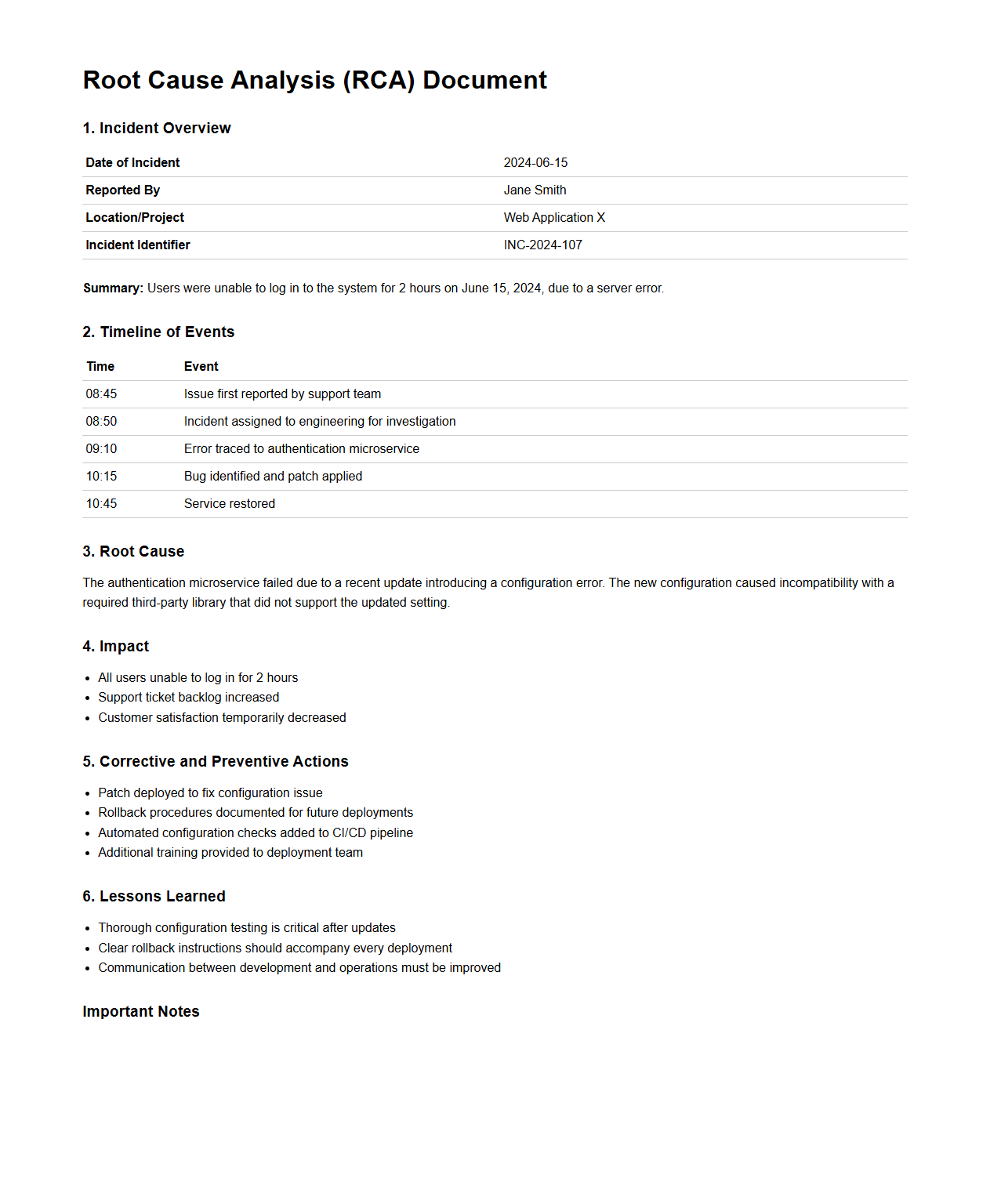
Root Cause Analysis Document
A
Root Cause Analysis Document systematically identifies the underlying causes of a problem to prevent recurrence. It includes detailed problem descriptions, data collection, analysis methods, and corrective action plans. This document is critical for improving processes, reducing downtime, and enhancing overall operational efficiency.
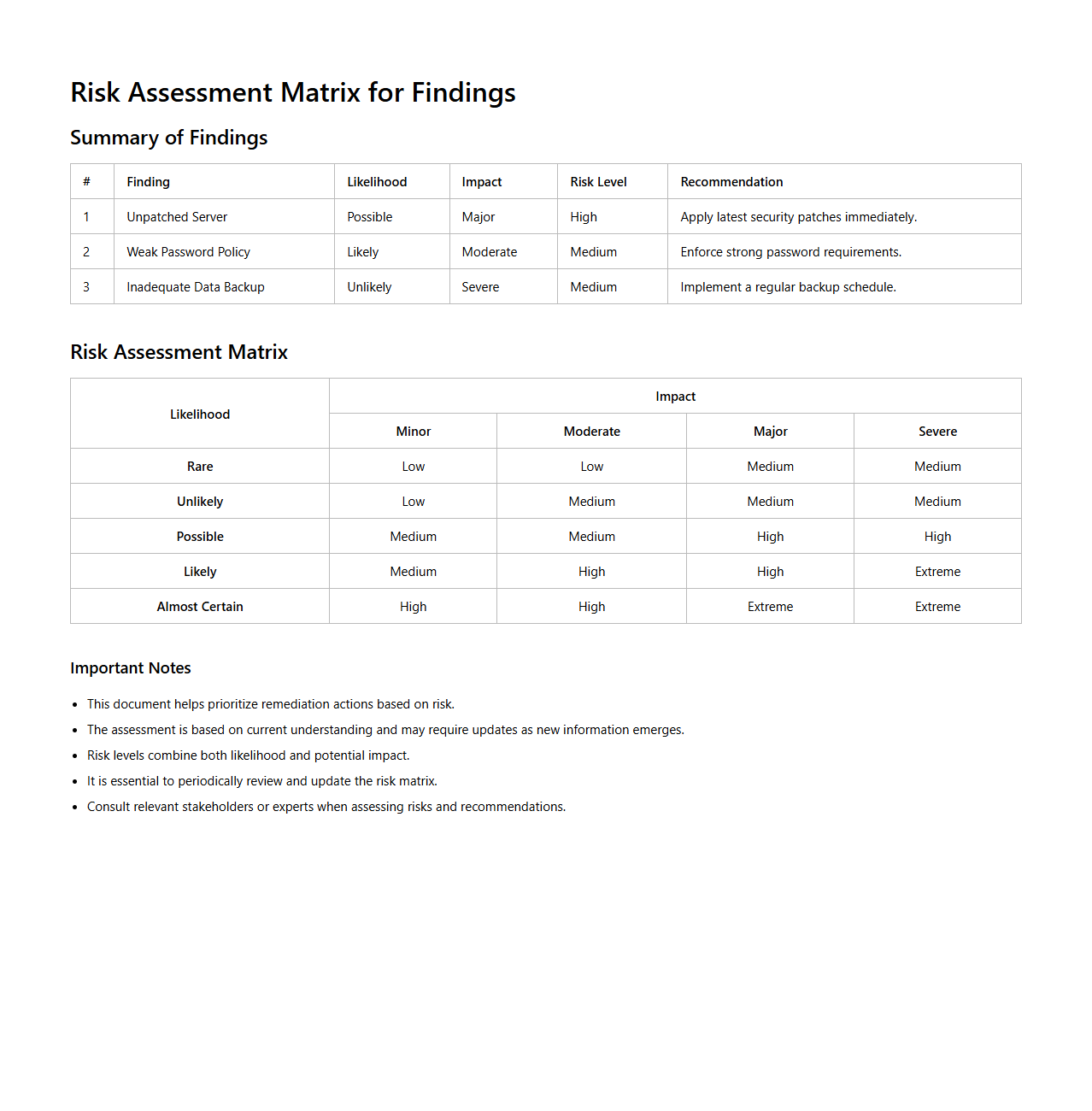
Risk Assessment Matrix for Findings
A
Risk Assessment Matrix for Findings document categorizes and prioritizes risks identified during audits or inspections by evaluating their likelihood and potential impact. This tool enables organizations to visually assess threats, facilitating informed decision-making for mitigation strategies. By systematically ranking risks, the matrix helps allocate resources effectively to address the most critical vulnerabilities.
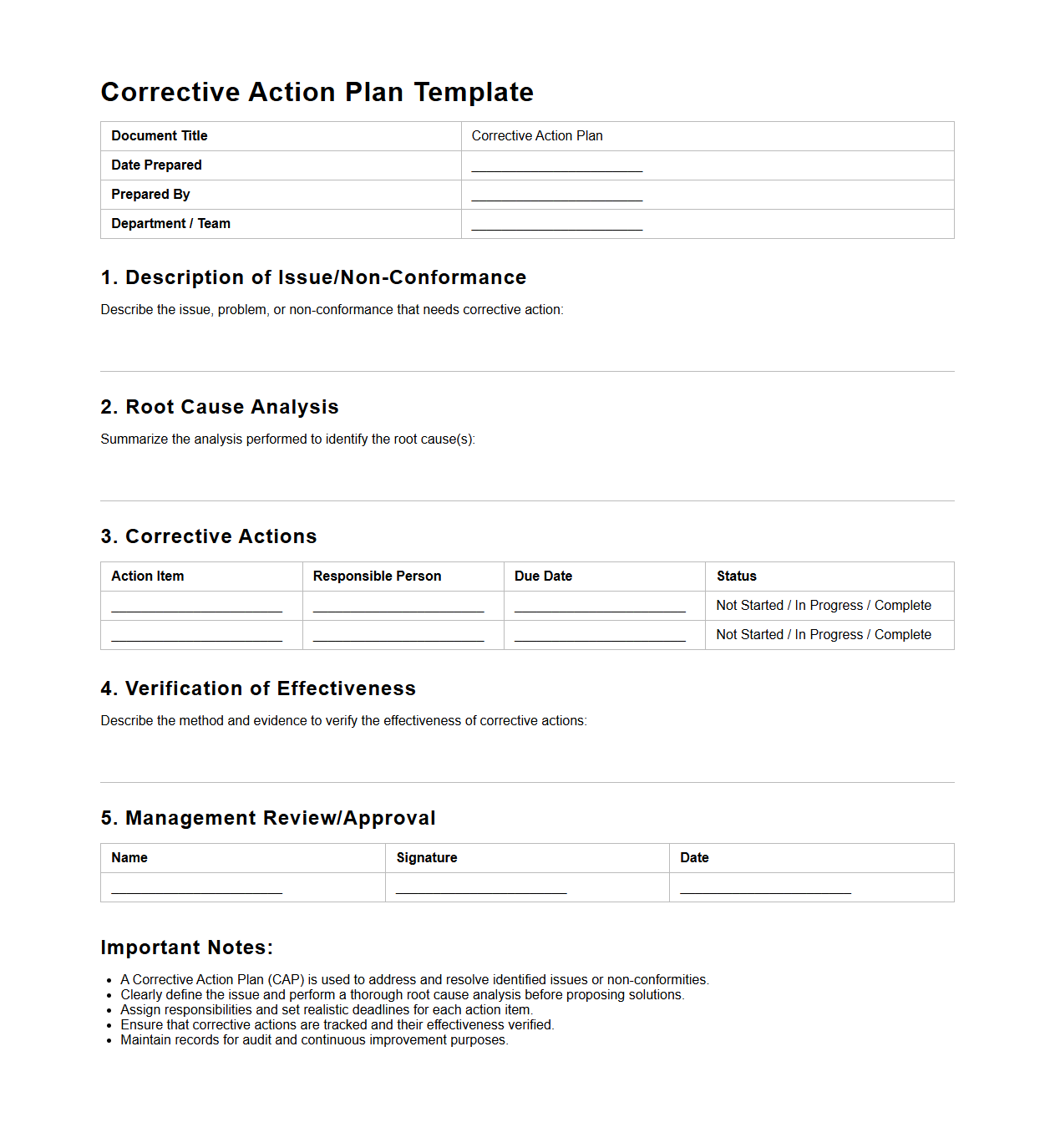
Corrective Action Plan Template
A
Corrective Action Plan Template document is a structured tool used to identify, address, and resolve issues or non-conformances within an organization or project. It outlines specific actions, responsible parties, timelines, and measurable outcomes to ensure effective problem-solving and continuous improvement. This template facilitates accountability and tracks progress toward achieving compliance and enhancing operational efficiency.
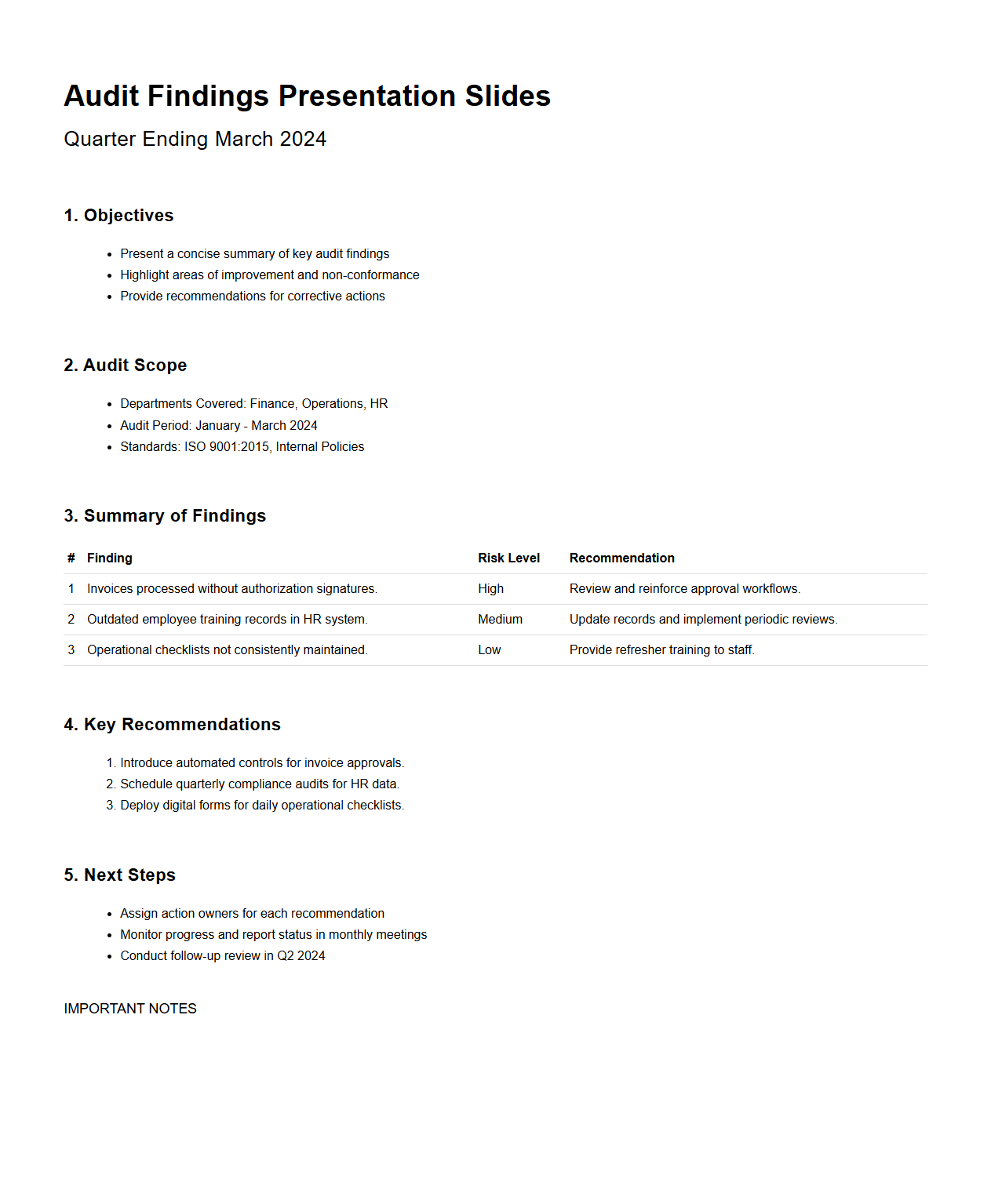
Audit Findings Presentation Slides
The
Audit Findings Presentation Slides document serves as a comprehensive summary of audit results, highlighting key observations, identified risks, and recommended corrective actions. It is designed to communicate audit outcomes clearly to stakeholders, enabling informed decision-making and enhancing transparency. This document often includes visual aids such as charts and graphs to effectively illustrate critical points and support compliance efforts.
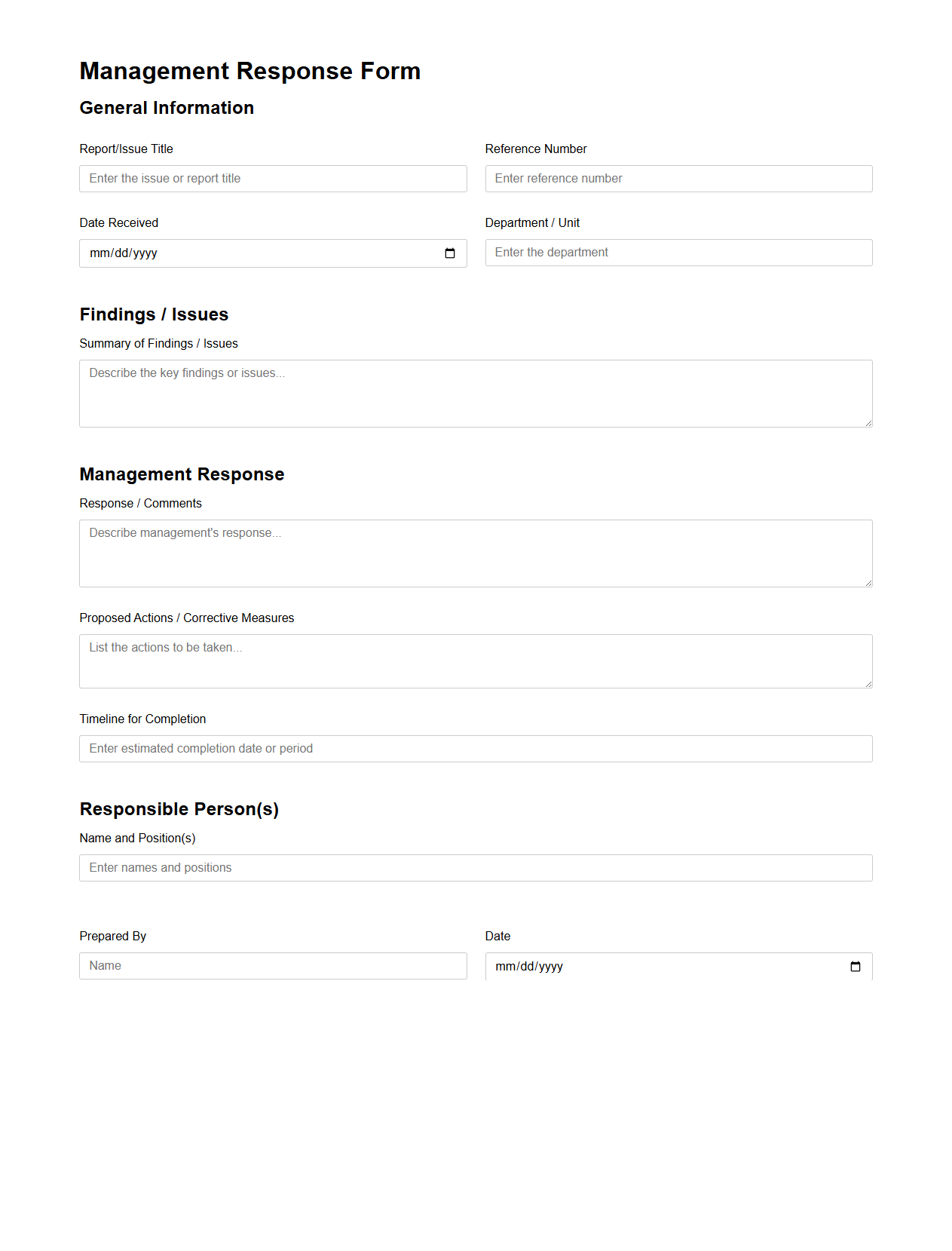
Management Response Form
The
Management Response Form document is a structured tool used by organizations to formally address audit findings, risk assessments, or project reviews. It captures management's planned actions, responsible parties, and timelines for resolving identified issues, ensuring accountability and tracking progress. This form facilitates clear communication between auditors, management teams, and stakeholders, promoting effective risk mitigation and continuous improvement.
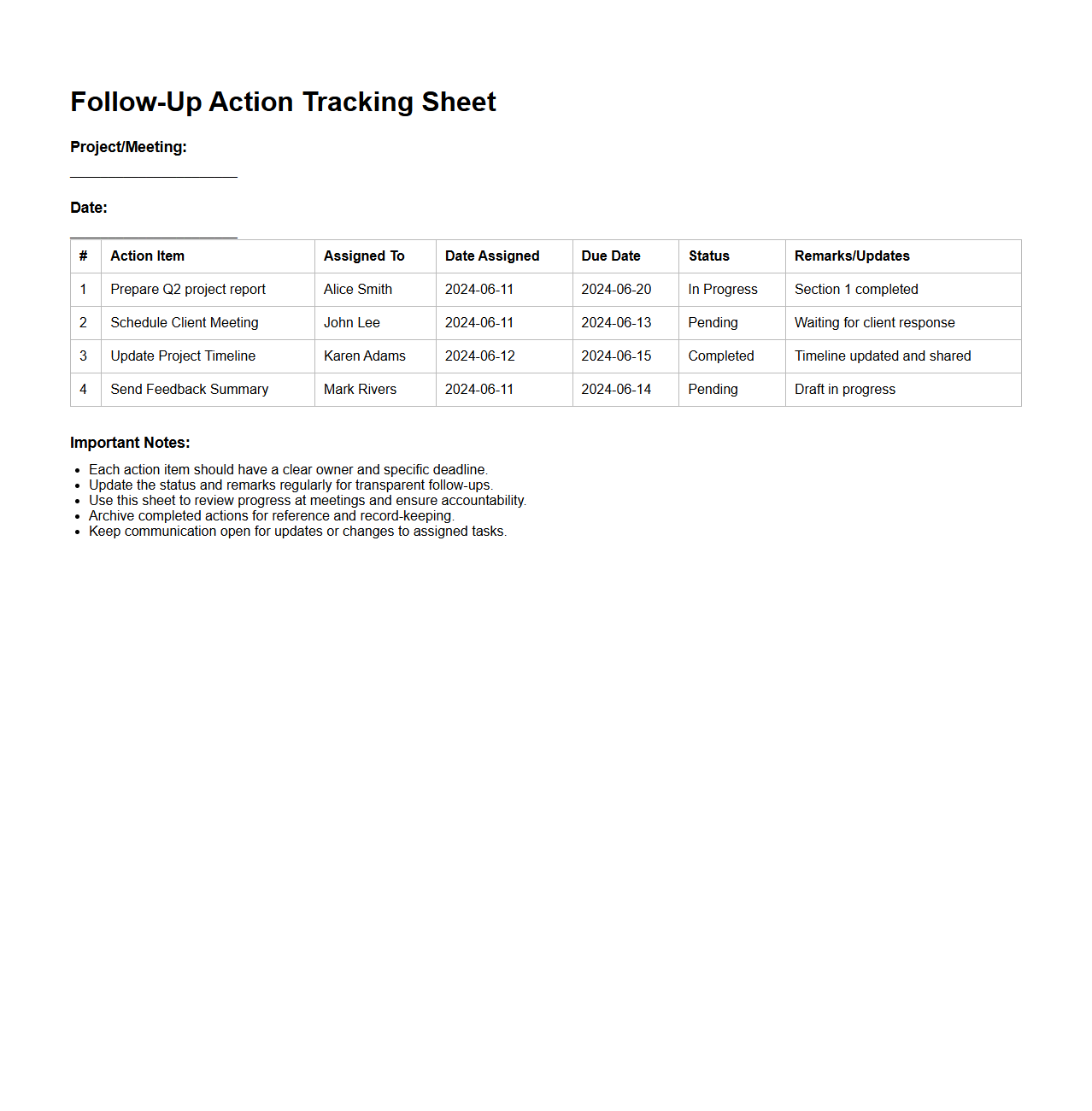
Follow-Up Action Tracking Sheet
A
Follow-Up Action Tracking Sheet document is a tool designed to monitor and manage the progress of assigned tasks, ensuring accountability and timely completion. It typically includes fields for action items, responsible parties, deadlines, status updates, and comments. This structured approach helps teams maintain clear communication and efficiently address outstanding issues.
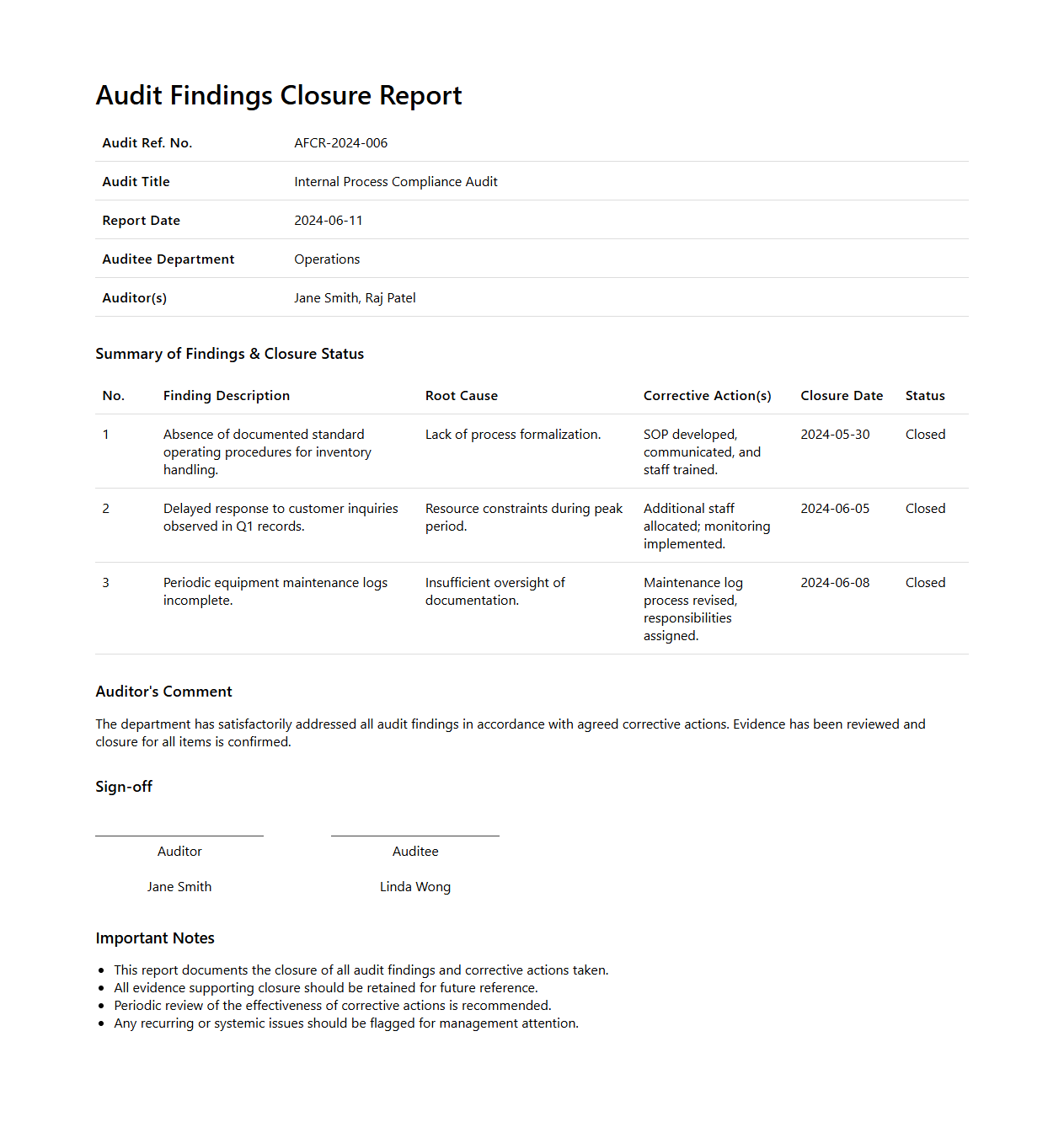
Audit Findings Closure Report
The
Audit Findings Closure Report documents the resolution status of identified audit issues, detailing corrective actions taken and verifying their effectiveness. It serves as formal evidence that audit recommendations have been addressed in compliance with organizational standards. This report helps stakeholders track progress, ensuring accountability and continuous improvement in internal controls.
Key Elements Required in the Audit Findings Format for Management Review Documents
The audit findings format must include a clear statement of each finding along with supporting evidence. It should outline the impact and risk associated with the finding to prioritize management attention. Finally, corrective actions or recommendations must be clearly documented to guide management's response.
How Recommendations Should Be Structured in an Audit Findings Letter for Clarity
Recommendations should be concise and specific, directly addressing the root cause of the issue. Each recommendation must be actionable, with clearly defined steps, responsible parties, and timelines for implementation. This structured approach enhances understanding and facilitates prompt management action.
Heading Hierarchy That Best Highlights Critical Findings in a Management Review Letter
Use a hierarchical heading structure starting with broad categories (e.g., Compliance, Financial, Operational), then subcategories for specific issues. Critical findings should be emphasized with bold and larger fonts under primary headings. This visual hierarchy guides management efficiently to the most pressing concerns.
Formatting Techniques That Improve the Readability of Audit Findings for Executives
Applying bullet points and numbered lists breaks down complex information into digestible parts. Consistent use of fonts, spacing, and highlight colors ensures key data stands out clearly. Additionally, incorporating white space between sections reduces clutter, improving overall readability for busy executives.
How Summary Tables Can Be Incorporated into Audit Findings to Aid Management Decision-Making
Summary tables provide a concise overview of all audit findings, their severity, and recommended actions in one place. They enable quick comparison and prioritization, supporting effective decision-making by management. Properly designed tables should include columns for findings, impacts, recommendations, and responsible personnel.