The Format of Audit Plan for Special Investigations outlines a structured approach to identify investigation objectives, scope, and key risk areas. It includes detailed steps such as resource allocation, timeline scheduling, and specific audit procedures tailored to uncover irregularities or fraud. Clear documentation ensures accountability and facilitates effective communication among stakeholders throughout the investigation process.
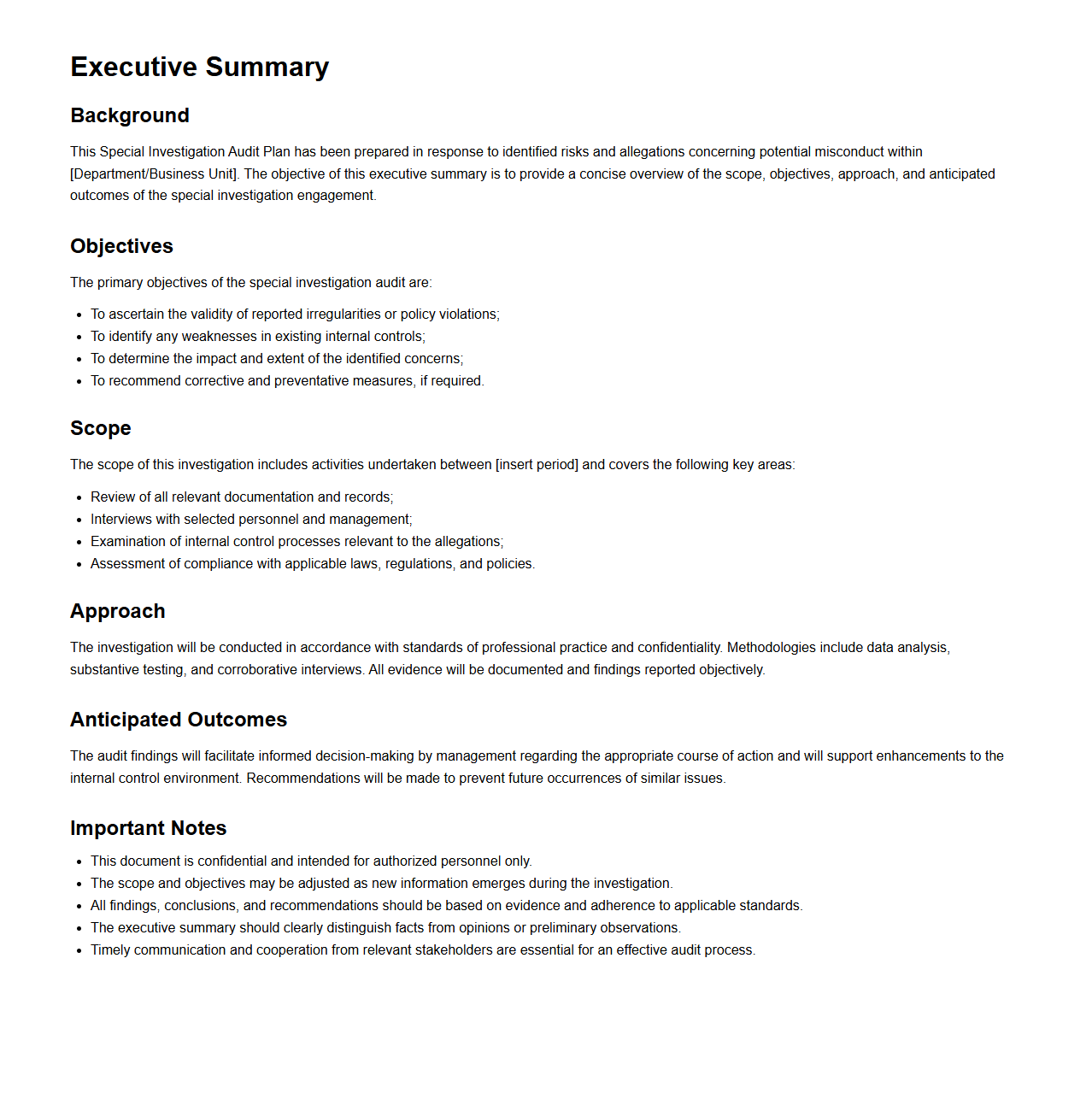
Executive Summary Section Format for Special Investigation Audit Plan
The
Executive Summary Section in a Special Investigation Audit Plan document succinctly outlines the purpose, scope, and key findings of the audit, providing a clear overview for stakeholders. This section highlights critical risks identified, major objectives, and the overall strategy adopted to address potential irregularities. It serves as a concise reference that facilitates quick understanding of the audit's intent and anticipated outcomes.
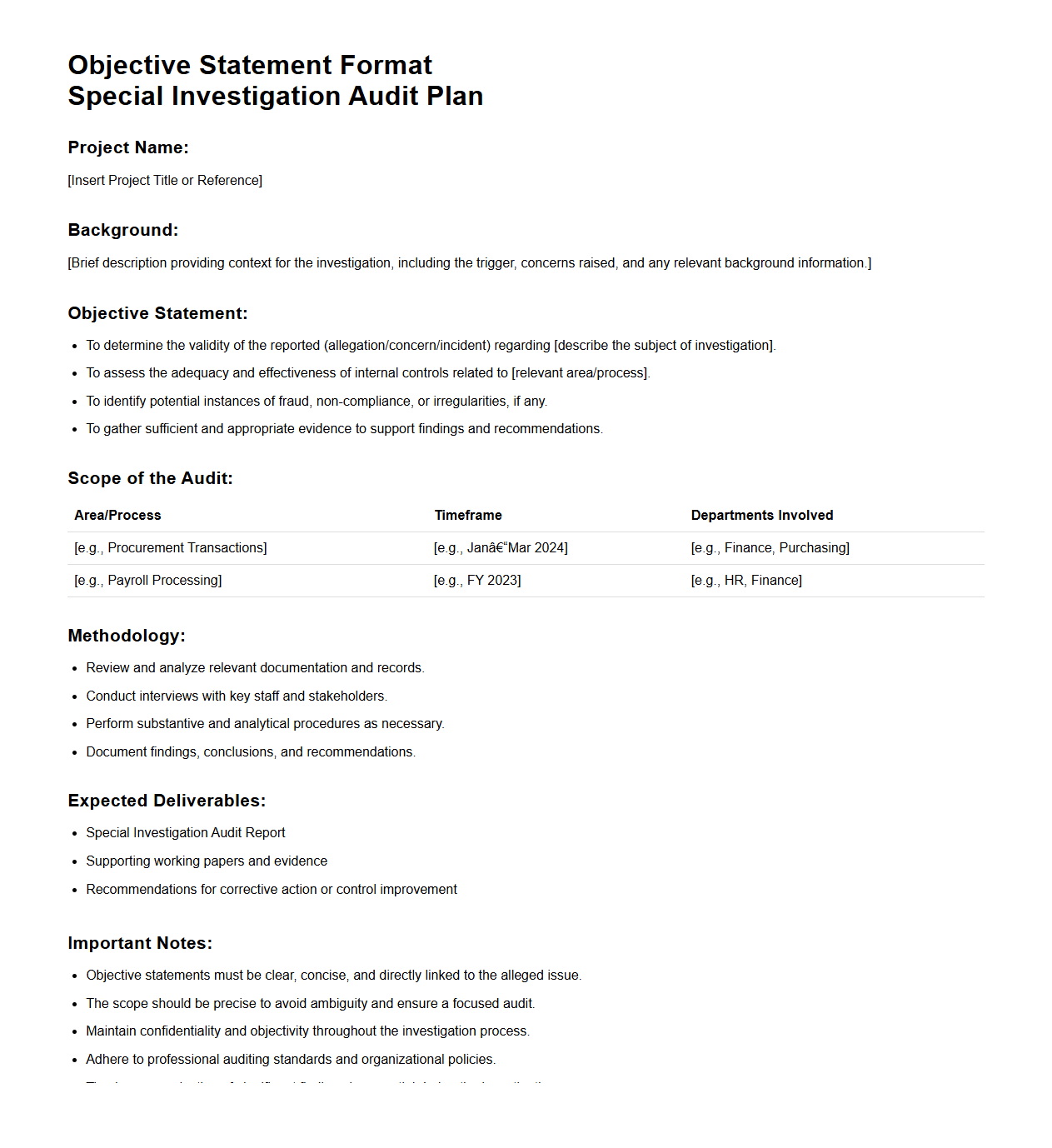
Objective Statement Format in Special Investigation Audit Plans
The
Objective Statement Format in Special Investigation Audit Plans clearly defines the specific goals that the audit aims to achieve, focusing on areas such as fraud detection, compliance verification, and risk assessment. This format ensures that each objective is measurable, actionable, and aligned with the overall investigation scope to enhance audit effectiveness. Precise objective statements guide auditors in allocating resources efficiently and targeting critical issues within the investigation.
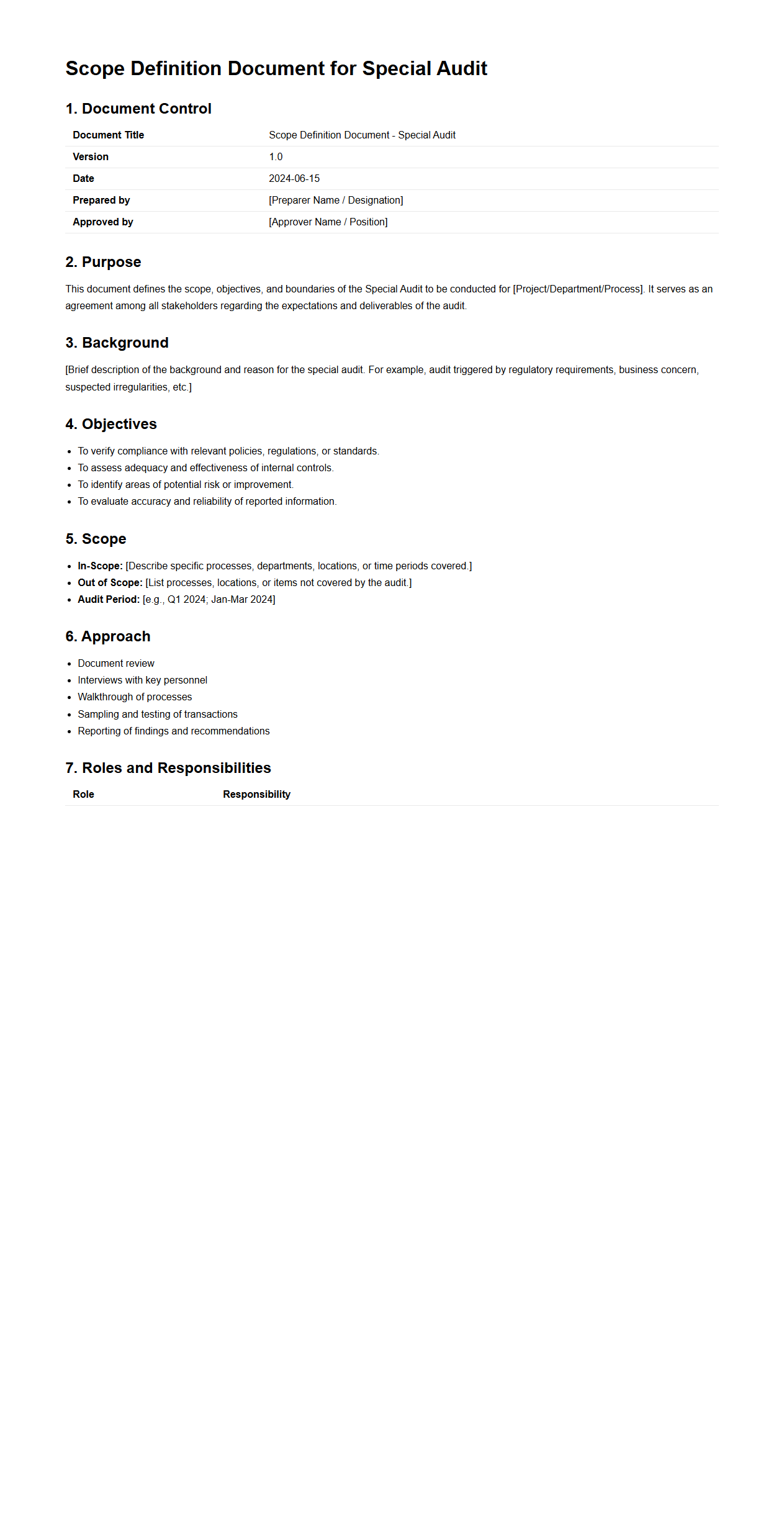
Scope Definition Document Format for Special Audit
The
Scope Definition Document Format for a Special Audit outlines the specific boundaries, objectives, and criteria that govern the audit process. It details the areas to be reviewed, the time frame under consideration, and the relevant standards or regulations to be applied. This document serves as a crucial reference to ensure clarity and focus, facilitating effective communication among auditors and stakeholders.
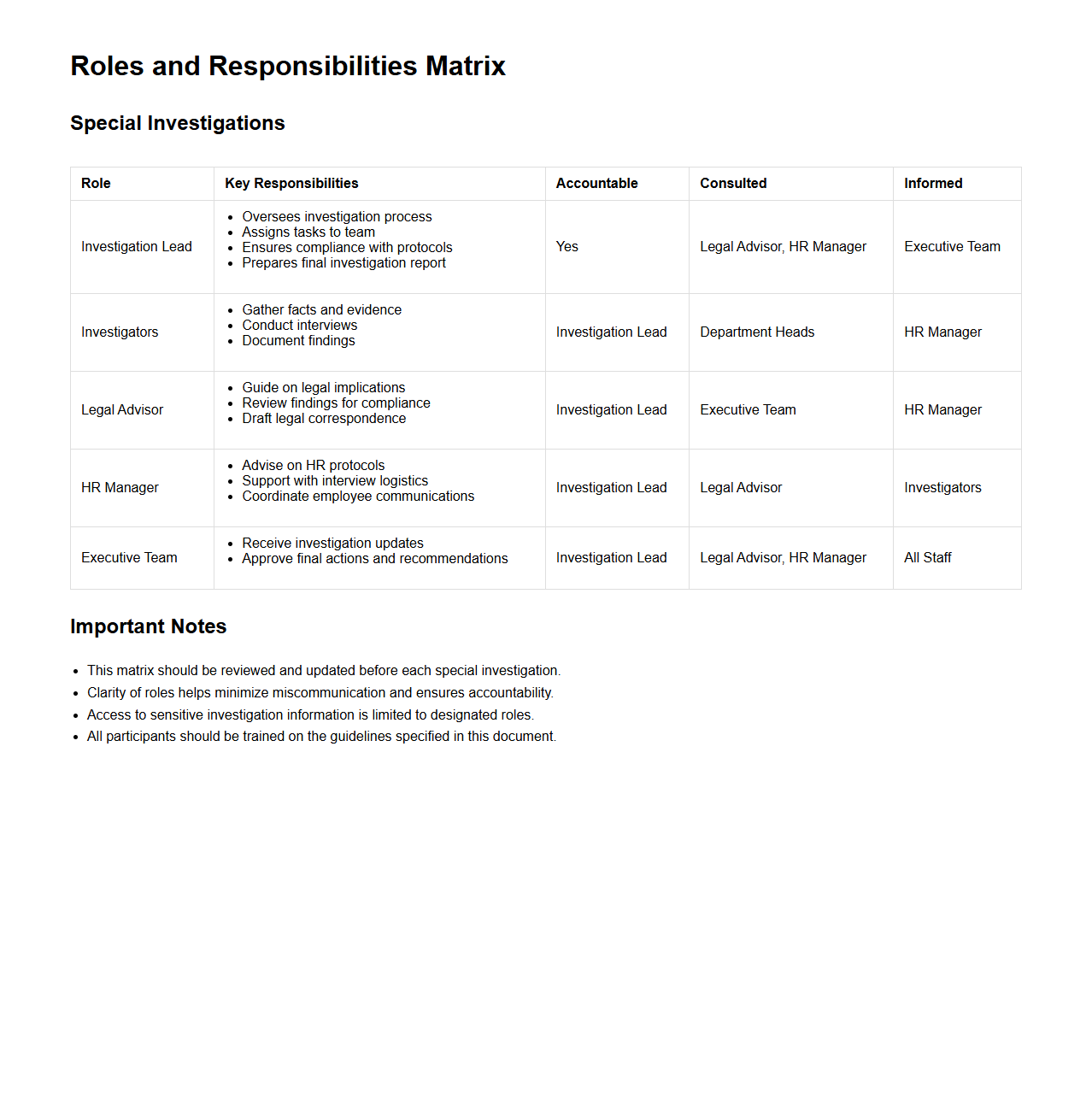
Roles and Responsibilities Matrix Format – Special Investigations
The
Roles and Responsibilities Matrix Format - Special Investigations document clearly defines and organizes the specific duties and accountability of team members involved in special investigations. It ensures clarity in task allocation, prevents overlap, and streamlines the investigative process by detailing who is responsible, accountable, consulted, and informed throughout each phase. This matrix format facilitates effective communication, enhances coordination, and supports compliance with legal and organizational standards.
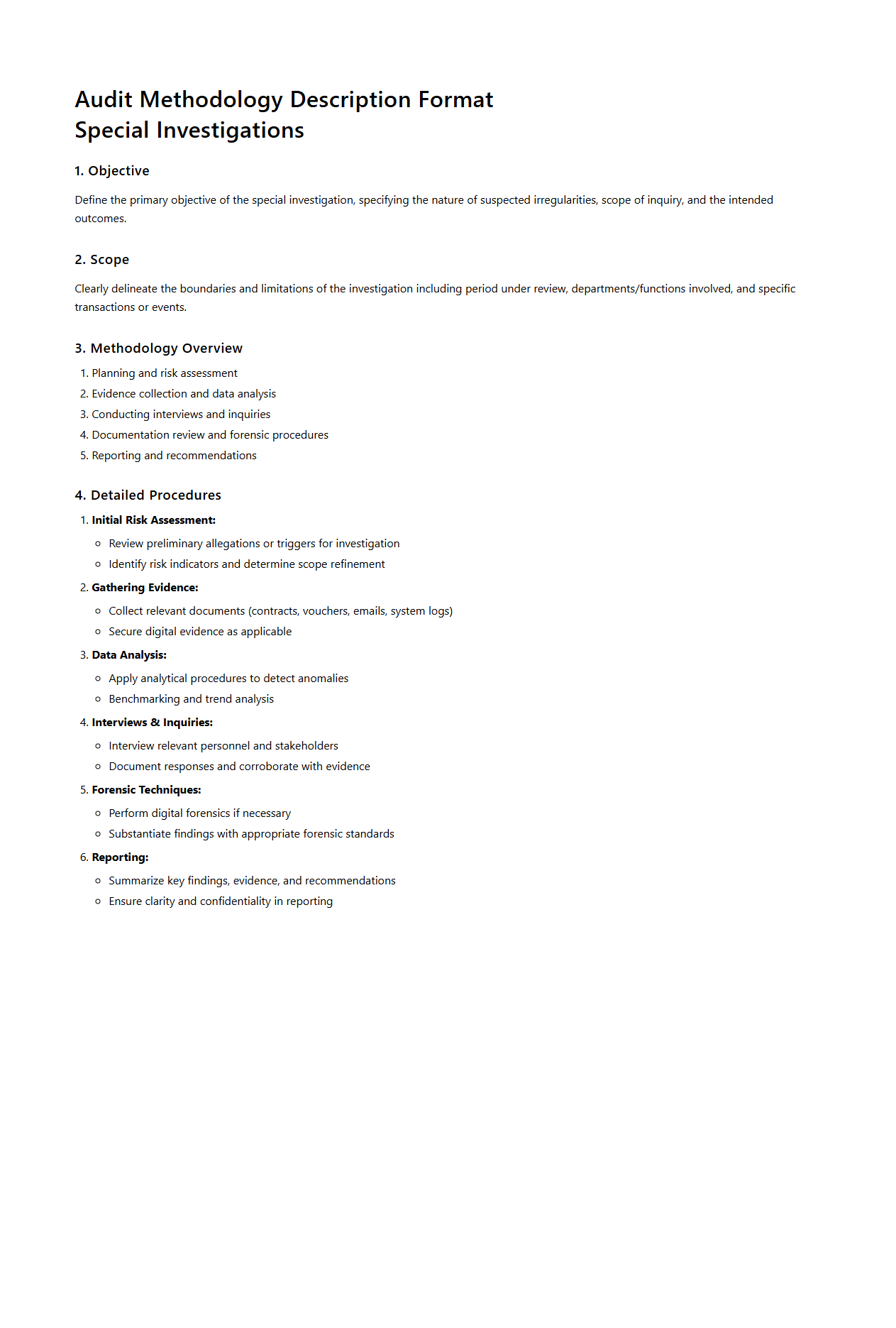
Audit Methodology Description Format for Special Investigations
The
Audit Methodology Description Format for Special Investigations document outlines a structured approach for conducting detailed audits in response to specific concerns or irregularities. It defines the procedures, criteria, and scope tailored to uncover potential fraud, compliance violations, or operational inefficiencies. This format ensures consistency, thoroughness, and clarity in documenting investigative audit processes and findings.
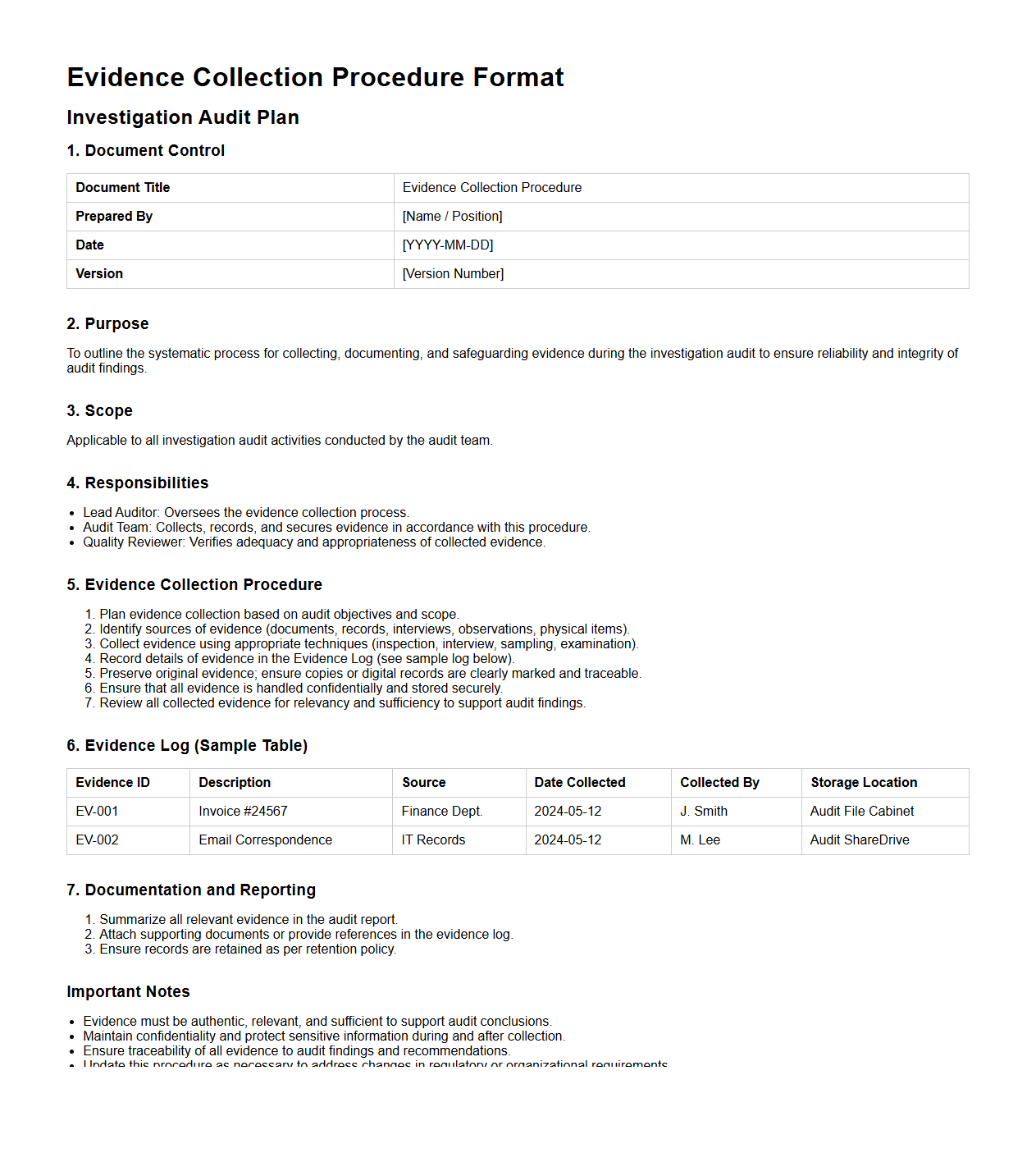
Evidence Collection Procedure Format in Investigation Audit Plans
Evidence Collection Procedure Format in Investigation Audit Plans document outlines a systematic approach to gather, document, and preserve relevant information and materials during an audit or investigation. This format ensures consistency, accuracy, and legal compliance by specifying the types of evidence required, methods of collection, and chain of custody protocols. Adhering to a
standardized evidence collection procedure is crucial for validating findings and supporting audit conclusions.
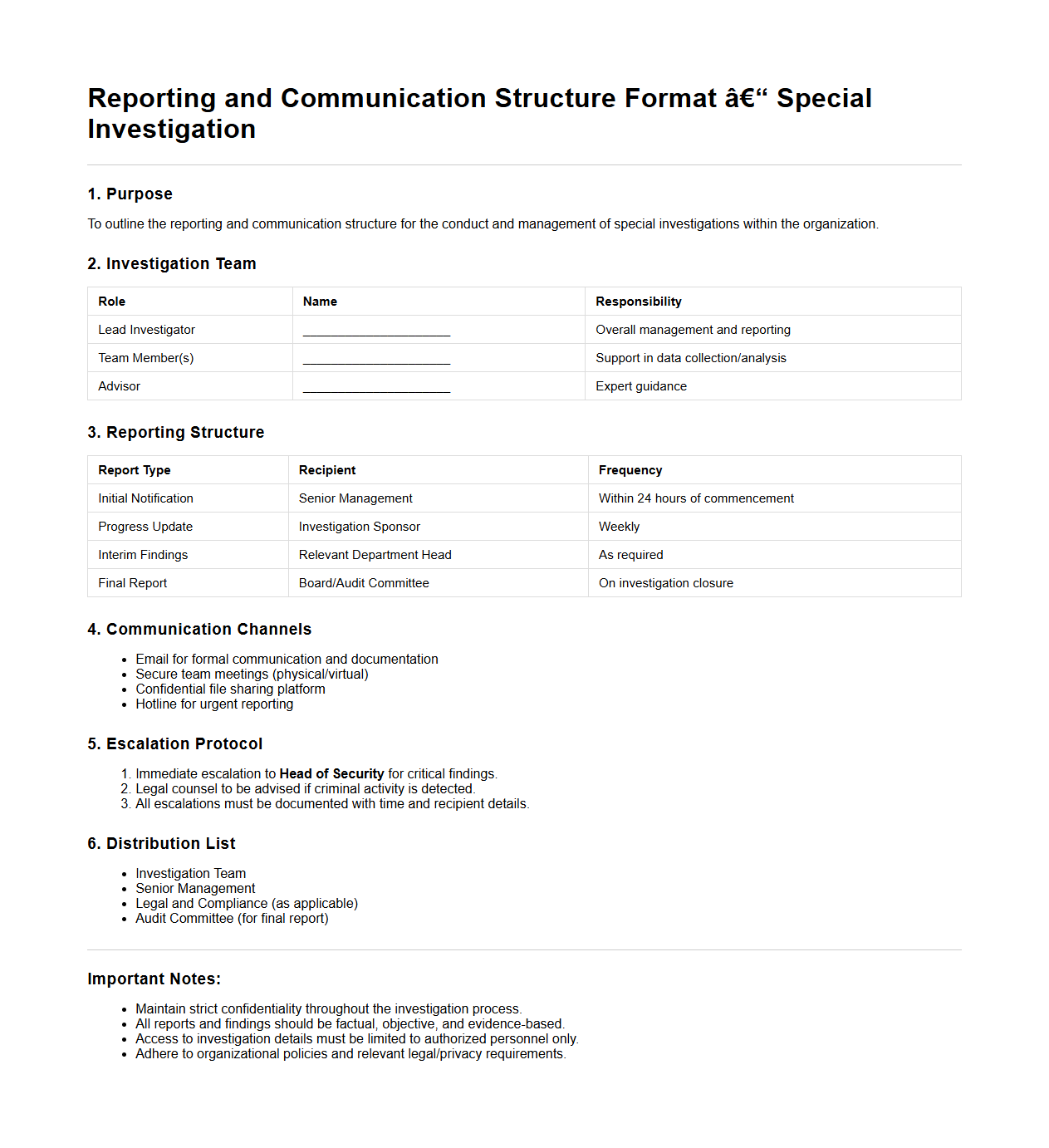
Reporting and Communication Structure Format – Special Investigation
The
Reporting and Communication Structure Format - Special Investigation document outlines the standardized framework for information flow and reporting channels during a special investigation process. It defines roles, responsibilities, and timelines to ensure clear, accurate, and secure communication among investigators, management, and stakeholders. This structure enhances accountability and supports effective decision-making by providing consistent and transparent reporting protocols.
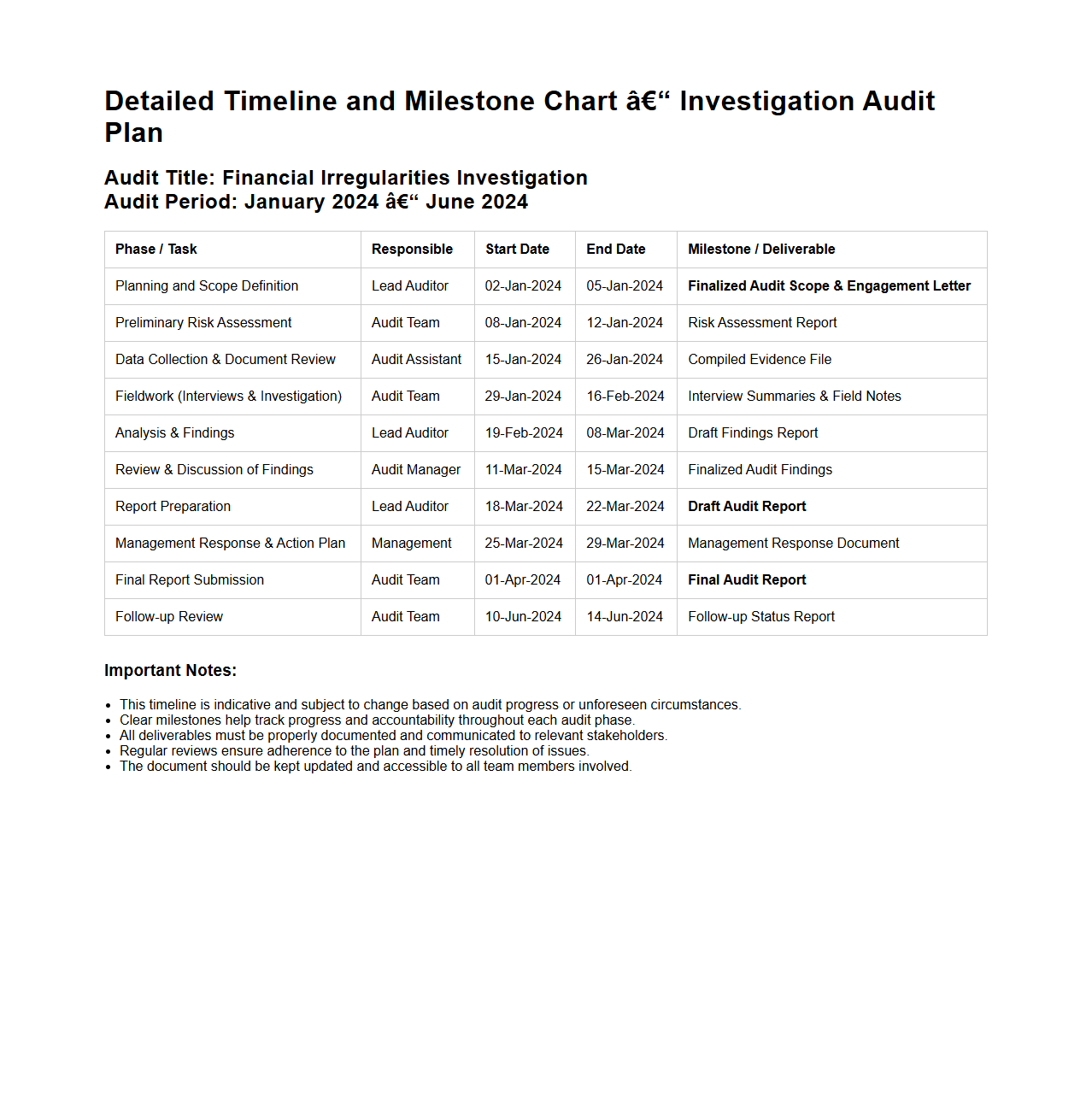
Detailed Timeline and Milestone Chart Format – Investigation Audit Plan
The
Detailed Timeline and Milestone Chart Format in an Investigation Audit Plan document is a structured framework that outlines key phases, tasks, and deadlines essential for conducting a thorough investigation. It visually maps out critical milestones and checkpoints to ensure progress tracking and timely completion of audit activities. This format enhances coordination among audit team members, facilitating efficient resource allocation and risk management throughout the investigation process.
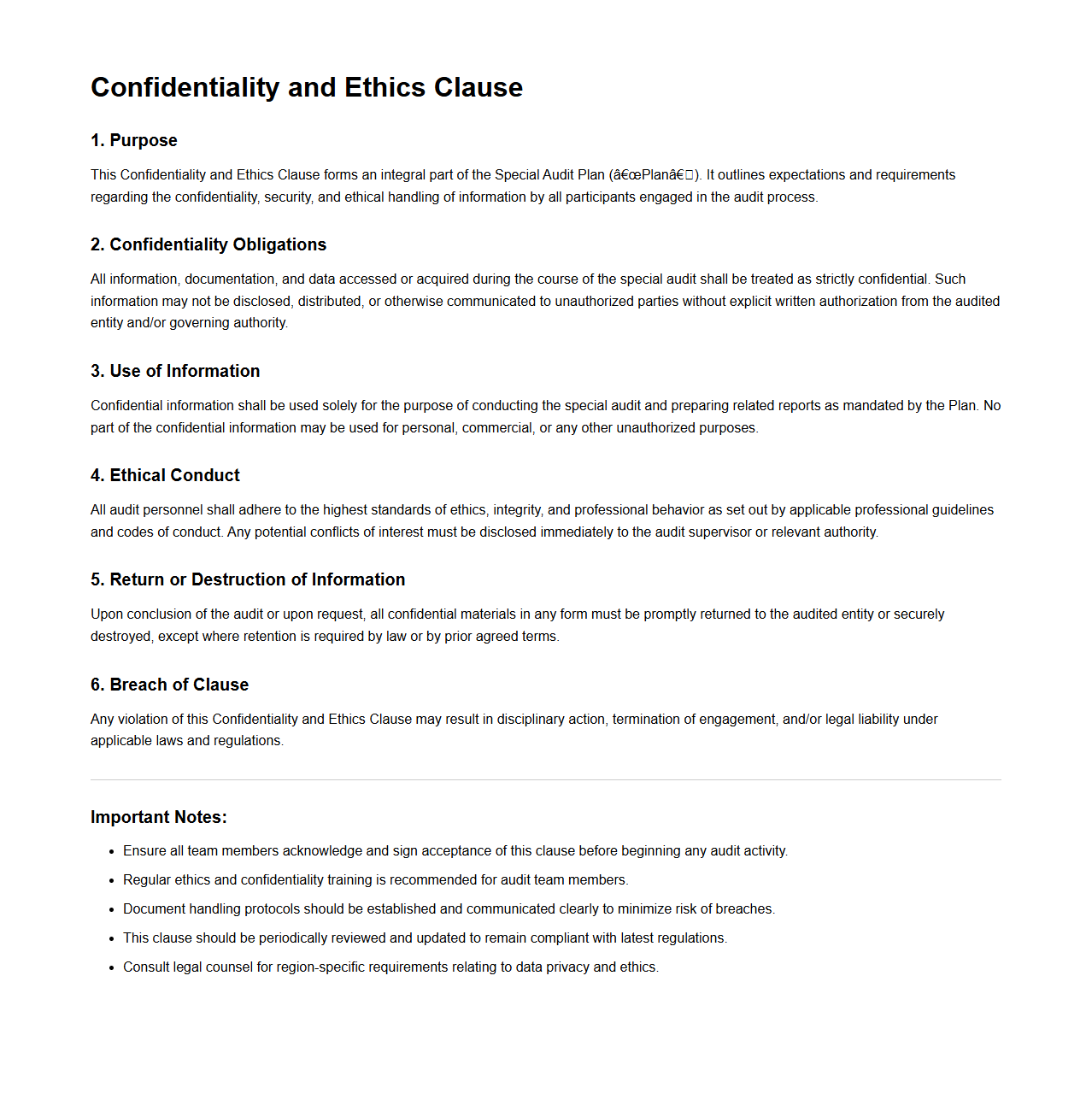
Confidentiality and Ethics Clause Format in Special Audit Plan
The
Confidentiality and Ethics Clause Format in a Special Audit Plan document outlines the mandatory standards and responsibilities for maintaining privacy and integrity throughout the audit process. It ensures that all personnel involved commit to protecting sensitive information and adhering to ethical guidelines, preventing unauthorized disclosure or unethical behavior. This clause serves as a critical component for safeguarding stakeholder trust and compliance with regulatory requirements during the audit engagement.
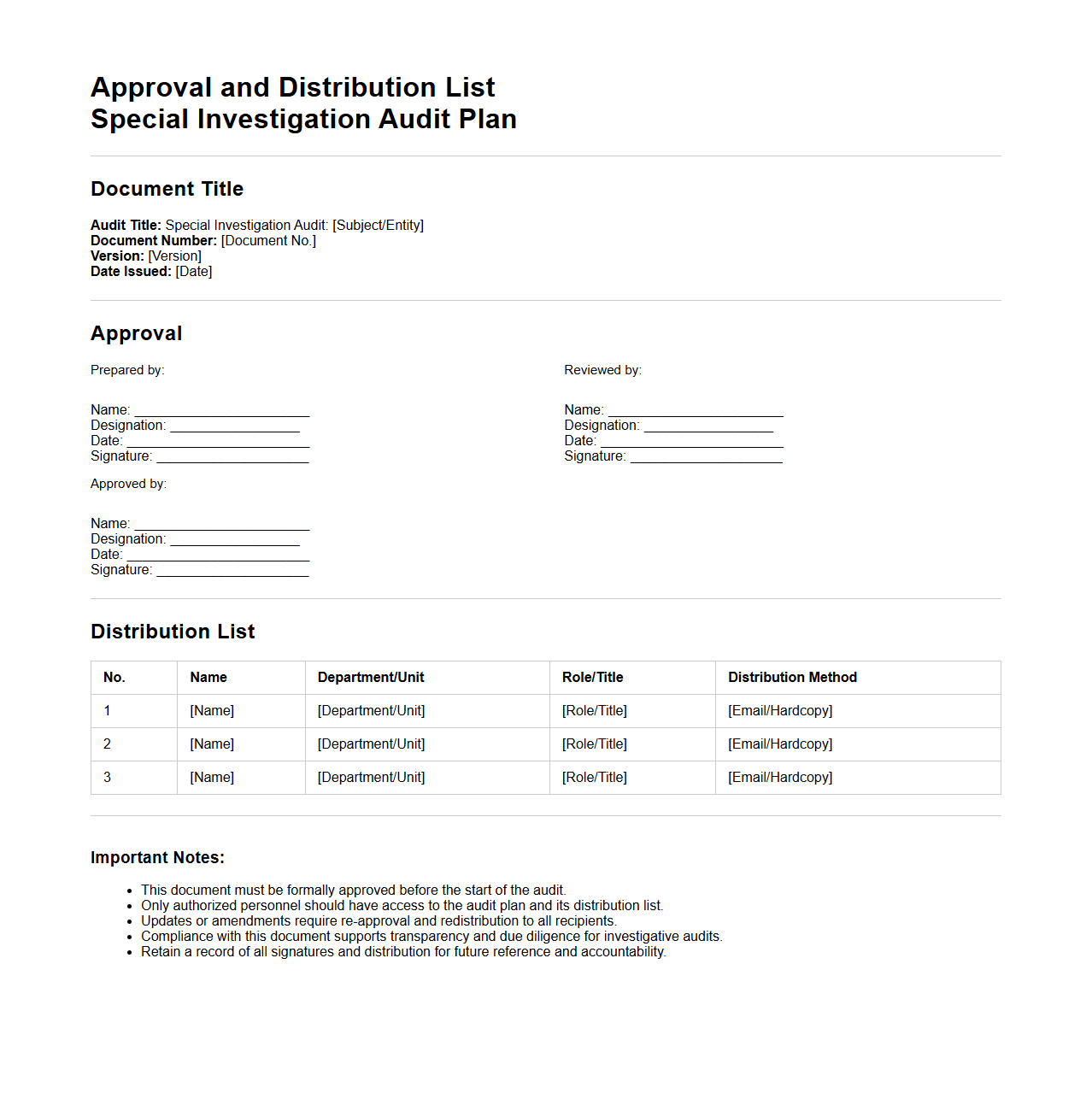
Approval and Distribution List Format for Special Investigation Audit Plans
The
Approval and Distribution List Format for Special Investigation Audit Plans document outlines the structured process for obtaining necessary authorizations and ensuring proper dissemination of audit plans related to special investigations. This format ensures accountability by identifying key stakeholders who must review and approve the audit plans before execution. It also specifies the distribution channels to guarantee that all relevant departments and personnel receive timely access to the information, enhancing transparency and coordination.
Key elements required in a special investigation audit plan letter format?
The special investigation audit plan letter must clearly state the audit's objectives, scope, and methodology. It should outline the roles and responsibilities of the audit team and any specific focus areas or suspected issues. Additionally, the letter must include timelines, resource allocation, and confidentiality requirements to ensure thorough and secure audit execution.
How to structure risk assessment sections specific to special investigations?
The risk assessment section should begin with identifying potential risks related to fraud, misconduct, or regulatory non-compliance. Follow this by evaluating the likelihood and impact of each risk to prioritize investigation efforts efficiently. Finally, establish control measures and mitigation strategies tailored to the unique risks found in special investigations.
Required documentation protocols within the audit plan letter for evidence handling?
The audit plan letter must mandate strict documentation protocols for collecting, preserving, and securing evidence to maintain its integrity. This includes chain of custody logs, evidence tracking sheets, and guidelines for secure storage. Clear instructions on documentation help ensure admissibility and credibility during legal or regulatory reviews.
Recommended layout for reporting stakeholder communication in the audit plan?
Stakeholder communication should be structured with a dedicated section outlining the frequency, methods, and responsible parties for reporting. The plan must emphasize transparent and timely updates to stakeholders, including senior management and regulatory bodies. Incorporating a communication matrix can enhance clarity and accountability throughout the investigation process.
What annexures or appendices are mandatory in a special investigation audit plan letter?
Mandatory annexures include detailed audit procedures, risk assessment matrices, and evidence handling protocols. Appendices should also feature organizational charts, timelines, and relevant regulatory or legal references. These supplements provide comprehensive support to the main audit plan, ensuring clarity and completeness.