The Format of Audit Program for Specific Area Verification outlines a structured approach to assessing compliance and performance within targeted business sectors. It includes detailed audit objectives, scope, criteria, methods, and schedules tailored to the specific area under review. This format ensures systematic documentation and effective tracking of audit findings and corrective actions.
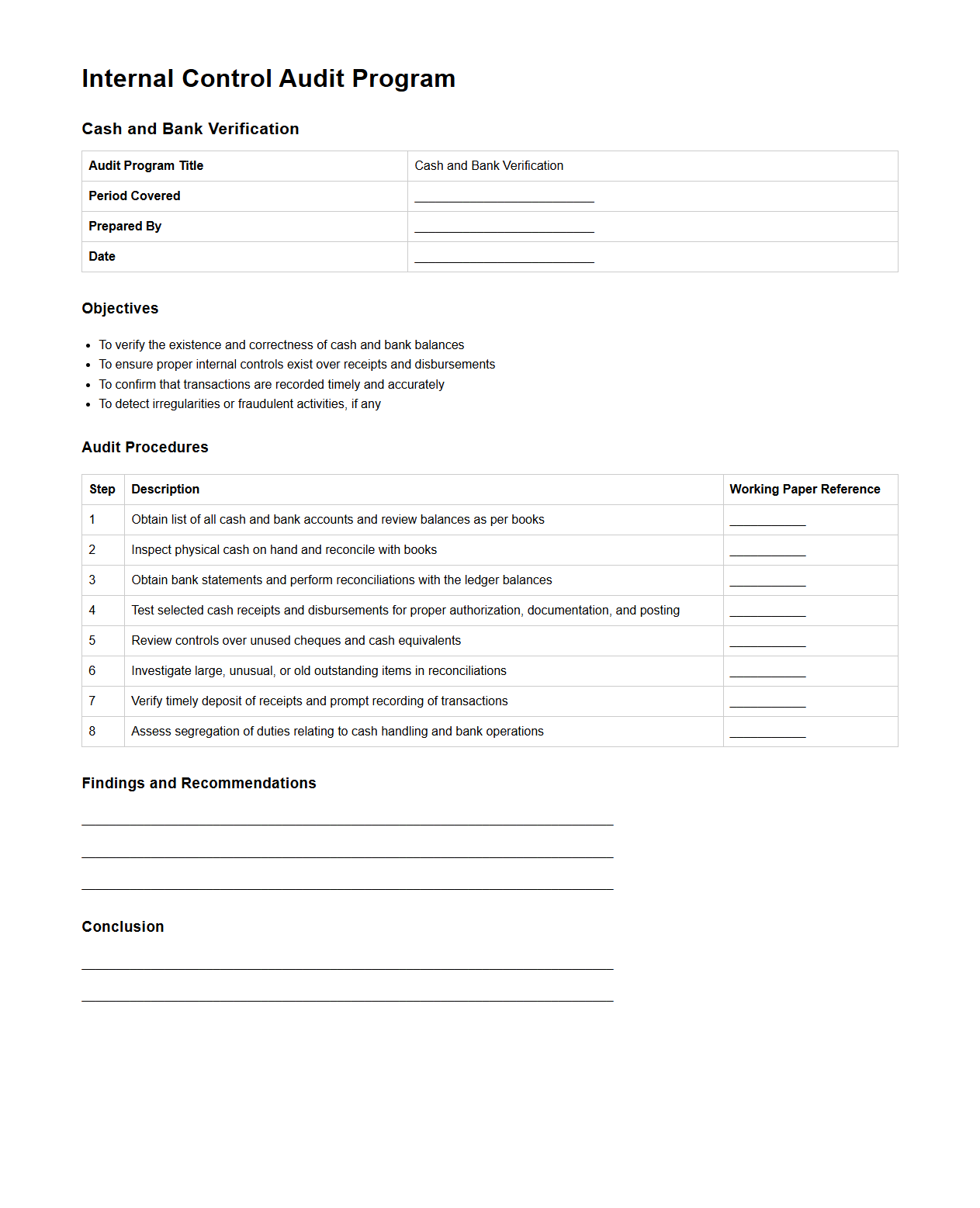
Internal Control Audit Program Format for Cash and Bank Verification
The
Internal Control Audit Program Format for Cash and Bank Verification document outlines a systematic approach to assess the accuracy and integrity of cash and bank balances within an organization. It includes detailed procedures for verifying bank reconciliations, examining cash transactions, and ensuring compliance with financial policies to mitigate risks of fraud or errors. This format serves as a critical tool for auditors to evaluate internal controls, enhance financial reporting reliability, and support regulatory compliance.
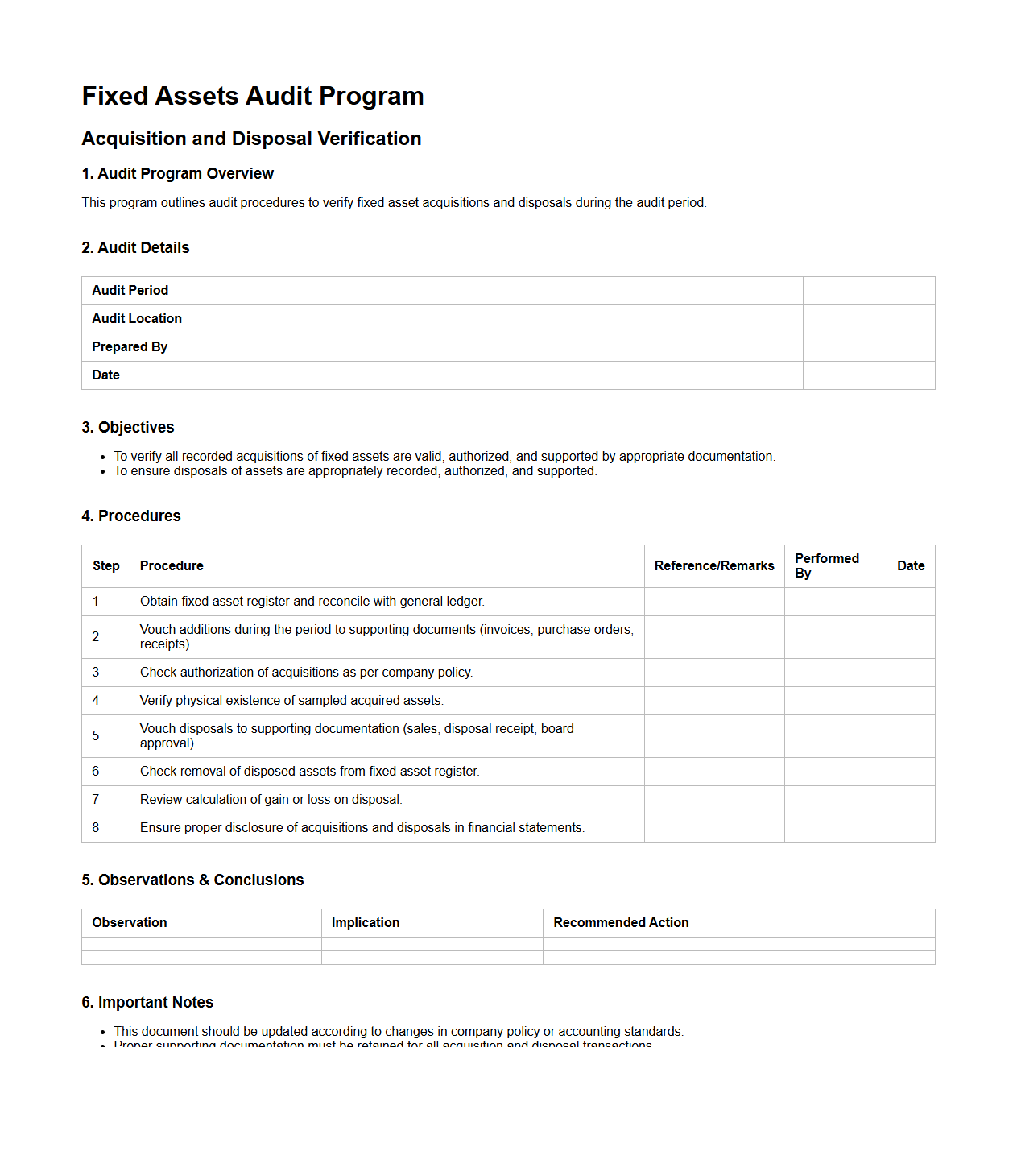
Fixed Assets Audit Program Format for Acquisition and Disposal Verification
The
Fixed Assets Audit Program Format for Acquisition and Disposal Verification document serves as a systematic framework to ensure accurate tracking and validation of fixed asset transactions. It outlines procedures for verifying the legitimacy, valuation, and proper recording of asset acquisitions and disposals within financial records. This format aids auditors in identifying discrepancies, ensuring compliance with accounting standards, and safeguarding organizational resources.
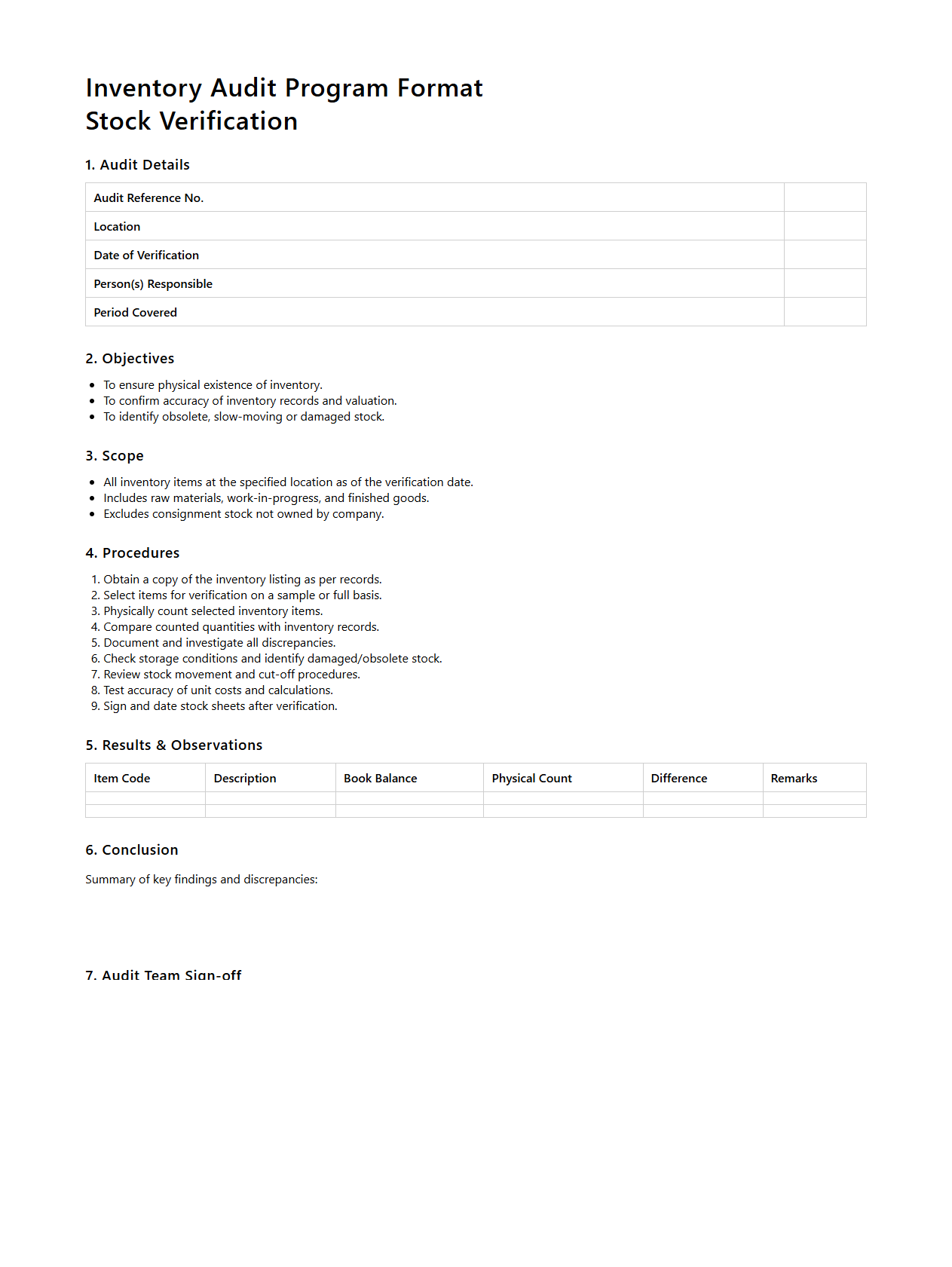
Inventory Audit Program Format for Stock Verification
The
Inventory Audit Program Format for Stock Verification document is a structured template designed to systematically assess and verify physical stock against recorded inventory data. It includes detailed sections for recording item descriptions, quantities, discrepancies, and audit remarks to ensure accuracy and accountability in inventory management. This format helps organizations maintain precise stock records, identify losses or discrepancies, and support financial reporting and control processes.
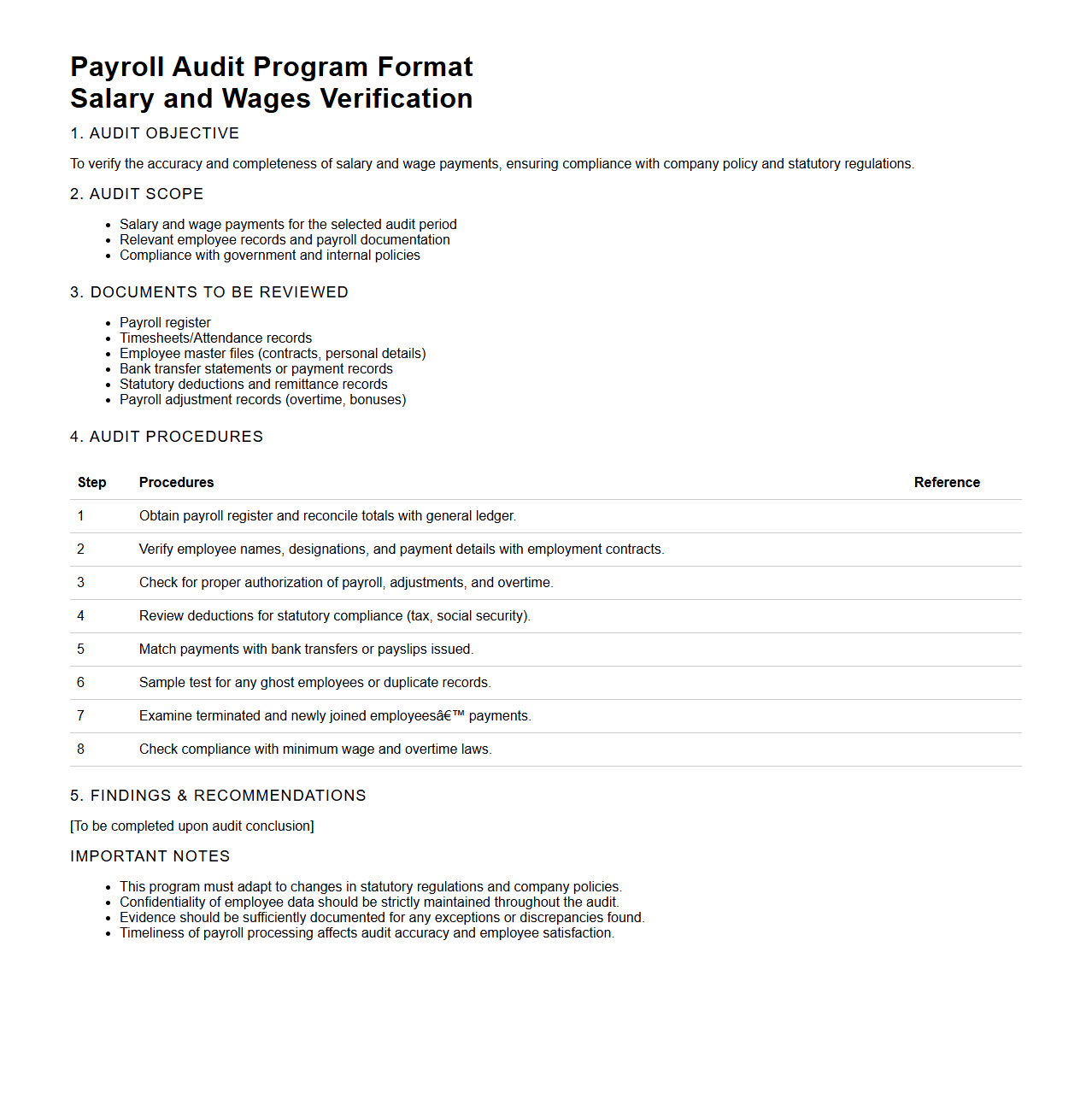
Payroll Audit Program Format for Salary and Wages Verification
The
Payroll Audit Program Format for Salary and Wages Verification document is a structured tool used to systematically review and validate employee compensation records against payroll policies and statutory regulations. It includes detailed checklists, data fields for employee details, salary components, deductions, and compliance verification steps to ensure accuracy and prevent discrepancies. This format supports auditors in identifying errors, fraud, or non-compliance in payroll processing, thereby enhancing financial integrity and regulatory adherence.
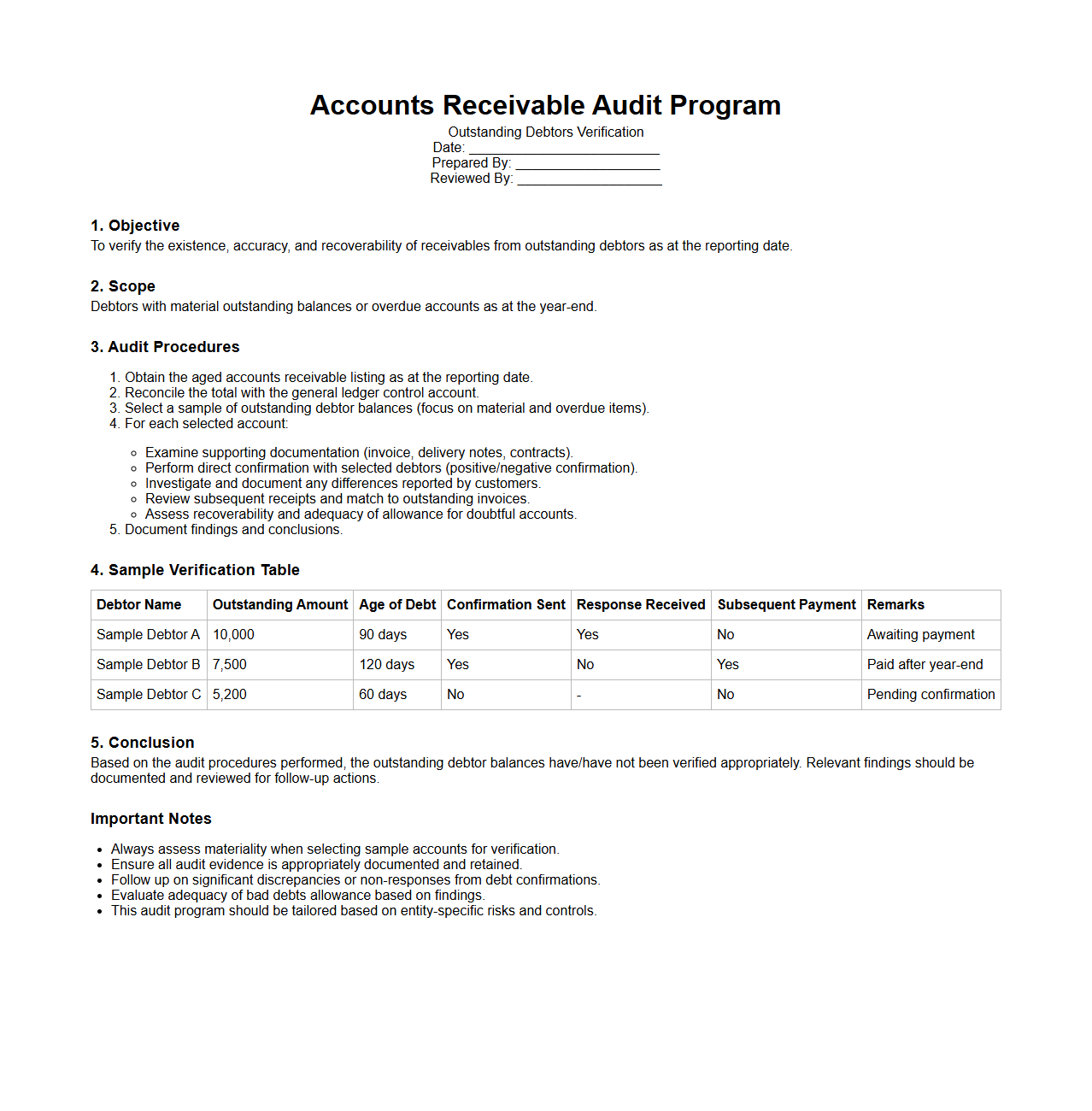
Accounts Receivable Audit Program Format for Outstanding Debtors Verification
The
Accounts Receivable Audit Program Format for Outstanding Debtors Verification is a structured template designed to systematically assess and validate outstanding receivables recorded in the financial statements. It includes detailed procedures for verifying debtor balances, confirming existence and accuracy through debtor confirmations, and ensuring compliance with company policies and accounting standards. This document helps auditors identify discrepancies, detect potential bad debts, and provide assurance regarding the accuracy and collectability of accounts receivable.
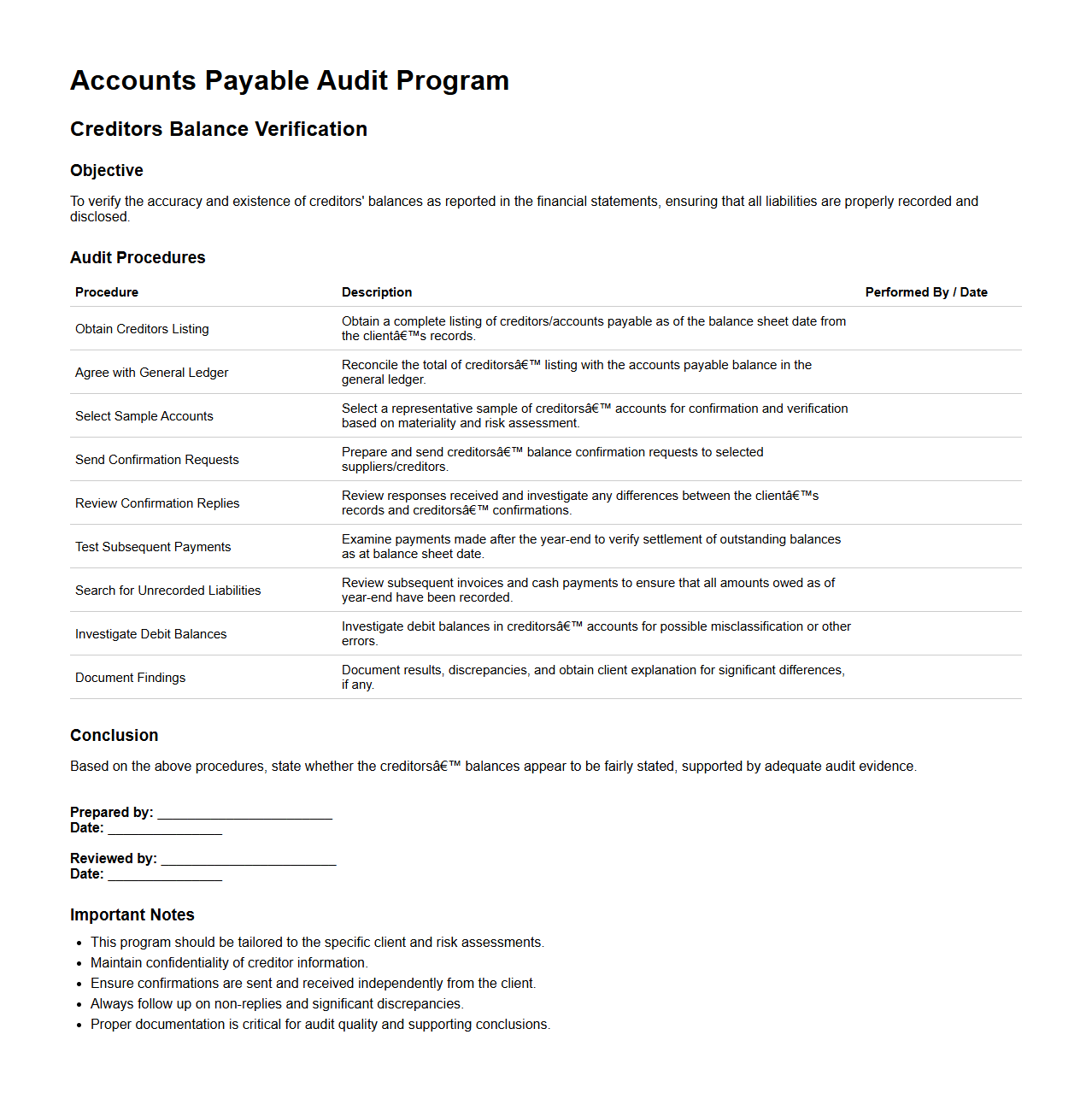
Accounts Payable Audit Program Format for Creditors Balance Verification
The
Accounts Payable Audit Program Format for Creditors Balance Verification document serves as a systematic framework for verifying the accuracy and completeness of outstanding creditor balances in an organization's financial records. It typically includes detailed procedures for confirming unpaid invoices, reconciling supplier statements, and identifying discrepancies between company records and vendor accounts. This audit format ensures proper validation of liabilities, supporting accurate financial reporting and effective management of cash flow obligations.
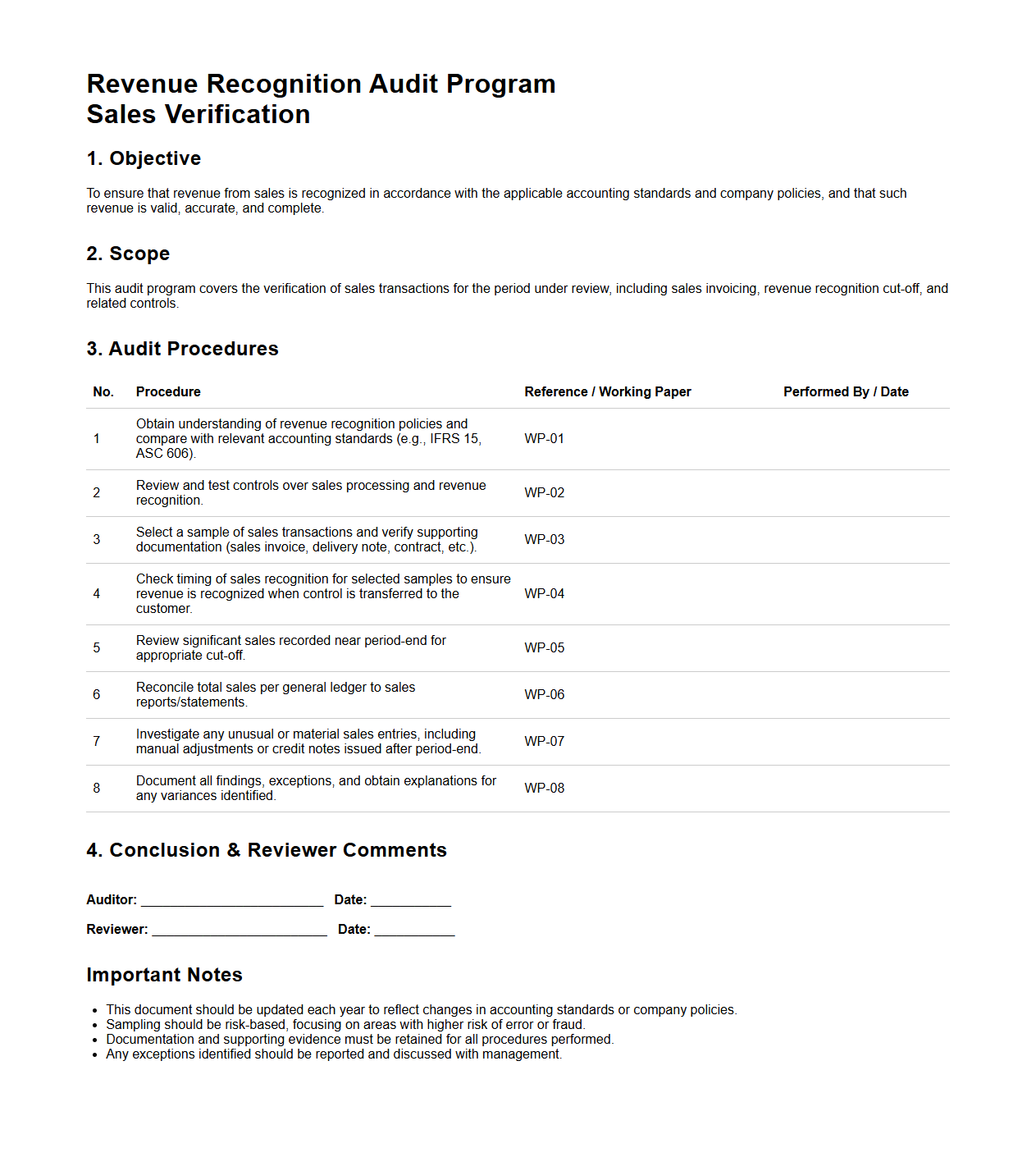
Revenue Recognition Audit Program Format for Sales Verification
The
Revenue Recognition Audit Program Format for Sales Verification document outlines a structured approach to examine and validate recorded sales transactions against actual sales activities to ensure accurate revenue reporting. It typically includes specific audit procedures, evidence requirements, and criteria for evaluating sales data integrity in accordance with applicable accounting standards. This format helps auditors systematically assess compliance with revenue recognition principles and detect any discrepancies or misstatements in financial statements.
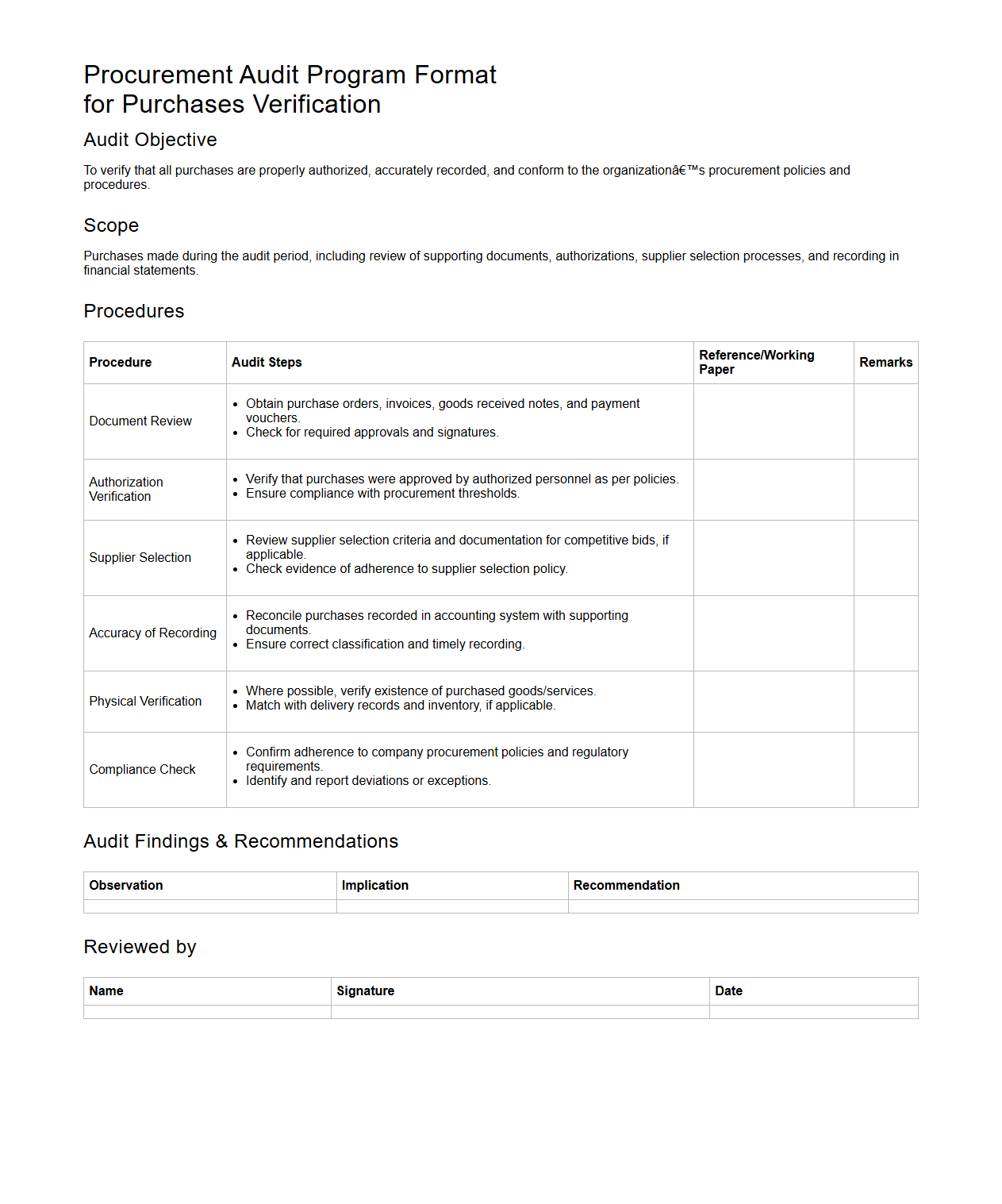
Procurement Audit Program Format for Purchases Verification
The
Procurement Audit Program Format for Purchases Verification document outlines a structured approach to reviewing and confirming the accuracy, compliance, and validity of procurement transactions. It includes key components such as audit objectives, detailed procedures for verifying purchase orders, supplier contracts, payment records, and delivery confirmations. This format ensures systematic evaluation of procurement activities to mitigate risks and enhance financial control.
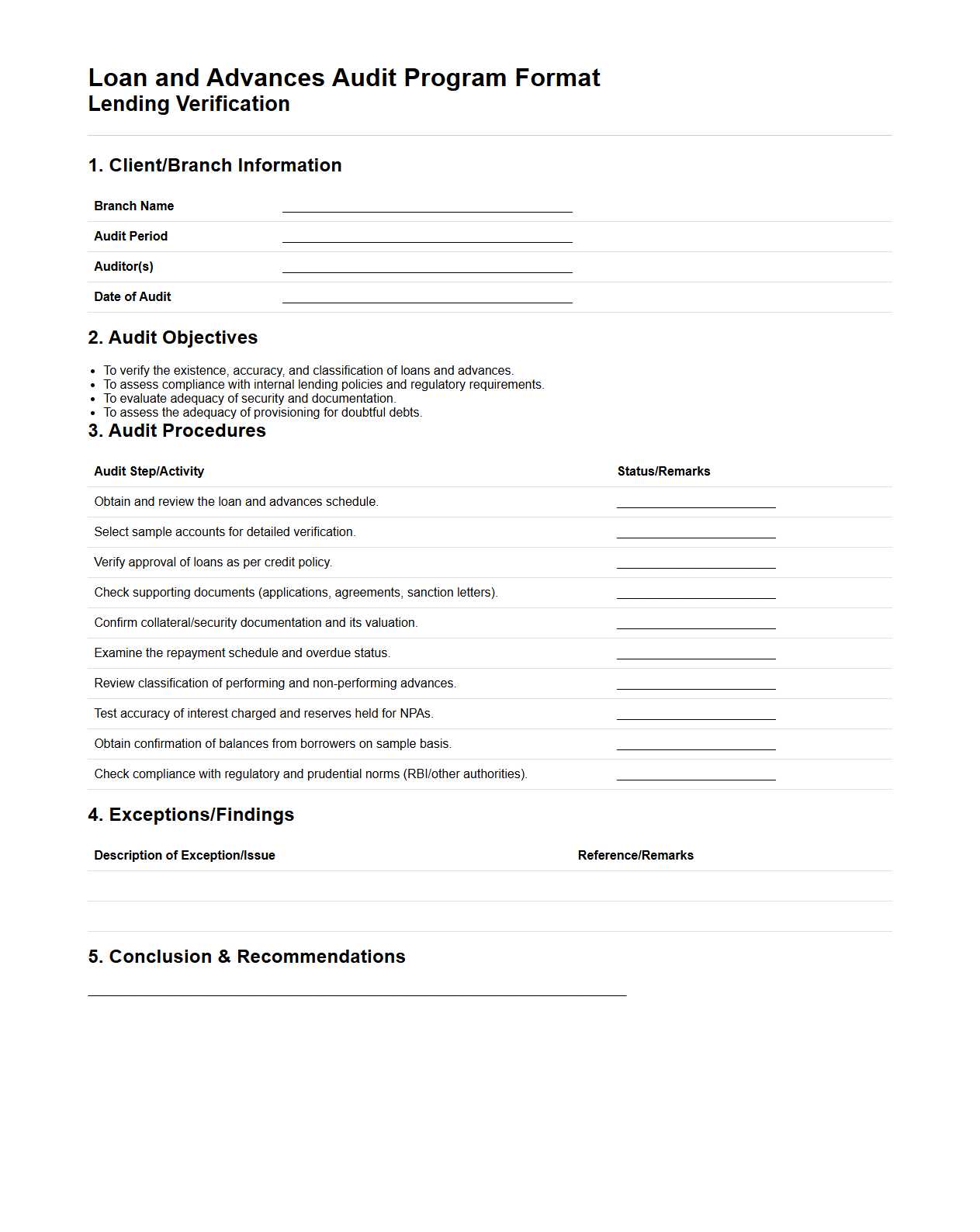
Loan and Advances Audit Program Format for Lending Verification
The
Loan and Advances Audit Program Format for Lending Verification document serves as a systematic framework to assess the authenticity and compliance of loan transactions within financial institutions. It includes detailed checklists and verification procedures to validate borrower information, collateral documentation, repayment history, and adherence to lending policies. This audit format ensures accuracy, mitigates risks of fraud, and supports regulatory compliance in the loan management process.
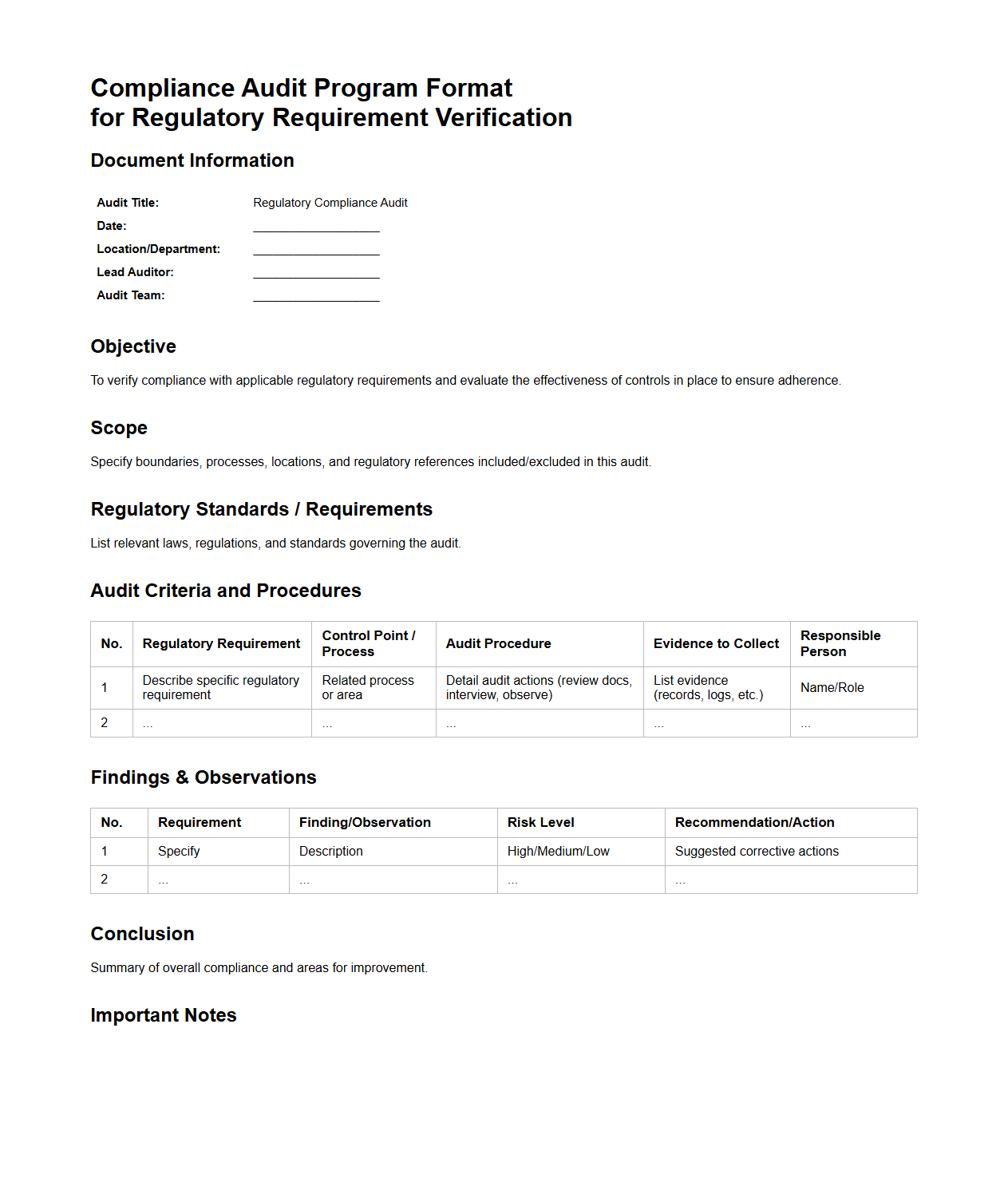
Compliance Audit Program Format for Regulatory Requirement Verification
The
Compliance Audit Program Format for Regulatory Requirement Verification document is a structured framework designed to systematically review and assess an organization's adherence to relevant laws, regulations, and standards. It outlines specific audit procedures, criteria, schedules, and checklists to ensure comprehensive evaluation and documentation of compliance status. This format facilitates consistent, transparent, and effective verification processes critical for regulatory reporting and risk management.
Essential Components in the Audit Program Format for Inventory Verification
The audit program format for inventory verification must include clear objectives, detailed procedures, and assigned responsibilities. It should outline the methods for physical count, cutoff tests, and valuation checks to ensure accuracy. Additionally, documentation requirements and potential risk areas must be highlighted to guide auditors effectively.
Defining the Scope in the Audit Program for Fixed Asset Verification
The scope should specify the time frame, asset categories, and geographical locations covered in the fixed asset verification. It must clearly indicate whether the audit includes acquisitions, disposals, and depreciation assessments. Defining scope precisely ensures focused audit efforts and comprehensive asset validation.
Sample Size Selection Criteria Recommended in Cash and Bank Area Audits
Sample size for cash and bank audits should be determined based on transaction volume, risk level, and materiality thresholds. Stratified sampling is recommended to cover various types of transactions and periods effectively. Using statistical methods enhances the reliability of audit conclusions.
Vital Documentation Procedures for Receivables Audit Verification
Proper documentation in a receivables audit includes invoices, aging schedules, and confirmation letters from debtors. Auditors must verify the accuracy, completeness, and collectability of these documents. Maintaining organized records supports transparency and substantiates audit findings.
Best Reporting Format for Findings in Compliance Audit Area Programs
The ideal reporting format for compliance audit findings consists of an executive summary, detailed observations, and recommended corrective actions. Clarity and conciseness are crucial to ensure that stakeholders understand the implications. Including a summary of compliance status enhances decision-making and accountability.