The Format of Sampling Plan for Audit Procedures typically includes the objective, population, sampling unit, sample size, and sampling method. It outlines the criteria for selecting items and the procedure for evaluating results to draw conclusions about the entire population. Clear documentation of the plan ensures consistency and supports audit findings effectively.
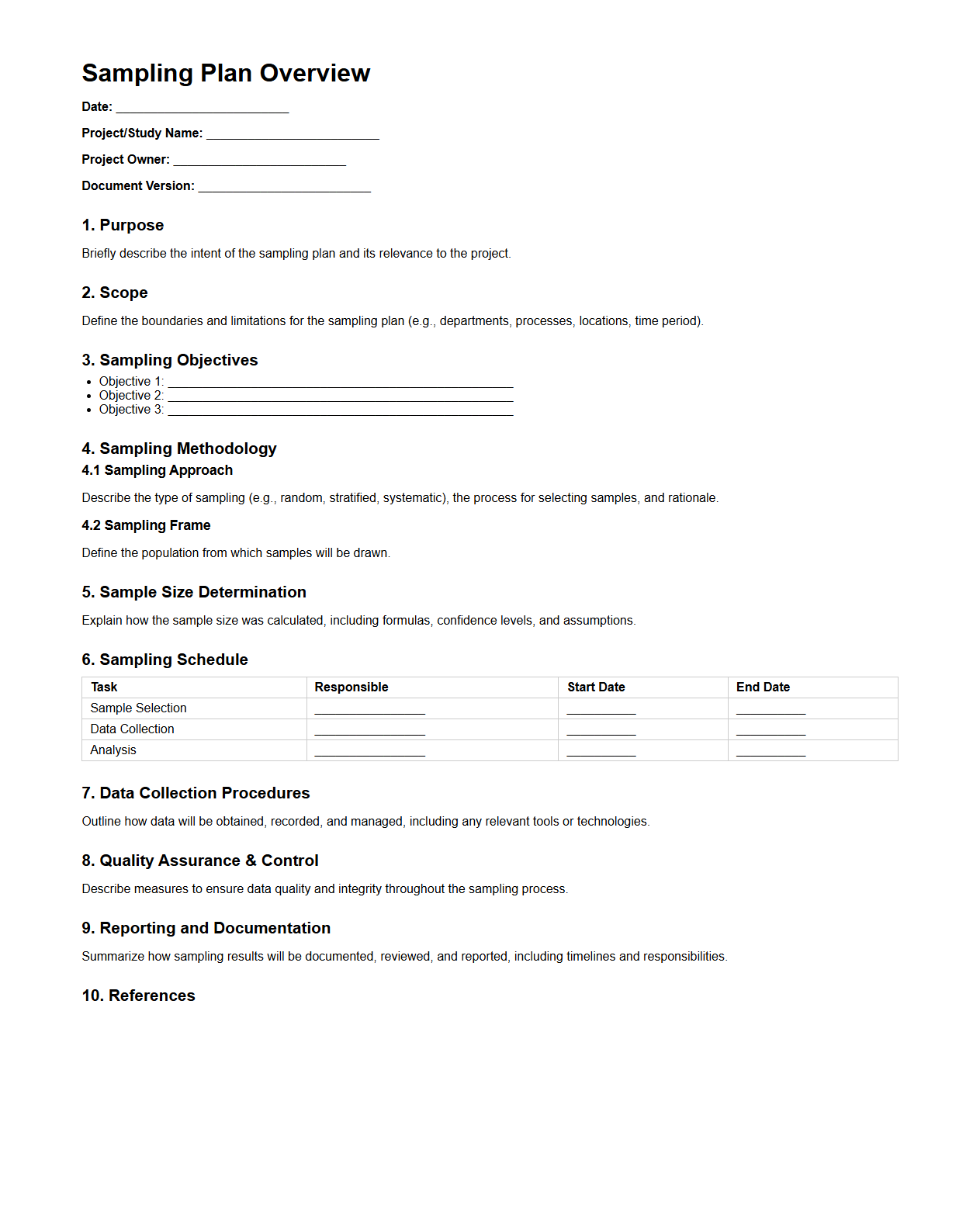
Sampling Plan Overview Document Template
A
Sampling Plan Overview Document Template serves as a structured guide to outline the methodology for selecting representative samples in quality control or research projects. It details critical elements such as sample size, selection criteria, and testing procedures to ensure consistency and accuracy in data collection. This template helps organizations standardize the sampling process, reducing errors and enhancing decision-making based on reliable sample data.
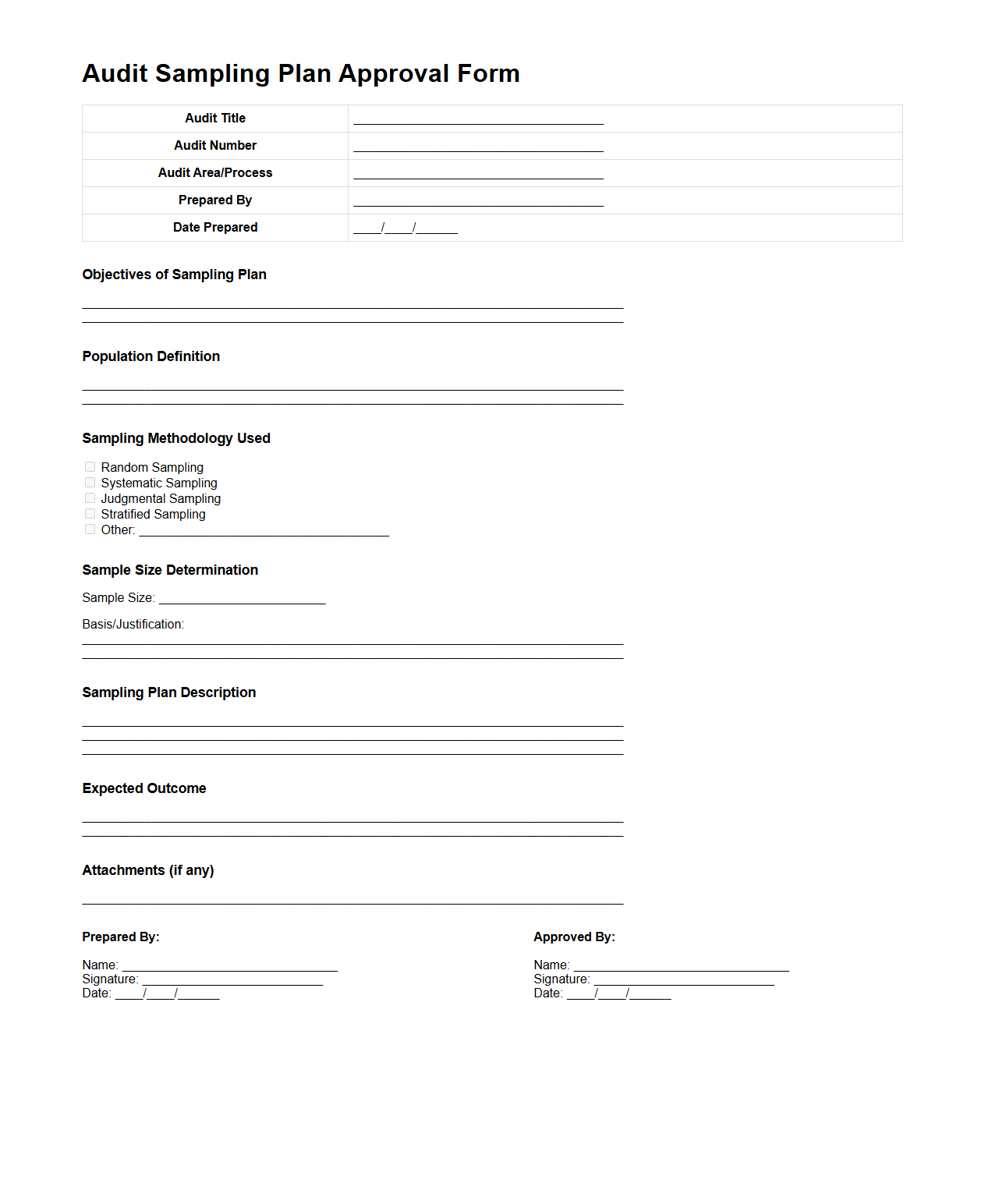
Audit Sampling Plan Approval Form
The
Audit Sampling Plan Approval Form is a crucial document used to outline and authorize the sampling strategy for audit procedures. It specifies the sampling method, sample size, and selection criteria to ensure the audit's effectiveness and compliance with regulatory standards. Approval of this form formalizes the audit approach, providing accountability and clarity in the audit process.
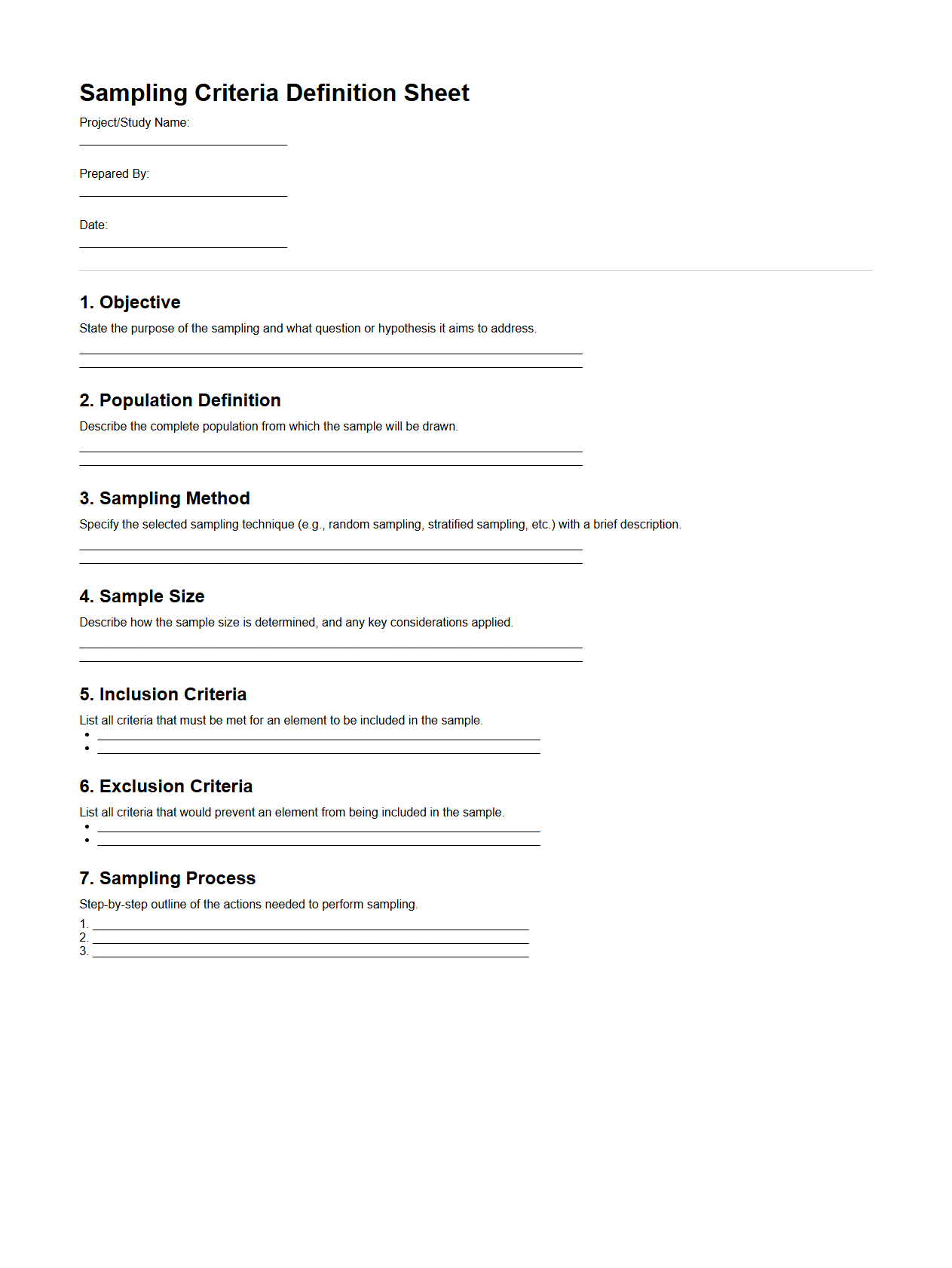
Sampling Criteria Definition Sheet
A
Sampling Criteria Definition Sheet document outlines specific parameters and standards for selecting representative samples in research or quality control processes. This document ensures consistency and accuracy by detailing criteria such as sample size, selection methods, and population characteristics. Properly defining these criteria is crucial for obtaining reliable and valid data for analysis or decision-making.
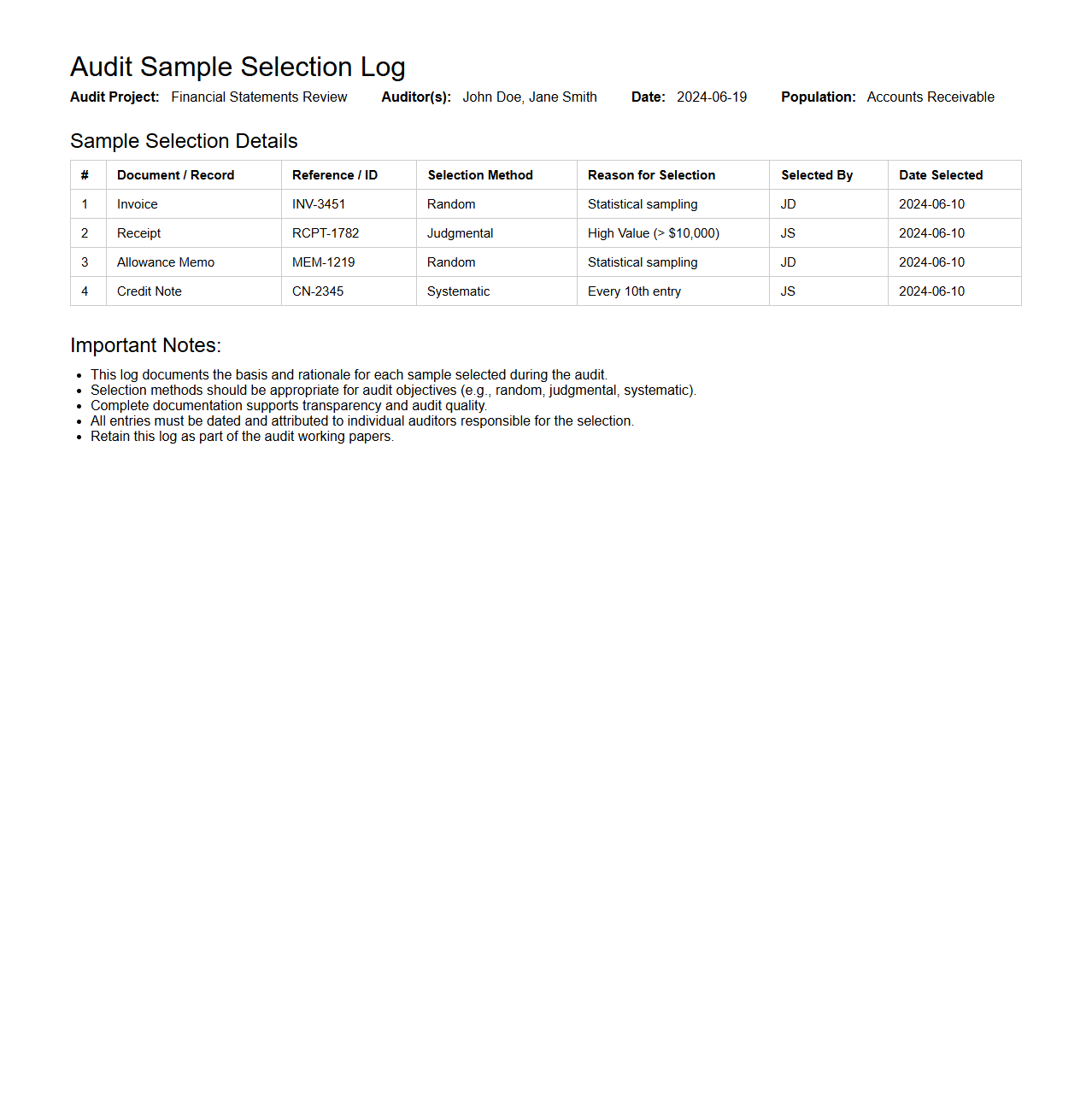
Audit Sample Selection Log
The
Audit Sample Selection Log document records the details and rationale behind choosing specific audit samples during an audit process, ensuring transparency and traceability. It includes information such as sample size, selection criteria, and the population from which samples are drawn, supporting the audit's validity and reliability. This document is essential for demonstrating compliance with auditing standards and facilitating review or replication of audit procedures.
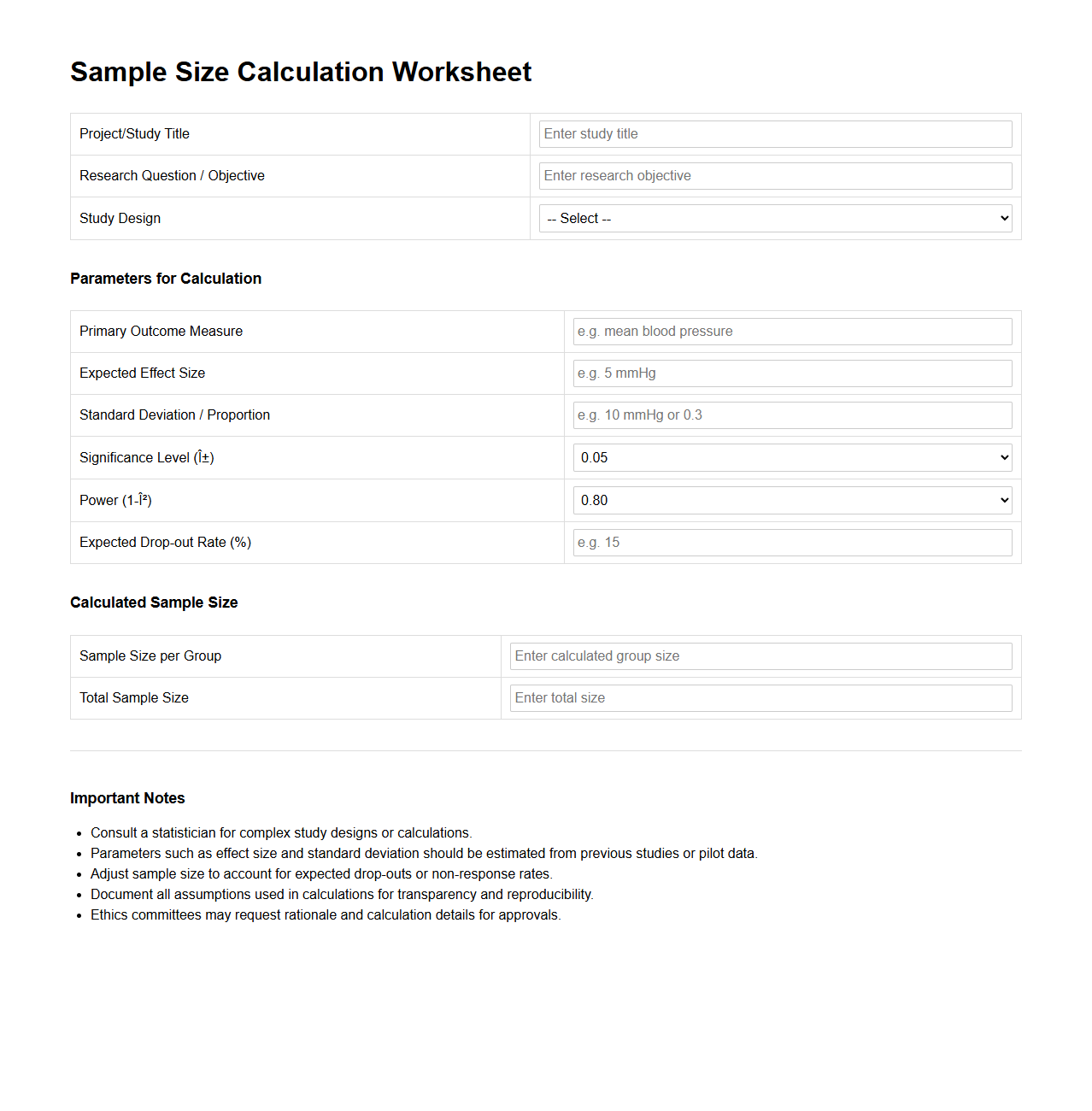
Sample Size Calculation Worksheet
A
Sample Size Calculation Worksheet document is a tool used to determine the appropriate number of participants needed for a research study to achieve statistically significant results. It includes key data points such as expected effect size, confidence level, power, and population variability to ensure accurate and reliable conclusions. Researchers rely on this worksheet to optimize resource allocation and enhance the validity of their study outcomes.
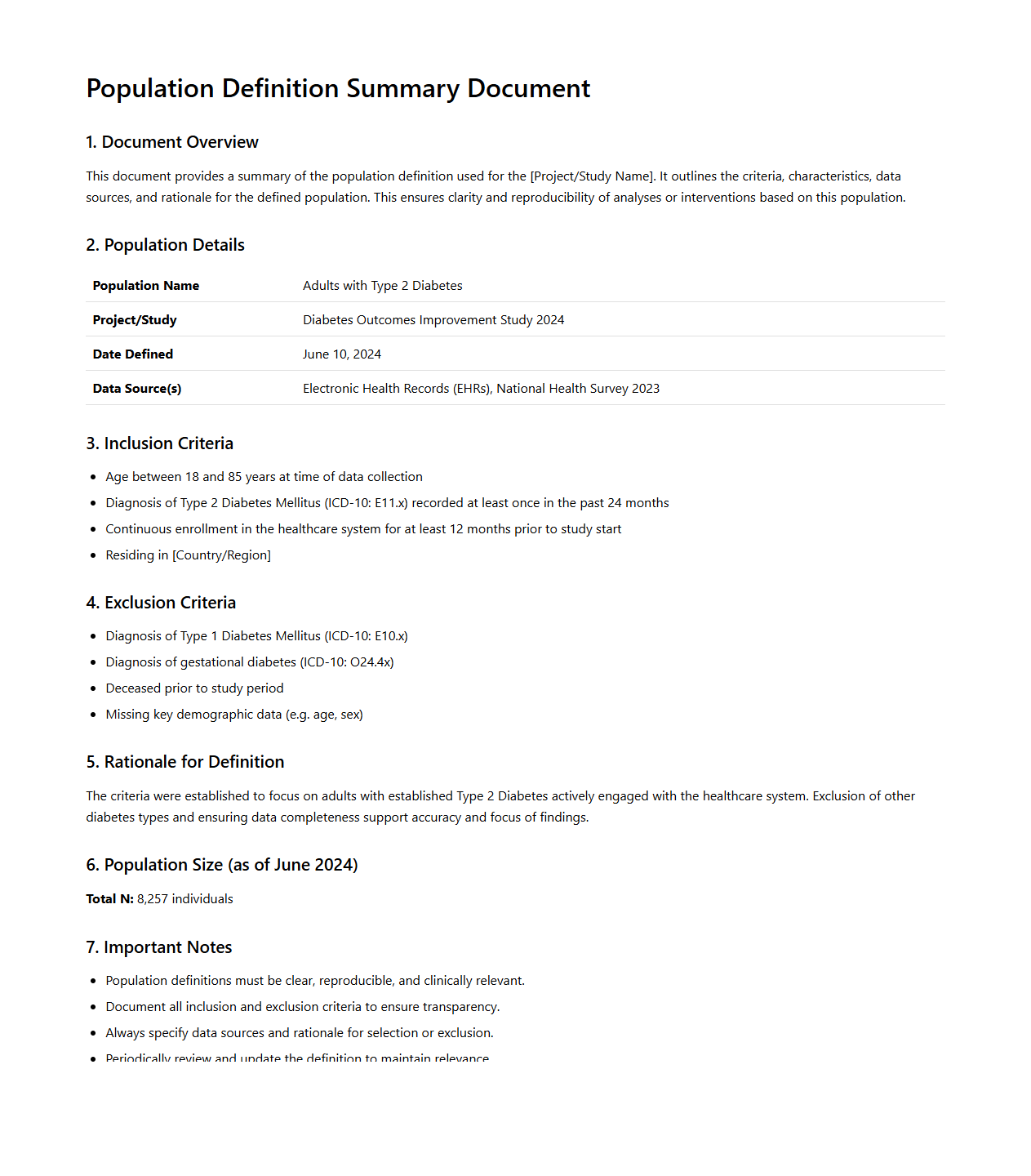
Population Definition Summary Document
A
Population Definition Summary Document outlines the criteria and characteristics used to identify and categorize a specific group within a study or dataset. It provides detailed descriptions of demographic, geographic, and temporal parameters that define the target population for research or analysis purposes. This document ensures clarity and consistency in selecting subjects, improving the accuracy and reliability of the study results.
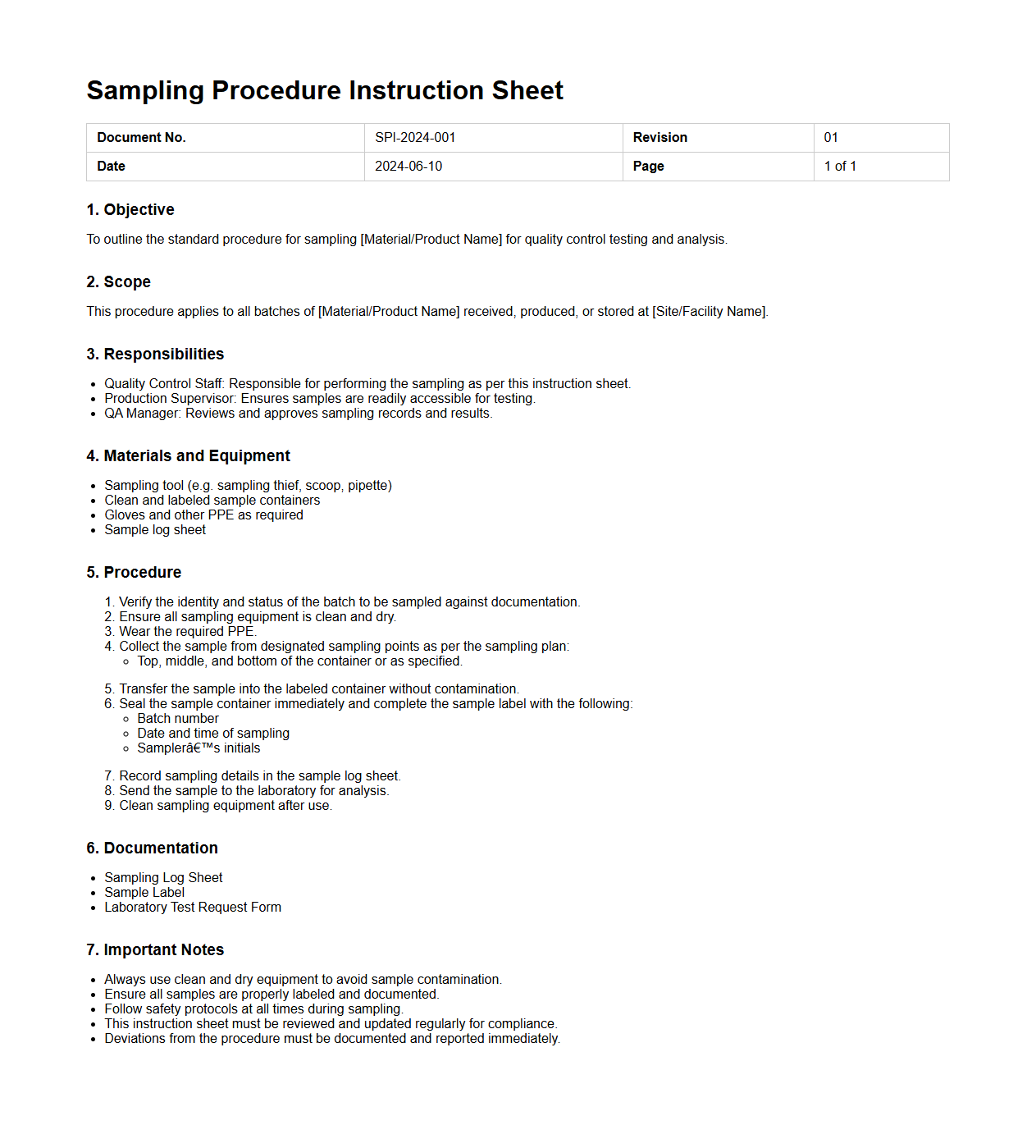
Sampling Procedure Instruction Sheet
The
Sampling Procedure Instruction Sheet document outlines step-by-step guidelines for collecting representative samples in various processes, ensuring consistency and accuracy. It specifies the methods, tools, and conditions required to preserve sample integrity and reliability. This document is crucial for quality control, regulatory compliance, and data-driven decision-making across industries.
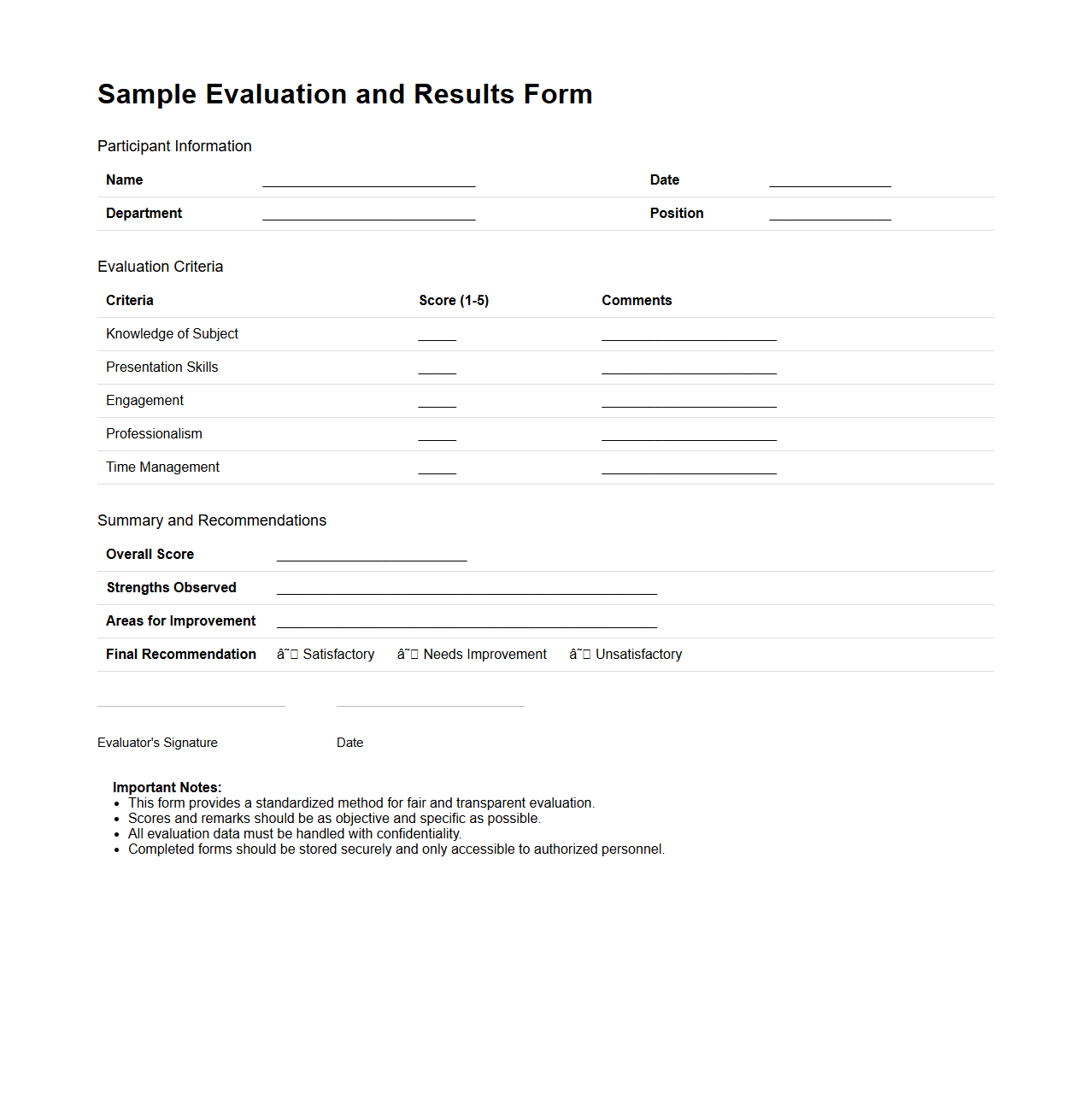
Sample Evaluation and Results Form
The
Sample Evaluation and Results Form document systematically records observations and quantitative data gathered during the assessment of a sample, ensuring accurate tracking of its performance and compliance with specified criteria. This form typically includes sections for test parameters, measured values, evaluation comments, and final results, facilitating clear communication among researchers, quality control teams, and stakeholders. Proper use of this document enhances data reliability, supports decision-making processes, and maintains consistency across multiple evaluations in scientific or industrial settings.
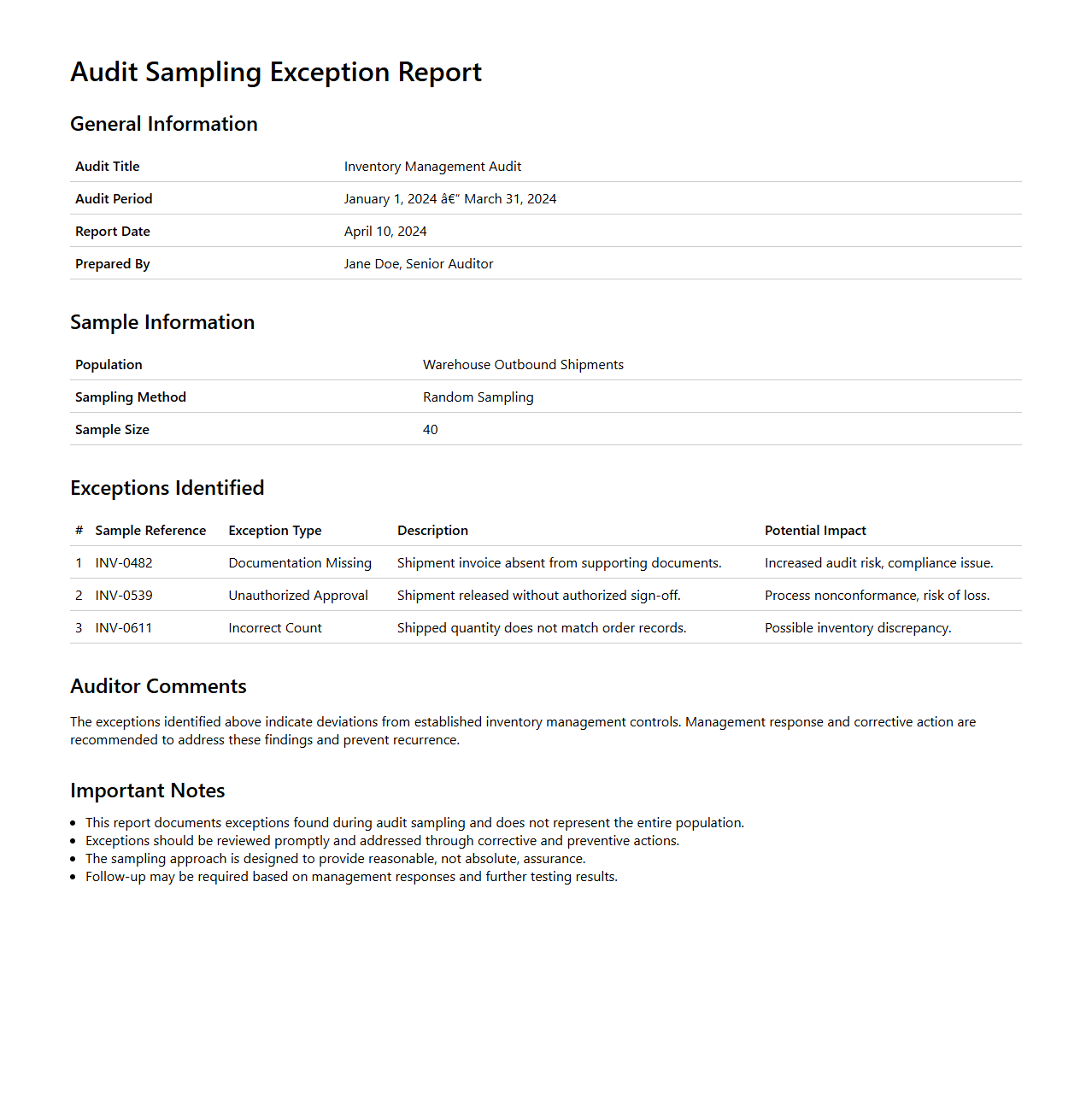
Audit Sampling Exception Report
Audit Sampling Exception Report document highlights instances where selected audit samples deviate from expected criteria, identifying errors or irregularities in financial records or compliance processes. This report provides auditors with critical evidence for assessing the overall accuracy and reliability of internal controls or transactions. The
Audit Sampling Exception Report is essential for pinpointing risk areas and supporting audit conclusions.
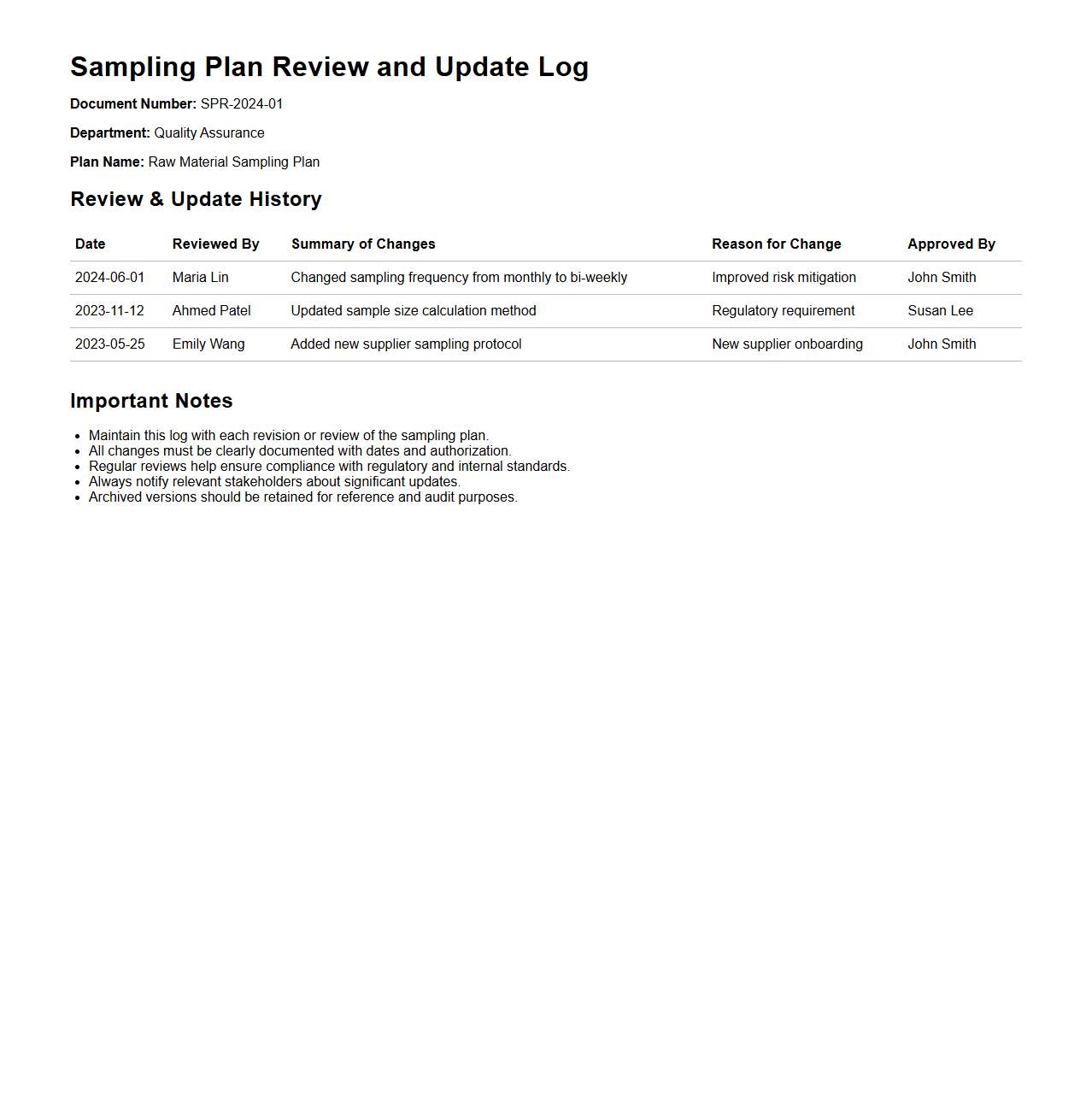
Sampling Plan Review and Update Log
Sampling Plan Review and Update Log is a
critical document used to systematically track changes and revisions to a sampling plan over time. It records the dates, reasons, approvers, and specific updates made to ensure continuous compliance with quality standards and regulatory requirements. Maintaining this log supports transparency, accountability, and effective management of sampling procedures in quality control processes.
Mandatory Sections in the Sampling Plan Format for Audit Procedures Documentation
The sampling plan format must include sections such as the objective of the audit, population definition, sampling method, and sample size. It also requires documentation of the selection criteria and evaluation procedures. Clear identification of acceptance and rejection criteria is essential to ensure audit consistency.
Documentation of Sampling Criteria in the Audit Sampling Plan Letter
The sampling criteria should be explicitly stated in the audit sampling plan letter, including the rationale for sample selection. Specific parameters such as confidence level, tolerable misstatement, and expected error rates must be documented. This ensures transparency and aids in audit review processes.
Terminology for Sample Size Determination in Audit Letters
The standard terminology used includes "sample size," "confidence level," and "tolerable misstatement." These terms communicate the basis for determining the number of items to be examined in the audit. Precise language facilitates understanding between auditors and stakeholders.
Recording Population Stratification in the Sampling Plan Format for Audits
Population stratification is recorded by dividing the audit population into homogeneous subgroups based on relevant characteristics. Each stratum is described with its size, value, and risk profile within the sampling plan. This segmentation enhances audit efficiency and accuracy.
Template Headers Required for Documenting Audit Evidence Selection Methods
Essential template headers include "Method of Selection," "Source of Evidence," "Sample Size," and "Evaluation Procedure." These headers organize critical information related to how audit evidence is chosen and assessed. Consistent use of these headers supports comprehensive audit documentation.