The Format of XML File for Invoice typically includes structured elements such as , , , , , and . Each section adheres to specific schema rules ensuring accurate data exchange between systems. Proper formatting of the XML file guarantees seamless integration with accounting and billing software.
Minimum Required Elements in XML Invoice File
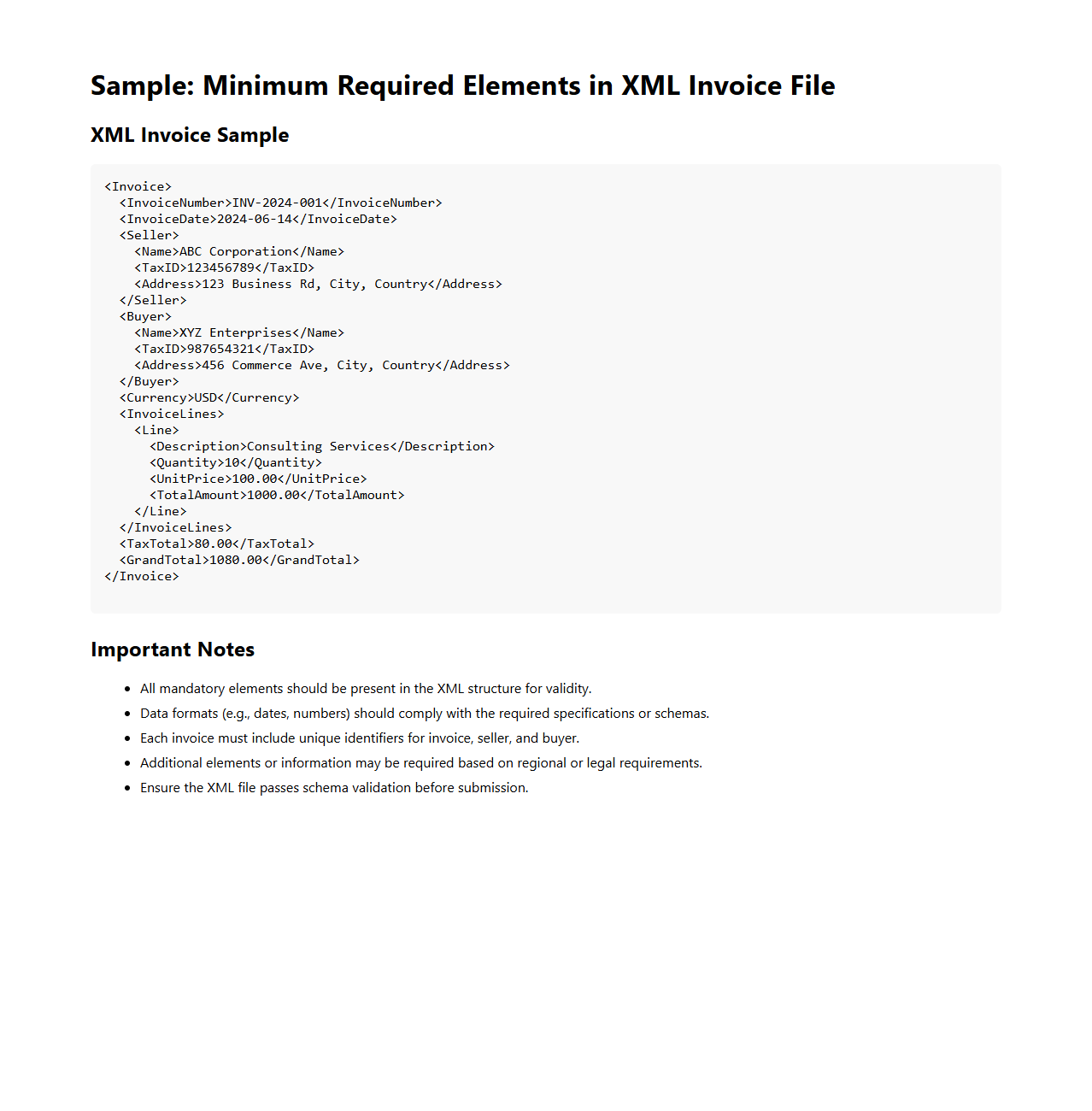
Minimum Required Elements in an XML Invoice File document define the essential data fields necessary to ensure the invoice is valid and processable by accounting systems. These elements typically include invoice number, issue date, supplier and buyer identification, item descriptions, quantities, prices, and tax information, structured according to specific e-invoicing regulations or standards. Ensuring compliance with these
mandatory elements facilitates accurate financial reporting, automated processing, and legal validation.
Standard Header Structure for Invoice XML
The
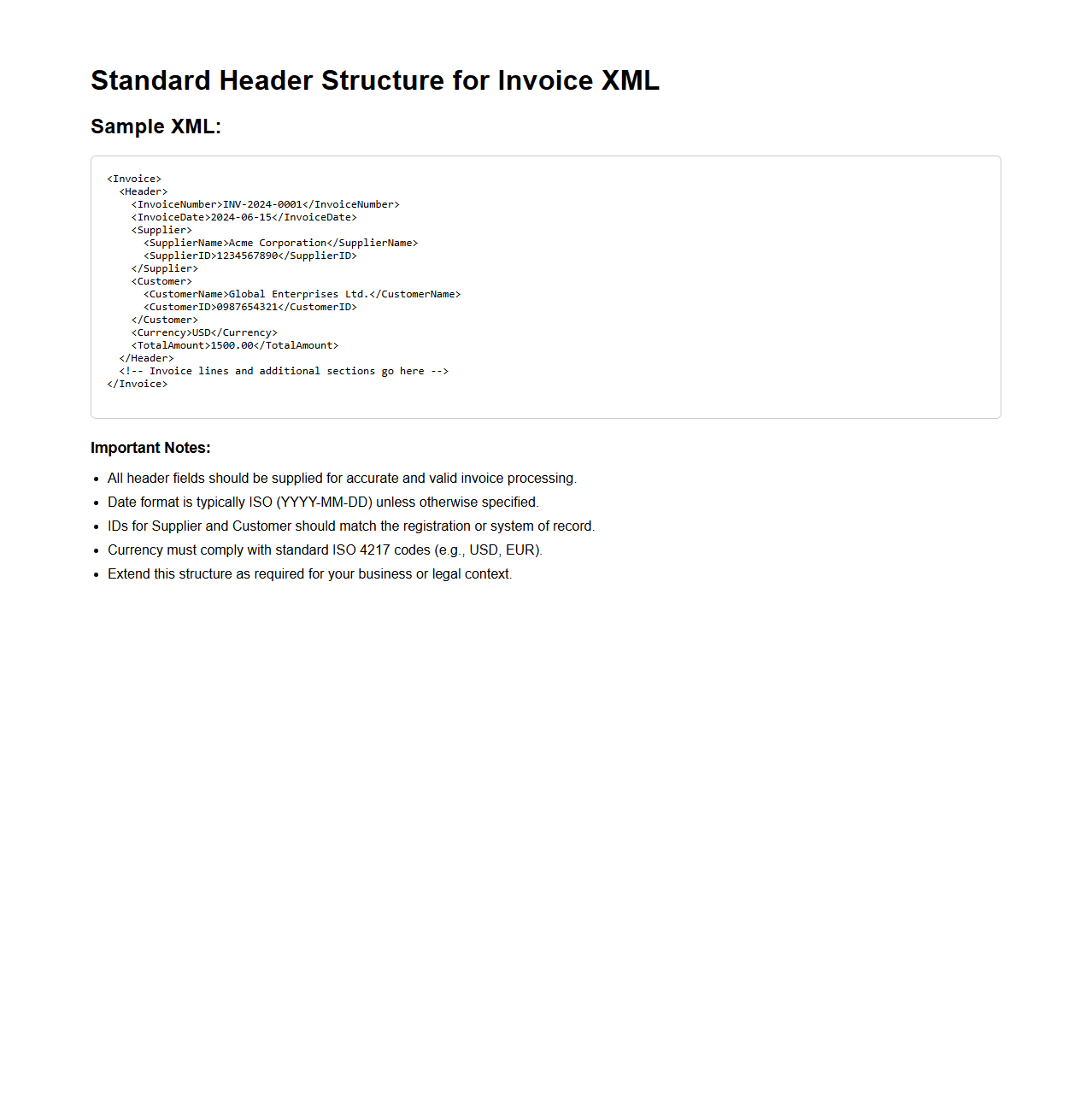
Standard Header Structure for an Invoice XML document defines the essential metadata that identifies and describes the invoice, such as invoice number, issue date, seller and buyer information, and currency details. This structure ensures consistent data exchange between organizations, facilitating automated processing and compliance with regulatory standards. It typically includes elements like
, , , , and to maintain clarity and interoperability.Invoice Line Item XML Schema Format
The
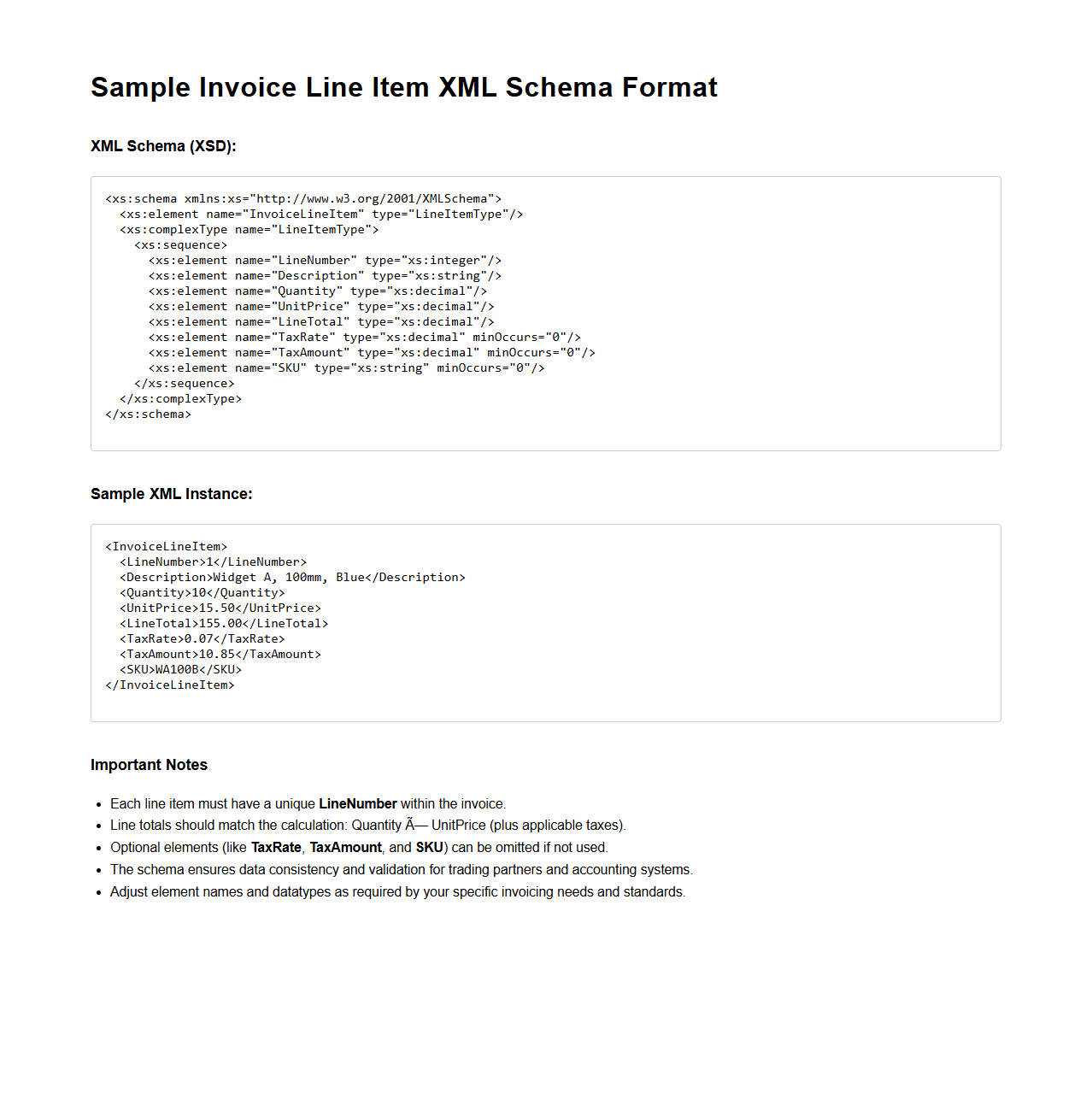
Invoice Line Item XML Schema Format document defines the structured format for representing individual line items within an electronic invoice, facilitating consistent data exchange between businesses and financial systems. It specifies elements such as item description, quantity, unit price, tax amounts, and total costs, enabling automated processing and validation of invoice details. This schema supports compliance with e-invoicing standards and improves accuracy in accounting and payment workflows.
XML File Structure for Buyer/Supplier Information
The
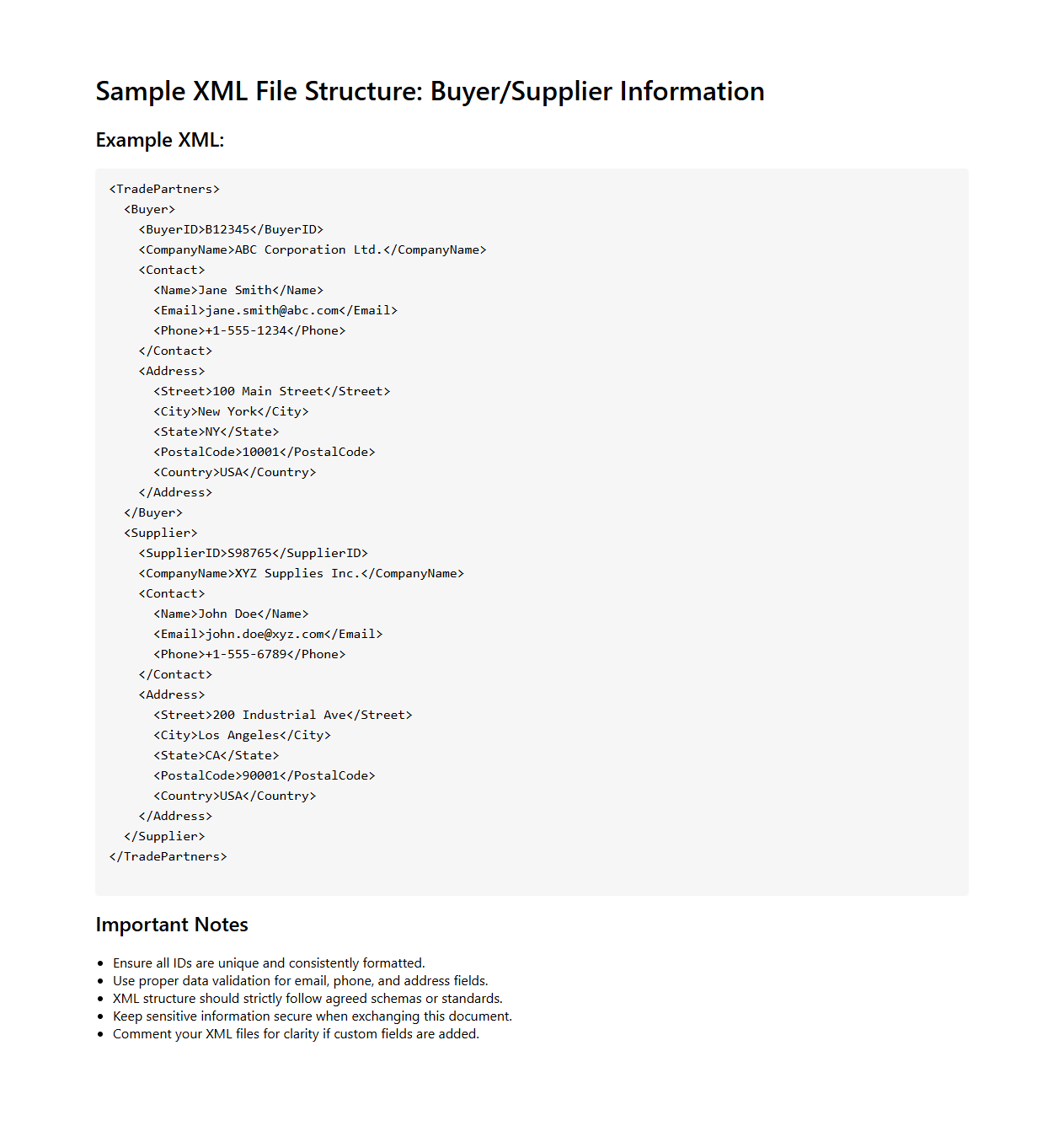
XML file structure for a Buyer/Supplier Information document organizes data into hierarchical elements representing entities such as buyer details, supplier profiles, contact information, and transaction records. Each element includes attributes and nested tags that ensure clear, standardized data exchange between systems, enabling efficient processing and integration in supply chain management. The structured format supports validation against XML schemas, improving data accuracy and interoperability across business platforms.
Tax Details Format in Invoice XML Document
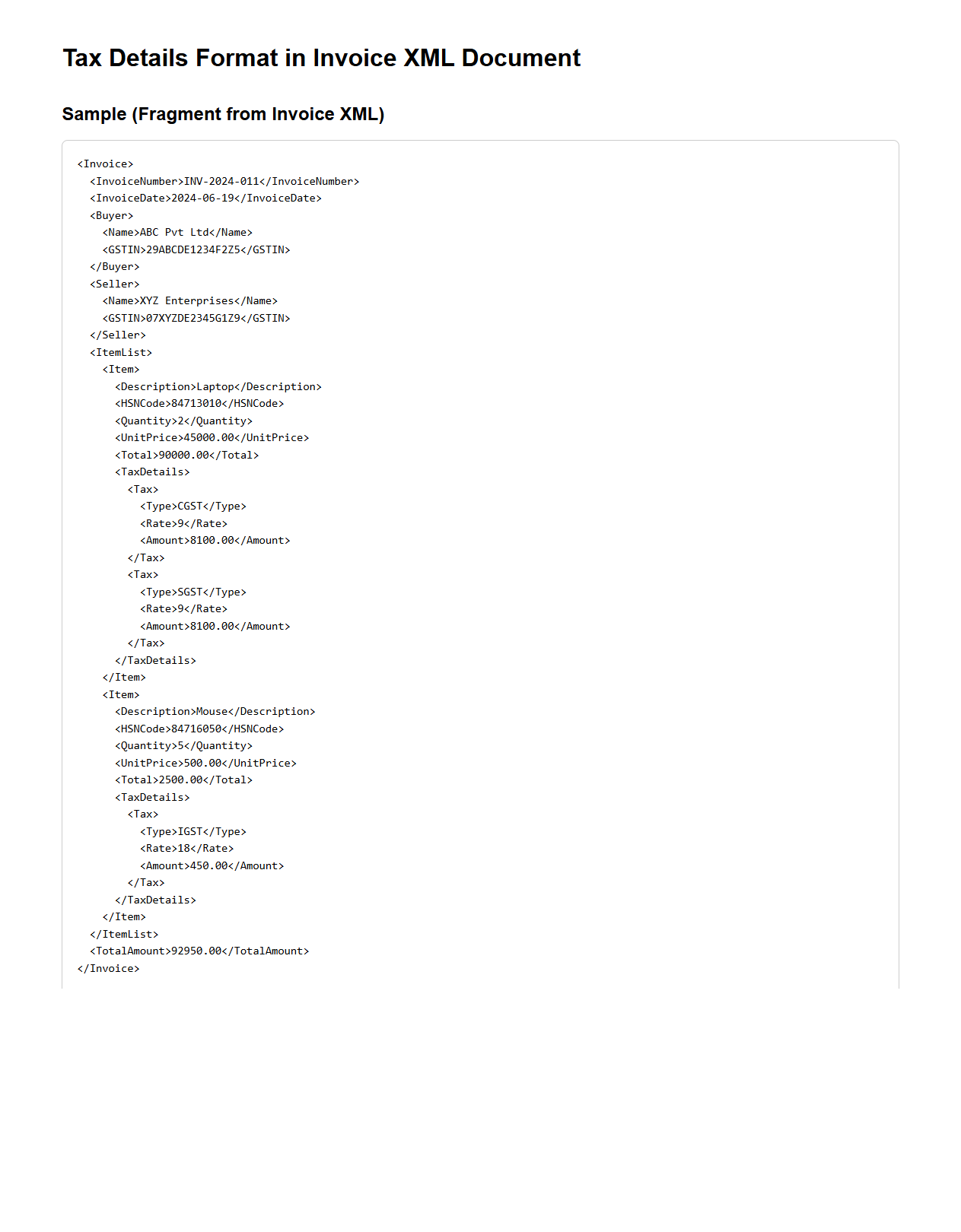
The
Tax Details Format in an Invoice XML Document specifies the structured representation of tax-related information, ensuring compliance with legal and financial regulations. It typically includes elements such as tax type, tax rate, taxable amount, and tax amount, allowing for precise calculation and reporting of taxes. This standardized format facilitates interoperability between invoicing systems and tax authorities, enhancing accuracy and auditability in electronic invoicing processes.
Payment Terms XML Tagging System
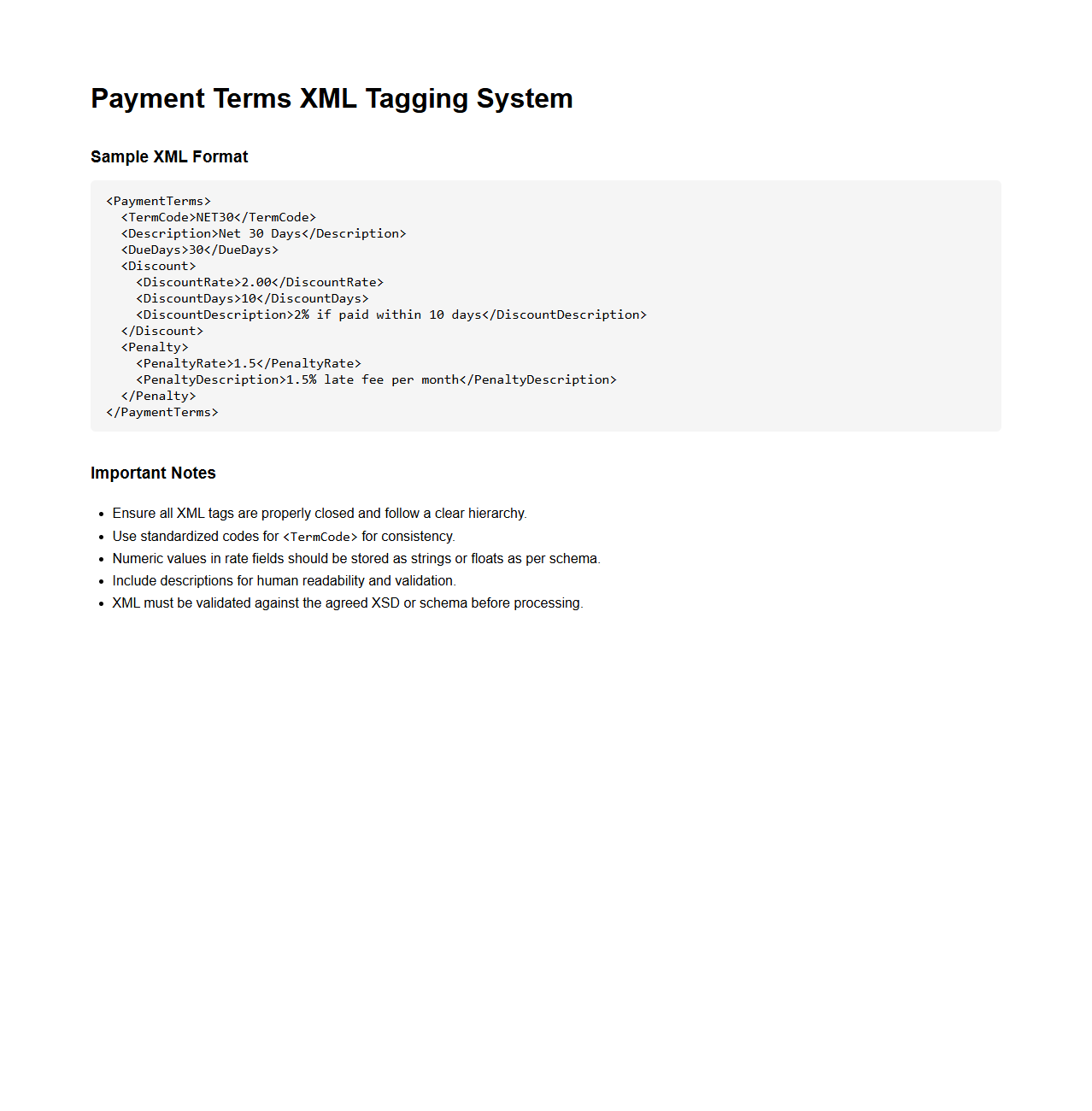
The
Payment Terms XML Tagging System document standardizes how payment conditions are encoded within XML files, enabling consistent communication across financial platforms. It defines specific tags and attributes to represent due dates, discounts, penalties, and payment schedules. This system ensures accurate interpretation and automation of payment processes in electronic invoicing and contractual agreements.
Digital Signature Section in XML Invoice
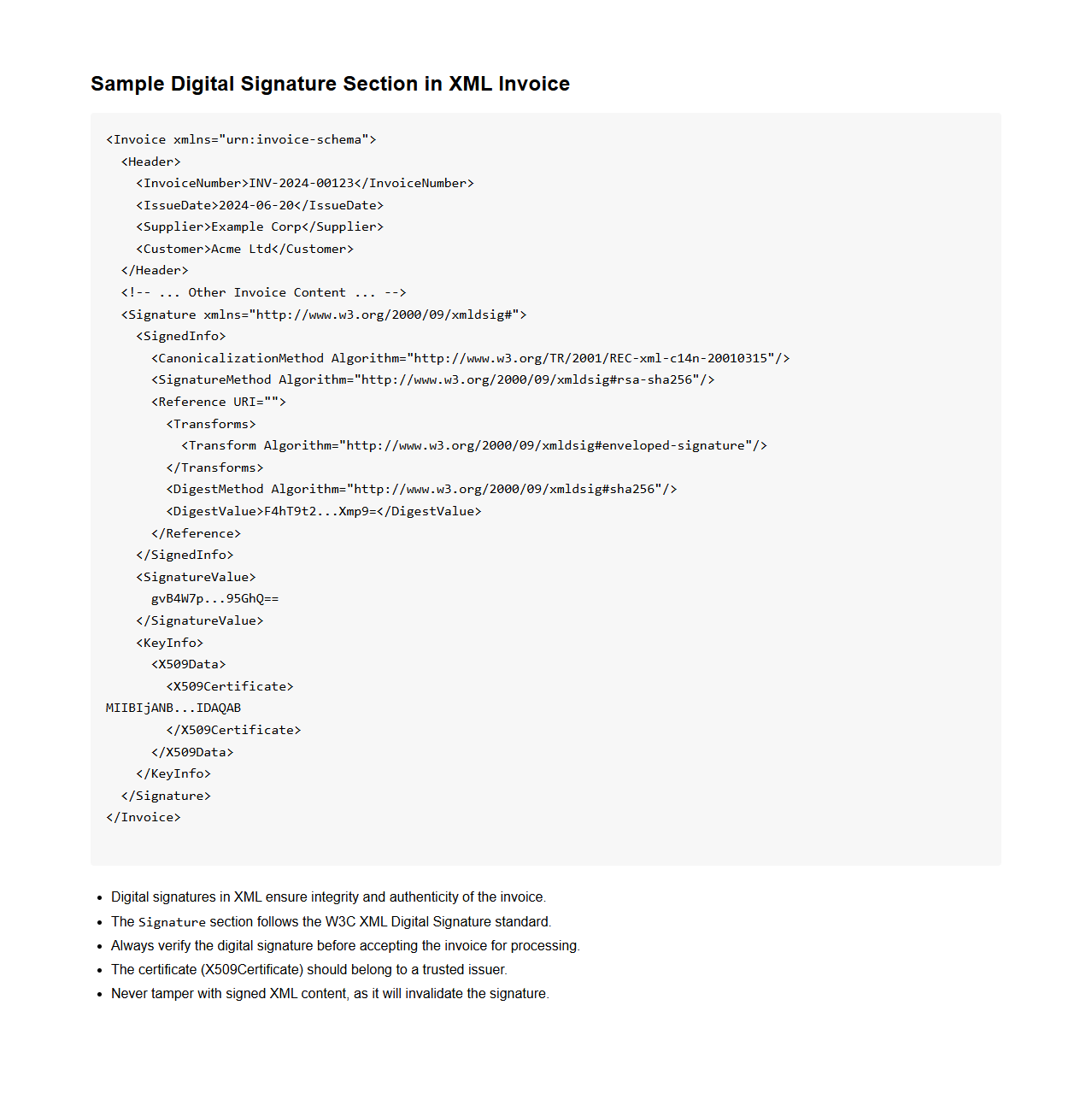
The
Digital Signature Section in an XML Invoice document ensures the authenticity and integrity of the invoice by embedding a cryptographic signature. This section contains elements such as SignedInfo, SignatureValue, and KeyInfo that verify the signer's identity and confirm that the document has not been altered since signing. Implementing a digital signature is essential for compliance with electronic invoicing standards and enhances trust between trading partners.
Currency and Amount Formatting in Invoice XML
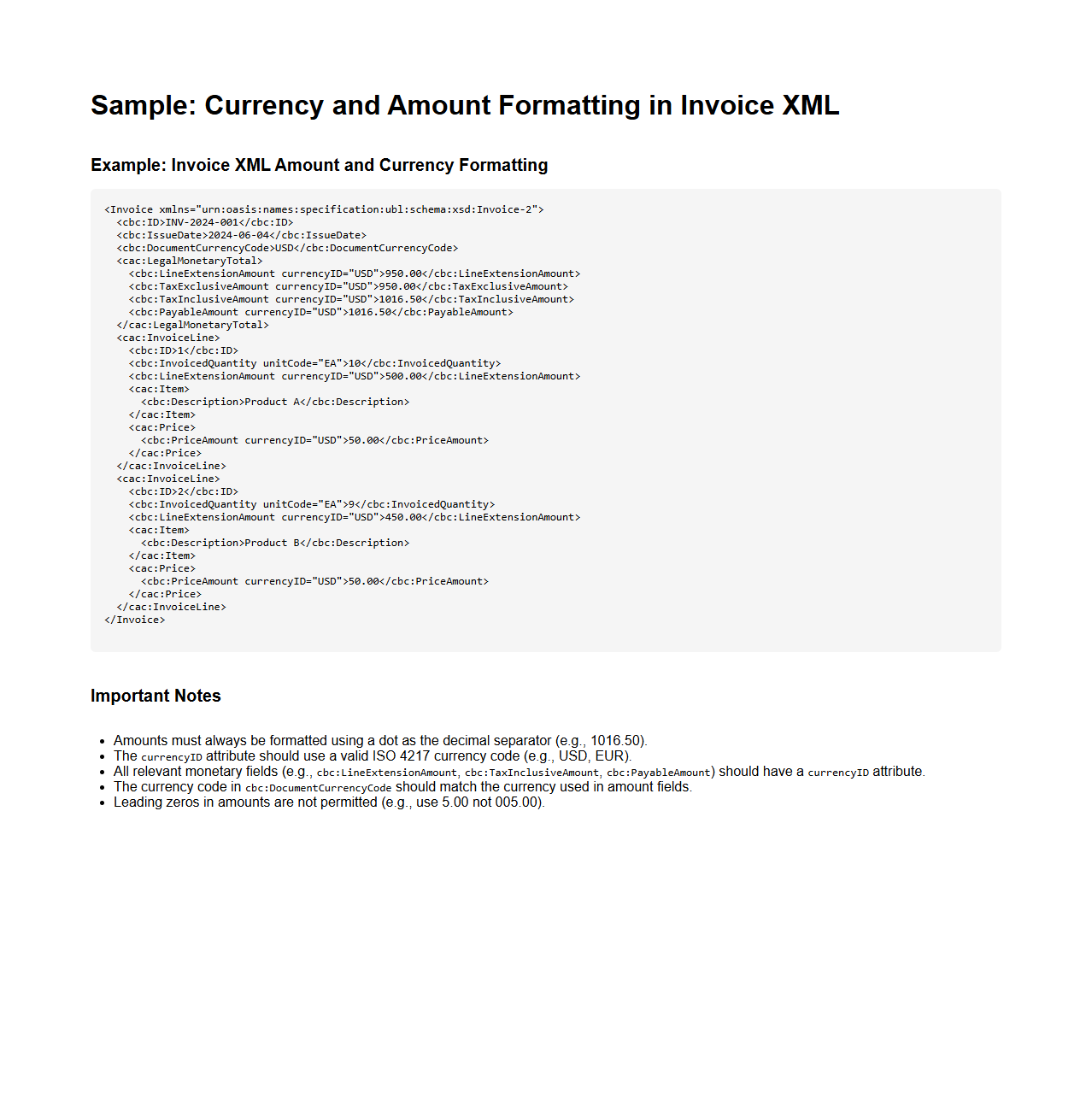
Currency and Amount Formatting in an Invoice XML document ensures that financial data is accurately represented according to regional and international standards. It involves specifying the
currency code using ISO 4217 standards and formatting numerical amounts with appropriate decimal places and separators for clarity. Proper formatting guarantees consistency and facilitates automated processing by accounting and payment systems.
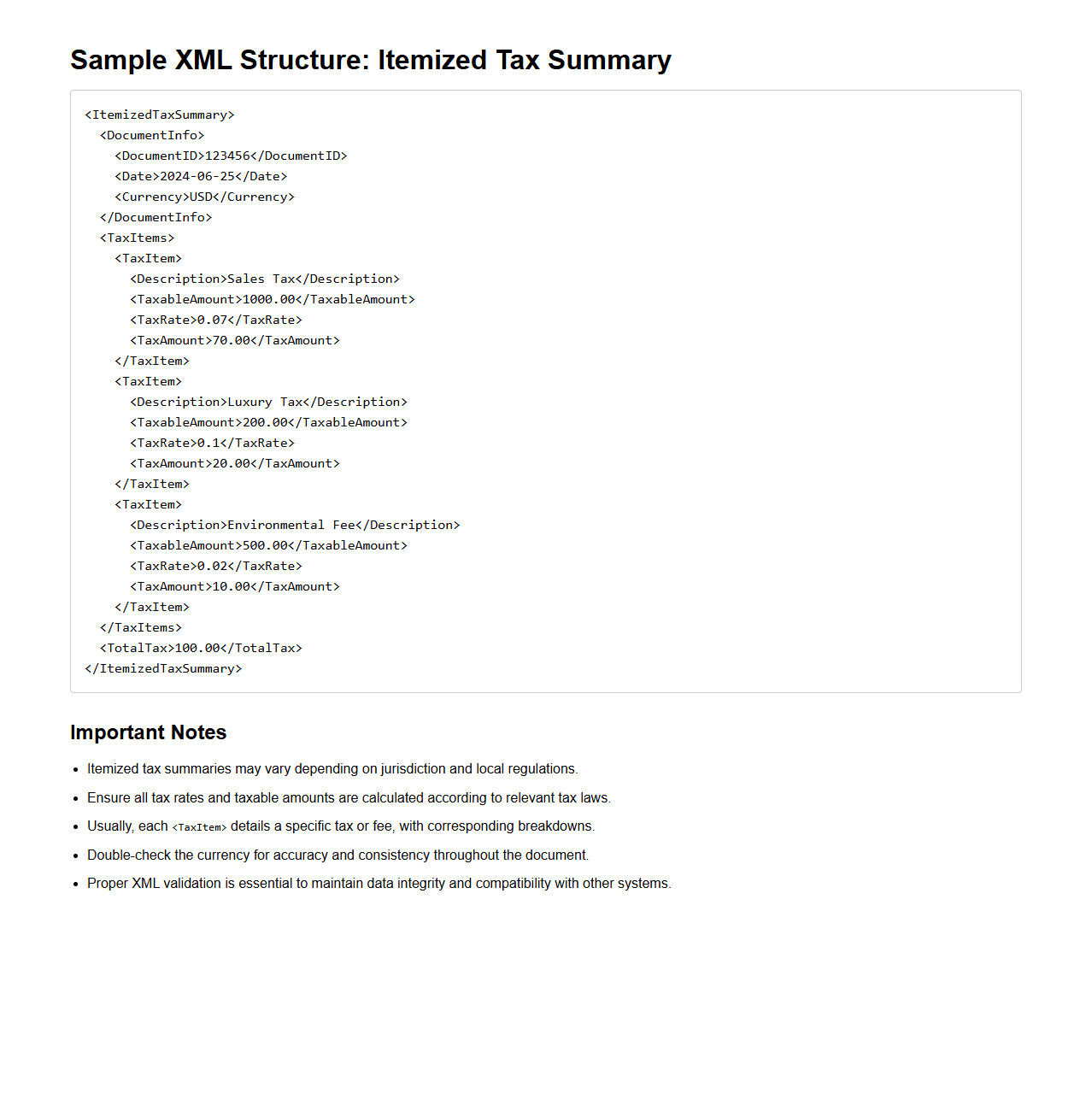
XML Structure for Itemized Tax Summary
The
XML Structure for Itemized Tax Summary document organizes tax data into hierarchical elements representing various tax categories, rates, and amounts to ensure accurate reporting and compliance. Each itemized entry typically includes detailed fields such as tax type, taxable amount, tax rate, and calculated tax value, allowing for precise breakdowns of tax liabilities. This structured format enables seamless integration with accounting systems and enhances data validation and interoperability across financial platforms.
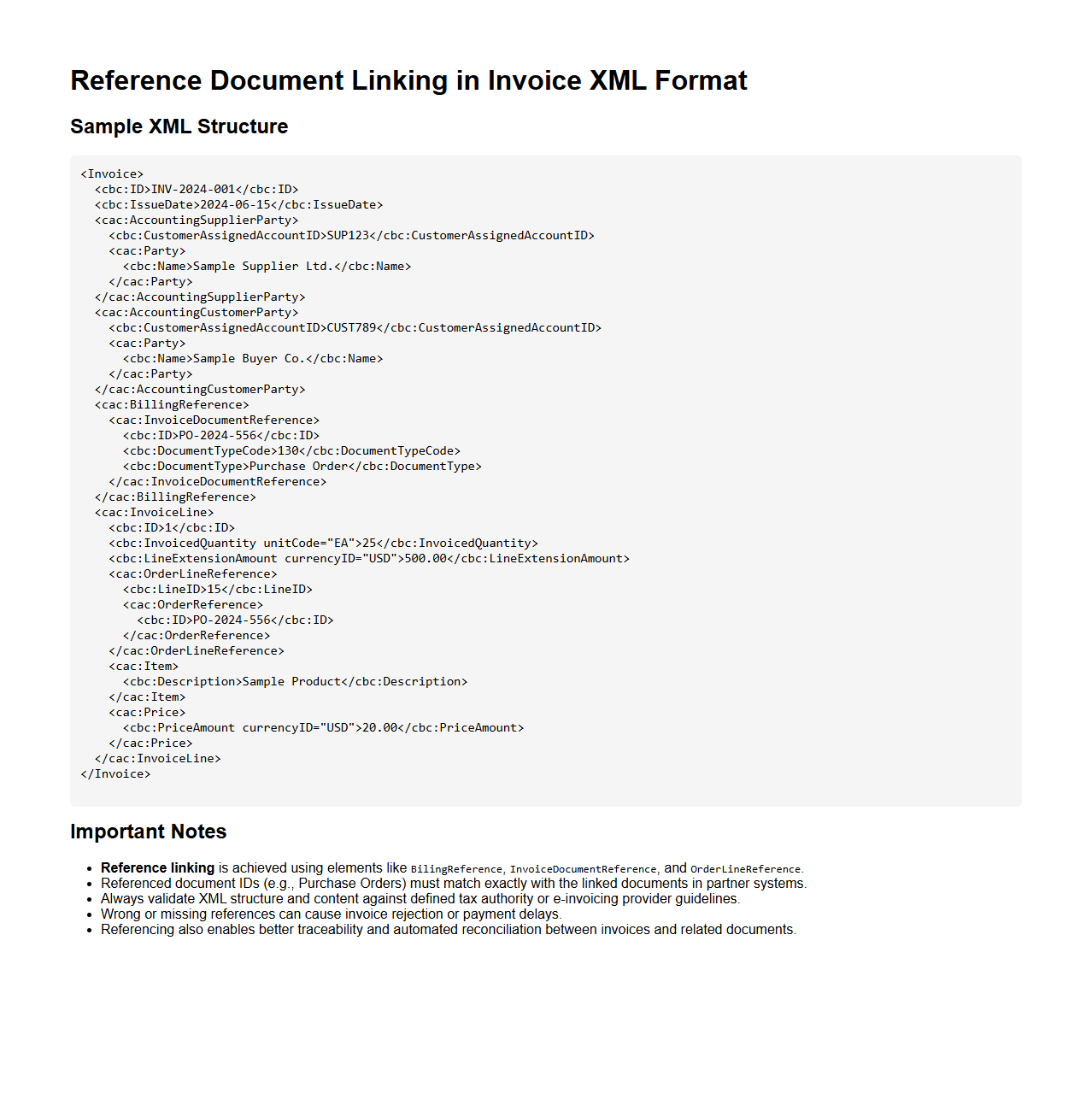
Reference Document Linking in Invoice XML Format
Reference Document Linking in an Invoice XML Format document enables the association of the invoice with related documents such as purchase orders, delivery notes, or contracts. This
linking mechanism facilitates accurate tracking, validation, and reconciliation of transactions by referencing unique document identifiers within the XML structure. It enhances data integrity and streamlines account auditing processes across financial and procurement systems.
What are the mandatory XML tags for an invoice according to UBL standards?
The mandatory XML tags in a UBL invoice include Invoice, cbc:ID, cbc:IssueDate, and cbc:InvoiceTypeCode. These tags uniquely identify the invoice and specify its issue date and type. Additionally, cac:AccountingSupplierParty and cac:AccountingCustomerParty are essential for specifying the supplier and customer details.
How should tax details be structured within an invoice XML file?
Tax details must be organized using the cac:TaxTotal element, which contains one or more cbc:TaxAmount and cac:TaxSubtotal children. Each TaxSubtotal provides breakdowns of tax categories and amounts per taxable item. Proper nesting ensures accurate representation of the tax calculation within the invoice.
Which encoding format is recommended for invoice XML files?
The recommended encoding format for UBL invoice XML files is UTF-8. This encoding supports all Unicode characters and ensures broad compatibility across different platforms and systems. Specifying this in the XML declaration is critical for correct file interpretation.
How do you represent multiple line items in XML for invoices?
Multiple line items are represented by repeating the cac:InvoiceLine element within the Invoice document. Each InvoiceLine includes details such as cbc:ID, cbc:InvoicedQuantity, and cbc:LineExtensionAmount. This approach allows for clear definition and enumeration of each product or service billed.
What schema validation tools support invoice XML file formats?
Common schema validation tools for invoice XML files include xmllint, Oxygen XML Editor, and XMLSpy. These tools validate against the UBL XSD (XML Schema Definition) to ensure compliance and correctness. Utilizing proper validation is essential for error-free invoice processing and interoperability.