Essential Sections in an Import Purchase Invoice
An Import Purchase Invoice document contains
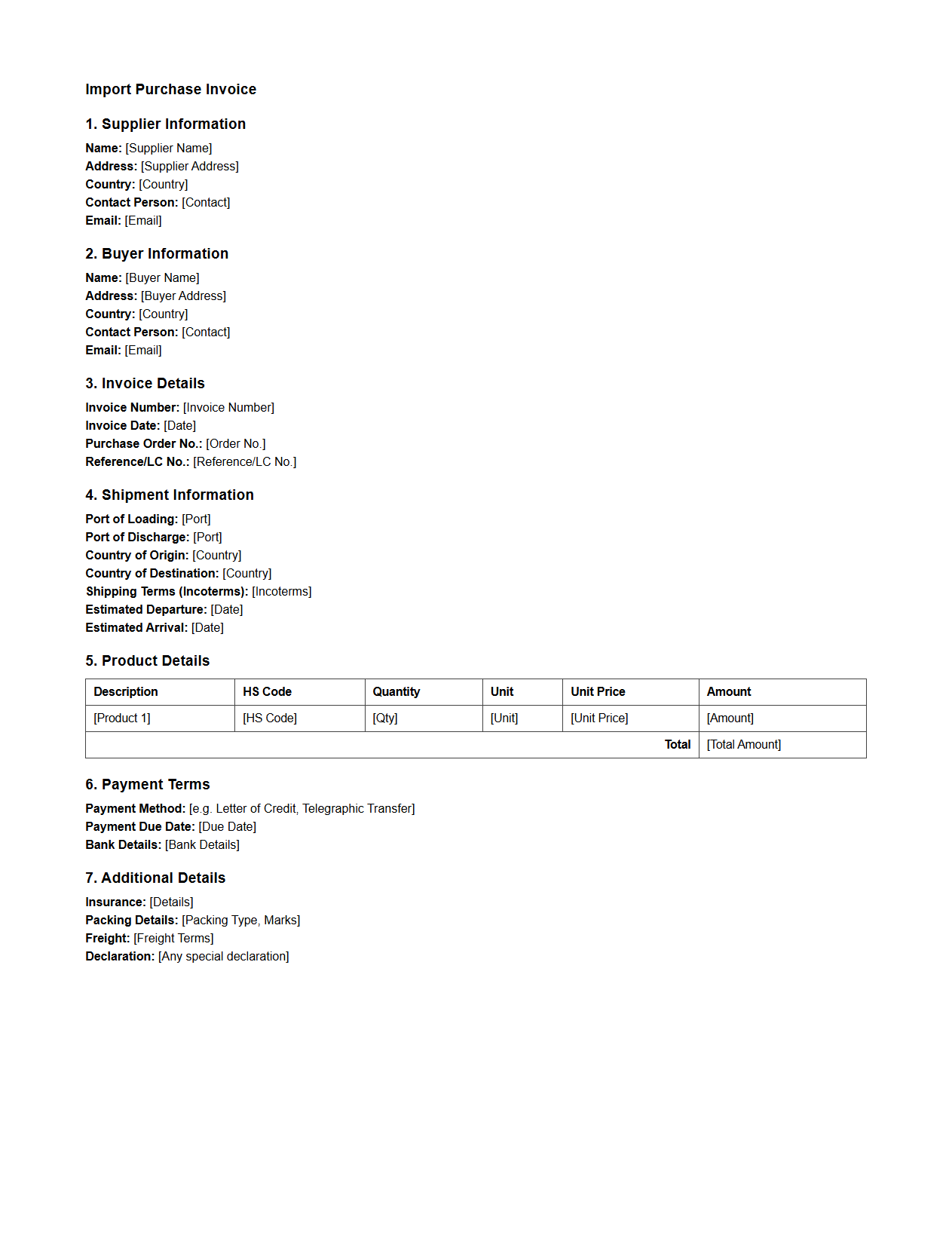
essential sections that facilitate accurate transaction processing and customs clearance. These sections typically include supplier details, invoice number, date, description of goods, quantity, unit price, total value, currency, shipping terms, and applicable taxes or duties. Properly completed sections ensure compliance with international trade regulations and streamline payment and accounting procedures.
Mandatory Elements in Import Invoice Documentation
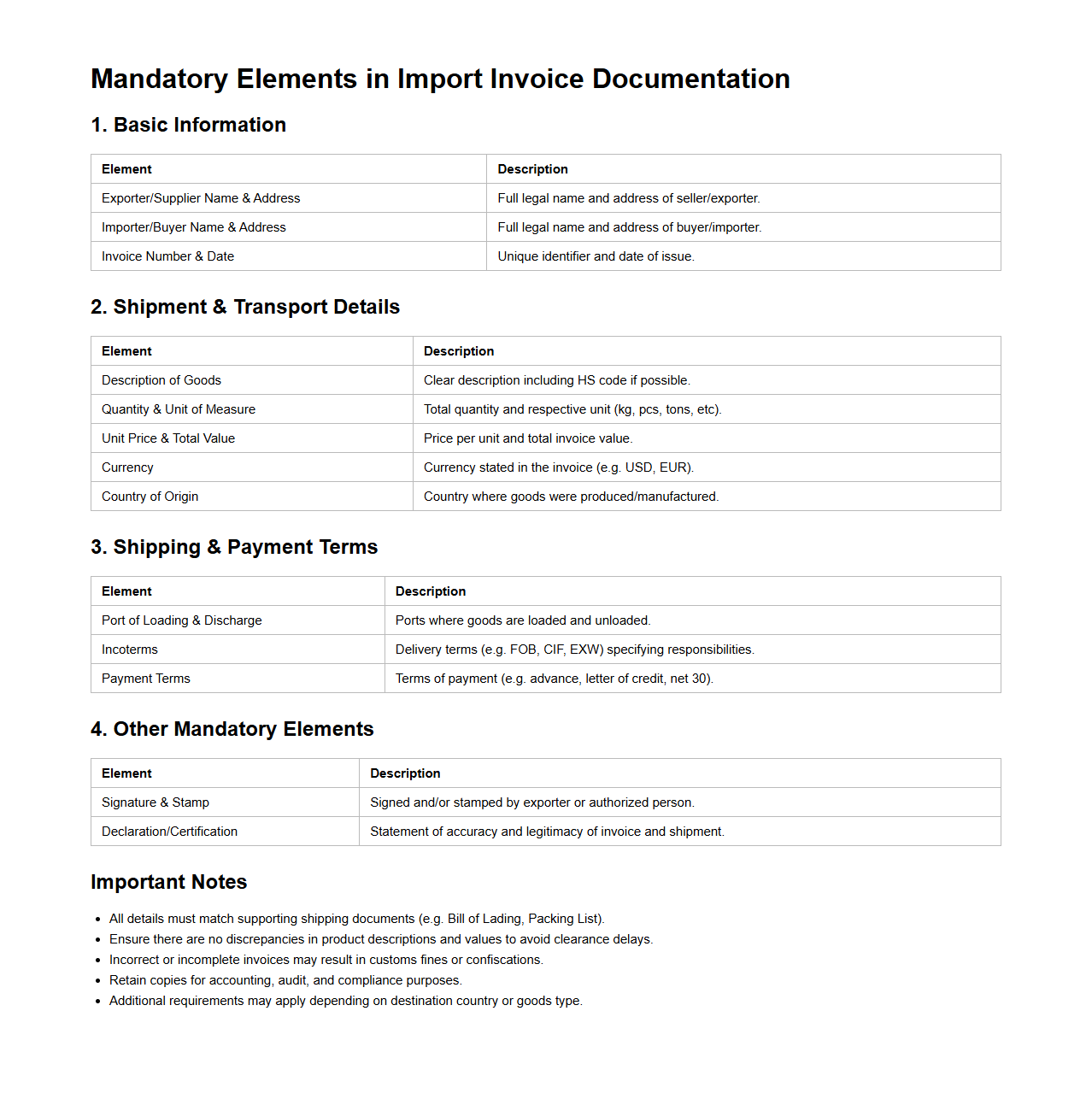
Mandatory Elements in Import Invoice Documentation are critical components required for customs clearance and compliance with international trade regulations. These elements typically include the
invoice date, seller and buyer details, description of goods, quantity, unit price, total value, country of origin, and applicable terms of sale (Incoterms). Accurate inclusion of these details ensures smooth import processing, minimizes delays, and avoids penalties or shipment rejections.
Standard Header Format for Import Purchase Invoices
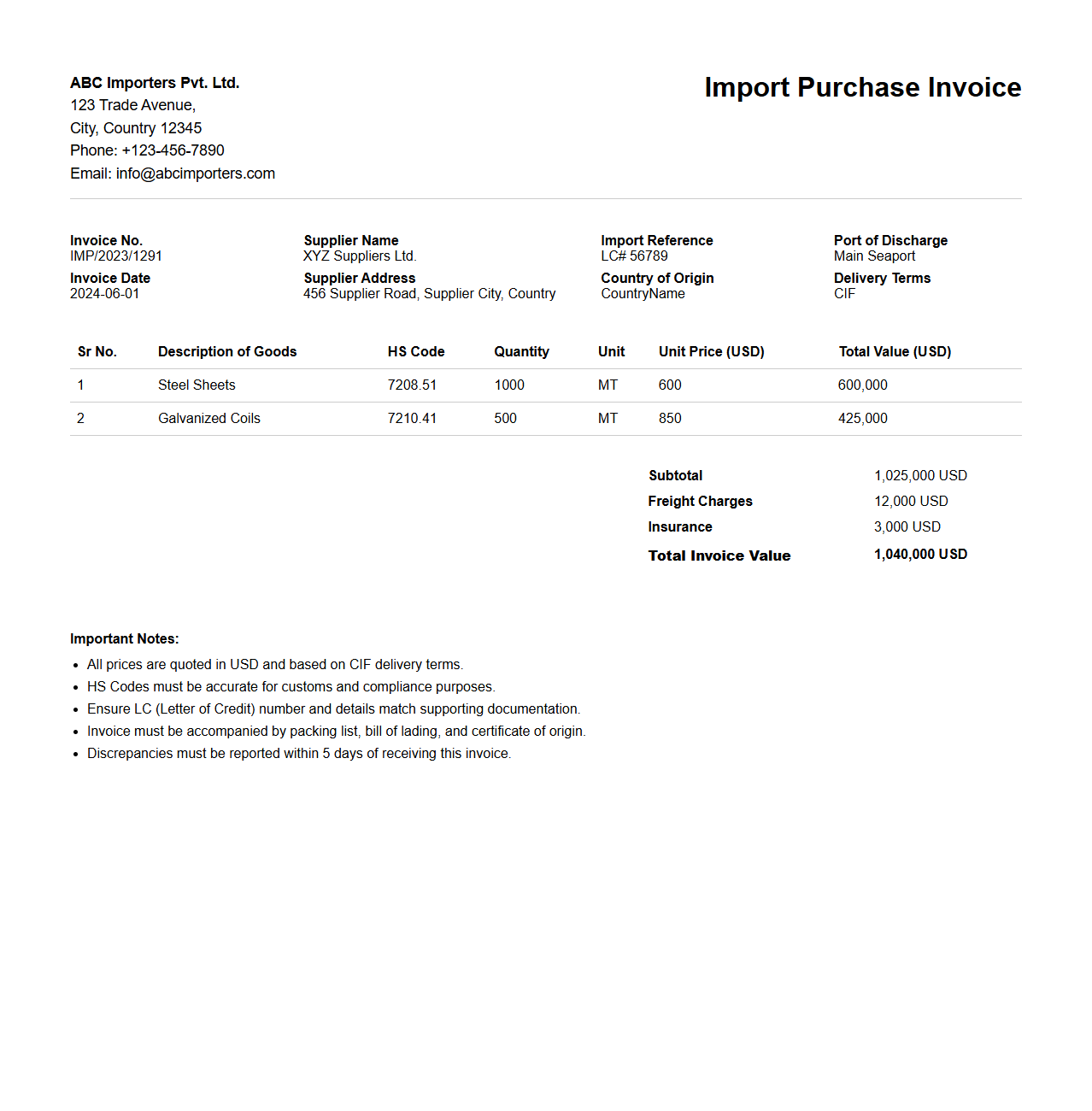
The
Standard Header Format for Import Purchase Invoices document is a structured template used to capture essential details such as invoice number, supplier information, purchase date, currency, and tax data for imported goods. This format ensures consistency and accuracy in recording import-related financial transactions, facilitating smooth customs clearance and accounting processes. Compliance with this standard helps businesses maintain organized records for auditing and regulatory reporting requirements.
Vendor and Consignee Details in Import Invoices
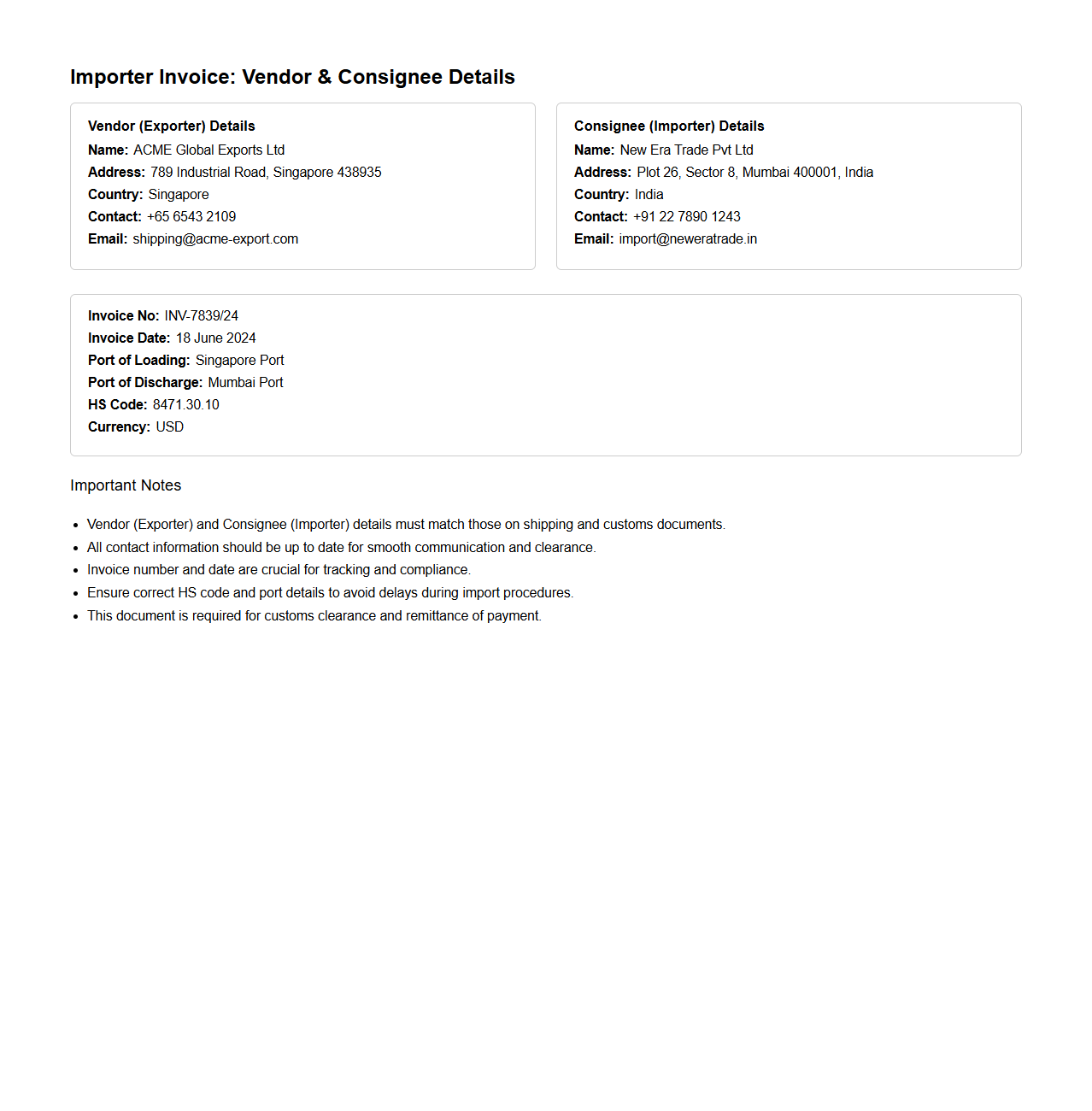
Vendor and Consignee Details in Import Invoices document refer to the critical information identifying the
seller (vendor) and the recipient (consignee) involved in the international transaction. Vendor details typically include company name, address, contact information, and tax identification, ensuring proper identification and payment processing. Consignee details specify the importer's information, shipping address, and contact details, facilitating accurate delivery and customs clearance.
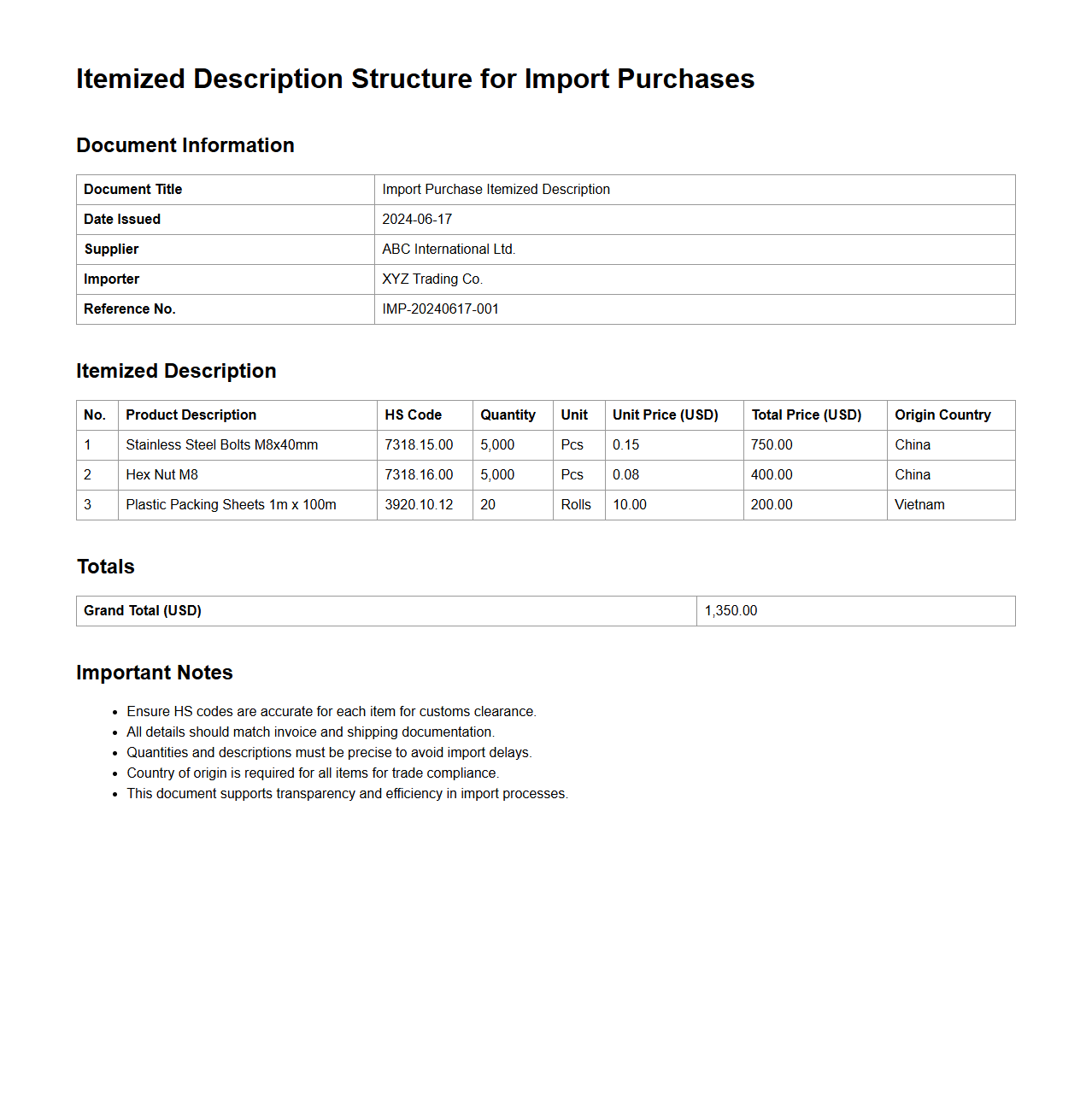
Itemized Description Structure for Import Purchases
The
Itemized Description Structure for Import Purchases document provides a detailed breakdown of imported goods, specifying each item's characteristics, quantities, and values to ensure accurate customs processing and compliance with international trade regulations. This structured format helps importers, customs officials, and logistics providers verify shipment contents efficiently, reducing the risk of errors or delays. Clear itemized descriptions facilitate proper tariff classification, valuation, and tax calculation under import laws.
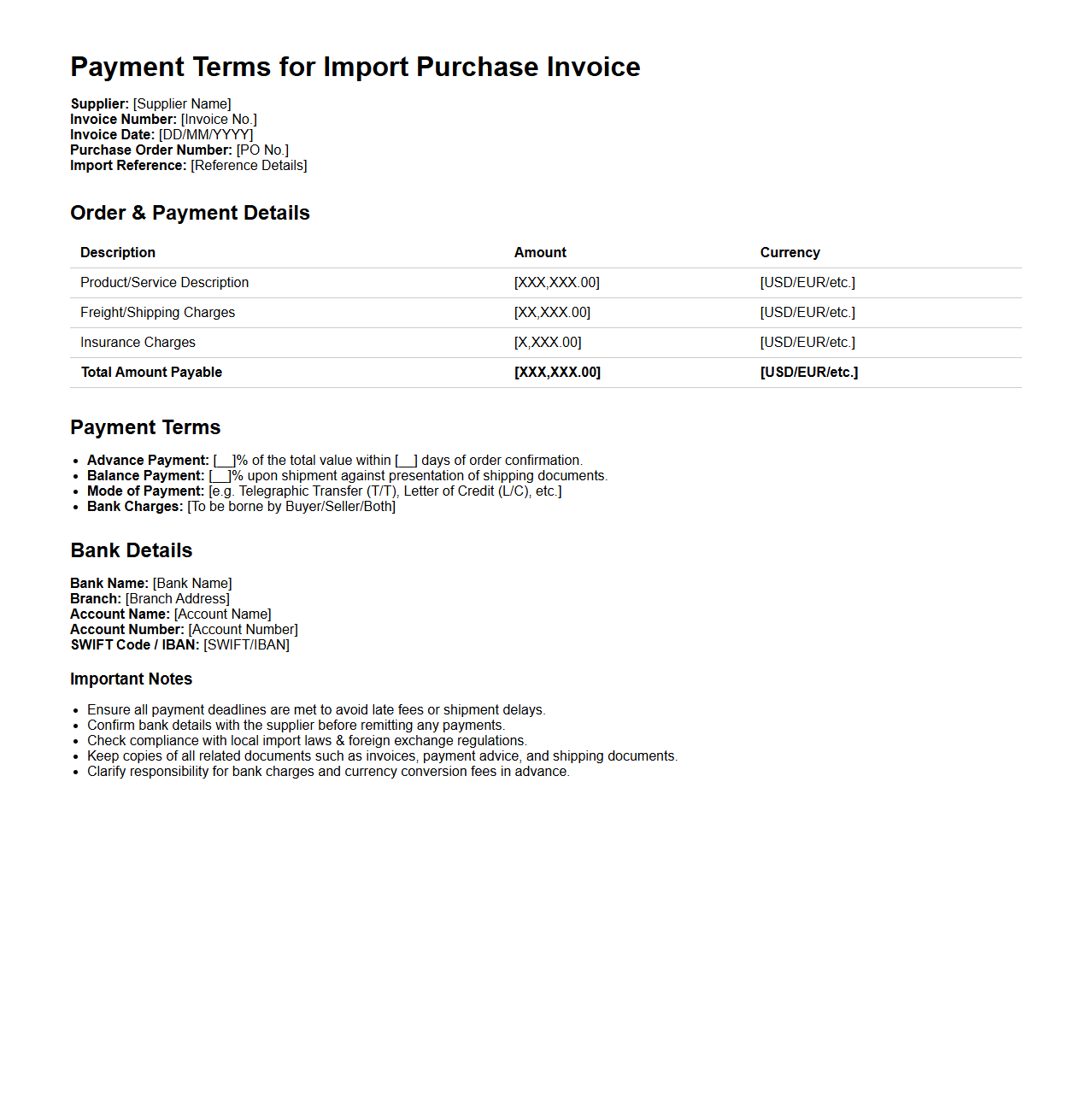
Payment Terms Format for Import Purchase Invoices
The
Payment Terms Format for Import Purchase Invoices document outlines the agreed conditions under which payment for imported goods must be made, including due dates, currency specifications, and any applicable discounts or penalties. It ensures clarity and consistency between the buyer and supplier, facilitating smooth financial transactions and compliance with international trade regulations. This format helps businesses manage cash flow effectively and avoid disputes by clearly stating payment obligations tied to import purchases.
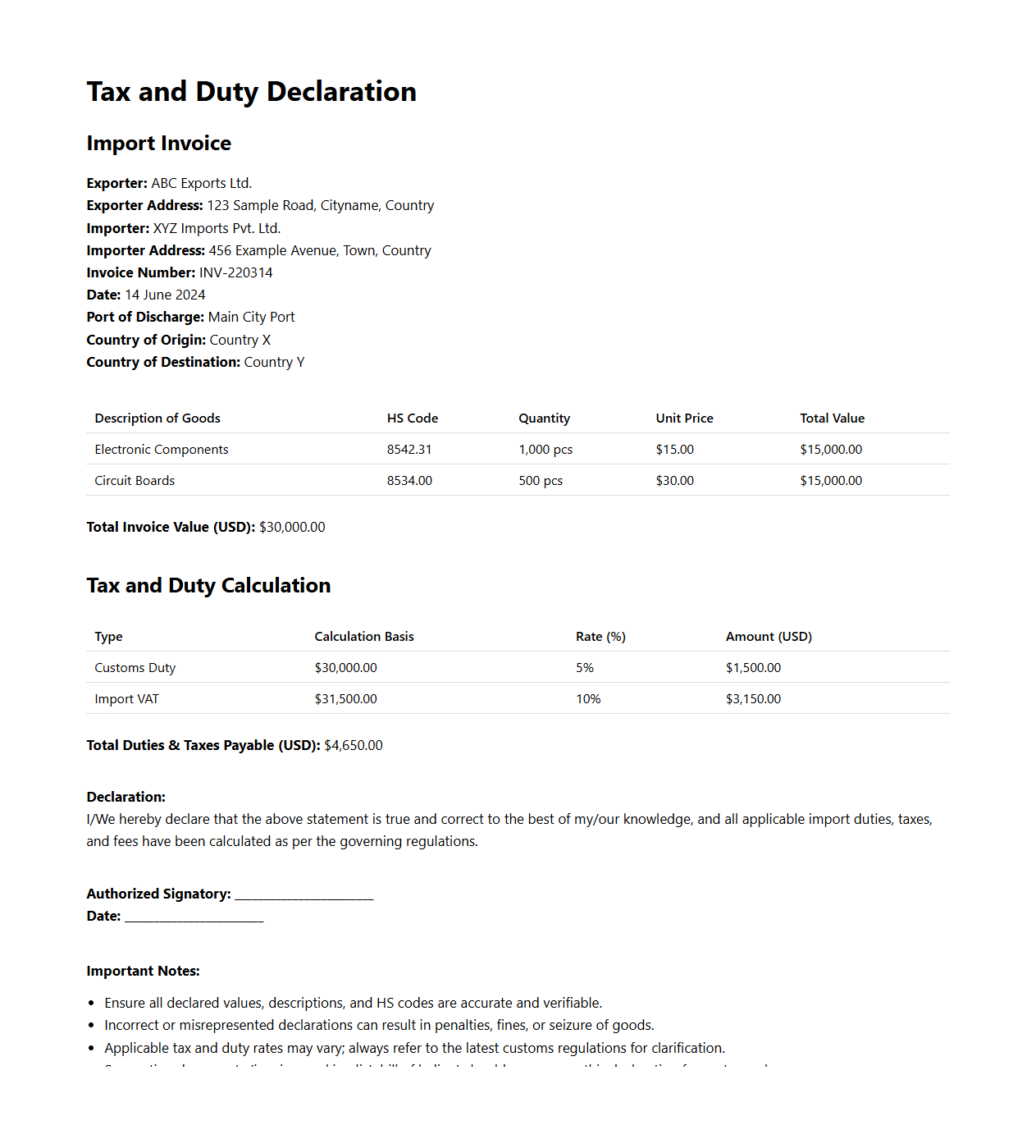
Tax and Duty Declaration in Import Invoice
A
Tax and Duty Declaration in an import invoice document specifies the taxes, customs duties, and tariffs applicable to imported goods, ensuring compliance with local regulations. It includes detailed information on the classification, value, and origin of the merchandise, which assists customs authorities in determining the correct charges. Accurate declarations help prevent delays, fines, and legal issues during the importation process.
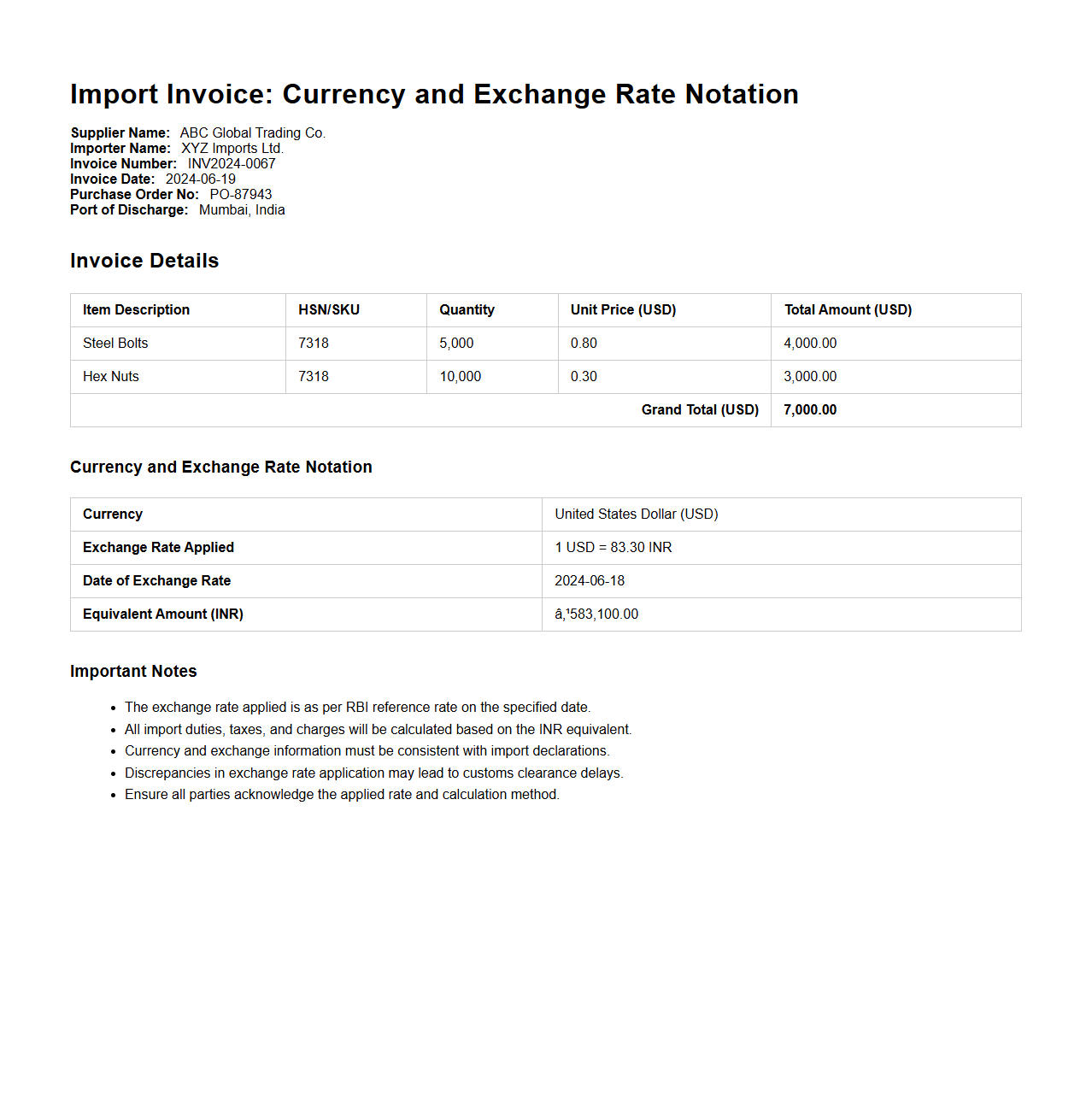
Currency and Exchange Rate Notation in Import Invoices
Currency in import invoices specifies the type of money used in the transaction, such as USD, EUR, or JPY, reflecting the economic value agreed between buyer and seller. The
exchange rate notation indicates the conversion rate applied to translate foreign currency amounts into the domestic currency, ensuring accurate financial reporting and compliance with international trade standards. This notation is essential for calculating payable amounts, taxes, and duties in the import process.
Shipment and Port Details Section in Import Purchase Invoice
The
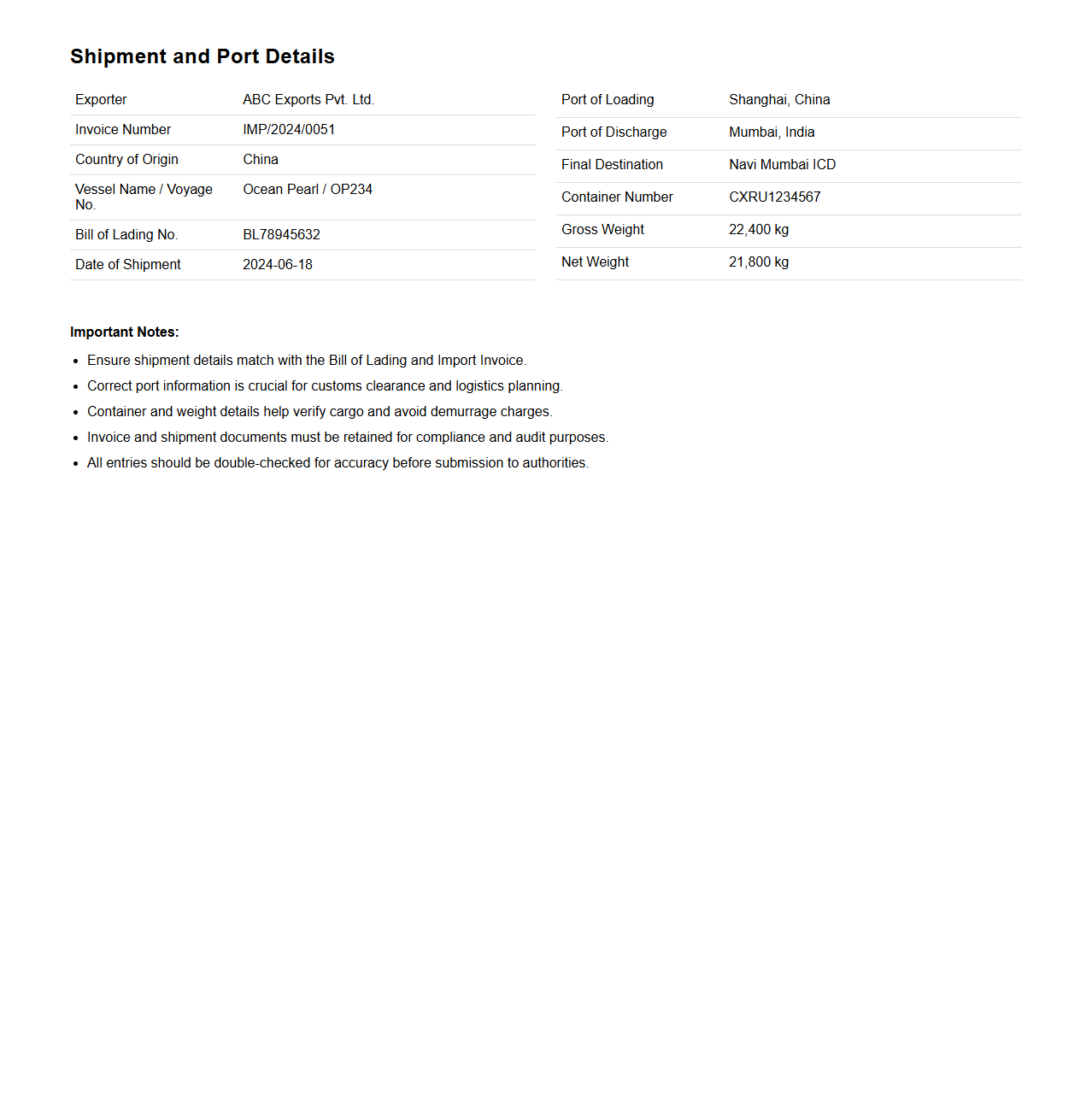
Shipment and Port Details Section in an Import Purchase Invoice document provides crucial information about the transportation and logistics of imported goods, including shipment dates, vessel names, container numbers, and port of loading and discharge. This section ensures accurate tracking and verification of cargo movement, compliance with customs regulations, and facilitates smooth clearance procedures. Precise shipment and port details are essential for reconciling invoices with shipping documents and avoiding delays in delivery.
Authorized Signatory Format for Import Purchase Invoices
The
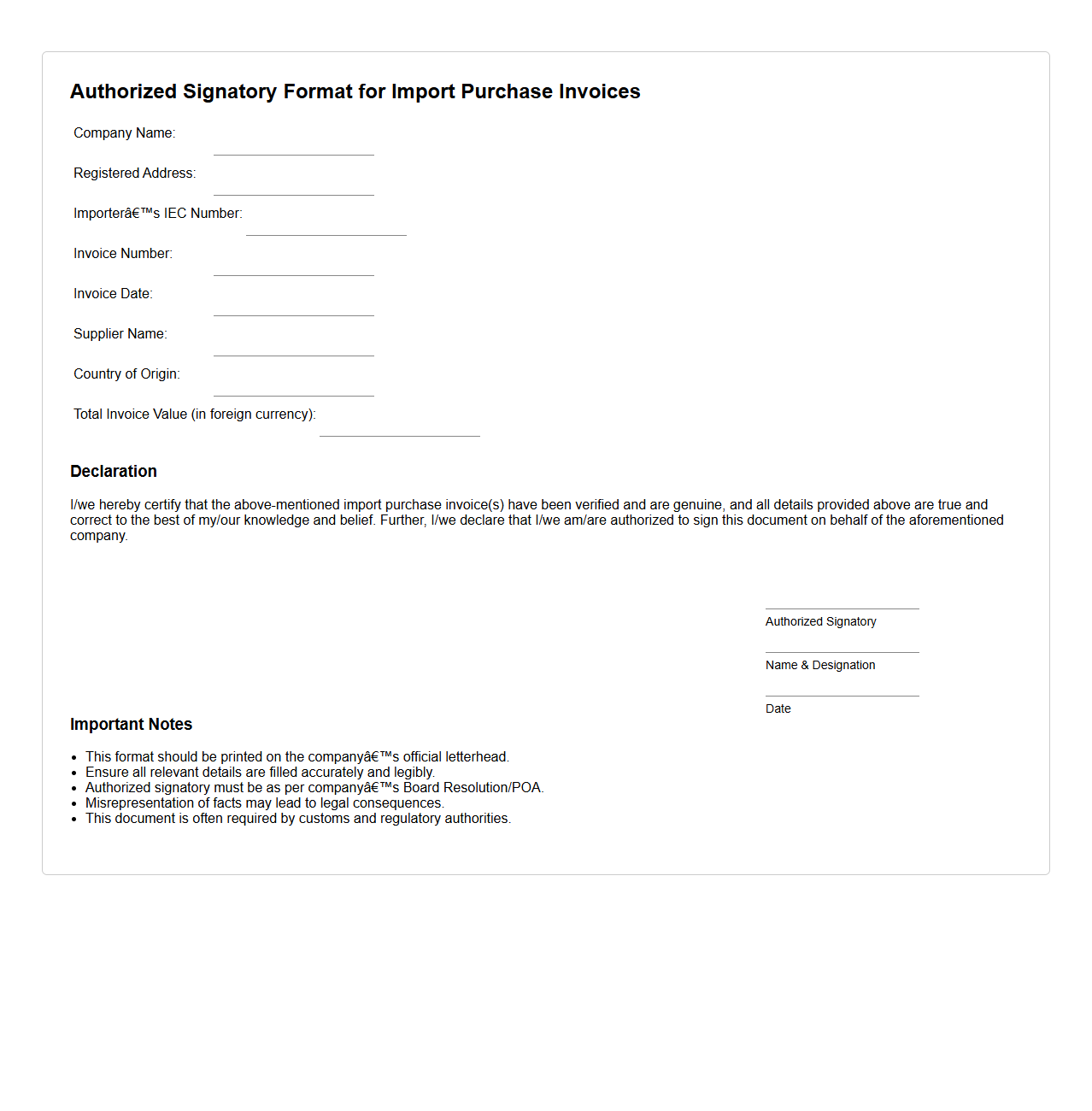
Authorized Signatory Format for Import Purchase Invoices is a standardized template ensuring proper authorization and validation of purchase details from international suppliers. This format includes essential elements such as the signatory's name, designation, company seal, and signature, confirming the authenticity and approval of the imported goods transaction. Accurate use of this format helps maintain compliance with customs regulations and facilitates smooth import documentation processing.
Mandatory Fields in Import Purchase Invoices
According to international trade regulations, an import purchase invoice must include the seller's and buyer's names and addresses. It should clearly state the description and quantity of the goods being imported. Additionally, the invoice must specify the purchase price and the terms of payment.
Documenting Currency Conversion on Import Invoices
The invoice must indicate the currency used for the transaction along with the exchange rate applied at the time of sale. Clear documentation of currency conversion ensures compliance with customs and financial regulations. It is essential to include the converted amount in the buyer's local currency for accurate financial reporting.
Incoterms to Reference on Import Transaction Invoices
Import purchase invoices should reference specific Incoterms such as FOB, CIF, or DDP to clarify delivery terms. These terms define the responsibilities and risk transfers between buyer and seller during shipment. Including Incoterms helps avoid misunderstandings and supports customs clearance processes.
Additional Documentation for Customs Clearance
Invoices must be accompanied by vital documents such as the bill of lading, packing list, and certificate of origin. These papers verify the shipment details and facilitate import customs clearance efficiently. Providing accurate supporting documentation reduces delays and penalties.
Presentation of GST or VAT on Import Invoices
The import purchase invoice must separately display the GST or VAT amount applicable to the transaction. It should include the tax registration number and clearly specify whether the tax is included or excluded from the total price. Proper tax presentation ensures compliance with cross-border taxation laws and smooth clearance.