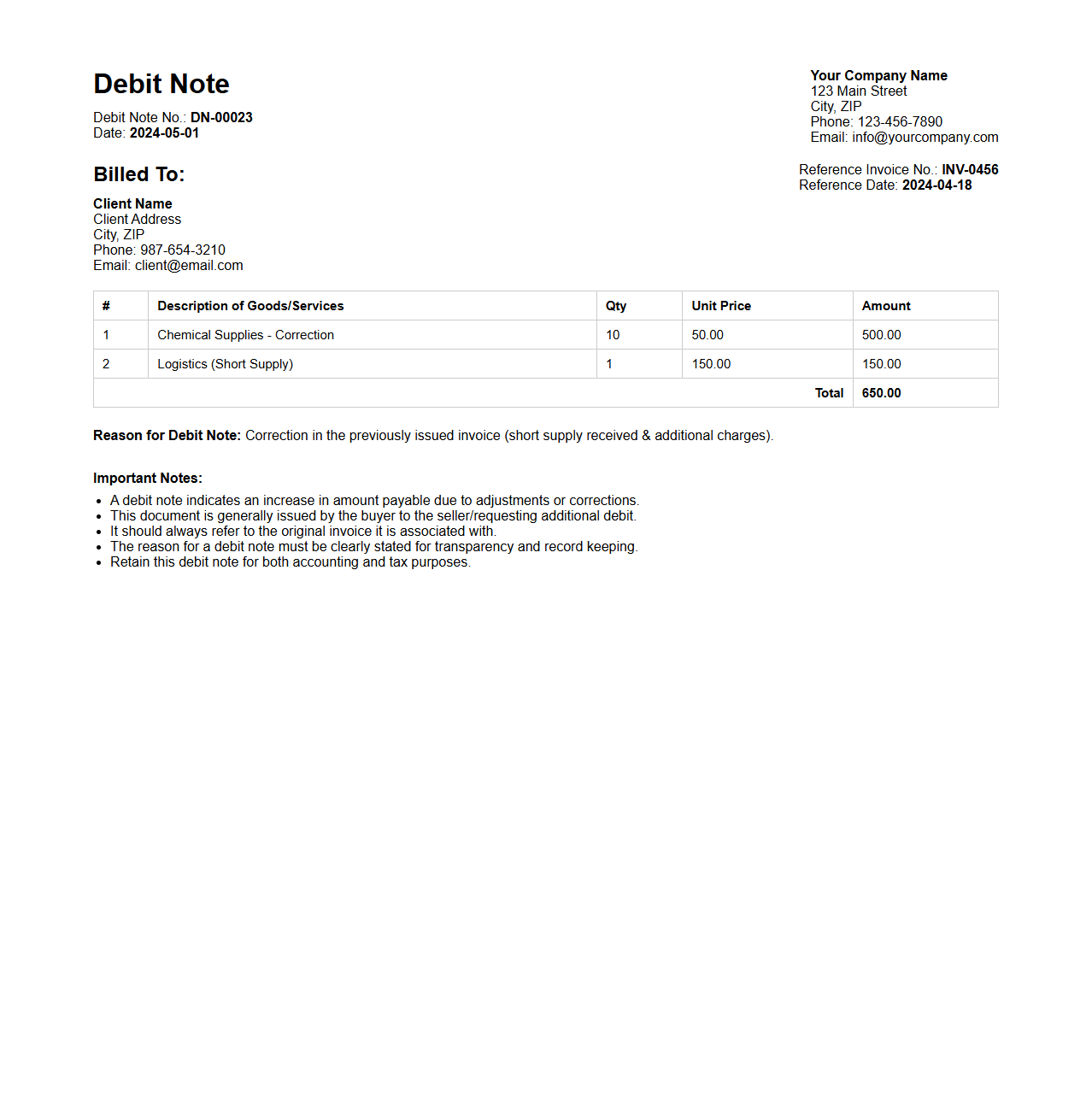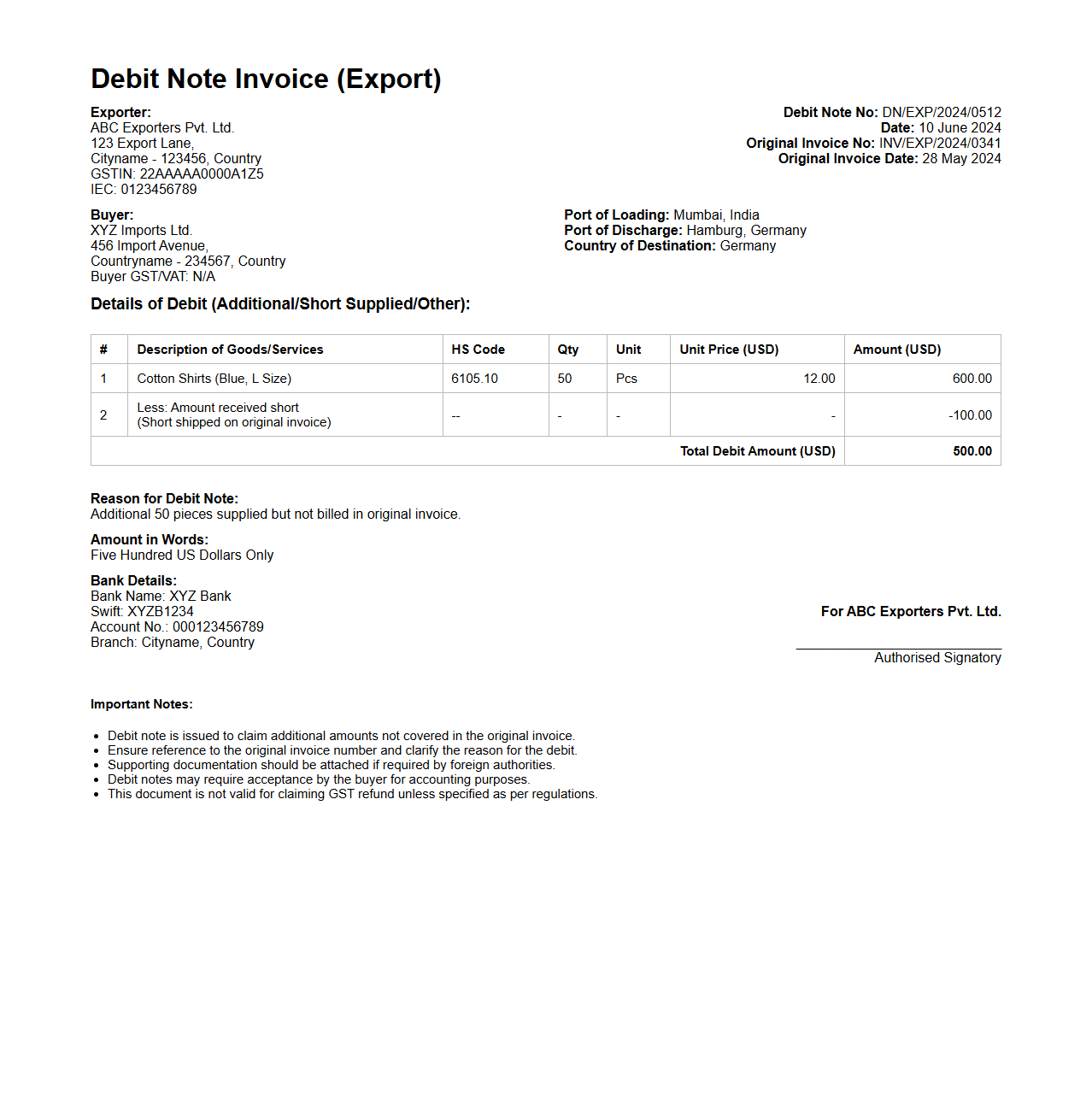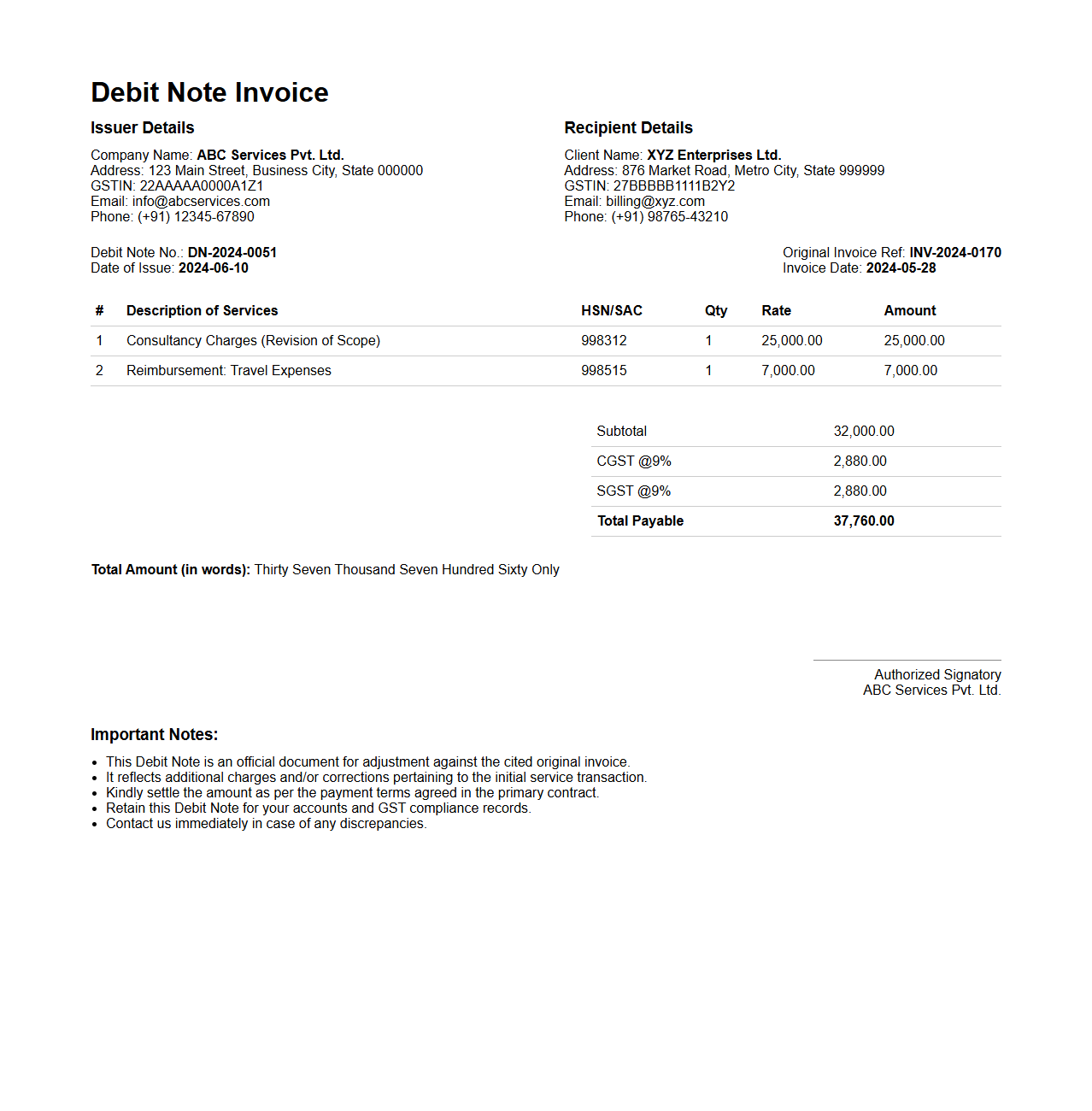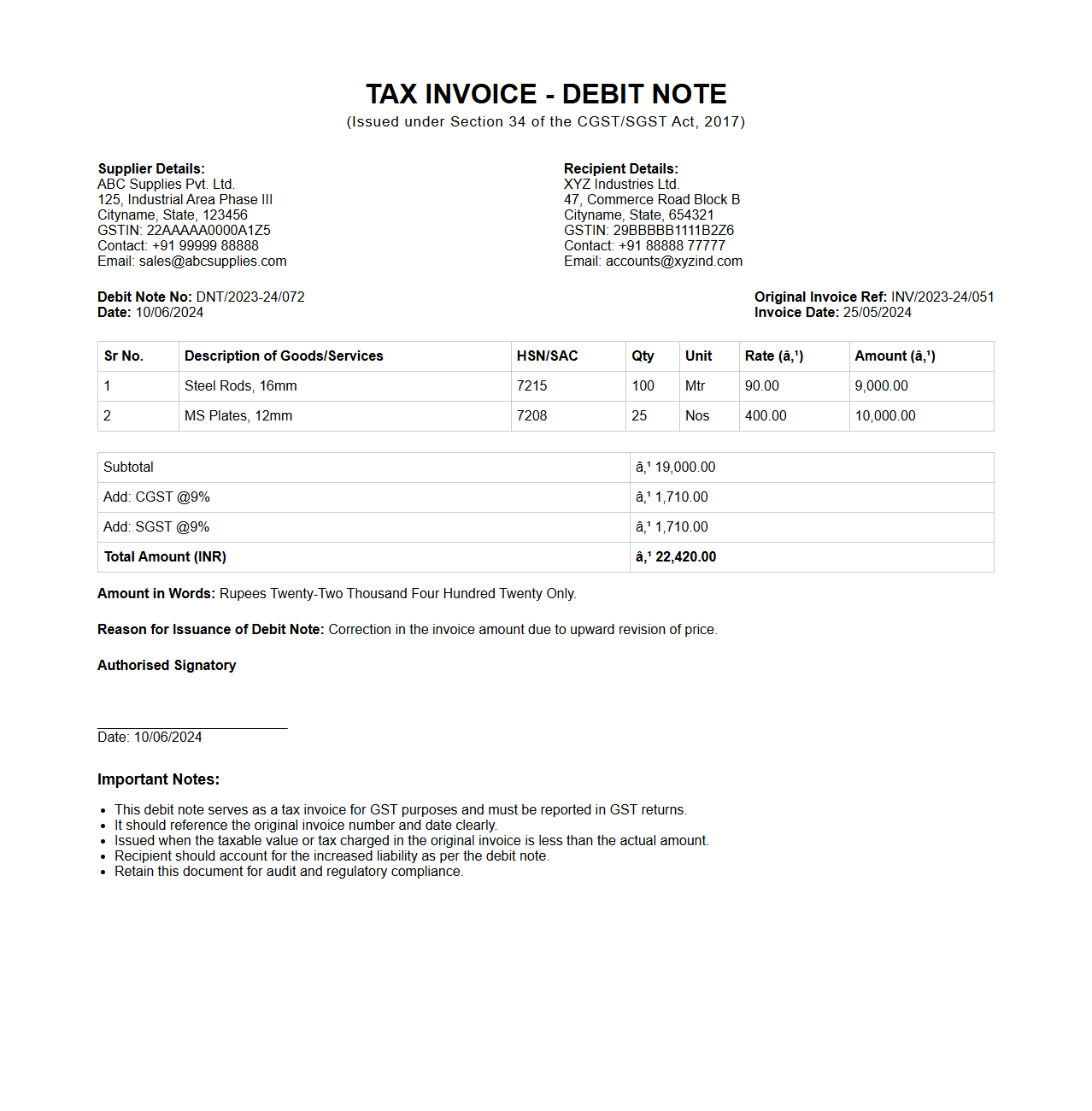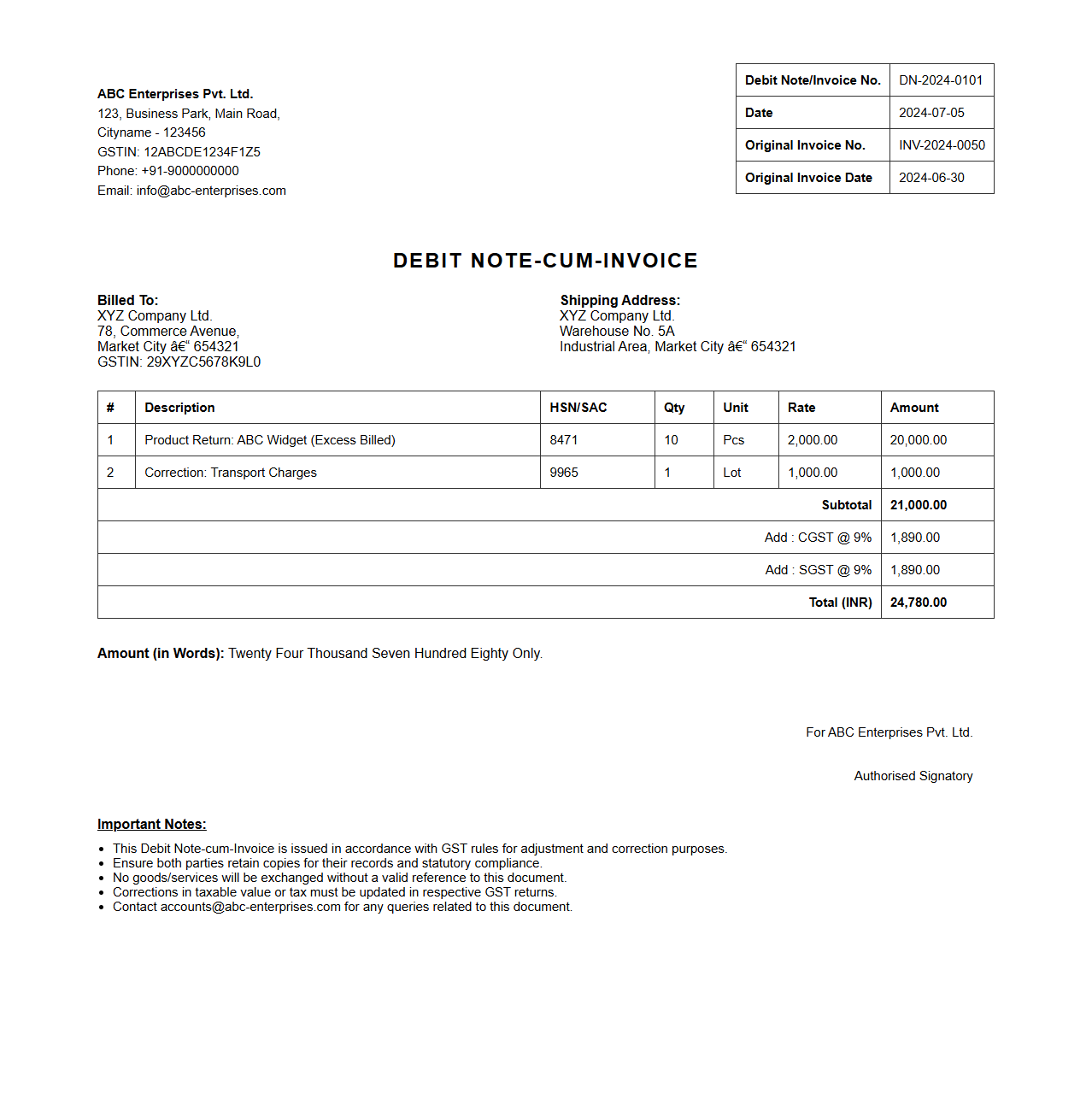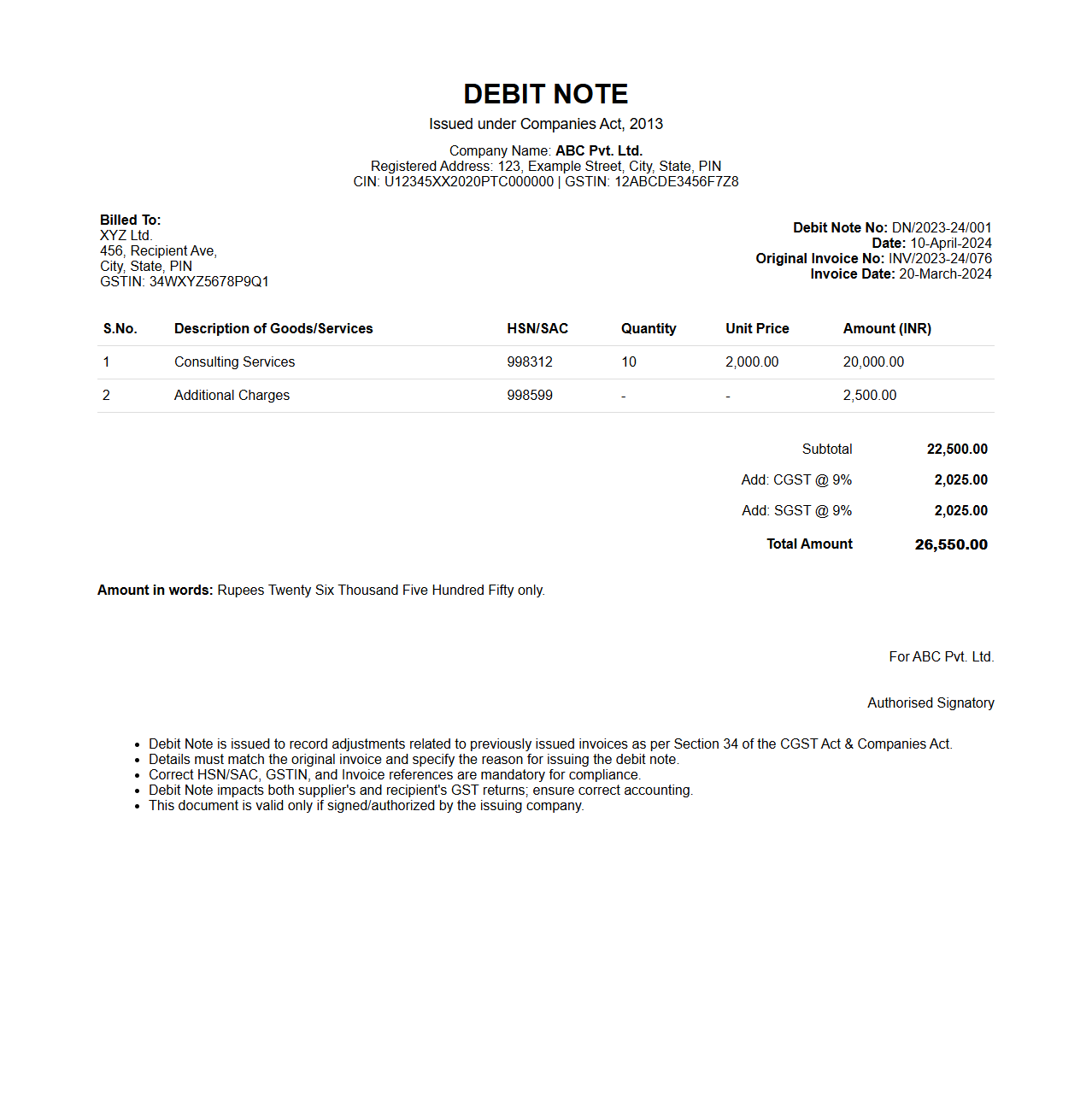
The Format of Invoice for Debit Note typically includes the seller's and buyer's details, invoice number, date, and a clear description of the debit adjustment. It also specifies the amount debited, reasons for the debit, and references any related original invoices. Properly structuring this format ensures accurate financial records and effective communication between parties.
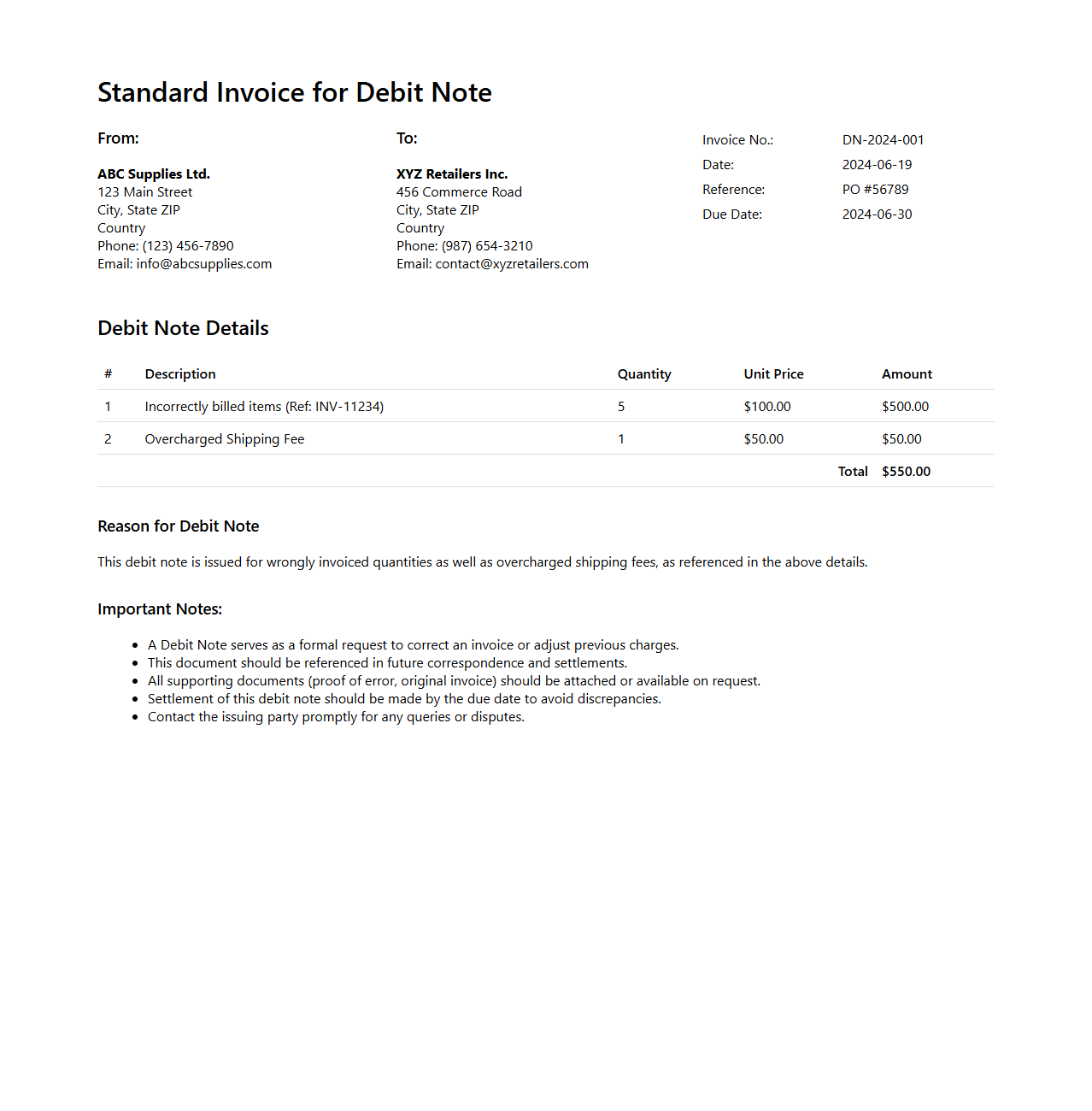
Standard Invoice for Debit Note
A
Standard Invoice for Debit Note is a financial document issued to rectify errors or adjust amounts in previously issued invoices, typically reflecting additional charges owed by the buyer. It details the reasons for the debit, the corrected amount, and references the original invoice to maintain clear accounting records. This document ensures transparency and accuracy in business transactions by formally communicating the debit adjustments between parties.
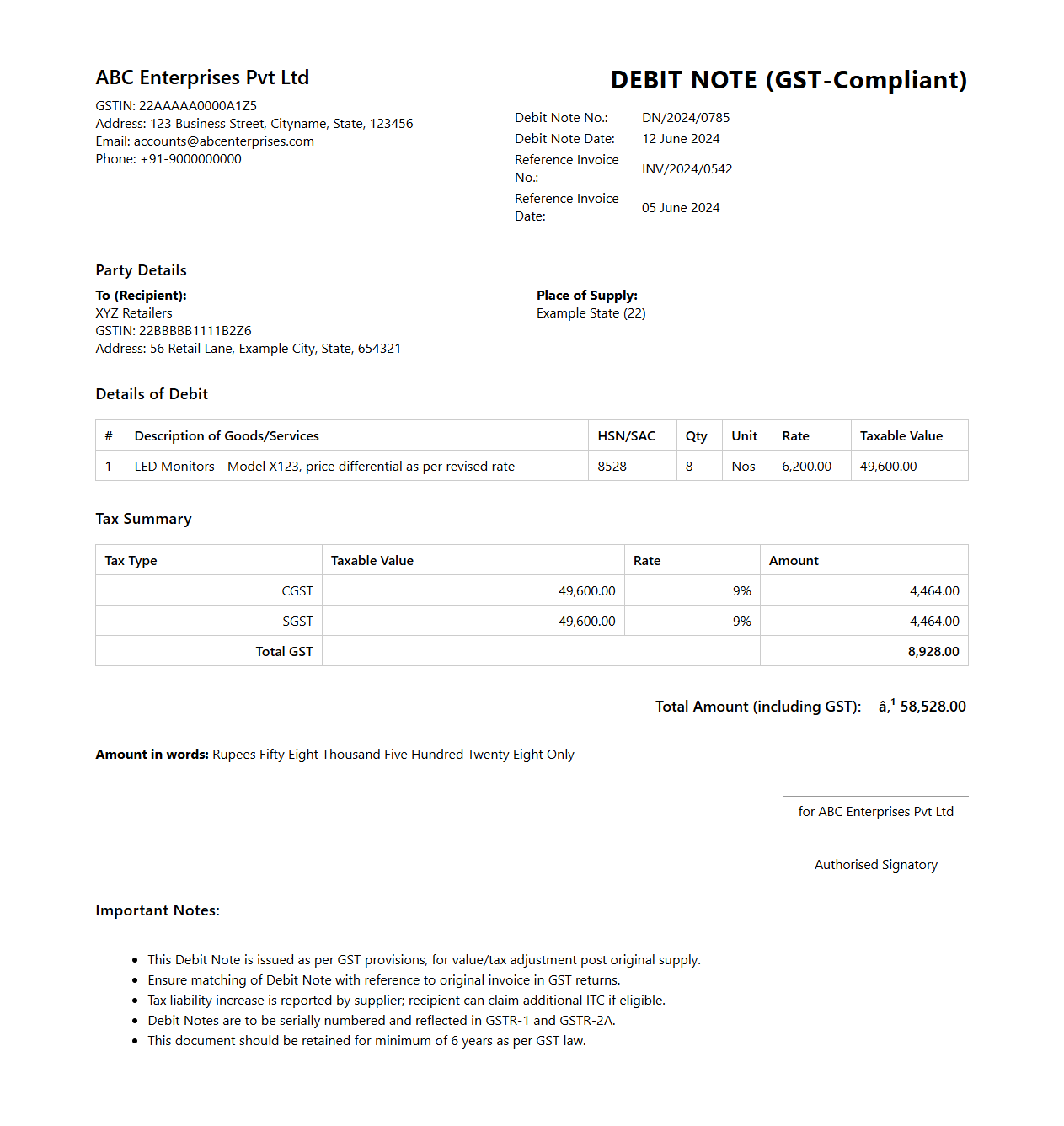
GST-Compliant Debit Note Invoice
A
GST-Compliant Debit Note Invoice is a financial document issued by a seller to a buyer to record an increase in the amount payable under an original invoice, reflecting corrections or additional charges. It contains essential details such as GSTIN of both parties, invoice number, date, HSN/SAC codes, taxable value, and applicable GST rates, ensuring compliance with Goods and Services Tax regulations. This document is crucial for maintaining accurate tax records and facilitating seamless input tax credit claims.
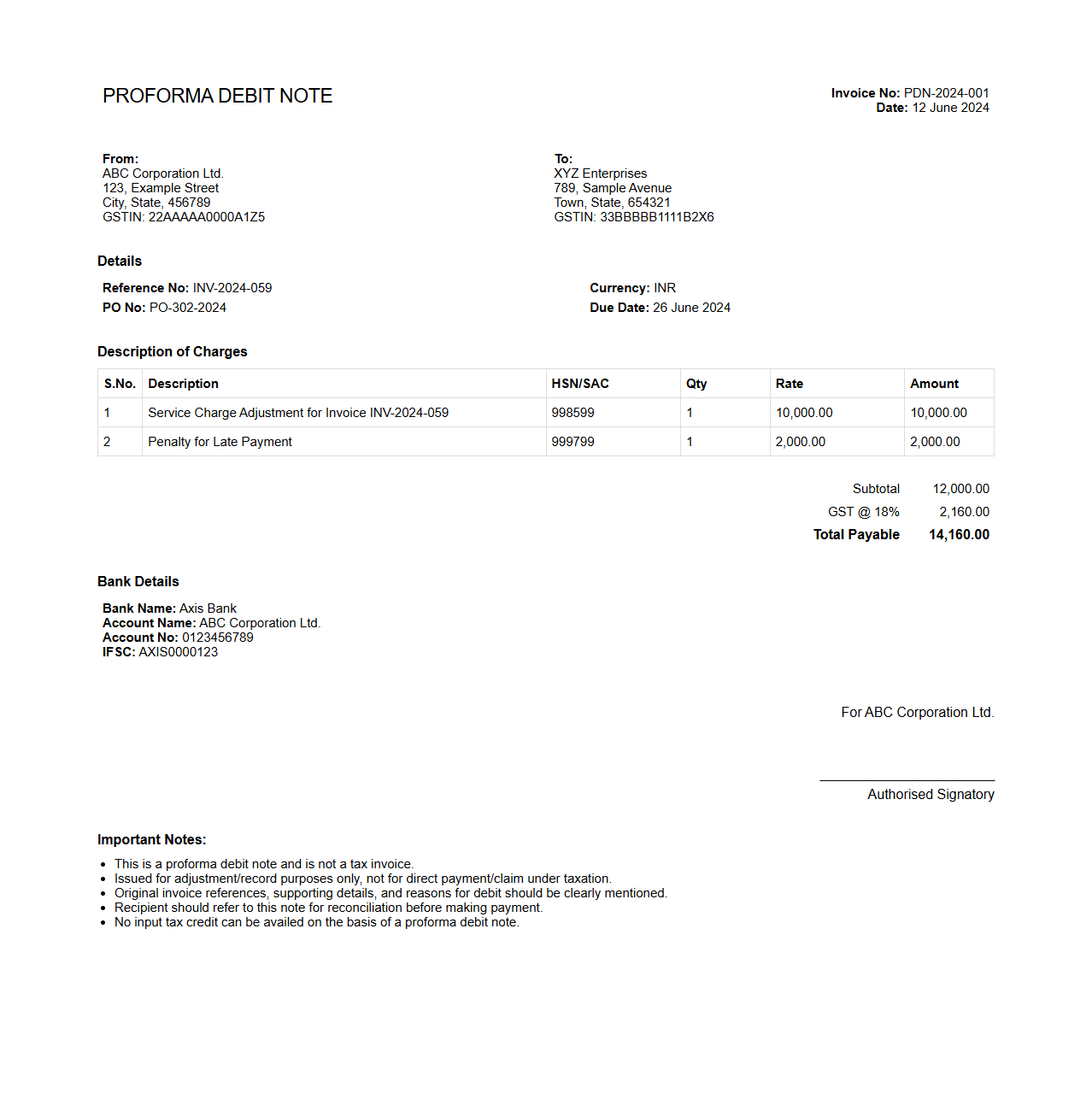
Proforma Debit Note Invoice Format
A
Proforma Debit Note Invoice Format document serves as a preliminary invoice issued by a seller to notify the buyer of an upcoming debit adjustment, often related to additional charges or corrections in previous invoices. It outlines critical transaction details such as item descriptions, quantities, adjusted prices, and total amounts owed, ensuring transparency in financial communications. This format helps both parties maintain accurate records and facilitates smoother accounts reconciliation processes.
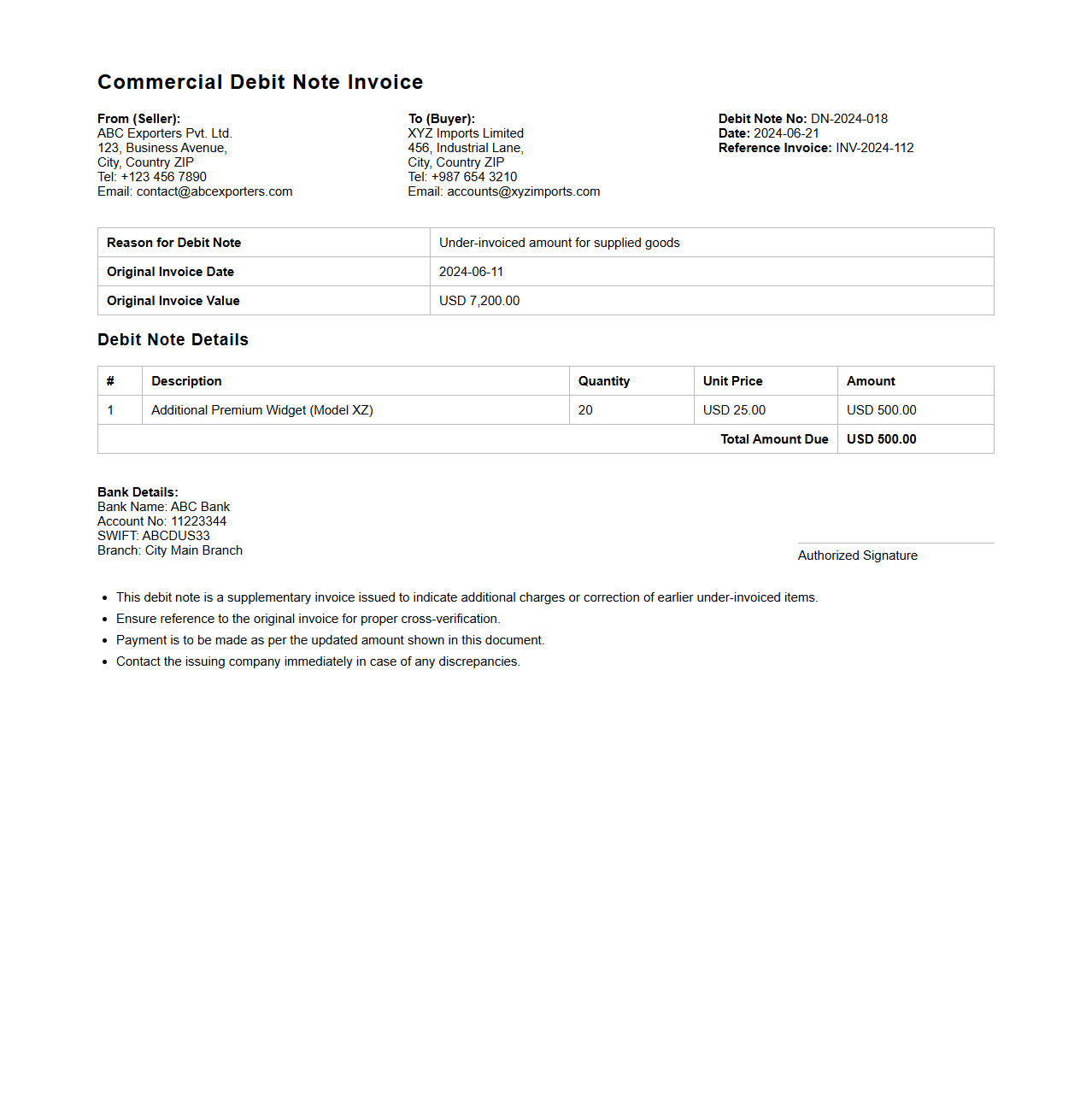
Commercial Debit Note Invoice Template
A
Commercial Debit Note Invoice Template is a structured document used by businesses to request additional payment from a buyer due to undercharged amounts, errors, or adjustments in previous invoices. It includes essential details such as the original invoice number, reason for debit, amount due, and payment terms, ensuring clarity and legal compliance. Utilizing this template helps maintain accurate financial records and facilitates transparent communication between trading partners.
Simple Debit Note Invoice Format
A
Simple Debit Note Invoice Format document is a standardized template used by businesses to formally notify customers of additional charges or adjustments to a previously issued invoice. It typically includes essential details such as the buyer and seller information, invoice number, date, description of the debit, amount due, and reason for the debit note. This format ensures clear communication and proper record-keeping for financial transactions involving corrections or extra costs.
Debit Note Invoice Format for Exports
A
Debit Note Invoice Format for Exports is a formal document issued by an exporter to the buyer, indicating an additional amount payable due to underbilling or adjustments in the original invoice. This document typically includes details such as the exporter's name and address, buyer's information, invoice number, date, description of goods or services, quantity, unit price, total amount, and reason for the debit adjustment. It serves as a crucial record for accounting and customs purposes, ensuring transparency and accuracy in international trade transactions.
Debit Note Invoice Format for Services
A
Debit Note Invoice Format for Services is a structured document used by service providers to notify clients of additional charges or adjustments to previously issued invoices. It outlines the reason for debit, details of the service, quantity, rate, and the total amount payable, ensuring transparency and accurate financial records. This format helps maintain clear communication between businesses and clients regarding billing discrepancies or extra service costs.
Tax Invoice Format for Debit Note
A
Tax Invoice Format for Debit Note is a standardized document used by businesses to record and communicate additional charges or corrections related to a previously issued invoice. It includes essential details such as the seller's and buyer's information, invoice number, date, description of the goods or services, tax rates, and the revised amount payable. This format ensures compliance with tax regulations and facilitates transparent financial transactions.
Debit Note-cum-Invoice Format
A
Debit Note-cum-Invoice Format is a combined financial document used in commercial transactions to notify a buyer of an additional amount payable due to discrepancies like short shipments, price differences, or service charges. It serves both as a debit note for accounting adjustments and as an invoice for billing purposes, streamlining the documentation process. This format helps in maintaining accurate accounts receivable records and ensures transparency in reconciliation between trading partners.
Debit Note Invoice Format under Companies Act
A
Debit Note Invoice Format under the Companies Act is a standardized document used by companies to notify their customers or vendors about an increase in the amount payable due to reasons such as underbilling, price adjustments, or corrections in previous invoices. This document includes essential details like the debit note number, date, company name, customer details, description of goods or services, quantity, rate, and the total amount to be debited. It serves as a crucial financial and accounting record, ensuring compliance with legal and regulatory requirements under the Companies Act.
What key elements must be included in the format of an invoice for a debit note?
The format of a debit note invoice must include essential elements such as the date of issue, unique invoice number, and reference to the original invoice. It should clearly mention the reason for issuing the debit note along with the description of goods or services. Additionally, the debit amount, applicable taxes, and total payable must be prominently displayed.
How should GST details be structured in a debit note invoice format?
The GST details in a debit note invoice must include the GSTIN of the supplier and recipient, along with the tax rate applied. Separate fields for CGST, SGST, and IGST should be provided based on the transaction nature. The debit note should also mention the taxable value and the tax amount clearly to comply with GST regulations.
Are there specific serial number requirements for debit note invoices?
Serial numbers in debit note invoices must be unique, consecutive, and follow the numbering pattern prescribed under tax laws. This ensures proper tracking and audit compliance. The series should not duplicate any existing invoice numbers and must be clearly visible on the document.
What legal references should be cited in a debit note invoice format?
Legal references such as the relevant sections of the GST Act and specific rules governing debit notes should be cited. This includes mentioning provisions related to amendment of invoices and adjustments in supply. Proper legal citations enhance the authenticity and compliance of the debit note.
How should buyer and seller details be presented in a debit note invoice?
The buyer and seller details must be clearly presented with full legal names, addresses, and GSTINs. Contact information such as phone number and email can also be included for clarity. Proper identification of both parties ensures smooth transaction verification and record keeping.