Executive Summary of Internal Investigation Report for Compliance Violations
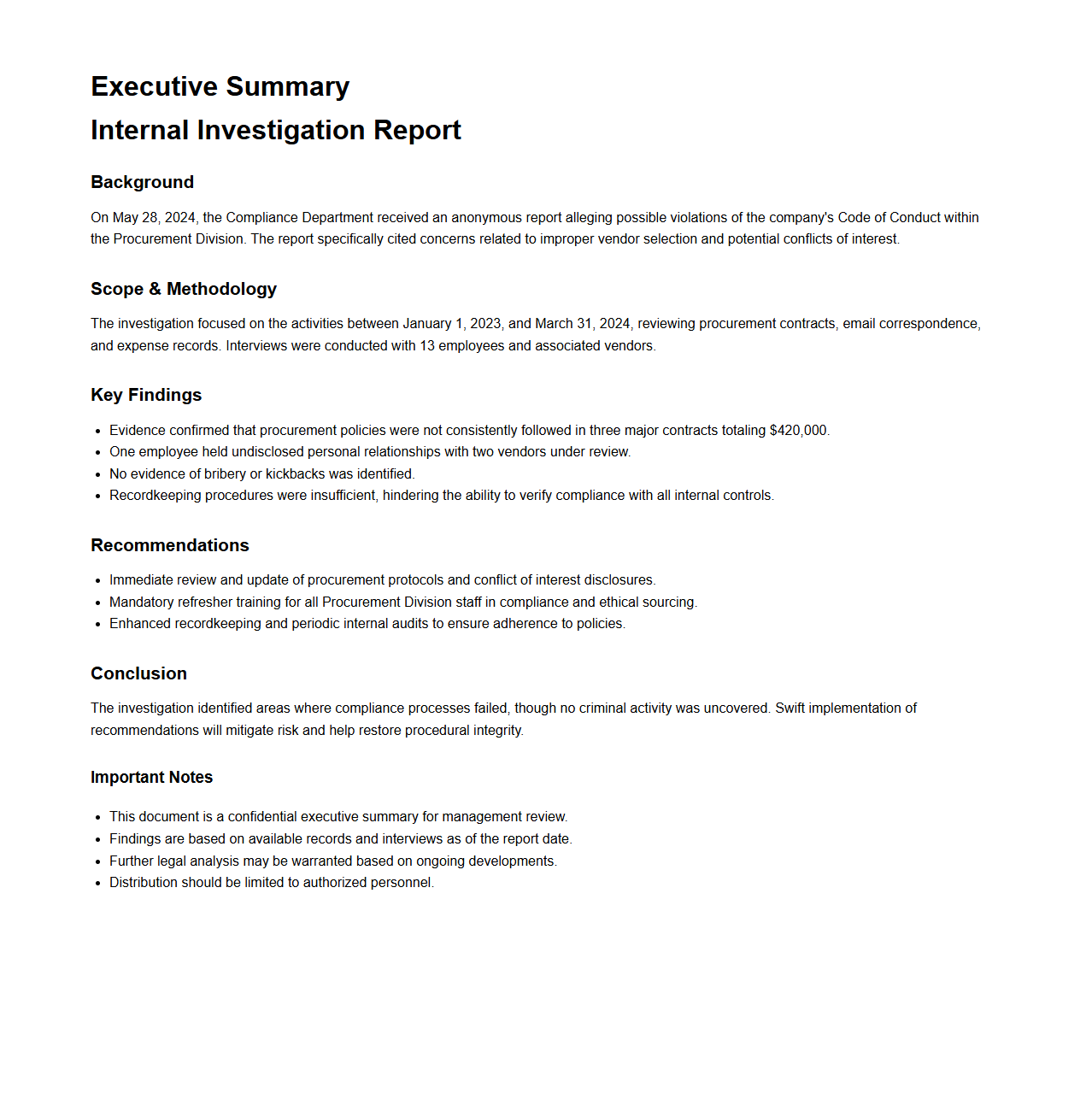
The
Executive Summary of an Internal Investigation Report for Compliance Violations provides a concise overview of the key findings, including identified breaches of regulatory standards and company policies. It summarizes the scope of the investigation, involved parties, and the impact on organizational compliance. This section highlights critical recommendations for corrective actions and preventive measures to mitigate future risks.
Scope and Objectives of Compliance Violation Investigation
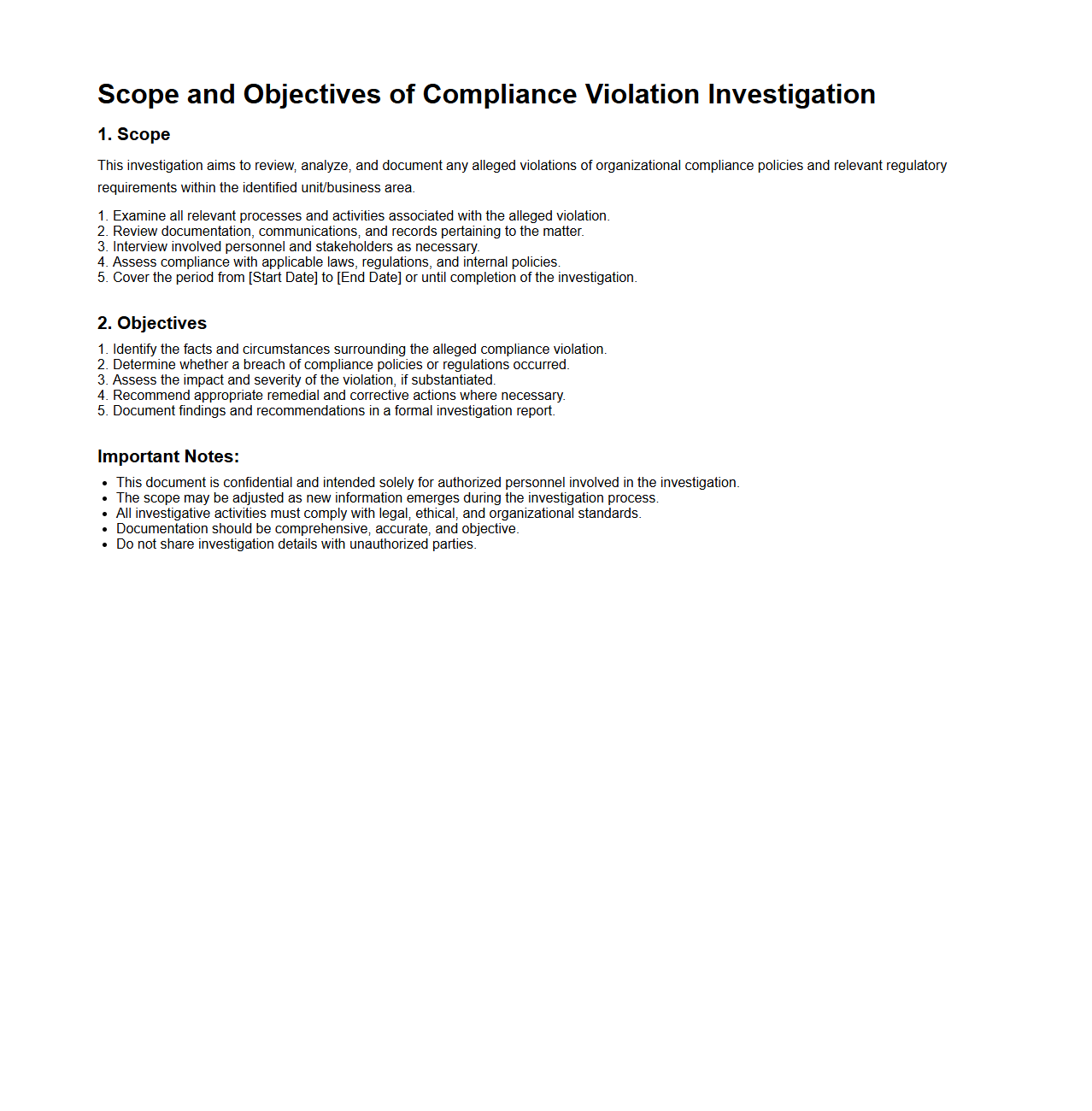
The
Scope and Objectives of Compliance Violation Investigation document defines the boundaries and goals of an inquiry into potential breaches of regulatory or internal policies. It outlines the specific areas, departments, or processes under review, detailing the methods and criteria for identifying and assessing violations. This document ensures that investigations are focused, consistent, and aimed at uncovering facts to uphold legal and ethical standards.
Methodology and Procedures in Compliance Violation Investigation
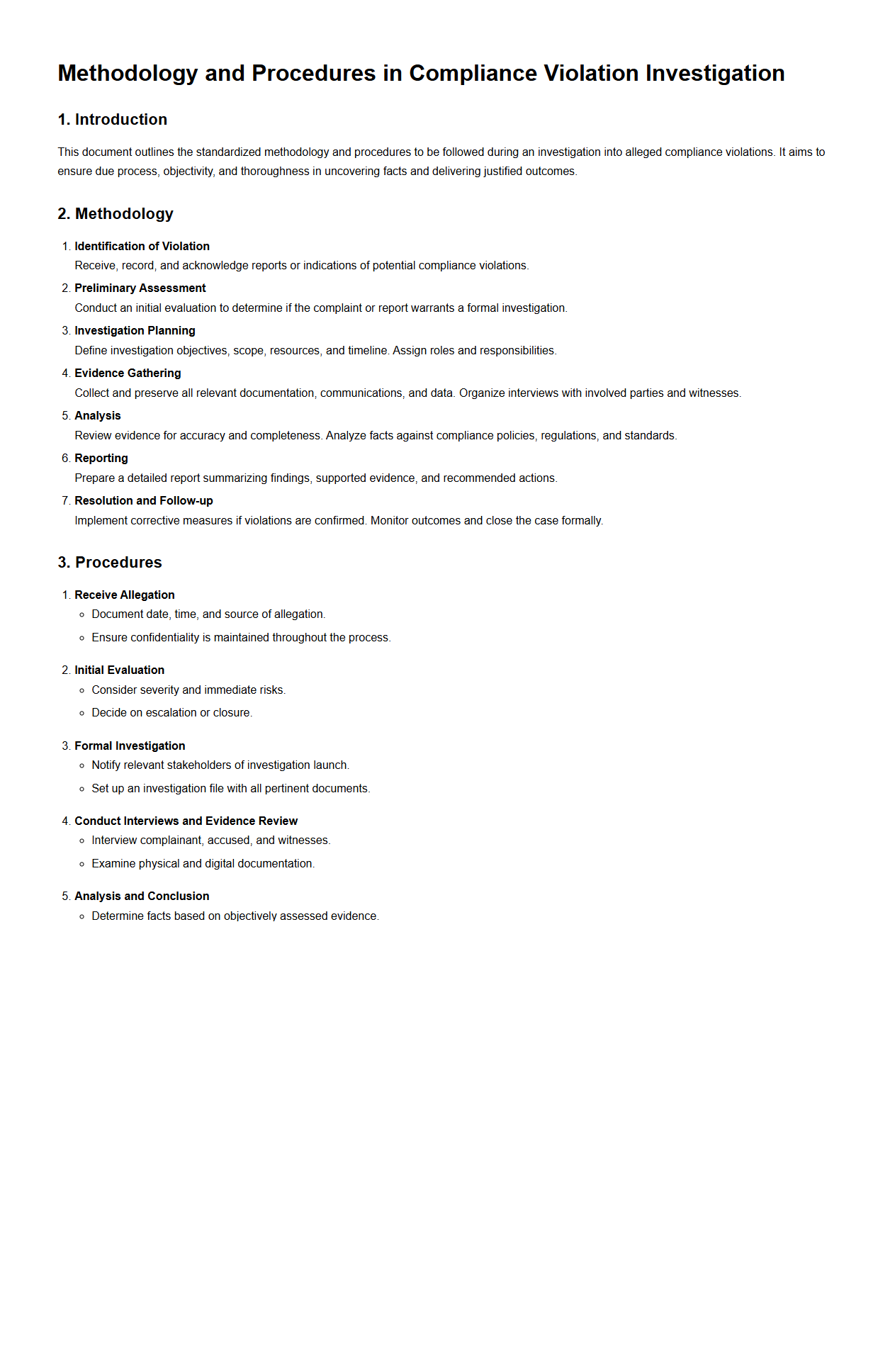
Methodology and Procedures in a
Compliance Violation Investigation document outline the systematic approach and specific steps taken to identify, analyze, and resolve instances of non-compliance within an organization. This section details the investigative techniques, data collection methods, and protocols followed to ensure thorough, unbiased, and legally sound examination. Clear documentation of these procedures supports consistency, accountability, and adherence to regulatory standards throughout the investigation process.
Factual Background of Compliance Violation Incident
The
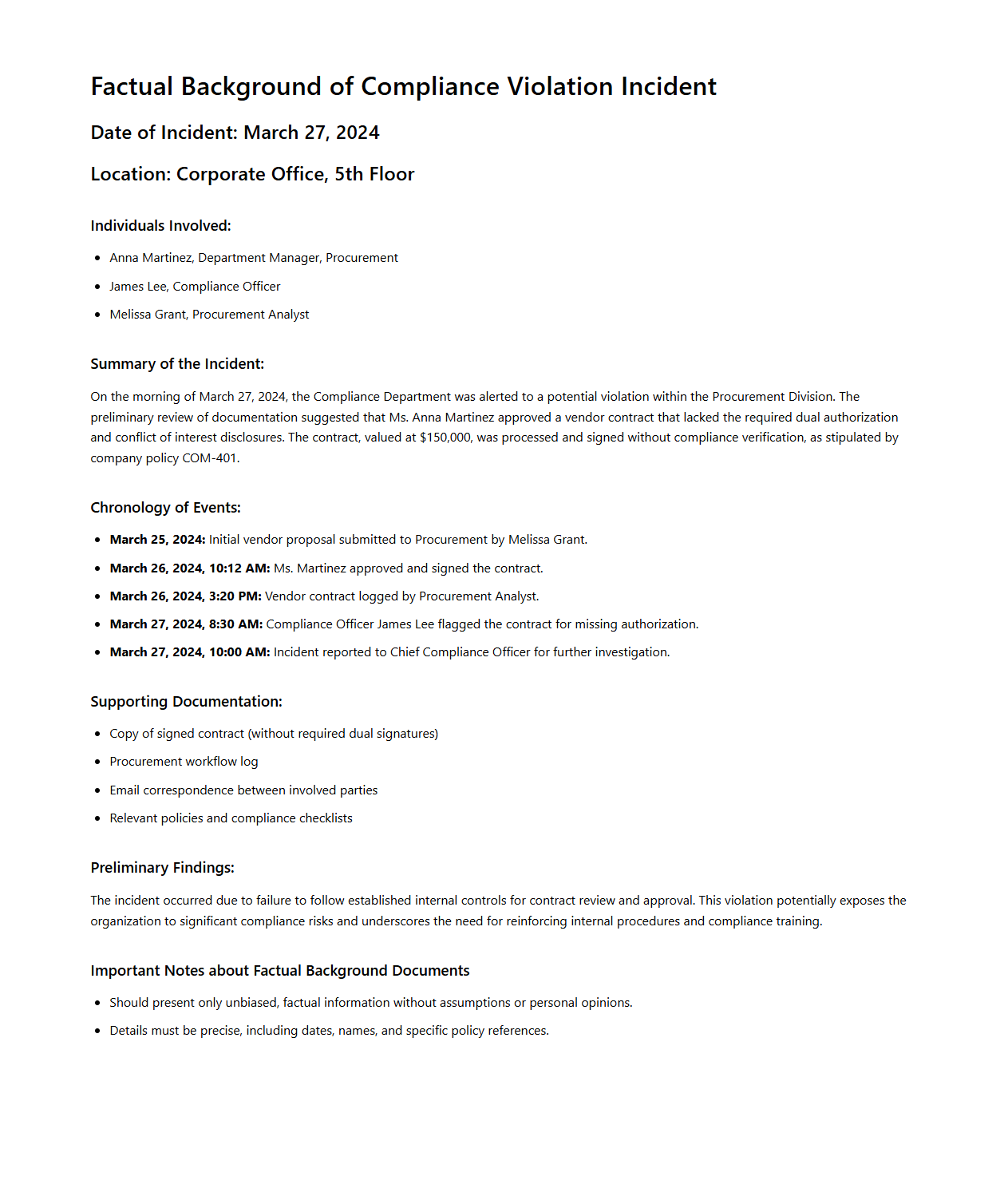
Factual Background of Compliance Violation Incident document provides a detailed and objective account of the events leading to and surrounding a compliance breach. It includes key information such as dates, involved parties, actions taken, and evidence collected to establish a clear understanding of the incident. This document serves as a critical reference for investigating, resolving, and preventing future compliance violations.
Key Findings and Evidence in Compliance Investigation Report
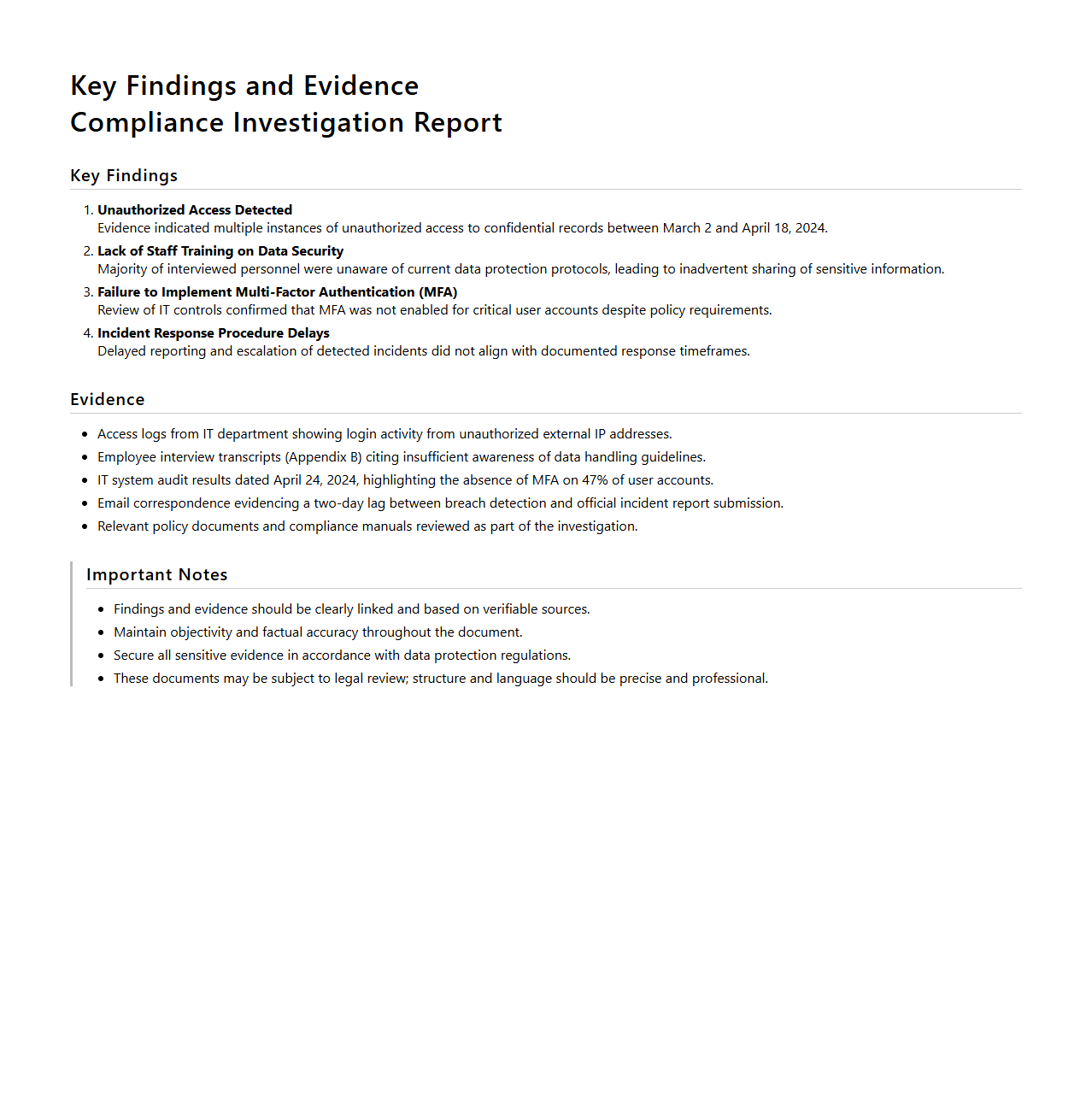
Key Findings and Evidence in a Compliance Investigation Report document present the core results derived from analyzing policies, procedures, and actions against regulatory standards. This section highlights significant instances of
non-compliance, substantiated by documented proof such as emails, transaction records, and audit trails. Clear presentation of these findings ensures transparency, supports corrective actions, and strengthens the overall integrity of the compliance review process.
Analysis of Compliance Violations and Policy Breaches
The
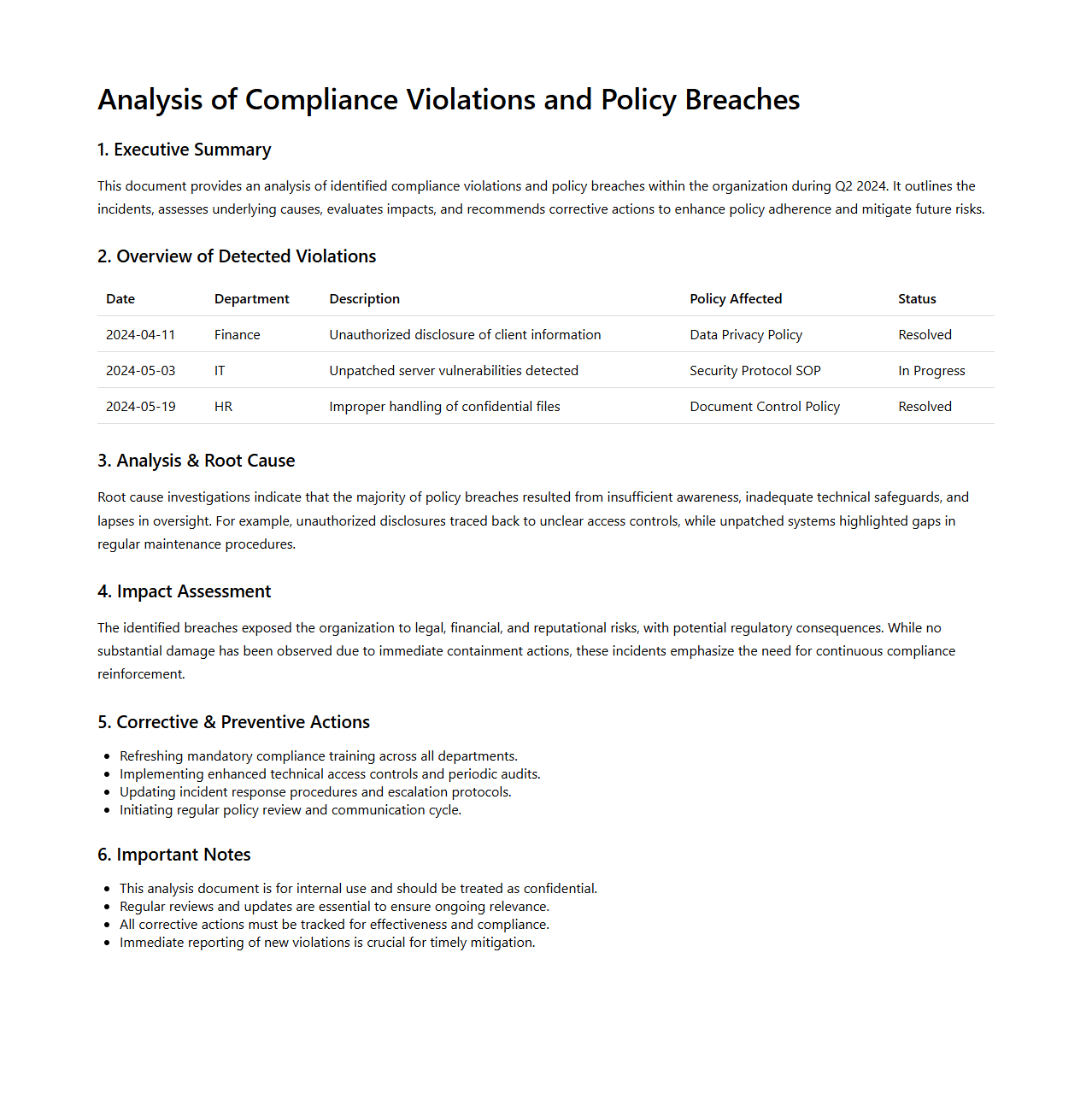
Analysis of Compliance Violations and Policy Breaches document systematically identifies and evaluates instances where organizational policies or regulatory requirements have been violated. It provides detailed insights into the nature, frequency, and impact of these breaches, enabling risk management teams to implement corrective actions and strengthen compliance frameworks. This documentation supports audit processes, enhances regulatory reporting, and promotes a culture of accountability across the enterprise.
Interviews and Witness Statements Documentation
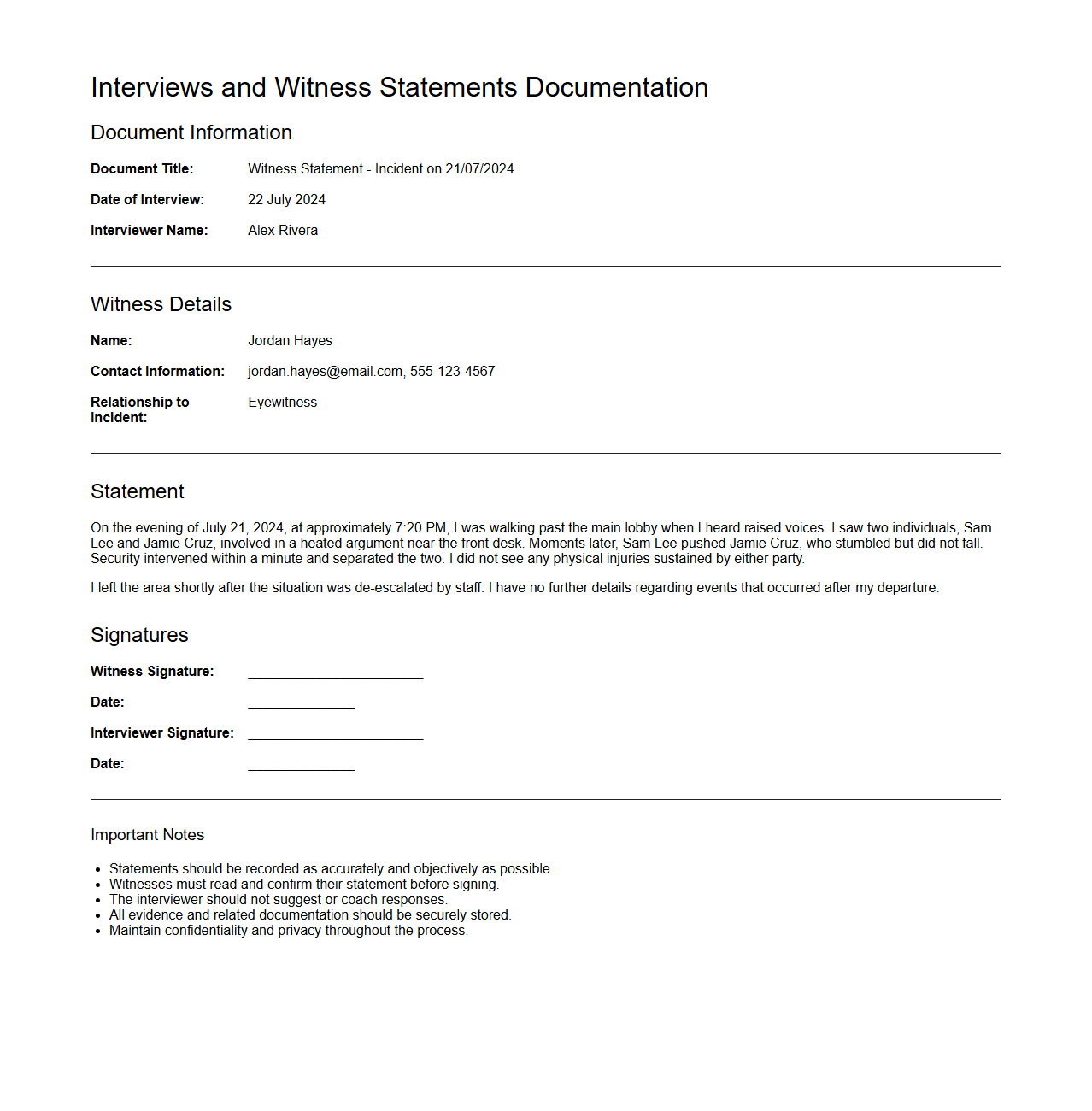
Interviews and Witness Statements Documentation is a crucial component in legal, investigative, and compliance processes, capturing firsthand accounts and detailed observations from individuals involved or present during an event. This document provides a structured and accurate record, ensuring that
witness statements and interview insights are preserved for analysis, cross-referencing, and potential use in court or internal reviews. Proper documentation enhances the integrity and reliability of the information, supporting decision-making and evidentiary standards.
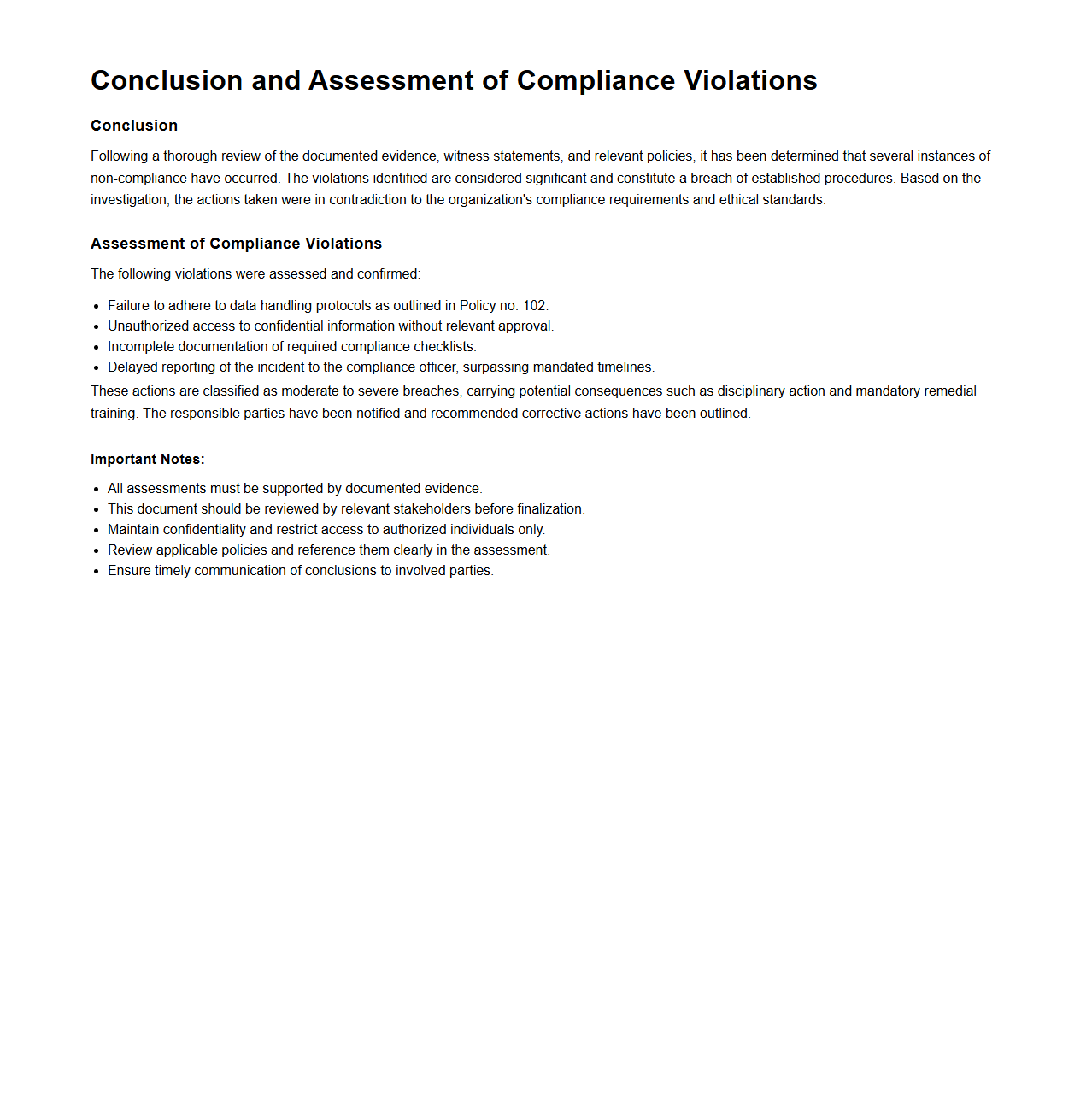
Conclusion and Assessment of Compliance Violations
A
Conclusion and Assessment of Compliance Violations document evaluates identified breaches of regulatory standards within an organization, detailing the nature and extent of each violation. It summarizes findings from audits or investigations, providing a clear determination of whether compliance requirements have been met. This document serves as a crucial reference for corrective actions, risk mitigation, and ensuring adherence to legal and industry regulations.
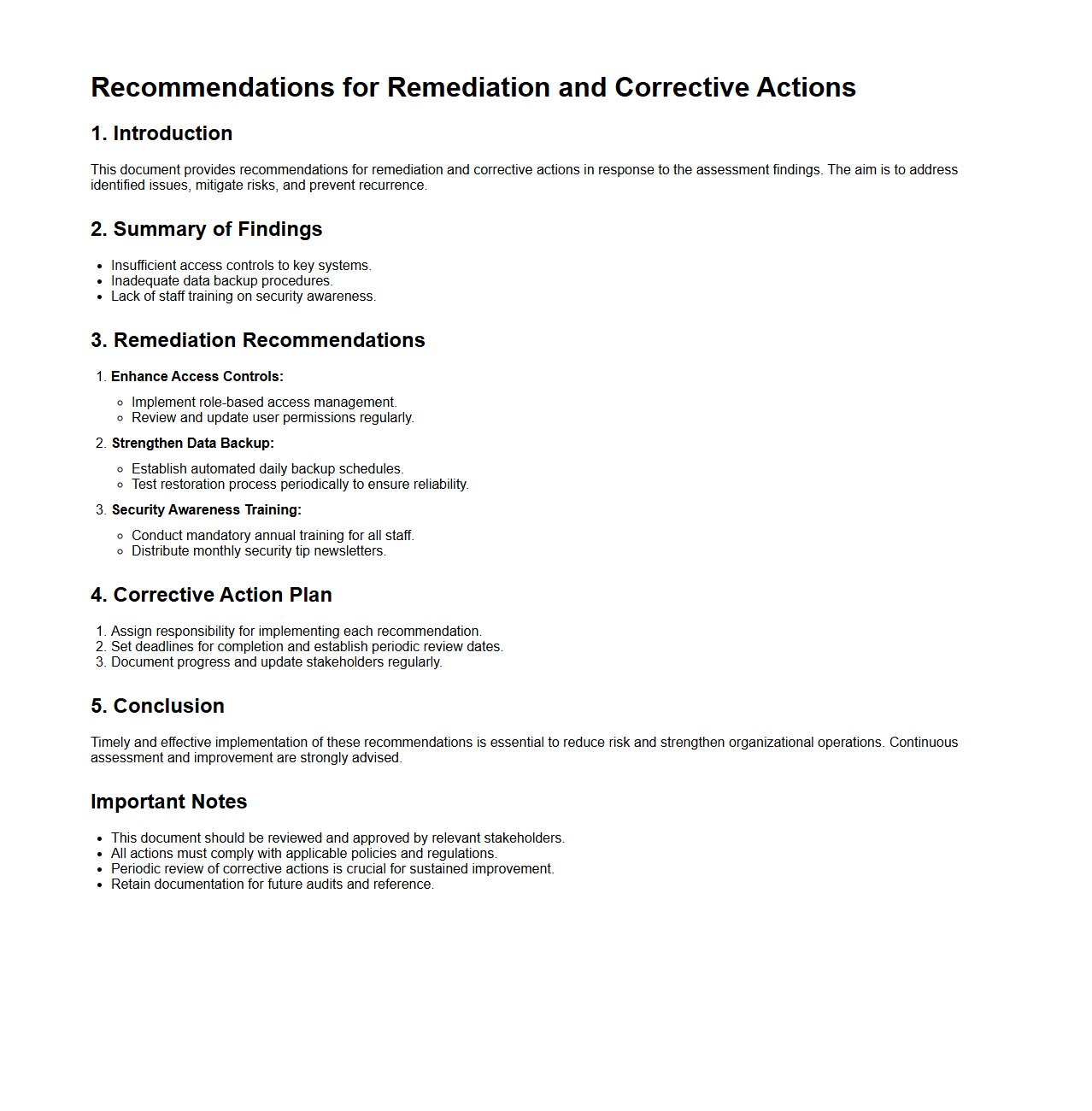
Recommendations for Remediation and Corrective Actions
The
Recommendations for Remediation and Corrective Actions document outlines specific steps to address identified issues or vulnerabilities within an organization's processes, systems, or infrastructure. It provides targeted strategies to mitigate risks, enhance security, and ensure compliance with relevant standards or regulations. This document serves as a practical guide for implementing effective corrective measures to prevent recurrence and improve overall operational resilience.
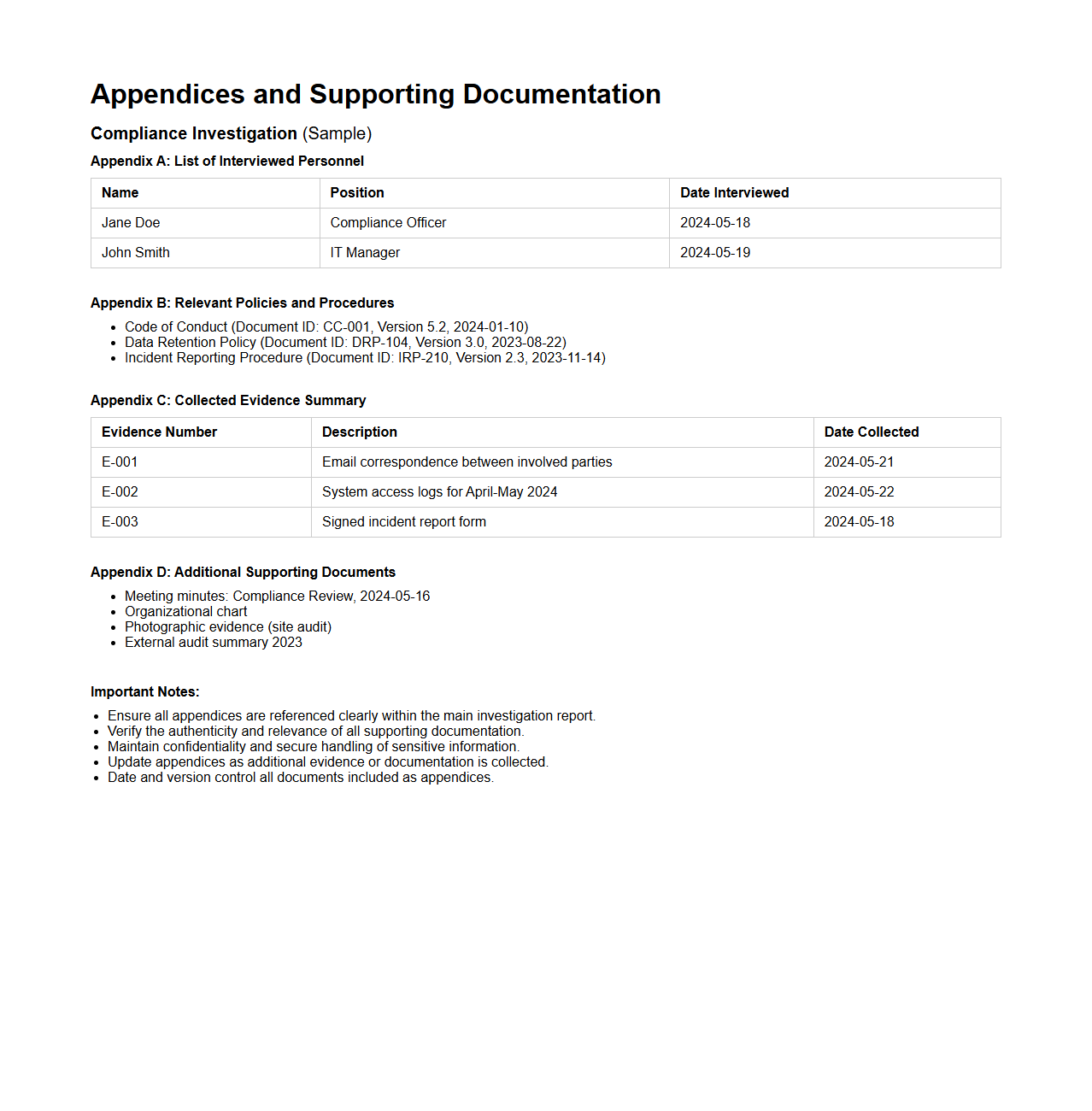
Appendices and Supporting Documentation for Compliance Investigation
Appendices and Supporting Documentation for Compliance Investigation provide essential evidence and detailed information that reinforce the primary findings of the investigation. These documents include emails, reports, audit trails, and regulatory references that validate the compliance review process. The inclusion of
comprehensive supporting documentation ensures transparency, accuracy, and facilitates regulatory audits or legal scrutiny.
What is the standard structure and required sections of an internal investigation report for compliance violations?
The standard structure of an internal investigation report typically includes an introduction, scope of investigation, methodology, findings, conclusions, and recommendations. Each section serves to provide a clear and logical flow of information that facilitates understanding and decision-making. A well-organized report ensures all relevant aspects of the compliance violation are addressed comprehensively.
Which details about the alleged compliance violation must be documented in the report?
The report must document key details such as the date and nature of the alleged violation, involved parties, and specific compliance policies breached. It should also include background information that contextualizes the incident within the organization's compliance framework. Accurate and thorough documentation ensures clarity and supports potential legal or corrective actions.
What methods and sources of evidence should be included in the investigation findings section?
The findings section should present evidence gathered through interviews, document reviews, surveillance data, and electronic records analysis. It is critical to include credible sources that corroborate the facts and provide a balanced perspective on the incident. Incorporating diverse and verifiable evidence strengthens the report's validity and reliability.
How should conclusions and recommendations be summarized in the report format?
Conclusions should offer a clear assessment of whether the compliance violation occurred based on the evidence analyzed. Recommendations must be actionable steps aimed at remediation, prevention, and improvement of compliance controls. Summarizing these elements succinctly helps senior management and stakeholders make informed decisions promptly.
What protocols must be followed for report confidentiality and authorized distribution?
The report must adhere to strict confidentiality protocols, limiting access to authorized personnel only to protect sensitive information. It should be stored securely and shared through controlled channels to prevent unauthorized disclosure. Following these protocols ensures integrity, trust, and compliance with legal and organizational privacy standards.