The Format of Anti-Bribery Policy for Global Operations typically includes a clear statement of commitment to ethical practices, definitions of bribery and corruption, and detailed guidelines for compliance. It outlines roles and responsibilities, reporting mechanisms, and procedures for investigation and disciplinary action. The policy is designed to be comprehensive, adaptable to diverse legal environments, and aligned with international anti-bribery standards.
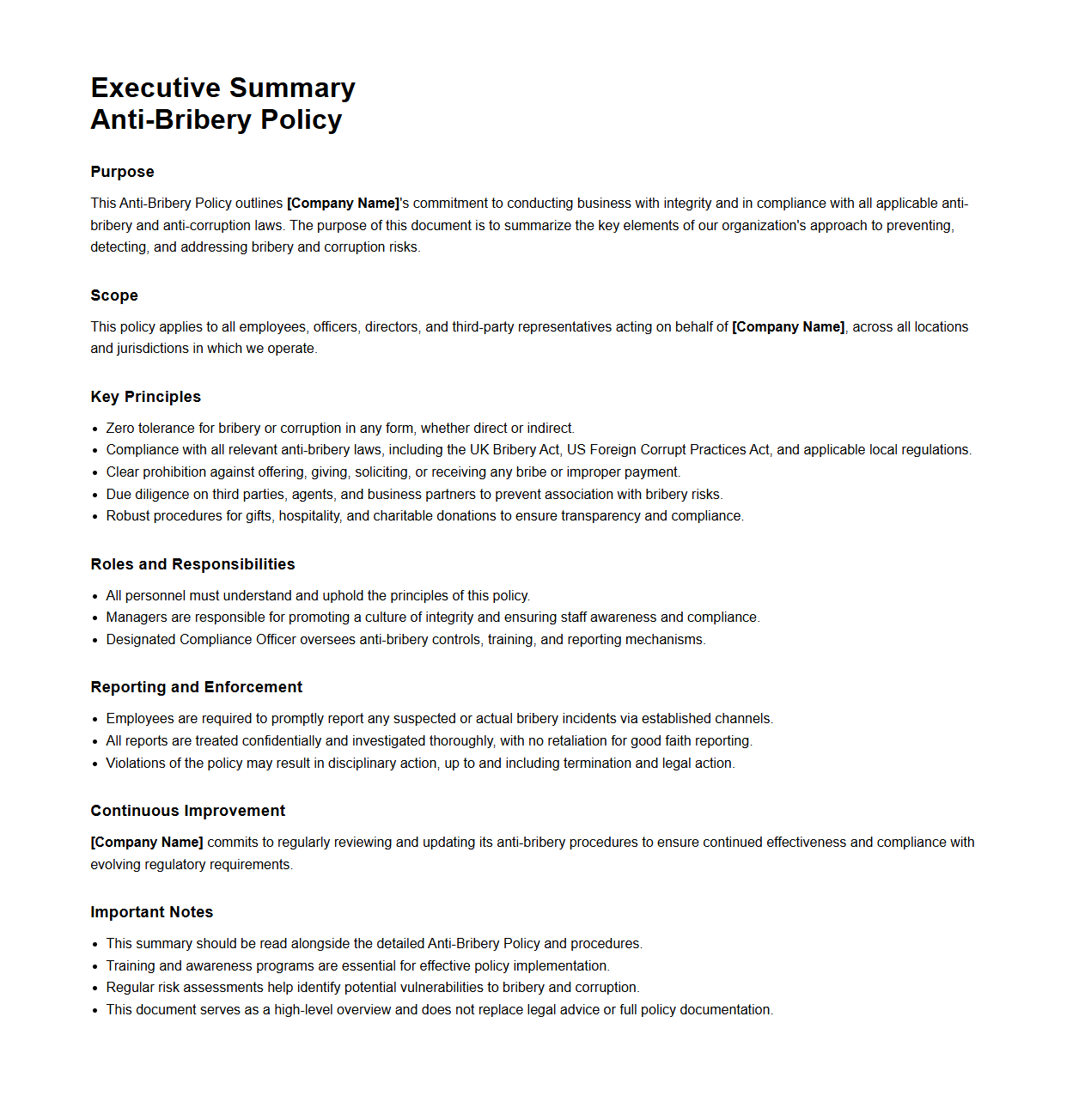
Executive Summary Document Format for Anti-Bribery Policy
The Executive Summary Document Format for an
Anti-Bribery Policy outlines the key elements and purpose of the policy in a concise manner, facilitating quick understanding for stakeholders. It typically includes the scope, objectives, compliance requirements, and the roles and responsibilities associated with preventing bribery within an organization. This format ensures clarity and accessibility, helping to reinforce the organization's commitment to ethical business practices and legal compliance.
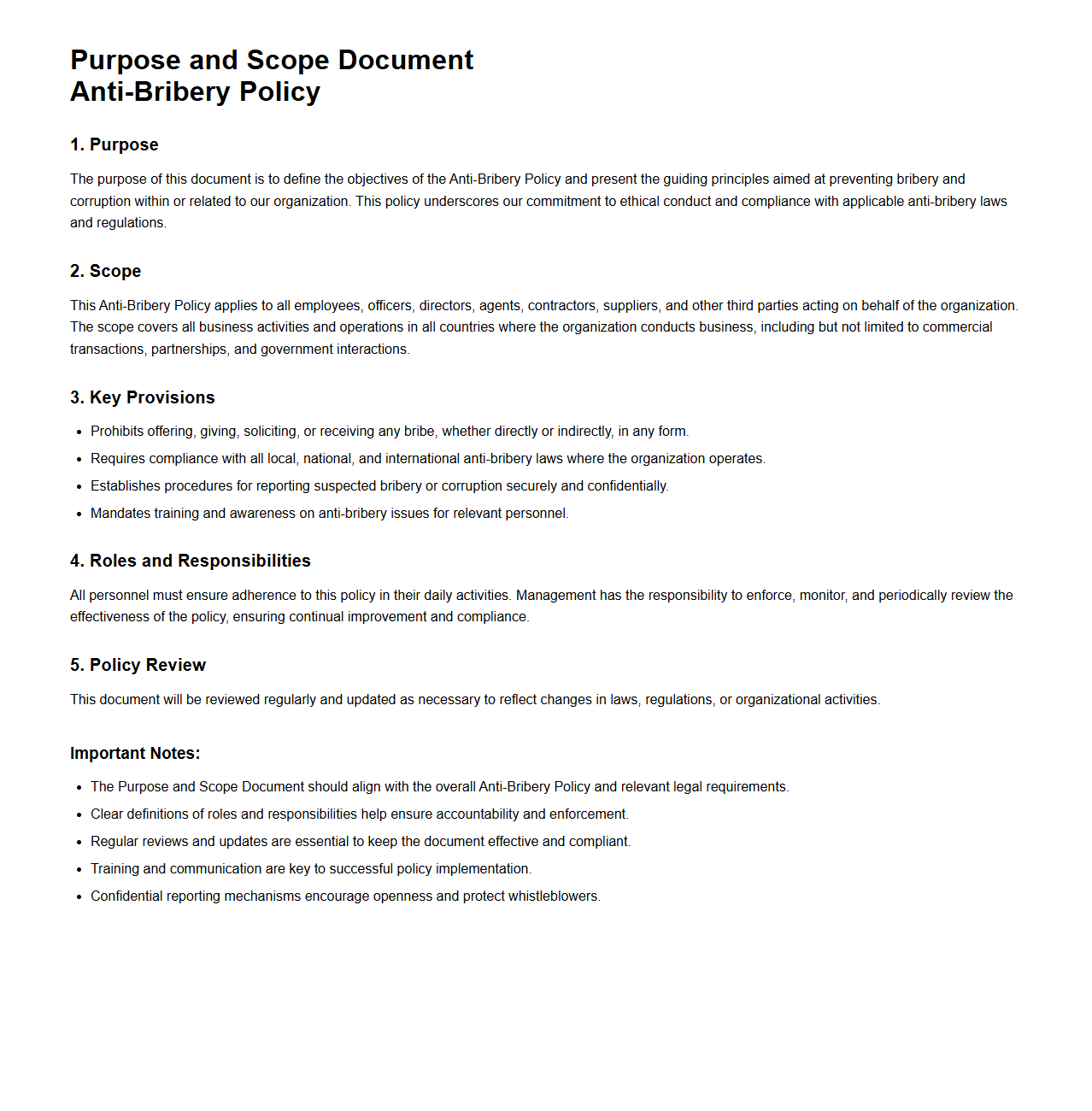
Purpose and Scope Document Format of Anti-Bribery Policy
The
Purpose and Scope Document Format for an Anti-Bribery Policy clearly defines the objectives of preventing, detecting, and addressing bribery within an organization. It outlines the extent to which the policy applies, including all employees, contractors, and third parties, ensuring comprehensive coverage across all business operations and geographic locations. This structured format facilitates compliance with legal standards and reinforces the organization's commitment to ethical conduct.
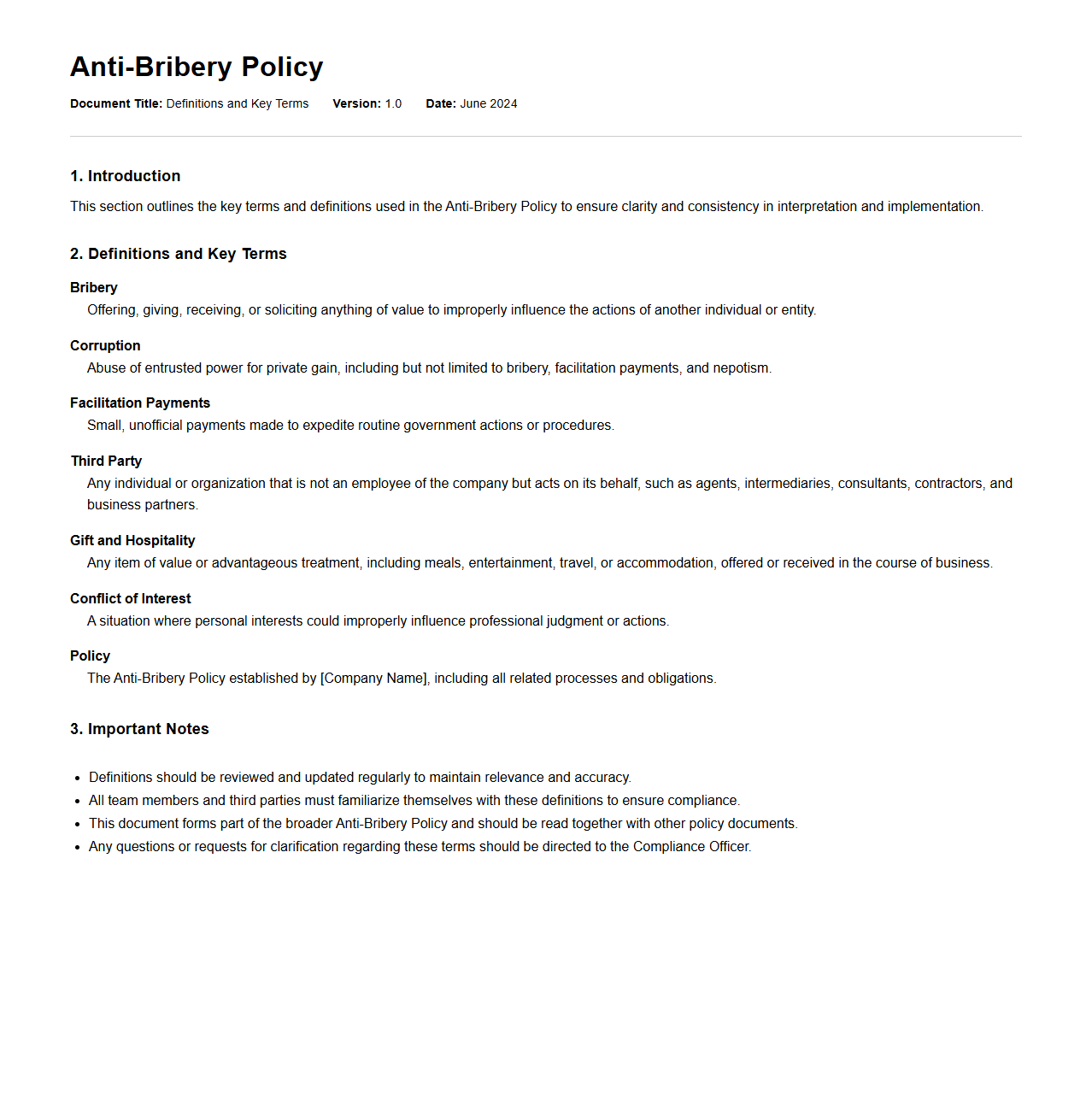
Definitions and Key Terms Document Format in Anti-Bribery Policy
The
Definitions and Key Terms Document Format in an Anti-Bribery Policy provides a clear and precise explanation of critical concepts such as bribery, corruption, facilitation payments, and conflict of interest, ensuring consistent understanding across the organization. This section standardizes terminology to avoid ambiguity and supports compliance by outlining specific meanings tied to relevant legal frameworks like the UK Bribery Act and the Foreign Corrupt Practices Act (FCPA). Well-structured definitions enhance policy clarity, enabling effective training, enforcement, and risk management related to anti-bribery commitments.
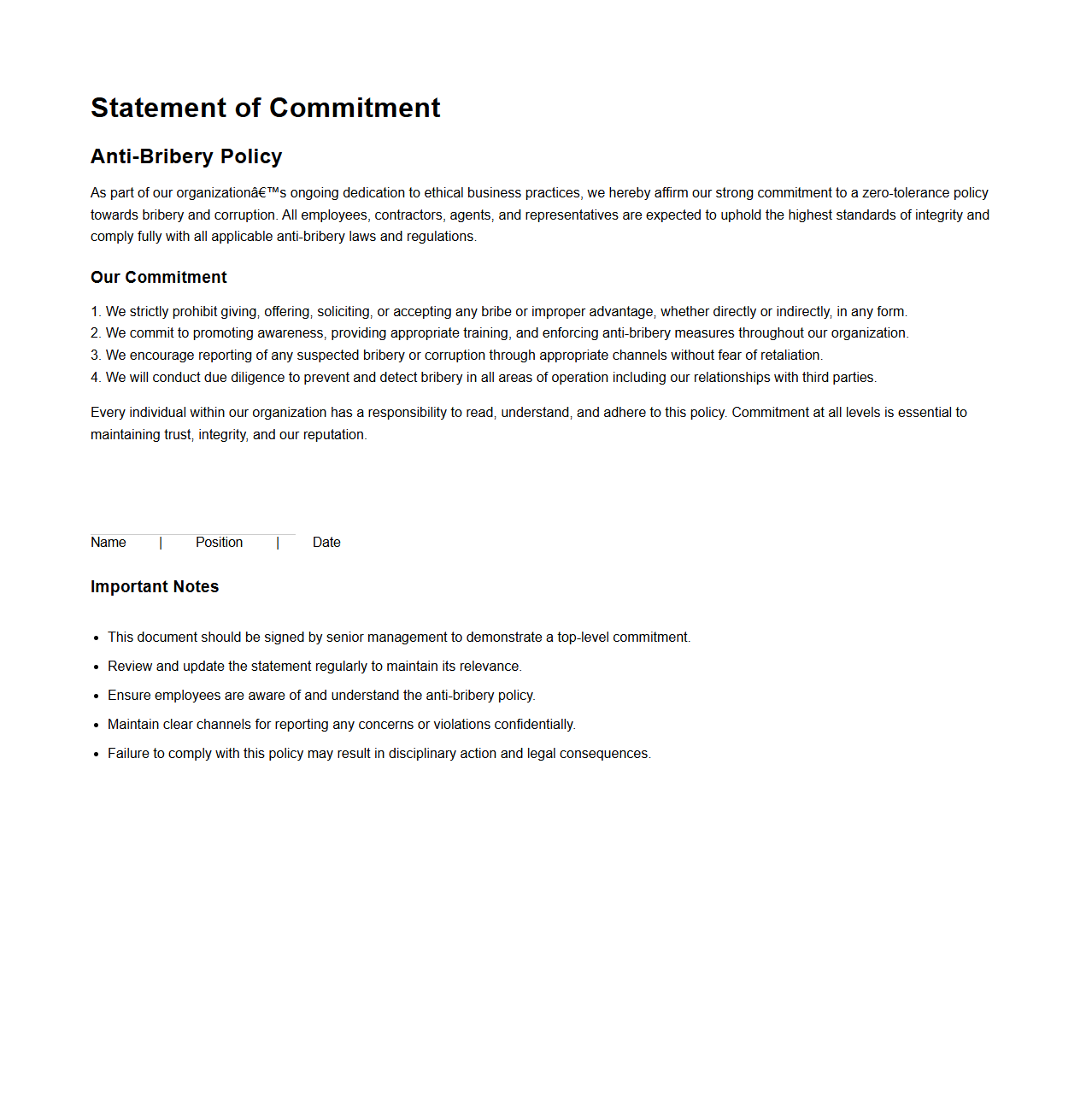
Statement of Commitment Document Format for Anti-Bribery Policy
The
Statement of Commitment Document Format for an Anti-Bribery Policy outlines a structured template that organizations use to formally pledge adherence to anti-bribery principles. This format typically includes sections for the organization's name, a declaration of zero tolerance towards bribery, details of relevant laws and regulations, and signatures of key stakeholders confirming their commitment. Clear and concise wording in this document reinforces corporate governance and promotes ethical business practices.
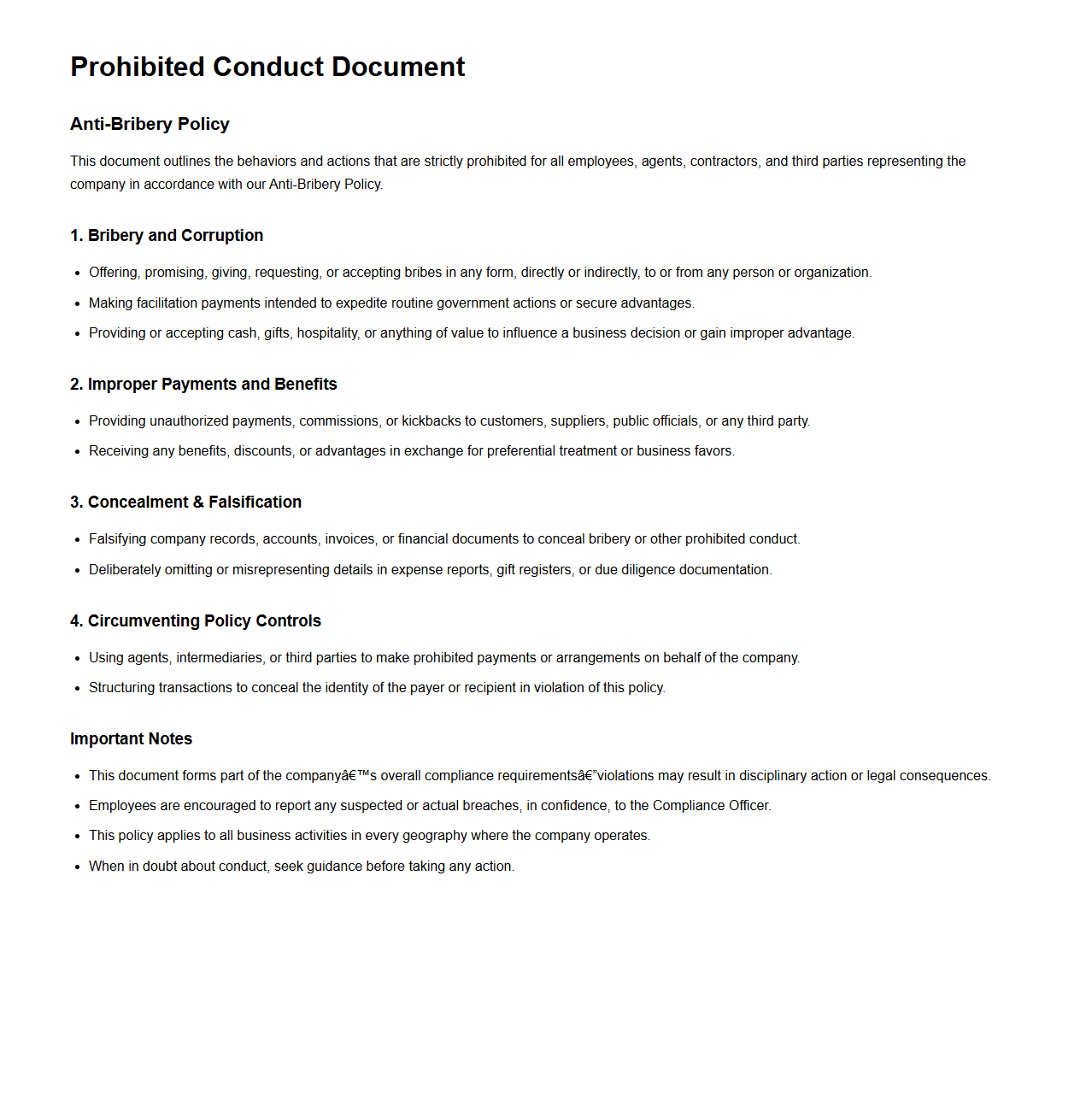
Prohibited Conduct Document Format under Anti-Bribery Policy
The
Prohibited Conduct Document Format under an Anti-Bribery Policy outlines the specific behaviors and actions that are strictly forbidden to prevent corruption and unethical practices. It typically details various forms of bribery, including offering, accepting, or soliciting any form of undue advantage, and sets clear guidelines for employee conduct to ensure compliance with legal and regulatory standards. This format serves as a critical reference to maintain organizational integrity and uphold anti-bribery laws effectively.
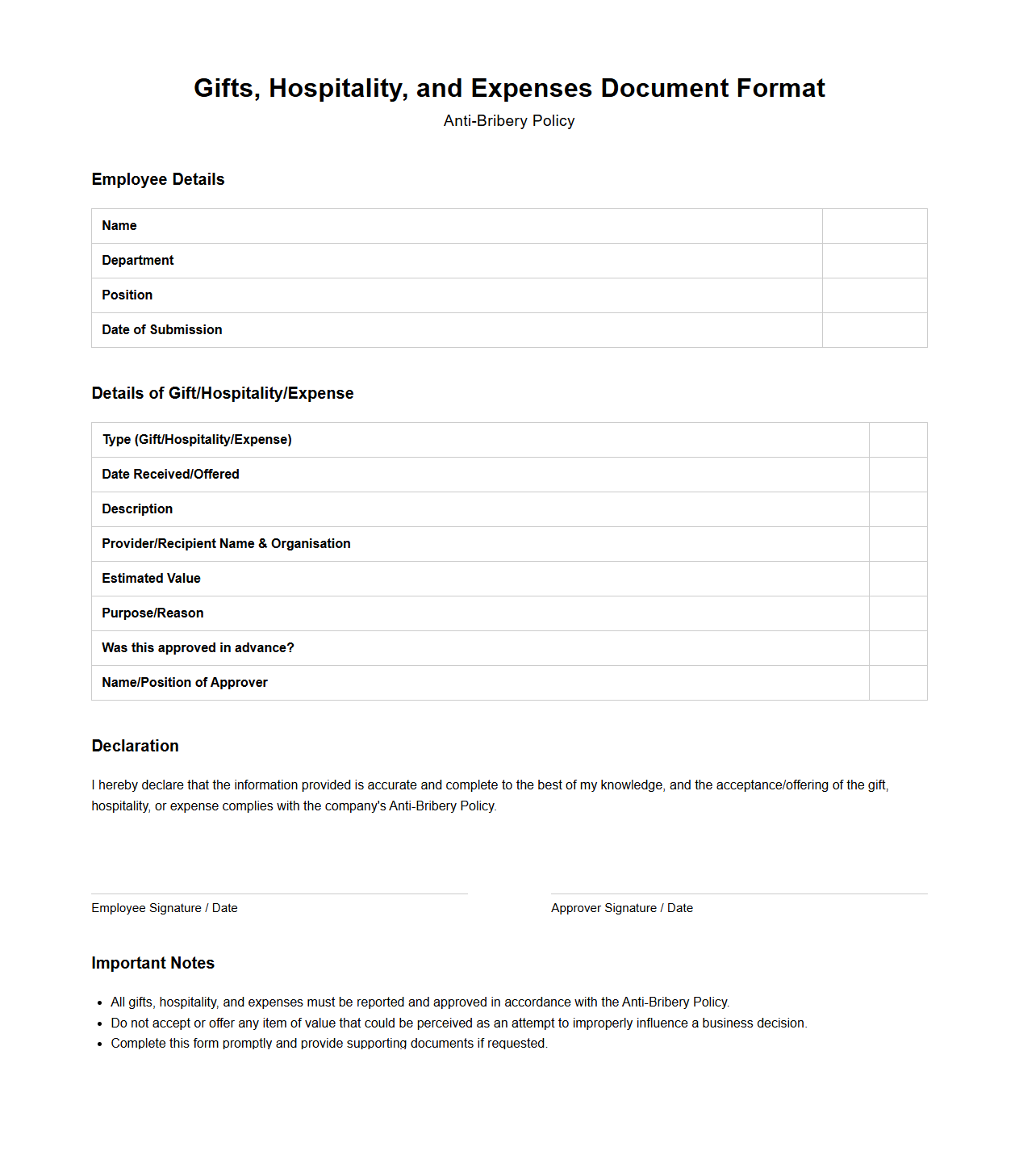
Gifts, Hospitality, and Expenses Document Format of Anti-Bribery Policy
The
Gifts, Hospitality, and Expenses Document Format in an Anti-Bribery Policy outlines the standardized method for recording and reporting any gifts, hospitality, or expenses exchanged within an organization to prevent corruption risks. It ensures transparency by detailing the nature, value, recipient, and approval of such transactions, enabling compliance with legal regulations and internal controls. This document format supports ethical business practices by helping to identify and manage potential conflicts of interest linked to bribery or undue influence.
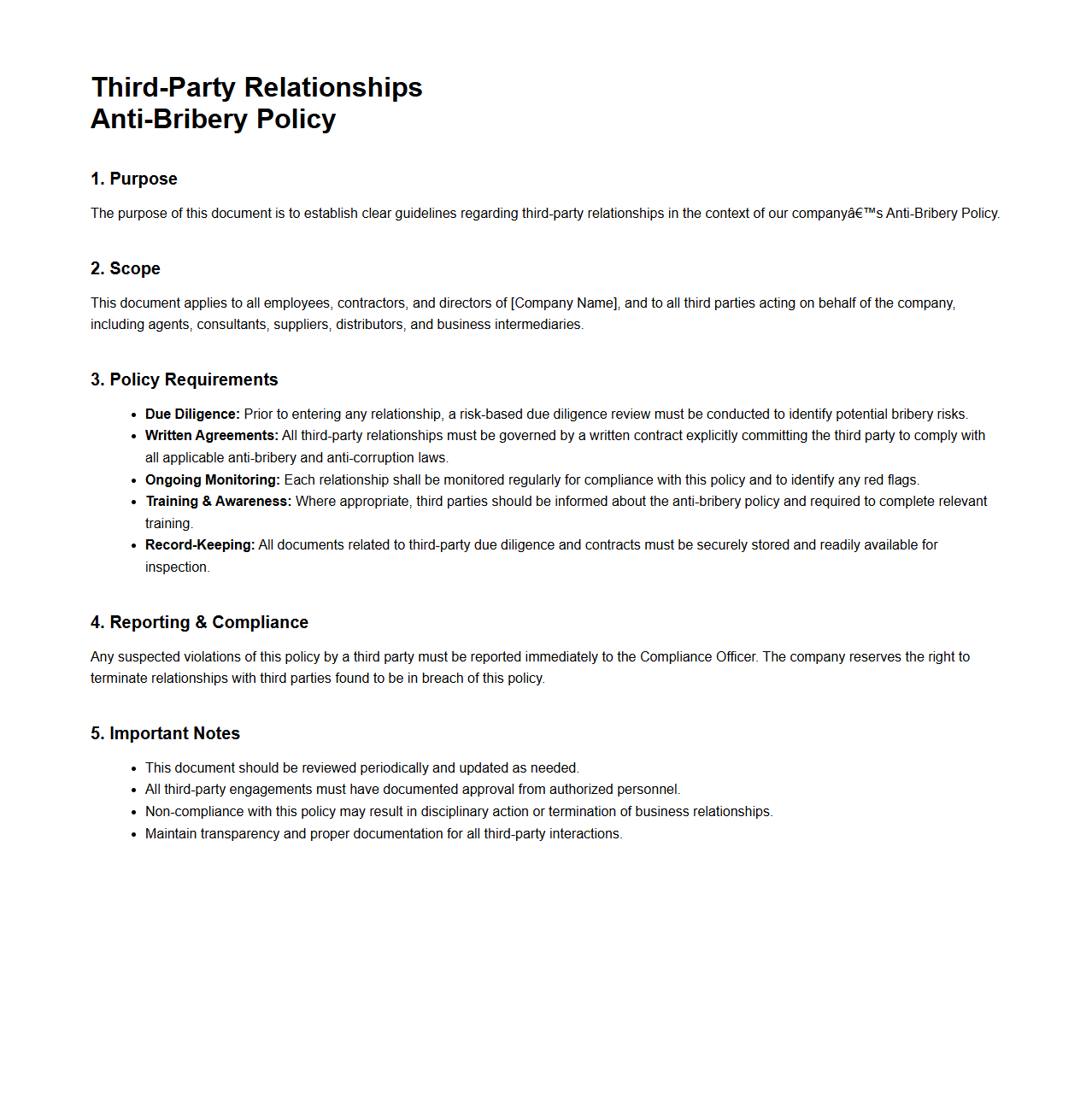
Third-Party Relationships Document Format in Anti-Bribery Policy
Third-Party Relationships Document Format in an Anti-Bribery Policy outlines the standardized framework for documenting interactions and agreements with external partners to ensure compliance with anti-bribery regulations. This format captures essential details such as due diligence results, contractual obligations, and monitoring mechanisms to mitigate risks related to corruption and unethical conduct. Maintaining a
comprehensive and clear Third-Party Relationships Document is critical for transparency and regulatory audits.
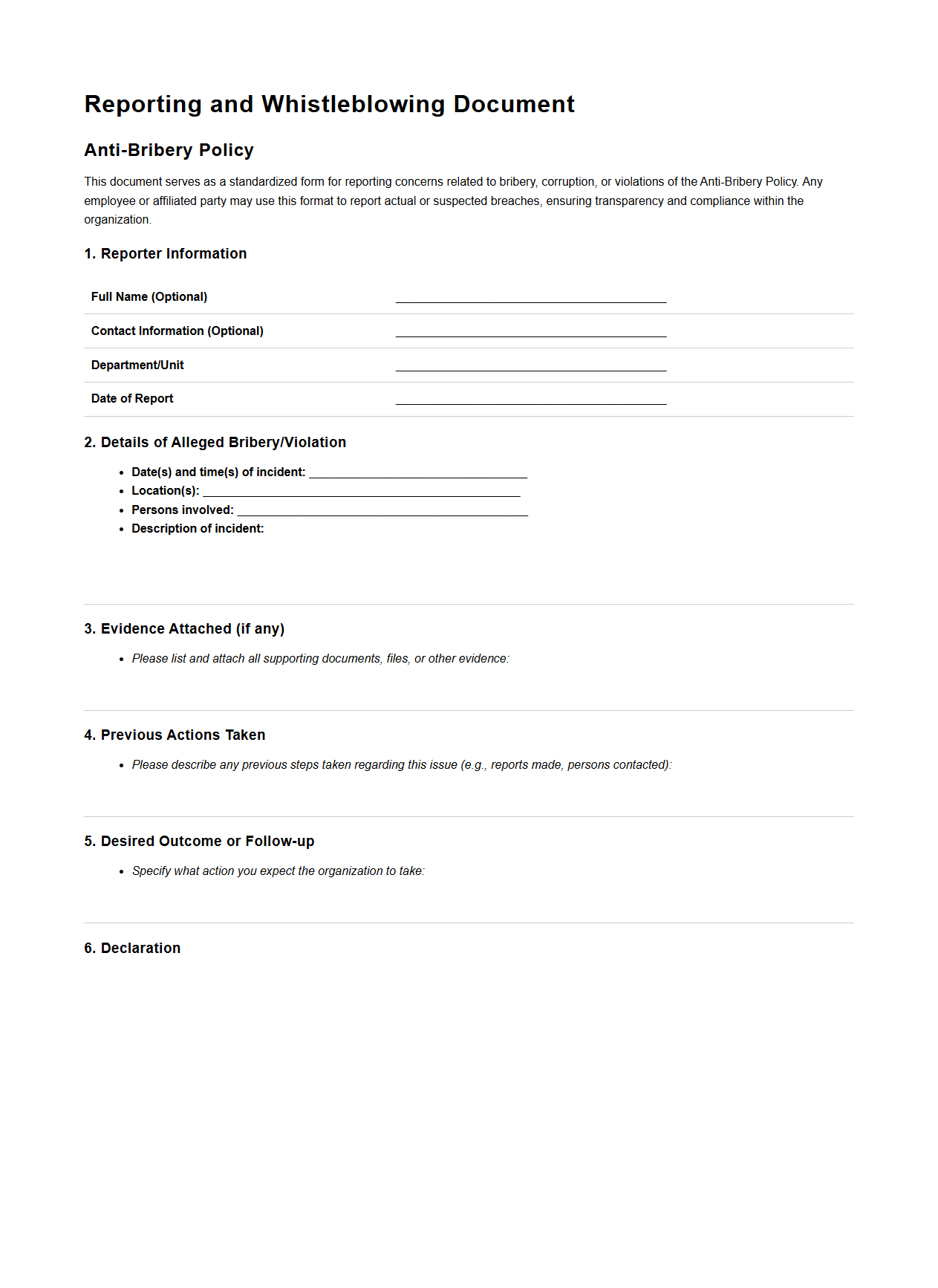
Reporting and Whistleblowing Document Format for Anti-Bribery Policy
The
Reporting and Whistleblowing Document Format for an Anti-Bribery Policy outlines standardized procedures for employees and stakeholders to confidentially report suspected bribery or corruption incidents. This document ensures transparency, protects whistleblowers from retaliation, and facilitates timely investigation and resolution of reported issues. It includes clear guidelines on how to submit reports, the channels available, and the responsibilities of the compliance team in handling such reports effectively.
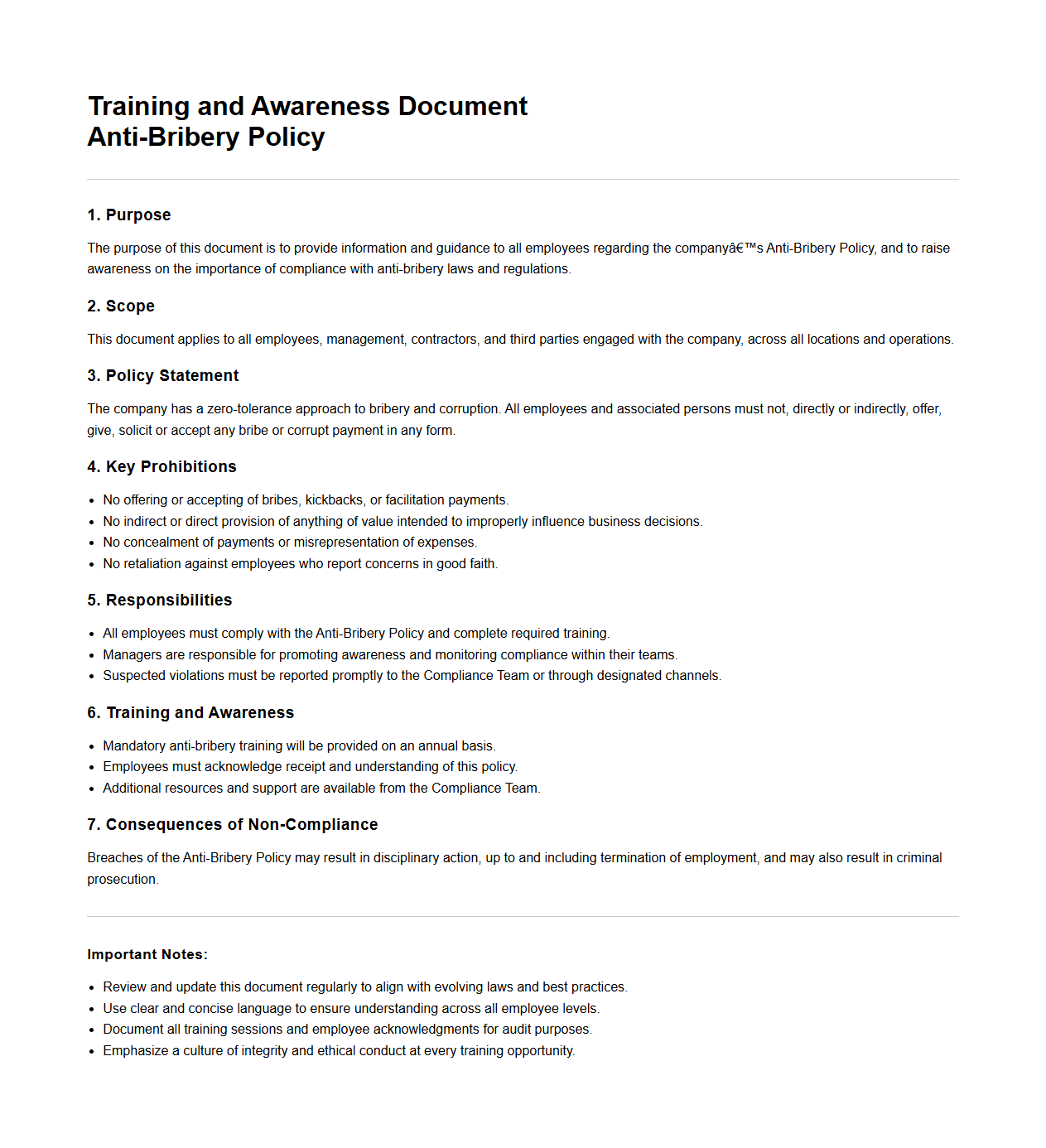
Training and Awareness Document Format of Anti-Bribery Policy
The
Training and Awareness Document Format for an Anti-Bribery Policy outlines the structured approach to educating employees and stakeholders about anti-bribery laws, organizational standards, and ethical practices. It typically includes objectives, content modules, delivery methods, frequency of sessions, and assessment techniques to ensure comprehensive understanding and compliance. This format serves as a critical tool to foster a transparent culture and mitigate risks associated with bribery and corruption within the organization.
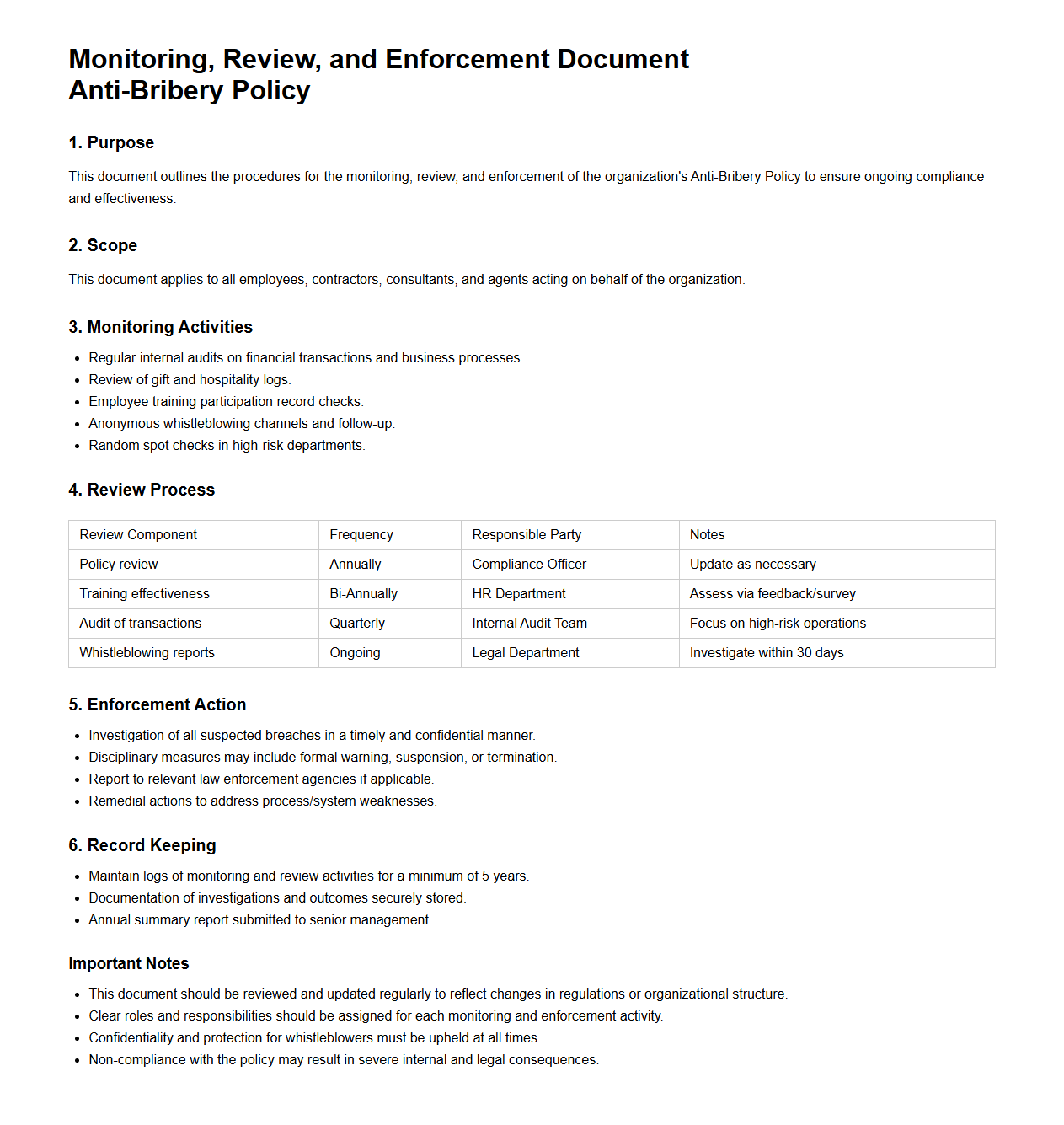
Monitoring, Review, and Enforcement Document Format for Anti-Bribery Policy
The
Monitoring, Review, and Enforcement Document Format for an Anti-Bribery Policy outlines structured procedures to ensure consistent evaluation and compliance with anti-bribery regulations. It includes detailed methods for regular audits, performance assessments, and corrective actions to address policy breaches. This format establishes accountability mechanisms to uphold ethical standards and mitigate bribery risks effectively.
What core principles define the anti-bribery commitments in the policy?
The policy is grounded in the principle of zero tolerance towards bribery in any form. It emphasizes the commitment to uphold ethical business practices and legal compliance across all operations. Transparency, integrity, and accountability are the key pillars supporting this anti-bribery framework.
Which global jurisdictions and operational areas does the policy explicitly cover?
The policy applies globally, covering all jurisdictions where the company operates, ensuring adherence to both local and international anti-bribery laws. It encompasses all business units, including subsidiaries, branches, and third-party agents. This comprehensive scope ensures consistent enforcement of anti-bribery standards worldwide.
What are the standardized reporting and investigation procedures for suspected bribery?
The policy mandates immediate reporting of suspected bribery through designated internal channels to ensure prompt action. A formal investigation process follows, involving impartial review and documentation to determine the validity of allegations. Safeguards are put in place to protect whistleblowers from retaliation during this confidential process.
How are third-party relationships and due diligence requirements addressed in the policy?
The policy requires thorough due diligence on third parties, including suppliers, agents, and contractors to mitigate bribery risks. Contracts include explicit anti-bribery clauses and ongoing monitoring is conducted to ensure compliance. Partnerships with high-risk entities are avoided or require enhanced scrutiny under the policy guidelines.
What measures are outlined for training, awareness, and ongoing compliance monitoring?
The policy mandates regular training programs to educate employees on anti-bribery laws and ethical standards. Awareness campaigns reinforce the importance of compliance and the consequences of breaches. Continuous monitoring and auditing mechanisms are implemented to detect and remediate compliance gaps proactively.
More Compliance Templates