The Format of Audit Findings Report for Compliance Review typically includes a clear structure with an executive summary, detailed observations, and specific recommendations. Each finding is documented with criteria, condition, cause, and effect to ensure clarity and accountability. This format facilitates effective communication between auditors and stakeholders, supporting regulatory adherence and continuous improvement.
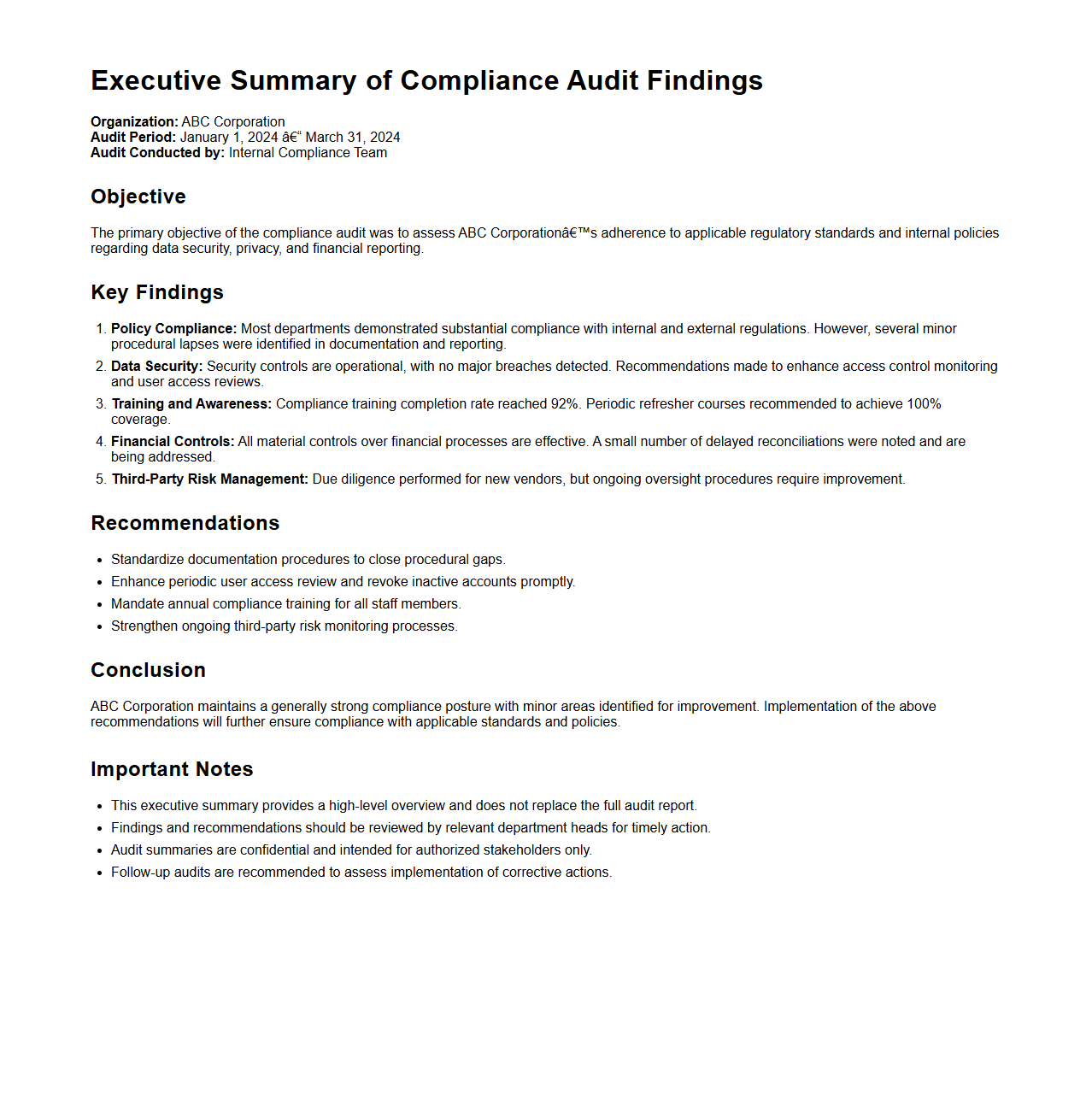
Executive Summary of Compliance Audit Findings
An
Executive Summary of Compliance Audit Findings document succinctly presents the key results and observations from a compliance audit, highlighting areas of adherence and non-compliance with regulatory standards. It provides senior management with actionable insights, risks identified, and recommendations for corrective measures to ensure organizational compliance. This summary is essential for decision-making and demonstrating accountability to stakeholders and regulatory bodies.
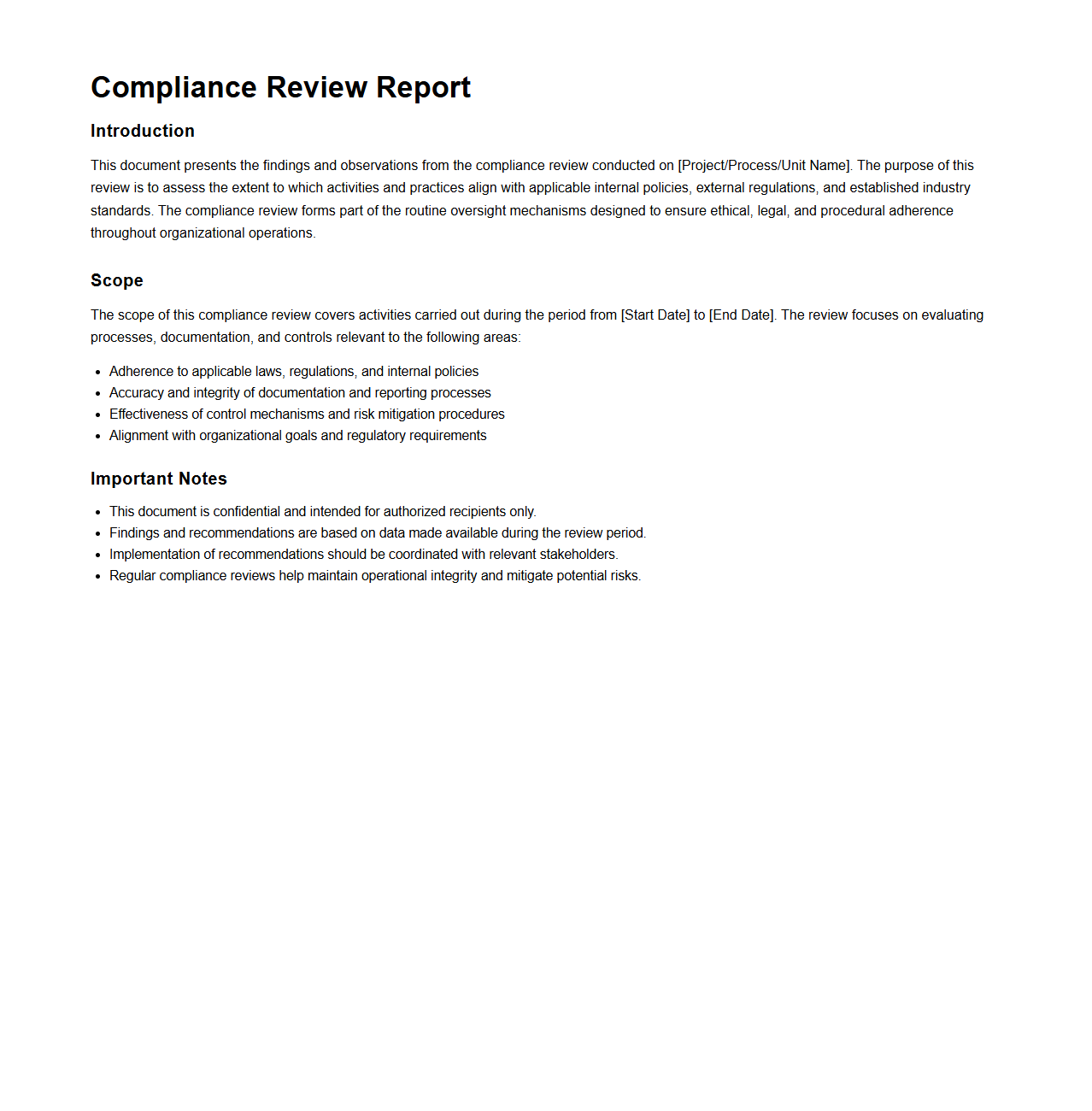
Introduction and Scope of Compliance Review
The
Introduction and Scope of Compliance Review document outlines the purpose, objectives, and boundaries of the compliance assessment process. It details the specific regulations, policies, and standards under evaluation, as well as the departments, operations, or functions subject to review. This section ensures clarity on what aspects will be examined to verify adherence and identify potential risks or non-compliance issues.
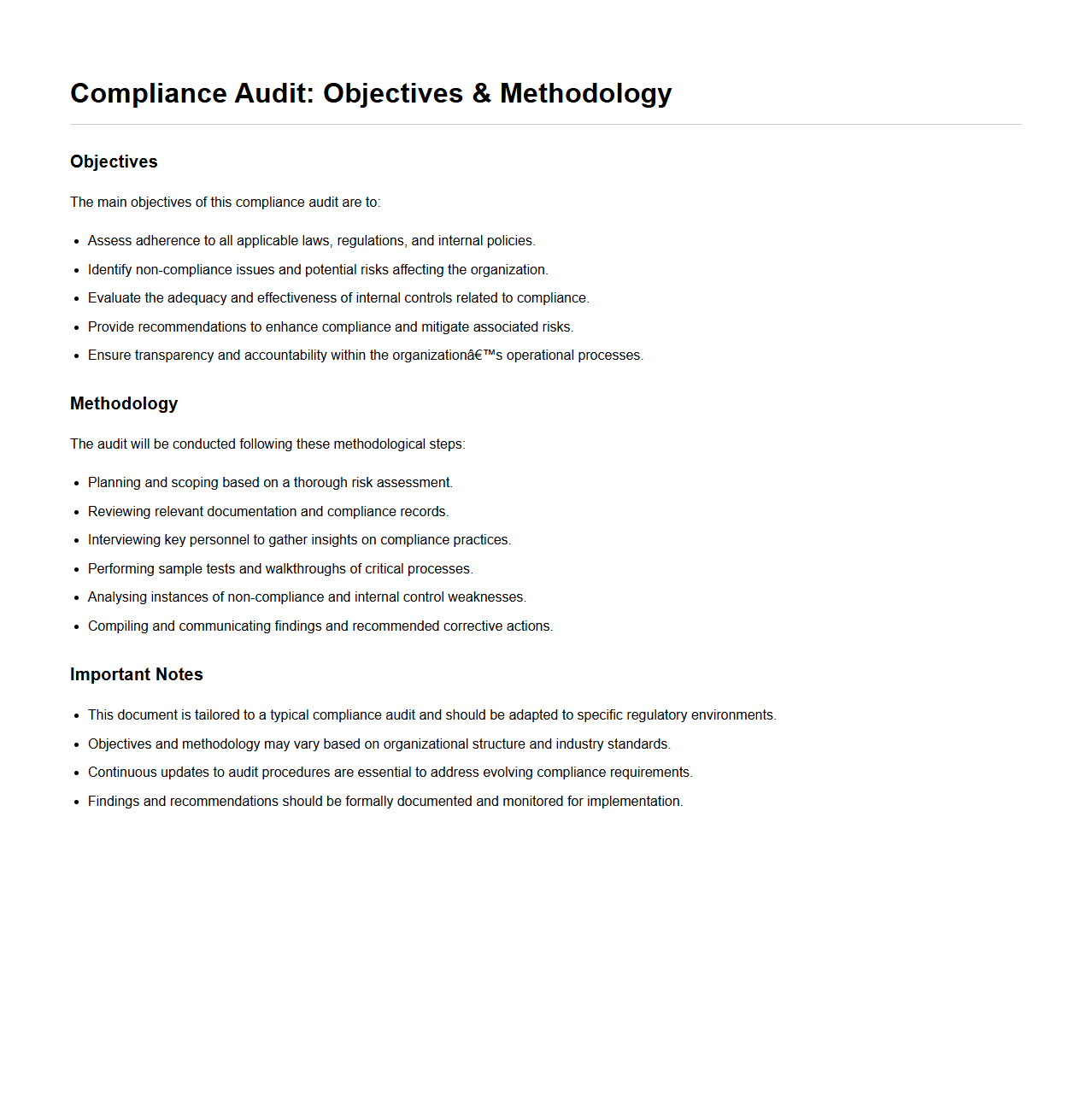
Objectives and Methodology of Compliance Audit
The
Objectives of Compliance Audit focus on evaluating whether an organization adheres to relevant laws, regulations, policies, and contractual agreements to ensure operational integrity and risk mitigation. The Methodology involves systematic procedures such as document reviews, interviews, and testing of transactions or controls to verify compliance and identify any deviations. This structured approach helps organizations maintain transparency, accountability, and continuous improvement in regulatory adherence.
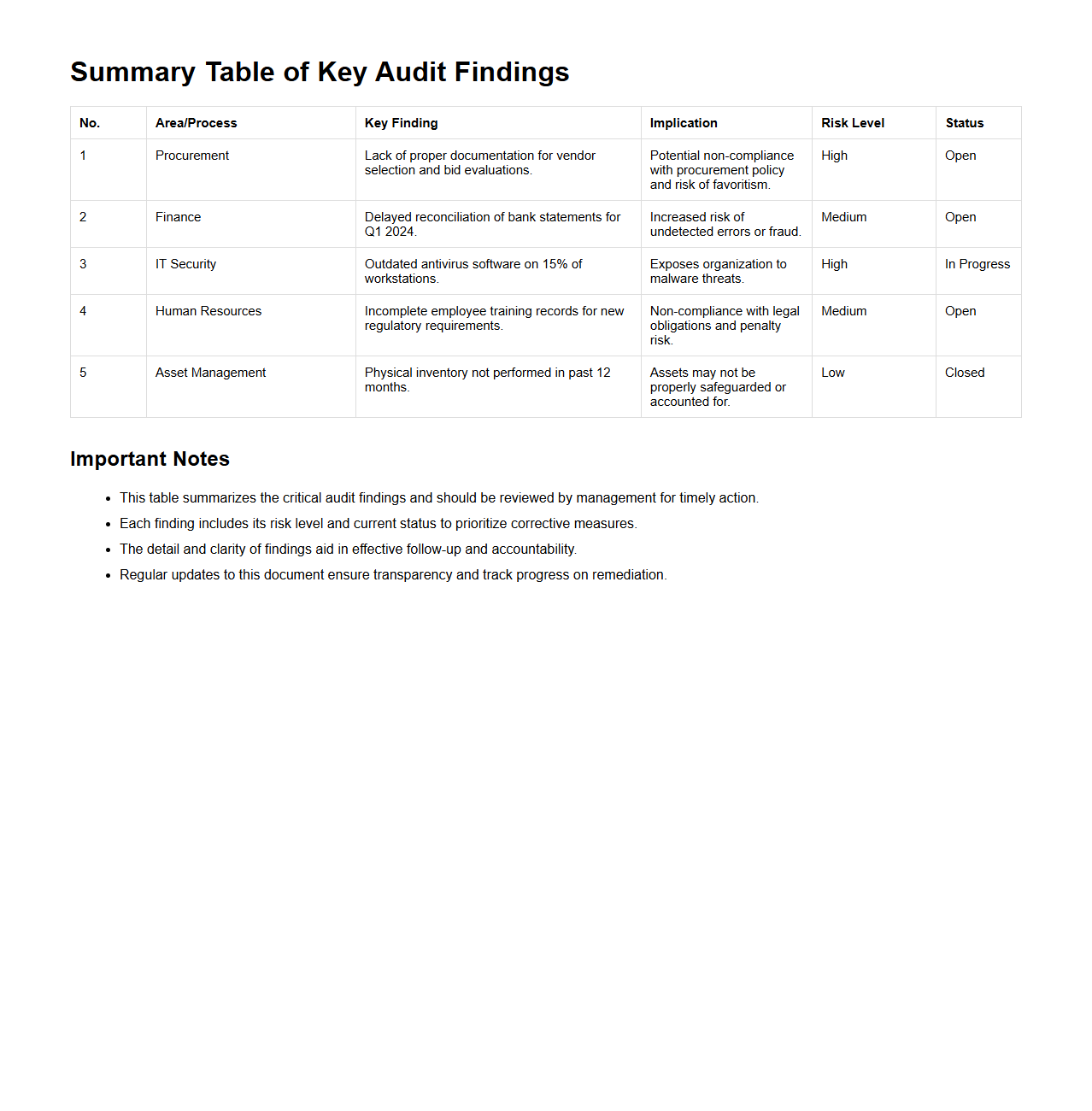
Summary Table of Key Audit Findings
The
Summary Table of Key Audit Findings is a concise document that highlights the most critical audit results and observations identified during an audit process. It provides stakeholders with a clear overview of significant issues, risks, and recommendations for corrective actions. This table enhances transparency and supports informed decision-making by summarizing essential audit insights in an accessible format.
Detailed Audit Findings and Observations
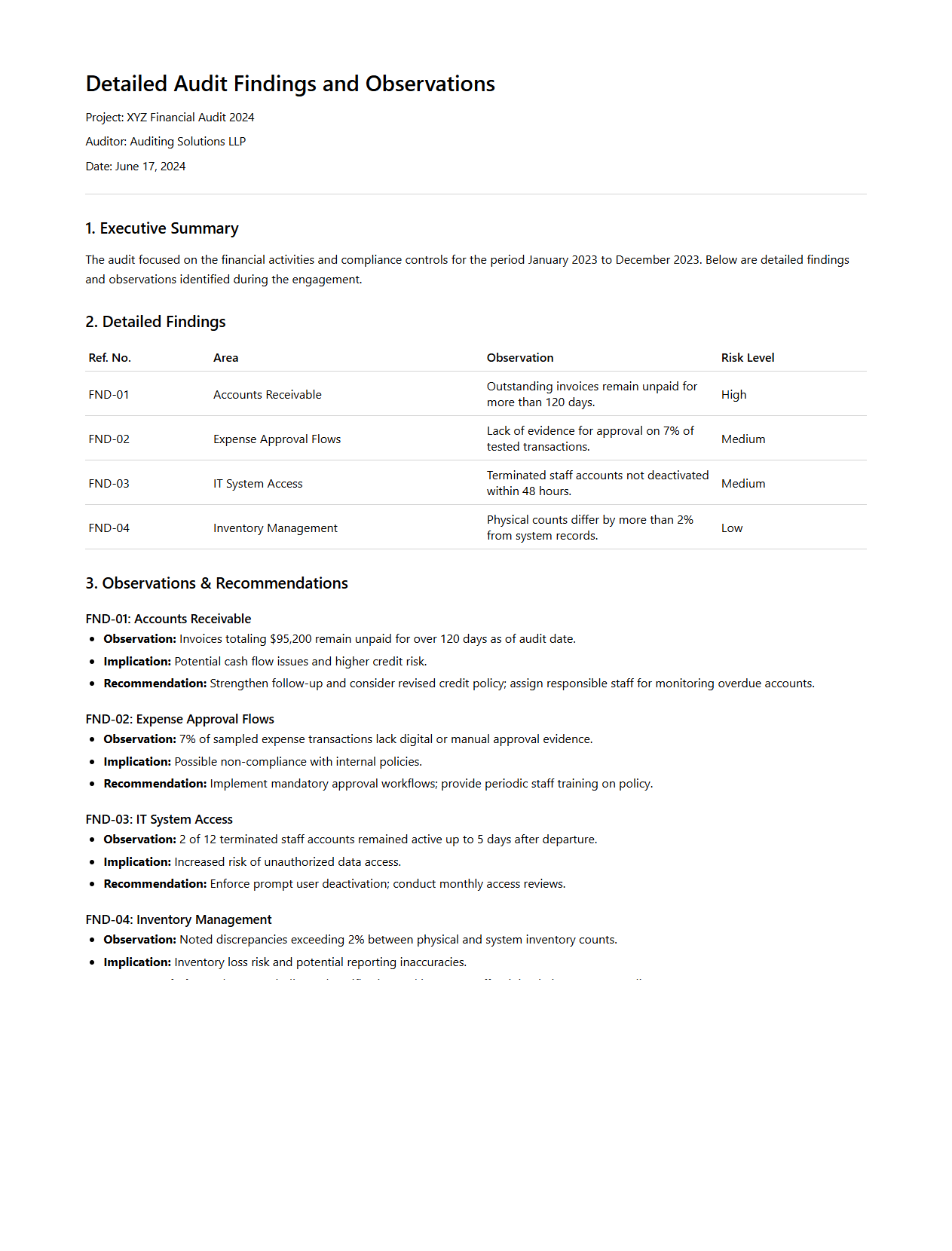
A
Detailed Audit Findings and Observations document systematically presents the results of an audit, highlighting specific issues, risks, and areas of non-compliance identified during the audit process. It includes evidence-backed observations, the impact of each finding on the organization, and recommendations for corrective actions to enhance control environments. This document serves as a critical tool for stakeholders to understand audit outcomes and prioritize remediation efforts effectively.
Categorization of Audit Findings by Risk Level
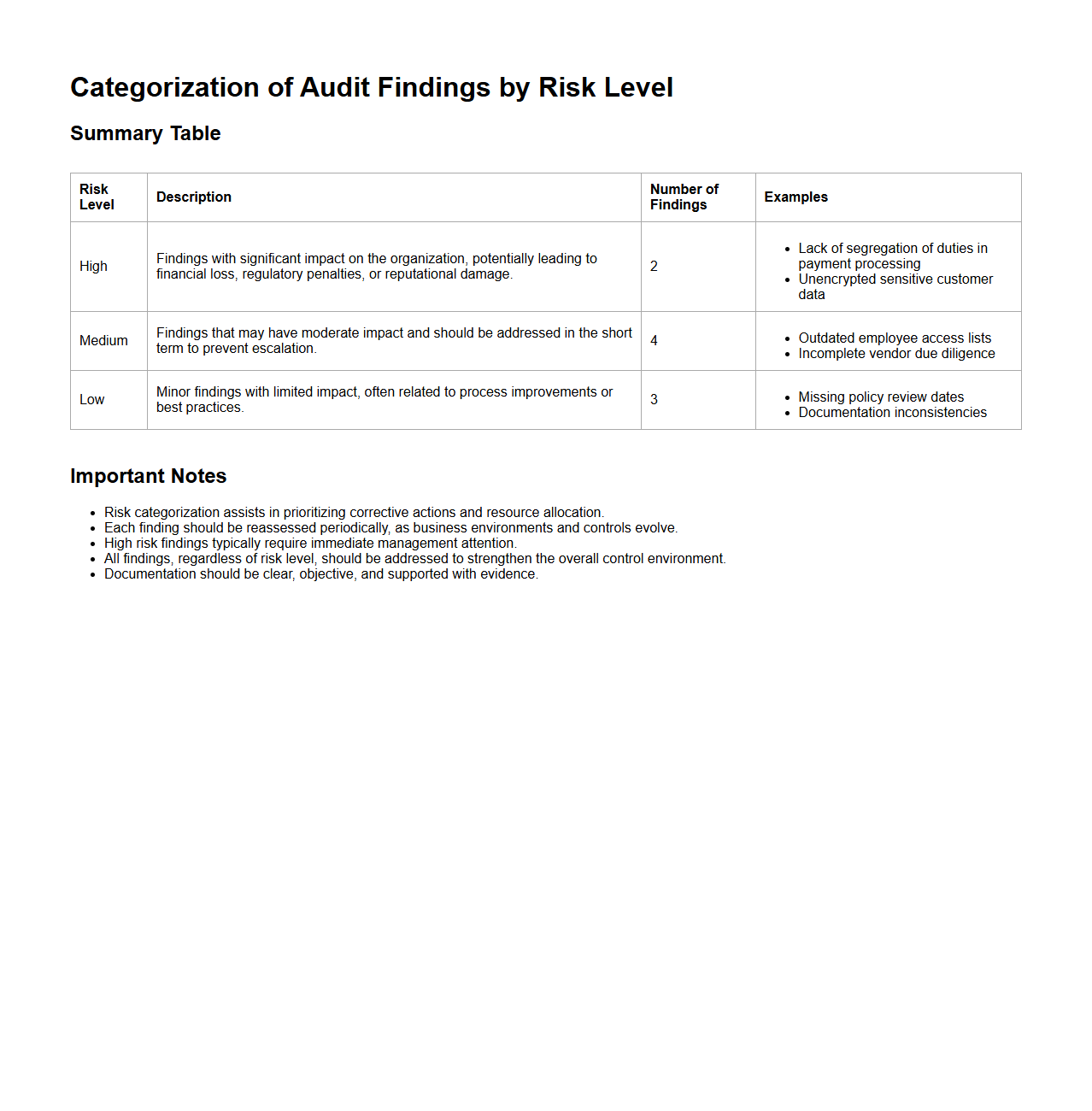
The
Categorization of Audit Findings by Risk Level document is a structured report that classifies audit observations based on their potential impact on an organization's operations and objectives. It helps stakeholders prioritize remediation efforts by distinguishing between high, medium, and low-risk issues, ensuring the most critical vulnerabilities receive immediate attention. This categorization supports effective risk management and compliance by providing a clear overview of audit results aligned with organizational risk thresholds.
Root Cause Analysis of Compliance Issues
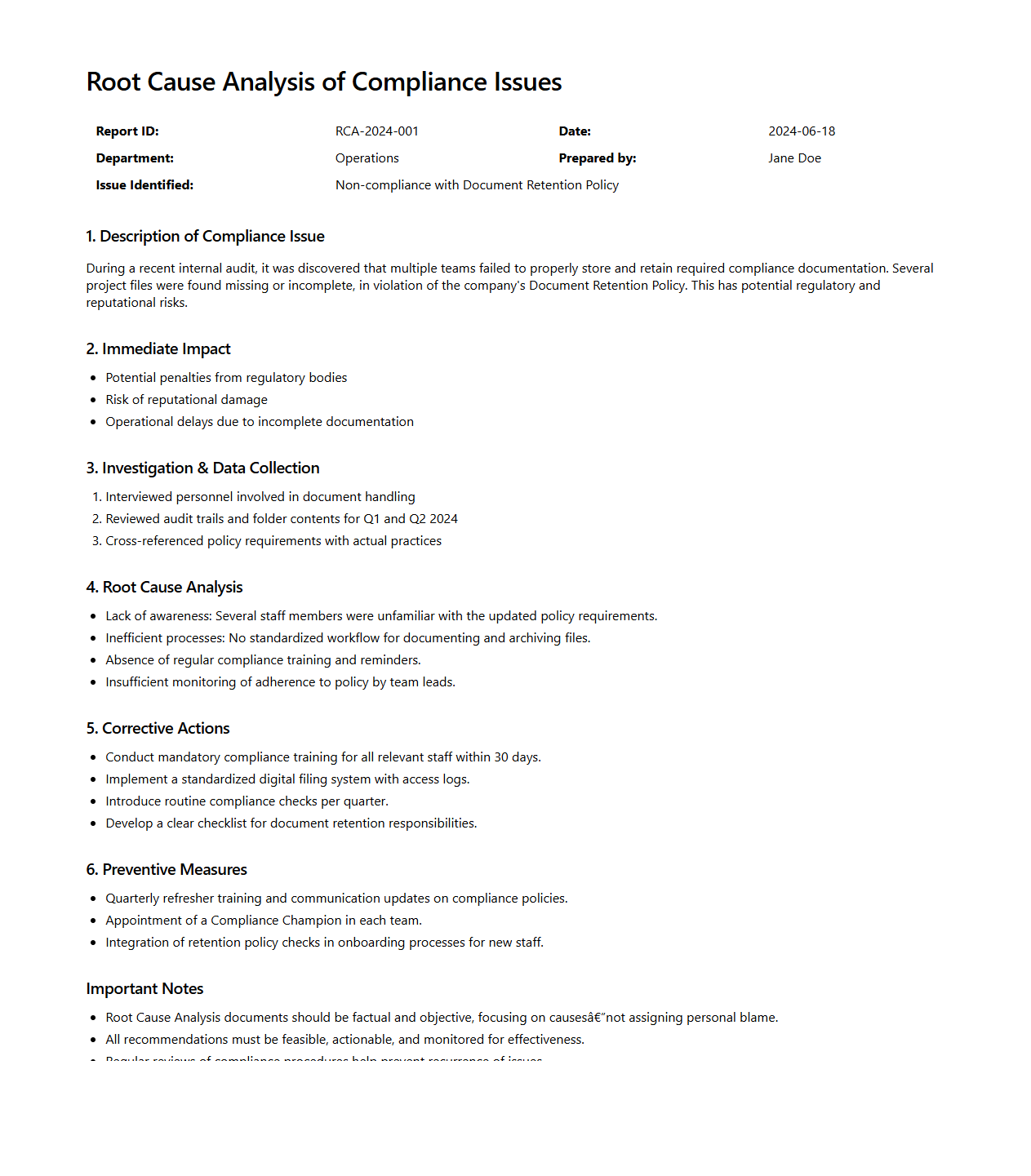
The
Root Cause Analysis of Compliance Issues document identifies underlying factors leading to regulatory non-compliance within an organization. It systematically examines processes, policies, and behaviors to pinpoint the fundamental causes of compliance failures. This document serves as a critical tool to develop corrective actions that prevent recurrence and ensure adherence to legal and industry standards.
Recommendations for Compliance Improvement
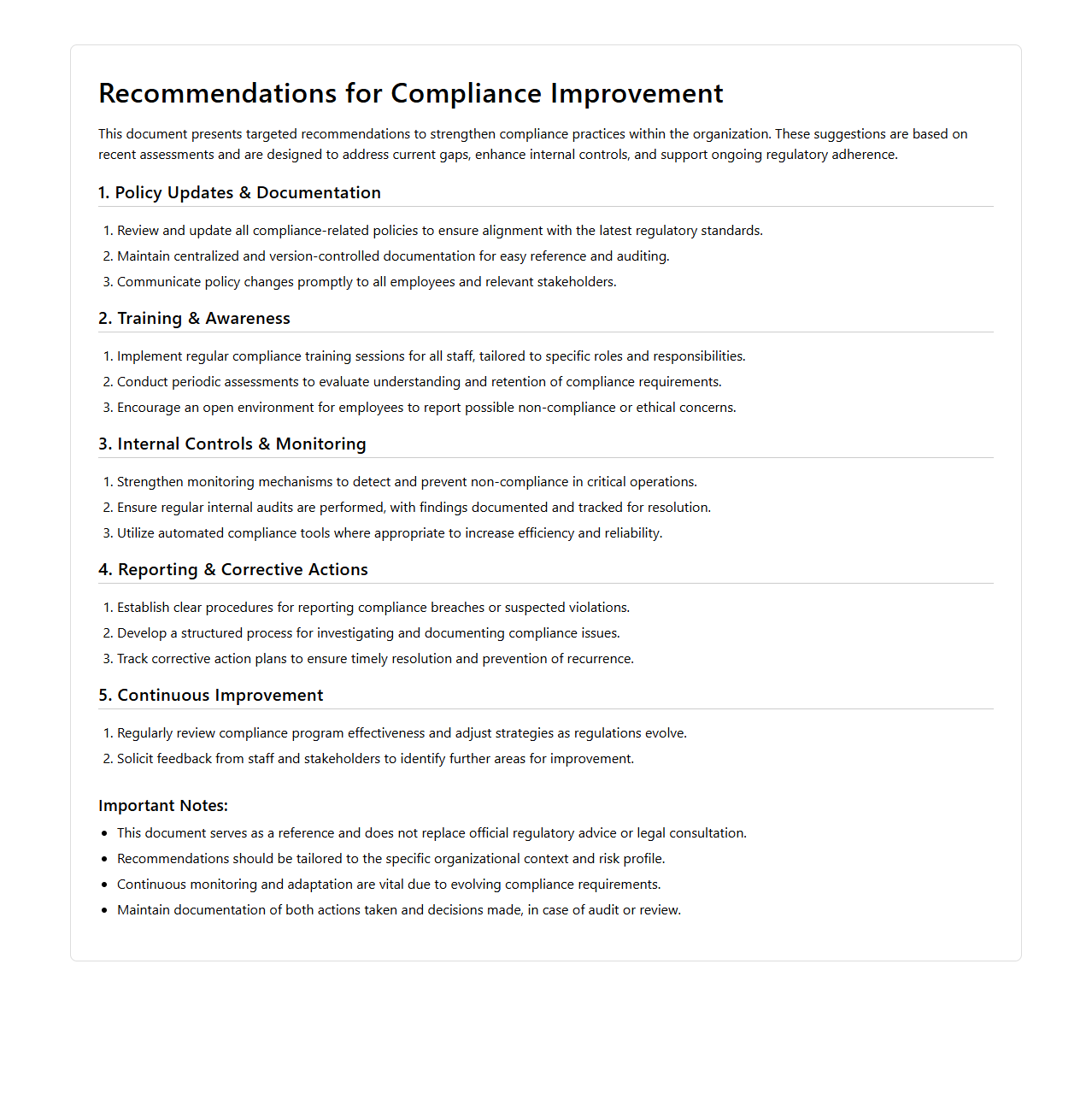
The
Recommendations for Compliance Improvement document outlines actionable strategies and best practices designed to enhance an organization's adherence to regulatory standards and internal policies. It provides a detailed analysis of current compliance gaps, risk areas, and practical steps to mitigate potential violations effectively. This document serves as a crucial tool for compliance officers, legal teams, and management to ensure ongoing regulatory alignment and operational integrity.
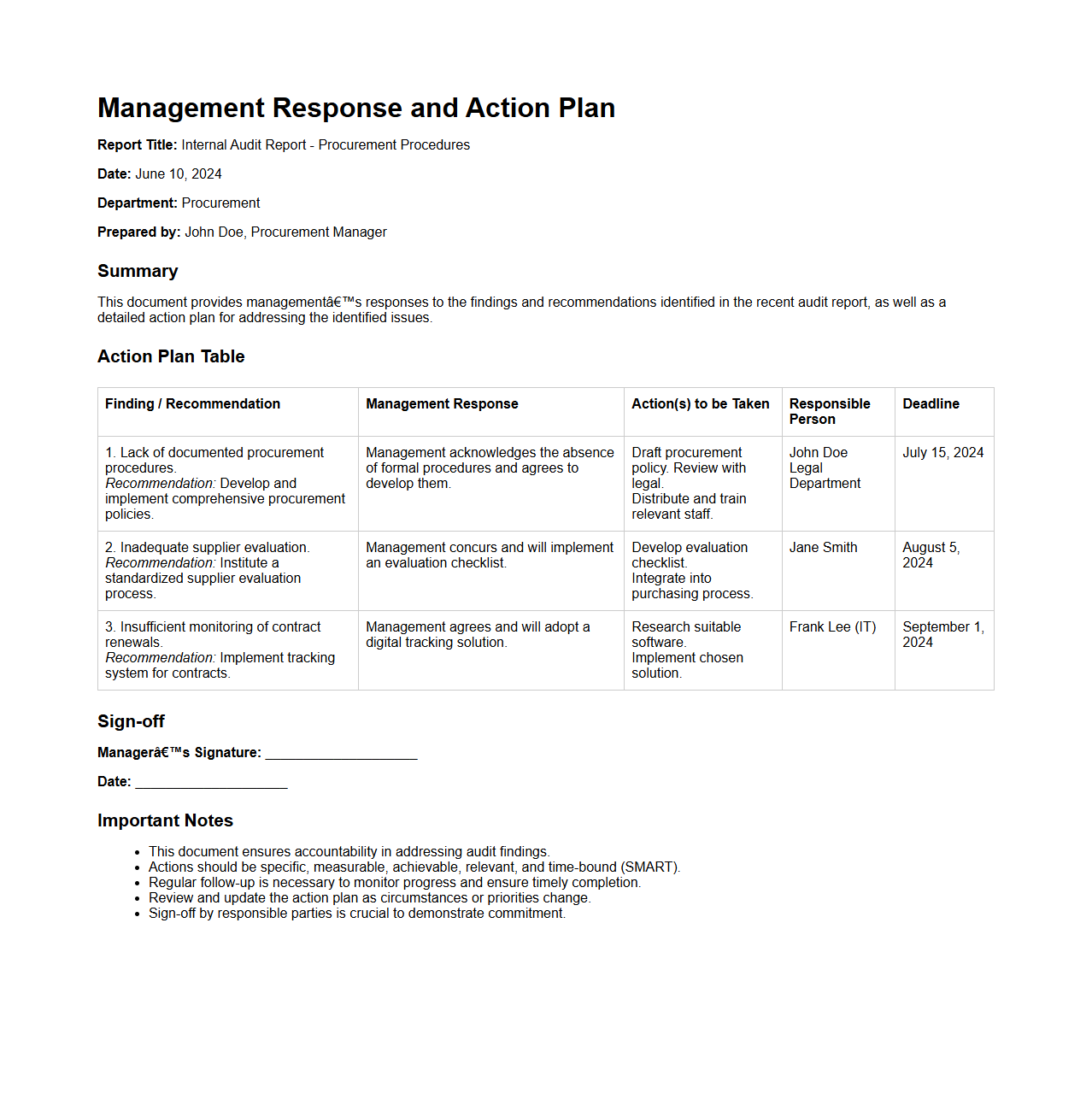
Management Response and Action Plan
A
Management Response and Action Plan document outlines an organization's official reply to audit findings, risk assessments, or external recommendations, detailing specific measures and timelines for addressing identified issues. It serves as a strategic framework to prioritize corrective actions, assign responsibilities, and monitor progress, ensuring accountability and continuous improvement. This document plays a crucial role in enhancing governance, mitigating risks, and aligning management efforts with organizational objectives.
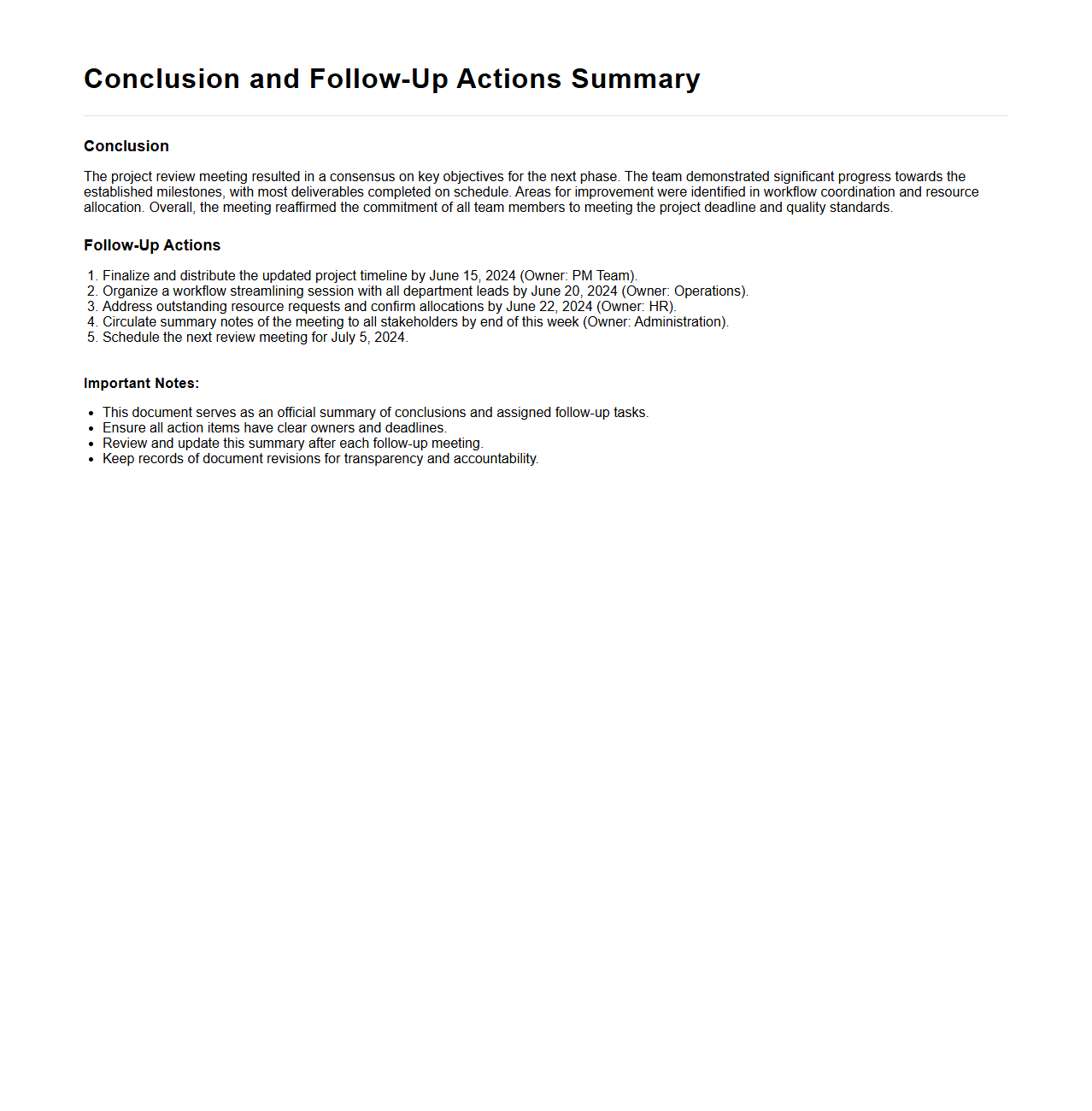
Conclusion and Follow-Up Actions Summary
A
Conclusion and Follow-Up Actions Summary document encapsulates the final insights and key decisions from a project, meeting, or analysis, providing a clear overview of outcomes and next steps. This document ensures all stakeholders are aligned on responsibilities, deadlines, and objectives that require further attention. It serves as a reference point to monitor progress, accountability, and the effectiveness of implemented actions.
Essential Structural Components in an Audit Findings Report
An Audit Findings Report must include the introduction, scope, and objectives to set the context. Detailed findings should follow, outlining each compliance aspect assessed. Finally, the conclusions and appendices support the main content with relevant data and references.
Categorizing and Presenting Non-Compliance Issues
Non-compliance issues should be categorized by severity, such as critical, major, and minor. Each issue must be clearly described with its implications for compliance. Presentation should be systematic, often using tables or bullet points for clarity and impact.
Standardized Documentation of Evidence and Supporting Data
Evidence must be documented using a consistent format that includes the source, date, and type of evidence. Supporting data should be linked directly to the related audit findings. This ensures traceability and enhances the credibility of the report.
Sections for Recommendations and Corrective Actions
The report should have a dedicated section outlining recommendations to address each finding. Corrective actions must be actionable, with timelines and responsible parties clearly assigned. This section drives the resolution process and continuous compliance improvement.
Addressing Risk Levels and Potential Impacts in the Report
Audit findings should include an assessment of risk levels associated with each non-compliance issue. Potential impacts on the organization's operations, reputation, and legal standing must be highlighted. This approach prioritizes actions and supports effective risk management.
More Compliance Templates