The Format of Data Protection Policy for Information Security typically includes clear sections such as purpose, scope, roles and responsibilities, data classification, and procedures for data handling and breach response. It ensures systematic protection of sensitive information through defined guidelines and compliance requirements. This structured format helps organizations maintain confidentiality, integrity, and availability of their data assets.
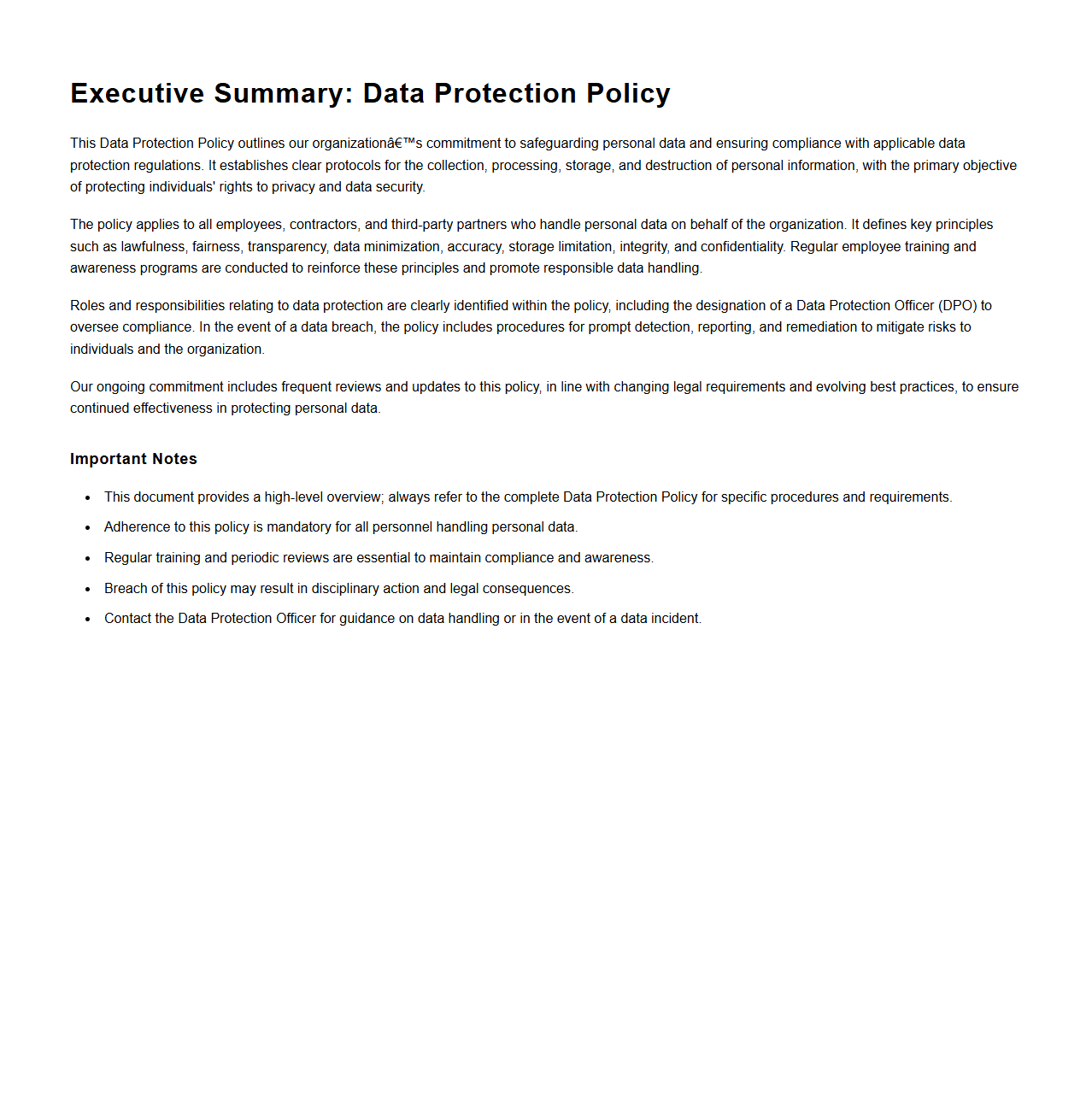
Executive Summary for Data Protection Policy
An
Executive Summary for a Data Protection Policy document provides a concise overview of the policy's core objectives, key principles, and compliance requirements. It highlights the organization's commitment to safeguarding personal data, outlines the main data protection measures, and summarizes legal obligations under regulations such as GDPR or CCPA. This summary enables stakeholders to quickly understand the policy's scope and importance without reviewing the full document.
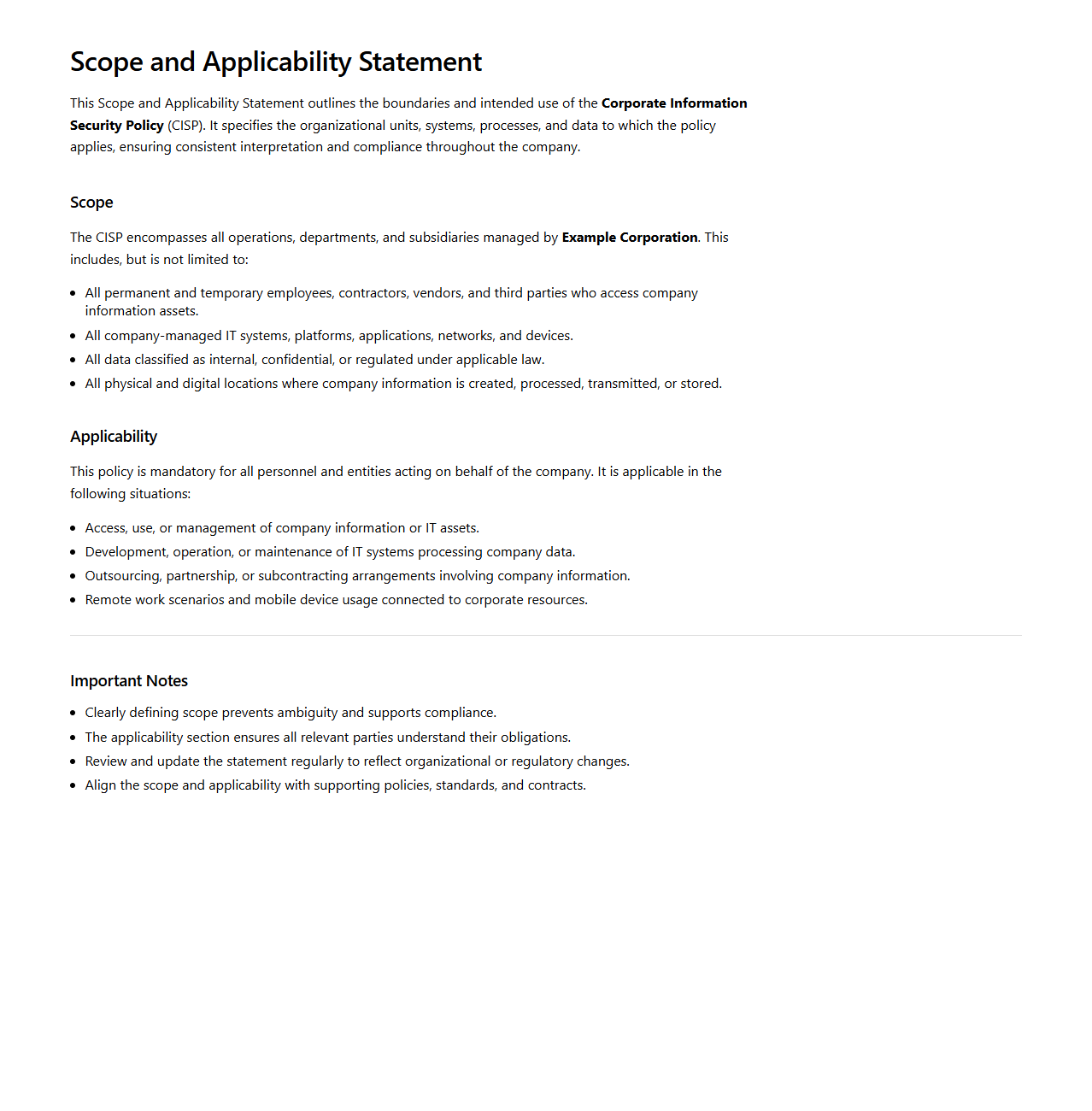
Scope and Applicability Statement
A
Scope and Applicability Statement document defines the boundaries, objectives, and extent of a project, process, or standard, clarifying what is included and excluded. It ensures that all stakeholders understand the specific areas covered and the relevance of the activities or requirements within those areas. This document is essential for aligning expectations, managing resources, and providing a clear framework for implementation and compliance.
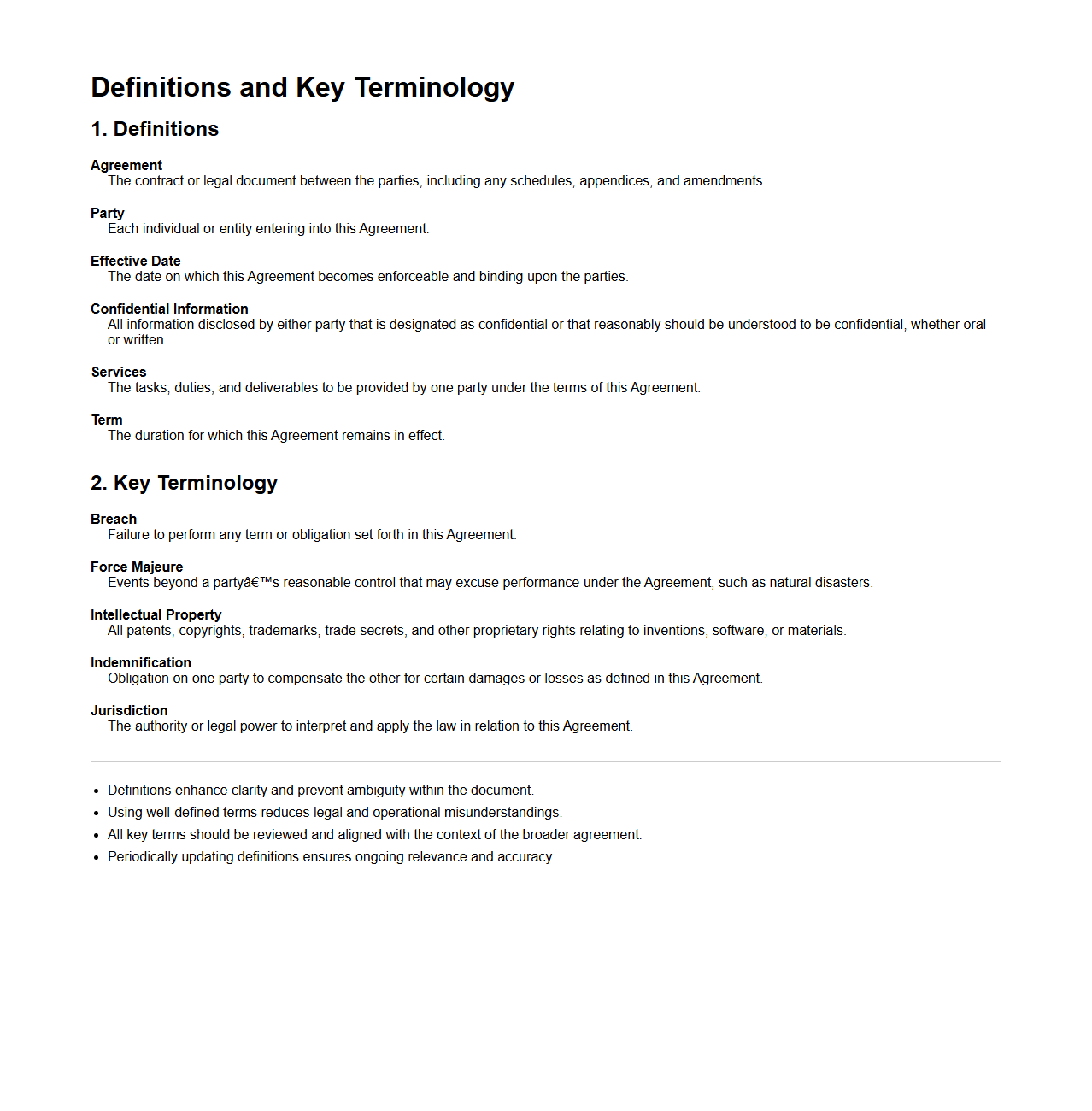
Definitions and Key Terminology
A
Definitions and Key Terminology document serves as a centralized reference that clarifies specialized terms and concepts within a specific field or project. It ensures consistent understanding among stakeholders by providing precise meanings and context for technical language. Maintaining this document reduces ambiguities and enhances communication efficiency in collaborative environments.
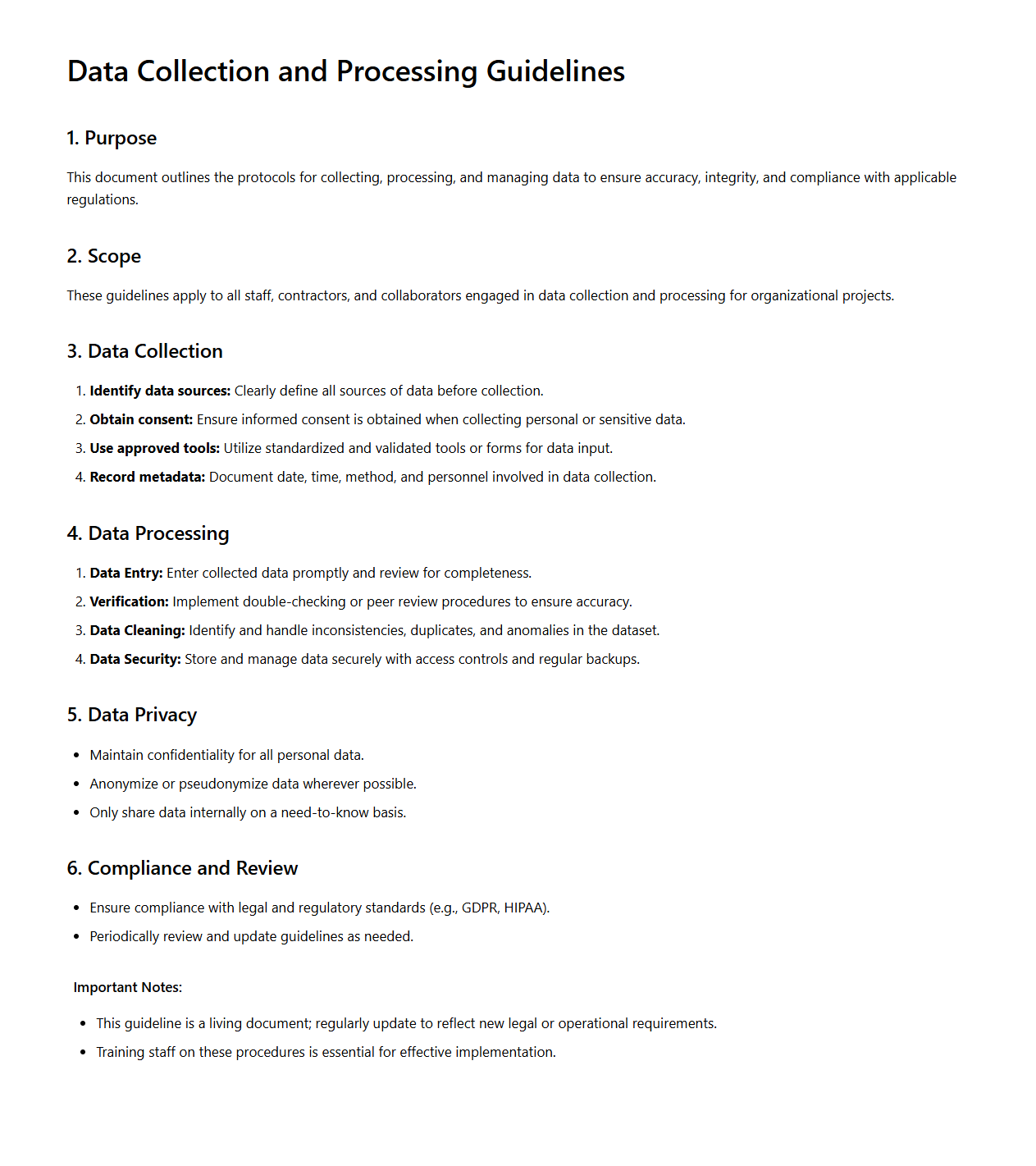
Data Collection and Processing Guidelines
A
Data Collection and Processing Guidelines document outlines the standardized procedures and best practices for gathering, handling, and managing data to ensure accuracy, compliance, and security. It specifies roles, data types, consent requirements, storage protocols, and processing methods to align with legal regulations such as GDPR or CCPA. This document is essential for maintaining data integrity, protecting user privacy, and ensuring transparent data use throughout its lifecycle.
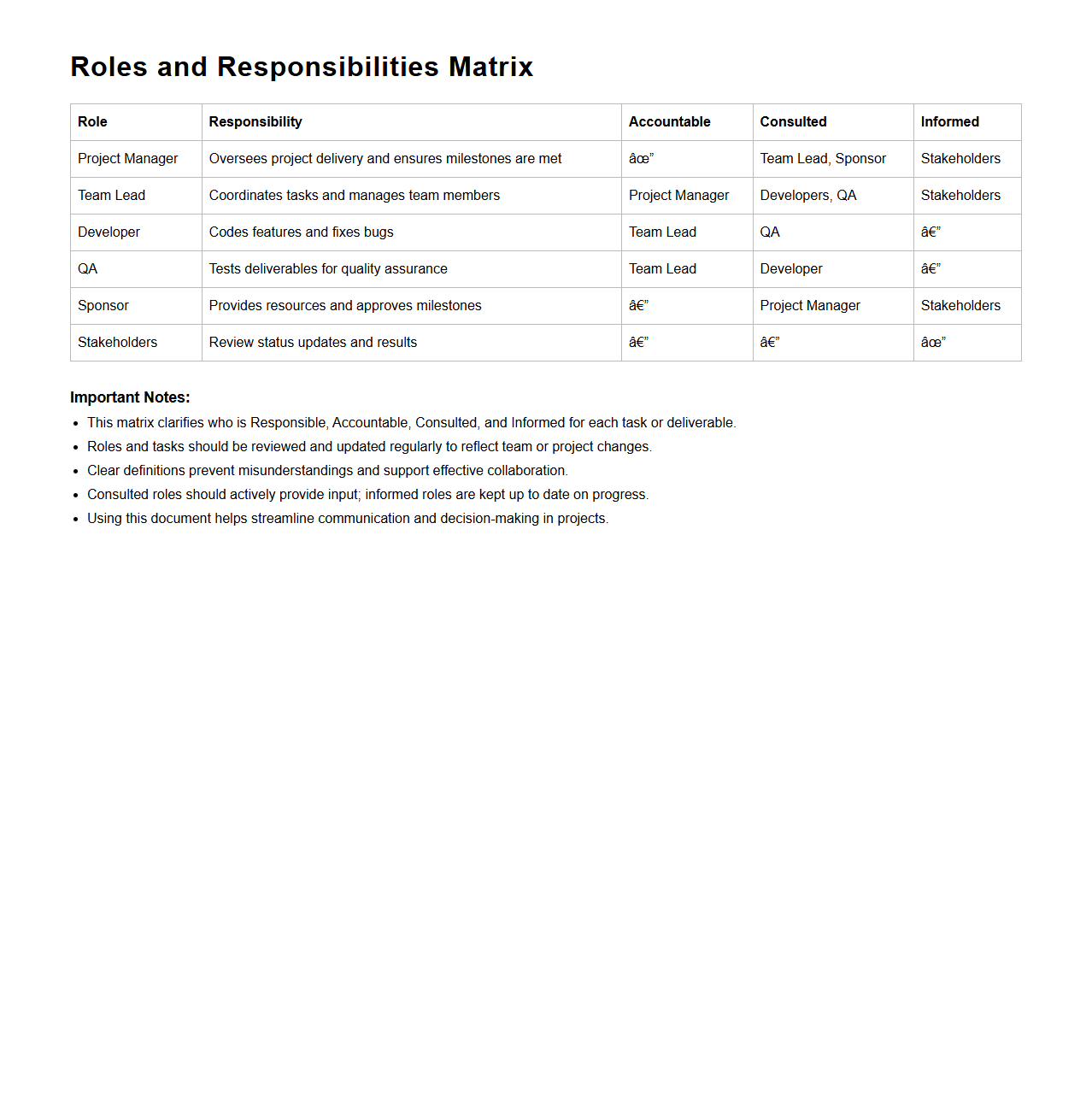
Roles and Responsibilities Matrix
A
Roles and Responsibilities Matrix document clearly defines the duties, tasks, and authorities assigned to each team member within a project or organization. It ensures accountability by mapping roles to specific responsibilities, minimizing confusion and overlap. This matrix enhances collaboration and streamlines workflow by providing a concise reference for who is responsible for what in the execution of tasks.
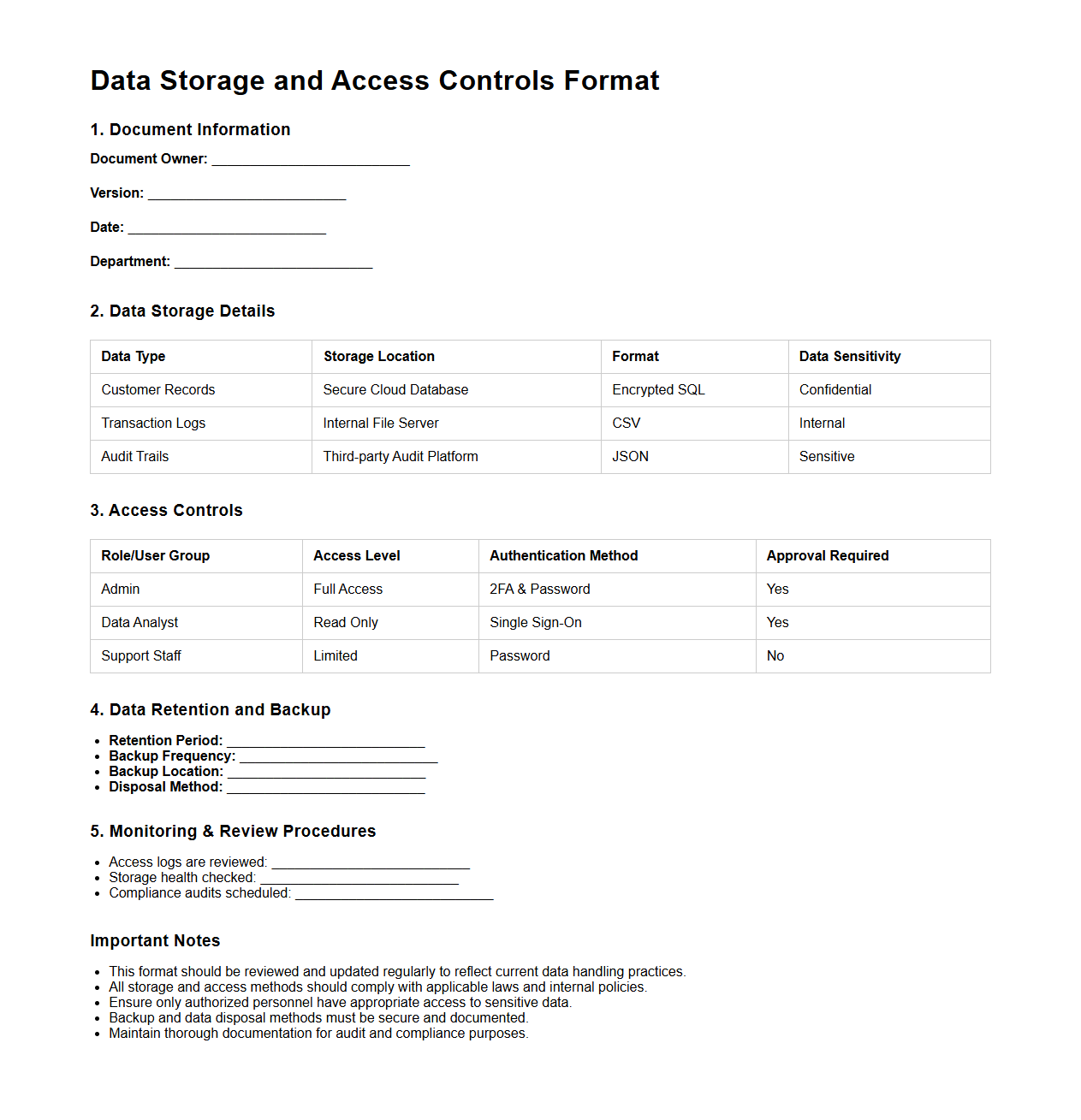
Data Storage and Access Controls Format
A
Data Storage and Access Controls Format document specifies the structured methods for securely storing data and managing permissions to ensure authorized access only. It outlines encryption standards, user authentication protocols, and role-based access controls essential for protecting sensitive information. This document serves as a critical reference for compliance with data protection regulations and organizational security policies.
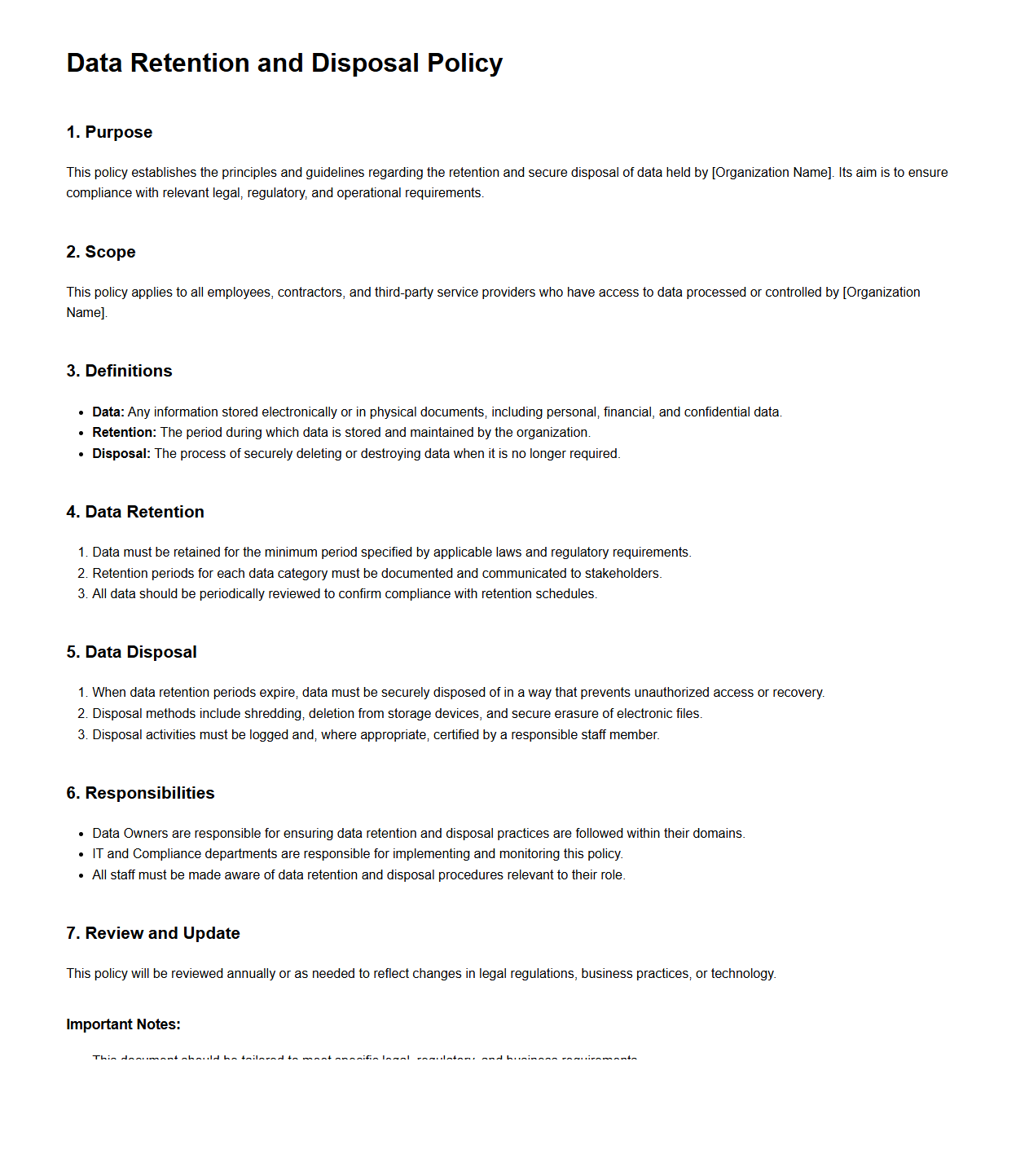
Data Retention and Disposal Policy Template
A
Data Retention and Disposal Policy Template document provides a structured framework for organizations to manage the lifecycle of their data, specifying how long data should be retained and the methods for secure disposal. This template ensures compliance with legal, regulatory, and business requirements by detailing retention periods and destruction procedures. It helps mitigate risks related to data breaches, storage costs, and legal liabilities by promoting consistent data governance practices.
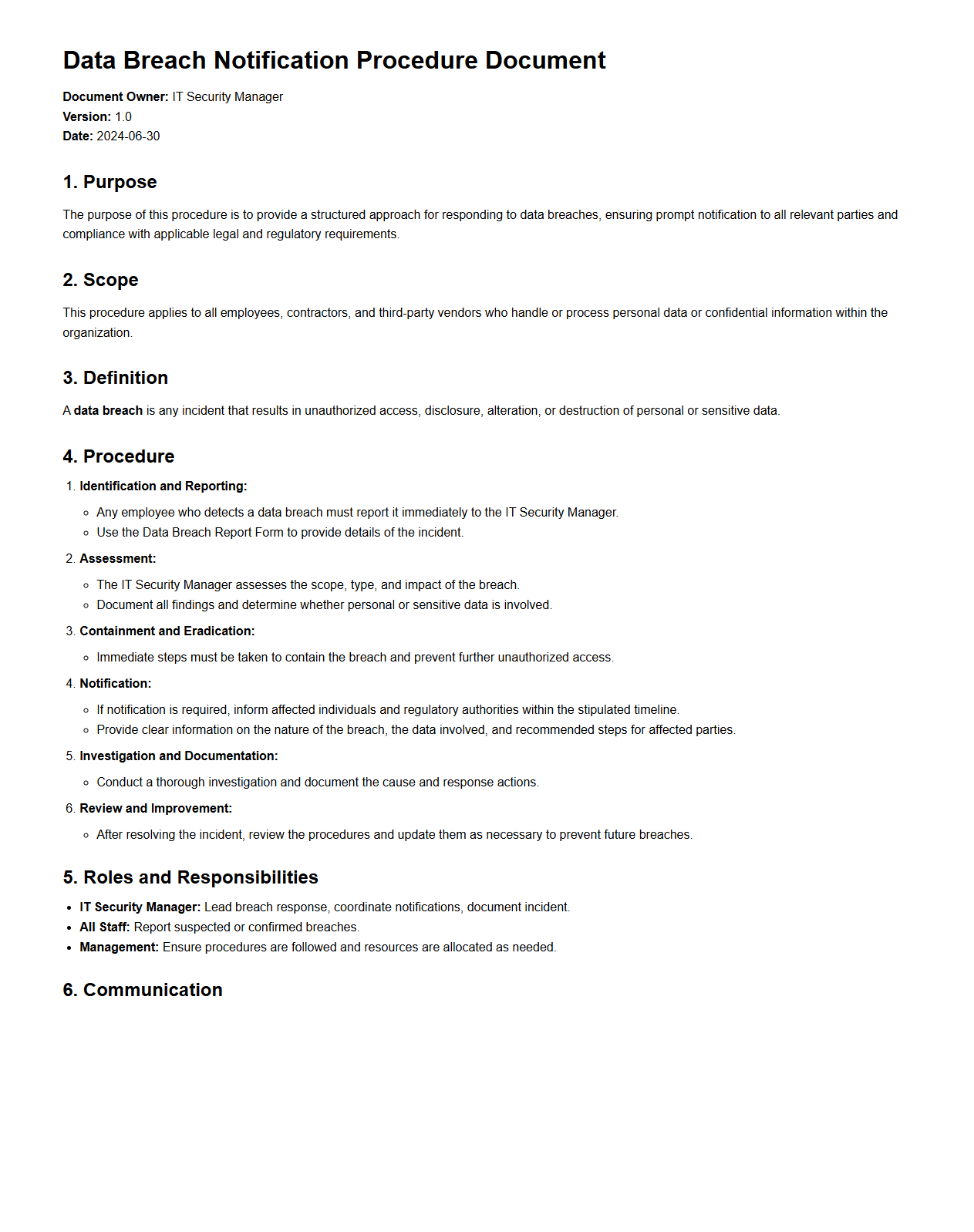
Data Breach Notification Procedure Document
A
Data Breach Notification Procedure Document outlines the systematic steps an organization must follow to identify, assess, and report data breaches promptly in compliance with legal and regulatory requirements. It details roles and responsibilities, communication protocols, and timelines to ensure affected individuals and authorities are informed effectively to mitigate risks. This document serves as a critical tool for maintaining data security and preserving organizational reputation during security incidents.
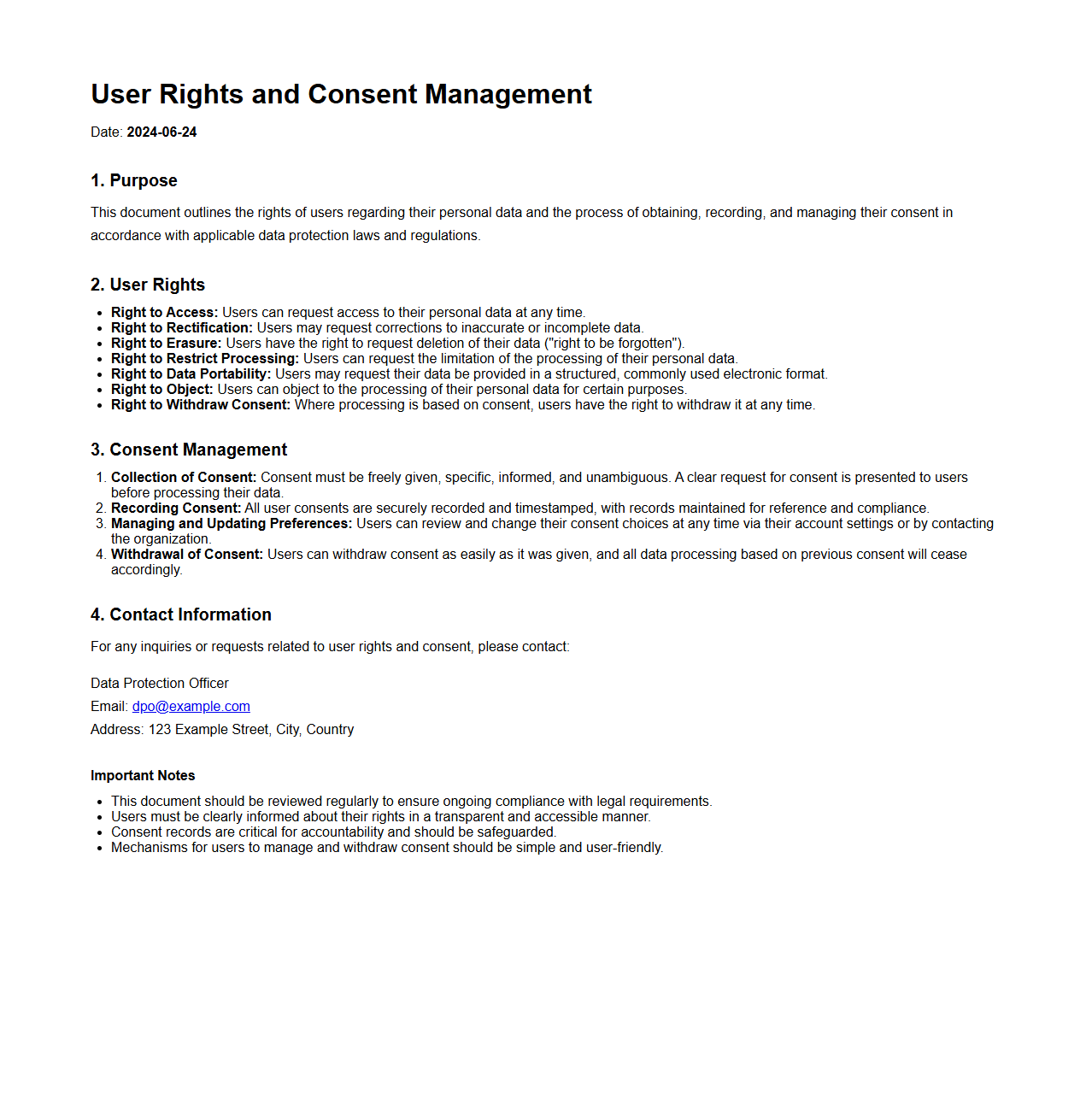
User Rights and Consent Management Format
The
User Rights and Consent Management Format document outlines the procedures and standards for obtaining, recording, and managing user consent in compliance with privacy regulations like GDPR and CCPA. It ensures transparent communication about data collection, processing purposes, and user rights such as access, correction, and deletion of personal information. This format helps organizations maintain lawful data processing, enhance user trust, and facilitate audits by providing a clear record of consent transactions.
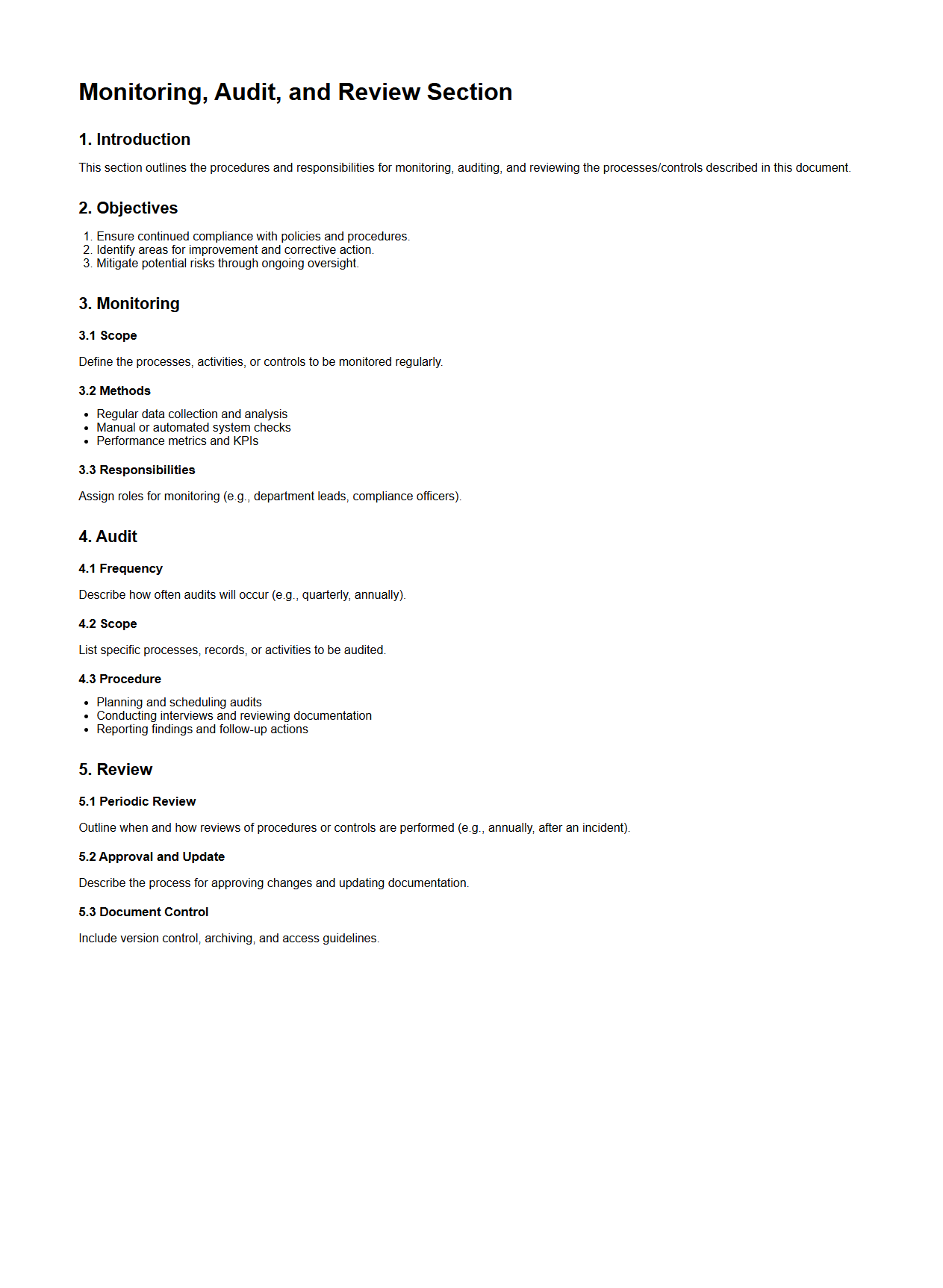
Monitoring, Audit, and Review Section Structure
The
Monitoring, Audit, and Review Section Structure document outlines the framework for systematically tracking compliance, assessing performance, and verifying adherence to established standards within an organization. It details the roles, responsibilities, and procedures for conducting audits, ongoing monitoring, and periodic reviews to ensure continuous improvement and risk management. This document serves as a critical tool for maintaining transparency, accountability, and regulatory compliance across operational processes.
What are the core objectives outlined in the data protection policy for ensuring information security?
The core objectives focus on safeguarding data integrity, maintaining confidentiality, and ensuring data availability. These objectives aim to protect against unauthorized access, data breaches, and accidental loss of information. The policy emphasizes continuous risk assessment and the implementation of robust security controls.
Which data classification levels are specified in the policy document?
The policy specifies three primary data classification levels: Public, Internal, and Confidential. Each level defines the sensitivity of data and prescribes appropriate handling procedures. Clear classification helps ensure that data receives protection commensurate with its value and risk.
What requirements for data access control are mandated by the policy format?
The policy mandates strict access control measures, including role-based access and regular access reviews. It requires authentication, authorization, and logging of all access events to sensitive data. These controls prevent unauthorized data exposure and ensure accountability.
How does the policy document address procedures for data breach notification and response?
The policy outlines a prompt data breach notification process involving immediate reporting to designated authorities. It includes steps for containment, investigation, and communication with affected parties. Timely response minimizes damage and supports regulatory compliance.
What retention and disposal guidelines for sensitive information are included in the policy?
The policy defines fixed retention periods based on data type and legal requirements to avoid unnecessary storage. Upon expiration, it mandates secure disposal methods such as shredding and data wiping to prevent recovery. Adherence to these guidelines reduces risk and supports data lifecycle management.
More Compliance Templates