The Format of Audit Plan for Annual Audit typically includes the audit objectives, scope, and timeline. It outlines key audit areas, resource allocation, and risk assessment to ensure comprehensive coverage. Clear documentation helps streamline the audit process and facilitates effective communication among audit team members.
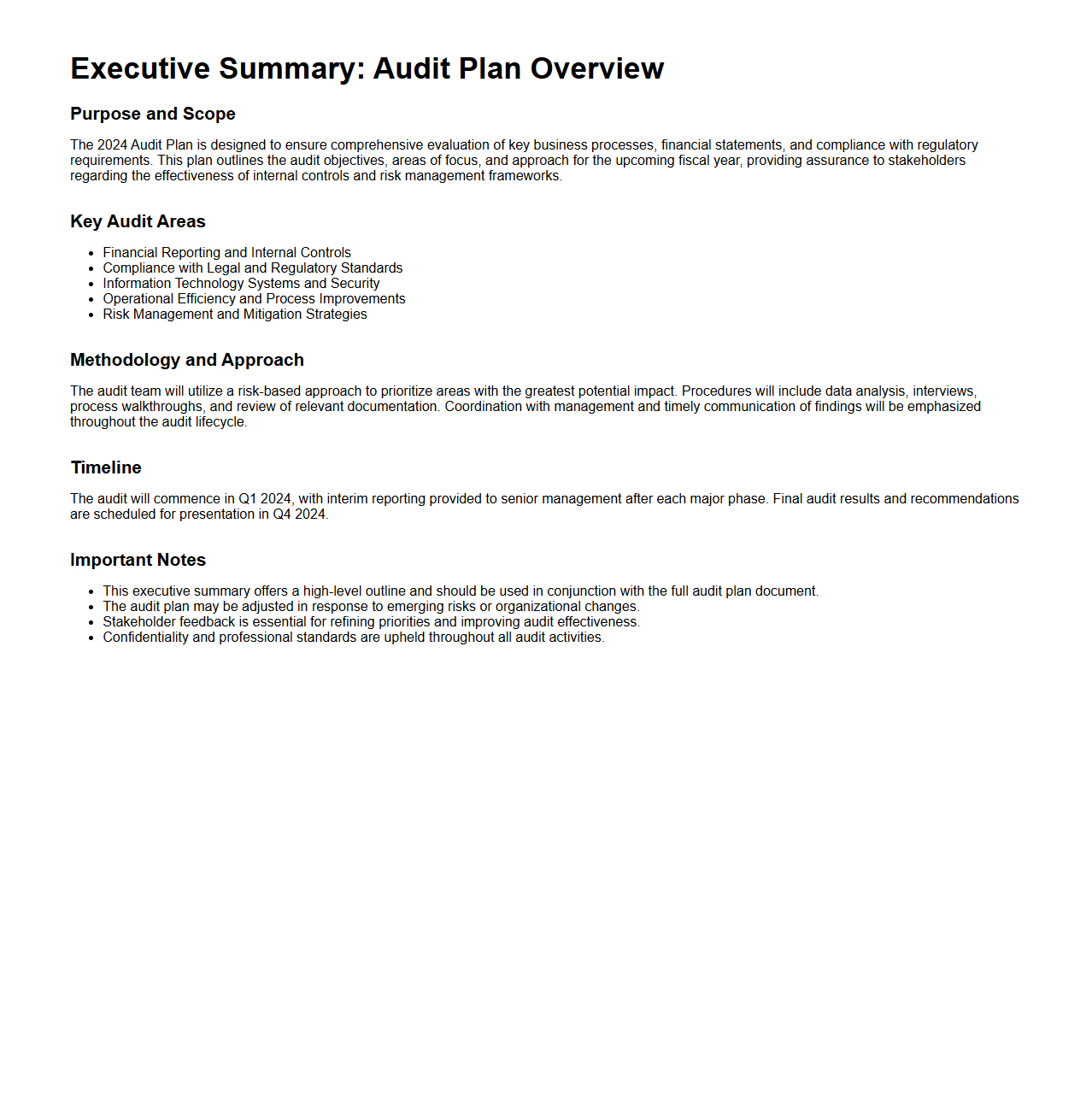
Executive Summary: Audit Plan Overview
The
Executive Summary: Audit Plan Overview document provides a concise summary of the key objectives, scope, and methodology of an upcoming audit. It highlights the audit's primary focus areas, timelines, and resource allocation to ensure alignment with organizational goals. This document serves as a strategic guide for stakeholders to understand the audit's intent and expected outcomes clearly.
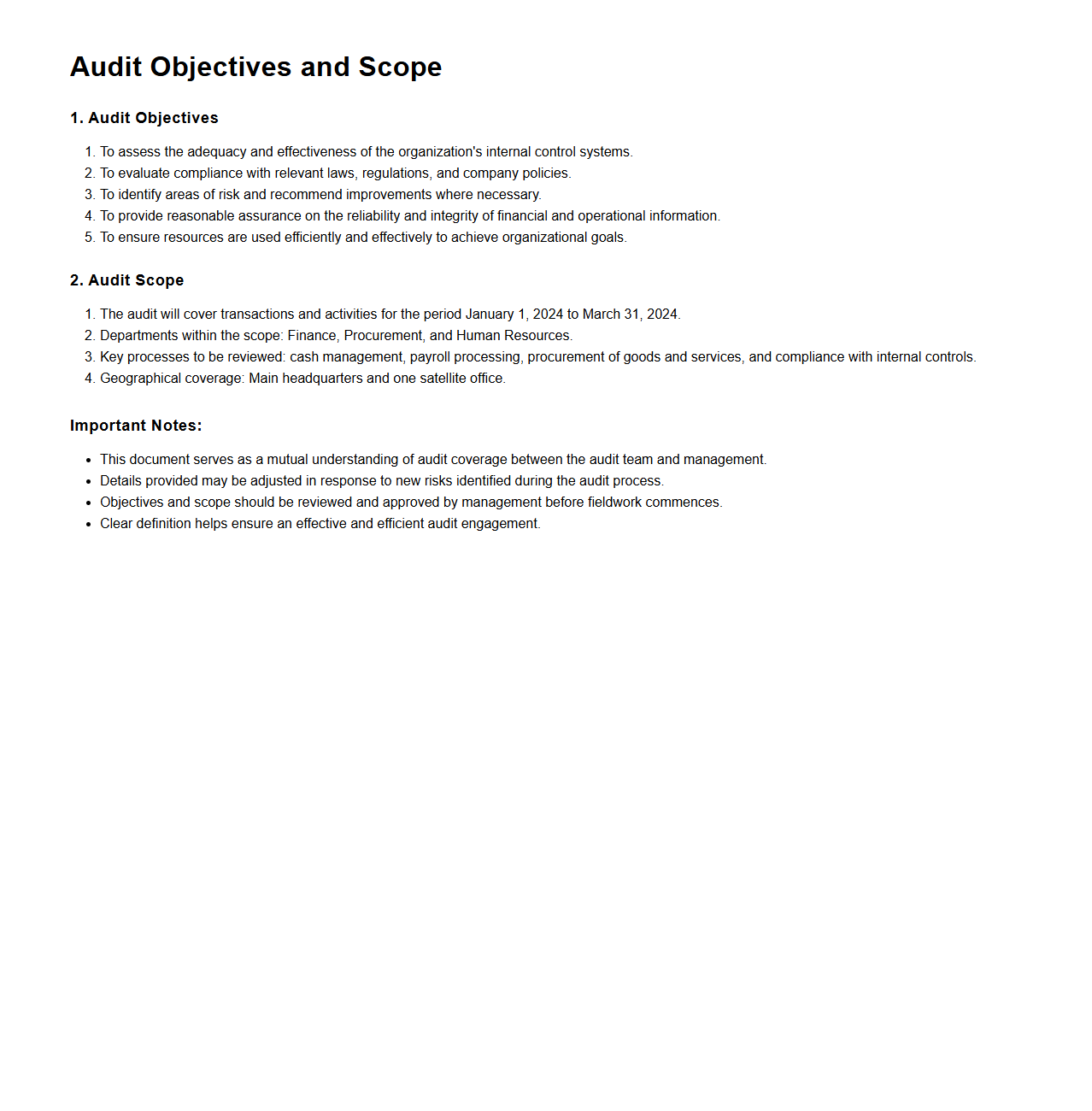
Audit Objectives and Scope
The
Audit Objectives and Scope document defines the specific goals and boundaries of an audit, outlining what areas will be examined and the criteria against which they will be assessed. It helps ensure clarity by identifying the key risks, compliance requirements, and operational aspects to be evaluated during the audit process. This document serves as a foundational guide for auditors to focus their efforts efficiently and deliver accurate, relevant findings.
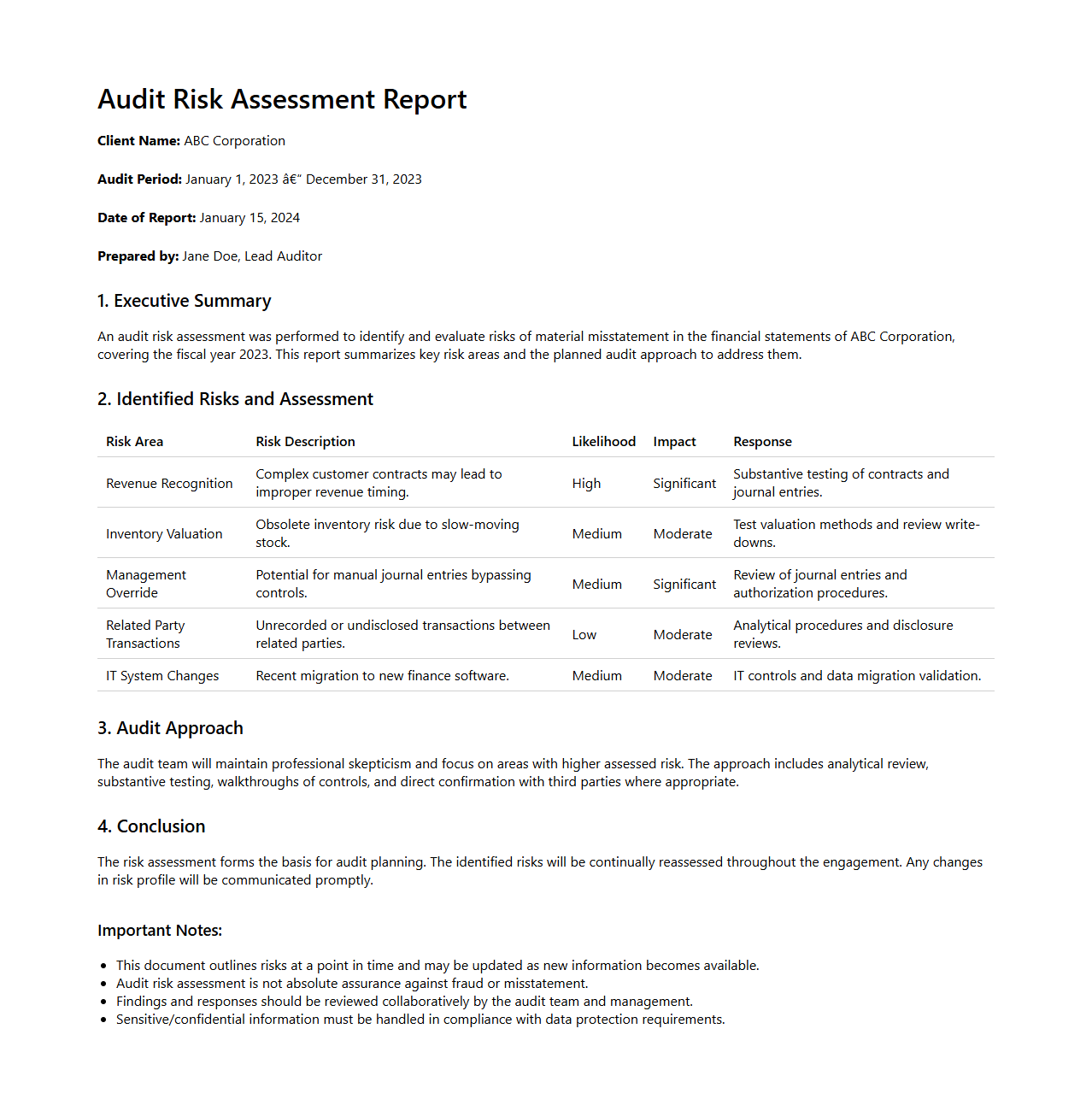
Audit Risk Assessment Report
An
Audit Risk Assessment Report is a critical document used by auditors to identify and evaluate the risks of material misstatement in a company's financial statements. It outlines potential areas of concern by analyzing inherent, control, and detection risks, guiding the audit strategy and resource allocation. This report ensures a focused audit approach, enhancing the accuracy and reliability of audit conclusions.
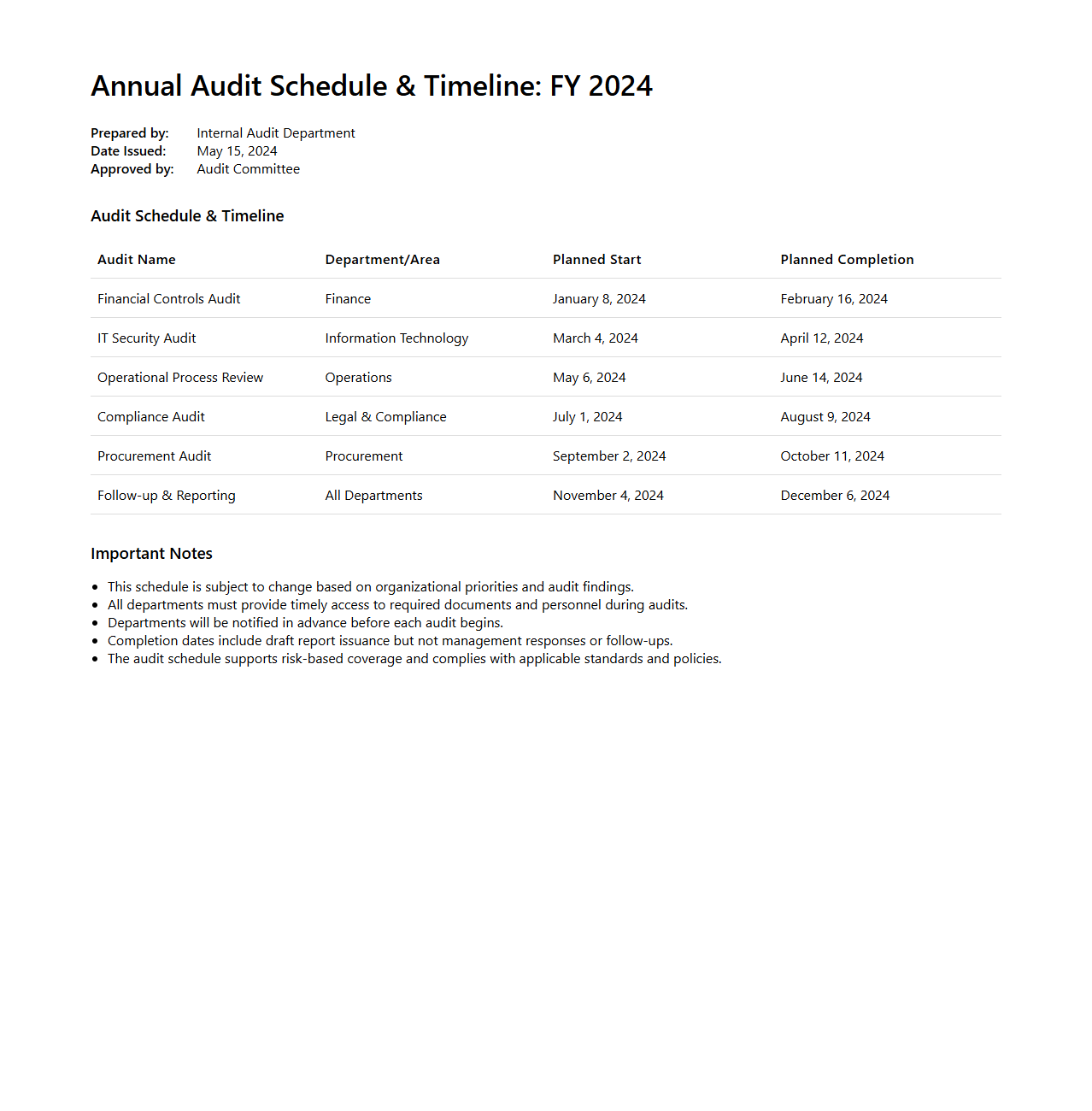
Annual Audit Schedule and Timeline
An
Annual Audit Schedule and Timeline document outlines the planned dates and key milestones for conducting audits throughout the year, ensuring timely compliance with regulatory requirements. It provides a structured framework for organizing audit activities, assigning responsibilities, and tracking progress to enhance transparency and accountability. This document is essential for aligning audit resources and optimizing workflow efficiency within an organization.
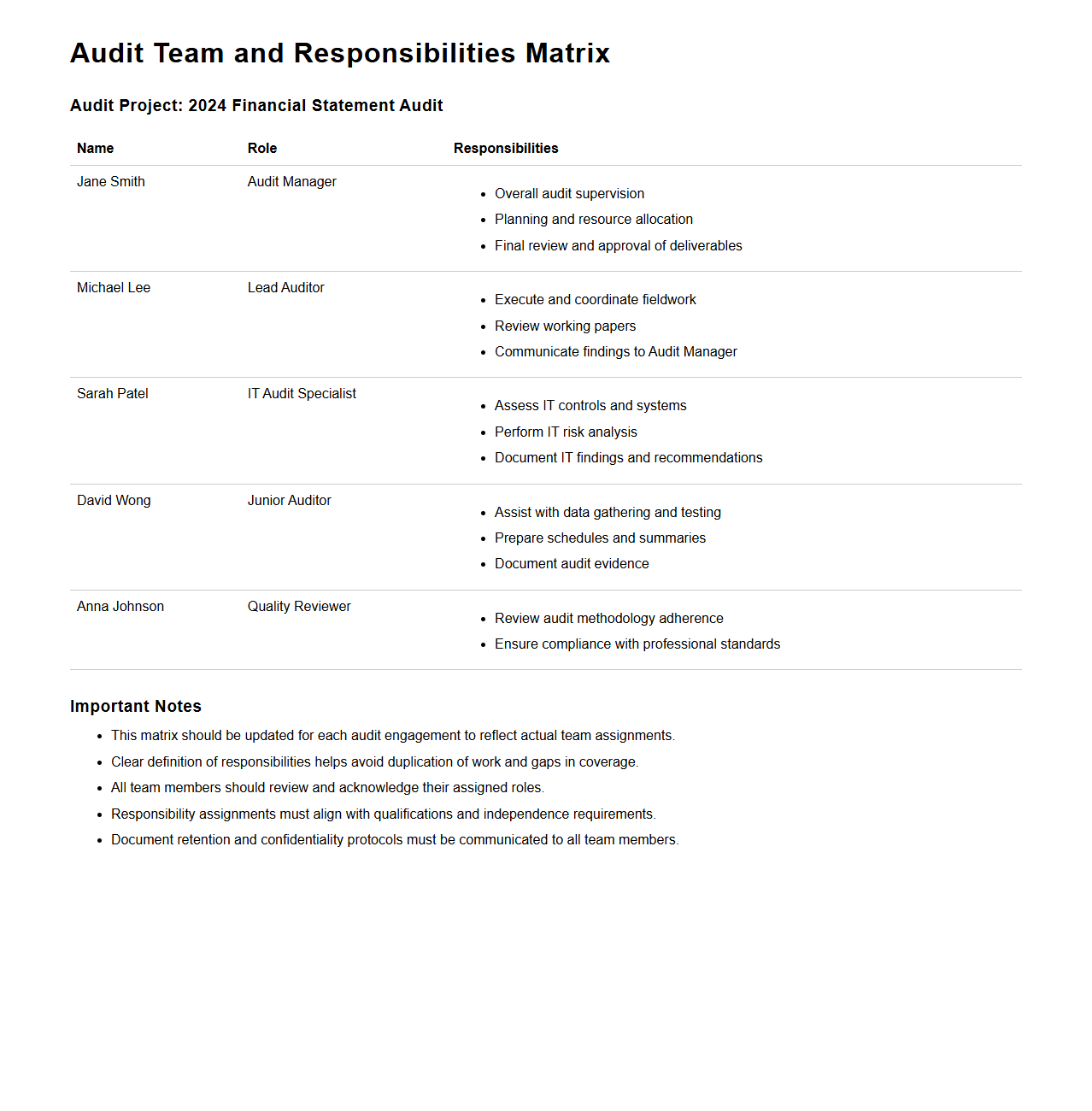
Audit Team and Responsibilities Matrix
The
Audit Team and Responsibilities Matrix document outlines the specific roles and duties assigned to each member involved in an audit process. It serves as a structured tool to ensure clarity, accountability, and efficient workflow management by mapping responsibilities against team members. This matrix is essential for maintaining compliance, streamlining communication, and achieving audit objectives effectively.
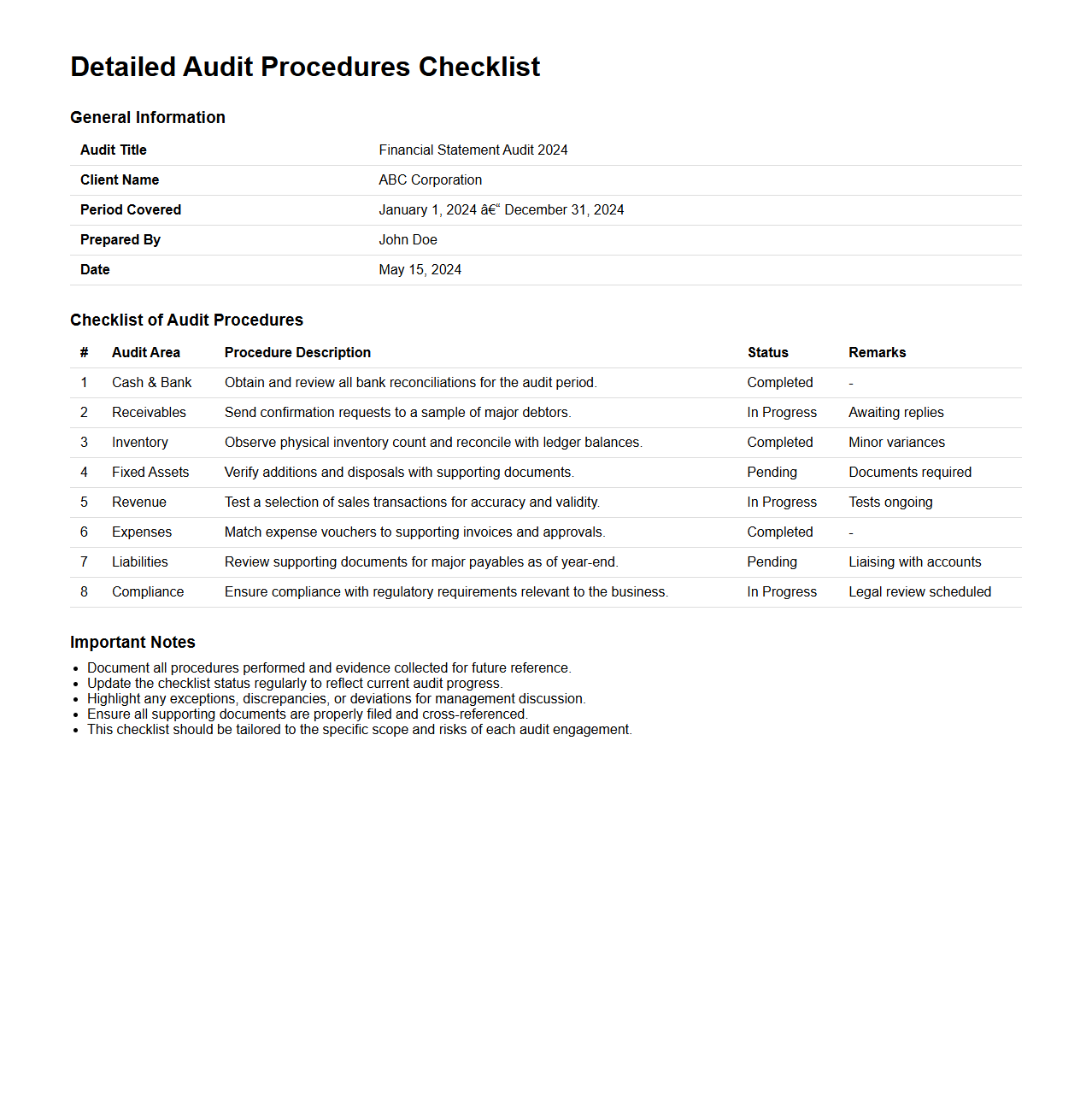
Detailed Audit Procedures Checklist
A
Detailed Audit Procedures Checklist document outlines specific steps and guidelines auditors follow to ensure comprehensive examination of financial records and internal controls. It serves as a structured framework to verify compliance, accuracy, and completeness of audit processes, enhancing consistency and efficiency. This checklist helps identify potential risks and areas requiring further investigation during an audit engagement.
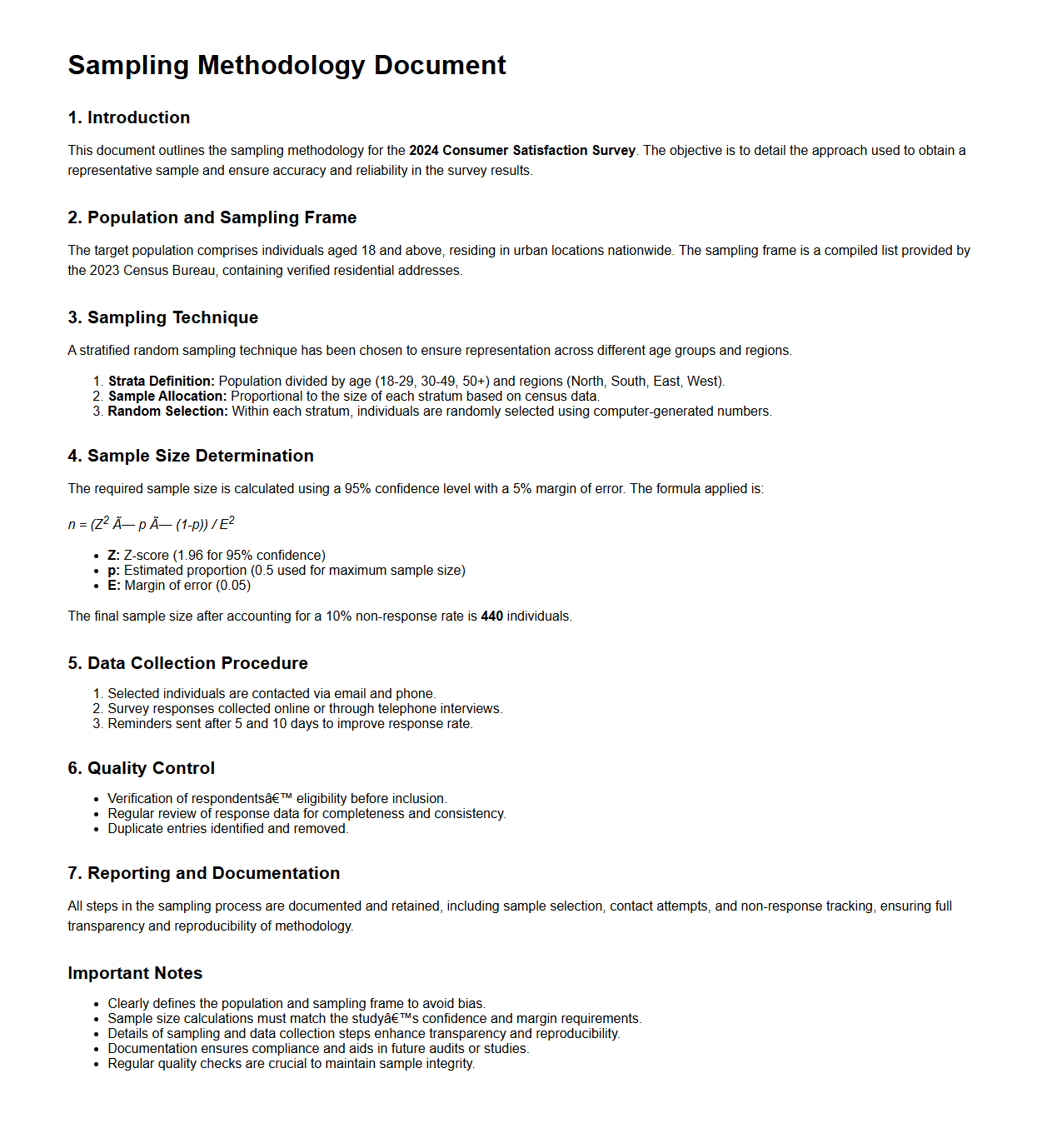
Sampling Methodology Document
A
Sampling Methodology Document outlines the systematic approach used to select a representative subset from a larger population for research or analysis. It details the sampling techniques, criteria, sample size, and procedures to ensure data accuracy and validity. This document is essential for maintaining transparency and replicability in studies across various fields.
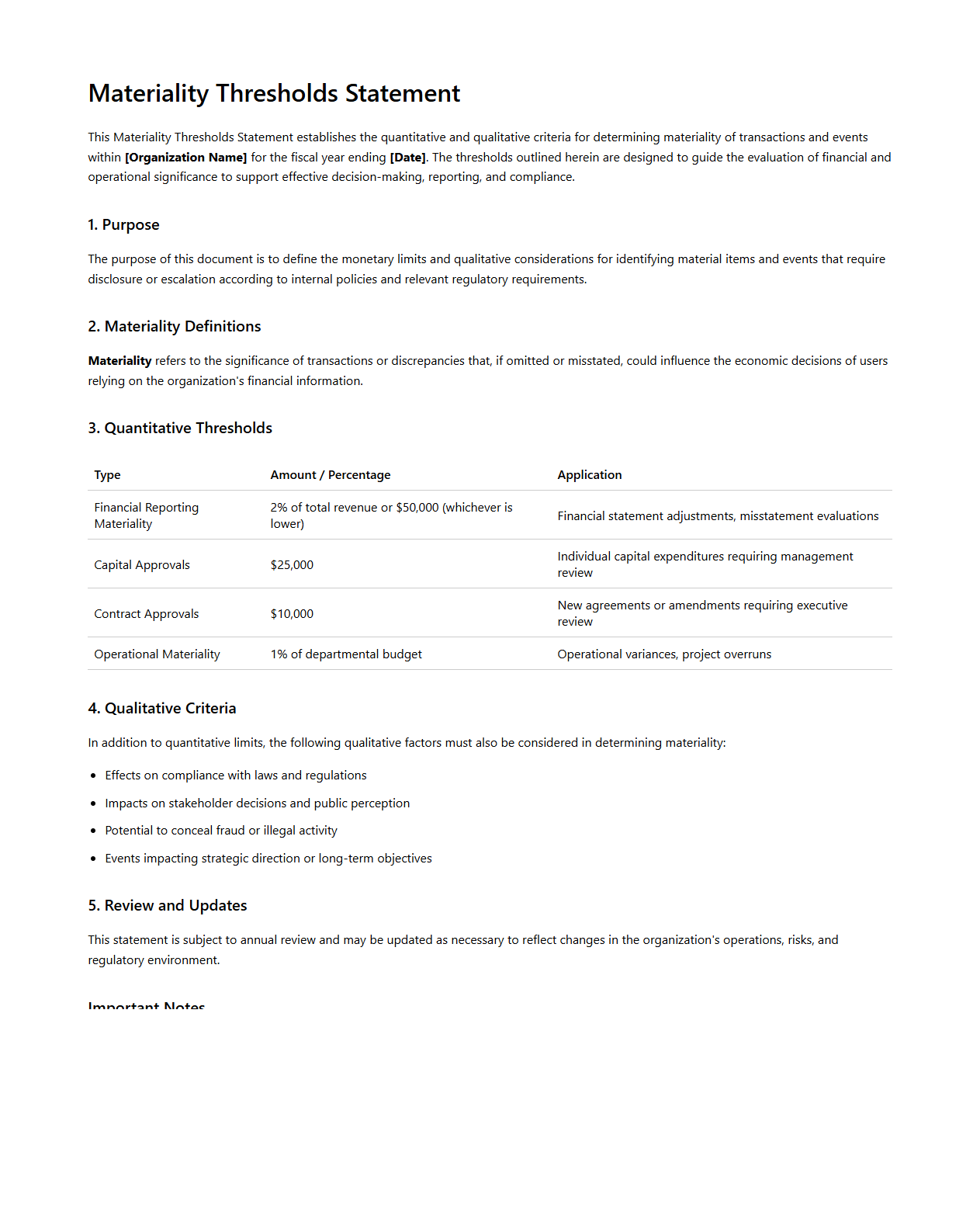
Materiality Thresholds Statement
A
Materiality Thresholds Statement document defines the specific criteria and quantitative limits that determine the significance of financial or operational information within an organization. This statement guides decision-makers in identifying which data or issues are substantial enough to impact business performance, regulatory compliance, or stakeholder communication. Clear materiality thresholds ensure consistent evaluation and reporting of critical information across various departments and reporting frameworks.
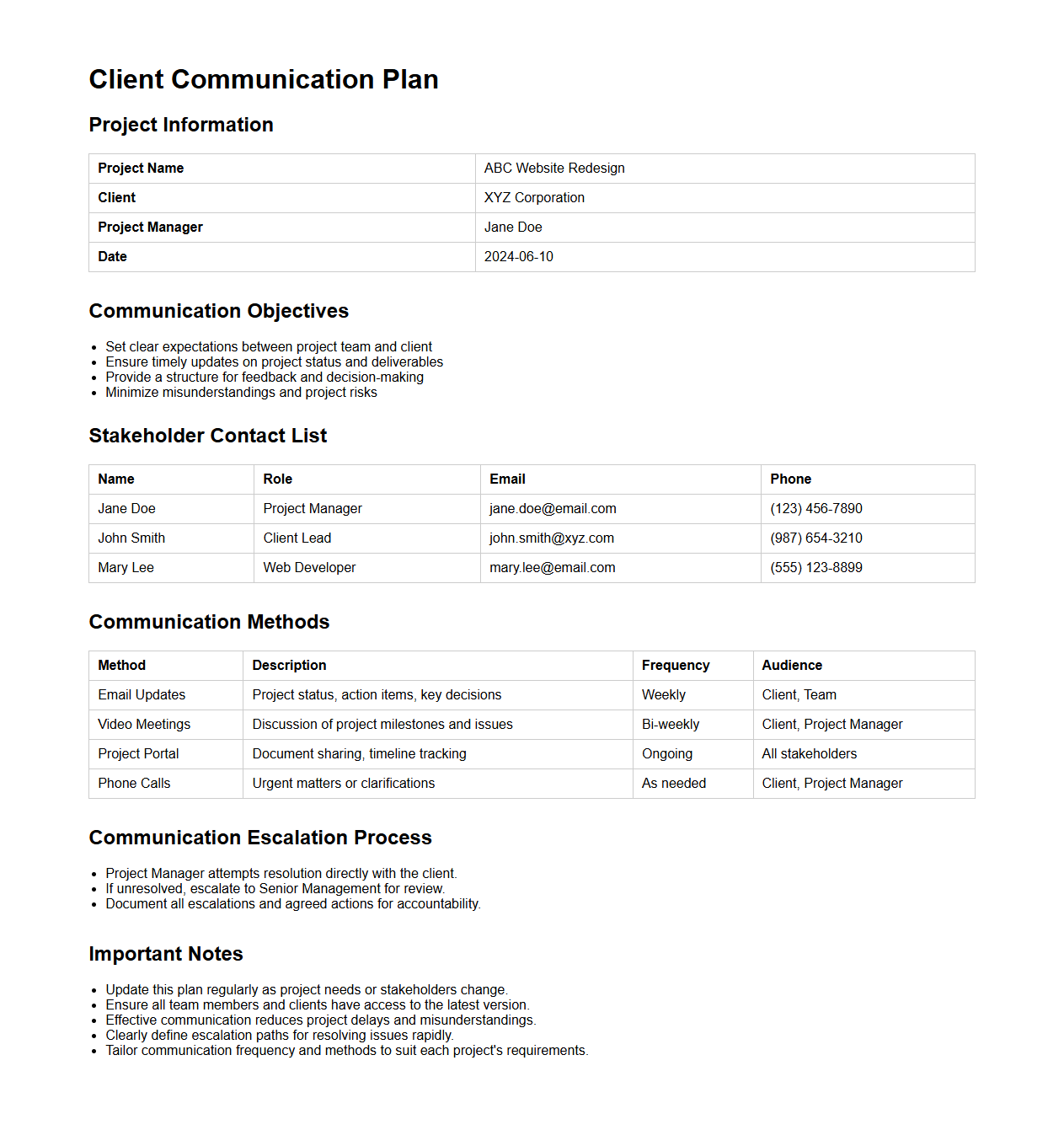
Client Communication Plan
A
Client Communication Plan document outlines the strategies and methods used to ensure effective and consistent communication between a business and its clients throughout a project or service engagement. It defines communication objectives, key messages, channels, frequency, and responsible parties to enhance transparency and client satisfaction. This document helps prevent misunderstandings, manages expectations, and fosters strong client relationships by establishing clear communication protocols.
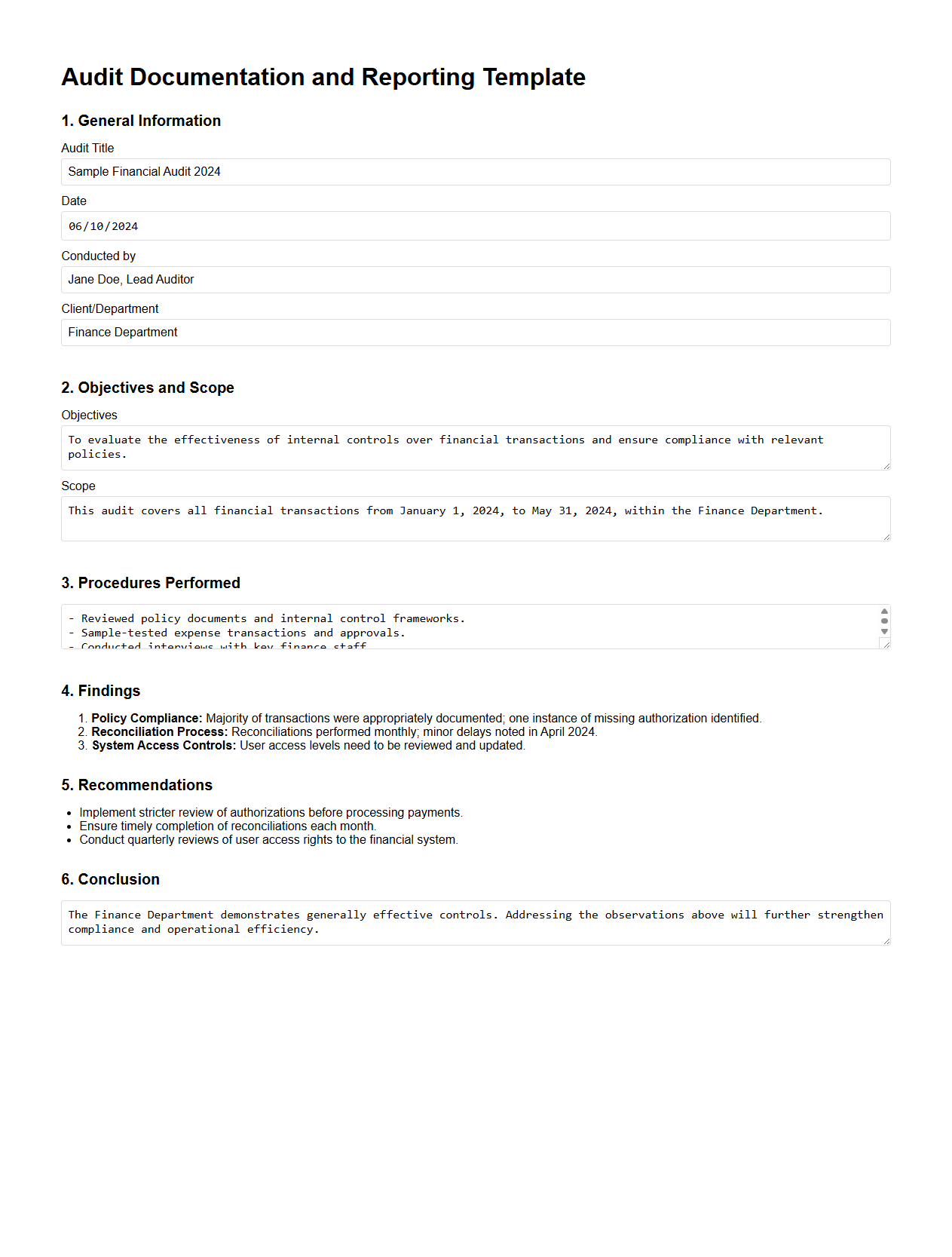
Audit Documentation and Reporting Template
Audit Documentation and Reporting Template is a structured framework designed to record, organize, and present findings from an audit process. It ensures consistency and accuracy by standardizing the collection of evidence, observations, and conclusions, facilitating transparent communication between auditors and stakeholders. Using a
comprehensive audit documentation template enhances compliance with regulatory requirements and supports effective decision-making.
What specific headers are required in the format of an audit plan letter for an annual audit?
An audit plan letter for an annual audit typically includes essential headers like Introduction, Objectives, Scope, and Audit Methodology. Other important headers include Audit Schedule, Roles and Responsibilities, and Reporting Procedures. These headers ensure a clear and structured presentation of the audit plan.
How should the scope and objectives section be structured in the audit plan document?
The scope and objectives section should clearly define what areas the audit will cover and the key goals to be achieved. It is important to break down the scope into specific activities or departments and state measurable objectives aligned with organizational standards. This structure helps in setting precise expectations for the audit.
What template is recommended for outlining audit timelines and milestones in the plan letter?
A Gantt chart template is highly recommended for outlining audit timelines and milestones within the plan letter. It visually represents task durations, deadlines, and dependencies, making schedule adherence easy to track. This method enhances clarity and accountability for all participants.
How are responsibilities and audit team members listed in the annual audit plan format?
Responsibilities and audit team members are usually listed in a dedicated section with a clear table or matrix format. This format links each team member with their specific duties and reporting lines. It ensures transparent communication of roles and promotes efficient teamwork.
Which annexures or appendices are commonly attached to the audit plan letter for annual audits?
Common annexures or appendices include detailed audit checklists, risk assessments, and regulatory compliance references. These supplementary documents support the main audit plan by providing additional context and technical information. Including them enhances the thoroughness and professionalism of the audit plan letter.