Format of Audit Working Papers for Evidence Collection typically includes a clear, organized layout featuring headers, dates, and reference numbers to ensure traceability and completeness. Each working paper should provide a concise description of the audit procedures performed, evidence gathered, and conclusions reached to support the audit findings. Proper formatting enhances review efficiency and compliance with auditing standards.
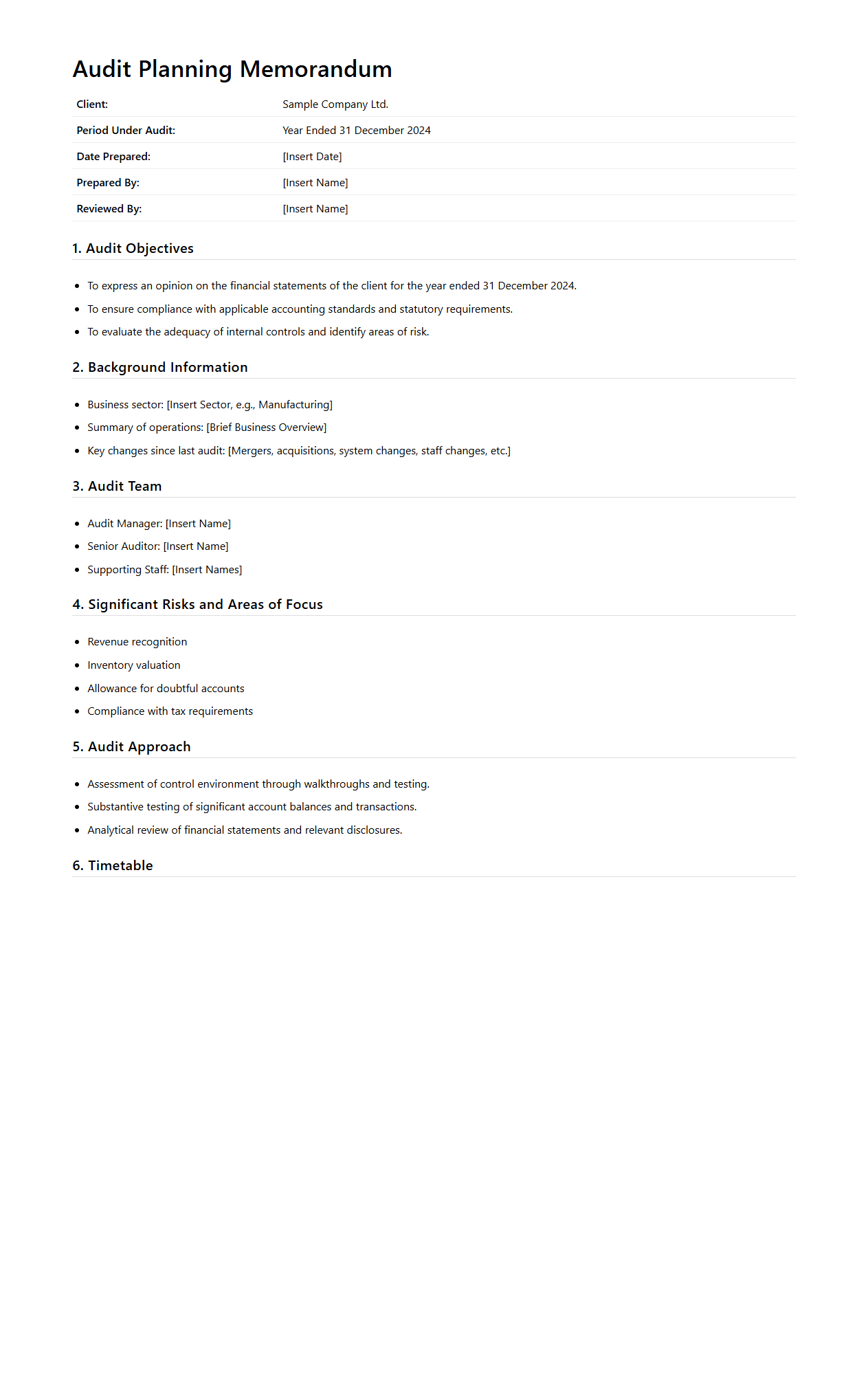
Audit Planning Memorandum Template
An
Audit Planning Memorandum Template is a structured document used by auditors to outline the scope, objectives, and strategies of an audit engagement. It serves as a roadmap for the audit process, detailing key areas of focus, risk assessments, and resource allocation to ensure thorough and efficient examination of financial statements. This template helps maintain consistency, enhance communication within the audit team, and provide clear documentation for regulatory compliance.
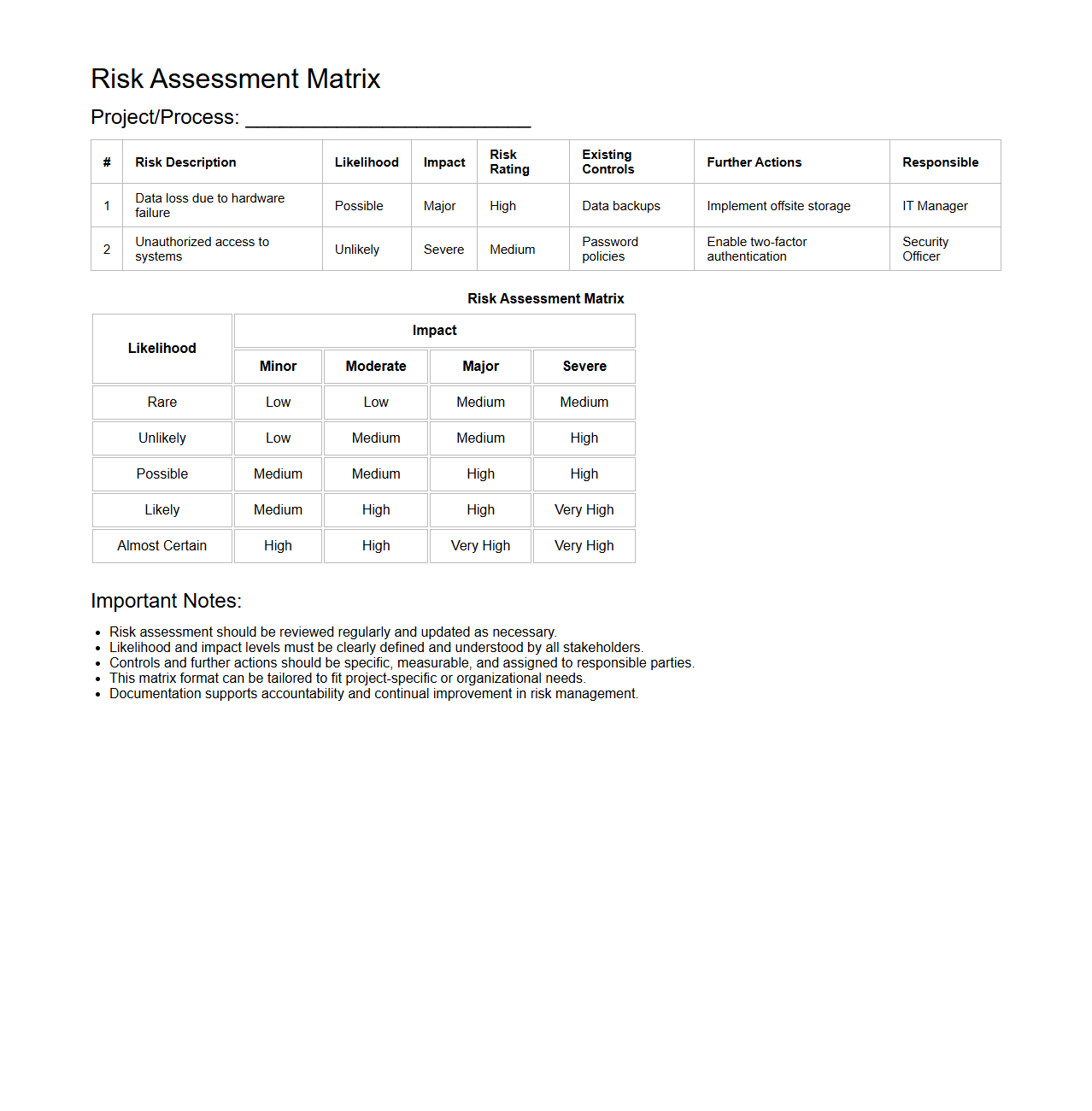
Risk Assessment Matrix Format
A
Risk Assessment Matrix Format document is a structured tool used to evaluate and prioritize risks by categorizing their likelihood and impact. It visually represents risk levels through a grid, enabling organizations to identify critical risks and allocate resources effectively for mitigation. This format enhances decision-making by providing clear, systematic analysis of potential hazards and their consequences.
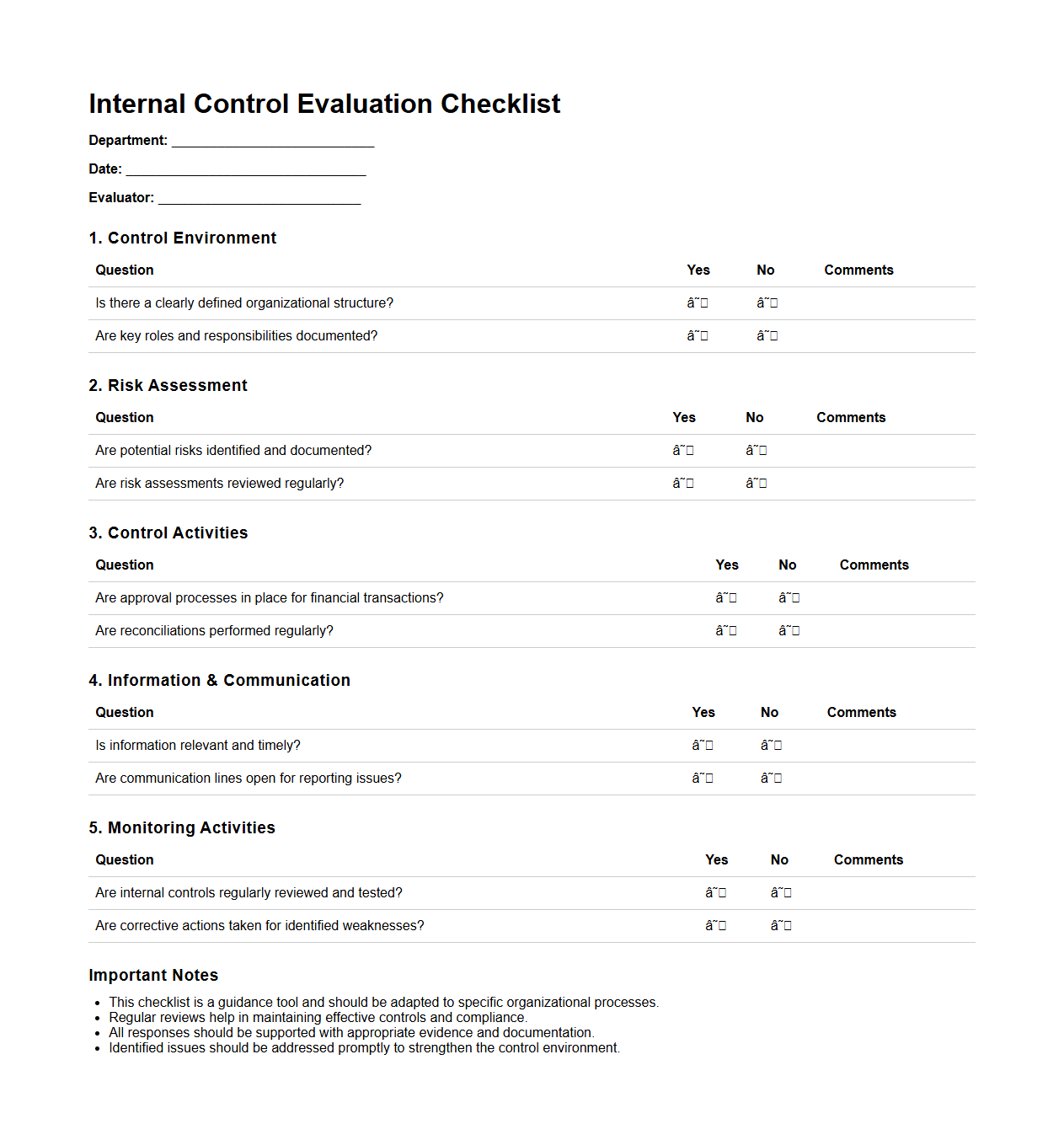
Internal Control Evaluation Checklist
An
Internal Control Evaluation Checklist document systematically assesses an organization's internal control systems to ensure effectiveness and compliance with regulatory standards. It identifies control weaknesses, enhances risk management processes, and supports accurate financial reporting. This checklist serves as a critical tool for auditors and management to maintain operational efficiency and safeguard assets.
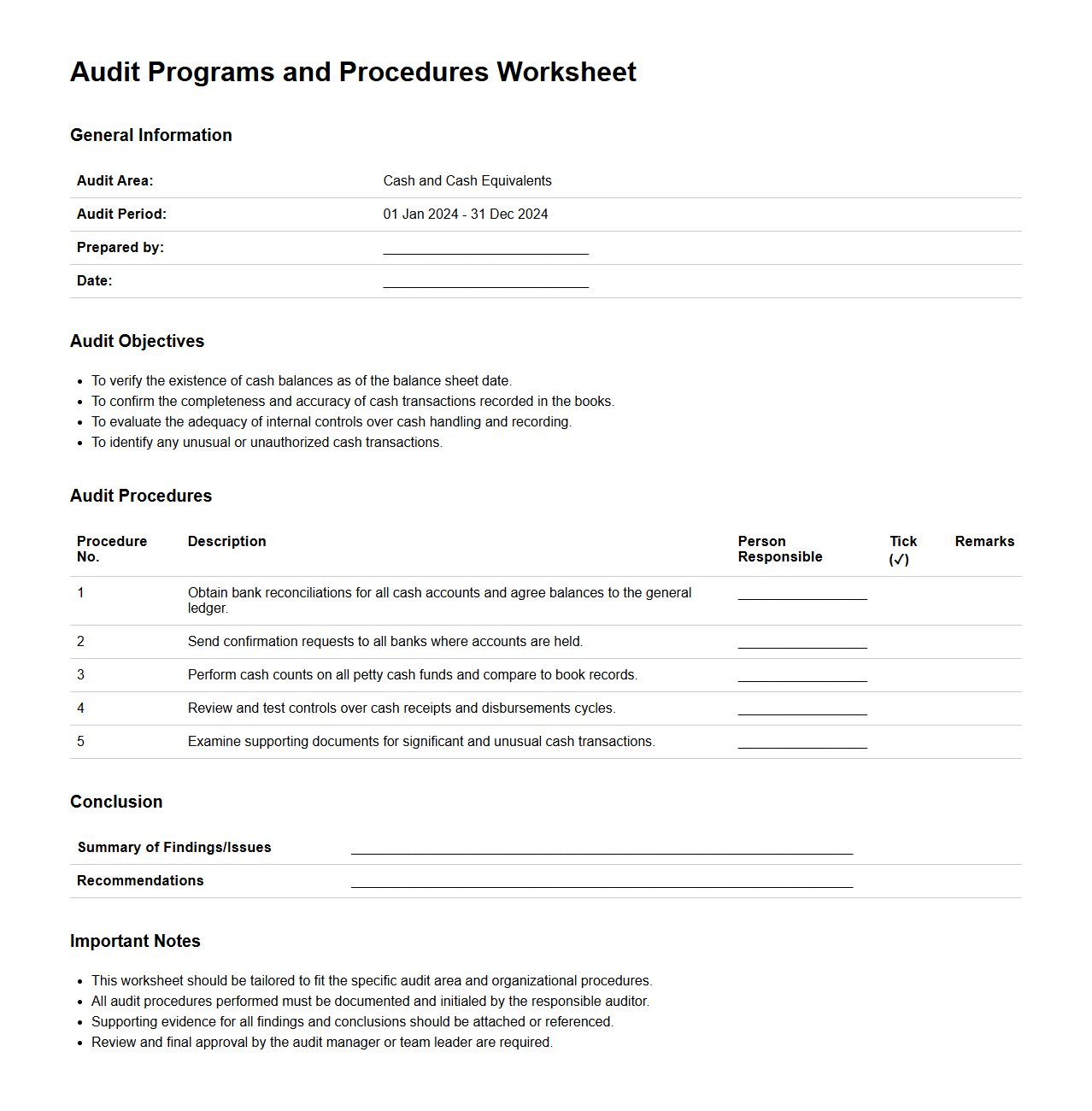
Audit Programs and Procedures Worksheet
An
Audit Programs and Procedures Worksheet is a detailed document used by auditors to outline the specific steps and methods for examining financial records and internal controls during an audit. It serves as a systematic guide to ensure consistency, thoroughness, and compliance with auditing standards throughout the audit process. This worksheet helps in tracking audit evidence, identifying risks, and documenting findings for reporting and review purposes.
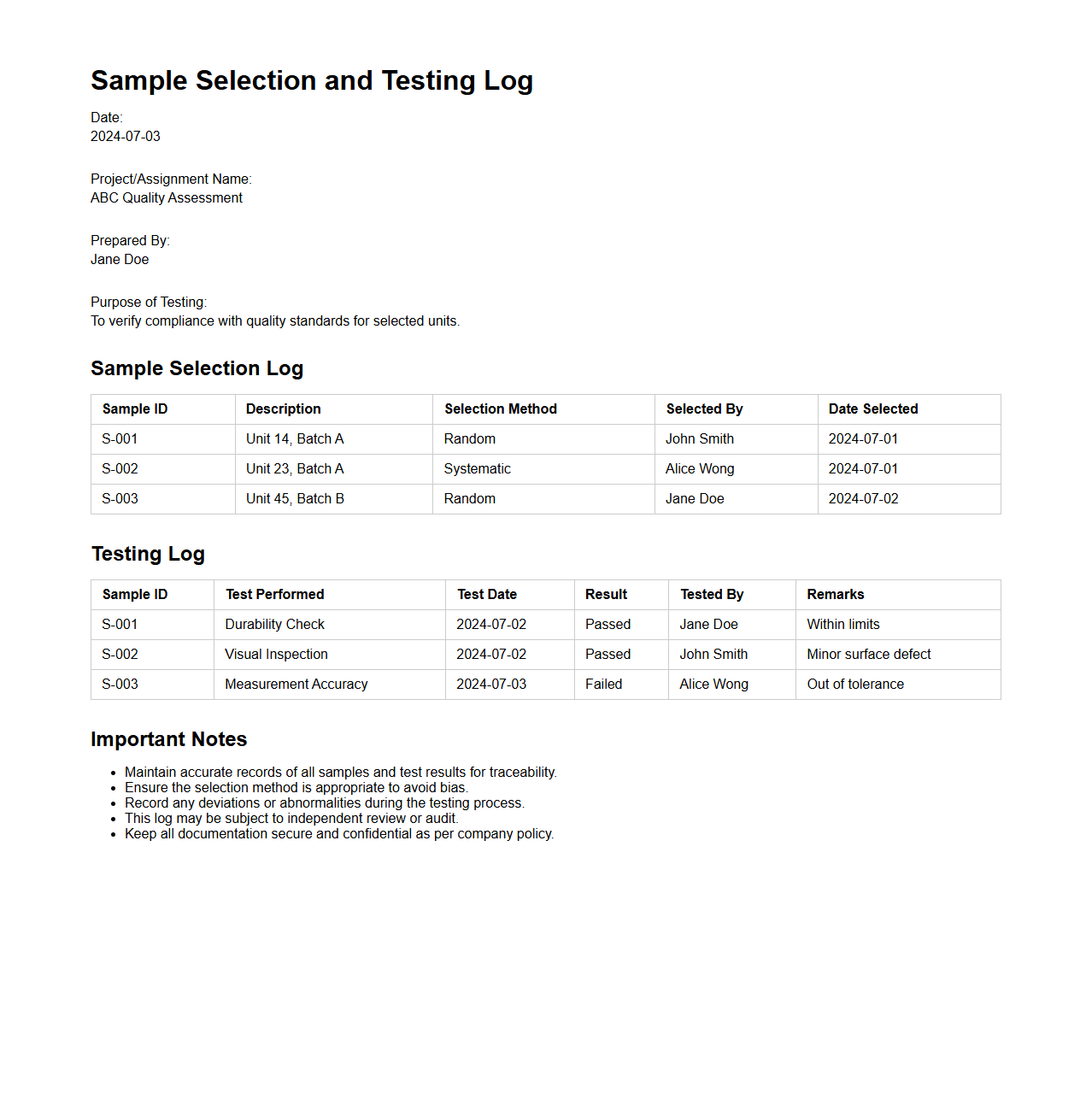
Sample Selection and Testing Log
The
Sample Selection and Testing Log document records detailed information about the process of choosing and analyzing samples in quality control or research projects. It tracks sample identification, selection criteria, testing methods, and results to ensure traceability and compliance with standards. This log helps maintain data integrity and supports decision-making by providing a clear audit trail of testing activities.
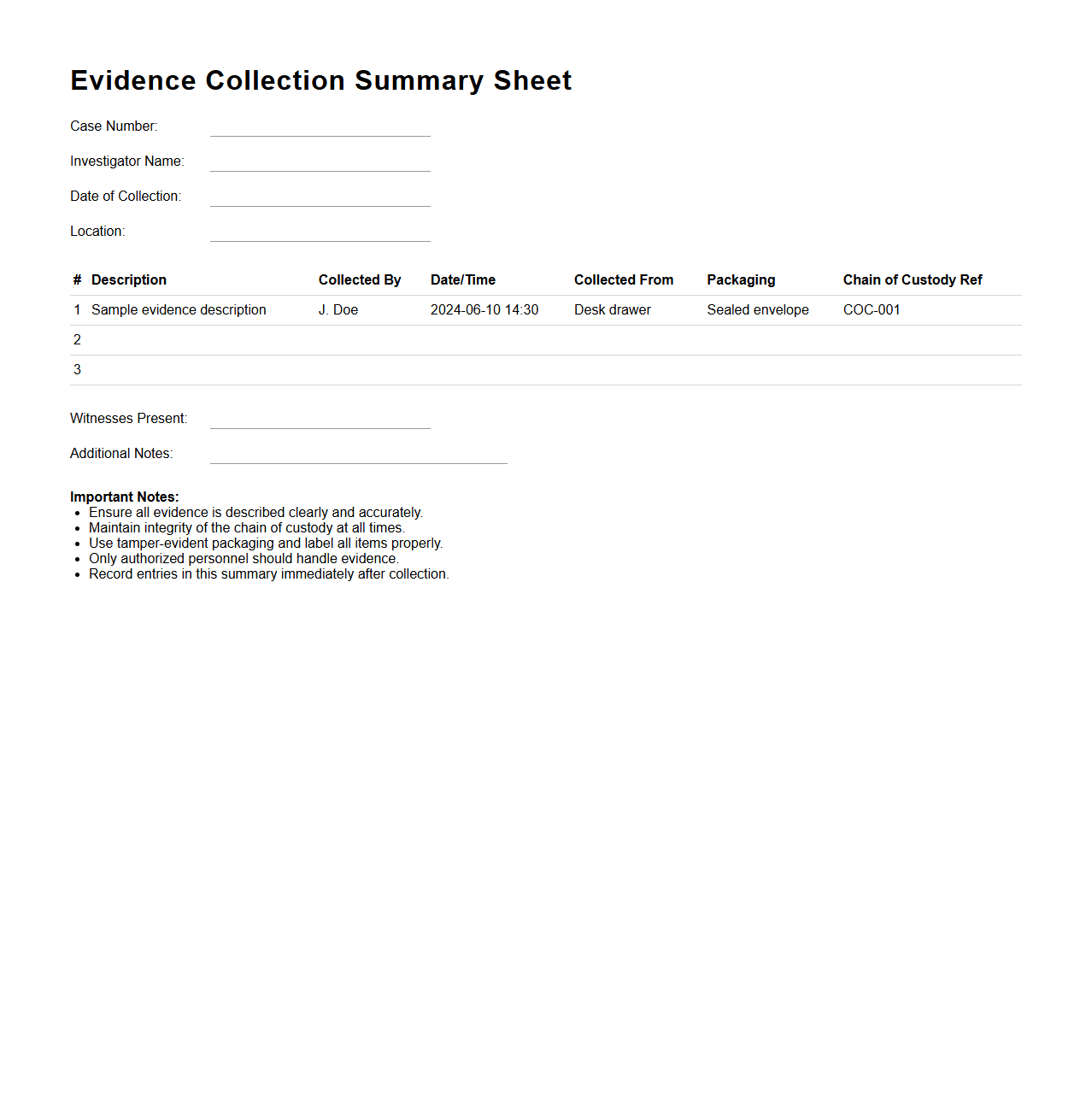
Evidence Collection Summary Sheet
The
Evidence Collection Summary Sheet document serves as a detailed record of all evidence gathered during an investigation, ensuring accurate tracking and accountability. It includes critical information such as item descriptions, collection dates, locations, and chain of custody details, which are essential for maintaining the integrity of the evidence. This document facilitates clear communication among investigative teams and supports the legal process by providing a comprehensive overview of collected materials.
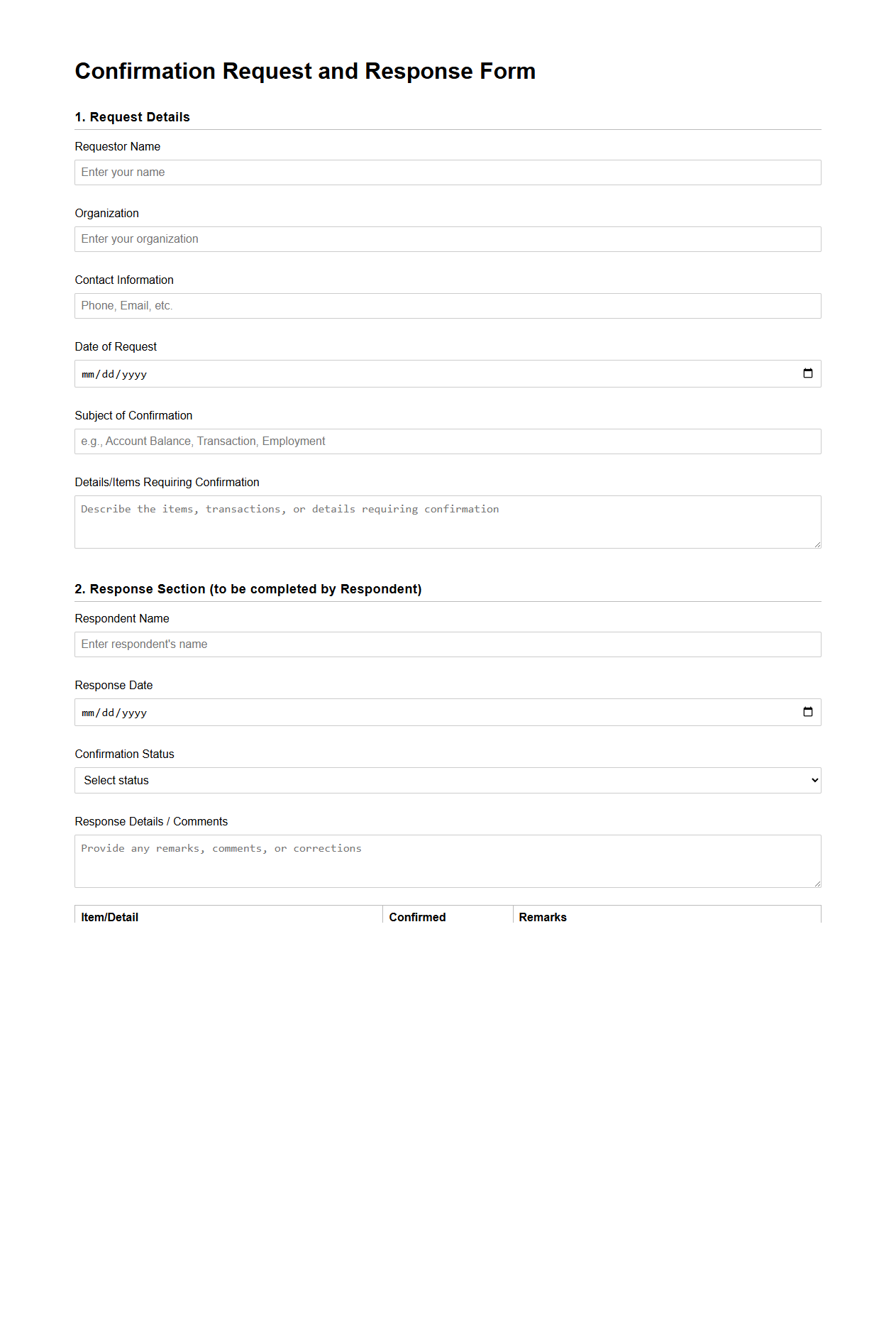
Confirmation Request and Response Form
A
Confirmation Request and Response Form document serves as an official tool to verify information or seek agreement from involved parties. It facilitates clear communication by enabling the requester to outline specific details requiring confirmation and allows the recipient to provide an accurate and accountable response. This form enhances record-keeping and accountability across various business, legal, and administrative processes.
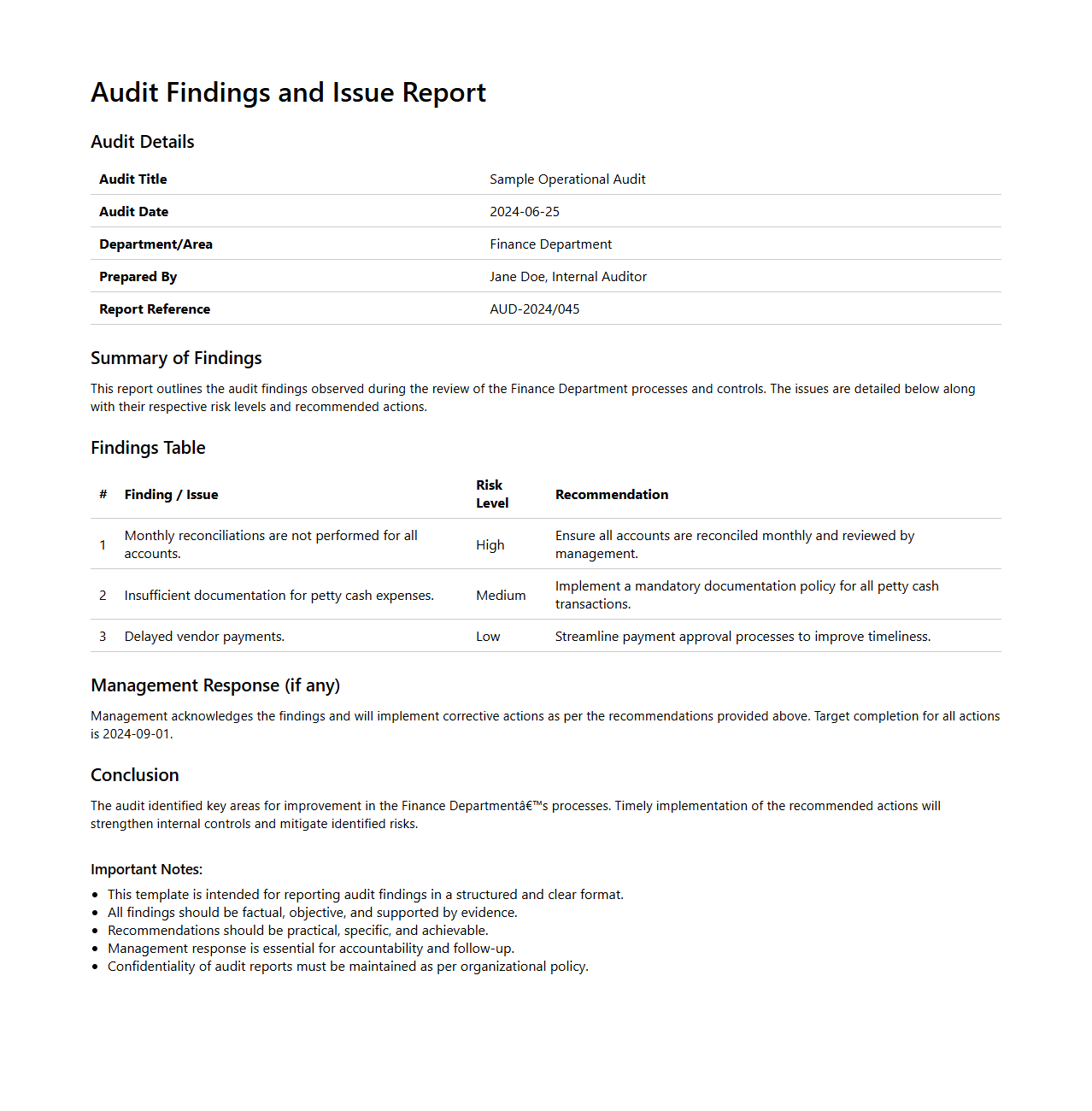
Audit Findings and Issue Report Template
An
Audit Findings and Issue Report Template document is a structured tool designed to systematically capture and present the results of an audit, including identified discrepancies, risks, and compliance gaps. It facilitates clear communication of audit observations, supporting evidence, and recommended corrective actions to stakeholders. Using this template ensures consistency, accuracy, and efficiency in reporting audit issues, enhancing follow-up and resolution processes.
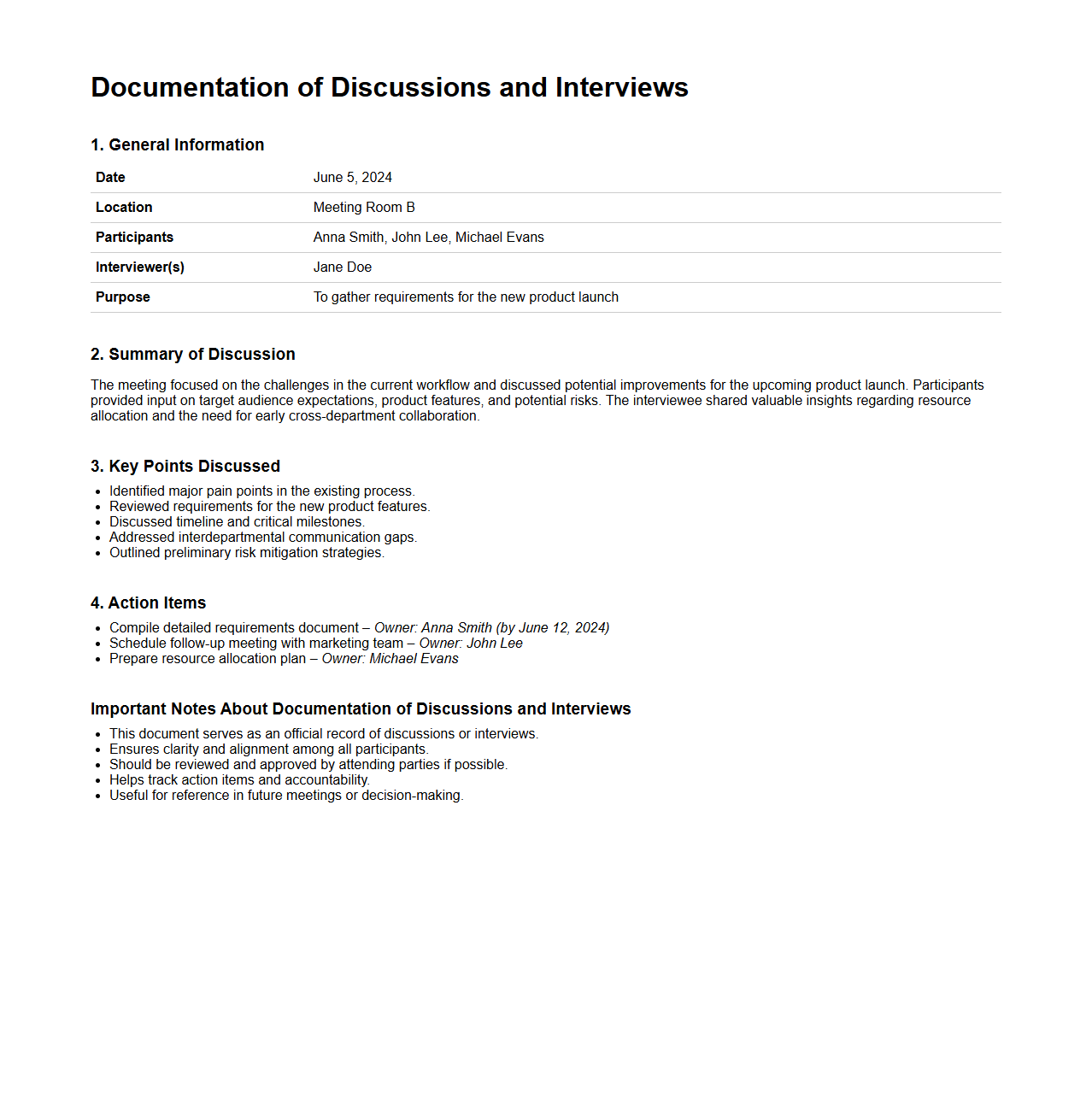
Documentation of Discussions and Interviews
Documentation of Discussions and Interviews is a precise record detailing the key points, decisions, and insights gathered during meetings or interviews. This document serves as an essential reference for project tracking, ensuring accurate communication among team members and stakeholders. Maintaining well-organized documentation supports transparency and accountability throughout the development or research process.
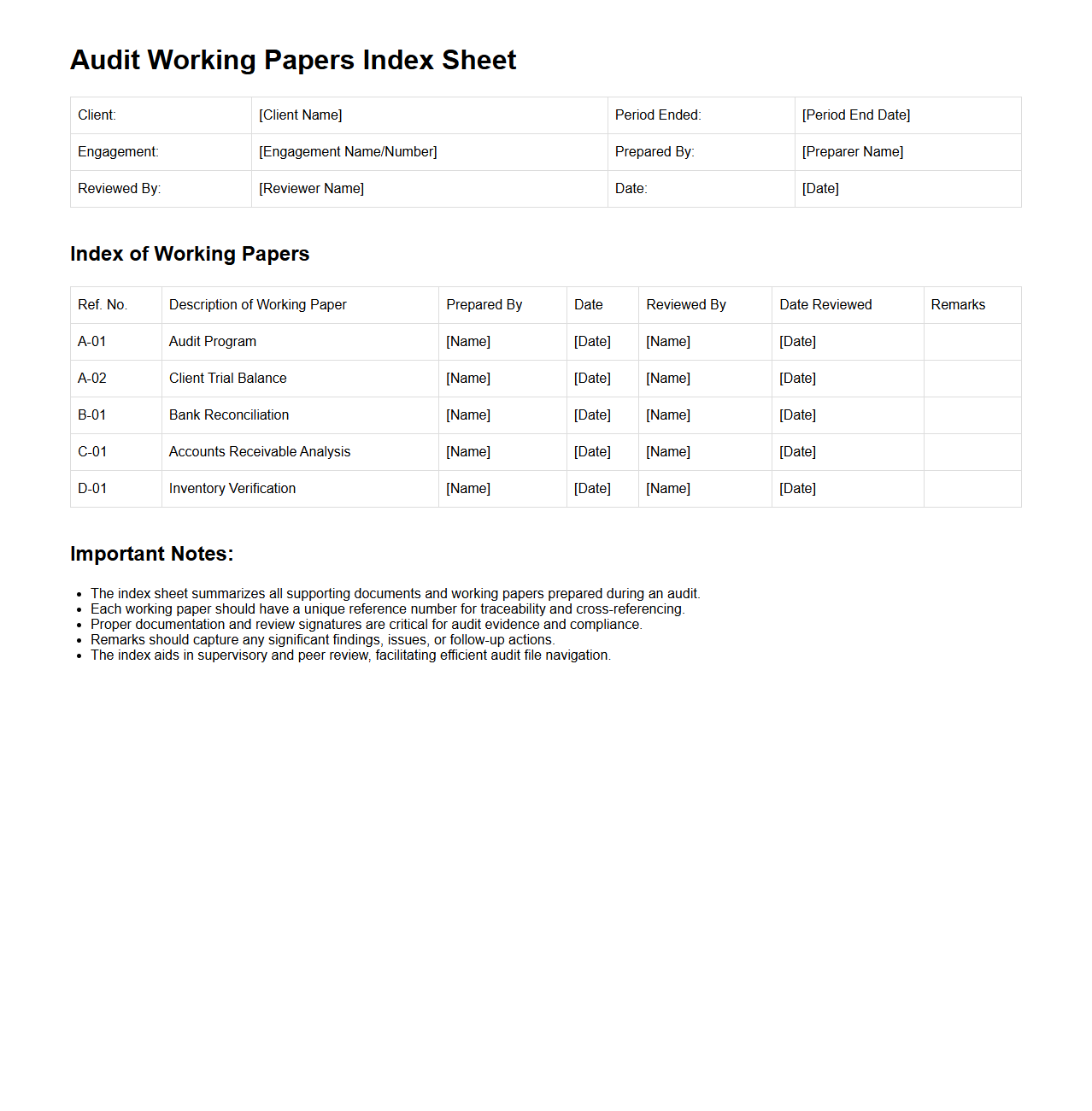
Audit Working Papers Index Sheet
The
Audit Working Papers Index Sheet is a critical document used to organize and reference all working papers compiled during an audit. It serves as a master list, ensuring easy access, systematic documentation, and effective cross-referencing of audit evidence and findings. This index enhances the efficiency of audit reviews, facilitates quality control, and supports compliance with auditing standards.
What standard headings are essential in the format of audit working papers for evidence collection?
Standard headings in audit working papers include Title, Objective, Criteria, Procedures Performed, Findings, and Conclusion. Each heading clearly organizes the information to enhance understanding and review efficiency. Proper use of these headings ensures comprehensive evidence collection and supports audit quality.
How should referencing and cross-indexing be structured in audit evidence documentation?
Referencing and cross-indexing should use unique identifiers such as file numbers or codes linking related audit documents. Cross-indexing allows easy navigation between the audit working papers and the supporting evidence. This structure provides transparency and strengthens the traceability of audit evidence.
What template layout best segregates findings, evidence, and auditor's conclusions?
A table or segmented format template with separate columns or sections for Findings, Evidence, and Auditor's Conclusions is ideal. This layout promotes clarity by distinctly presenting the audit findings, associated evidence, and the auditor's professional judgment. It helps readers quickly understand the flow and basis of the audit.
How are digital signatures and timestamps incorporated in electronic audit working papers?
Digital signatures are embedded within electronic audit working papers using secure software that verifies the auditor's identity. Timestamps are automatically applied to capture the date and time of signing, providing an audit trail for document integrity. These features enhance the reliability and authenticity of electronic audit documentation.
Which format elements ensure compliance with ISA 230 in evidence collection documentation?
Key format elements include clear identification of the auditor, the work performed, the date of the work, and sufficient details to support conclusions. ISA 230 mandates that audit documentation be detailed enough to enable an experienced auditor to understand the nature, timing, and extent of audit procedures. Incorporating these elements ensures full compliance with ISA 230 and audit quality.