The Format of Audit Findings Report for Operational Audit typically includes an executive summary, detailed observations, and recommendations for improvement. The report should clearly present audit objectives, scope, methodology, and findings supported by evidence. Emphasizing clarity and actionable insights helps management address identified operational inefficiencies effectively.
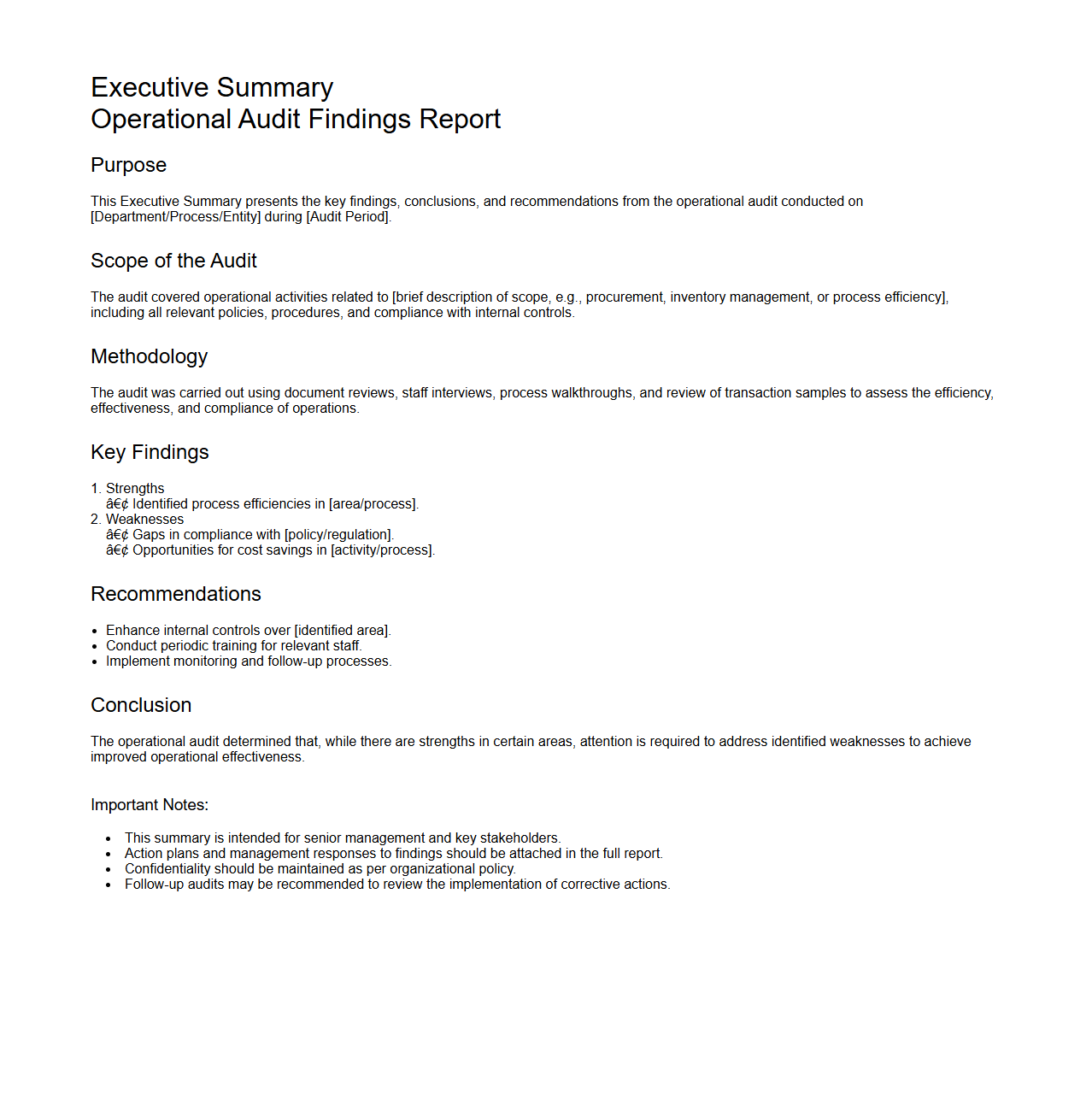
Executive Summary Format for Operational Audit Findings Report
The
Executive Summary Format for an Operational Audit Findings Report document provides a concise overview of key audit results, highlighting critical operational inefficiencies, risks, and recommended improvements. It typically includes a summary of objectives, scope, major findings, and prioritized action plans to inform management swiftly of essential insights. This format ensures clarity and focus, enabling decision-makers to grasp audit implications and drive effective operational enhancements.
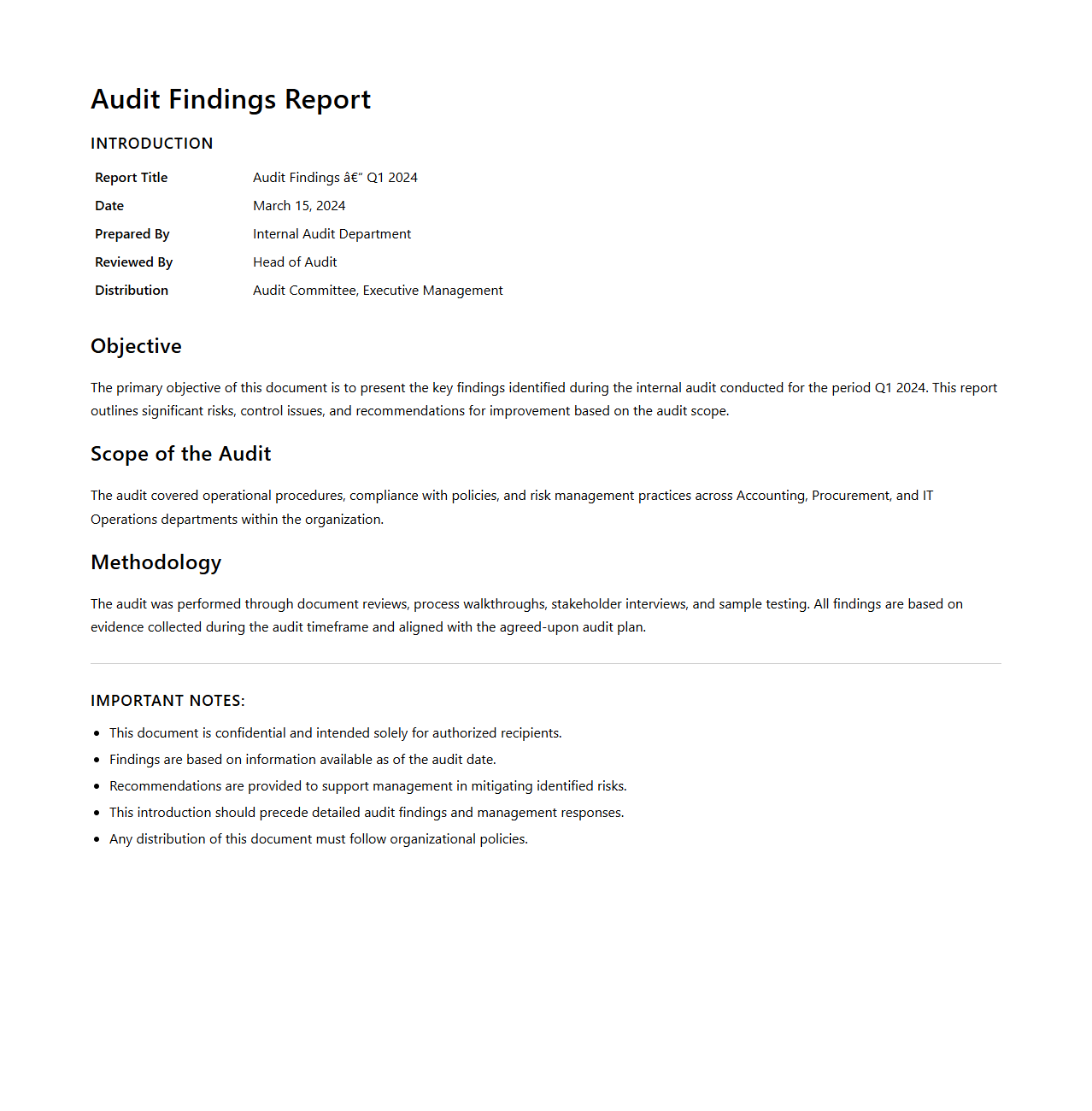
Introduction Section Document Format for Audit Findings
The
Introduction Section Document Format for an Audit Findings document clearly outlines the purpose, scope, and objectives of the audit, providing essential context for the findings that follow. It includes key details such as the audit period, audited areas, and the criteria used to evaluate compliance or performance. This format ensures stakeholders understand the framework and limitations of the audit, setting the stage for a transparent and effective presentation of results.
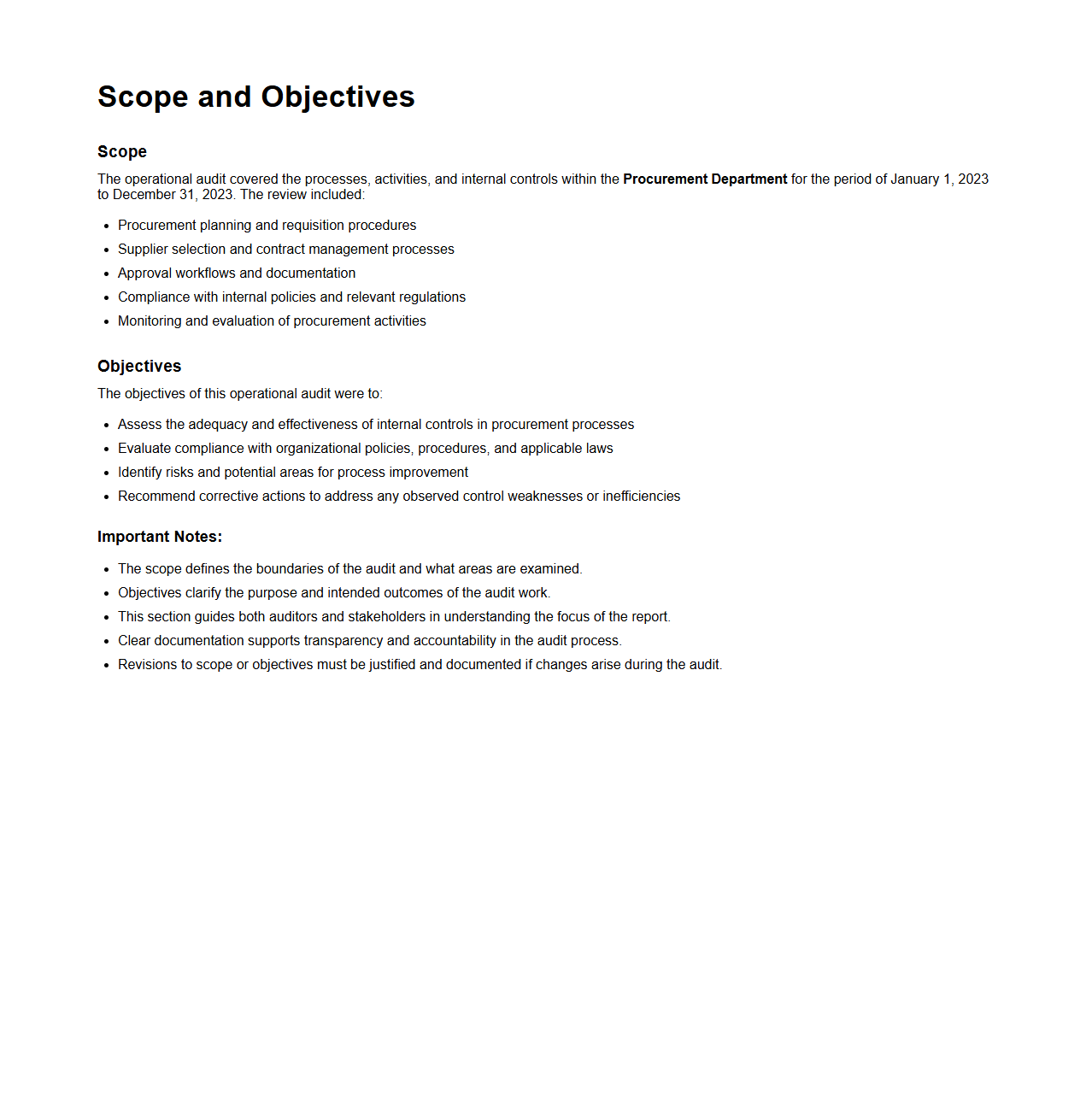
Scope and Objectives Format in Operational Audit Findings Report
The
Scope and Objectives Format in an Operational Audit Findings Report clearly defines the boundaries and focus areas of the audit, outlining specific functions, processes, or departments reviewed during the audit. It establishes measurable goals that guide the audit process, ensuring alignment with organizational priorities and compliance requirements. This format helps stakeholders understand the audit's intent, limitations, and the criteria used to evaluate operational effectiveness and efficiency.
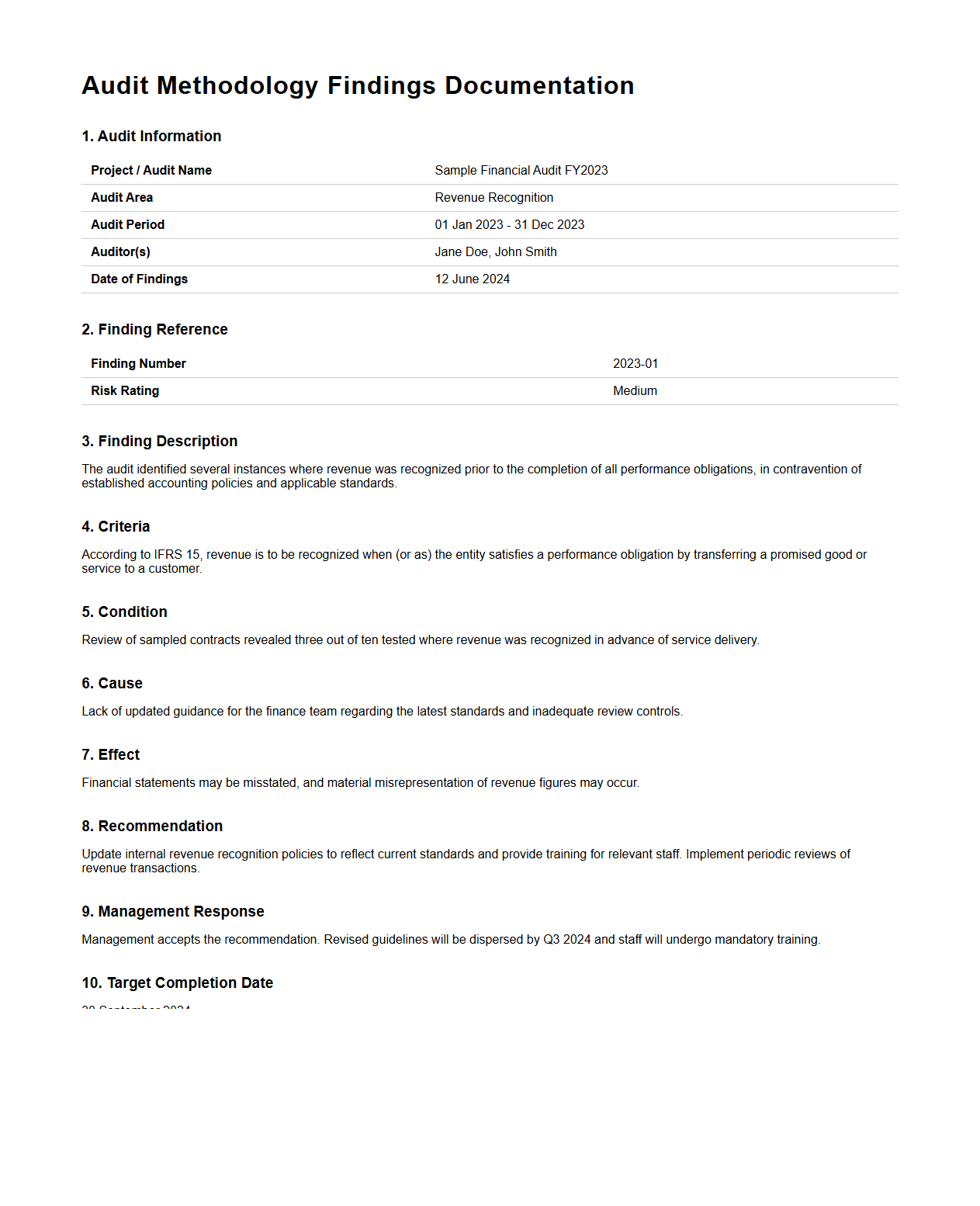
Audit Methodology Format in Findings Documentation
Audit Methodology Format in Findings Documentation outlines the structured approach used to identify, analyze, and report audit observations systematically. This format ensures consistency and clarity by defining key components such as criteria, condition, cause, and effect within each audit finding. Emphasizing a
standardized documentation framework enhances the accuracy and reliability of audit conclusions for stakeholders.
Detailed Findings Format for Operational Audit Report
The
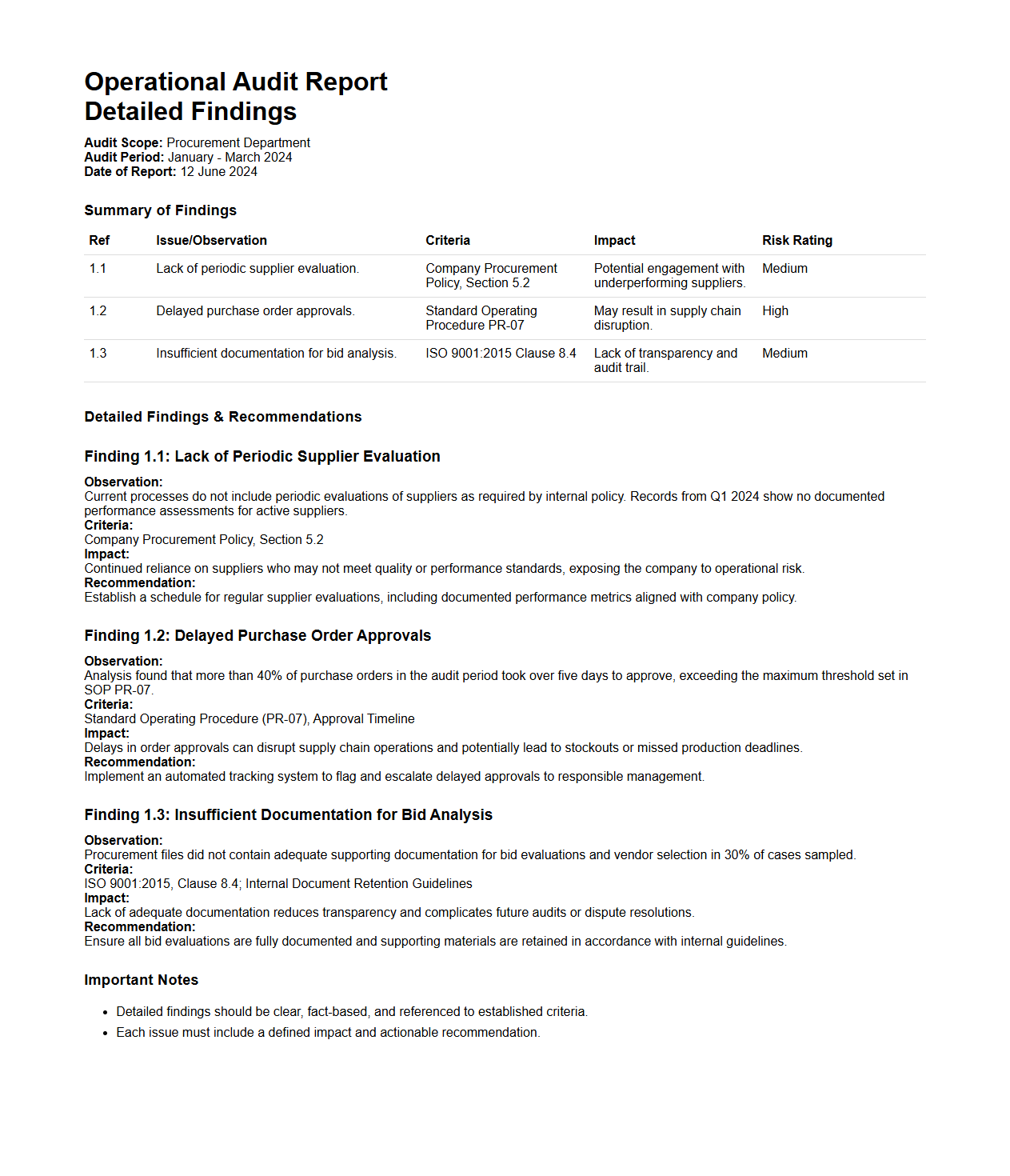
Detailed Findings Format for an Operational Audit Report document systematically presents audit observations, evidence, and analysis related to organizational processes and controls. This format ensures clear communication of identified risks, control weaknesses, and recommendations for improvement, facilitating effective decision-making by management. Each finding is typically organized with a description, criteria, cause, effect, and suggested corrective actions to provide comprehensive insights into operational efficiency and compliance.
Recommendation Section Format in Audit Findings Report
The
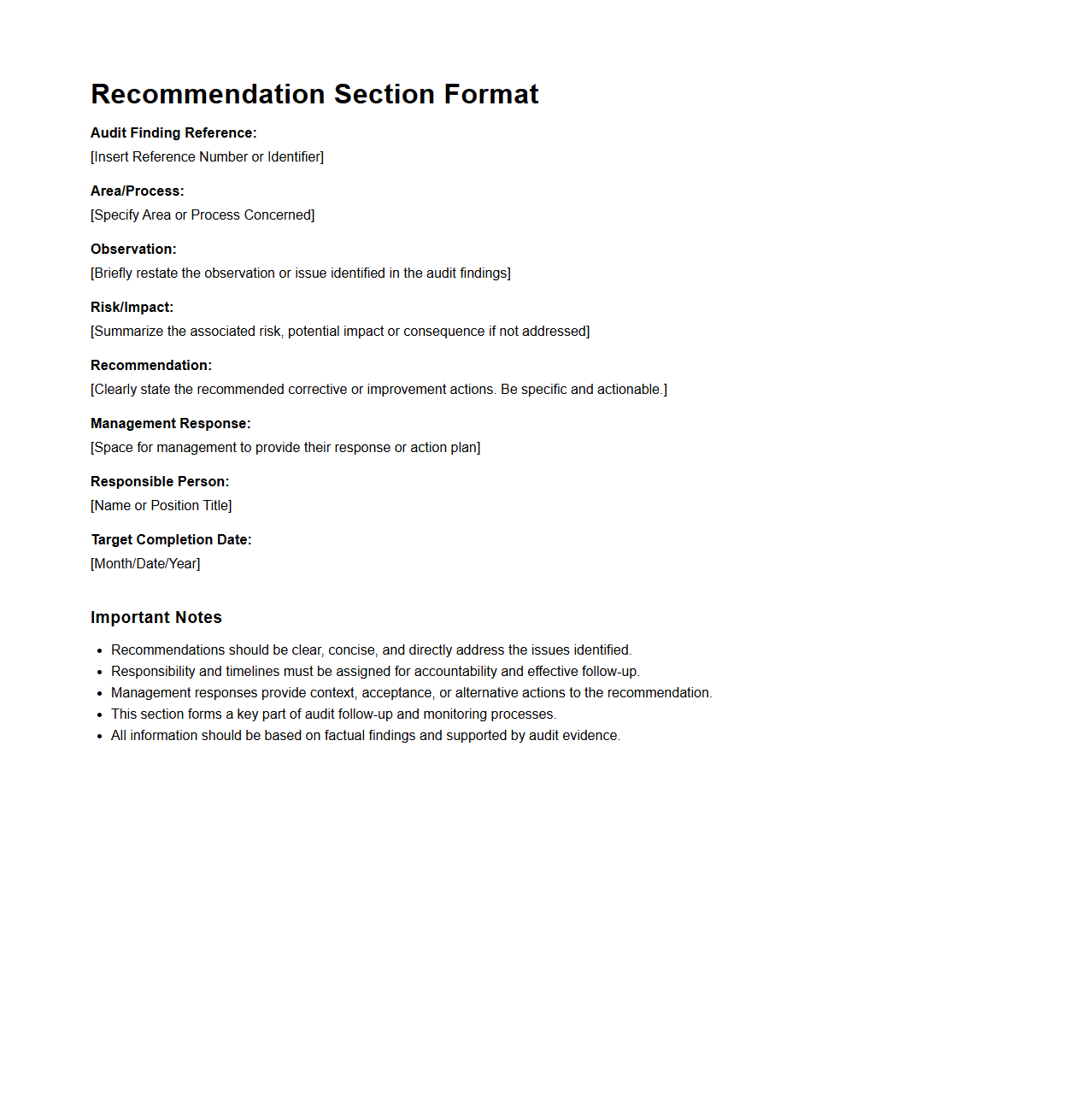
Recommendation Section Format in an Audit Findings Report outlines specific actions proposed to address identified issues, improve controls, or enhance operational efficiency. It typically includes clear, actionable suggestions supported by evidence from the audit, prioritizing remedies based on risk severity and impact. This structured approach ensures stakeholders understand necessary steps to mitigate risks and implement improvements effectively.
Management Response Format for Operational Audit Findings
The
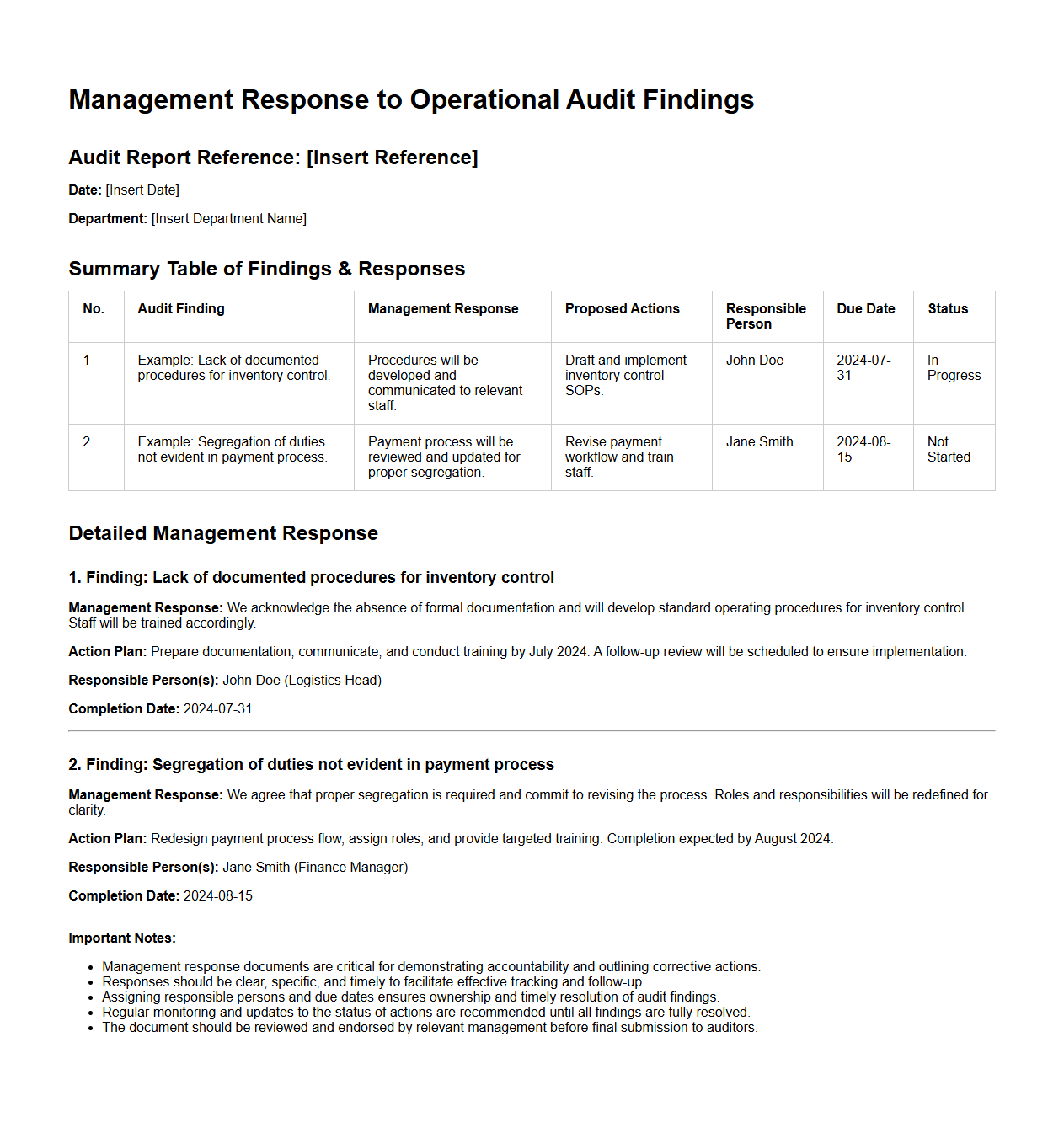
Management Response Format for Operational Audit Findings document is a structured template used by management to formally address issues identified during operational audits. It captures detailed explanations, corrective actions, responsible parties, and timelines for resolving audit findings. This format ensures transparent communication, accountability, and effective follow-up on operational inefficiencies or risks uncovered during the audit process.
Action Plan Format in Findings Report for Operational Audit
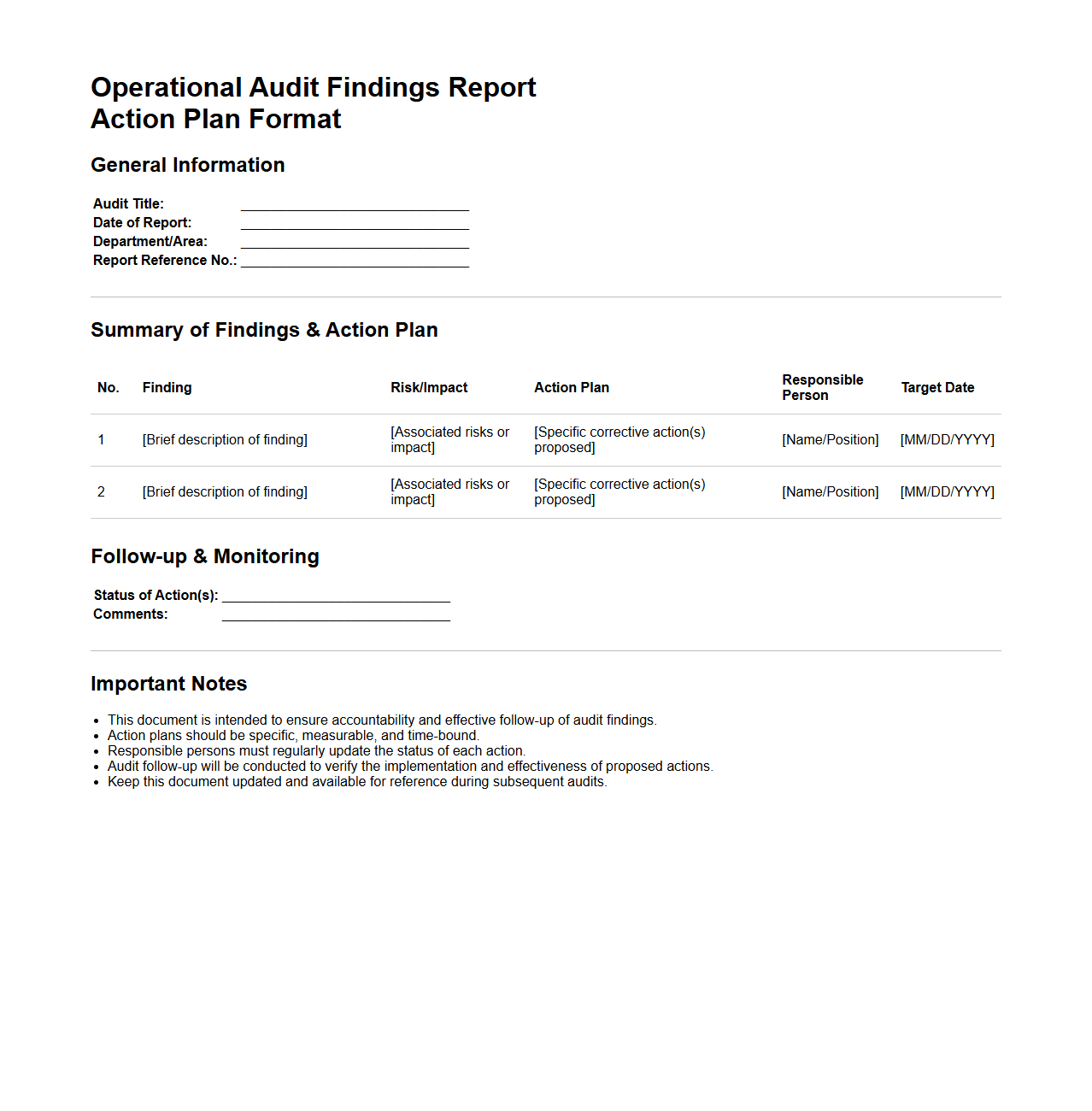
An
Action Plan Format in a Findings Report for an Operational Audit documents specific corrective measures addressing identified issues, detailing assigned responsibilities, timelines, and resources required. This structured format ensures systematic tracking of audit recommendations, facilitating accountability and progress monitoring during implementation. Clear, concise entries enhance communication between auditors and management, supporting effective operational improvements.
Conclusion and Summary Format for Audit Findings Documentation
The
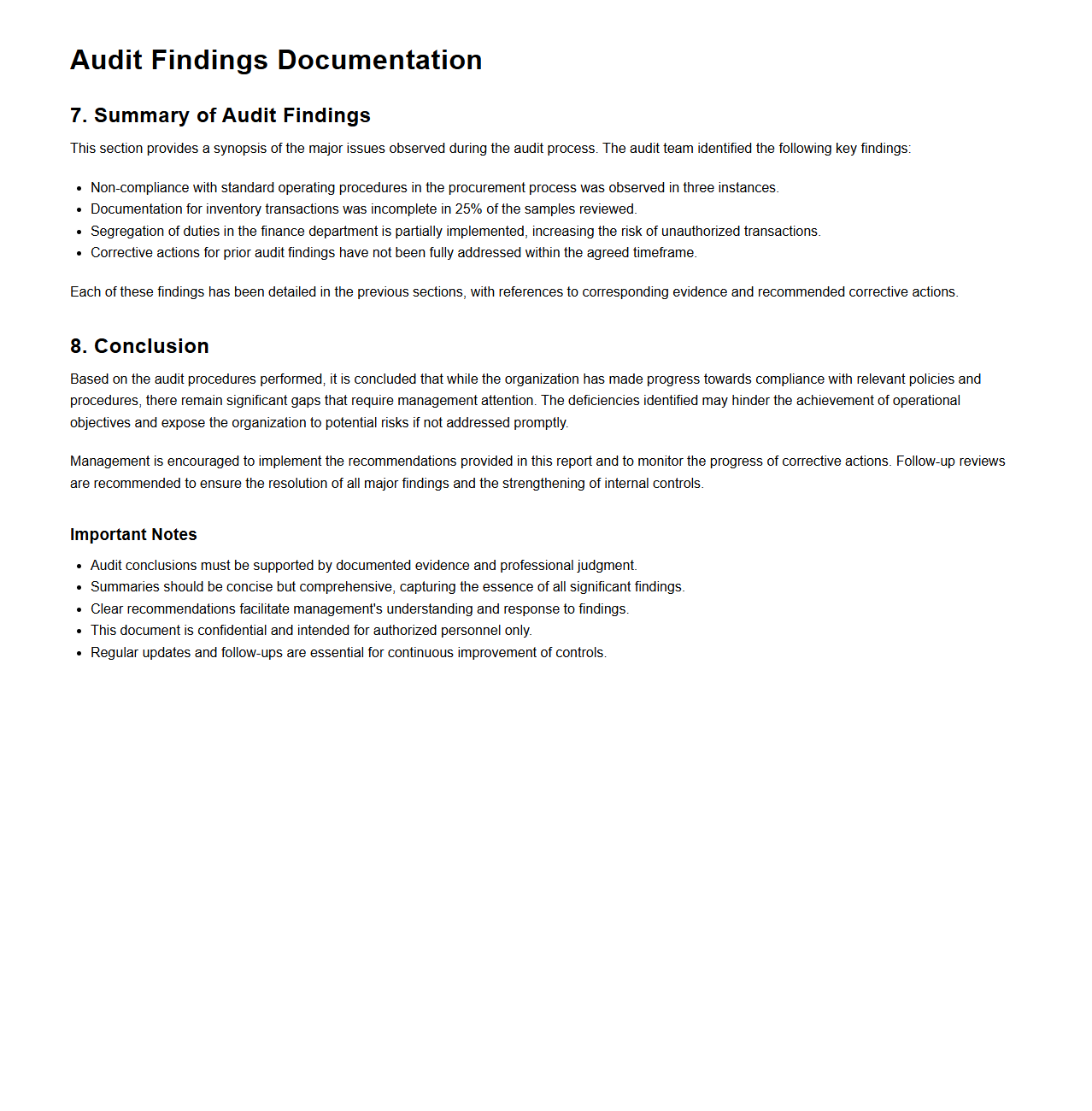
Conclusion and Summary Format for Audit Findings Documentation is a structured approach used to encapsulate the results of an audit clearly and concisely. It includes a summary of key audit findings, the auditor's conclusions, and recommendations for corrective actions or improvements. This format ensures consistency, facilitates stakeholder understanding, and supports effective decision-making based on audit outcomes.
Appendices/Inclusion Format in Operational Audit Findings Report
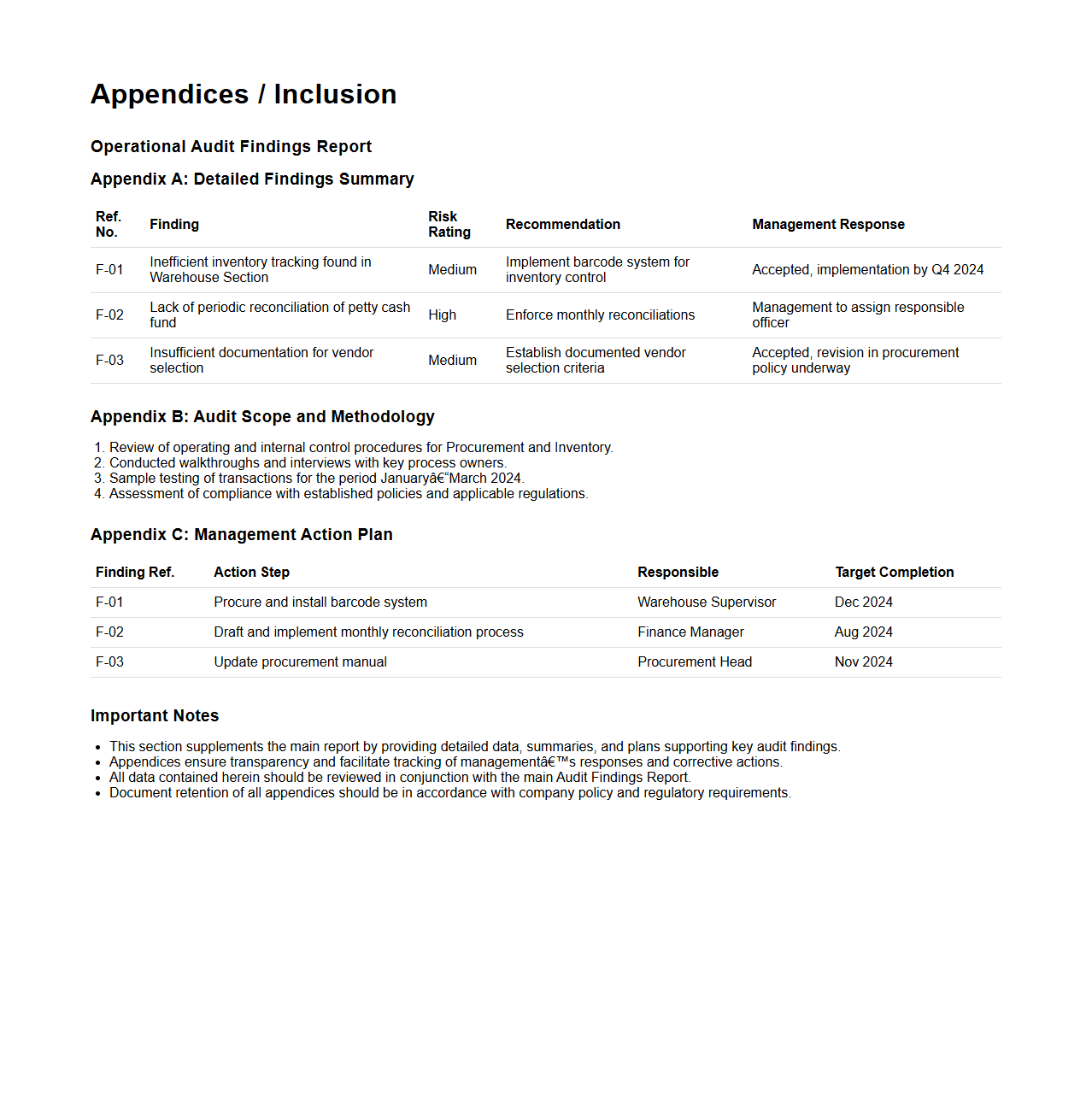
The
Appendices/Inclusion Format in an Operational Audit Findings Report document serves as a structured section that provides supplementary information supporting the main audit findings. It includes detailed evidence, data tables, charts, and relevant documents that validate audit conclusions and recommendations. This format enhances the report's clarity and credibility by organizing extensive supporting materials systematically for easy reference.
What sections are essential in formatting an operational audit findings report letter?
An operational audit findings report letter should include key sections such as the introduction, scope, methodology, and summary of findings. Additionally, detailed observations, recommendations, and management responses are critical for clarity. The conclusion and signature section ensure the report's formal closure and accountability.
How do you structure the executive summary for operational audit findings?
The executive summary must concisely highlight the audit's objectives, scope, and key results. It should present only the most significant findings and recommendations for quick reader comprehension. This section sets the tone and gives an overview without delving into detailed analysis.
What is the recommended layout for presenting audit observations and recommendations?
Audit observations and recommendations are best presented in a clear, tabular, or bullet format for easy readability. Each observation should be paired closely with its supporting recommendation to facilitate effective action planning. Grouping related findings together enhances logical flow and comprehension.
How should evidence and supporting documentation be referenced in the findings report letter?
Evidence and supporting documentation must be clearly cited with references or annexes linked directly to each finding. This provides transparency and validates the audit conclusions drawn. Maintaining a well-organized appendix or exhibit section supports verification and further review.
What format should be used for rating audit findings by severity in the letter?
Audit findings should be rated using a standardized scale such as low, medium, and high severity to prioritize issues effectively. This rating format helps management focus on critical risks and determine necessary resource allocation. Visual aids like color coding or icons can enhance the impact of severity ratings.