The Format of Tax Compliance Report for Organizations typically includes sections such as taxpayer identification details, a summary of tax obligations, and a detailed account of tax payments made during the reporting period. It outlines the organization's adherence to tax laws by documenting income, deductions, credits, and any discrepancies or penalties. Proper formatting ensures clarity and facilitates the review process by tax authorities.
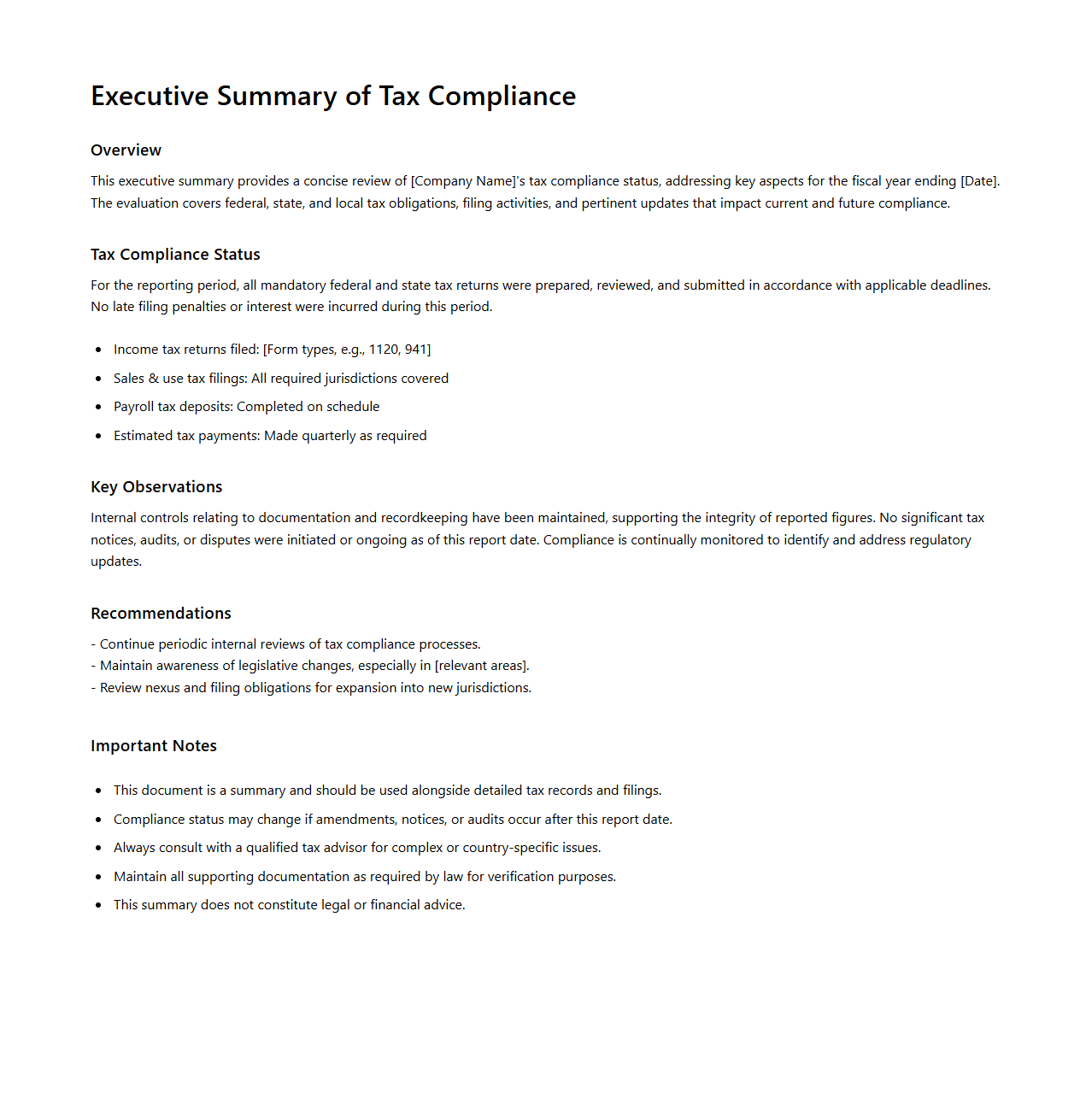
Executive Summary of Tax Compliance
An
Executive Summary of a Tax Compliance document provides a concise overview of an organization's adherence to tax laws and regulations, highlighting key compliance activities, risks, and mitigation strategies. It summarizes critical findings from audits, tax filings, and internal controls to ensure transparency and regulatory alignment. This summary aids stakeholders in quickly understanding the status of tax obligations and potential areas for improvement.
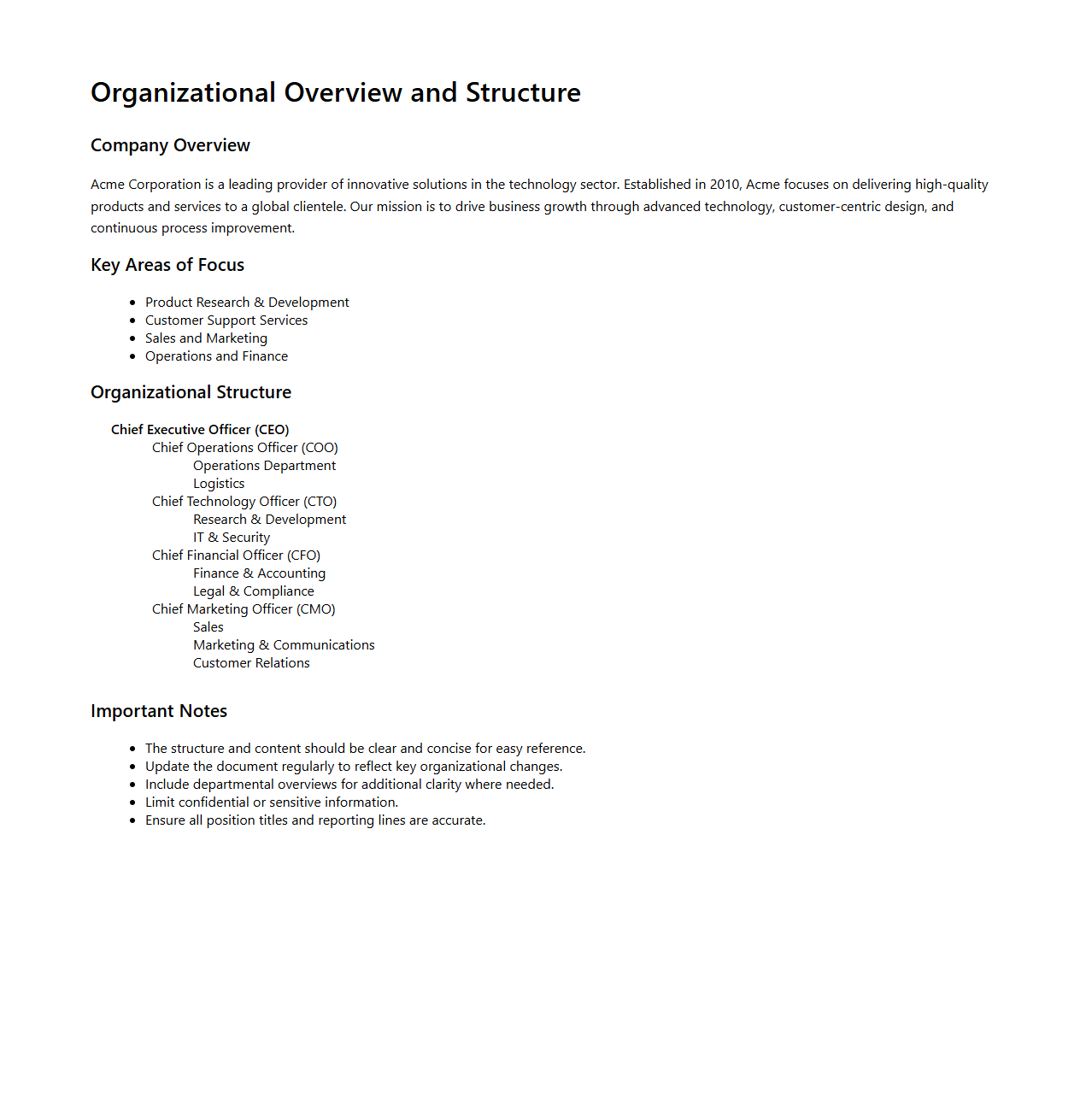
Organizational Overview and Structure
An
Organizational Overview and Structure document outlines a company's hierarchy, key roles, and reporting relationships to provide clarity on how the organization operates. It typically includes details about departments, management levels, and functional responsibilities to ensure effective communication and workflow. This document serves as a foundational reference for employees, stakeholders, and new hires to understand the company's framework and operational dynamics.
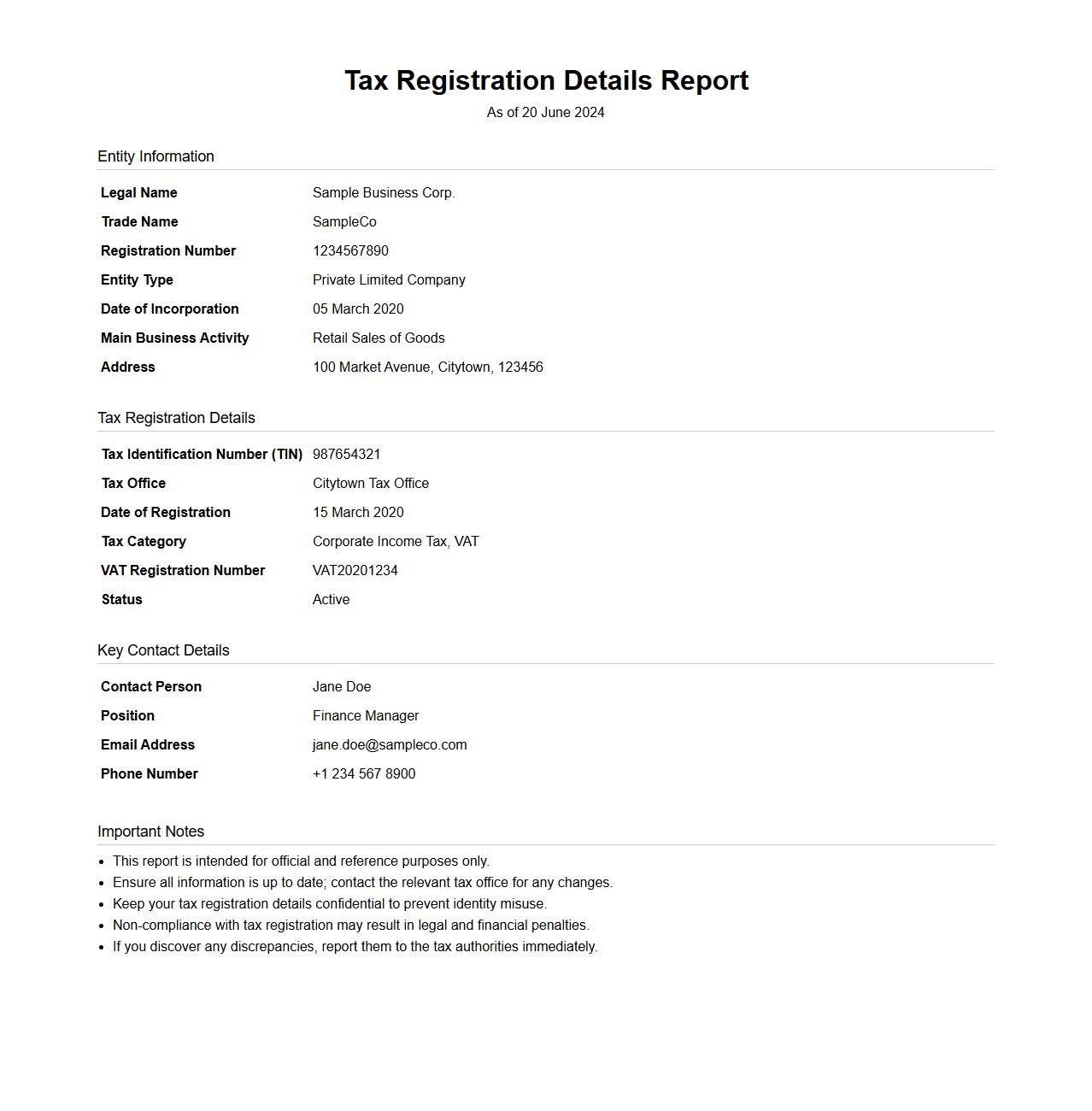
Tax Registration Details Report
The
Tax Registration Details Report is an official document that provides comprehensive information about an entity's tax registration status, including registration numbers, tax identification codes, and relevant government-issued certificates. It is essential for verifying compliance with tax regulations and facilitating business transactions by confirming legal tax obligations. This report is often required during audits, financial reviews, and when establishing new business partnerships.
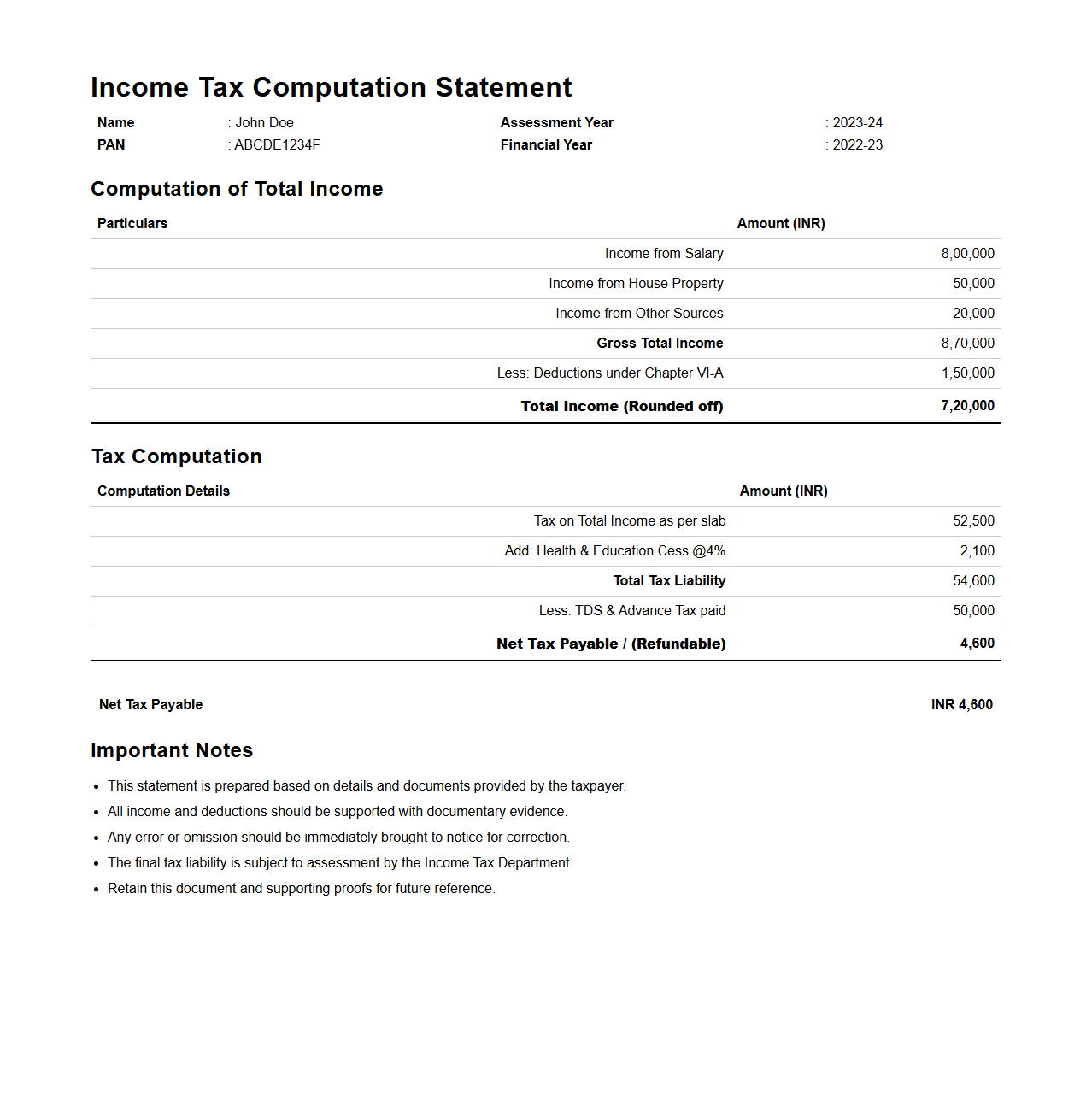
Income Tax Computation Statement
An
Income Tax Computation Statement document details the calculation of taxable income and the corresponding tax liabilities for an individual or entity. It includes components such as gross income, allowable deductions, exemptions, tax rates, and credits to determine the final tax payable. This document is essential for accurate tax filing and compliance with tax authorities.
Summary of Statutory Deductions and Payments
The
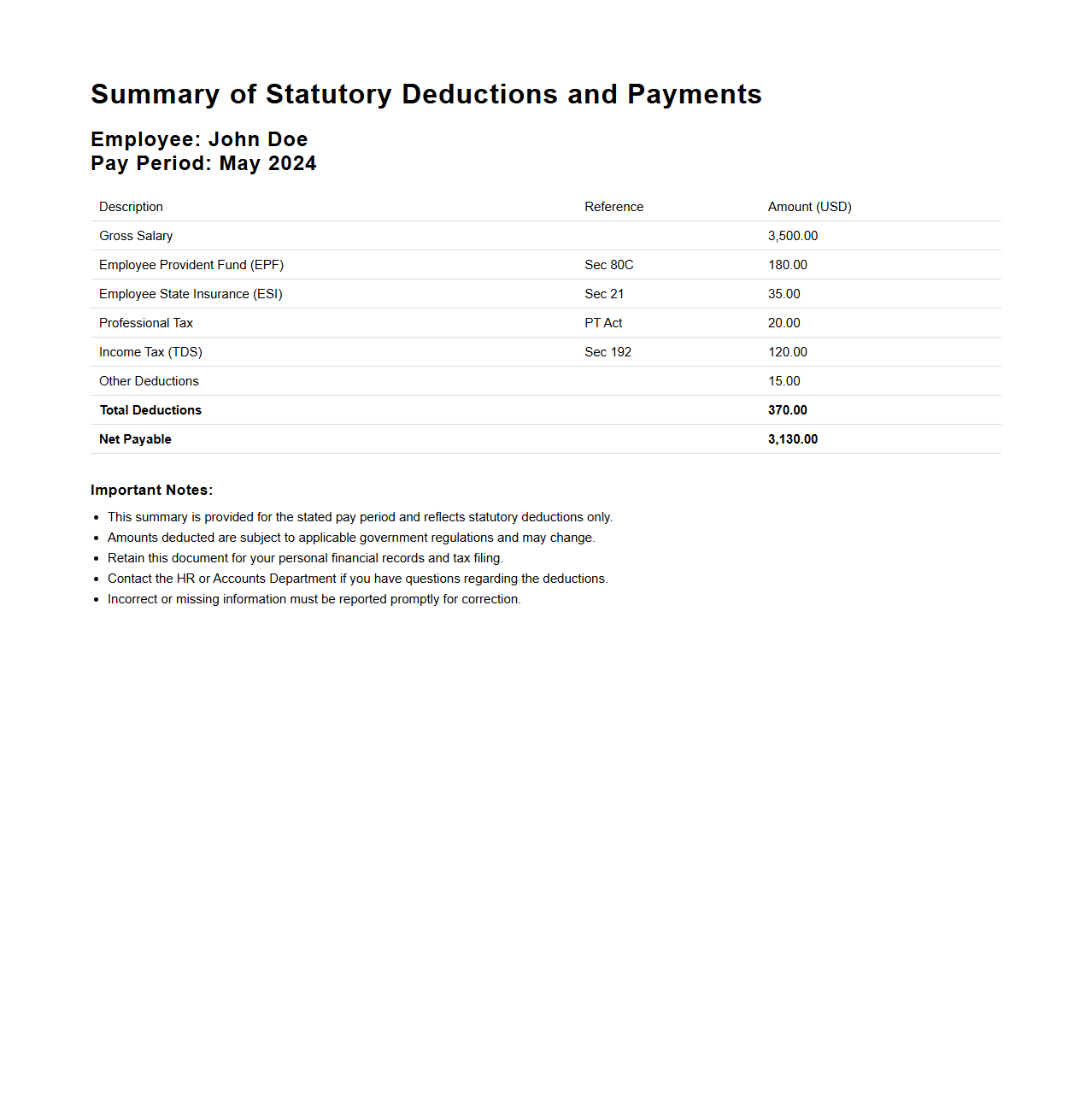
Summary of Statutory Deductions and Payments document provides a detailed overview of mandatory payroll deductions such as income tax, social security contributions, and other government-mandated payments. It consolidates information on amounts withheld from employees' salaries and the corresponding payments made to relevant authorities within a specific period. This summary ensures compliance with legal requirements and facilitates accurate financial reporting and auditing.
Indirect Tax Reporting Section
The
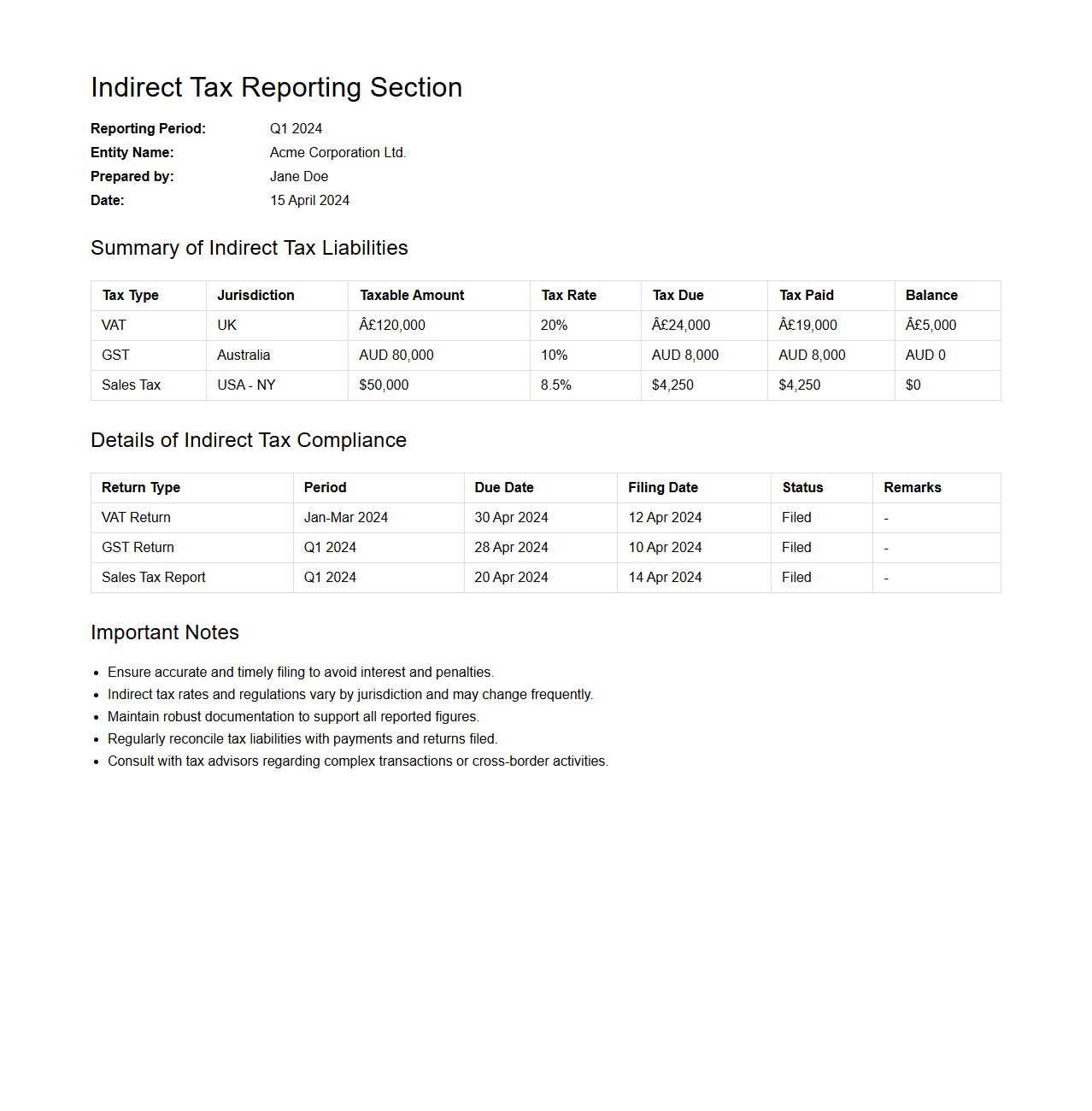
Indirect Tax Reporting Section document provides a comprehensive overview of tax obligations related to indirect taxes such as VAT, GST, and excise duties. It outlines specific reporting requirements, deadlines, and compliance procedures to ensure accurate calculation and timely submission to tax authorities. This document is essential for businesses to avoid penalties and maintain transparent financial records concerning indirect tax transactions.
Tax Audit Observations and Compliance Status
The
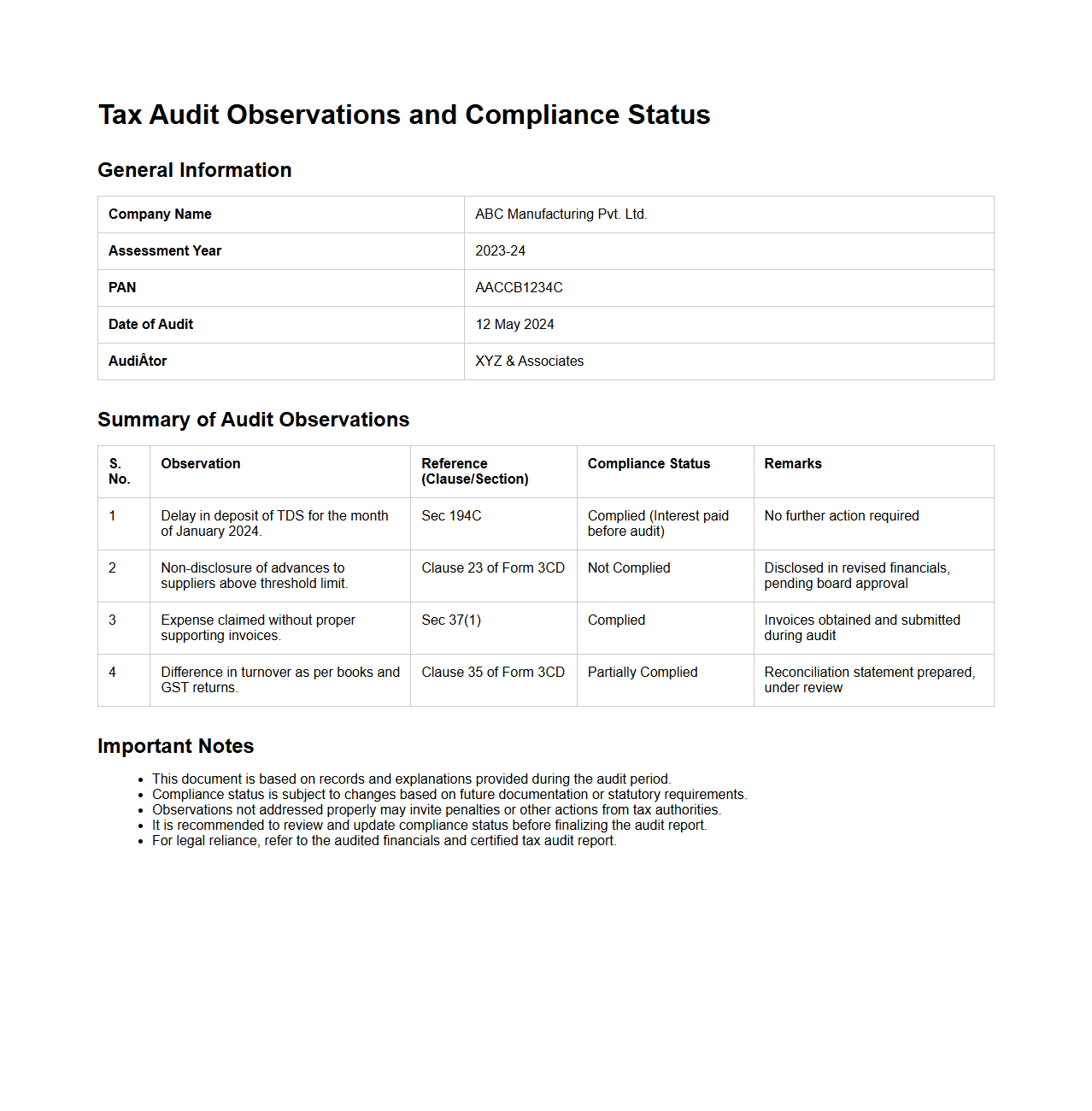
Tax Audit Observations and Compliance Status document details findings from a tax audit, highlighting discrepancies, non-compliance issues, and areas requiring corrective action. It serves as a formal record for both tax authorities and taxpayers to assess adherence to tax laws, ensuring transparency and accountability. This document is essential for resolving tax disputes and improving future compliance strategies.
Details of Tax Payments and Challans
The
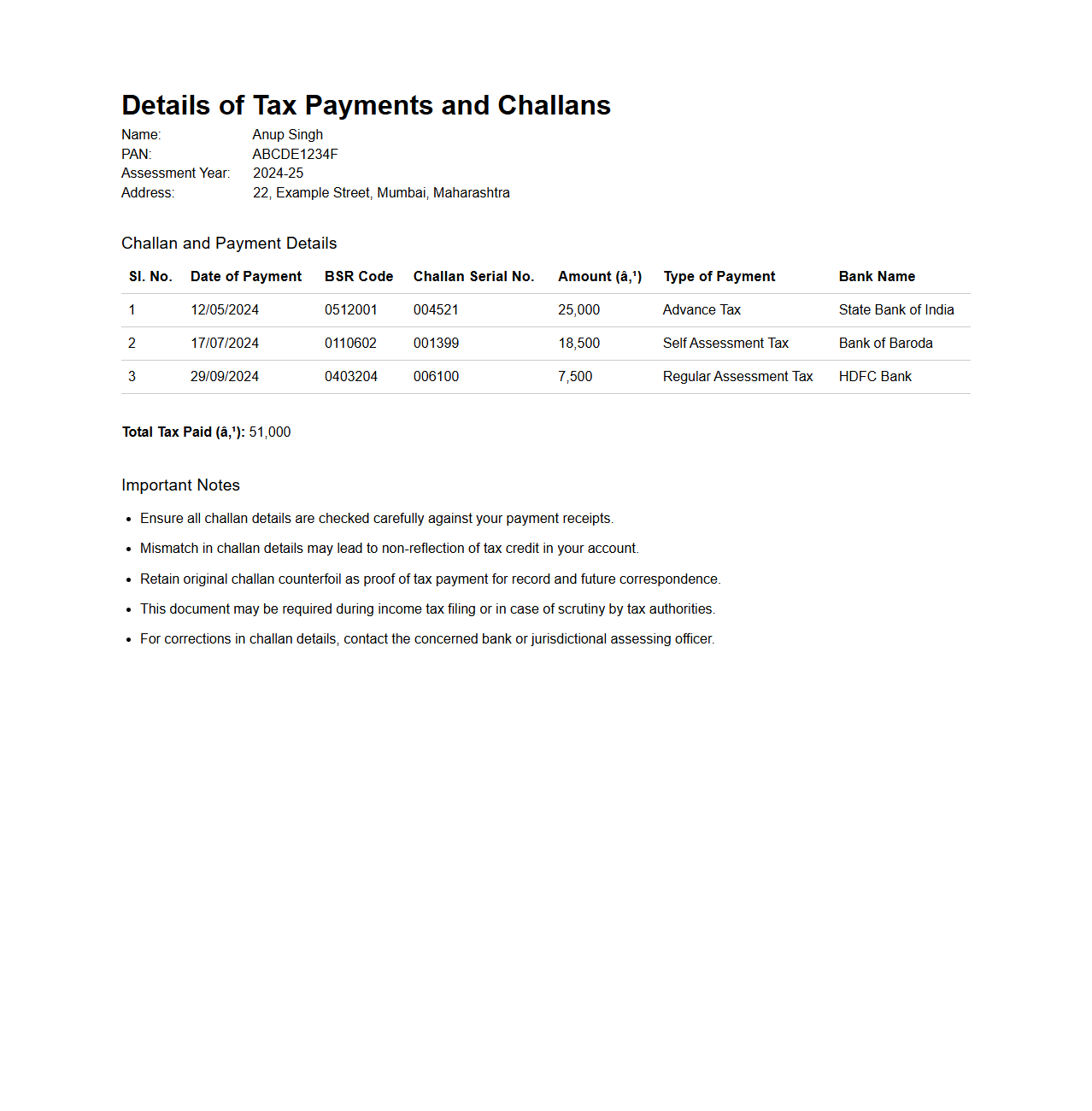
Details of Tax Payments and Challans document provides a comprehensive record of all tax transactions, including payment amounts, dates, and associated challan numbers issued by tax authorities. It serves as essential proof for taxpayers and businesses to verify and reconcile their tax liabilities with government records. This document ensures transparency and facilitates audits or disputes related to income tax, GST, or other statutory tax obligations.
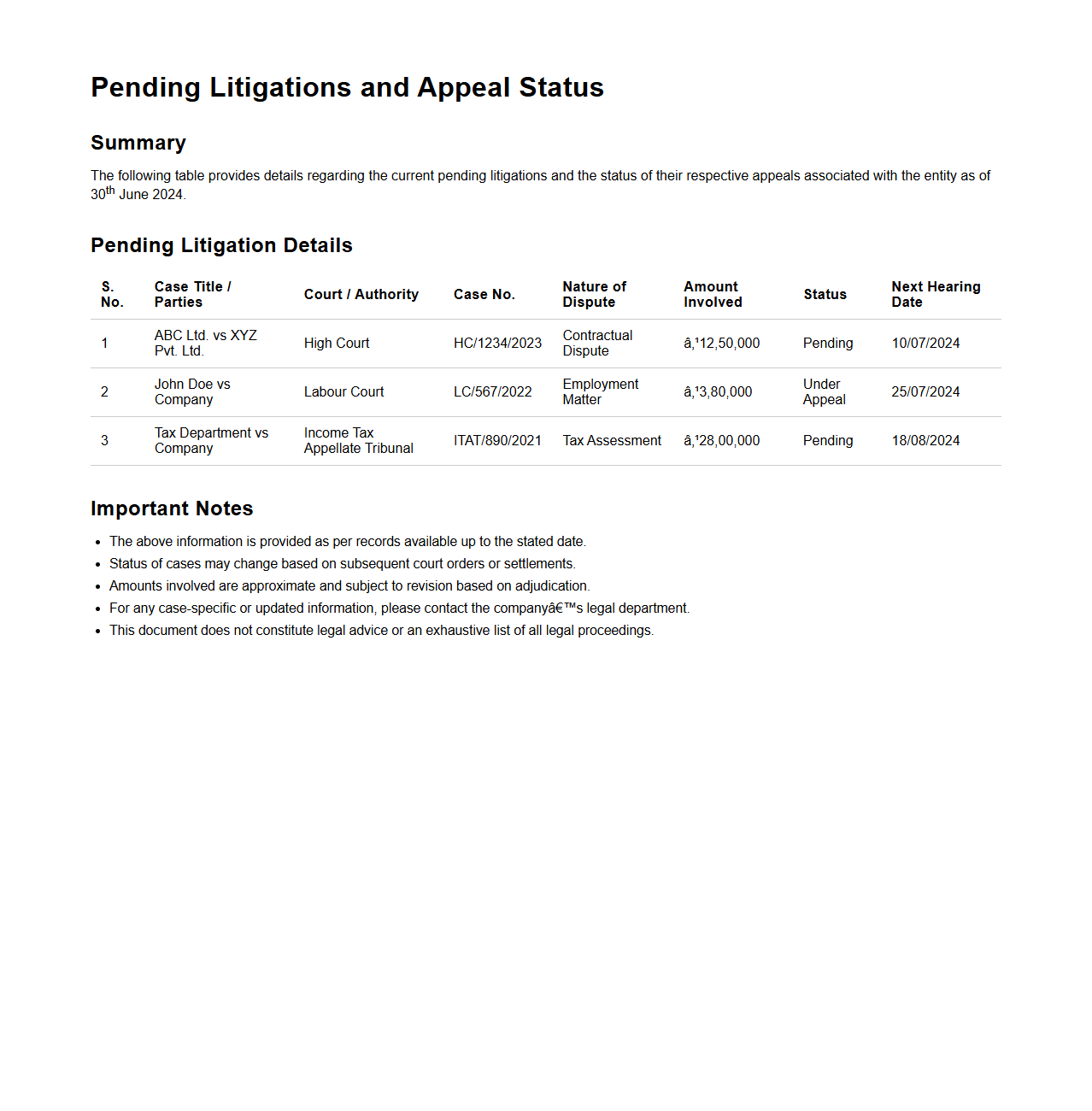
Pending Litigations and Appeal Status
The
Pending Litigations and Appeal Status document provides a detailed record of ongoing legal cases and appeals involving an individual or organization. It outlines the current stage of each litigation, court jurisdictions, and key dates for hearings or decisions. This document is essential for assessing potential legal risks and ensuring compliance with regulatory requirements.
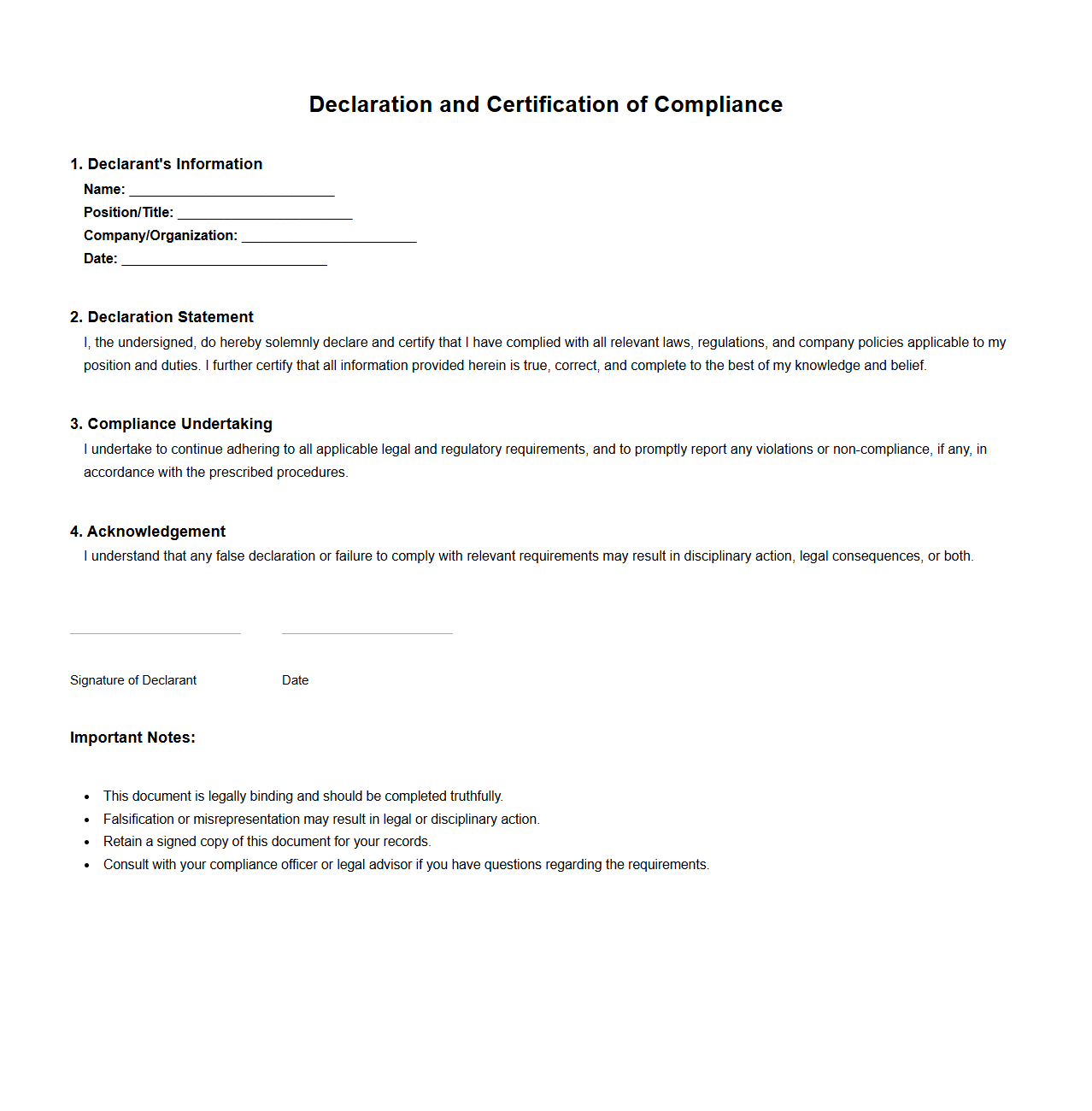
Declaration and Certification of Compliance
A
Declaration and Certification of Compliance document serves as an official statement confirming that a product, service, or process adheres to specific regulatory standards and industry requirements. This document typically includes detailed information about the manufacturer or provider, product specifications, and evidence of conformity with relevant laws, safety guidelines, or quality benchmarks. It plays a critical role in ensuring transparency, quality assurance, and legal accountability in various sectors such as manufacturing, construction, and consumer goods.
What sections must be included in the format of a Tax Compliance Report for organizations?
The Tax Compliance Report for organizations typically includes several key sections. These sections are the Introduction, Taxpayer Identification details, Compliance Status, and Declaration of Accuracy. Additionally, a Summary of Tax Returns Filed and any Outstanding Tax Liabilities should also be included for completeness.
Which supporting documents are required to accompany a Tax Compliance Report letter?
Supporting documents commonly required include certified copies of tax returns, payment receipts, and clearance certificates. Organizations must also attach audited financial statements and relevant correspondence with tax authorities. These documents validate the compliance claims made in the report.
How should compliance status and tax periods be presented in the report format?
The compliance status should be clearly stated with reference to specific tax periods, usually presented in a tabular or chronological format. Each tax period covered must detail the filing status and payment records. This structured presentation ensures clarity and ease of verification by tax authorities.
What language or phrases denote conditional versus unconditional compliance?
Unconditional compliance is often indicated by phrases such as "fully compliant" or "no outstanding tax obligations." Conditional compliance uses terms like "compliant subject to" or "pending verification of." These distinctions are crucial for accurately reflecting the organization's tax status.
Are there prescribed templates by tax authorities for organizational Tax Compliance Report letters?
Many tax authorities provide prescribed templates or guidelines for Tax Compliance Report letters to standardize submissions. These templates outline required sections, formatting, and language to be used. Utilizing these official formats helps ensure the report meets regulatory expectations.