The Format of Statement for Assets and Liabilities typically lists all assets first, followed by liabilities, providing a clear snapshot of an entity's financial position. Assets are categorized as current and non-current, while liabilities are divided into current and long-term obligations. This structured format ensures accurate assessment of net worth by subtracting total liabilities from total assets.
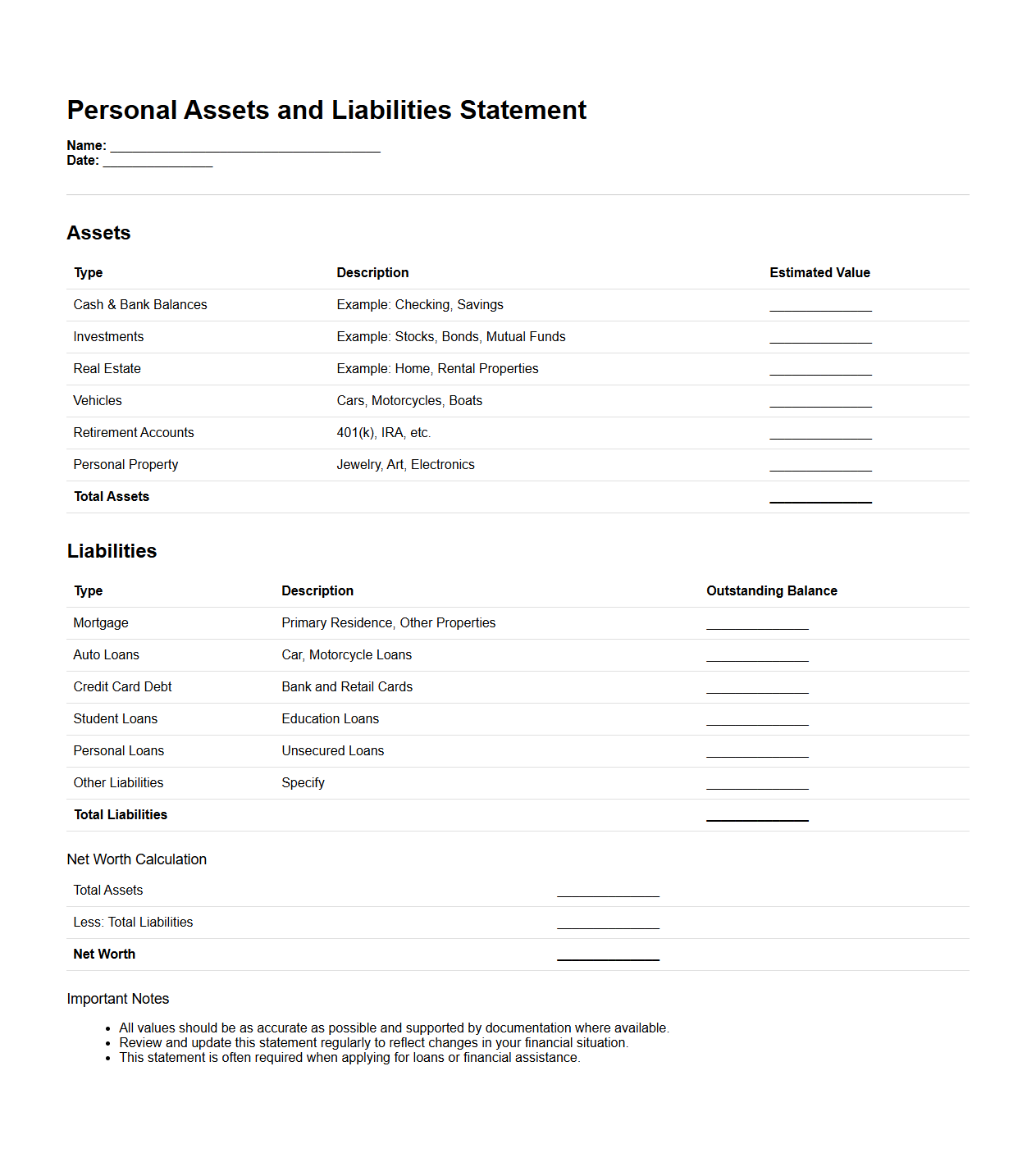
Personal Assets and Liabilities Statement Template
A
Personal Assets and Liabilities Statement Template document is a structured form used to detail an individual's financial position by listing all assets and liabilities. This template helps in organizing information such as cash, investments, real estate, loans, and credit card balances to provide a clear snapshot of net worth. It is essential for financial planning, loan applications, and assessing overall financial health.
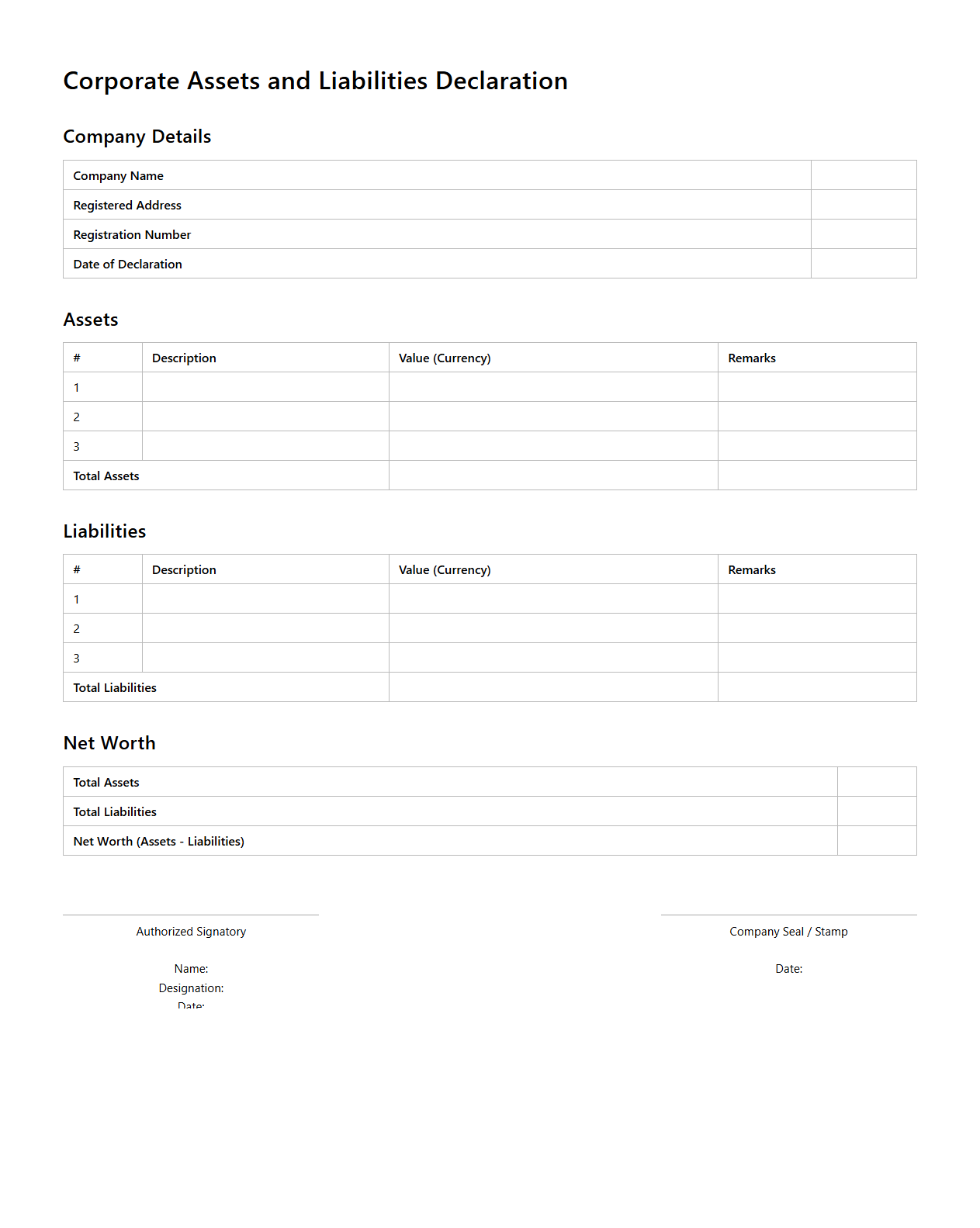
Corporate Assets and Liabilities Declaration Format
The
Corporate Assets and Liabilities Declaration Format document is a standardized template used by companies to report their financial position, listing all assets and liabilities accurately. It helps ensure transparency, compliance with regulatory requirements, and facilitates financial analysis by stakeholders. This format typically includes details such as fixed assets, current assets, long-term liabilities, short-term liabilities, and equity components.
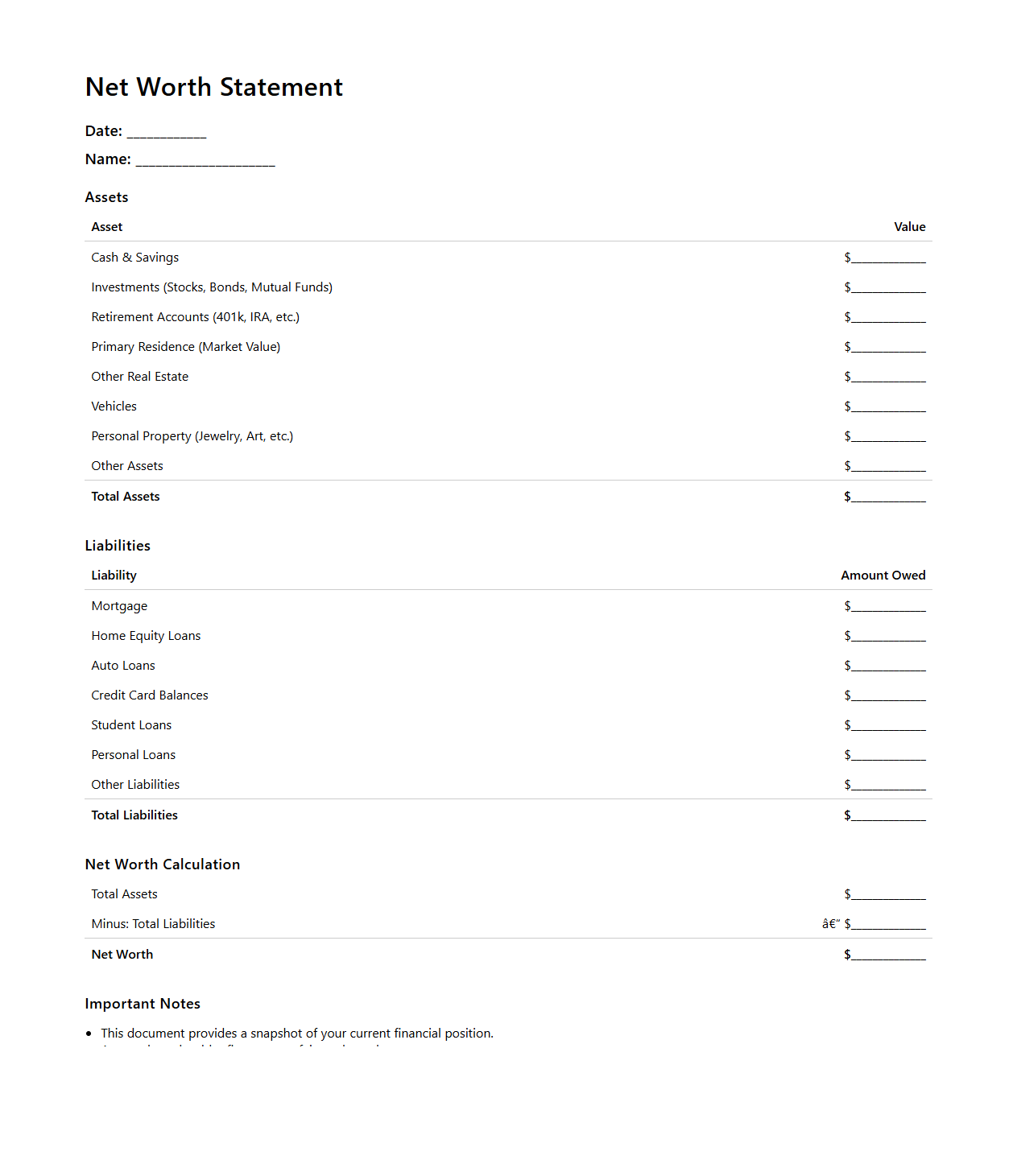
Net Worth Statement for Individuals
A
Net Worth Statement for Individuals is a financial document that details a person's assets and liabilities to calculate their overall net worth. It includes information such as real estate, investments, cash holdings, debts, and other financial obligations. This statement provides a clear snapshot of an individual's financial health and is often used for personal financial planning or loan applications.
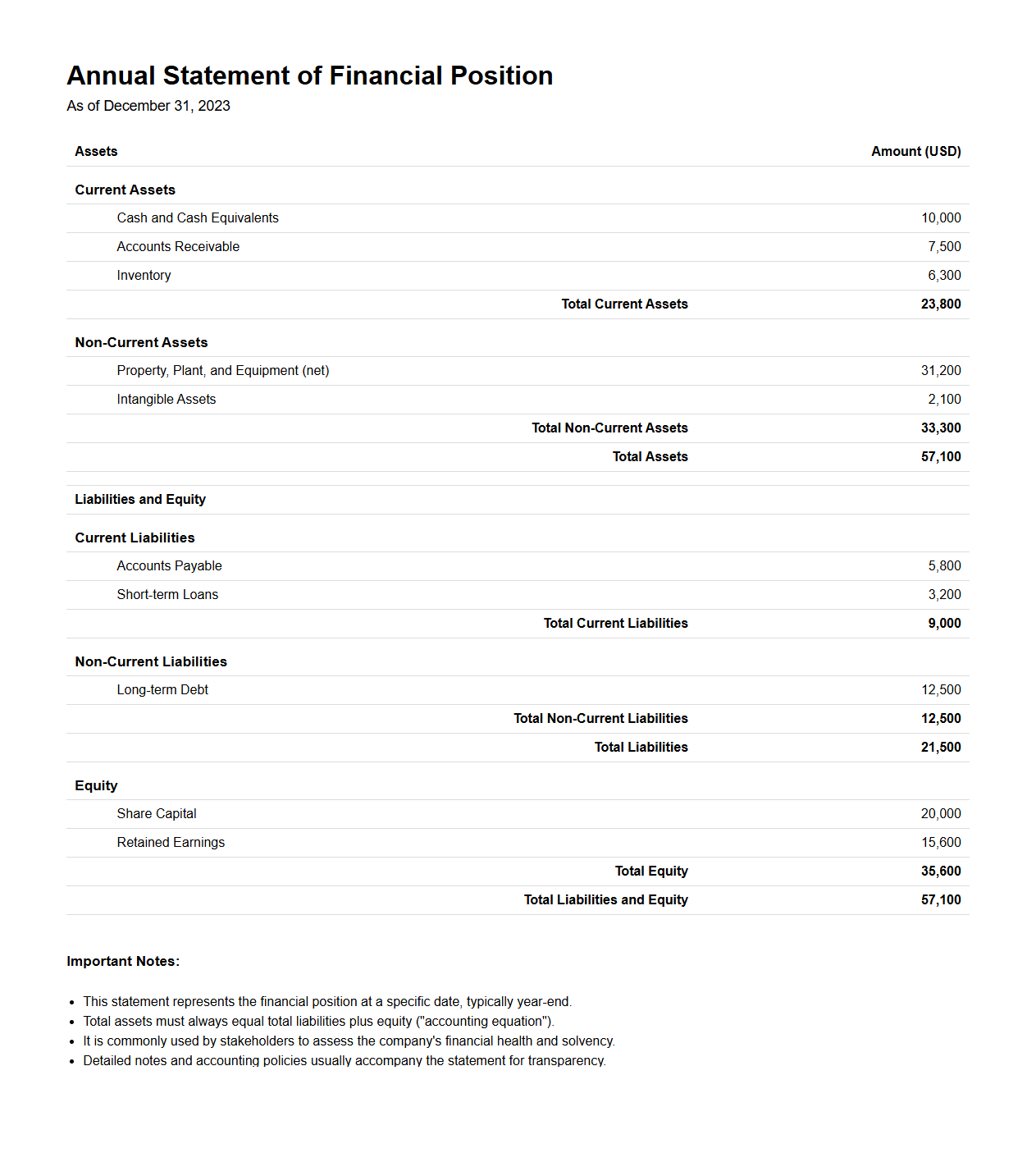
Annual Statement of Financial Position Format
The
Annual Statement of Financial Position Format document outlines the standardized structure used to present a company's assets, liabilities, and equity at the end of a fiscal year. It ensures consistency and comparability across financial reports by detailing sections such as current assets, non-current liabilities, and shareholders' equity. This format aids stakeholders in assessing the financial health and stability of the organization through a clear snapshot of its economic resources and obligations.
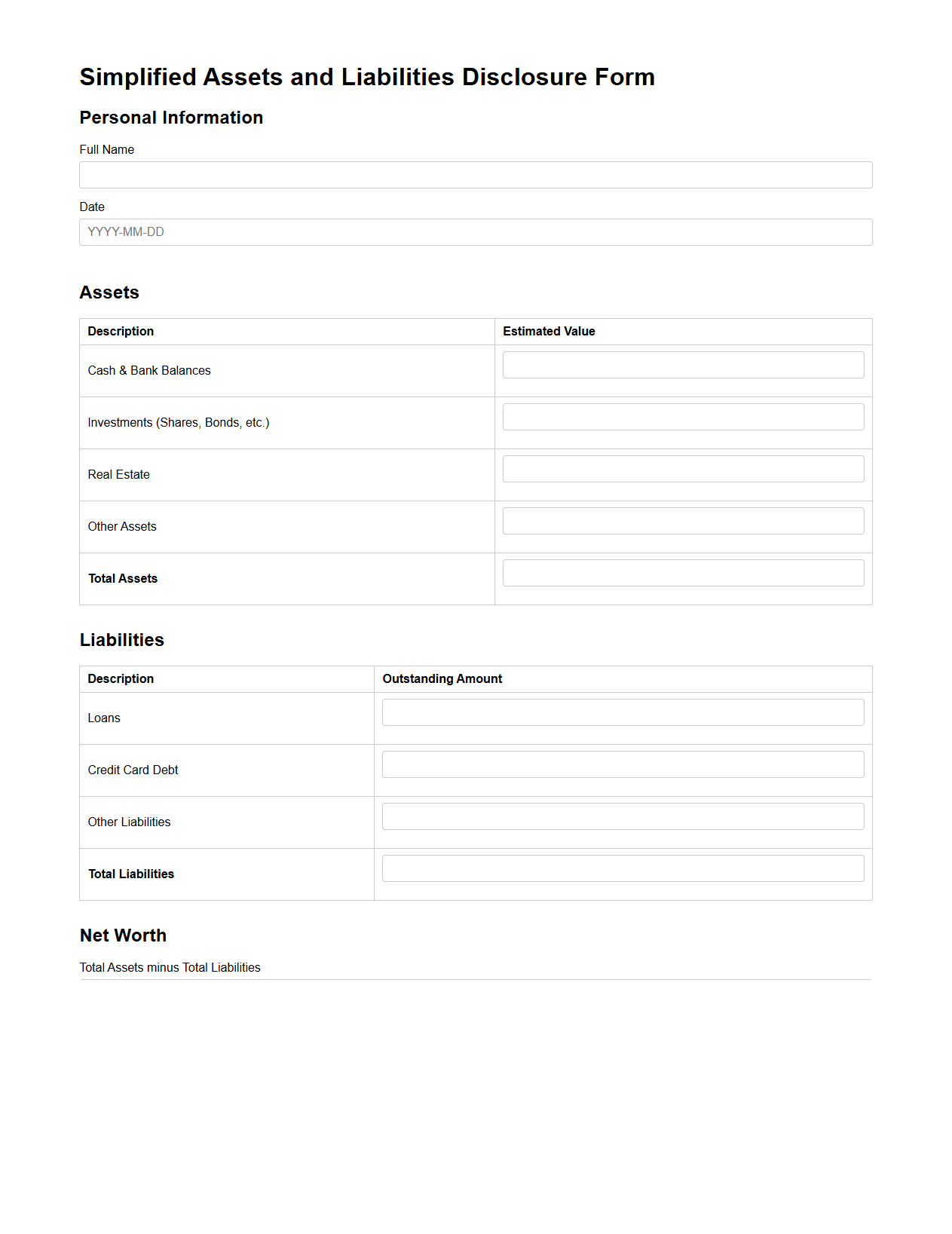
Simplified Assets and Liabilities Disclosure Form
The
Simplified Assets and Liabilities Disclosure Form is a streamlined document used for efficiently reporting financial information, primarily focusing on an individual's or entity's assets and liabilities. This form facilitates transparency and compliance in financial disclosures by minimizing complexity while capturing essential financial data. It is commonly employed in legal, financial, and regulatory settings to ensure accurate and accessible financial reporting.
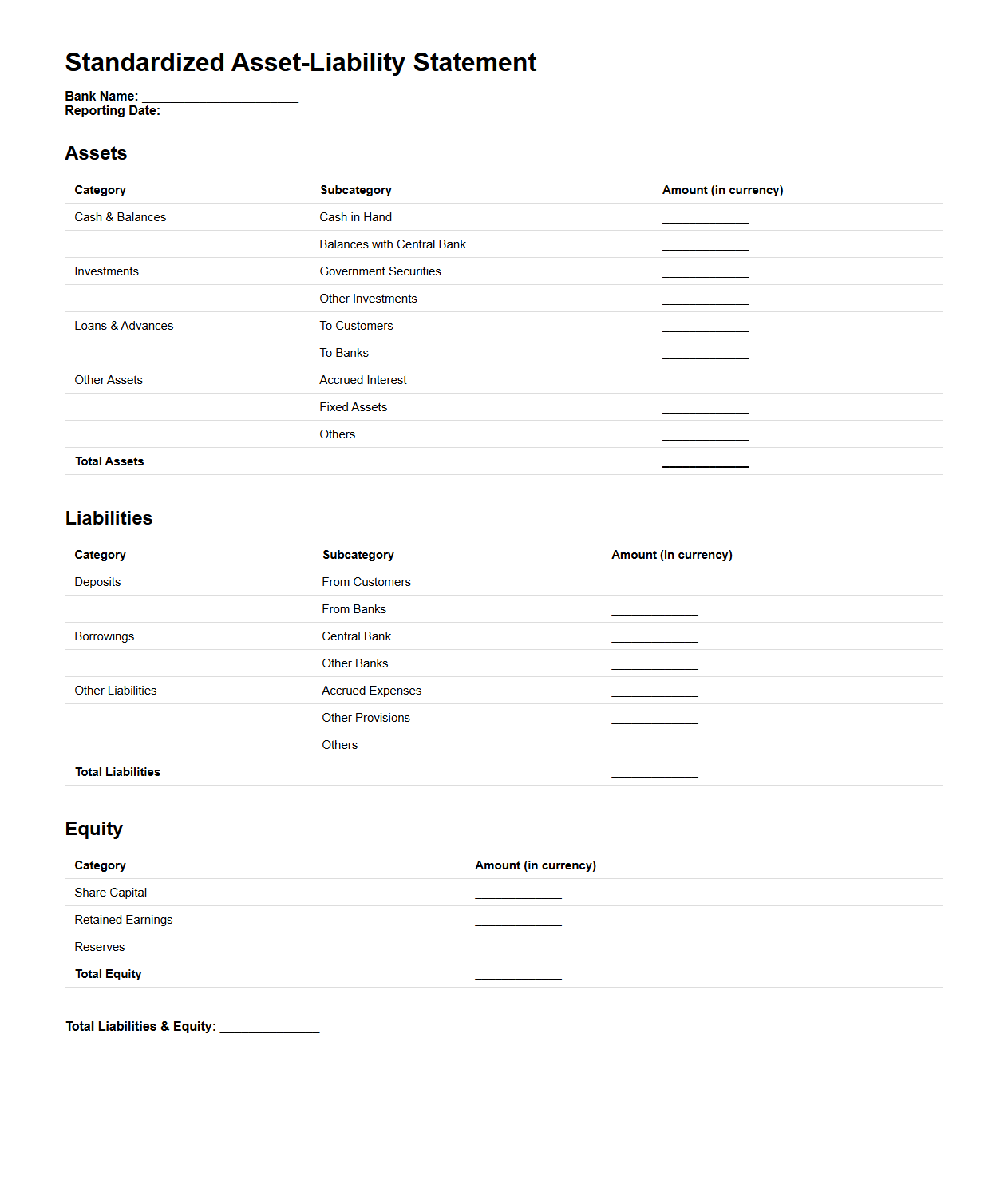
Standardized Asset-Liability Statement Template (for banks)
The
Standardized Asset-Liability Statement Template for banks is a structured financial report designed to present a clear and consistent overview of a bank's assets and liabilities. This template facilitates regulatory compliance by aligning with accounting standards and risk management frameworks, enabling accurate assessment of liquidity, solvency, and financial stability. Banks use this standardized document to streamline internal analysis, improve transparency for auditors, and support strategic decision-making processes.
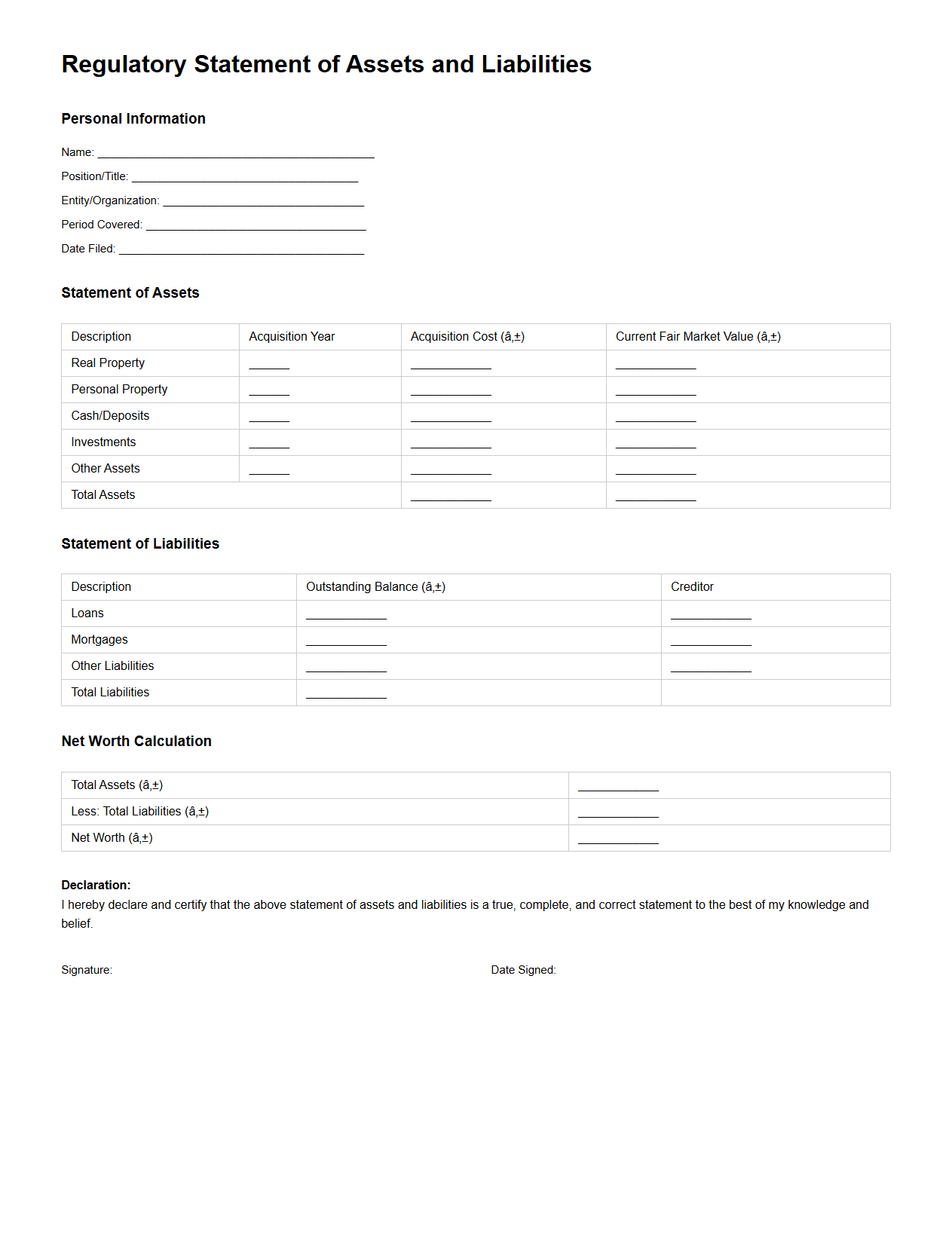
Regulatory Statement of Assets and Liabilities Form
The
Regulatory Statement of Assets and Liabilities Form is a crucial financial document used by regulatory authorities to assess the financial health and stability of institutions, particularly in banking and finance sectors. It provides a detailed snapshot of an organization's assets, liabilities, and capital positions, enabling regulators to monitor compliance with statutory requirements and risk management standards. Accurate submission of this form ensures transparency and supports the overall regulatory framework for maintaining financial stability.
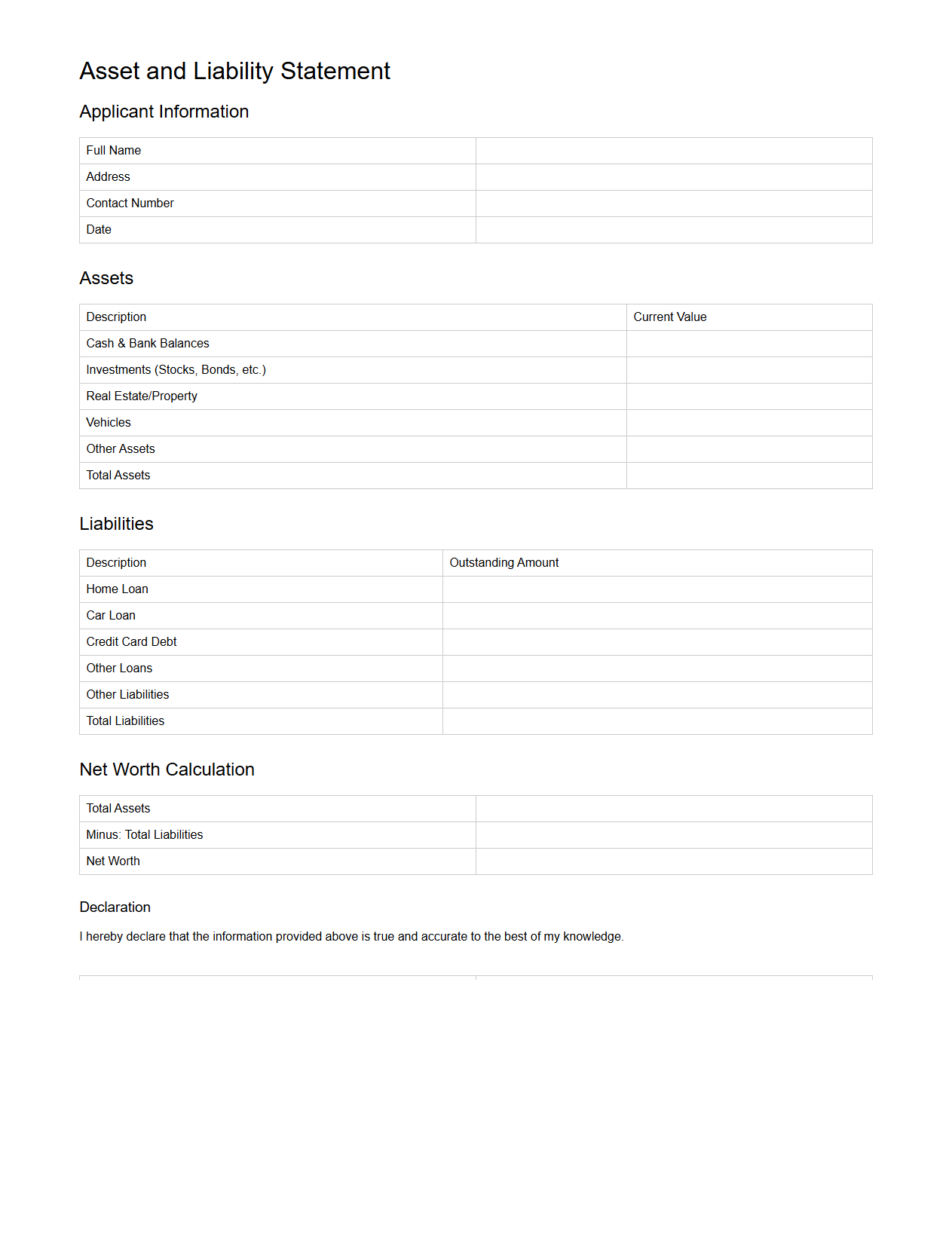
Asset and Liability Statement for Loan Applications
An
Asset and Liability Statement for loan applications is a detailed financial document that outlines an individual's or business's assets and liabilities to provide lenders with a clear picture of net worth. It includes information such as bank account balances, property values, investments, outstanding debts, and other financial obligations. This statement helps lenders assess creditworthiness and make informed decisions regarding loan approval and terms.
Statement of Affairs (Assets & Liabilities) Format
A
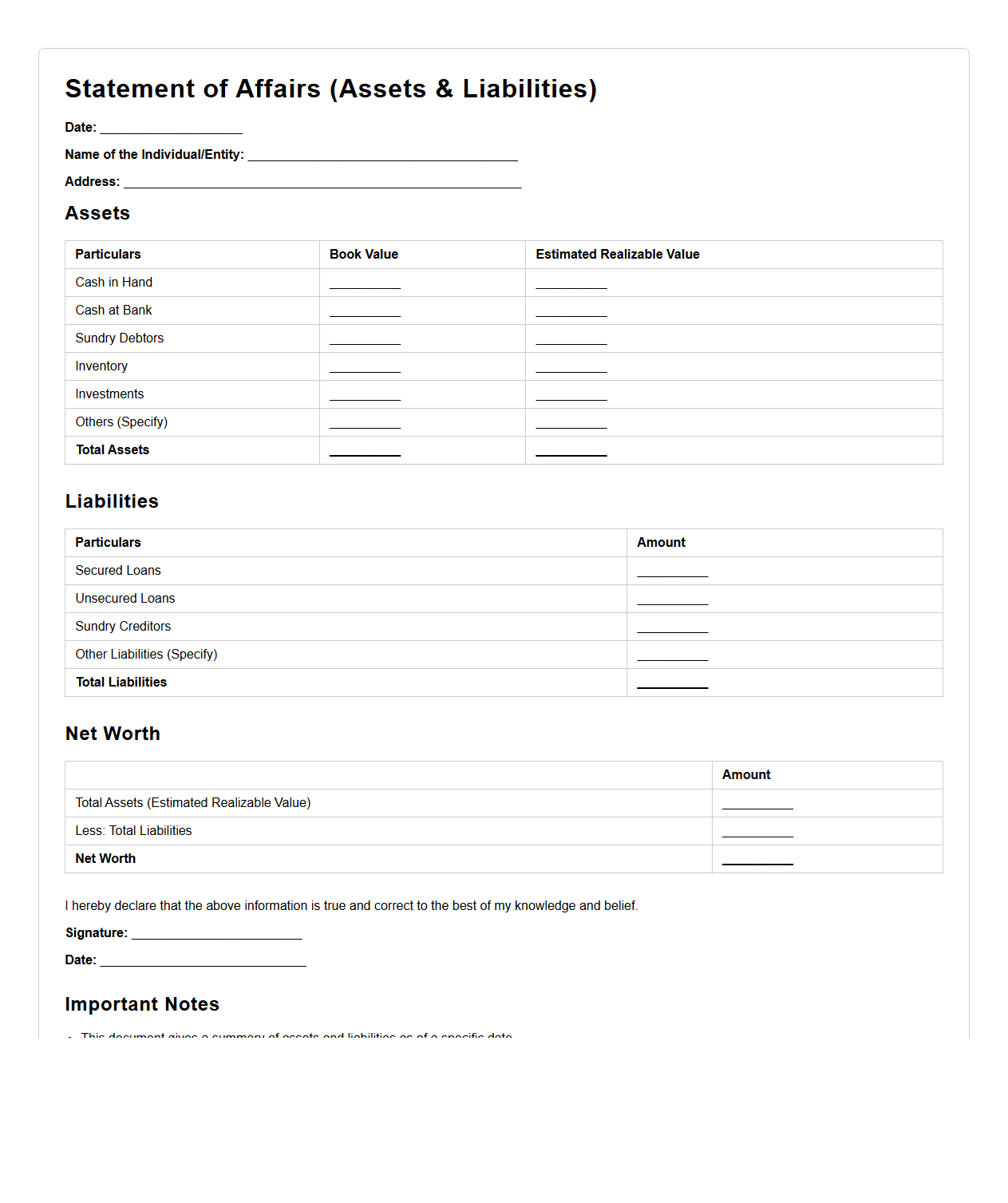
Statement of Affairs (Assets & Liabilities) Format document is a detailed financial statement that outlines an individual's or organization's current assets and liabilities at a specific point in time. It provides a clear snapshot of financial health by listing all owned assets such as cash, investments, property, and receivables alongside liabilities like debts, loans, and other obligations. This format is essential for insolvency proceedings, financial analysis, and strategic planning to assess net worth and make informed decisions.
Official Government Asset-Liability Declaration Format
The
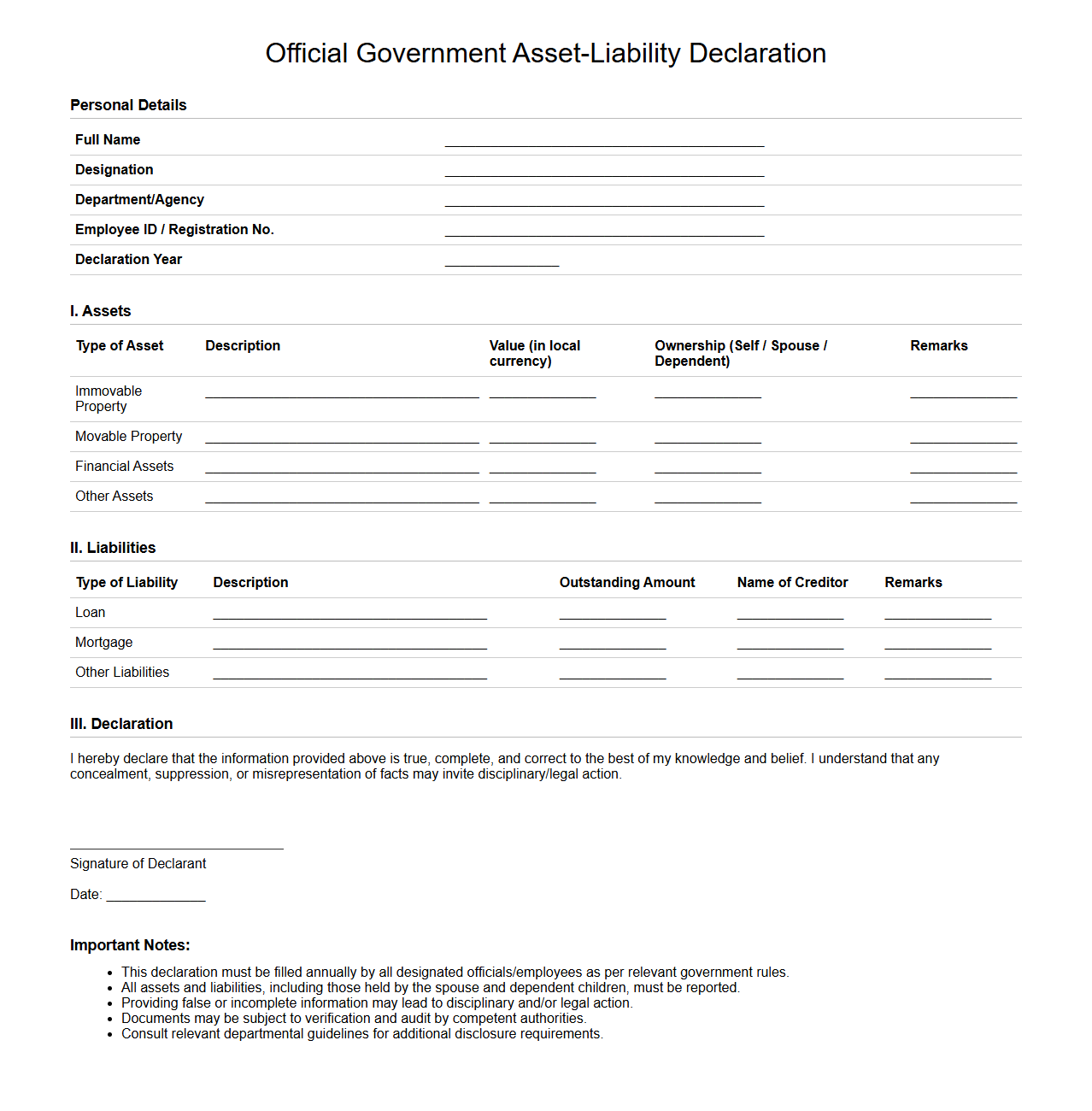
Official Government Asset-Liability Declaration Format document is a standardized template used by government officials to disclose their financial holdings and liabilities transparently. This format ensures consistency, accuracy, and compliance with anti-corruption regulations by detailing assets such as property, investments, and savings alongside all outstanding debts or obligations. Properly completed declarations promote accountability and help monitor conflicts of interest within public service.
What specific components are required in the format of a Statement of Assets and Liabilities?
The Statement of Assets and Liabilities must include distinct sections for assets and liabilities. Each section lists the items with their respective values to provide a clear financial snapshot. Additionally, equity or net worth is presented to show the organization's balance between assets and liabilities.
How are assets and liabilities typically classified and presented in the statement?
Assets and liabilities are typically classified into current and non-current categories based on their liquidity and maturity. Current assets and liabilities are expected to be settled within one year, while non-current items extend beyond that period. This classification enhances clarity and helps stakeholders assess short-term versus long-term financial positions.
What disclosure requirements must be fulfilled in the Statement of Assets and Liabilities?
The statement must provide full disclosure of all material assets, liabilities, and equity components to ensure transparency. Additional notes may be added to explain valuation methods or contingencies affecting the reported figures. Compliance with relevant accounting standards is essential for accurate and lawful presentation.
How is equity or net worth calculated and shown in this format?
Equity or net worth is calculated as the difference between total assets and total liabilities. It reflects the residual interest of owners in the organization's assets after settling liabilities. This value is prominently displayed to indicate the financial health and capital structure of the entity.
What are the key differences between current and non-current items in the Statement of Assets and Liabilities?
Current items are assets or liabilities expected to be realized or settled within one year, emphasizing short-term liquidity. Non-current items represent longer-term resources or obligations, impacting strategic planning and financial stability. Differentiating these items helps in analyzing operational efficiency and financial flexibility.