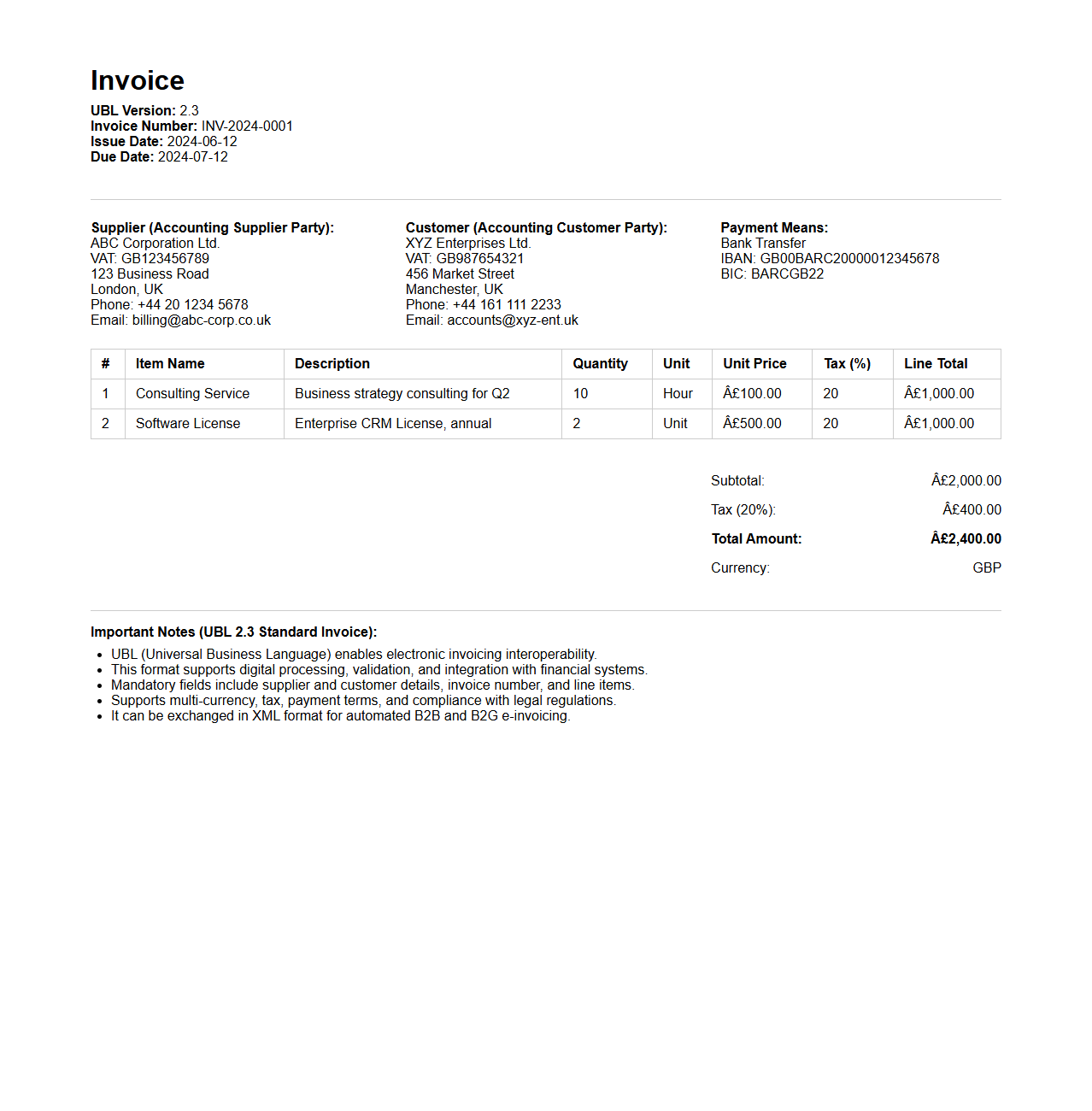
The Format of UBL for Invoice is an XML-based standard designed to facilitate electronic invoicing by providing a consistent and machine-readable layout. This format ensures interoperability between different accounting and ERP systems by defining clear data structures for invoice details, such as supplier information, payment terms, and line items. Using the UBL Invoice Format improves automation, reduces errors, and streamlines business transactions across diverse platforms.
XML Invoice Format for UBL
The
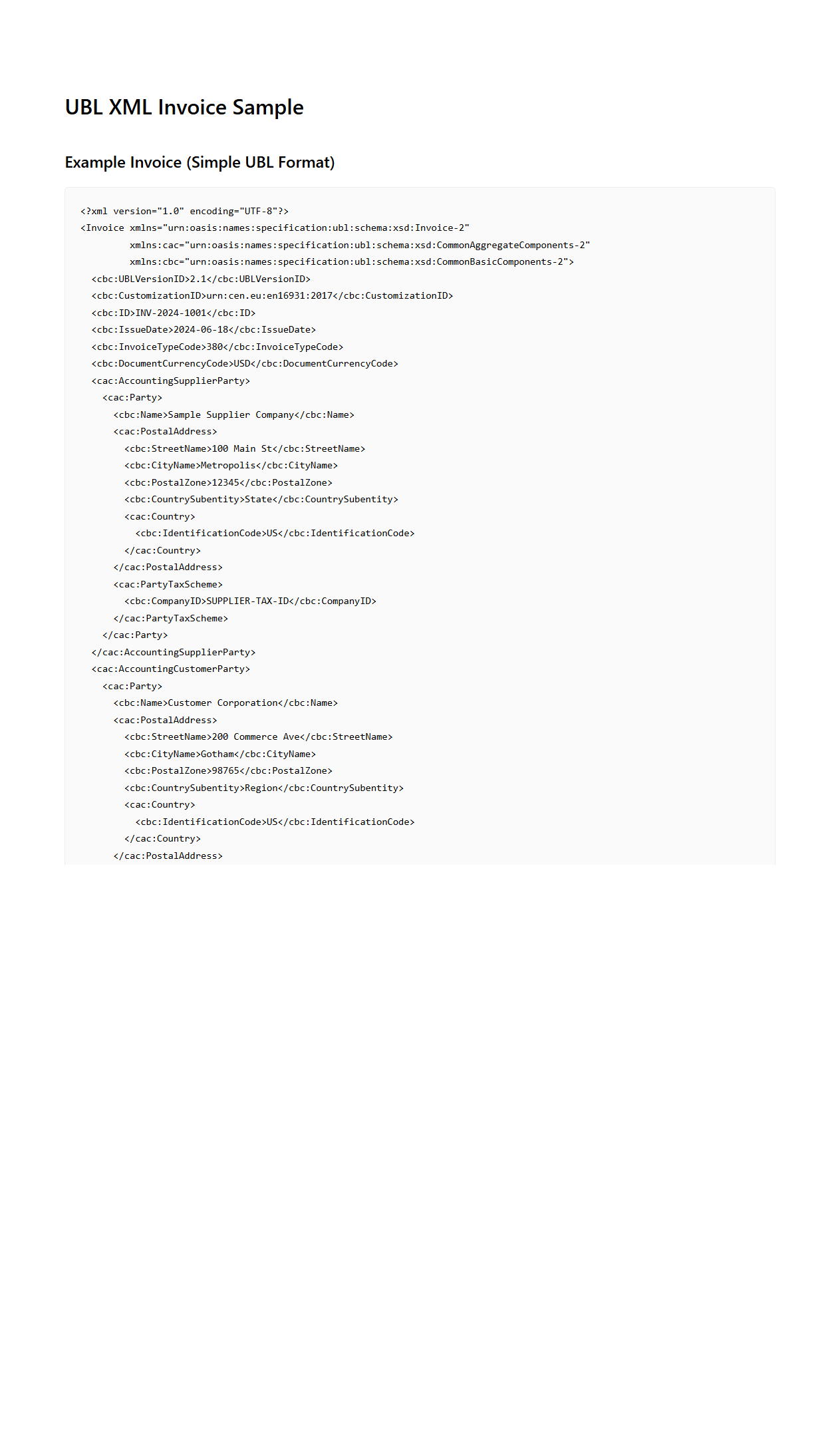
XML Invoice Format for UBL (Universal Business Language) is a standardized digital document structure designed to facilitate electronic invoicing across different business systems and platforms. It ensures interoperability by using a common XML schema to represent invoice data such as supplier, buyer, payment terms, and item details in a machine-readable format. By adopting UBL XML invoices, organizations can automate invoice processing, reduce errors, and improve compliance with regulatory requirements.
JSON Invoice Format for UBL
The
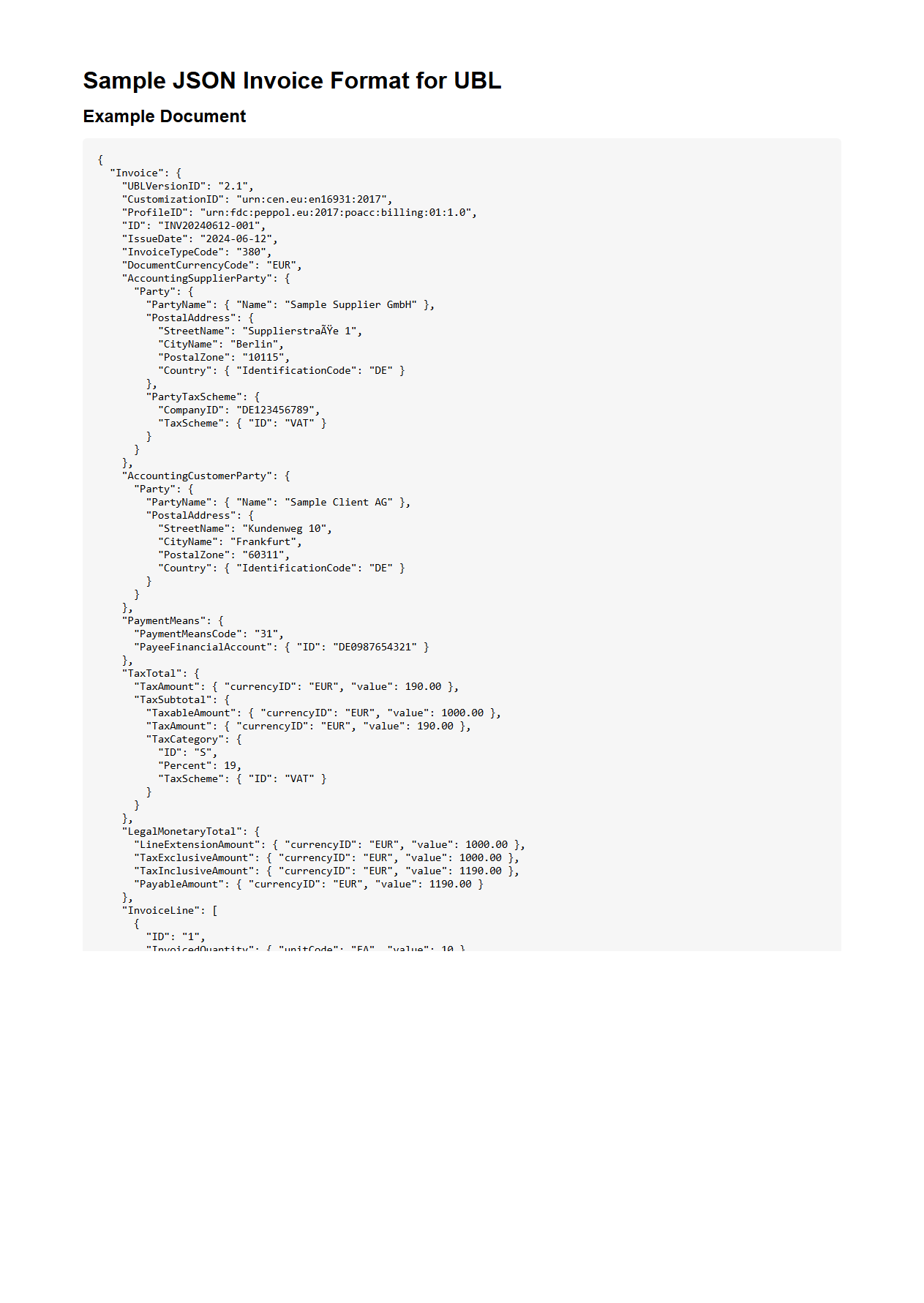
JSON Invoice Format for UBL (Universal Business Language) documents is a structured data representation that enables electronic invoicing through a lightweight, easy-to-read JSON syntax. It encapsulates standard UBL invoice elements, such as invoice header, parties involved, line items, totals, and payment terms, facilitating seamless integration with accounting and ERP systems. This format enhances interoperability, reduces processing errors, and supports automated invoice validation and exchange across diverse business platforms.
PDF/A Invoice Format for UBL
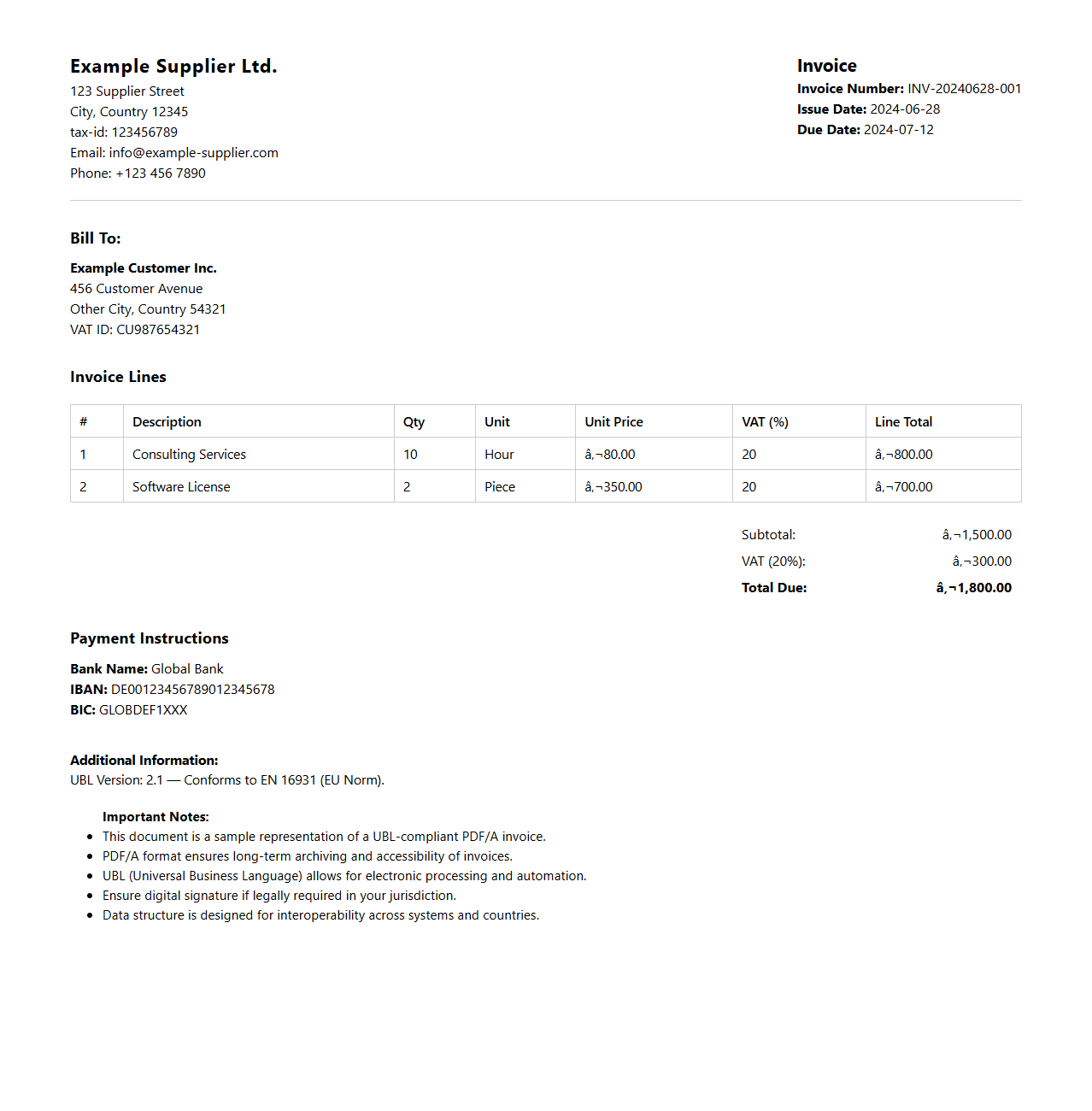
PDF/A Invoice Format for UBL documents ensures long-term archiving and reliable reproduction of electronic invoices by conforming to the PDF/A standard, which is a subset of the Portable Document Format (PDF) specialized for digital preservation. This format embeds the Universal Business Language (UBL) invoice data within the PDF, allowing both human-readable presentation and machine-readable processing, facilitating automated workflows and compliance with regulatory requirements. The
PDF/A Invoice Format guarantees that invoice content remains accessible and unaltered over time, supporting business continuity and auditability.
CSV Invoice Format for UBL
The
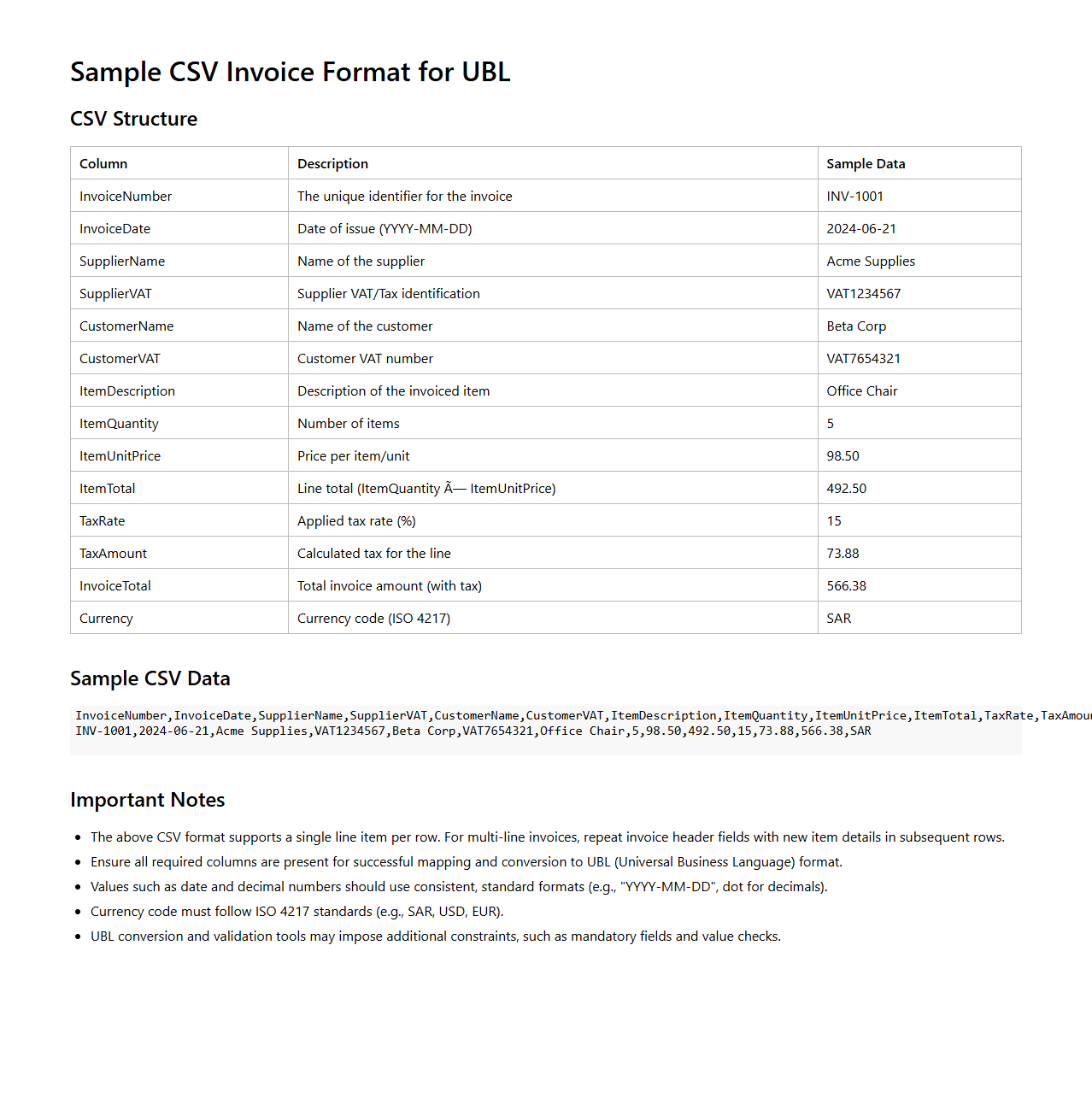
CSV Invoice Format for UBL (Universal Business Language) documents is a standardized way to represent invoice data in a comma-separated values file, enabling easy exchange and processing of billing information. This format facilitates the conversion of invoice details into UBL XML structure, ensuring interoperability between different accounting and ERP systems. Organizations use CSV Invoice Format to streamline digital invoicing workflows and improve data accuracy in electronic invoicing processes.
EDI Invoice Format for UBL
The
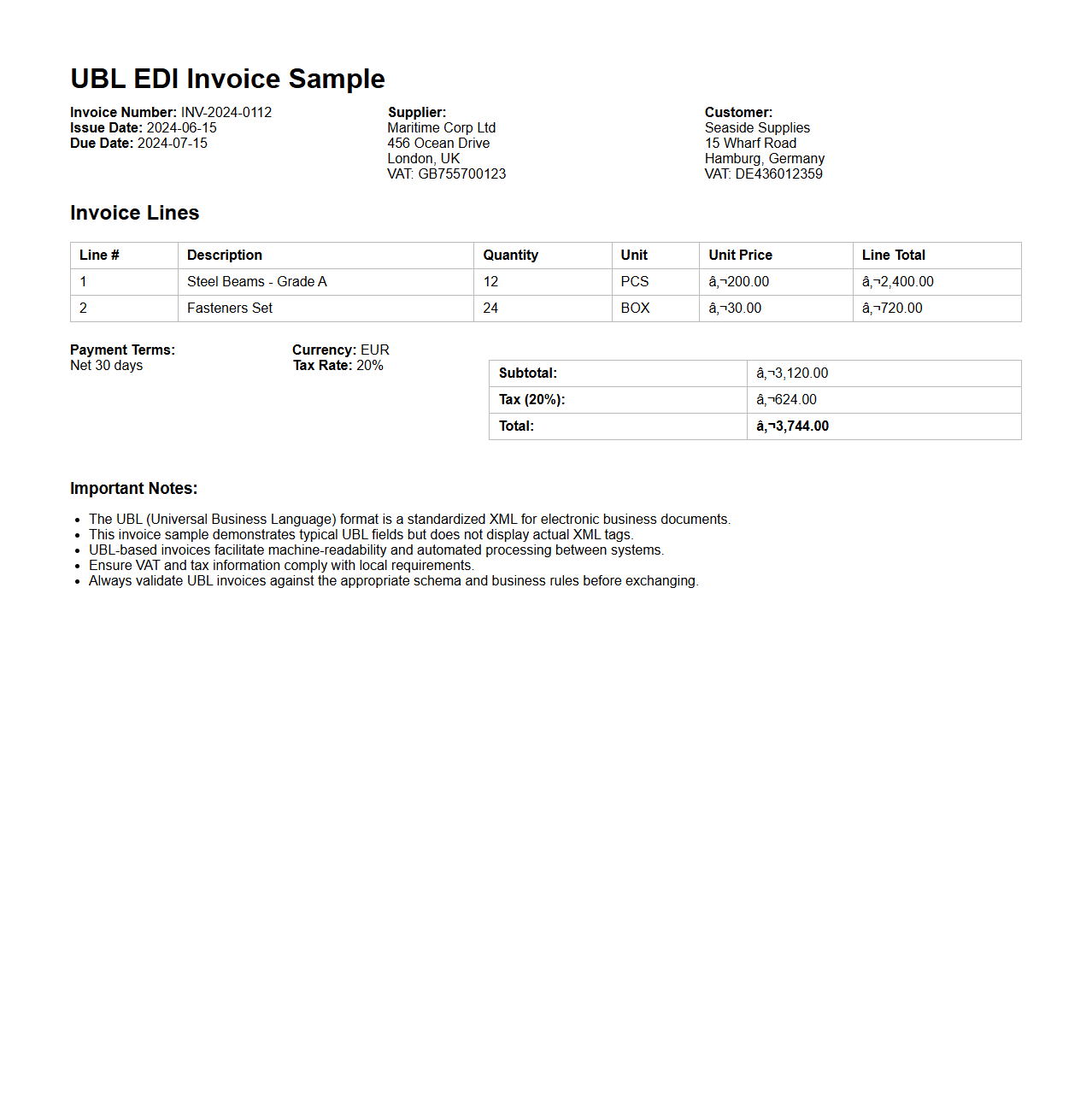
EDI Invoice Format for UBL document is a standardized electronic data interchange format designed to streamline invoicing processes between businesses. It uses the Universal Business Language (UBL) schema to ensure consistent, machine-readable invoice information, enabling efficient transaction processing, reduced errors, and compliance with global e-invoicing standards. This format supports automated invoice generation, validation, and integration with enterprise resource planning (ERP) systems, enhancing supply chain and financial operations.
HTML Invoice Format for UBL
The
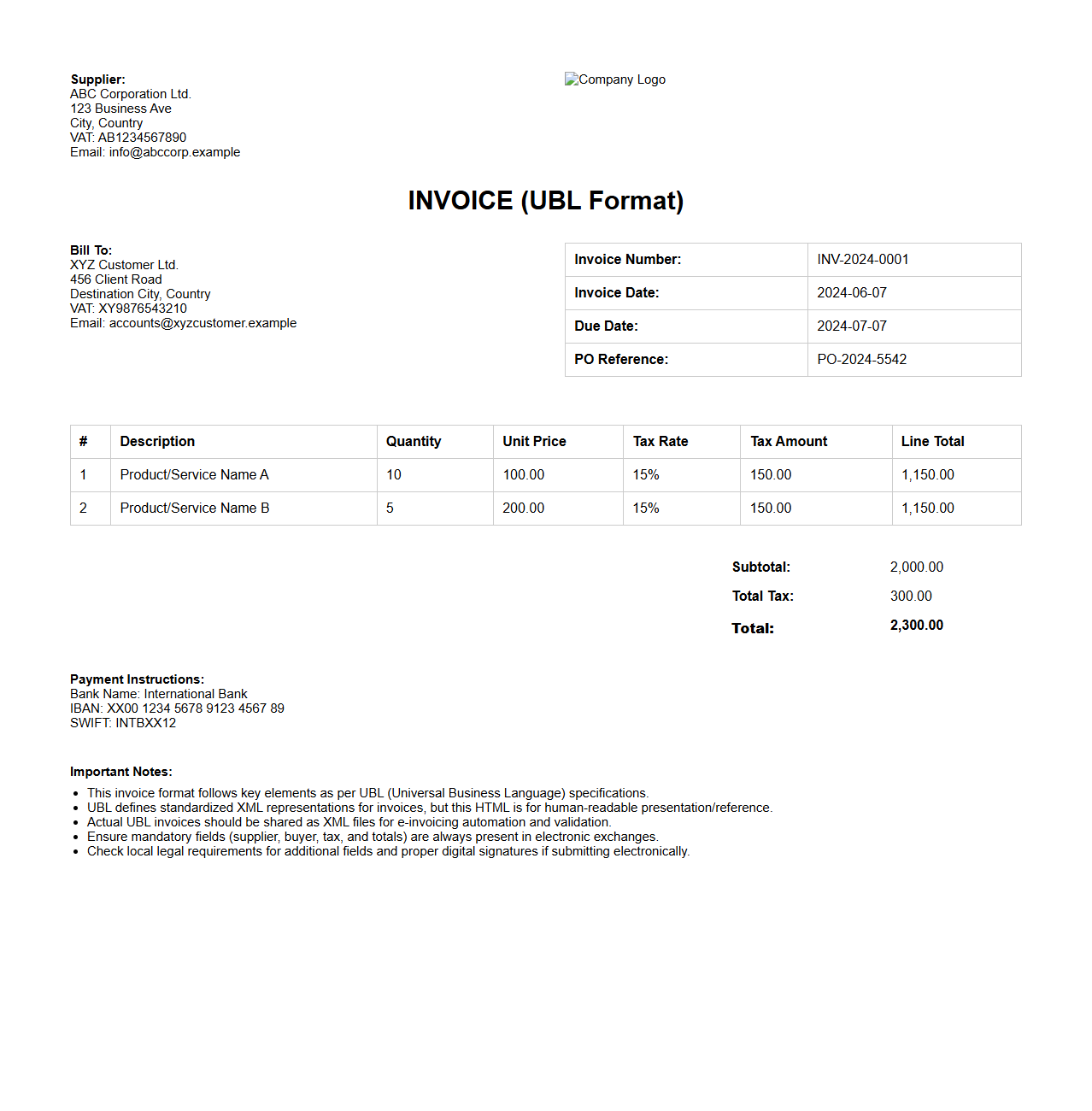
HTML Invoice Format for UBL (Universal Business Language) documents provides a structured and visually clear way to present electronic invoices using standard web technologies. It transforms UBL's XML data into human-readable HTML, ensuring easy accessibility across different devices while preserving critical business information such as invoice number, dates, totals, and supplier details. This format supports interoperability by combining UBL's standardized data model with web-friendly presentation, enhancing electronic invoicing efficiency.
XSLT-Transformed Invoice Format for UBL
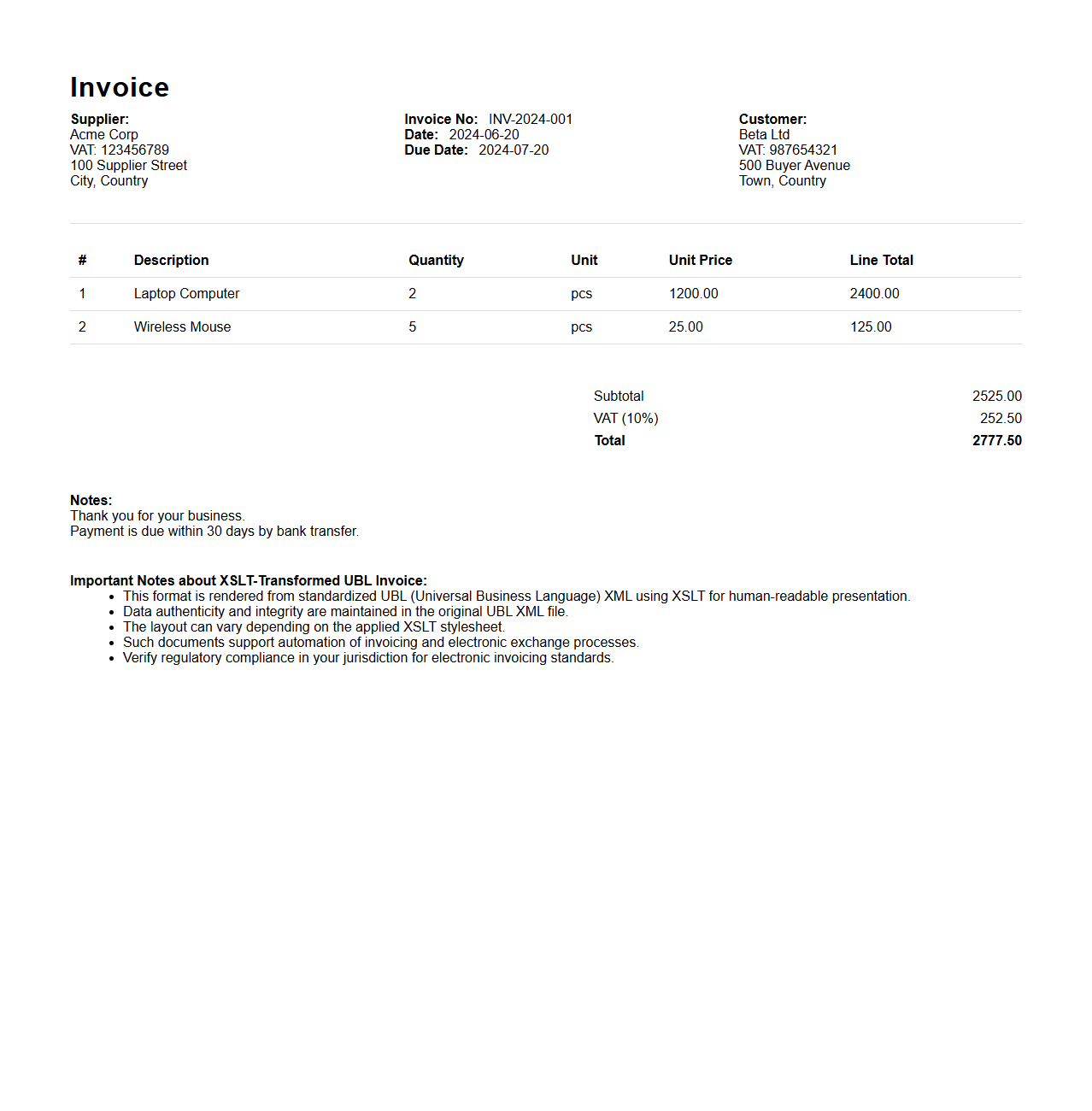
XSLT-Transformed Invoice Format for UBL document is a standardized method to convert Universal Business Language (UBL) XML invoices into readable formats such as HTML or PDF. This transformation uses Extensible Stylesheet Language Transformations (XSLT) to map and style invoice data, ensuring compatibility across different platforms and enhancing data presentation.
UBL invoice format streamlines electronic invoicing by enabling automation and interoperability in business transactions.
Spreadsheet Invoice Format for UBL
A
Spreadsheet Invoice Format for UBL (Universal Business Language) document is a structured template used to create electronic invoices that comply with UBL standards in spreadsheet software like Microsoft Excel or Google Sheets. It facilitates the accurate capture and organization of essential invoice data such as supplier details, invoice number, date, item descriptions, quantities, prices, and tax information, ensuring interoperability between business systems. This format streamlines the invoicing process by enabling easy data export and integration with UBL-compliant accounting or ERP systems for efficient electronic document exchange.
UBL 2.1 Standard Invoice Document Format
The
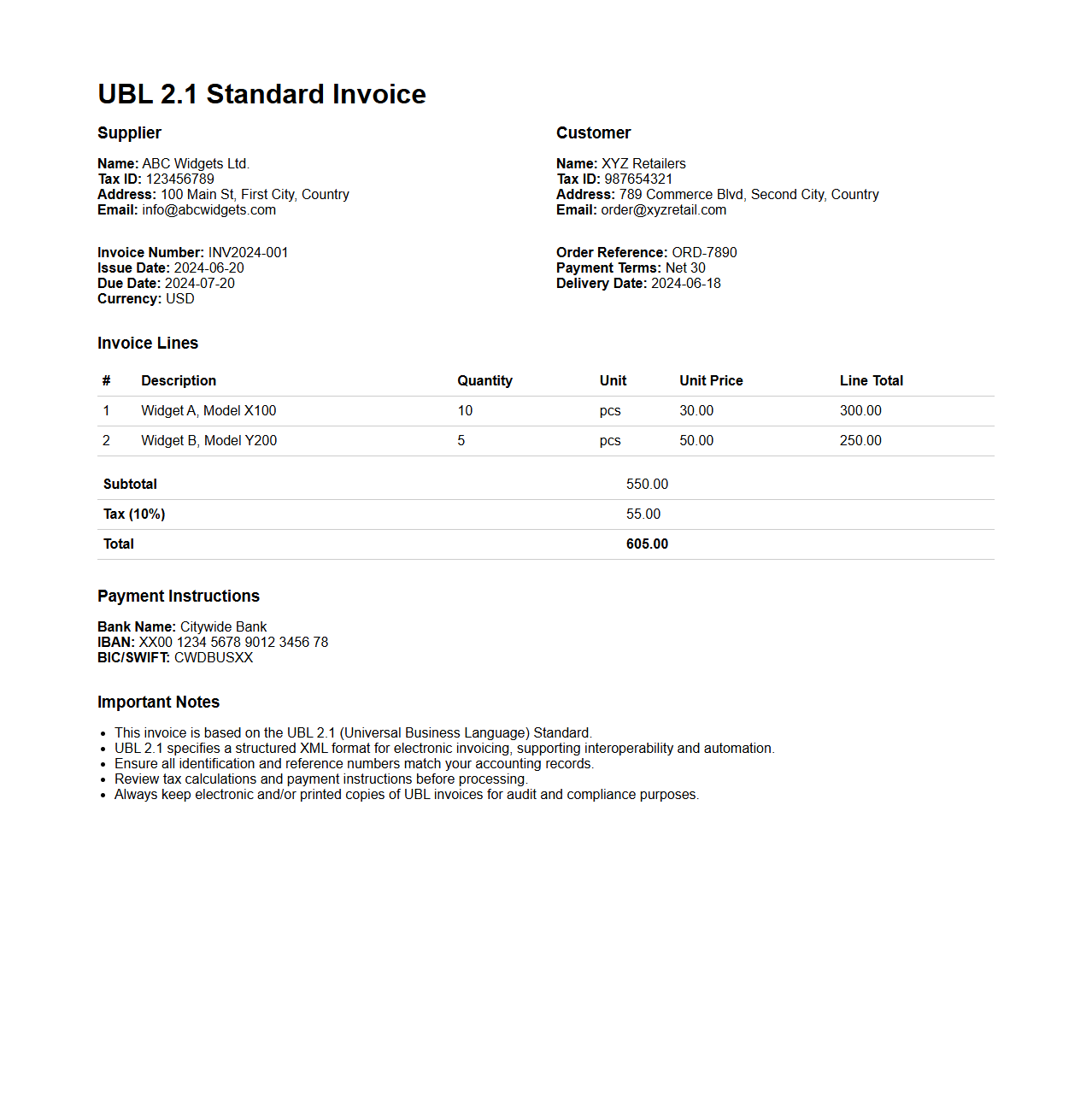
UBL 2.1 Standard Invoice Document Format is a globally recognized XML-based specification designed to facilitate electronic invoicing by standardizing the structure and data elements of invoices. It ensures interoperability between different business systems by defining consistent data models for invoice content, such as payment terms, taxes, item details, and parties involved. This standard helps streamline procurement and payment processes, reducing errors and improving efficiency in B2B and B2G transactions.
UBL 2.3 Standard Invoice Document Format
The
UBL 2.3 Standard Invoice Document Format is an internationally recognized XML-based schema designed to facilitate electronic invoicing between businesses and governments. It ensures consistent data exchange by defining a standardized structure for invoice content, including details such as billing parties, payment terms, and itemized charges. This format enhances interoperability, reduces processing errors, and streamlines accounting and auditing processes across diverse systems.
What are the mandatory XML elements in a UBL-compliant invoice document?
The mandatory XML elements in a UBL-compliant invoice include , , and . Essential sections such as , , and must also be present to ensure complete transactional details. These elements define the structure and ensure compliance with UBL standards for invoice interchange.
How is tax information structured within UBL invoice format?
Within the UBL invoice format, tax details are encapsulated inside the element. This element contains one or more sections, each specifying different tax rates or types. The and sub-elements provide precise categorization and identification of the applied taxes.
Which UBL version supports multiple currency handling for invoices?
UBL 2.1 introduced enhanced support for multiple currencies in invoice documents. This version allows the specification of different currencies at document, line, and tax levels using the and elements. It ensures accurate financial representation in international transactions and currency conversions.
How are electronic signatures embedded in UBL invoice documents?
Electronic signatures in UBL invoices are embedded using the element defined by the XML Signature standard. This element includes , , and to verify the authenticity and integrity of the document. Incorporating signatures ensures the security and non-repudiation of electronic invoice exchanges.
What schema is used for itemized billing lines in a UBL invoice?
The itemized billing lines in a UBL invoice are structured using the schema element. Each provides details about quantity, price, and item description with nested elements like - and . This modular approach facilitates detailed invoicing and item-level information clarity.