The format of EDI for invoice typically follows standardized structures such as EDIFACT or ANSI X12, enabling seamless electronic exchange between businesses. This format includes key data elements like invoice number, date, payment terms, and itemized charges to ensure accuracy and compliance. Utilizing a consistent EDI invoice format reduces processing errors and accelerates transaction times.
EDI 810 Invoice Document Format
The
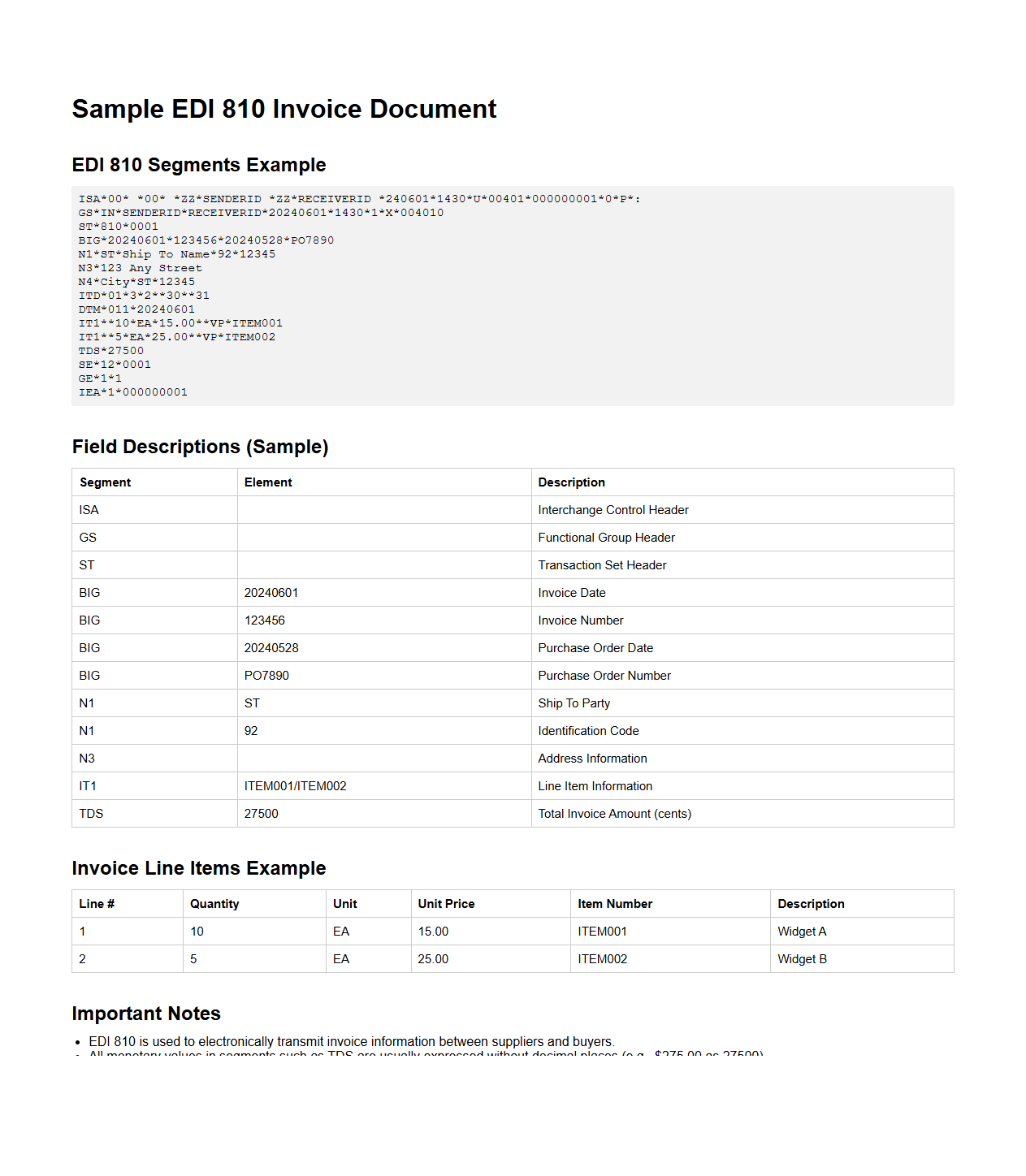
EDI 810 Invoice Document Format is a standardized electronic document used in business transactions to bill goods and services. It facilitates the automated exchange of invoicing information between suppliers and buyers, reducing errors and processing time. This format includes detailed data such as invoice number, payment terms, item descriptions, and pricing, ensuring accurate and efficient financial communication.
EDI 880 Grocery Products Invoice Format
The
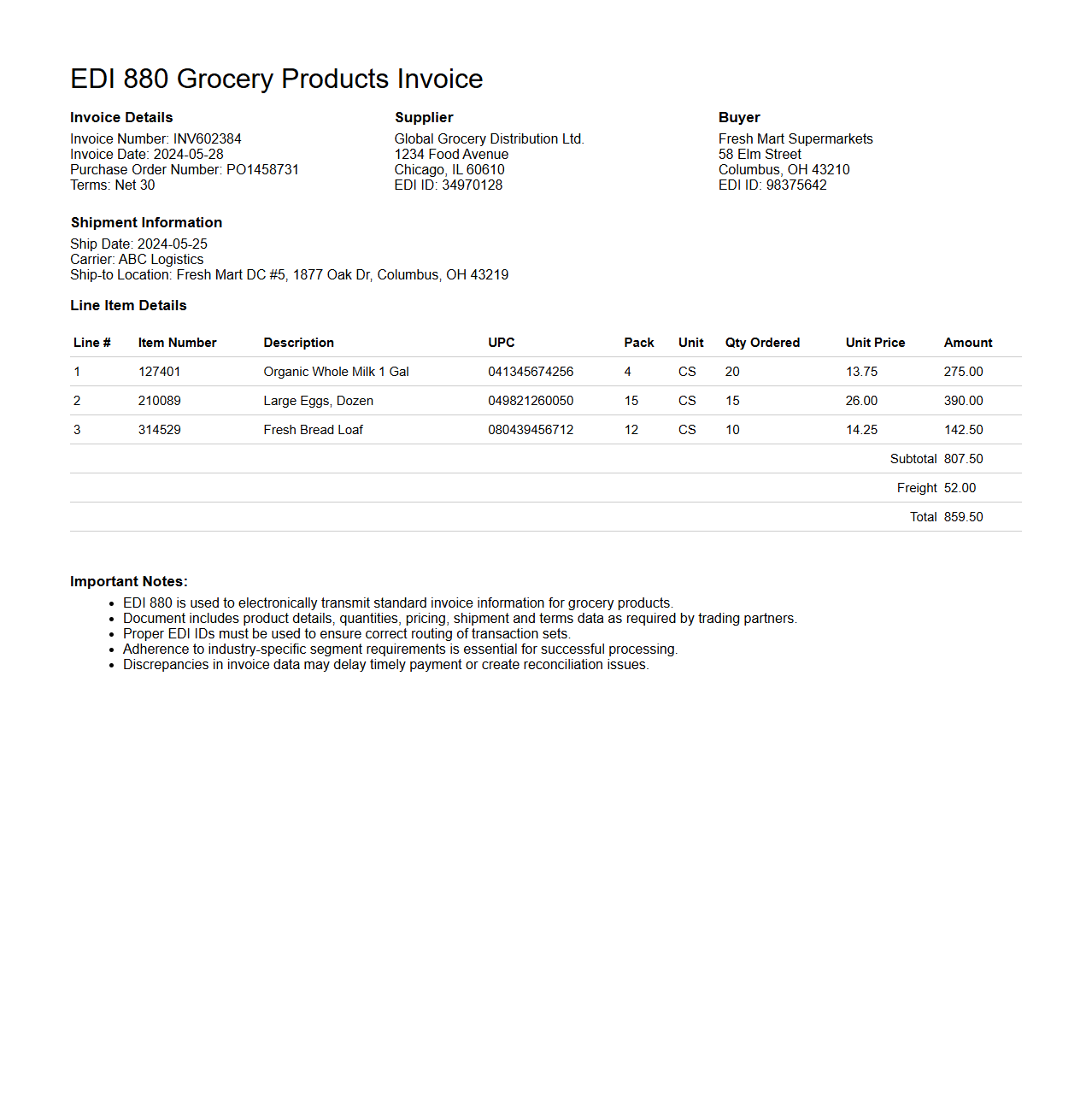
EDI 880 Grocery Products Invoice Format is a standardized electronic document used in the retail and grocery industry to facilitate the accurate and efficient exchange of invoicing information between suppliers and retailers. This format ensures the consistent communication of details such as product quantities, prices, and payment terms, reducing errors and streamlining accounts payable processes. By automating invoice processing, businesses can improve transaction speed, enhance data accuracy, and maintain better financial control.
EDI 894 Delivery/Return Base Record Format
The
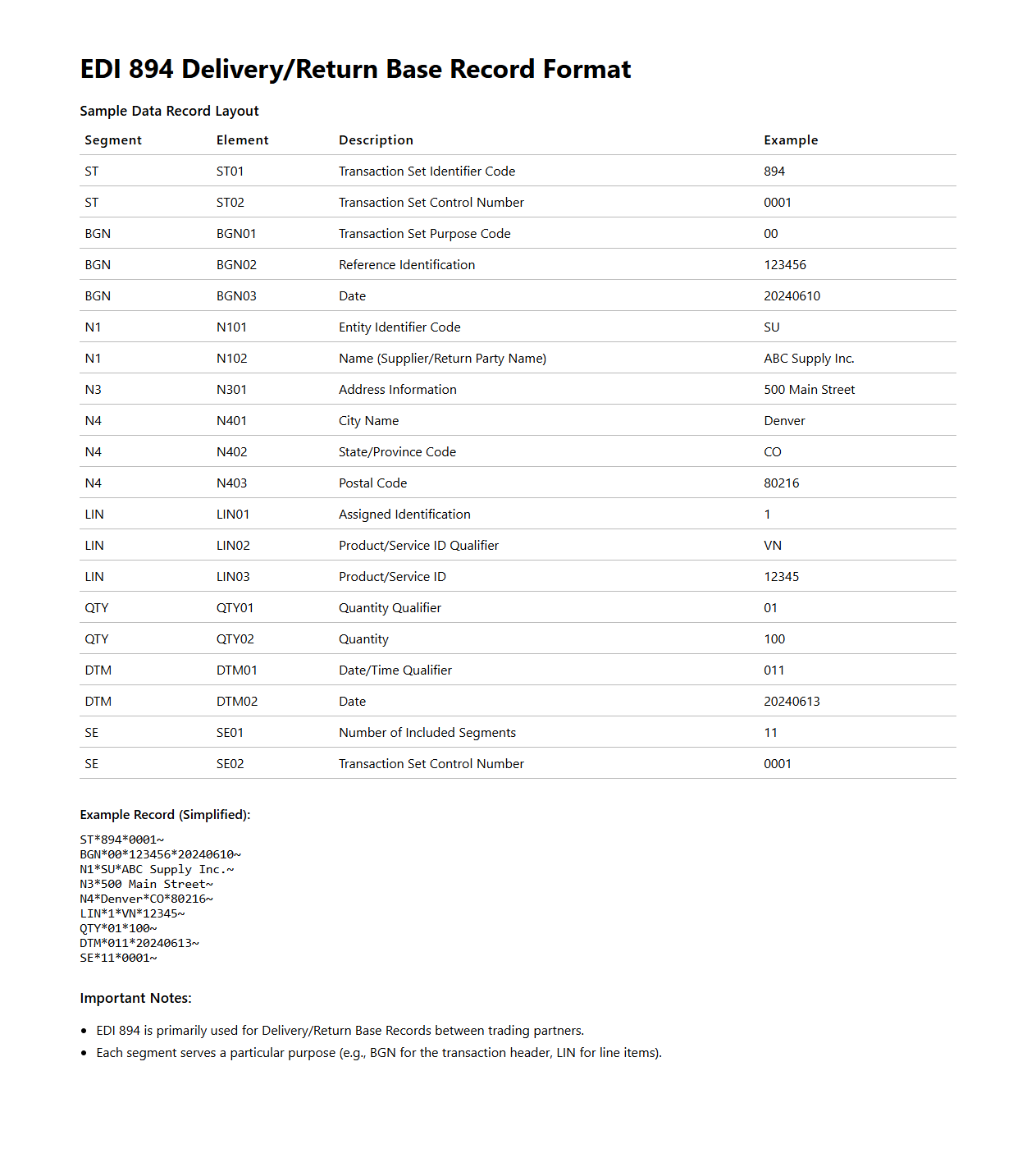
EDI 894 Delivery/Return Base Record Format document standardizes the exchange of delivery and return information between trading partners in supply chain operations. It captures essential data such as shipment details, quantities, dates, and conditions to facilitate accurate tracking and reconciliation of goods during delivery or return processes. This format improves communication efficiency and reduces errors by providing a consistent structure for transactional information.
EDI 210 Motor Carrier Freight Details and Invoice Format
The
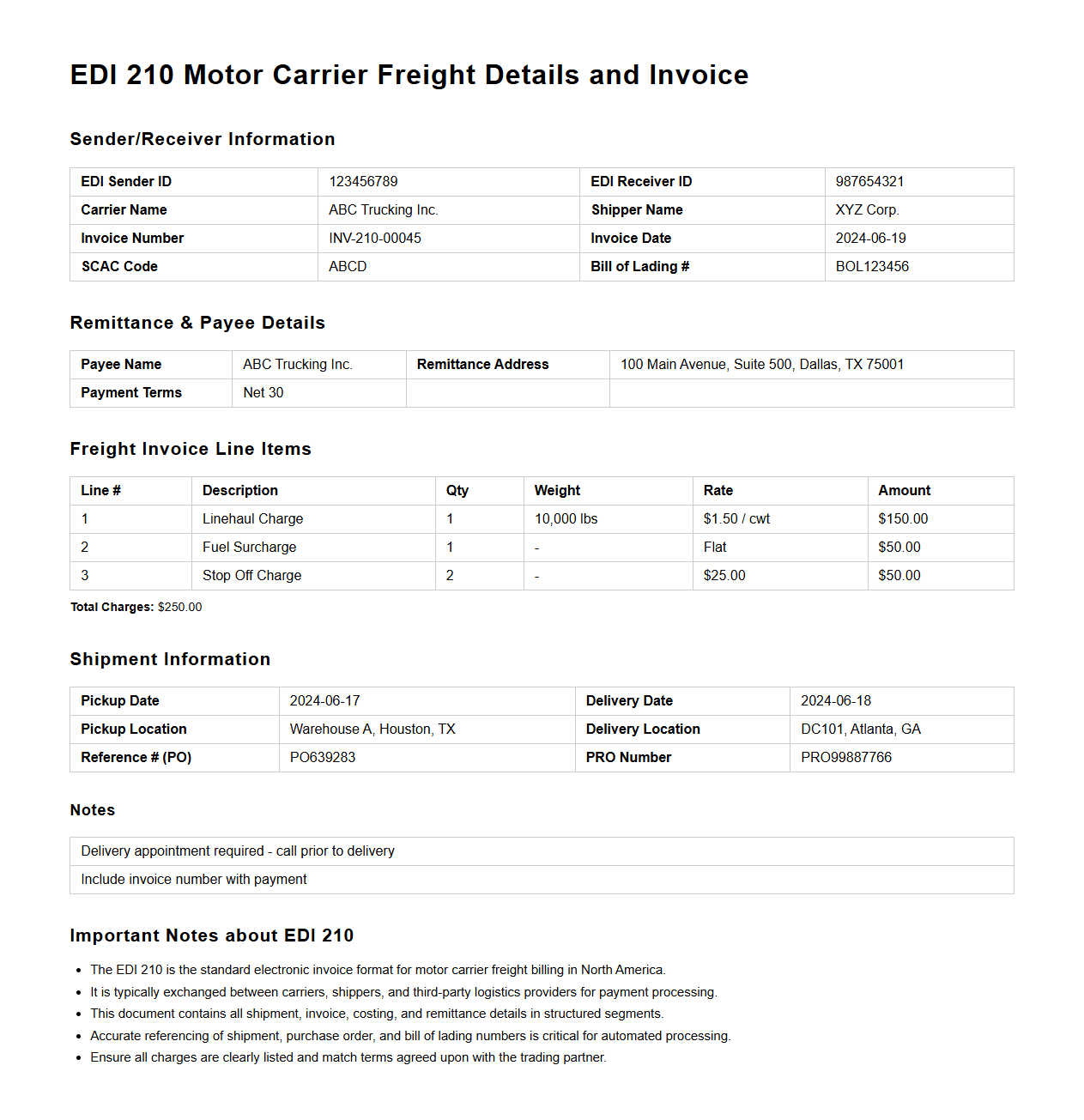
EDI 210 Motor Carrier Freight Details and Invoice Format document standardizes the electronic transmission of freight billing information between motor carriers and shippers or consignees. This document includes essential data such as shipment details, freight charges, and billing information, facilitating accurate and efficient invoice processing. Implementing EDI 210 reduces errors, accelerates payment cycles, and enhances communication within the transportation and logistics industry.
EDI 811 Consolidated Service Invoice Statement Format
The
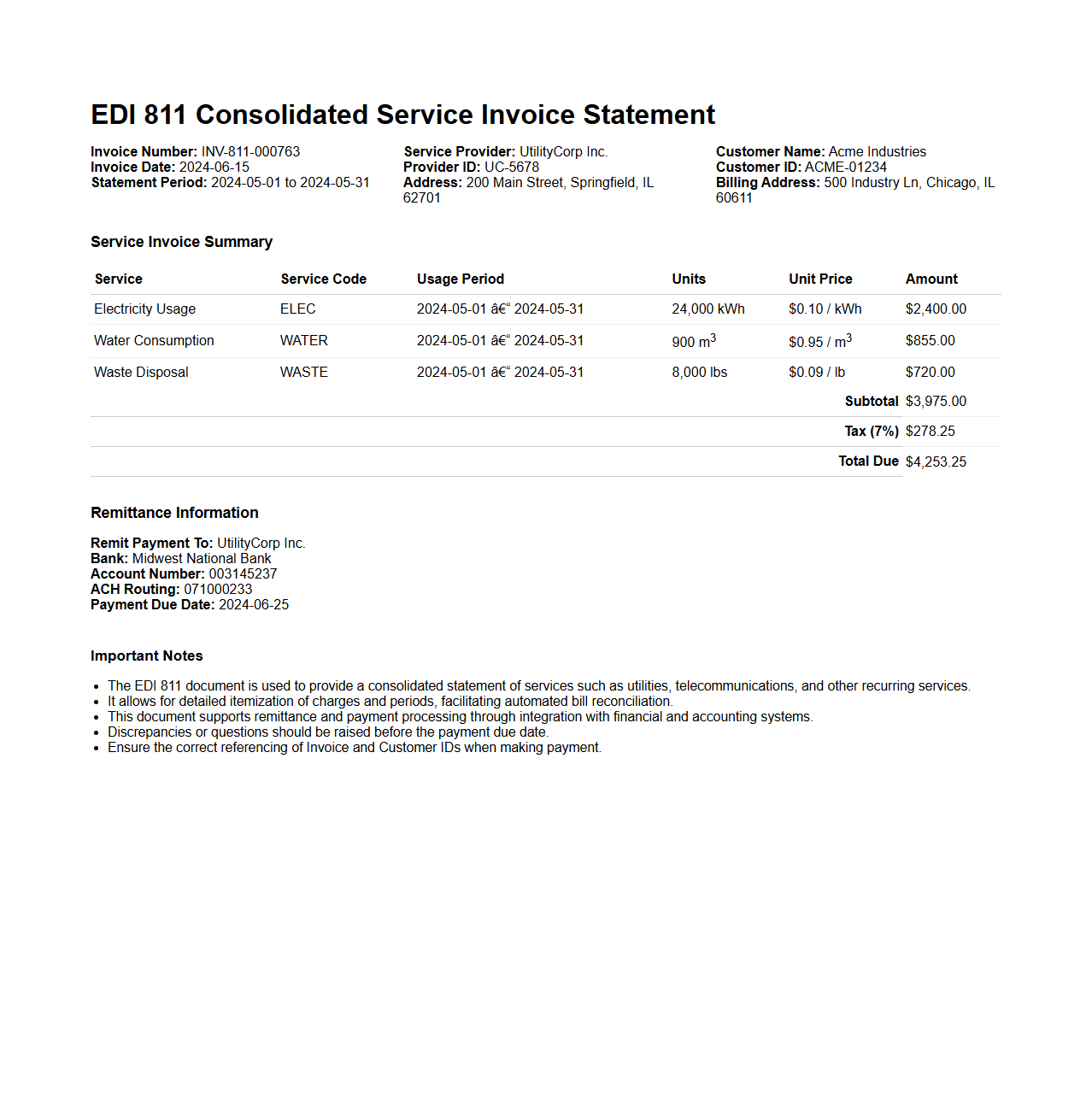
EDI 811 Consolidated Service Invoice Statement Format is a standardized electronic document used in business transactions to provide a detailed summary of multiple service invoices consolidated into a single statement. This format facilitates efficient communication between service providers and clients by summarizing charges, payment terms, and service details in a structured manner. Using EDI 811 reduces manual processing errors and accelerates the invoice reconciliation and payment process.
EDI 885 Retail Account Balance Invoice Format
The
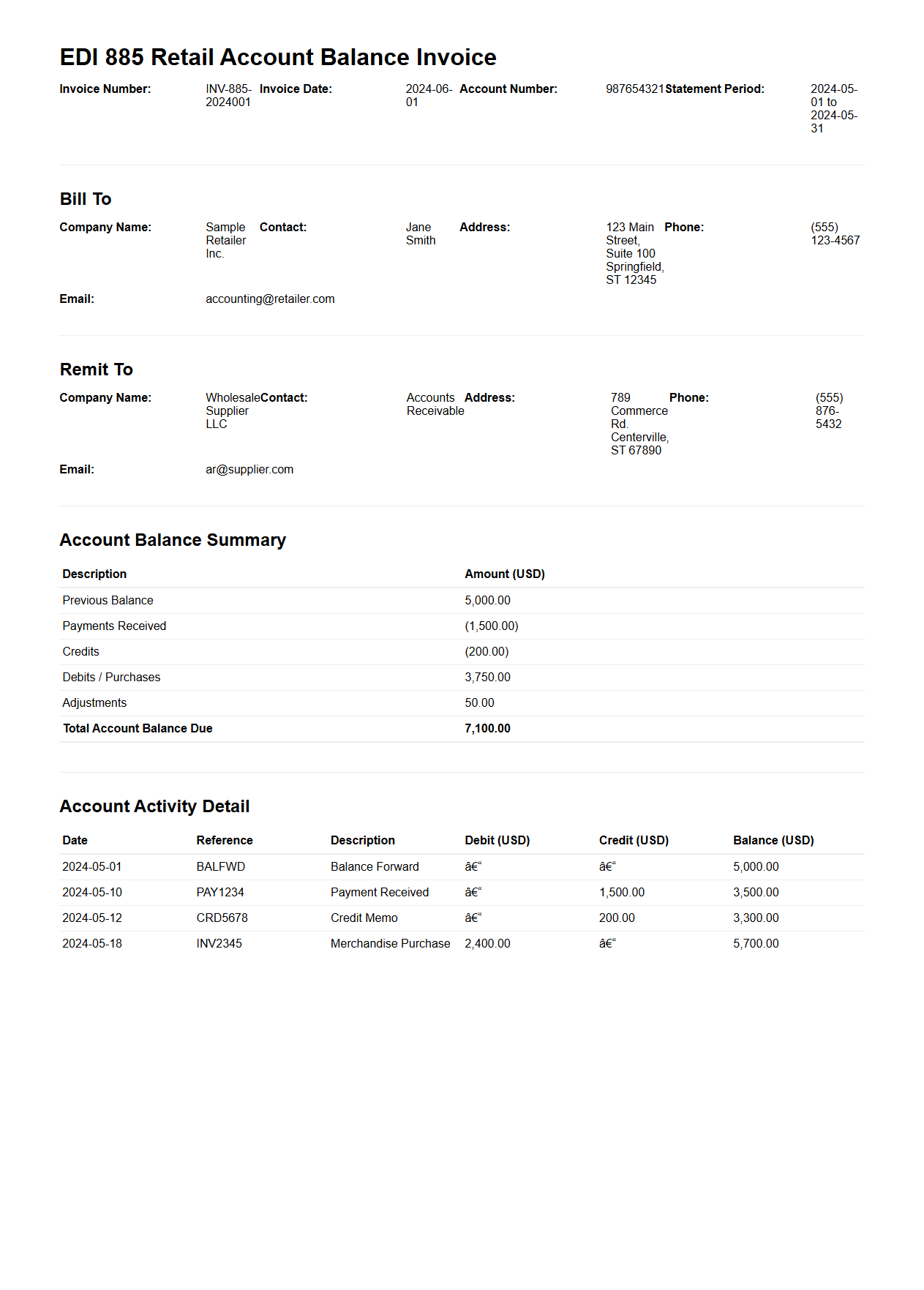
EDI 885 Retail Account Balance Invoice Format is a standardized electronic document used by retailers to transmit detailed account balance and invoice information between trading partners. This format facilitates accurate billing, payment reconciliation, and account management by providing structured data on purchases, credits, and outstanding balances. It enhances operational efficiency by reducing manual errors and accelerating financial transactions within the retail supply chain.
EDI 875 Grocery Products Purchase Invoice Format
The
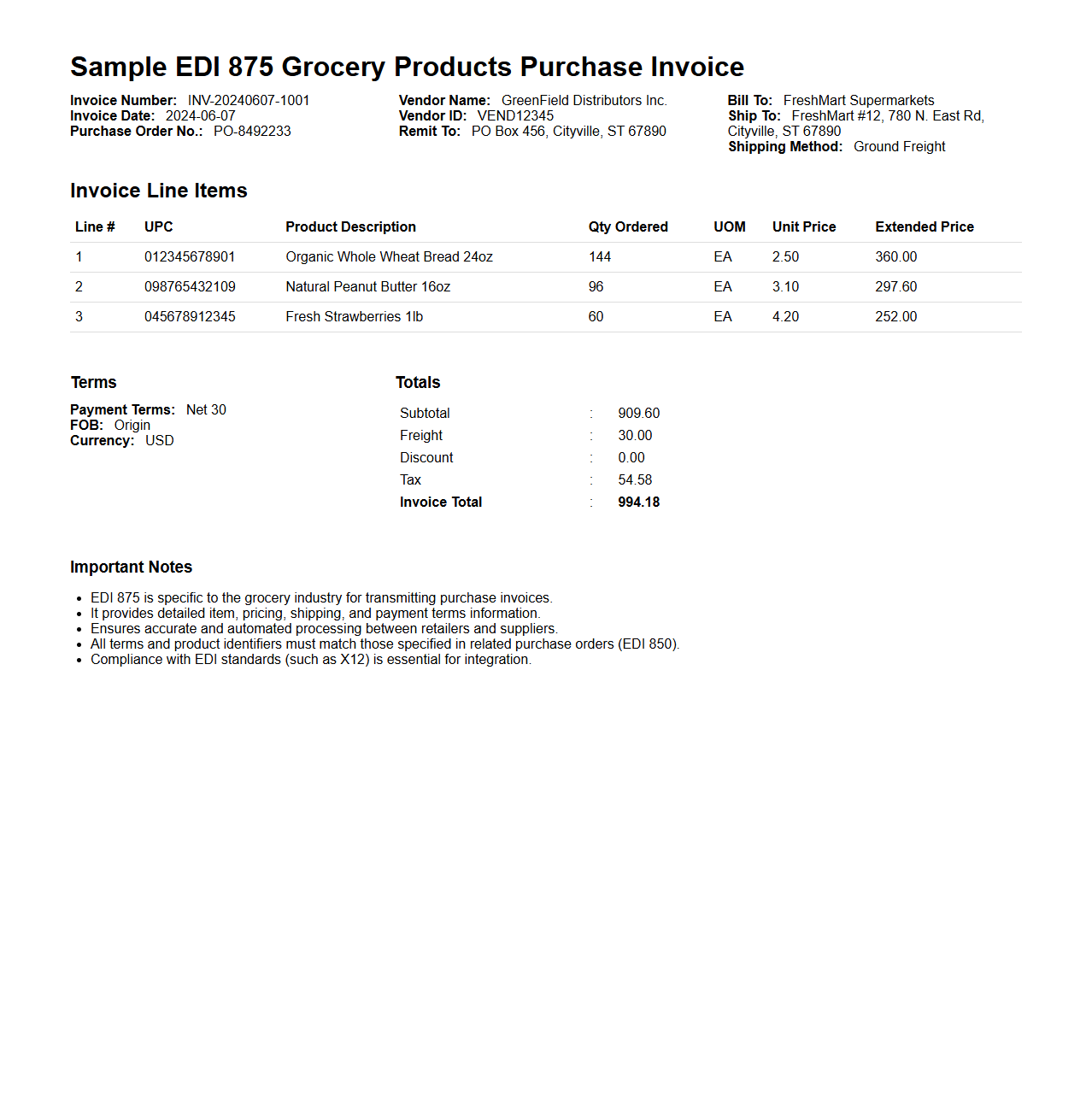
EDI 875 Grocery Products Purchase Invoice Format document is an electronic data interchange standard used by grocery retailers and suppliers to automate the invoicing process for purchased products. It facilitates accurate and efficient communication of purchase details such as quantities, prices, and item descriptions between trading partners. This format reduces manual errors, accelerates payment processing, and enhances supply chain transparency in the grocery industry.
EDI 867 Product Transfer and Resale Report Format
The
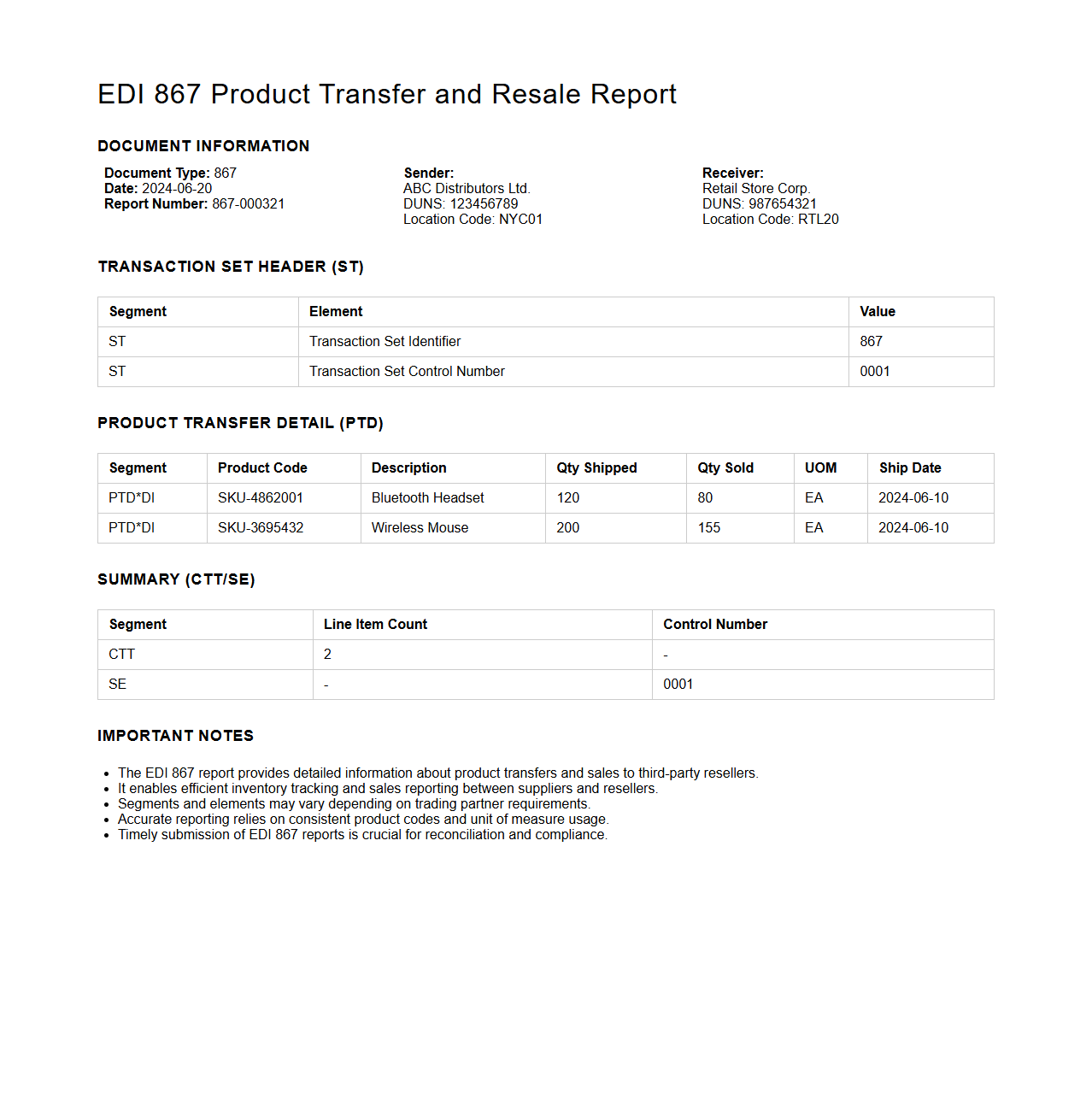
EDI 867 Product Transfer and Resale Report Format document is used to electronically communicate information about product transfers and resale activities between trading partners. It details quantities, dates, and locations related to product movement, enabling accurate tracking and reconciliation of inventory across supply chains. This format supports streamlined operations by providing standardized data exchange for product distribution and sales reporting.
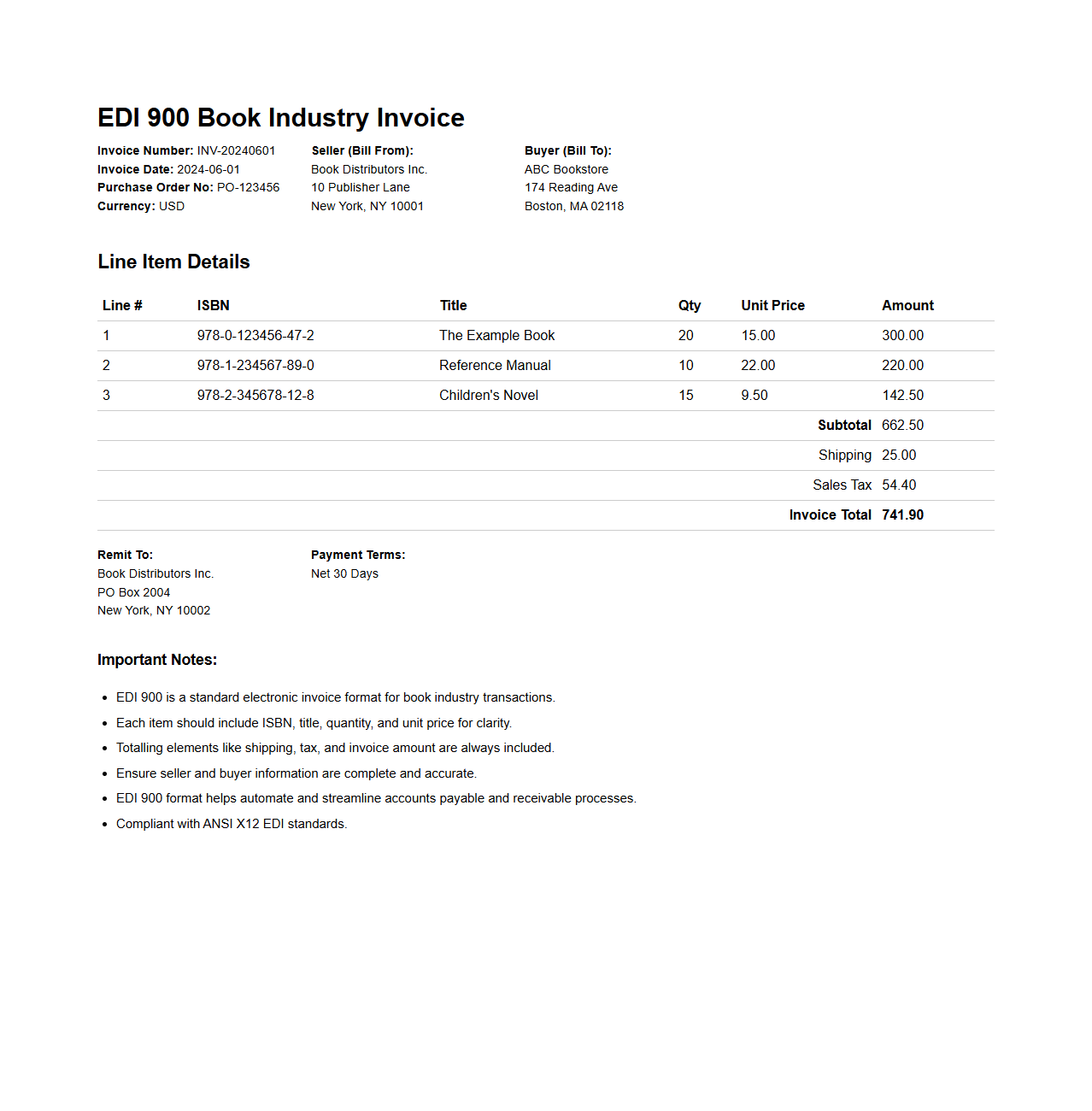
EDI 900 Book Industry Invoice Format
The
EDI 900 Book Industry Invoice Format is a standardized electronic document used within the book publishing industry to facilitate the exchange of billing information between publishers, distributors, and retailers. This format streamlines the invoicing process by ensuring consistent data structure for item details, pricing, quantities, and payment terms. Utilizing EDI 900 enhances accuracy, reduces processing time, and supports efficient financial reconciliation in the book supply chain.
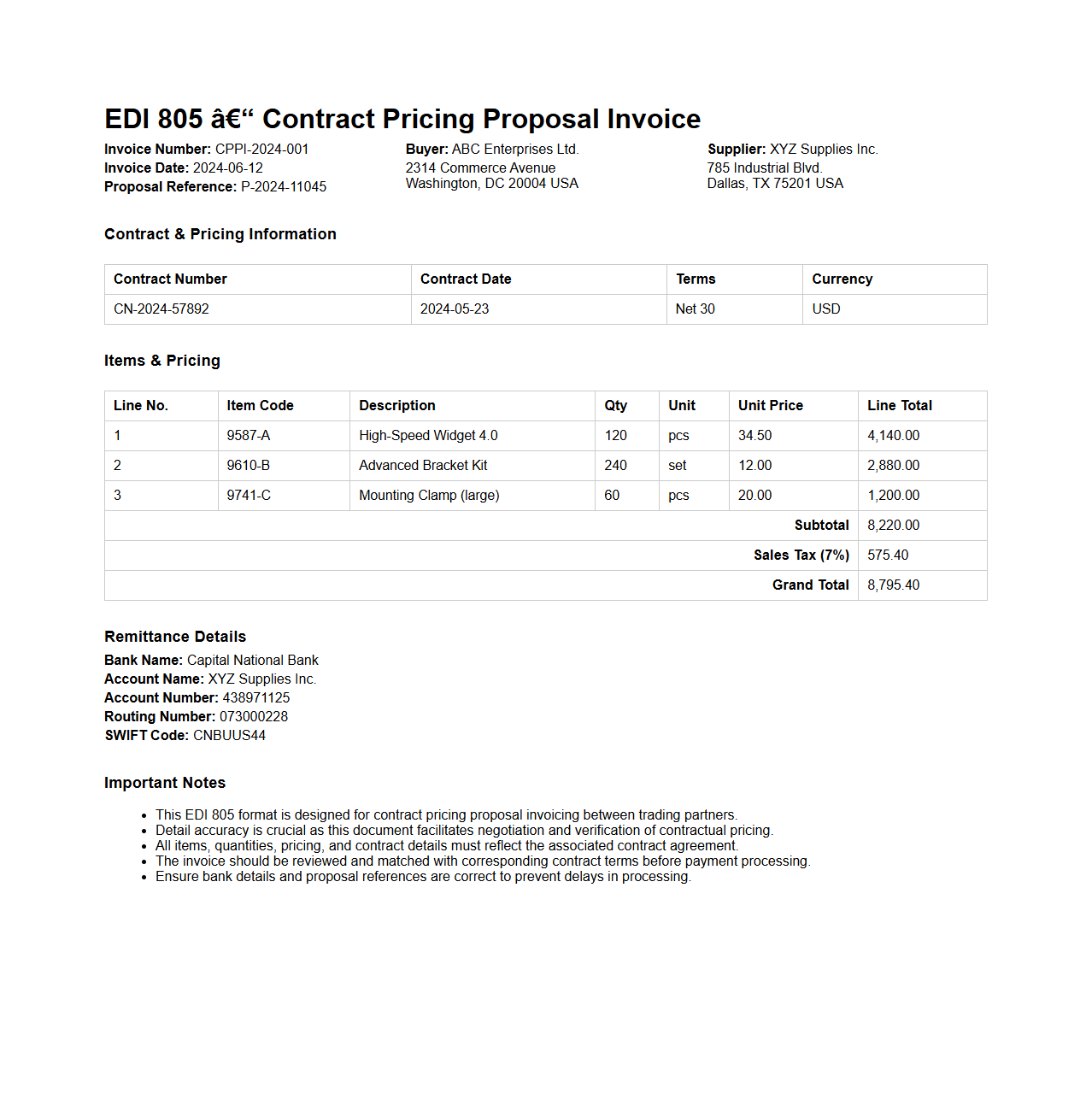
EDI 805 Contract Pricing Proposal Invoice Format
The
EDI 805 Contract Pricing Proposal Invoice Format document facilitates standardized electronic communication between suppliers and buyers regarding contract pricing proposals and invoices. This format streamlines the submission and processing of detailed pricing information, ensuring accuracy and efficiency in contractual billing transactions. It supports automated data exchange, reducing errors and accelerating payment cycles within supply chain management.
What are the mandatory segments in the EDI 810 Invoice format?
The EDI 810 Invoice format requires several mandatory segments to ensure accurate transaction processing. Key segments include BIG (Beginning Segment for Invoice), which identifies invoice date and number, and IT1 (Baseline Item Data), detailing individual line items. Additionally, the TDS (Total Monetary Value Summary) segment summarizes the total invoice amount.
Which data elements specify payment terms in an EDI Invoice?
Payment terms in an EDI 810 invoice are primarily specified within the ITD (Terms of Sale/Deferred Terms of Sale) segment. This segment outlines important elements such as discount percentages, payment due dates, and terms type code. Accurately populating the ITD segment is crucial for effective accounts receivable management.
How are line item allowances and charges represented in EDI 810?
In the EDI 810, line item allowances and charges are detailed using the IT1 segment combined with the SAC (Service, Promotion, Allowance, or Charge Information) segment. The SAC segment carries codes and monetary amounts related to various allowances or additional charges. These segments allow precise financial adjustments on a per-line-item basis.
What segment denotes tax information in the EDI Invoice structure?
Tax information within an EDI 810 invoice is represented by the TXI (Tax Information) segment. This segment specifies tax type, jurisdiction, and calculated tax amounts essential for compliance and accounting. Proper tax data mapping ensures accurate fiscal reporting and payment.
How is buyer and supplier information mapped in the EDI Invoice message?
Buyer and supplier details in the EDI 810 message are mapped through the N1 (Name) segment, specifying entity names and roles. Additional segments like N3 (Address) and N4 (Geographic Location) supplement these with detailed address data. Accurate mapping of these segments is vital for proper invoice routing and validation.