The Format of Capital Allocation Statement for Departments typically includes sections for the opening capital balance, detailed allocation of funds to various departmental projects, and the closing balance. Each department's expenditures are recorded against allocated capital to ensure transparency and accurate tracking of capital utilization. This format facilitates effective financial management and accountability across all departments.
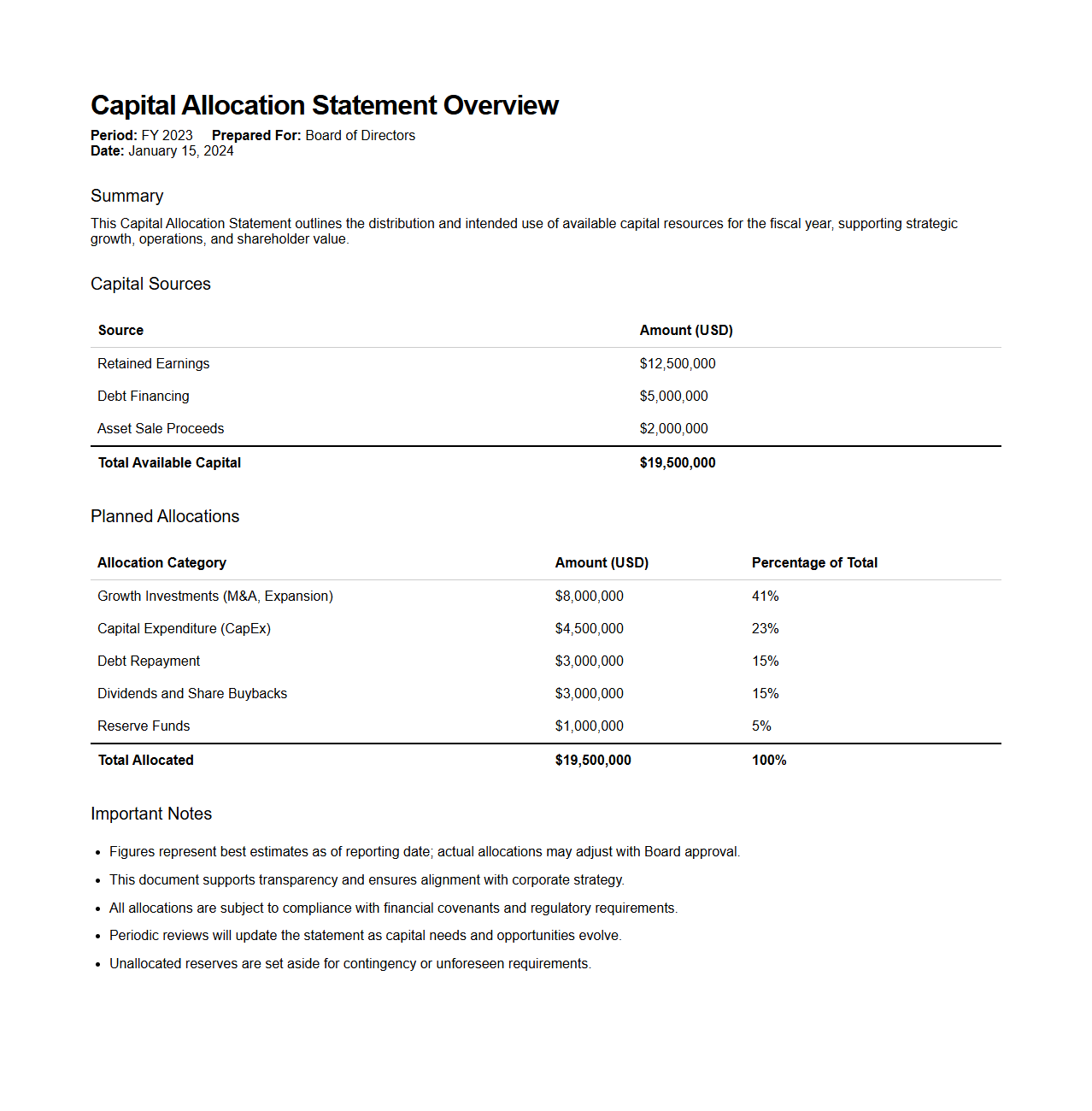
Capital Allocation Statement Overview
The
Capital Allocation Statement Overview document provides a detailed summary of how a company distributes its financial resources across various projects, investments, and operational needs. It highlights the strategic decision-making process behind funding allocation, ensuring alignment with organizational goals and maximizing shareholder value. This document is essential for stakeholders to understand the rationale and impact of capital expenditures and resource management.
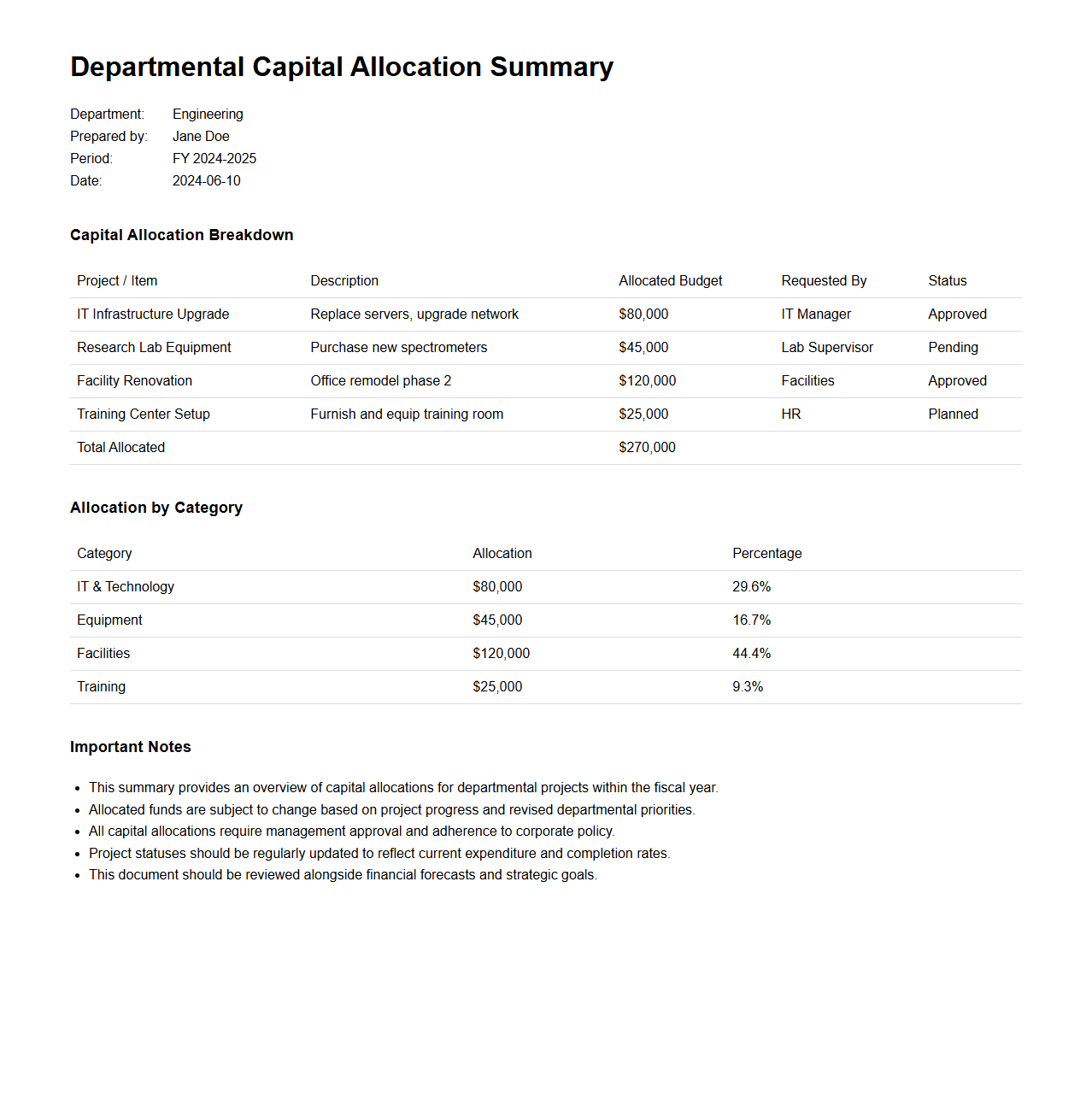
Departmental Capital Allocation Summary
The
Departmental Capital Allocation Summary document outlines the distribution of capital funds across various departments within an organization. It provides detailed insight into budgeted amounts, allocations, and spending priorities to ensure efficient use of resources. This summary supports financial planning and accountability by tracking capital expenditures aligned with strategic goals.
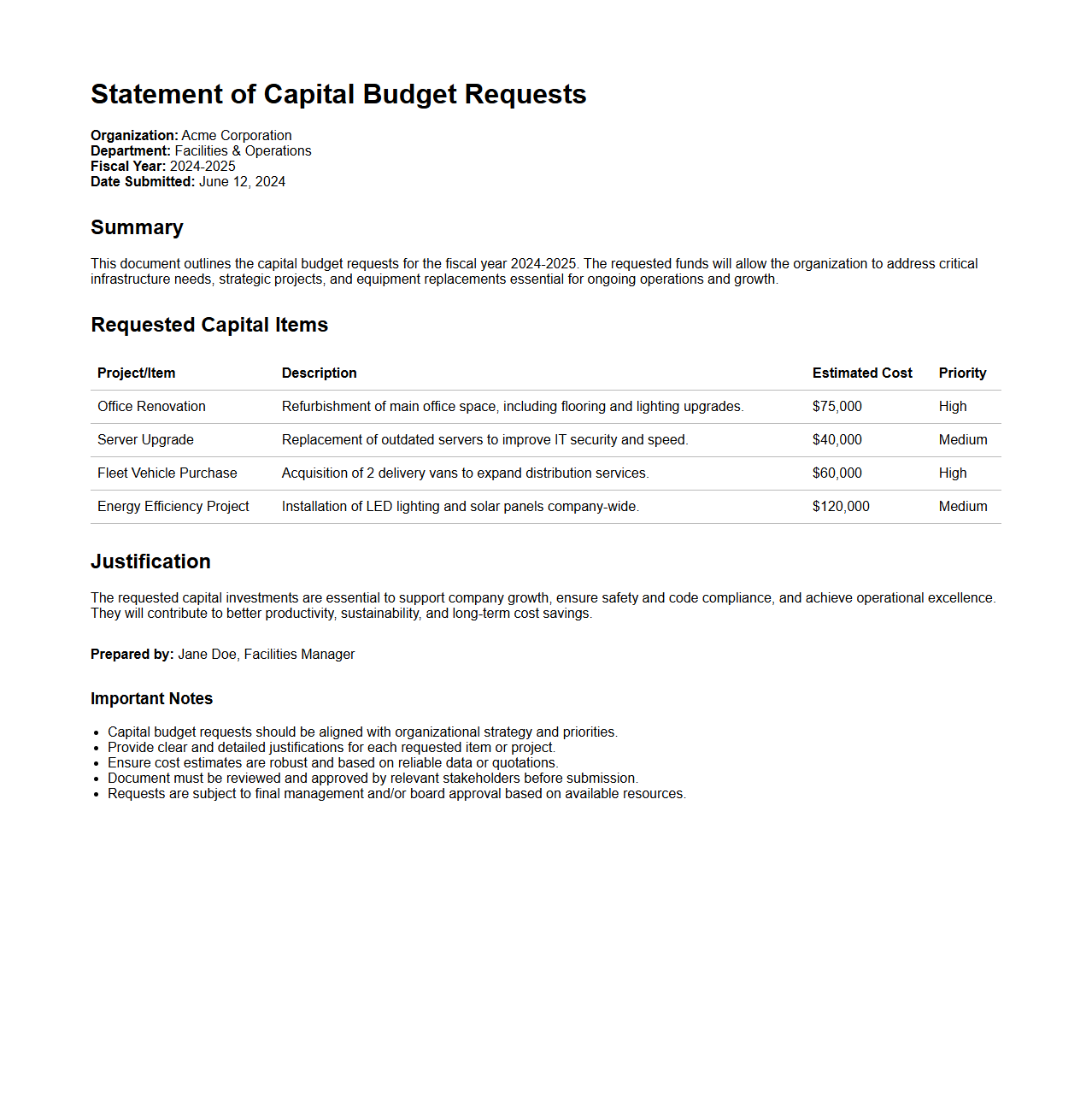
Statement of Capital Budget Requests
A
Statement of Capital Budget Requests is a detailed document that outlines proposed expenditures for long-term investments and capital projects within an organization. It typically includes descriptions of each request, estimated costs, anticipated benefits, and justifications to support funding approval. This document serves as a critical tool for financial planning and helps decision-makers prioritize capital allocation effectively.
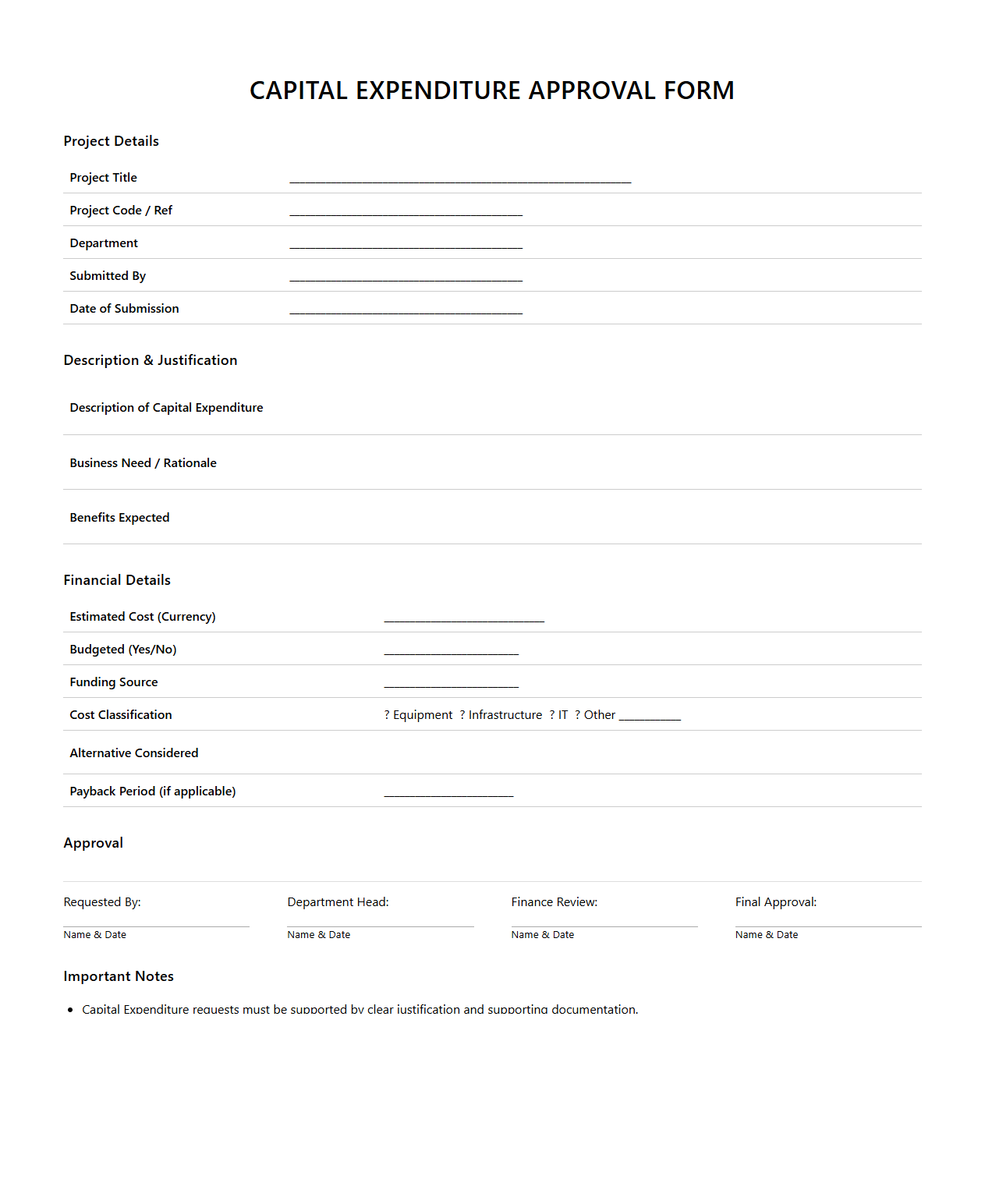
Capital Expenditure Approval Format
The
Capital Expenditure Approval Format document outlines the structured procedure for obtaining formal authorization before committing funds to significant long-term investments. It details essential elements such as project scope, estimated costs, return on investment, and risk analysis to facilitate informed decision-making by management or the board. Using this format ensures transparency and alignment with organizational financial policies.
Departmental Asset Acquisition Schedule
The
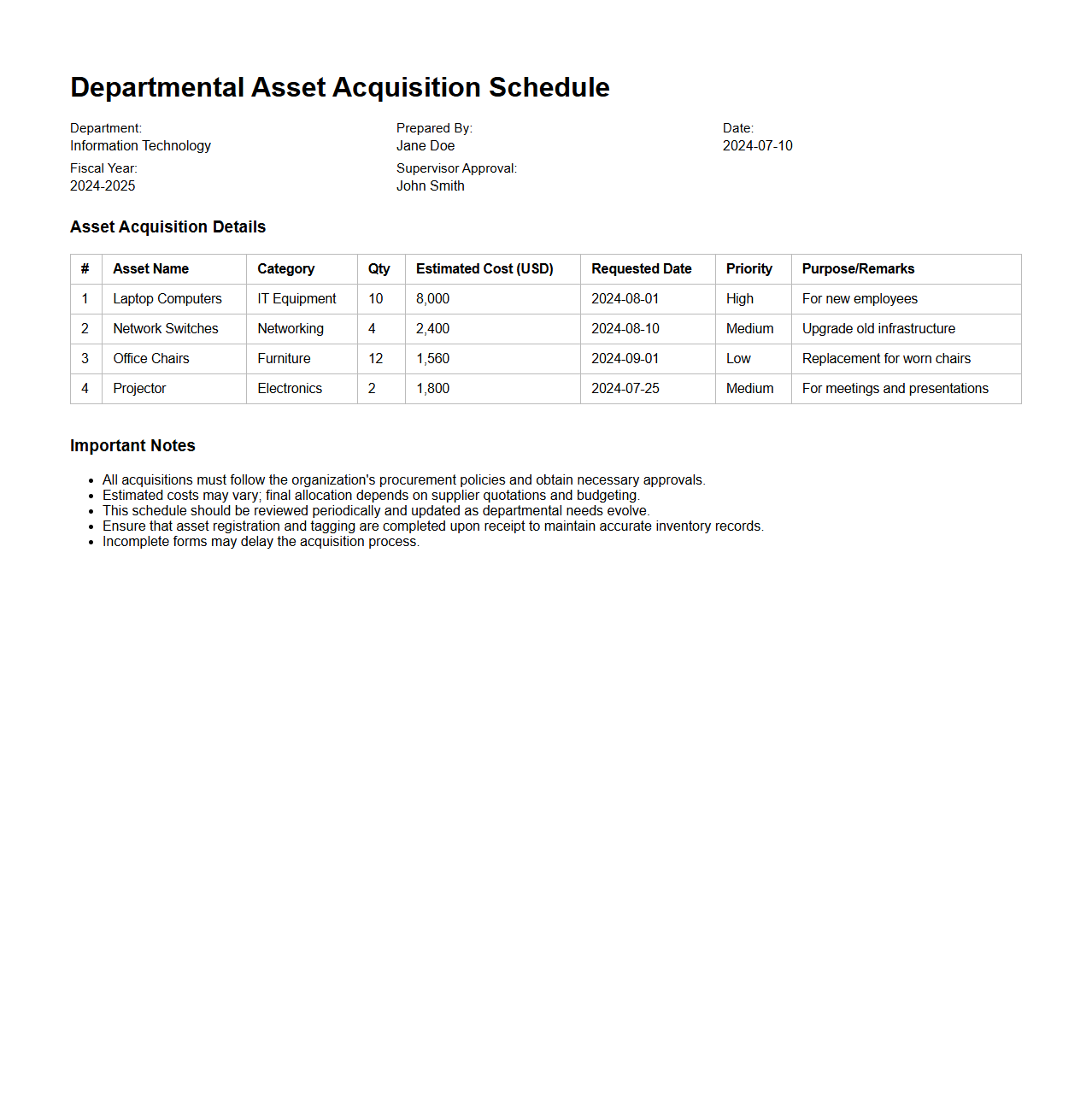
Departmental Asset Acquisition Schedule document outlines a detailed plan for procuring assets within a specific department over a set period. It includes timelines, budget allocations, and priority levels for acquiring equipment, technology, or property essential for operational efficiency. This schedule ensures systematic tracking and alignment with organizational goals, facilitating transparent and effective resource management.
Capital Allocation Tracking Sheet
A
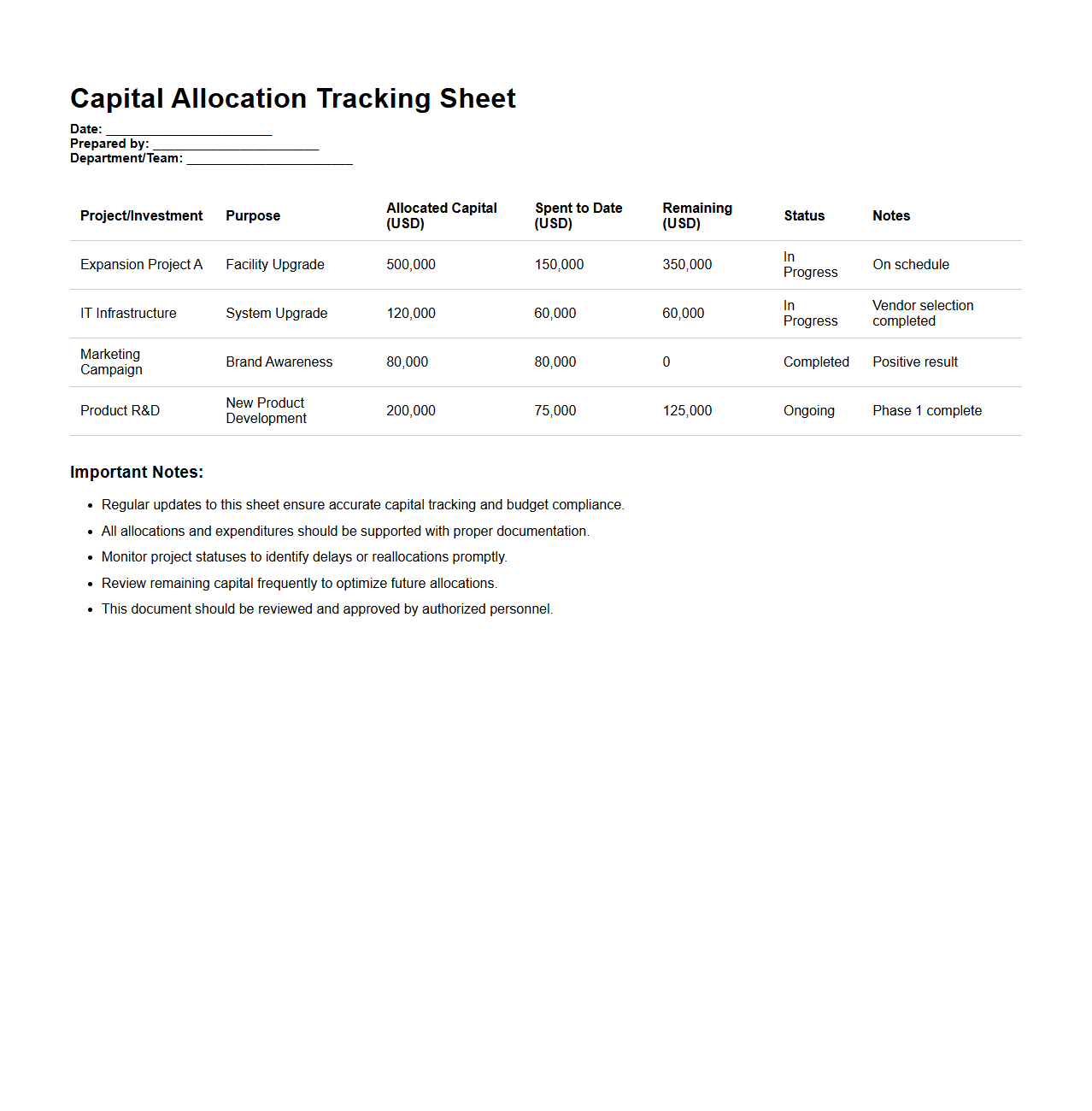
Capital Allocation Tracking Sheet is a financial document designed to monitor and manage the distribution of capital resources across various projects or departments within an organization. It provides a detailed record of investment amounts, timelines, and expected returns, ensuring efficient use of funds and facilitating strategic decision-making. This tracking sheet enhances transparency and accountability by enabling stakeholders to analyze capital deployment and optimize budget allocations.
Projected vs Actual Capital Utilization Report
The
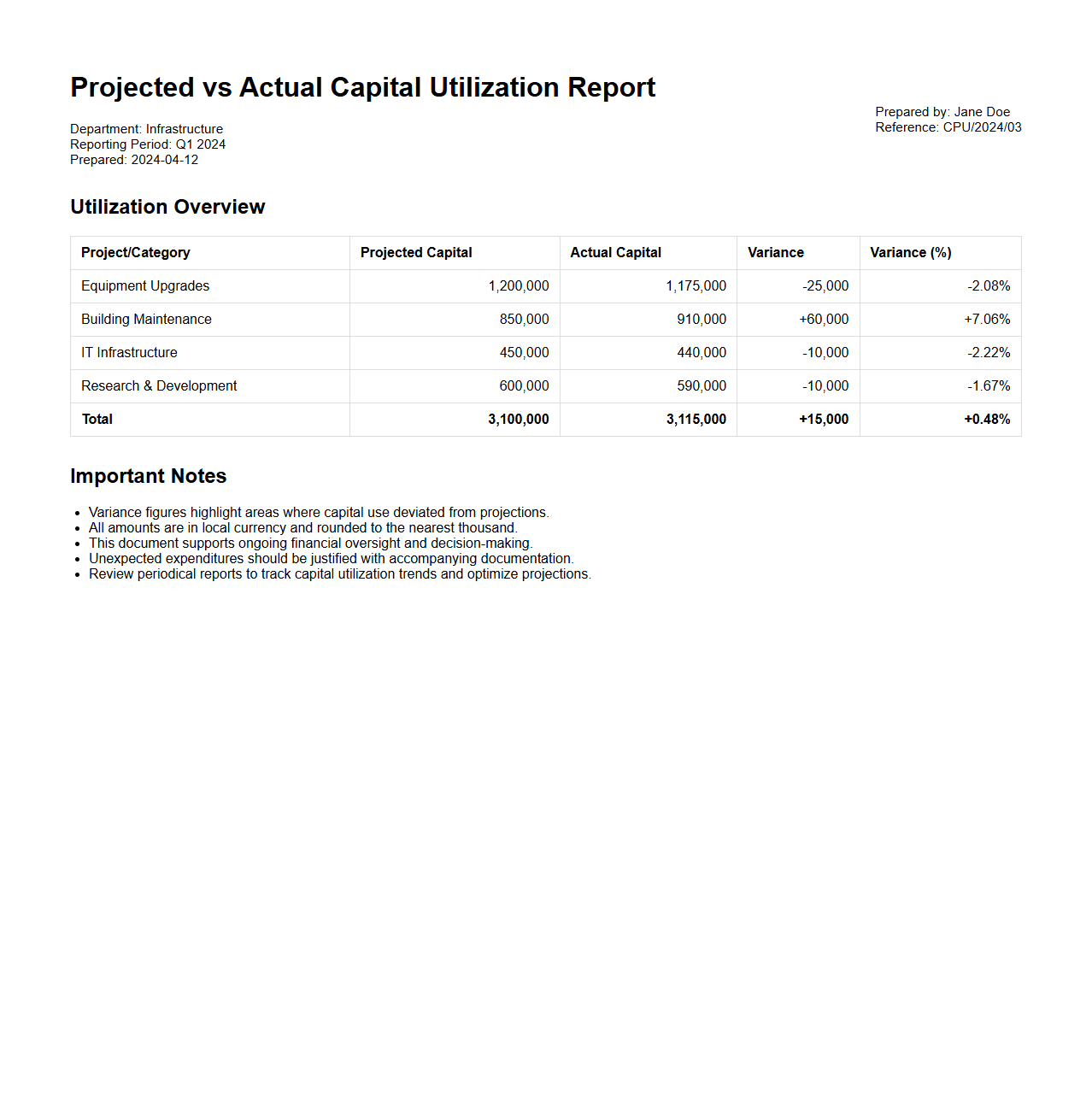
Projected vs Actual Capital Utilization Report is a financial document that compares forecasted capital expenditures against the actual spending within a specified period. It helps organizations track budget adherence, identify variances, and make informed decisions for future capital allocation. This report is essential for optimizing asset investments and ensuring operational efficiency.
Capital Expenditure Justification Template
A
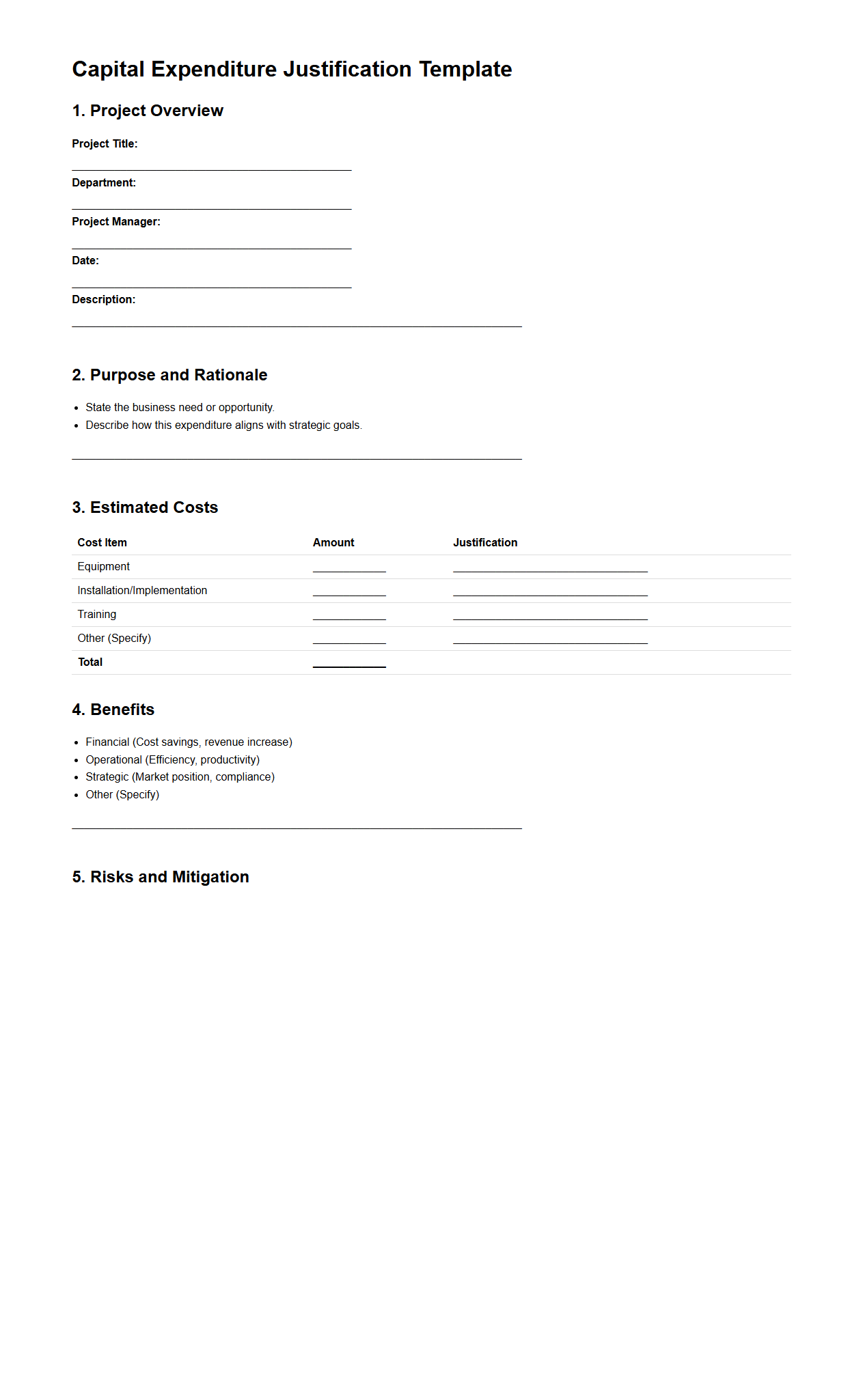
Capital Expenditure Justification Template document is used to systematically present the rationale and financial benefits of proposed major asset investments. It typically includes detailed cost estimates, anticipated returns, risk assessments, and alignment with organizational goals to support informed decision-making. This template ensures consistency and clarity in evaluating significant capital projects or purchases.
Departmental Capital Allocation Reconciliation
The
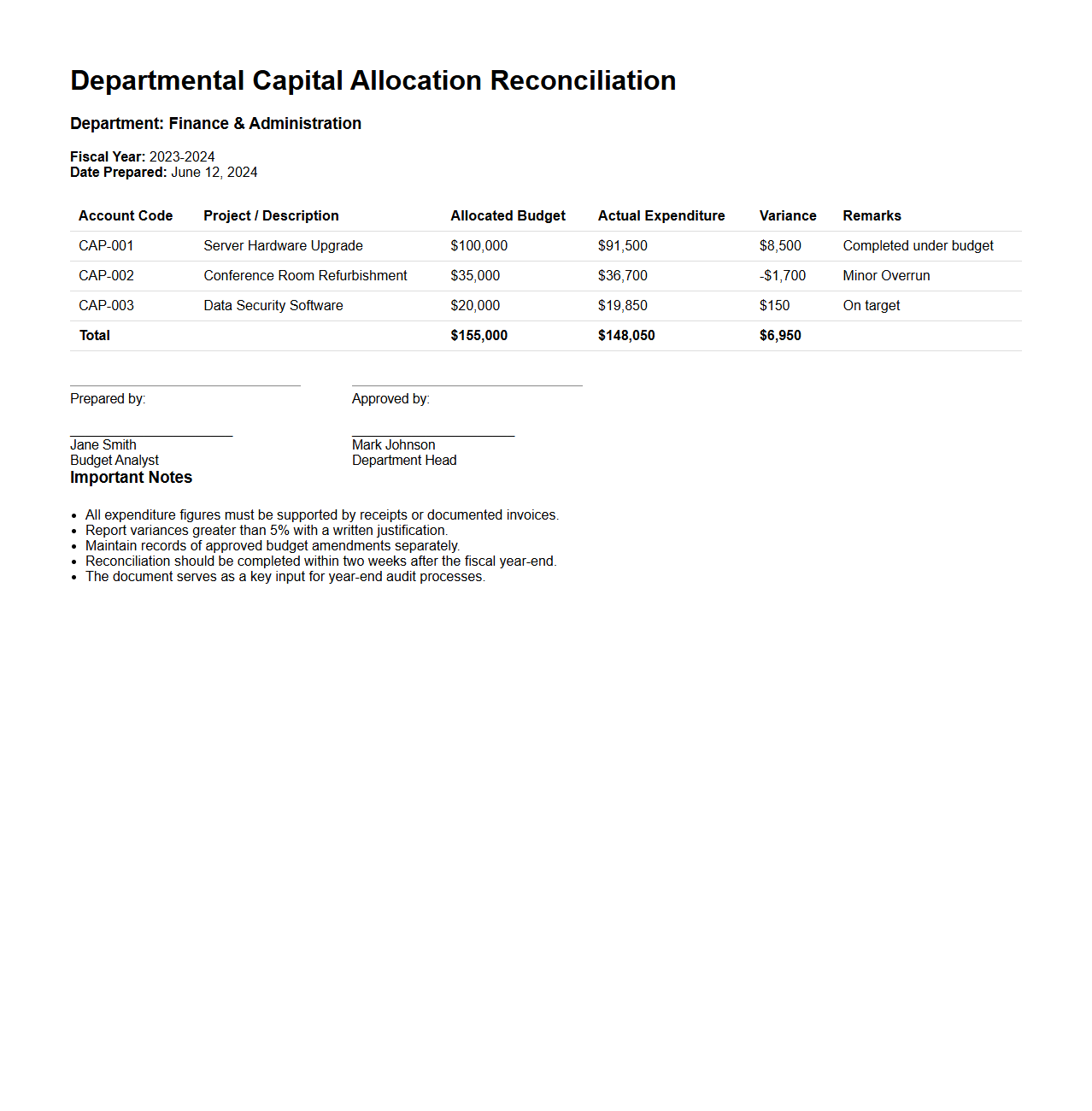
Departmental Capital Allocation Reconciliation document serves as a detailed financial report that matches capital expenditures to departmental budgets, ensuring accurate tracking and validation of allocated funds against actual spending. It helps organizations identify discrepancies in capital allocation, enabling efficient budget management and enhanced financial accountability across departments. This reconciliation process supports strategic decision-making by providing transparent insights into capital utilization and departmental financial performance.
Capital Allocation Statement Sign-off Sheet
A
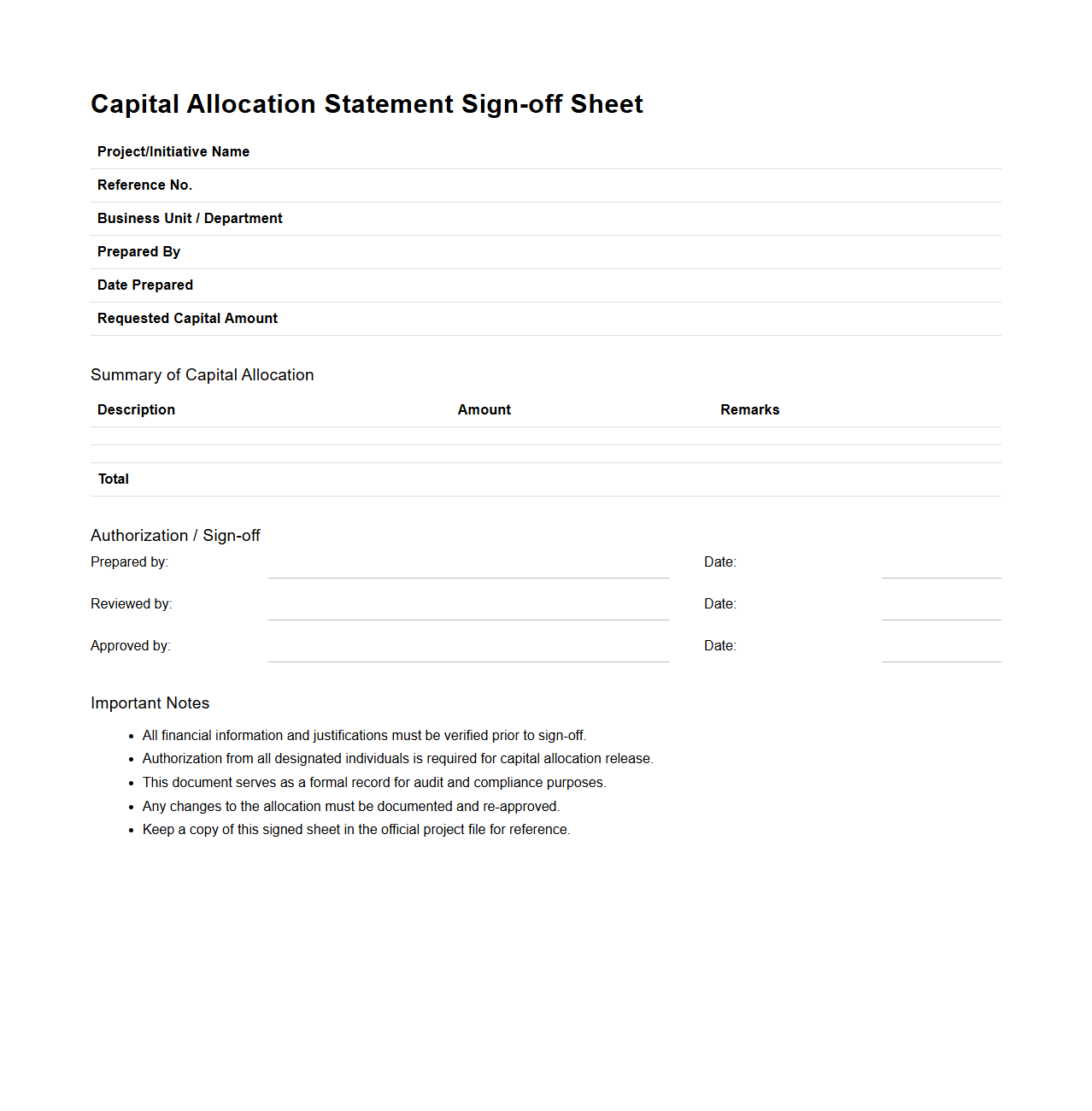
Capital Allocation Statement Sign-off Sheet is a formal document used to approve and authorize the distribution of capital resources within an organization. It records the commitments of various departments or projects, ensuring accountability and alignment with the company's financial strategy. This sheet serves as a critical control mechanism for tracking fund allocation and confirming compliance with budgetary limits.
What are the key sections required in a departmental capital allocation statement?
A departmental capital allocation statement must include several essential sections to ensure clarity and accountability. These sections typically consist of an executive summary, detailed capital allocation breakdown, and a summary of expenditures versus budget. Including these components guarantees a comprehensive overview of capital resources and their utilization.
How should capital expenditure items be categorized within the statement?
Capital expenditure items should be organized into clear, distinct categories such as infrastructure, equipment, technology, and contingencies. Proper categorization helps in tracking spending patterns and assessing the efficiency of fund utilization. This structured approach aids stakeholders in quickly understanding capital allocation specifics.
What standard formats are mandated for reporting capital allocations at the departmental level?
Departments are required to follow standardized formats issued by financial oversight bodies or governing authorities. These formats often include tables with line-item budgets, variance analyses, and multi-period allocation summaries. Adhering to these formats ensures uniformity, facilitating audits and comparisons across departments.
Which supporting documents must accompany the capital allocation statement for validation?
To validate a capital allocation statement, it must be accompanied by supporting documents such as purchase orders, contracts, and approval memos. Additionally, financial audit reports and budget authorization letters strengthen the credibility of the statement. These documents provide transparency and support compliance with regulatory requirements.
How should unutilized and reallocated capital funds be disclosed in the statement?
Unutilized and reallocated capital funds must be clearly disclosed in a dedicated section that outlines reasons and future reallocations. This information allows for transparent tracking of leftover funds and their subsequent usage. Proper disclosure ensures accurate reporting and aids future budget planning processes.