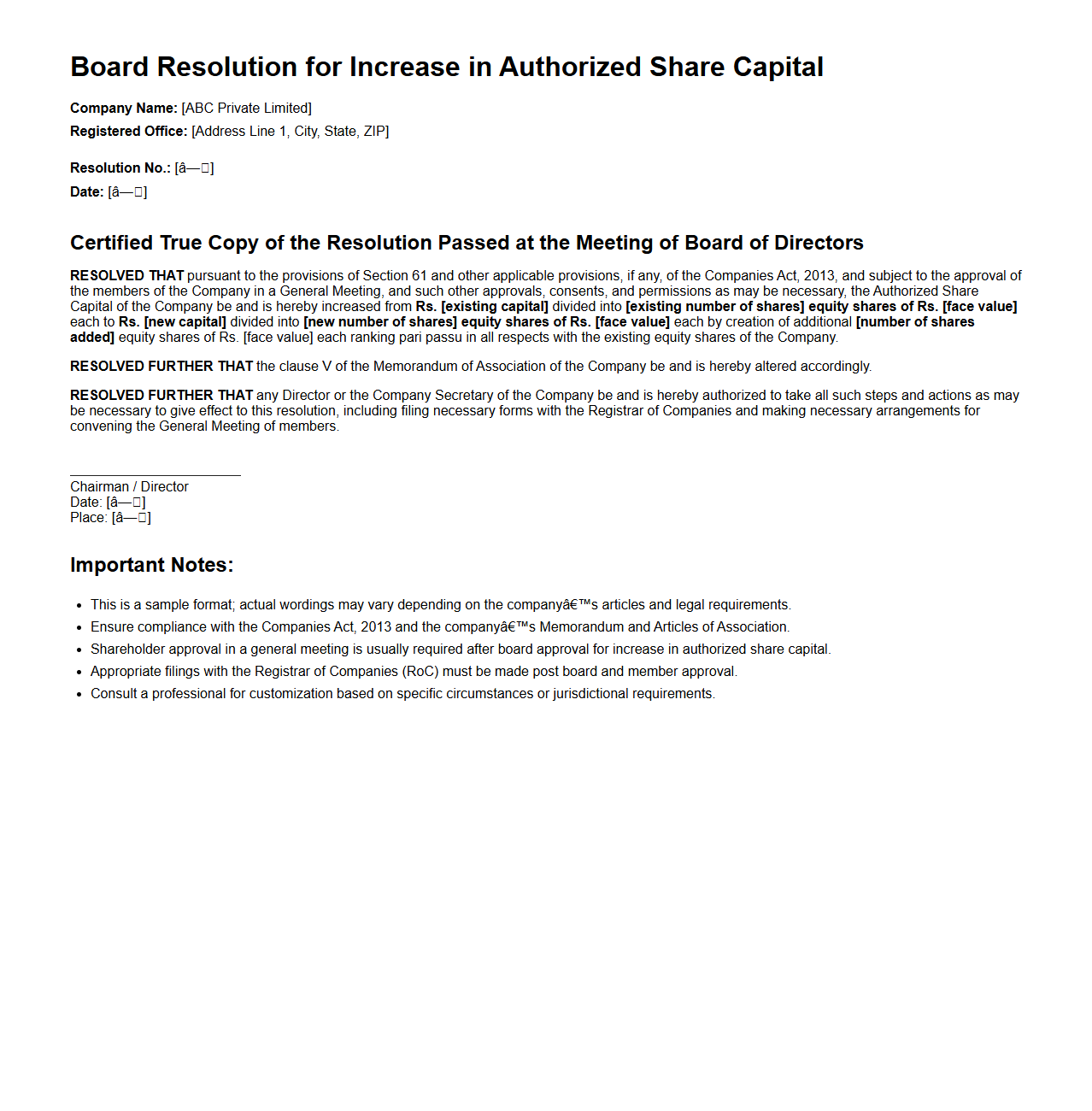
The Format of Board Resolution for Capital Issue typically includes key elements such as the date, company name, and meeting details, followed by a clear statement authorizing the capital increase. It outlines the type and amount of capital to be issued, the terms and conditions, and approval from the board members. Proper documentation ensures legal compliance and facilitates smooth execution of the capital raising process.
Board Resolution Approving Issue of Equity Shares
A
Board Resolution Approving Issue of Equity Shares is a formal document wherein a company's board of directors authorizes the issuance of new equity shares to investors or existing shareholders. This resolution outlines critical details such as the number of shares to be issued, issue price, and the purpose of fundraising, ensuring legal compliance and transparency in the capital-raising process. It serves as an official record that validates the company's decision, facilitating regulatory approvals and maintaining corporate governance standards.
Board Resolution for Private Placement of Shares
A
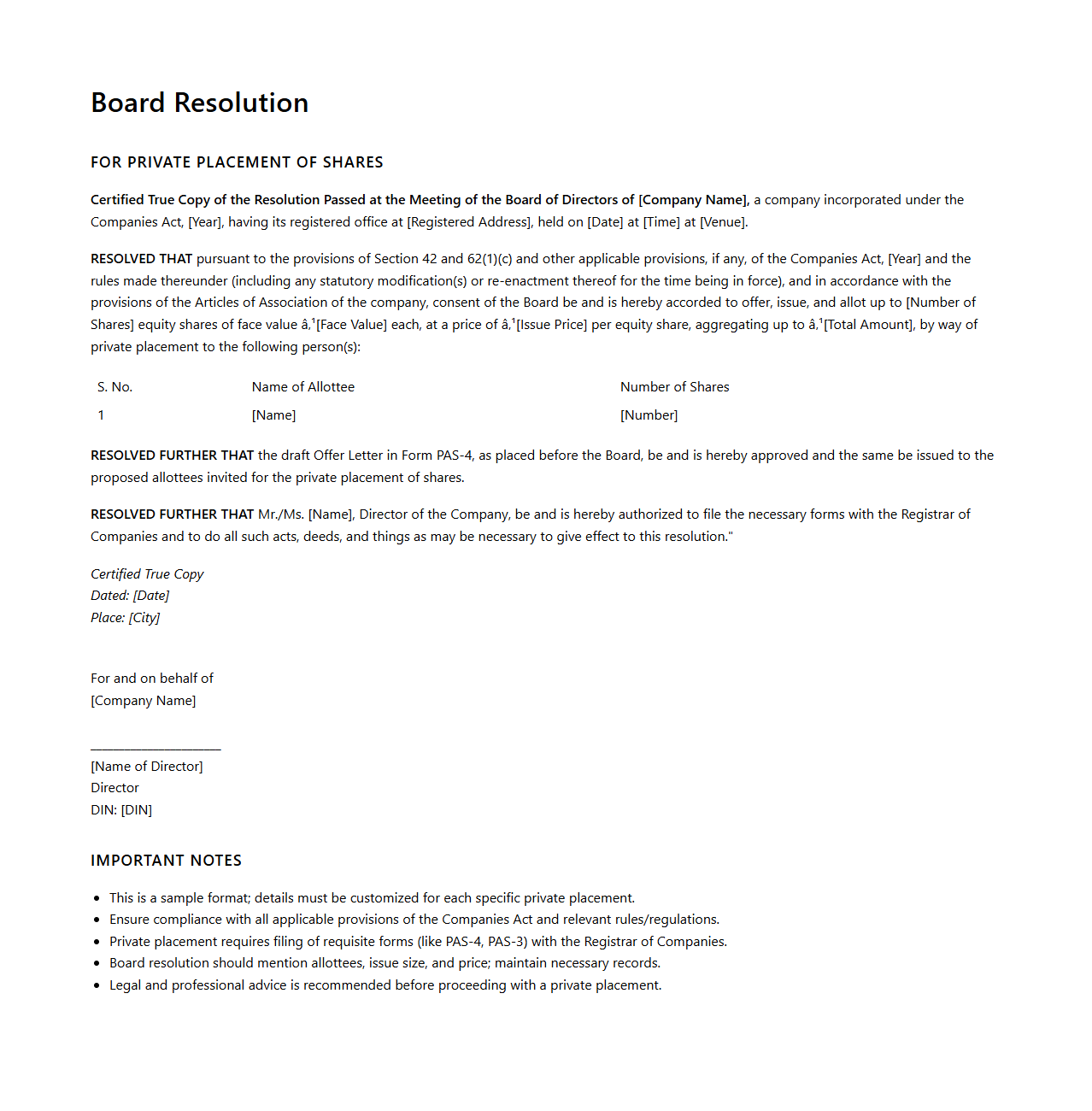
Board Resolution for Private Placement of Shares is a formal document adopted by a company's board of directors approving the offer and issuance of equity shares to select investors outside the public market. This resolution outlines key terms such as the number of shares, pricing, and allotment details, ensuring compliance with corporate laws and regulatory requirements. It serves as an essential legal record authorizing the private placement transaction and protecting both the company and investors.
Board Resolution for Rights Issue of Shares
A
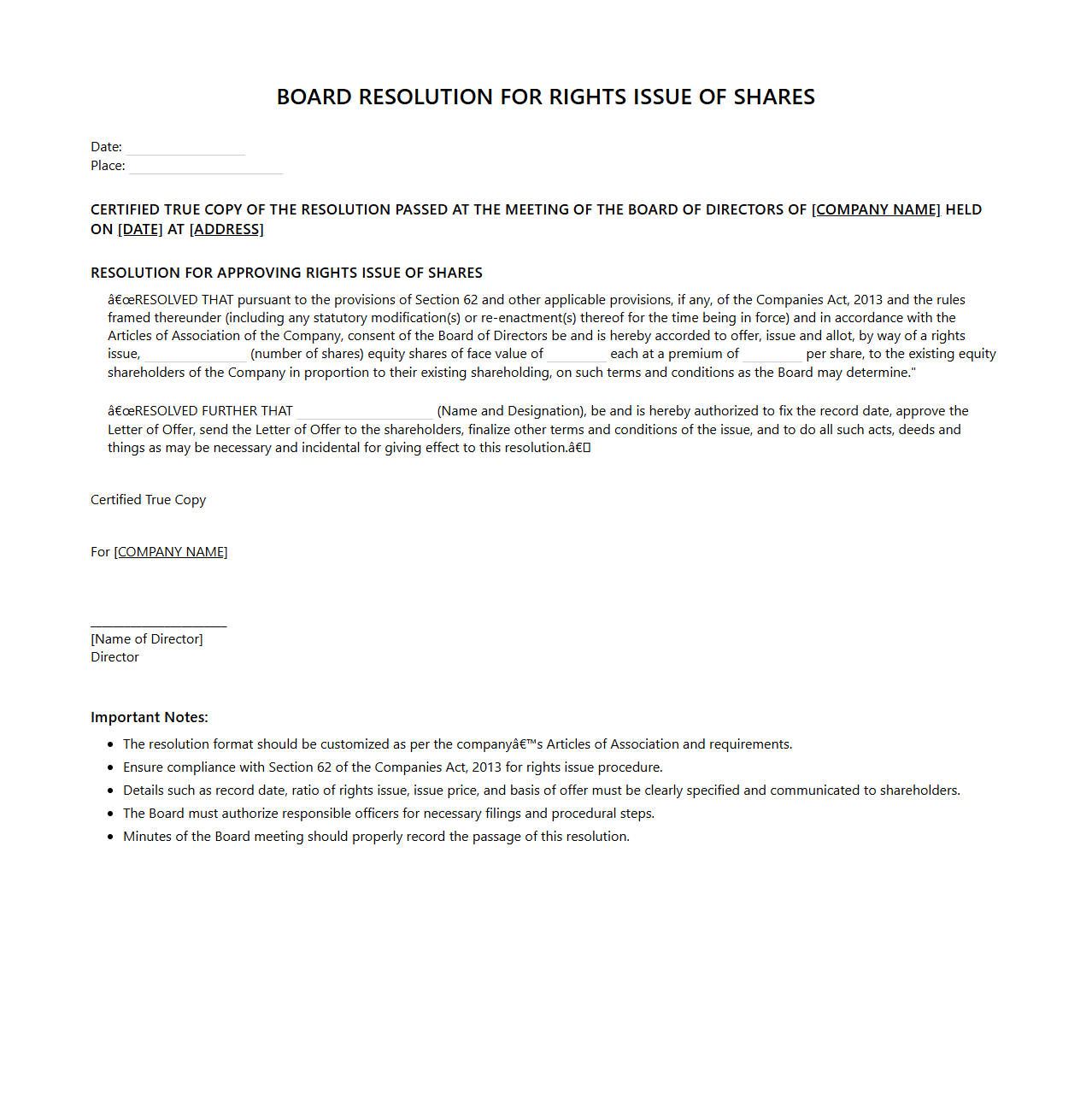
Board Resolution for Rights Issue of Shares document is an official record produced by a company's board of directors authorizing the issuance of additional shares to existing shareholders on a pro-rata basis. This resolution outlines key details such as the number of shares to be issued, the issue price, and the rights entitlement period, ensuring compliance with company law and regulatory requirements. It serves as a formal approval necessary for the company to proceed with raising capital through a rights issue.
Board Resolution for Preferential Allotment of Shares
A
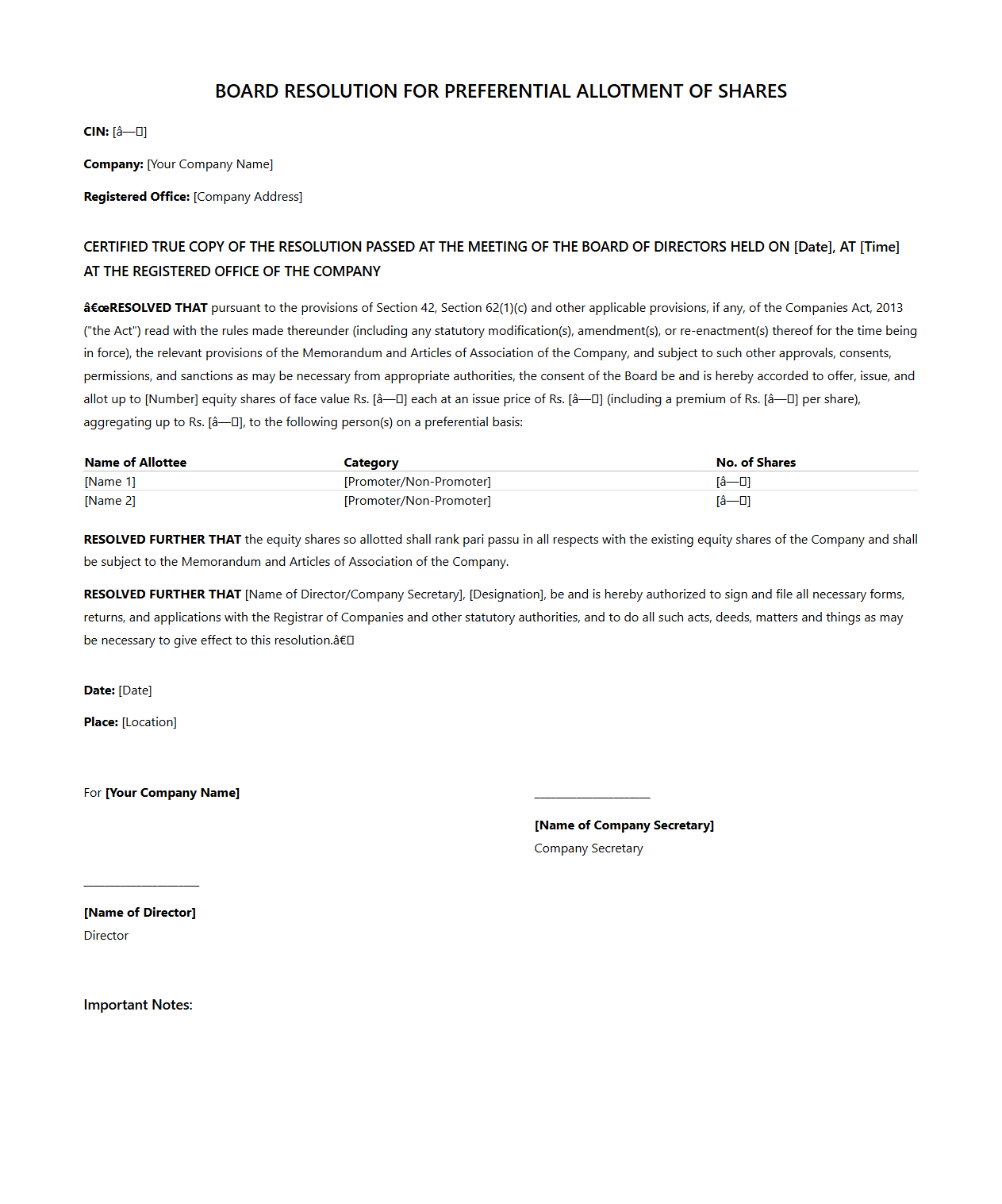
Board Resolution for Preferential Allotment of Shares is an official document that records the approval of a company's board of directors to issue new shares to a select group of investors at a predetermined price. This resolution ensures compliance with regulatory requirements under corporate and securities laws, safeguarding transparency and fairness in the share issuance process. It serves as a legal proof authorizing the preferential allotment before filing necessary forms with regulatory authorities like the Registrar of Companies (RoC).
Board Resolution for Issue of Bonus Shares
A
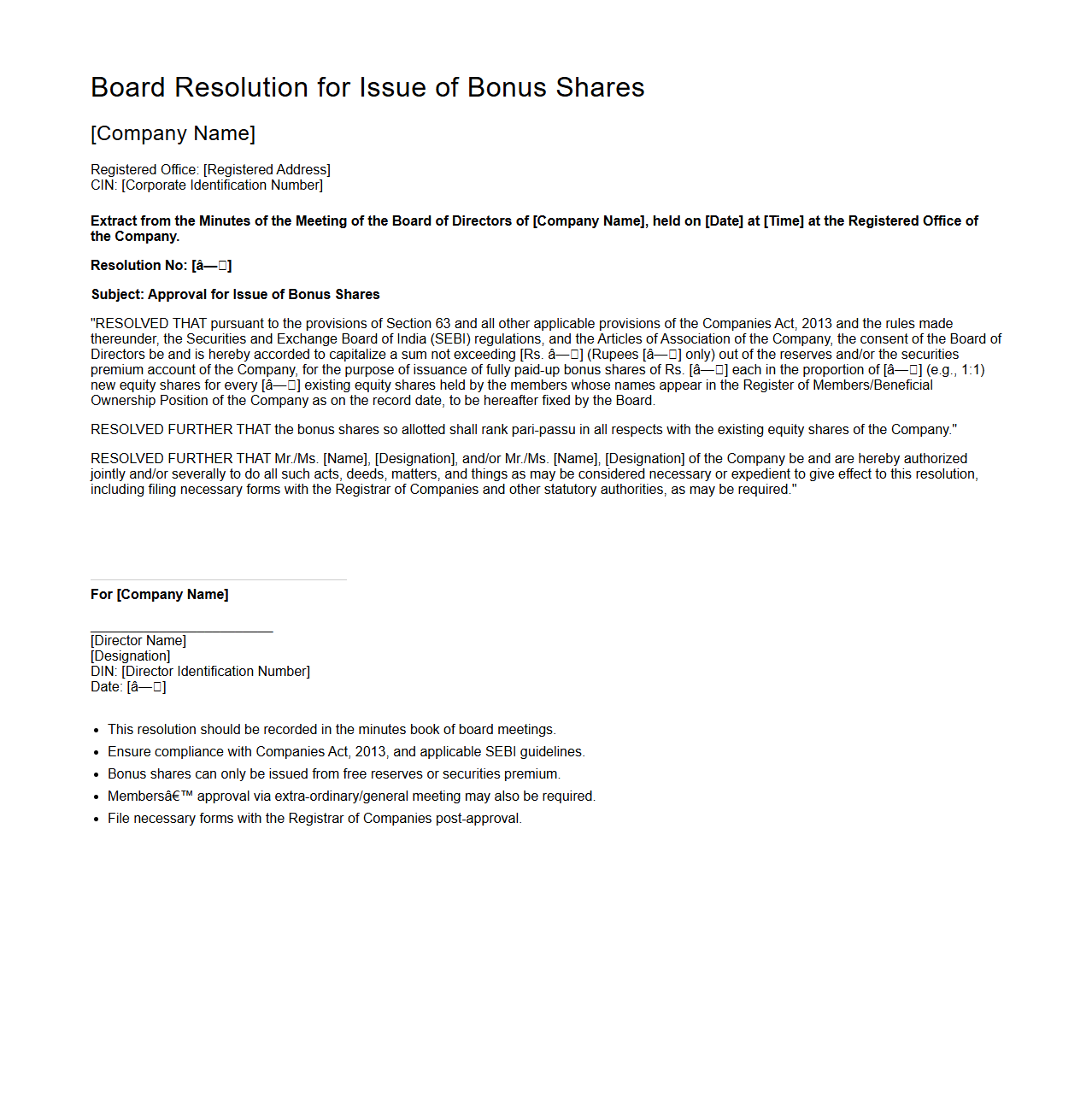
Board Resolution for Issue of Bonus Shares is an official document drafted by a company's board of directors approving the distribution of additional shares to existing shareholders without any extra cost. It specifies the number of shares to be issued, the ratio of bonus shares per existing share, and the record date for eligibility. This resolution ensures compliance with corporate laws and serves as an essential record for regulatory authorities and shareholders.
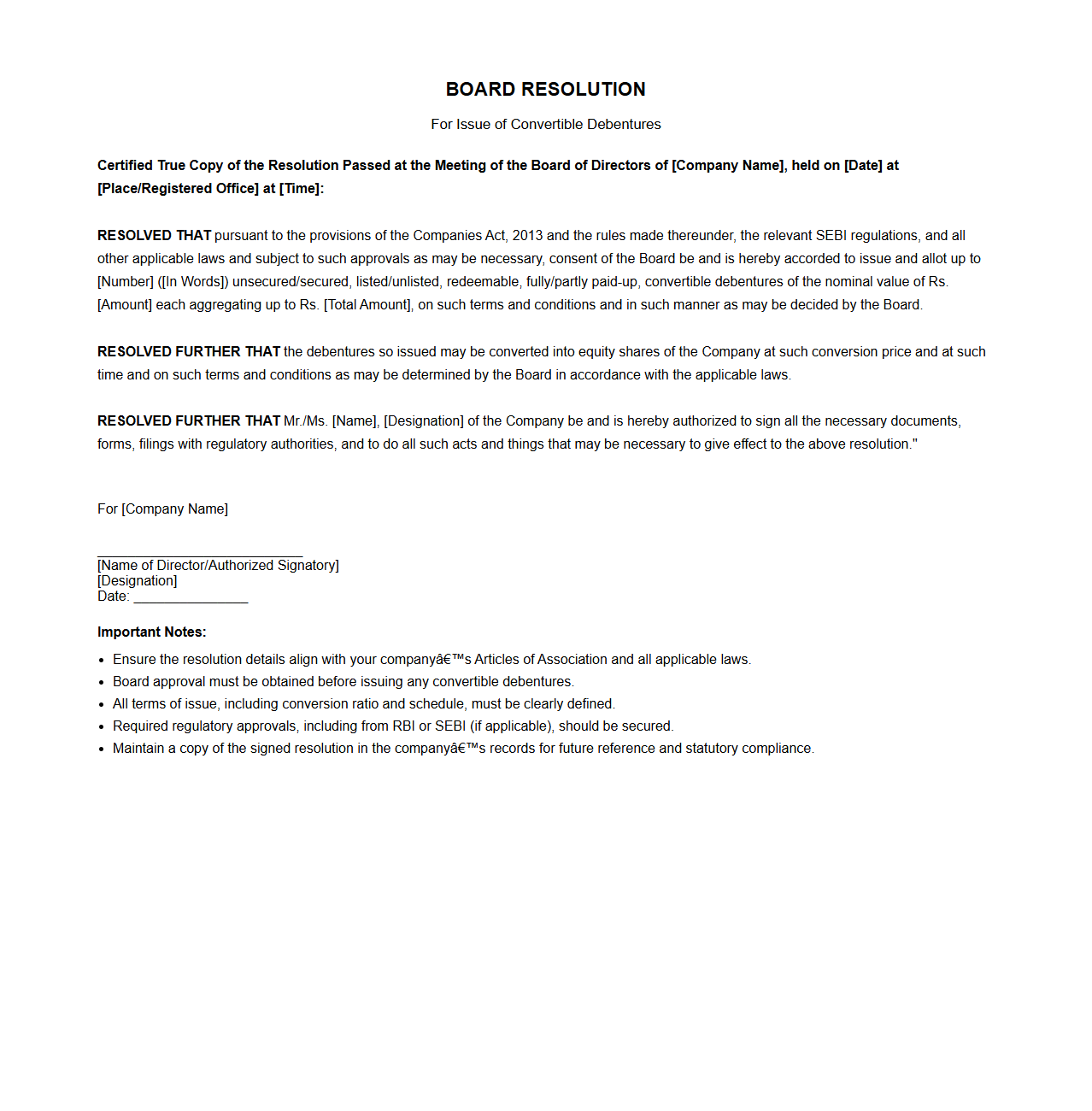
Board Resolution for Issue of Convertible Debentures
A
Board Resolution for Issue of Convertible Debentures is a formal document adopted by a company's board of directors authorizing the issuance of convertible debentures to investors. This resolution outlines key details such as the number of debentures, conversion terms, interest rates, and maturity period, ensuring legal compliance and clarity for potential stakeholders. It serves as an official record enabling the company to raise capital through debt instruments that can later be converted into equity shares.
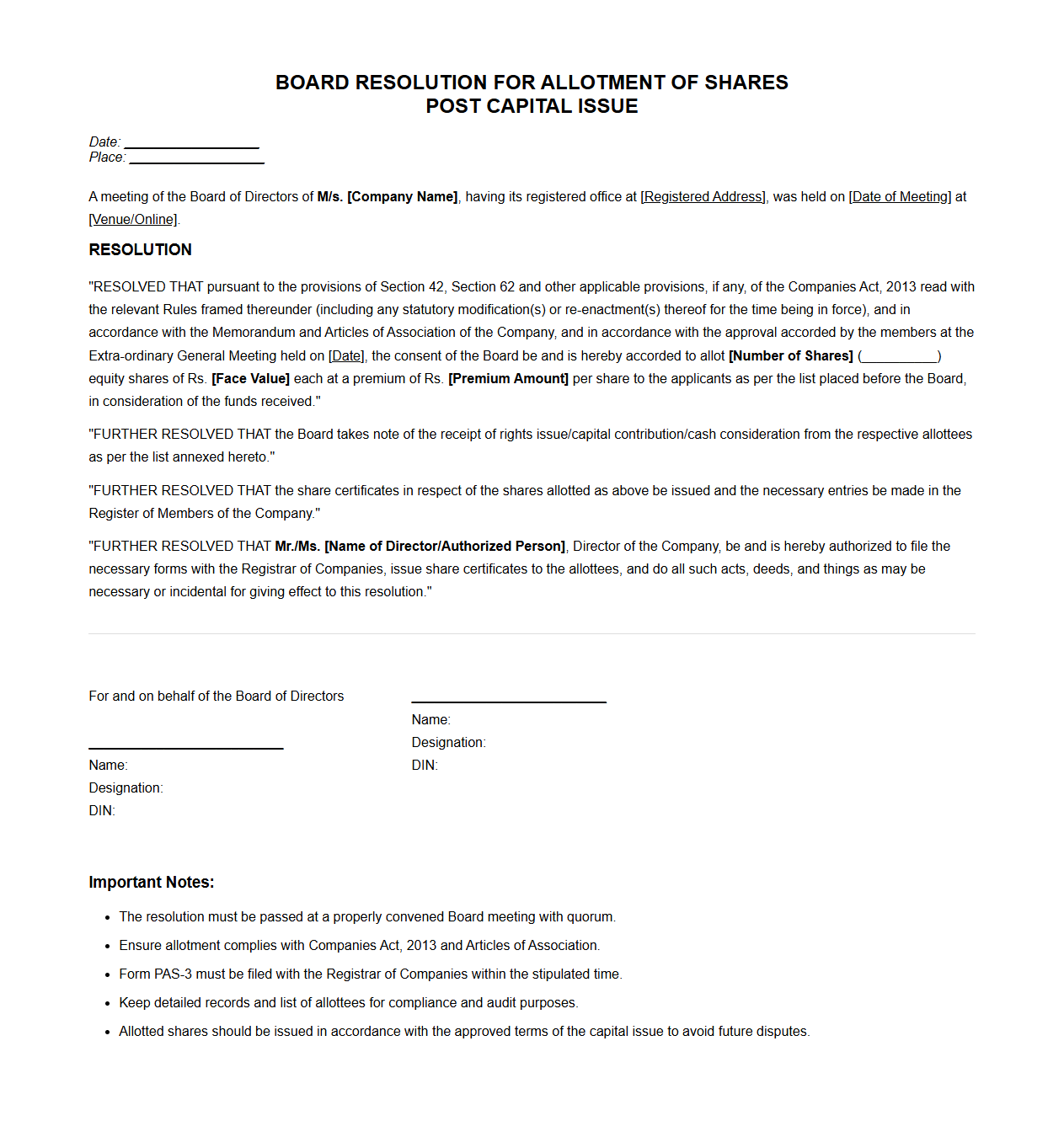
Board Resolution for Allotment of Shares Post Capital Issue
A
Board Resolution for Allotment of Shares Post Capital Issue document is an official corporate record authorizing the distribution of new shares following an increase in a company's capital. It specifies the number of shares to be allotted, the price per share, and the names of the shareholders receiving the shares, ensuring compliance with company laws and regulatory requirements. This resolution is critical for maintaining transparent governance and accurate statutory documentation during capital restructuring.
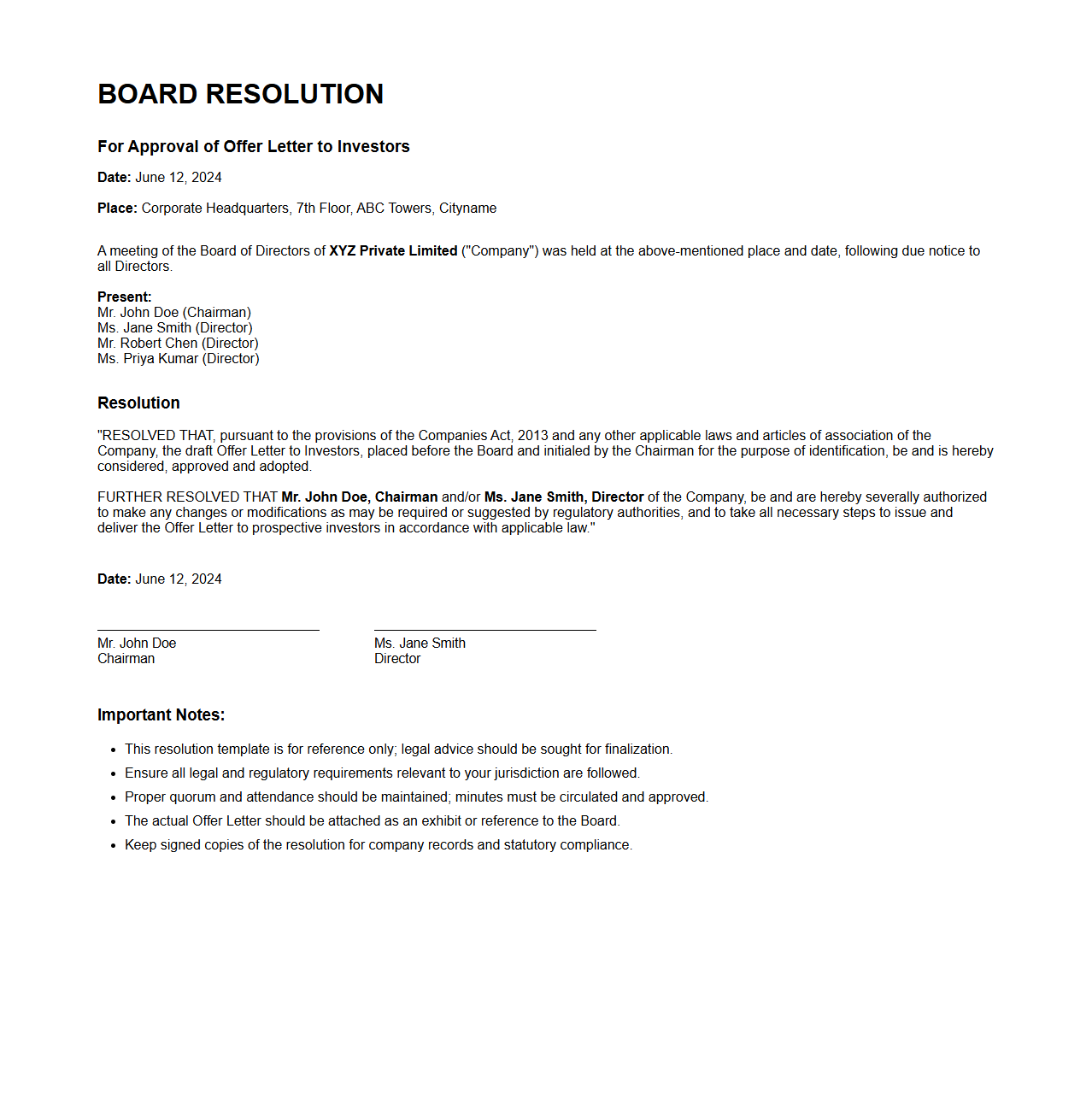
Board Resolution for Approval of Offer Letter to Investors
A
Board Resolution for Approval of Offer Letter to Investors is an official document adopted by a company's board of directors to formally approve the issuance of an offer letter to potential investors. This resolution ensures legal compliance and verifies that the board has authorized the terms and conditions outlined in the offer letter, facilitating transparent investment negotiations. It serves as a critical governance tool, confirming the board's consent and supporting the company's fundraising process.
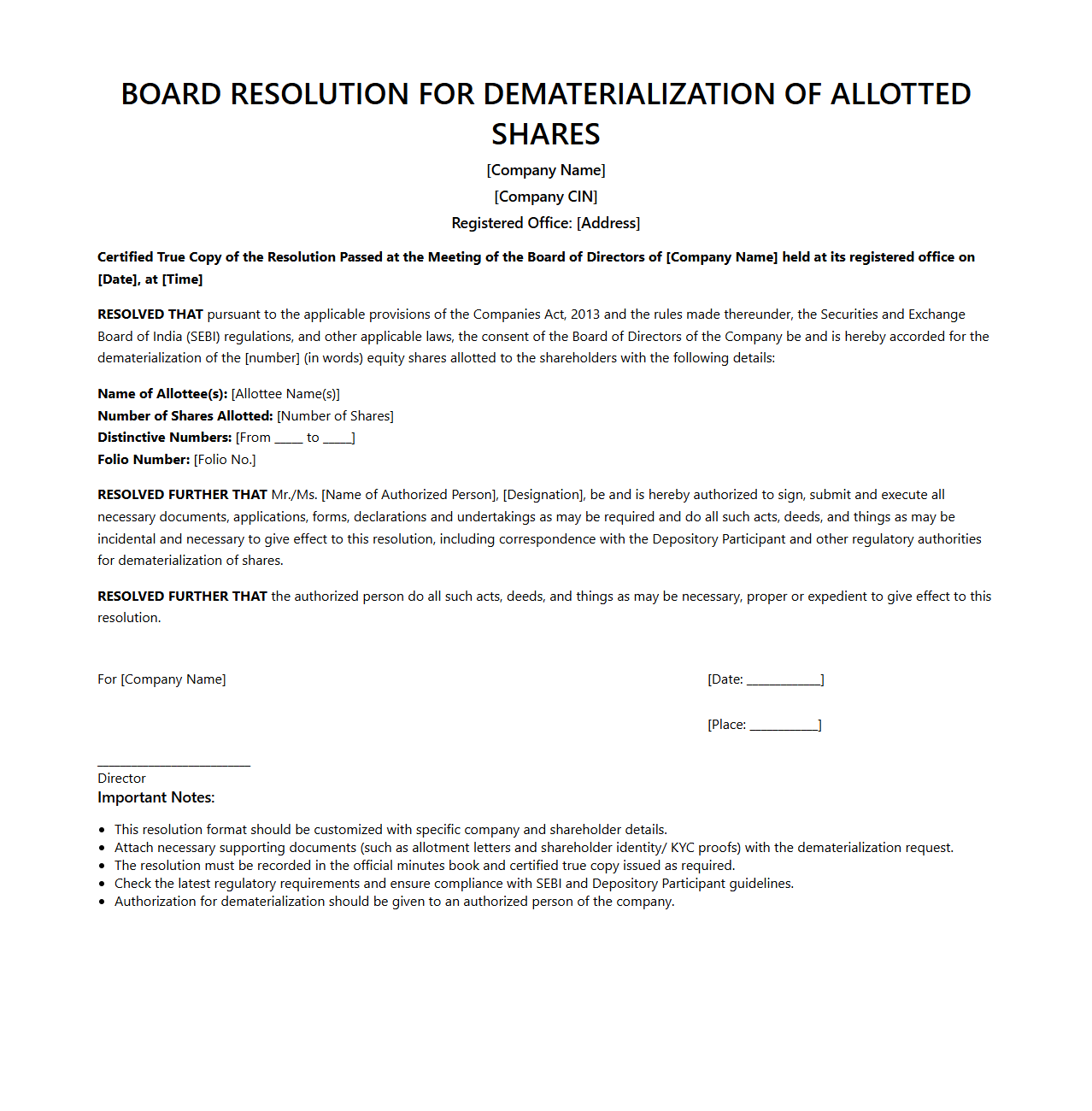
Board Resolution for Dematerialization of Allotted Shares
A
Board Resolution for Dematerialization of Allotted Shares is a formal document passed by the company's board of directors authorizing the conversion of physical share certificates into electronic form through a depository system. This resolution ensures compliance with regulatory requirements and facilitates seamless transfer, trading, and holding of shares in dematerialized format. It typically contains details such as the company's name, folio number, number of shares to be dematerialized, and the appointed depository participant.
Board Resolution for Increase in Authorized Share Capital
A
Board Resolution for Increase in Authorized Share Capital is a formal document adopted by a company's board of directors to approve the increase of the company's authorized share capital, allowing issuance of additional shares. This resolution outlines the specific amount of increase, reasons for the expansion, and authorizes relevant officials to take necessary steps to amend company records and notify regulatory authorities. It is a crucial corporate governance instrument ensuring compliance with company laws and shareholder agreements.
What is the primary purpose of a board resolution for capital issue?
The primary purpose of a board resolution for capital issue is to formally approve the issuance of new shares or capital by a company. This resolution ensures that the decision complies with the company's internal policies and legal requirements. It also serves as an official record reflecting the board's consent to raise capital from investors.
Which key details must be included in the format of a board resolution for issuing capital?
The format of a board resolution for issuing capital must include key details such as the number and type of shares to be issued, the issue price, and the purpose of raising capital. It should specify the class of shareholders eligible for the issue and any terms or conditions attached. Additionally, the resolution should mention the date and venue of the board meeting where the decision was taken.
How is shareholder approval addressed in the document for capital issuance?
Shareholder approval is typically addressed by including a clause that the issuance of capital is subject to necessary shareholder consent as per the company's articles and relevant laws. The resolution may also mention that an extraordinary or annual general meeting will be convened to obtain such approval, if required. This ensures transparency and compliance with corporate governance norms.
What legal compliances are referenced in the standard board resolution format for capital issue?
The standard board resolution references legal compliances such as the Companies Act and regulations issued by securities authorities like SEBI. It ensures adherence to provisions related to capital issue, share allotment, and filing requirements with regulatory bodies. Compliance with these laws protects the company from legal challenges and penalties.
Which authorities are empowered to act on behalf of the company as per the board resolution?
The board resolution often empowers specified directors or officers to execute documents and take necessary actions to complete the capital issue process. These authorized individuals can sign agreements, submit filings, and engage with regulatory bodies on behalf of the company. Such delegation ensures smooth implementation of the board's decision.