Employment Confirmation Letter Format for Third-Party Verification
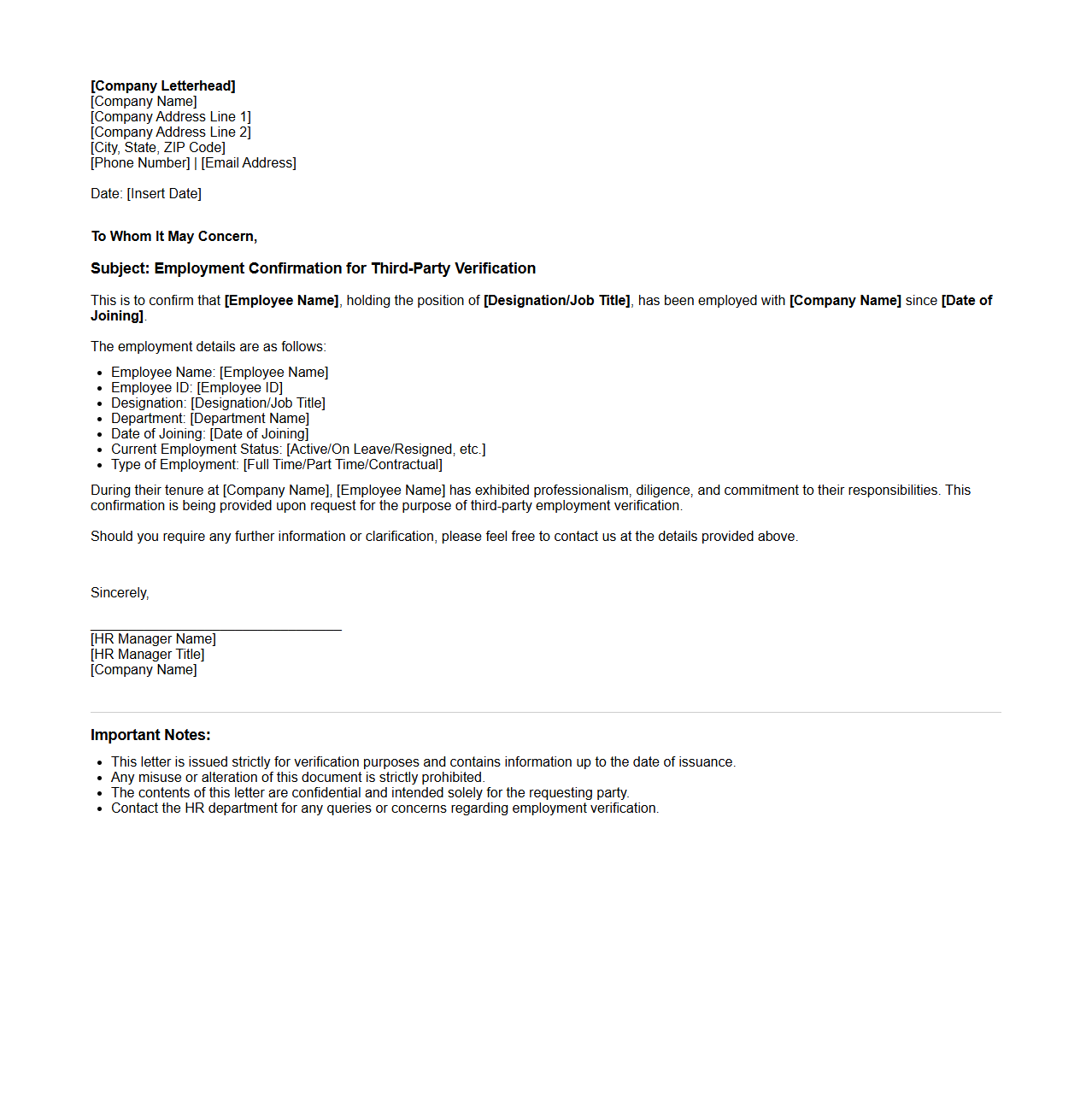
An
Employment Confirmation Letter Format for Third-Party Verification is a standardized document used by employers to verify an employee's job status, tenure, and role details to an external party. This format typically includes essential information such as the employee's full name, job title, employment dates, salary details, and the employer's contact information for authentication purposes. It serves as an official record to facilitate background checks, loan applications, or rental agreements, ensuring the accuracy and legitimacy of employment claims.
Salary Confirmation Letter Format for Third-Party Verification
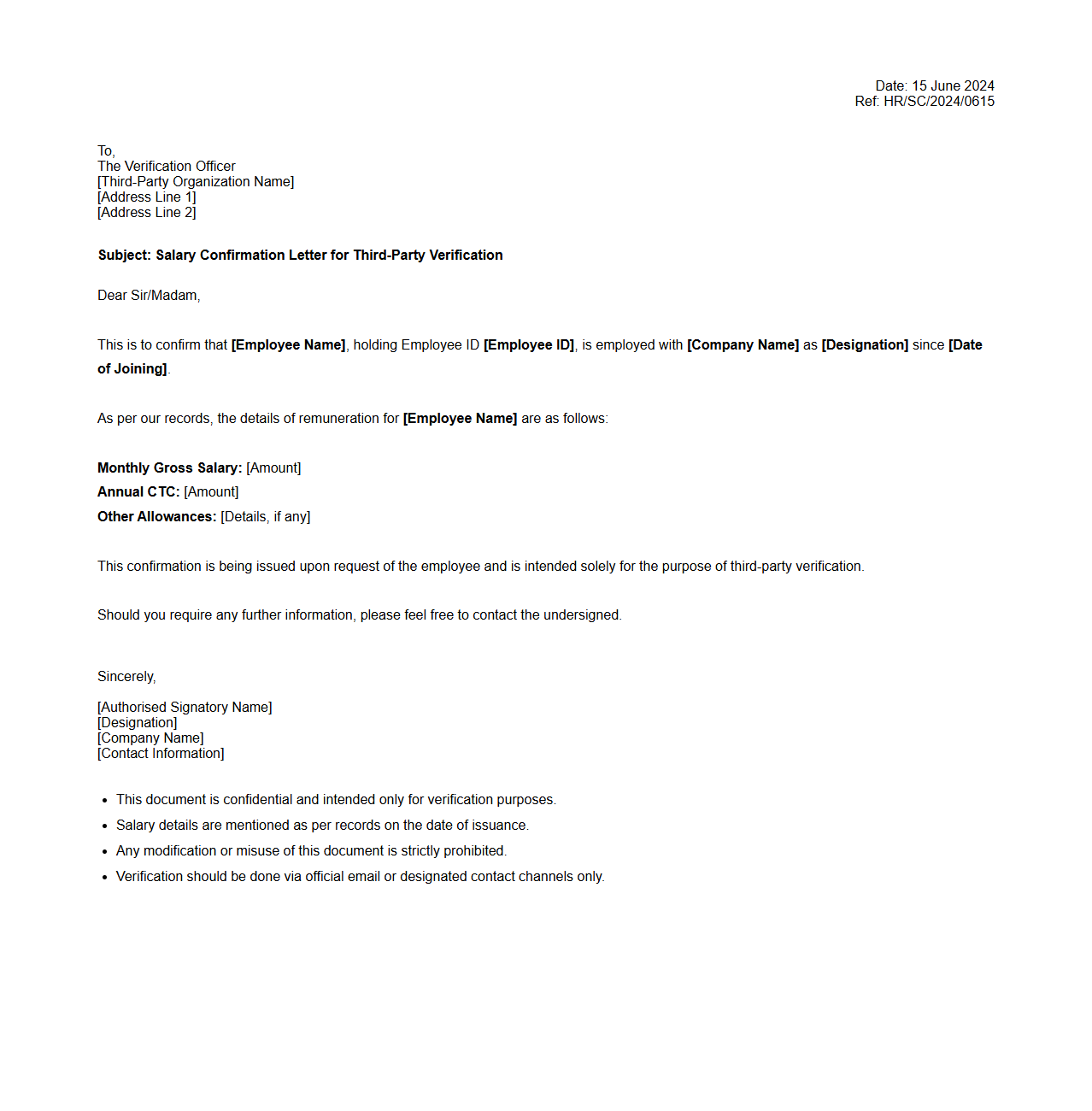
A
Salary Confirmation Letter Format for Third-Party Verification is a formal document issued by an employer to verify an employee's income details to an external organization, such as banks or financial institutions. It typically includes the employee's name, designation, salary structure, and the period of employment, serving as credible evidence of income during credit assessments or background checks. This letter must be precise, professional, and on official company letterhead to ensure authenticity and acceptance by third parties.
Address Confirmation Letter Format for Third-Party Verification
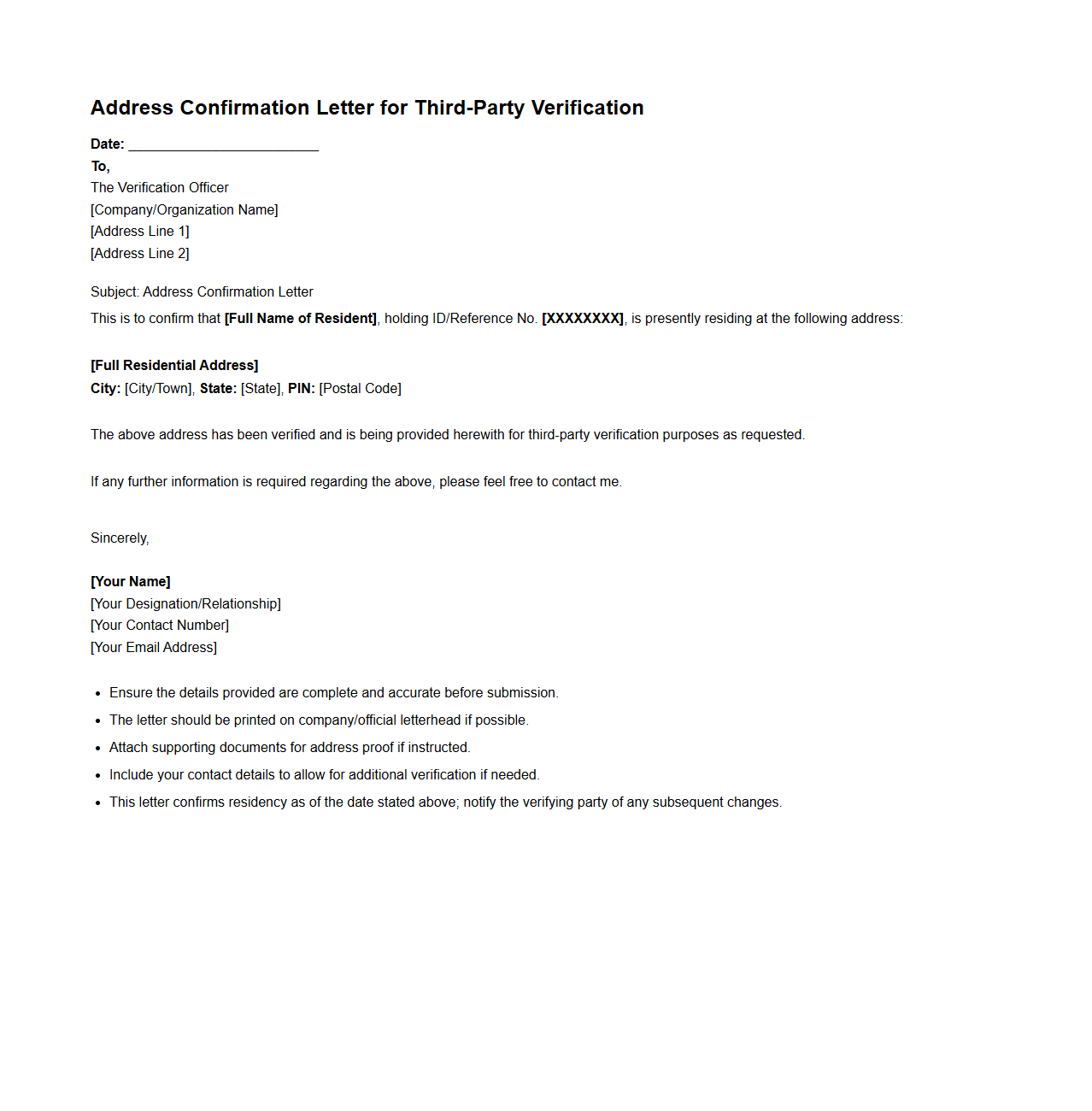
An
Address Confirmation Letter Format for Third-Party Verification is a structured document used to verify an individual's residential address through an authorized third party. It typically includes the individual's full name, verified address, date, and the third party's contact information along with an official signature or stamp to authenticate the confirmation. This format ensures clarity, reliability, and compliance with legal or institutional requirements for address verification.
Educational Qualification Confirmation Letter Format for Third-Party Verification
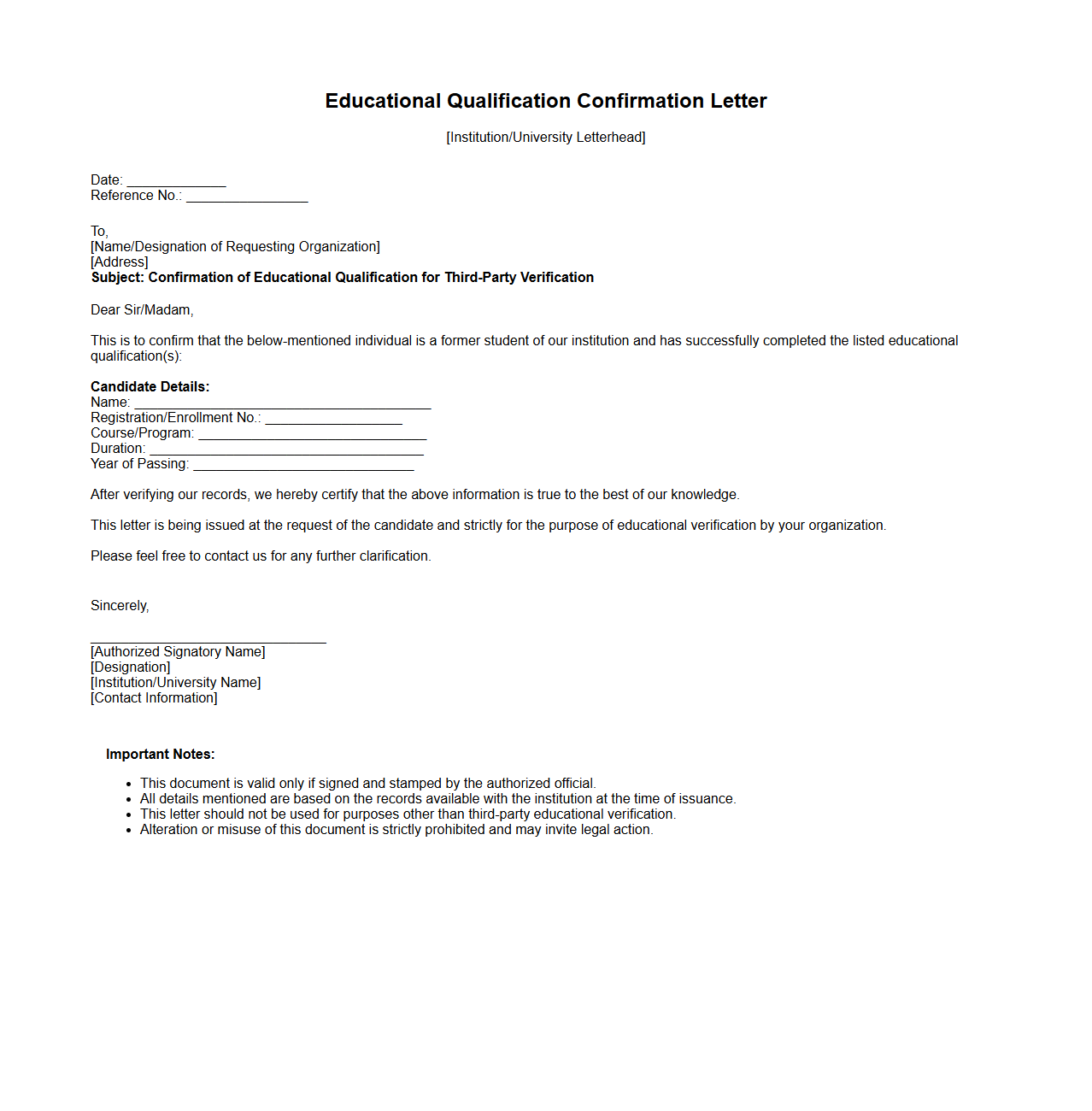
An
Educational Qualification Confirmation Letter Format for Third-Party Verification is a formal document used by educational institutions or authorized bodies to verify the authenticity of a candidate's academic credentials. It typically includes the candidate's name, course details, year of completion, and confirmation of the degree or certificate awarded. This document ensures that third-party agencies or employers can reliably confirm the educational background of an individual.
Bank Account Confirmation Letter Format for Third-Party Verification
A
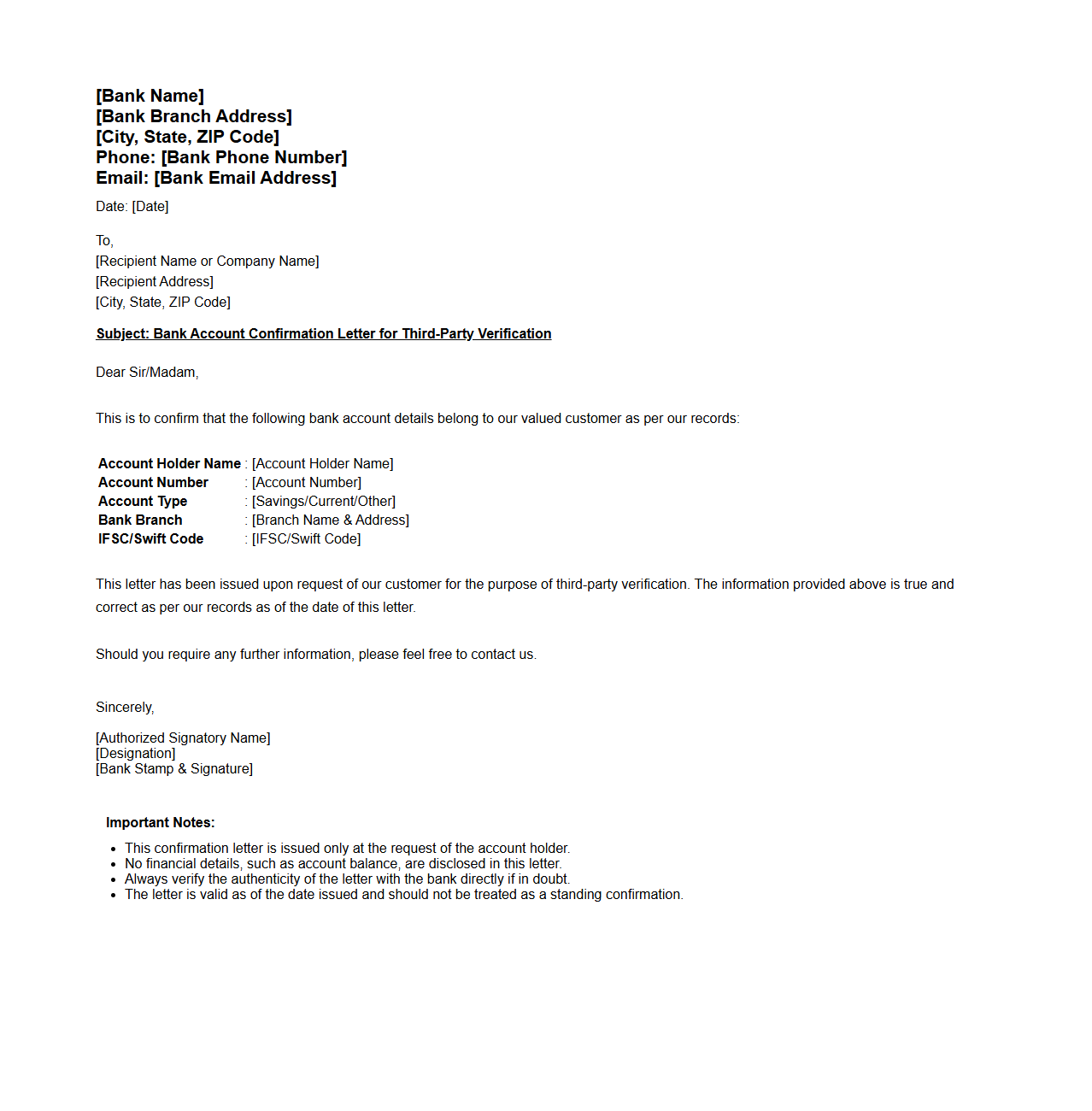
Bank Account Confirmation Letter Format for Third-Party Verification is a standardized document used by financial institutions to verify the authenticity and details of a customer's bank account on behalf of another entity. This letter typically includes essential information such as the account holder's name, account number, account status, and bank branch details, ensuring secure and reliable third-party verification. It serves as an official confirmation tool to prevent fraud and facilitate transactions requiring validated banking information.
Experience Confirmation Letter Format for Third-Party Verification
An
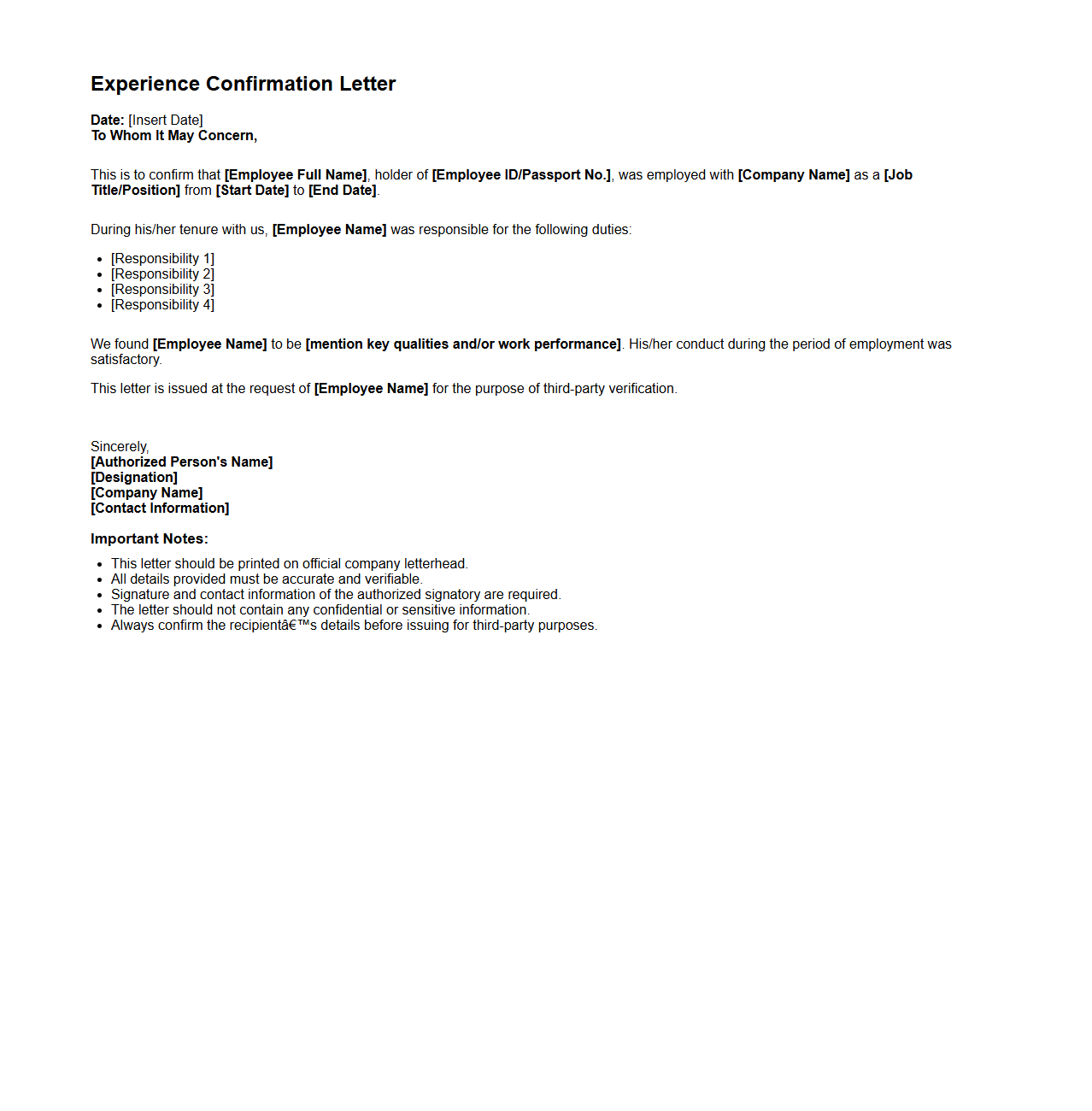
Experience Confirmation Letter Format for Third-Party Verification is a standardized document template used by employers to formally confirm an employee's job tenure, roles, and responsibilities to an external verifier. This format ensures accurate and consistent presentation of employment details, including designation, dates of employment, and key achievements, facilitating reliable background and work history checks. The letter serves as an official validation tool, supporting recruitment, visa processing, or professional licensing requirements.
Vendor Confirmation Letter Format for Third-Party Verification
A
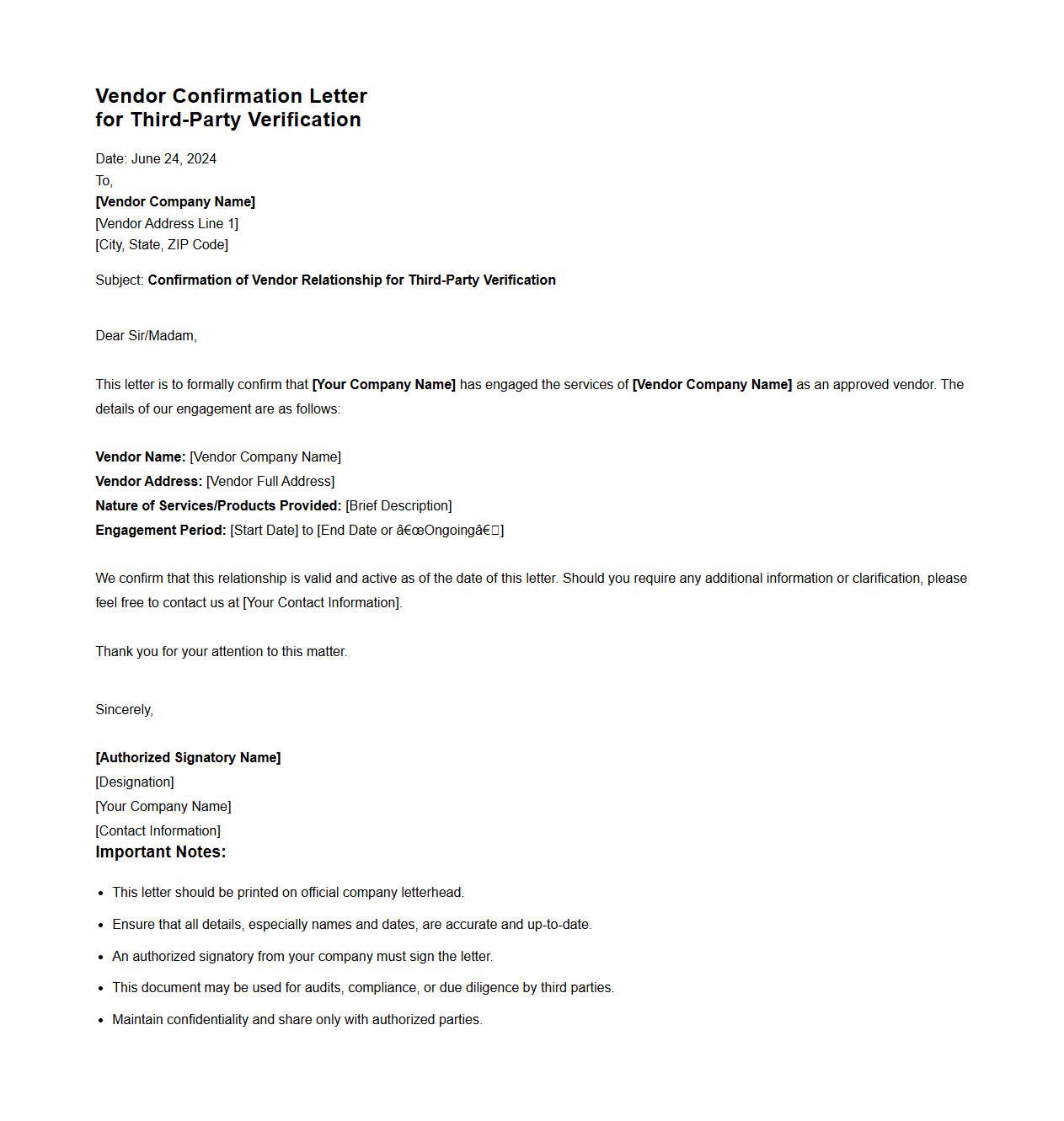
Vendor Confirmation Letter Format for Third-Party Verification is a standardized document template used by companies to verify the authenticity of a vendor's details and business transactions. It typically includes vendor identification, transaction specifics, and a formal statement verifying the vendor's compliance and legitimacy for audit or due diligence purposes. This format ensures consistency and reliability in third-party vendor validations, reducing risks related to fraud and supplier discrepancies.
Rental Agreement Confirmation Letter Format for Third-Party Verification
A
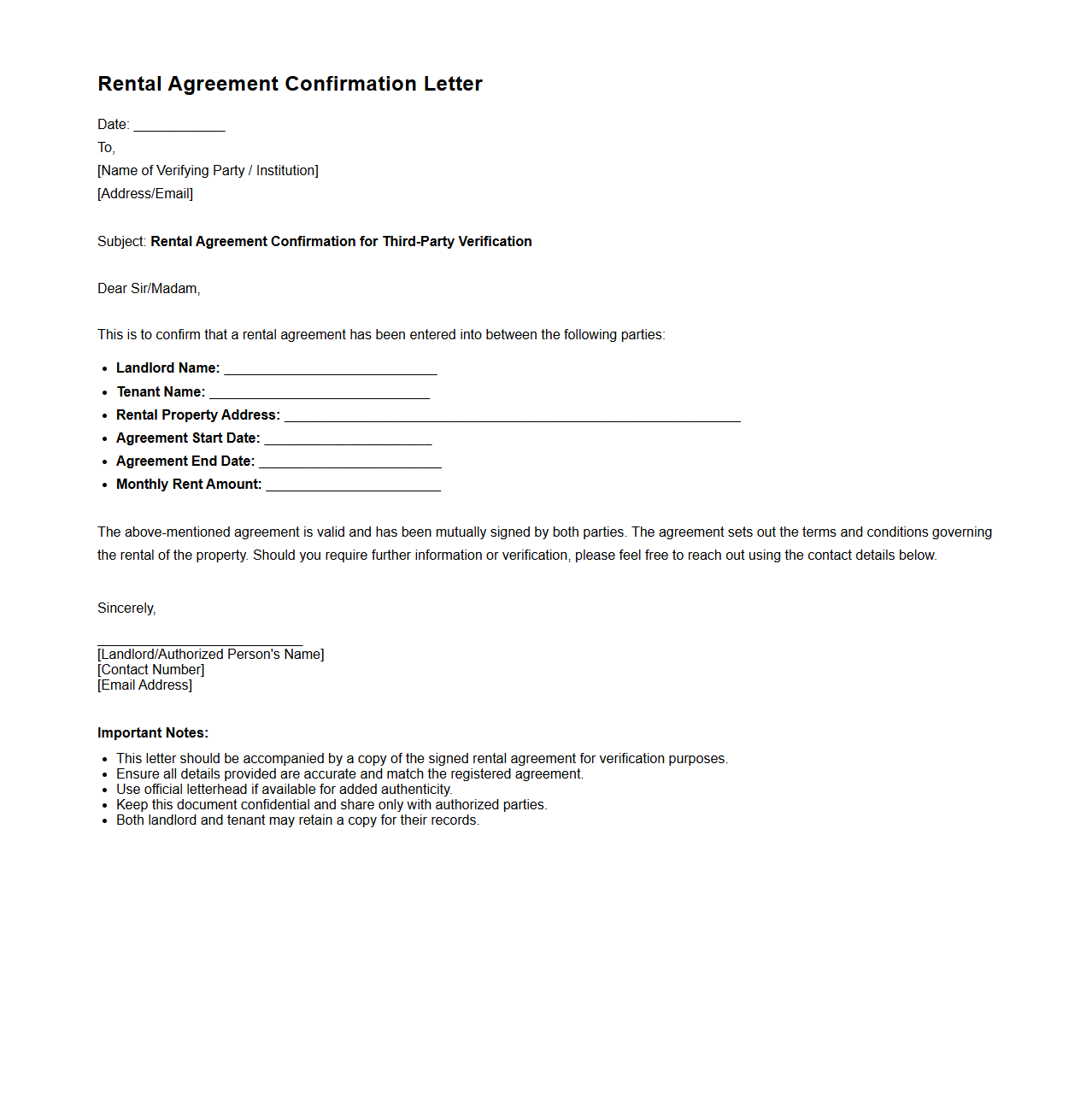
Rental Agreement Confirmation Letter Format for Third-Party Verification is a standardized document used to authenticate the rental terms between a landlord and tenant by an independent verifier. This letter typically includes essential details such as the tenant's name, property address, rental duration, monthly rent amount, and confirmation of lease adherence. It serves as proof for organizations requiring verified tenancy information during background checks, loan applications, or government procedures.
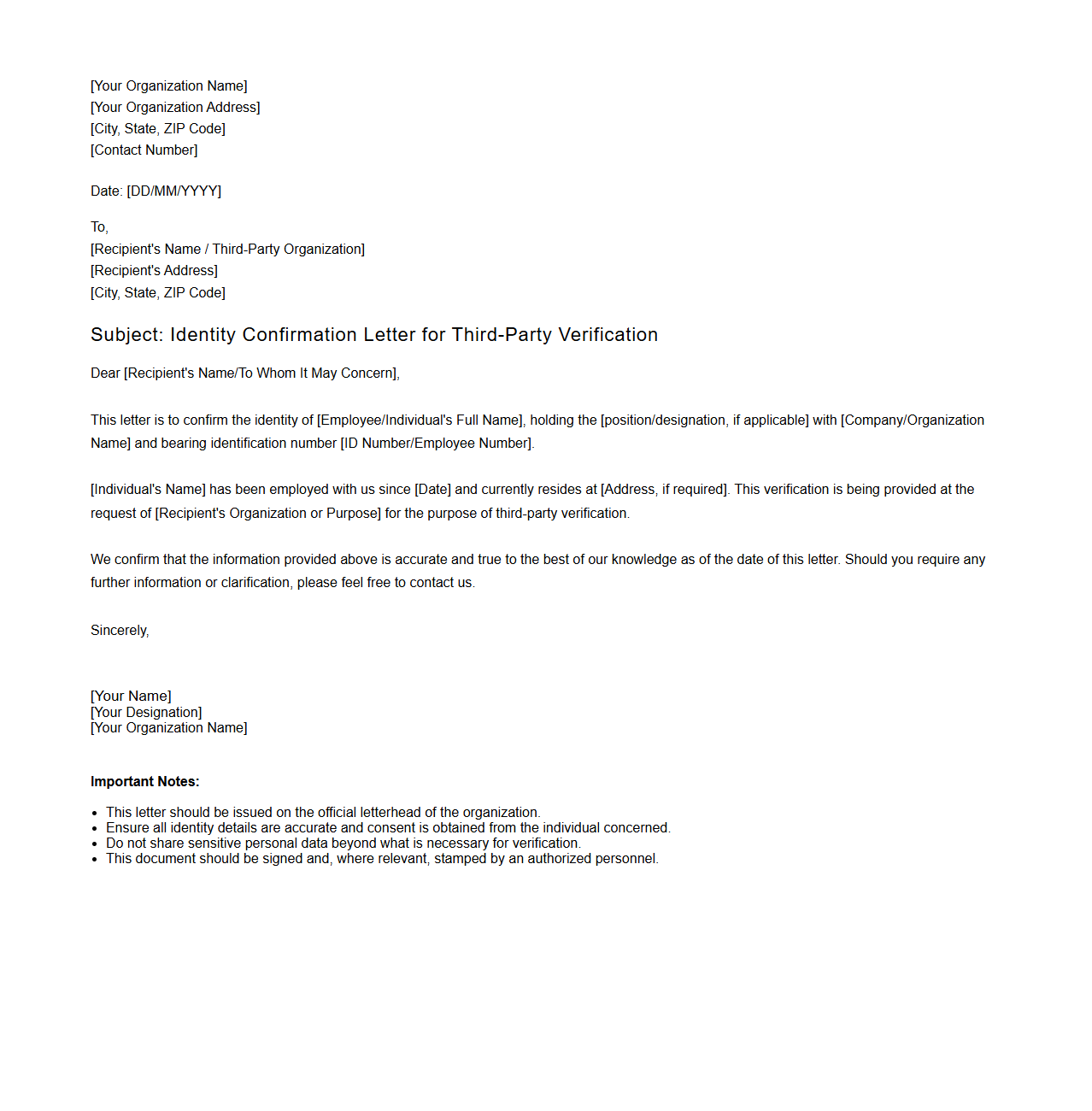
Identity Confirmation Letter Format for Third-Party Verification
An
Identity Confirmation Letter Format for Third-Party Verification is a standardized document used to verify an individual's identity through an authorized third party, such as a notary public or employer. This letter typically includes essential personal information, verification statements, contact details of the confirmer, and a clear affirmation of the individual's identity to ensure authenticity. It serves as a legally recognized proof of identity in various administrative, financial, or legal processes requiring third-party validation.
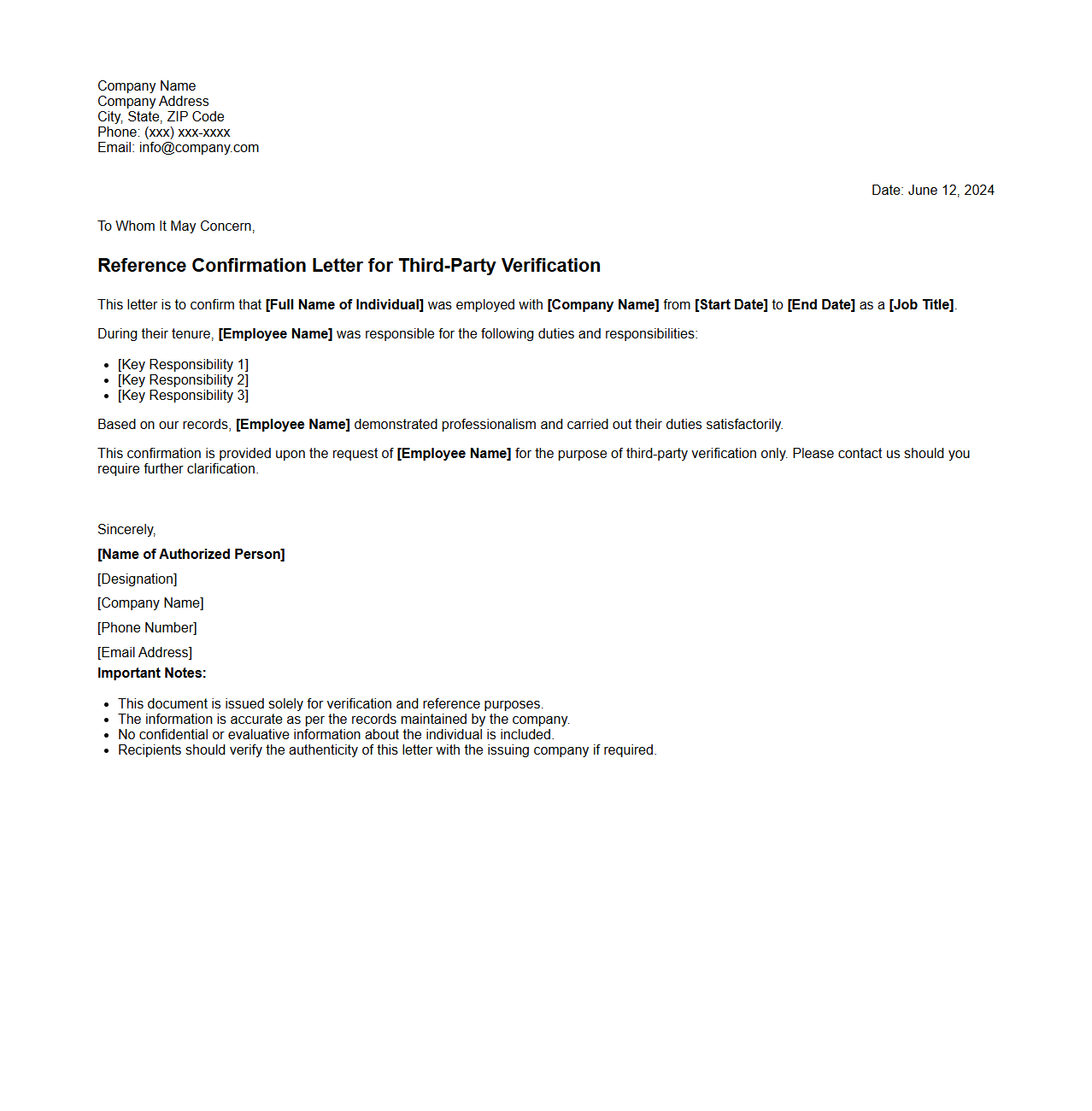
Reference Confirmation Letter Format for Third-Party Verification
A
Reference Confirmation Letter Format for Third-Party Verification is a structured document used to validate the credentials, employment, or qualifications of an individual through an independent third party. This format typically includes the verifier's details, the purpose of verification, specific information requested for confirmation, and a signature section for authentication. Ensuring clarity and professionalism, this letter serves as an official means to confirm facts without direct involvement from the subject being verified.
Key Components in Third-Party Verification Confirmation Letter Template
A third-party verification confirmation letter must include the identity of the verifying party, the purpose of the verification, and a clear statement of the information being confirmed. It is essential to specify the date and scope of the verification to establish accuracy and relevance. The letter should also contain a declaration of authenticity and the signature of an authorized representative to ensure the letter's validity.
Referencing Sensitive Personal or Business Data in Letters
Sensitive data must be referenced with caution, ensuring adherence to data protection regulations such as GDPR or HIPAA. Use generic descriptors rather than full details, for example, referring to "the account referenced" instead of specific account numbers. Including a confidentiality notice within the letter emphasizes the necessity of handling such information securely.
Appropriate Formal Salutations for Third-Party Confirmation Correspondence
The formal salutations commonly used include "Dear Sir or Madam" when the recipient is unknown or "Dear [Title] [Last Name]" for known contacts. Maintaining a professional tone requires respectful greetings that establish clear communication from the outset. Using a proper salutation sets the standard for the letter's formality and credibility.
Recommended Closing Statement for Legal Compliance in Such Letters
Legal compliance is best ensured by including a closing statement reaffirming that the information is accurate and complete to the best of the sender's knowledge. Phrases like "This confirmation is provided in compliance with all applicable laws and regulations" reinforce the letter's formal and legal standing. Ending with an offer to provide additional information supports transparency and cooperation.
Referencing Annexures or Supporting Documents Within Confirmation Letters
Annexures or supporting documents should be explicitly referenced in the body of the letter with clear labels such as "See Annex A attached" or "as detailed in Appendix 1." This ensures the reader understands the connection between the confirmation and the supplementary information. Proper referencing maintains the letter's organization and aids in verifiability and audit trails.