The Format of Asset Depreciation Schedule for accounting typically includes columns for asset description, acquisition date, cost, useful life, depreciation method, annual depreciation expense, accumulated depreciation, and book value. This structured layout helps track the reduction in asset value over time, ensuring accurate financial reporting and compliance with accounting standards. Maintaining a clear and detailed schedule facilitates easy audit trails and better asset management.
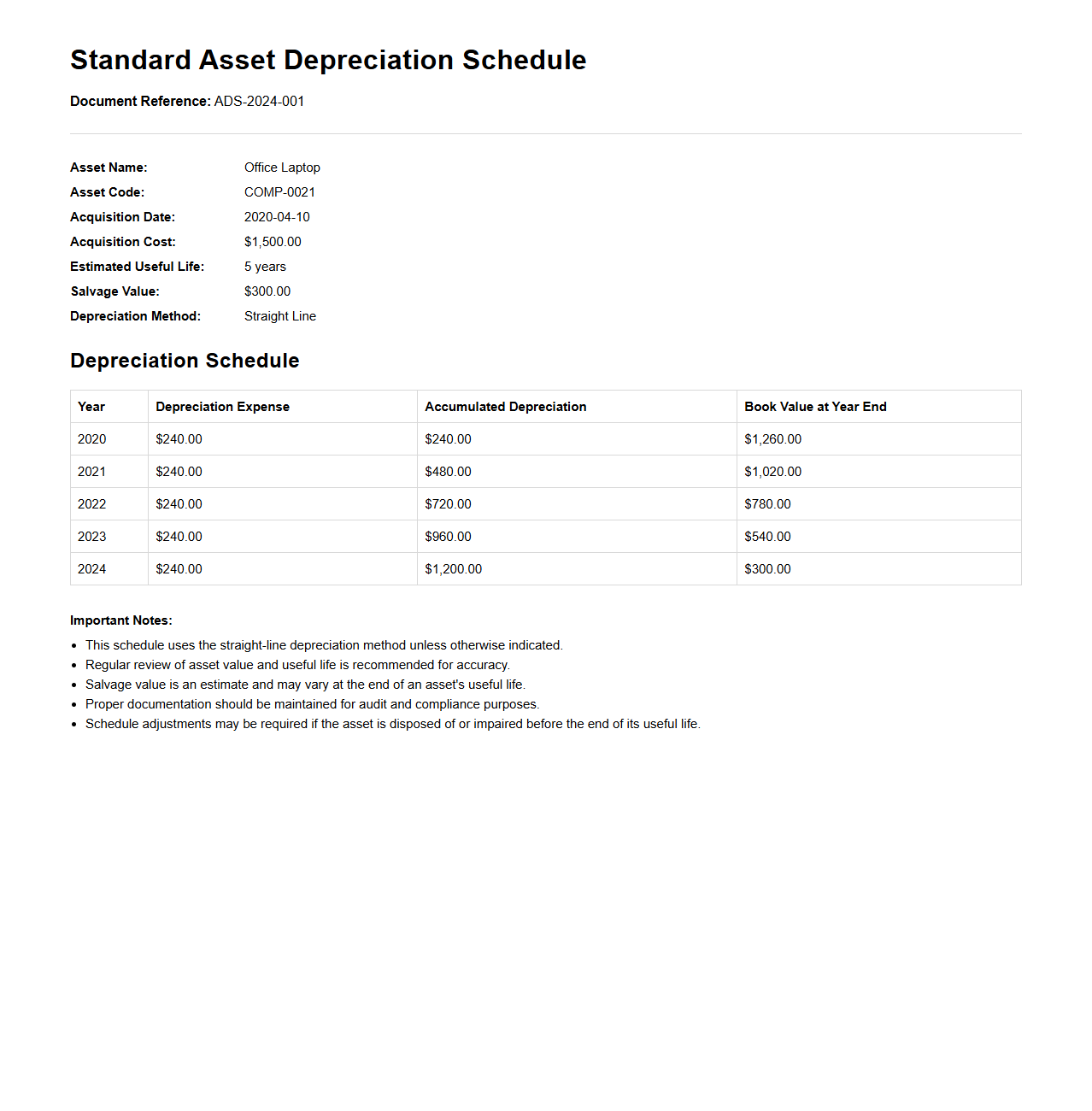
Standard Asset Depreciation Schedule Format
The
Standard Asset Depreciation Schedule Format document outlines a systematic approach for tracking the reduction in value of fixed assets over time. It includes details such as asset description, acquisition date, useful life, depreciation method, and accumulated depreciation, enabling accurate financial reporting and compliance with accounting standards. This format ensures consistency and transparency in managing asset depreciation across organizations.
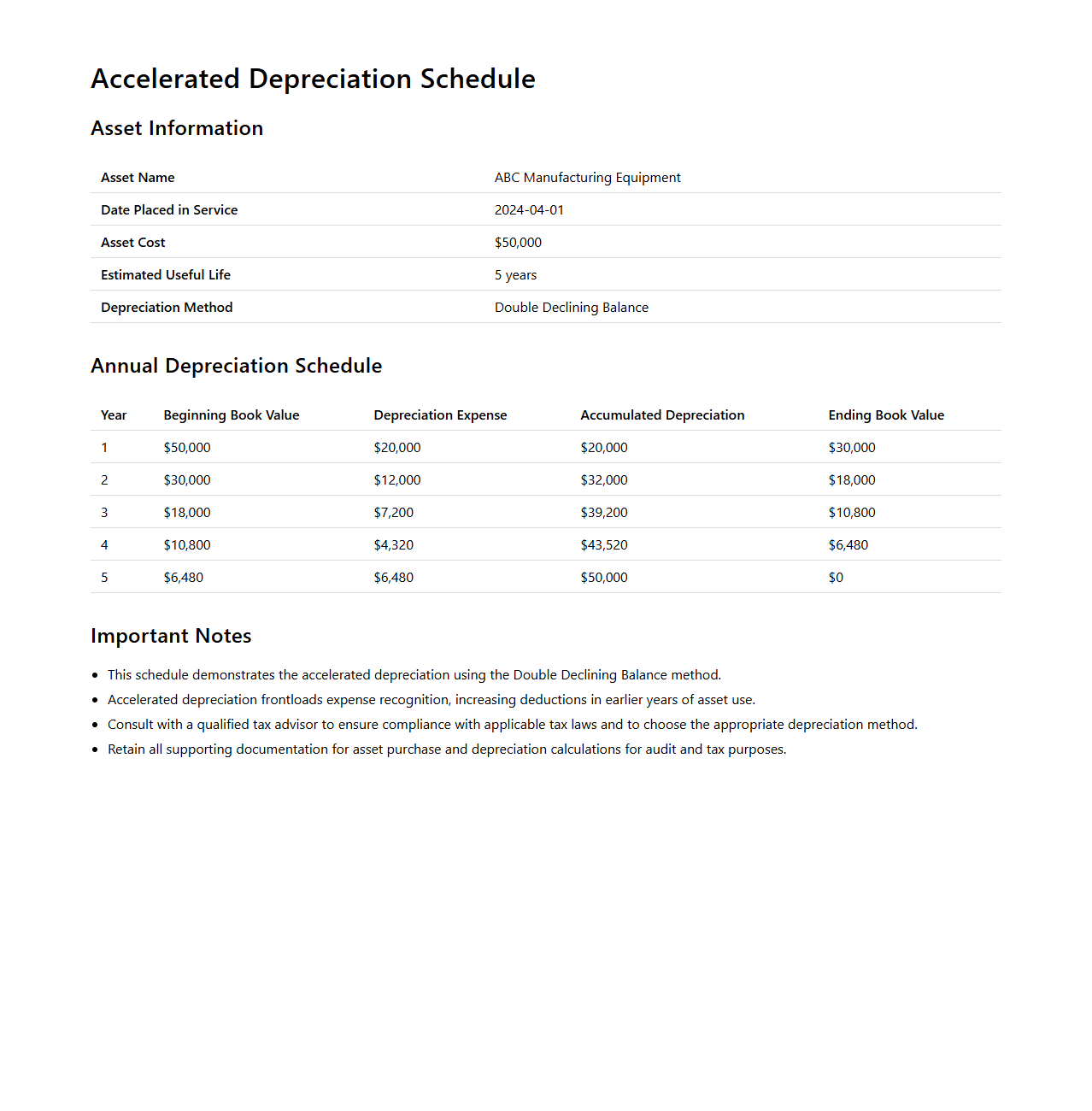
Accelerated Depreciation Schedule Document
An
Accelerated Depreciation Schedule Document outlines a fixed asset's depreciation using methods like double declining balance or sum-of-the-years' digits, allowing for higher expense recognition in earlier years. This schedule helps businesses optimize tax benefits by reducing taxable income more quickly than straight-line depreciation. It includes asset details, purchase date, useful life, and calculated depreciation values over the asset's lifespan.
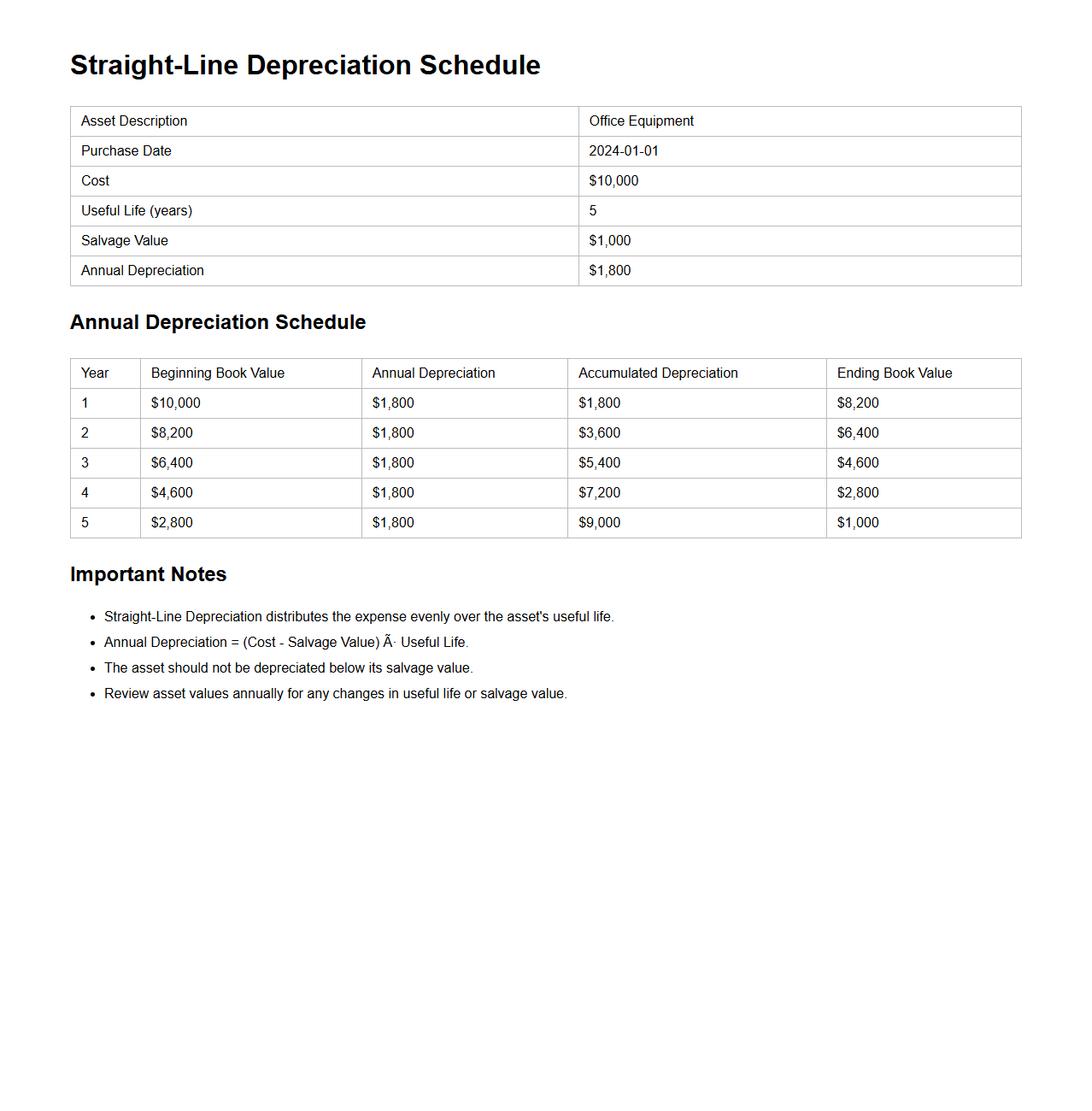
Straight-Line Depreciation Schedule Format
A
Straight-Line Depreciation Schedule Format document outlines the systematic allocation of an asset's cost evenly over its useful life. It typically includes columns for the asset's initial cost, salvage value, depreciation expense per period, accumulated depreciation, and book value. This format helps businesses maintain accurate financial records and ensures consistent expense reporting for fixed assets.
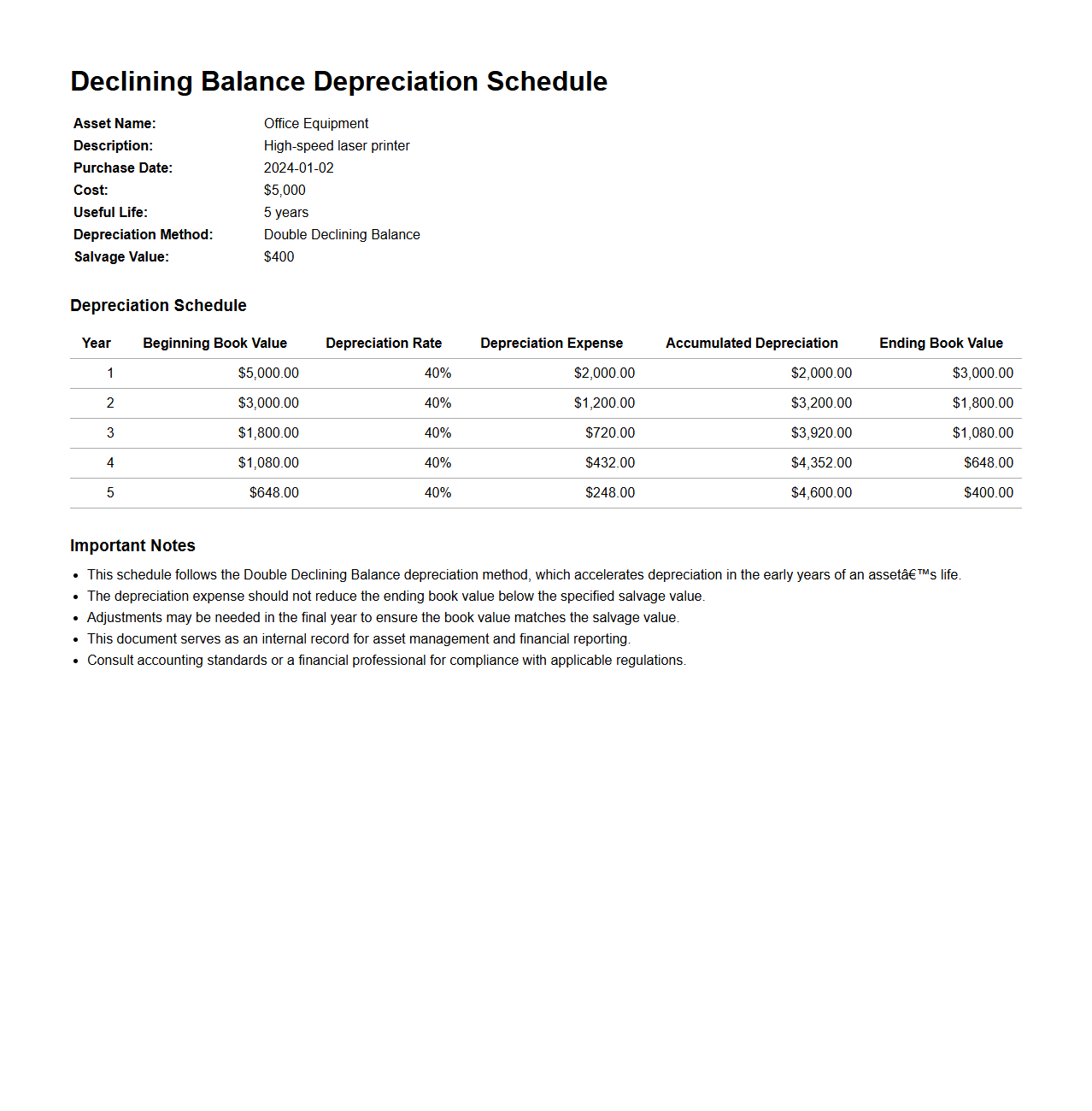
Declining Balance Depreciation Schedule Template
A
Declining Balance Depreciation Schedule Template document is a financial tool used to calculate and track asset depreciation over time using the declining balance method. This template helps businesses systematically reduce the book value of fixed assets, reflecting higher depreciation expenses in the early years and gradually decreasing amounts thereafter. It streamlines accounting processes by providing a clear, organized format to monitor asset value changes and support accurate financial reporting.
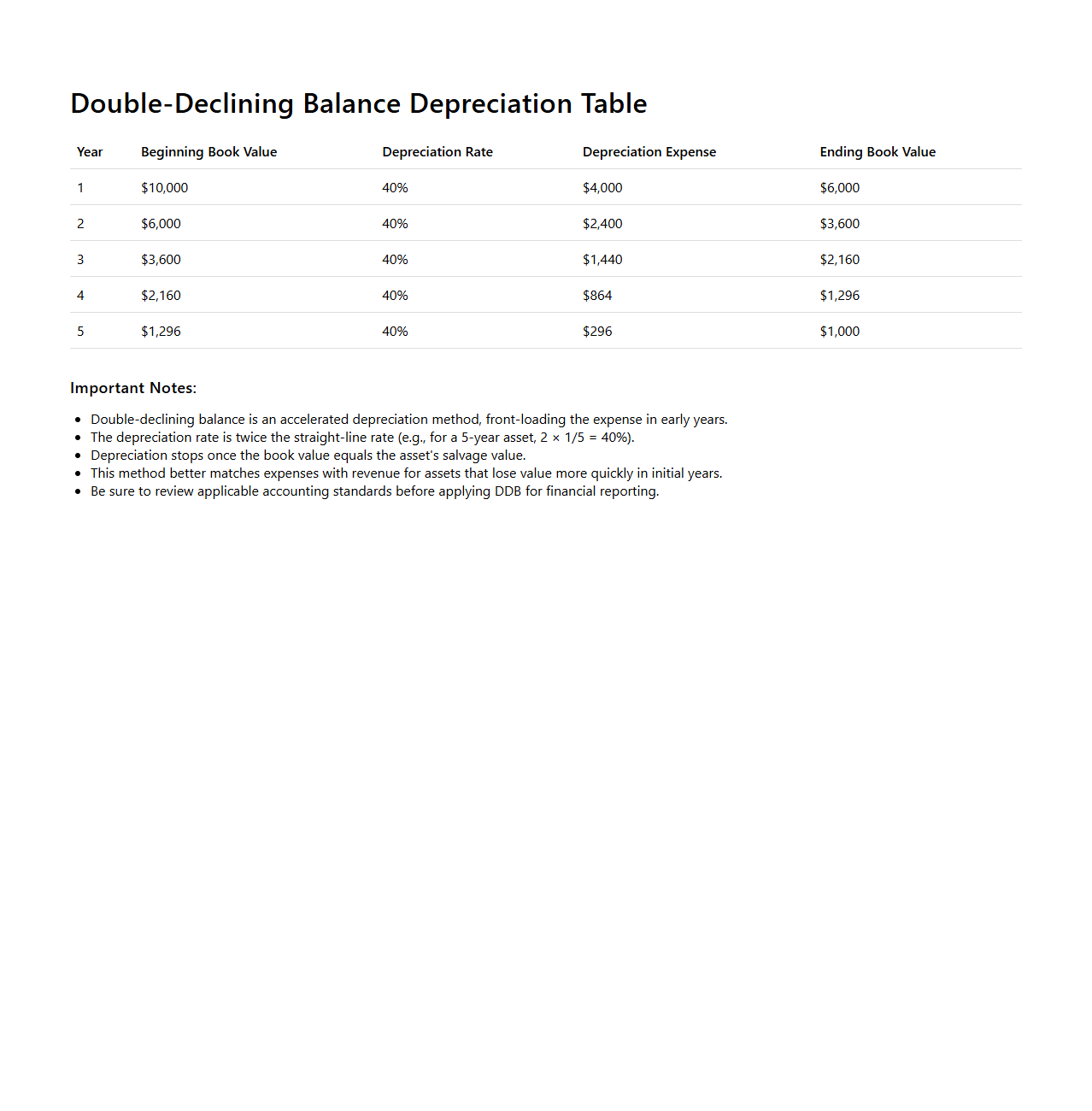
Double-Declining Balance Depreciation Table
A
Double-Declining Balance Depreciation Table document presents a systematic schedule showing accelerated depreciation expenses for an asset over its useful life. It calculates depreciation by applying twice the straight-line rate to the asset's diminishing book value, enabling faster expense recognition in early years. This tool is essential for accurate financial reporting and tax planning by reflecting higher asset costs upfront.
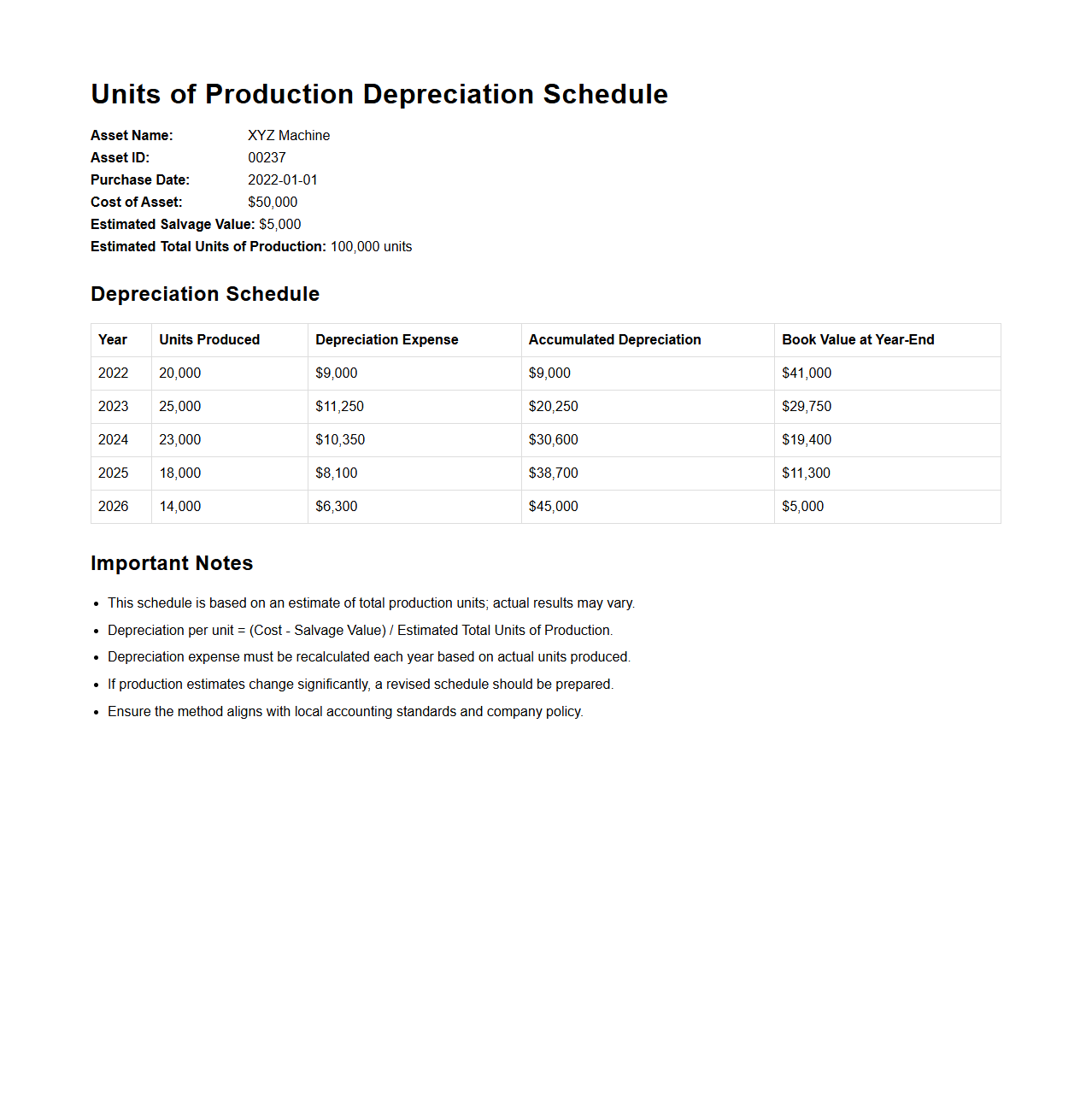
Units of Production Depreciation Schedule Format
The
Units of Production Depreciation Schedule Format document outlines how asset depreciation is calculated based on actual output or usage rather than time. This format typically includes columns for asset description, total expected units, units produced during the period, depreciation rate per unit, and the calculated depreciation expense. It provides a detailed, usage-based depreciation method ideal for assets whose wear and tear depend on production levels.
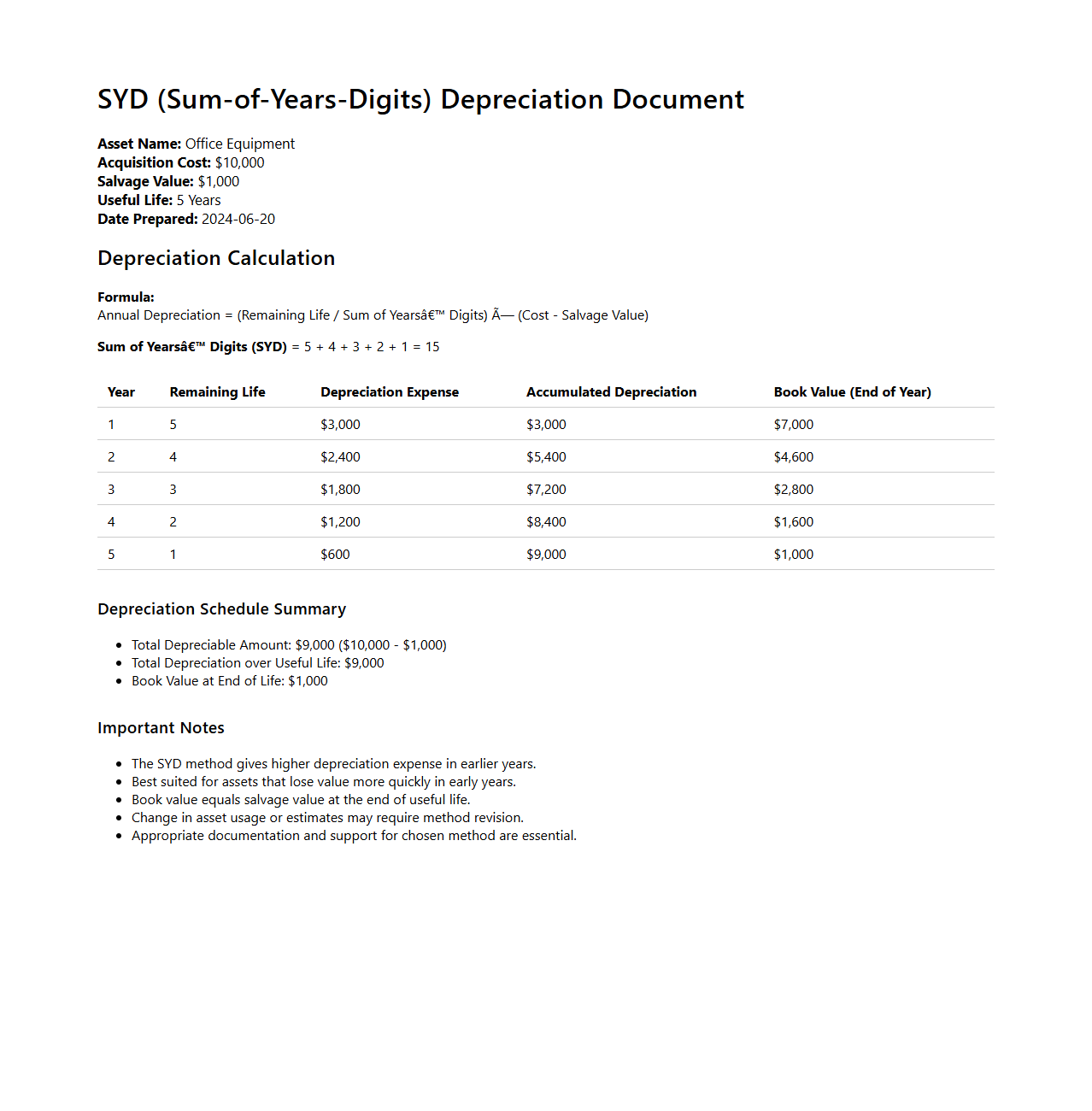
SYD (Sum-of-Years-Digits) Depreciation Document
The
Sum-of-Years-Digits (SYD) Depreciation Document outlines the method of accelerated depreciation used in accounting, which allocates higher depreciation expenses to earlier years of an asset's life. This document provides a detailed calculation framework based on the sum of the asset's useful life digits, ensuring precise expense tracking for tax and financial reporting purposes. It serves as a critical reference for financial analysts and accountants managing asset valuation and expense recognition.
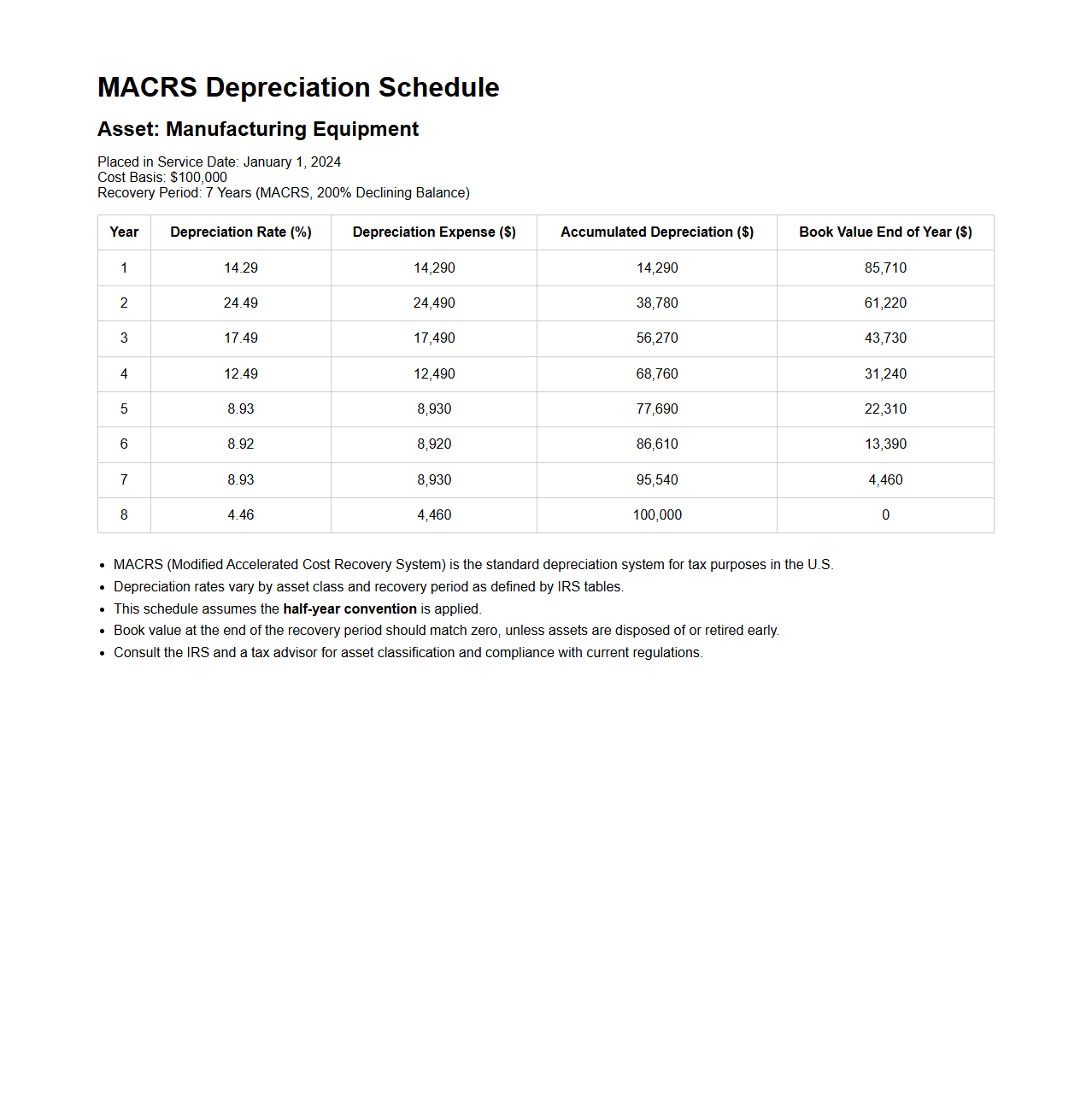
MACRS Depreciation Schedule Format
The
MACRS Depreciation Schedule Format document outlines the standardized method for calculating asset depreciation under the Modified Accelerated Cost Recovery System used in U.S. tax accounting. It specifies the recovery period, depreciation method, and applicable conventions for each asset class, ensuring compliance with IRS regulations. This document is essential for accurately determining annual depreciation expenses and optimizing tax benefits for businesses.
Component Asset Depreciation Schedule Template
A
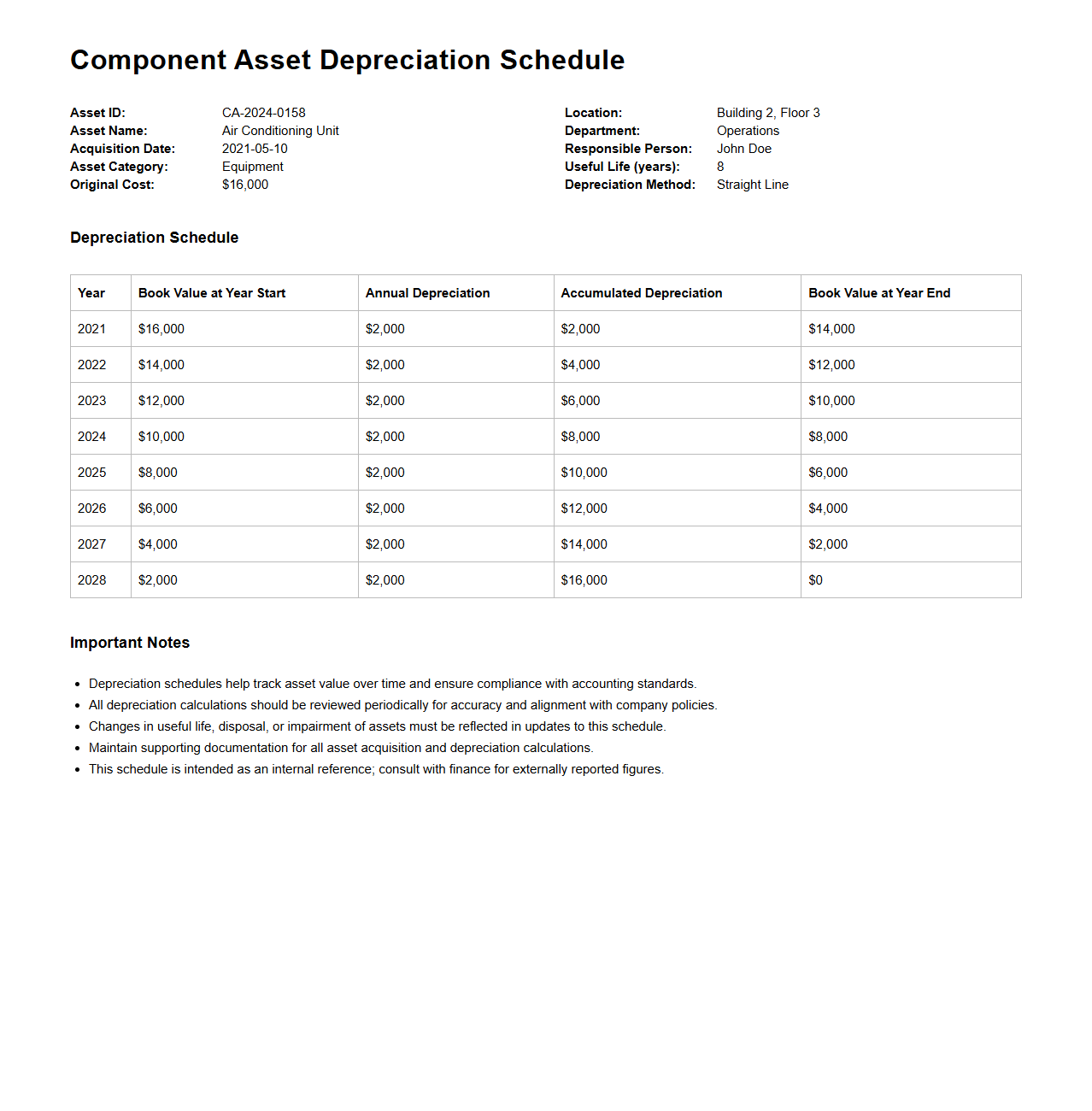
Component Asset Depreciation Schedule Template is a structured document used to track the depreciation of individual components within a larger asset, enabling precise accounting and financial reporting. It breaks down the asset into separate parts, each with its own useful life, acquisition cost, and depreciation method, ensuring accurate expense allocation over time. This template aids organizations in maintaining compliance with accounting standards and optimizing asset management strategies.
Group Asset Depreciation Schedule Format
A
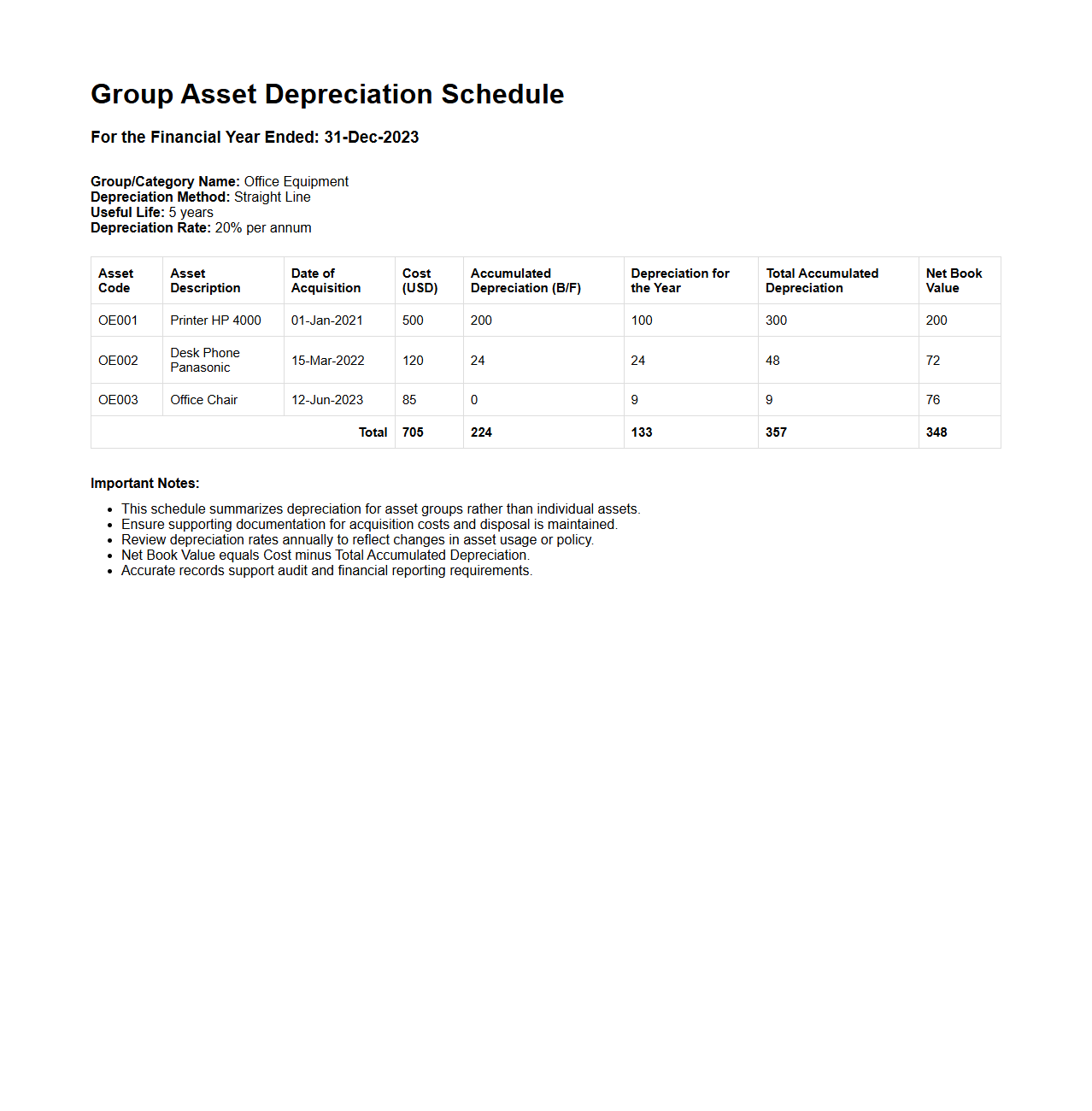
Group Asset Depreciation Schedule Format document systematically tracks the depreciation of multiple assets within an organization over time. It details asset acquisition dates, cost, useful life, depreciation methods, and accumulated depreciation values, enabling accurate financial reporting and tax compliance. This format ensures consistent asset management and supports budgeting for asset replacements or maintenance.
What key information must be included in the format of an asset depreciation schedule?
An asset depreciation schedule must include the asset description, its initial cost, and the date it was placed into service. It should also detail the depreciable life of the asset and the chosen method of depreciation. Including the annual depreciation expense and accumulated depreciation for each period is essential for accurate tracking.
How does the format accommodate different methods of depreciation (e.g., straight-line, reducing balance)?
The format accommodates various depreciation methods by incorporating columns that calculate depreciation based on the selected method, such as straight-line or reducing balance. For straight-line, it evenly distributes the cost over the asset's useful life, while reducing balance applies a constant depreciation rate on the declining book value. This flexibility allows the schedule to dynamically adjust calculations according to the method applied.
In what way does the depreciation schedule format ensure compliance with accounting standards?
The depreciation schedule format ensures compliance by including all necessary disclosures and consistent calculations as required by accounting standards like GAAP or IFRS. It systematically tracks useful life, residual value, and depreciation methodology to provide transparent financial reporting. Regular updating and clear documentation help maintain audit readiness and regulatory adherence.
How does the schedule track accumulated depreciation and book value over time?
The schedule maintains a running total of accumulated depreciation by summing annual depreciation expenses year after year. It calculates the book value by subtracting accumulated depreciation from the asset's original cost at each period's end. This ongoing tracking provides an accurate reflection of the asset's net value throughout its useful life.
What columns or sections are necessary for clarity in presenting yearly depreciation data?
Critical columns include Asset Description, Purchase Date, Cost, Depreciation Method, Useful Life, Annual Depreciation Expense, Accumulated Depreciation, and Book Value. Including a Year/Period column helps organize data chronologically. Clear labeling and consistent formatting enhance readability and transparency of yearly depreciation figures.