The Format of Asset Valuation Report for Financial Reporting typically includes a detailed description of the assets, valuation methods used, and the basis for valuation. It outlines the assumptions, market conditions, and any adjustments or impairments considered during the valuation process. Clear presentation of these elements ensures compliance with accounting standards and provides transparency for stakeholders.
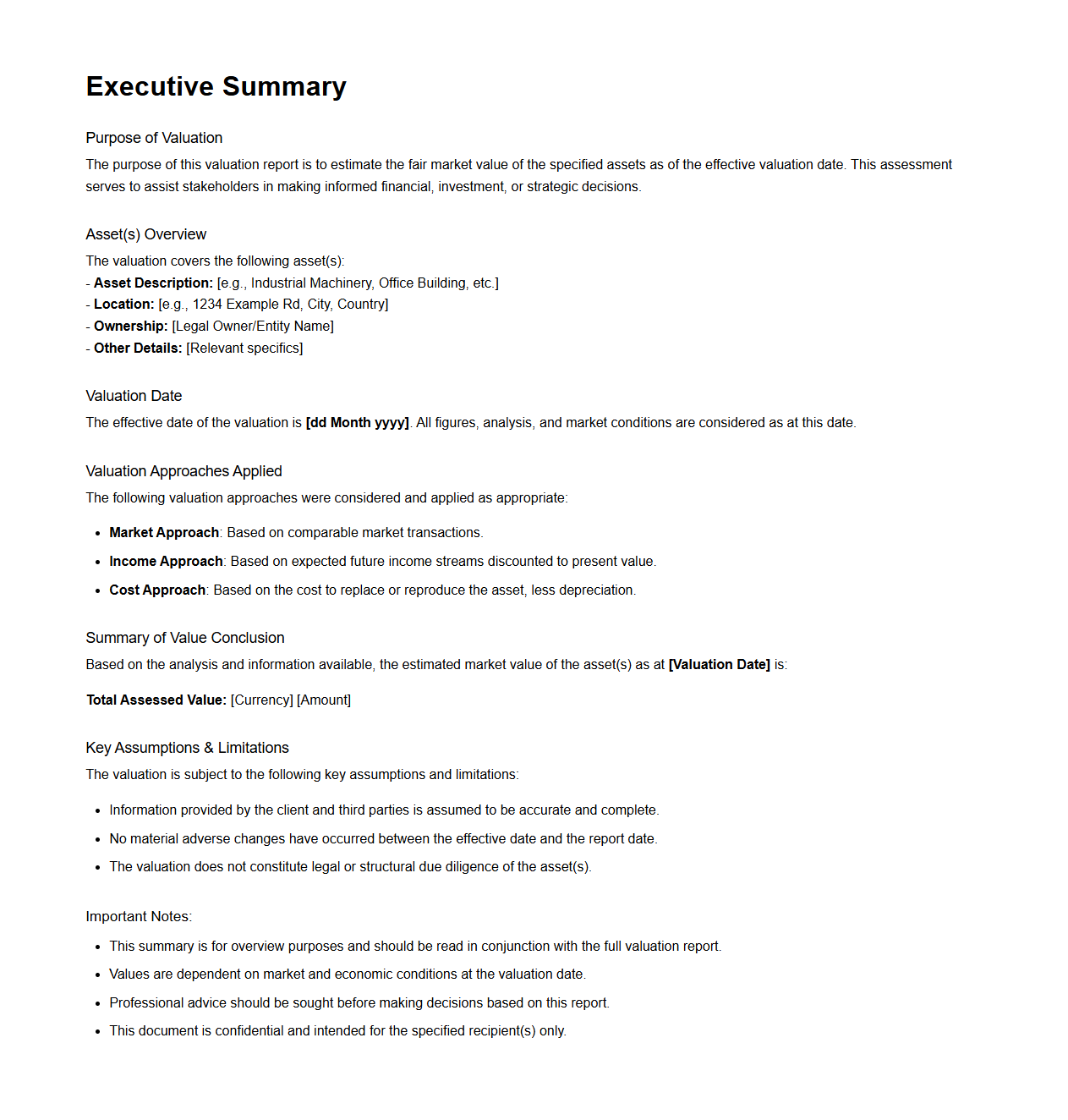
Executive Summary Section Format for Asset Valuation Report
The
Executive Summary Section of an Asset Valuation Report concisely presents the key findings and valuation conclusions, offering a clear snapshot of the asset's market value and appraisal methods used. This section highlights critical financial metrics, valuation approaches such as income, market, or cost methods, and summarizes assumptions or limitations impacting the valuation. It ensures stakeholders quickly grasp the essential insights without delving into detailed analysis, supporting informed decision-making.
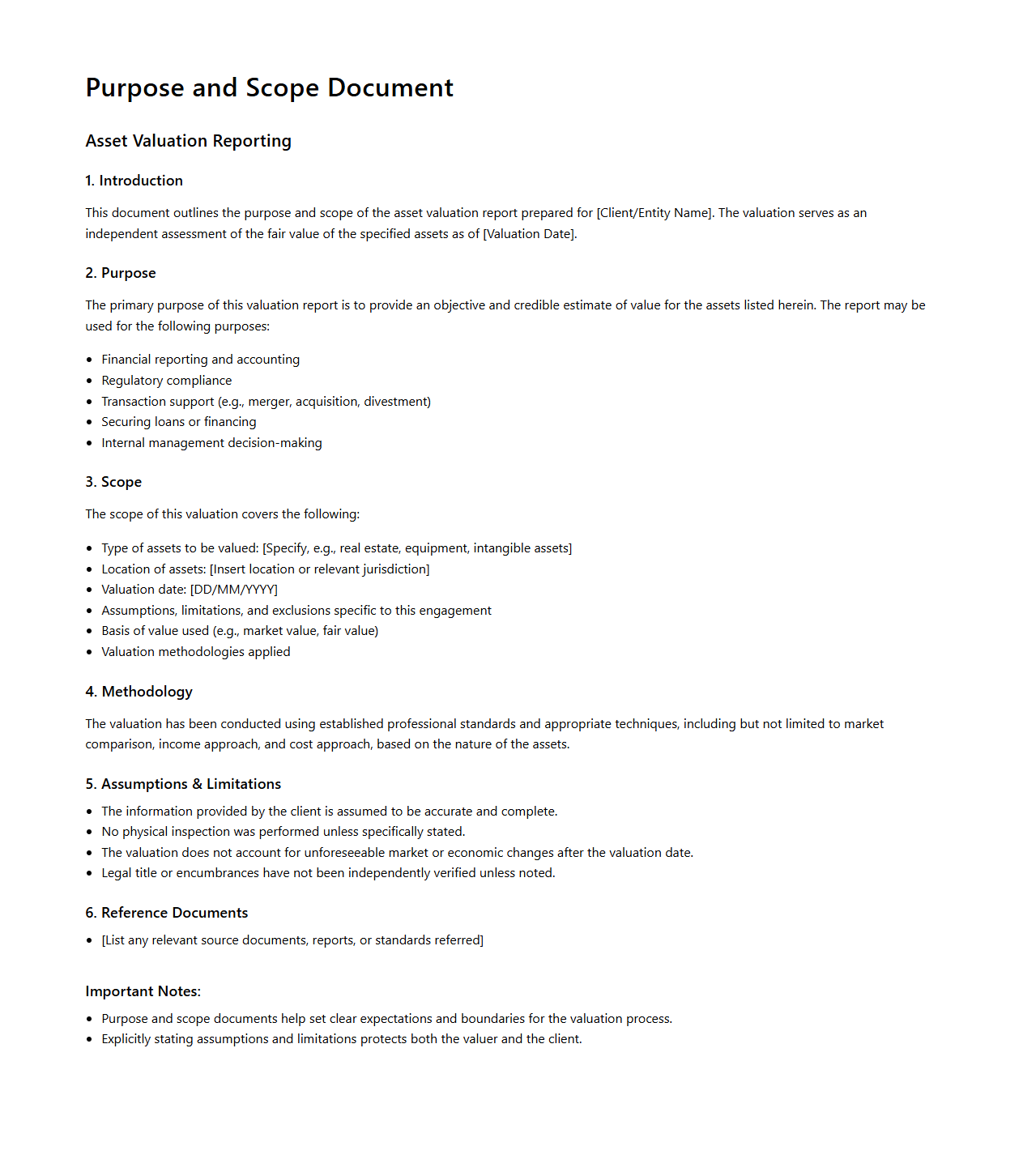
Purpose and Scope Document Format in Asset Valuation Reporting
The
Purpose and Scope Document Format in Asset Valuation Reporting clearly defines the objectives and boundaries of the valuation process, ensuring all stakeholders understand the intent and limitations of the report. It outlines the specific assets being evaluated, valuation methods employed, and any assumptions or constraints applied during the assessment. This structured format enhances transparency, consistency, and reliability in presenting valuation results.
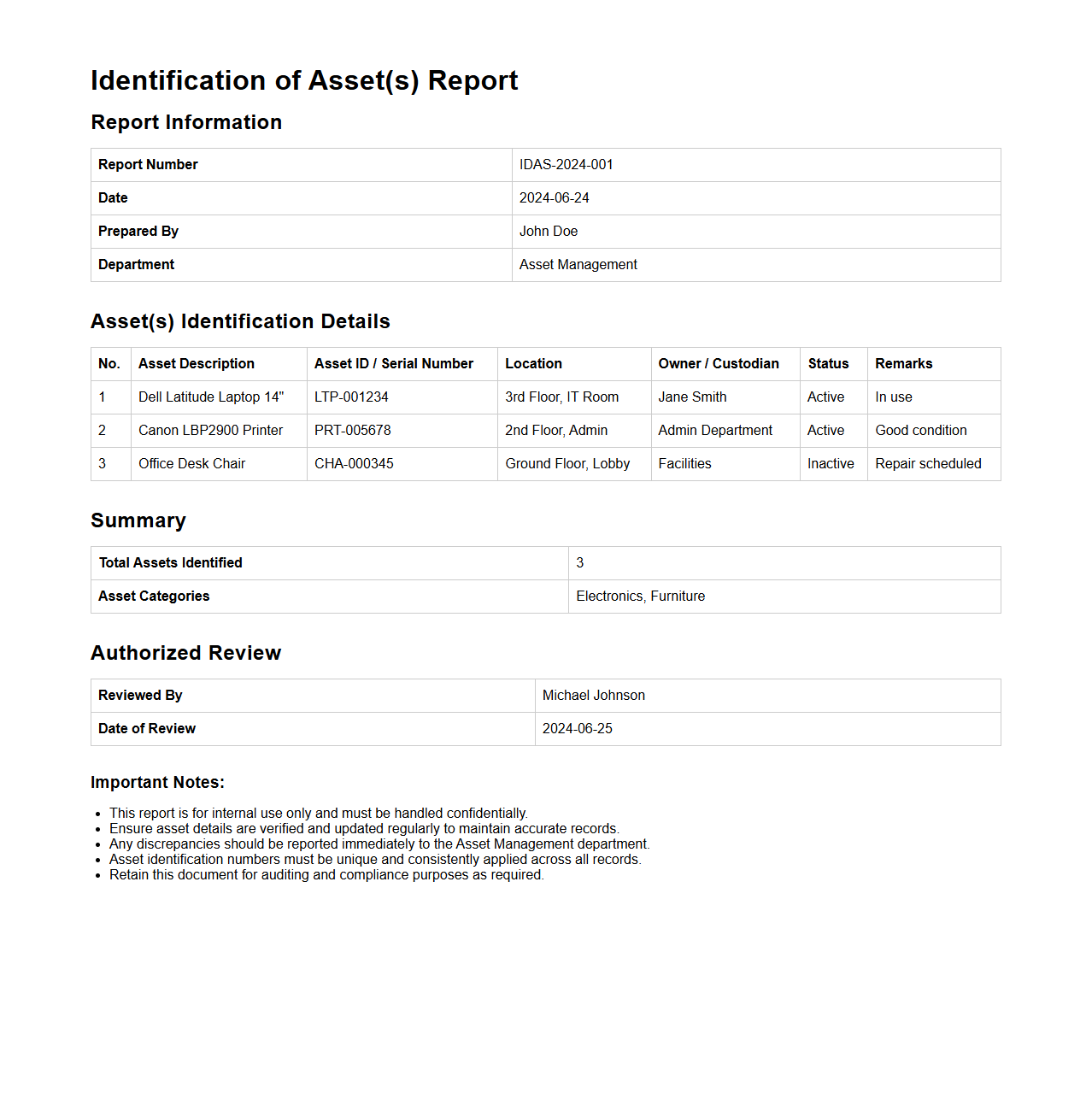
Identification of Asset(s) Report Format
The Identification of Asset(s) Report Format document is a structured template used to systematically record and classify valuable assets within an organization. It includes detailed fields for asset description, unique identification numbers, location, condition, and ownership status, ensuring accurate tracking and management. This document plays a critical role in maintaining an up-to-date
asset registry to support audits, compliance, and financial reporting.
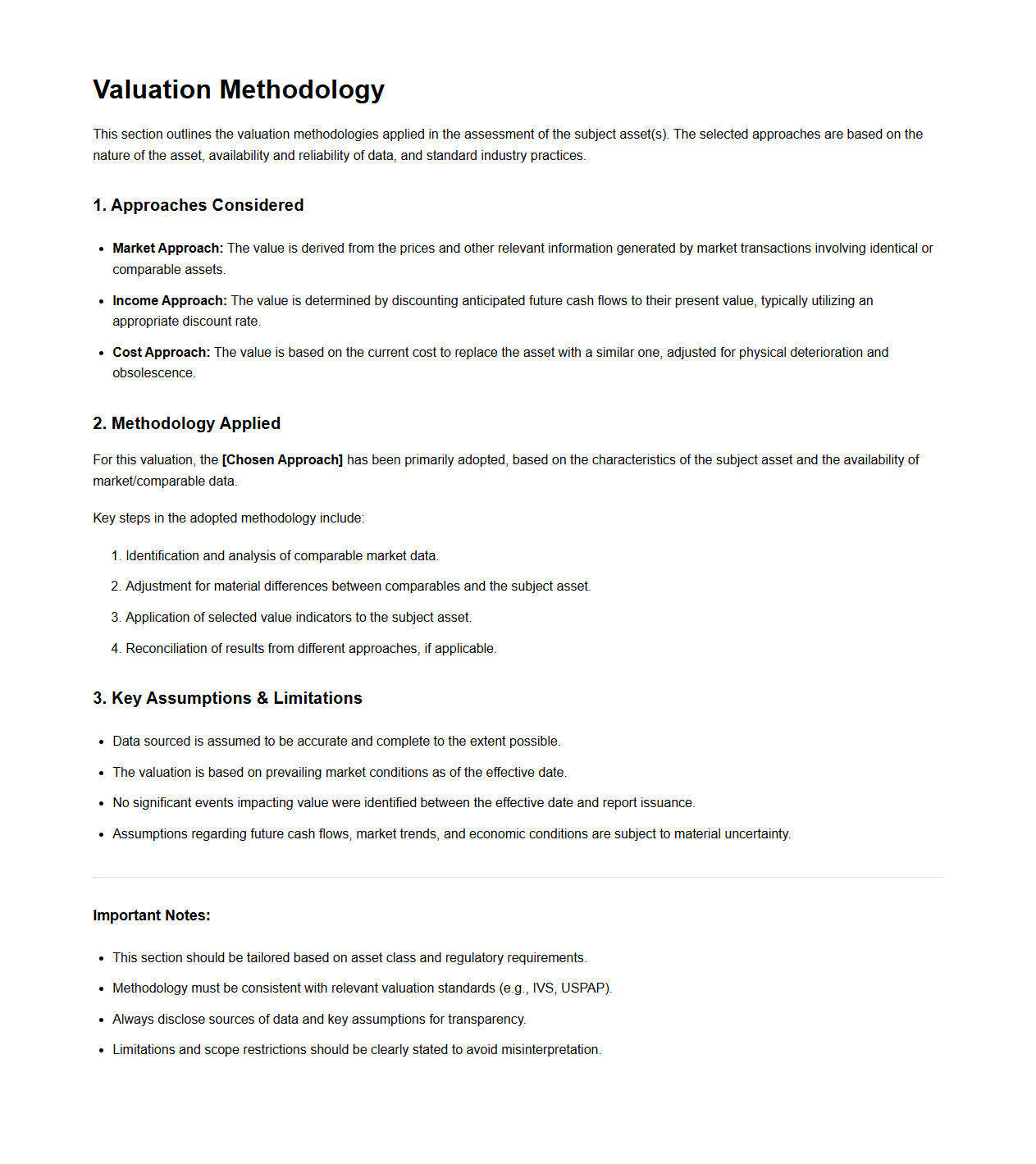
Valuation Methodology Section Format for Reporting
The
Valuation Methodology Section Format for reporting documents outlines a systematic approach for presenting how asset values are determined, ensuring transparency and consistency. It typically includes detailed descriptions of the techniques used, assumptions made, and data sources referenced during the valuation process. This structured format aids stakeholders in understanding the rationale behind asset valuation, enhancing reliability and comparability across reports.
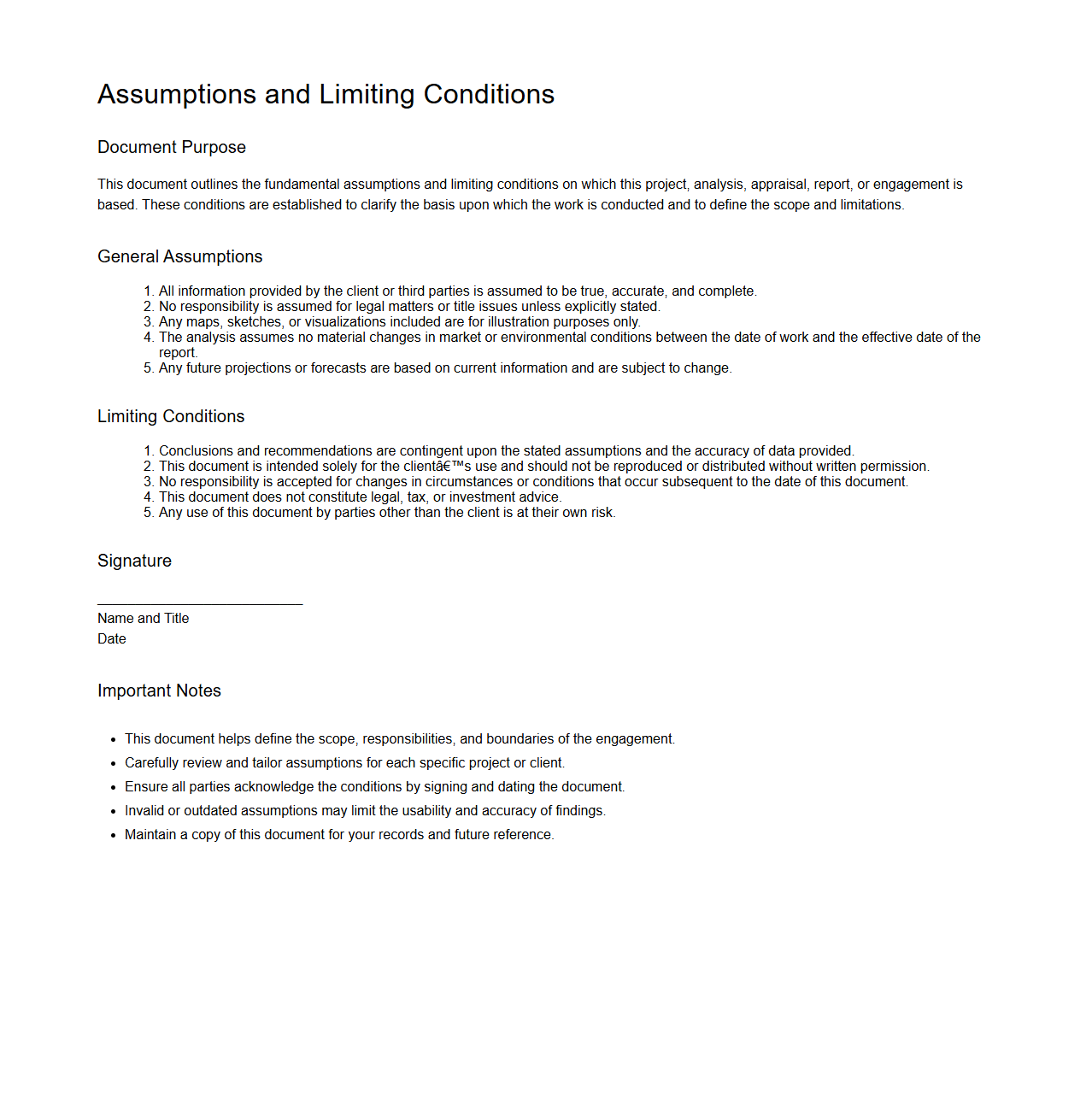
Assumptions and Limiting Conditions Document Template
The
Assumptions and Limiting Conditions Document Template provides a structured format for clearly outlining the key assumptions and constraints associated with a project, analysis, or report. It ensures all stakeholders understand the preconditions that impact decision-making and the boundaries within which conclusions are valid. This document is essential for managing expectations and maintaining transparency throughout project execution or delivery.
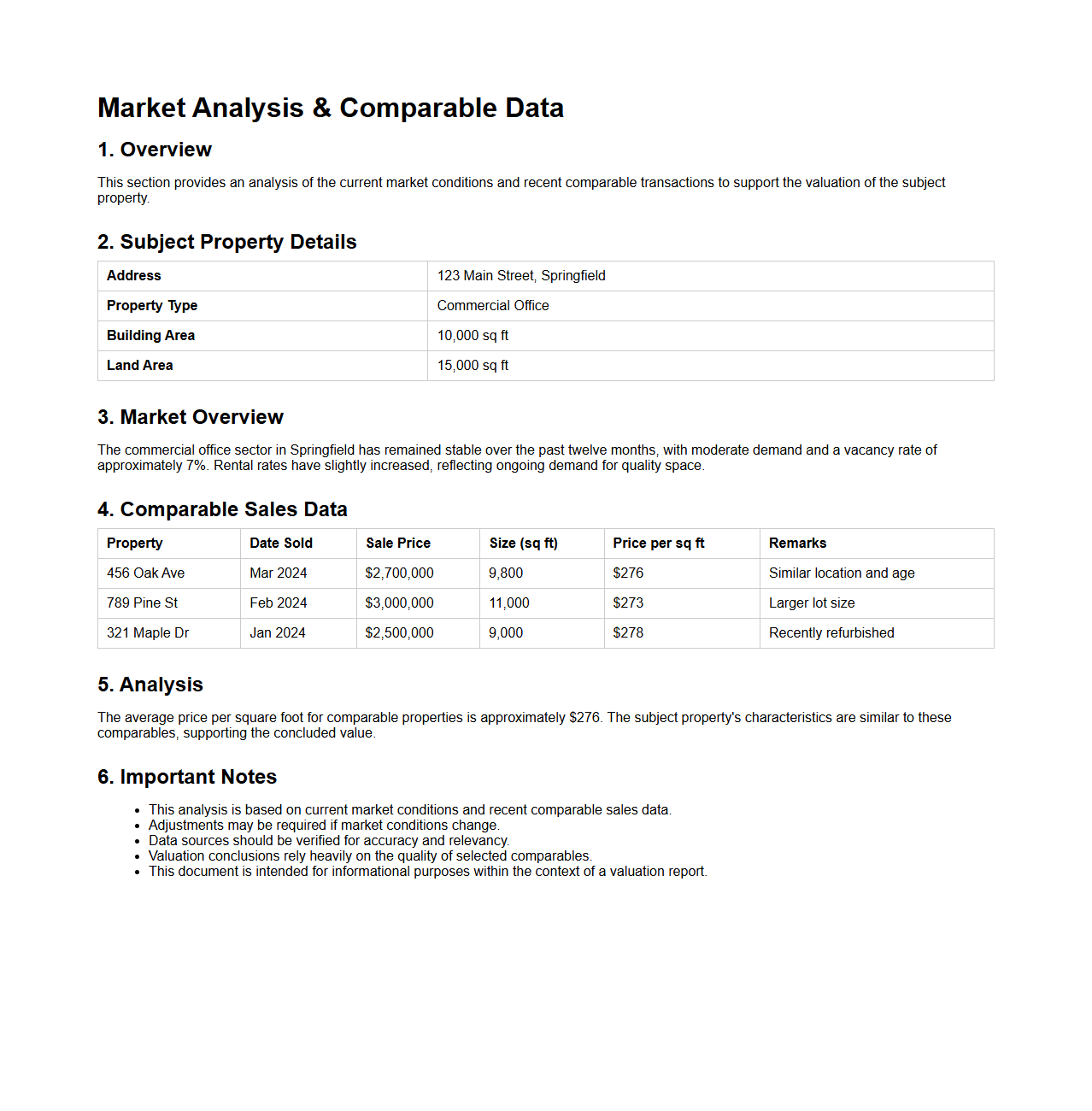
Market Analysis & Comparable Data Format in Valuation Reports
Market Analysis in valuation reports involves examining current market conditions, trends, and factors that influence asset value to provide an accurate and informed estimate. Comparable Data Format refers to the structured presentation of similar asset sales or transactions, highlighting key attributes such as price, location, size, and date to enable reliable comparison. This
combination ensures valuations are supported by relevant market evidence and standardized data for consistency and transparency.
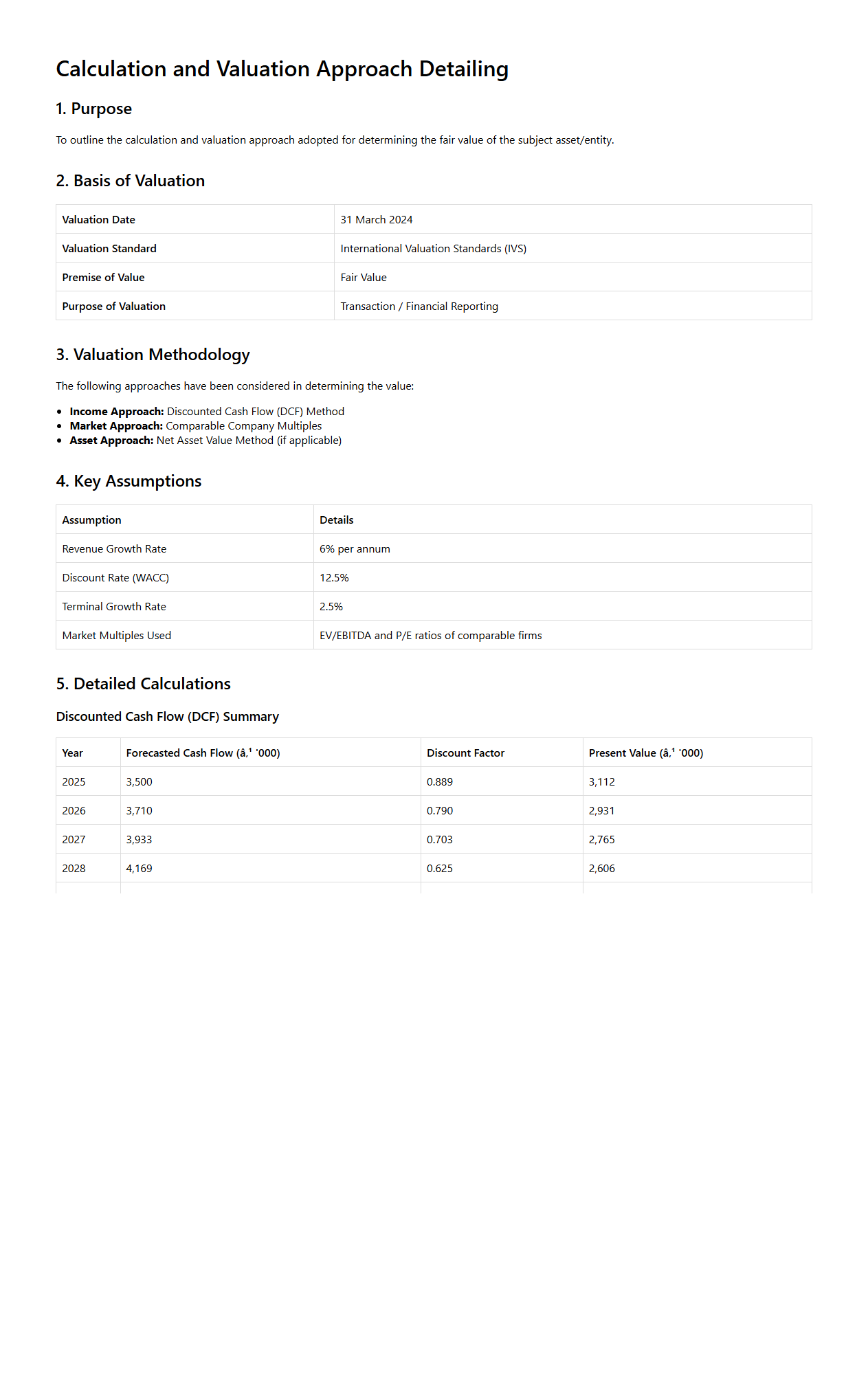
Calculation and Valuation Approach Detailing Format
The
Calculation and Valuation Approach Detailing Format document systematically outlines the methodologies and formulas used for precise financial or asset valuation. It includes comprehensive breakdowns of input parameters, valuation models, and calculation steps to ensure transparency and consistency in the valuation process. This document serves as a critical reference for auditors, analysts, and stakeholders requiring detailed insight into valuation assumptions and computational logic.
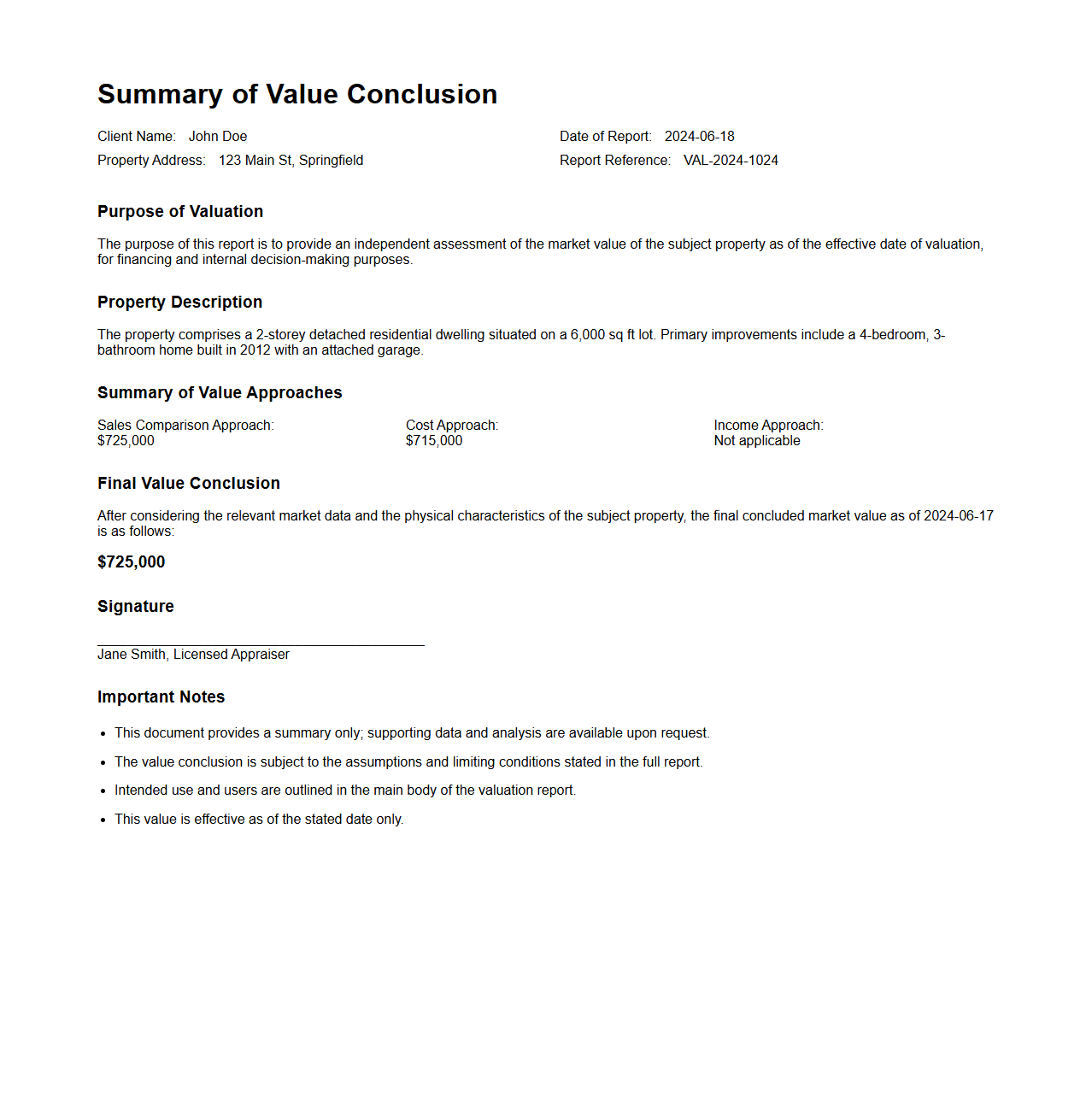
Summary of Value Conclusion Document Layout
The Summary of Value Conclusion Document Layout is a structured format designed to present a clear and concise evaluation of an asset's worth. It includes key components such as the asset description, valuation methods applied, and a final value conclusion supported by relevant evidence. This layout ensures transparency and consistency in presenting the
value conclusion, facilitating better decision-making for stakeholders.
Certification and Signature Page Format
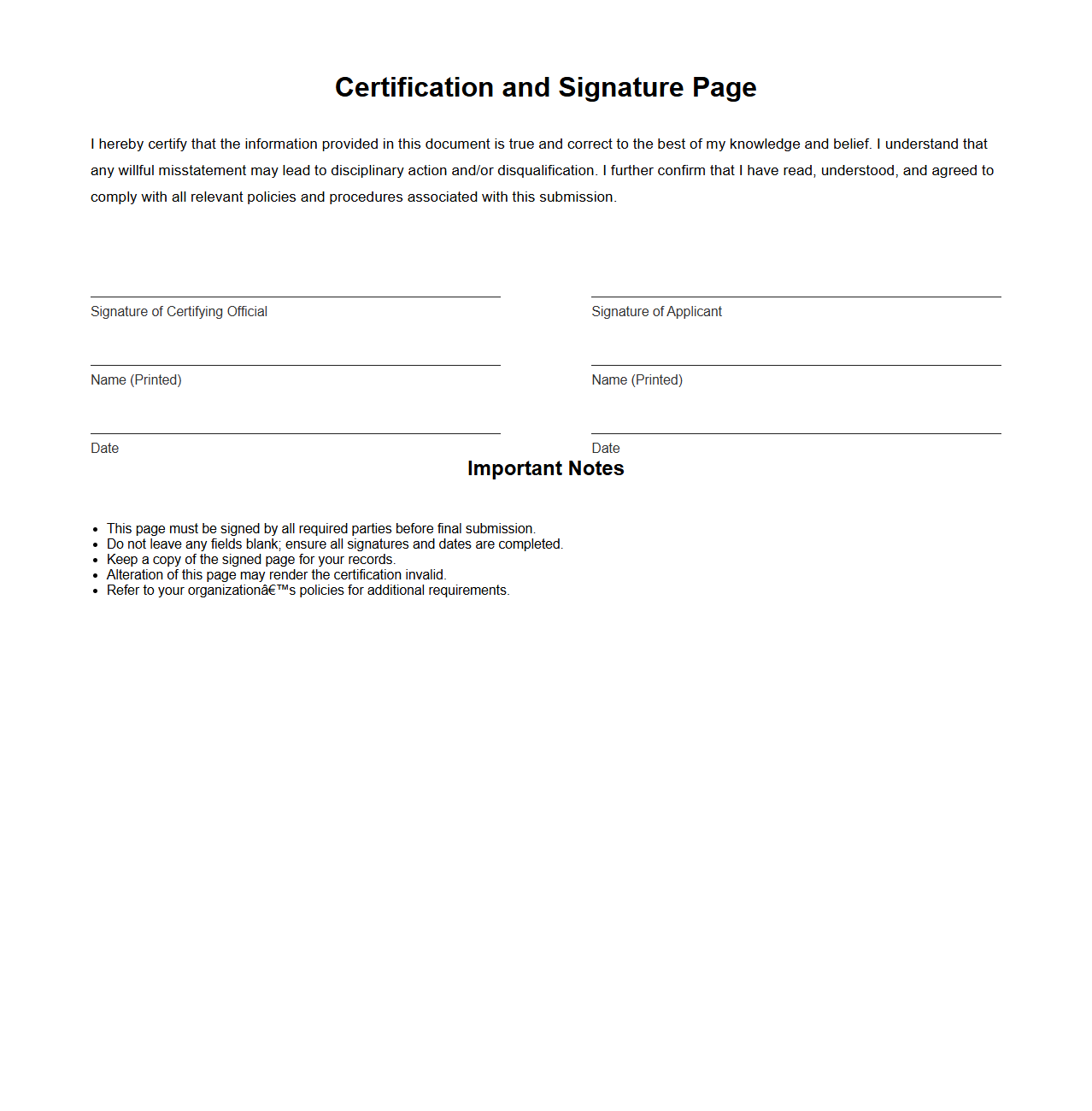
A
Certification and Signature Page Format document serves as formal proof of authenticity and agreement, commonly used in contracts, reports, and official submissions. It typically includes spaces for authorized individuals to provide their signatures, printed names, titles, and dates, ensuring accountability and validation. This format helps organizations maintain legal compliance and document ownership clearly and efficiently.
Appendices and Supporting Documentation Section Format
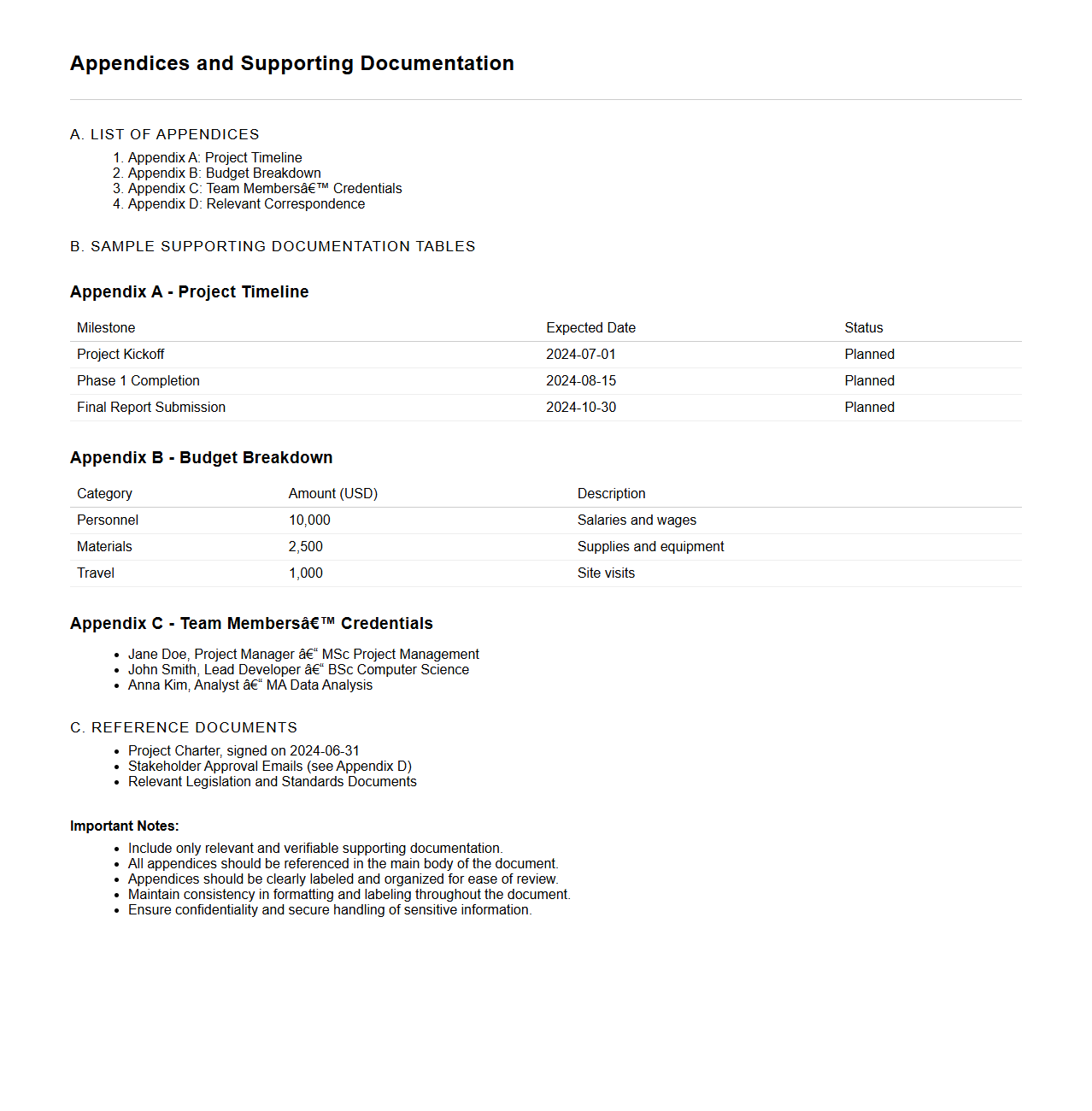
The
Appendices and Supporting Documentation Section Format document outlines the standardized structure for including supplementary materials that enhance the main content of a report or proposal. It specifies the organization, labeling, and presentation style for appendices, ensuring clarity and easy reference for readers. This format helps maintain consistency and improves the overall professionalism of the document.
What are the mandatory components required in the structure of an Asset Valuation Report for financial reporting purposes?
An Asset Valuation Report must include a clear description of the asset being valued along with its identification details. It should also provide the purpose and effective date of the valuation to establish context. Additionally, the report must present the valuation results supported by detailed calculations and relevant market data.
How should the basis of value and valuation methodology be explicitly documented within the report?
The report must clearly state the basis of value, such as fair value, market value, or another recognized basis. It should also describe the detailed valuation methodology employed, including the approaches and techniques used. This documentation ensures transparency and allows users to understand how the valuation conclusions were reached.
What key disclosures must be included to ensure compliance with relevant financial reporting standards (e.g., IFRS, GAAP)?
Compliance requires disclosures of the valuation purpose, the standard or framework followed (e.g., IFRS 13 or ASC 820), and any changes in valuation methods since the last report. Material assumptions and uncertainties impacting the valuation must be disclosed. Furthermore, any significant adjustments or limitations related to the asset's condition or market must be explicitly noted.
How should assumptions, special assumptions, and limiting conditions be formatted and presented in the valuation report?
These must be presented in a dedicated section, clearly labeled and separated from factual data. Use concise language and bullet points or numbered lists to improve readability and highlight critical assumptions. Special assumptions and limiting conditions should be identified distinctly to inform readers of their potential impact on valuation results.
What information regarding the qualifications and independence of the valuer must be documented to meet reporting requirements?
The report must include the valuer's credentials, such as professional designations, experience, and training relevant to the asset type. Independence statements must affirm that the valuer has no conflicts of interest affecting objectivity. Additionally, any affiliations or relationships that might influence the valuation must be transparently disclosed.