The format of Income Tax Return for salaried individuals typically includes personal details, salary income, deductions under various sections, and tax computation. It requires filling out specific forms such as ITR-1 (Sahaj), designed for individuals with income from salary, one house property, and other sources. Accurate submission of this format ensures compliance with tax laws and proper reflection of taxable income.
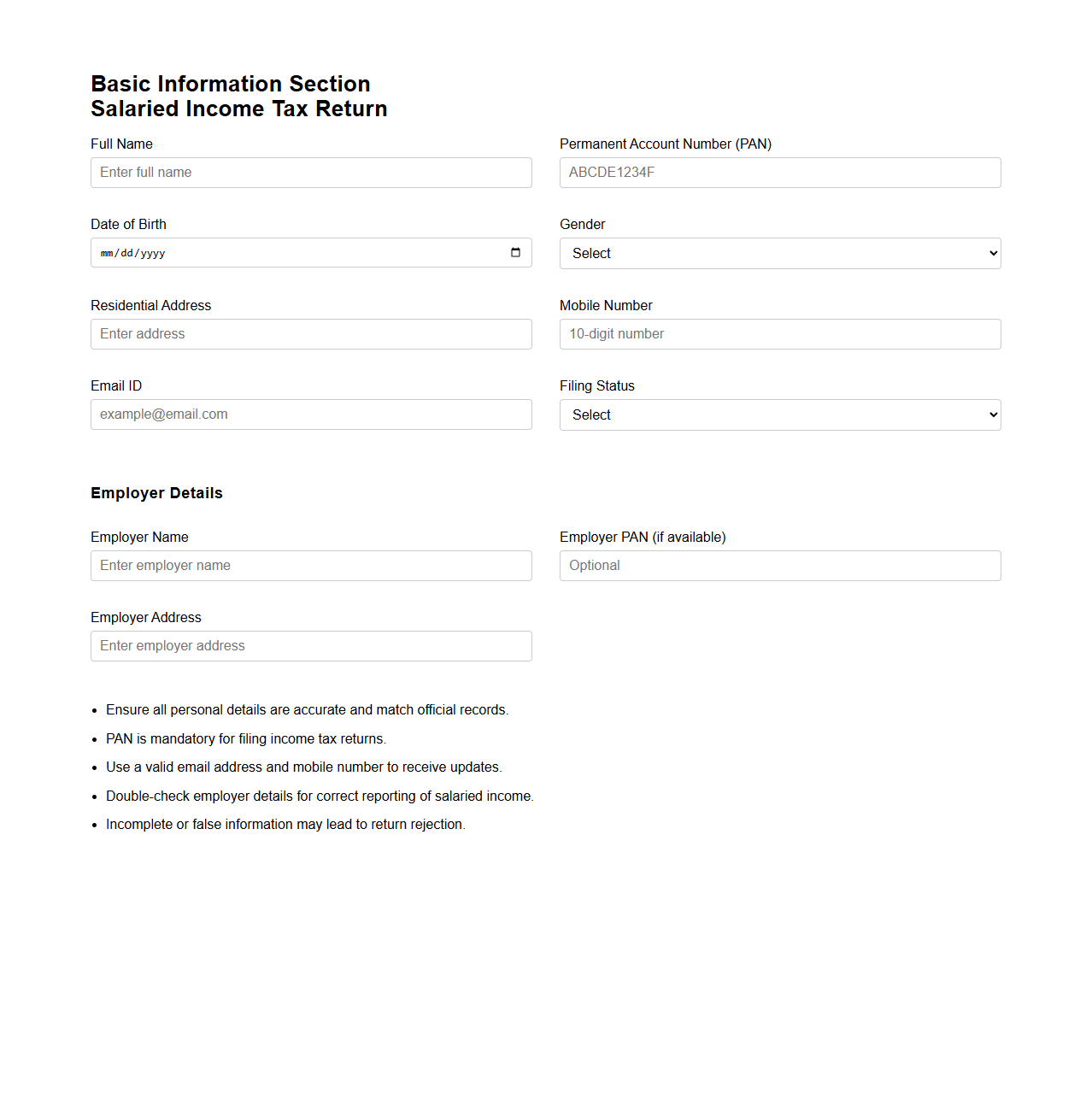
Basic Information Section Format for Salaried Income Tax Return
The
Basic Information Section Format for Salaried Income Tax Return documents typically includes essential personal and employment details such as the taxpayer's full name, PAN (Permanent Account Number), date of birth, employer's name, and address. It also captures critical financial data like total salary income, deductions under various sections, and tax paid or deducted at source (TDS). Accurate completion of this section ensures proper identification and smooth processing of the tax return by the income tax department.
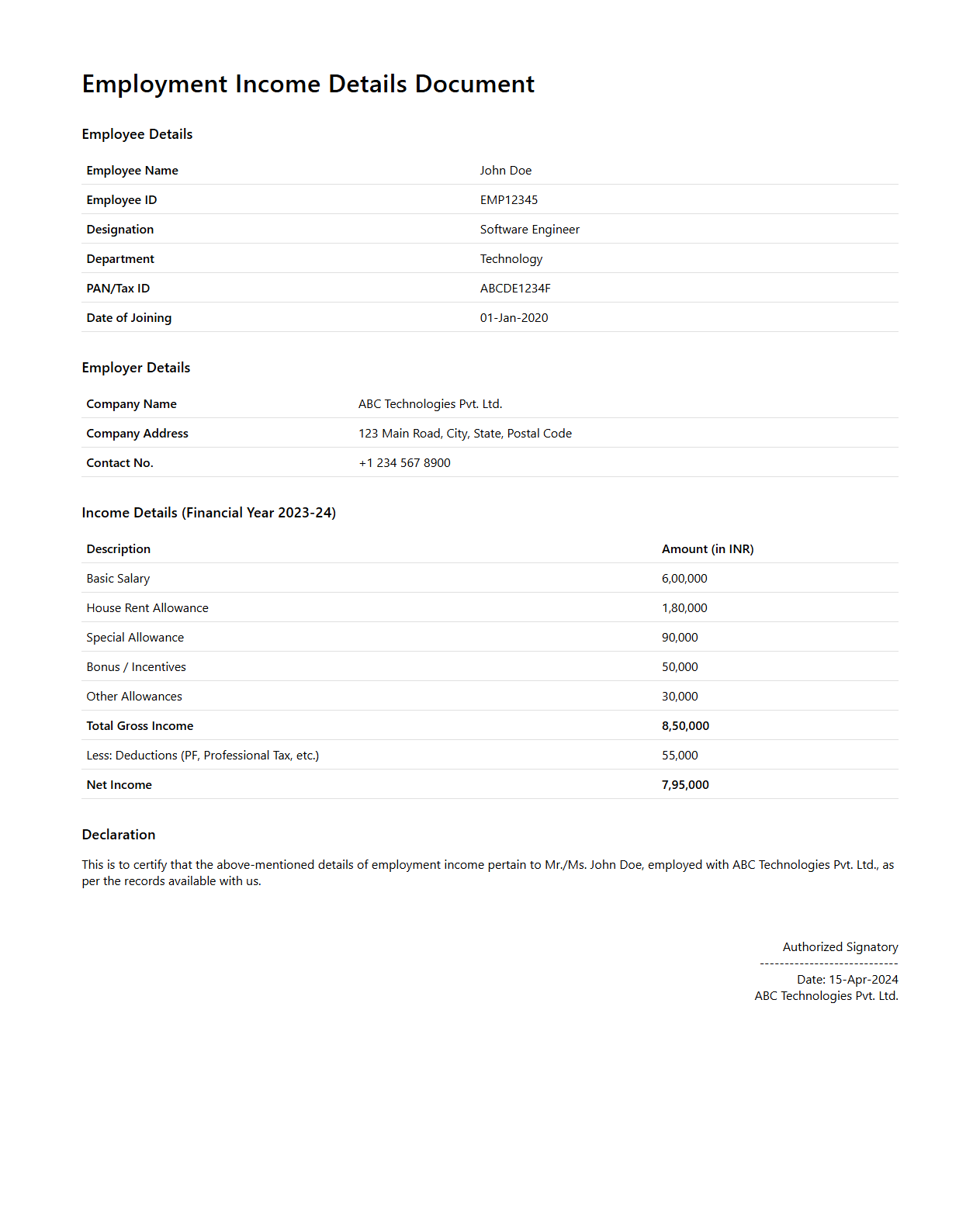
Employment Income Details Document Format for Salary Earners
Employment Income Details Document Format for Salary Earners is a structured template designed to capture essential financial information related to an employee's salary, including basic pay, allowances, deductions, and net income. This document is crucial for accurate salary processing, tax calculations, and compliance with labor regulations. The
Employment Income Details Document ensures transparency and consistency in recording earnings, facilitating payroll management for employers and verification for employees.
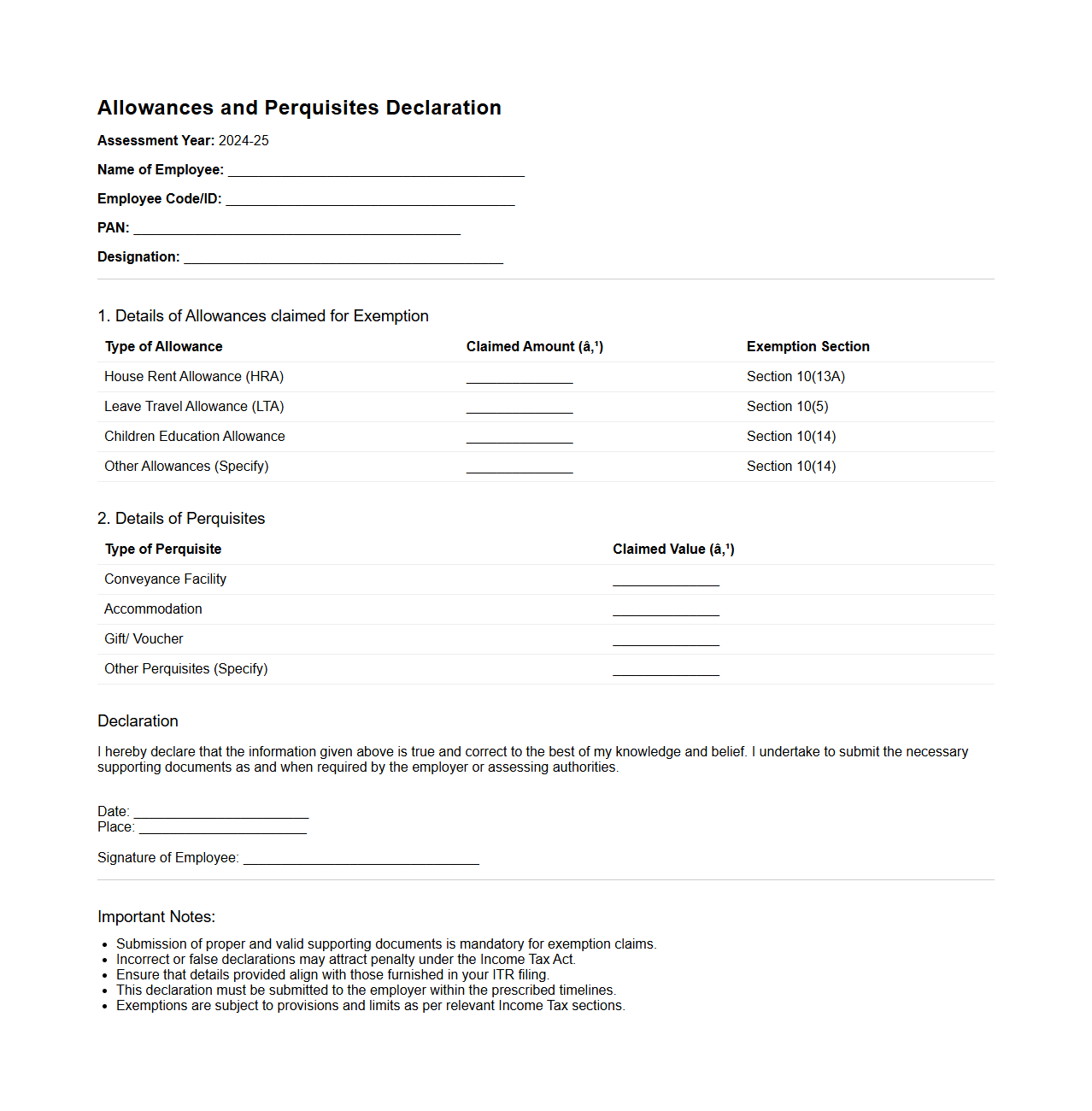
Allowances and Perquisites Declaration Format under ITR
The
Allowances and Perquisites Declaration Format under the Income Tax Return (ITR) document is a structured template used by employees to disclose detailed information about various allowances and perquisites received from their employer. This declaration helps in accurately calculating taxable income by categorizing components such as house rent allowance, travel allowance, and other fringe benefits, ensuring compliance with tax laws. It facilitates transparency and aids tax authorities in verifying the correct tax treatment of these monetary and non-monetary benefits.
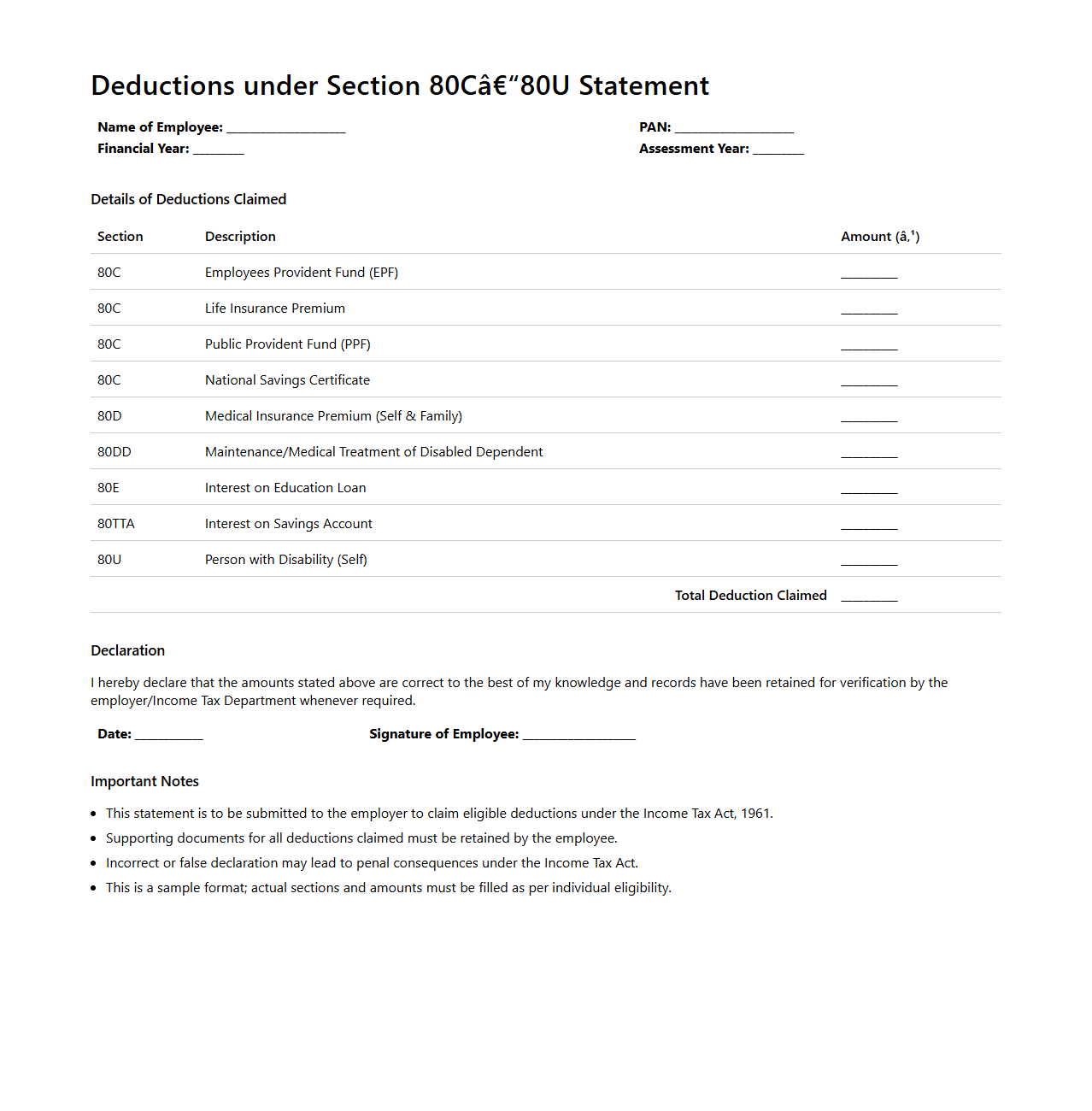
Deductions under Section 80C-80U Statement Format
The
Deductions under Section 80C-80U Statement Format document outlines the specific format for declaring various tax-saving investments and payments eligible under Sections 80C to 80U of the Income Tax Act. It includes details such as the type of deduction, amount claimed, and supporting evidence required for validation. This standardized format facilitates accurate reporting and efficient processing of tax deductions by employers or tax authorities.
Tax Paid and TDS Certificate Attachment Format
A
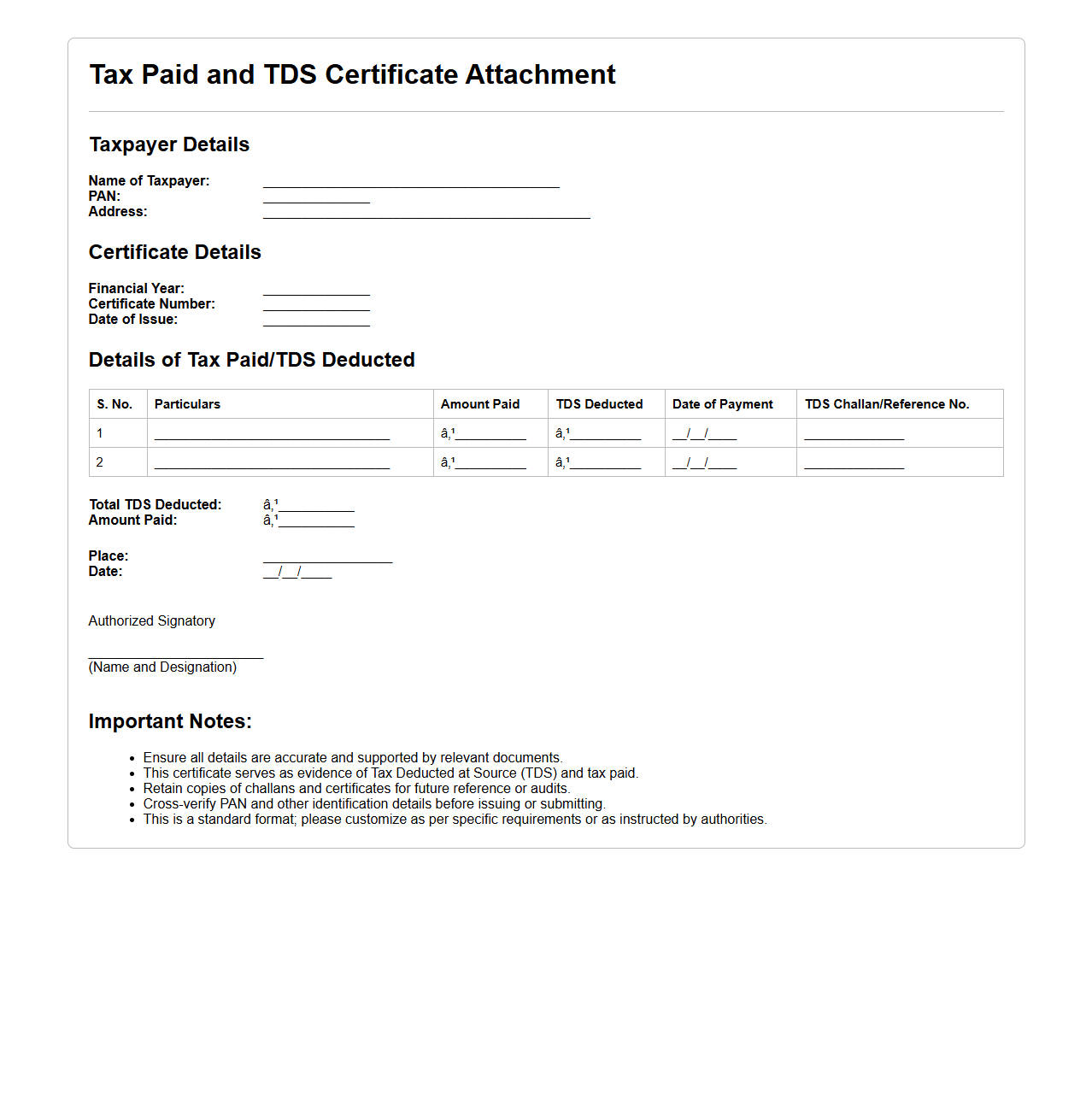
Tax Paid and TDS Certificate Attachment Format document serves as a standardized template for submitting proof of tax payments and Tax Deducted at Source (TDS) certificates. This format ensures proper documentation and verification of taxes deducted and paid, facilitating compliance with regulatory requirements. It typically includes details like the deductor's information, TDS amount, and payment date, helping both deductors and deductees maintain accurate financial records.
House Property Income Disclosure Format for Salaried Individuals
The
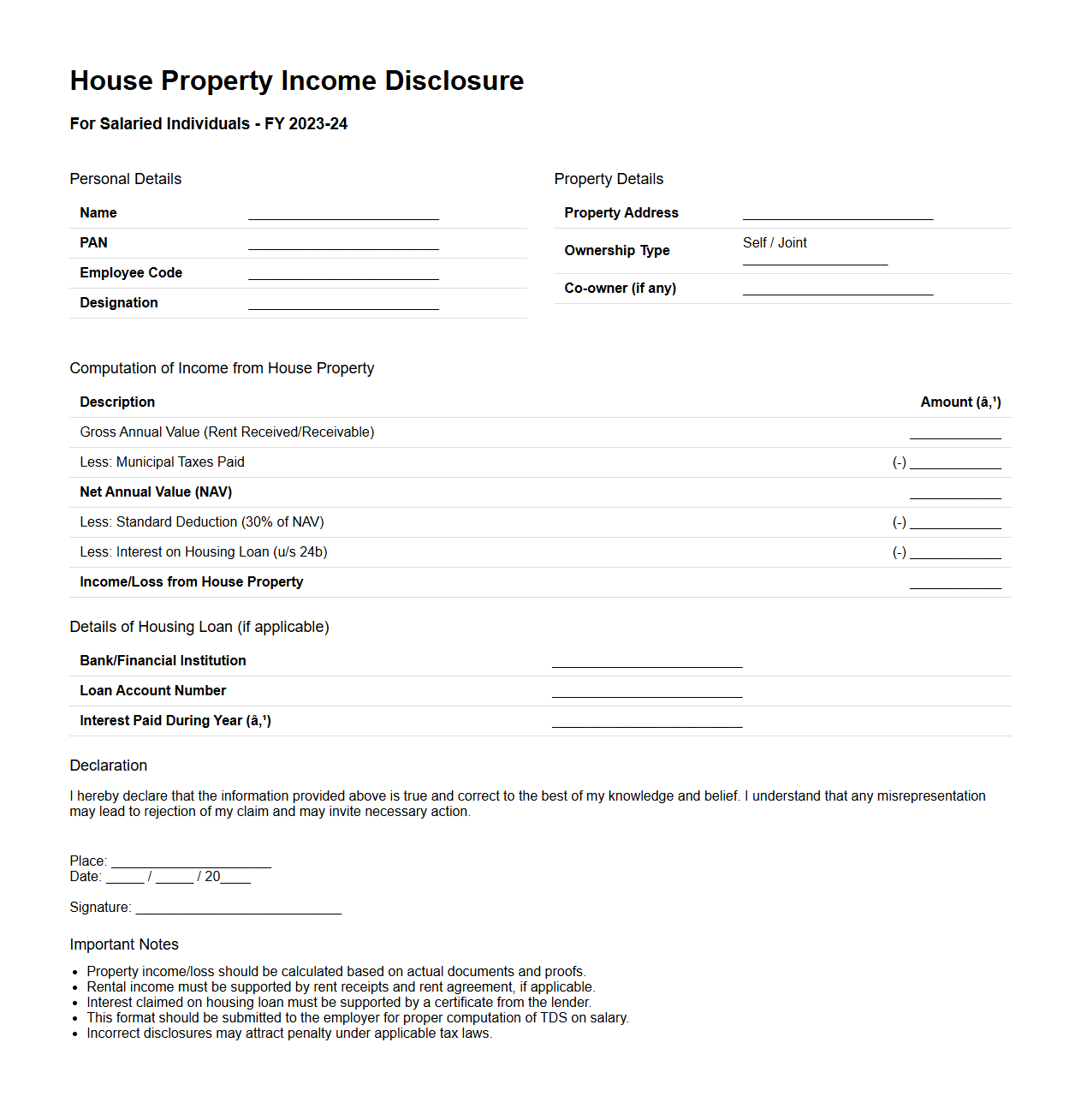
House Property Income Disclosure Format for salaried individuals is a standardized document used to report income earned from house property in tax filings. This format captures essential details such as rental income, municipal taxes paid, and interest on borrowed capital, ensuring accurate calculation of taxable income from property. It helps salaried taxpayers comply with income tax regulations by providing a clear summary of house property income and related deductions.
Other Sources of Income Statement Format
The
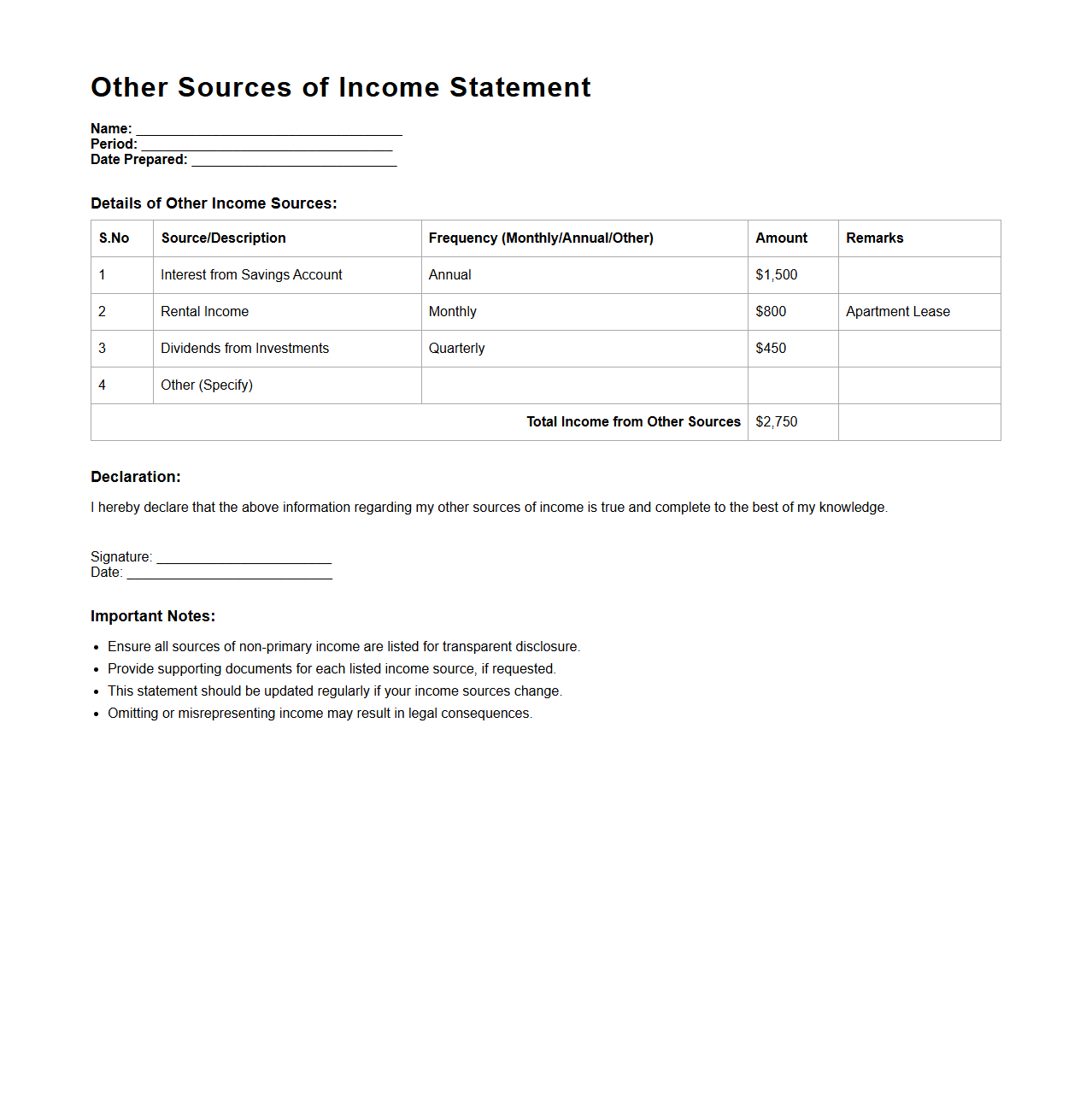
Other Sources of Income Statement Format document outlines the presentation of income generated from activities outside a company's main operations, such as interest, dividends, or rental income. This format typically appears in the income statement under non-operating income sections, providing clarity on additional revenue streams. Proper categorization ensures accurate financial analysis and helps stakeholders assess overall profitability beyond core business functions.
Exempt Income Reporting Format in Salary ITR
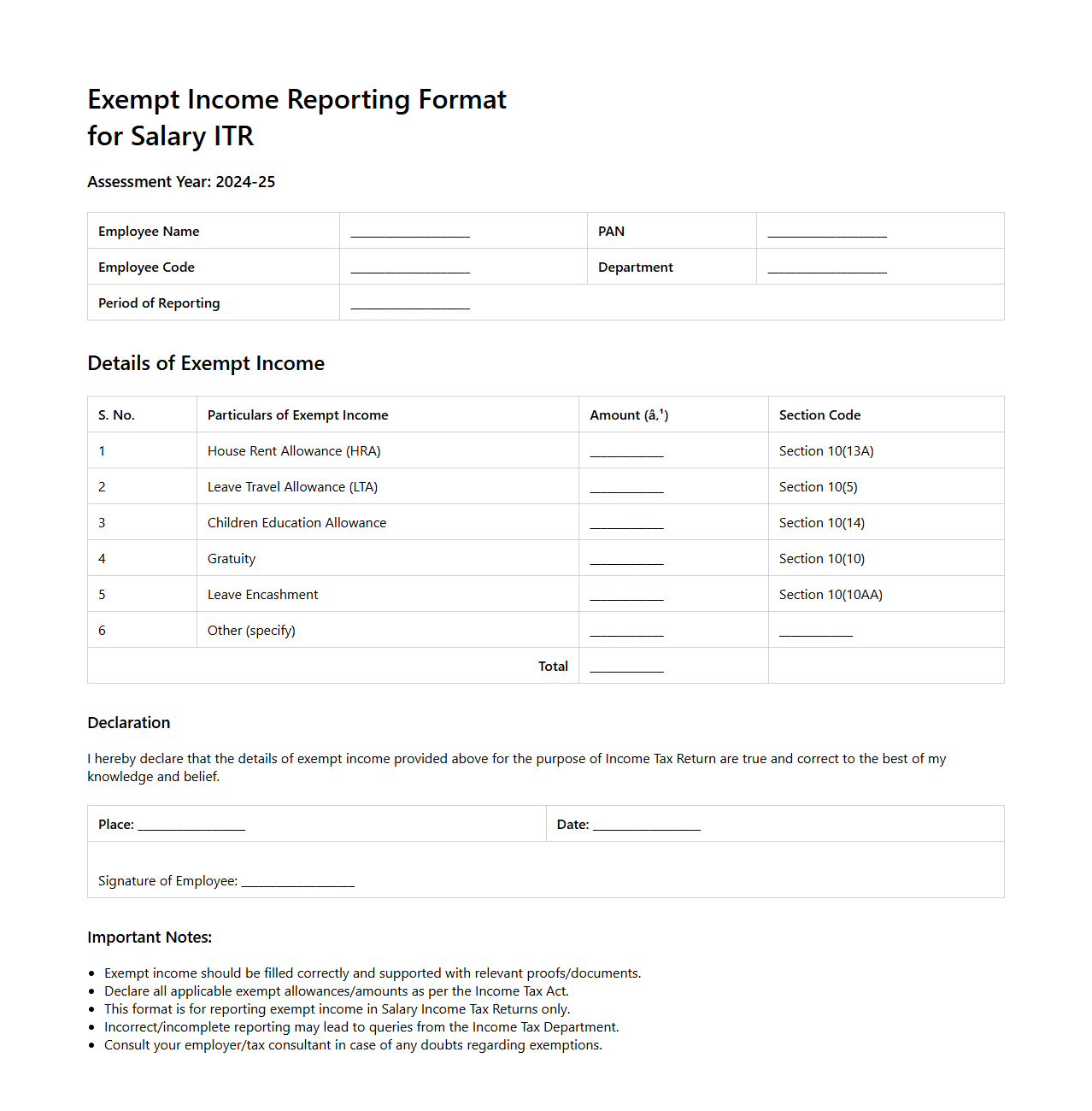
Exempt Income Reporting Format in Salary ITR documents refers to the structured method used to disclose income that is not taxable under the Income Tax Act, such as agricultural income, certain allowances, and specified reliefs. This format ensures clear segregation of
exempt income from taxable salary components, facilitating accurate tax assessment and compliance. Proper reporting helps prevent discrepancies during tax scrutiny and ensures transparency in salary income declarations.
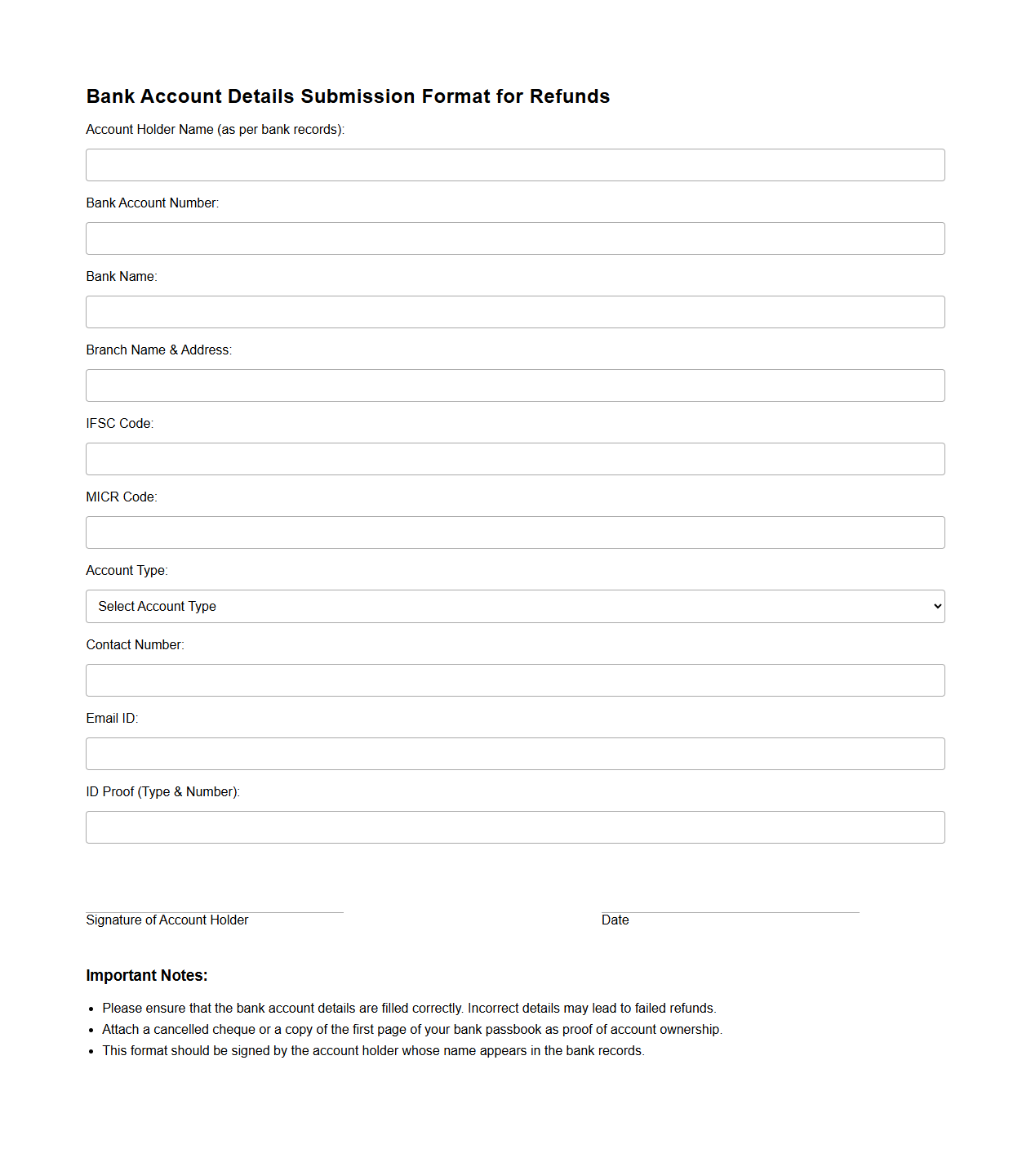
Bank Account Details Submission Format for Refunds
The
Bank Account Details Submission Format for Refunds document specifies the exact structure and information required to process refund payments efficiently. It typically includes fields for the account holder's name, bank name, account number, IFSC or SWIFT code, and branch details to ensure accurate fund transfer. Adhering to this format minimizes errors and accelerates the refund disbursement process.
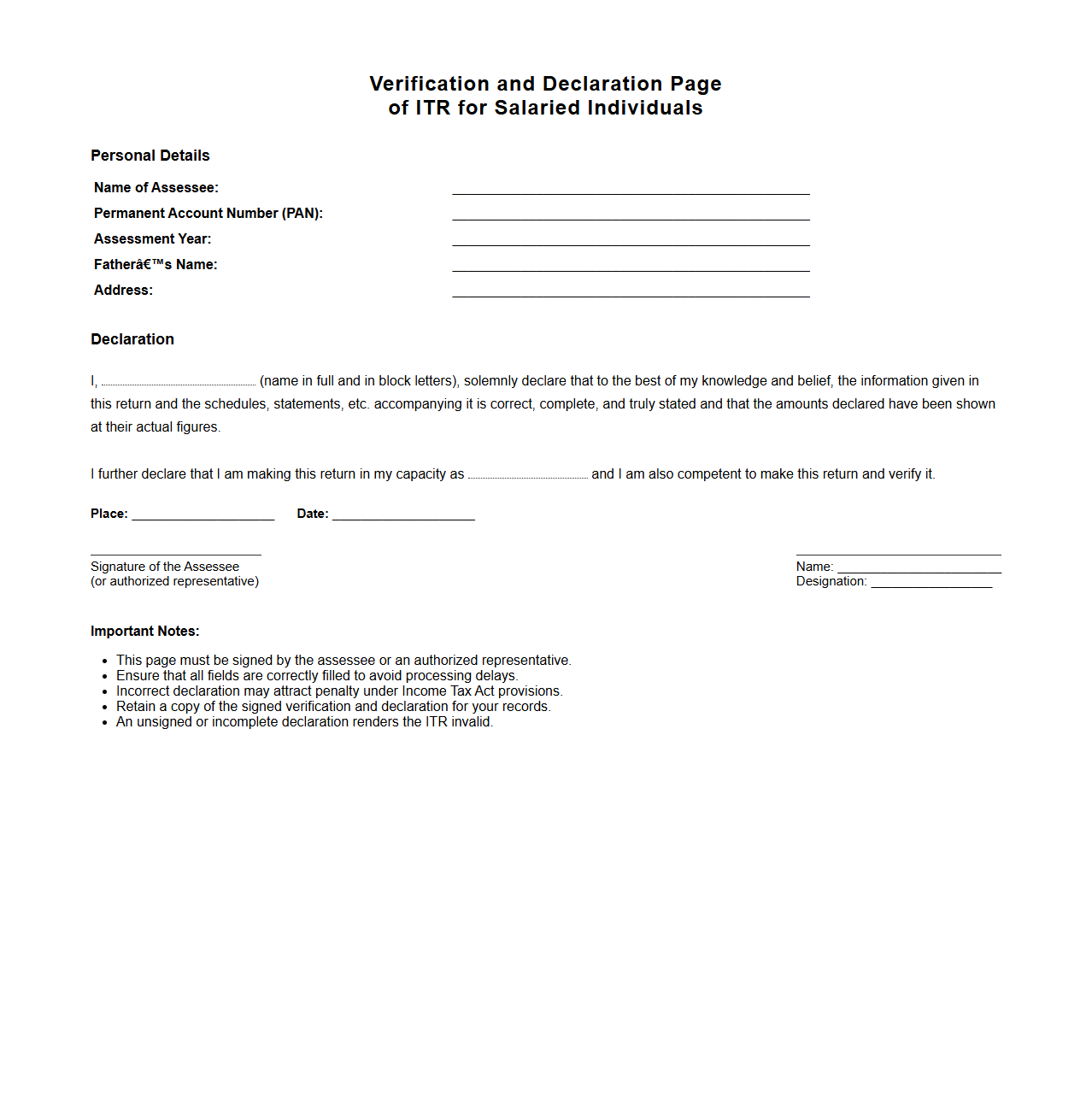
Verification and Declaration Page Format in ITR for Salaried
The
Verification and Declaration Page Format in the Income Tax Return (ITR) for salaried individuals is a crucial section where the taxpayer confirms the accuracy of the information provided in the return. This page requires the taxpayer's signature, date, and declaration affirming that the details furnished are true to the best of their knowledge. It serves as a formal attestation, ensuring legal accountability and compliance with tax regulations.
Prescribed Header Format for Salaried Individual Income Tax Return Letters
The header of the income tax return letter for salaried individuals must clearly state the individual's full name and PAN number at the top. It should also include the assessment year and the type of return being filed. This ensures that the letter is identifiable and traceable by tax authorities.
Itemizing Salary Details in Supporting Documents Section
Salary details in the supporting documents must be itemized with clarity, including basic salary, allowances, bonuses, and other components. Each element should be supported by corresponding salary slips or Form 16 excerpts to validate the figures. Proper itemization aids in transparent disclosure and seamless verification during assessments.
Specific Wording to Declare Exemptions and Deductions
The letter should include a clear declaration of claimed exemptions and deductions, such as House Rent Allowance, Standard Deduction, and Section 80C investments. Phrases like "I claim exemption under Section 10" or "Deductions as per Section 80C amounting to..." are essential. Such wording ensures precise communication of tax benefits availed.
Annexures to Reference in Cover Letter for Salaried Income Tax Filings
The cover letter must reference annexures such as Form 16, Salary Slips, and Investment Proofs. Additional annexures might include a detailed breakup of allowances or rent receipts for HRA claims. Citing these documents ensures comprehensive submission and supports the integrity of the filing.
Signature and Verification Requirements Unique to Salaried Income Tax Return Letters
Salaried individuals must sign the return letter with a handwritten signature or use an authorized digital signature if filing electronically. The letter should include a verification statement affirming the correctness of the information submitted. These requirements authenticate the return and comply with tax department norms.