A Format of Statement for Court Submission typically includes the title of the case, the full name and designation of the person submitting the statement, followed by a clear and concise narration of facts relevant to the case. It should be structured in numbered paragraphs for easy reference and conclude with the date, place, and signature of the deponent. Proper formatting ensures the court can quickly comprehend the facts and evidence presented.
Affidavit Format for Court Submission
An
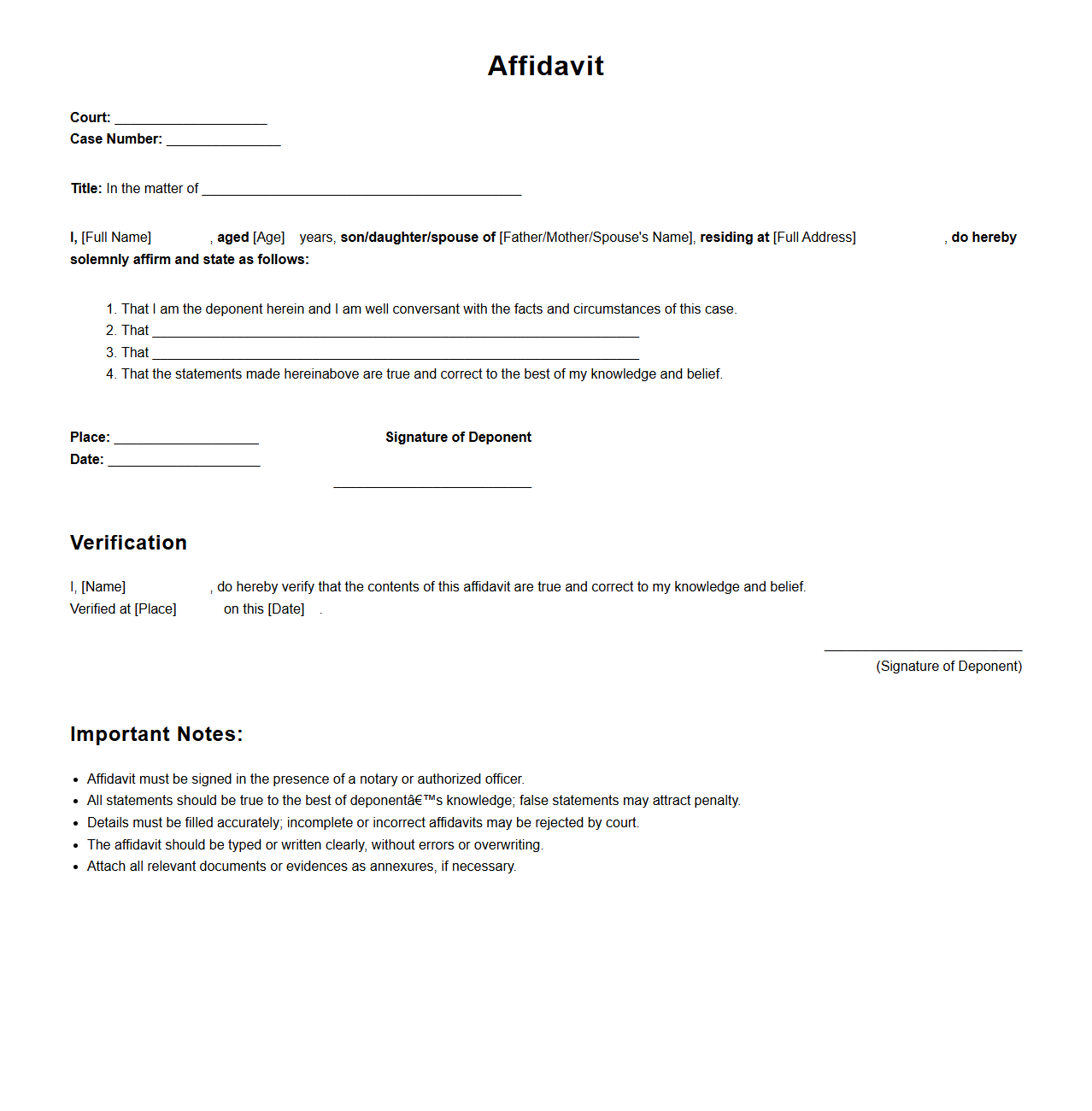
affidavit format for court submission is a structured legal document that presents sworn statements or evidence by the affiant, used to support motions, pleadings, or other court procedures. This format typically includes the affiant's personal information, a detailed account of facts, and a declaration of truth, all signed and notarized to ensure authenticity. Courts rely on this standardized format to evaluate evidence efficiently and uphold the integrity of the judicial process.
Witness Statement Format for Court Use
A
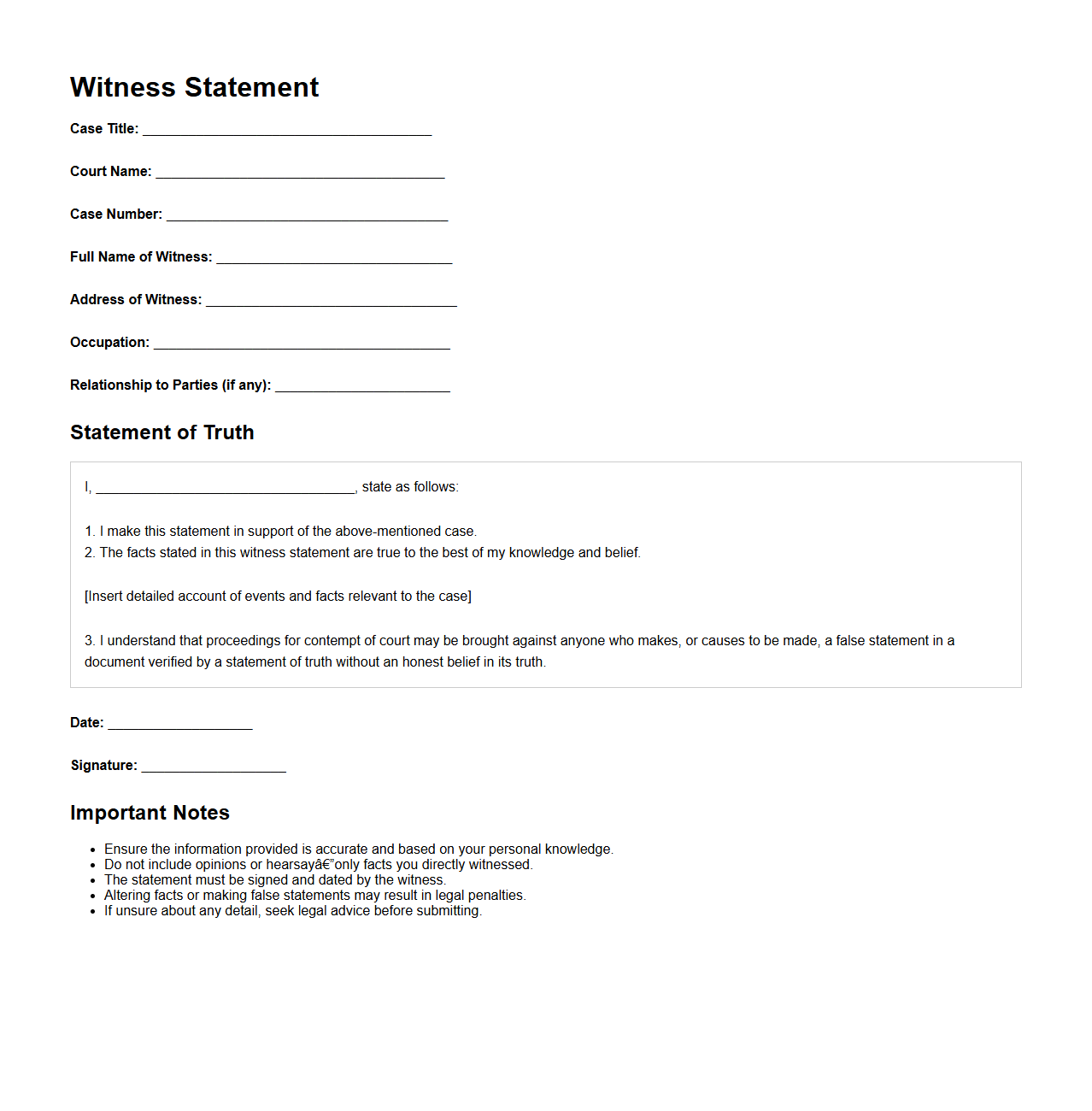
Witness Statement Format for Court Use document is a structured template designed to capture a witness's detailed account of an event relevant to legal proceedings. It ensures that all essential information such as personal details, the sequence of events, and the witness's observations are clearly presented and organized for review by judges and attorneys. This format aids in maintaining consistency, clarity, and legal validity within court records.
Plaintiff’s Statement Format for Legal Proceedings
The
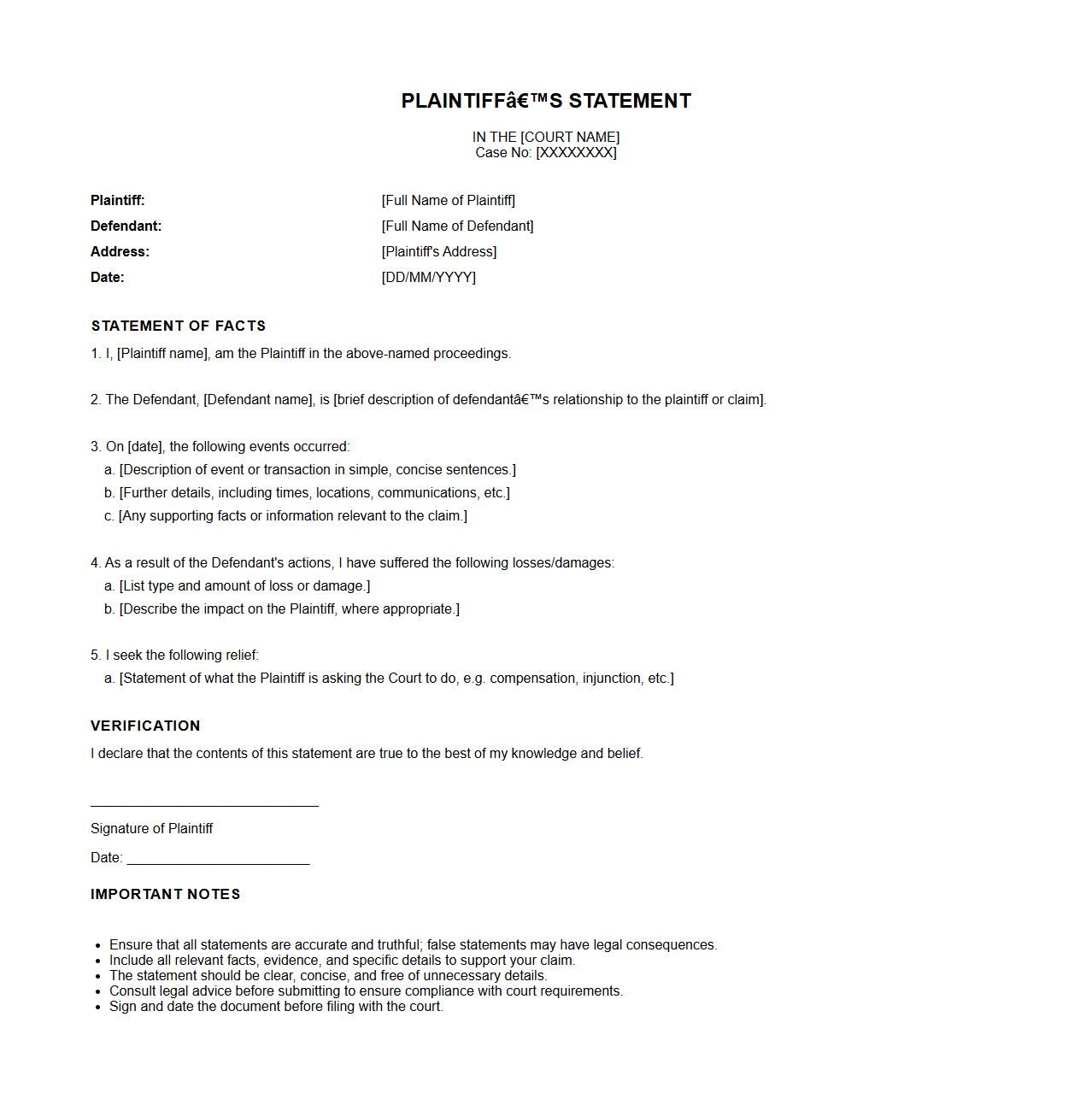
Plaintiff's Statement Format for Legal Proceedings document outlines a structured template for plaintiffs to present their claims clearly and effectively in court. It includes sections for factual background, legal grounds, and specific relief sought, ensuring compliance with procedural rules and enhancing the readability for judges. Proper formatting supports the precise communication of issues, aiding in the efficient resolution of disputes.
Defendant’s Statement Format for Court Filing
A
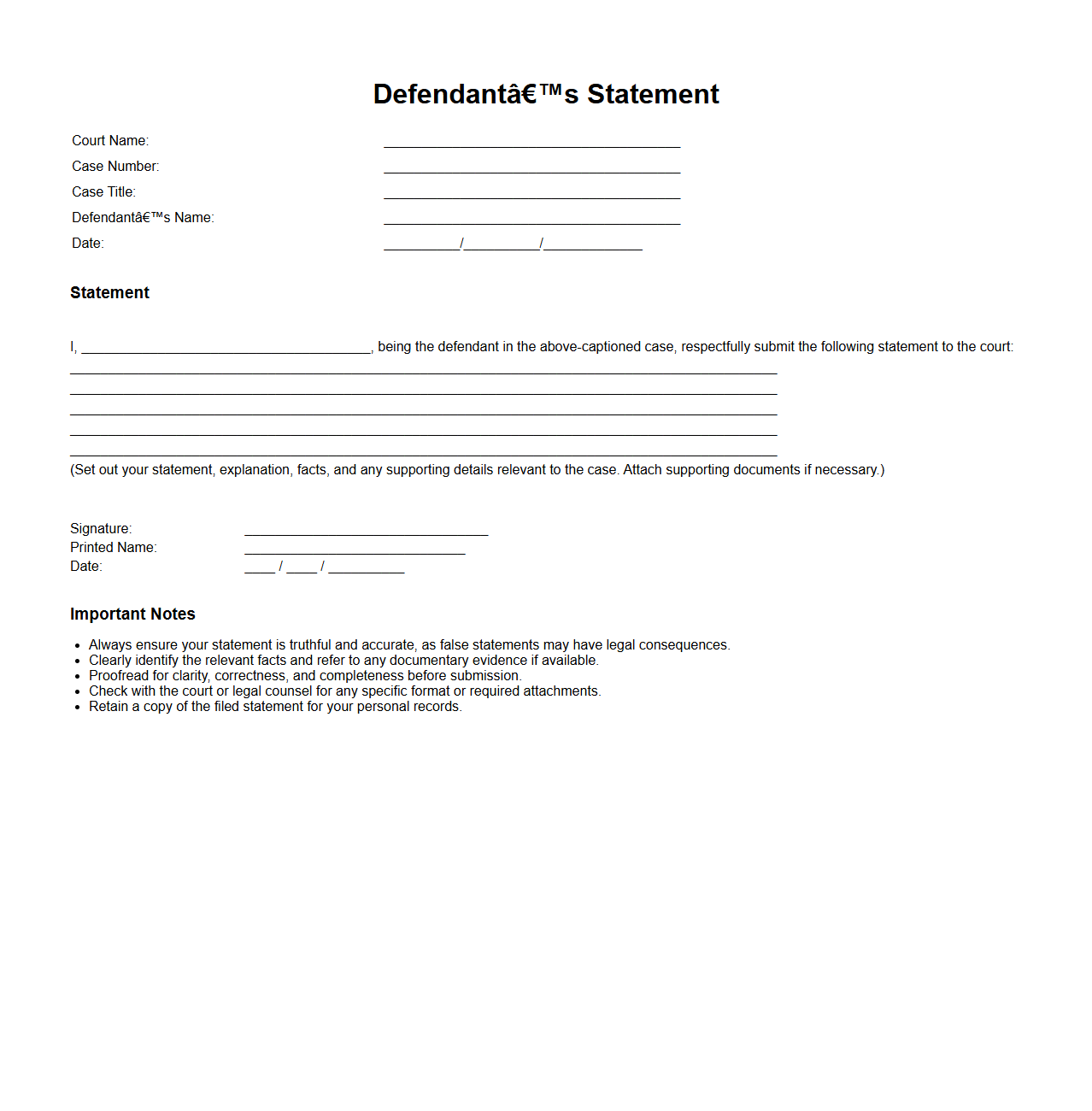
Defendant's Statement Format for Court Filing document outlines the structured template defendants use to present their responses or defenses in legal proceedings. It includes sections for personal details, case references, factual statements, legal arguments, and any evidence supporting the defendant's position. This format ensures clarity, consistency, and compliance with court submission standards, facilitating efficient case review and adjudication.
Expert Report Format for Court Submission
An
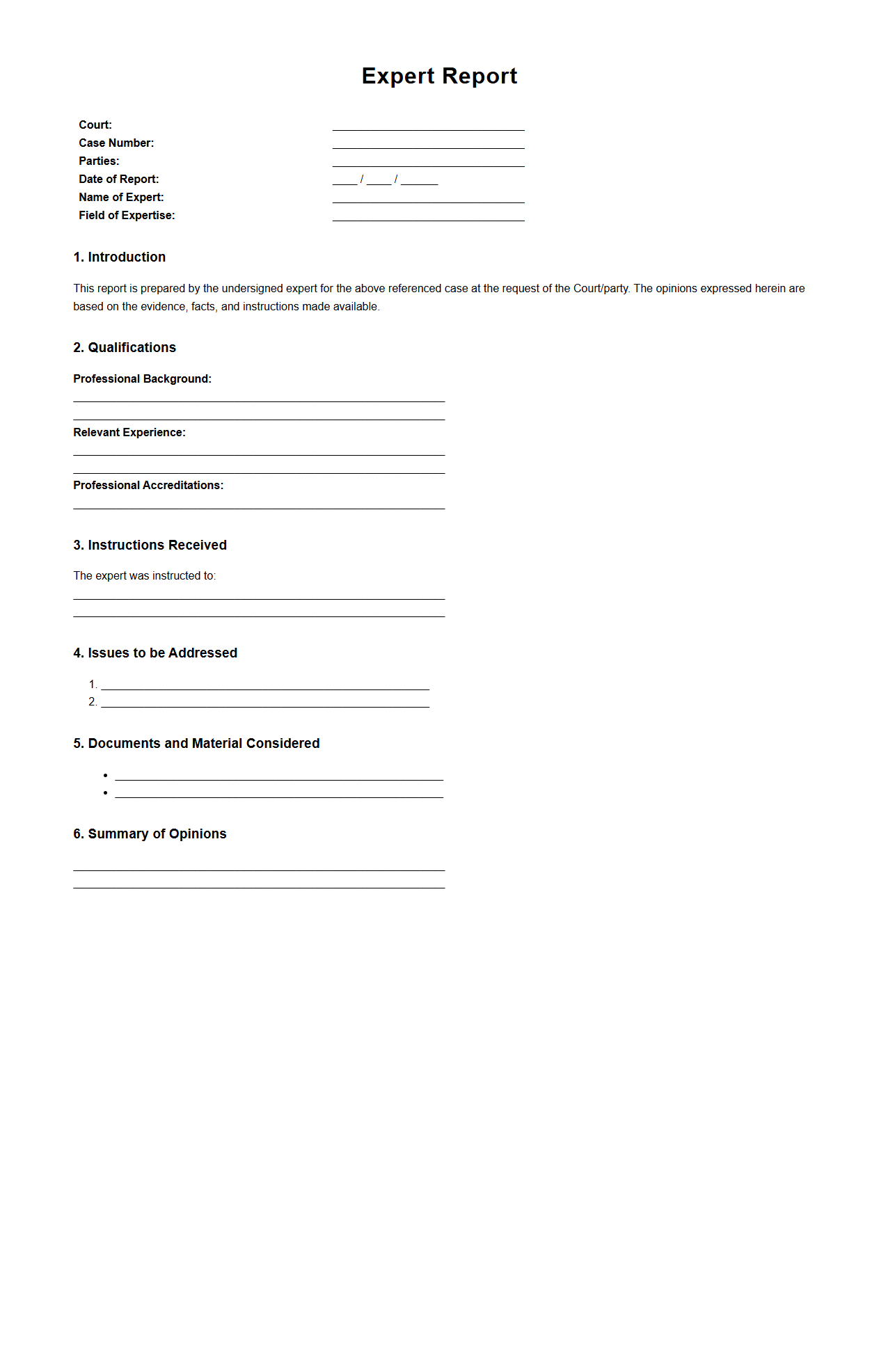
Expert Report Format for Court Submission is a structured document prepared by a qualified expert to present their findings and opinions in legal cases. It typically includes sections such as the expert's credentials, methodology, analysis, conclusions, and references, ensuring clarity and adherence to court standards. This format facilitates the court's understanding and evaluation of technical or specialized evidence in litigation.
Sworn Statement Format for Judicial Process
A
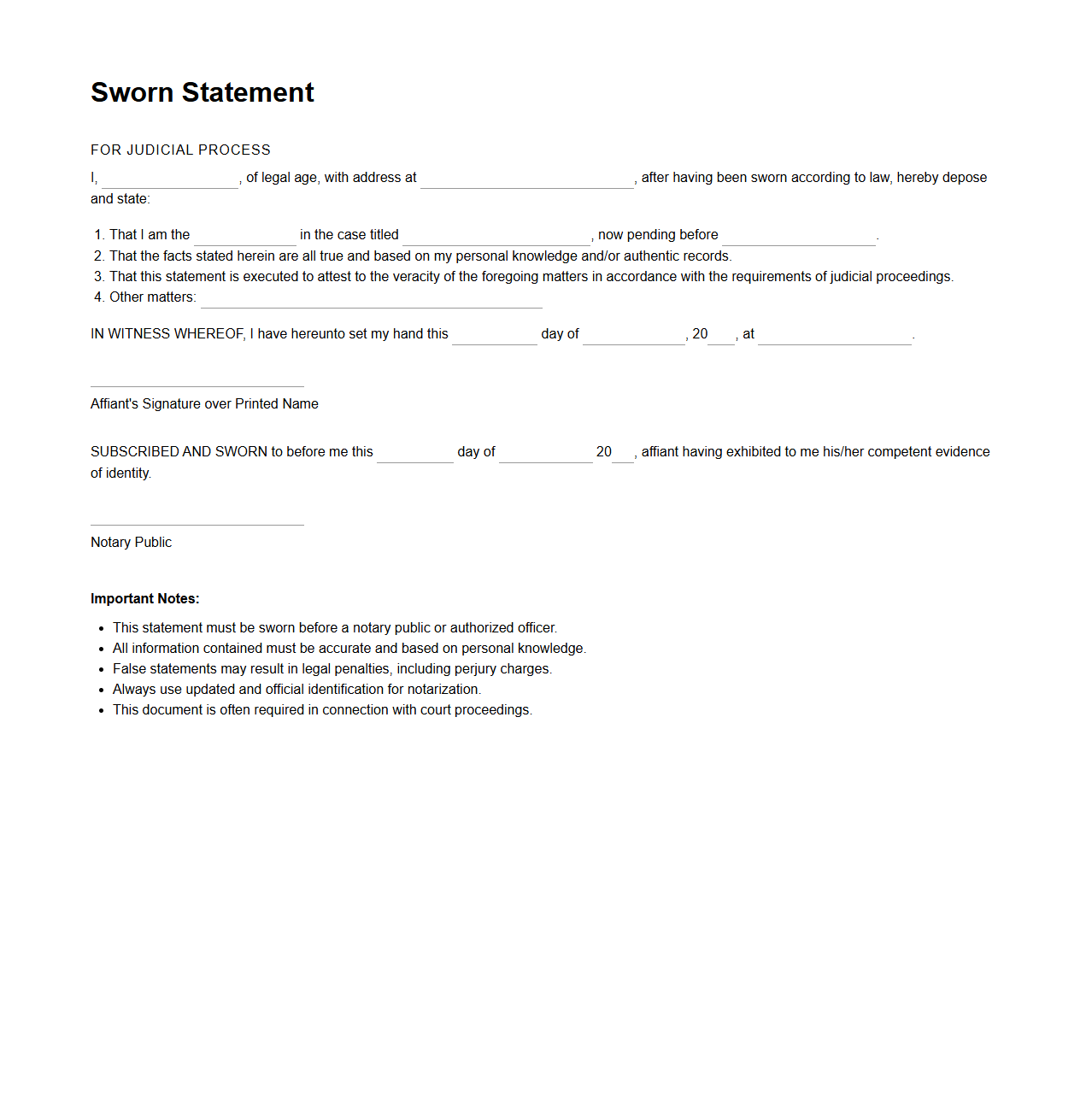
Sworn Statement Format for Judicial Process is a formal document used to present truthful information under oath in legal proceedings. It includes the declarant's personal details, a clear and concise narrative of facts relevant to the case, and a signature affirming the accuracy of the statement before a notary or authorized official. This format ensures the statement is legally admissible and reliable as evidence in court.
Victim Impact Statement Format for Court
A
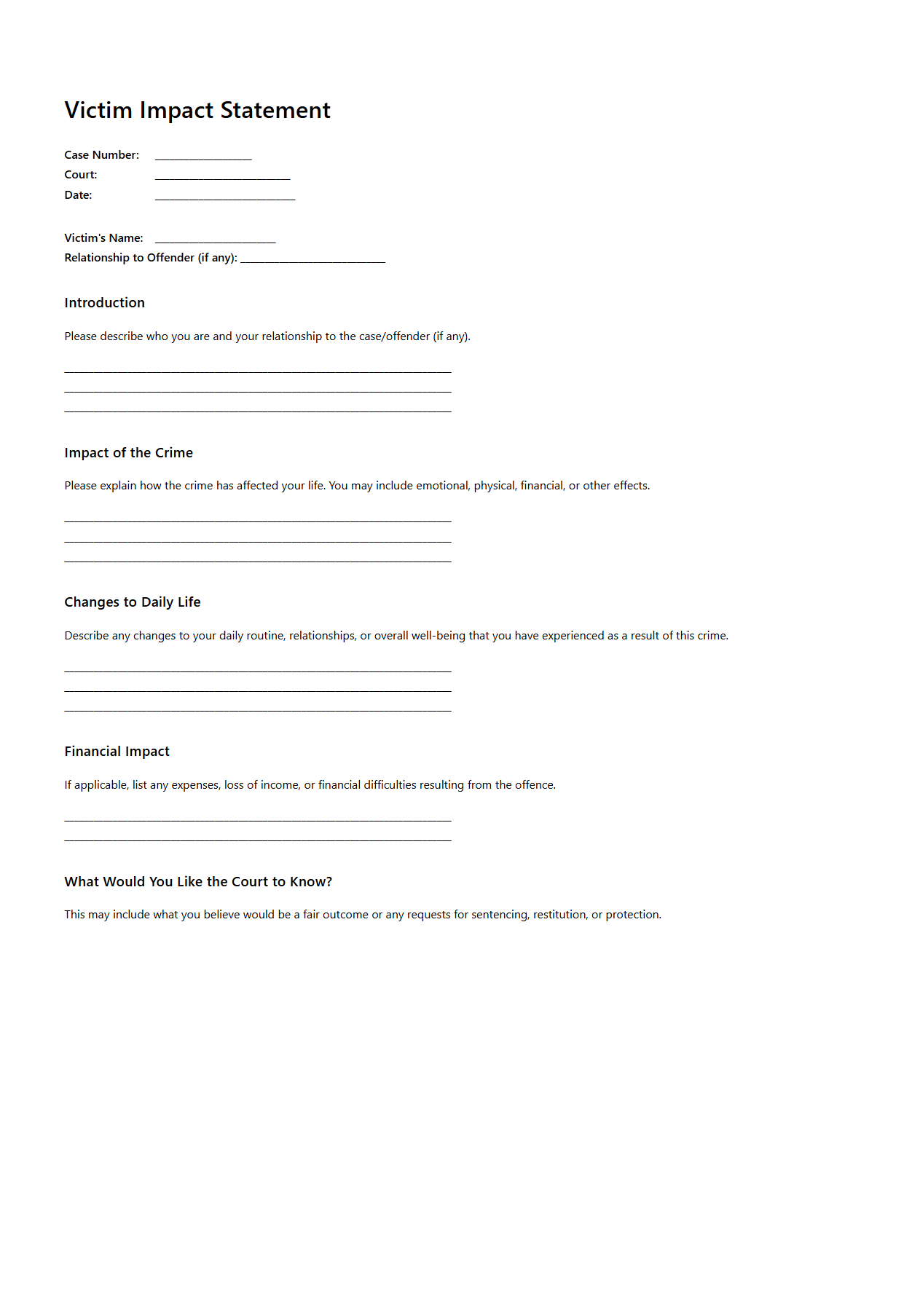
Victim Impact Statement format for court documents provides a structured template for victims to express the emotional, physical, and financial effects of a crime on their lives. This format typically includes sections for detailed personal accounts, financial losses, and the desired sentencing outcomes, ensuring clarity and conciseness in legal proceedings. Proper use of this format helps the court understand the full impact of the offense beyond the basic facts.
Character Reference Statement Format for Court Submission
A
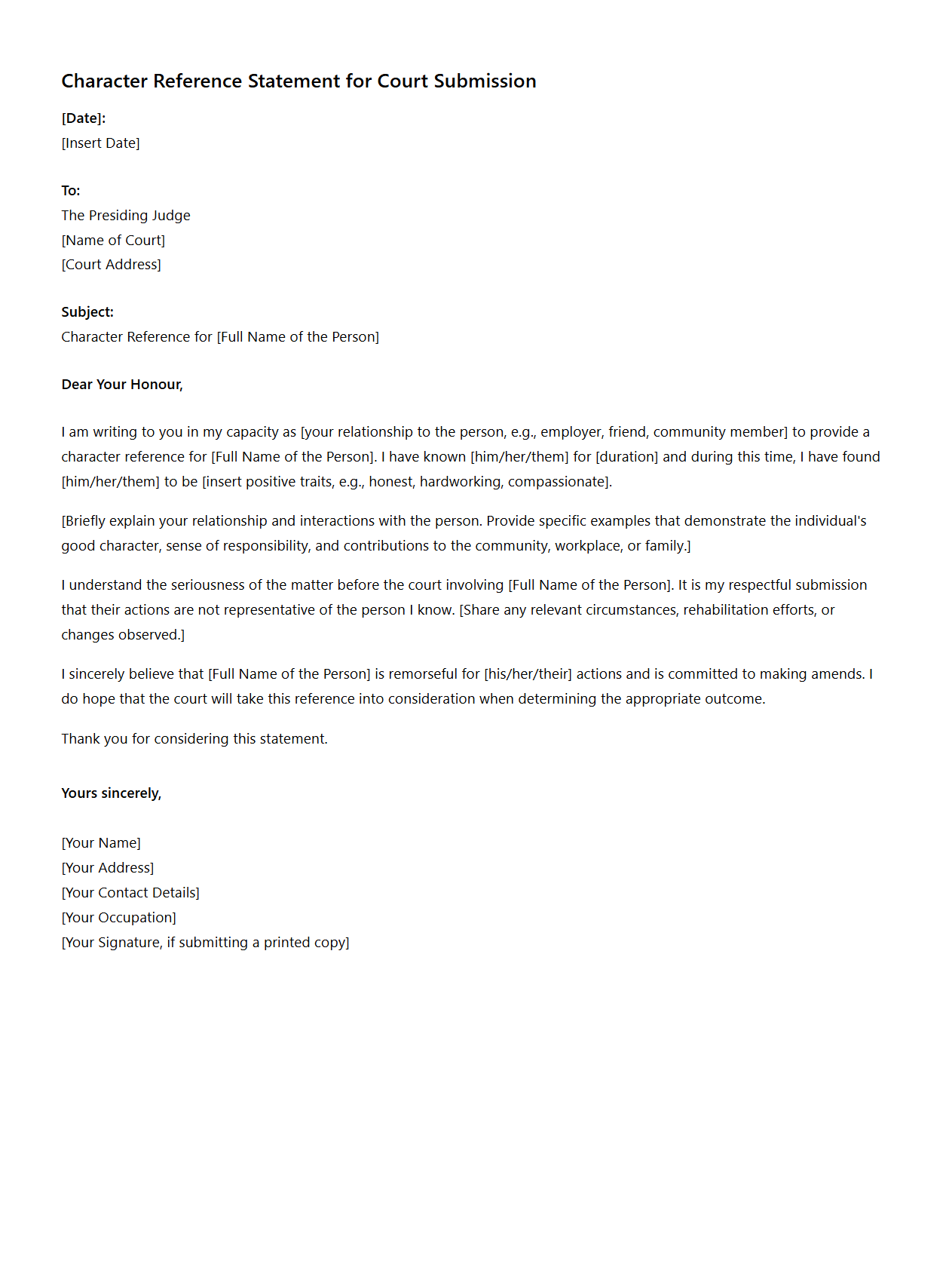
Character Reference Statement Format for court submission is a structured document that presents a detailed and credible account of an individual's behavior, personality, and reputation from a third-party perspective. It typically includes the referee's personal details, relationship to the defendant, specific examples of the defendant's good character traits, and a clear recommendation regarding the court's consideration. This format ensures the statement is concise, respectful, and aligned with legal requirements to support the defendant's case effectively.
Statement of Facts Format for Legal Cases
The
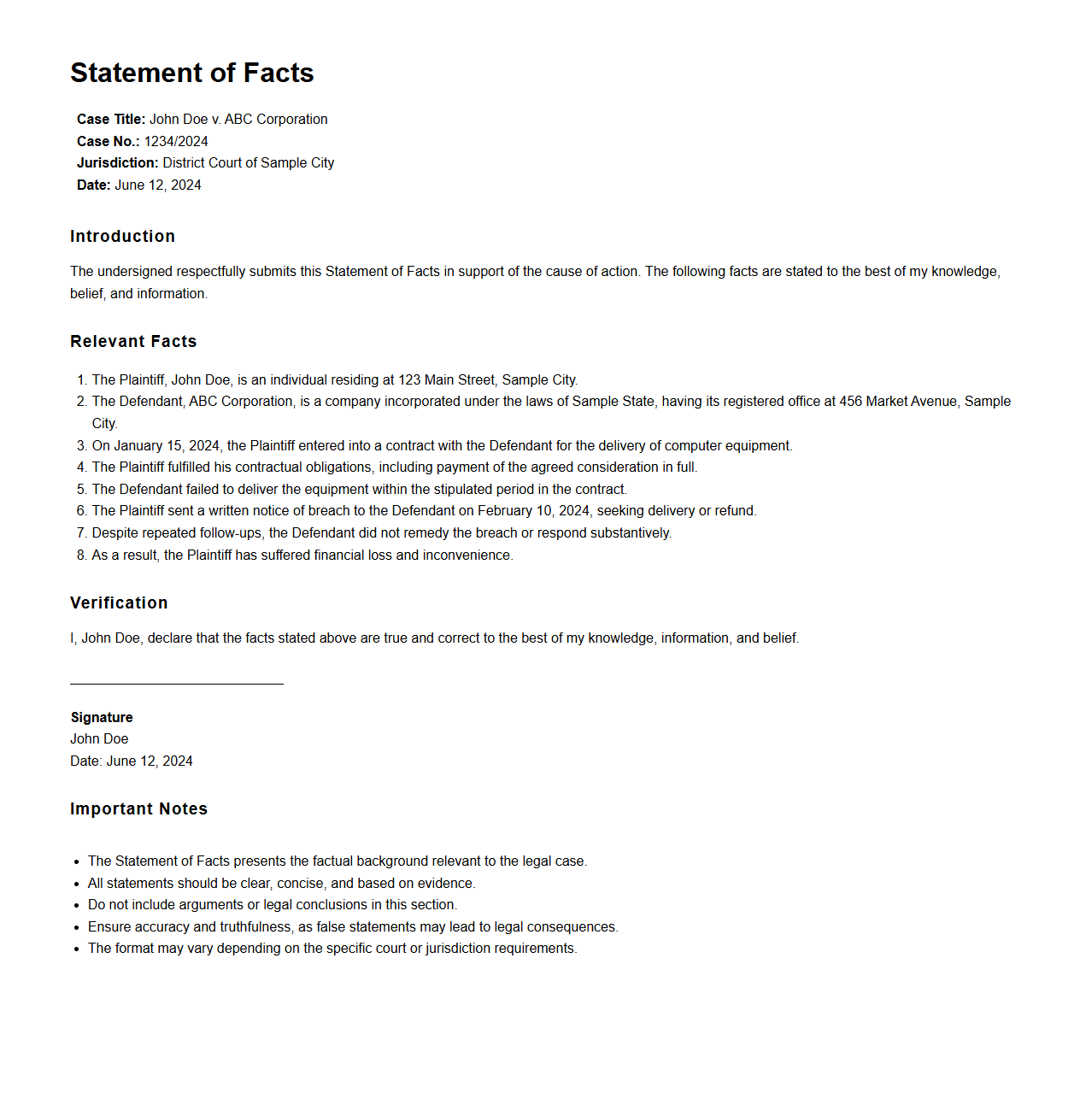
Statement of Facts Format for legal cases is a structured document used to present relevant facts clearly and concisely to the court. This format organizes information chronologically or thematically, ensuring all material details pertaining to the case are accurately documented for review. Legal professionals rely on this format to support arguments and establish a factual foundation necessary for judicial decisions.
Statement of Defence Format for Court Proceedings
A
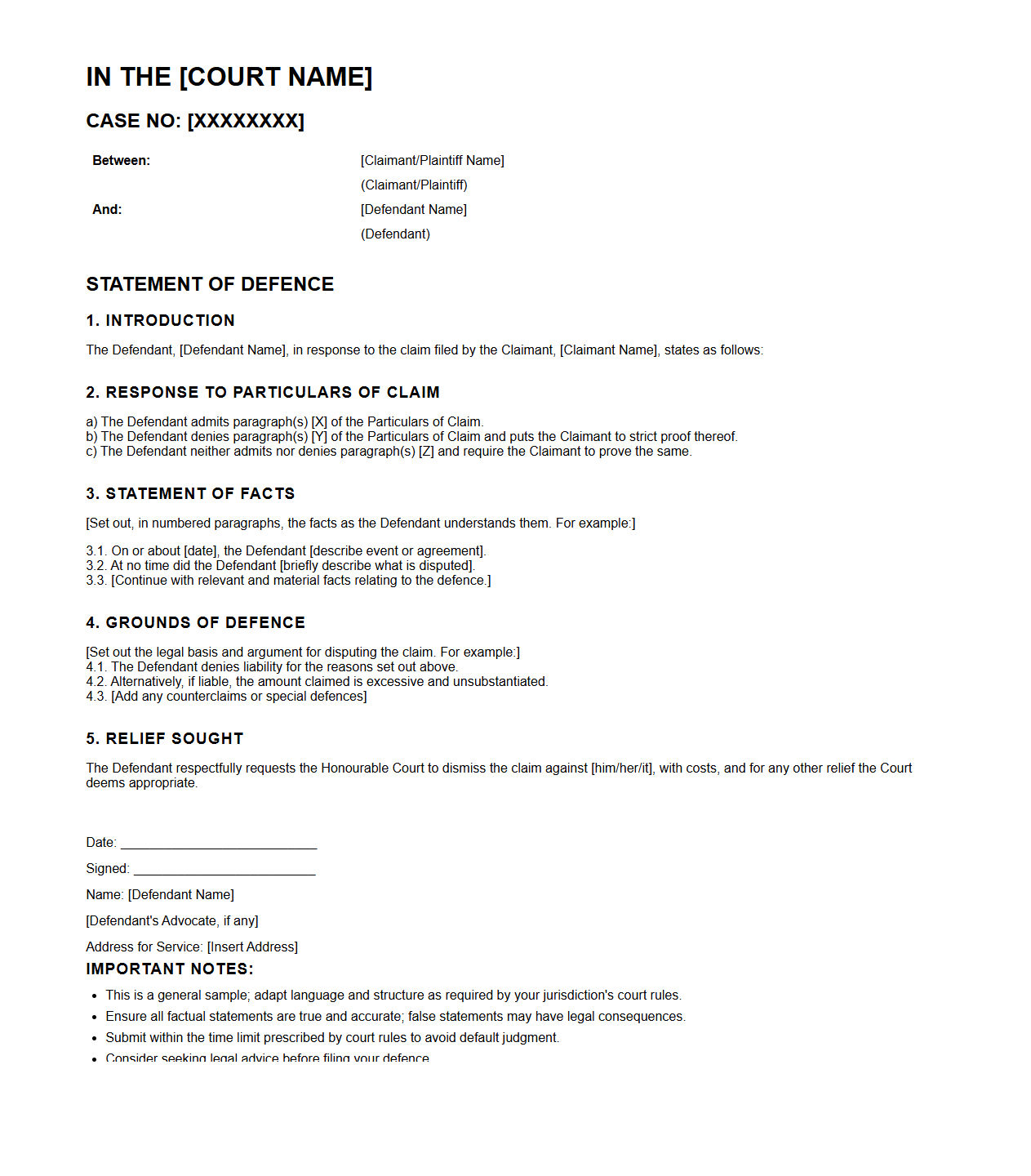
Statement of Defence format for court proceedings is a structured legal document used by a defendant to respond to the claims made in a plaintiff's complaint. It outlines the defendant's position, admitting or denying each allegation while presenting any relevant facts, legal arguments, and affirmative defenses. Proper formatting ensures clarity and compliance with court rules, facilitating efficient case management and fair adjudication.
What essential components must be included in a court-submissible statement document?
A court-submissible statement must contain a clear introduction outlining the purpose of the document. It should include a detailed narrative of facts relevant to the case, ensuring accuracy and coherence. Lastly, the statement requires a declaration of truth, affirming the honesty of the content under penalty of perjury.
How should personal details and case references be formatted in a statement for court submission?
Personal details like full name and contact information should be prominently displayed at the beginning of the statement in a clear and professional format. Case references, including the docket number and court name, must be positioned in the header or top margin for easy identification. This structured presentation ensures formal recognition and aids in case tracking.
What is the standard structure for presenting facts and supporting evidence in a court statement?
The facts should be presented sequentially, with each fact supported by relevant evidence such as documents or witness statements. It's important to use numbered or bullet points for clarity and coherence. Each piece of evidence should be briefly explained to demonstrate its relevance to the case narrative.
Which formatting rules (e.g., font size, margins, signatory placement) are required for court submission statements?
Court statements typically require Times New Roman or Arial font at size 12 for readability. Standard margins (1 inch on all sides) should be maintained to comply with court rules. The signature must be placed at the end of the document, along with the date and printed name for authentication.
How should confidential or sensitive information be handled within a statement for court submission?
Confidential or sensitive information should be clearly marked and, if necessary, submitted under sealed cover to protect privacy. Redaction of personal identifiers is essential when sharing documents with the opposing party or public records. Courts often require an application for confidentiality to properly manage sensitive content.