The Format of Statement for Assets typically includes a detailed listing of all owned resources, categorized by type such as current, fixed, and intangible assets. Each entry usually specifies the description, quantity, acquisition cost, and current market value to provide a clear financial snapshot. This structured format aids in accurate asset management and financial reporting compliance.
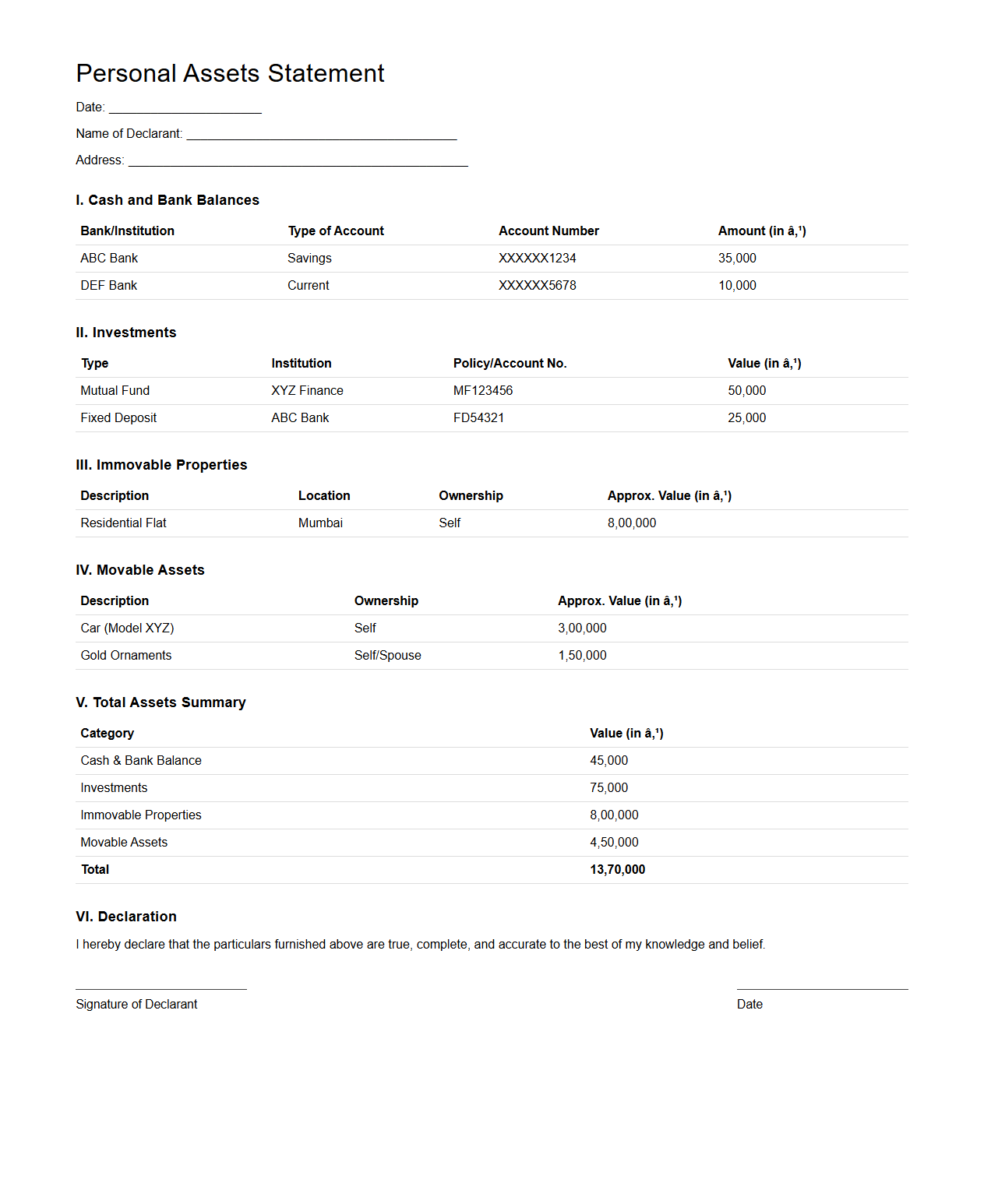
Personal Assets Statement Format
A
Personal Assets Statement Format document organizes and details an individual's financial holdings, including cash, investments, real estate, and personal property. This structured format provides a clear overview of net worth by listing assets alongside any liabilities. Financial institutions and lenders often require this document to assess creditworthiness and financial stability.
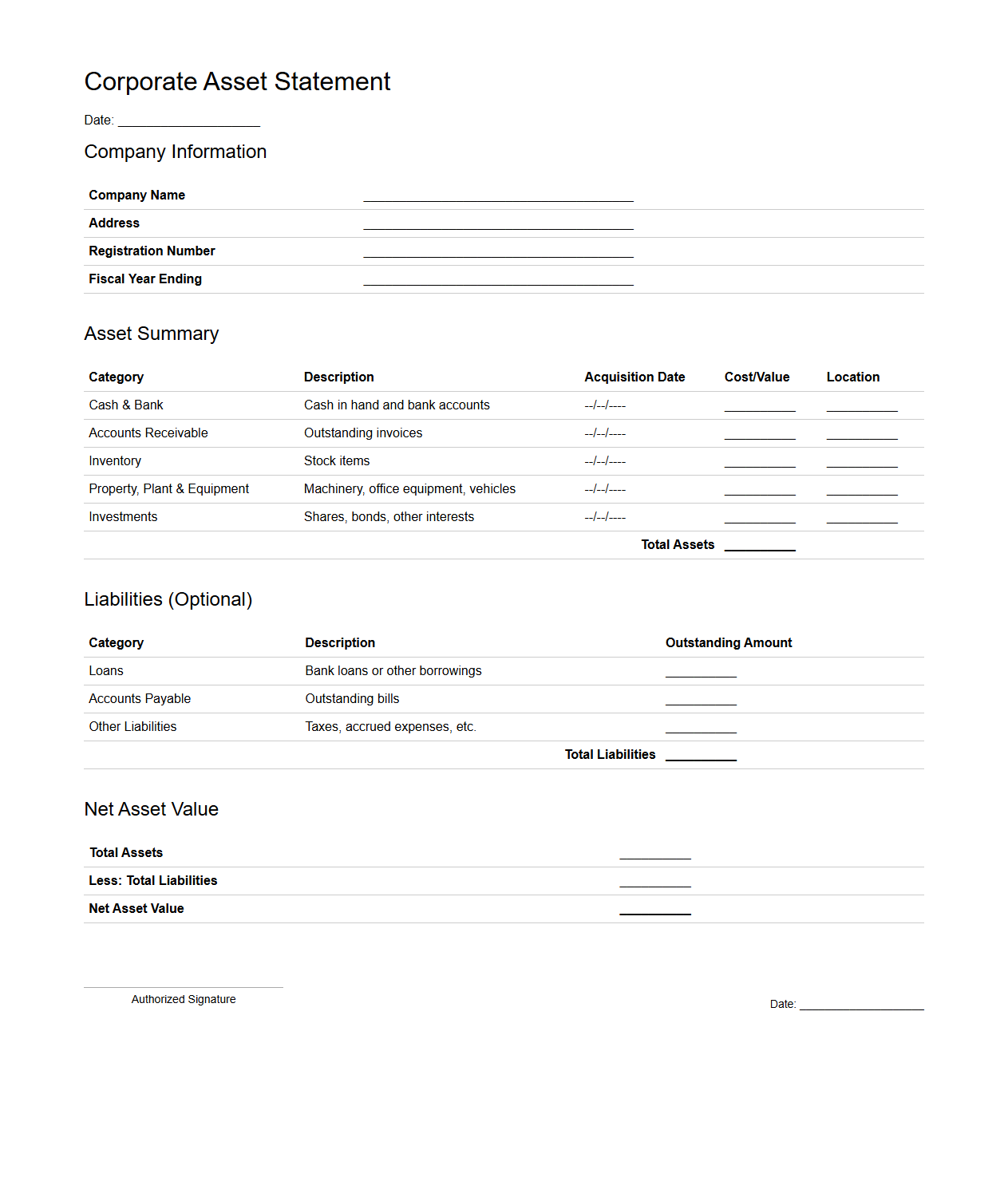
Corporate Asset Statement Template
A
Corporate Asset Statement Template is a standardized document used by businesses to systematically record and track company assets, including physical property, financial investments, and intellectual property. This template helps ensure accurate asset valuation, compliance with regulatory requirements, and streamlined financial reporting. Utilizing such a template improves organizational transparency and aids in effective asset management and auditing processes.
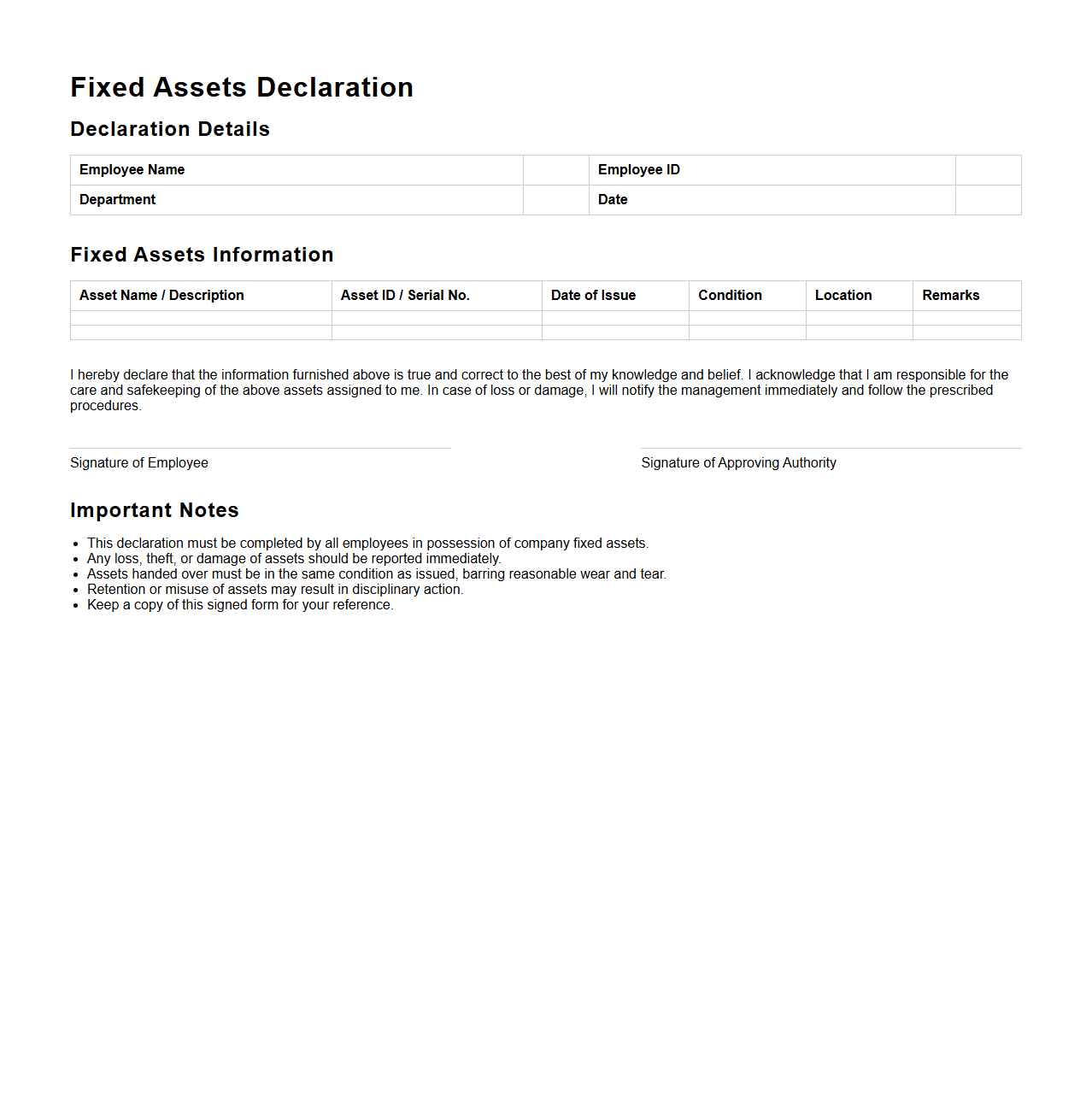
Fixed Assets Declaration Format
A
Fixed Assets Declaration Format document is a formal record used by organizations to list and verify their tangible long-term assets such as machinery, buildings, and equipment. It captures detailed information like asset descriptions, purchase dates, acquisition costs, current condition, and location to ensure accurate asset management and accounting. Maintaining this document helps in financial reporting, audits, and compliance with regulatory standards.
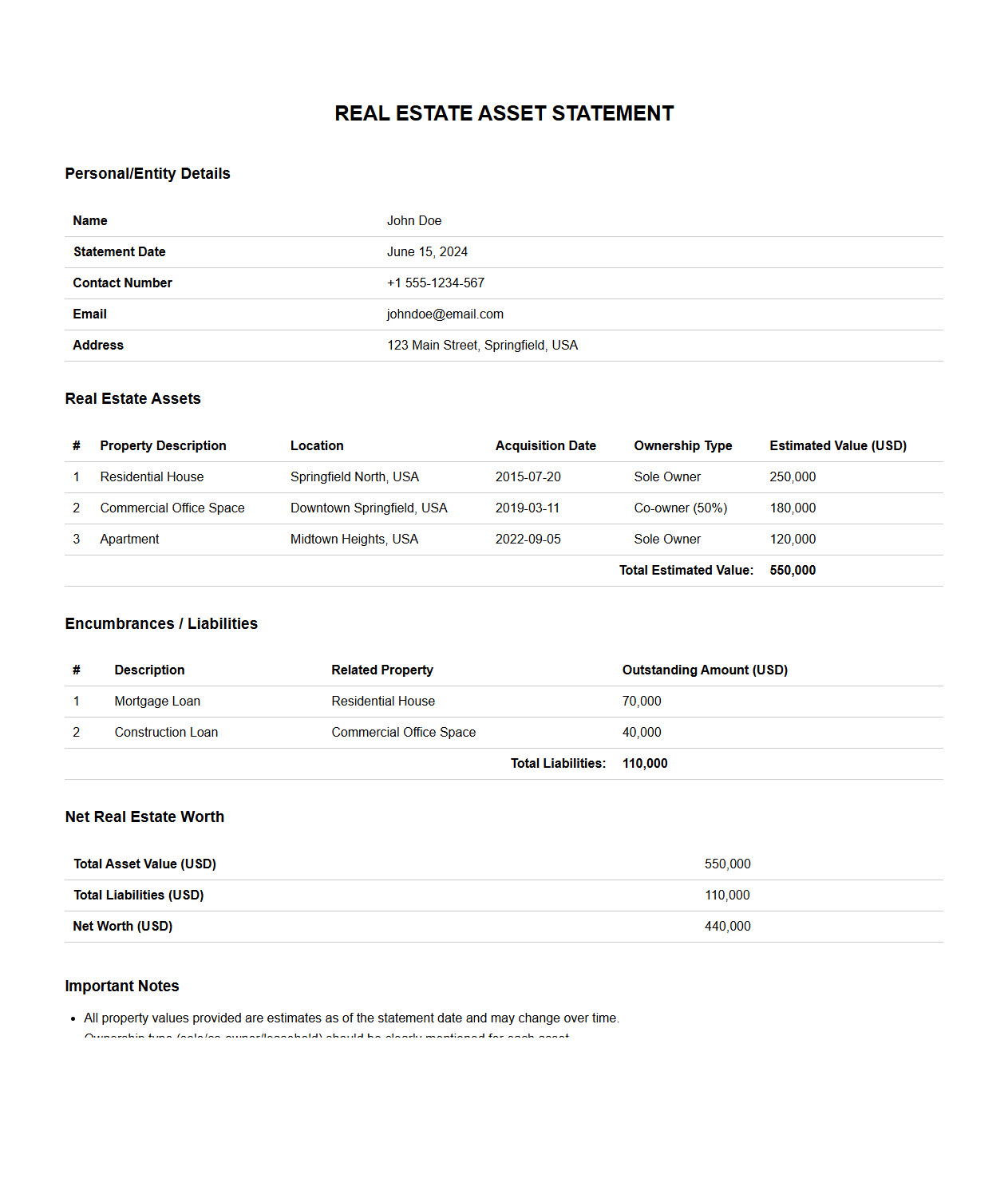
Real Estate Asset Statement Format
A
Real Estate Asset Statement Format document systematically outlines the details of real estate holdings, including property types, locations, market values, and ownership percentages. This format is essential for investors, financial institutions, and asset managers to assess the portfolio's composition and current valuation effectively. Clear structuring of such statements facilitates accurate analysis, reporting, and decision-making in real estate asset management.
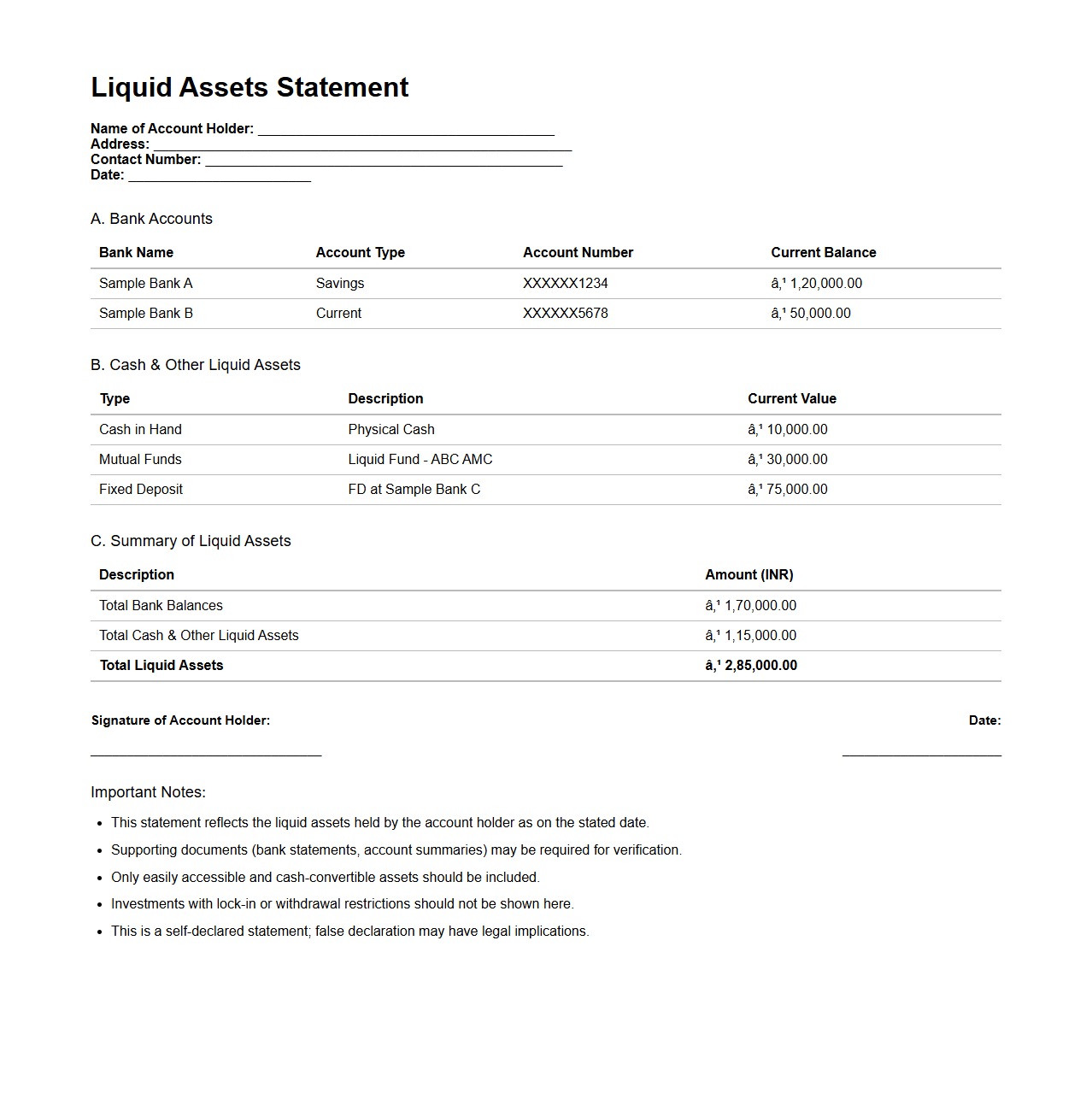
Liquid Assets Statement Format
A
Liquid Assets Statement Format document provides a structured template to detail an individual's or organization's easily convertible financial resources into cash, such as cash, bank balances, marketable securities, and short-term investments. This format helps in evaluating liquidity position by clearly categorizing and quantifying assets that can quickly meet immediate financial obligations. Financial institutions and investors frequently use this document to assess creditworthiness and financial stability.
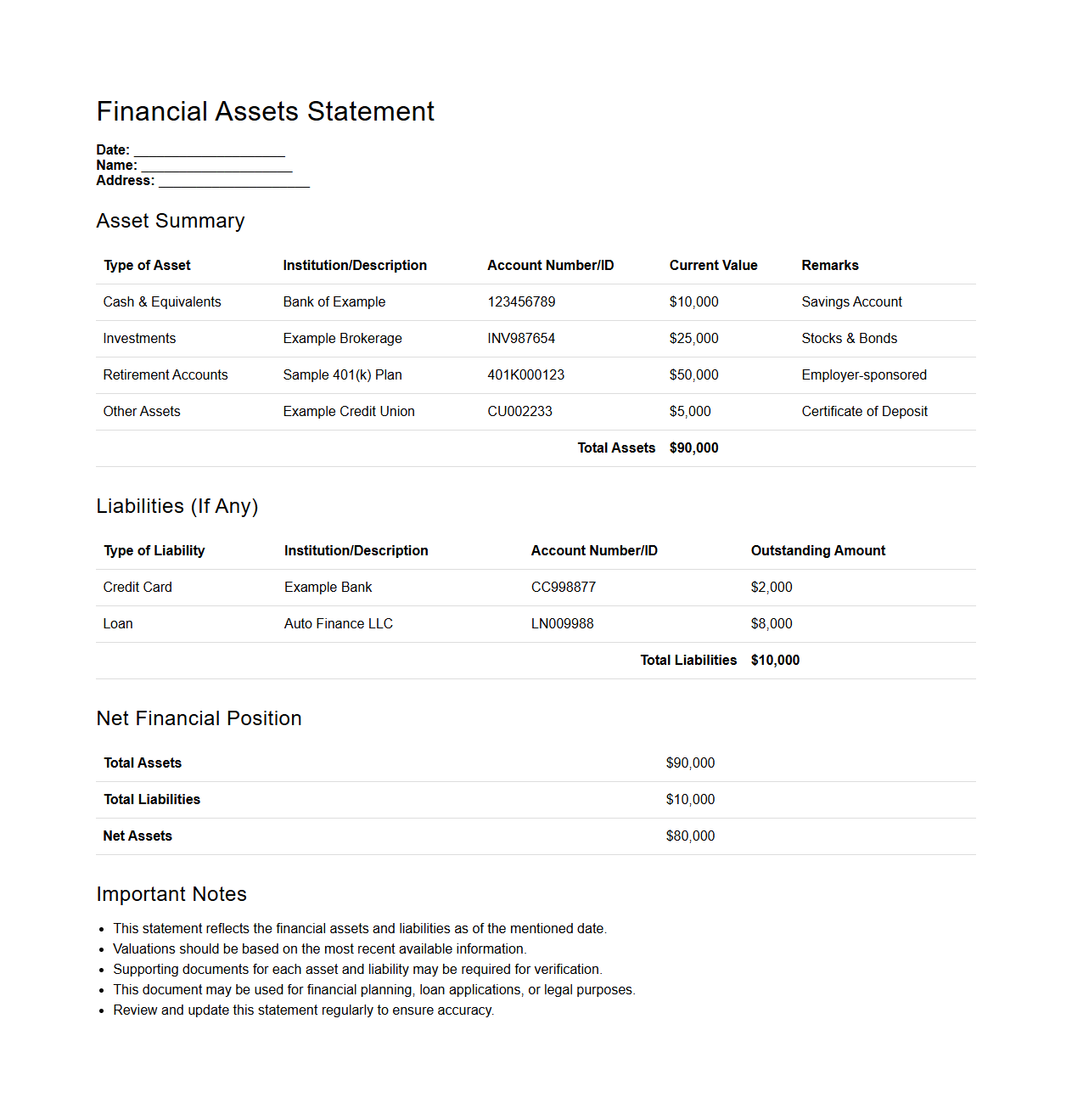
Financial Assets Statement Template
A
Financial Assets Statement Template is a structured document designed to systematically record and summarize an individual's or organization's financial assets, including cash, investments, real estate, and other valuables. This template helps track asset allocation, value fluctuations, and ownership details, facilitating accurate financial planning and reporting. It serves as a crucial tool for budgeting, tax preparation, and assessing overall financial health.
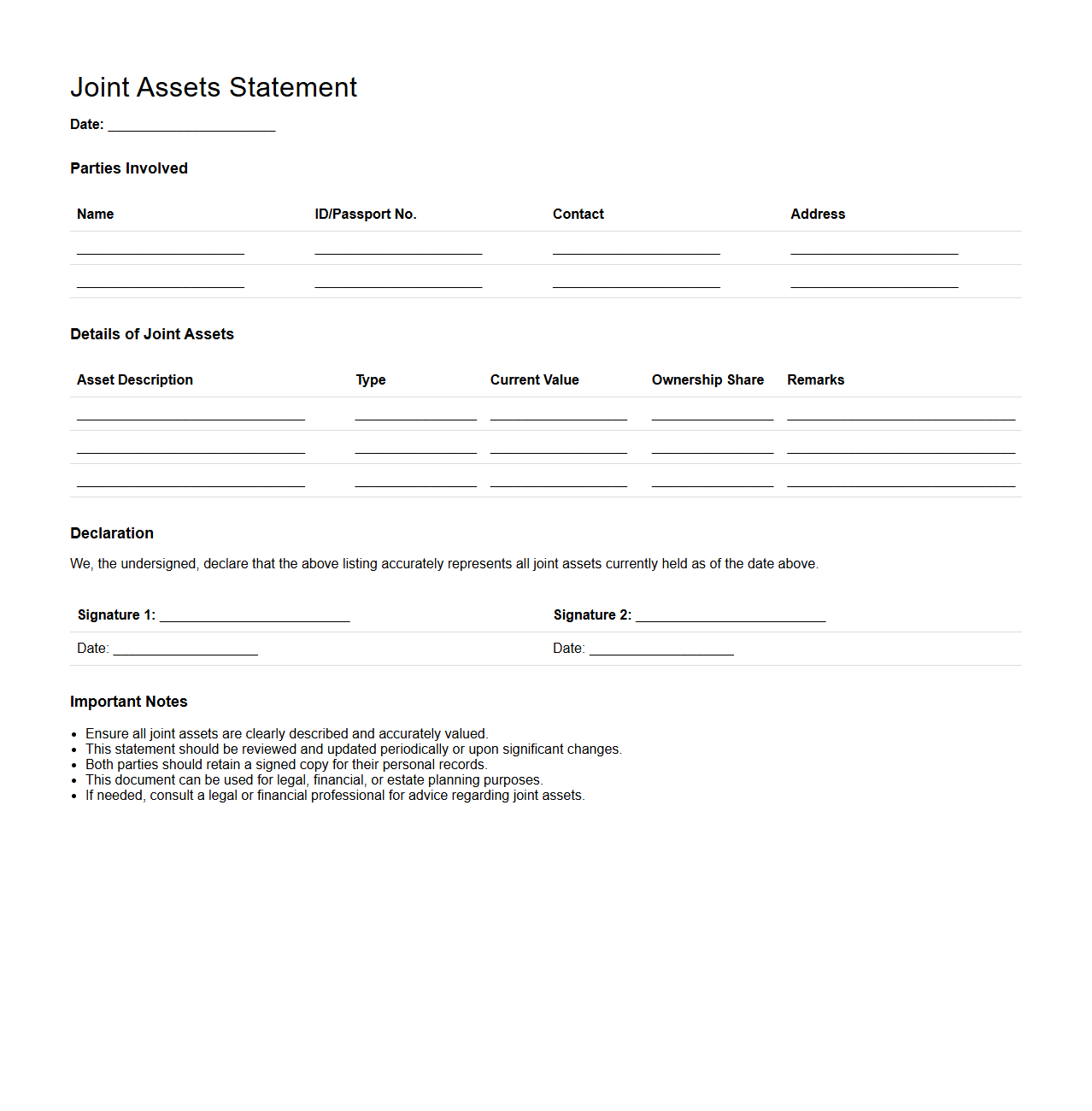
Joint Assets Statement Format
A
Joint Assets Statement Format document is a structured template used to declare and detail the combined assets held by two or more parties, often in legal or financial contexts. It provides a clear, organized summary of shared property, investments, liabilities, and other financial resources to ensure transparency and facilitate decision-making. This format is essential for marital settlements, business partnerships, or collaborative financial planning.
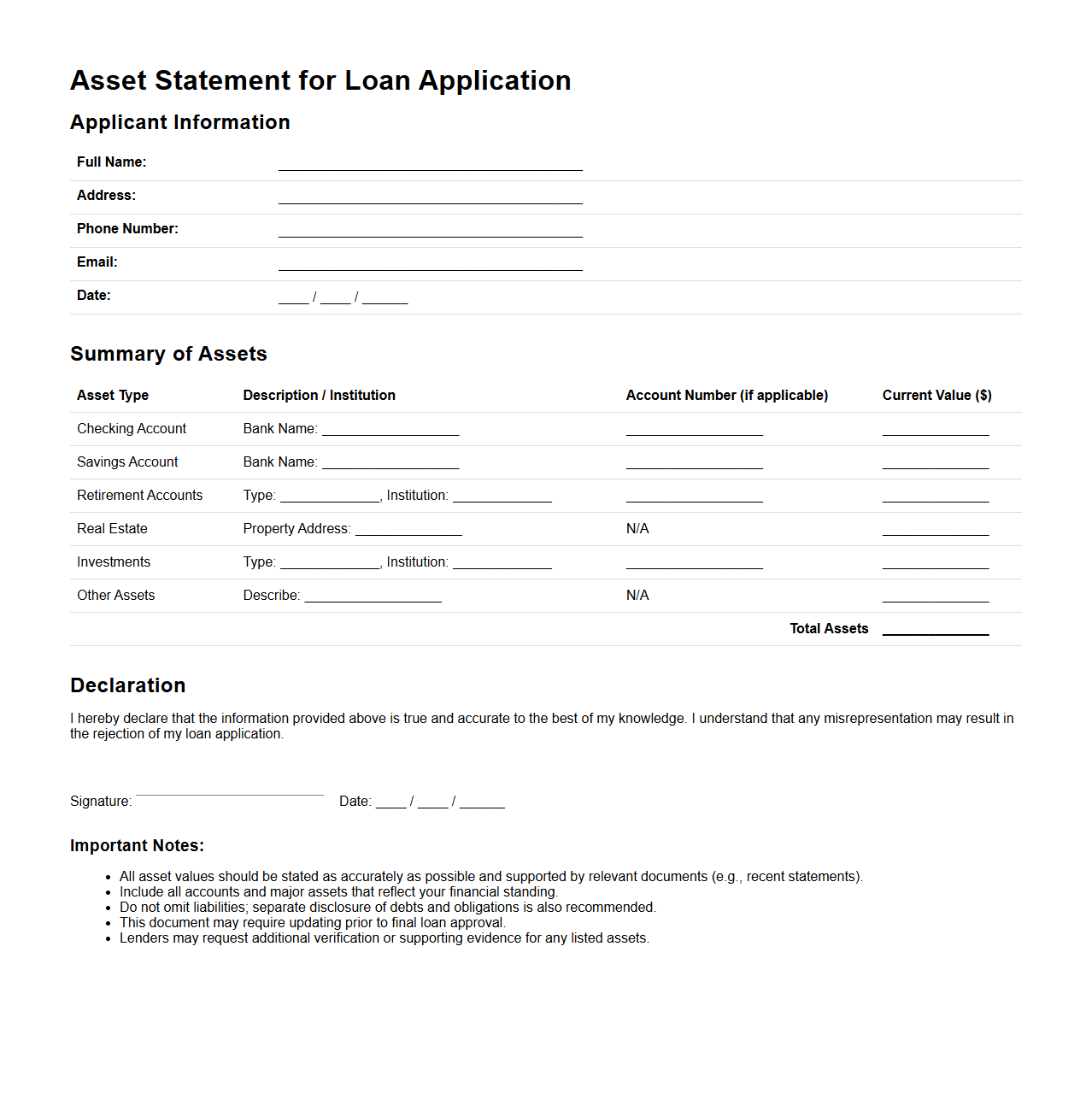
Asset Statement for Loan Application
An
Asset Statement for a loan application is a detailed document listing an individual's or business's valuable holdings, such as bank accounts, real estate, investments, and personal property. It provides lenders with a clear view of the applicant's financial stability and capacity to repay the loan. This statement is critical in loan underwriting processes to assess risk and determine loan eligibility.
Digital Assets Statement Format
A
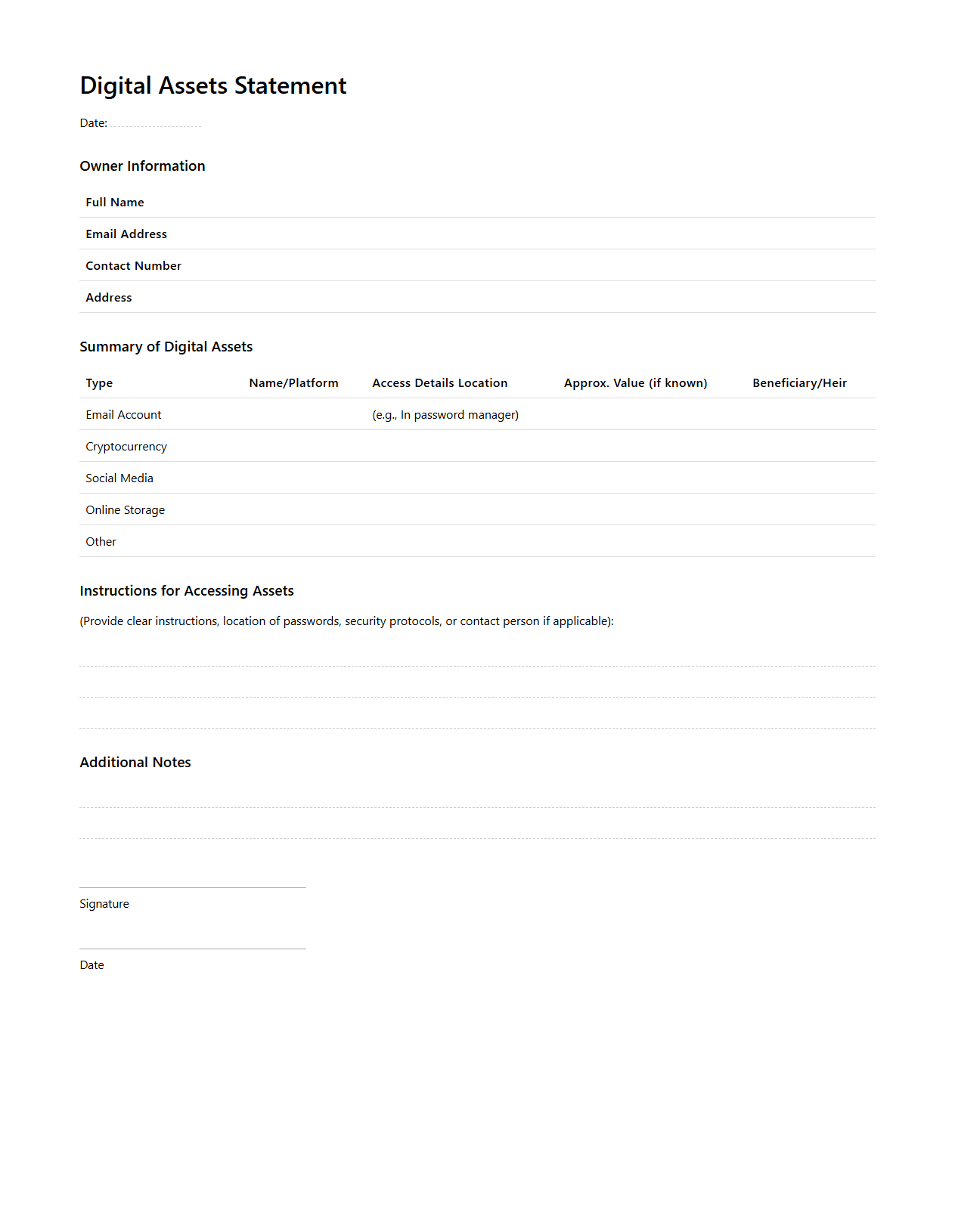
Digital Assets Statement Format document systematically details an individual's or organization's digital property, such as cryptocurrencies, online accounts, and digital files. It provides a structured overview including asset descriptions, access credentials, storage locations, and ownership evidence to facilitate management, transfer, or legal processes. This document ensures clarity and security in handling digital estates across various platforms and jurisdictions.
Annual Assets Statement Format
The
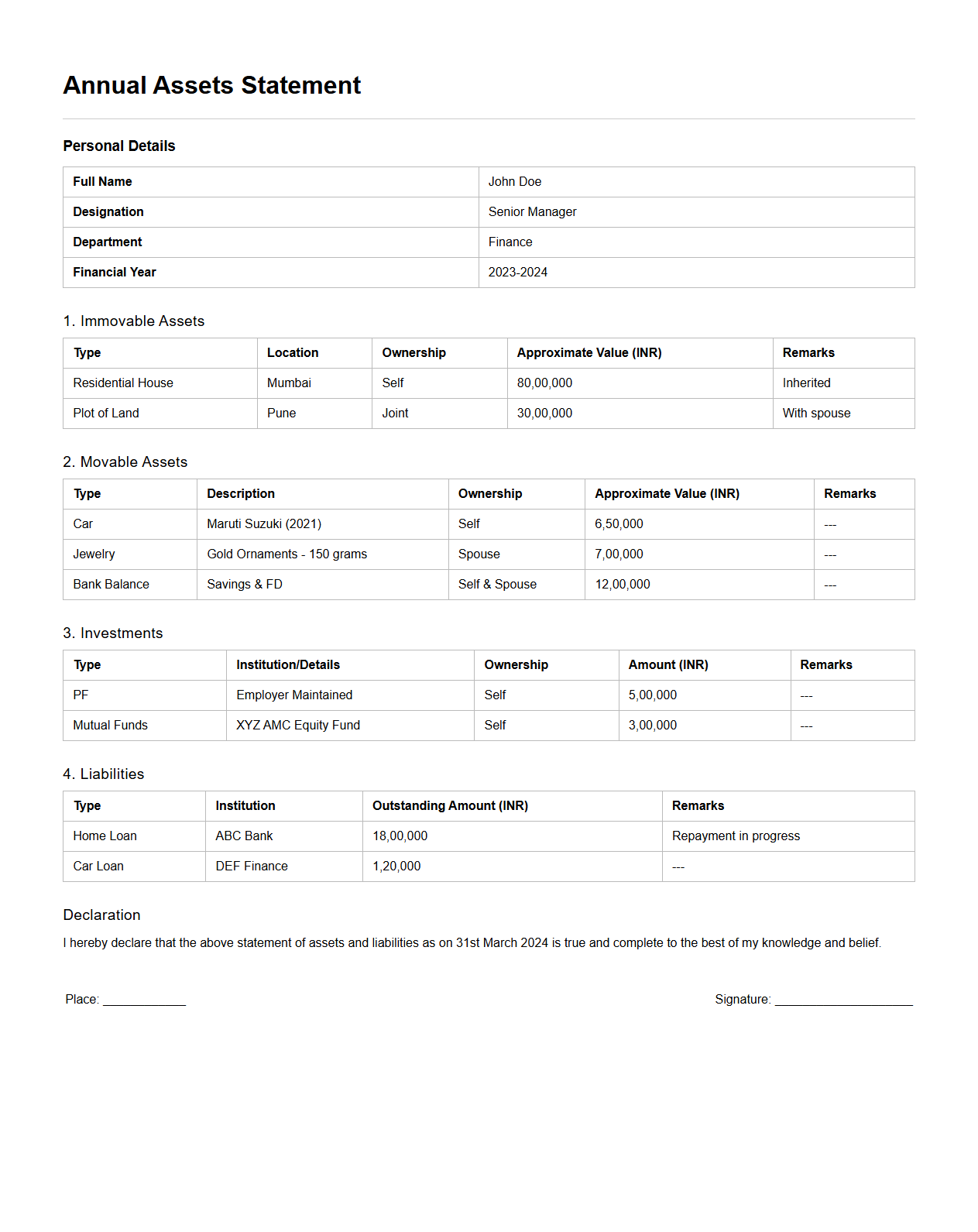
Annual Assets Statement Format document provides a structured template for reporting the total value and details of assets owned by an individual or organization over a fiscal year. This format typically includes sections for fixed assets, current assets, investments, and liabilities, ensuring comprehensive financial disclosure. Accurate and consistent use of this format supports regulatory compliance, financial analysis, and transparent asset management.
What key components should be included in a standardized statement for assets?
A standardized statement for assets must include asset description, current valuation, and date of valuation to ensure accuracy. It should also contain information about the asset owner and any relevant identifying details such as serial numbers or registration data. Including a summary of asset categories, such as fixed or circulating assets, enhances the statement's clarity and usability.
How should asset values be categorized and presented for clarity in the document?
Asset values should be categorized into clear groups like current assets, fixed assets, and intangible assets to facilitate easy understanding. Presenting them in tabular format, with columns for asset type, value, and valuation date, significantly improves readability. Including total values for each category helps provide a quick overview of the asset portfolio.
What is the recommended format for disclosing ownership and encumbrances on assets?
Ownership should be clearly stated with the full legal name of the owner or entity holding the asset, alongside encumbrances such as liens or mortgages. Disclosures should be formatted in a separate section or column within the statement to avoid confusion. Providing detailed notes on the nature and extent of encumbrances enhances transparency and legal clarity.
How should asset statements handle the classification of tangible versus intangible assets?
Statements must distinctly separate tangible assets like property and equipment from intangible assets such as patents or trademarks. Each classification should be clearly labeled and valued individually to maintain accuracy and completeness. This separation aids in compliance with accounting standards and provides stakeholders with a precise asset overview.
What conventions must be followed to ensure regulatory compliance in asset statement documentation?
Regulatory compliance requires adherence to established accounting standards like GAAP or IFRS, focusing on principles of transparency, accuracy, and completeness. Proper documentation of valuation methods and periodic updates ensures the statement remains valid and reliable. Additionally, maintaining audit trails and verification by certified professionals supports compliance and credibility.